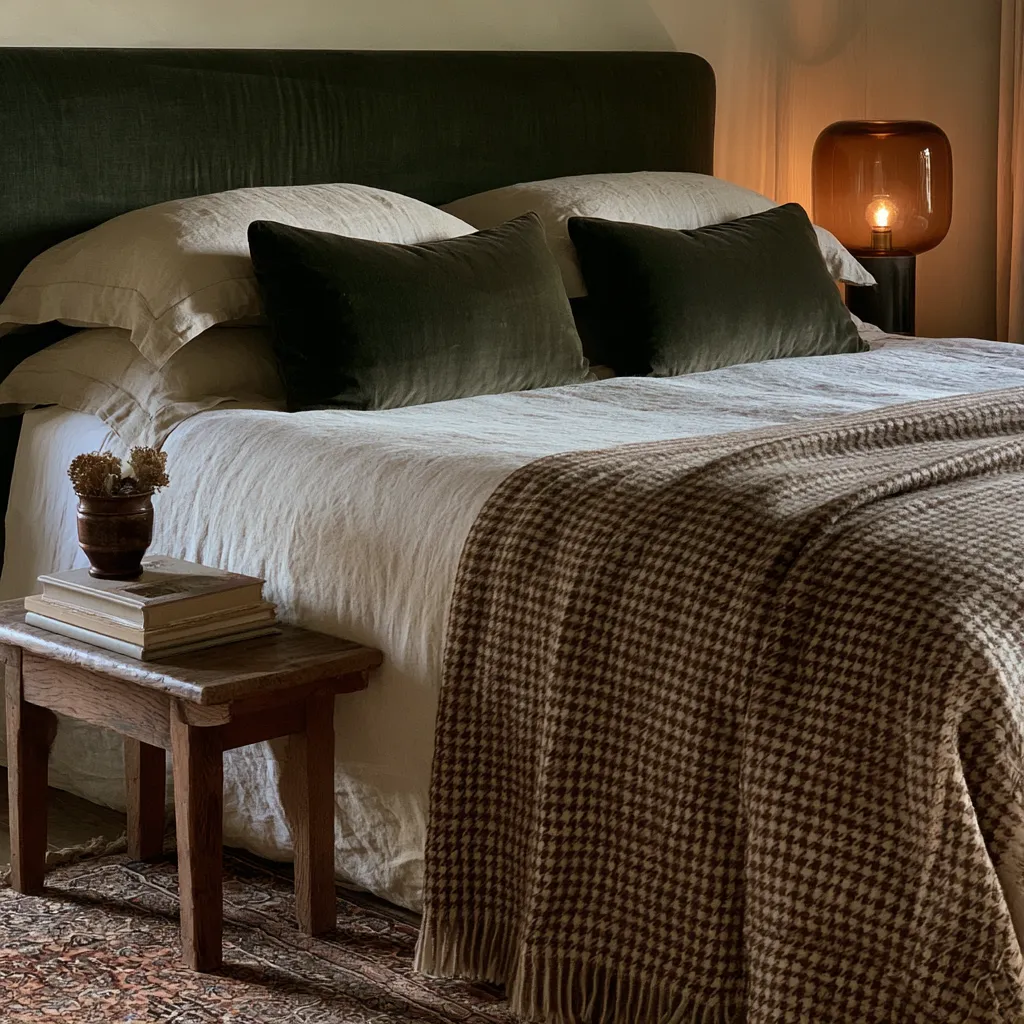
Rose Uniacke bedroom design keeps appearing on mood boards because it does something most luxury interiors fail at — it looks expensive without announcing itself. You walk into one of her rooms and feel the money before you see it. The off-white linen, the antique side table that costs $4,000 and sits next to a $90 ceramic lamp: nothing shouts, nothing apologises. I’ve spent time studying her work and I’ll be honest, it changed how I think about what a bedroom actually needs to contain.
Uniacke trained as a furniture restorer and antique dealer before anyone hired her to design a room. That origin matters. Her bedrooms carry the logic of a dealer who knows exactly what a piece is worth and refuses to crowd it. Every surface has breathing room. Most designers add; she subtracts until what’s left is irreplaceable.
What you’ll find in this article
- How Uniacke uses neutral palettes without making rooms feel cold or empty
- The antique-versus-modern furniture balance she returns to in every project
- What her monochrome bedrooms actually contain — and why charcoal beats grey
- The canopy bed logic and why most people place theirs wrong
- Her approach to headboards, lighting, and bedside tables (they never match)
- What Rose Uniacke furniture looks like and where the collection sits price-wise
Neutral Does Not Mean Safe — Rose Uniacke’s Off-White Rooms
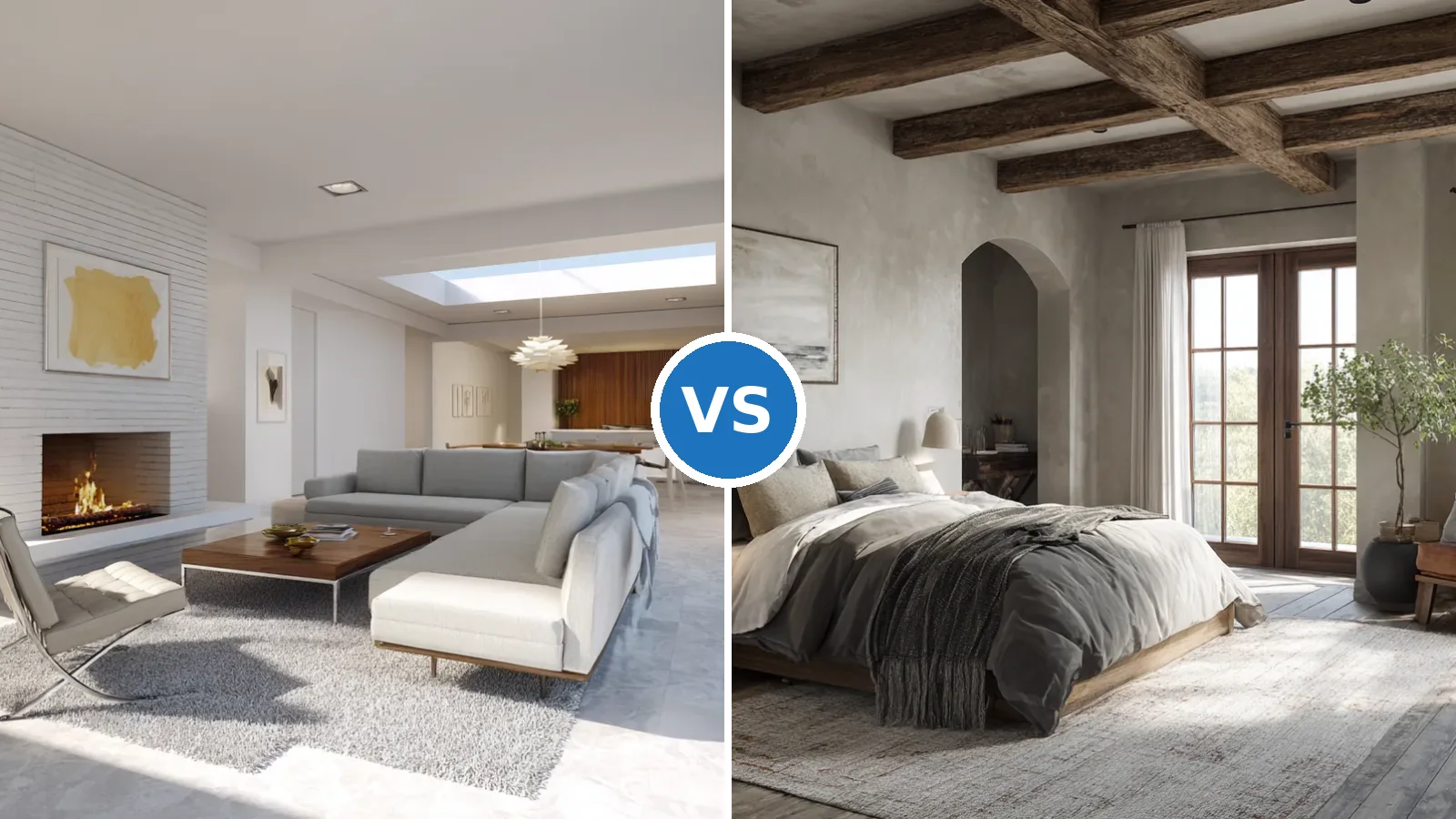
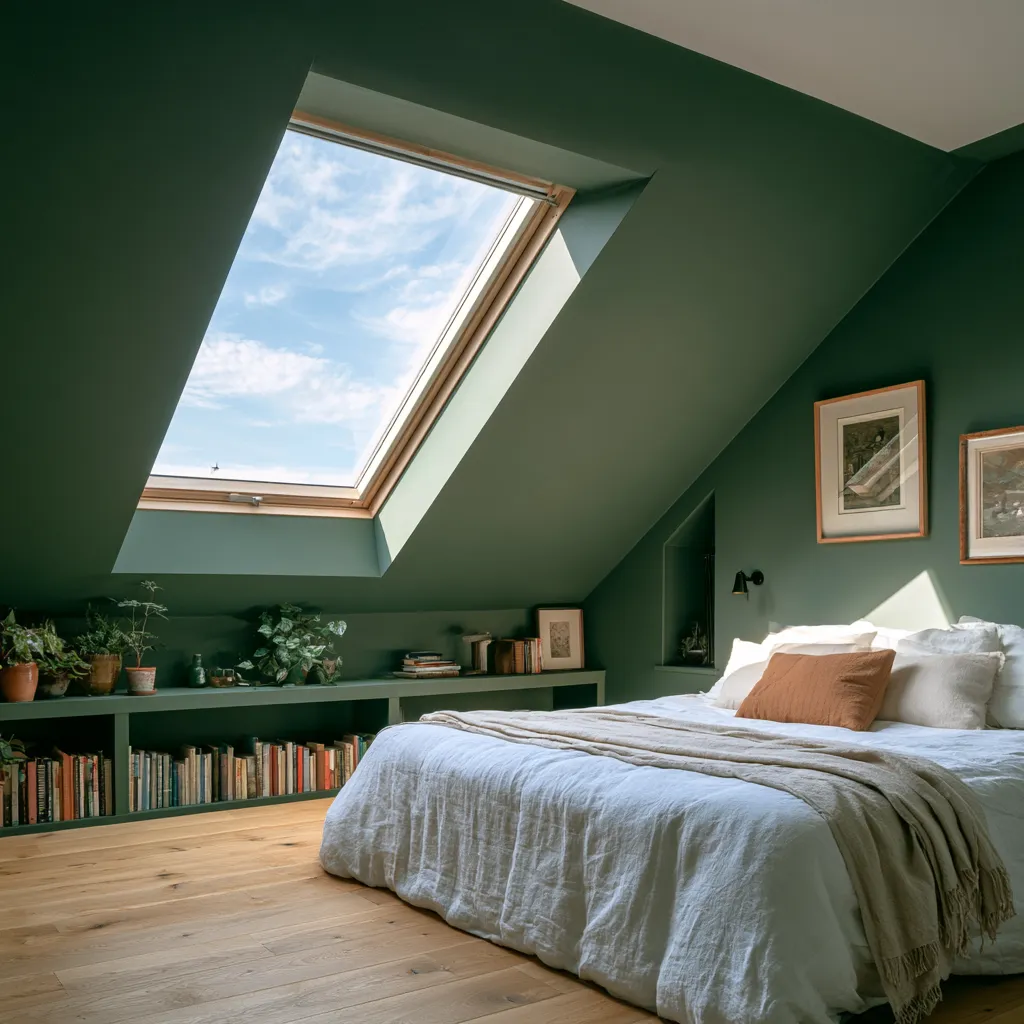
Off-white walls and cream carpeting are the bones of almost every Rose Uniacke bedroom I’ve looked at closely. The mistake most people make is stopping there — painting the walls ivory and calling the job done. Uniacke layers the neutral: a warm-toned plaster finish on the walls, linen bedding in a slightly cooler tone, a wool rug two shades darker underfoot. The room reads as a single breath of colour, but up close there are five or six distinct tones doing quiet work.
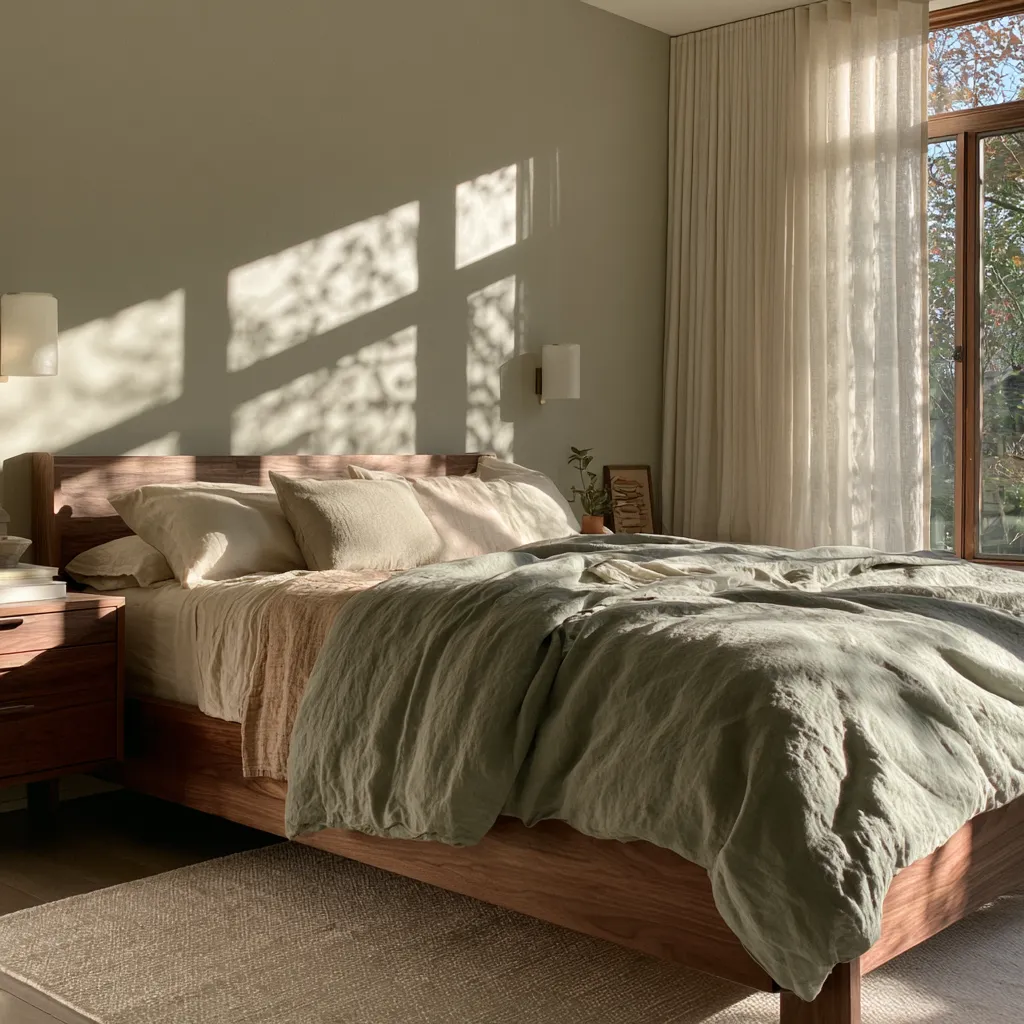
Natural light is the tool she relies on most. Bare windows, no voile, nothing softening the direct hit of morning sun on a plaster surface. You’ll notice the light does the decorating — shadows shift across the bed linen and the wall texture becomes dynamic without any intervention. I tried this in my own bedroom after covering the windows in sheer curtains for years. The room felt twice the size within a week.
Don’t add a second accent colour to make a neutral room feel “less plain.” That impulse is the exact thing Uniacke resists. A mustard cushion or a dusty-pink throw on an off-white bed reads as decoration trying too hard — it signals that the person who styled the room didn’t fully trust what they had. The neutral palette only works when you commit to it entirely and let texture carry all the variation.


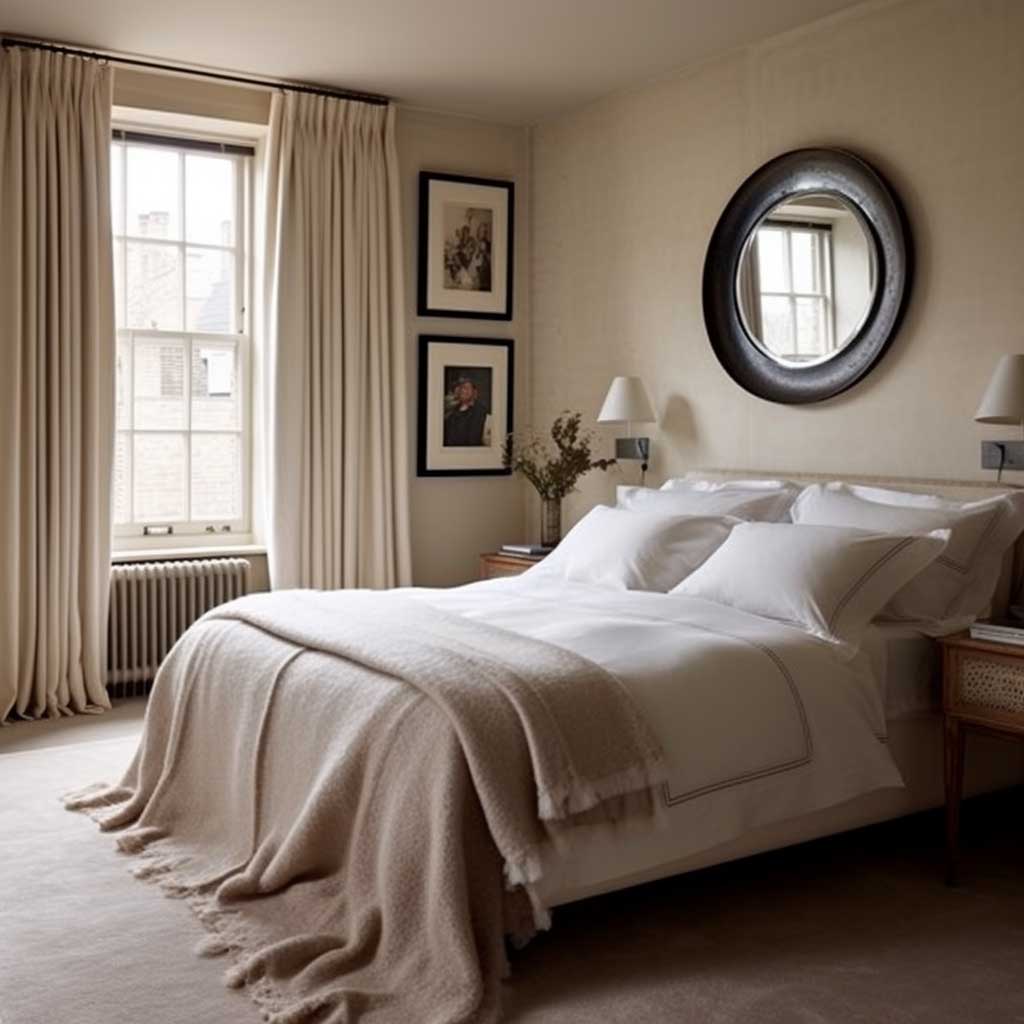
The bed in a Uniacke neutral room is always dressed in high-quality linen — not crisp hotel cotton, not a duvet in a printed cover. Achieving this minimalist bedroom look starts with the fabric choice more than anything else. She uses natural linen that wrinkles slightly and doesn’t apologise for it. That softness is load-bearing: it’s what stops the off-white room from feeling like a show flat.
Accessories number two or three per room, maximum. A single piece of art on the wall — often unframed or in a simple raw wood frame. One bedside lamp. Nothing on the floor except the rug. The discipline is severe, but the result reads as generosity: all that space belongs to the person sleeping there, not to the designer’s ego.
The Antique Bed Anchors Everything — Rose Uniacke’s Timeless Furniture Choices
Rose Uniacke furniture starts with a single statement antique and builds the room outward from there. In her most studied bedroom compositions, that statement is the bed frame itself — a dark carved wood piece, usually 19th century, bought through her Pimlico Road gallery or sourced from European dealers she’s worked with for decades. Pieces like this run $8,000 to $25,000 at auction, but the design logic is replicable at any budget: one antique anchor, everything else quieter.
White linen against dark wood is the contrast Uniacke returns to again and again. It’s a formula as reliable as black on white in typography — the old material gains authority, the new material keeps it from feeling heavy. I’ve seen people attempt this with a reproduction antique bed and the effect almost works, but not quite. Reproduction frames lack the micro-imperfections of age that make the contrast feel earned rather than arranged.


The chaise longue at the foot of the bed appears in several Uniacke rooms — velvet-upholstered, low-backed, usually a single tone pulled from the room’s darkest neutral. It reads as pure luxury but it serves a function: it gives the bed visual weight from the foot, so the room doesn’t feel like it dissolves into the floor. Don’t buy a bench for the same spot thinking it achieves the same thing. A bench is storage. A chaise is a full stop.
Curtains in these rooms are heavy and long, puddling slightly on the floor. The fabric matches the wall tone closely rather than contrasting it — Uniacke doesn’t use drapes as a colour statement. They exist to soften the window architecture and deepen the room at dusk. I stole this trick from her work and my bedroom went from looking like a rental apartment to something with actual intention behind it.
The bedside table and the lamp never match. This is not an accident. Mixing modern and vintage interior design elements well means pairing a stone or plaster base lamp with a wooden side table, or a bronze table with a ceramic lamp at around the $300 mark. Matching sets are a showroom habit that makes rooms feel assembled rather than lived in.
Don’t Do This
Matching the headboard fabric to the curtains is the single most common mistake in rooms trying to reference Uniacke’s aesthetic. It reads as a mood board that got built in real life — coordinated but flat. Uniacke never matches textiles across different objects in the same room. She matches tone, not material or pattern. A charcoal velvet chaise does not need charcoal curtains; it needs curtains in a warm greige that pulls from the same shadow register without being identical.
Reproduction antique furniture without any genuine antique pieces nearby also collapses the whole effect. One real thing in the room raises the perceived quality of everything else. Zero real things — and the entire composition reads as a set.
Charcoal Earns Its Place — Rose Uniacke’s Monochrome Bedroom Logic
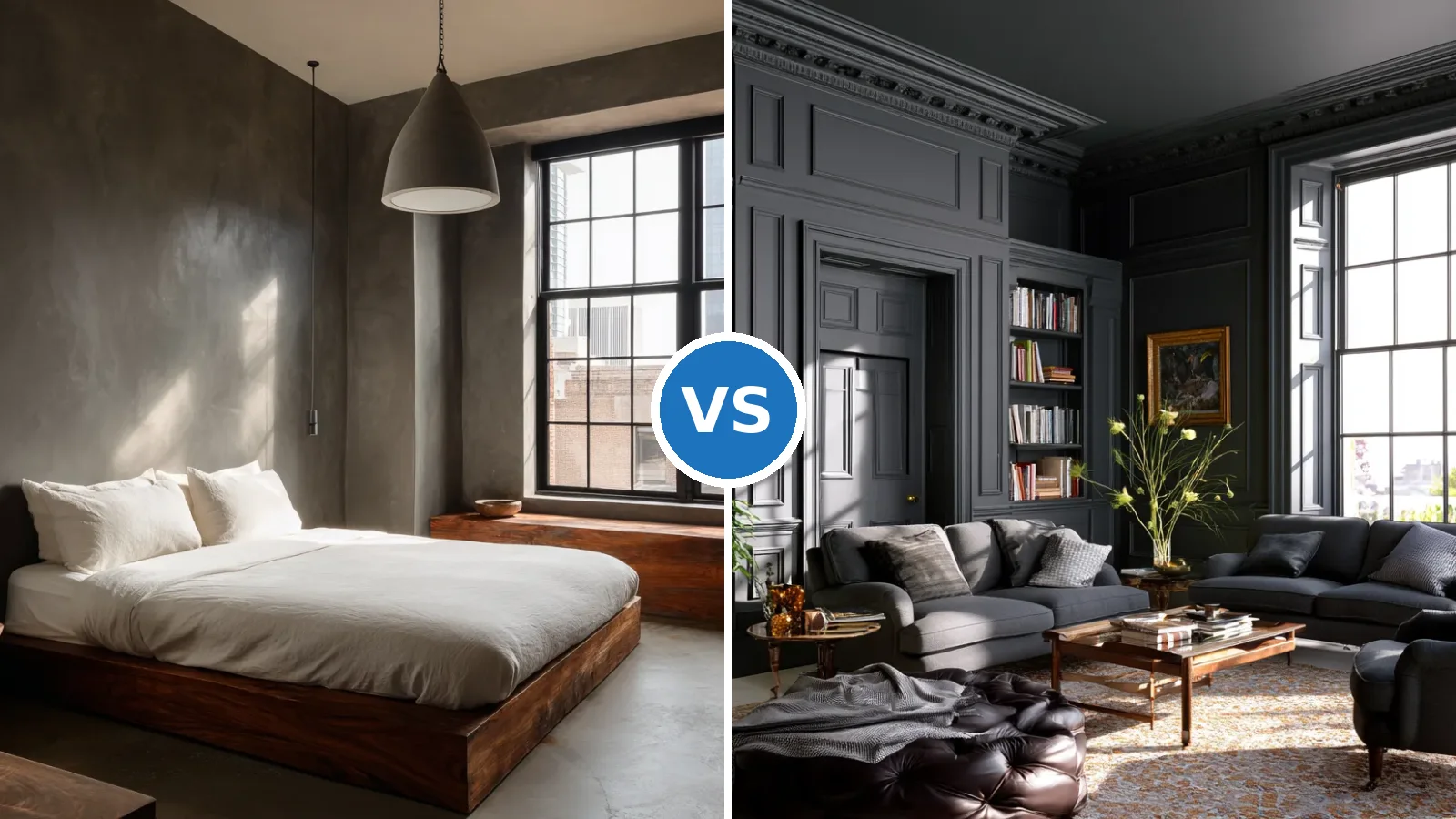
The monochrome bedrooms are where Uniacke’s work gets misread most often. People see grey walls and grey bedding and call it cold. The rooms are not cold — they’re layered. Light grey plaster walls sit under a charcoal-upholstered armchair, which sits on a mid-grey wool rug. The tonal range across three surfaces covers nearly as much ground as a full colour palette, with none of the visual noise.
Texture is doing the structural work here. Velvet on the chair. Brushed linen on the bed. A slightly rougher wool underfoot. You feel the room before you consciously read it — run your hand along the bedding and it doesn’t feel like a grey room, it feels like a quiet expensive one. Flat grey on every surface, with no variation in weave or pile, is the version that feels cold. That’s the mistake, not the colour itself.

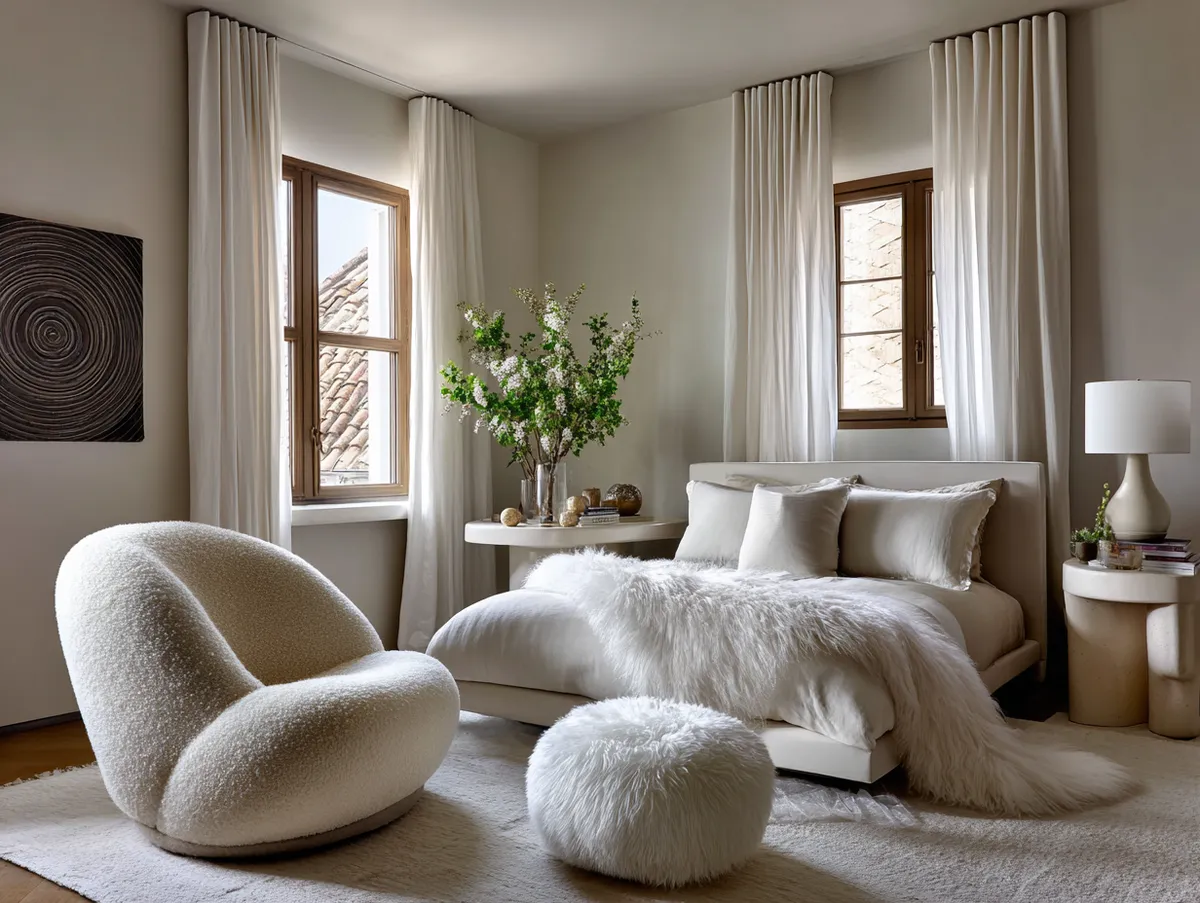


Rose Uniacke lighting in these rooms is a single contemporary table lamp — bronze or plaster base, linen shade, positioned low on a small side table. The warm pool it creates against grey plaster walls is the room’s only warmth source at night, and that contrast does more atmospheric work than a $2,000 overhead fixture ever could. She avoids ceiling lights almost entirely in bedrooms. Overhead lighting flattens a room; a low table lamp gives it depth and direction.
The sleek modern bed in a monochrome Uniacke room sits without a headboard in several examples — or with a very low, padded one in a charcoal fabric that disappears into the wall behind it. This is the opposite of the trend for oversized statement headboards. A headboard should not be the first thing you notice. If yours is, the room is working for the headboard, not for you.
Canopy Beds and What Uniacke Actually Does With Them
The canopy bed appears in Uniacke’s most photographed bedrooms and it’s almost always the same intervention: linen panels hung from a simple square frame, no embellishment, fabric pooling slightly at the corners. The frame itself is iron or raw steel, never ornate. The total cost of replicating this with a Restoration Hardware Aviator Canopy frame at $2,495 and custom-cut Libeco linen at around $400 is achievable — the components are not the secret, the restraint is.
Muted greys and warm whites dominate the canopy rooms. Uniacke never uses a canopy to introduce pattern or colour — the fabric panels are always a continuation of the room’s existing palette. You’ll notice this immediately: the canopy bed doesn’t interrupt the room, it deepens it. A bedroom with a canopy in a contrasting fabric is a completely different design statement, and not the one she’s making.


The mix of antique and modern around the canopy bed is where Uniacke’s antique dealer background shows most clearly. A sleek console table in lacquered steel sits next to an intricately carved 18th-century chair. Neither object explains the other. The combination reads as a room assembled by someone with genuine taste and access — not someone following a checklist. I own two antique pieces in my bedroom now and the rest of the furniture is contemporary IKEA Hemnes; the antiques make the cheap things look intentional.
Decor in these rooms extends to a framed artwork, one table lamp, and a small stack of books on a low surface. Full stop. Uniacke has said the objects in a room should tell the story of the person living in it, not the story of the designer. A room with fourteen carefully chosen objects tells the designer’s story. A room with four tells yours. For a deeper look at how Rose Uniacke approaches all her interior projects — bedrooms, drawing rooms, listed manor houses — her studio’s own overview is worth reading in full.
Final thought
Rose Uniacke’s bedrooms are not minimal — they’re precisely edited, and that gap is everything.
Minimalism removes things. Uniacke selects things. The result looks the same from a distance and feels completely different when you’re standing in it.
Her furniture collections are available through the Pimlico Road gallery at prices starting around $1,200 for smaller pieces. The antiques she sources vary widely. The design logic — one anchor piece, layered neutrals, mismatched bedside objects, no overhead lighting — costs nothing to borrow.
Save this post for the next time you’re about to add a third cushion to a bedroom that needs fewer of them, not more.
FAQ
What makes a Rose Uniacke bedroom different from a standard minimalist bedroom?
What furniture does Rose Uniacke design and sell?
How does Rose Uniacke approach headboards in her bedroom designs?
What lighting does Rose Uniacke use in bedrooms?
How does Rose Uniacke use antique furniture alongside modern pieces?
What colour palette does Rose Uniacke use most often in her bedrooms?
Complete guide
Bedroom Design Ideas That Actually Change How You Sleep, Feel and Live
Styles, colors, furniture, walls, layouts — 300+ ideas in one place