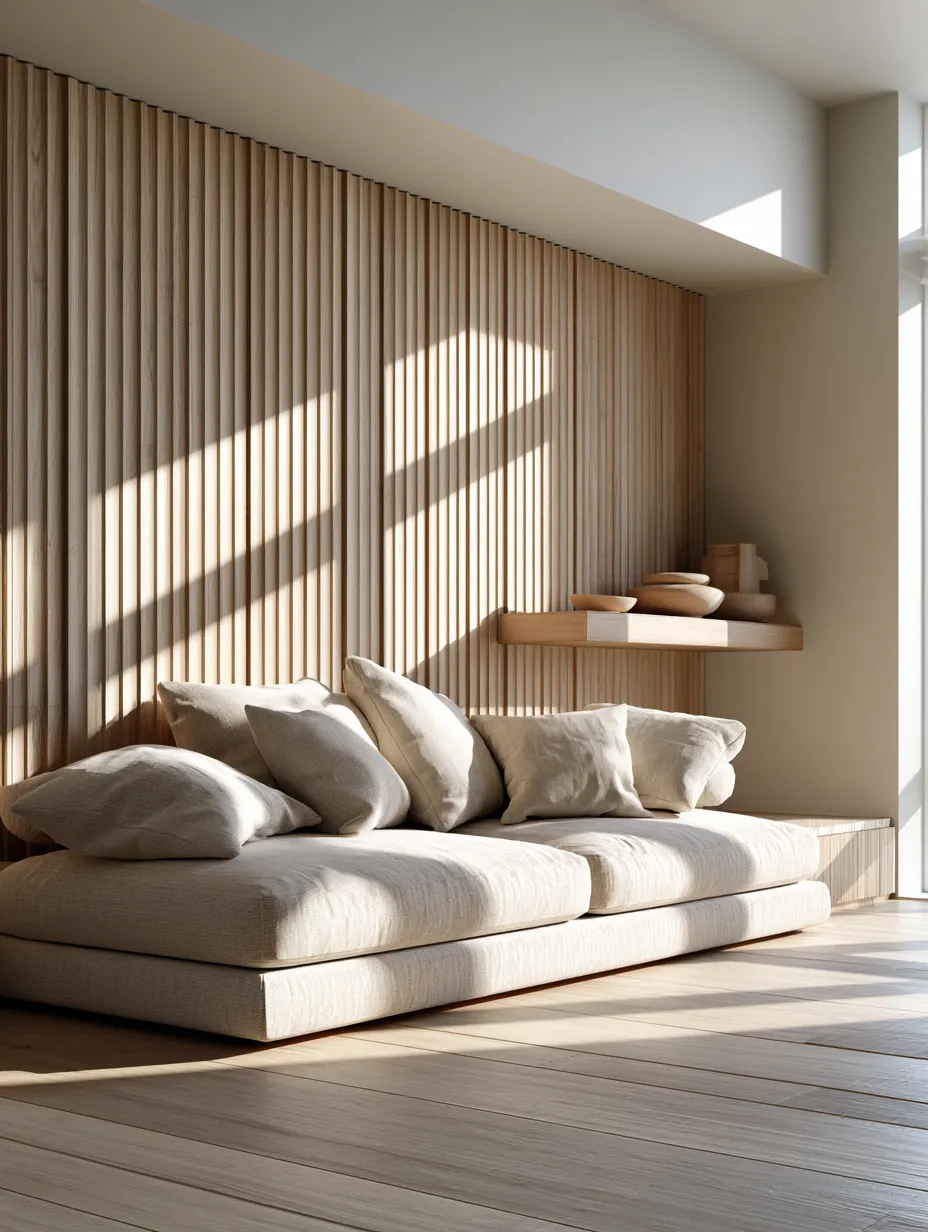
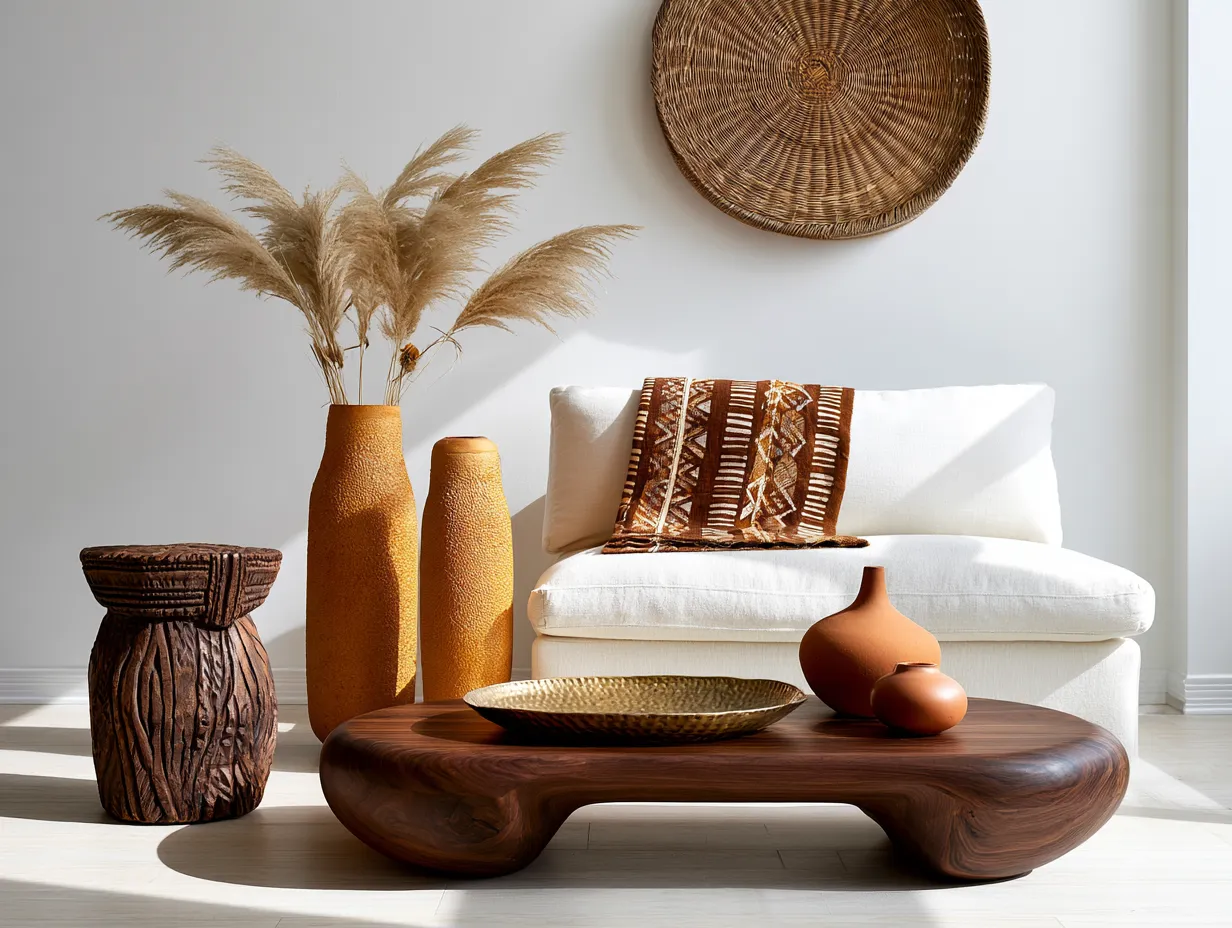
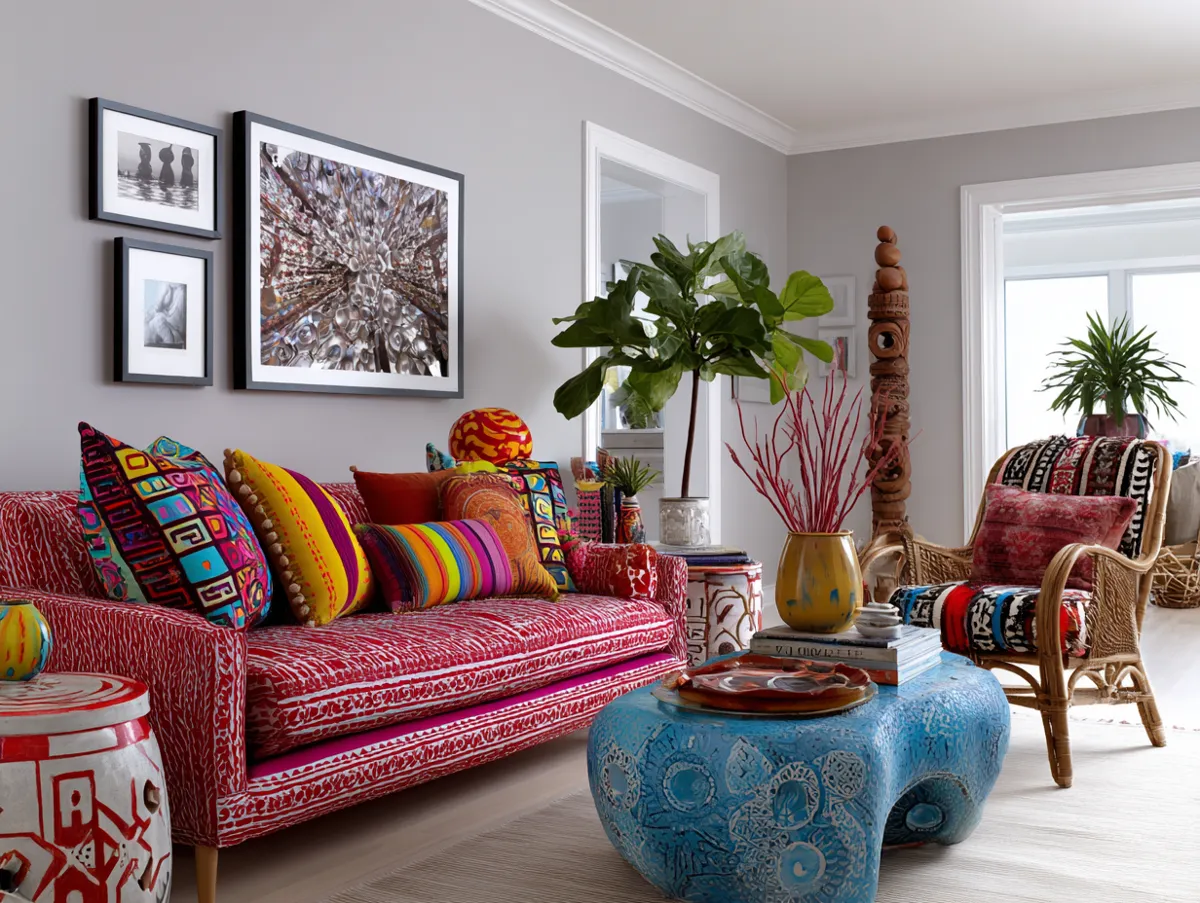
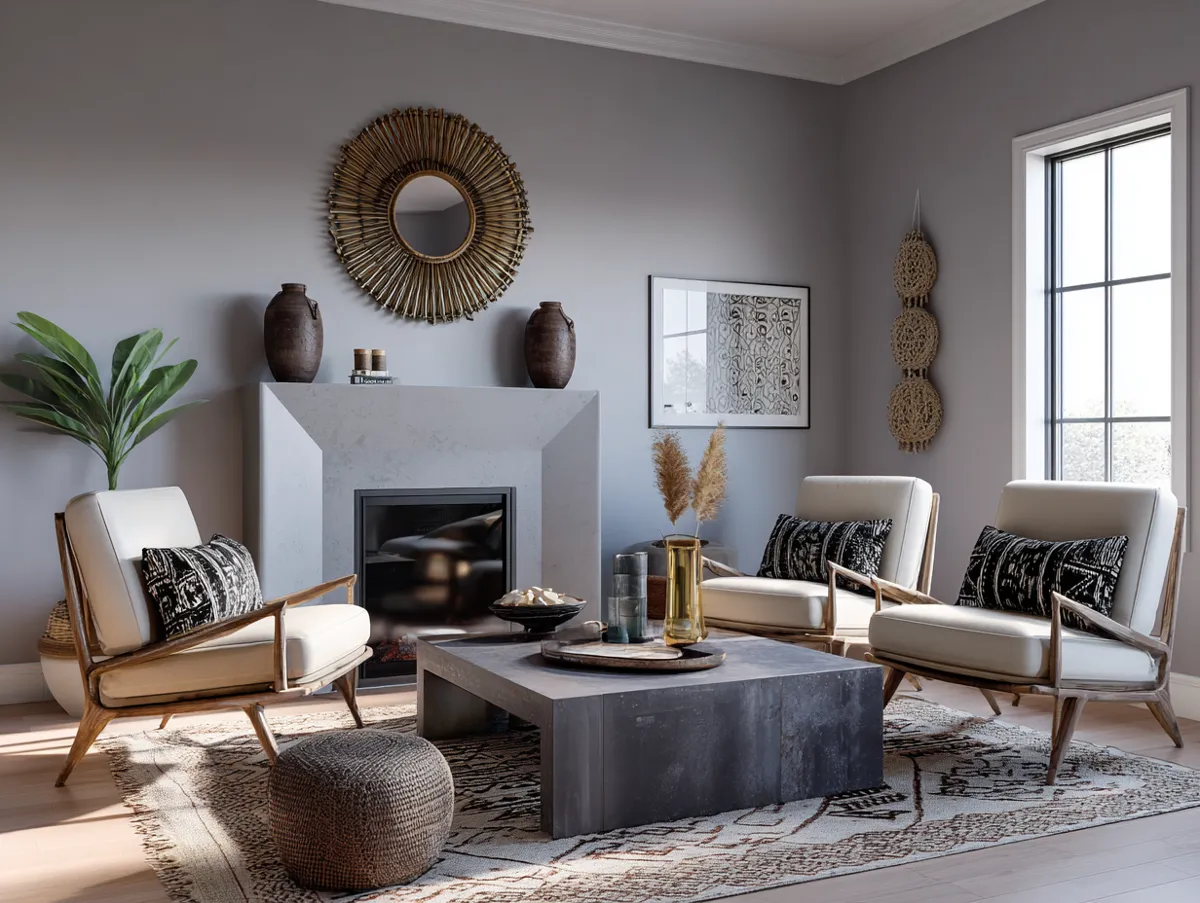
A boho farmhouse living room works when the farmhouse half builds the shell and the bohemian half dresses it: wood beams, plank walls and pale paint underneath, woven rugs, macrame, plants and global prints on top. The mix suits almost any floor plan, from a rental with plain drywall to a true barn conversion. A natural jute 8×10 rug, typically priced around $150–$500, plus a handful of warm 2700K bulbs already pushes an ordinary room most of the way there. Start with those two moves before you buy a single accent pillow.
Does the style still look current, or is it a passing Pinterest phase? It holds up because both parents are built on natural materials, so the room ages like a leather saddle rather than a fast-fashion jacket. Rustic farmhouse rules the structure with whitewash, reclaimed wood and iron hardware, while boho adds pattern, softness and collected pieces. Keep the shell quiet and let only one or two zones carry the louder layers.
The sections below cover the shell, furniture, rugs, light, plants, gallery walls, storage and vintage finds, each with typical sizes and prices. A comparison table near the end puts the main upgrades side by side, so you can see where $150 does more work than $3,000. Read the shell section first, because every later choice sits on top of it.
Quick Scan
- An 8×10 rug fits most living rooms; leave 8–18 inches of bare floor around its edges.
- Jute 8×10 rugs run about $150–$500, while wool in the same size often passes $1,000.
- Jute lasts roughly 3–7 years vs 5–10 for machine-made wool and 20–50+ for hand-knotted wool.
- Tongue and groove ceilings cost about $4–$10 per sq ft installed vs $2.00–$5.50 for drywall.
- Keep every bulb at 2700K–3000K and plan 3–5 light sources per room.
- Center a gallery wall at 57 inches with 2–3 inch gaps between pieces.
- Set the coffee table 14–18 inches from the sofa edge and keep walkways at 30–36 inches.
Bohemian Farmhouse Style Splits the Room Into Shell and Layers
Bohemian farmhouse style, often searched as farmhouse boho, treats the room like a house and its luggage: farmhouse supplies the walls, floor and ceiling, boho supplies everything you can carry. The shell leans on whitewash, wide planks and black iron, while the layers lean on jute, rattan, macrame and pattern. A standard whitewash mix of 1 part paint to 1 part water keeps wood grain visible, which is exactly the backdrop boho textiles need. Test the mix on a scrap board before committing a full wall.

Farmhouse vs boho is a contrast between discipline and freedom. Farmhouse likes symmetry, pale walls and a few honest objects, while boho likes asymmetry, saturated color and a little controlled chaos. So which side should lead? Let farmhouse lead in small rooms where several patterns crowd the eye, and let boho lead in large open plans that need warmth. Never split the room 50/50 down the middle, since a half-rustic, half-hippie room reads like two neighbors sharing one wall.
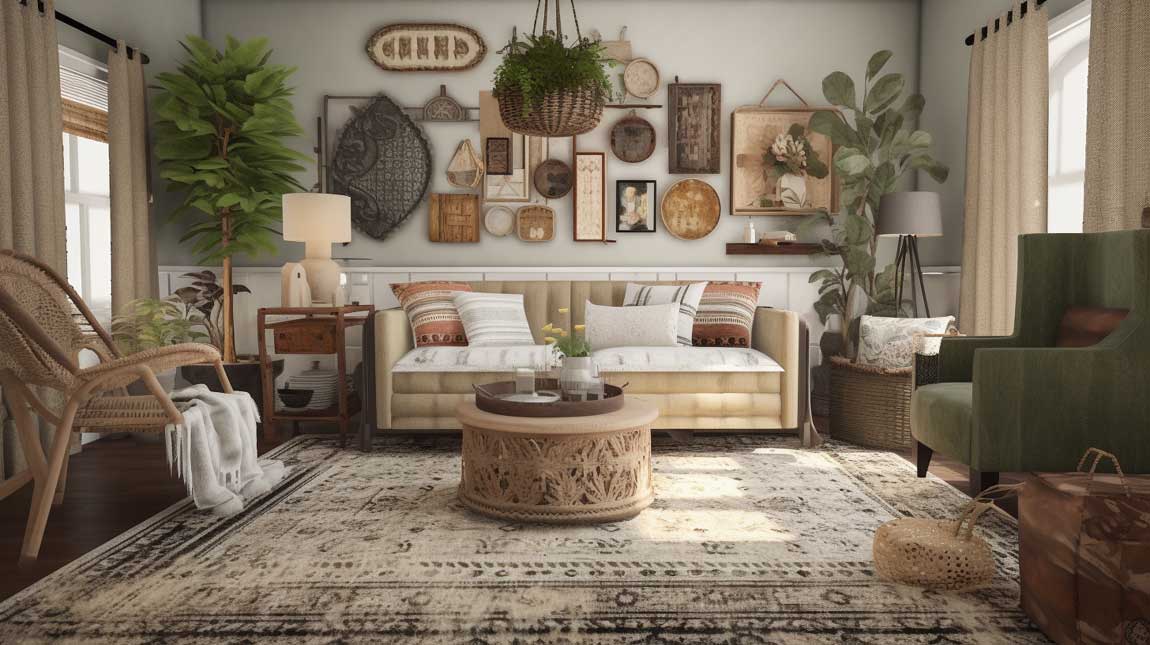
Light ties both halves together. Warm bulbs in the 2700K–3000K range bring out the amber in reclaimed wood and the red in kilim patterns, while cool 4000K–6500K light makes the same room feel like a hardware aisle. Rich wood tones and warm neutrals look best under that warmer range. Swap every bulb before buying decor, because the wrong light makes even a good rug look cheap.
- Farmhouse brings: whitewashed or shiplap walls, exposed beams, reclaimed wood, black iron hardware.
- Boho brings: jute and kilim rugs, macrame, rattan, trailing plants, global prints.
- Shared ground: natural fibers, warm wood, handmade texture and 2700K–3000K light.
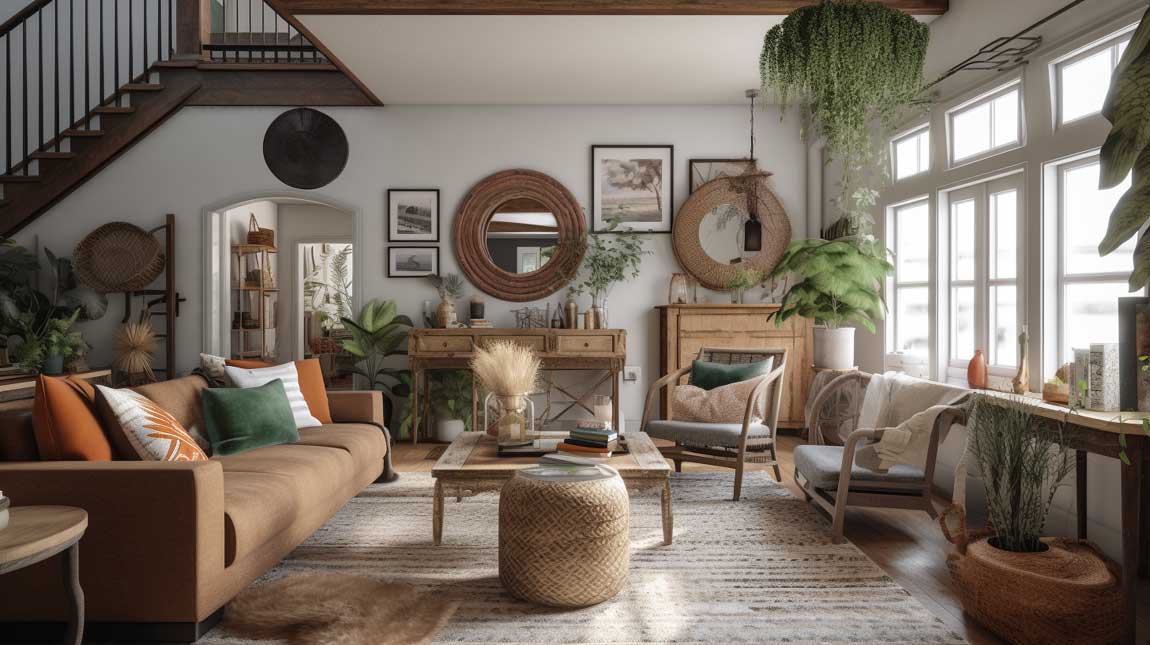
Beams and Planks Give a Rustic Boho Farmhouse Living Room Its Backbone
A rustic boho farmhouse living room needs one piece of real structure overhead or underfoot, and wood is the default material. Tongue and groove planks typically cost $4–$10 per square foot installed, against $2.00–$5.50 for plain drywall. On a 15×18-foot ceiling of 270 square feet, that means roughly $1,080–$2,700 for wood vs $540–$1,485 for drywall. Spend the difference in the room where people actually sit and look up.
Faux vs solid beams is the next fork. Hollow polyurethane beams run about $15–$35 per linear foot installed, while solid timber lands around $25–$60 and can weigh several hundred pounds per 12-foot length, as this breakdown of rustic wood ceiling and beam costs shows. Is solid wood worth the premium? Only where a beam hangs low enough to touch, such as over a fireplace. Never hang solid beams from an older ceiling without a structural check.

Floors follow the same logic as ceilings. Wide reclaimed or distressed hardwood reads like the boards of an old hayloft, and it hides the scuffs that a glossy finish would broadcast. A faux beam project averages near $3,000, so pairing modest beams with an honest wood floor often beats one expensive feature. Choose matte or satin over high gloss, since shine fights the handmade texture of jute and wool on top.
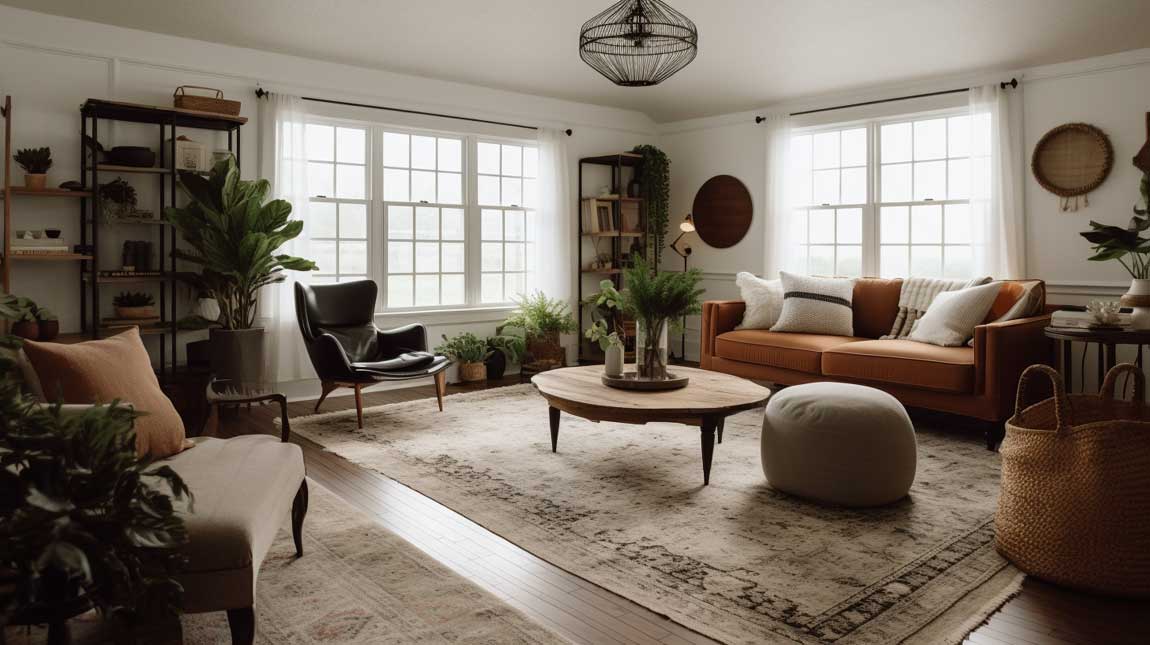
Modern Boho Farmhouse Furniture Mixes One Heavy Piece With Light Ones
Modern boho farmhouse furniture works when one weighty anchor, usually a deep linen or leather sofa, sits among lighter rattan, cane and wood pieces. An 8×10 rug typically fits a sofa up to about 90 inches wide plus two accent chairs, with front legs on the rug and back legs off. Keep the coffee table 14–18 inches from the sofa edge, close enough to reach a mug and far enough to pass. Measure the sofa first and buy the rug second.
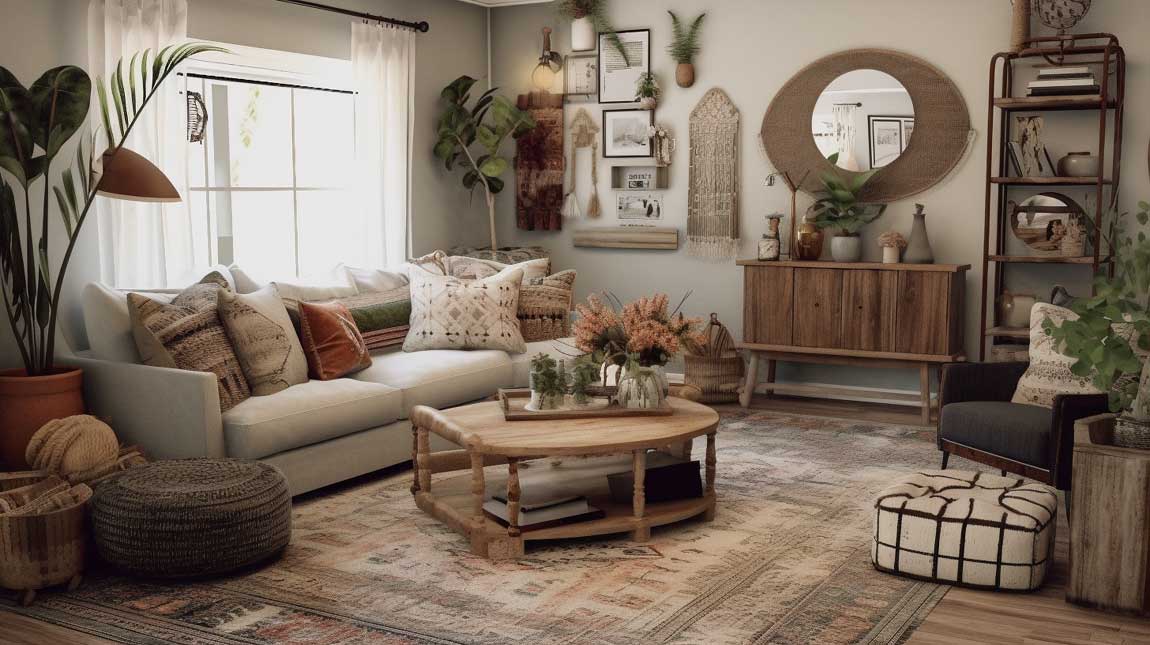
Chunky vs leggy is the balance to watch. A slipcovered farmhouse sofa plays the cast-iron skillet on the stove, and a woven peacock chair or cane armchair plays the lighter pan beside it. With an 8×10 rug, a 48–54 inch coffee table suits a standard sofa, while a sectional pairs better with a 60-inch oval. Avoid three heavy upholstered pieces in one grouping, because the airy boho half disappears entirely.
What about circulation around the seating? Leave 30–36 inches for main paths, so nobody squeezes past the reclaimed console with a tray in hand. A round or oval coffee table softens corners in tight rooms and keeps shins safe in homes with kids. Pick a table with an open base, since solid blocks of wood make a small room look heavier.
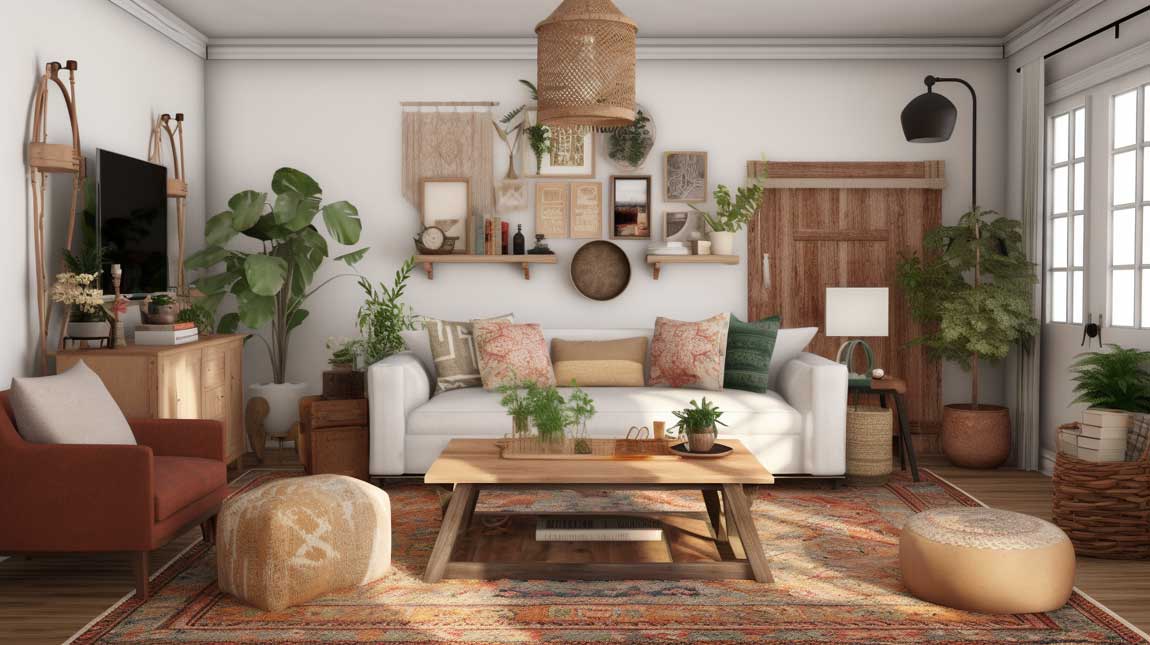
Boho Farmhouse Decor Starts on the Floor With Rugs and Textiles
Boho farmhouse decor gets most of its character from textiles, and the rug is the largest of them. A jute 8×10 runs roughly $150–$500, while a wool rug of the same size often passes $1,000, so jute is the budget base and wool the long-term buy. Typical lifespans follow the price: about 3–7 years for jute and sisal vs 5–10 for machine-made wool. Choose jute for dry, calm rooms and wool where kids and dogs race through daily.
Layering a smaller patterned rug over jute is the classic farmhouse boho trick. A 4×6 flatweave or Persian-style piece on an 8×10 natural fiber base works like a framed print on a plain mat. How much floor should stay visible? Leave 8–18 inches of bare boards between the outer rug and the walls so the room never looks carpeted wall to wall. Skip layering two busy patterns, since one plain base and one patterned top keep the floor readable.
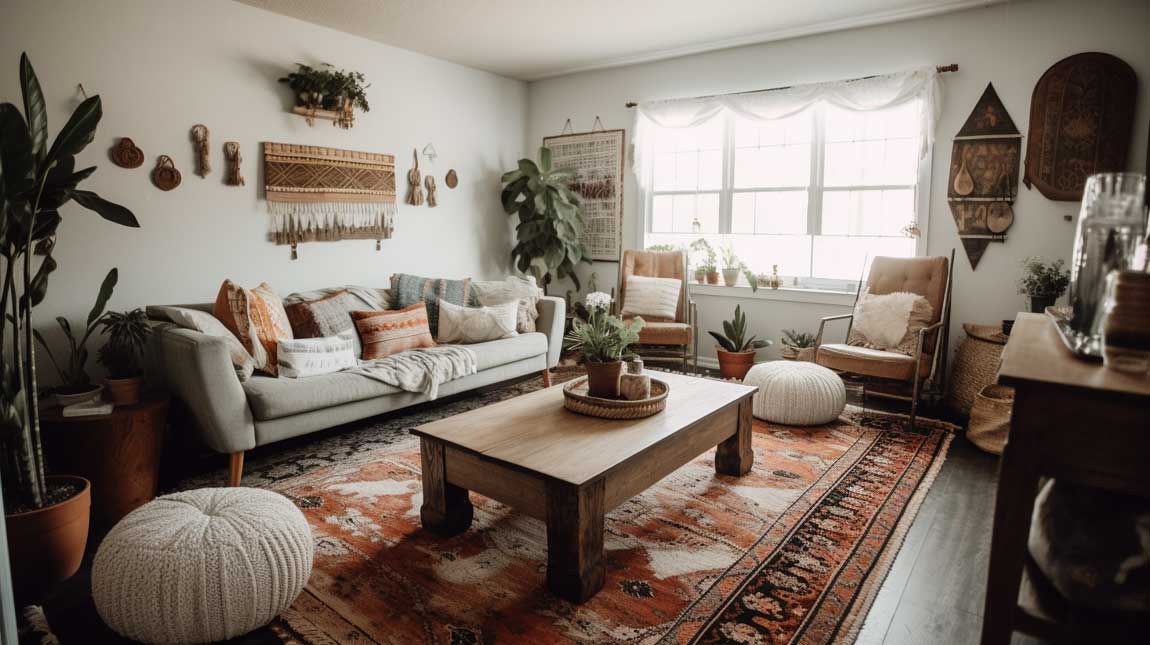
Throws and pillows finish the textile layer. Mix chunky knit, linen, mudcloth and leather, but hold the palette to three or four colors pulled straight from the rug. Rotate a jute rug every 3–6 months so sun and footsteps wear it evenly. Cap sofa pillows at four or five, because a sofa buried in cushions looks like a showroom and gets cleared every night.
Layered Light Keeps a Boho Farmhouse Living Room Warm After Dark
Layered lighting is the part of a boho farmhouse living room that photos rarely show but everyone feels. Plan 3–5 sources across three layers: ambient from a rattan or iron pendant, task from floor and table lamps, accent from sconces or a strip tucked over a beam. Keep every bulb at one warm temperature between 2700K and 3000K, since a single 4000K bulb stands out like a fluorescent tube in a candlelit barn. Put each layer on its own dimmer if the wiring allows.
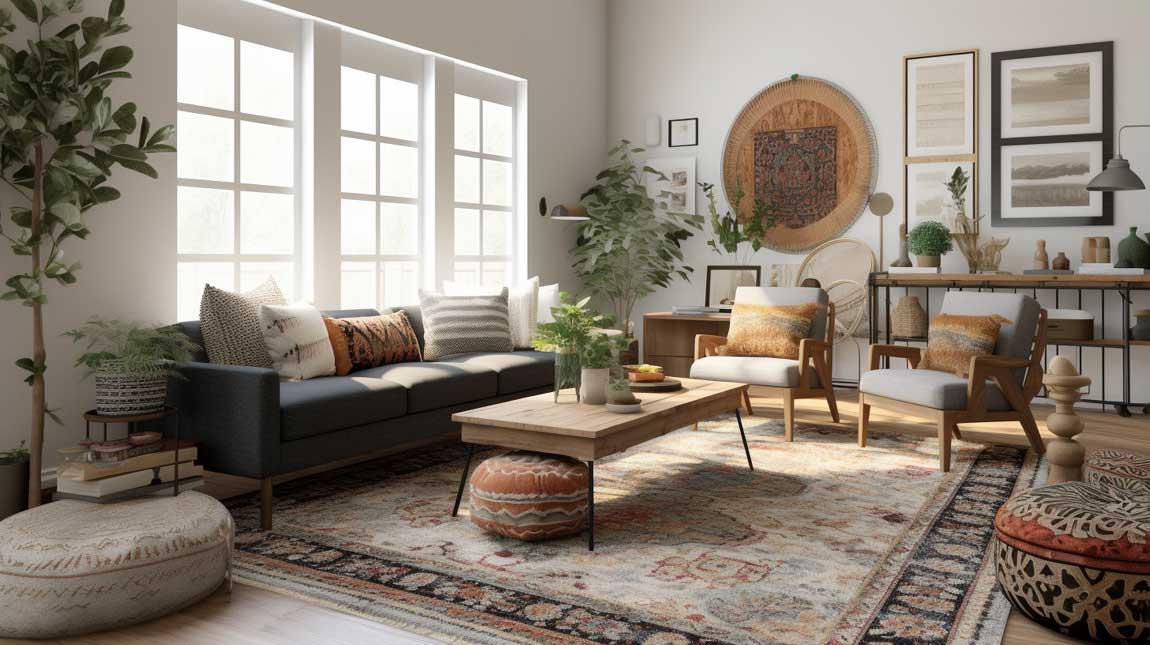
Why bother with lamps when a ceiling fixture already lights the room? Common guidance puts living room ambient light near 50 lux and reading spots near 150 lux, so one overhead fixture either leaves the reading chair dim or floods the whole space. Residential LEDs use at least 75% less energy than incandescent bulbs and last up to 25 times longer, according to the U.S. Department of Energy guide to LED lighting. Choose warm LEDs with a CRI of 90 or higher so wood and textiles show their true color.
Don’t Do This
- Don’t buy a 5×8 rug for a full seating group; an 8×10 is the workhorse size for most living rooms.
- Don’t mix 2700K and 4000K bulbs in one room; the odd bulb out shows instantly.
- Don’t hang solid beams before a structural check; one 12-ft oak beam can weigh several hundred pounds.
- Don’t hang a gallery wall at your personal eye level; center the whole group at 57 inches.
- Don’t put jute where spills and humidity are daily events; it lasts only 3–7 years even in dry rooms.
Plants and Natural Fibers Bring the Outdoors Into Farmhouse Boho Rooms
Farmhouse boho decor relies on living green as much as on wood, and light decides which plants survive. Indoor light can drop from about 1,000 to 100 foot-candles within a few feet of a window, so a corner that looks bright to you may starve a plant. Plants sitting more than about 5 feet from a window rarely get enough light. Check the spot at midday with a phone light-meter app before buying a large floor plant.

Fiddle leaf fig vs pothos is the classic choice. A fiddle leaf fig wants bright indirect light for about 12–13 hours a day, while pothos survives near 50 foot-candles and grows fuller around 200–250. Think of the fig as a racehorse and the pothos as a farm pony: one needs perfect conditions, the other works almost anywhere. Can a north-facing living room host the fig? Rarely without a grow light, so start with pothos trailing from a macrame hanger there.
Woven baskets, rattan planters and terracotta pots carry the natural-fiber theme through the room. Group plants with similar light needs together near the brightest window instead of scattering single pots into dark gaps. Rotate each pot a quarter turn every week or two so growth stays even. Never drop a plant straight into a basket without a liner, because water wicks into the weave and rots it.
Gallery Wall Rules for a Farmhouse Boho Living Room
A farmhouse boho living room gallery wall mixes framed prints, woven baskets, small mirrors and a macrame piece into one composition. Center the whole group, not each frame, at about 57 inches from the floor, the eye-level standard galleries use. Keep 2–3 inches between pieces so the cluster reads as one picture rather than scattered souvenirs. Lay everything on the floor first and photograph the layout from above.
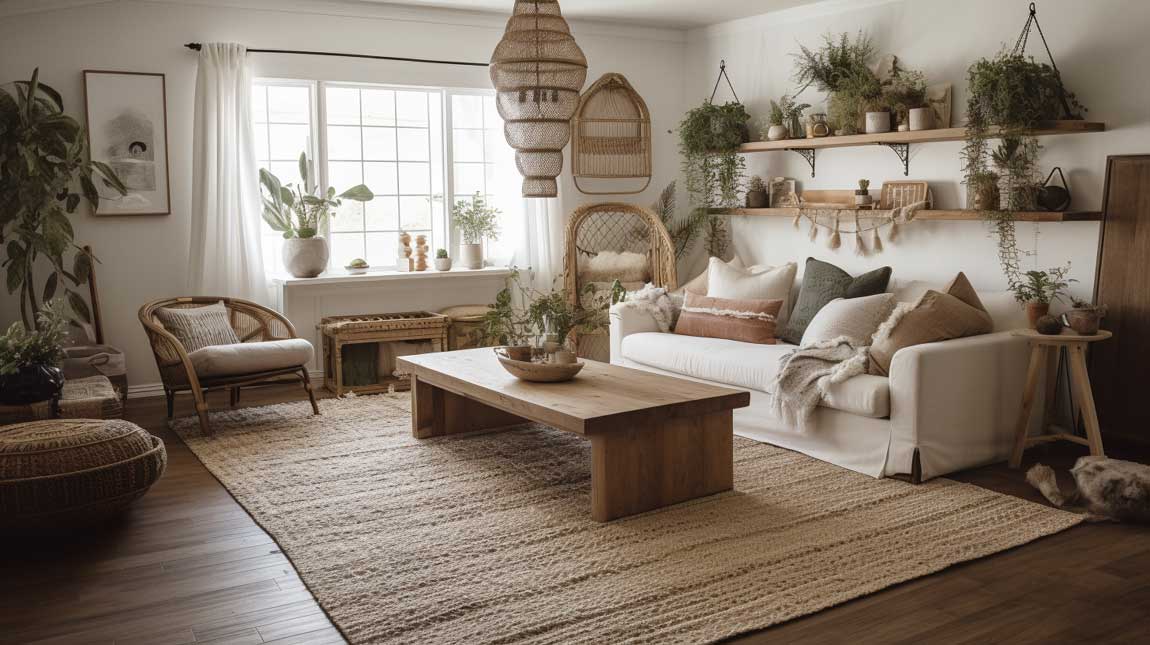
Size the wall to the furniture below it. A gallery should span about two-thirds to three-quarters of the sofa width, so an 84-inch sofa takes a cluster roughly 56–63 inches wide. Most rooms look settled with 5 to 9 pieces, and a 57-inch center usually leaves the bottom frame about 8 inches above a standard sofa. Does mixing baskets with frames break the spacing rule? No, measure the gap to the basket rim exactly as you would to a frame edge.
Frame finishes are where farmhouse and boho meet on the wall. Black iron or weathered wood frames bring the farmhouse side, while rattan rounds and woven plates add the boho side, like brass buttons on a denim jacket. Repeat three finishes across the group so the wall looks collected over time. Avoid ten different frame styles, which reads more like a yard sale than a gallery.
Hidden Storage Stops Eclectic Decor From Turning Into Clutter
Clutter is the risk built into every boho farmhouse look, because collected objects multiply faster than shelf space. Closed storage solves most of it: lidded baskets, a vintage trunk as a coffee table, a storage ottoman, or a closet hidden behind a sliding barn door. A barn door kit can save up to 14 square feet of floor compared with a swinging door, enough room for a reading chair. Rotate pieces in from storage each season instead of buying more.

Barn doors come with a catch: a 30-inch sliding door needs about 61 inches of clear wall beside the opening. Installed prices run about $600–$2,000, with many homeowners paying around $1,200 for a solid wood door, as covered in these farmhouse rustic bedroom ideas with barn door costs. Is a barn door right for a living room? It suits a coat closet, media cabinet or pantry nook, but not a powder room where sound carries. Measure the wall run, including any switches the door will slide over.
Open shelves still have a place in the room. Group objects in threes or fives, mixing one tall, one round and one flat piece, and leave visible gaps so each group can breathe. A shelf packed edge to edge looks like a storage unit, while a half-empty one looks chosen. Never fill a shelf completely, since empty space is what makes the remaining pieces count.
Shabby Chic Rustic Touches and Vintage Finds Add the Story
A shabby chic rustic boho farmhouse living room borrows its soul from things with a past: chipped painted cabinets, faded rugs, old crocks and hand-stitched quilts. A hand-knotted wool rug can last 20–50 years or more, against roughly 5–10 for a machine-made one, which is why a worn vintage piece often outlives a new purchase. Hunt flea markets and estate sales for rugs, frames and wooden bowls first, since they fit almost any layout. Check old textiles for moth damage before bringing them home.
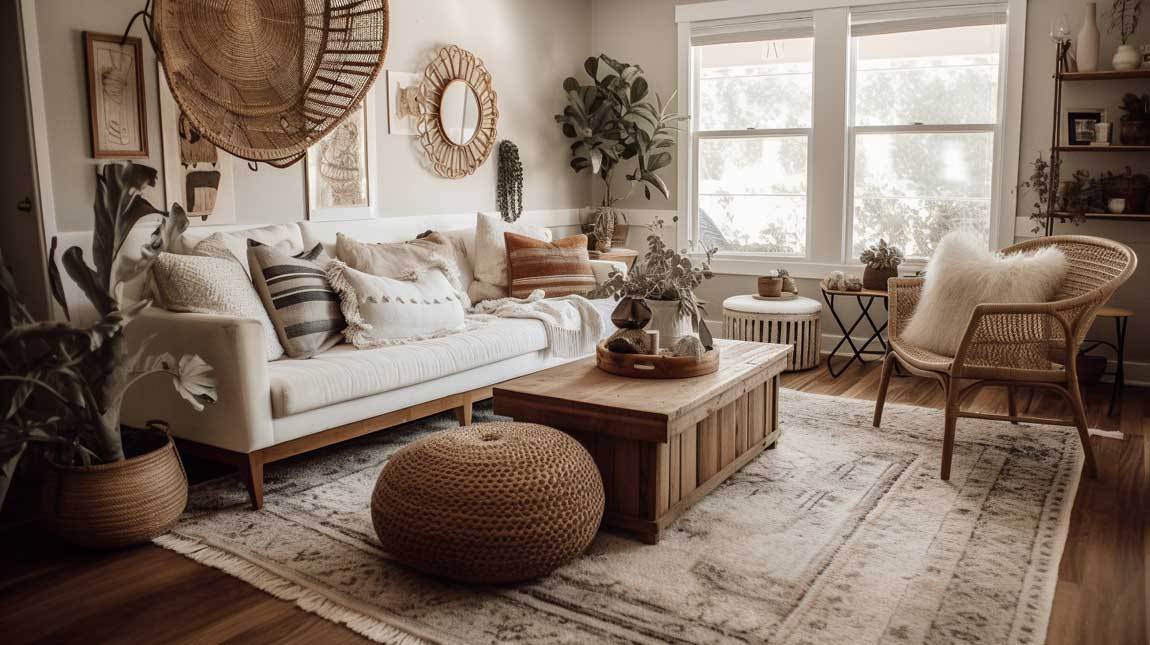
Distressed vs restored is the main decision with old furniture. Light wear on a dresser or bench reads as honest age, like the faded knees on old jeans, while heavy sanding to fake it looks staged. Should every piece be vintage? No, two or three true old pieces per room carry more weight than a dozen reproductions. Leave the patina alone and repair only what wobbles.
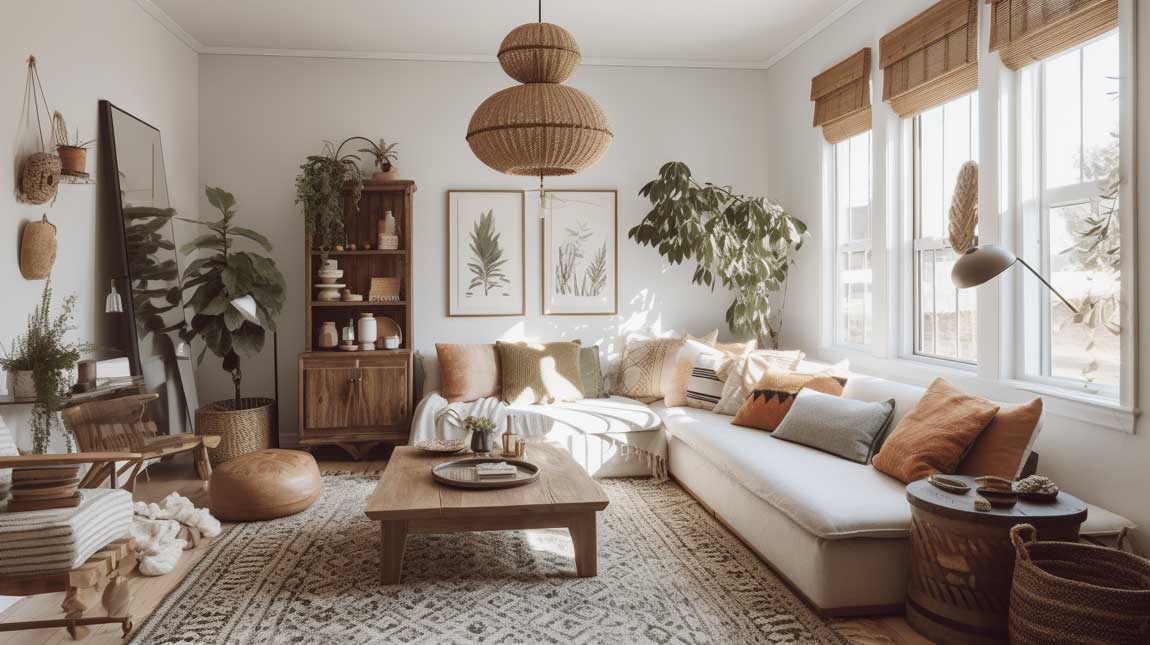
Personal finds work best when a material or color repeats. A copper pot, a brass candlestick and a bronze frame placed around the room link up like stitches in a quilt. Layering a 4×6 vintage rug over a plain 8×10 base puts an old piece right at the center of the room. Skip mass-produced slogan signs, which flatten the story real finds are meant to tell.
Old Meets New in a Modern Boho Farmhouse Living Room
A modern boho farmhouse living room pairs one or two weathered pieces with clean-lined newcomers, so the vintage reads as a choice rather than a leftover. A reclaimed wood console beside a low linen sectional, or a faded kilim under a sleek oval table, shows the contrast clearly. For a sectional on an 8×10 rug, a 60-inch oval coffee table keeps traffic flowing around the corner. Pick finishes that bridge both eras, such as matte black metal, oak and cream boucle.
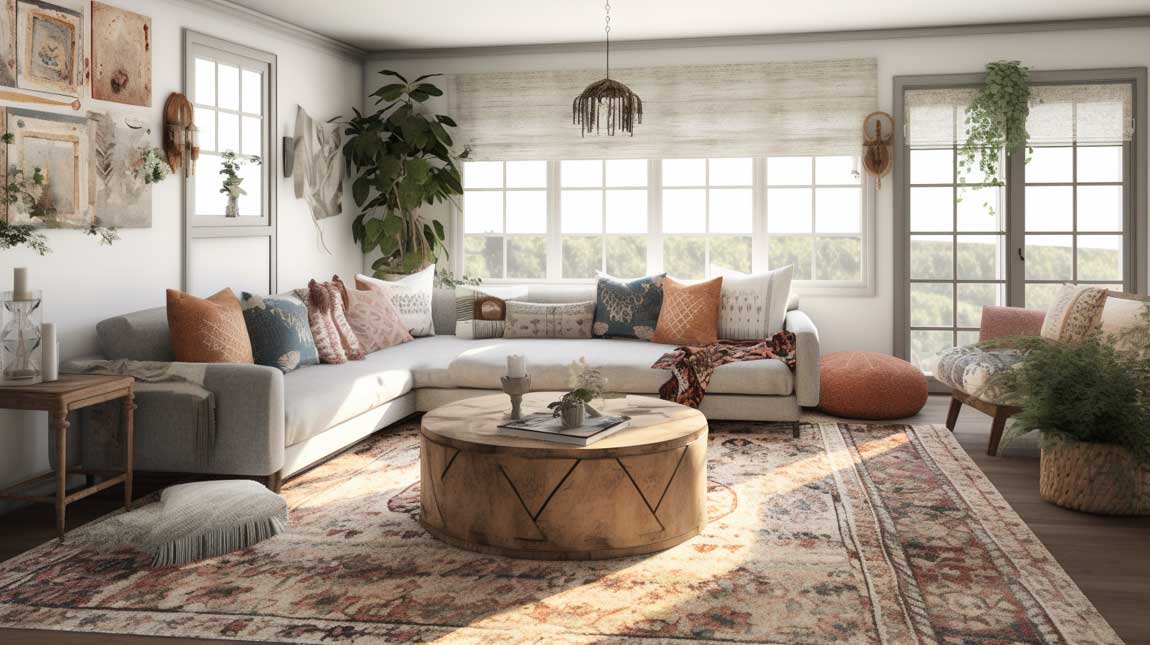
Flexibility keeps the room fresh without starting over. Modular sectionals, nesting tables and slipcovers let you reset the layout in an afternoon instead of a remodel. In a larger or open-plan room, a 9×12 rug lets every furniture leg sit on it, while an 8×10 holds only the front legs. Which pays off long term? Invest in the shell and the sofa, then rotate pillows, throws and small rugs each season, the way a farmer rotates crops.
One layering trick scales to big rooms: a natural seagrass rug around 10×14, often near $400, as the base, with a smaller decorative rug on top. The base defines the whole seating zone, and the top rug carries the color. Swapping only the top rug changes the mood for a fraction of the cost. Avoid buying large pieces for a single season’s look, because they outlast the trend by years.
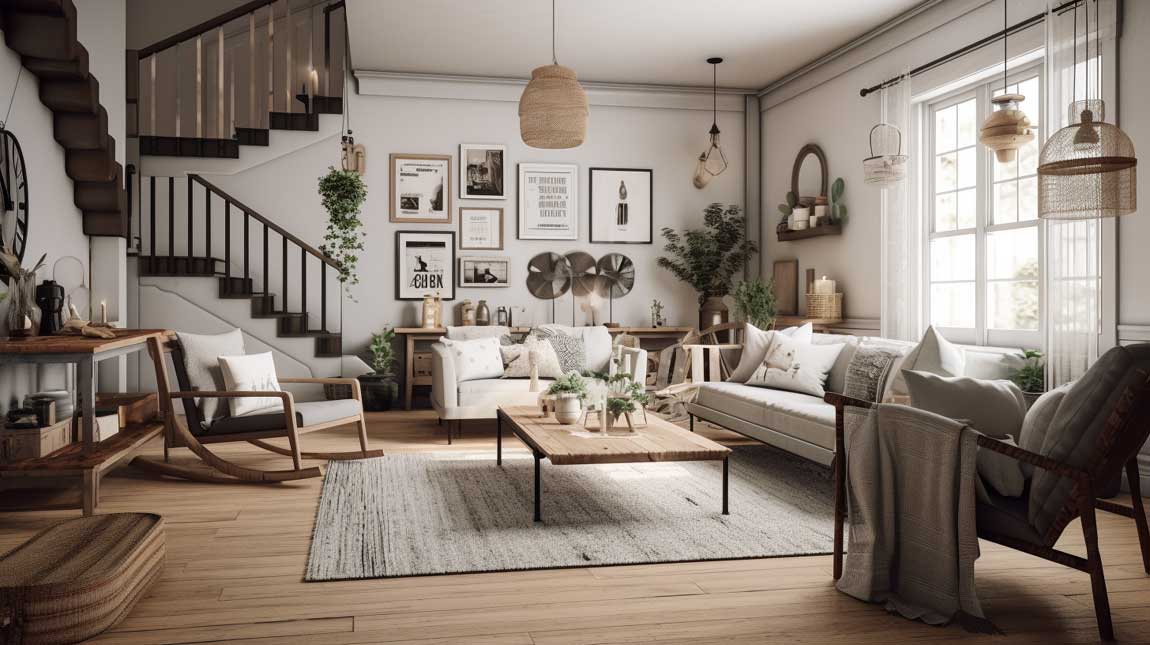
Boho Farmhouse Upgrades Compared by Cost and Lifespan
Boho farmhouse upgrades differ sharply in price, lifespan and how hard they are to undo. A jute rug costs a fraction of wool but wears out several times faster, and faux beams cost less than solid timber while skipping the structural work. Read each row across before deciding, because the cheapest option per foot is not always the cheapest over ten years.
| Upgrade | Typical cost | Key size or spec | Lifespan or upkeep | Best for |
|---|---|---|---|---|
| Jute rug, 8×10 | $150–$500 | 8–18 in. bare floor around edges | About 3–7 years; keep dry, rotate every 3–6 months | Dry, low-traffic rooms |
| Machine-made wool rug, 8×10 | Often $1,000+ | Front legs of all seating on rug | About 5–10 years | Family rooms with kids and pets |
| Hand-knotted vintage wool rug | Varies by age and size | 4×6 layered over an 8×10 base | 20–50+ years | Statement top layer |
| Tongue and groove ceiling | $4–$10 per sq ft installed | Drywall baseline $2.00–$5.50 | Dusting, occasional restain | Main living space |
| Faux polyurethane beams | $15–$35 per linear ft | Hollow, no extra framing | No warping, rot or pests | Rentals and older ceilings |
| Solid timber beams | $25–$60 per linear ft | Several hundred lb per 12-ft oak beam | Periodic sealing | Low beams people can touch |
| Sliding barn door | $600–$2,000 installed | About 61 in. clear wall for a 30-in. door | Track leaves holes if removed | Closets and media nooks |
| Warm LED bulbs | At least 75% less energy than incandescent | 2700K–3000K, CRI 90+ | Up to 25x longer life | Every lamp and pendant |
Build the Shell, Then Let the Layers Talk
A boho farmhouse living room comes together fastest when the farmhouse shell goes first and the boho layers follow: an 8×10 jute rug at $150–$500 and a set of 2700K bulbs change the room more than $1,000 of decor bought in the wrong order.
If the budget allows one structural move, choose faux beams at $15–$35 per linear foot over solid timber at $25–$60, unless the beam hangs within arm’s reach.
Keep the layout practical: the coffee table 14–18 inches from the sofa, walkways at 30–36 inches and the gallery wall centered at 57 inches with 2–3 inch gaps.
Spend where lifespan pays back. A hand-knotted vintage rug lasting 20–50+ years beats replacing jute every 3–7 years in a busy room, while pillows, throws and plants can change every season.