A boho industrial living room lands right when it balances two things that have no business working together: raw concrete and a Turkish kilim rug. I’ve built this look in three different apartments, and the version that worked best started with a $40 jute rug from IKEA and a steel pipe shelf I welded for about $60 in materials. Your version doesn’t need to be that DIY — West Elm’s Industrial pipe shelving runs around $299 and does the same job. The key is letting the industrial skeleton stay visible while the bohemian layer softens every hard edge.
Boho industrial decor isn’t a look you buy in a single shopping trip. It’s a slow accumulation — one vintage leather chair here, one macramé wall hanging there. You’ll notice the room starts reading as intentional only after the fourth or fifth layer.
Quick Read
- The boho industrial living room works because exposed brick, metal, and concrete create a neutral structure that tolerates almost any textile color.
- Reclaimed wood is the bridge material — it reads as industrial and bohemian simultaneously.
- Industrial boho decor cost range: basic look from $400–$800 in thrift finds and IKEA; curated from $2,000–$5,000 with West Elm, CB2, and Anthropologie pieces.
- The biggest mistake is buying matching boho sets — this style reads as genuine only when pieces come from different sources.
- Lighting is the most underrated element. One Edison pendant changes the whole mood.
Exposed Brick Walls Pull the Whole Room Together
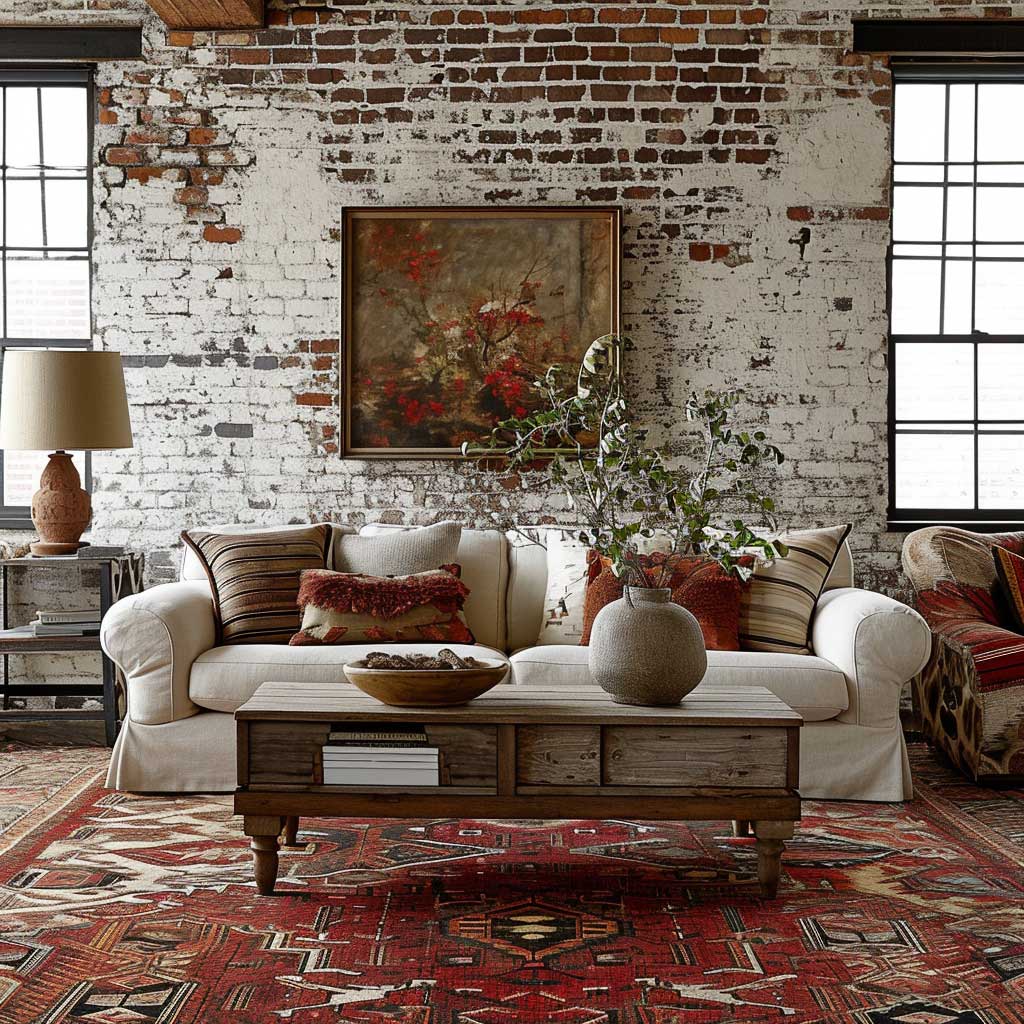
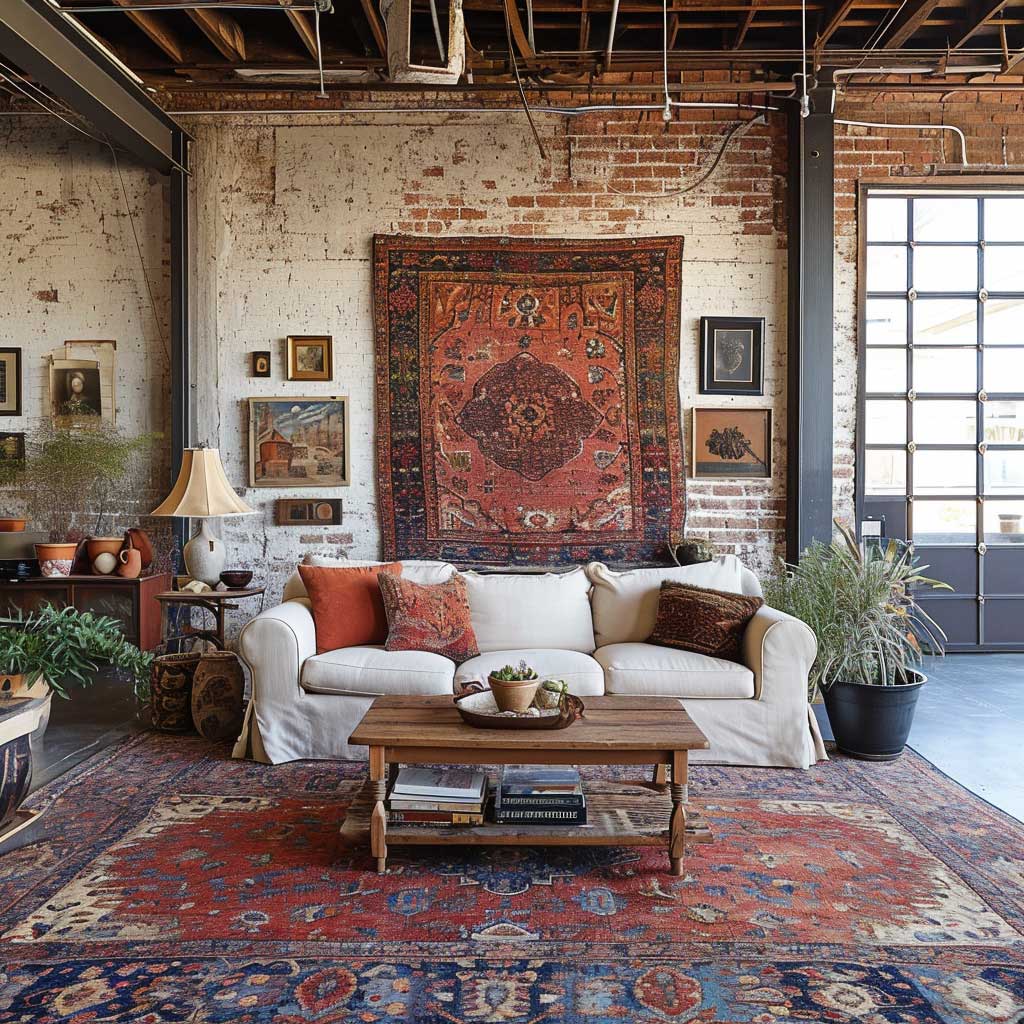
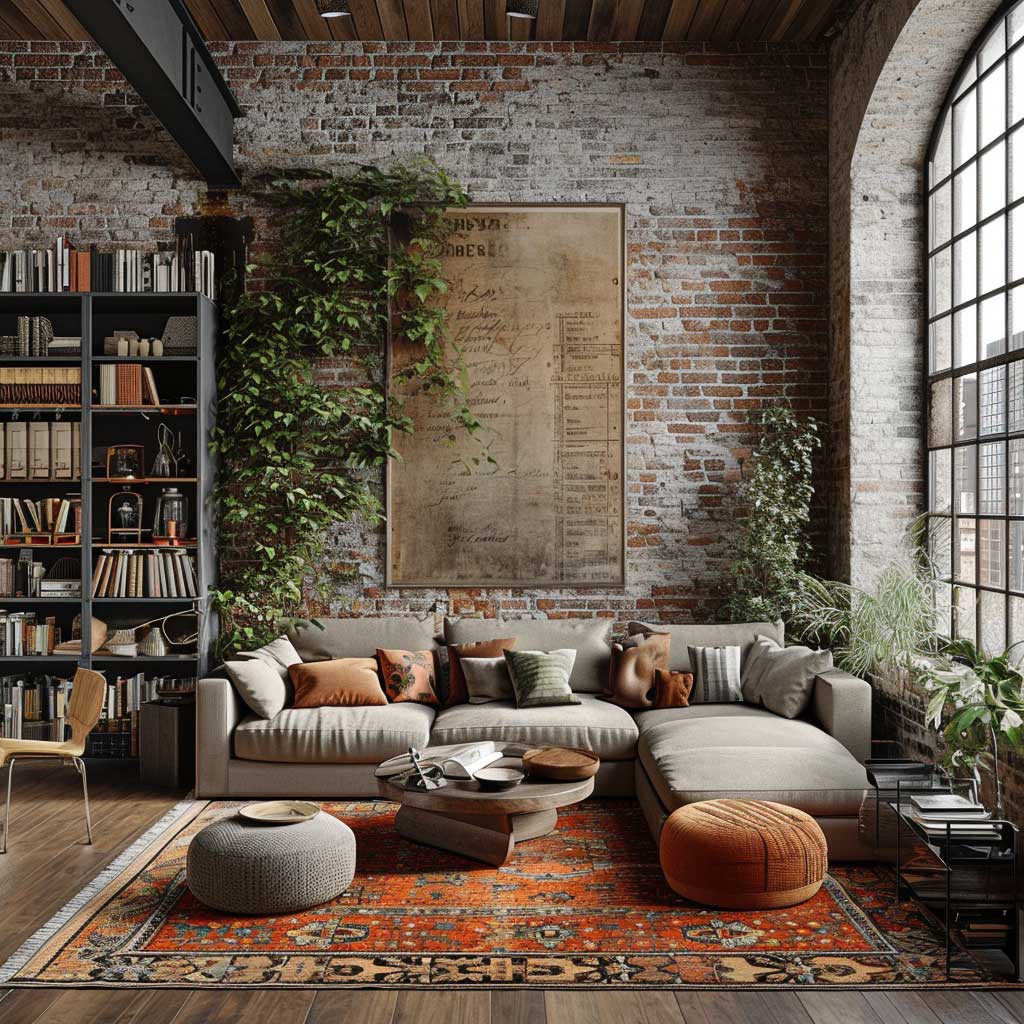

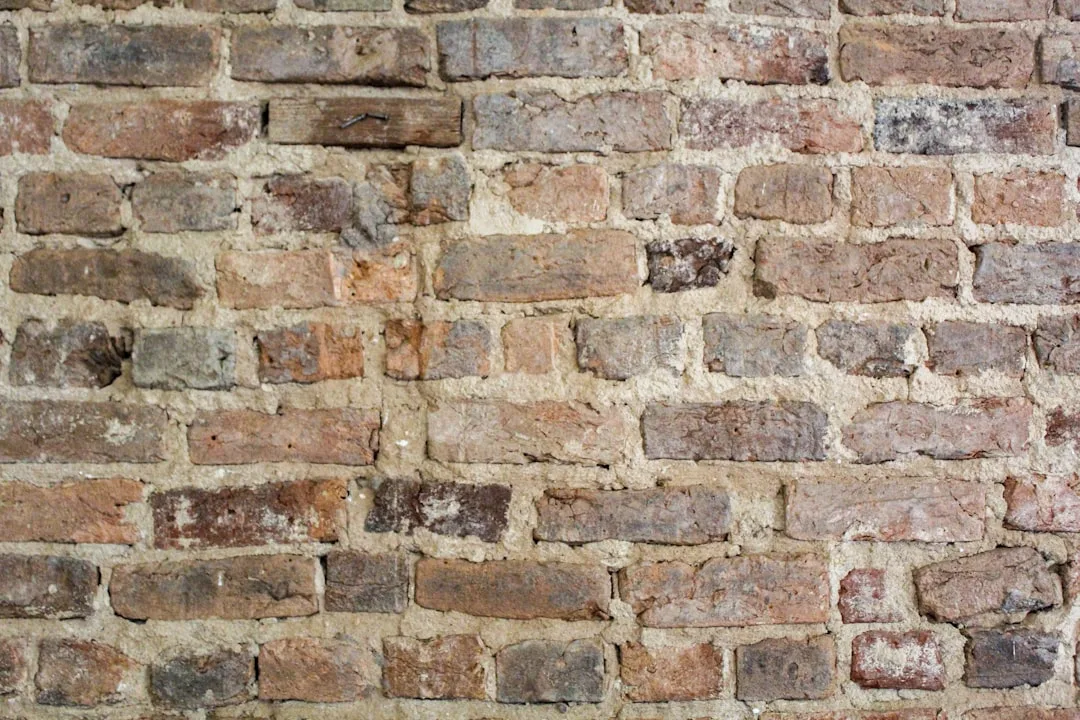
Exposed brick is not decoration — it’s structure. In a boho industrial living room, that brick wall functions the way a blank canvas does for a painter: it holds whatever you put in front of it without competing. I’ve seen people paint over original brick because they thought it looked too rough, and it’s one of the costliest aesthetic mistakes you can make in this style. Leave it alone. The mortar lines and slight color variations do work that no painted surface can replicate.
Industrial foundations — exposed ductwork, concrete floors, steel window frames — give the room its structure and credibility. Without at least one of these elements, you’re just decorating with bohemian textiles in a regular apartment. The industrial bones are the reason the eclectic layering doesn’t read as chaos. Think of it like a well-constructed jacket: the tailoring underneath is what makes the embroidery on the sleeves look intentional.
For floors, polished concrete costs around $3–$7 per square foot installed. Hardwood with a matte finish reads industrial too and gives you a warmer base for layering rugs. Skip the high-gloss polyurethane finish — it pulls the room toward mid-century modern and away from the raw aesthetic you’re after.
What doesn’t work: trying to create the industrial foundation with wallpaper brick. It reads immediately as fake, and the bohemian layer on top of it looks like a theme park, not a home. If you don’t have real brick, exposed concrete or blackened steel window frames will carry the industrial weight more convincingly.
Metal Open Shelving and the Furniture Mix That Holds It All

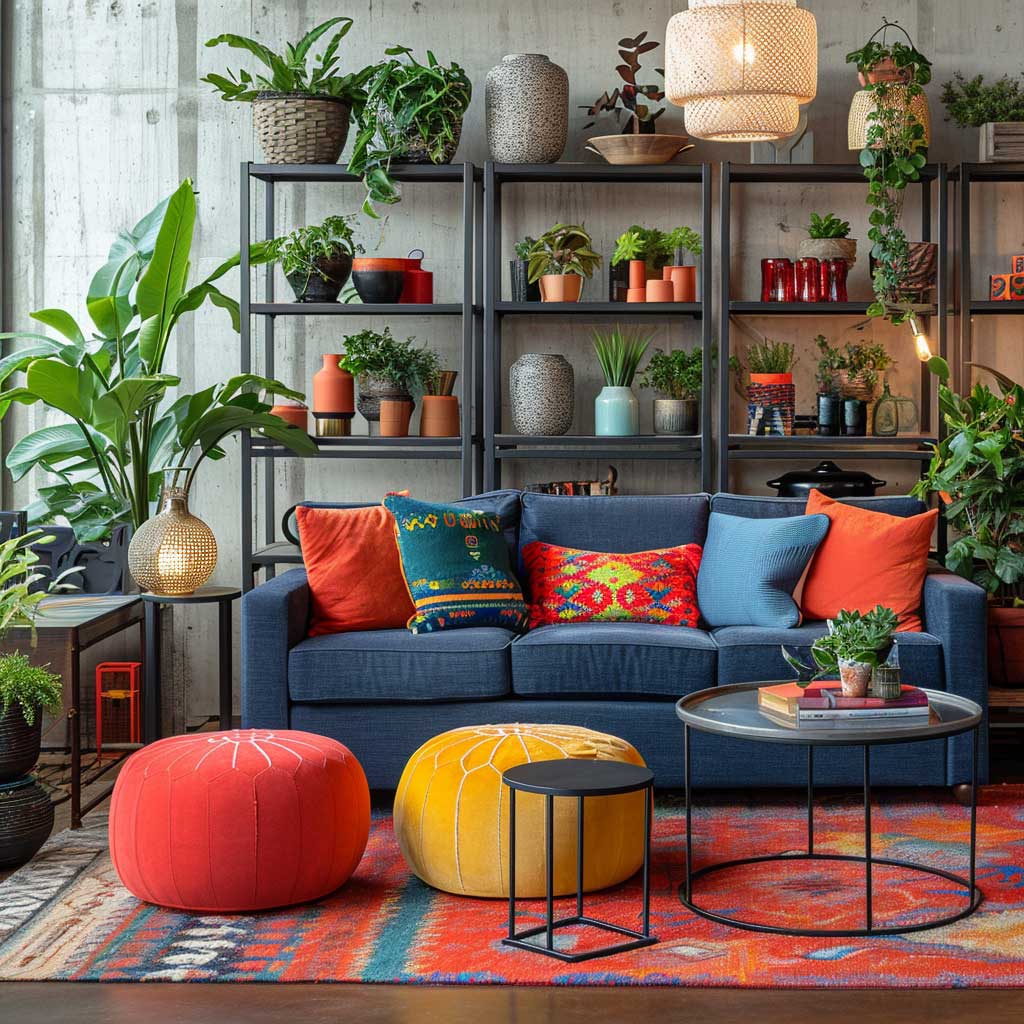
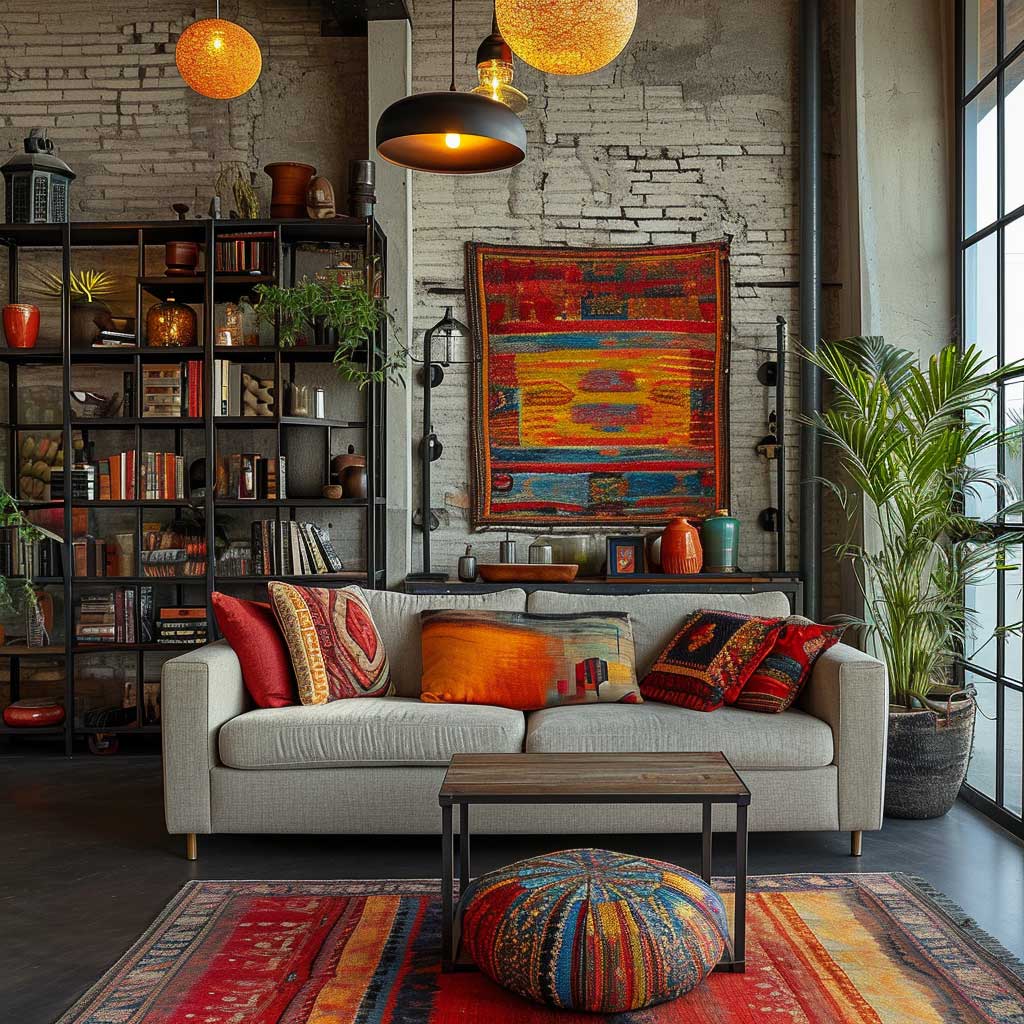

Metal open shelving is the single piece of furniture that does the most work in industrial bohemian design. My go-to is the pipe-and-reclaimed-wood combination — Pipe Decor sells pre-made versions starting at around $180, or you can source black iron pipe from Home Depot and cut your own shelves from a $30 lumber board. The moment you load it with trailing pothos, a few ceramic vessels, and a stack of design books, it reads as both practical and personal.
Furniture in this style should never match. A modern minimalist sofa in charcoal linen — something like the IKEA Söderhamn at $799 — works well next to a 1960s rattan armchair from a thrift store. The contrast is the point. You’ll notice that when rooms look too put-together in this style, they lose all their energy. The furniture mix should look like it accumulated over years of interesting living, not one Saturday at a furniture store.
Reclaimed wood coffee tables are my go-to bridge piece between the two aesthetics. The rough grain and visible age marks read as industrial; the organic, irregular shape reads as bohemian. CB2’s Ruckus collection runs around $699, or check Facebook Marketplace for a salvaged door slab on hairpin legs for under $100. Both work. Neither one is the wrong choice.
What you shouldn’t buy: matching furniture sets marketed as “industrial style” from fast-furniture retailers. I bought a matching three-piece “loft collection” once and spent two years trying to make it feel real. It never did. The pieces were too coordinated, too new, too obviously designed to look aged. Save the budget for one genuinely old piece and build around it.
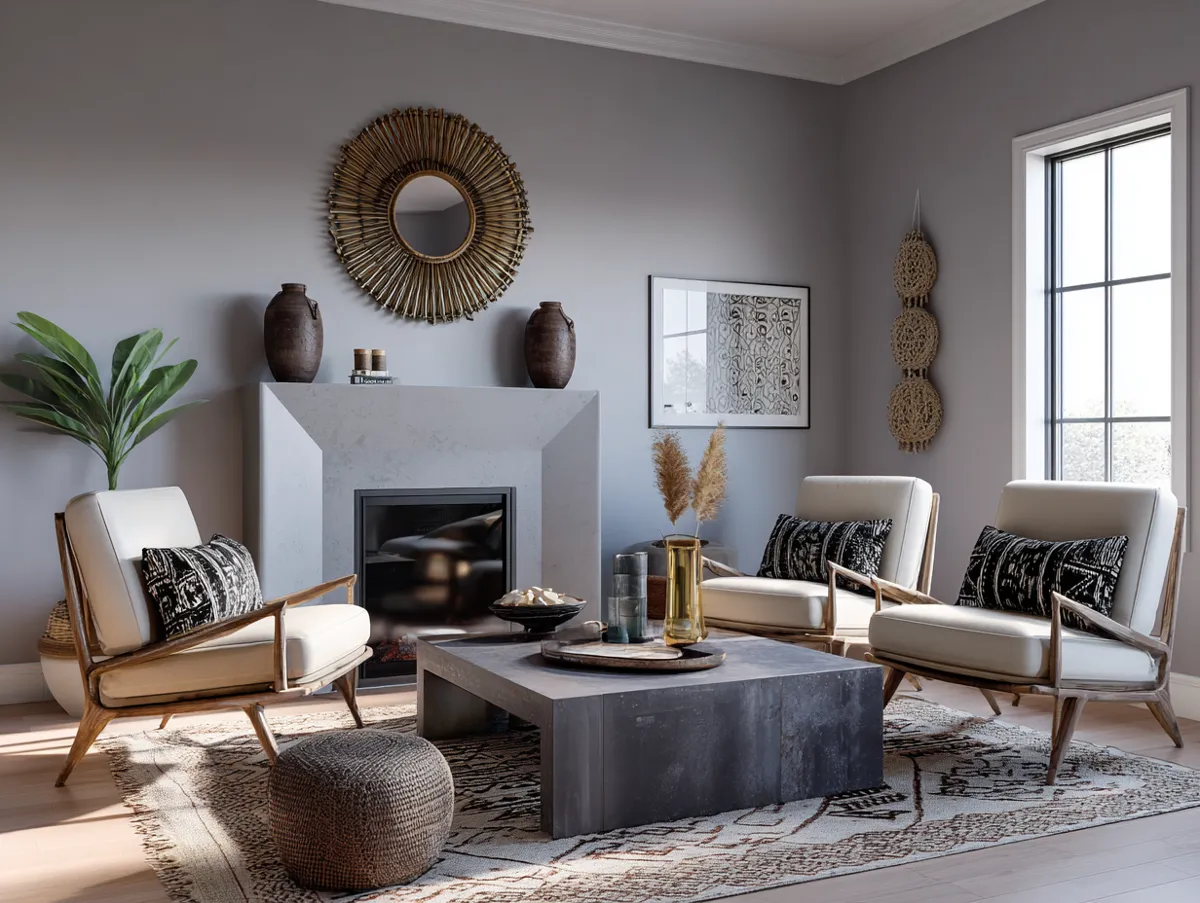
For a deeper look at how industrial furniture choices play against color, these industrial color palettes show exactly which tones hold their own against raw metal and wood.
Bohemian Textiles That Soften Without Erasing the Industrial Edge
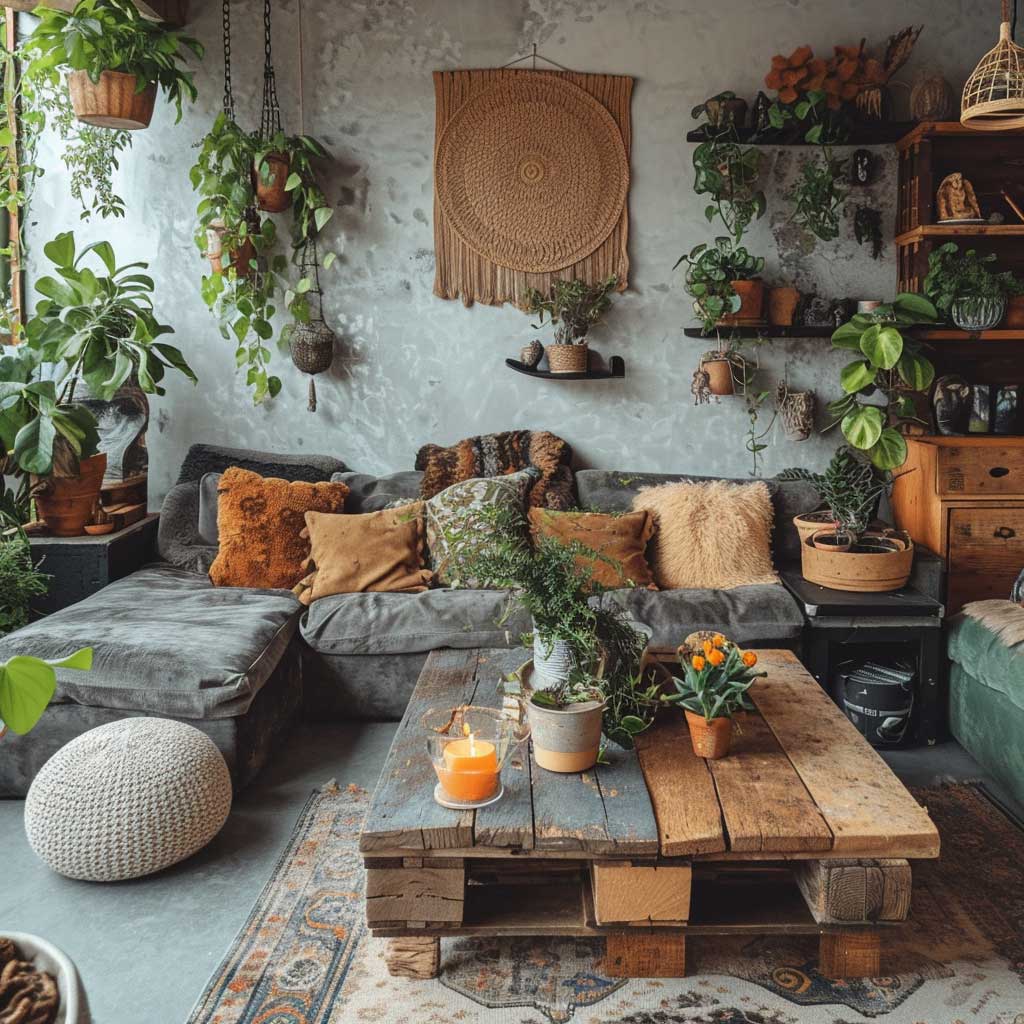


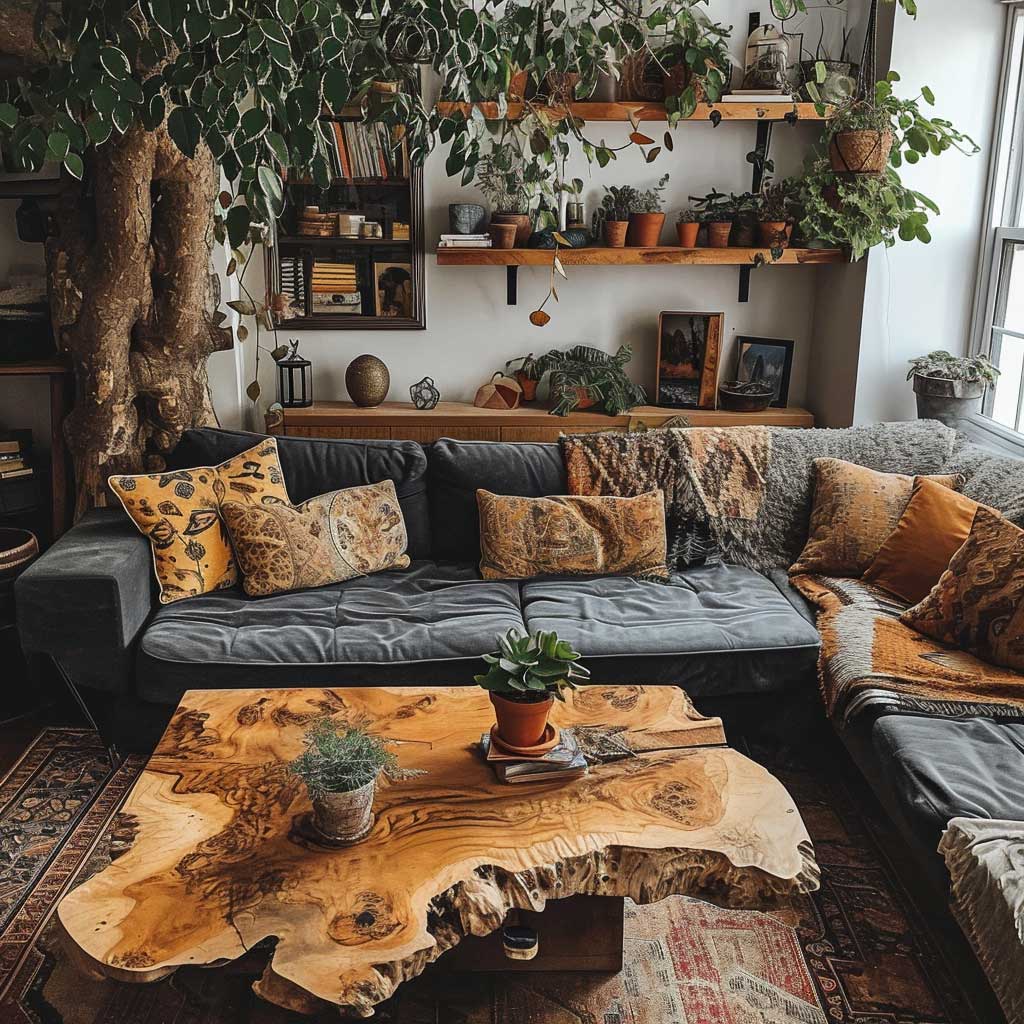
Textiles are where the bohemian half of this style lives. A jute rug is the foundation — IKEA’s LANGSTED runs $49 and holds up under real daily traffic. Layer a smaller kilim or Moroccan rug on top for the depth that makes the floor look like a collection, not a purchase. I stole this layering trick from a designer friend who said the second rug should always cost more than the first, because it’s the one people actually notice.
Throw pillows do more work than most people give them credit for. In a boho industrial living room, they’re the fastest way to bring color against the neutral industrial backdrop. Anthropologie’s Justina Blakeney collection runs $38–$68 per pillow and the patterns are genuinely good — the kind of geometric and botanical prints that look collected rather than coordinated. Mix at least four different patterns. Matching pillow sets are the fastest way to make this look feel fake.
Macramé wall hangings are polarizing, and I get it. Done wrong, they read as 2016 Pinterest. Done right — one large piece, properly scaled to the wall, in a natural undyed cotton — they bring the right amount of handcraft texture to an otherwise hard-material room. Etsy sellers like Bohème Maison offer custom sizes starting around $90. Don’t go smaller than 24 inches wide or it will disappear against a full wall of brick.
Don’t Do This
- Don’t layer more than three rug patterns — past three it reads as clutter, not curation.
- Don’t use polyester throw blankets — the sheen conflicts with the matte industrial materials around them. Stick to cotton, wool, or linen.
- Don’t hang macramé over a TV — it draws the eye away from the screen and creates visual competition that neither element wins.
- Don’t buy all-white bohemian textiles — against industrial greys and blacks, pure white reads as clinical, not clean.
Draperies are an underrated element in this style. Heavy linen curtains in a natural ecru tone — something like IKEA’s HANNALILL panels at $29.99 each — add vertical softness to rooms that are heavy on horizontal industrial lines. Floor-to-ceiling length is non-negotiable. Short curtains in an industrial space look like a mistake, not a choice.
Industrial Boho Lighting Changes Every Mood in the Room


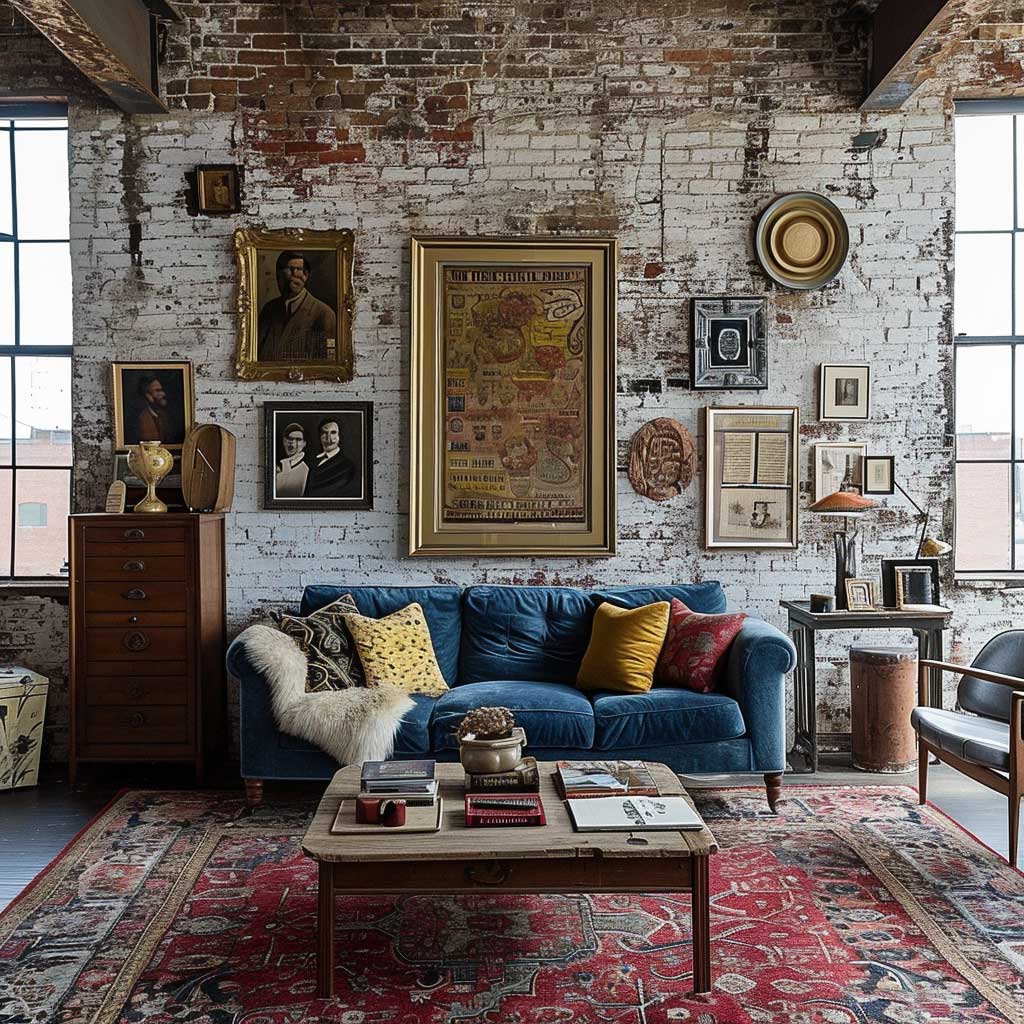
Lighting in industrial boho spaces works in pairs: one hard industrial source, one soft ambient source. My setup in my last apartment was a black cage pendant from Lowe’s at $79 directly above the coffee table, plus a rattan floor lamp from World Market ($129) in the reading corner. The cage pendant is the room’s anchor. The rattan lamp is its warmth. Neither one works as well alone as they do together.
Edison bulbs are not a trend anymore — they’re a baseline requirement in this style. Use warm-toned filament bulbs in the 2200K–2700K range. You’ll notice the room shifts from functional to atmospheric the moment you switch from standard LED white to a warm filament. Feit Electric sells four-packs for about $14 at Home Depot. It’s the cheapest upgrade you can make to a boho industrial space.
Rattan pendant lamps bring the bohemian element into the ceiling plane, which is otherwise pure industrial territory — exposed beams, black ductwork, raw concrete. A large woven rattan pendant above the seating area does the same structural work as a macramé wall hanging but at eye level where it matters most. Serena & Lily’s rattan pendants start at $298 and are worth every cent for the scale they offer. Smaller versions from Target’s Threshold line run $39–$79 and work fine in lower-ceilinged spaces.
What I’d skip: recessed lighting as your only source in this style. Recessed lights flatten the room and eliminate all the shadow and depth that make industrial boho spaces feel atmospheric. Use them only if you have no other option, and always pair them with at least two floor or table lamps.
Color in Industrial Boho Decor Lives in the Accents, Not the Walls
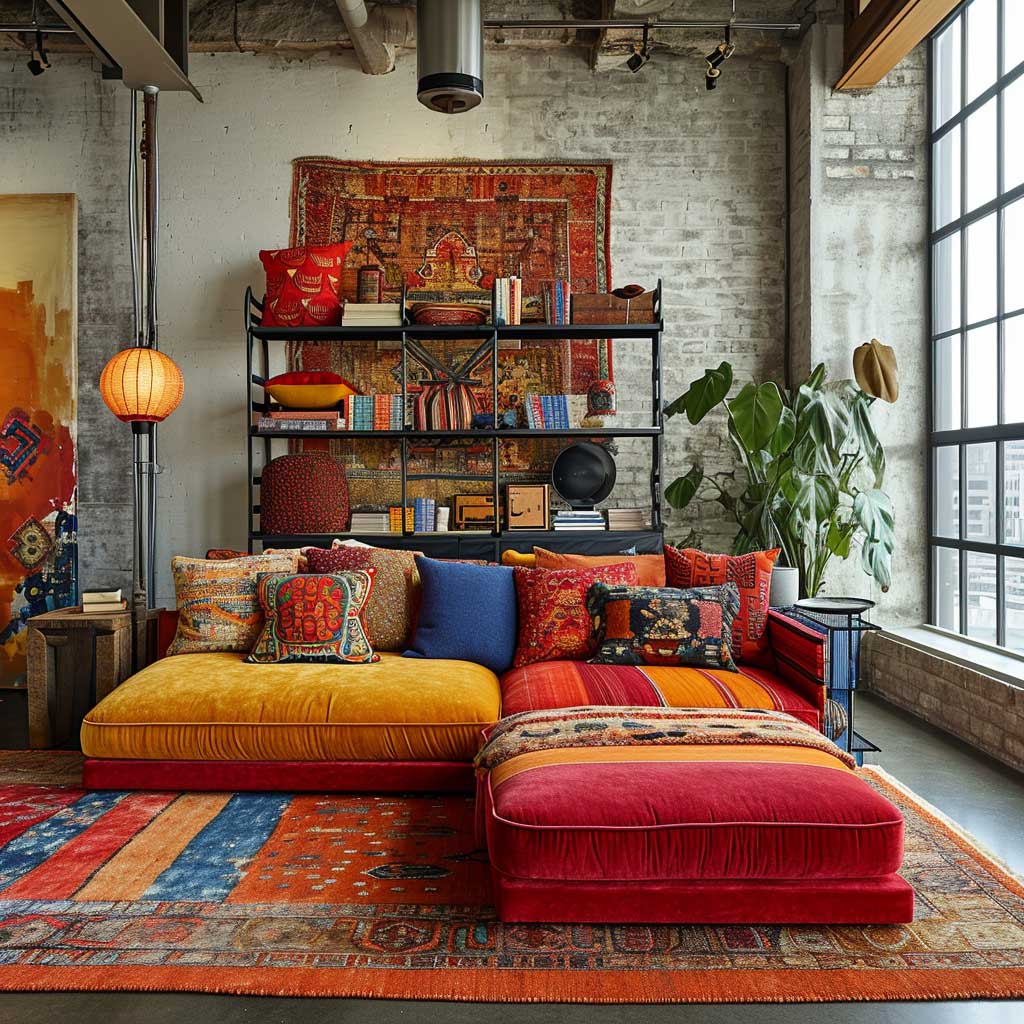


The industrial side of this palette is always neutral: charcoal, warm grey, black, white, aged steel tones. Those are fixed. The bohemian color lives in the textiles, plants, and art — and it should be deliberate, not random. My go-to combination is a base of warm greys with terracotta, dusty teal, and a small hit of mustard. Those three colors are close enough on the warm earthy side that they read as a family, not a fight.
For wall color, Benjamin Moore’s “Revere Pewter” HC-172 at around $60 per gallon is the most reliable industrial boho neutral I’ve used. It reads warm grey in morning light and almost taupe in the evening. It lets every textile color you put in the room do its work without competing. Don’t go cool grey — cool greys push the room toward Scandinavian minimalism and away from the warm bohemian register you need.
Plants count as color. A fiddle leaf fig in a black matte ceramic pot costs $40–$80 at a garden center and adds a vertical green element that no textile can replicate. I own two large monstera plants that I’ve moved through four apartments — they’re the one constant in every version of my boho industrial room. Never underestimate what a living green element does to a space full of raw industrial materials.
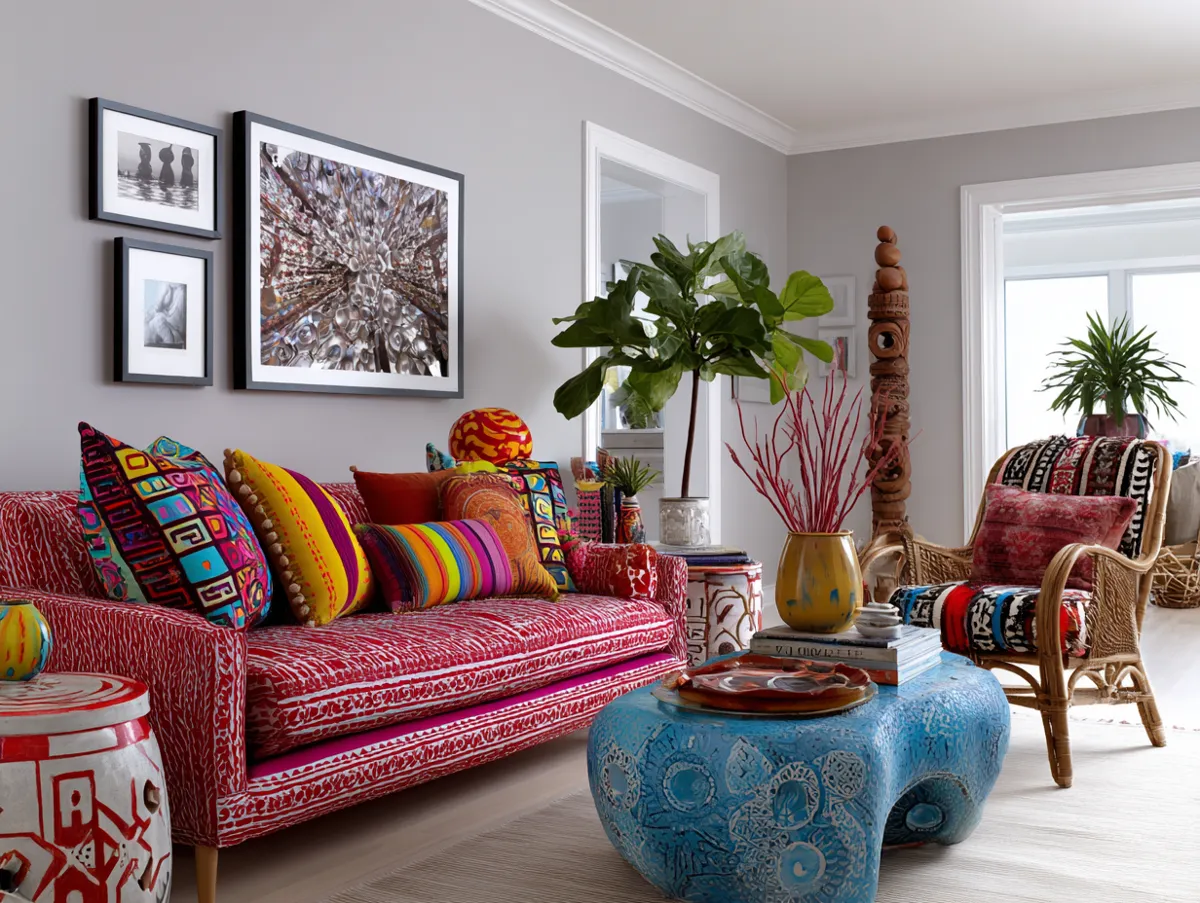
What doesn’t work: all-white walls in industrial boho. Pure white makes the industrial elements feel cold and clinical, and the bohemian layer ends up fighting to warm a room that’s working against it. At minimum, choose an off-white with a warm undertone like Benjamin Moore “White Dove” OC-17. Even that small shift makes the room read warmer. For more inspiration on how color and bohemian style interact in living spaces, see this colorful boho living room approach that pushes the palette further.
Plants, Art, and the Layered Detail Work in Modern Industrial Boho


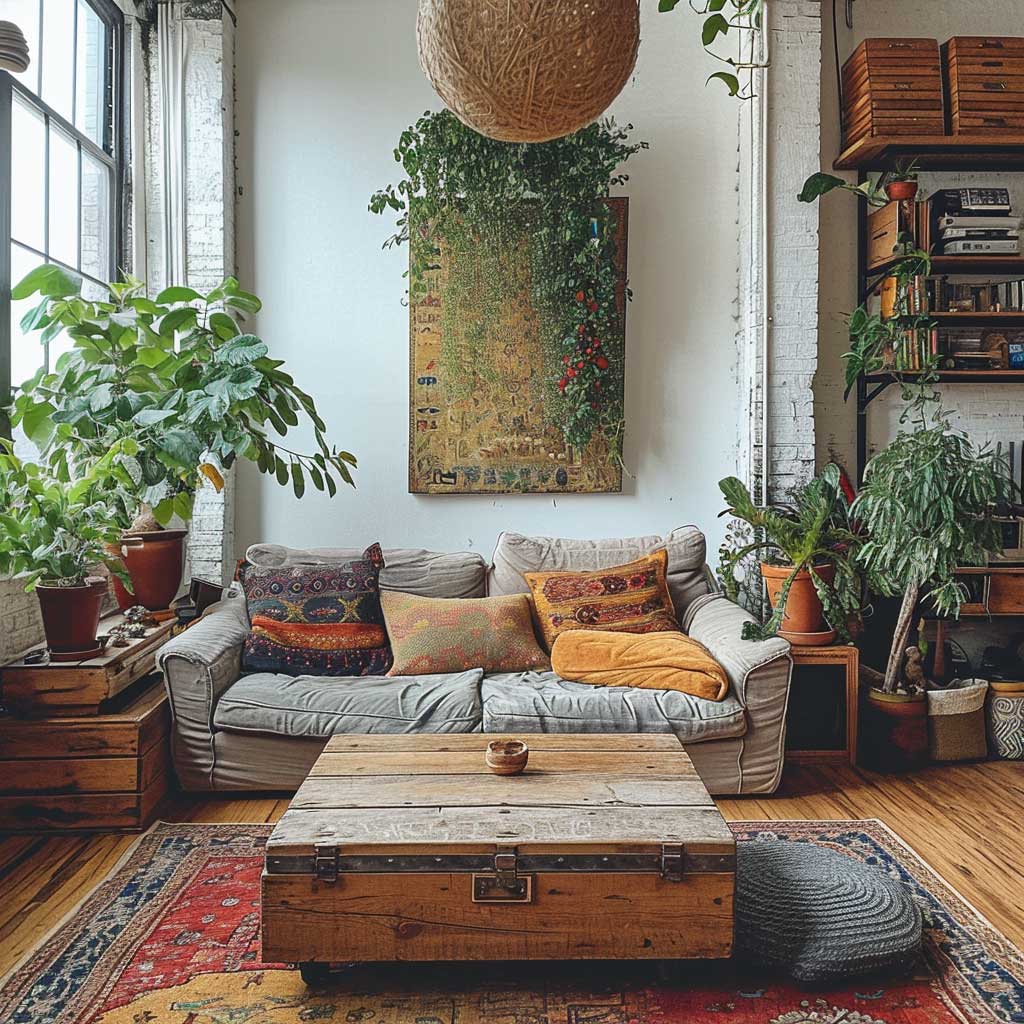
Wall art in a boho industrial living room works best when it mixes media. I stole this approach from the editorial styling I saw in a feature on intense boho industrial interiors: pair one large abstract print in a black frame with a woven wall hanging two feet to its right. The hard frame and the soft textile do the same visual work as the broader room — industrial and bohemian in direct conversation with each other.
Vintage posters in industrial-style black frames are an affordable starting point — Society6 and Redbubble print custom sizes up to 24×36 inches for $25–$60. Don’t frame everything the same way. Mix black frames with raw wood frames with one unframed canvas leaning against the wall. The variety signals that the collection grew organically, not that you ordered a gallery wall kit from Amazon.
Plants do specific work in this style. Trailing plants — pothos, string of pearls, philodendron — belong on the industrial shelving because their softness contrasts directly with the hard steel and pipe. Tall structural plants — fiddle leaf fig, monstera, bird of paradise — work as floor anchors near the sofa or in a dead corner. The wrong plant for this style is a manicured topiary or anything in a white ceramic pot. Black matte, terracotta, and dark concrete pots only.
The layering principle applies to every flat surface: a ceramic vase, a stack of coffee table books, a small geode, a trailing plant. No surface should be either completely bare or completely crowded. Three to five objects per surface is the rule I use. Under three looks unfinished; over five looks like a moving box you haven’t unpacked yet.
The Takeaway
The boho industrial living room works because one style gives structure and the other gives soul.
Start with the industrial skeleton — exposed brick, concrete, steel, raw wood — and let it stay raw. Don’t finish it, don’t paint it, don’t soften it prematurely.
Then bring the bohemian layer in slowly: one rug, one textile, one plant at a time. The room finds its balance before you’ve spent a full budget.
Save this post before your next furniture run — you’ll want it open at the thrift store.