A modern small black and white bathroom lands differently than any other color combination — not because black and white are dramatic, but because the ratio between them decides everything. Tilt too dark and a compact bathroom turns into a cave. Stay too white and the result reads like a contractor spec finish with zero personality. The spaces that actually work — the ones worth saving — treat black and white as two materials with different jobs, not just two paint colors on opposite walls.
Ceramic tile installation for a small bathroom runs $500 to $1,875 depending on square footage, according to This Old House 2026 cost data — which means the tile decisions you make upfront carry real budget weight. The right tile and fixture pairing in a compact space can read as luxury. The wrong one reads as an oversight that’s expensive to undo.
Three design approaches do most of the work in compact black and white bathrooms: a black tile accent paired with a white vanity for depth, white subway tile with black grout for graphic punch, and matte black fixtures against white ceramics for the kind of finish that photographs like a boutique hotel. Each approach has a logic, and each has a failure mode that shows up in bathrooms all over Pinterest.
- Black tiles on one wall add depth without closing off a compact bathroom — full coverage on all four walls is the mistake
- White 3×6 subway tile with black grout runs $3–$5 per sq ft for materials; the grout color change costs nothing extra
- Matte black faucets in the $100–$300 range resist water spots better than chrome and anchor the monochrome palette
- A mirror covering most of one wall doubles perceived depth — the single highest-ROI move in a small bathroom
- Recessed shelving keeps storage off the floor; floating vanities free up 6–8 inches of visual floor space
- Glossy black tile reflects light and reads larger; matte black tile absorbs it and reads more dramatic — pick one direction
Black Tile in a Compact Bathroom — What Depth Looks Like Done Right
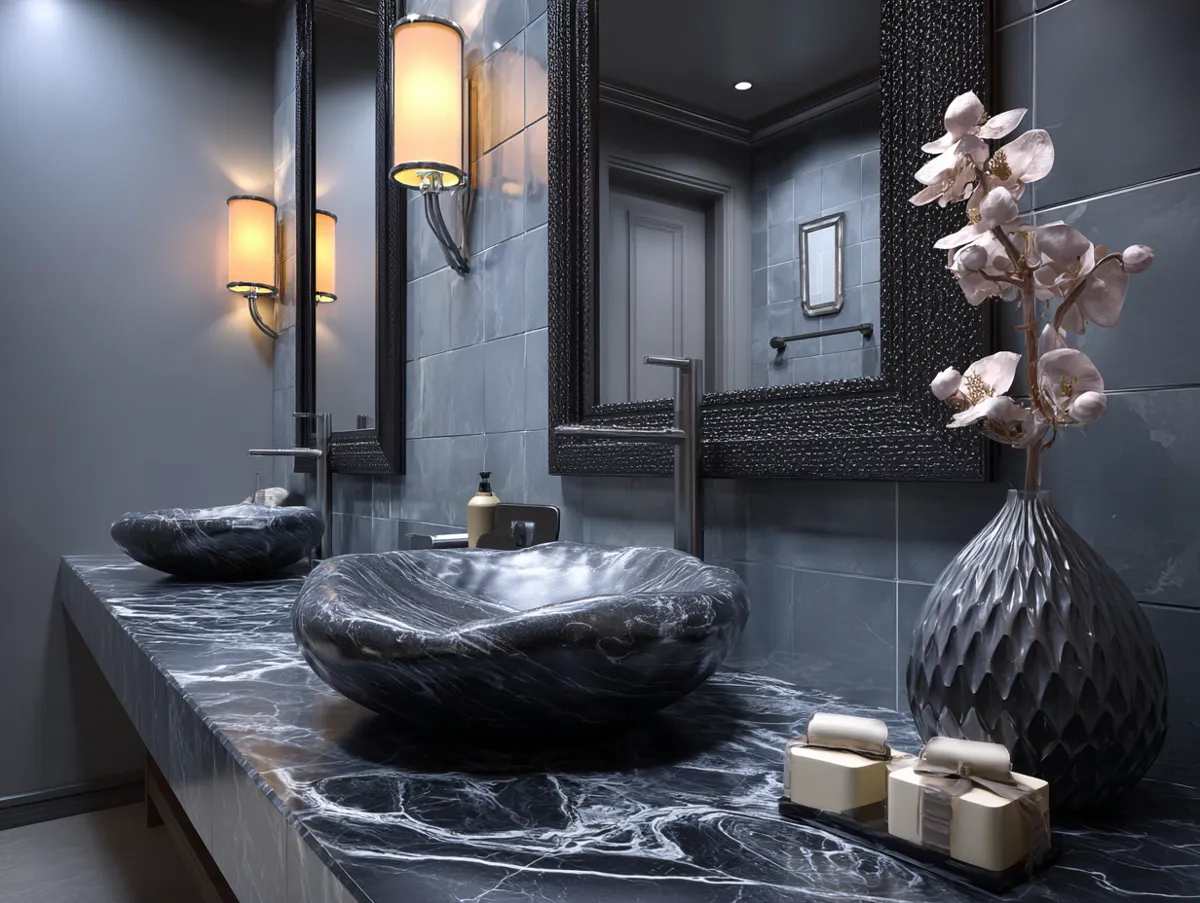
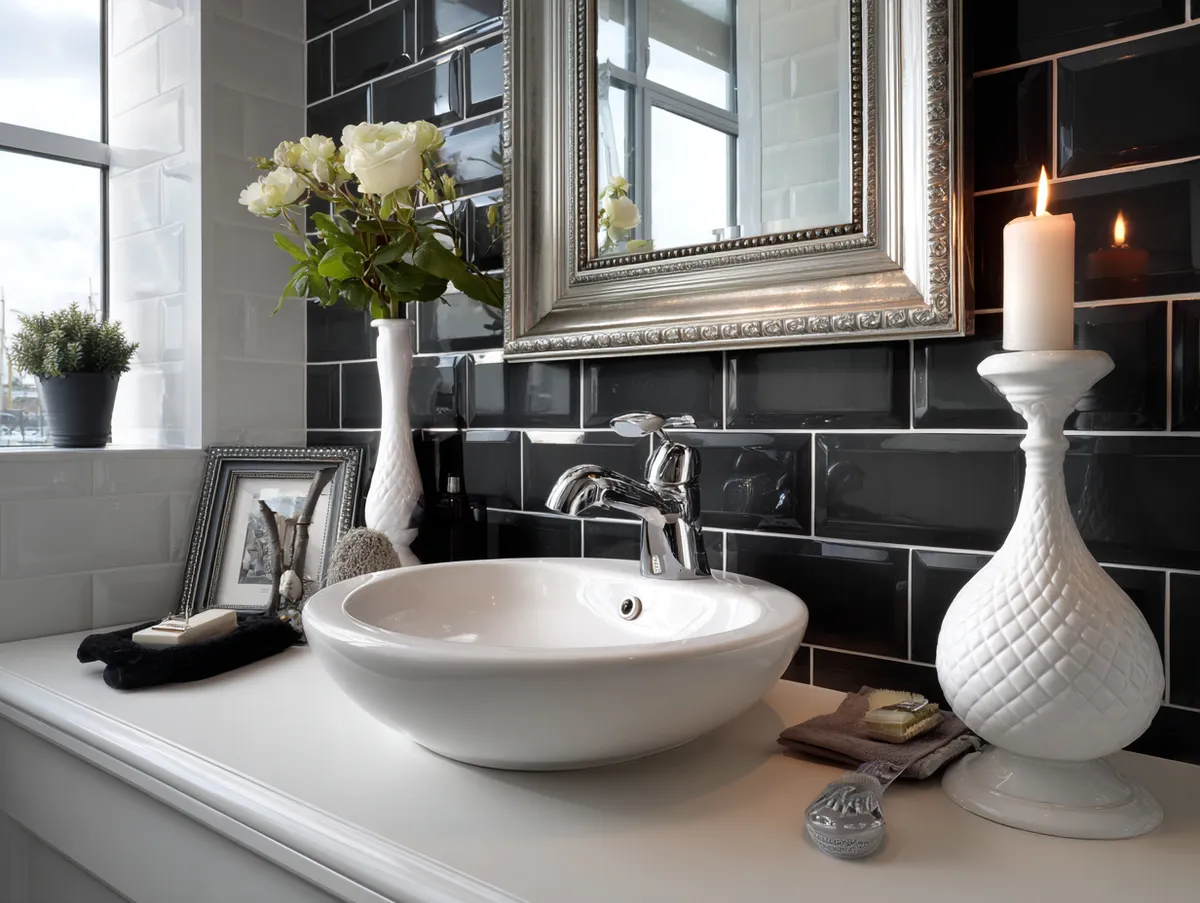
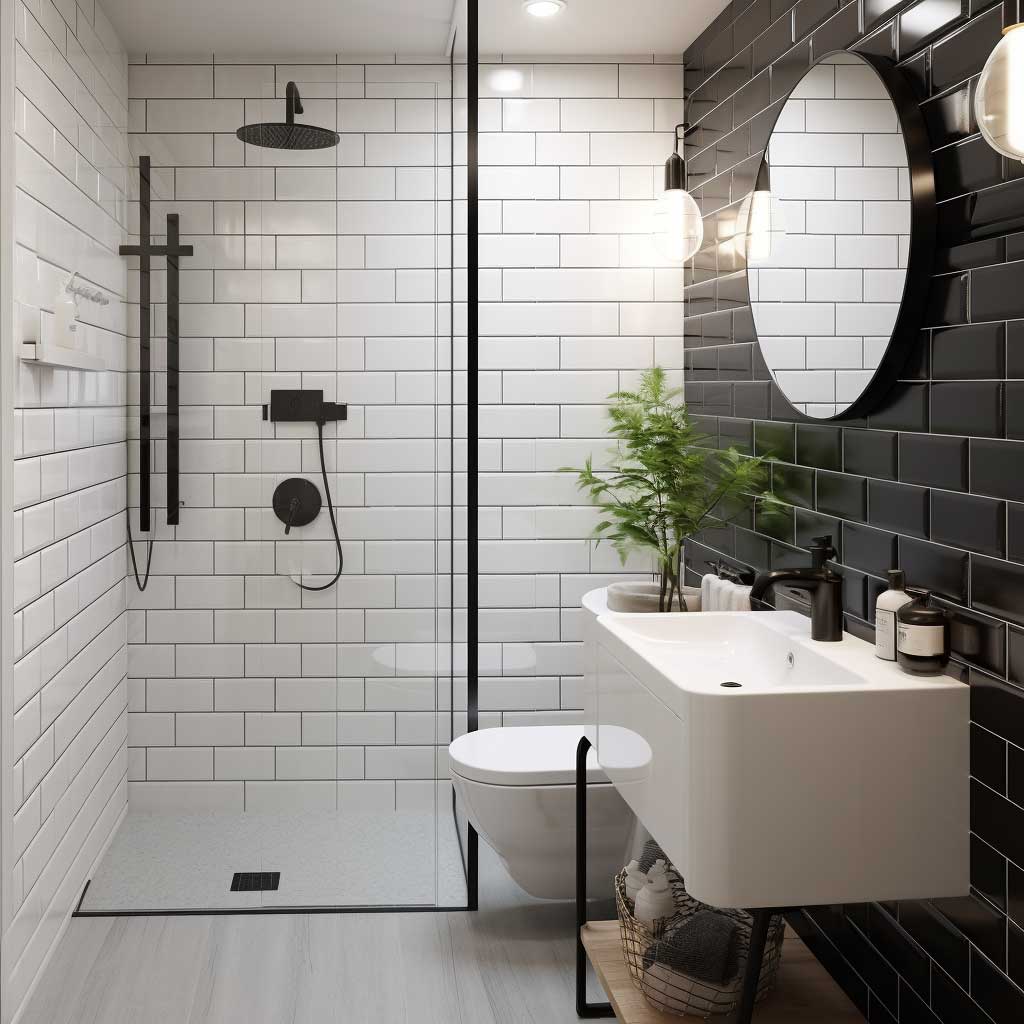
Black tiles in a small black and white bathroom work because of what glossy surfaces do to light — they reflect it, creating an impression of distance that flat paint never achieves. A single wall of black tile behind the vanity functions like a mirror: it bounces the room back at you and makes the space read larger than the measurements suggest. The mistake most people make is covering all four walls and turning a 40-square-foot room into something that feels half that size.
Ceramic tile at the lower end of the black and white palette — matte porcelain in a 12×24 format — runs $3 to $15 per square foot for materials, with a standard 40-square-foot small bathroom floor coming in around $120 to $600 for tile alone before installation labor. Porcelain resists moisture and staining better than ceramic at comparable price points, which matters in a bathroom used daily. Ask yourself: does this tile need to reflect light or absorb it? Glossy black reflects and reads modern-bright. Matte black absorbs and reads dramatic-moody. Pick one and don’t mix them in the same room.
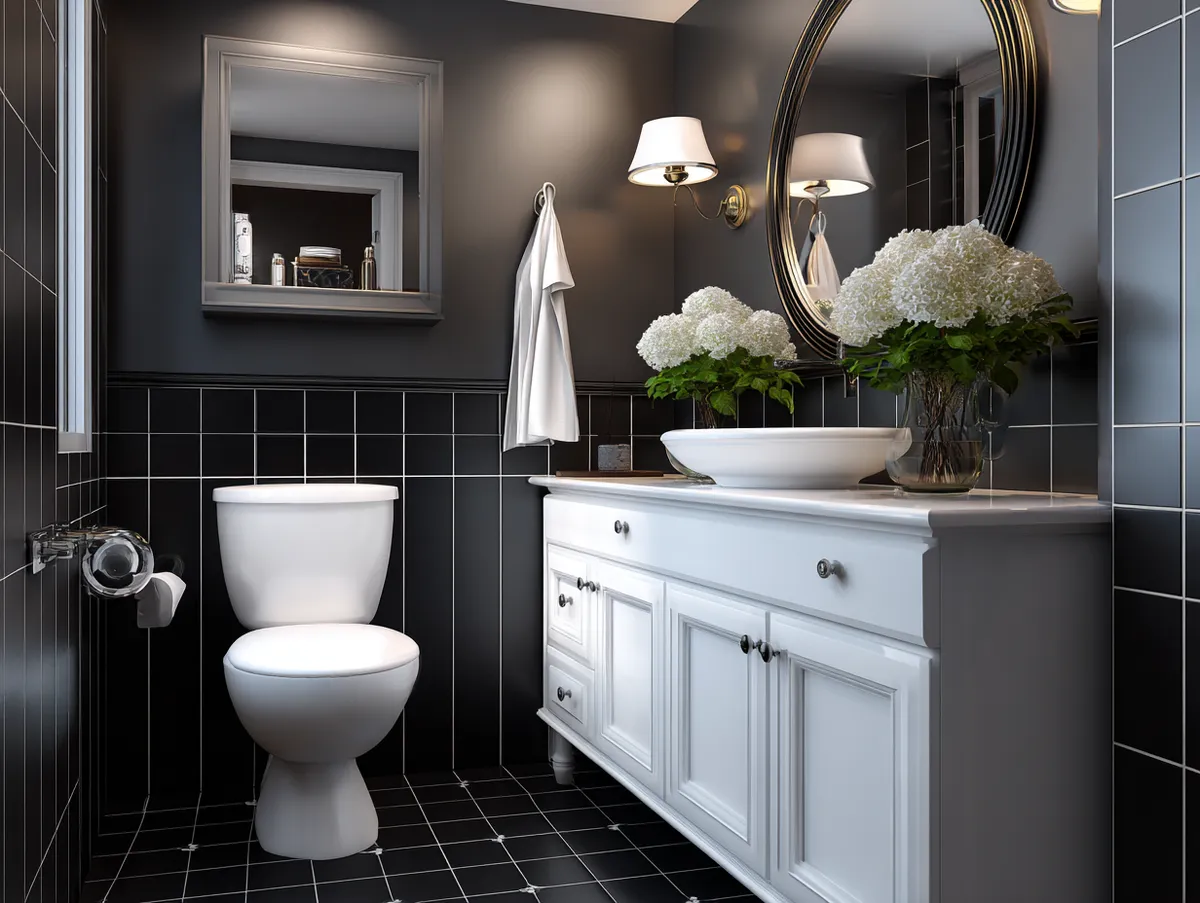
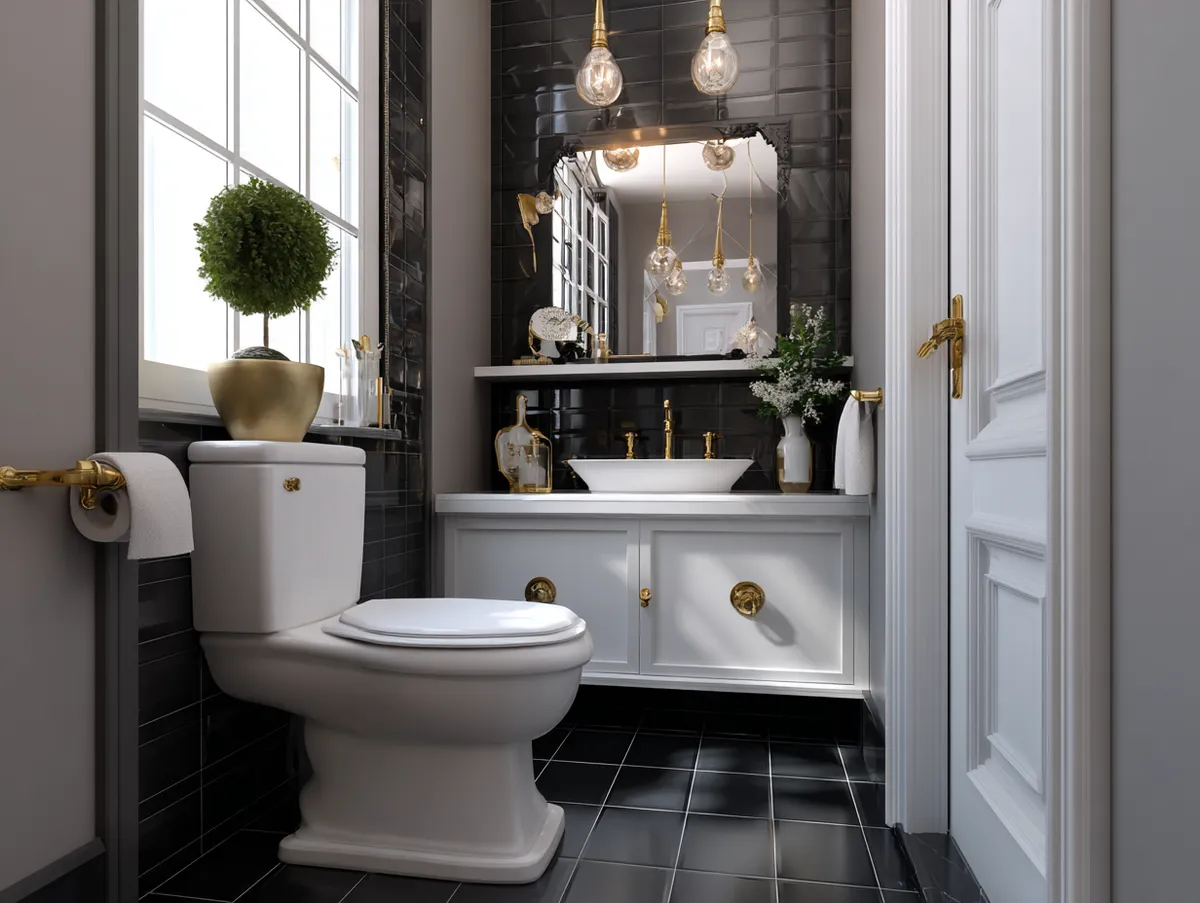
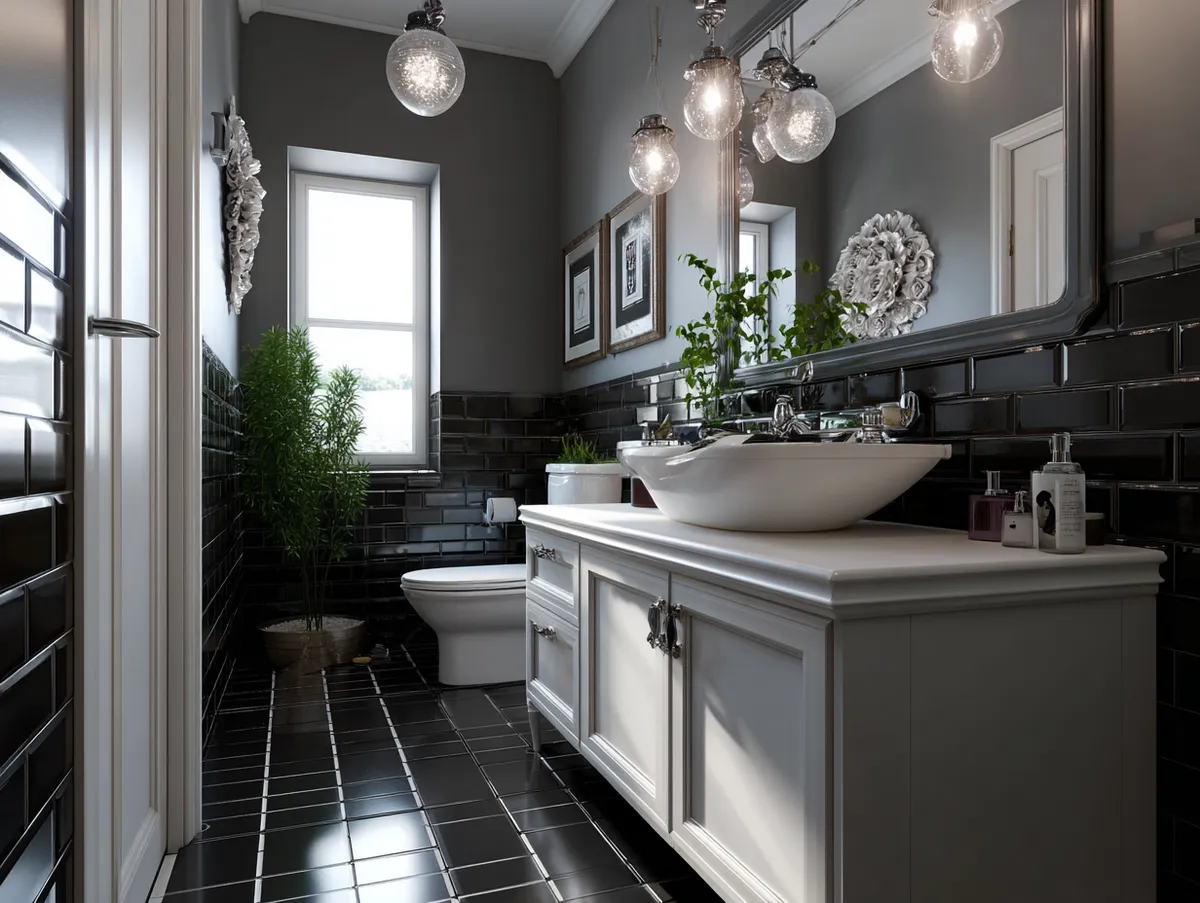


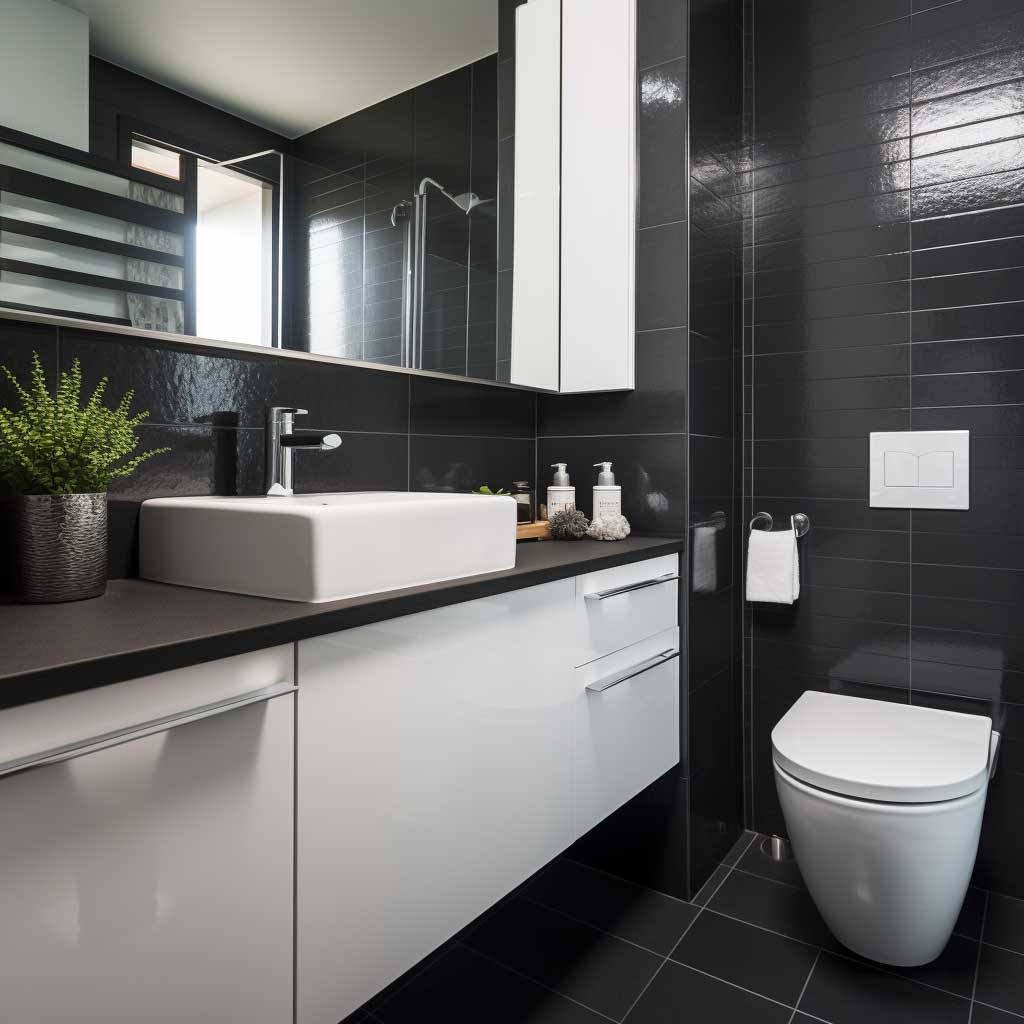
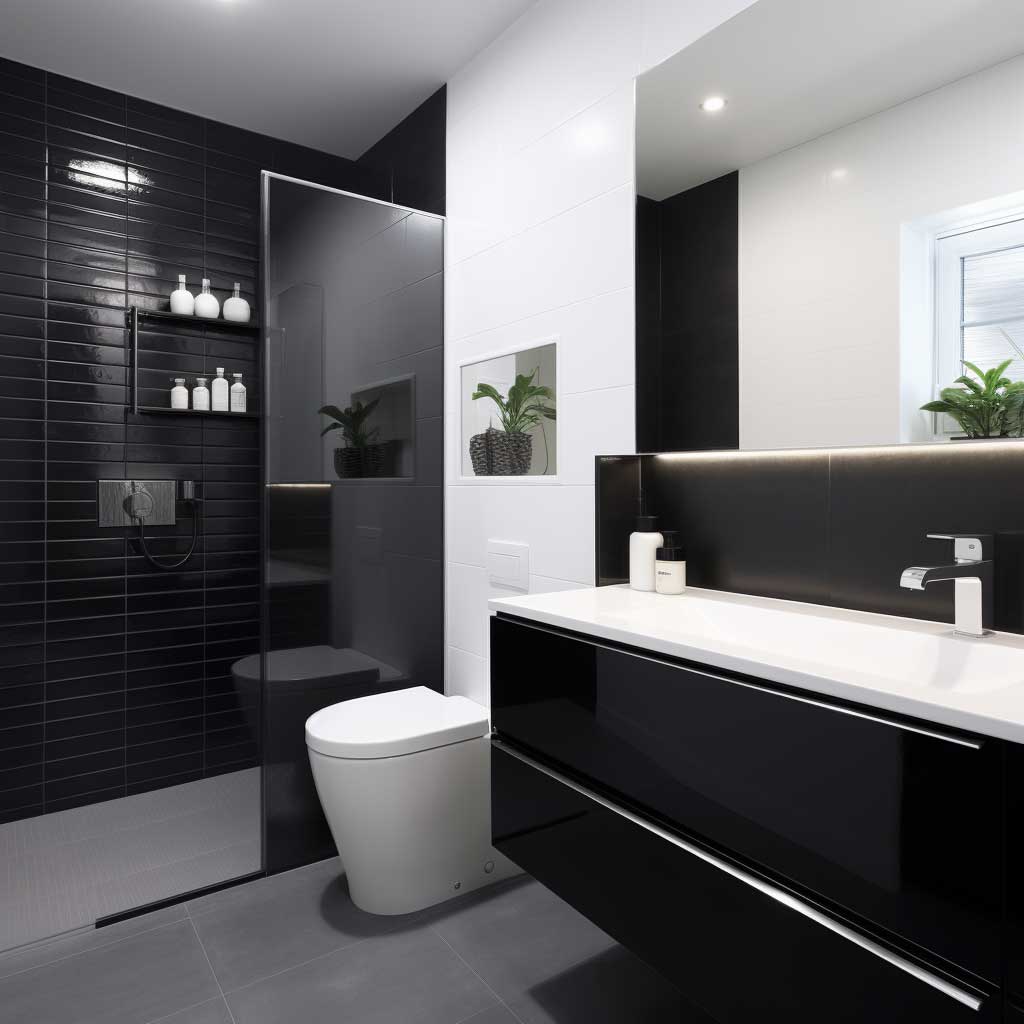
The white vanity is the necessary counterweight. Its job is to push back against the darkness and keep the room from feeling sealed. A wall-mounted or floating vanity does this more effectively than a floor-standing unit because it exposes floor area, creating a visual gap that reads as space. Floating vanities free up roughly 6–8 inches of visual floor depth — enough to shift the perception of a tight room. The vanity surface should be matte or semi-gloss white, not cream — cream muddies the contrast and reads as an accident rather than a choice.
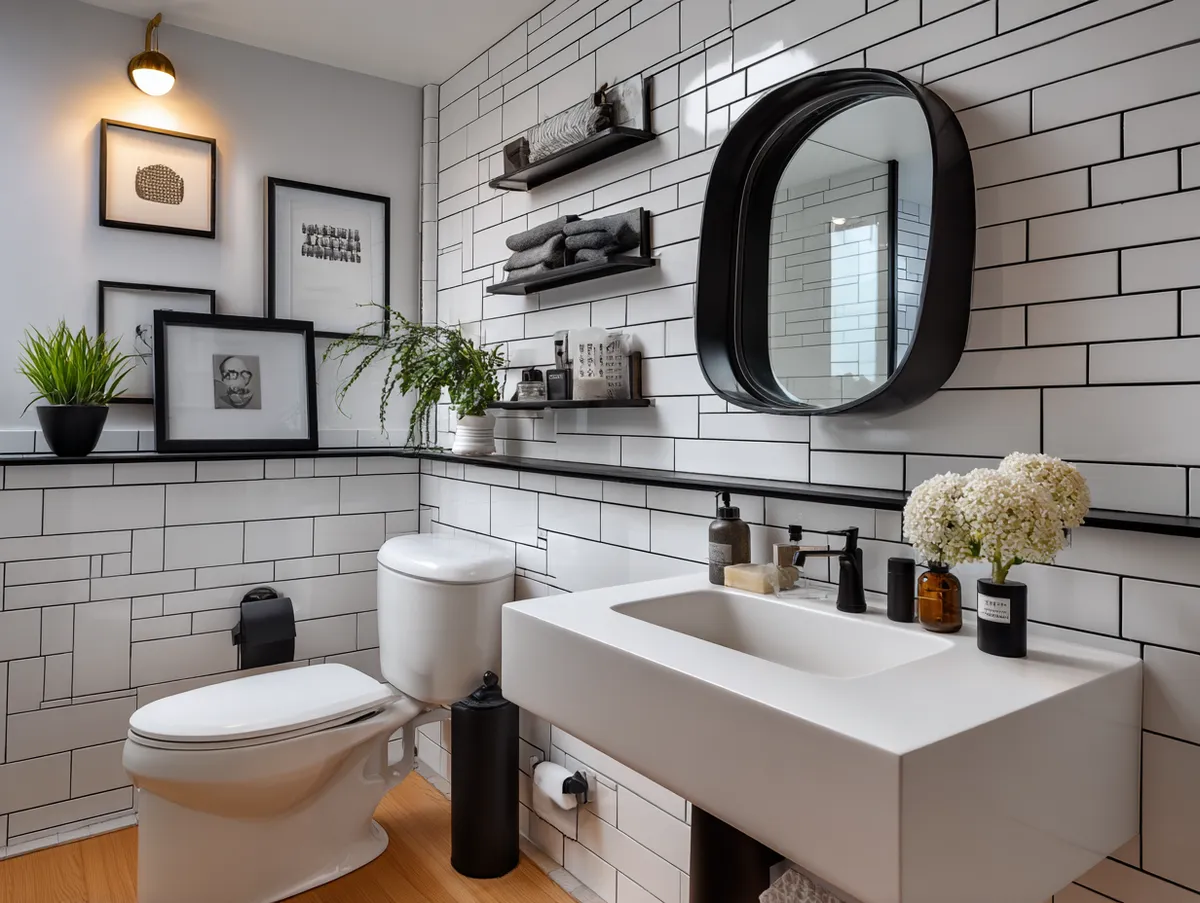
A large mirror with a black frame pulls the design together without adding bulk. Mirrors reflect the room’s palette back at the viewer, which doubles the perceived square footage of the space they face. The black frame echoes the tile and anchors both elements to the same visual logic. Monochrome abstract art in a black frame works the same way — it extends the palette into the decor without requiring color. The trick: hang everything in the same plane and at the same height so the eye reads it as a system, not a collection of individual decisions.
Black tile on all four walls of a bathroom under 60 square feet reads as a cave, not a statement. Black absorbs light — and in a small room with no natural light source, covering every surface kills the contrast that makes the palette work in the first place. Limit black tile to one accent wall, typically behind the vanity or on the shower wall, and keep the other three surfaces white. Also avoid mixing glossy and matte black tile finishes in the same room — the inconsistency fragments the look and makes the space feel unresolved.
White Subway Tile With Black Grout — the Modern Small Black and White Bathroom That Scales
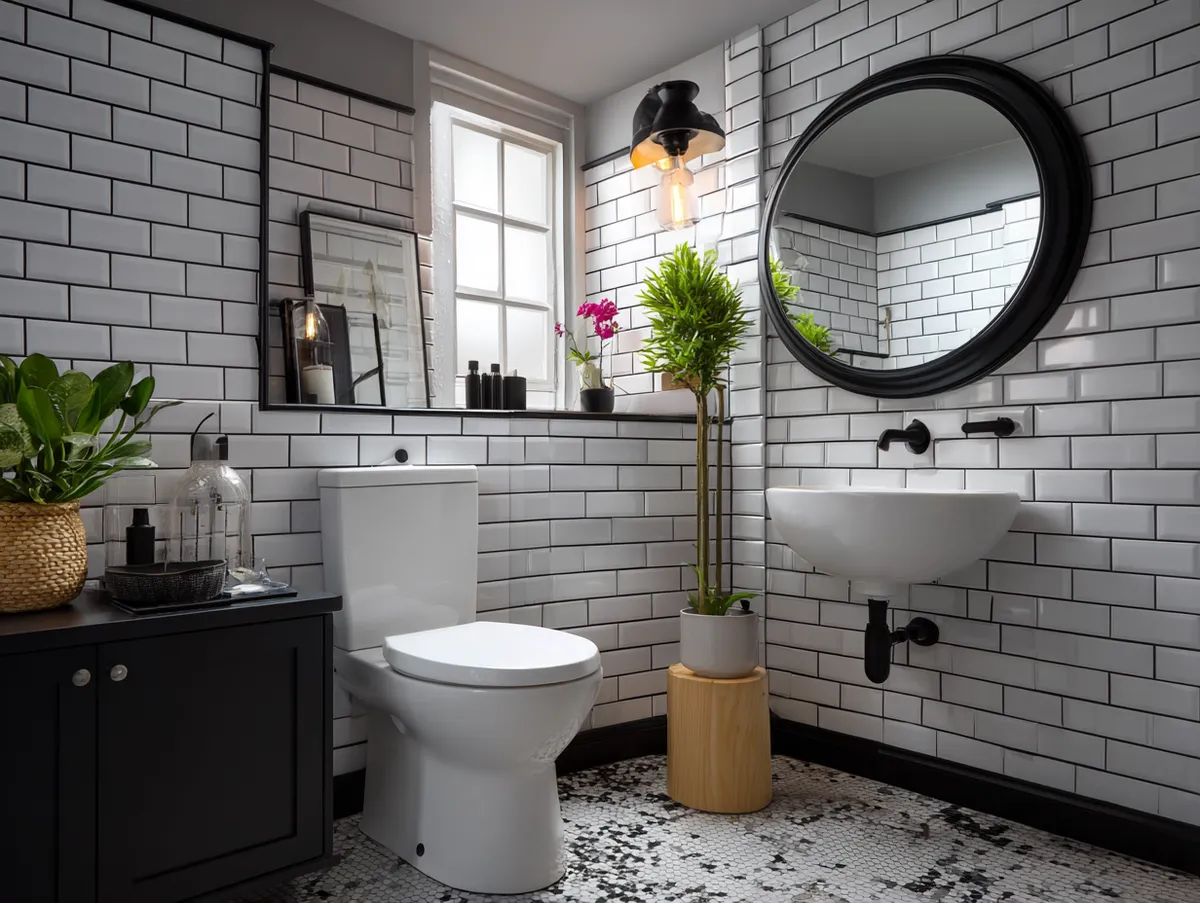
White subway tile with black grout is how a modern small black and white bathroom gets its graphic quality without committing to dark surfaces on the walls. The standard 3×6 tile in a running bond layout costs $3 to $5 per square foot for ceramic materials, with subway tile at the ceramic end of the market running as low as $1.89 per square foot at stores like Floor & Decor — one of the lowest-cost tile options that still reads as intentional design. Black grout adds no material cost over standard light grout; it’s a different product in the same price range that changes everything about how the tile reads.
The grout does the heavy lifting here. White tile with white or gray grout reads as hotel-modern or Scandinavian. White tile with black grout reads as urban and graphic — closer to a Parisian bistro than a rental bathroom spec finish. Stylists recommend running the tile horizontally in a standard running bond to widen the visual field of a narrow room, or vertically in a stack bond to push height in a bathroom with low ceilings. Both work. Diagonal or herringbone patterns require more precise cutting, which adds to labor cost — horizontal running bond is the lower-cost route that still reads considered.
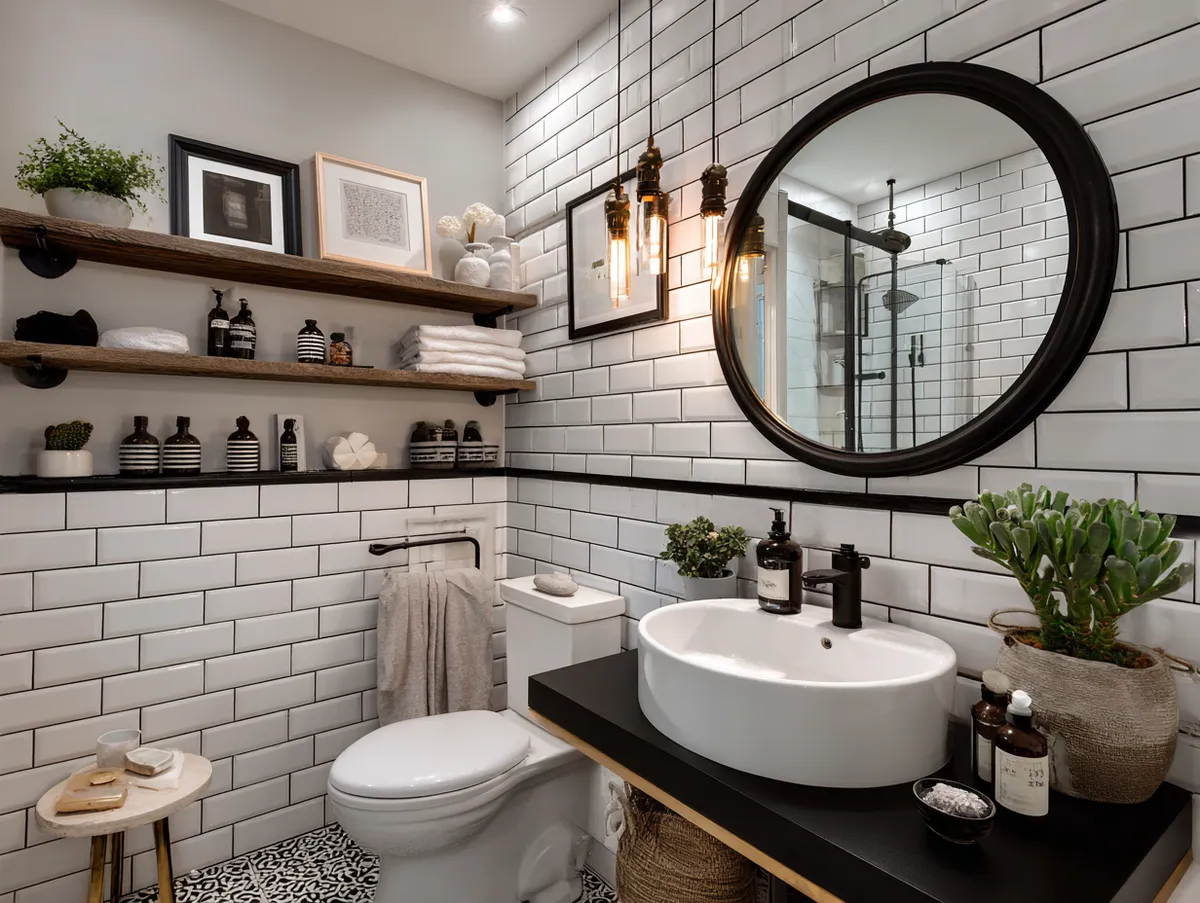

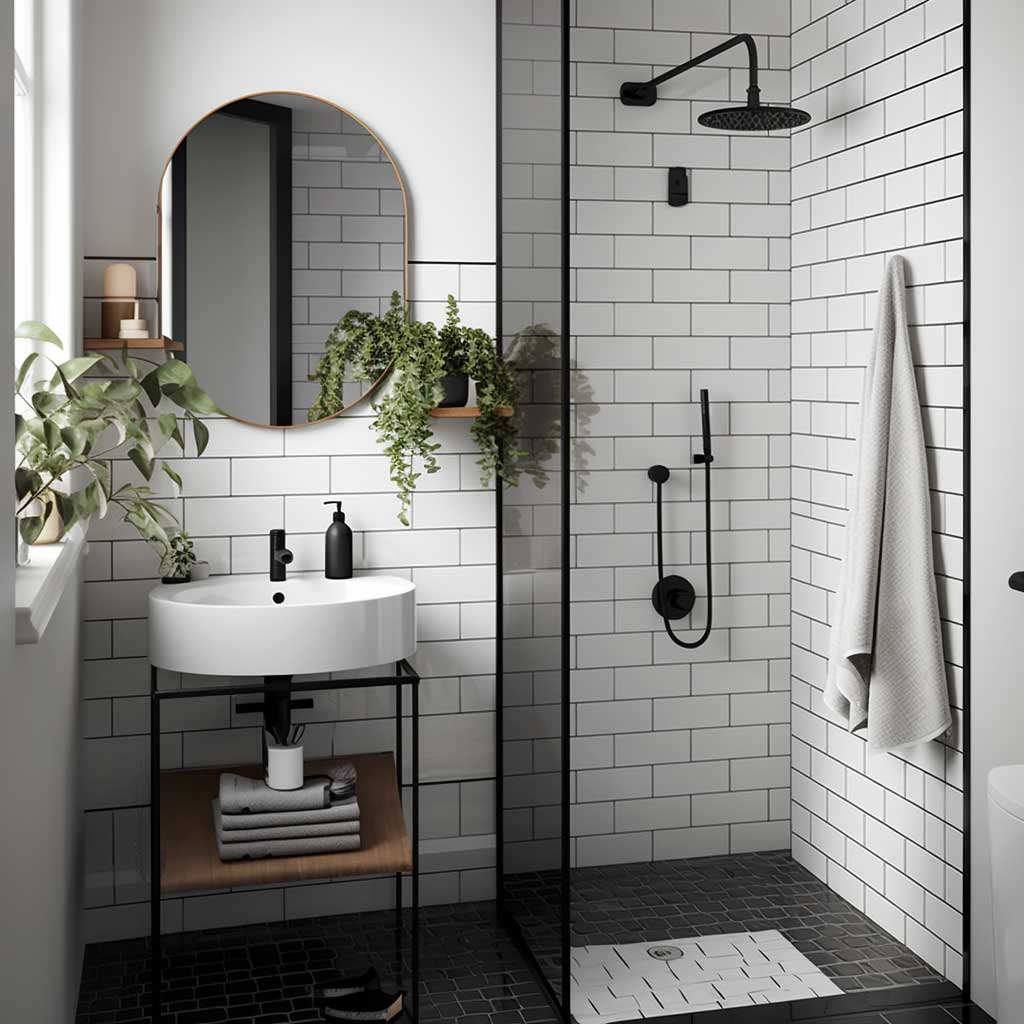
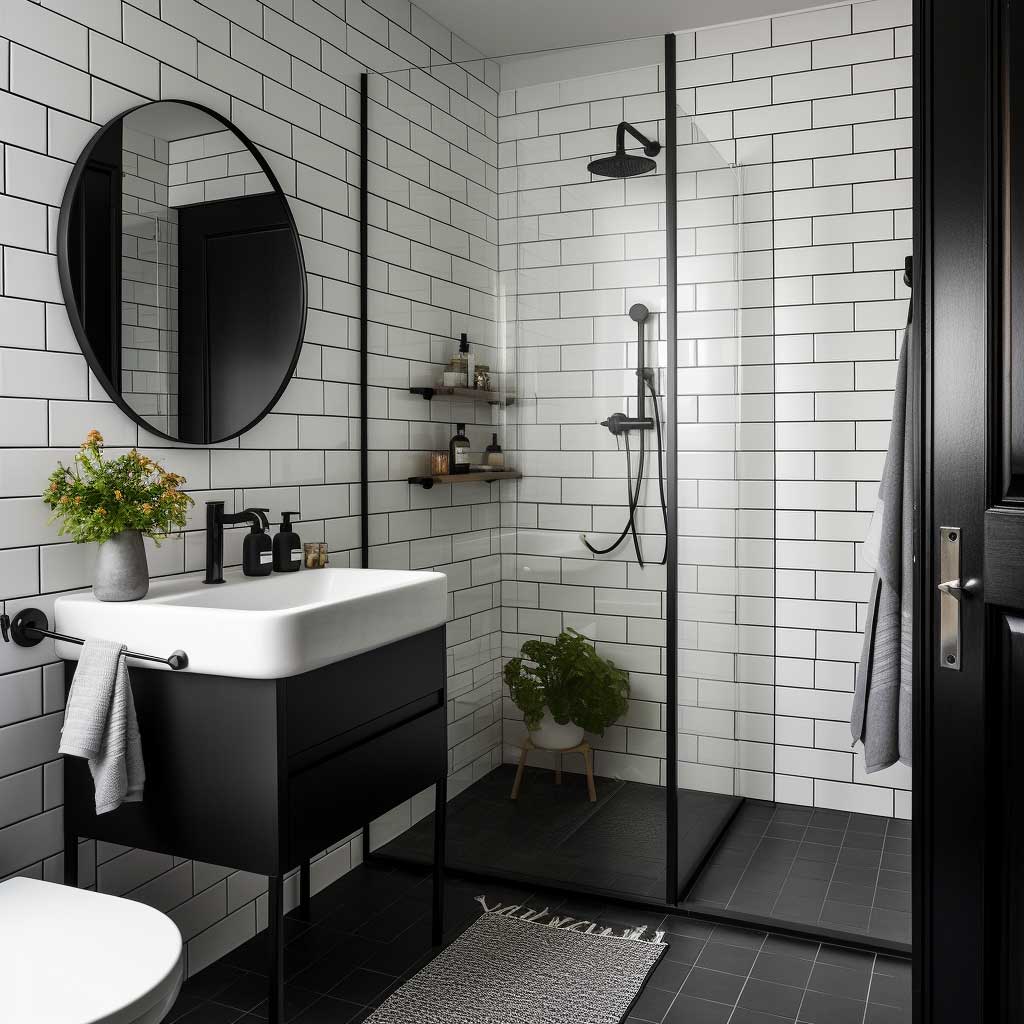
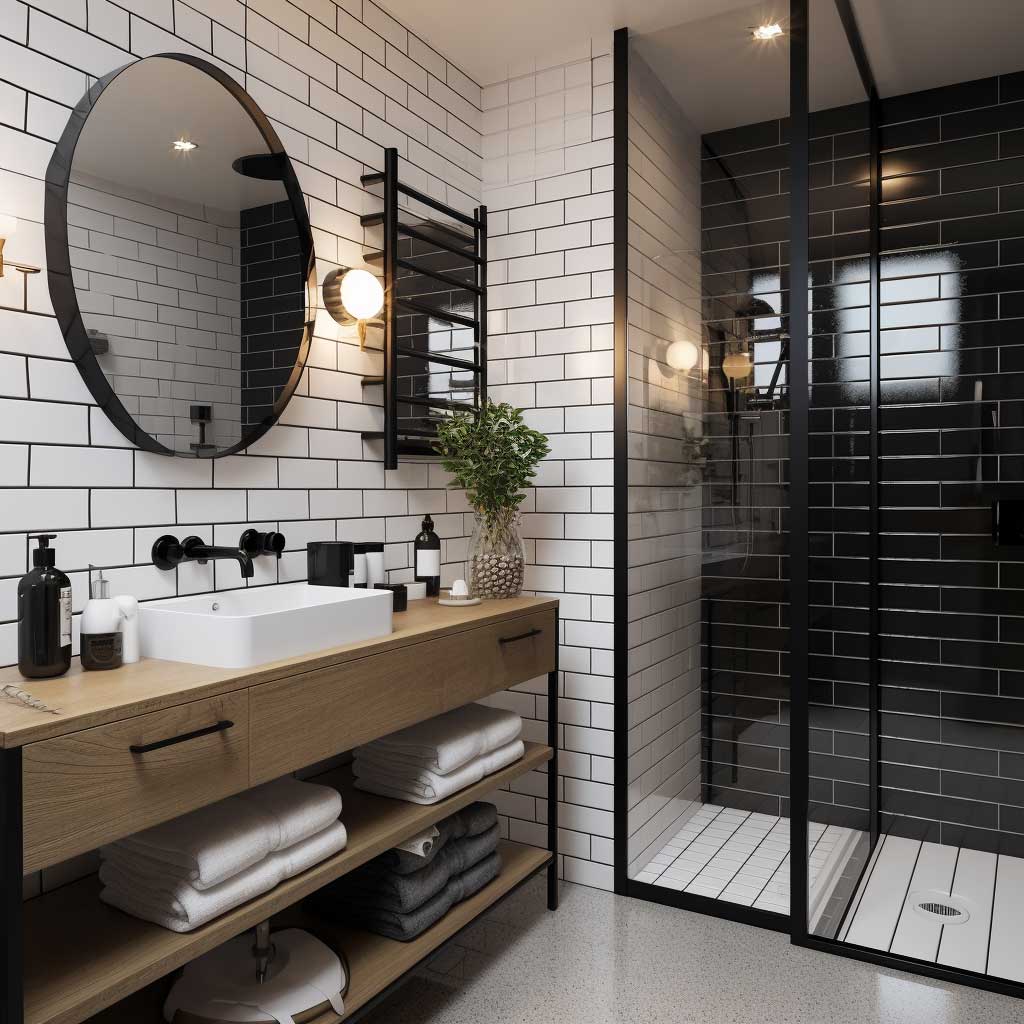
A frameless glass shower enclosure is the right pairing for this tile treatment. Glass removes the visual barrier between the shower zone and the rest of the bathroom, letting the eye travel the full width of the room uninterrupted. This is the spatial equivalent of opening a wall — without the structural cost. A shower curtain cuts the room in half visually and competes with the graphic quality of the tile. Frameless glass panels start around $180 installed for a basic walk-in configuration, according to small bathroom renovation cost data from comparable projects on artfasad.com. For a full comparison of small bathroom layouts that make the most of compact square footage, the small bathroom renovation ideas for city apartments breakdown covers floating vanities, glass shower conversions, and recessed storage in specific price ranges.
Lighting in a subway tile bathroom follows a specific rule: recessed cans overhead plus one statement fixture. Recessed lights bounce off the glossy tile surface and distribute light evenly, which prevents the dark grout lines from making the room feel dingy at night. A single pendant or industrial sconce adds a fixture with visual weight — something that reads as a design decision rather than a utility move. Keep bulb color temperature at 2700K to 3000K; anything cooler makes white tile look bluish and clinical rather than warm and intentional.
Matte Black Fixtures Against White Ceramics — Contemporary Black and White Bathrooms That Hold the Look
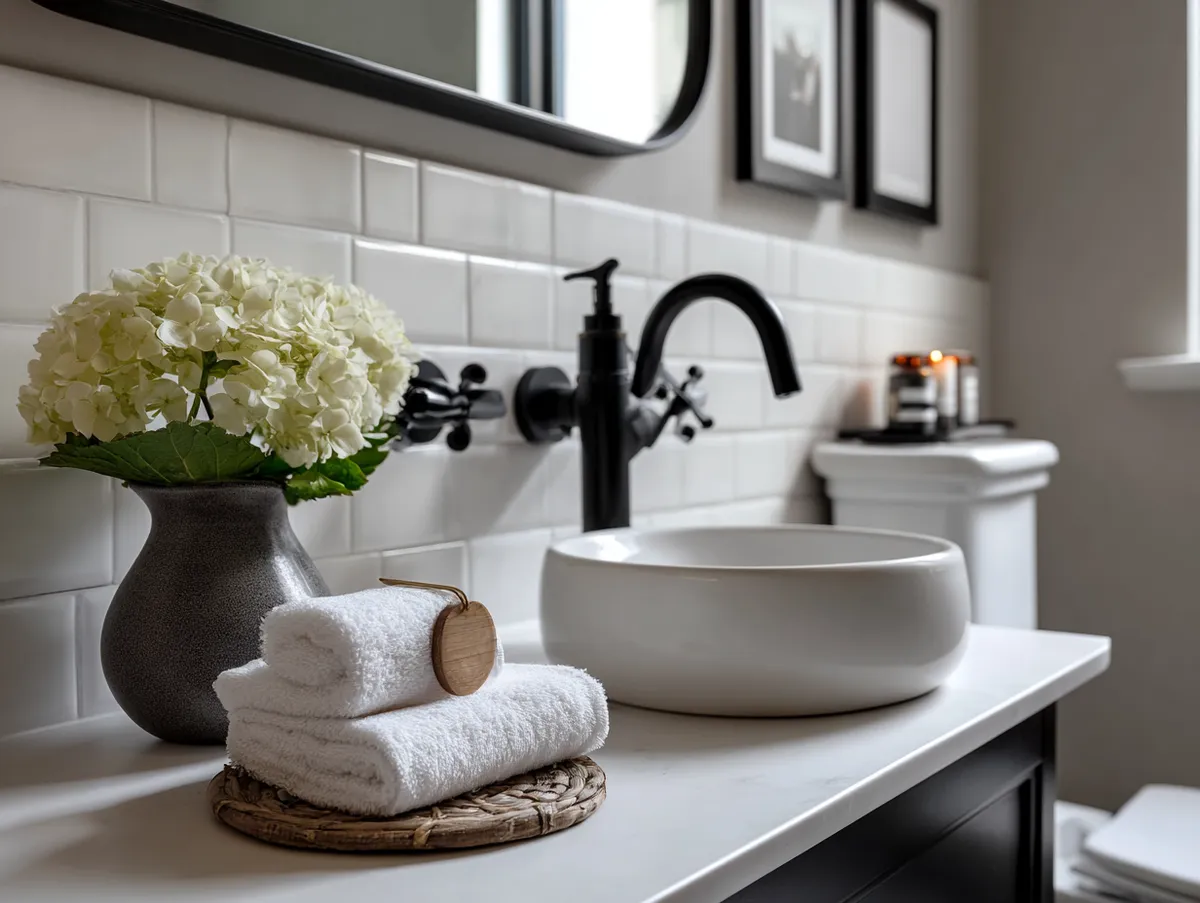
Contemporary black and white bathrooms built on matte black fixtures against white ceramics are the easiest version of this palette to get right — and the easiest to undermine with one wrong accessory. The system works because matte black reads as a deliberate material choice, not just a color. Delta’s matte black faucet line starts around $100 for a single-handle centerset at Home Depot, with the finish tested to withstand 16 hours of exposure to harsh cleaning chemicals per Delta’s published spec — which matters in a bathroom that gets wiped down daily. Chrome faucets in the same position collect water spots that show on every surface. Matte black hides them.
The rule with fixtures in this palette is one finish family across every piece of hardware in the room. Matte black faucet, matte black towel bar, matte black drain cover, matte black mirror frame. The moment a chrome towel bar or a brushed nickel soap dish appears, the palette fragments and reads as indecision rather than design. This is the same logic as running a single grout color — it’s a system, not a collection of individual product choices. Stylists who work in this direction treat the fixture finish like a structural decision made once at the planning stage, not a detail to be sorted out during installation.
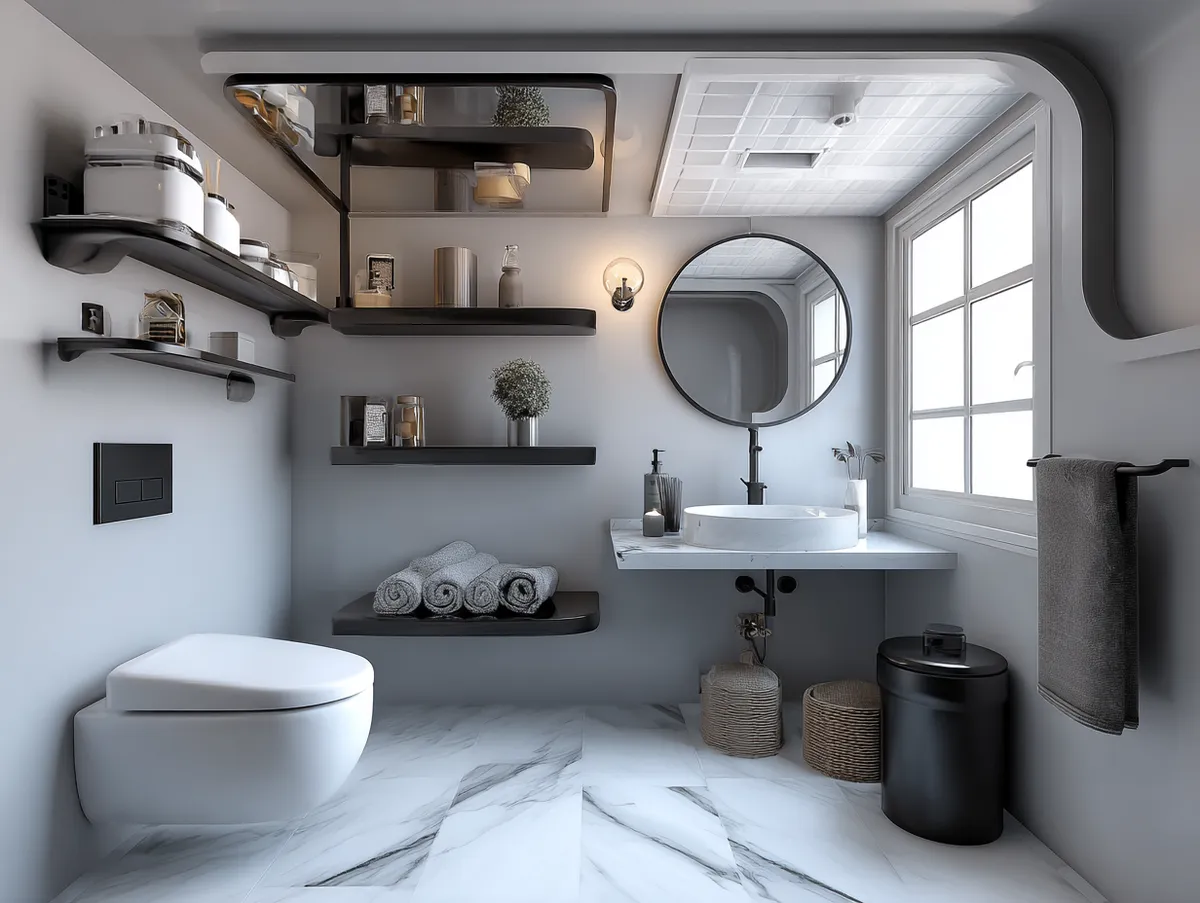
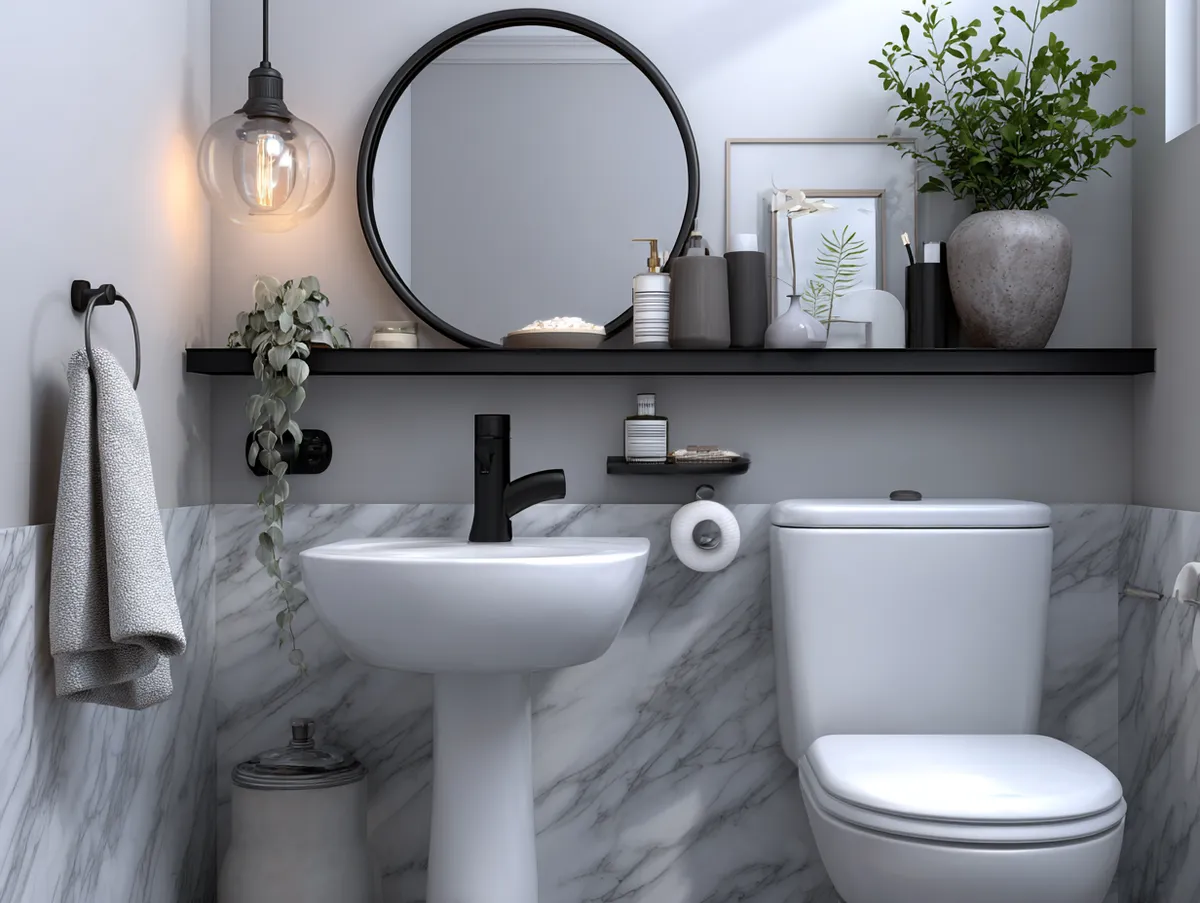
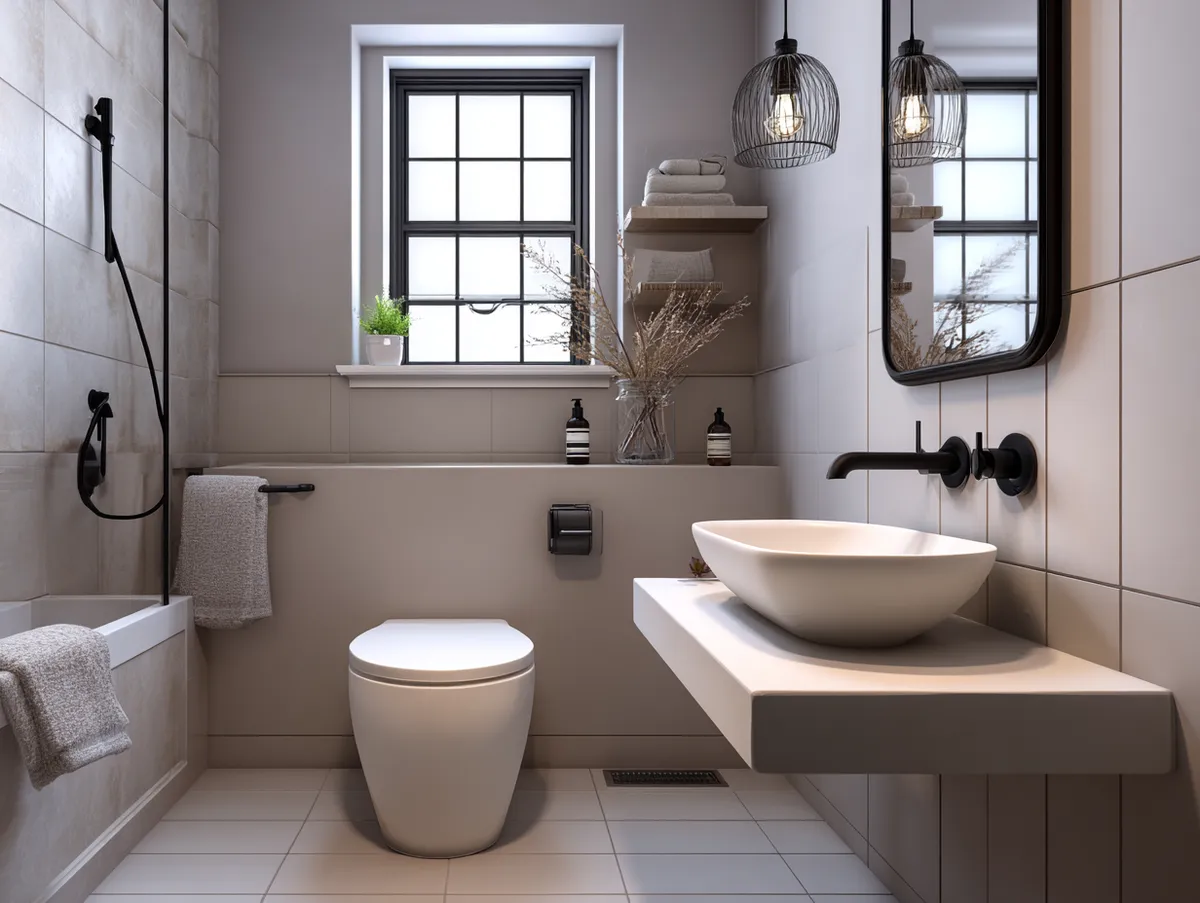
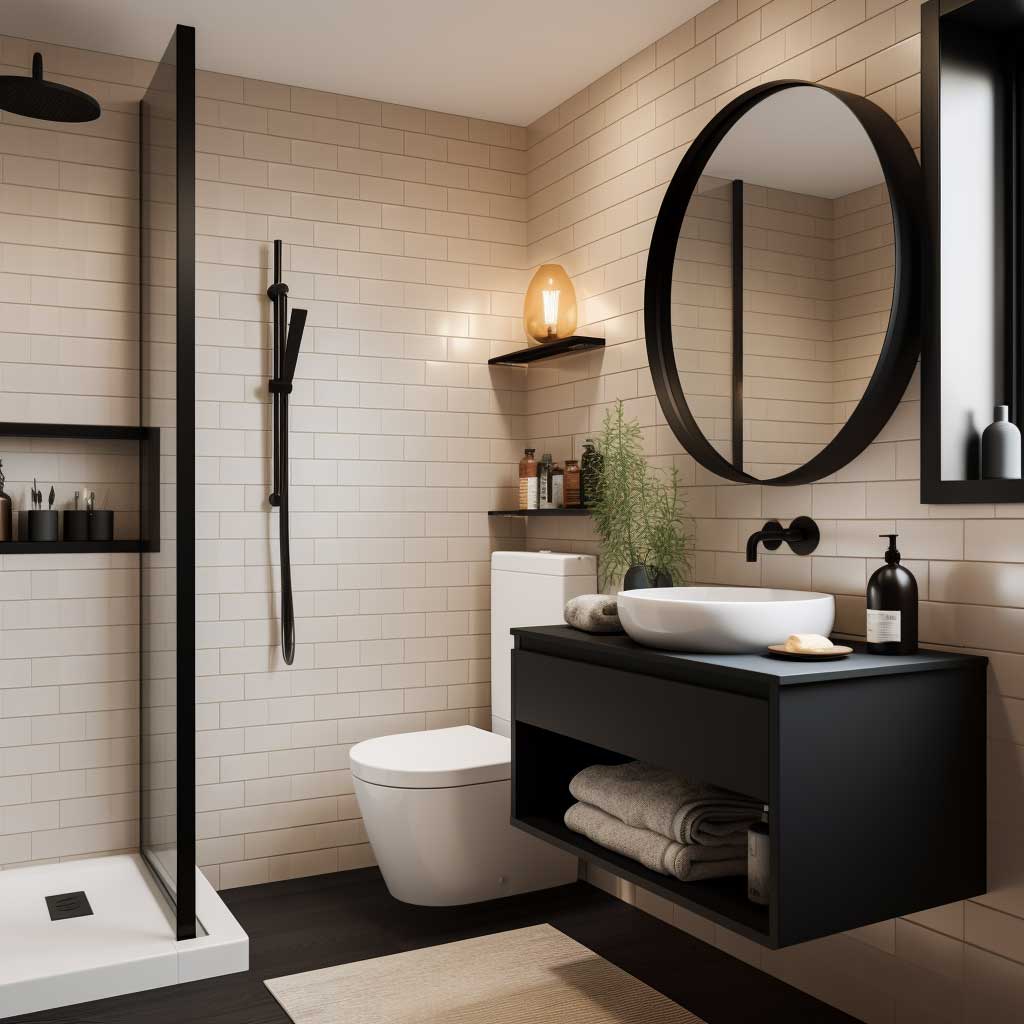


Storage in a compact bathroom built on this palette needs to disappear into the wall rather than sit on top of it. Recessed shelving — cut into the wall between studs and tiled to match the surround — provides usable storage without adding visual depth to the room. What you don’t want is a freestanding storage tower or a wire rack on the back of the door: both compete with the fixture palette and clutter the floor plane that makes floating vanities effective. A recessed medicine cabinet from a brand like Kohler starts around $150 and eliminates 4 inches of wall protrusion entirely, replacing a frame that sticks out with a flush surface that disappears. For more industrial black and white bathroom ideas using exposed tile and open metal shelving in a monochrome palette, the approach translates cleanly to compact spaces.
Texture and pattern elements — a woven rug, patterned towels in black and white, a small succulent in a white pot — add warmth without color. The logic is the same as adding a throw to a monochrome living room: it signals that the space is lived in rather than staged. Keep textured accessories to three or fewer items. The palette absorbs them well at low quantities and gets cluttered fast when overloaded. According to This Old House 2026 retiling data, the average total cost for bathroom tile materials and labor runs around $2,000 — which puts a full compact bathroom refresh within reach for most renovation budgets when scoped to tile, fixtures, and storage rather than a structural gut.
| Design Approach | Key Feature | Tile Cost (Materials) | Primary Risk |
|---|---|---|---|
| Black Tile Accent Wall | Glossy or matte black on one wall, white elsewhere | $3–$15 per sq ft | Four-wall coverage closes the room |
| Subway Tile + Black Grout | White 3×6 tile, running bond, black grout | $1.89–$5 per sq ft | Light grout breaks the graphic contrast |
| Matte Black Fixtures | Single finish across all hardware, white ceramics | Fixtures $100–$300 | Mixed metal finishes fragment the palette |
For current bathroom tile installation cost benchmarks, This Old House’s 2026 retiling guide at thisoldhouse.com breaks down material and labor pricing by tile type, bathroom size, and installation complexity — useful before getting contractor quotes.
The Takeaway
A compact bathroom in black and white works when each element has a clear job — not when the palette is applied and hoped for.
Black tile belongs on one wall, not four. White subway tile needs black grout to read as a design decision. Matte black fixtures need to be the only finish in the room — no chrome exceptions.
The mirror is not optional. A large mirror facing natural light or a strong vanity fixture doubles what the room appears to hold. Skip it and no amount of tile selection compensates.
Save this post before your next tile showroom visit — the contrast decisions stack up fast once you’re standing in front of samples.