
White and wood interior design works because the cool clarity of white meets the organic grain of timber and immediately softens a room. The pairing reflects light while grounding the eye, so spaces feel open yet never sterile. Homeowners choose it when they want brightness without the cold hospital effect and warmth without heavy dark finishes.
In living rooms, kitchens and bedrooms the same logic holds: white surfaces bounce daylight deeper, wood adds measurable texture and a subtle biophilic cue. Research on timber interiors shows rooms with moderate wood coverage lower heart rate and blood pressure compared with fully synthetic finishes. The result is a home that looks larger and feels calmer from the first step inside.
Start with one dominant wood tone and keep white slightly warm rather than pure optical. That single decision prevents the palette from tipping into clinical or cluttered territory.
- White walls plus light wood floors increase perceived space and natural light bounce.
- Moderate wood coverage around 45 percent delivers the highest comfort scores in studies.
- Homes featuring natural wood finishes sell for up to 3.5 percent more according to Zillow data.
- Two-tone kitchens with white uppers and wood lowers remain the most practical layout for daily use.
- Avoid cool pure whites and fake wood grain that orange under sunlight within months.
- Layer textiles and one large plant to keep the palette from reading flat.
Living Rooms Built Around White and Wood Interior Design


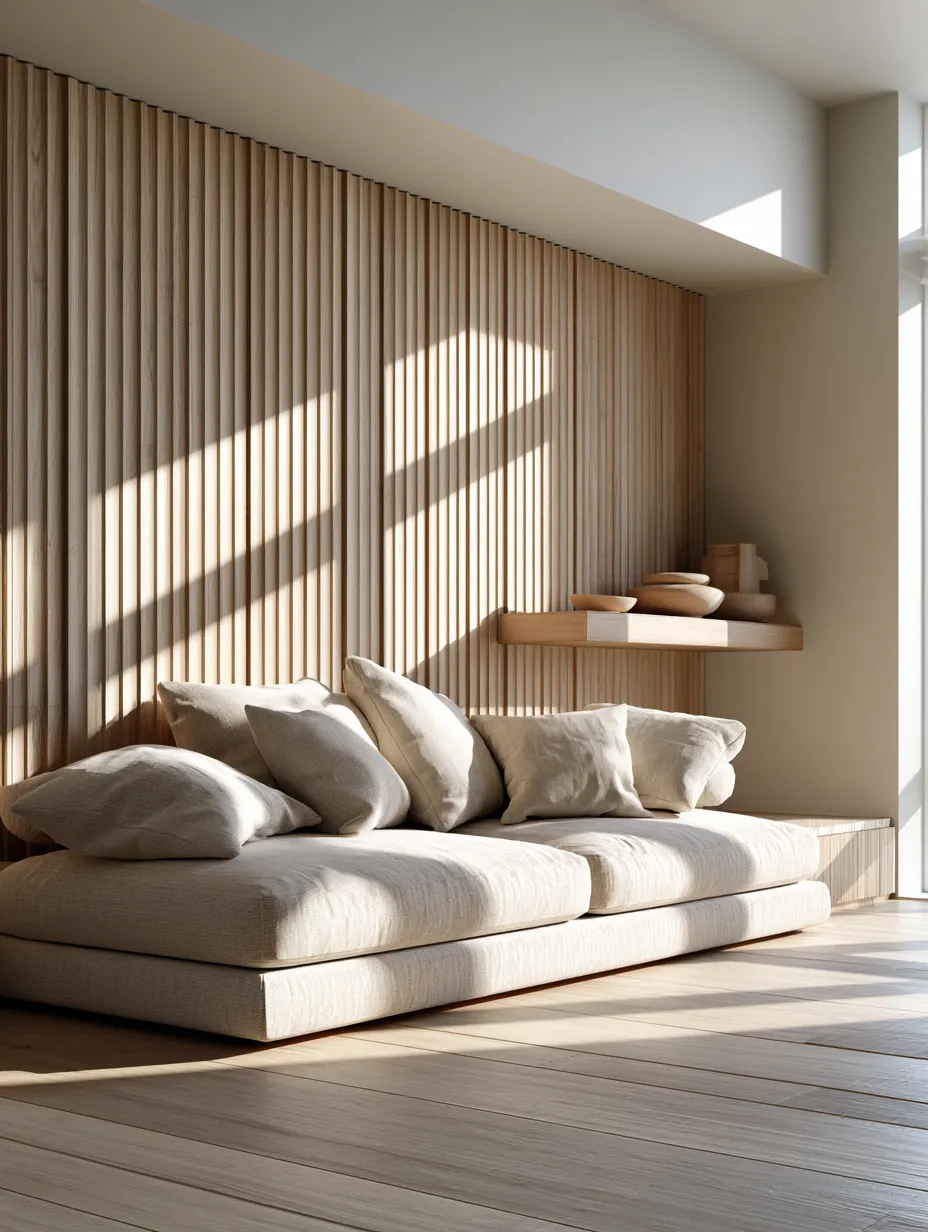
White and wood interior design in living rooms starts with walls that act as a light reflector and floors or beams that supply the only real texture. What happens when every surface stays the same shade of white? The room loses depth the moment evening light hits. Choose a warm white with an LRV near 90 and introduce pale oak or birch in the coffee table or shelving so the eye has somewhere to rest.
Think of the white plane as a clear sky and the wood as the single tree line that makes the view readable. Mid-range solid-wood coffee tables typically land between $200 and $600 and do more work than three extra side tables. Skip matching every finish; one matte wall, one soft textile and one visible grain keep the space from flattening.
How much wood is enough? Studies measuring physiological response found that 45 percent wood surface coverage produced the highest comfort ratings while still lowering heart rate. Full 90 percent coverage reduced stress markers further but felt less inviting subjectively. Aim for that middle band and the living room stays bright yet grounded.


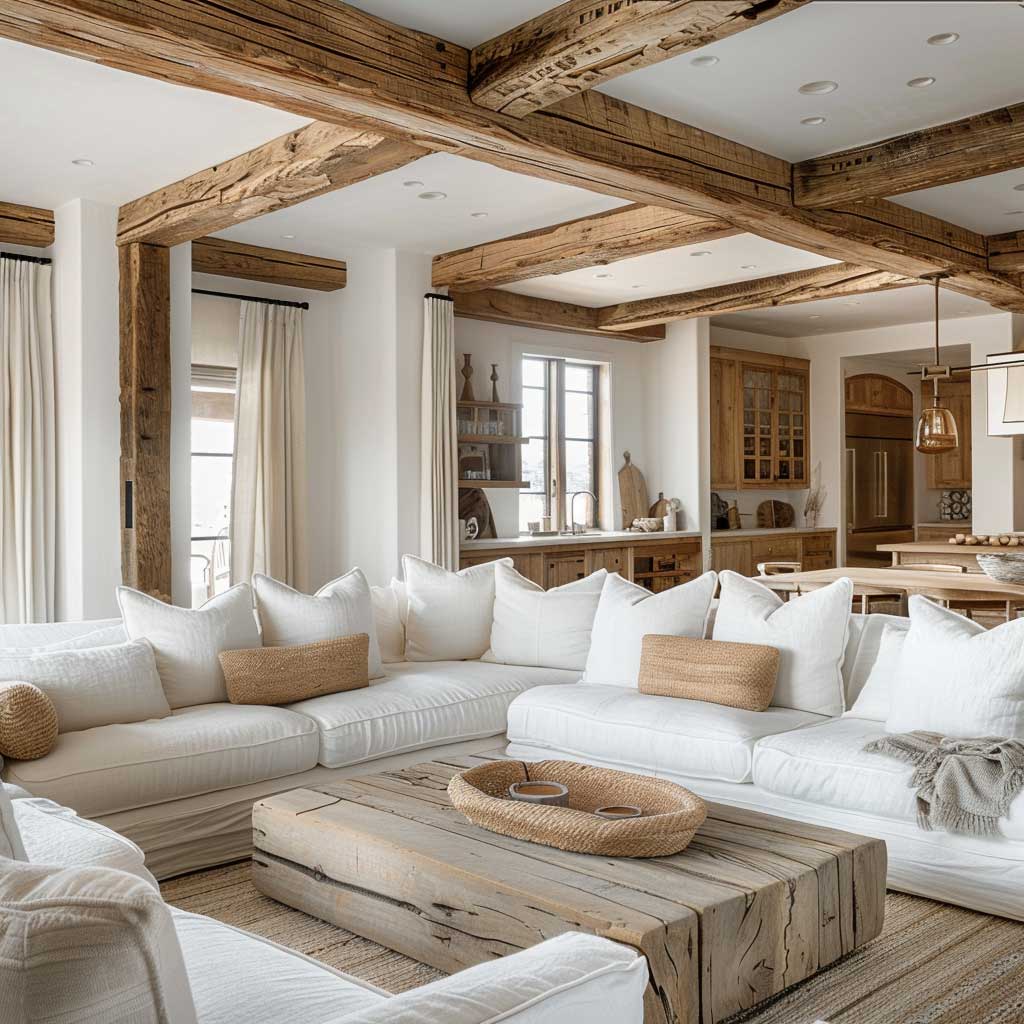
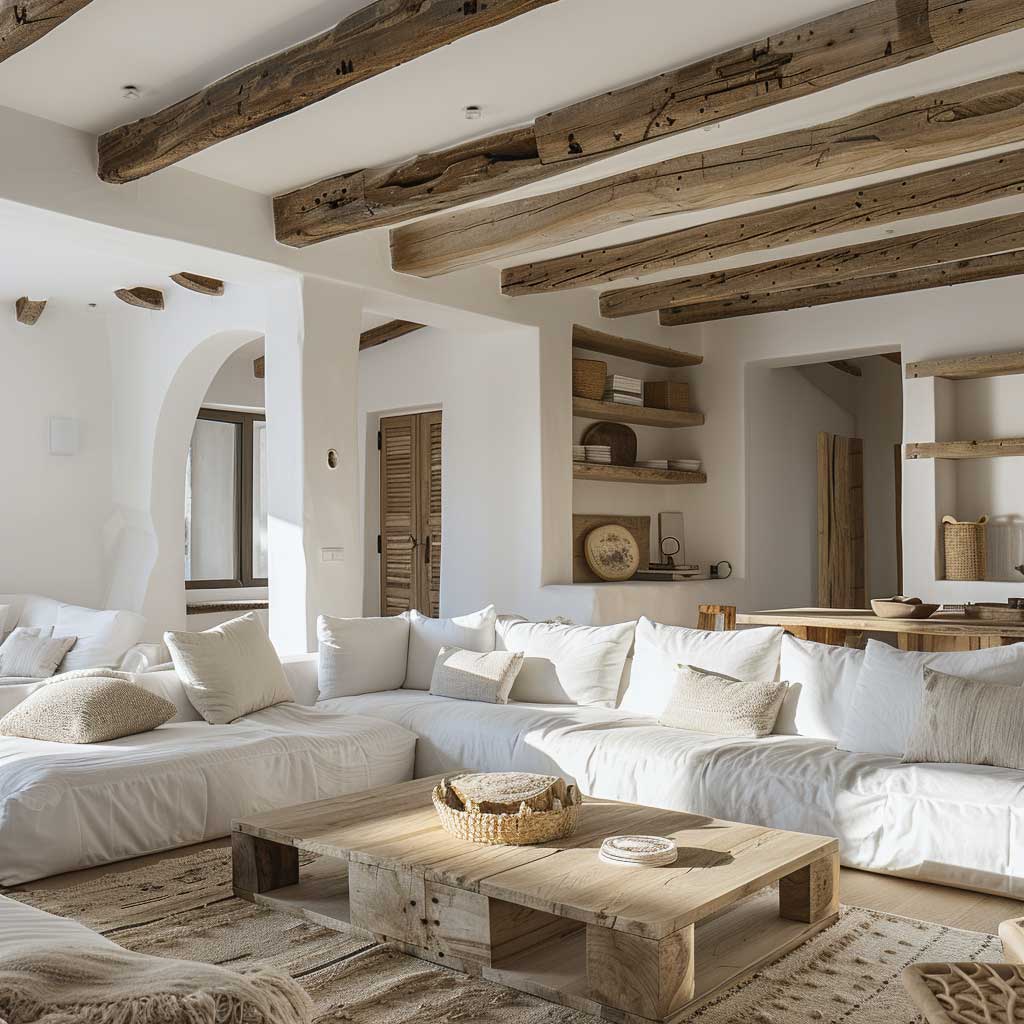
Furniture should keep clean lines so the wood grain remains the star. A low-profile sofa in the $900–$2,000 range paired with a single wooden console leaves negative space intact. Add one large plant in a simple pot rather than a cluster of small ones; the green reads as intentional punctuation against the neutral field.
Accessories stay minimal: a ceramic vessel, a wool throw, a metal lamp with a wooden base. These pieces personalize without clutter. The living room then functions as a true pause zone rather than a display case. For more ways to layer white with soft neutrals see the approaches in Scandinavian white and soft gray living room furnishings.
Kitchens Where White Meets Wood for Daily Function


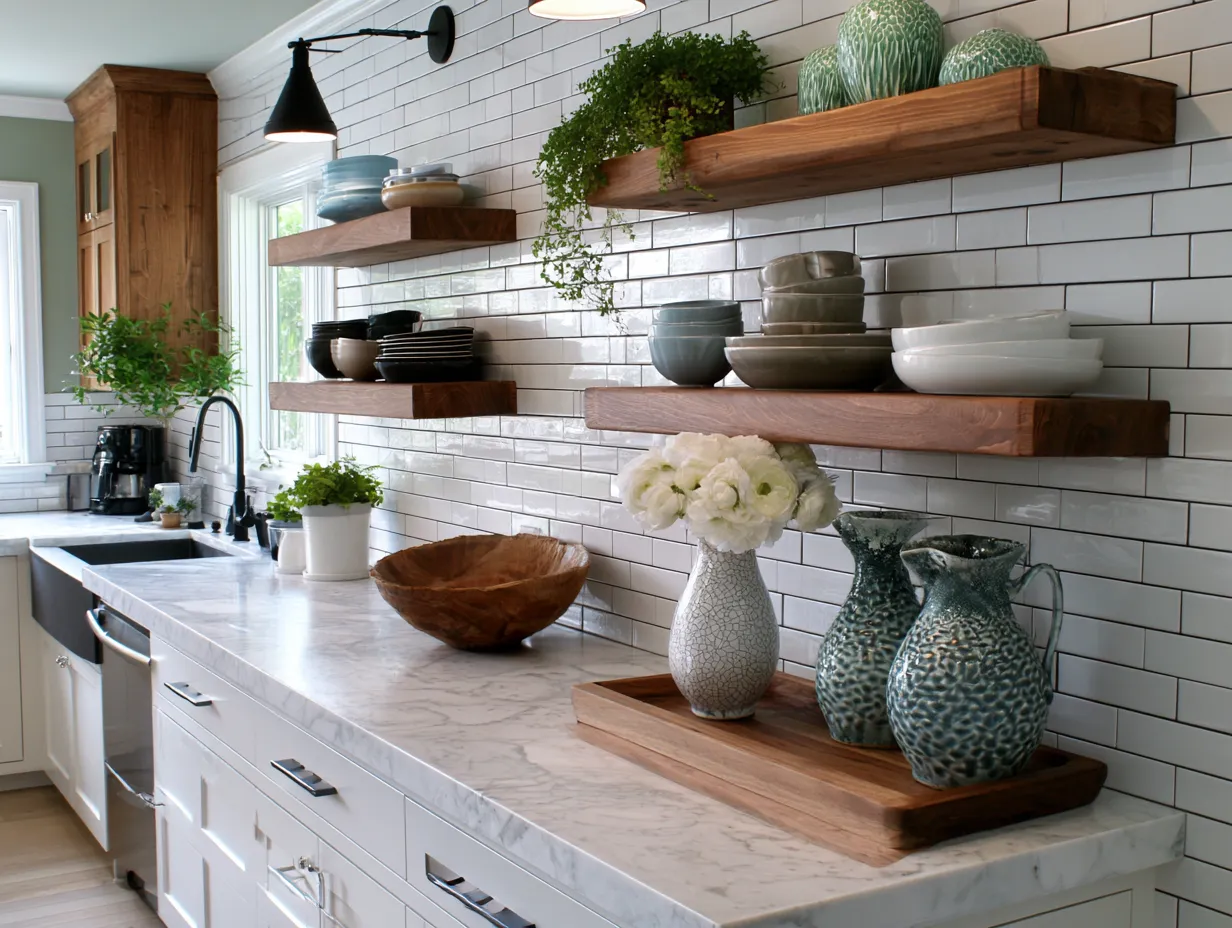
White and wood kitchen designs succeed when the white cabinets keep the room bright and the wood counters or island supply the durable work surface. Recent homeowner surveys show wood cabinet finishes edged out pure white for the first time in years, landing at 29 percent versus 28 percent. The practical reason is simple: wood hides the micro-scratches that show on high-gloss white while still looking intentional.
Imagine the white as the clean apron and the wood as the butcher-block table that has already earned its scars. Butcher-block or solid wood countertops average $50 to $150 per square foot installed, with most mid-size kitchens landing near $3,800 total. That investment ages better than many synthetics and develops character rather than looking tired.
Two-tone layouts place white on the upper cabinets and wood on the lower or island. Upper cabinets stay light against the wall; lower cabinets take the visual weight and the daily impact. About 24 percent of renovating homeowners already mix the two finishes this way. Avoid painting every door the same cool white; the room loses the very contrast that makes the pairing work.
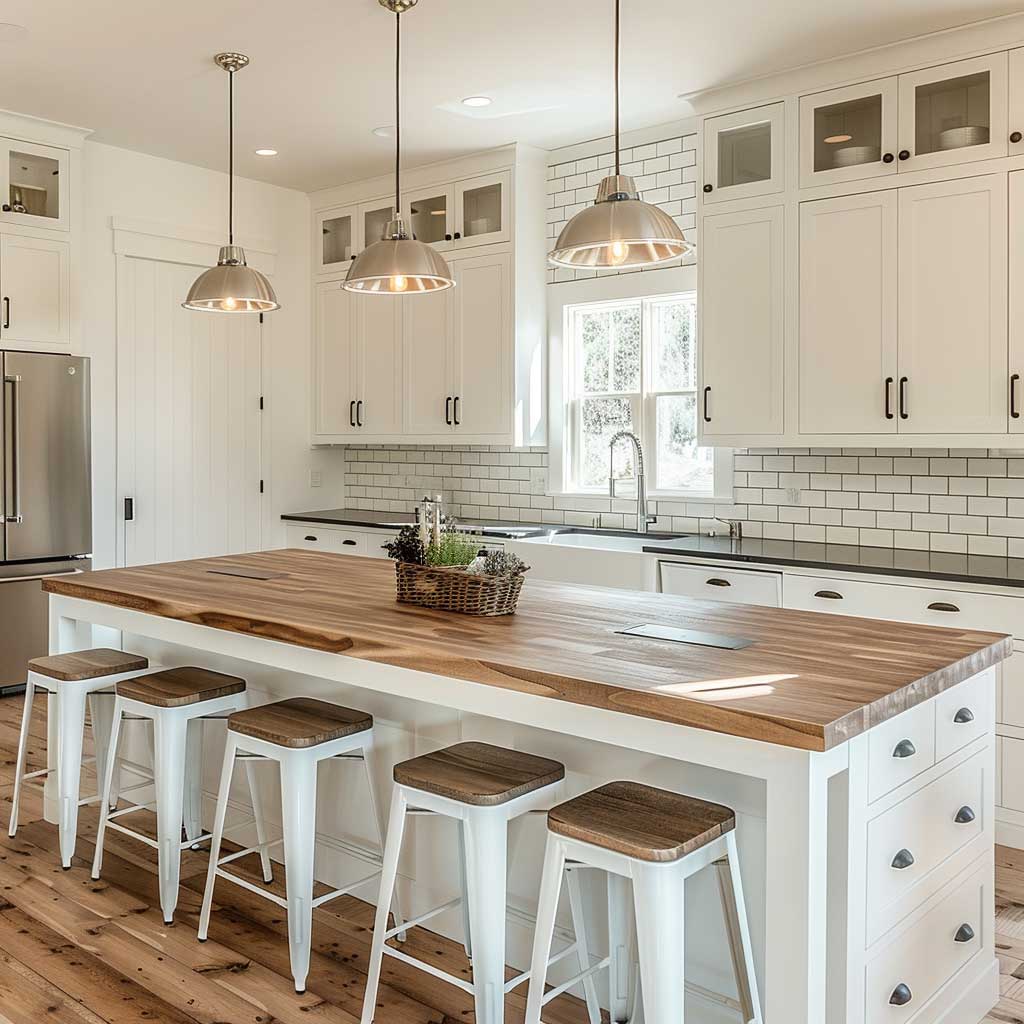


Hardware and stools follow the same restraint. Choose simple metal pulls and wooden seat stools so the materials stay legible. Real birch or oak open shelves cost roughly $40 each and outlast laminate look-alikes that orange under sunlight within six months. Keep the lighting at 2700K–3000K; cooler LEDs turn the white gray and kill the warmth the wood is meant to provide.
The kitchen then becomes the room people actually gather in rather than a showroom that only photographs well. For additional white kitchen pairings with real wood details explore white Scandi kitchen ideas with warm wood accents.
Bedroom Retreats Anchored by Soft White and Timber


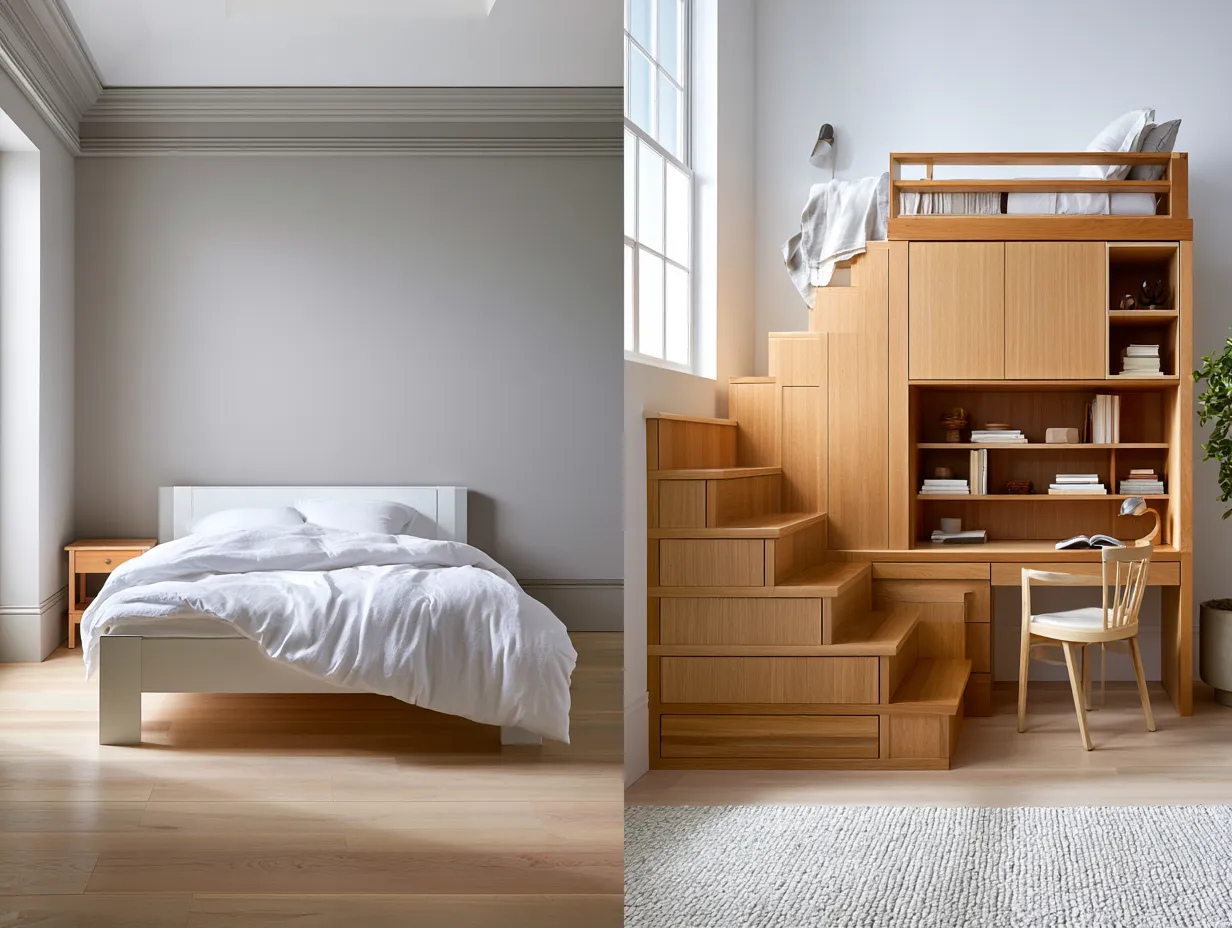
A bedroom that uses white and wood interior design becomes a true retreat when the white stays warm and the wood stays light. Pure optical white on the walls can read institutional once the sun moves; a soft white such as White Dove or Alabaster at around $72–$75 per gallon keeps the room bright without the chill. The wooden bed frame then supplies the only weight the eye needs.
Picture the white bedding as fresh snow and the timber frame as the single fence post that makes the landscape human-scale. Solid birch or ash bed frames in the $400–$500 range deliver that presence without darkening the space. Dark walnut looks striking in photos yet adds visual mass that most bedrooms do not require.
Lighting should layer three heights: a soft pendant, bedside lamps with warm bulbs, and one floor lamp. One flat overhead source erases every shadow and flattens the grain. Textiles in linen or wool add the final soft layer; a sheepskin or low-pile wool rug under the bed costs as little as $39 and changes the way bare feet meet the floor.


Nightstands stay small and simple so they never compete with the bed. One plant in the corner is enough; a cluster of small pots turns the room into a nursery. The finished bedroom then feels like a place to actually rest rather than a staged set. Additional Nordic bedroom approaches appear in Scandinavian bedroom ideas that stay warm.
Material Choices That Keep the Pairing Honest
The success of any white and wood interior design rests on real materials rather than look-alikes. Real birch, oak or maple develops a soft patina; printed laminate orange under sunlight and peels in kitchen humidity. Solid wood floors recover 118 to 147 percent of cost at resale according to National Association of Realtors data, outperforming most cosmetic upgrades.
Paint matters equally. Cool pure whites fight warm wood tones and create a visual shiver. Warm whites with slight yellow or red undertones let the grain sing. Coverage numbers for quality lines run 350–400 square feet per gallon, so a typical living room needs only two gallons once windows and doors are factored in.
Do not mix three different wood species in one room. The grains cancel each other and the space loses clarity. Choose one primary tone and let it carry every furniture piece and floor. That single decision keeps the entire home coherent.
| Element | Best Choice | Typical Range | Watch-Out |
|---|---|---|---|
| Walls | Warm white (LRV ~90) | $70–$105 / gal | Cool pure white reads clinical |
| Flooring | Light oak or birch | $7–$28 / sq ft | Fake grain oranges fast |
| Kitchen counters | Butcher block / solid wood | $50–$150 / sq ft | Under-sealed wood stains |
| Bed frame | Solid birch or ash | $400–$500 | Dark walnut adds excess weight |
| Open shelves | Real birch | ~$40 each | Laminate peels in humidity |
Practical Limits That Protect the Look
White and wood interior design fails fastest when every surface tries to match. Identical matte finishes erase depth the same way identical fonts flatten a page. Keep at least three distinct textures: matte wall, soft textile, visible grain.
Lighting is the silent partner. Cool LEDs above 4000K turn white walls gray and mute the wood. Stick to 2700K–3000K across every fixture so the palette stays warm after sunset. One large plant does more work than seven small ones; the single green note anchors the neutral field without clutter.
Homes that feature natural wood finishes sell for as much as 3.5 percent more than expected, according to Zillow research on listing language. That premium appears because buyers register the material authenticity immediately. Protect it by refusing fake wood and over-matched finishes.
Don’t Do This
- Paint every cabinet the same cool pure white — the room loses all contrast.
- Buy wood-look laminate shelves for kitchens — they orange and peel within a year.
- Install only one flat overhead light — shadows disappear and the grain goes dead.
- Fill every surface with small plants or stacked books — the calm vanishes.
- Mix three different wood species in one room — the eye cannot settle.
Spaces That Stay Inviting Year After Year
White and wood interior design earns its place because the combination solves two problems at once: light and warmth. White keeps rooms open and reflective; wood supplies the only texture that never feels temporary. When the materials stay honest and the proportions stay moderate, the home remains calm through changing light and daily use.
Choose one primary wood tone, keep the white slightly warm, and limit accessories to pieces that earn their footprint. The living room, kitchen and bedroom then share a quiet language that feels intentional rather than styled.
Real timber ages with the household. Scratches become part of the story instead of damage that demands replacement. That durability, paired with the measurable comfort of moderate wood coverage, is why the pairing continues to appear in both new builds and thoughtful renovations.
Start with the largest surface — walls or floors — and let the rest follow. The result is a home that looks larger, feels calmer and welcomes people the moment they step inside.
Complete guide
White Color in Home Design: Every Room, Every Style, Every Shade
Kitchens, bathrooms, living rooms, exteriors, palettes — all in one place
Complete guide
Wood in Every Room — Floors, Walls, Facades and Furniture
Paneling, ceilings, kitchens, facades, plywood, timber houses — all in one place
You Might Also Like


Related Topics