
Red living room decor works when one confident shade of red leads and the rest of the room steps back to support it. It suits traditional, minimalist and vintage interiors alike, provided red gets a clear job: the sofa, a single wall, or a small cluster of accents. Think of it like chili in a recipe, where the right pinch warms the whole dish and a heavy hand drowns every other flavor. Pick one red hero piece first and build the palette around it.
Does red make a living room feel smaller or more aggressive? Only when it covers every surface at full saturation with nothing to calm it. Paired with cream, warm grey, natural wood or brass, red reads as cozy and social rather than loud. Deep shades such as burgundy and oxblood feel enveloping in the evening, while brighter crimson keeps a room lively in daylight. Match the shade to the hours when you actually use the room.
Four routes follow: plush red seating, minimalist red accents, choosing the right shade, and vintage red pieces. Each comes with practical numbers on fabric durability, paint coverage and color balance, plus the mistakes that turn a warm room into a hot one. Read the route that matches your current furniture before buying anything new.
Quick Scan
- Give red one clear role: the sofa, an accent wall or accessories, not all three at full strength.
- In a minimalist room, keep red close to 10 percent of the visible palette.
- For a red sofa in a busy family room, look for upholstery rated above 35,000 Martindale rubs.
- Burgundy and deep rouge suit evening rooms; crimson suits bright daytime spaces.
- Budget an extra coat for saturated red paint and keep red fabrics out of harsh afternoon sun.
- Balance red with cream, warm grey, wood or brass to keep it cozy instead of loud.
Plush Velvet Seating Turns Red Living Room Decor Into Pure Comfort
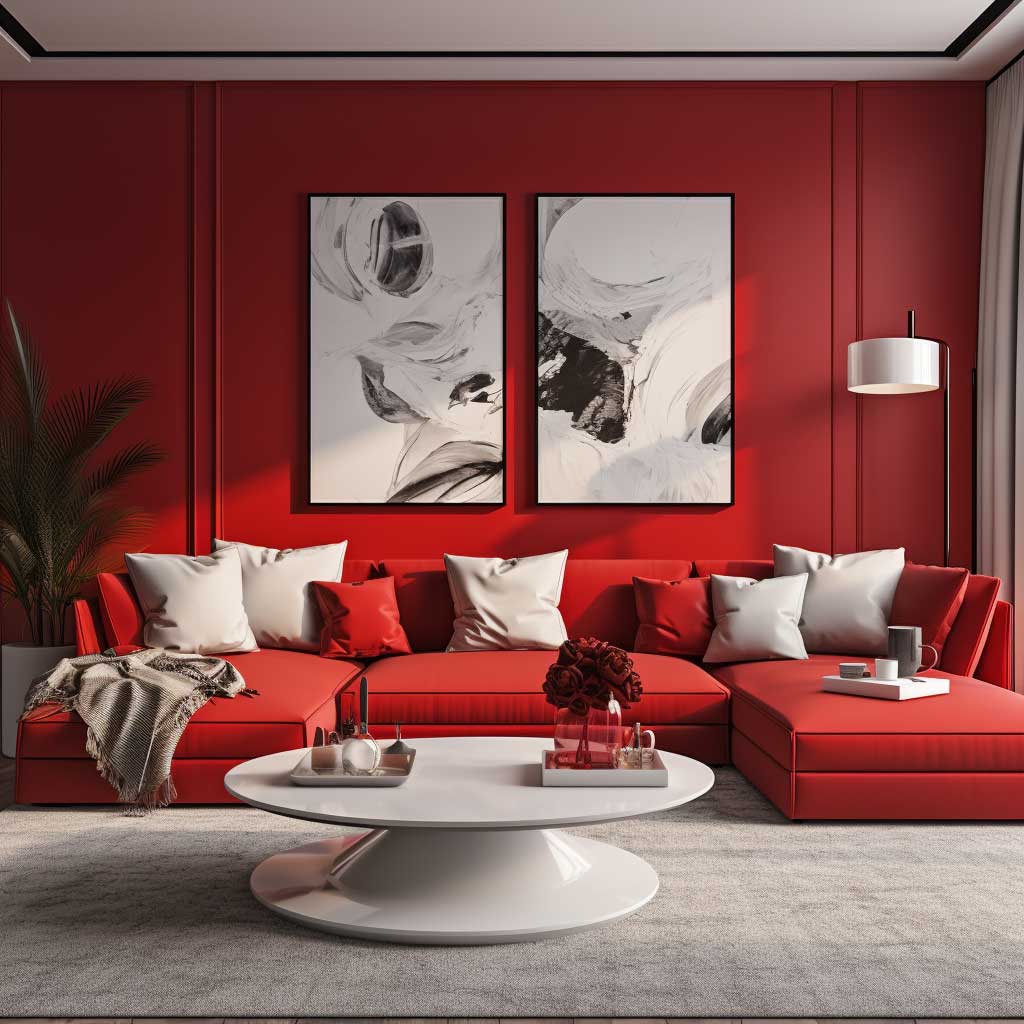
A red living room built around plush seating starts with one deep, soft sofa that does most of the color work on its own. Velvet suits the role best because its pile catches light and shifts the red from wine-dark in shadow to bright where lamps hit it. Golden or brass details, such as lamp bases or slim table legs, sharpen that richness without adding more red. Keep the walls quieter than the sofa so the seating stays the focal point.

How durable does a red velvet sofa need to be? Fabric makers rate upholstery with the Martindale rub test, and a common rule of thumb treats roughly 4,000 cycles as one year of regular use. Specialists recommend scores above 35,000 cycles for family sofas that see daily lounging, kids or pets. A lower rating can still work on an occasional armchair. Check the rub count on the label before you fall for the color.
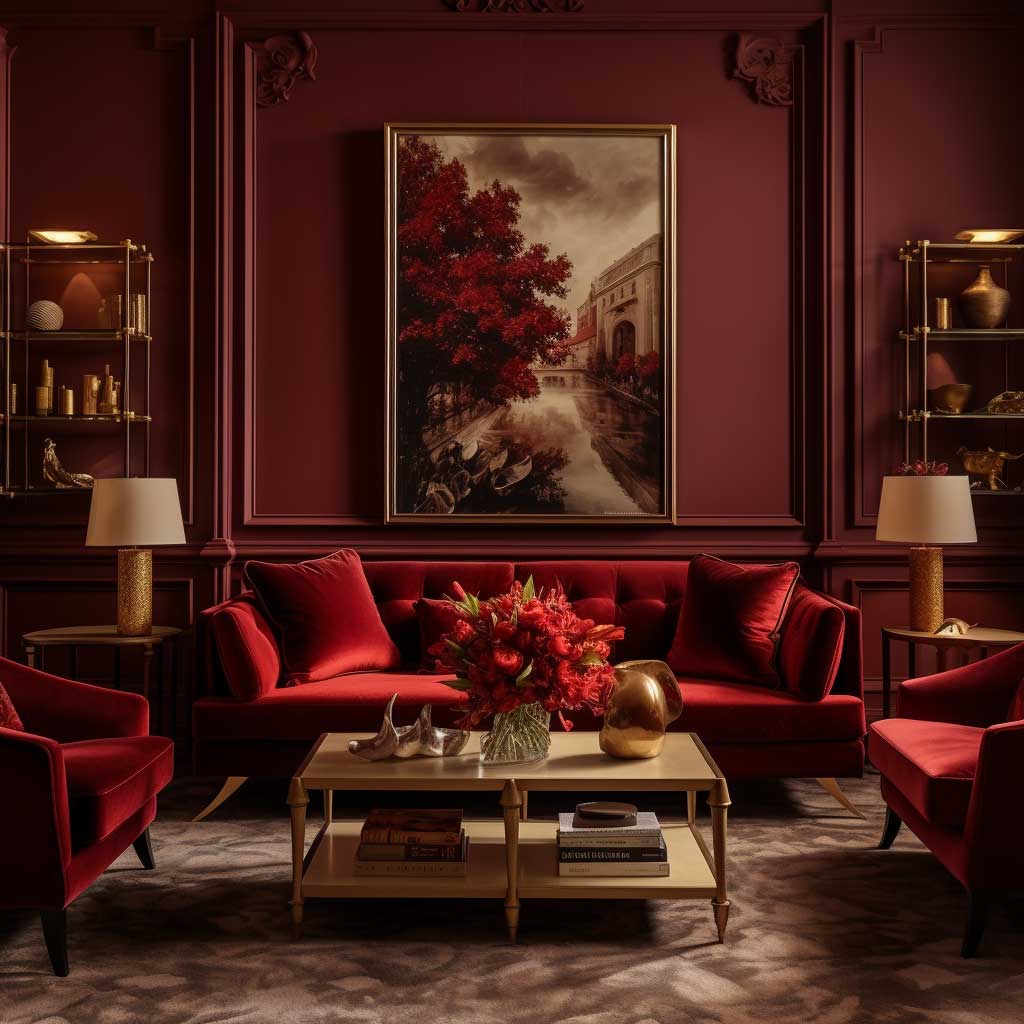
Red seating feels heavy when it lands in a room with no breathing space around it. Cream, beige or soft grey in the rug, curtains and throw pillows act like the white plate under a rich dessert, framing the color instead of competing with it. An oriental rug that mixes faded pinks with neutral threads does the same job while adding pattern. Repeat at least one neutral within arm’s reach of the sofa.
Texture keeps a red seating area from looking flat. Velvet next to leather, a nubby wool throw or a woven jute rug gives the eye something to read beyond color. Households that need tougher surfaces can borrow from these red family room makeover ideas, where sectionals and layered cushions take daily wear. Mix at least two textures within the seating group.
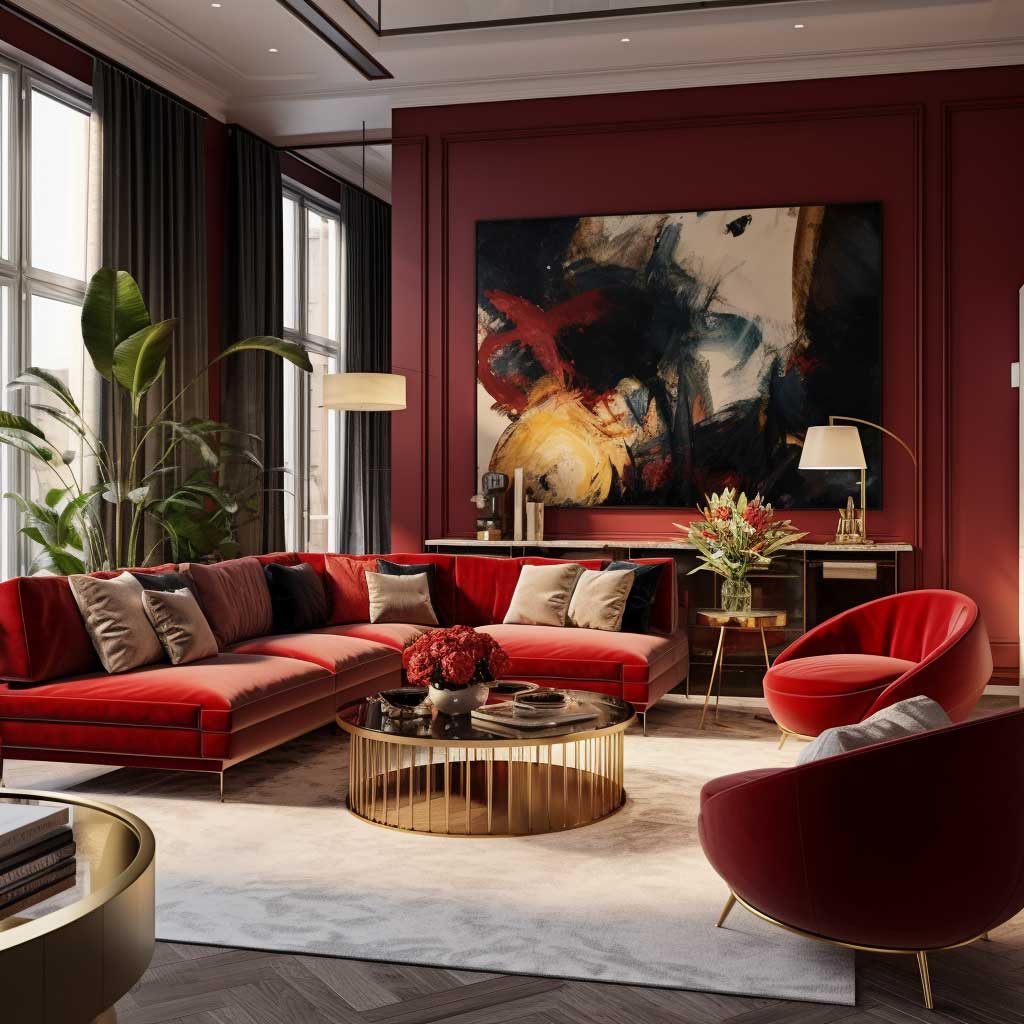
Accessories finish the look, provided they stay in conversation with the sofa. Art with a thread of red, cushions in two or three tonal steps from cherry to wine, or a single red ottoman tie the group together. Green plants sit opposite red on the color wheel, so a fiddle-leaf fig or a trailing pothos makes the red look even richer. Avoid matching every cushion to the exact sofa red, since identical tones blur into one shapeless block. Add one living plant within sight of the sofa.

Minimalist Rooms Need Only a Splash of Red Decor
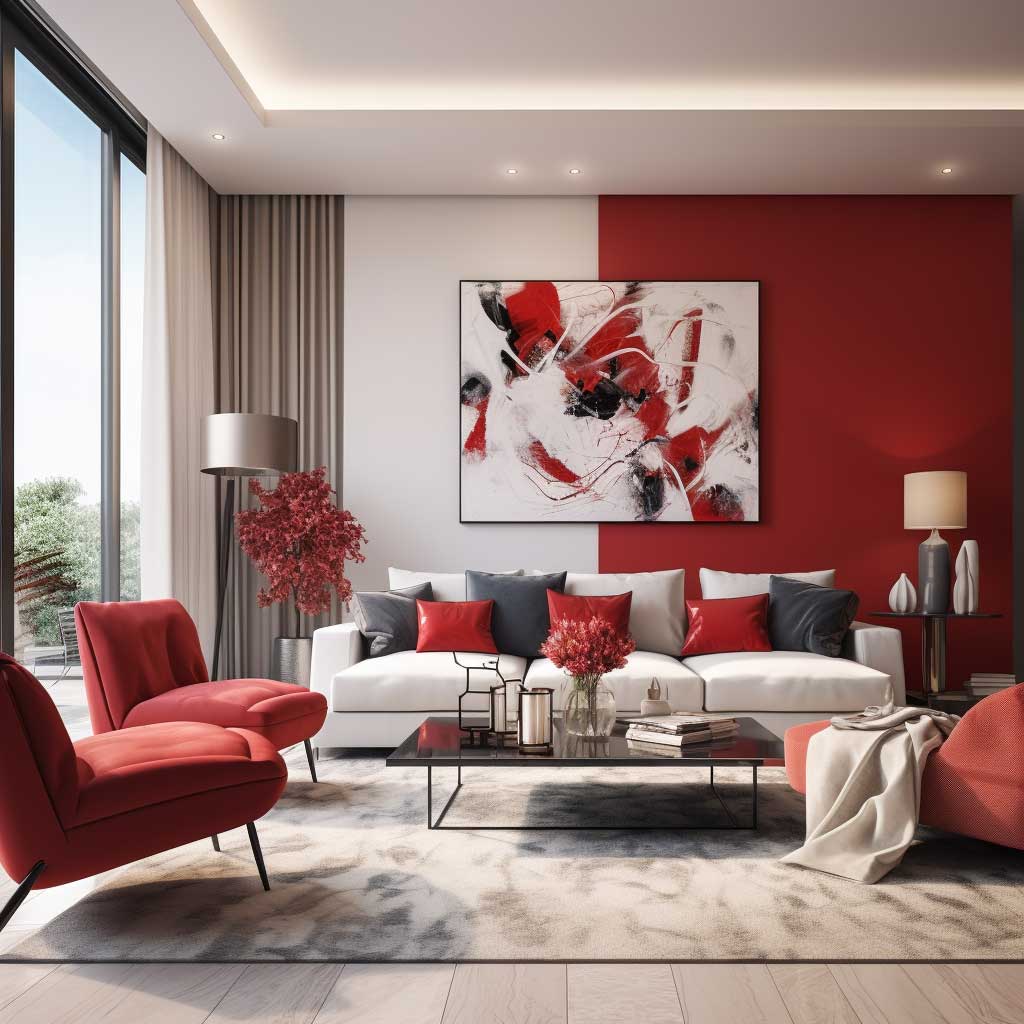
Red decor accents in a minimalist living room work because a single warm note stands out sharply against white, grey or pale oak. Minimalism already strips a room down to essentials, so one red object instantly becomes the most important thing in it. That contrast is the whole point, like a red umbrella moving through a grey crowd. Choose that one object with the same care you would give a sofa.
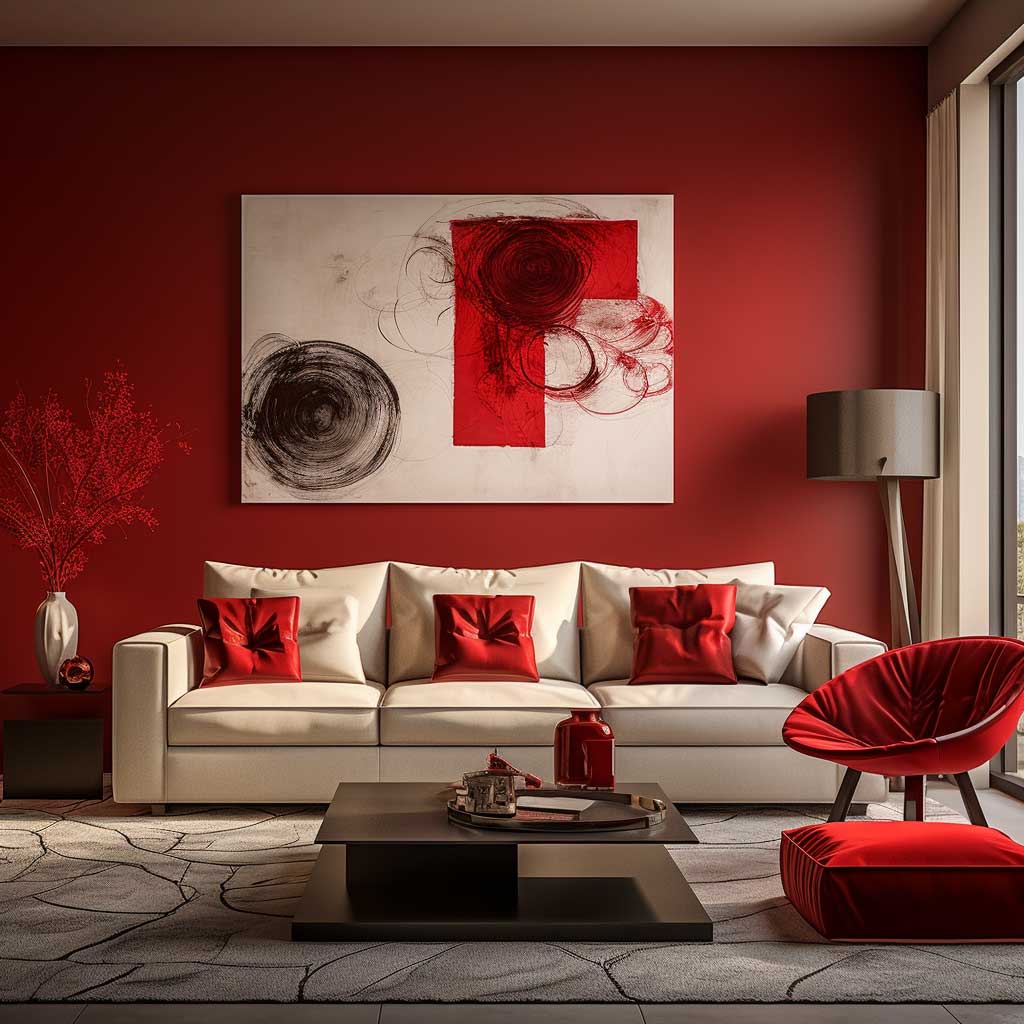
How much red is enough in a minimalist space? The classic 60-30-10 color rule gives a clear answer: about 60 percent dominant color, 30 percent secondary, and only 10 percent accent. In a pared-back living room, red belongs in that final 10 percent, with white or grey taking the lead. Count the walls, floor and big furniture first, then judge the red against them by eye.
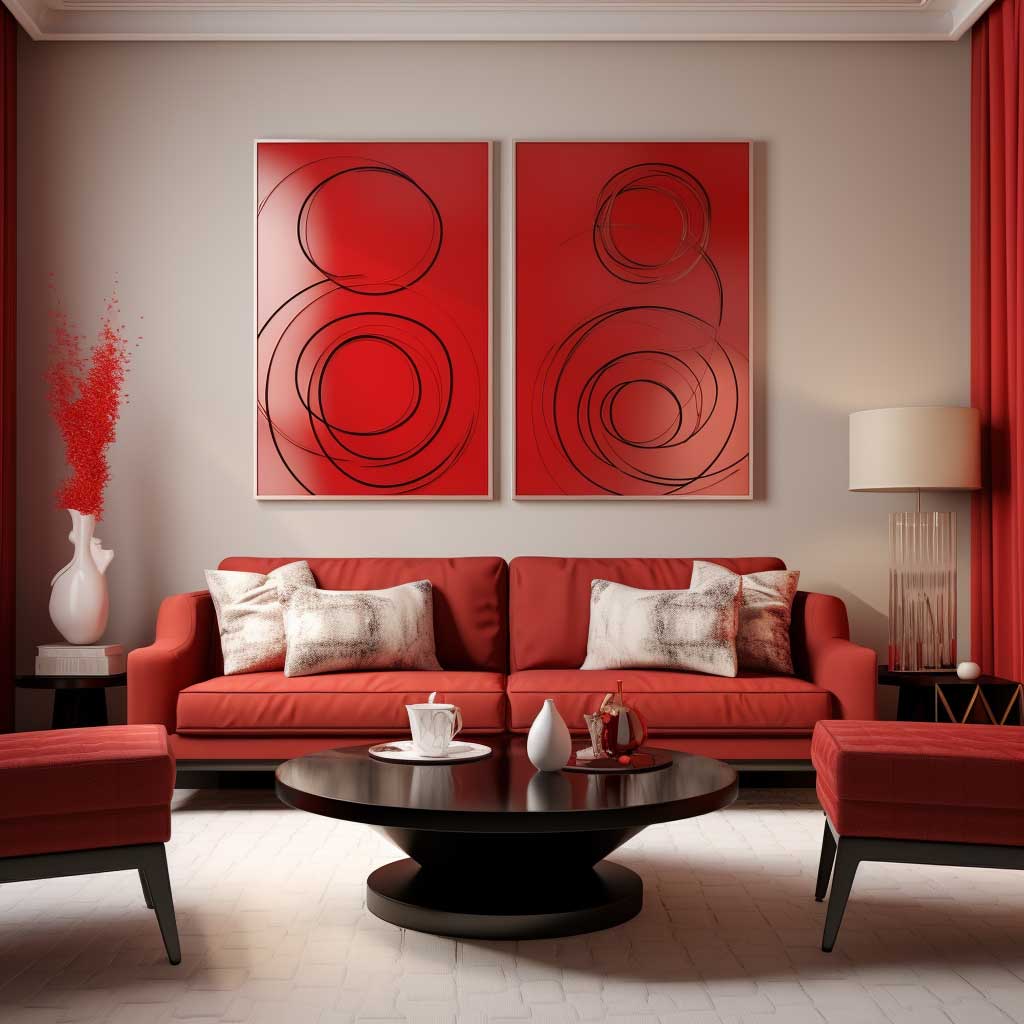
A single red armchair in an all-white room becomes sculpture. A red rug under a neutral sofa anchors the seating zone, while smaller red things such as a vase, a lamp or one framed print scatter the color more quietly. Resist buying a matching set of red accessories, because five small red objects read as clutter in a room built on restraint. Pick either one large red piece or two or three small ones, never both.
Light changes how red behaves in a simple, uncluttered room. Daylight from a north window cools red slightly toward brick, while warm evening lamps push it toward wine. A spotlight or picture light aimed at the red piece turns it into the room’s anchor after dark. Place the red object where light already falls instead of in a shadowy corner.
Picking a Shade From Bright Crimson to Deep Rouge
Choosing a red shade for the living room comes down to the light you have and the mood you want after sunset. Crimson and cherry are high-energy reds that look cheerful in bright, south-facing rooms. Burgundy, oxblood and deep rouge are darker, wine-like tones that wrap a room like a heavy coat on a cold evening. Test any shade on a large sample board and look at it both at noon and late in the evening.
| Shade | Mood | Best spot | Pairs with | Watch out for |
|---|---|---|---|---|
| Crimson | Energetic, bold | Sunny daytime rooms | Crisp white, black | Can feel loud on large walls |
| Burgundy | Rich, quiet luxury | Evening lounges | Brass, walnut, cream | Looks muddy in dim light |
| Deep rouge / oxblood | Enveloping, moody | Reading corners, snugs | Olive, tan leather | Shrinks small rooms if overused |
| Brick red | Earthy, relaxed | Rustic or vintage rooms | Linen, pale oak | Clashes with cool greys |
Is a red accent wall cheaper than red furniture? Usually yes, and the math is simple: one gallon of interior paint covers roughly 350 to 400 square feet per coat on primed walls. Deep, saturated reds often need an extra coat to look even, and glossy finishes cover less ground than flat ones, sometimes only 200 to 250 square feet per gallon. Do not skip primer under a dark red, since streaky coverage shows more on red than on almost any other color. Buy one more quart than the calculator suggests for touch-ups.
Sun exposure is the hidden enemy of red walls and fabrics. Dark colors absorb more UV light, so red paint and upholstery near a west-facing window can lose depth faster than the rest of the room. Sheer curtains or UV-filtering blinds slow that fading noticeably. Keep the brightest red pieces out of direct afternoon sun.
- Crimson with crisp white and black for a graphic, modern look
- Burgundy with brass, walnut and cream for quiet luxury
- Oxblood with olive green and tan leather for a library feel
- Brick red with oatmeal linen and pale oak for a relaxed, earthy room
Don’t Do This
Don’t paint four walls bright red, add a red sofa and finish with red curtains in the same shade. Full-strength red on every surface leaves the eye nowhere to rest, and the room starts to feel warmer and smaller than it is. Let red own one zone, then step it down to accents everywhere else.
Vintage Furniture Brings Out the Soul of Red Living Room Decor
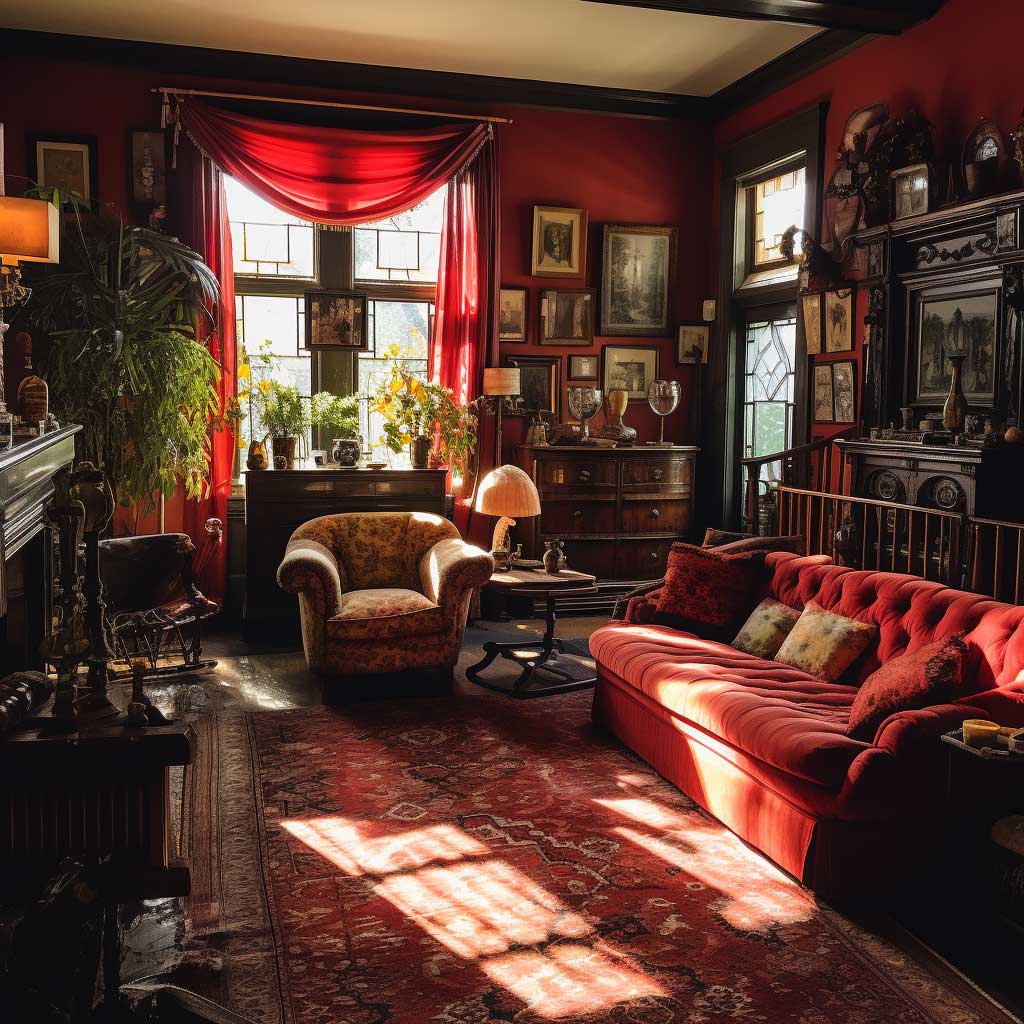
Vintage red living room decor pairs a color with deep historical roots with furniture that already carries its own stories. Red has signaled warmth and status in interiors for generations, from lacquered cabinets to heavy parlor drapes. Combined with antique wood, gilt mirrors and well-worn rugs, it makes a room feel collected over years rather than bought in one weekend. Start with one inherited or thrifted piece and let it set the tone.

A faded red Persian or Turkish rug is the easiest entry point because it brings pattern, age and color in one move. Red velvet drapes add theater, and small objects such as a retro rotary telephone or a glazed ceramic vase finish the picture. Pieces from the 1950s and 1960s fit this look too, and this comparison of mid century modern living room versus Scandinavian bedroom design shows how that era handles bold color and velvet. Choose one hero object per surface.
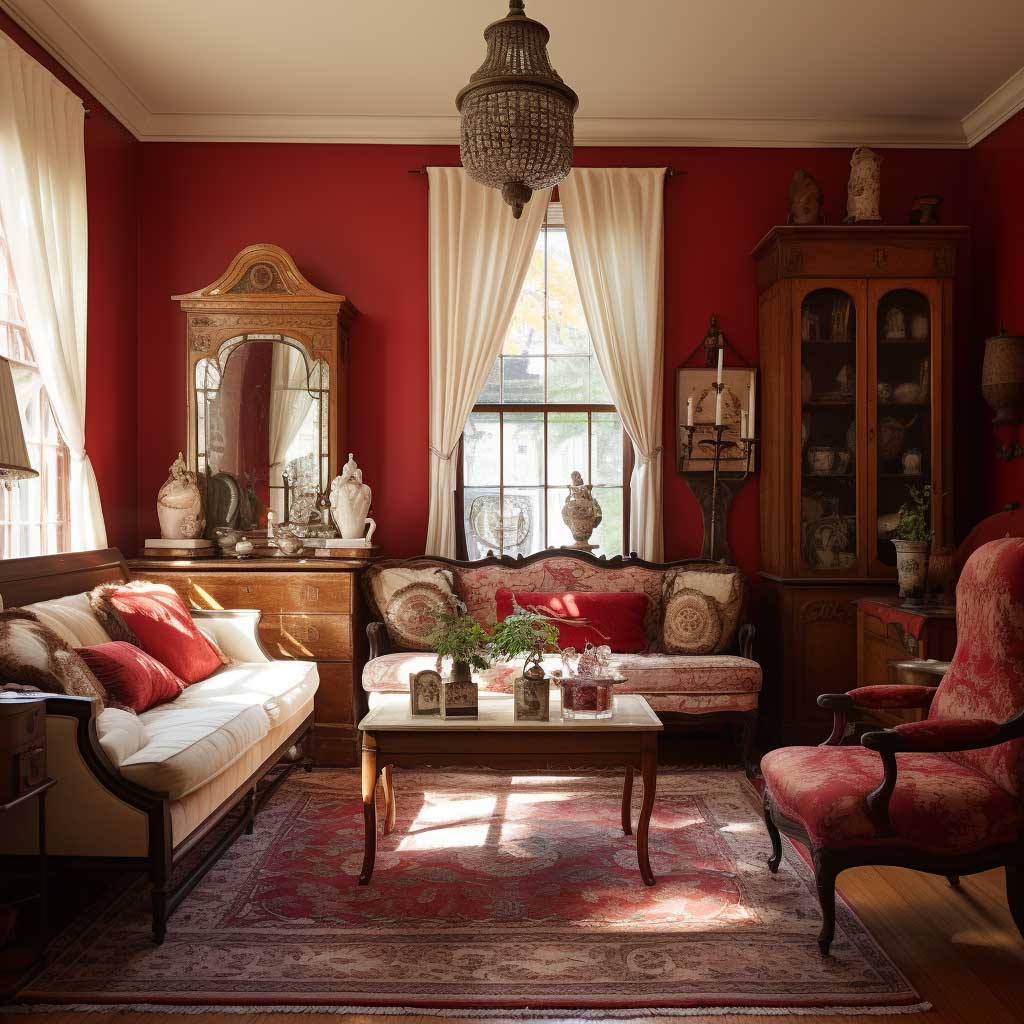
Pattern carries a vintage room as much as color does. Florals, paisleys and small geometric prints in red on wallpaper, cushions or upholstery echo older decades without turning the space into a museum. Old upholstery needs a reality check, because fabric rated under 10,000 Martindale rubs counts as decorative only. An antique chair used every evening deserves a sturdier recover of 25,000 rubs or more. Ask the upholsterer for the rub count before choosing a red vintage-look fabric.
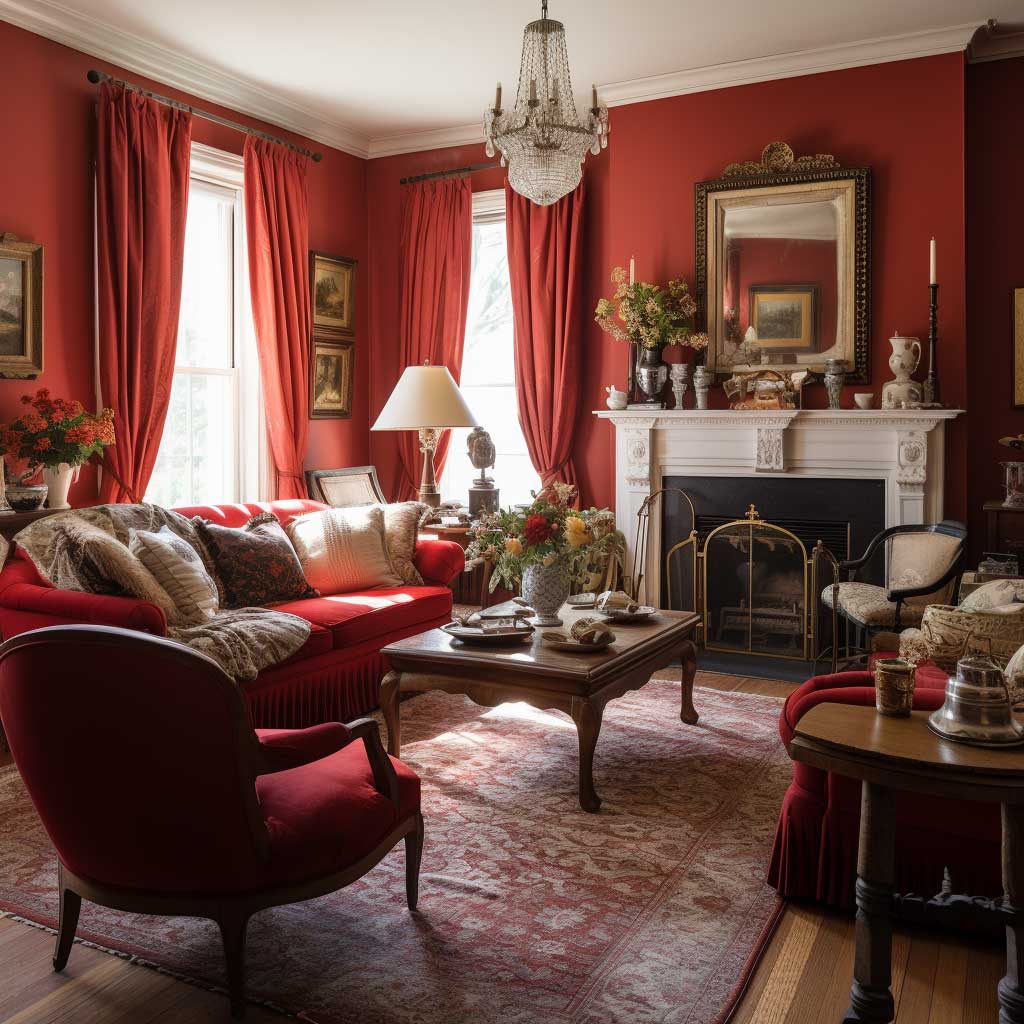
Does vintage style mean giving up modern comfort? Not at all, since a contemporary sofa in deep red can sit beside antique side tables, and smart bulbs can hide inside old brass lamps. The mix works like a favorite restaurant in a historic building: old walls, modern kitchen. Avoid filling the room only with fragile antiques, because a living room still has to survive movie nights and guests. Aim for roughly one old piece for every two new ones.
Where Red Earns Its Place
Red is one of the few colors that can make a living room feel warmer and more social in a single move. The result depends less on the exact shade than on the role it plays. Give red one clear job and the rest of the room will follow.
For comfort, choose a red velvet sofa rated above 35,000 Martindale rubs and surround it with cream, wood and brass. For calm, keep red near 10 percent of a minimalist palette. Both approaches start with a single hero piece.
Pick the shade by your light: crimson for sunny daytime rooms, burgundy or deep rouge for evening spaces. Shield red walls and fabrics from strong afternoon sun. Plan an extra coat whenever you paint a saturated red.
Vintage fans can lean on faded rugs, velvet drapes and patterned upholstery, as long as everyday seating stays sturdy. Mix old and new so the room stays usable. That balance keeps red decor ideas lived-in rather than staged.
Complete guide
Furniture Decor Ideas for Every Room in Your Home
Living room, bedroom, dining, kitchen, outdoor — all in one place
Complete guide
The Living Room Design Ideas Vault Every Home Needs Right Now
Color, walls, furniture, layouts, styles, smart tech — 300+ ideas in one place
You Might Also Like

Related Topics