A minimalist black and white interior works when one color carries the light and the other carries the structure, not when both fight for the same walls. Does it suit a real home? Yes, in almost any room, as long as white covers roughly 60% of visible surfaces and black stays at about 30% or less. A crisp white such as Chantilly Lace reflects about 92% of the light that hits it, while a near-black like Tricorn Black returns only about 3%. Start every plan from that gap, because it decides how bright the room will feel.
Does a two-color room feel cold? Only when the lighting is cold too, since warm bulbs in the 2700–3000K range turn the same palette soft and livable after sunset. Think of the scheme as a well-cut tuxedo: the contrast is the point, but the fit is what makes it comfortable. Bedrooms, living rooms and small apartments all handle the look with small shifts in proportion and texture. Pick your bulbs before your paint, since light changes every surface you choose afterward.
The sections below break the scheme down room by room, with paint reflectance values, layout distances, floor costs and two comparison tables. Real marble can run $15–$40 or more per square foot against about $5–$15 for marble-look porcelain, so material choices move the budget as much as the style. Read the numbers first and let the photos confirm them.
Quick Scan
- White on about 60% of surfaces, black on 30% or less, a third tone on the last 10%.
- A crisp white near LRV 92 reflects roughly 30 times more light than a black at LRV 3.
- Warm 2700–3000K bulbs soften the contrast; 4000K belongs at desks and kitchen counters.
- A coffee table 14–18 inches from the sofa keeps a sparse living room usable.
- Marble-look porcelain costs about $5–$15 per sq ft vs $15–$40+ for real marble.
- Charcoal at LRV 6 returns about twice the light of true black, a safer pick for dim rooms.
- An 8 x 10 ft rug leaves about 18 inches on each side of a 60-inch queen bed.
The Ratio Behind a Minimalist Black and White Interior
A black and white colour scheme looks simple on a paint chip, yet it stands or falls on proportion. The classic 60-30-10 rule gives 60% of a room to the dominant shade, 30% to the secondary one and 10% to an accent, and monochrome rooms follow the same math. In most homes white takes the 60% on walls and ceilings, black takes the 30% in furniture and frames, and gray, wood or metal fills the last 10%. Sketch those three shares on a floor plan before buying anything.


What happens if the split goes 50/50? The room starts to look like a chessboard, busy and restless rather than calm, because the eye has no clear place to rest. A white wall at LRV 92 beside black at about LRV 3 is a gap of almost 90 points, the strongest contrast paint can deliver. Don’t paint every second surface black just to look balanced; let one color lead and the other punctuate.

Soft white and bright white behave differently inside the same scheme. Chantilly Lace at about LRV 92 reads crisp and gallery-like, while White Dove at about LRV 85 carries a faint warmth that keeps black furniture from looking harsh. A south-facing room handles the crisp option well; a north-facing room needs the warmer white so the walls don’t drift toward gray. Sample both whites on the real wall for 48 hours before committing.
Black and White Minimalist Living Room With Room to Breathe
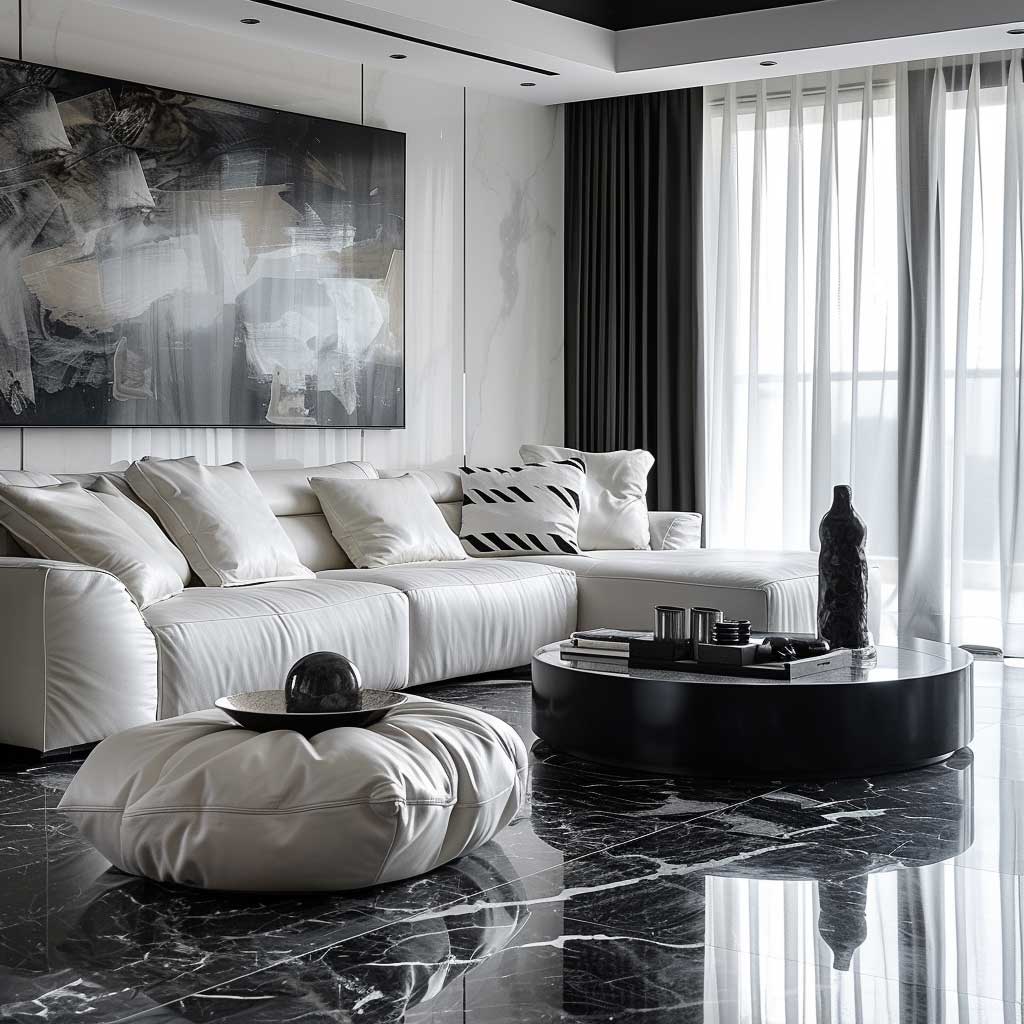
A black and white minimalist living room depends on empty floor as much as on furniture. A white sofa against a black coffee table creates the main contrast, and keeping the table 14–18 inches from the seat edge leaves legroom without breaking the composition. The table looks most proportional at about two-thirds of the sofa’s length, so a 90-inch sofa pairs with a table near 60 inches. Measure the sofa first and size every other piece from it.


Black can also live on one wall rather than on the furniture. In a 12 by 12 ft room with 8-foot ceilings, a single dark wall of about 96 square feet covers only a quarter of the 384 square feet of wall area, yet it shifts the mood of the whole space. Brick or panelling gives that wall relief, and these black painted brick wall ideas for living rooms and kitchens show how texture keeps a near-black surface from reading flat. Choose the wall facing the entrance, because that is the one guests see first.
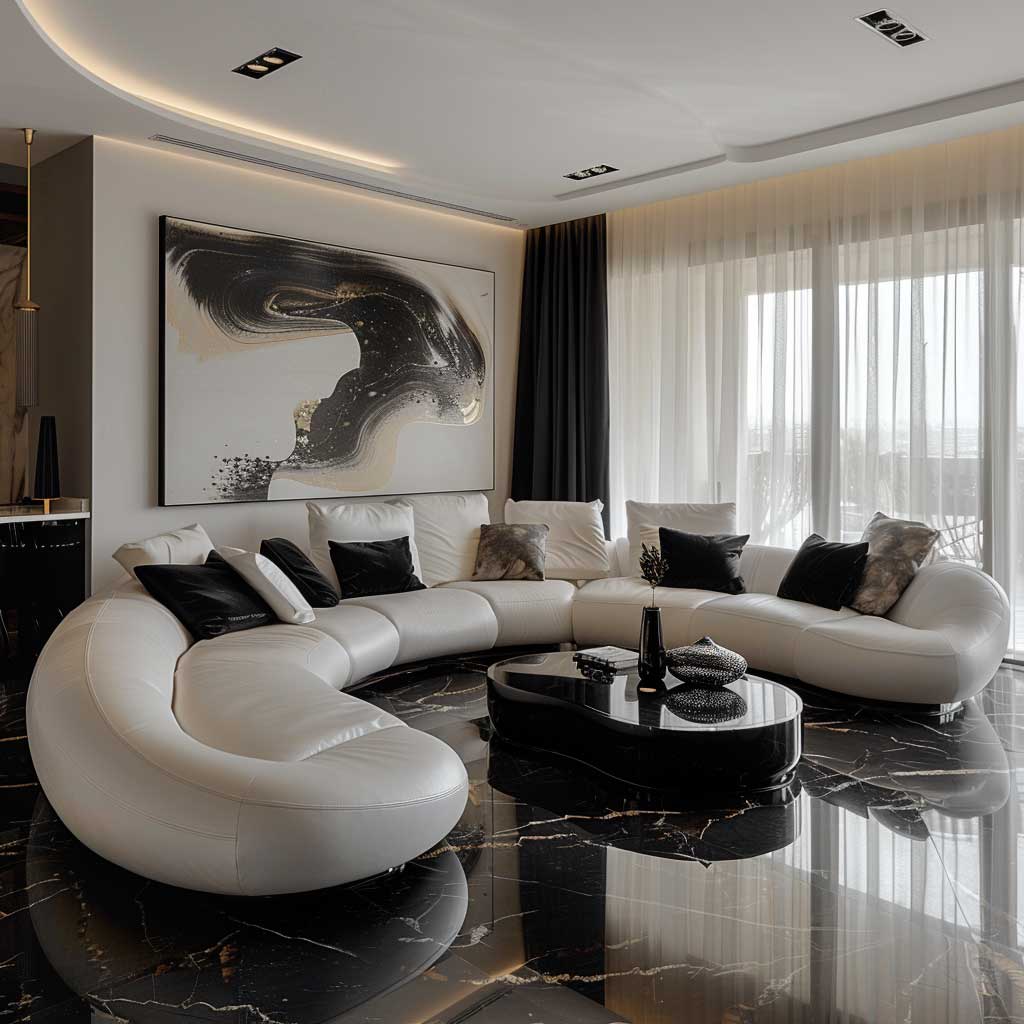
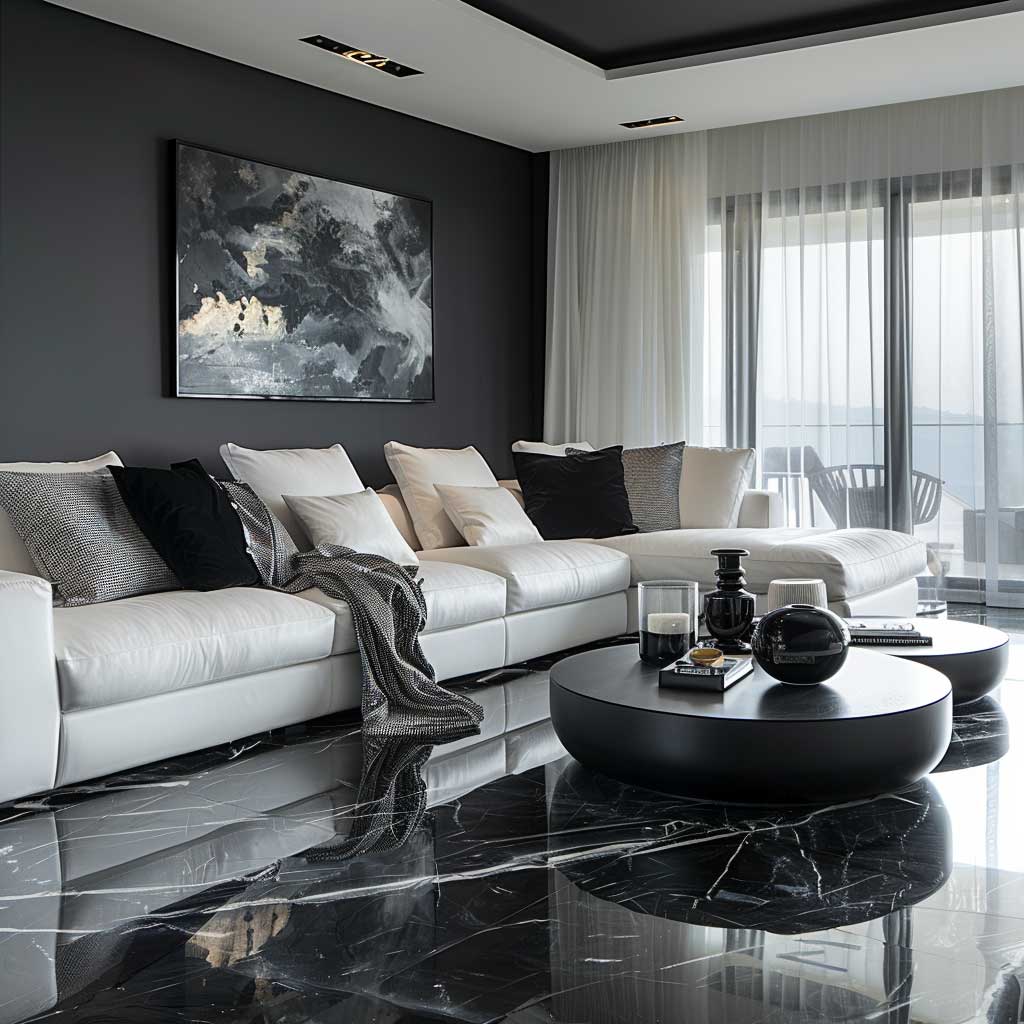
Is a black marble floor worth it? Natural marble often costs $15–$40 or more per square foot for material alone and needs sealing at about $1–$2 per square foot, while marble-look porcelain lands near $5–$15 and needs no sealing at all. Polished black stone works like a still lake, doubling the light that falls through sheer white curtains, but it also shows every footprint and dust trail. Skip high-gloss black floors in homes with pets or kids and choose a honed or matte finish instead.
Light Decides How Monochrome Rooms Read After Dark
The minimalist black and white aesthetic changes more with lighting than any colorful scheme, because no hues distract the eye from shadows. Warm white at 2700–3000K suits living rooms and bedrooms, while 4000K belongs to task zones such as a desk or kitchen counter. Under cool 4000K light, white walls drift toward blue and black furniture loses depth, like a photo with the contrast slider pushed too far. Keep every bulb in one room within the same color temperature band.
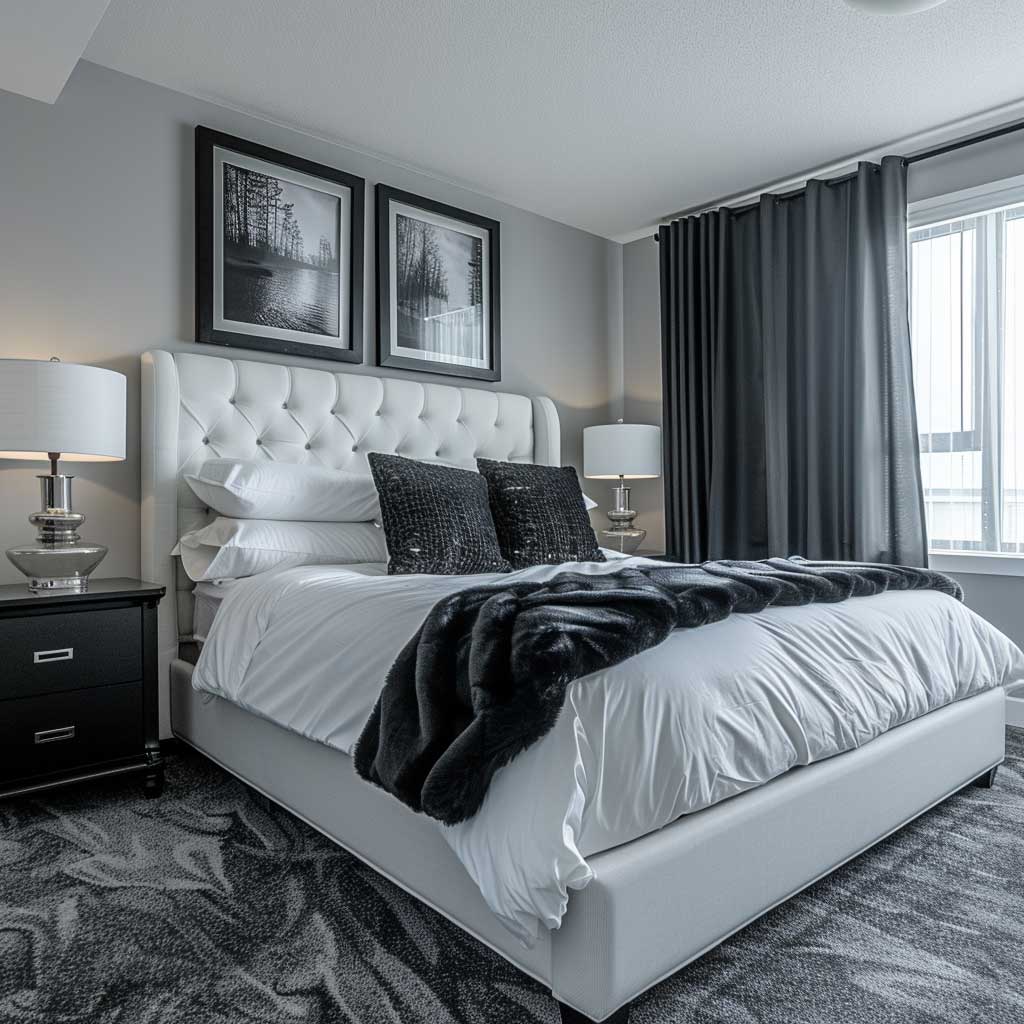
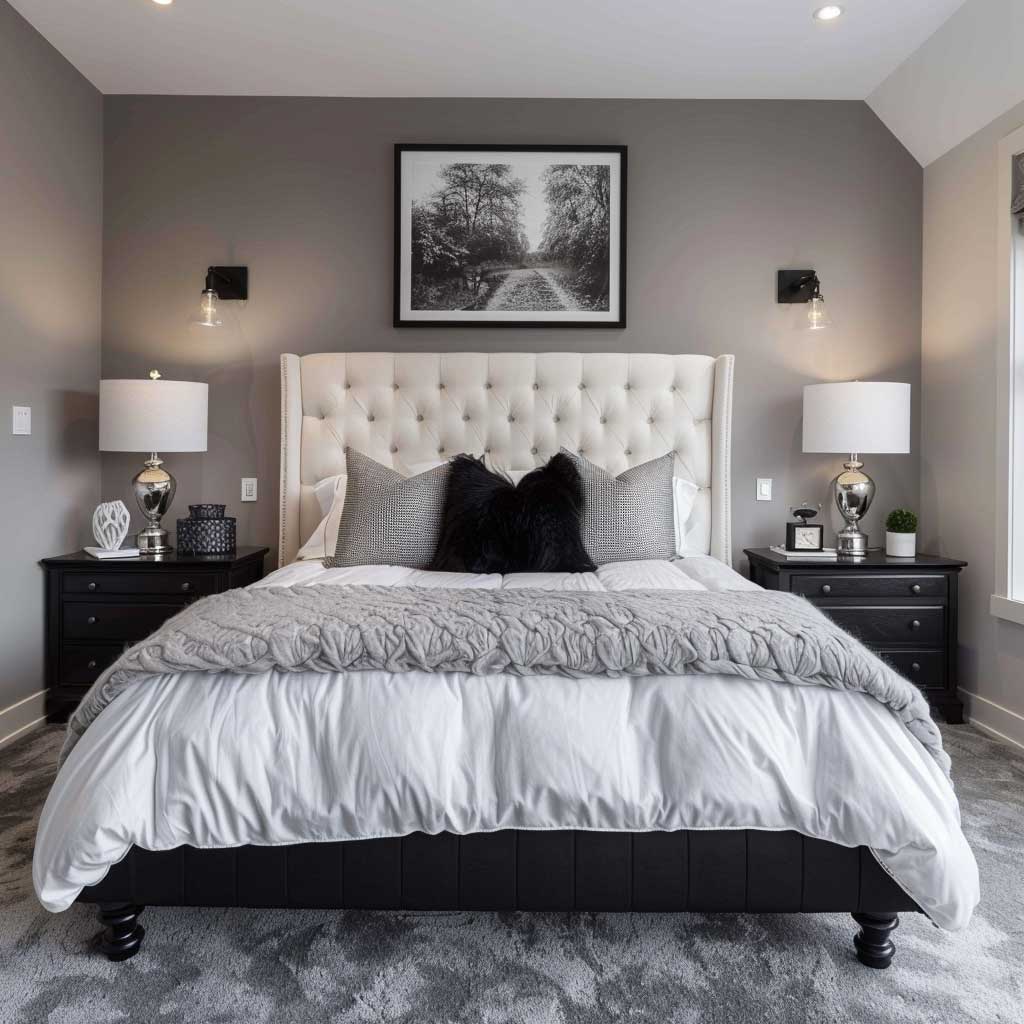
How many light sources does a two-color room need? Three is a sensible minimum: one overhead fixture, one floor lamp and one table or wall light, each on a dimmer where possible. Bulbs rated CRI 90 or higher show white linen as white and black lacquer as black rather than muddy gray. Don’t rely on a single ceiling light, since it flattens texture and turns black pieces into dark holes.
- Overhead: one dimmable fixture at 2700K or 3000K as the base layer.
- Floor lamp beside the sofa or bed to wash the white wall with warm light.
- Wall sconce or picture light aimed at black and white art.
- Task light at 3500–4000K only where you read, cook or work.
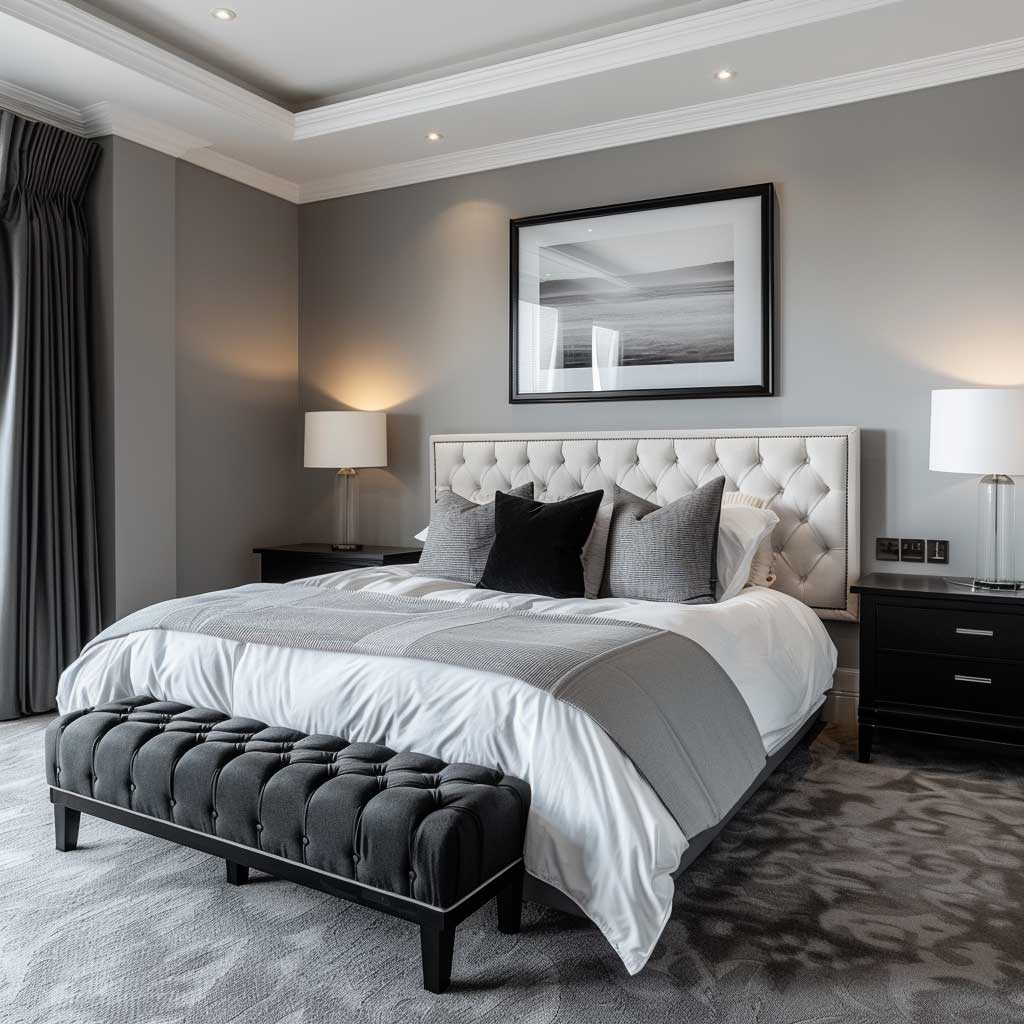

Daylight is the other half of the plan. Sheer white curtains diffuse direct sun so a white wall glows instead of glaring, which matters with whites near LRV 92 that can feel blinding in strong light. North-facing rooms get cooler, flatter daylight and look better with the 2700K end of the range, while south-facing rooms can handle 3000K. Watch the room in the morning and again at dusk before fixing the bulb color.
Minimalist Black and White Bedroom Built for Sleep
A minimalist black and white bedroom works best when black frames the bed and white covers everything you touch at night. A black bed frame with white bedding, a white upholstered headboard and two black nightstands gives a clear 60/40 split without a single extra color. An 8 by 10 ft rug under a 60-inch queen bed leaves about 18 inches on each side, enough for bare feet to land on something soft. Buy the rug after the bed, not before.


Which bedding keeps the contrast crisp? Percale at roughly 200–400 thread count stays matte and cool, while sateen at about 300–500 thread count adds a soft sheen and holds more warmth. White bedding works like fresh snow on a dark field, throwing bedside lamplight back into the room. Don’t layer a black duvet on a black frame against a dark wall, or the bed sinks out of sight after sunset.
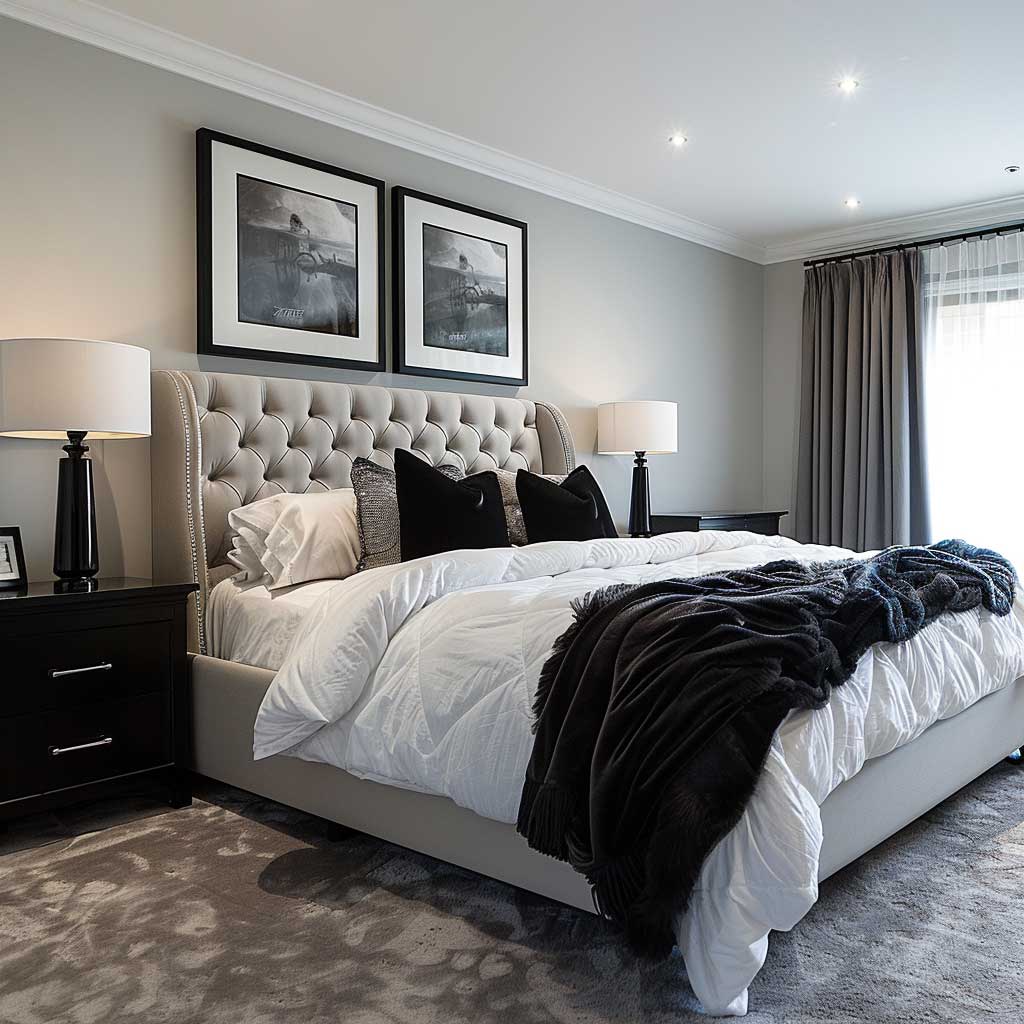
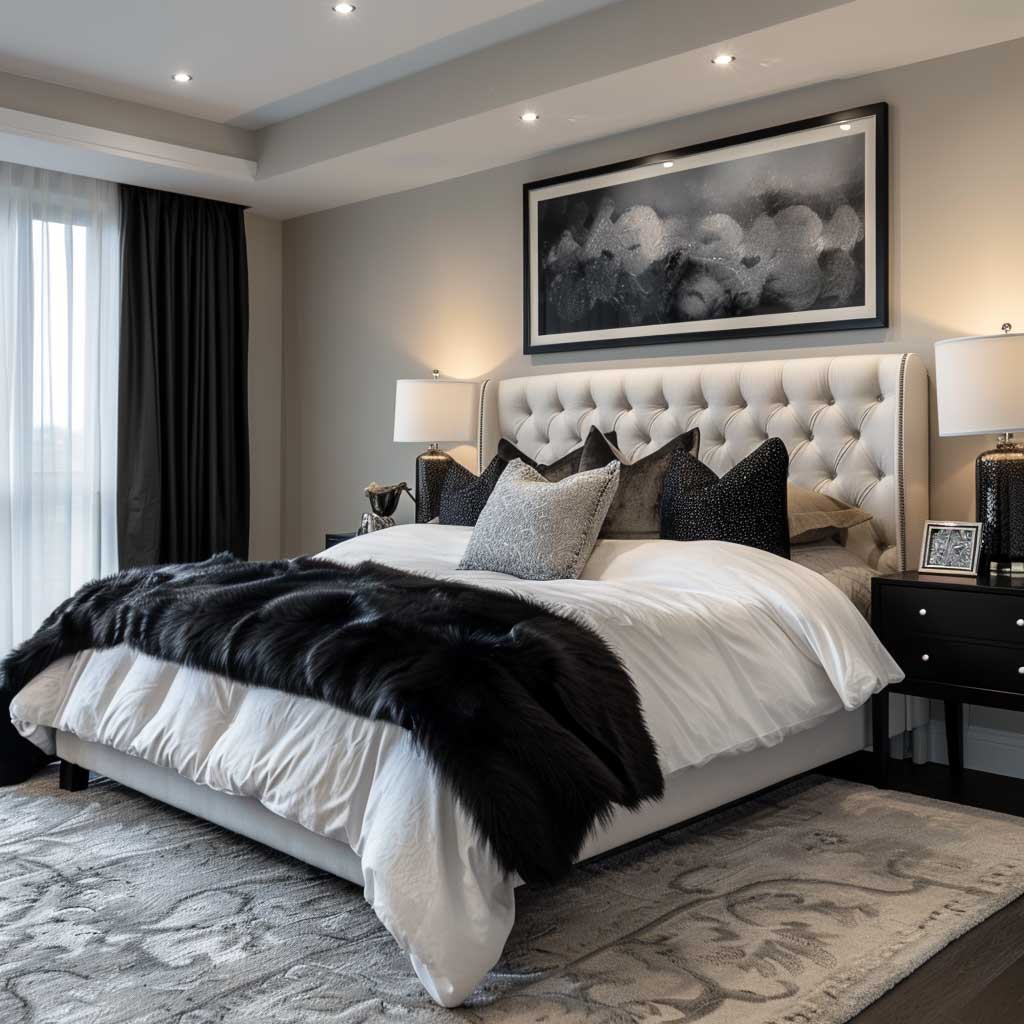
Bedside lighting does the quiet work in this room. Lamps at 2700K remain the most popular bedroom choice, and white shades on black bases spread that glow evenly across both colors. For bolder layouts with black walls or all-black furniture, these black and white bedroom ideas from black walls to black furniture compare costs and light levels side by side. Keep reading lights on the warm end and aim them at the pillow, not the wall.
Art and Texture Keep a Monochrome Bedroom Personal
A minimalist bedroom in black and white needs one personal focal point, and a single large photograph above the bed beats a row of small frames. Monochrome photography sits inside the palette instead of breaking it, and a white mat inside a black frame keeps the image visible against a dark wall. A black-framed mirror at least 30 inches tall, placed opposite the window, sends daylight back across the white bedding. Choose one oversized print rather than five small ones.
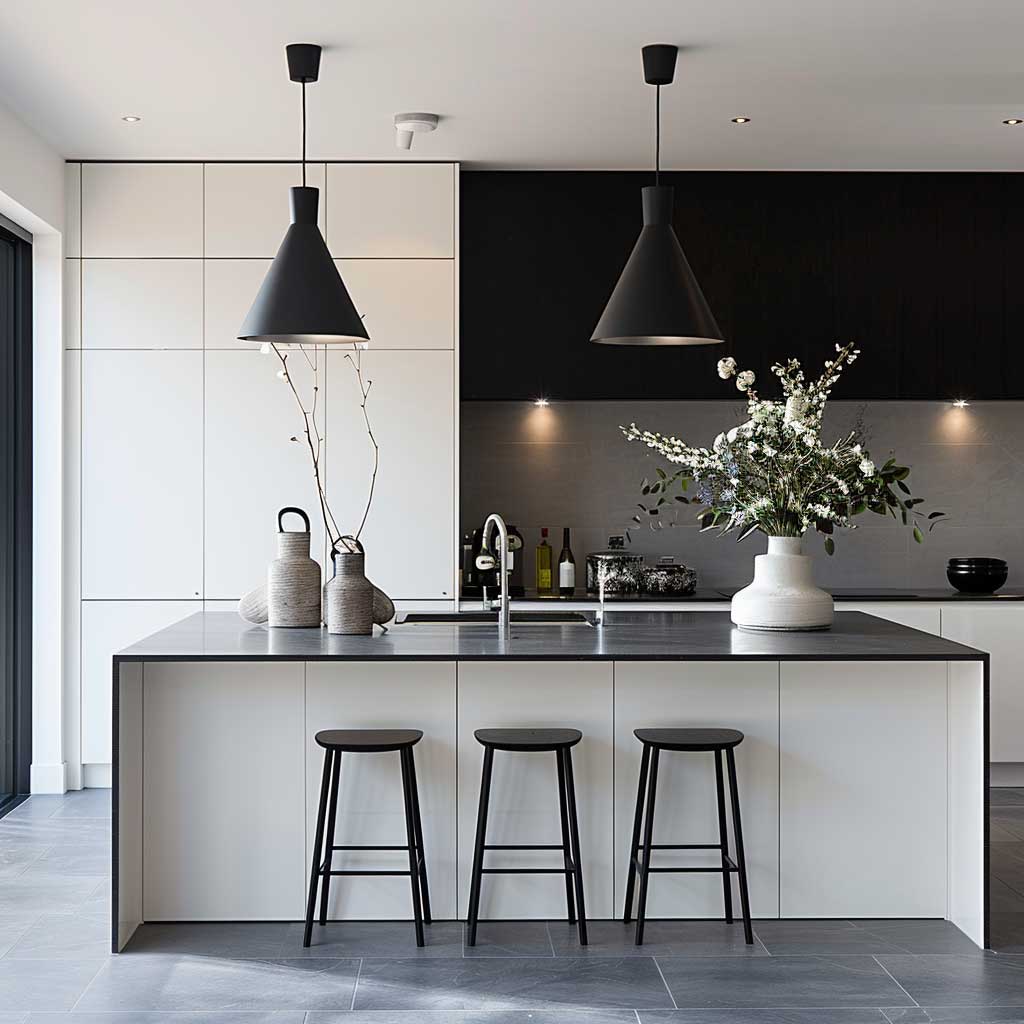
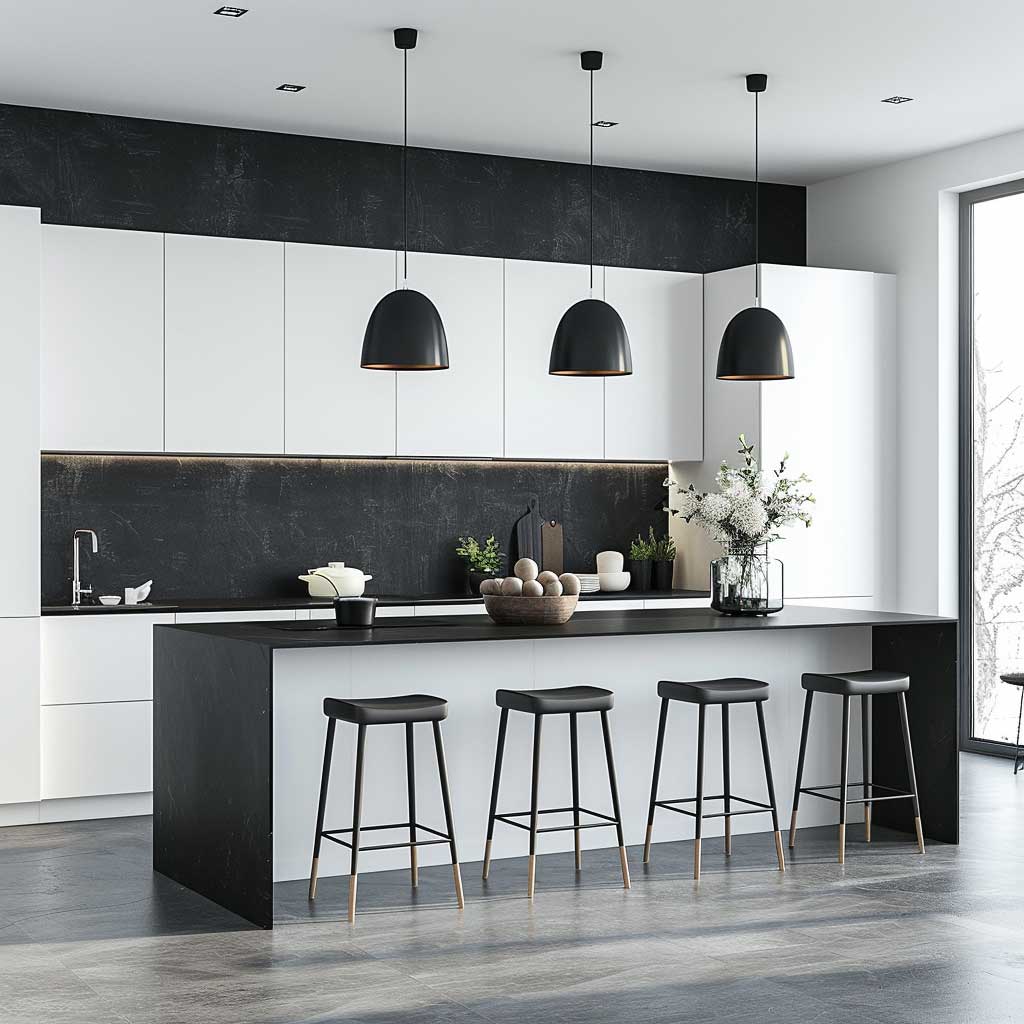
Texture keeps two colors from looking like a printed graphic. A wool throw, a velvet cushion and a ribbed cotton rug give black and white three different surfaces, so the eye reads depth rather than flatness. Is gray allowed? Yes, as the 10% accent in a 60-30-10 split, a soft gray carpet joins black furniture and white walls the way a mortar line joins bricks. Don’t add more than one extra tone, or the minimal look drifts into ordinary neutral.
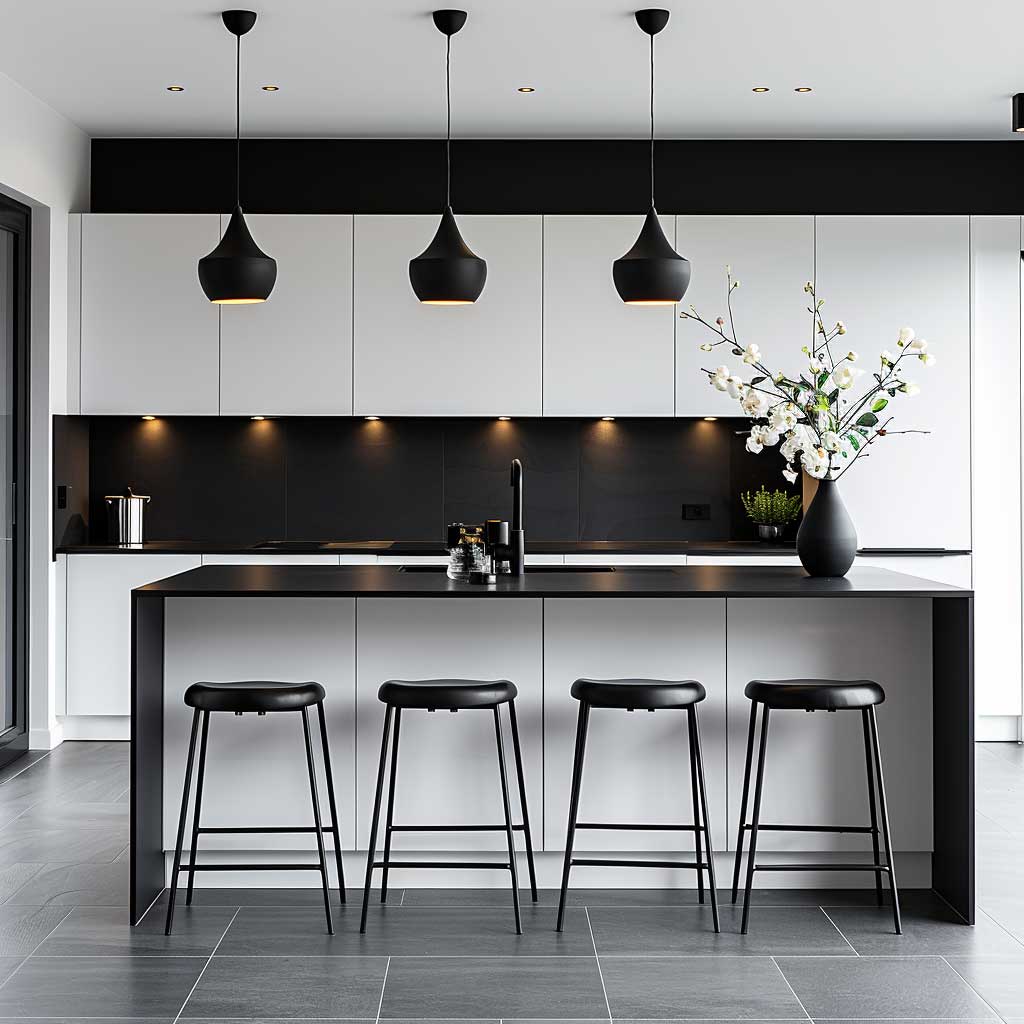
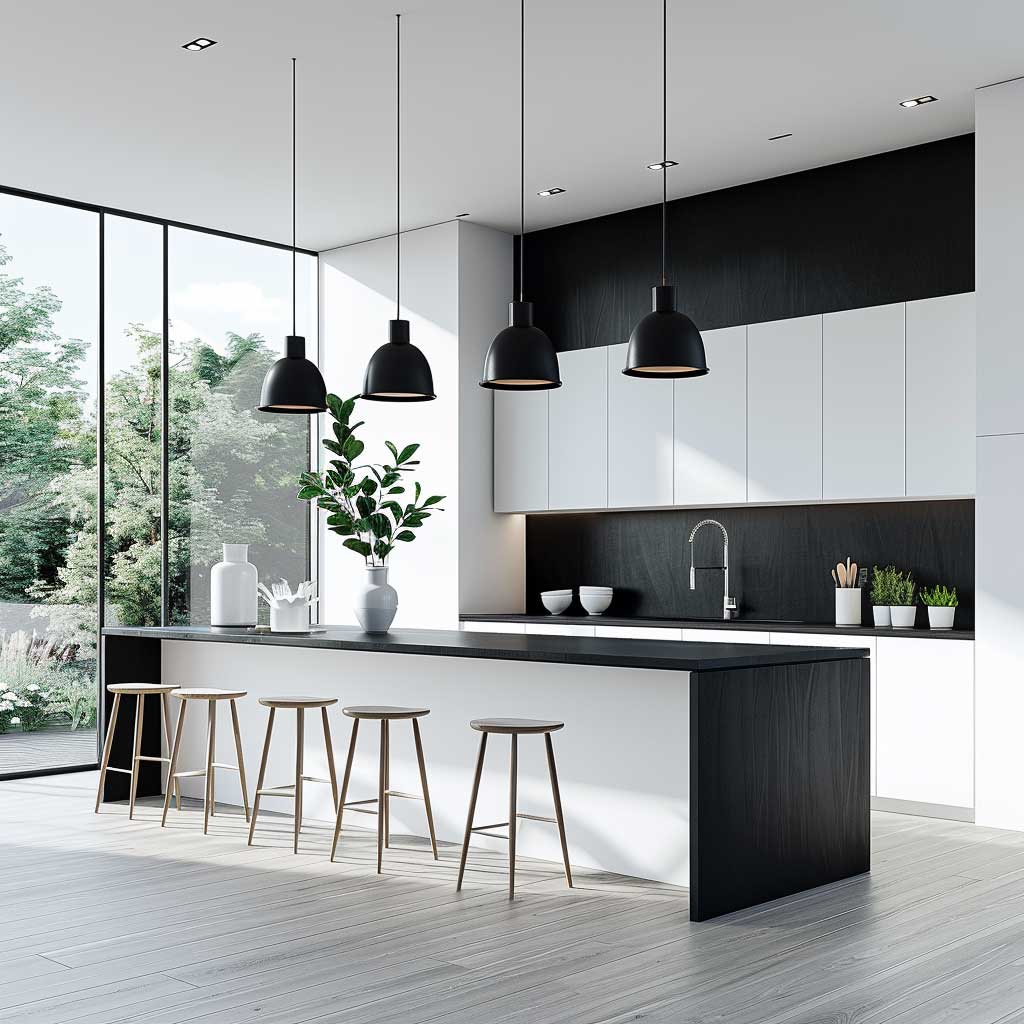
If the wall behind the bed is going dark, charcoal is the gentler route. Iron Ore at about LRV 6 returns roughly twice the light of a true black at LRV 3, so art and bedding stay readable on overcast days. True black suits bedrooms with large south or west windows, while charcoal suits a room with one small north window. Test a large swatch at night under the actual bedside lamps.
Small Apartments Win With Simple Black and White Design
Black and white interior design for a small house or apartment leans hard on white, because every reflective square foot makes the room read larger. Walls in the LRV 85–92 range bounce most daylight back into a compact room, while black works best as slim lines: chair legs, picture frames, lamp bases, cabinet pulls. Picture a pen sketch on white paper, where thin dark strokes define shape without filling space. Keep black under a third of what the eye sees from the doorway.

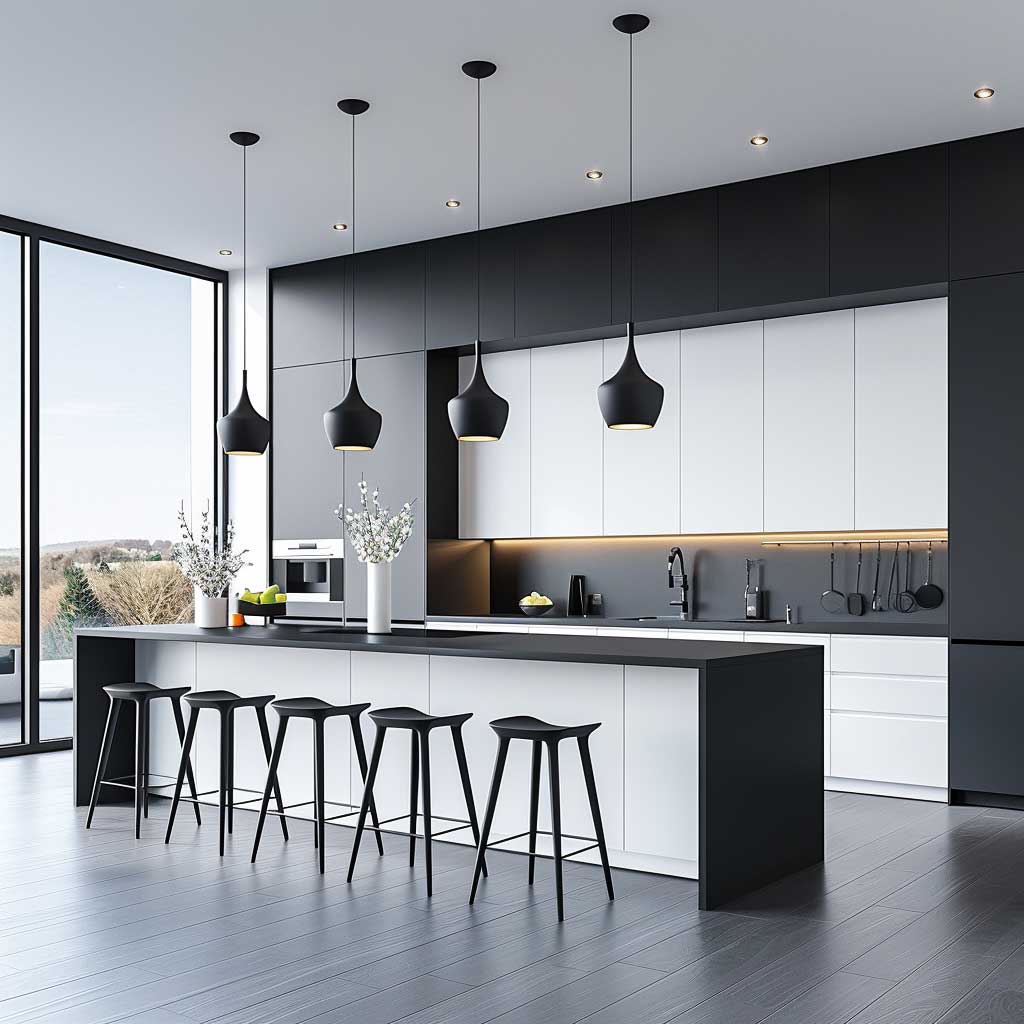
Can a small apartment carry a black accent wall? Yes, if it is one wall and the room gets decent daylight, since one dark wall in a 12 by 12 ft room is only about 25% of the wall area. Leave 30–36 inches of clear walkway along the main path so the sparse layout looks intentional rather than empty. Don’t scatter low black furniture across the floor, because it reads like stepping stones in a dark pond and shrinks the room.
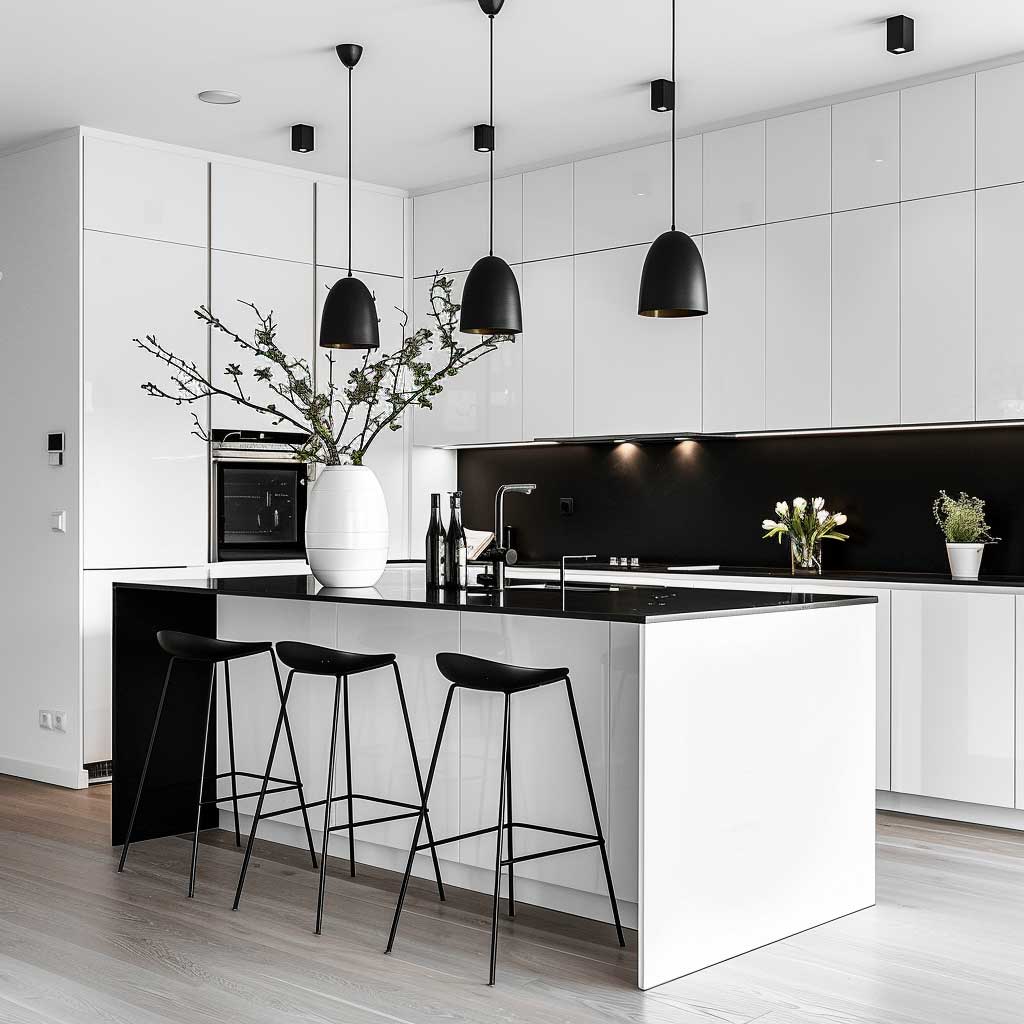
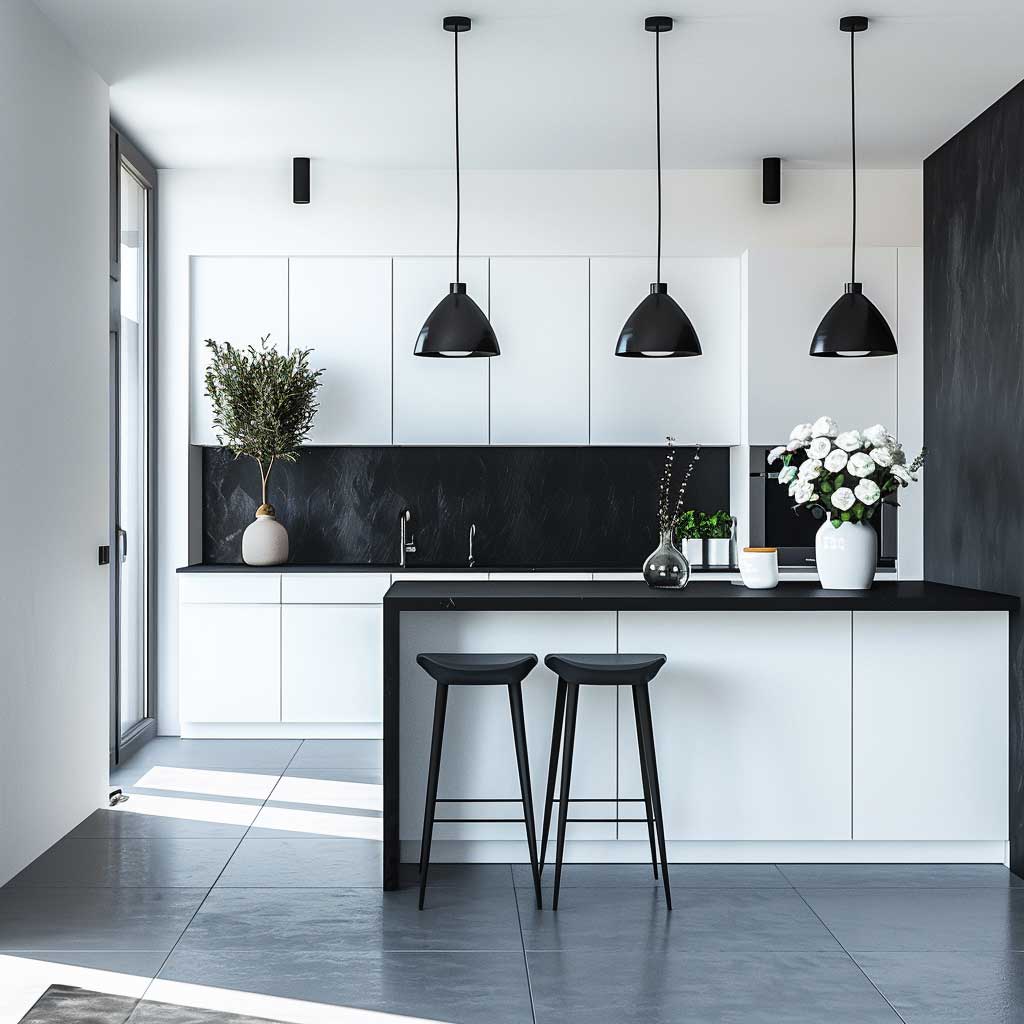
Floors in small homes follow the same logic. Matte marble-look porcelain at about $5–$15 per square foot costs a fraction of real marble and runs from hallway to kitchen to living area without yearly sealing. A white or pale gray floor with black skirting outlines the room, while a black floor under white walls pulls the eye down and makes the space feel shorter. Choose the lighter floor in rooms with standard 8-foot ceilings.
Don’t Do This
- Don’t split black and white 50/50; keep white near 60% and black at 30% or less.
- Don’t mix 2700K and 4000K bulbs in one room; white furniture turns cream under one and blue under the other.
- Don’t paint a north-facing room true black at LRV 3; charcoal near LRV 6 returns about twice the light.
- Don’t hang black frames on a black wall; they vanish without a white mat.
- Don’t install high-gloss black floors where pets and kids walk daily.
- Don’t skip sealing real marble; budget about $1–$2 per sq ft each time.
Black and white stays current because it never relied on a trend: one color holds the light, the other draws the lines, and the room changes only as much as you let it.
Choosing Shades and Floors for a Minimalist Black and White Interior
Color schemes with black and white come down to two decisions that shape everything else: which pair of paints and which floor. Whites between LRV 82 and 92 and blacks between LRV 3 and 6 look close on a fan deck, yet they behave very differently on a wall. Sherwin-Williams lists Tricorn Black at an LRV of 2.849 on its official Tricorn Black color page, which places it near the very bottom of the scale. Pair it with a crisp white in bright rooms and a warmer white in dim ones.
| Shade | Brand and code | LRV | Character | Best room |
|---|---|---|---|---|
| Chantilly Lace | Benjamin Moore OC-65 | About 92 | Crisp, near-neutral white | Bright south-facing living rooms |
| Simply White | Benjamin Moore OC-117 | About 91.7 | Warm, slight yellow undertone | Bedrooms under 2700K lamps |
| White Dove | Benjamin Moore OC-17 | About 85.4 | Soft off-white | North-facing rooms |
| Pure White | Sherwin-Williams SW 7005 | 84 | Balanced, faintly warm | Open-plan spaces with mixed light |
| Alabaster | Sherwin-Williams SW 7008 | 82 | Creamy off-white | Rooms with oak or brass accents |
| Tricorn Black | Sherwin-Williams SW 6258 | About 3 | True neutral black | Accent walls, doors, frames |
| Black Magic | Sherwin-Williams SW 6991 | About 3 | Faintly warm black | Softer bedrooms |
| Caviar | Sherwin-Williams SW 6990 | About 4 | Brownish deep charcoal | Warm living rooms |
| Iron Ore | Sherwin-Williams SW 7069 | About 6 | Soft charcoal | Dim rooms, small apartments |
| Wrought Iron | Benjamin Moore 2124-10 | About 6.2 | Neutral charcoal | Windowless hallways and entries |
Which floor fits a two-color room? Real marble gives unique veining but asks for $10–$30 per square foot in installation on top of the stone, while marble-look porcelain usually adds about $3–$10. A polished black floor behaves like a mirror, beautiful at noon and unforgiving at midnight when every smudge catches the lamp. Don’t buy real marble for a pet-heavy home just for the name; porcelain carries the same look with no annual sealing.
| Floor option | Material cost per sq ft | Upkeep | Look and feel | Best fit |
|---|---|---|---|---|
| Real marble | About $15–$40+ (premium slabs up to $150) | Sealing about $1–$2 per sq ft | Unique veining, cool underfoot | Entry or living room focal floor |
| Marble-look porcelain | About $5–$15 | No sealing needed | Printed veining, consistent tone | Small apartments, kitchens, homes with pets |
| Marble-look ceramic | About $1.50–$4 | No sealing, softer body | Lighter weight, budget look | Walls and low-traffic rooms |
| Marble-look luxury vinyl | About $2–$7 | Floating install, no sealing | Softer and warmer underfoot | Bedrooms and rentals |
The Two-Color Verdict
A minimalist black and white interior succeeds on one ratio above all: roughly 60% white to 30% black, with the last 10% left for gray, wood or metal. That split keeps most surfaces near LRV 85–92 brightness while black supplies the structure.
Choose a crisp white near LRV 92 for bright rooms and a softer white around LRV 85 for north light. Use true black at LRV 3 only where daylight is strong, and charcoal near LRV 6 everywhere else.
Light every room with at least three warm sources at 2700–3000K, and keep 4000K for desks and counters. Bulbs rated CRI 90 or higher keep white looking white and black looking black.
Spend on the floor last. Marble-look porcelain at $5–$15 per square foot delivers the dark stone look for well under the $15–$40+ of real marble, and it never needs sealing.