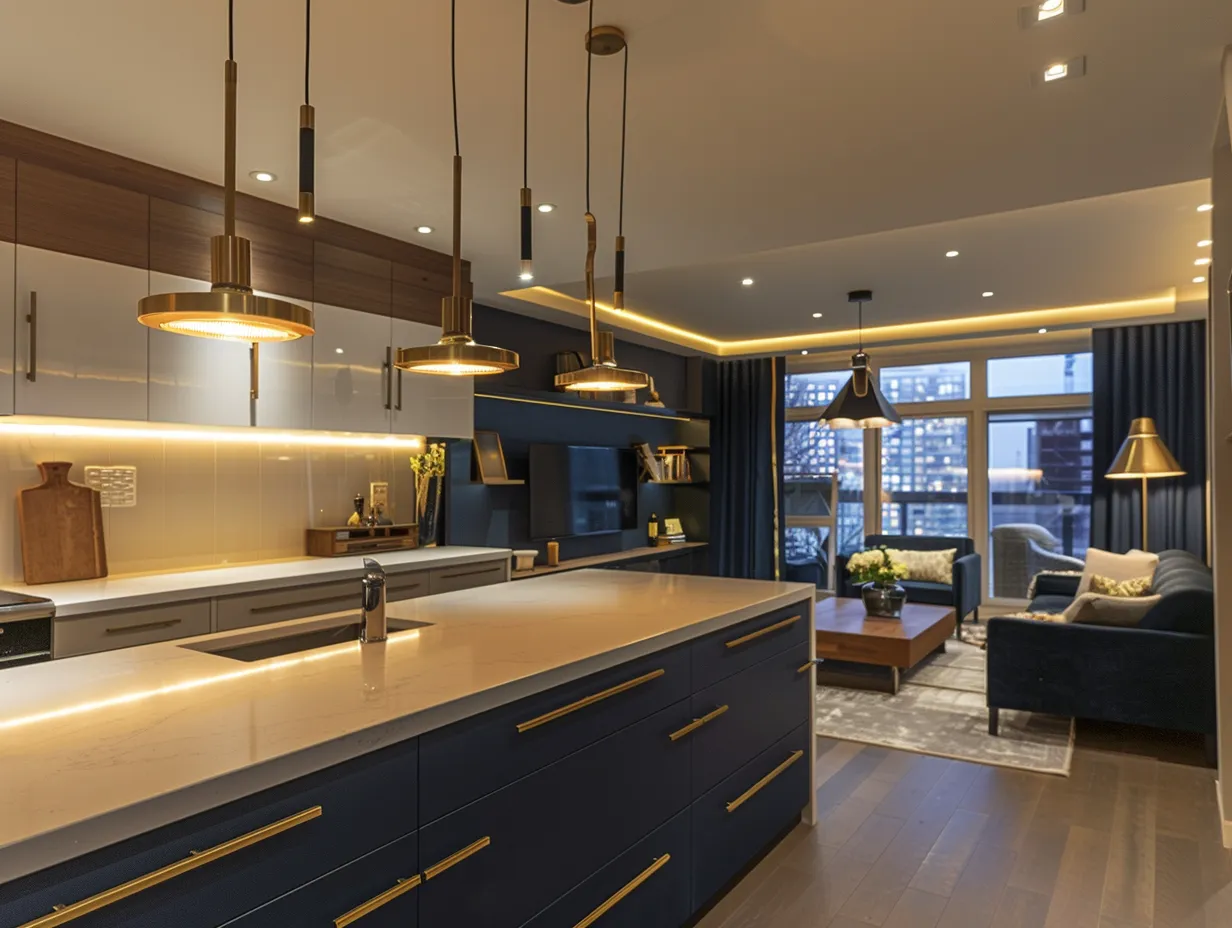
A modern retro kitchen mixes mid-century forms from the 1950s and 1960s with today’s layouts, appliances, and storage. The result works when the vintage cues stay selective and the daily function stays sharp.
Homeowners choose this hybrid because it delivers character without sacrificing convenience. Bold color, warm wood, chrome accents, and clean lines create an inviting hub that still handles heavy cooking and easy cleaning.
Start with one strong period reference, keep the rest practical, and the space feels collected rather than costume-like. The following sections break down the moves that hold up in real homes.
- Pair flat-front cabinets or warm wood with one controlled color accent
- Use chrome or stainless hardware and fixtures for period sparkle
- Choose retro-styled appliances only where they earn daily use
- Keep work triangles short and storage deep to protect function
- Budget for mid-range remodel averages near $27,000–$28,500 according to recent industry data
- Limit pattern and color so the room stays calm under everyday light


Core Traits of a Working Modern Retro Kitchen
Modern retro kitchen spaces succeed when the silhouette stays simple and the materials carry the nostalgia. Flat or lightly framed fronts, warm woods such as walnut or teak, and a restrained palette echo the original mid-century kitchens while modern soft-close hardware and deep drawers keep the room usable every day.
Think of the layout as a well-tuned engine rather than a museum display. The classic work triangle still matters: keep the path between sink, cooktop, and refrigerator short. According to recent industry surveys, only about 6 percent of renovating homeowners select a pure mid-century style, yet the hybrid approach continues to appear because it balances charm with performance. Avoid piling on every 1950s motif at once.
What happens if the room feels too busy? Scale back the pattern and let one material lead. A single run of warm wood cabinets against quiet walls often delivers more atmosphere than a full set of pastel appliances. That restraint is the practical filter most successful rooms share.


Vintage Touches That Actually Belong in Contemporary Spaces
Vintage elements earn their place when they solve a visual or functional need rather than simply fill a mood board. A chrome bar pull, a globe pendant, or a short stretch of geometric tile can signal the era without forcing the entire room into costume. These pieces work best against quiet contemporary backdrops.
Do not treat every surface as a stage for nostalgia. Leave most walls calm so the chosen accents read clearly. A useful parallel is a classic car restored with modern brakes and seats: the silhouette stays true while the daily experience improves. Many designers keep the percentage of overtly vintage items under one-third of the visible surfaces.
How do you decide which pieces stay? Ask whether the item will still feel intentional after five years of morning coffee and evening cleanup. If the answer is uncertain, choose a quieter substitute. For more mid-century cabinet and layout examples, see the collection of mid-century modern kitchen designs that show how the same principles scale across different room sizes.


Luxurious Materials That Lift a Retro-Inspired Room
Luxurious features in a vintage-inspired kitchen rarely require every surface to be expensive. A well-chosen run of terrazzo or marble-look quartz, paired with solid wood fronts and quality stainless fixtures, already raises the perceived value. The goal is durability that still photographs with period warmth.
Average full kitchen remodels in recent data sit near $27,000 to $28,500 for typical projects, while major mid-range work can climb higher. Cabinetry often claims the largest share of the budget. Spend where hands and eyes meet most often—countertops, hardware, and lighting—and keep secondary surfaces more modest. Skip the temptation to match every fixture to a single high-end brand.
A practical filter: choose materials that age honestly. Wood develops patina; polished chrome stays bright with simple wiping. That combination keeps the room looking intentional long after installation day.


Color Choices That Make a Modern Retro Kitchen Stand Out
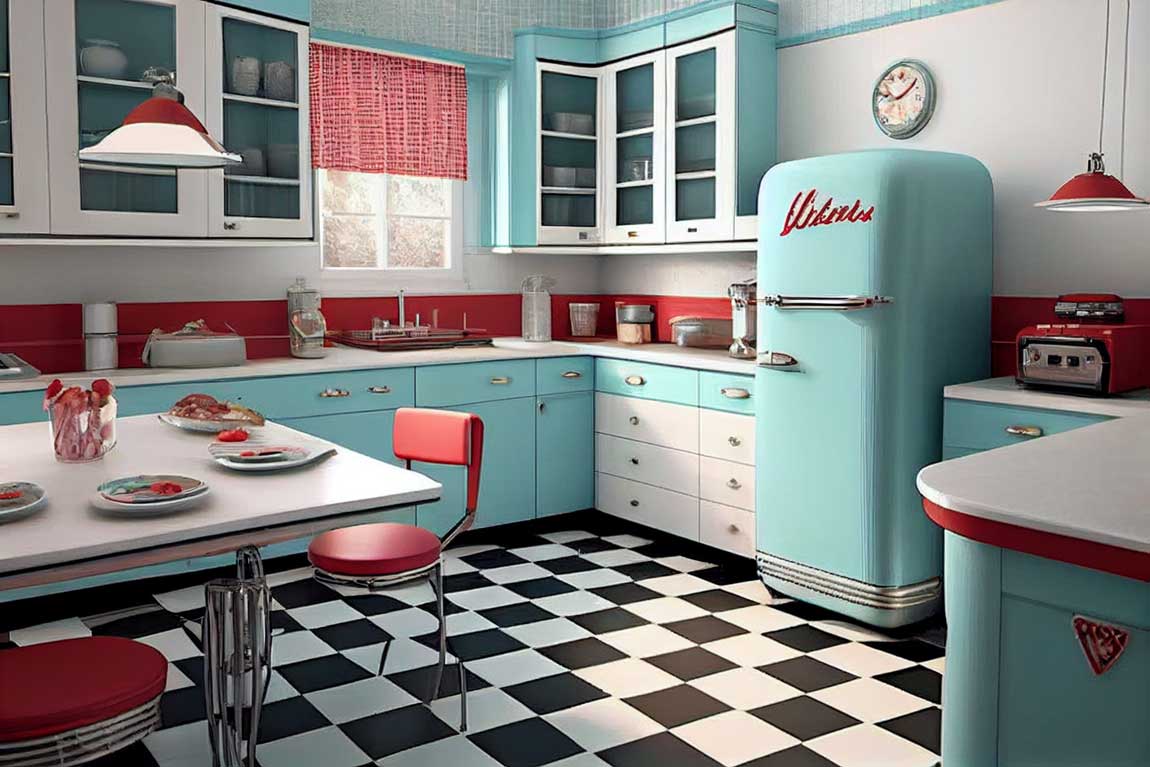
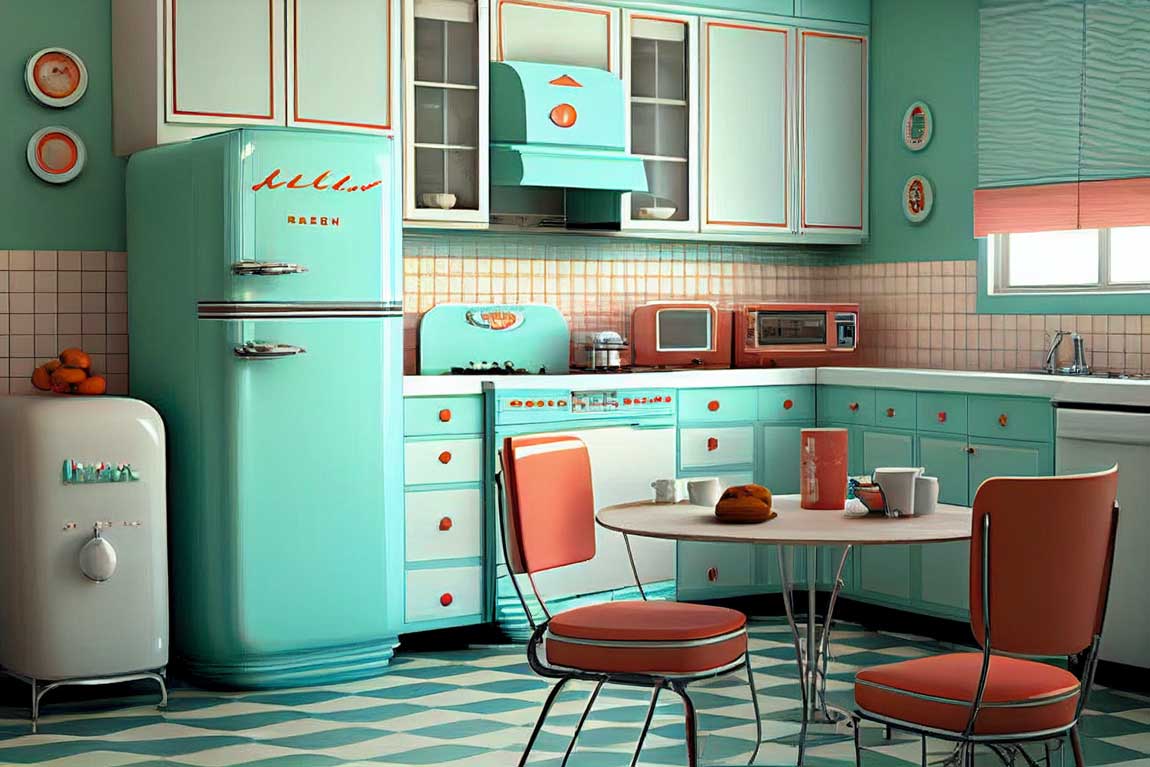
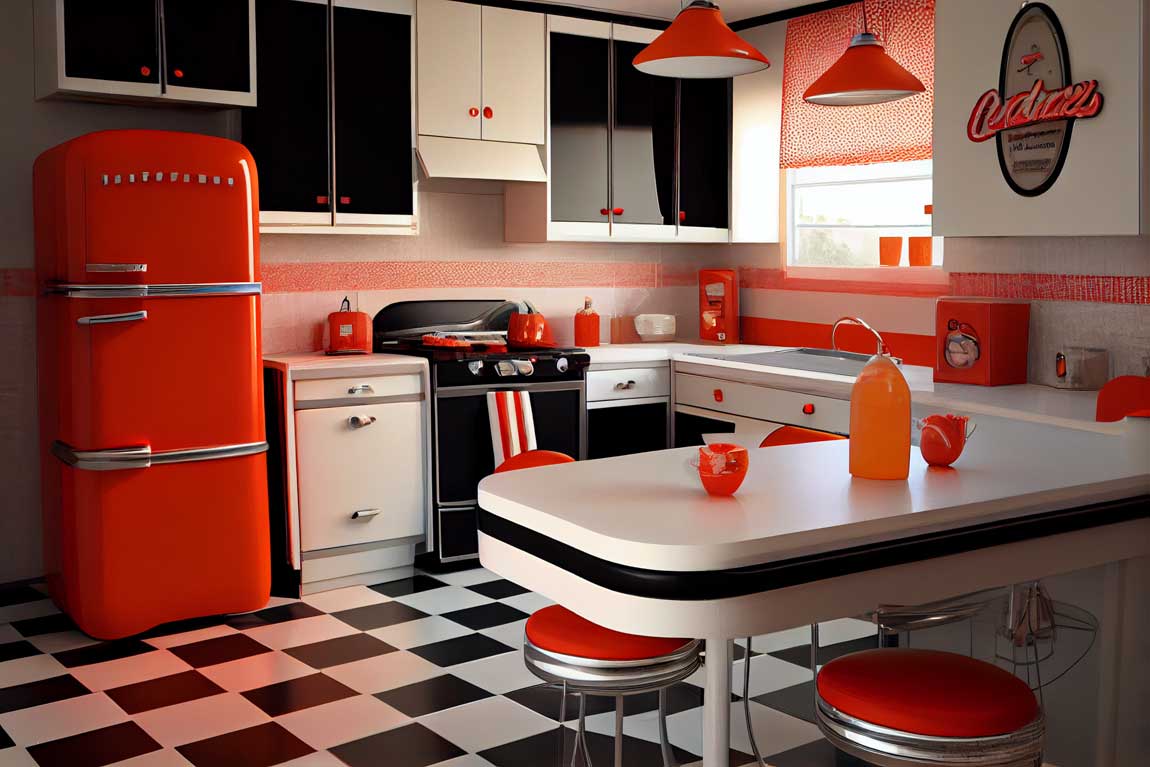
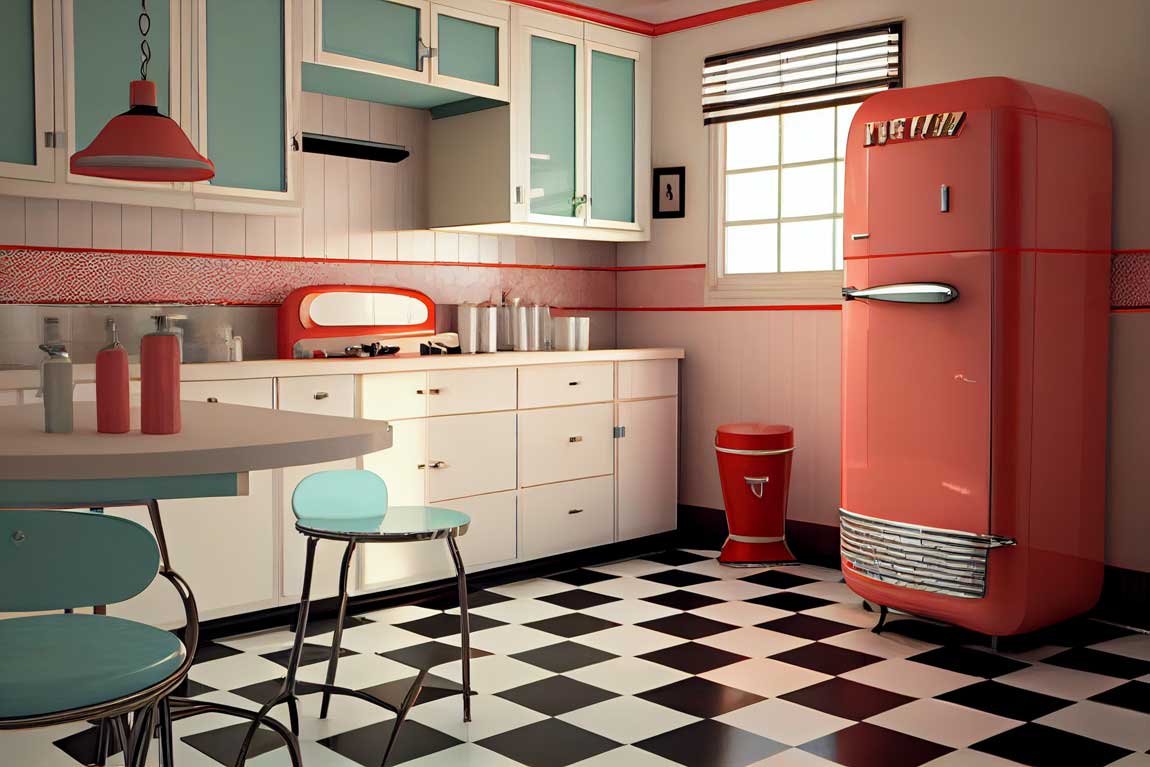
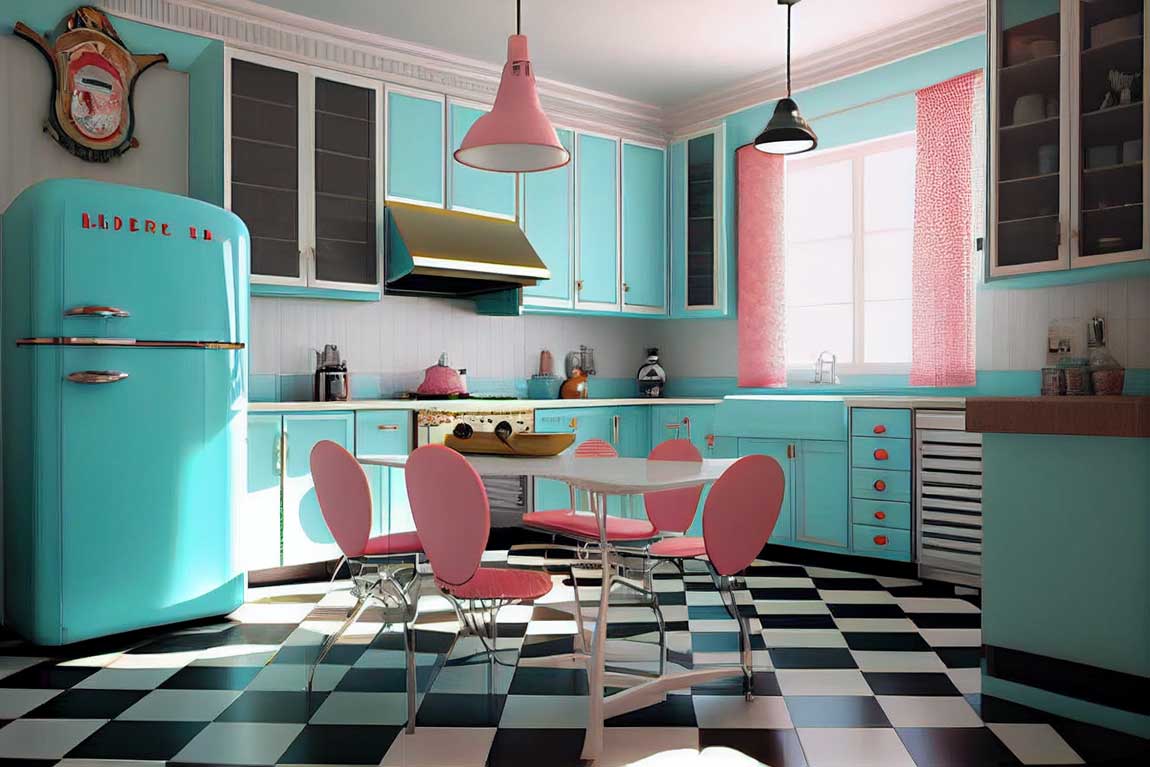
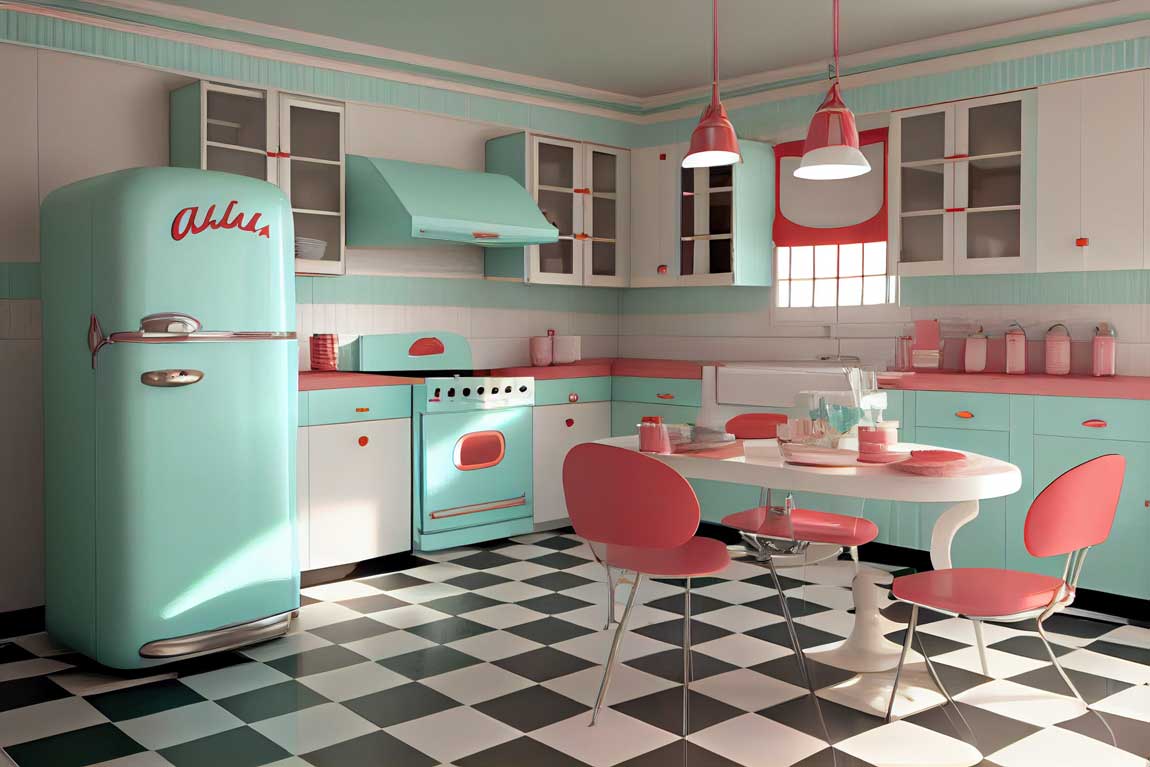
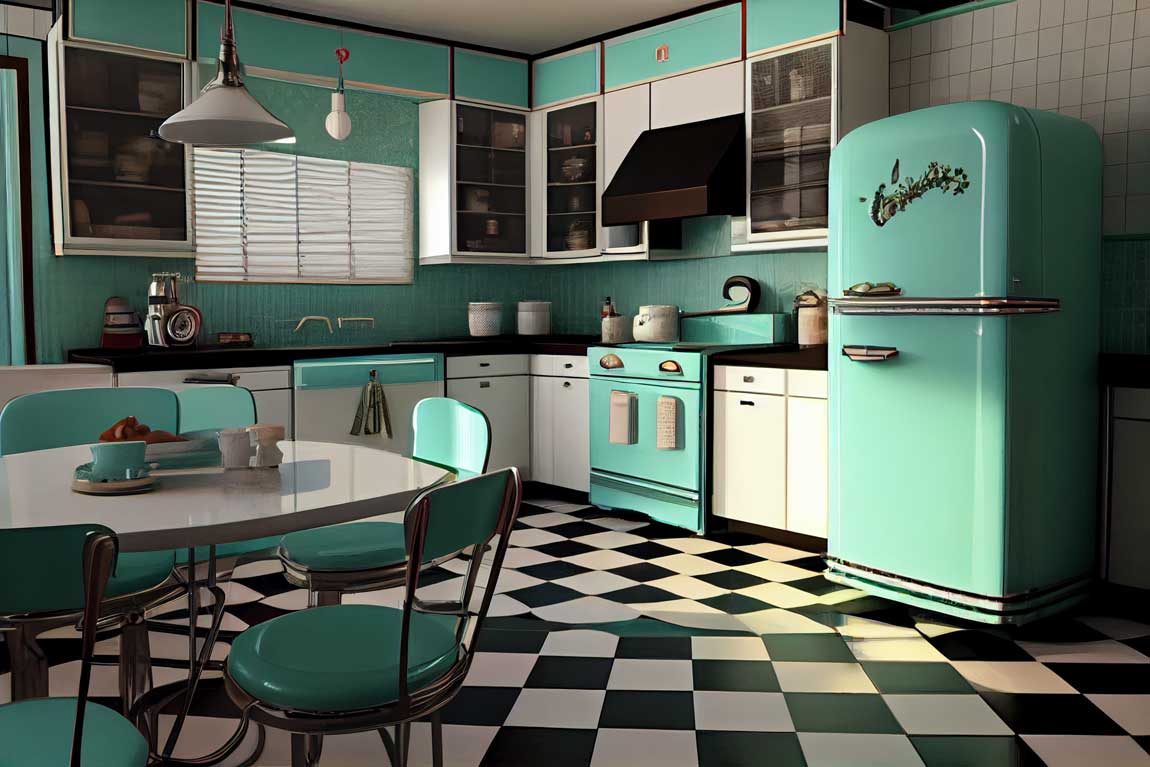
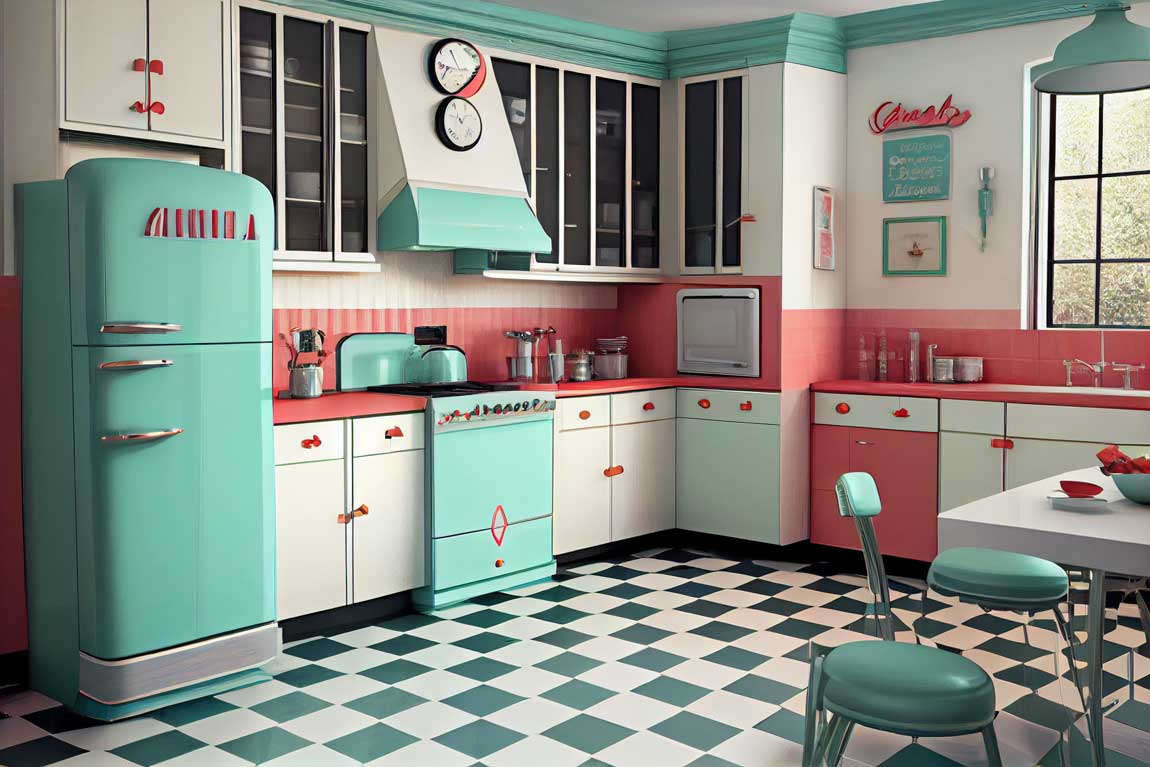
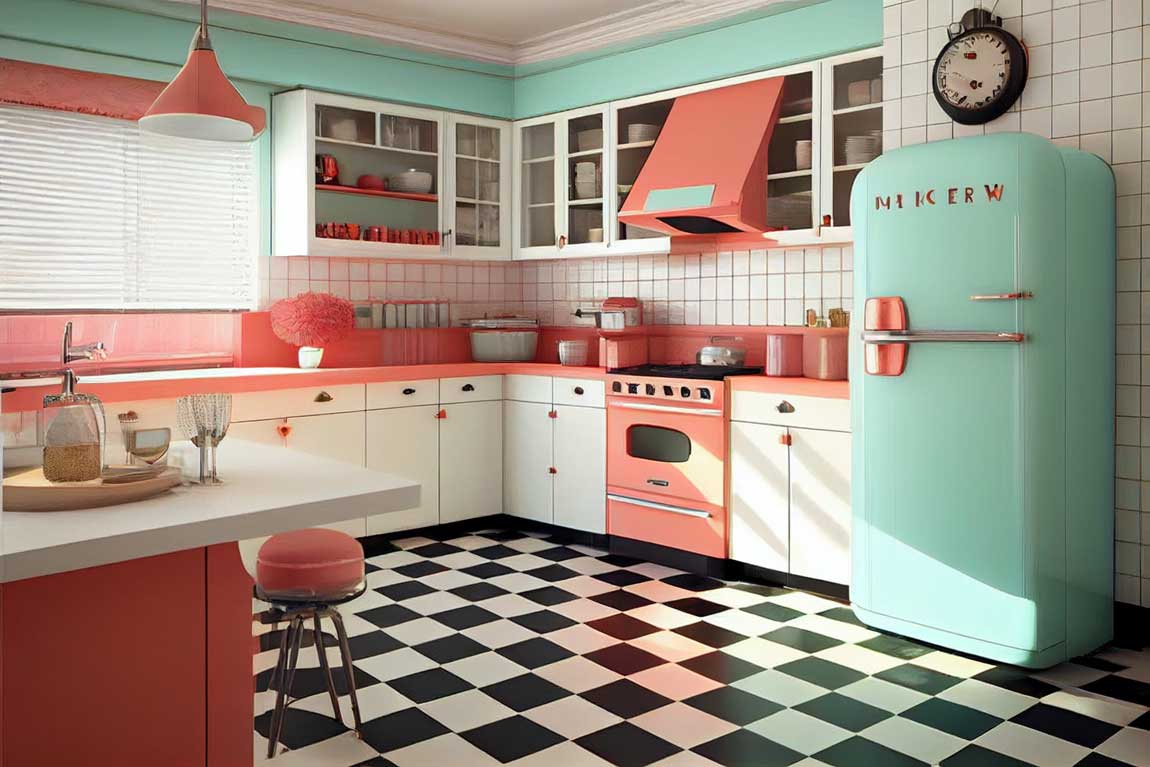
Color is the fastest way to signal a modern retro kitchen without rewriting the architecture. Soft turquoise, butter yellow, mint, or a single saturated accent against warm wood or white cabinets immediately references the optimistic palettes of the mid-century decades. Keep the strongest hue to one or two surfaces so the room stays restful.
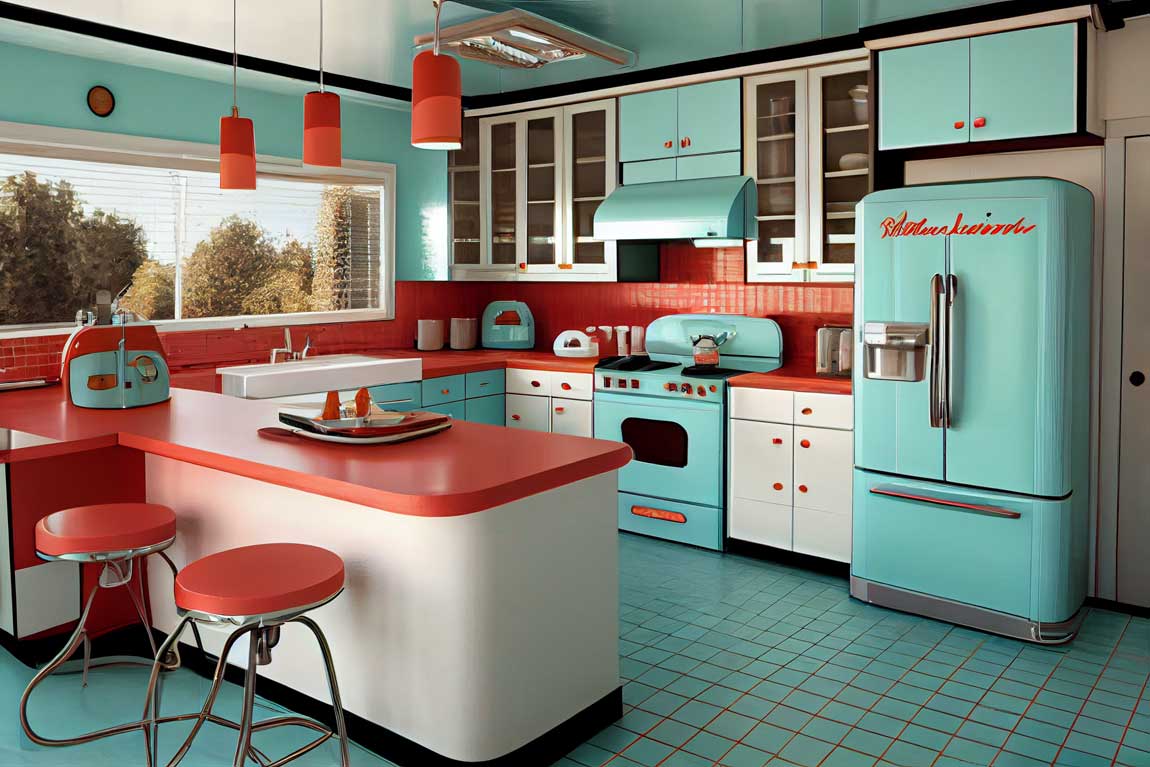
Industry color data shows greens and blues ranking high among current renovation preferences, while pure white has softened in dominance. A controlled pop of color on an island, a run of lower cabinets, or a set of stools often delivers more impact than painting every wall. Avoid layering three competing bright hues in the same sightline.
Test the chosen shade under both daylight and evening lighting before committing. What looks cheerful at noon can feel heavy under warm bulbs. A single well-chosen accent usually outperforms a full multi-color scheme that fights for attention.


Furniture and Fixtures That Lock in the Period Feel
Furniture and fixtures finish the story. A tulip-style table or simple mid-century stools under a clean island, globe pendants, and chrome or brushed-metal hardware all reinforce the era without requiring a full appliance overhaul. The pieces should invite use rather than demand careful handling.
Retro-styled refrigerators typically range from roughly $1,200 to over $6,000 depending on size and brand, while smaller countertop appliances can start far lower. Choose the statement piece that will be seen daily and keep secondary items quieter. Overloading the counters with every available pastel gadget quickly turns the room into a display rather than a workspace.
One anti-pattern to avoid: matching every stool, pendant, and pull to the exact same catalog set. Slight variation keeps the space from looking staged. For additional white-based vintage approaches, explore the ideas in retro white kitchen ideas with vintage vibes that show how restrained color still delivers strong period character.

Cost Realities of Adding Vintage Character
Incorporating vintage design into a kitchen does not automatically mean a luxury budget. Cosmetic refreshes that include paint, new hardware, lighting, and a few statement appliances can sit well below full-gut numbers. Industry figures place minor remodels around the mid-$20,000s and more extensive projects significantly higher depending on cabinetry and layout changes.
Historical character can support resale interest when the updates remain functional and broadly appealing. The same data that tracks average remodel spend also notes that well-executed mid-range work tends to retain more value than purely cosmetic or purely high-end extremes. Focus spending on pieces that both look and perform well for years.
Do not assume every original period appliance is a bargain. Restored true vintage ranges can cost several thousand dollars and may lack modern safety or efficiency features. New retro-styled units often deliver a cleaner daily experience while still supplying the visual cue.
Comparing Approaches Side by Side
| Approach | Best For | Typical Investment Signal | Main Risk to Avoid |
|---|---|---|---|
| Selective accents only | Renters or light updates | Hardware, lighting, small appliances | Too many competing motifs |
| Partial remodel | Most homes | Cabinets, counters, one statement appliance | Ignoring work triangle |
| Full hybrid redesign | Major renovations | Custom or semi-custom cabinetry plus layout changes | Over-styling every surface |
Practical Layout Moves That Protect Daily Flow
Even the most carefully chosen colors and fixtures fail if the layout fights the cook. Keep the primary work triangle efficient, provide clear landing zones beside the cooktop and sink, and reserve open shelving for items that turn over frequently. Dust and visual clutter undermine the clean mid-century silhouette faster than any other factor.
Recent trend reports note that storage remains a top priority for renovating homeowners, with specialty built-ins and pantry solutions appearing in a large share of projects. Apply the same logic here: hide the everyday chaos behind flat fronts or deep drawers so the period details stay the visual focus. A room that looks calm in photos but frustrates actual cooking will not age well.
One final check: walk the path from refrigerator to prep to cook to clean-up with an imaginary meal in mind. If any step feels awkward, adjust before finishes go in. That simple rehearsal saves more regret than any last-minute accessory purchase.

Mistakes That Flatten the Intended Mood
The fastest way to lose the modern retro kitchen atmosphere is to treat the style as a checklist. Matching every item to a single catalog page, flooding the room with competing patterns, or installing dim vintage-style bulbs as the only task lighting all undercut the goal. The room should feel livable first and nostalgic second.
Another common slip is ignoring scale. Oversized islands or heavy upper cabinets can overpower the lighter mid-century proportions that give the look its lift. Measure twice and leave breathing room around statement pieces. According to broader kitchen trend data, homeowners who prioritize function alongside style report higher long-term satisfaction.
When in doubt, remove one decorative layer rather than add another. Empty space is part of the original design language and still the most reliable tool for keeping the room calm.



Ready Rooms That Stay Useful for Years
A modern retro kitchen earns its keep when the nostalgia supports daily life instead of competing with it. Choose one clear period cue, protect the work zones, and let quality materials carry the rest of the story.
Keep color controlled, storage deep, and lighting practical. The combination of warm wood, selective chrome, and a single confident accent continues to deliver rooms that feel both familiar and current.
Measure the layout against real cooking sequences before finishes go in. That single habit prevents most of the regrets that appear after the installers leave.
For further reading on related approaches, the Houzz kitchen trends study offers broader context on how mid-century references sit within current renovation choices.