A red and gray living room works because gray absorbs the heat of red, and red keeps gray from going flat. Yes, the two colors go together, and the safest split is the classic 60-30-10 rule: about 60% gray on walls and large pieces, 30% a supporting tone such as white or charcoal, and 10% red in accents. Push red past that 10% only when the room gets strong daylight. Treat the ratio as a starting dial, not a law.
Which gray and which red should you start with? A mid gray with a light reflectance value around 40–55 on the 0–100 scale keeps a room bright, while a charcoal below 30 pushes red darker and moodier. Warm bulbs at 2700–3000K make red read rich, whereas 4000K cool white sharpens blues and greens and drains warmth from red. Pick the bulb before you pick the cushion.
The same palette carries into bedrooms and kitchens with different ratios. A bedroom takes its 10% red through a duvet, while a kitchen often runs red through the backsplash, where a 20–40 sq ft run typically costs $900–3,500 installed. The sections below break down living room, bedroom, paint and kitchen choices with real numbers. Start with the room you use most every day.
Quick Scan
- Split the palette 60-30-10: gray leads, a supporting neutral follows, red stays near 10%.
- Mid grays around LRV 40–55 keep rooms bright; charcoal below 30 makes red moodier.
- Use 2700K bulbs in living rooms and bedrooms, 3000K in kitchens, and never mix temperatures in one room.
- A gray-tinted primer under red typically cuts finish coats from three to two.
- One gallon covers about 350–400 sq ft per coat; a 12×12 room needs roughly 2.2 gallons for two coats.
- A red backsplash of 20–40 sq ft runs about $900–3,500 installed, with ceramic from $12 per sq ft.
- White, black, brass and green are the safest third colors for red and gray.
Red and Gray Combination Rules That Keep a Room Balanced
A red and gray combination succeeds or fails on proportion far more than on the exact shade. Gray behaves like the frame around a painting and red is the painting, so the frame should take about 60% of what you see while red stays near 10%. The remaining 30% goes to a bridging tone such as white, charcoal or warm wood. Count the large surfaces first, then budget red into what is left.
Does red and gray go together in every shade? Not quite, because a cool blue-gray against a warm tomato red can look like two rooms arguing over one wall. Warm grays with beige undertones meet brick, rust and oxblood halfway, while crisp cool grays suit blue-leaning reds such as cherry and crimson. Never split the two at 50/50, since one color has to lead. Match undertones, warm to warm or cool to cool, before comparing swatches.
Light reflectance value, printed on most paint chips, tells you how much light a gray returns to the room on a 0–100 scale. Grays around 50 keep a north-facing room usable, while charcoals near 29 soak up light and turn red into a darker, velvet register. Dark gray and red make a strong pair for dining rooms and dens used mostly after sunset. Choose the LRV for the window, not for the mood board.
- Gray, about 60%: walls, sofa, rug, large cabinetry.
- Supporting neutral, about 30%: white trim, charcoal chairs, oak or walnut floors.
- Red, about 10%: cushions, a throw, art, one accent wall or a backsplash.
Modern Takes on a Red and Gray Living Room


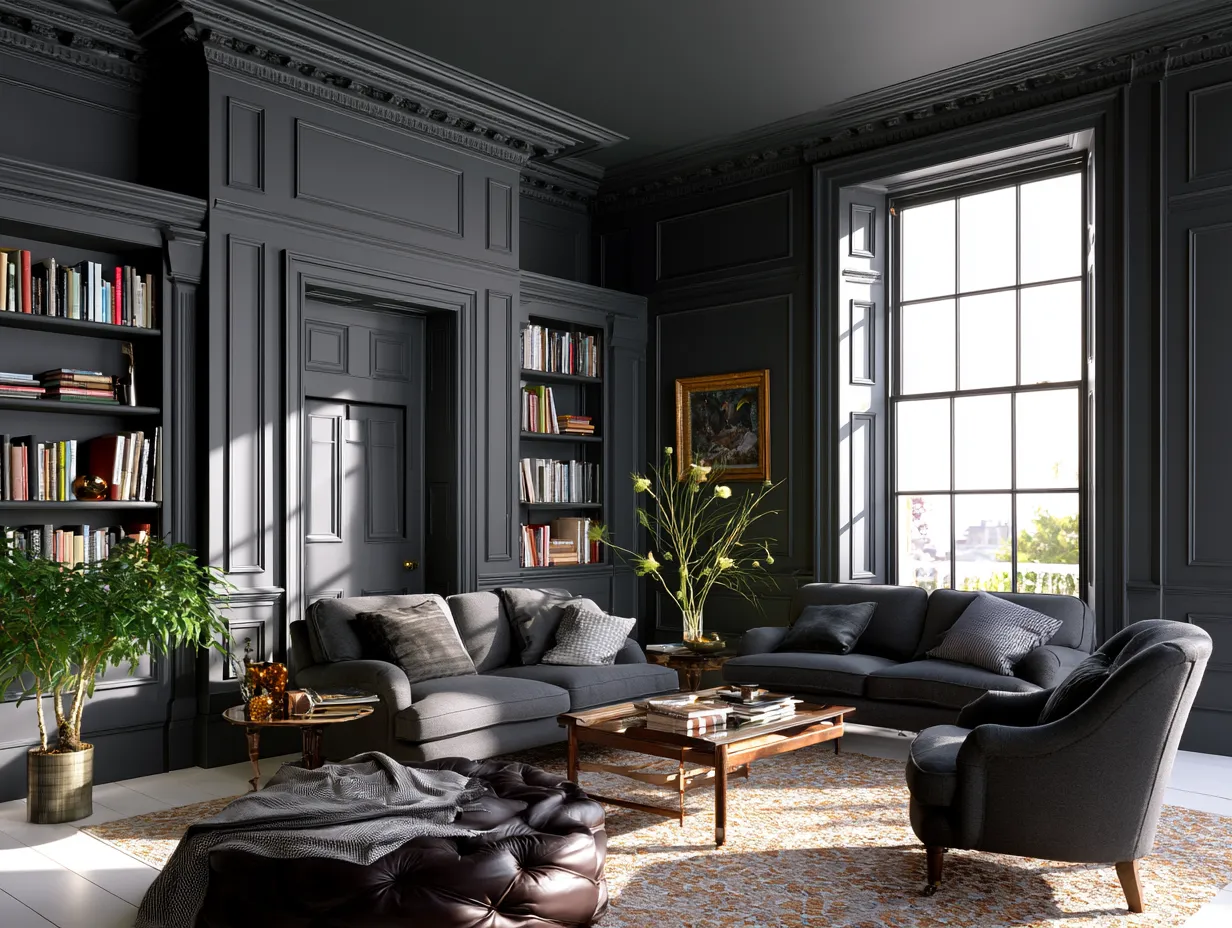
Red and gray living room ideas start with a gray shell: walls, a large sofa and a rug in two or three related grays. That shell covers roughly the 60% share, which leaves red to arrive through cushions, a throw, a lamp base or a single painting. Think of red as seasoning in a soup, where a few spoonfuls change the dish and a full cup ruins it. Spread three to five red pieces around the room so the eye keeps moving.
Should the red go on a wall or on fabric? An accent wall gives a fixed focal point, while textiles let you turn the color up in winter and down in summer for the price of a few covers. One red wall behind a sofa uses about a gallon for two coats on a typical 12-foot wall, versus 2–3 gallons to drench a whole mid-sized room. The trade-offs are laid out in this comparison of accent wall vs color drenching for modern bedrooms, and the same logic holds in a living room. Start with textiles if you rent or doubt the saturation.


Lighting decides whether a red and grey colour scheme feels warm or bruised. Warm white bulbs at 2700K suit living rooms because warmer light enhances reds, while 4000K cool white makes blues and greens crisper and leaves red looking dull. Keep the same color temperature in every lamp, since mixing 2700K and 4000K creates patchy color on gray walls. Swap ceiling fixtures for warm dimmable LEDs before buying any new red decor.
Texture keeps a two-color room from looking like a flat diagram. Pair a nubby wool gray sofa with a smooth velvet red cushion, brushed steel lamp bases and a matte charcoal rug, so each surface reflects light differently. One or two leafy plants bring in green, red’s opposite on the color wheel, and freshen the palette without a third paint color. Skip a second saturated accent such as orange or purple, because red needs to stay the only loud voice.
Bedroom Colors That Pair Soft Gray With Deep Red


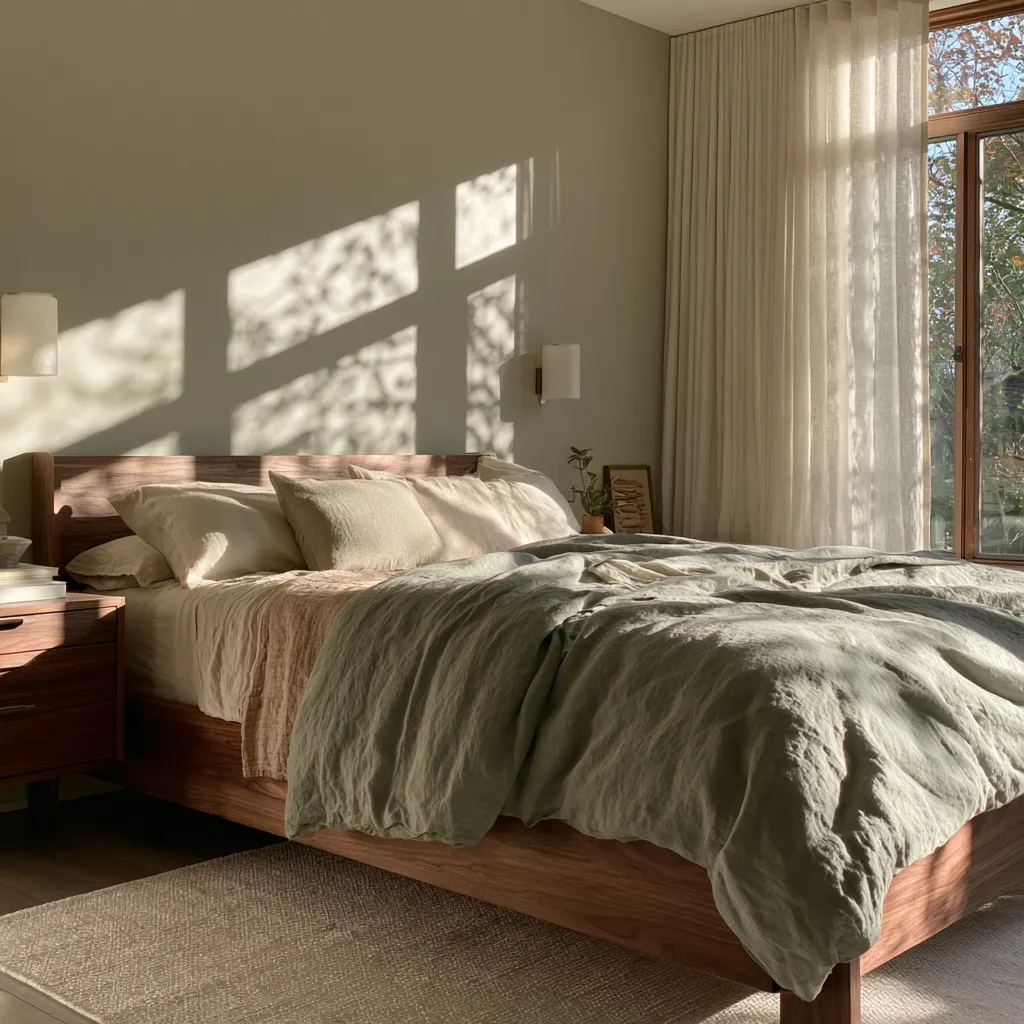
Red and gray bedroom colors work best when gray covers the walls and red moves onto the bed. A pale warm gray around LRV 50 keeps the room restful, and a deep red duvet becomes the single 10% accent the whole room points toward. Is red too energizing for sleep? In a small dose on fabric, no, but bright cherry on all four walls can feel like sleeping inside a stop sign. Keep saturated red below pillow height and off the ceiling.
Velvet and heavy linen hold red better than satin, which reflects light and can push deep red toward glossy pink. Layer gray sheets, a red duvet and two or three cushions mixing both colors, so the bed reads as one composition instead of a color block. Burgundy and oxblood sit more comfortably against gray than bright scarlet, which competes with lamps and art. Pick one red and repeat it twice rather than buying three different reds.


Bedside lamps with 2700K warm white bulbs are the standard bedroom choice, since warm light signals wind-down and keeps deep red rich rather than brown. According to ENERGY STAR’s LED lighting basics, LEDs produce light up to 90% more efficiently than incandescent bulbs, which lose about 90% of their energy as heat. A warm LED gives the same glow without warming a small room. Put lamps on dimmers rather than adding a cooler overhead light.
A gray upholstered headboard is the bridge piece, sitting at eye level, backing the red duvet and repeating the wall color in a softer texture. Metallic bedside tables or chrome lamp bases add the cool 30% layer, while black and white photographs in thin frames keep art from adding a third loud color. Compare a red headboard with gray bedding and the balance flips, red takes the dominant role and the room feels heavier. Keep the headboard gray in a compact bedroom.
Wall Paint for a Red and Grey Combination Without Streaks
Red and grey combination wall paint needs more planning than almost any other pair, because saturated reds hide poorly. Most interior latex covers about 350–400 sq ft per gallon per coat on a smooth primed wall, and real coverage usually comes in lower. A 12×12 room needs roughly 2.2 gallons for two coats, plus about one more gallon if the ceiling gets painted. Buy the red in one batch so every can matches.
Why does red streak over white? Painters prime under red with a gray-tinted primer rather than a pink one, because gray neutralizes the white base faster. A tinted primer at about $25–35 per gallon typically turns a three-coat color change into two coats, saving both premium paint and a day of drying. Think of the gray primer as a dark undershirt under a red sweater that stops white from glowing through. Ask the paint counter to tint the primer gray, not to a lighter red.
Don’t Do This
- Don’t roll red straight over white drywall: expect three or more coats instead of two with a gray-tinted primer.
- Don’t mix 2700K and 4000K bulbs in one room, or a red wall will look like two different shades.
- Don’t split red and gray 50/50; keep red near 10% of what you see.
- Don’t stretch a gallon past 350–400 sq ft per coat, since thin red paint dries blotchy.
Gray walls are the easy half of the job. A mid gray usually covers a white wall in two coats with plain primer, and trim in the same gray at eggshell or satin holds up better than flat paint on doors and skirting. Compare that with red, which needs tinted primer plus two coats to reach the same evenness. Paint the gray first and the red wall last, so stray gray drips get covered.
Kitchen Cabinets and Backsplash in a Red and Gray Palette


A red and gray kitchen palette usually puts gray on the cabinets and red on the backsplash, because cabinets form the 60% surface and the backsplash is a natural 10–20% strip. Gray cabinets hide fingerprints better than white and date more slowly than trend colors. What about red cabinets with a gray backsplash? It works in a bright galley, but in a closed kitchen it can feel like standing inside a fire engine. Keep red on the smaller surface unless daylight is generous.
Backsplash material sets both the budget and the cleaning routine. Glazed ceramic tile typically runs $12–45 per sq ft installed versus $22–75 for glass tile, and a standard 20–40 sq ft backsplash usually lands between $900 and $3,500. A red glass splashback gives the deepest color with no grout, while red ceramic subway tile adds texture for less money. A side-by-side look at kitchen wall cladding ranked by cost, heat and upkeep helps narrow the material before choosing the shade. Order 10–15% extra tile so a cracked piece never forces a rematch.


Stainless steel appliances sit naturally between gray cabinets and red tile, acting like mortar between bricks. Under-cabinet LED strips at 3000K suit most kitchens, warm enough to keep red tile rich and bright enough for chopping. Compare that with 4000K, which reads crisper on gray and steel but mutes warm reds. Choose one temperature for pendants and strips together.
Countertops and floors should stay neutral so they never compete with the backsplash. White or pale gray quartz, gray porcelain floor tile and a few red accessories such as a kettle or towels complete the 10% without more tile. Porcelain absorbs 0.5% water or less, which makes gray porcelain floors a practical match for a busy kitchen. Don’t add a red countertop under a red backsplash, because two red planes make the room look cramped.
Colors That Go With Red and Gray as a Third Partner
The colors that go with red and gray fall into four reliable groups: white, black, metallics and natural green. White brightens a gray room and gives red crisp edges, while black adds drama but cuts brightness, since black sits near 0 on the LRV scale and white near 100. Brass and gold warm up cool grays, and chrome or steel suit cool ones. Pick the third color by the gray’s undertone, not by the red.
What color goes with gray and red in a family room that needs softness? Warm oak or walnut can take the 30% role and keep the scheme from feeling corporate. Cream is safer than pure white beside warm gray walls, whereas navy works only in a dose about the size of one cushion, since red and navy together turn nautical fast. Don’t bring in a fourth strong color, and treat green like a garnish with a few plants rather than a painted wall.
Ratios for a Red and Gray Living Room, Bedroom and Kitchen
Red and gray shift ratios from room to room, and the table puts the numbers side by side. The living room carries the most visible red, the bedroom keeps red soft, and the kitchen concentrates it in one hard surface. Bulb temperature and budget change with each room too. Use the table as a checklist before buying the first sample pot.
| Room | Gray share | Red share and placement | Bulb temperature | Typical paint or material need | Upkeep |
|---|---|---|---|---|---|
| Living room | About 60%: walls, sofa, rug | About 10%: cushions, throw, one accent wall | 2700K | About 1 gallon for two coats on one 12-ft wall | Low, swap textiles by season |
| Bedroom | 60% or more: walls, headboard, sheets | 10% or less: duvet and cushions | 2700K | 2–3 gallons to drench a mid-sized room | Low |
| Kitchen | About 60%: cabinets | 10–20%: backsplash | 3000K | $900–3,500 for a 20–40 sq ft backsplash | Medium, grout needs care |
| Red feature wall | Surrounding walls | One wall only | 2700–3000K | Gray-tinted primer plus 2 coats, 350–400 sq ft per gallon | Touch-ups need the same batch |
The Final Call on Red and Gray
Red and gray work when gray leads at about 60% and red stays near 10%. Flip that ratio and the room turns loud and looks smaller.
Living rooms take red best through cushions, a throw and one accent wall, which needs about a gallon for two coats on a single 12-foot wall. Warm 2700K bulbs keep that red rich instead of dull.
Bedrooms stay calm with gray walls, a red duvet and dimmable warm lamps. Kitchens put red on a 20–40 sq ft backsplash costing roughly $900–3,500, with gray cabinets doing the heavy lifting.
Prime every red wall with gray-tinted primer to finish in two coats instead of three. Keep white, black, brass or green as the only third color, and the scheme holds together in every room.