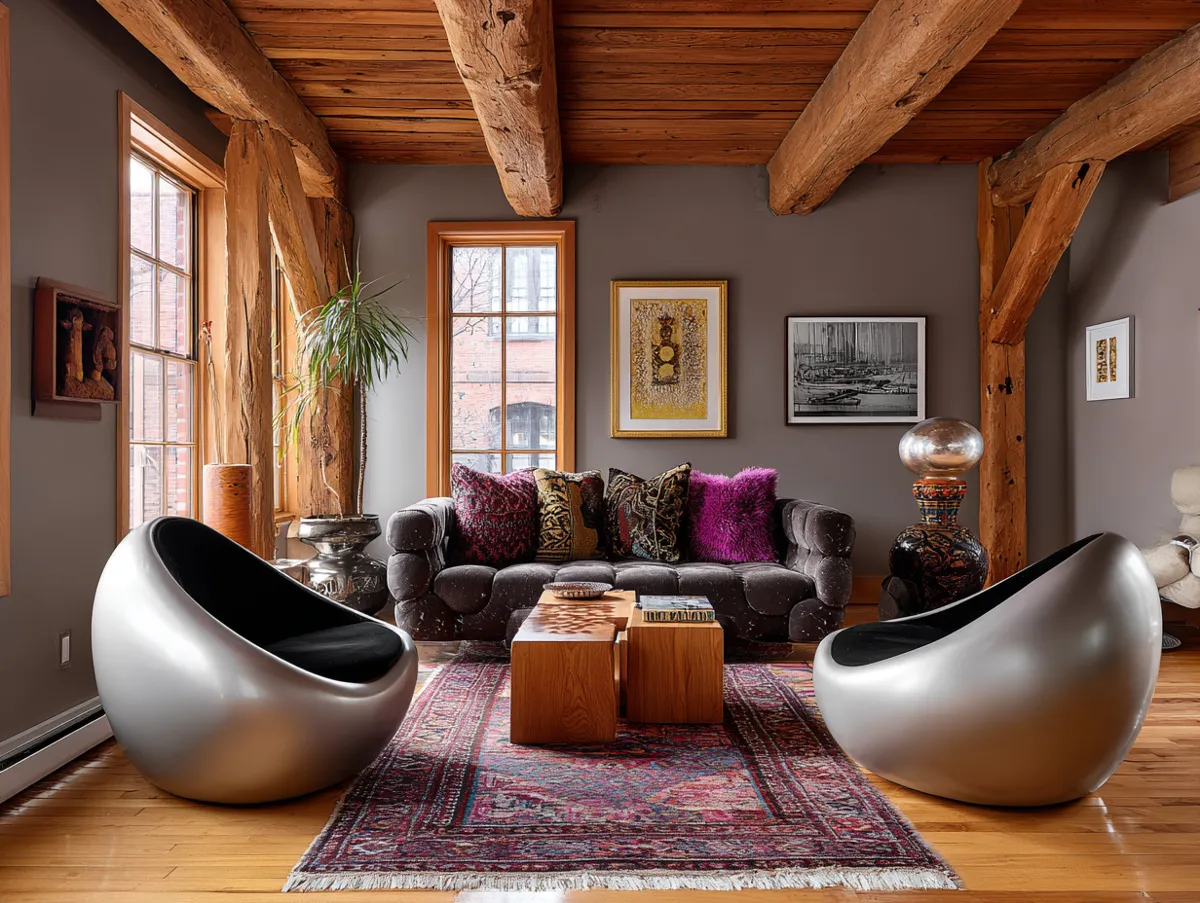
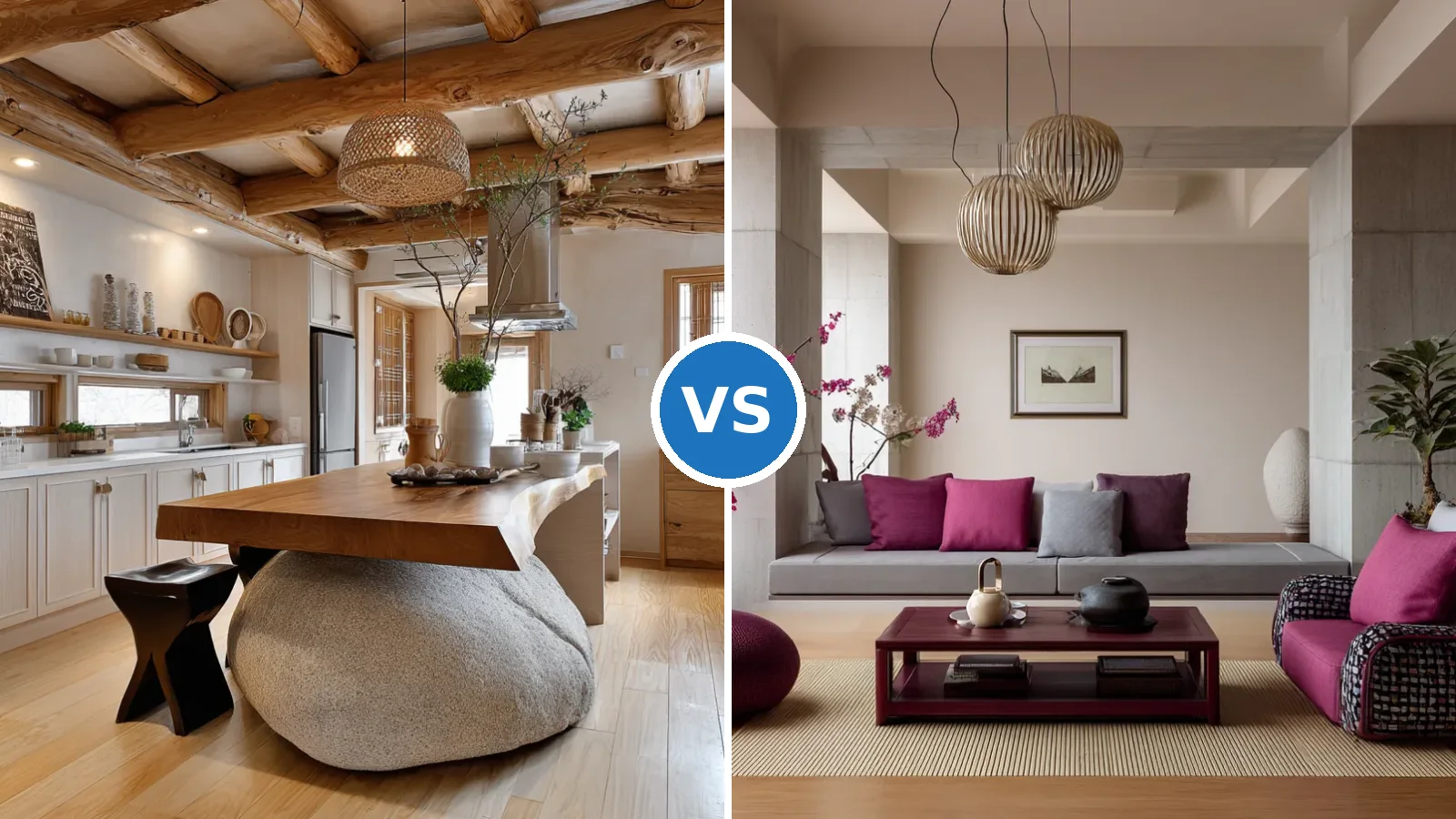
A mid-century modern eclectic living room only holds together when the anchor pieces come first and the chaos follows — not the other way around. I’ve rearranged enough rooms to know that most people grab the Eames replica, the vintage trunk, the abstract print, and then wonder why the result looks like a storage unit. The sequence matters more than the objects. You build outward from one era, not inward from every era at once.
Eclectic mid-century decor has been misread as permission to collect freely. It isn’t. It’s a framework: clean-lined MCM furniture as the skeleton, everything else as deliberate punctuation. Get that distinction wrong and you’ll keep restyling the same crowded shelf forever.
At a glance — what this post covers
- How retro and contemporary pieces earn their place in the same room
- Which mid-century palette works with vibrant eclectic color without clashing
- The Art Deco–MCM crossover and where it actually makes sense
- Texture and material layering without the flea-market effect
- What not to do when mixing styles (the mistakes cost real money)
Retro Furniture Only Pulls Its Weight Next to One Honest Modern Piece
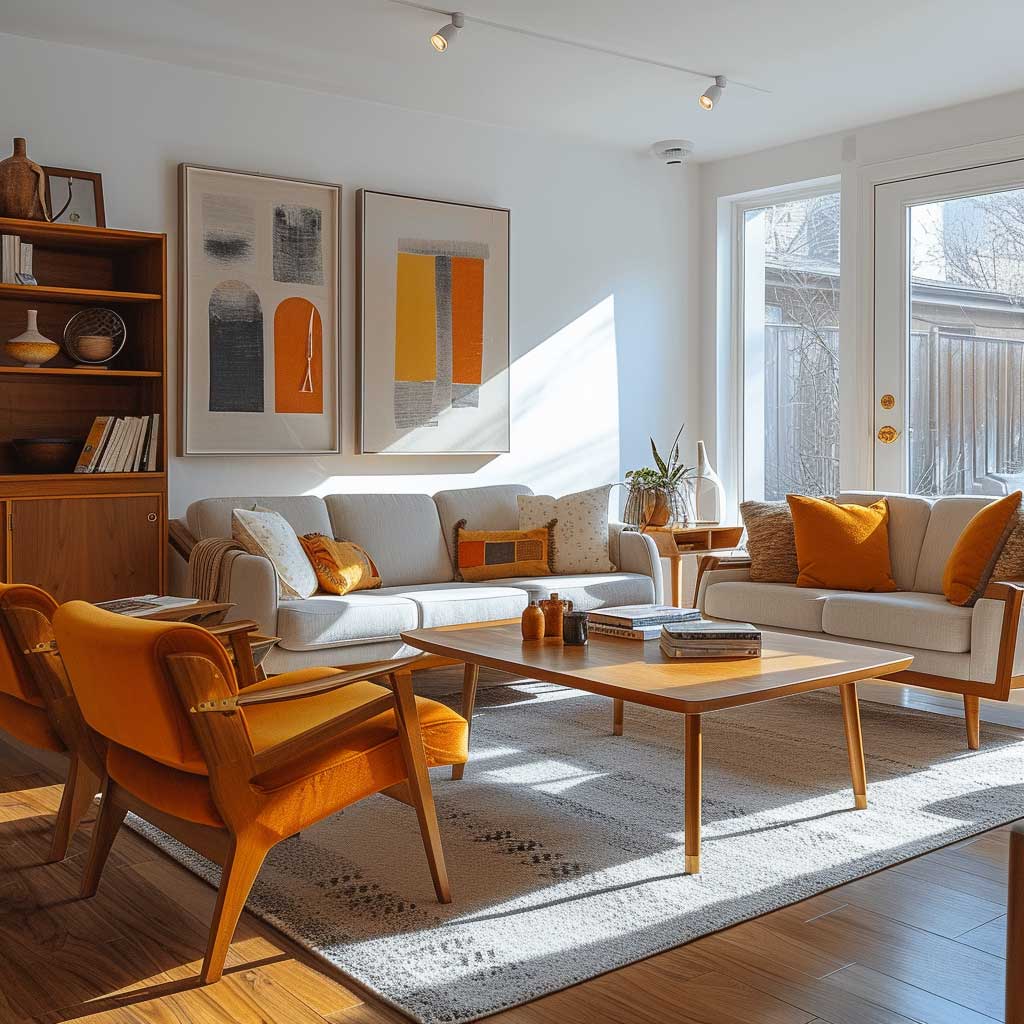
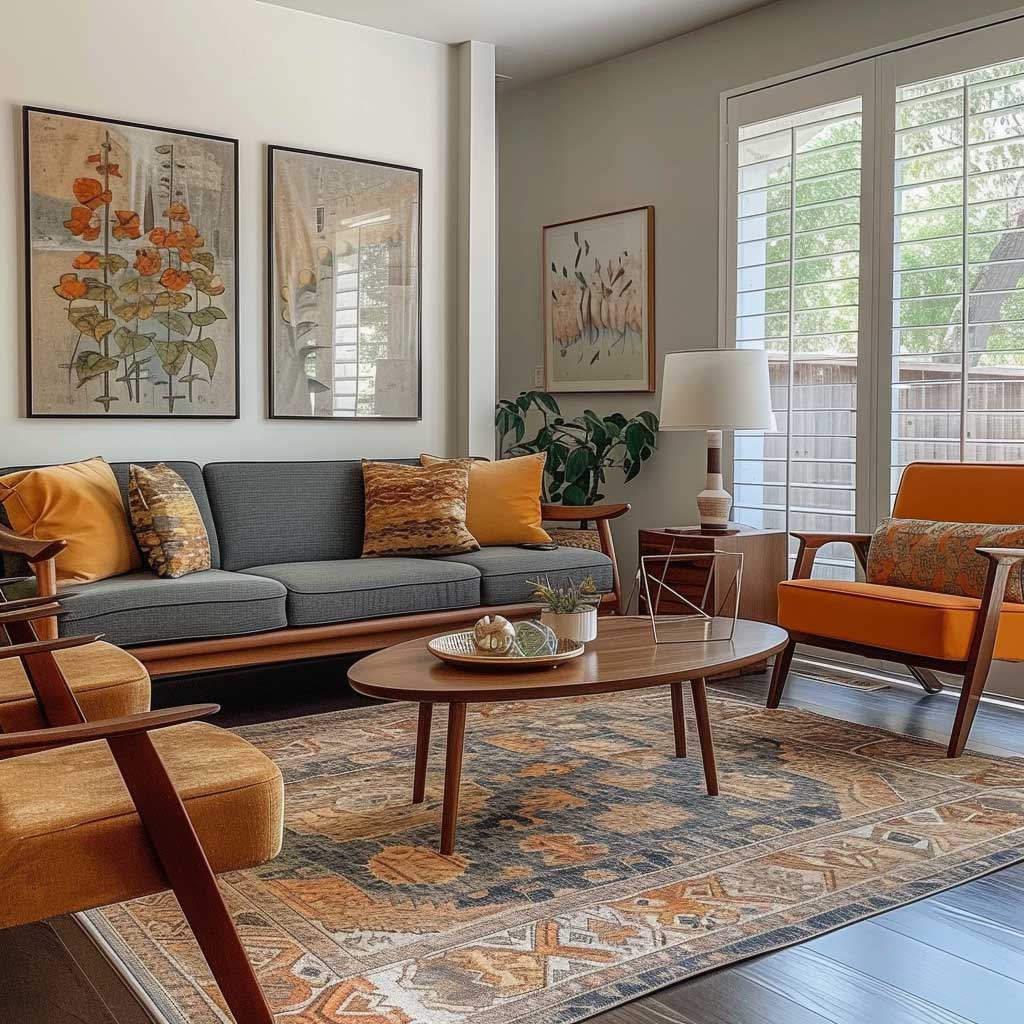
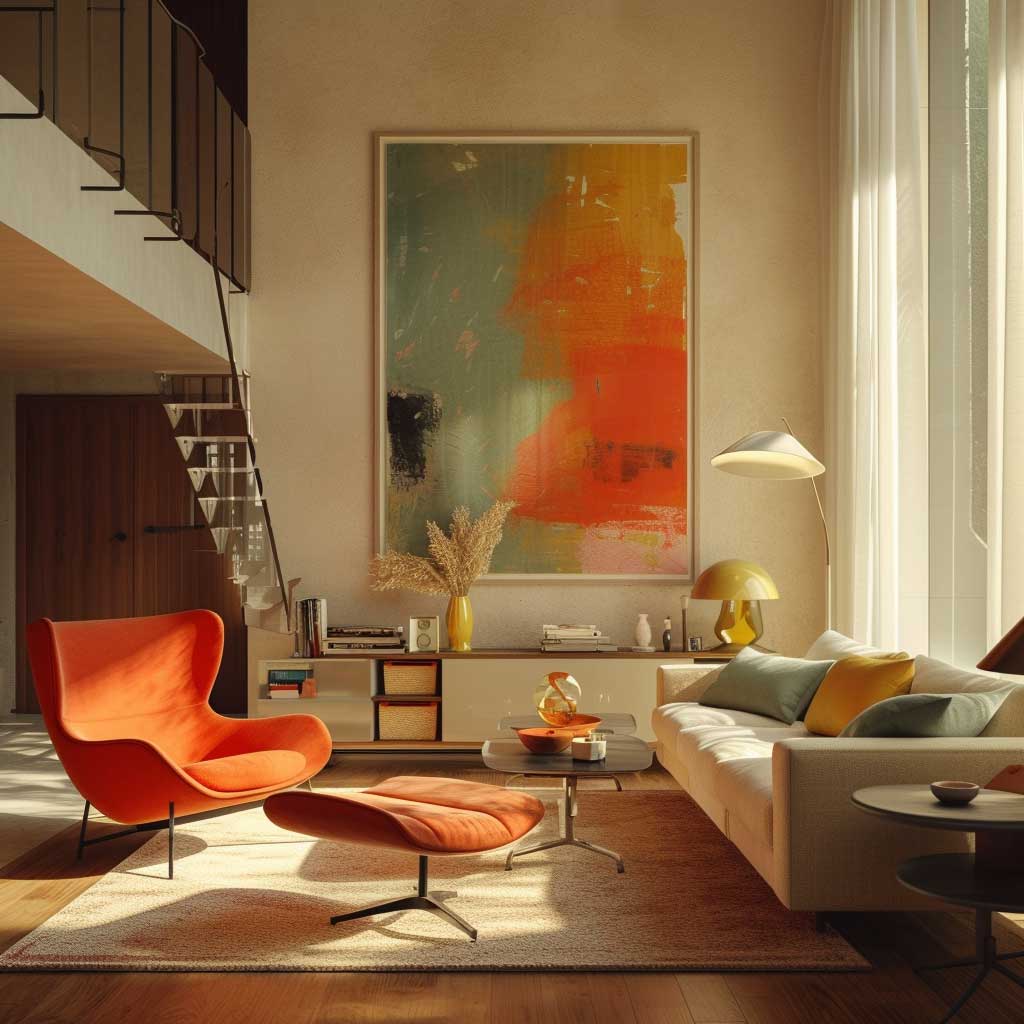
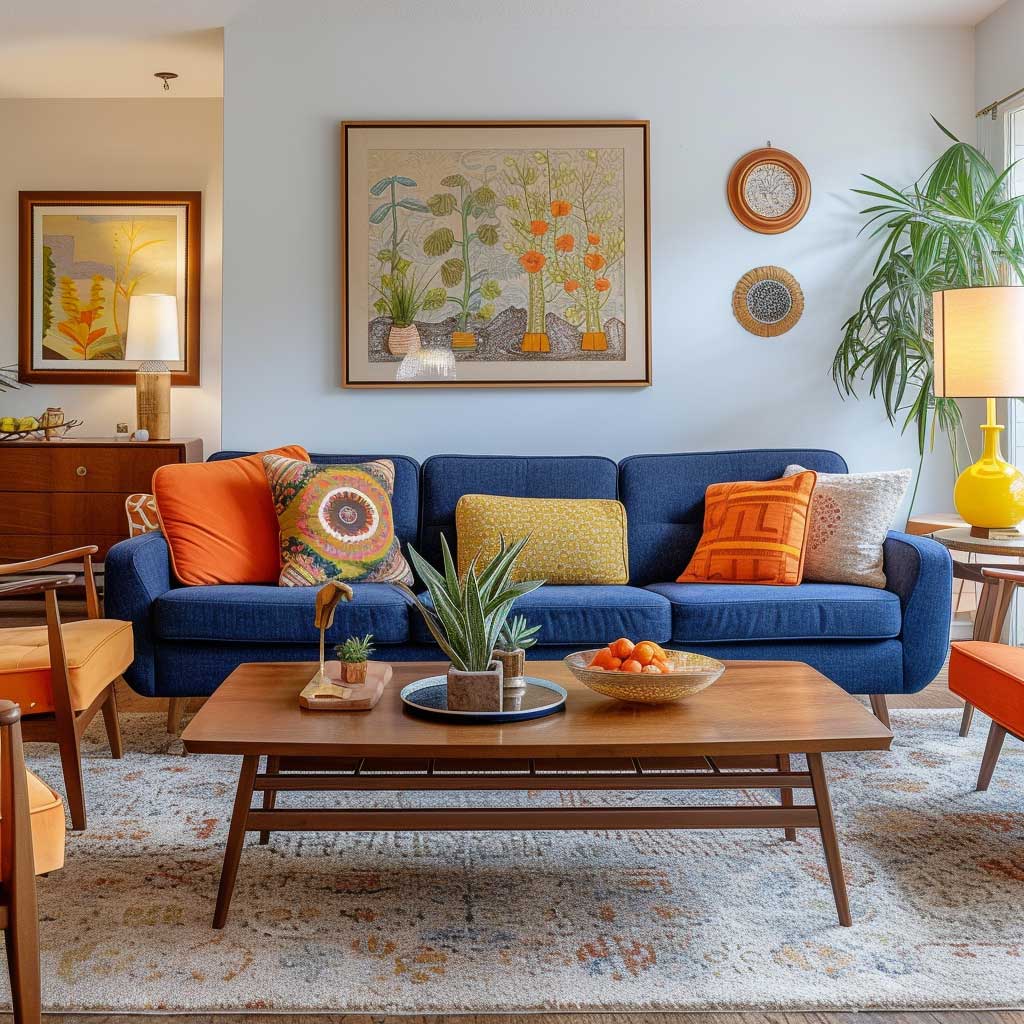
My go-to test for any MCM piece in an eclectic setting: does it have at least one straight line and one organic curve? If yes, it plays well with others. A vintage teak coffee table — I own one from a Finnish estate sale, paid around $280 — sits beautifully on a contemporary flatweave rug because its tapered legs are angular and its surface is warm. The rug underneath doesn’t need to match the wood. It needs to contrast it. That tension is what makes the room read as styled rather than inherited.
Classic mid-century chairs reupholstered in modern fabric are one of the easiest tricks in this category. I stole this approach from a designer friend who pulled worn Knoll tulip chairs for $40 each at auction and had them redone in Maharam wool for about $90 a yard — total spend under $700 for a pair that reads as fully custom. You don’t need a matching sofa. You need one piece that’s doing the hardest work.
What doesn’t work: pairing a bulky mid-century sectional with an equally heavy ornate piece on the same visual axis. Both compete. Neither wins. Keep the statement furniture singular. The rest of the room exists to frame it, not to challenge it.
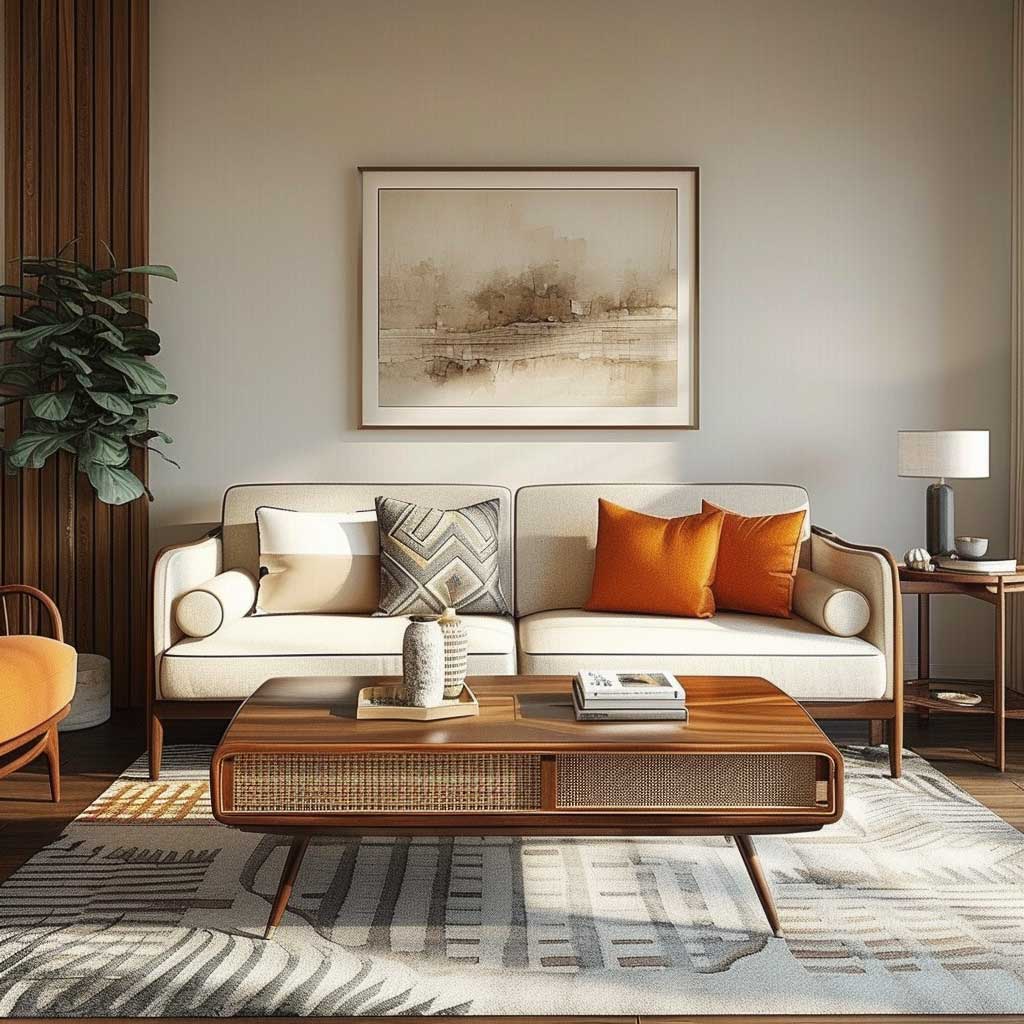
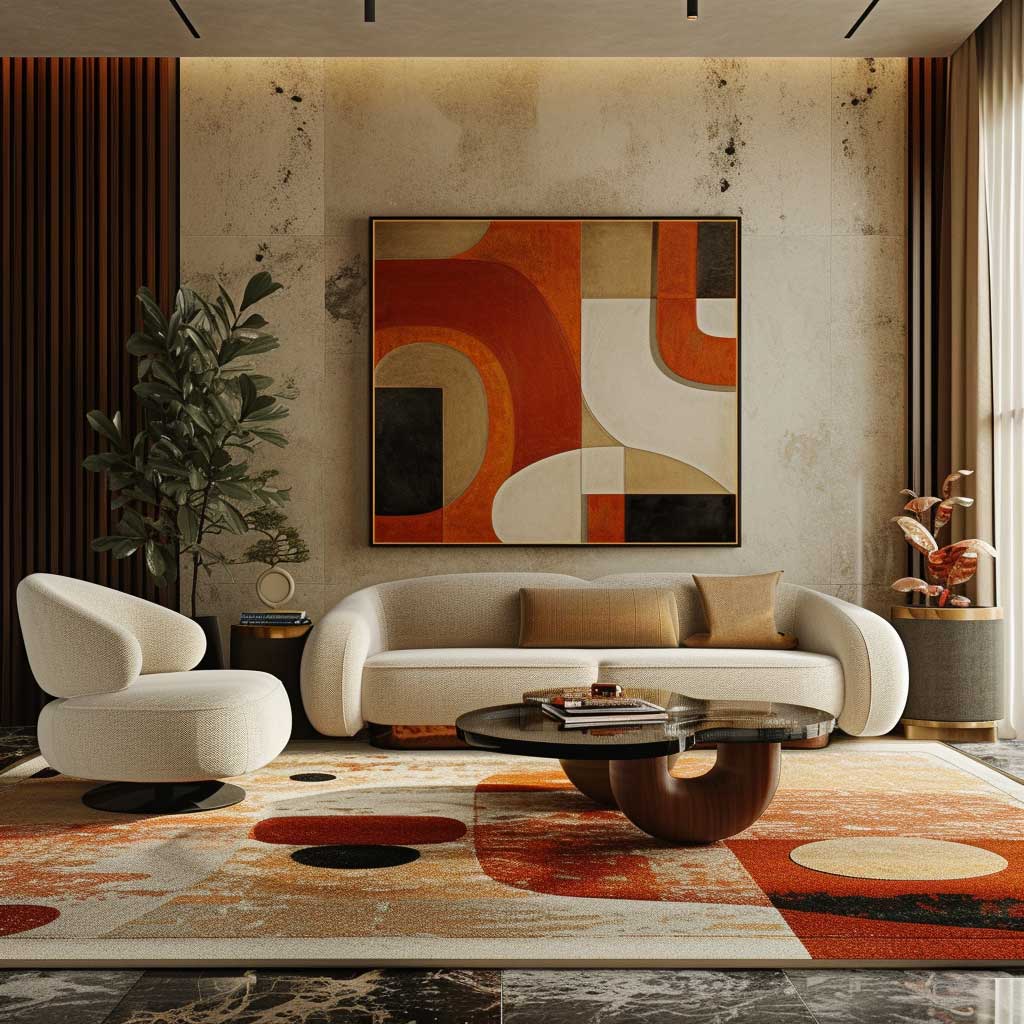
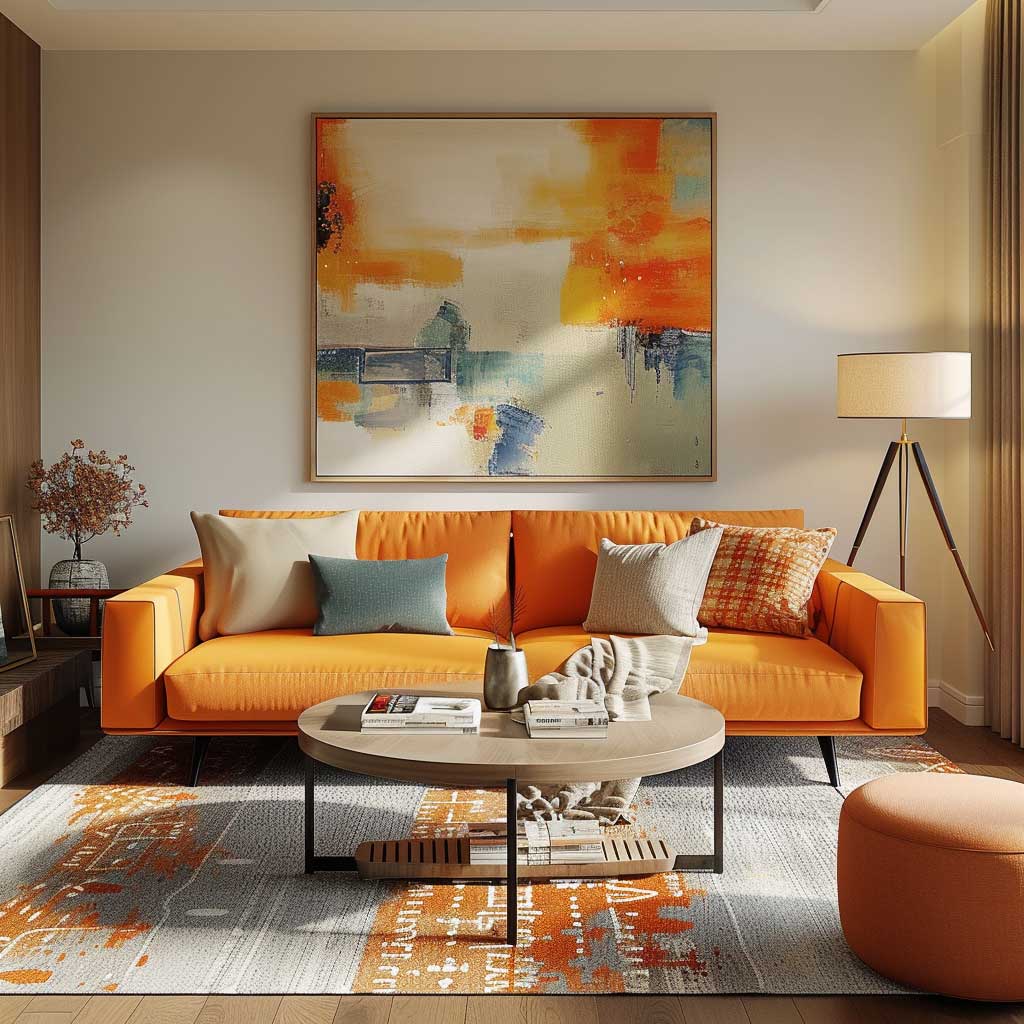

Accessories are where the eclectic layer actually lands. A mid-century table lamp — Nelson Bubble in original or the $130 replica from Article — alongside a contemporary ceramic sculpture creates the kind of lived-in density that makes a room feel collected rather than bought as a set. Vintage vases from Etsy sellers running $20–60 each work well next to geometric modern prints. You’ll notice the room stops looking like a showroom the moment nothing on the shelf came from the same store.
Texture and material sequencing is underrated here. Wood, metal, and glass are the MCM backbone. Add one modern material per horizontal surface — acrylic, concrete, or textured bouclé — and the room reads layered. Add three modern materials to the same surface and it reads confused. One material per zone. That’s the rhythm.
Color in an Eclectic Mid-Century Room Follows a Three-Step Rule
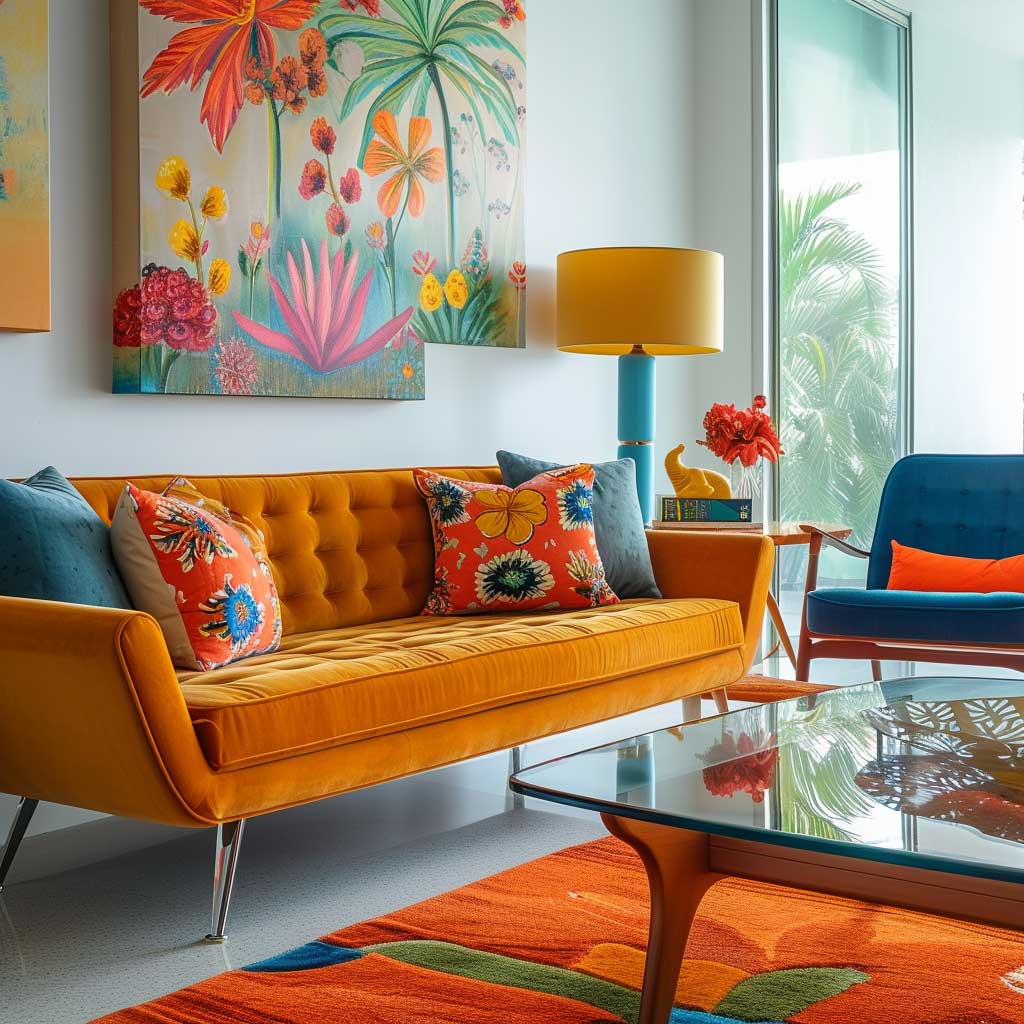
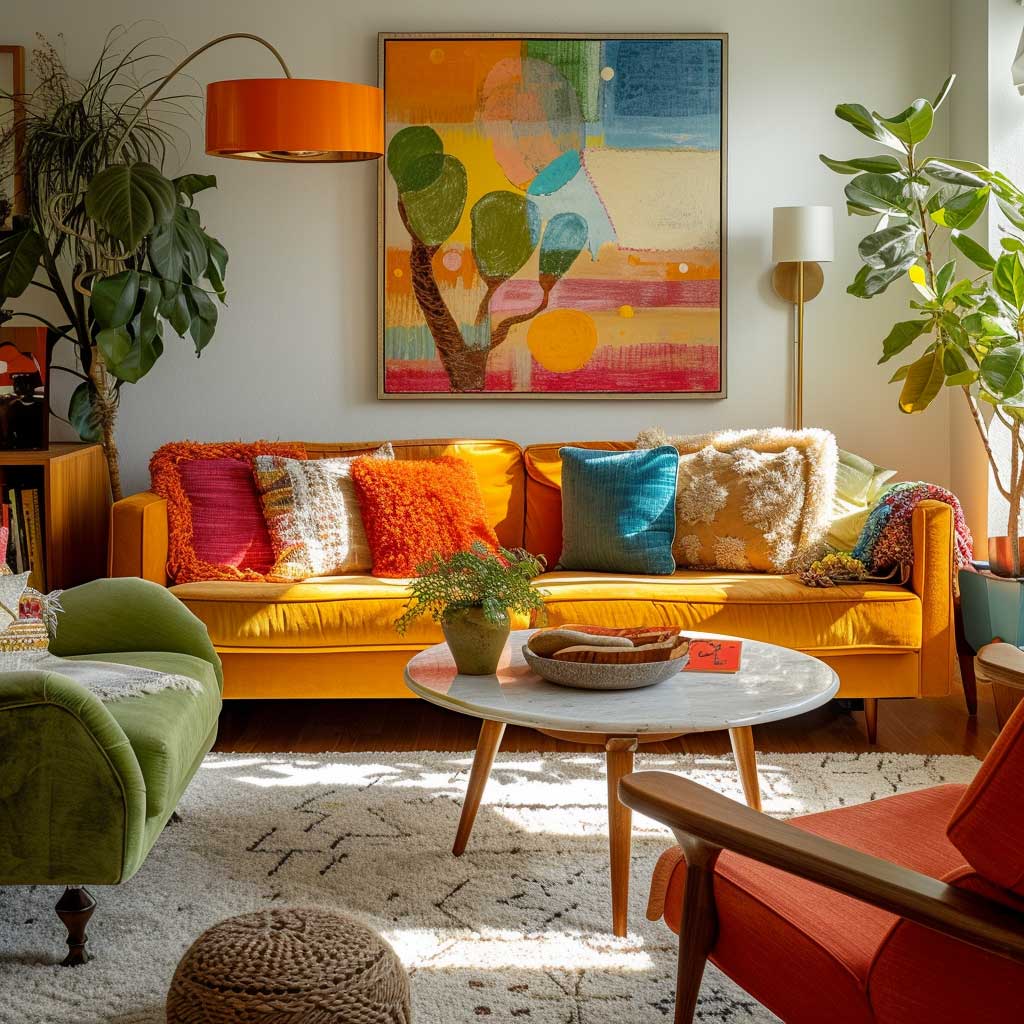
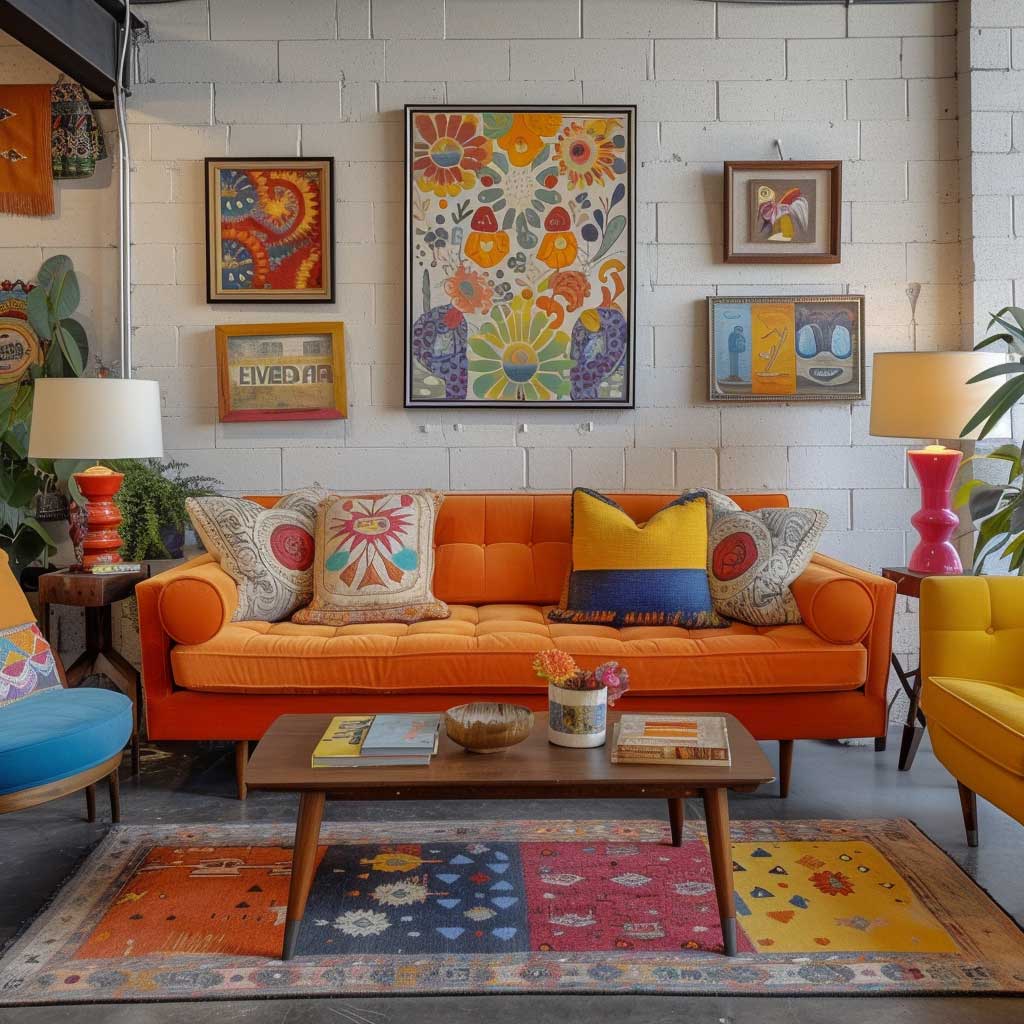
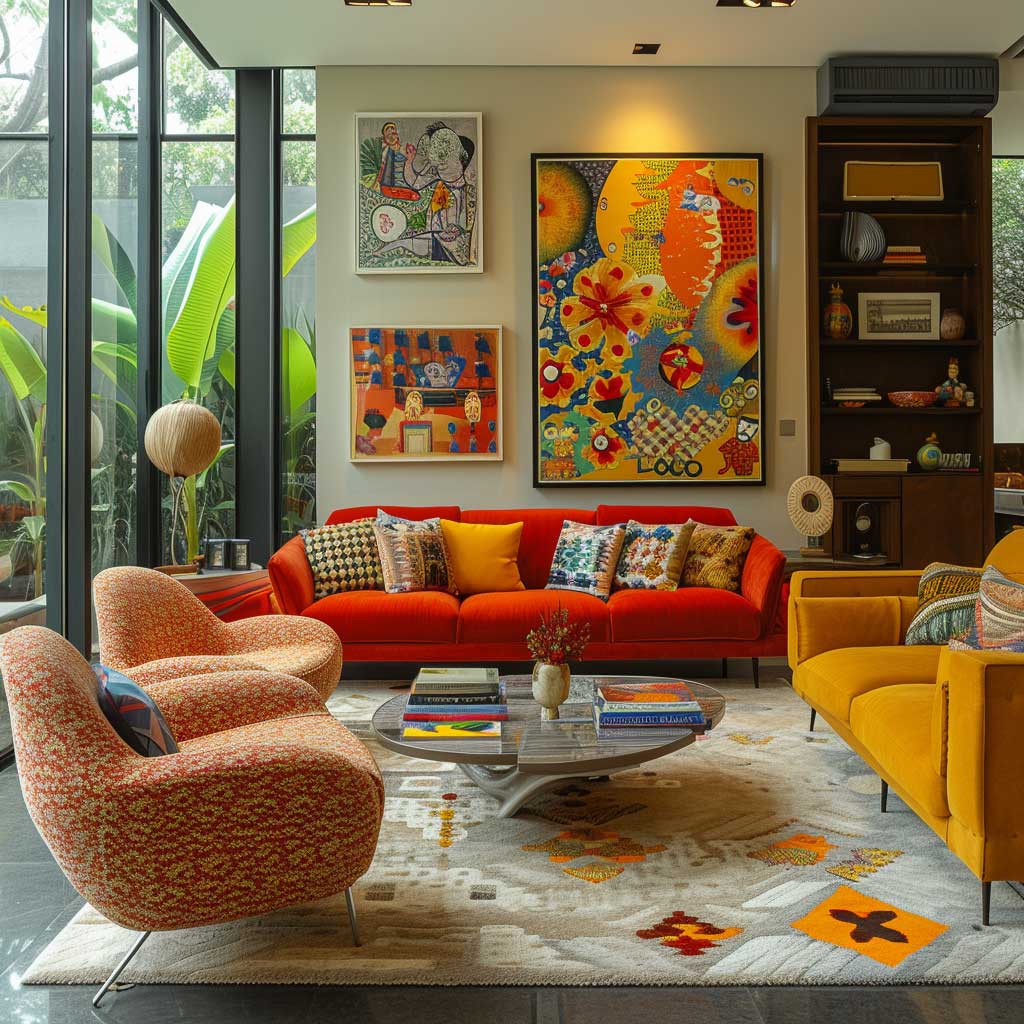
Here’s what I’ve landed on after styling three different living rooms in this genre: one earth-tone base, one MCM signature hue, one wild card. The earth tone — olive green, warm sand, deep umber — goes on the walls or the sofa, wherever it covers the most square footage. The MCM signature hue (mustard yellow, burnt orange, avocado green) appears in one medium-scale object, like a throw or a side chair. The wild card is whatever you love that breaks the formula — a cobalt vase, a fuchsia art print, an unexpected rust cushion.
Accent pillows running $18–35 each from Society6 or Deny Designs let you test wild cards before you commit to furniture. Four pillows in the wrong color teach you more than any mood board. You’ll notice within a week which one you keep flipping face-down when guests come over. That’s the one to return.
What doesn’t work: pulling the MCM palette of muted tones across every surface and expecting the “eclectic” part to appear by accident. It won’t. Eclectic color doesn’t happen when you shop carefully at one aesthetic. It happens when you bring in something that looks like it arrived from a completely different room — and then hold it in place with two elements from the same family around it.
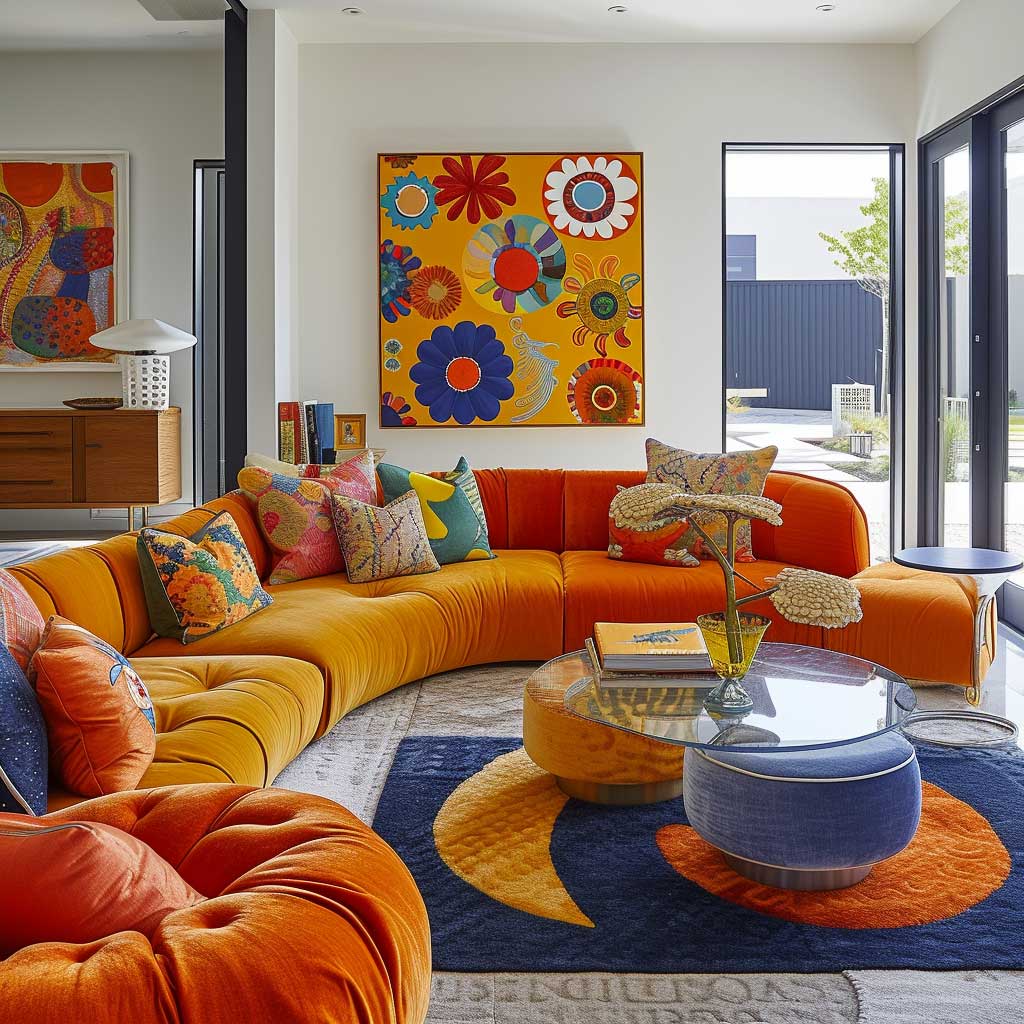
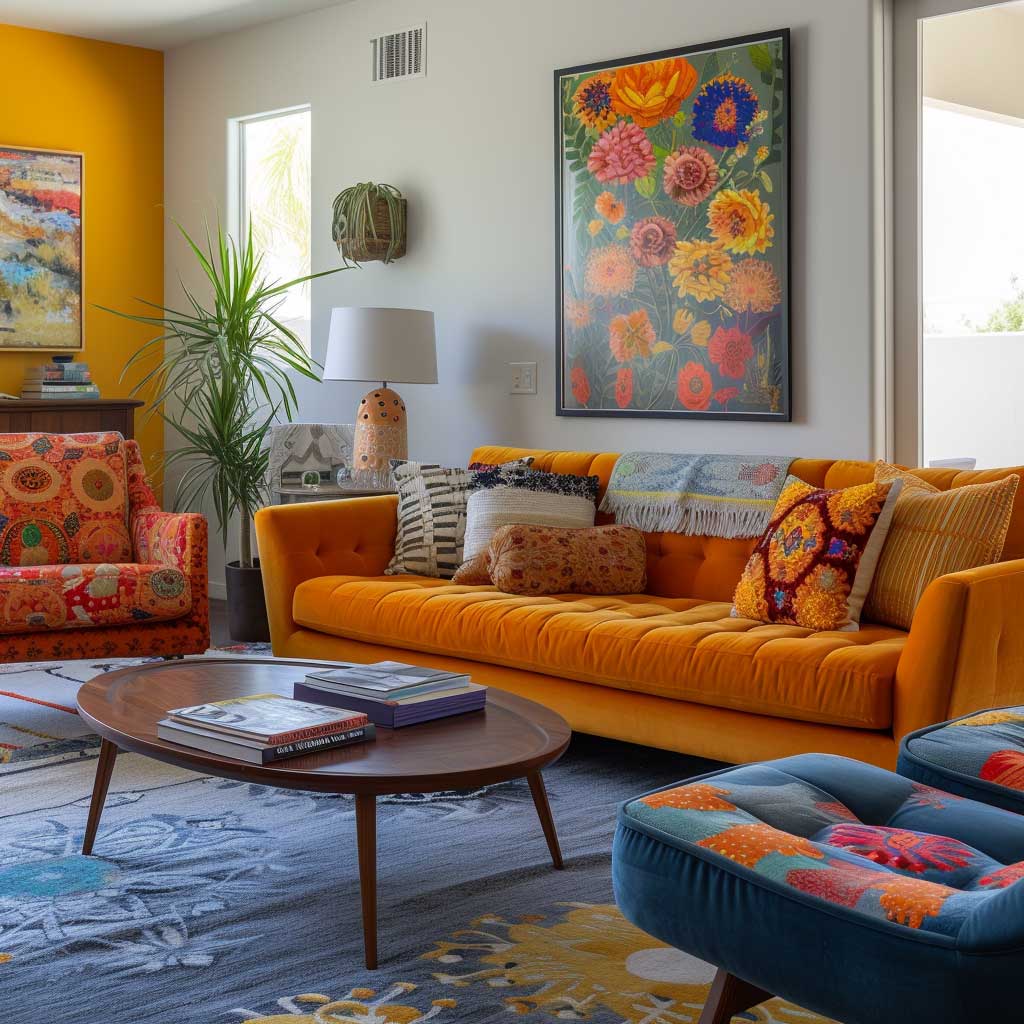
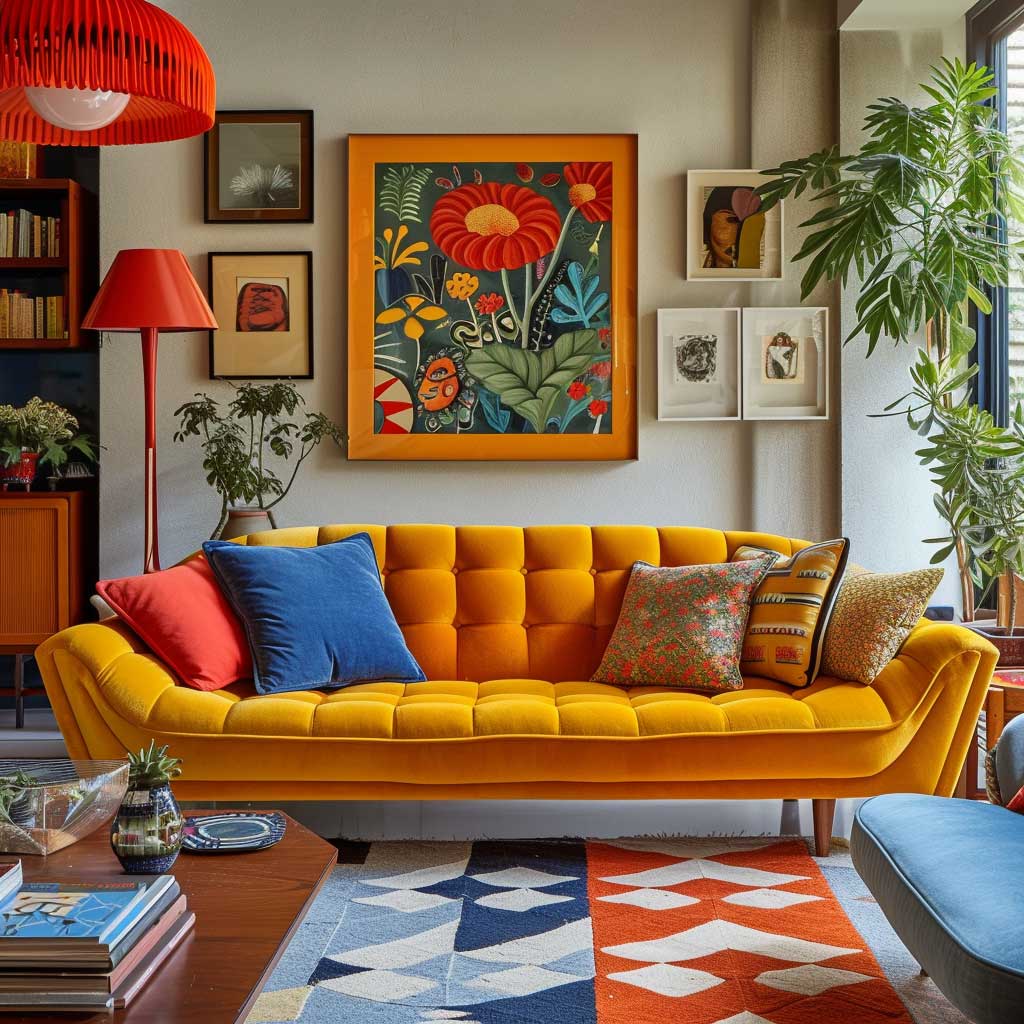
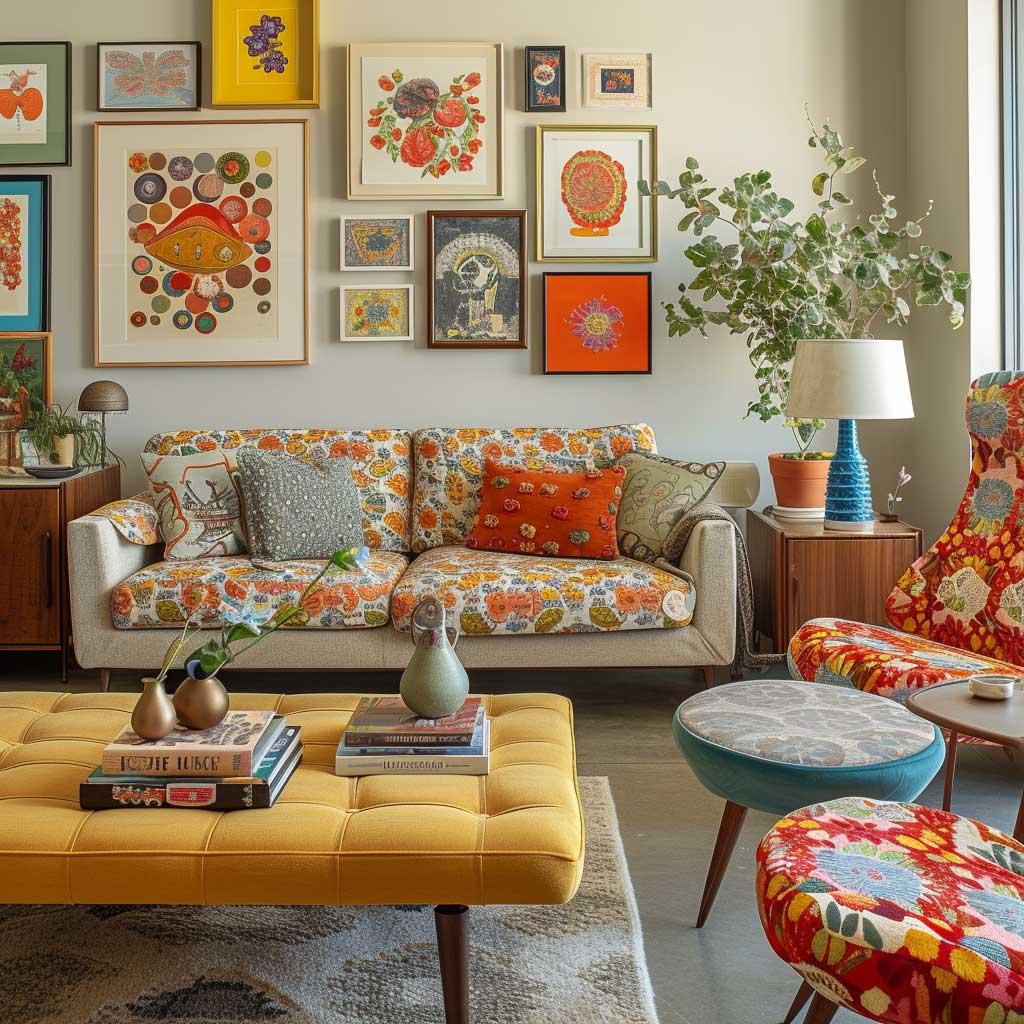
Patterns in an eclectic mid-century room work on a scale hierarchy, not a style match. A large geometric rug (think Loloi Rifle Paper Co. collab, around $380 for 5×8) reads as architectural. A medium abstract pillow reads as accent. A small floral vase reads as punctuation. You can mix geometric, abstract, and floral in the same room if you keep them at different visual scales. Stack two large-scale patterns and the room starts looking like it’s arguing with itself.
For the internal link to more color context: if you’re still working out the color system before touching furniture, these three mid-century modern color schemes give you a working palette for each room type before you spend a dollar on paint samples.
Art Deco and Mid-Century Modern Share One Wall, Not the Whole Room


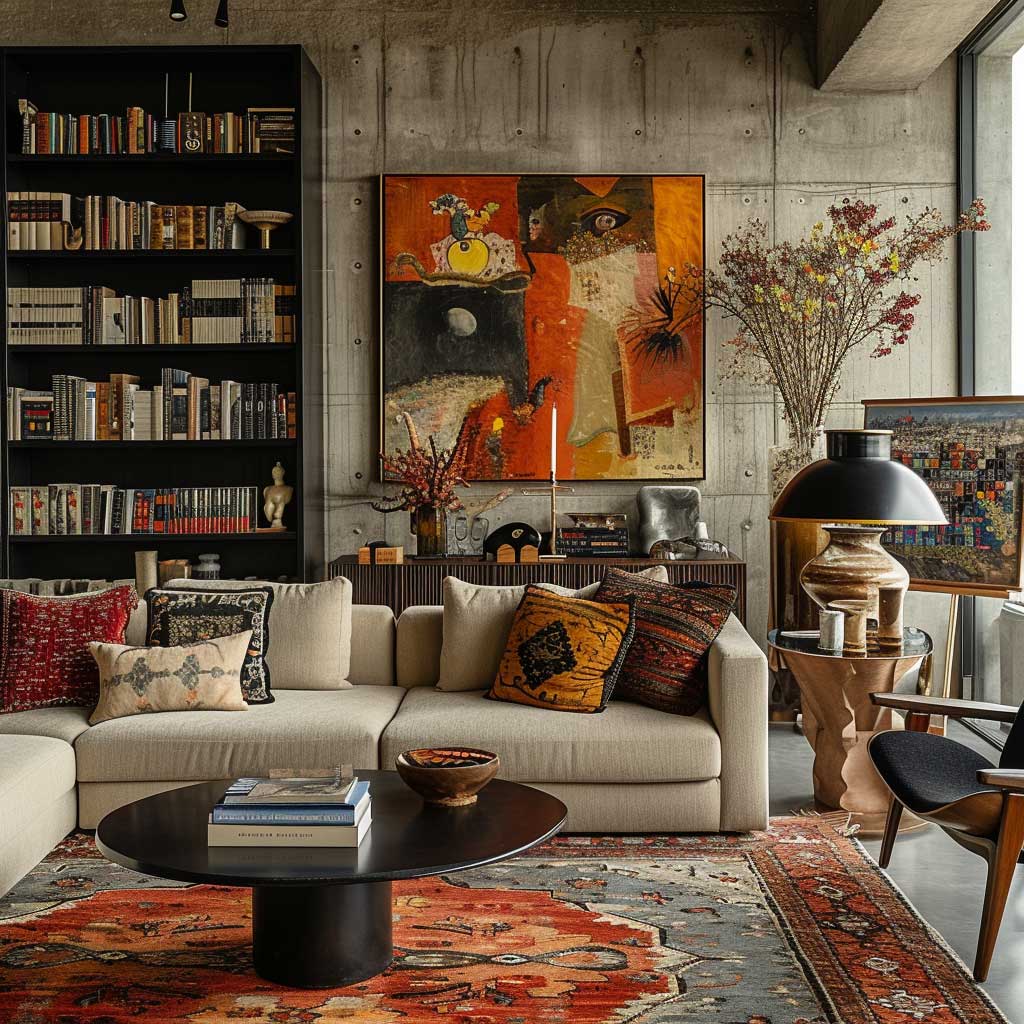
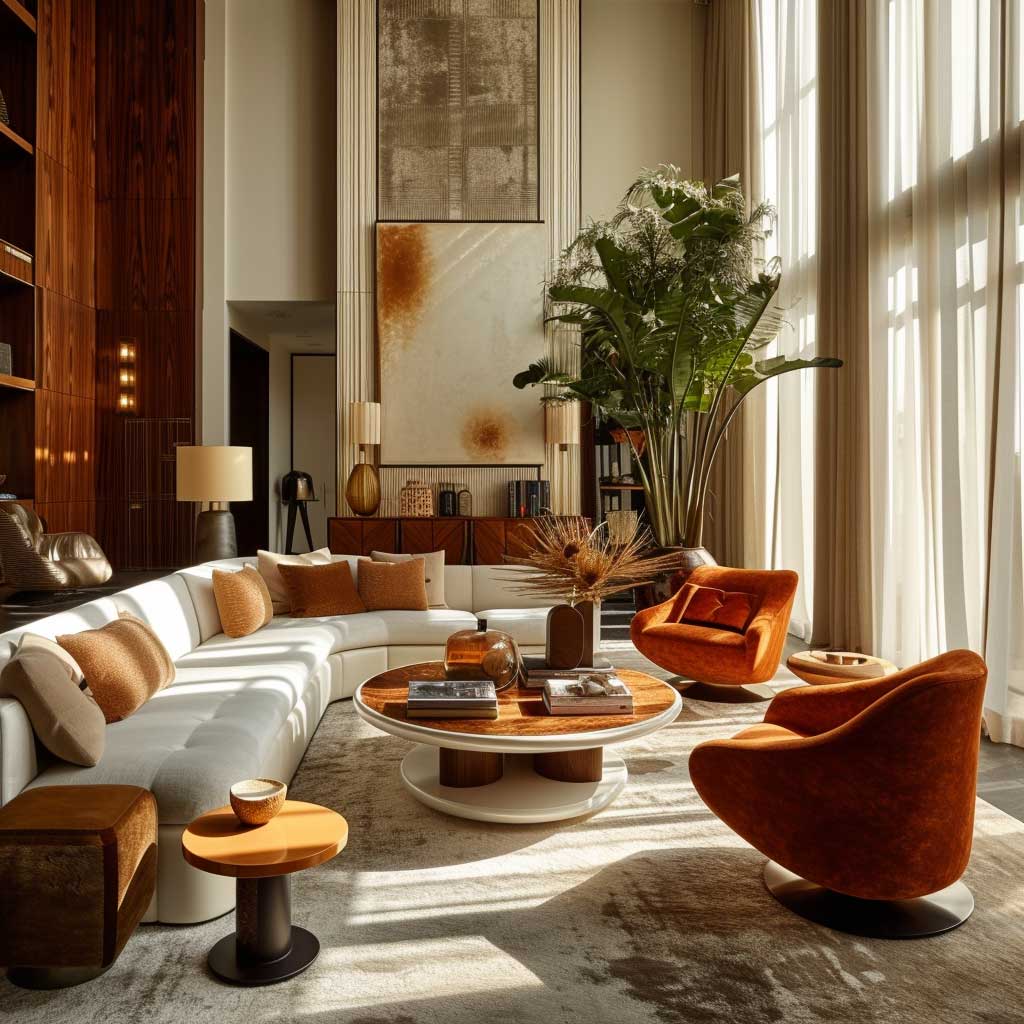
Art Deco mixed with mid-century modern is one of the trickier combinations, and most rooms get it wrong by going too heavy on one side. Art Deco is inherently maximalist — think ebony inlays, gold lacquer, bold geometric fanfare. MCM is quietly functional. Pair them across the whole room and one style suffocates the other. The approach that actually works: MCM for all load-bearing furniture, Art Deco for singular vertical elements like a chandelier, a sunburst mirror, or one side table. Think of it as MCM being the grammar and Art Deco being the exclamation mark. One per paragraph.
The crossover point between both styles is geometry. Both use it, but differently. MCM geometry is restrained — a tapered leg, a low horizontal line, a rounded corner. Art Deco geometry is ornate — a radiating sunburst, an angular fan, a stepped silhouette. Putting both in a room without a shared geometry reads as random. Putting both where the MCM piece is the simpler version of the same shape as the Deco piece — that reads as intentional. I paired a walnut credenza (clean horizontal lines) with an Art Deco-style bar cart featuring brass geometric details from CB2 around $420. Same angular vocabulary, twenty years apart.
Don’t Do This
Buying an Art Deco-patterned sofa to pair with MCM side tables. The sofa’s scale and ornament immediately dominate and your MCM pieces become invisible wallflowers. If you want Art Deco pattern, put it on a pillow, a mirror, or a small accent table — never on the largest upholstered piece in the room.
Also skip: mixing Art Deco chrome with MCM brass. Both are metal, but they don’t age the same way and they register as a color mismatch under natural light. Pick one metal finish and run it through both eras consistently.
Iconic MCM pieces like the Eames Lounge Chair (Herman Miller retail around $6,195, Design Within Reach sometimes runs 15% off during sales) or a Noguchi coffee table serve as anchors regardless of what eclectic or Art Deco elements surround them. Their authority comes from form, not from matching. You can put a Noguchi table next to a Deco-style velvet armchair and the combination holds — because the Noguchi is doing the structural work and the velvet chair is doing the personality work. Role clarity is everything.
For more on how individual MCM pieces anchor a full room, this roundup of fresh mid-century modern living room ideas shows how different configurations handle the balance between anchor and accent in practice.
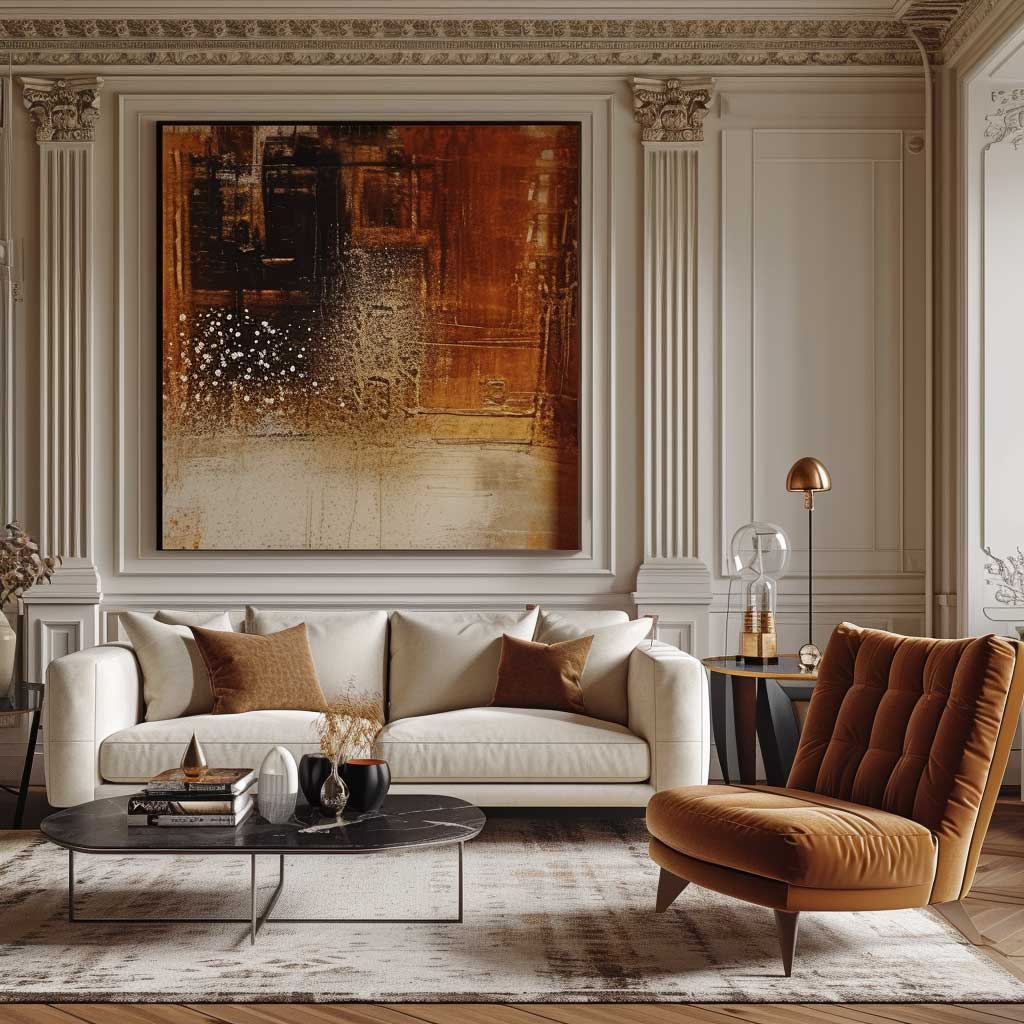

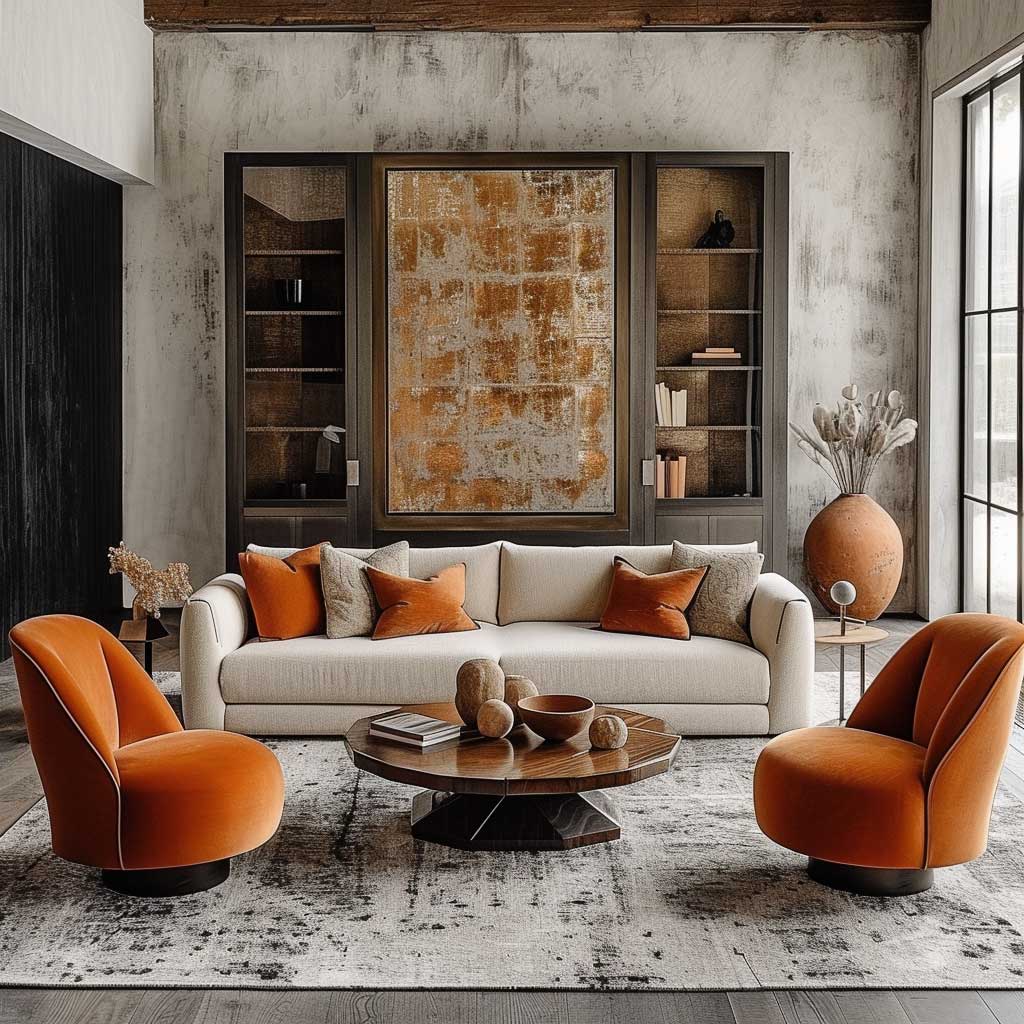
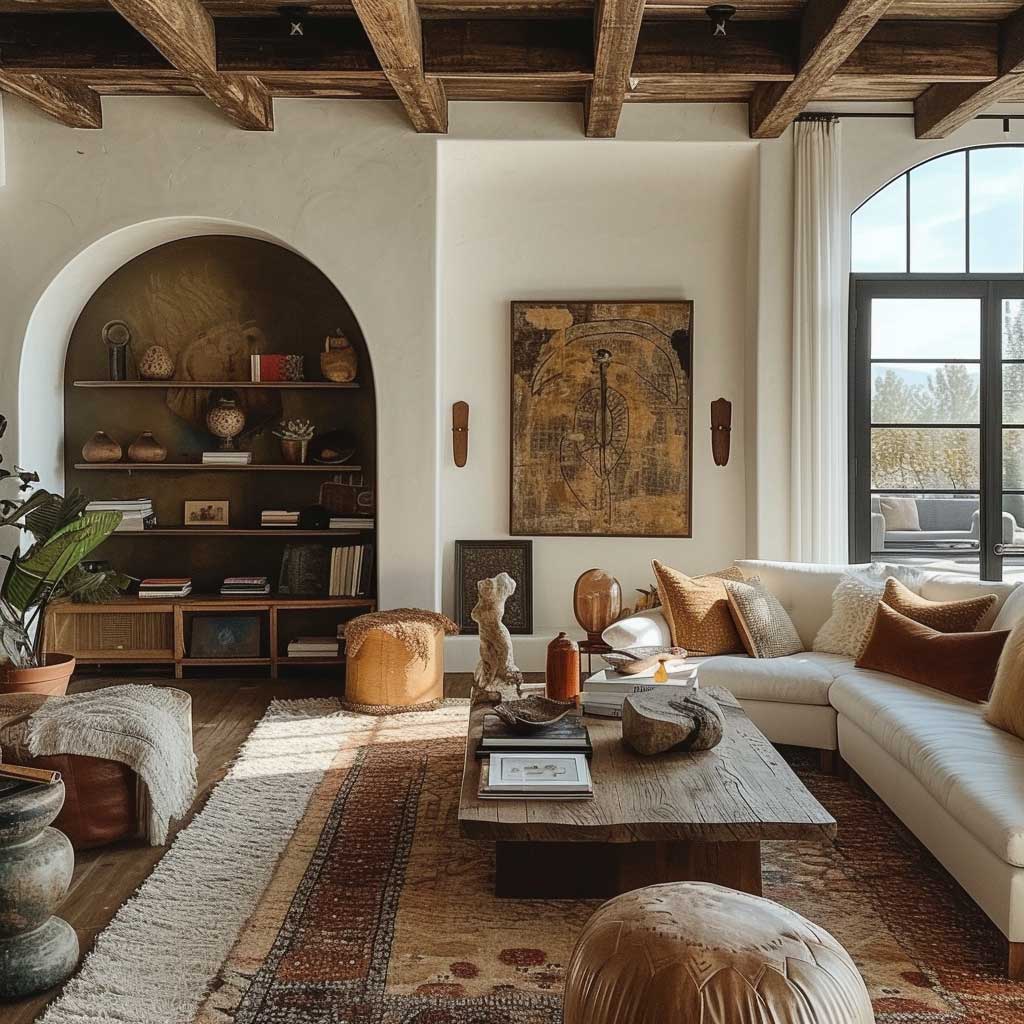
Artworks in a sophisticated eclectic MCM room don’t all need to be the same era. Mid-century prints — think Charley Harper wildlife lithographs, which run $80–400 depending on format — share wall space easily with contemporary paintings if they’re framed in the same material. I run black frames through my whole collection regardless of the art period. It’s the same trick a museum uses: consistent framing lets the art compete on content, not on hardware.
Handmade rugs and sculptural ceramics are the decorative accents that do the heaviest lifting in this style. A Moroccan Beni Ourain rug (typically $300–800 for a 5×8 from reputable Etsy importers) has enough texture to ground both MCM and Deco elements above it without choosing sides. The Home Design Institute in Paris specifically identifies combining furniture from each era — MCM foundation, Deco detail — as the most stable method for making this crossover legible rather than chaotic. Knowing where the rule comes from makes it easier to break it once on purpose. Per Home Design Institute Paris, the pairing works best when one style handles structure and the other handles decoration — not when both compete for the same role.
Style Reference
MCM Eclectic vs. Art Deco Eclectic — What Changes and What Stays the Same
| Element | MCM Eclectic | Art Deco Mixed In |
|---|---|---|
| Sofa | Low profile, tapered legs, neutral upholstery | Keep MCM sofa — Deco on accessories only |
| Coffee table | Noguchi, walnut slab, or simple hairpin legs | Lacquer top or brass-trim accent table as second |
| Lighting | Nelson Bubble, Arc floor lamp, cone pendants | Sunburst chandelier or geometric brass sconce |
| Wall decor | Charley Harper prints, abstract mid-century art | Fan-motif mirror or stepped-frame Art Deco print |
| Textiles | Boucle, wool, jute — organic textures | One velvet accent pillow, no more than that |
| Metal finish | Brass or matte black — pick one | Same finish from MCM side — consistency holds both |
The takeaway
A Mid-Century Eclectic Room Earns Its Complexity One Piece at a Time
Start with your strongest MCM anchor. Add one eclectic wild card. Live with both for two weeks before adding anything else. The rooms that hold together over years are the ones built slowly, not styled in a weekend.
Every piece you add should have a clear role — structure, color, texture, or punctuation. Two pieces fighting for the same role cancel each other out. Assign roles like a director, not a collector.
Save this post — you’ll want to come back when the next estate sale find needs a home.