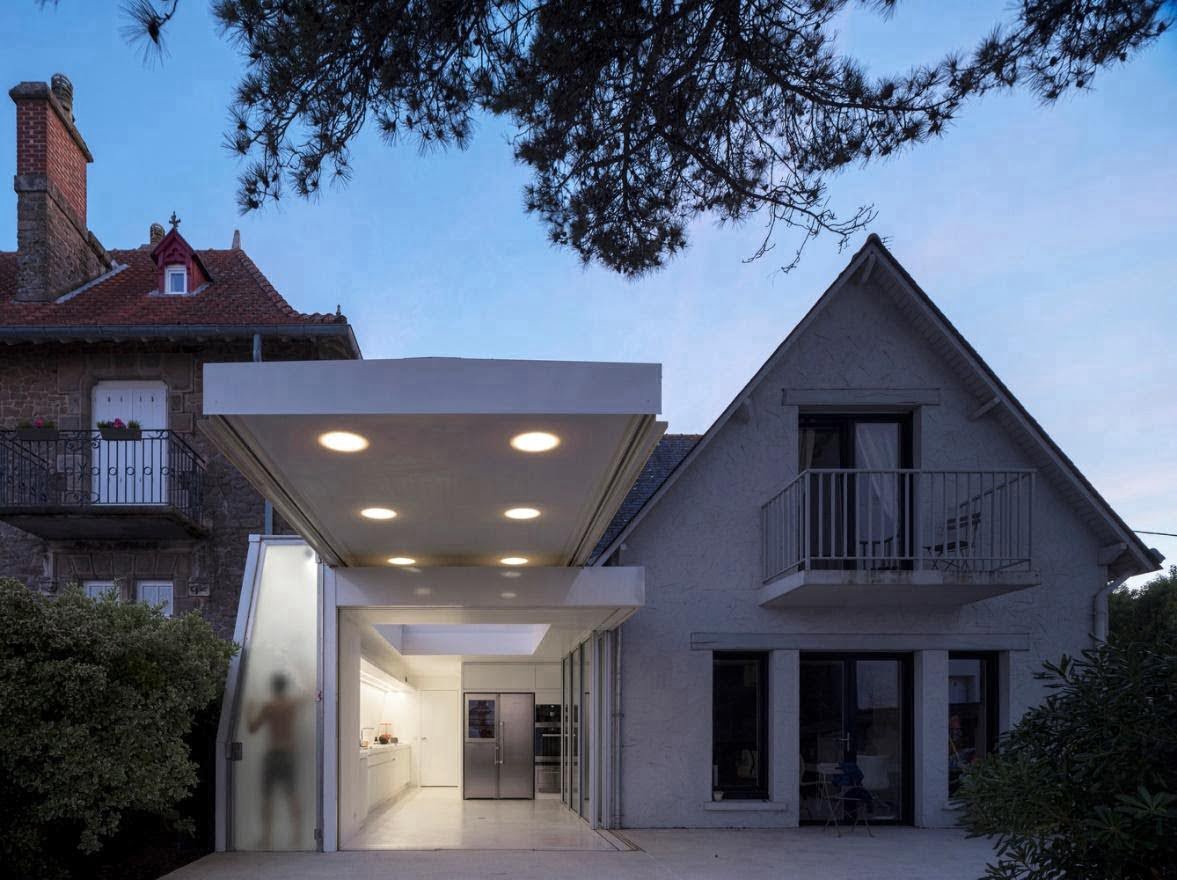
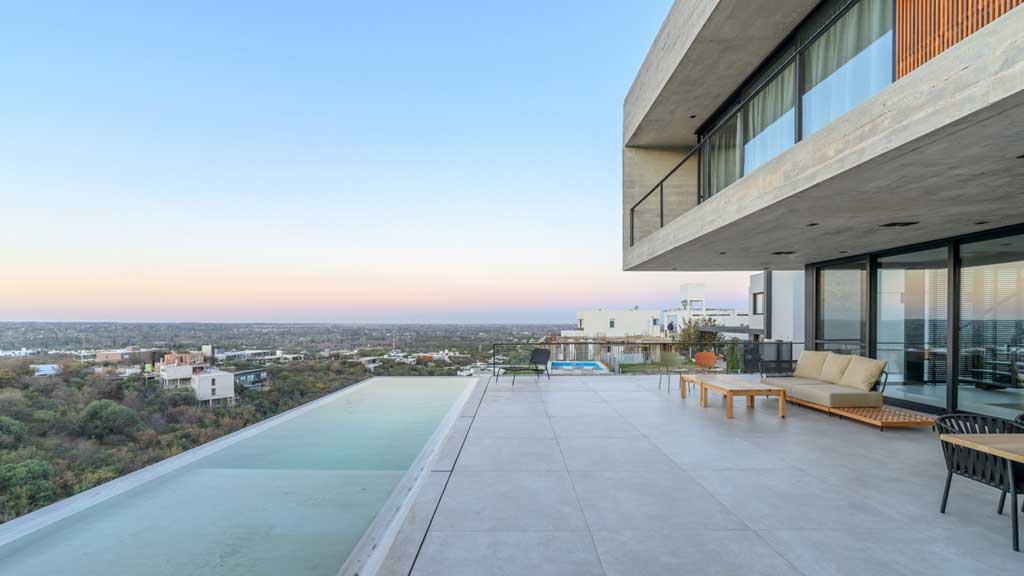
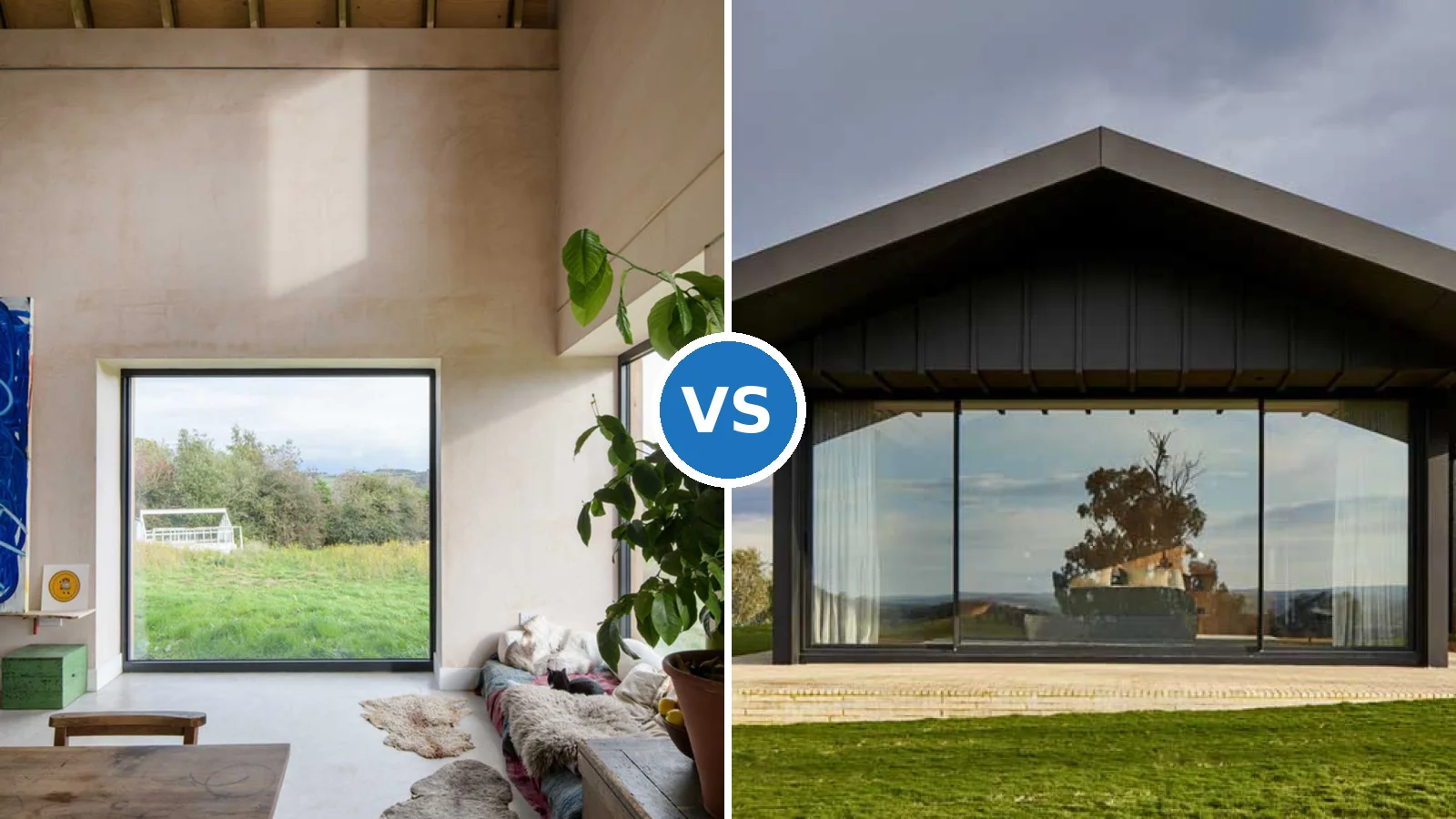
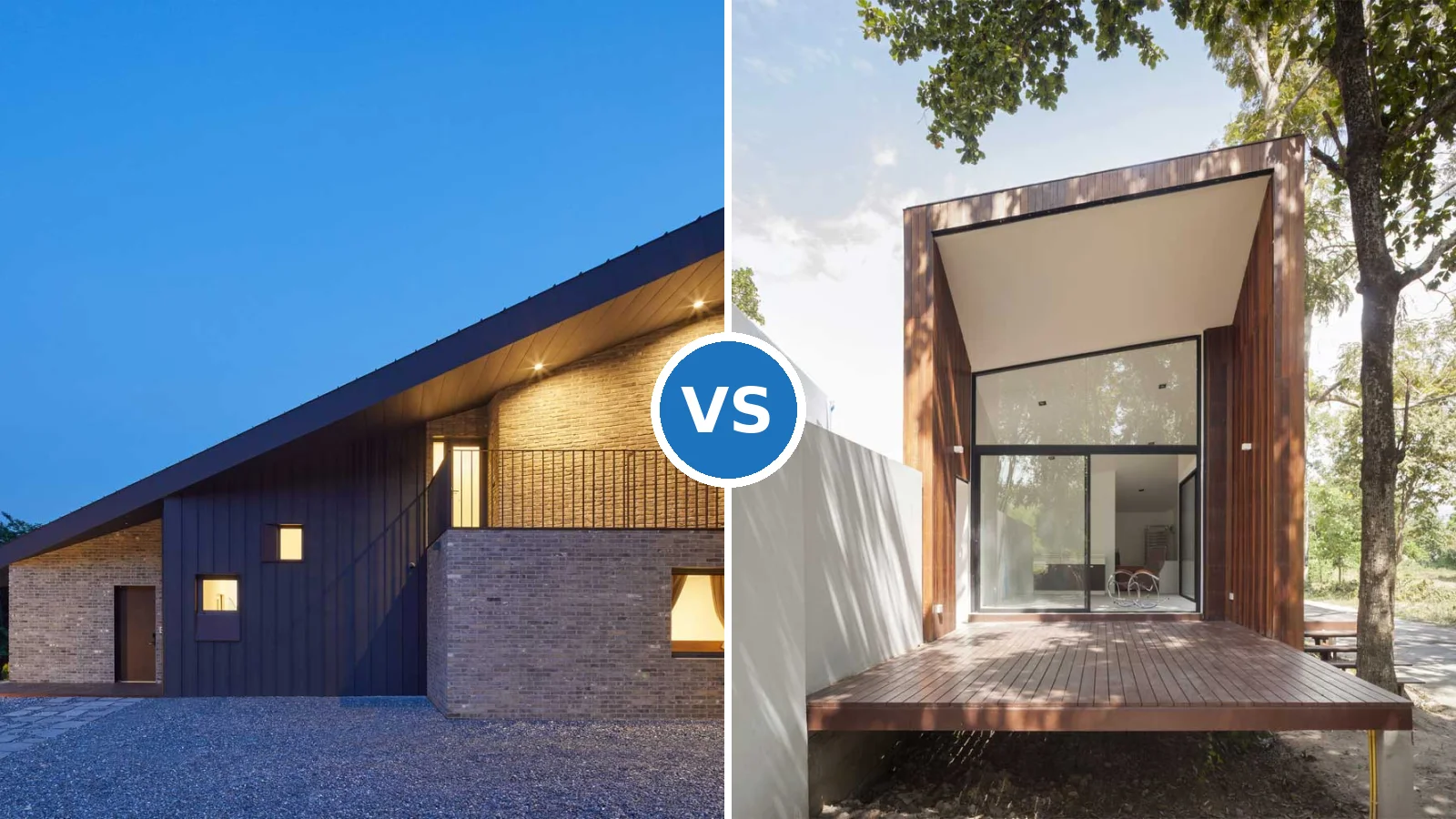
Modern French country exterior design sits at an awkward intersection that most architects botch: too much rusticity and the house looks like a theme park; too much restraint and you’ve just built a beige box with shutters. I’ve spent years studying what separates a genuinely convincing contemporary French country facade from one that reads as a Pinterest mood board glued onto drywall. The answer is almost always in the proportions of the roofline and the weight of the stone — not the color of the shutters, not the lavender in the beds. Get those two things right and the rest follows.
Contemporary French country exteriors — or modern French country style, as it’s often called — work because they borrow from a specific architectural logic rather than a decorative kit. The original farmhouses in Provence and Normandy weren’t pretty because someone tried to make them pretty. They were honest buildings made from local limestone and slate, and the beauty was a byproduct of material intelligence. You need that same logic as your starting point, or the whole thing collapses the moment you zoom out.
What this article covers:
- Why stone selection determines whether your facade reads as French or just vaguely European
- The roofline proportions that make or break contemporary French country style
- Color palettes that hold up in real light, not just on Sherwin-Williams fan decks
- Window and shutter logic — what the French actually did, and why modern copies get it backwards
- Landscaping that frames the house without competing with it
- The front door decisions that cost the most money and matter the least
Stone Selection Is Where a Contemporary French Country Exterior Either Commits or Folds
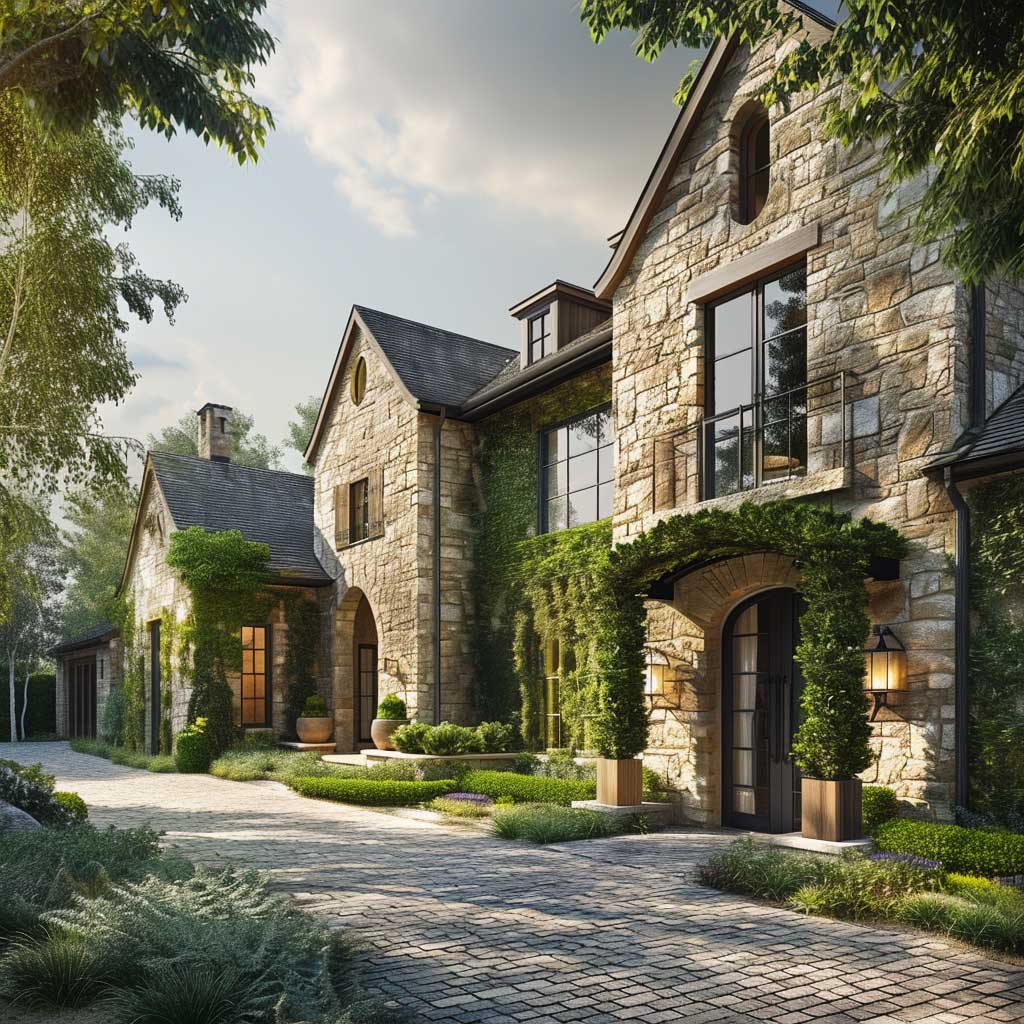
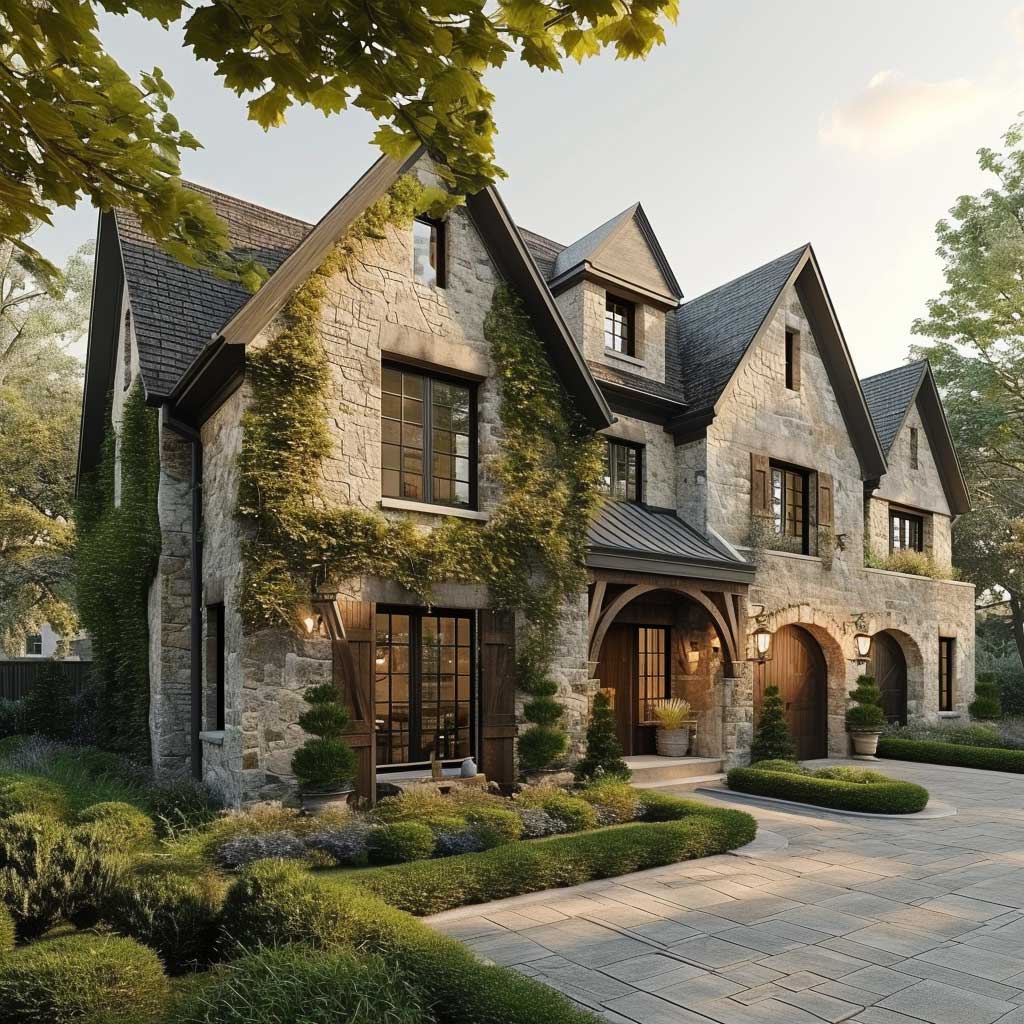
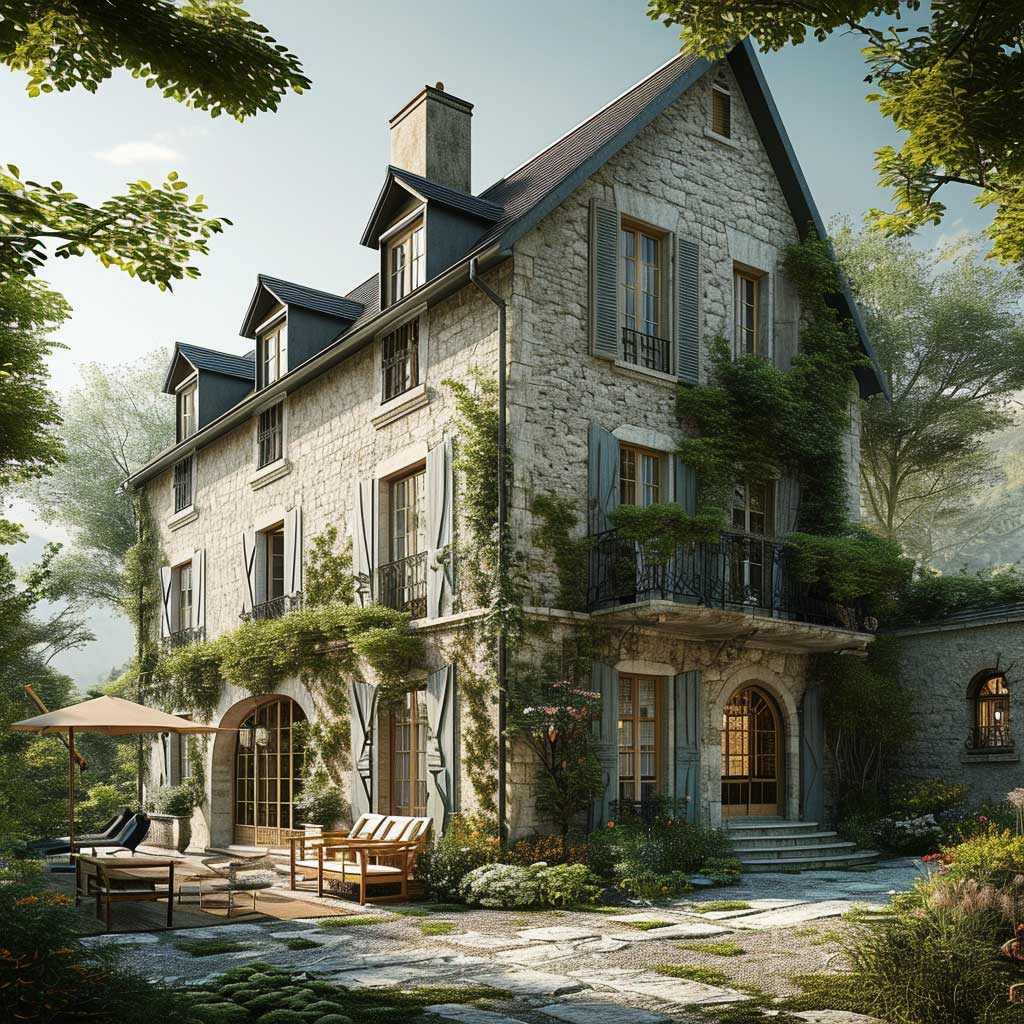
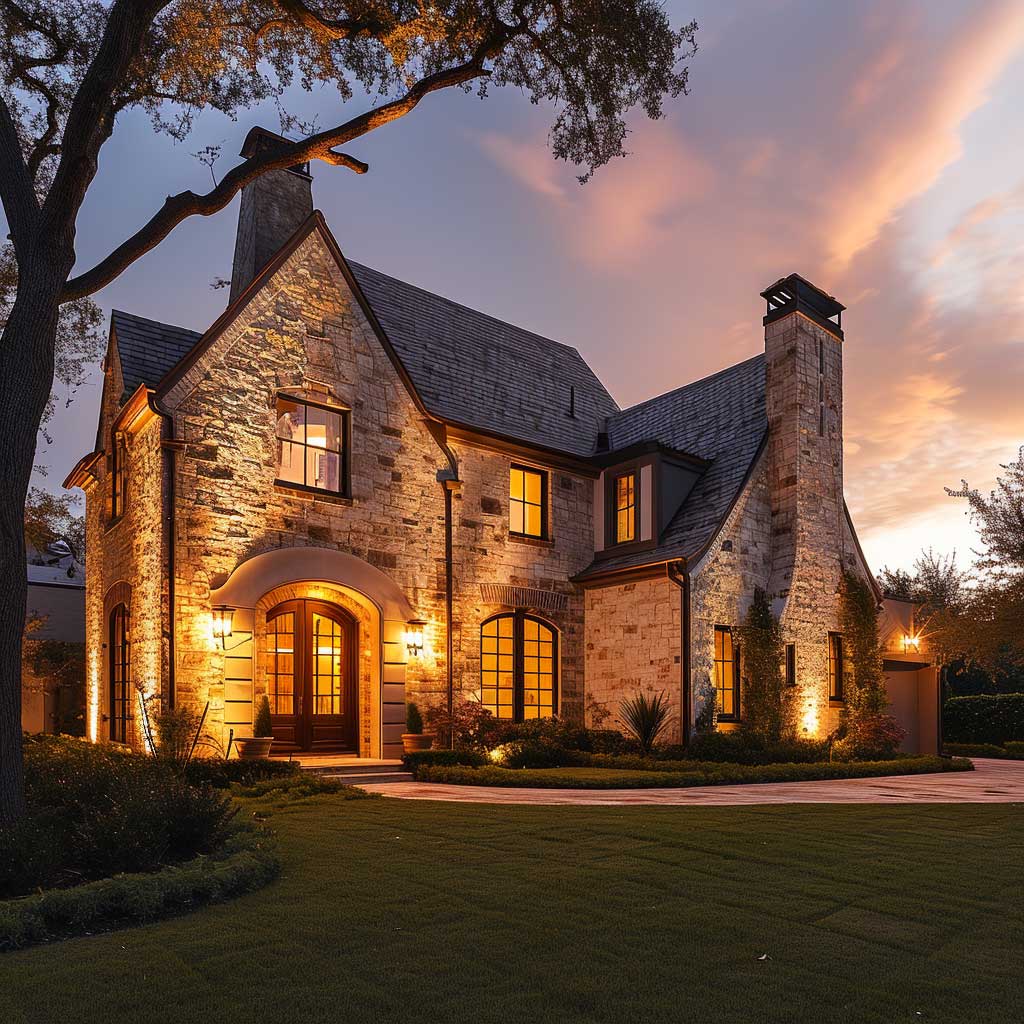
Eldorado Stone’s RoughCut line — running $8–$12 per square foot installed — is the closest thing to a shortcut I’ve seen in this category. The blond and cool gray colorways land in the right zone for a French country home exterior without looking like a movie set. What I’d avoid is the perfectly uniform cultured stone panels you see on builder-grade homes in the $400k range. The moment the stone has machine-perfect coursing, the whole French reference dies. Real French farmhouses used fieldstone laid by masons who worked with what was on the site, and the variation is exactly what gives the wall its authority.
The combination that actually holds up is larger rough stone at the base — say, the bottom third of the wall — transitioning to a textured stucco finish higher up. Sherwin-Williams’ Creamy (SW 7012) is the off-white stucco tone I’d reach for first. It reads warmer than pure white in afternoon light, which matters because flat white stucco on a French country exterior looks hospital-adjacent the moment a cloud passes. You need the wall to carry warmth independently of the sky.
Here’s what I see constantly and it never works: using gray manufactured stone veneer over the entire facade and calling it French country. Gray veneer reads as contemporary lodge or Craftsman, not French. The diagnostic test is simple — does the stone look like it could have come from a field within five miles of the site? If the answer is no, it’s wrong for this style. For a deeper look at how natural stone performs structurally and aesthetically over time, this breakdown of modern stone facade options covers the material differences that actually matter at the spec stage.
The Roofline Is Doing 60% of the Work and Most People Budget for 10% of It
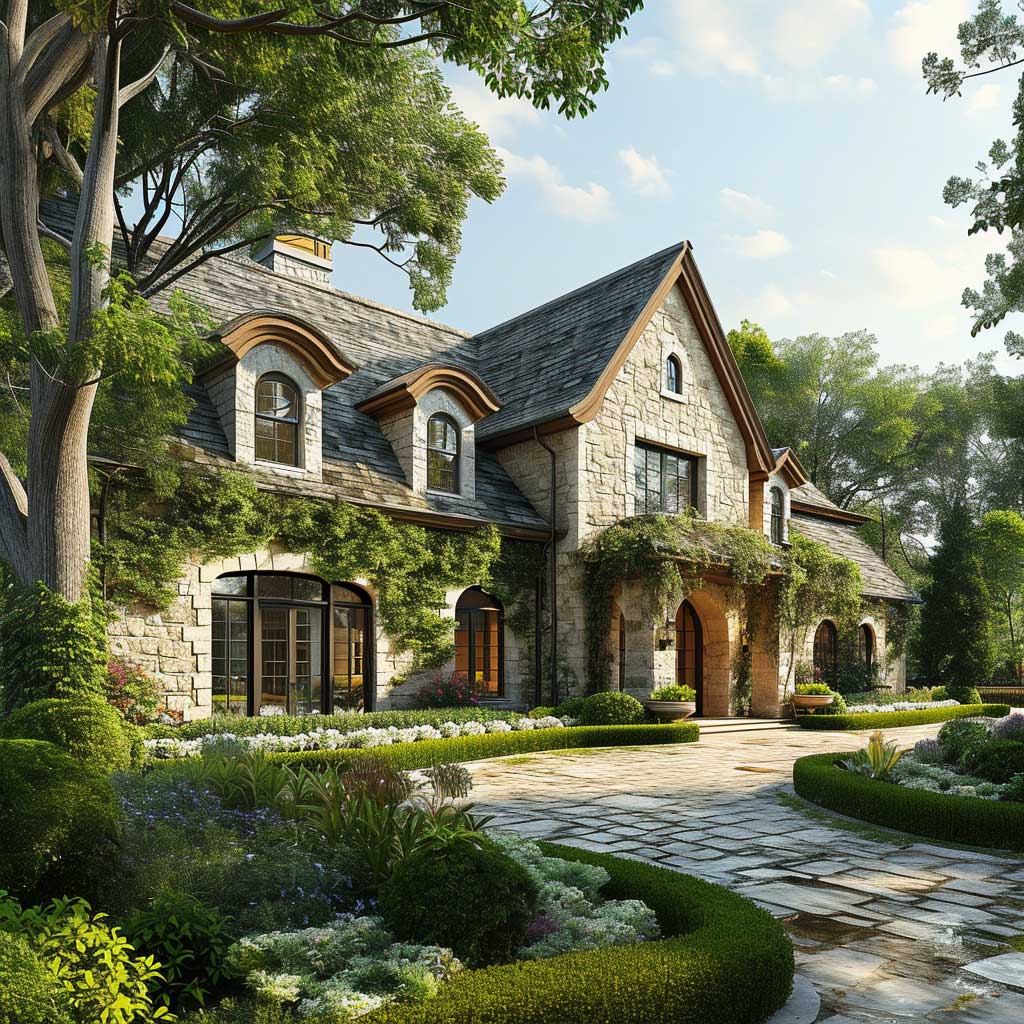
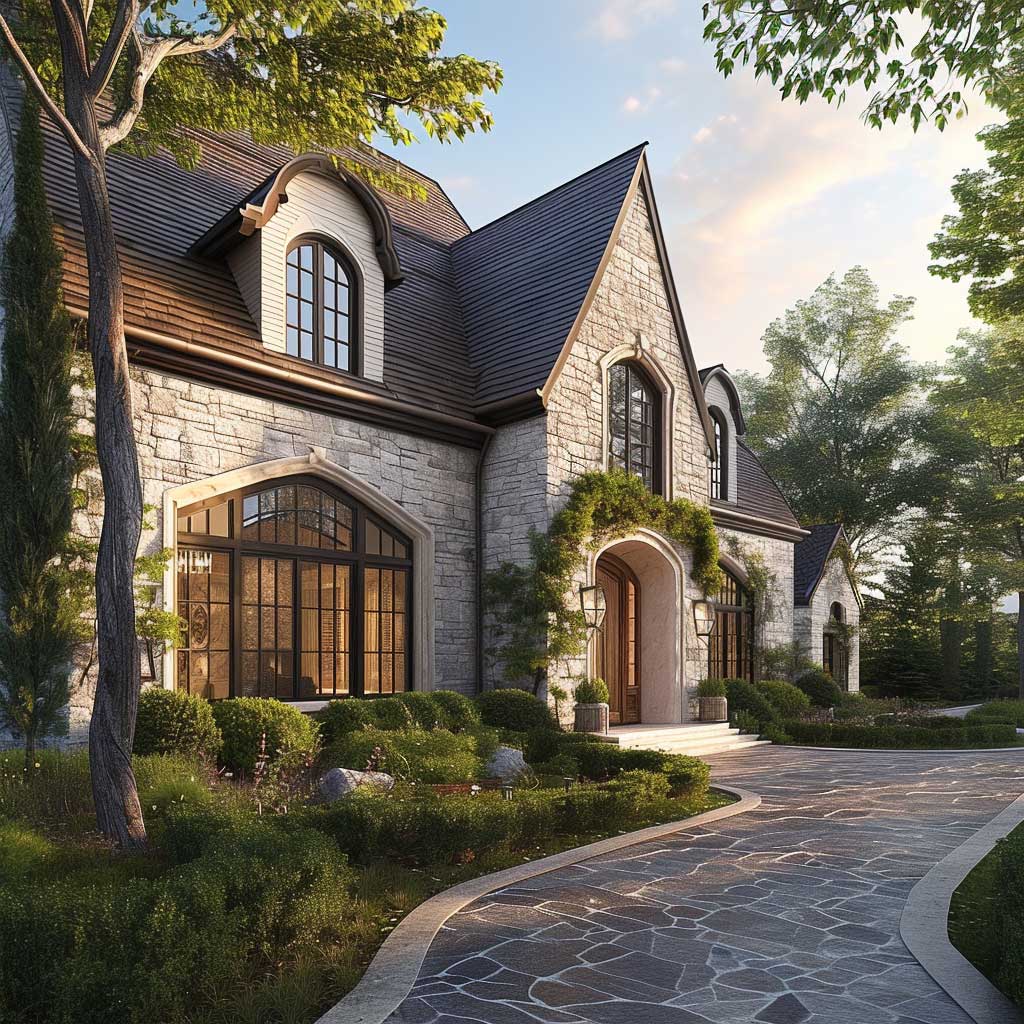
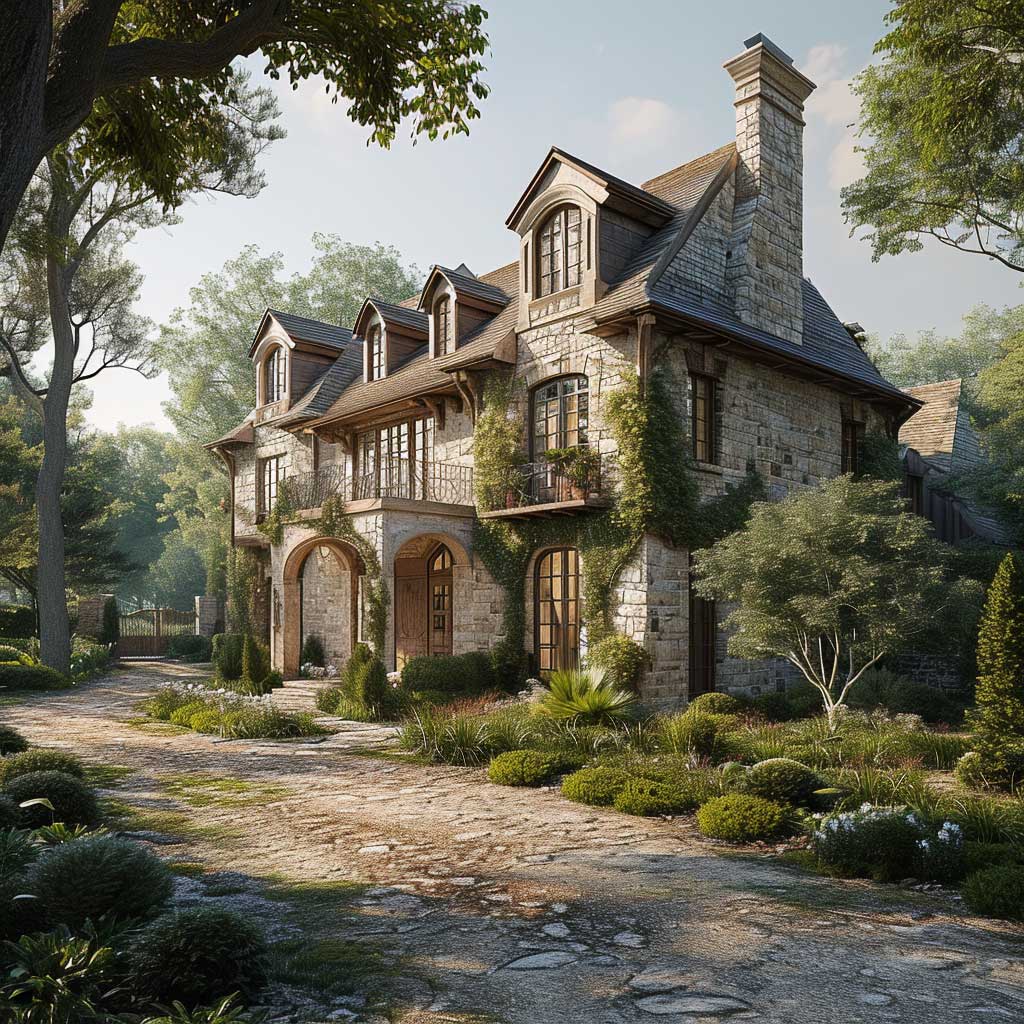
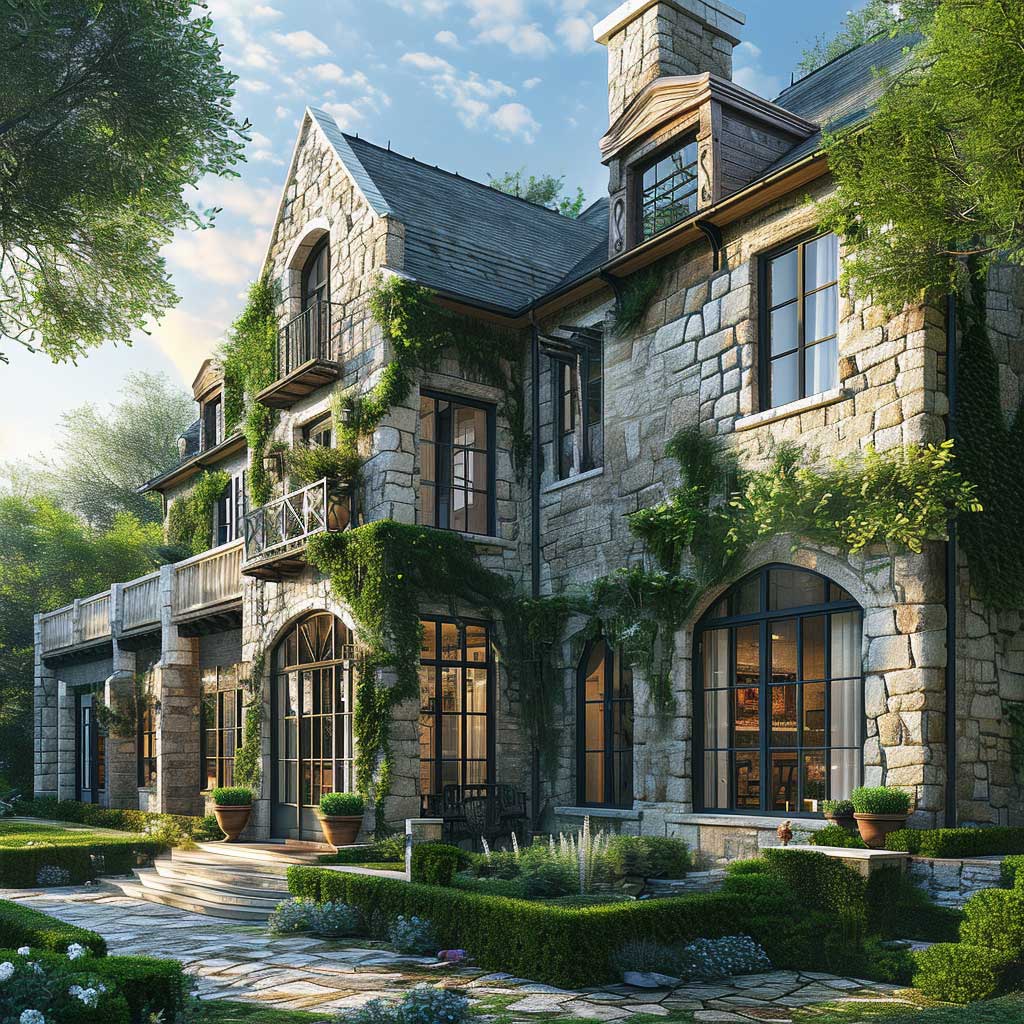
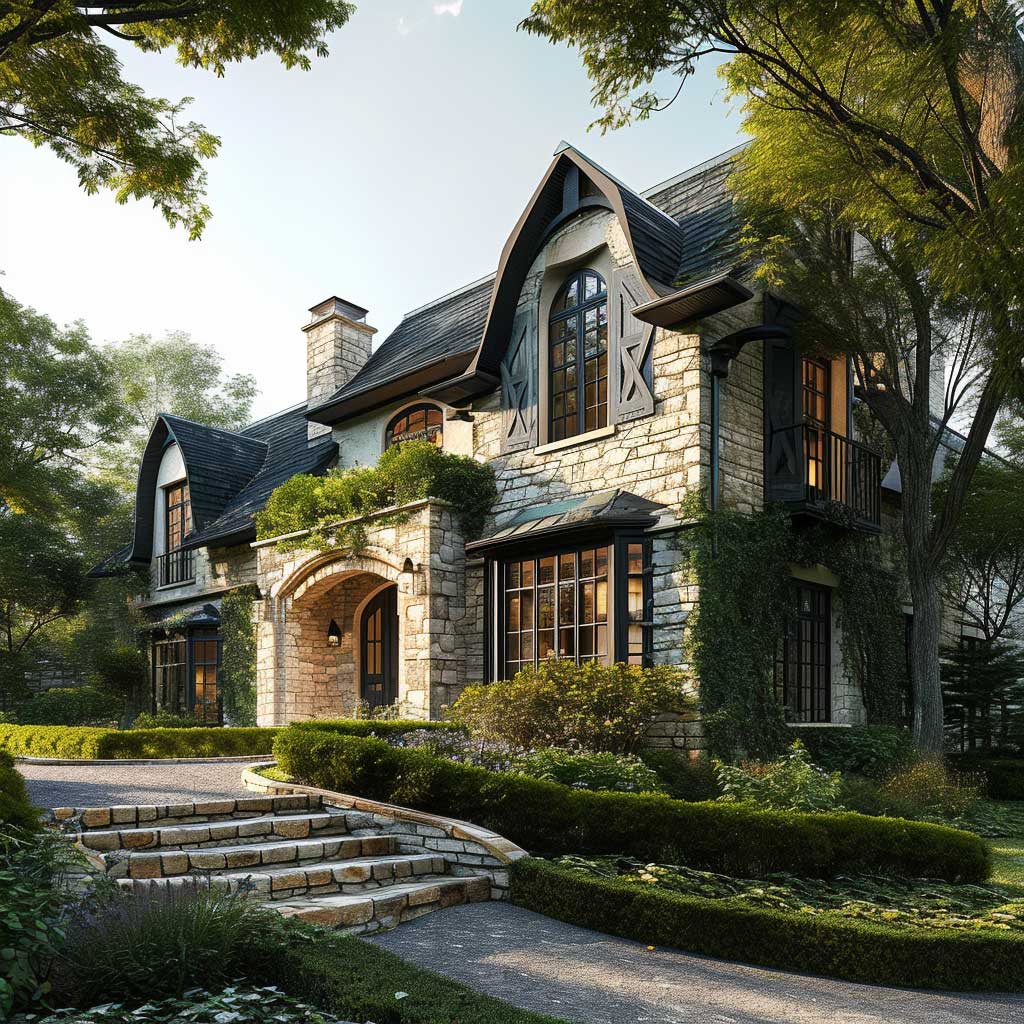
Steep pitch is non-negotiable. I’m talking 10:12 to 12:12, which is steeper than most American builders default to and will cost you in framing. A 7:12 pitch on a French country exterior looks like a Colonial that got halfway through a costume change and stopped. The pitch isn’t decorative — it’s structural in origin, designed for heavy rainfall and snow loads in northern France, and the silhouette it creates against the sky is what registers as “French” at 200 feet away before you’ve seen a single shutter or stone.
Dormer windows are worth the money. A properly proportioned dormer — tall, narrow, with a steep individual pitch — reads as architecturally literate. What doesn’t work is a flat-lidded shed dormer shoved into the roofline as an afterthought. I’ve seen architects try to salvage this with decorative trim, and it never recovers. Get the dormer geometry right at the design phase or skip dormers entirely and rely on hip transitions alone.
For roofing material, natural slate runs $15–$30 per square foot installed and is worth it if the budget allows. My go-to alternative is CertainTeed’s Landmark TL in Charcoal Black — a composite shingle designed to mimic slate at roughly $4–$6 per square foot installed, and it holds color for 30 years without the structural reinforcement that real slate demands. Terracotta tile is the other period-correct option, though it reads more Provençal than Normandy and shifts the palette of the whole house accordingly.
Don’t Do This
Don’t install a low-pitch roof and then try to correct it with decorative gable trim or false dormers. Decorative additions on a structurally wrong roofline read as exactly what they are — apologies for a bad decision. The trim cannot fix the pitch. Neither can copper gutters, arched accent windows, or a $4,000 front door. Start over at the roofline geometry or accept that this isn’t actually a French country exterior — it’s a house with French accessories.
Also: skip the shake-look composite shingles in brown or cedar tones. They shift the entire read toward Pacific Northwest lodge, which is a completely different vocabulary. French country roofing is either slate-gray or terracotta-orange, full stop.
French Country Exterior Colors Hold Their Character Because They Were Never Chosen for Drama
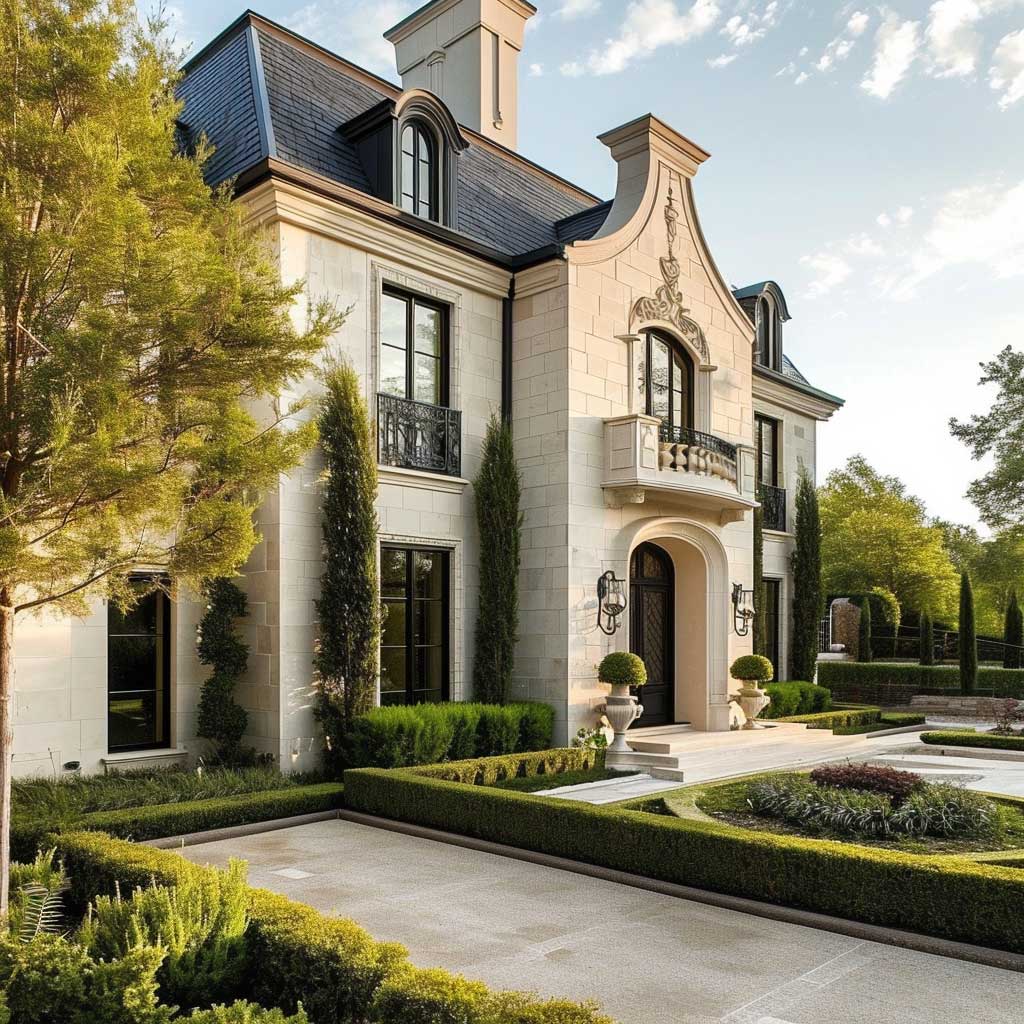
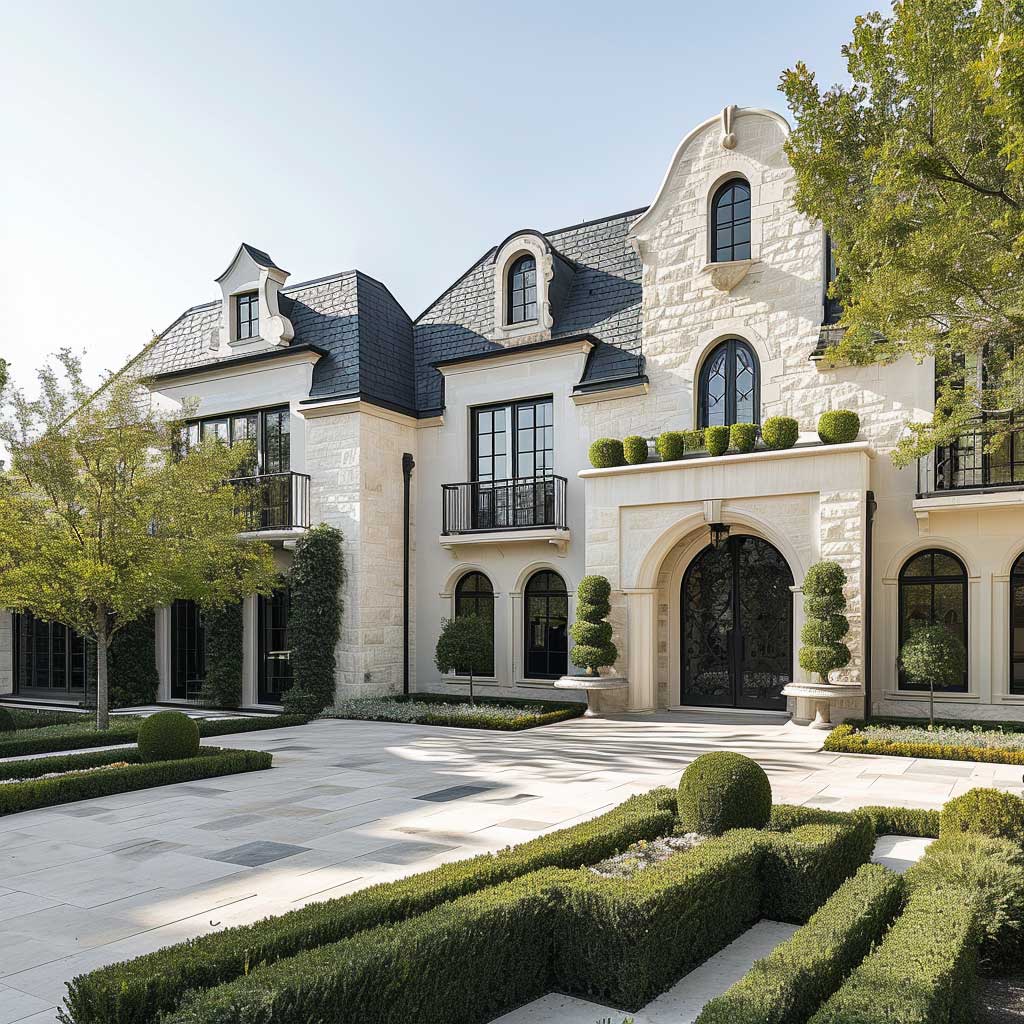
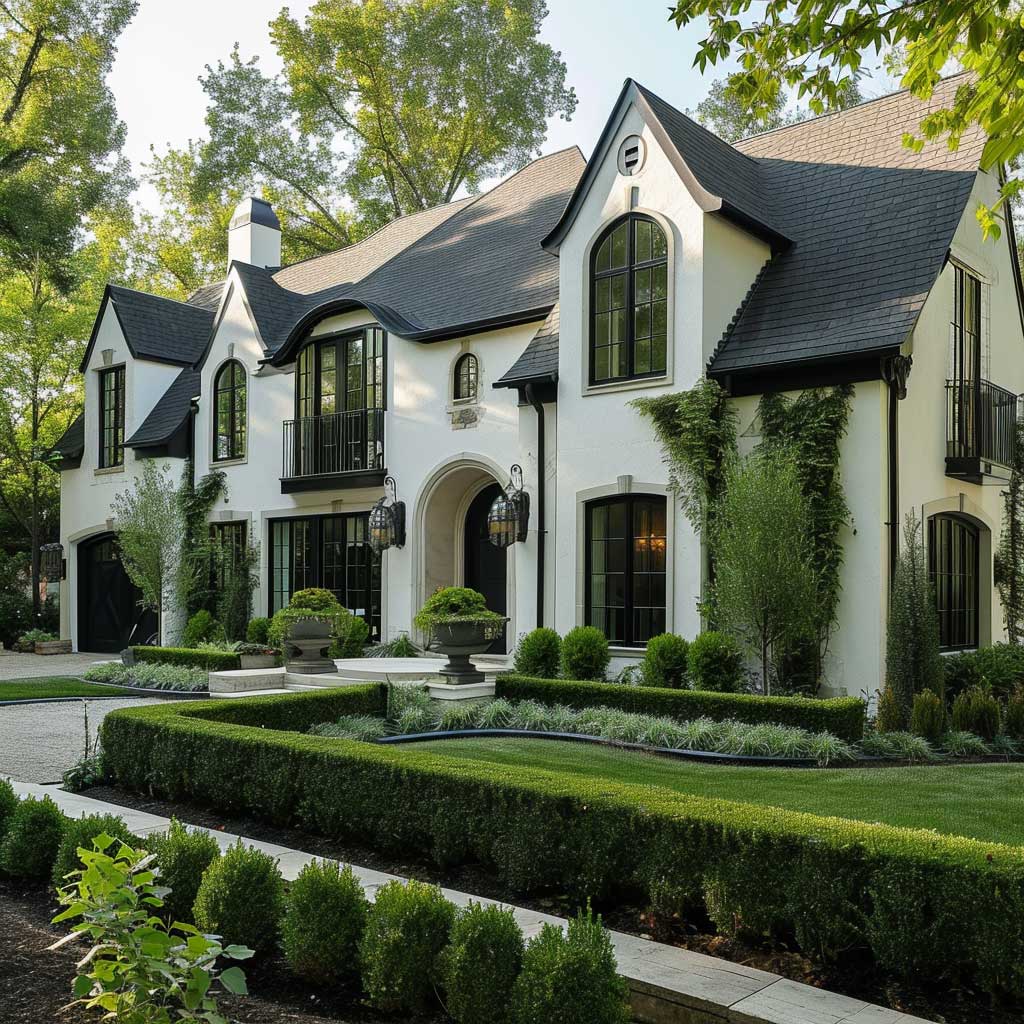
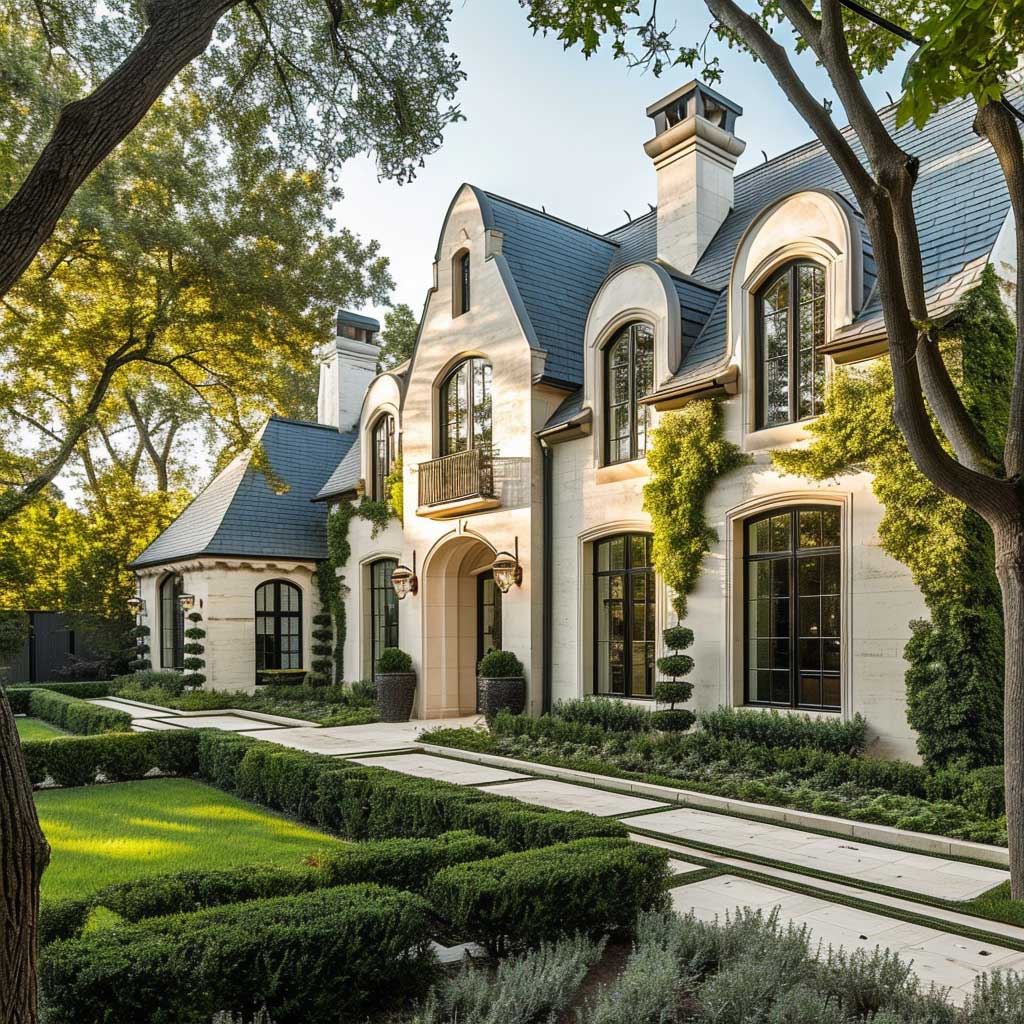
You’ll notice that the most convincing modern French country exteriors photograph well in flat, overcast light — not in golden hour. That’s the tell. The palette was designed to look honest in real French weather, which is rarely dramatic. Creams, warm grays, and greiges are the base. Benjamin Moore’s Pale Oak (OC-20) and Revere Pewter (HC-172) are the two colors I’ve recommended most consistently for stucco on French country facades, and they’ve held up across climates from Houston to Minneapolis.
Shutter color is where I see the most overthinking. Sage green is period-correct and forgiving. Dusty blue — something in the range of Farrow & Ball’s Stone Blue (No. 86) — works if the stone has warm undertones to counterbalance it. What doesn’t work is navy, forest green, or black shutters on a French country house. Those belong on coastal American homes and Georgian revivals respectively. Black shutters on a French country exterior reads as someone who saw a lot of Nantucket houses on Instagram and got confused.
For a broader look at how the French style translates across the full home exterior, this piece on French-style home exterior design covers the proportionality and symmetry principles that govern the whole facade, not just the color choices.
Windows and Shutters in a Modern French Country Exterior Follow a Logic Most Renovations Ignore
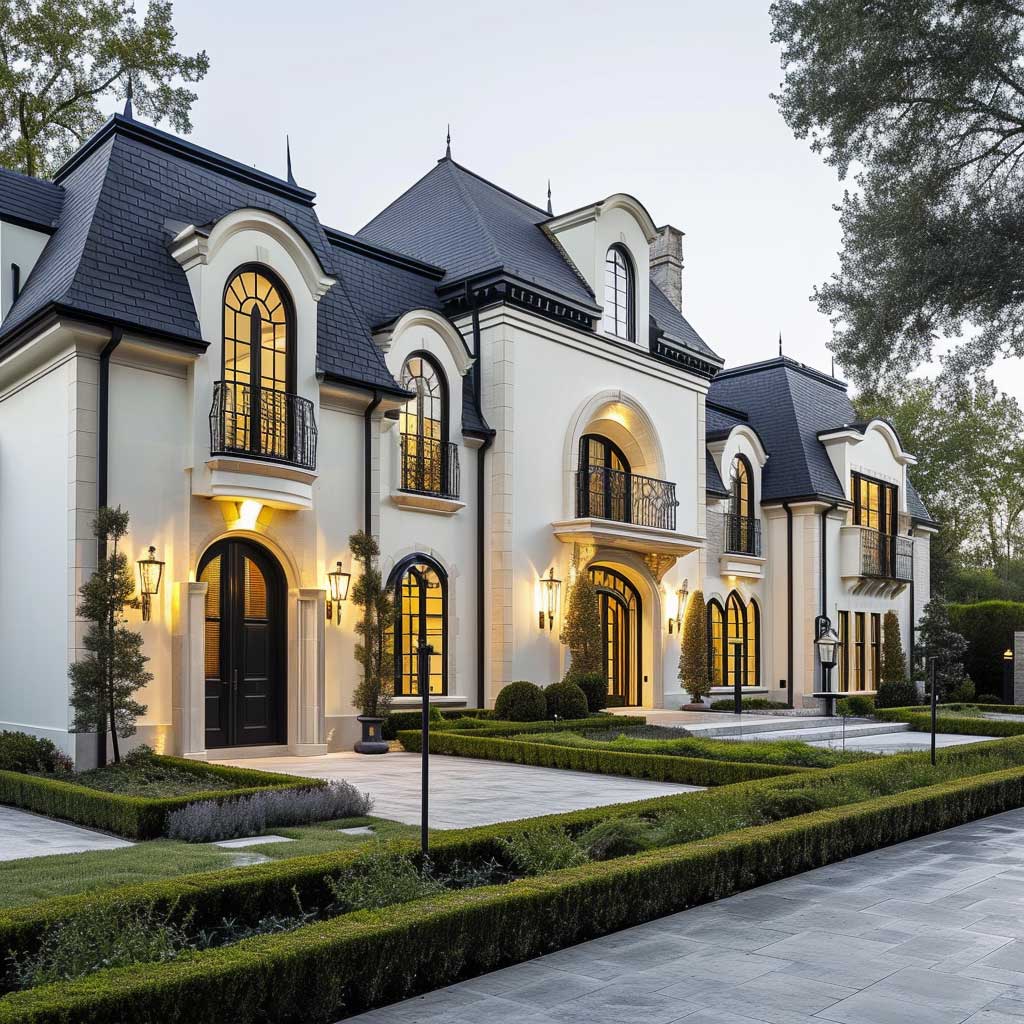
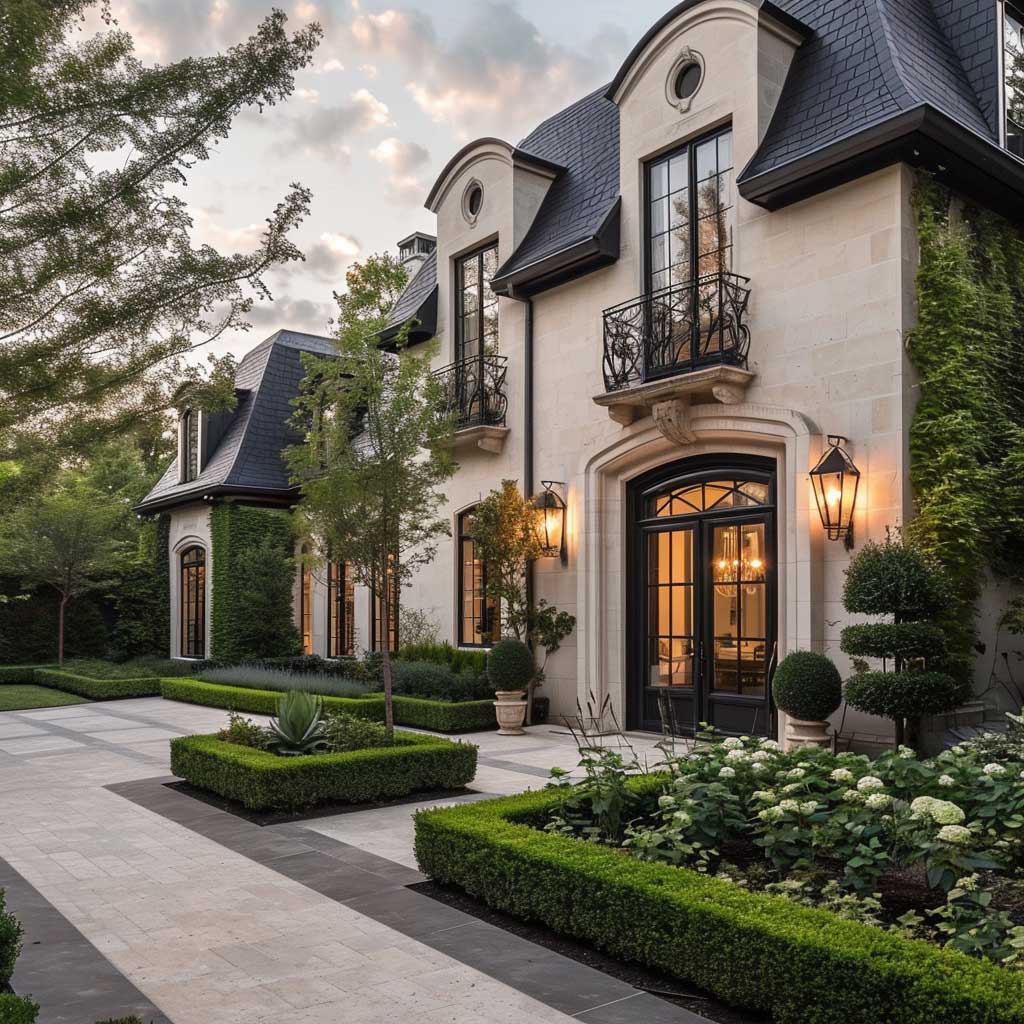
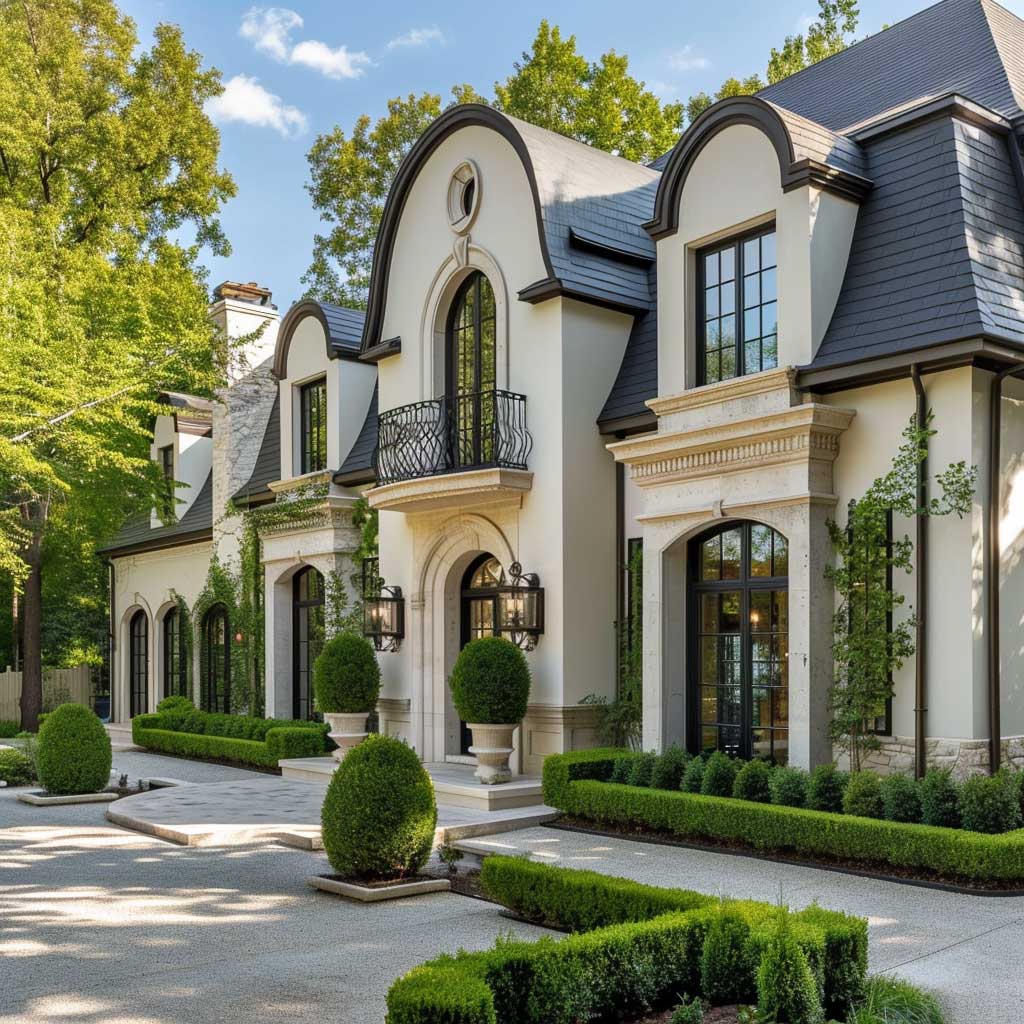
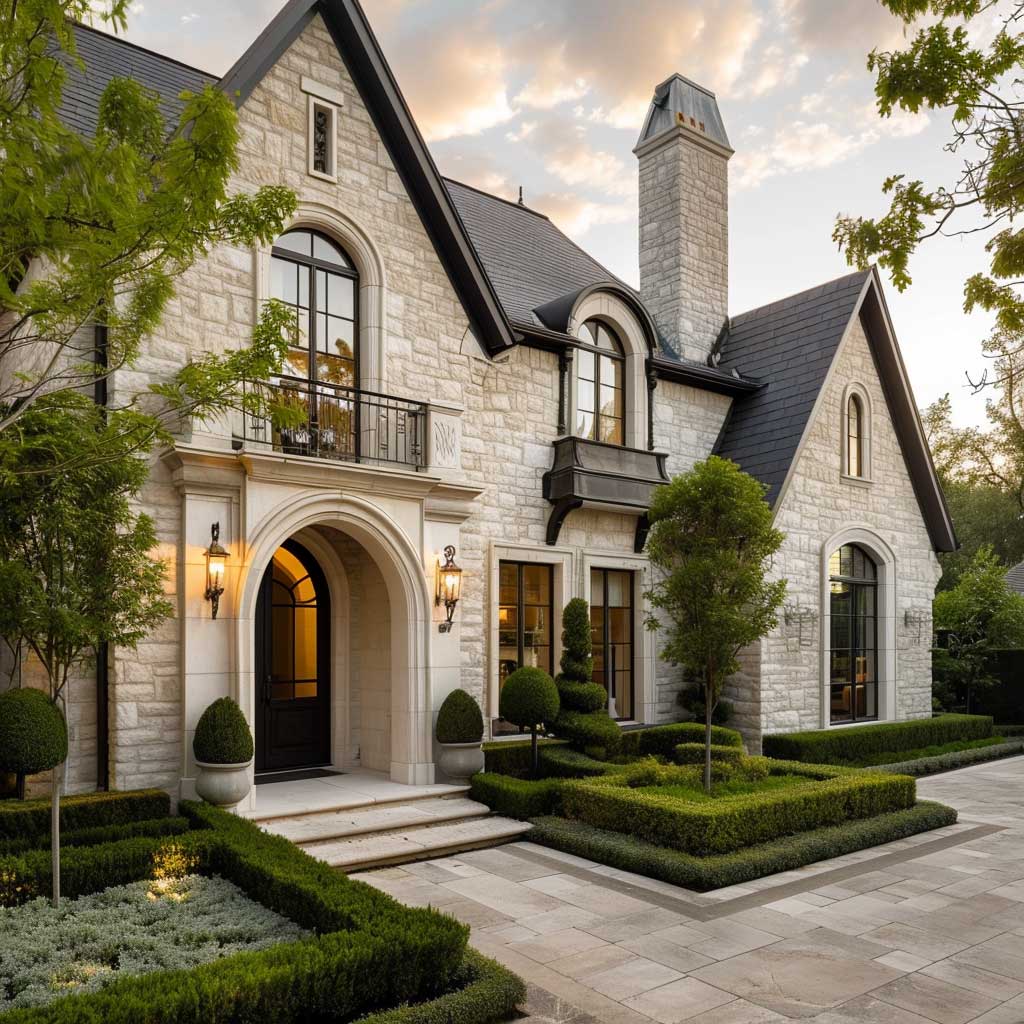
French windows are tall and narrow, or tall and wide — never short and wide. The horizontal ranch window is the single fastest way to destroy a French country exterior from the inside out. I own two properties I’ve renovated in this style, and replacing the existing horizontal sliders with casement windows that run 60 inches tall was the single renovation decision that paid the biggest visual dividend per dollar. Andersen’s 400 Series in white with true divided lites runs about $800–$1,400 per window installed, and it’s the minimum spec I’d accept on a French country facade.
Shutters in original French construction were functional — they closed over the window entirely, which is why they’re sized to match the window exactly. Modern shutters that are 8 inches wide pinned decoratively beside a 36-inch window opening are one of the most common and most visible mistakes in this style. If you’re installing shutters, they should be sized as if they would actually close. Anything smaller reads as wallpaper.
Arched windows are tempting but require commitment. A single arched window used as an accent — over the front door, above the entry gable — works well. A row of identically arched windows across the main floor reads as a bank lobby. Use the arch as a punctuation mark, not a sentence structure. What I stole from a Brick & Batten project I admired: one arched accent window in the upper gable, surrounded by symmetrical rectangular panes on either side, creates exactly the right hierarchy without tipping into pastiche. You can see how they handle the full French country window and entry treatment at Brick & Batten’s French country exterior breakdown.
French Country Landscaping Frames the House. Lavender Alone Won’t Save a Bad Setback
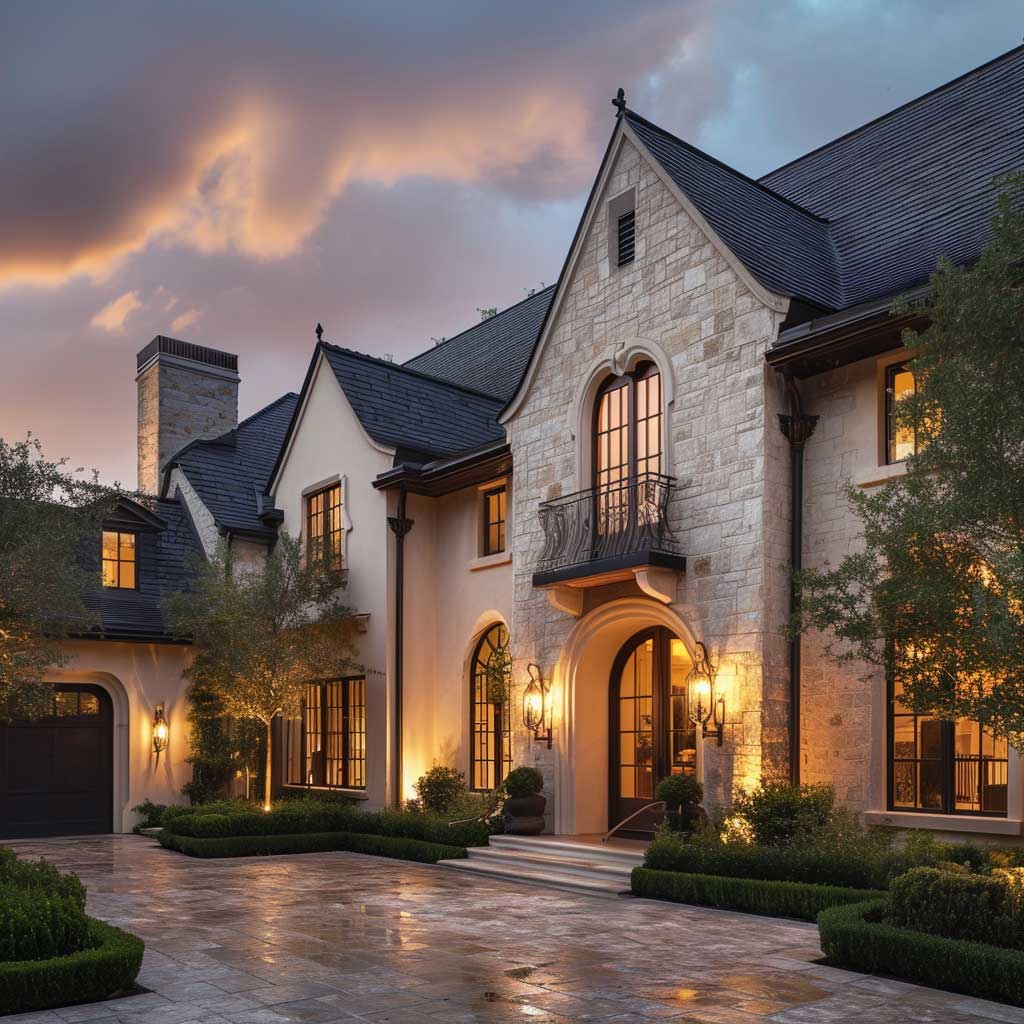
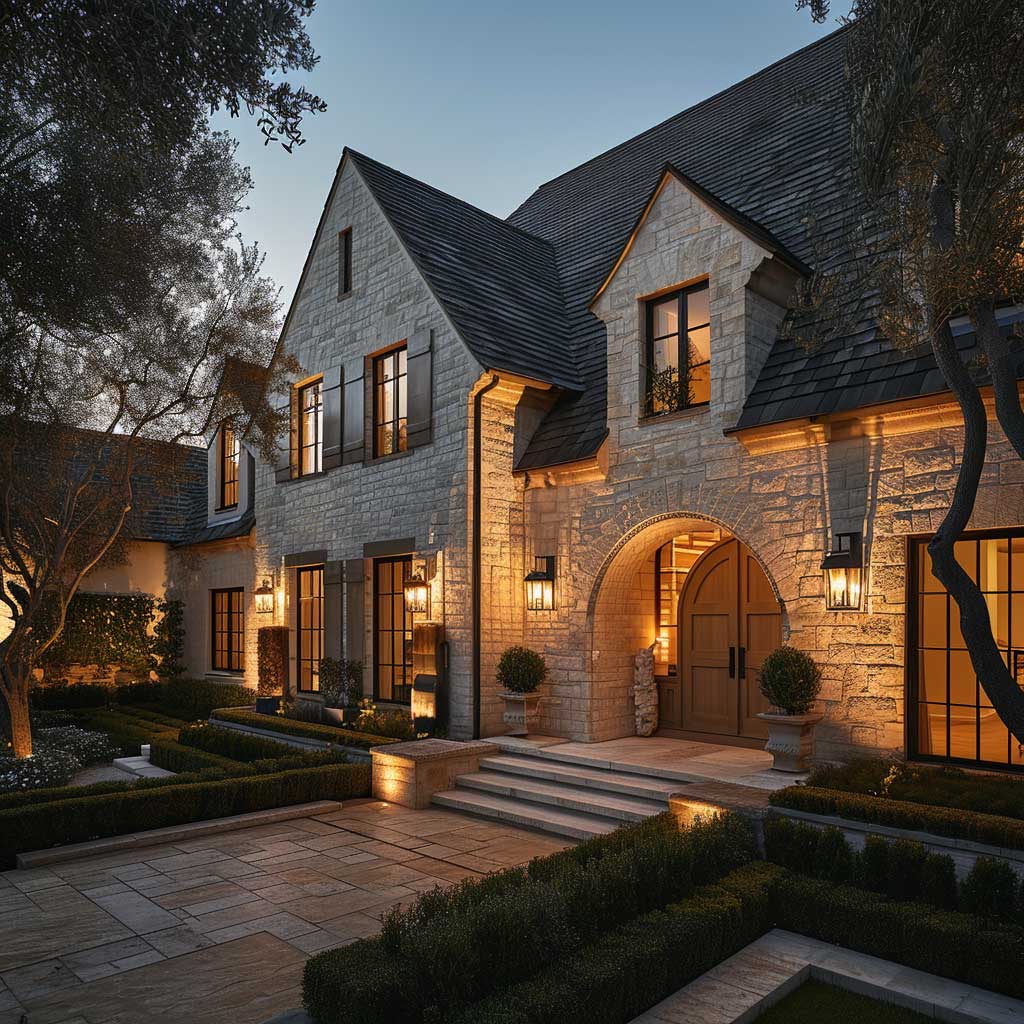
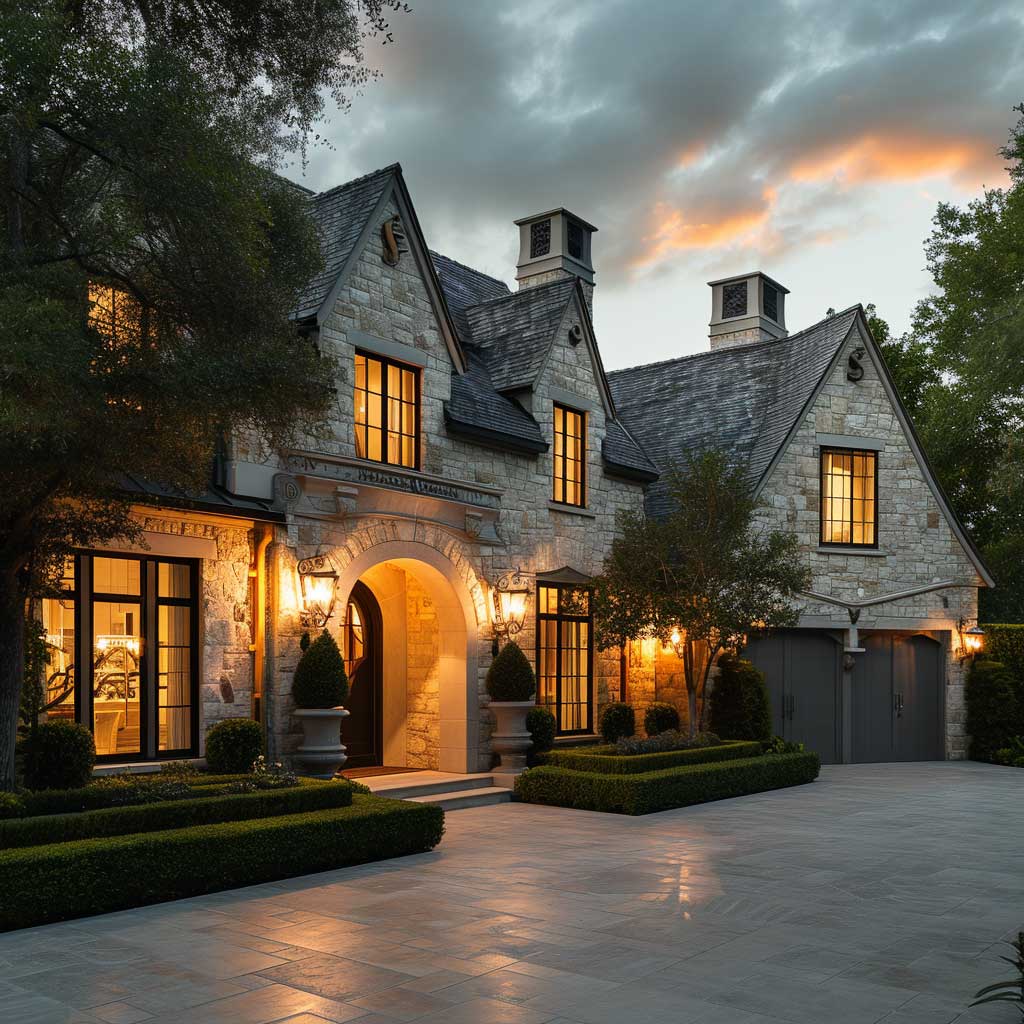
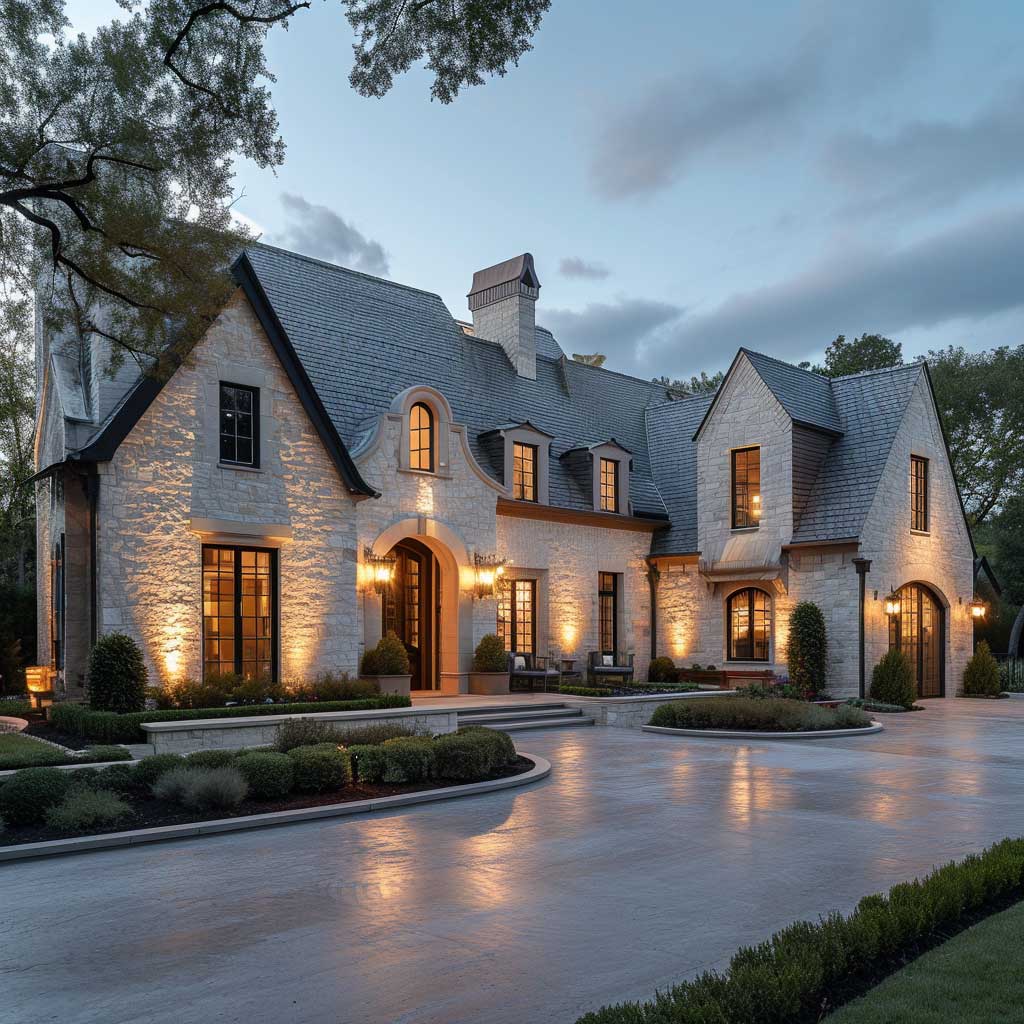
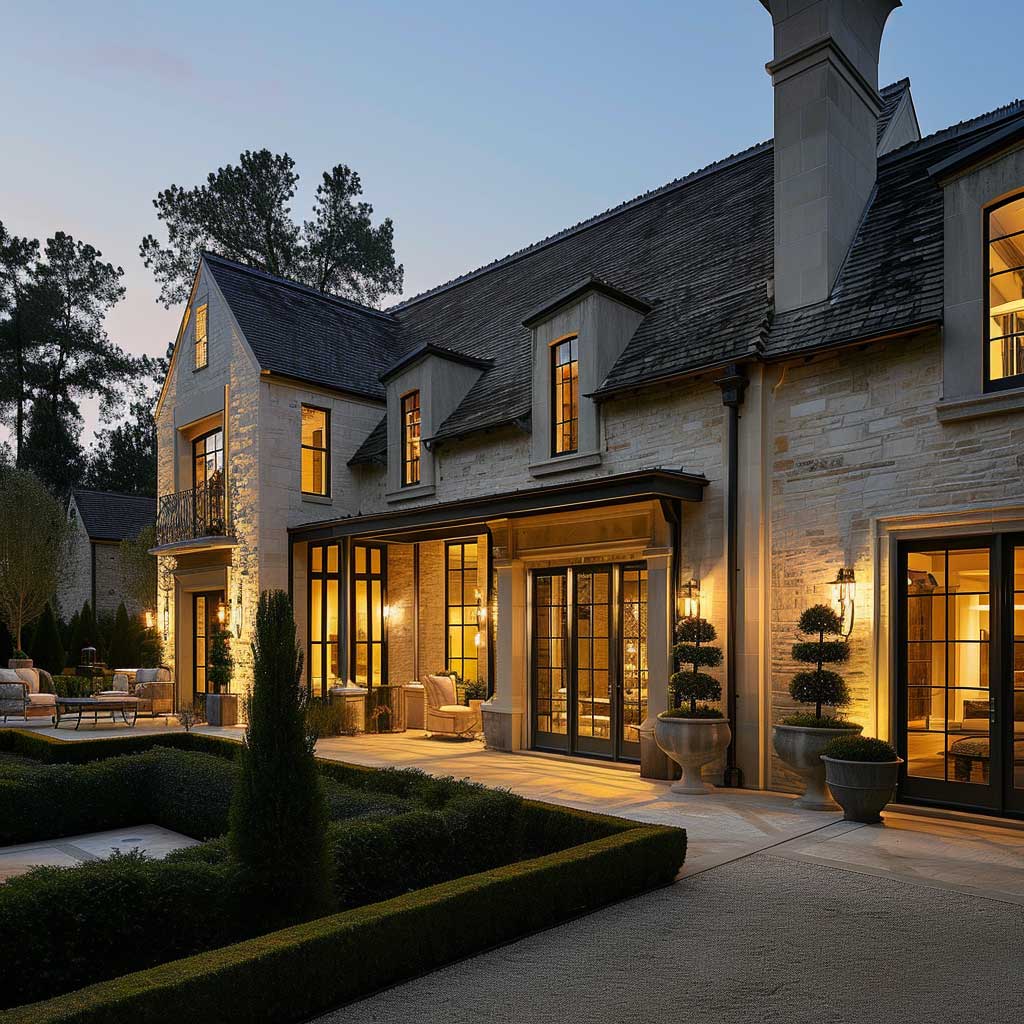
French country landscaping is structured at the bones and loose at the edges. Think clipped boxwood hedges forming the geometry, with lavender, rosemary, and climbing roses allowed to do what they want within that frame. The boxwood is doing the architectural work. The lavender is doing the softening. Remove either one and the garden loses its logic. I’ve seen plenty of French country homes with beautiful stone facades completely undermined by a flat, undifferentiated lawn running right up to the foundation — it looks like the landscaper quit halfway through.
Gravel driveways are period-correct and practical. Small angular gravel — 3/4-inch crushed limestone or pea gravel in a buff or warm gray tone — edged with brick or cut stone borders reads as authentically French. Concrete driveways don’t. Asphalt driveways actively contradict the style. If you’re in a climate where gravel is impractical, a pale buff concrete with scored lines and a brushed finish is the least-bad alternative.
What doesn’t work: oversized ornamental grasses planted in clusters along the foundation. Ornamental grasses are a contemporary American landscaping habit that reads as prairie modernism, which is the wrong continent and the wrong century for this style. They photograph beautifully in isolation but disrupt the formal-to-casual gradient that makes French country landscaping coherent. Stick to lavender, rosemary, salvia, and roses — all four are drought-tolerant once established and all four are architecturally correct.
Front Entry Details Attract the Most Attention and Deliver the Smallest Return
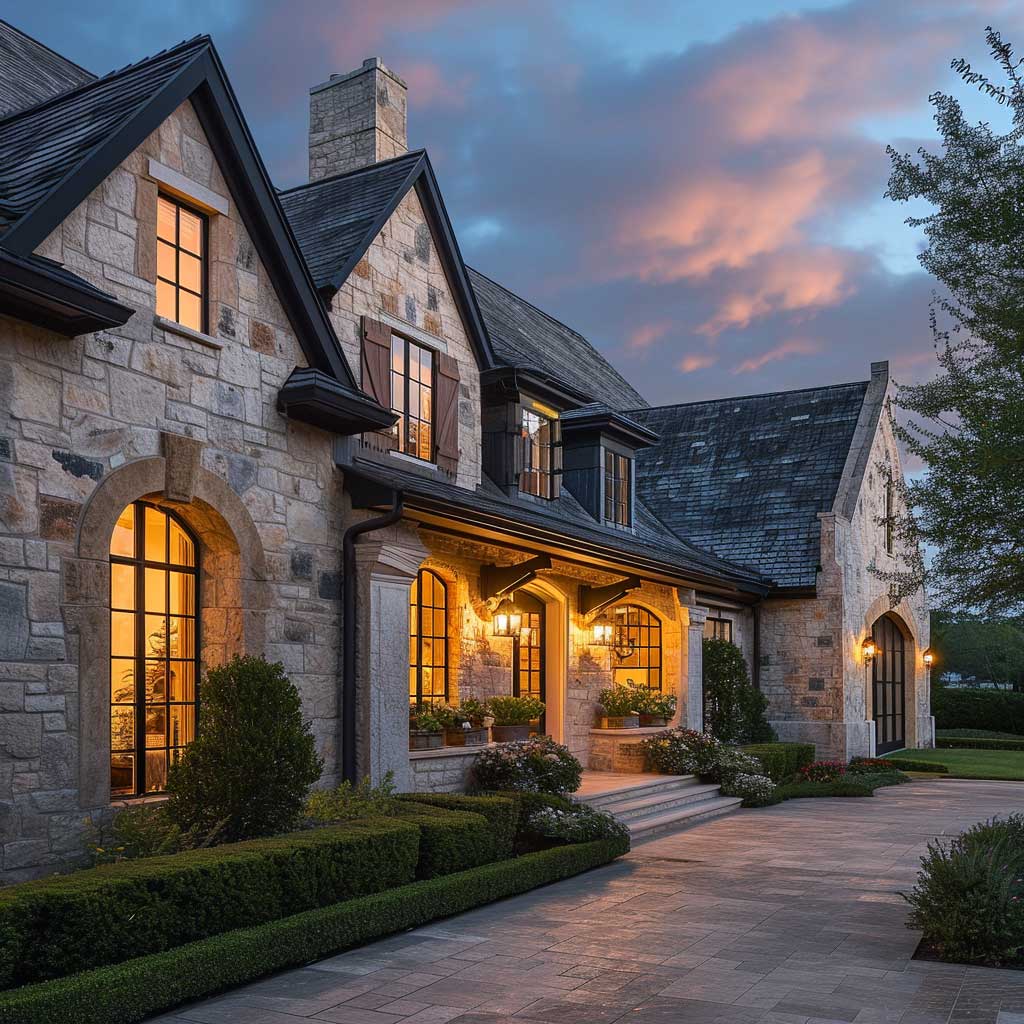
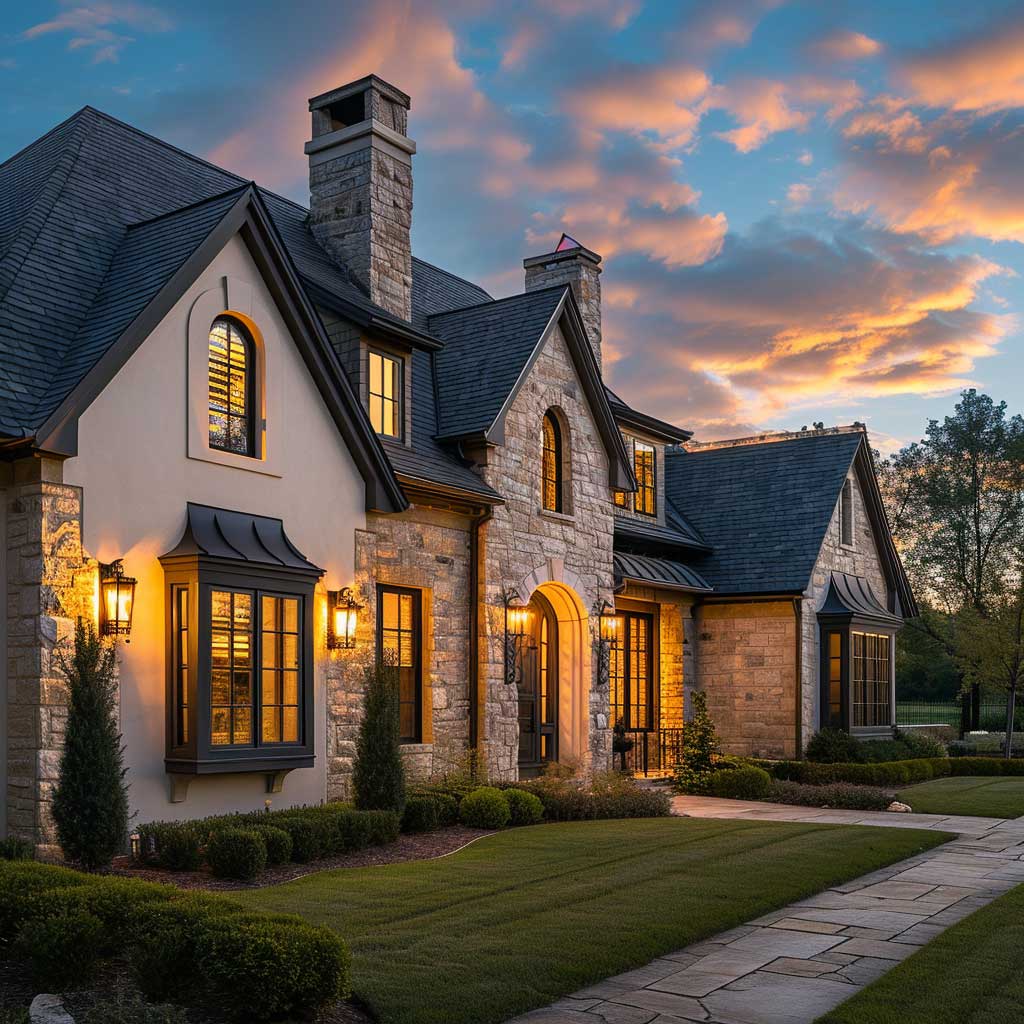
My go-to front door for a contemporary French country home is a solid wood panel door — no glass, or very minimal glass — in a warm off-white or a deep sage green. The Jeld-Wen Alder Smooth-Star series in a custom paint finish runs around $1,800–$2,400 installed and holds up well in temperature-variable climates. Bold red doors are a Pinterest-approved choice that I’d talk most clients out of. Red reads as Colonial Revival on a stone and stucco facade. It’s not wrong — it’s just from a different reference library.
Lanterns beside the door should be blackened iron or aged brass, with clear or lightly frosted glass panels. Visual Comfort’s Carrier Lantern in Aged Iron — about $280 each — is sized correctly for most residential entries and doesn’t fight with the stone. What I’d avoid is the overscaled coach lantern trend that appeared in builder catalogs around 2018. A lantern that’s 24 inches tall on a standard 8-foot entry reads as a gas station fixture, not a Provence farmhouse.
Copper elements — awnings, gutters, downspouts — age beautifully against limestone and stucco over 5–10 years, developing a patina that amplifies the aged quality of the whole exterior. It’s the material equivalent of buying furniture that improves rather than deteriorates. If the budget allows one copper element, make it the gutters — they’re visible from the street and they change the character of the roofline in a way that no painted-metal alternative replicates. For inspiration on how the French porch and entry logic extends to outdoor living spaces, this look at French country porch design covers the material and furniture decisions that tie the entry zone together.
Before You Pin This
Modern French Country Exterior Design Fails When the Roofline Doesn’t Match the Wall’s Ambition
Start with pitch. Get the stone weight right at the base. Choose a stucco tone that reads warm without sunshine. Then, and only then, worry about shutters and lanterns.
The exterior is a system. Every element is load-bearing in the visual sense — pull one out of spec and the whole elevation reads wrong, no matter how much you spend on the front door.
Save this post before you start your next conversation with an architect or contractor.