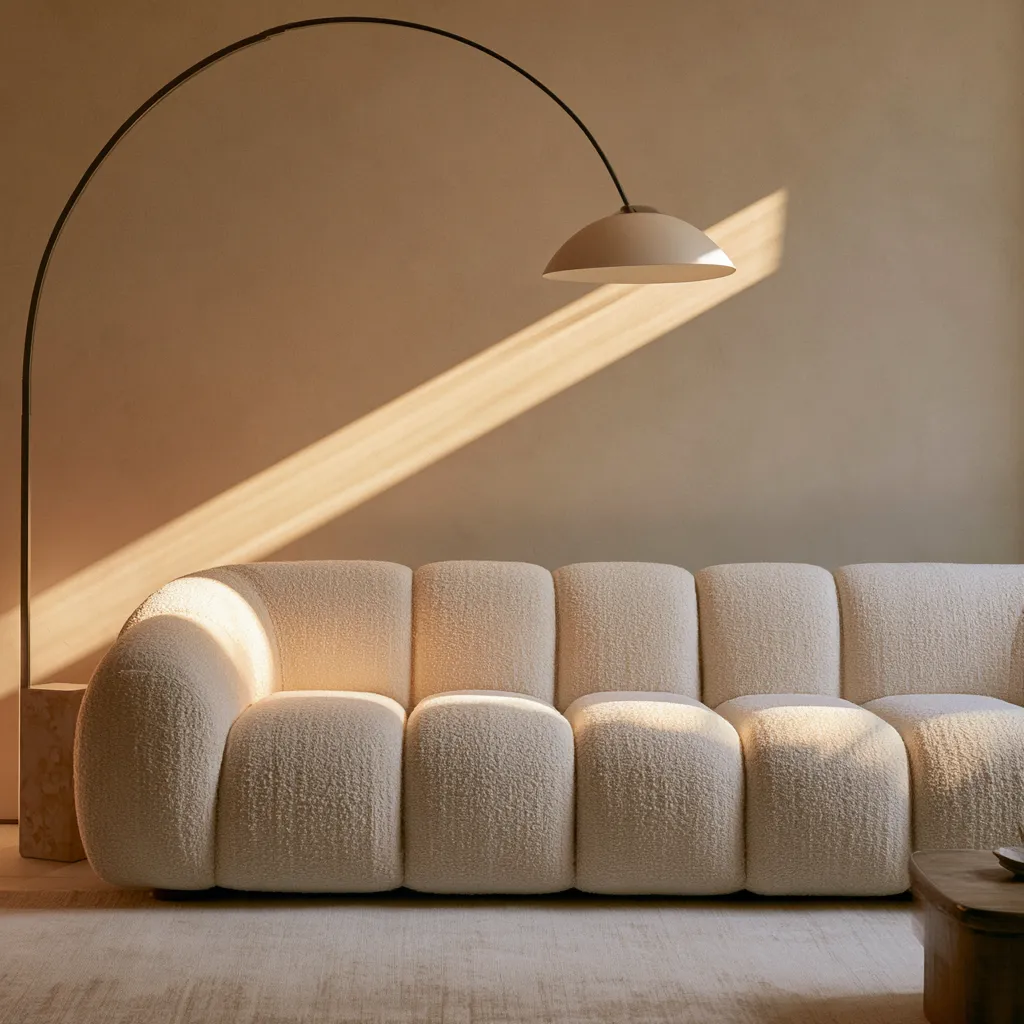
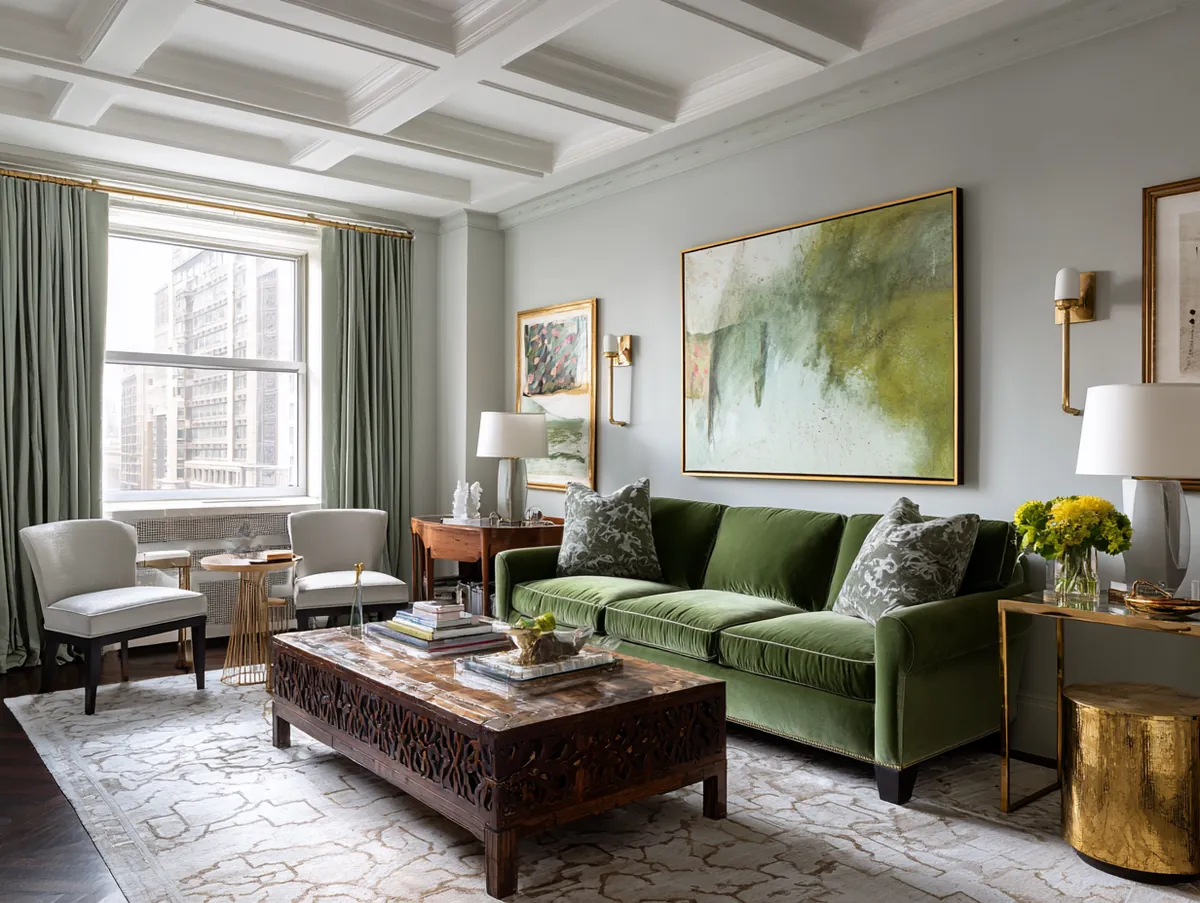
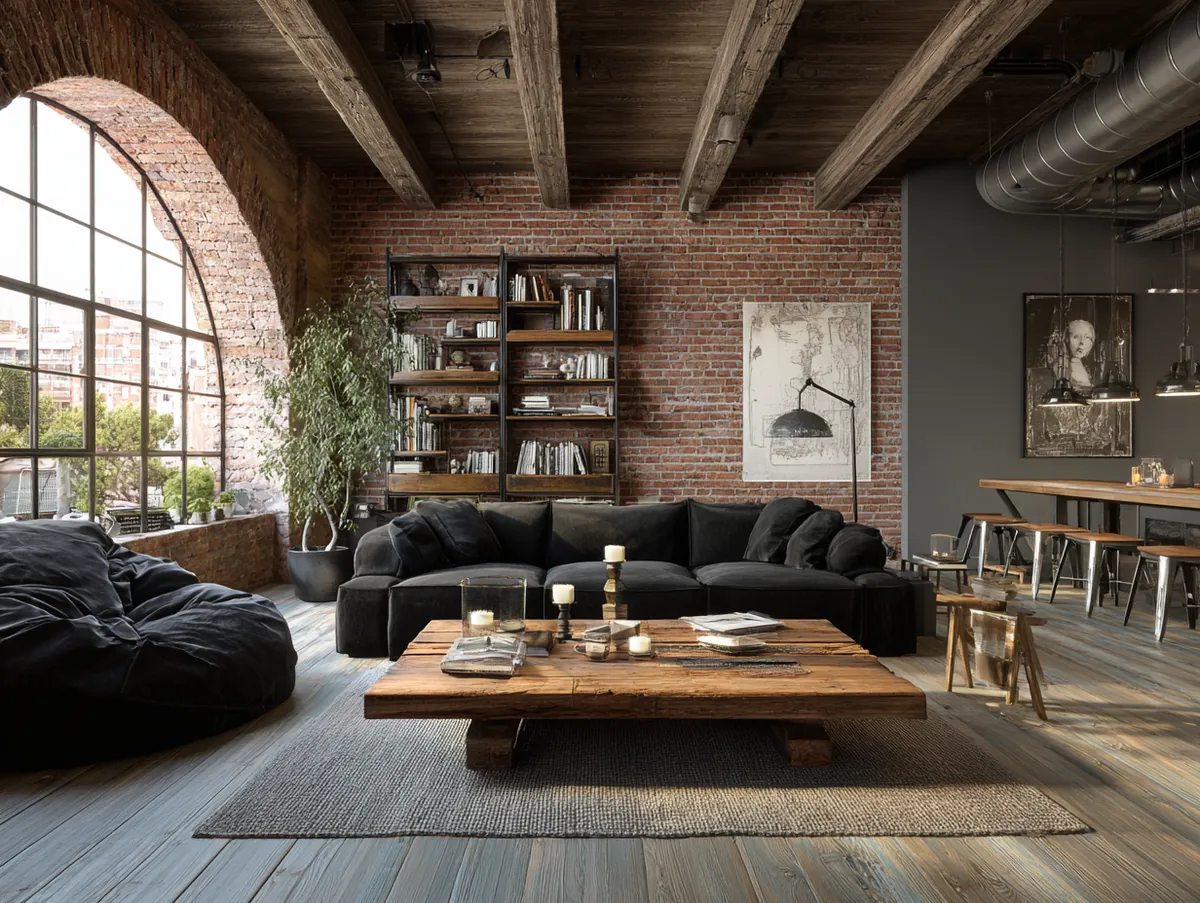
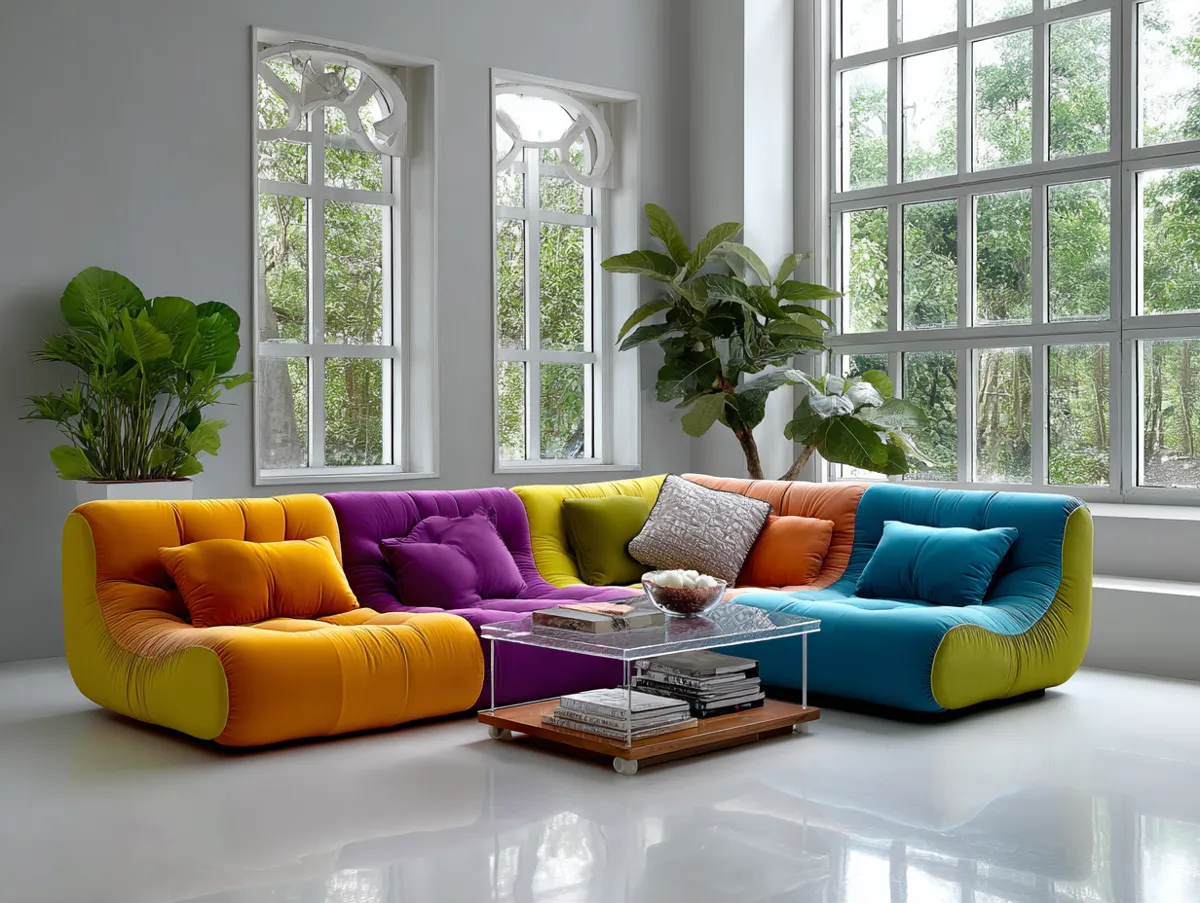
Modern French chateau interior design is what happens when you stop apologizing for wanting grandeur and start making it work with the house you actually live in. I’ve spent years pulling references from Loire Valley estates and landing on something that fits a regular floor plan — the fireplace stays, the fussiness goes. You get marble, you get the carved millwork, you get floor-length drapery in dusty linen; what you lose is the airless formality that makes old chateau interiors feel like a museum closed on Mondays. The result sits closer to a high-end Paris apartment than to Versailles, and that’s exactly right.
Pull this look off and your living room will photograph like a Timothy Corrigan project without the eight-figure budget. The key moves are fewer than you think. Pick one structural hero — a limestone fireplace, a statement chandelier, a properly scaled armoire — and build the rest around restraint. I’ve watched too many chateau-inspired rooms collapse under the weight of too many gilded mirrors and too little negative space. One wrong choice here costs more to fix than it did to install.
Quick Scan — What This Page Covers
- How to anchor a modern French chateau living room without overcrowding it
- The bedroom formula that blends canopy-bed grandeur with liveable calm
- Kitchen decisions — where chateau detailing earns its keep and where to skip it
- Chateau decor done wrong: the specific mistakes that make rooms look costume-y
- Colour palettes, fabric picks, and price-point benchmarks for each room
Your Living Room Fireplace Is Doing All the Heavy Lifting
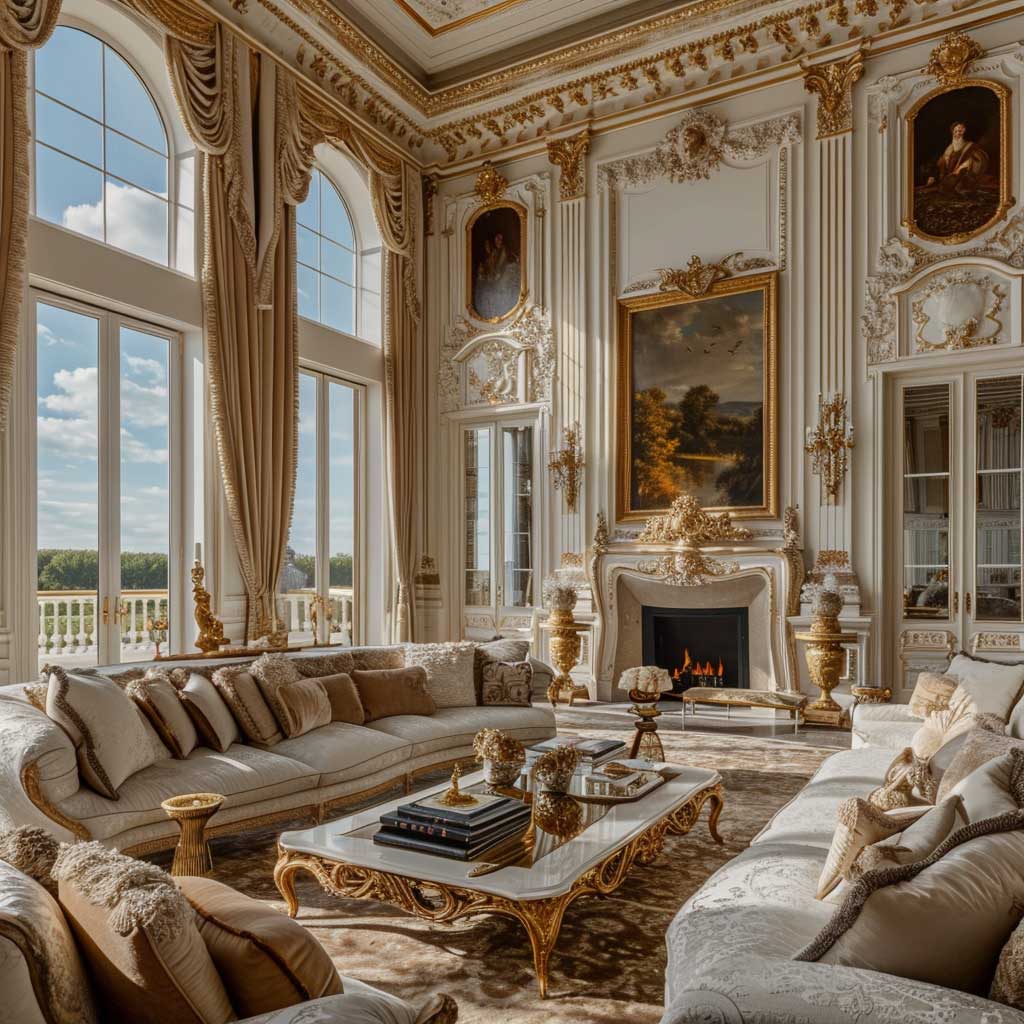
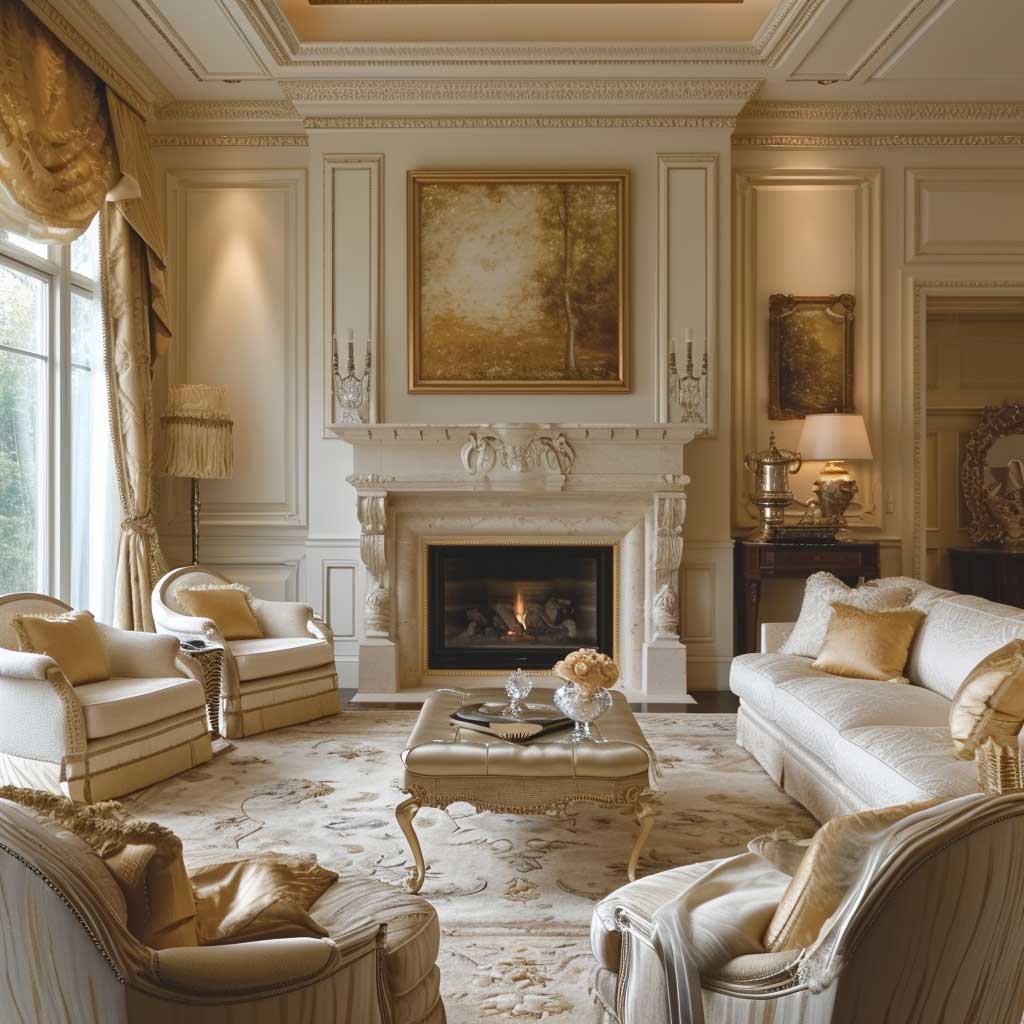
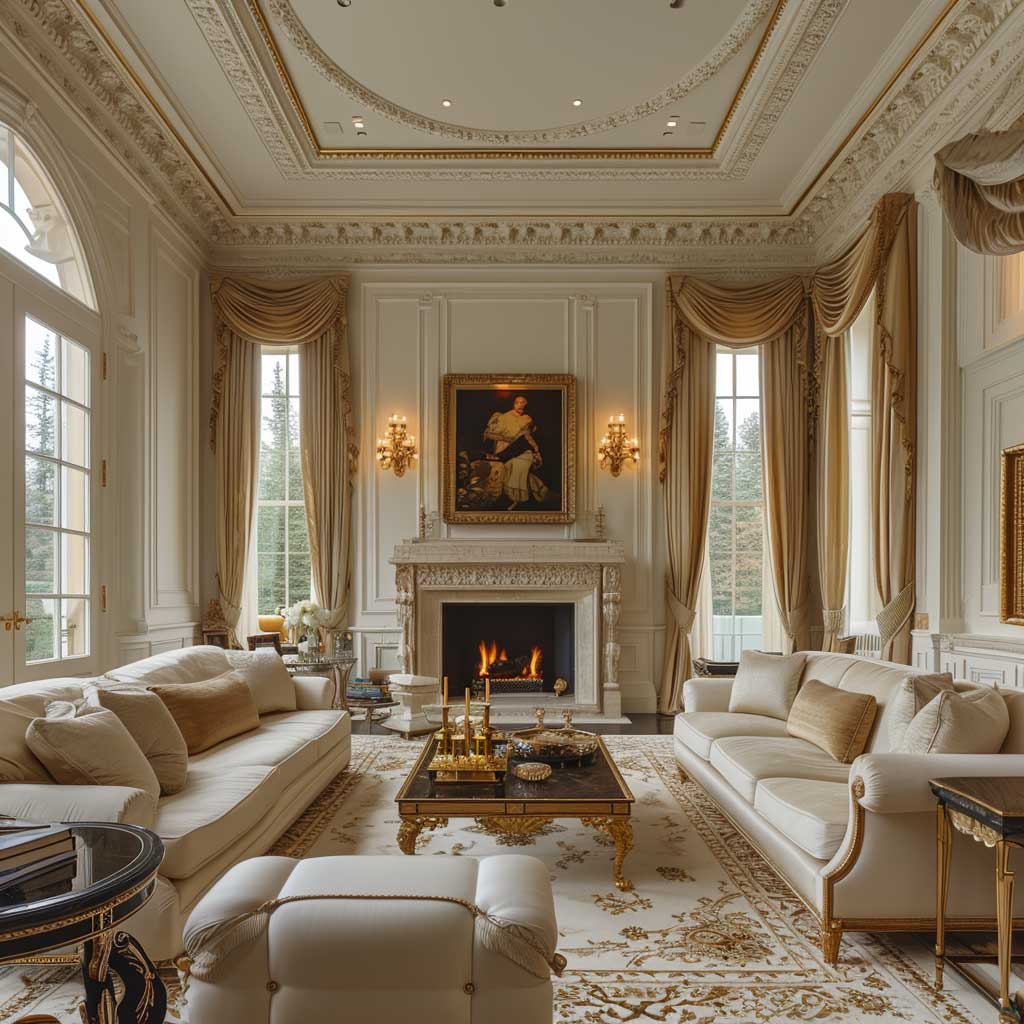
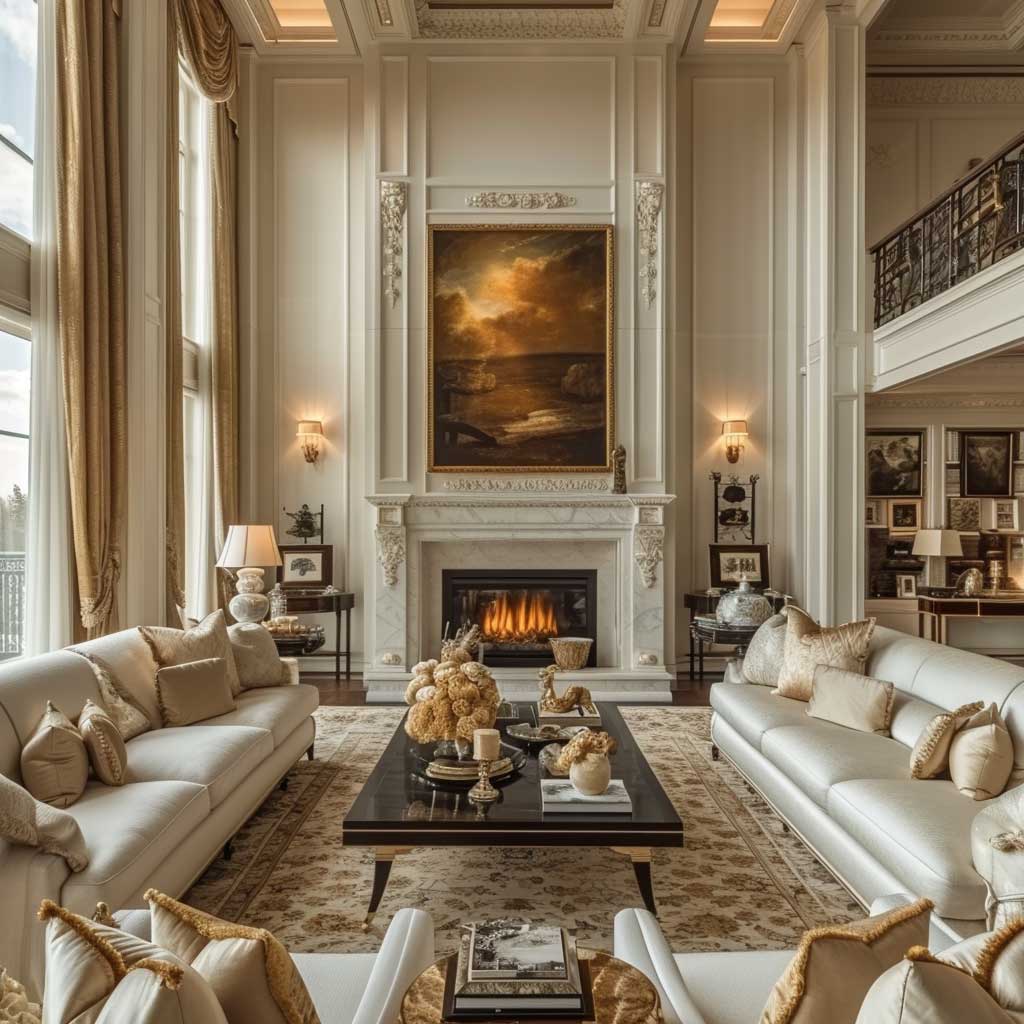
A hand-carved limestone or white marble fireplace surround is the non-negotiable centre of any chateau living room that actually reads as the real thing. Mine came from a reclaimed architectural salvage dealer in Lyon — equivalent pieces from suppliers like Stone Forest or Ballard Designs run $3,000–$8,000 depending on carving depth. Skip the reproduction mantels from big-box stores; the proportions are always slightly off, and you’ll notice it every day. The fireplace is the one place to spend up front so everything else can be more casual.
Furniture around it should be upholstered in velvet or high-quality linen, full stop. A curved-arm sofa in cream or stone velvet — I have the RH Cloud sectional in performance velvet and it holds its shape better than anything I’ve tried at twice the price — anchors the seating zone without competing with the stonework. Pair it with a low-slung coffee table in aged brass or smoked glass; the contrast between the heavy fireplace and the lightweight table reads as intentional rather than mismatched. Avoid dark wood tables in this configuration — they close the palette down and make the room feel like a hunting lodge, not a chateau salon.
Colour in a chateau living room is where most people overcorrect. You do not need gold everywhere. You need one warm metallic moment — a gilded mirror above the mantle, a brass floor lamp — and then cream, warm white, and a single deeper tone like deep sage or dusty blue in a throw or two accent chairs. The palette should follow a rule I stole from a Paris-based decorator friend: if it could appear on a Sèvres porcelain piece, it belongs in this room.
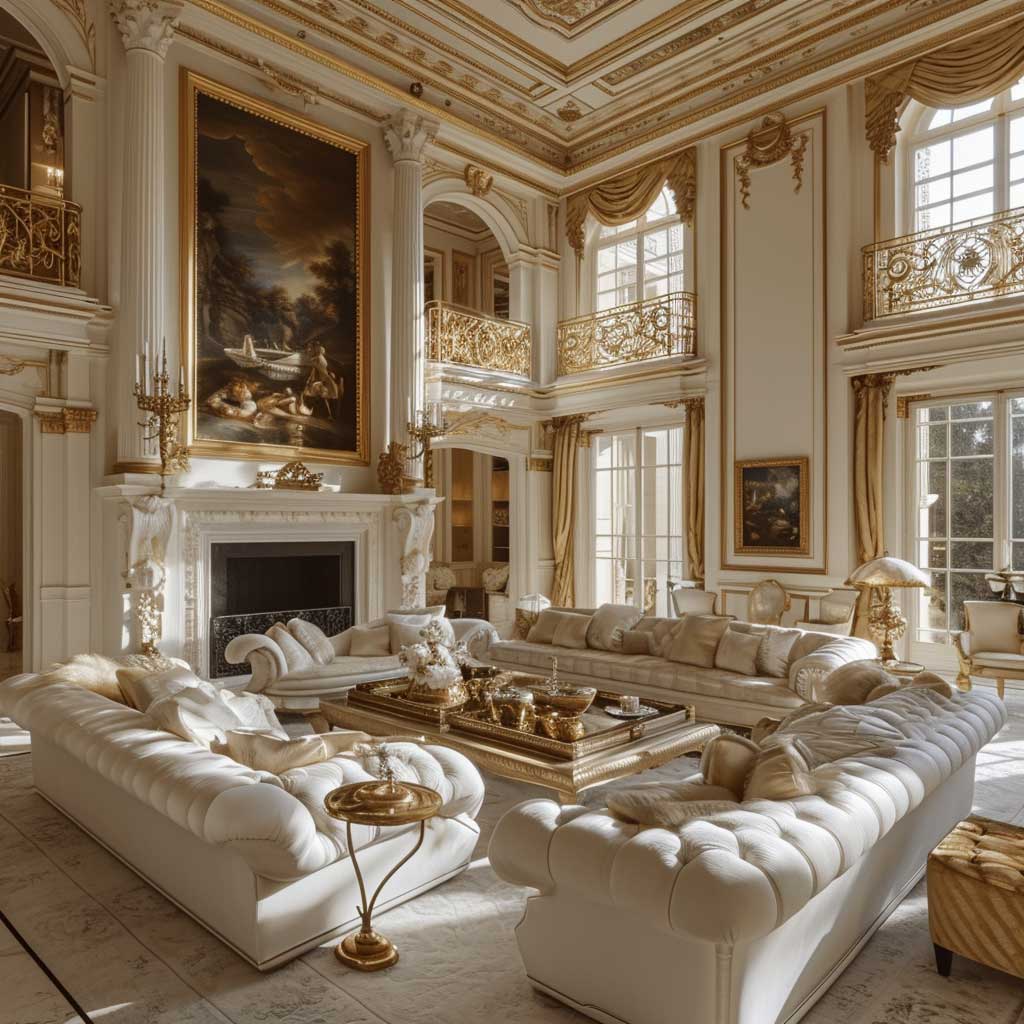
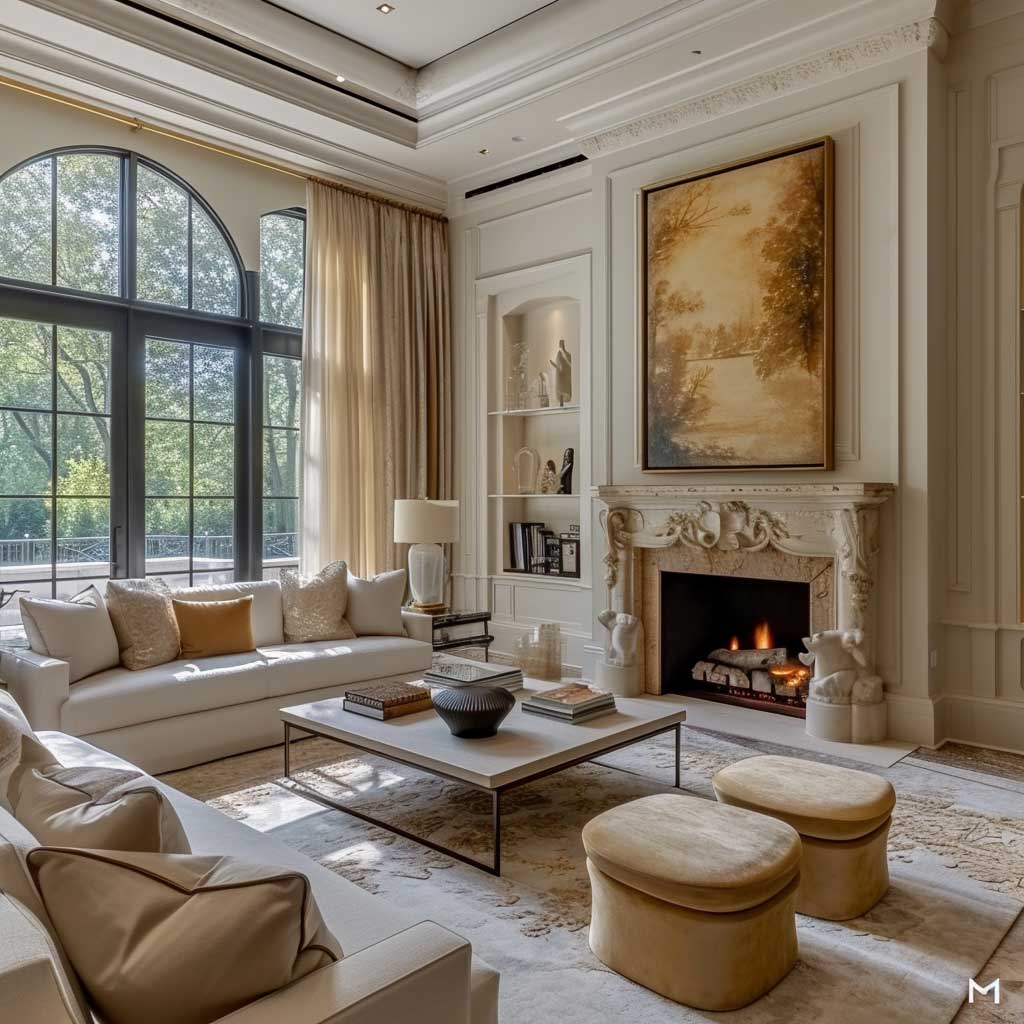
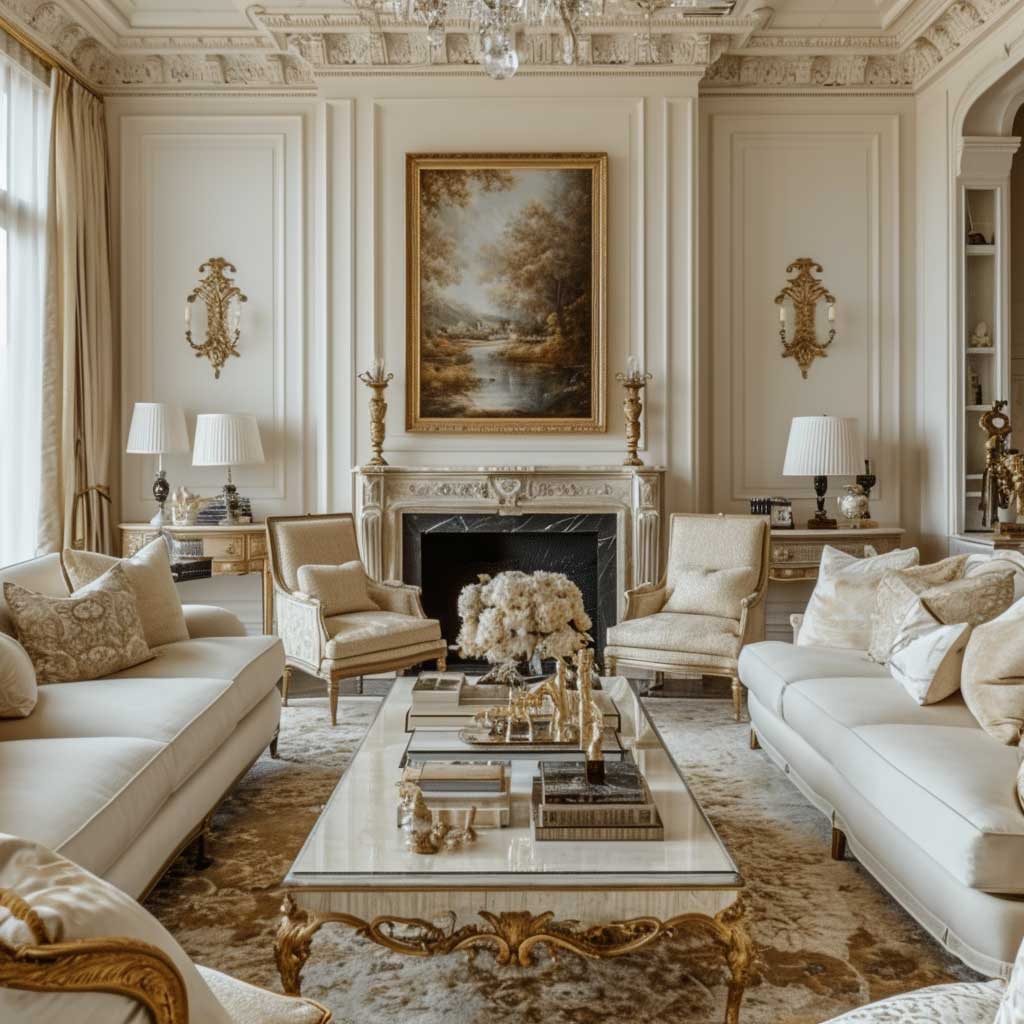

Art placement matters more than art selection. A large contemporary canvas — abstract, oversized, something with raw energy — hung directly above a classical mantel creates the tension that keeps a chateau room from feeling like a period reconstruction. You’re not recreating the 18th century; you’re referencing it. Placement at 57 inches to centre from the floor, the museum standard, works regardless of ceiling height. Don’t centre the art on a wall — centre it on the furniture grouping instead.
Chandeliers in a modern chateau living room should have clean bones. The Arteriors Fiori or a Visual Comfort Niobe in antique brass read château without the excessive crystal drip that tips into hotel-lobby territory. Budget around $1,200–$3,500 for a fixture that actually moves the room. Under $800 and you’re almost always looking at something that photographs cheaply — and this room will be photographed. For more on how lighting shapes the overall feel, these wall decor ideas for modern living rooms show how fixture choices affect the whole visual hierarchy.
Don’t Do This
Don’t layer every chateau reference at once. Toile wallpaper plus carved furniture plus crystal chandelier plus gilt frames plus tapestry pillows makes the room look like a French-themed hotel in a secondary airport. Pick two or three structural chateau elements — fireplace, moulding, chandelier — and let the rest of the room breathe. I’ve redone two living rooms that made this mistake and both required a near-complete furniture edit to fix. The chateau elements that survive the edit are always the architectural ones, never the accessories.
Chateau Bedroom Logic — Grandeur Where It Counts, Calm Everywhere Else
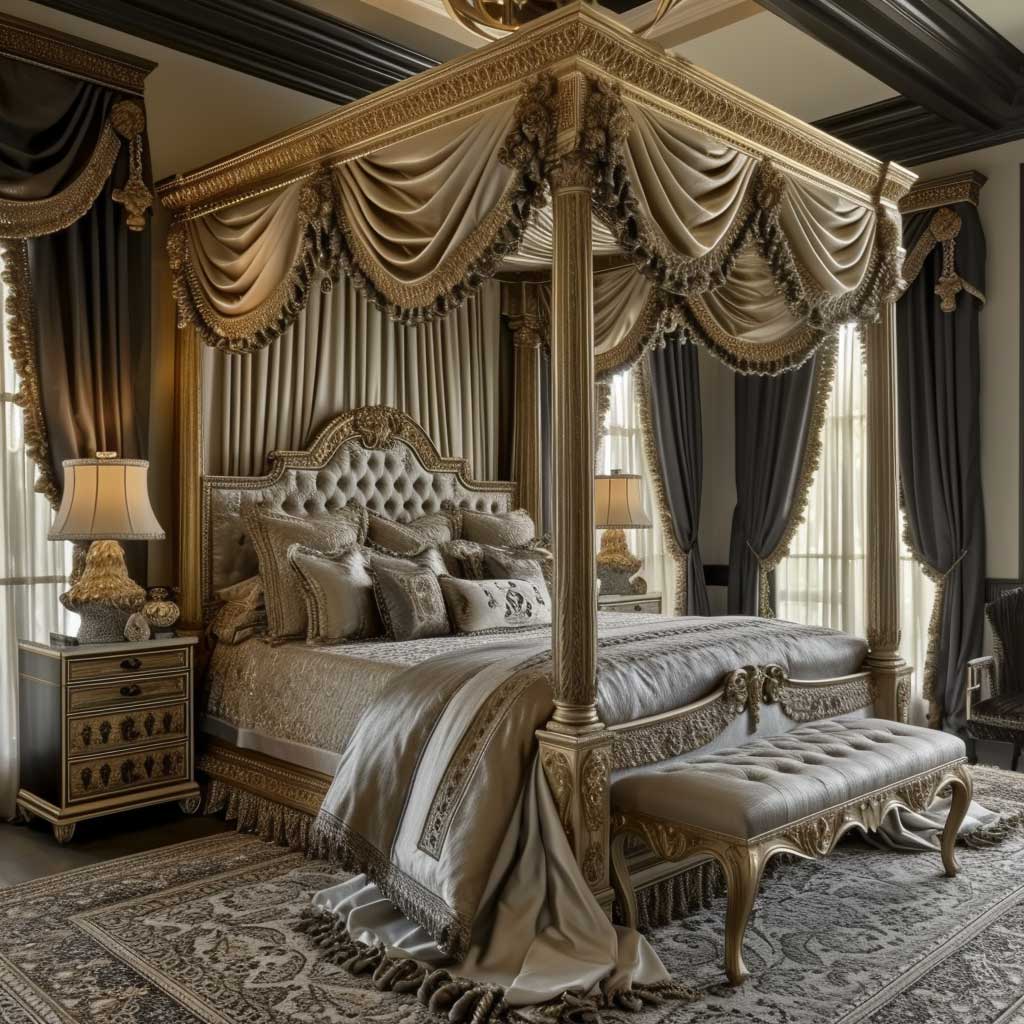
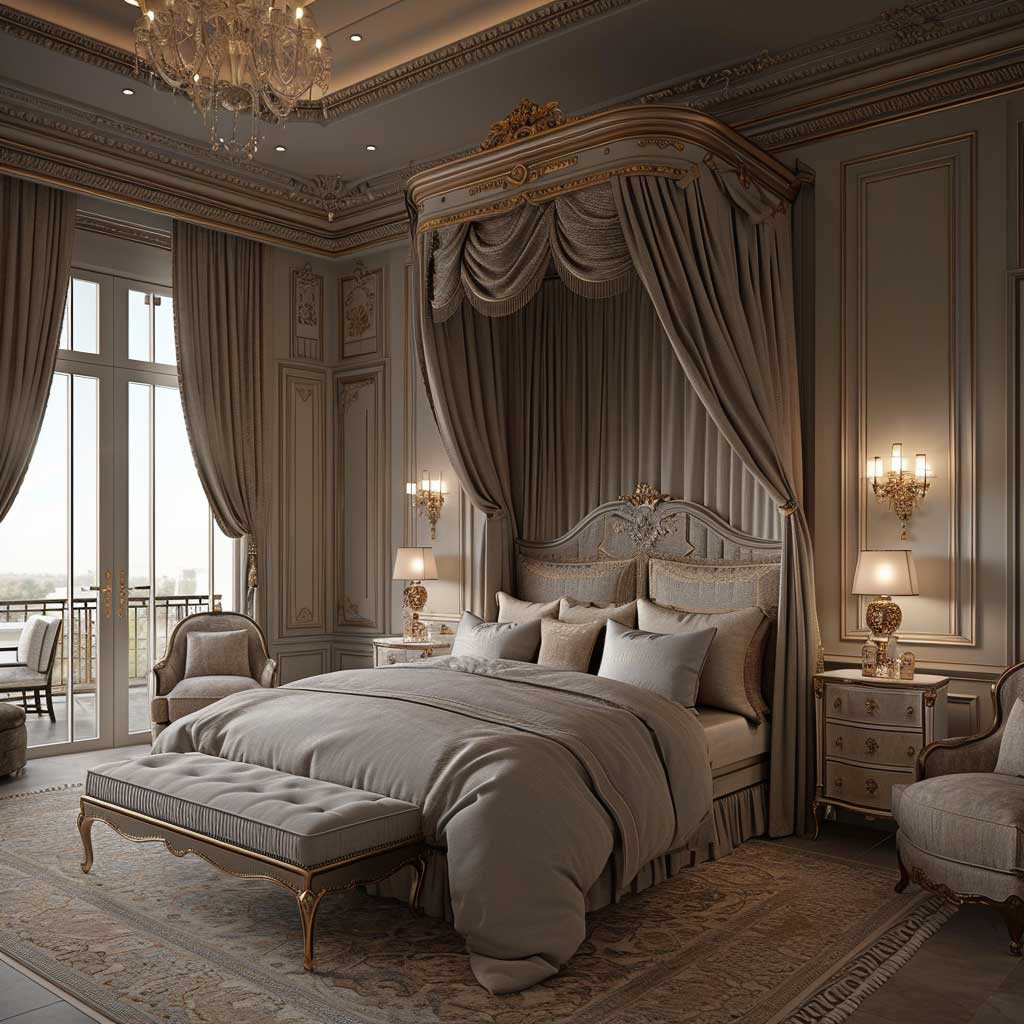

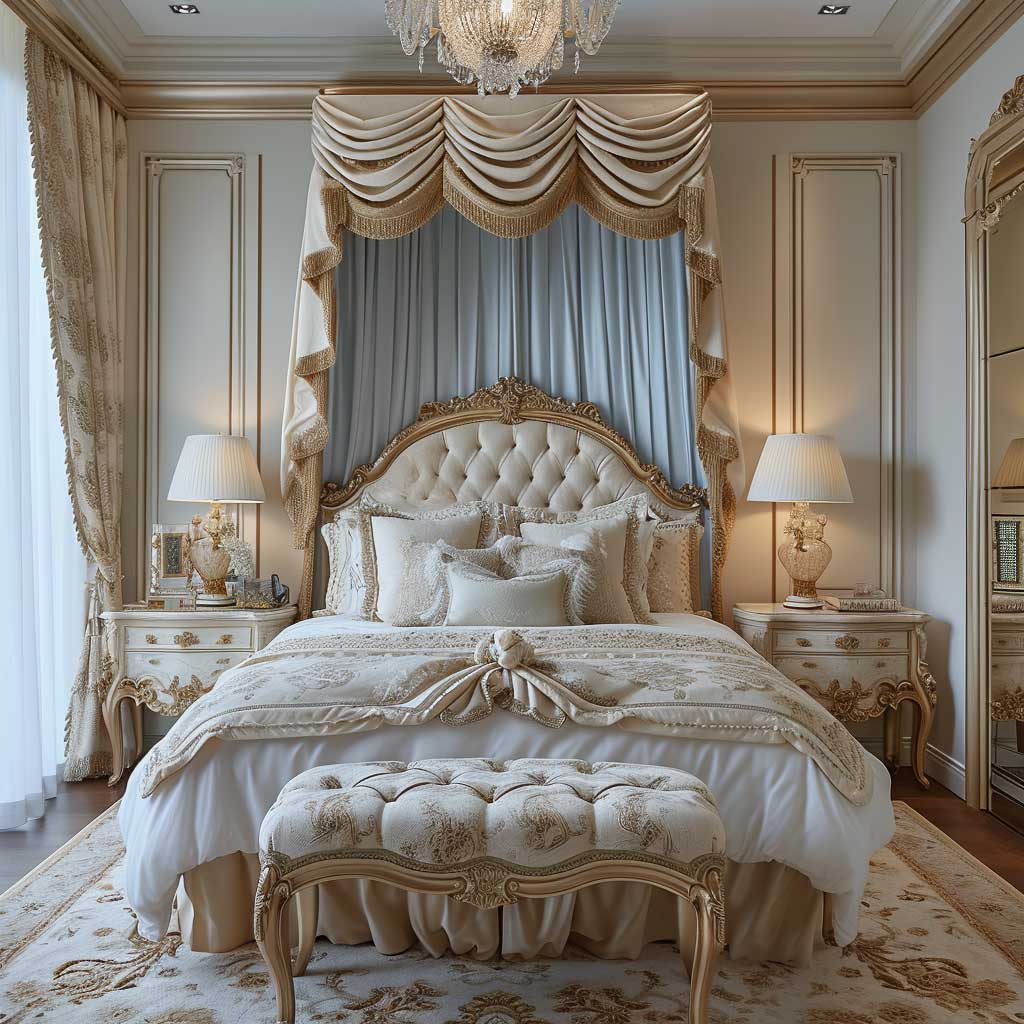
A proper chateau bedroom has one dominant statement and earns its calm from everything else pulling back. The statement is almost always the bed. A carved-wood four-poster or iron canopy — I own the Restoration Hardware Maison four-poster and it functions as the room’s entire design rationale — carries enough visual weight that the rest of the furniture can be nearly disappearing. Low-profile bedside tables in bleached oak or painted cream, nothing taller than 28 inches, keep the sightlines clean. The bed frame should be the tallest piece in the room, period.
Bedding in this style is where you make your money back from the expensive frame. Stick to a single colour in your linen duvet — warm white or antique ivory — with texture doing the work instead of pattern. Society6 and Parachute both have linen duvet covers in the right tonal range for under $200; the Hotel Collection from Frette is $600–$1,200 and is genuinely different in hand feel, but it isn’t four times better. What is worth spending on? The duvet insert. A European goose-down fill at 600+ fill power changes the whole silhouette of the bed. Flat-looking bedding is the fastest way to make a chateau bedroom look like a rented villa instead of an owned one.
Floor-length drapes are load-bearing in this room. They should pool slightly — 1.5 to 3 inches — on hardwood or stone floors. Sheer ivory underneath, heavy linen or velvet over-panel in the same tone as your wall colour or one shade deeper. Avoid contrast curtains in a chateau bedroom; the room’s drama comes from the bed, not from a dark-curtain moment. This is the one place where I’d specifically not follow the current trend toward black or deep-navy window treatments — it reads wrong against the carved frame and cancels the warmth the room is supposed to deliver.
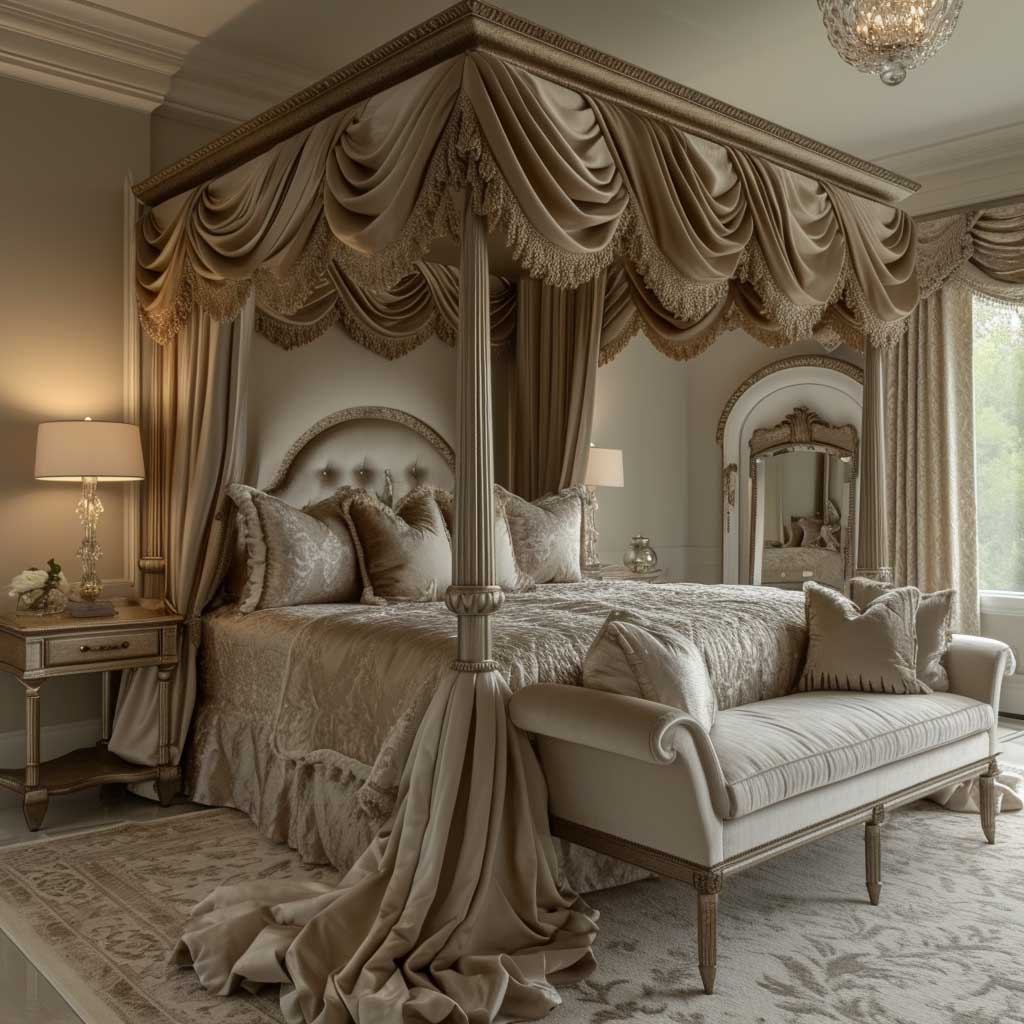
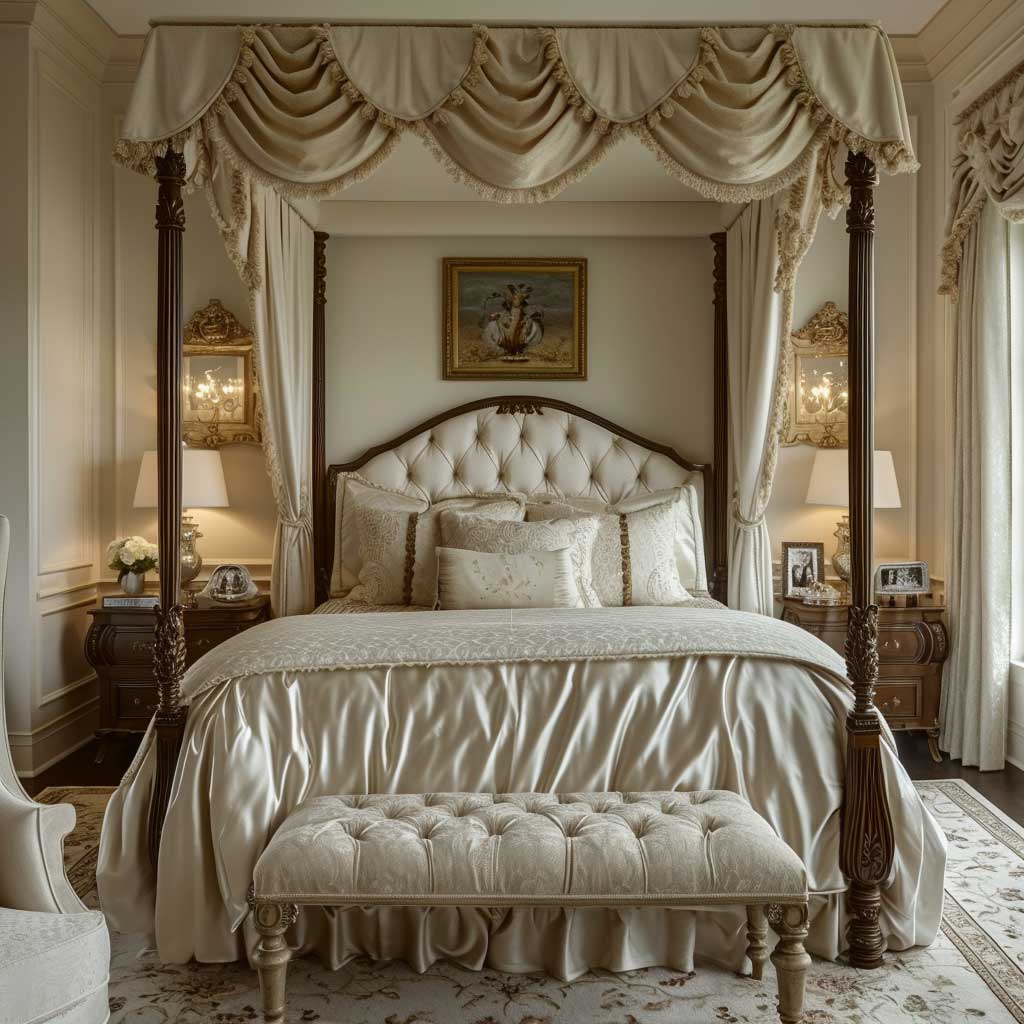


Lighting at the bedside should be warm — 2200K to 2700K — and positioned so the shade sits at eye level when you’re reading propped on pillows. That’s usually 24–26 inches from table surface to shade bottom. My go-to is a ceramic lamp base with a linen shade, anywhere from Visual Comfort to a smaller ceramic studio; avoid the matching-pair instinct if your bedside tables are slightly different heights. A single wall-mounted swing-arm sconce on one side and a table lamp on the other looks more lived-in and less catalog. That tension between symmetry and variation is very French.
Storage is where the chateau bedroom earns its practicality. A genuine armoire — not a wardrobe with armoire detailing applied as stickers — does real work. The Maisons du Monde Versailles armoire ($890–$1,100 depending on finish) is a solid mid-budget pick; if you’re buying vintage, look for French provincial pieces from the 1940s–1960s that haven’t been refinished, because the original painted patina is the point. For a broader look at how the French country aesthetic connects to this style, the three quintessential elements of French country living rooms add useful context on materiality and proportion.
Marble Countertops Alone Won’t Save a Chateau Kitchen


Marble on the countertop is correct, but it’s the cabinetry profile that actually signals chateau in a kitchen. You need inset doors — not overlay, inset — with a raised or flat panel, painted in a single tone. My current kitchen has Shaker-adjacent inset cabinets in Benjamin Moore Pale Oak (OC-20), and the profile reads as softer and more French than a full raised panel would. Full raised-panel doors push you toward English country; you want the restraint of Loire Valley, not Cotswold. Cream, warm white, or a very muted sage are the working palette here; avoid grey-green because it ages into olive in evening light.
Appliances should disappear. Panel-ready refrigerators and dishwashers from Sub-Zero, Miele, or Thermador — the Sub-Zero Classic Series starts around $8,000, the Miele panel-ready units around $1,200 for a dishwasher — allow the cabinetry to run uninterrupted. A 36-inch or 48-inch La Cornue or Lacanche range in an accent colour (Lacanche’s Volnay blue is one of my favourite kitchen decisions I’ve ever seen anyone make) becomes the room’s focal point the same way a fireplace anchors the living room. That range is expensive — $8,000–$20,000 — but it’s a structural decision, not an accessory. Budget accordingly.
The island is the kitchen’s chateau moment. Stone top — Calacatta marble, Statuario, or a convincing quartzite like White Macaubas — with a different base finish than the perimeter cabinetry. If perimeter runs cream, the island can go antique brass hardware and a slightly warmer paint tone or raw oak legs. The contrast proves intention. What kills the island concept is matching it too closely to the perimeter; you end up with a block of beige that reads as institutional rather than French estate. Two or three unlacquered brass pendant lights above it, 30–36 inches between pendants, 30–34 inches from counter to shade bottom.
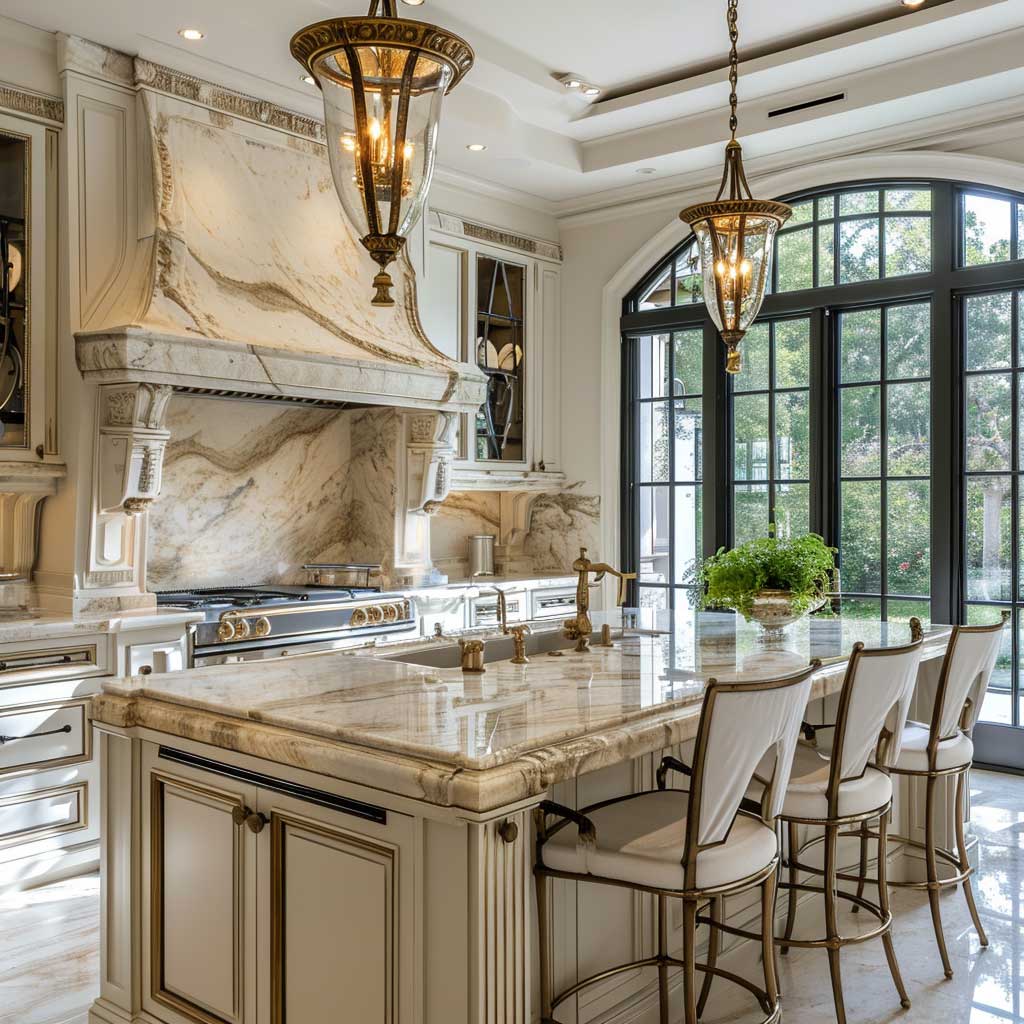
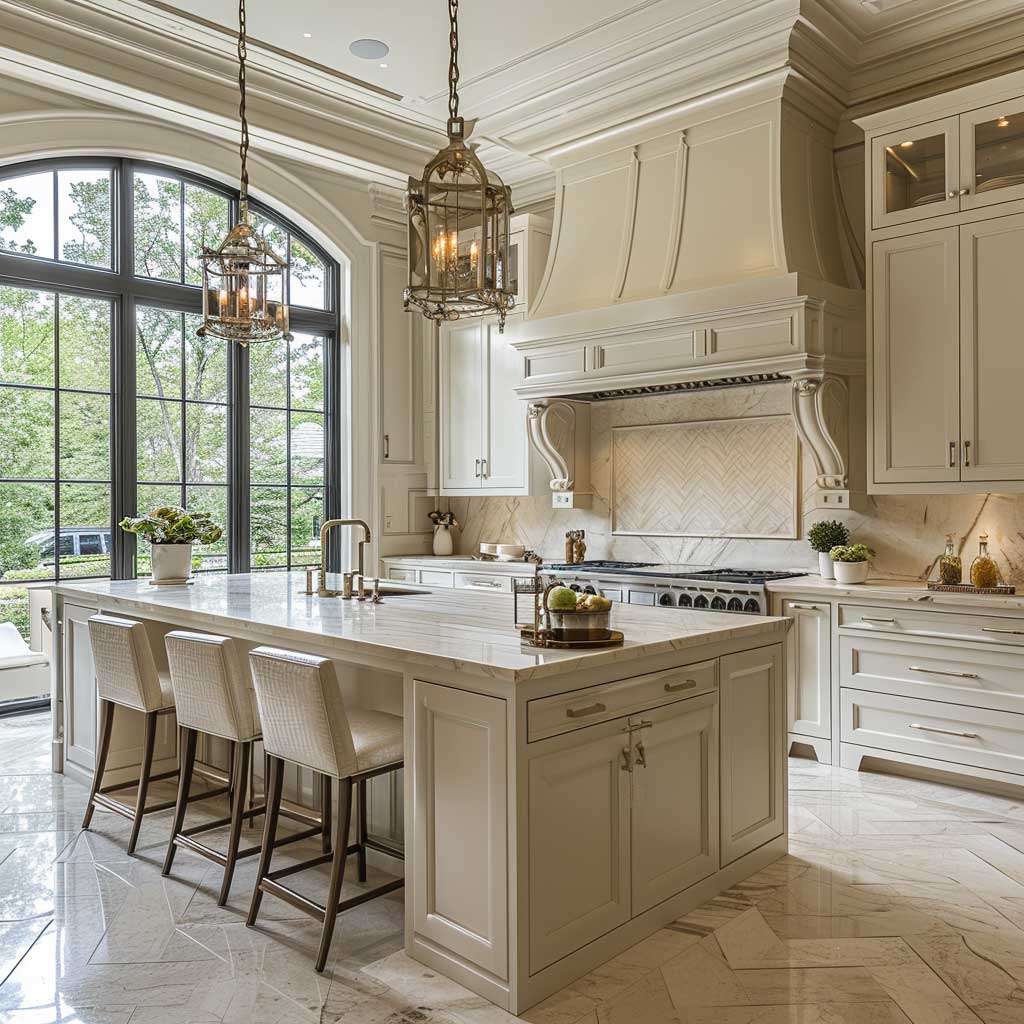
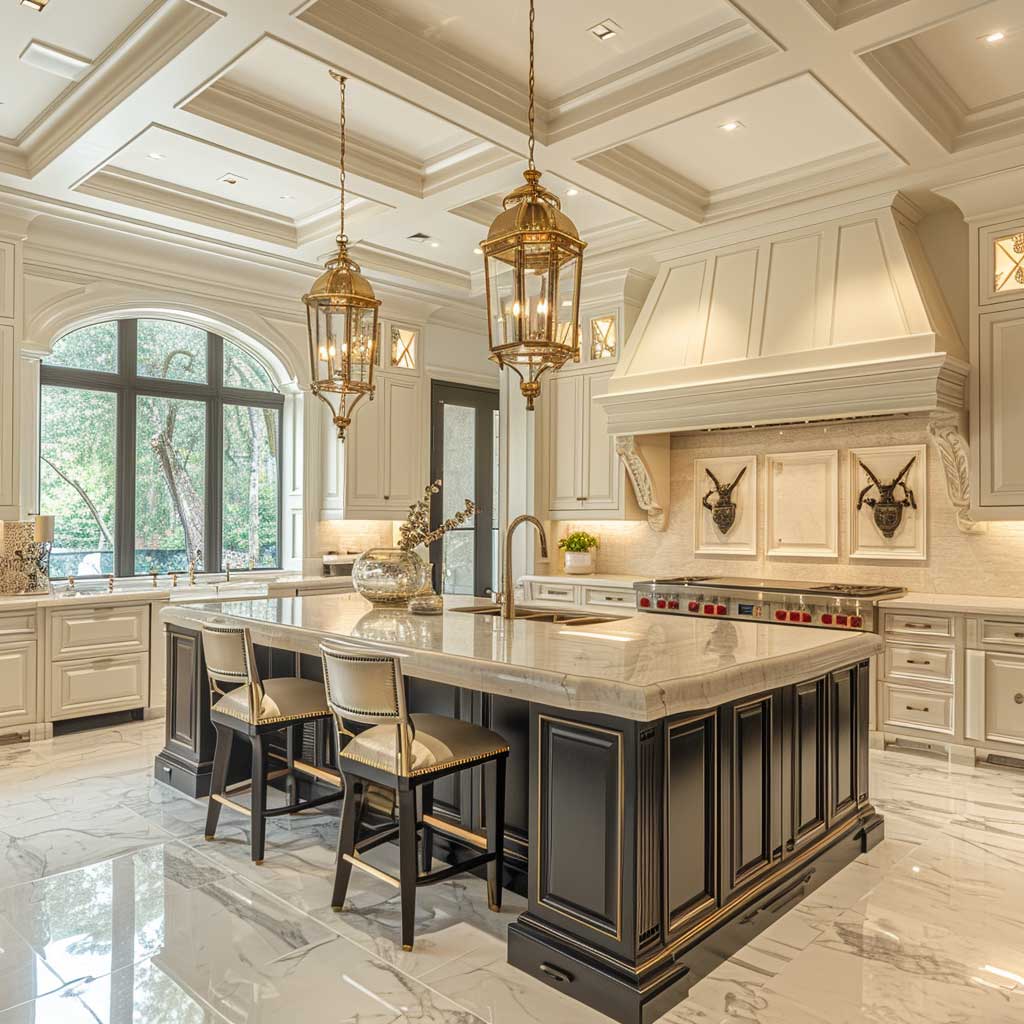
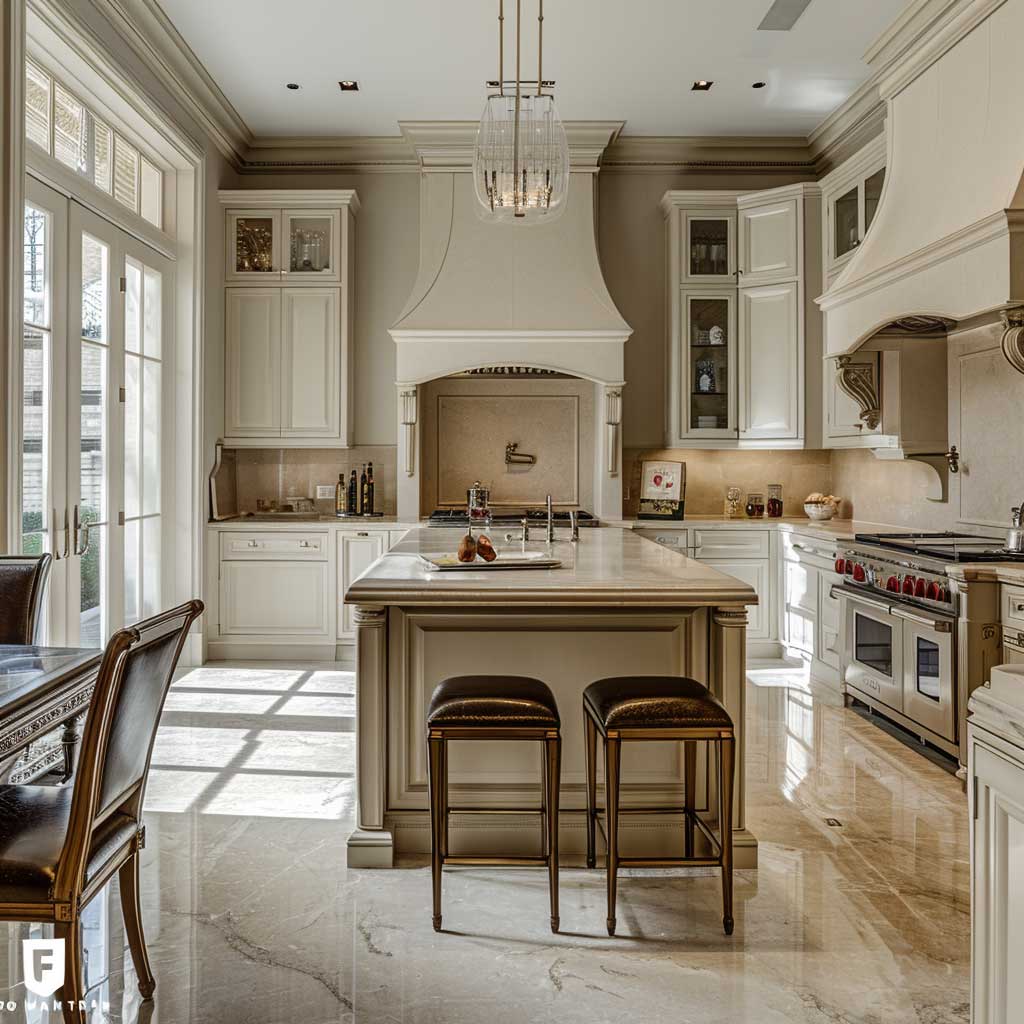
A farmhouse sink — the Kohler Whitehaven in cast iron, around $800, or the Rohl Shaws fireclay version at $1,100–$1,400 — is the single most cost-effective chateau detail in a kitchen. It reads instantly. Pair it with a bridge faucet in unlacquered brass or polished nickel; the unlacquered brass will develop a patina within a year that looks more intentional than anything you could buy pre-aged. Avoid oil-rubbed bronze in this style — it’s a 2010s finish that now reads as a period piece of its own, and not the right period. For inspiration on how white kitchens integrate French detail without losing modernity, this breakdown of white modern French country kitchen design covers the material logic well.
Stone or wide-plank wood flooring is non-negotiable underfoot. Limestone tile in a honed or tumbled finish — Versailles pattern or a simple large format, 24×24 or 18×18 — or aged oak planks at 5 inches or wider. No ceramic tile trying to impersonate stone; the grout lines always give it away and the surface gloss is wrong. A herringbone layout in the entryway transitioning to a running-bond or straight-lay in the main kitchen zone adds considered variation without budget strain. For more on how the French country exterior connects all of this to the home’s overall tone, the art of modern French country exterior styling on this site is a useful companion.
Material Comparison — Chateau Kitchen Decisions
| Element | Chateau-Right Choice | Skip This | Budget Range |
|---|---|---|---|
| Countertop | Calacatta or Statuario marble, honed | White quartz with veining (reads flat) | $80–$200/sqft installed |
| Cabinet profile | Inset doors, flat or raised panel | Full overlay Shaker (too casual) | +20–30% over overlay |
| Range | Lacanche or La Cornue coloured range | Stainless freestanding (feels commercial) | $8,000–$20,000 |
| Sink | Fireclay or cast iron farmhouse | Undermount stainless | $800–$1,400 |
| Hardware finish | Unlacquered brass or polished nickel | Oil-rubbed bronze or matte black | $8–$40/pull |
Final Word
Modern French chateau design is an editing job, not a collecting job.
The rooms that read as genuinely sophisticated have fewer pieces, not more. A carved limestone fireplace and a properly scaled chandelier outperform a room full of chateau-adjacent accessories at every price point.
Start with one structural element per room — fireplace, armoire, statement bed frame — and furnish around its weight. The chateau identity comes from architecture and material, not from how many fleur-de-lis you can fit on a throw pillow.
Save this post before your next renovation conversation — these material notes and price points are the ones you’ll want printed at the hardware store.