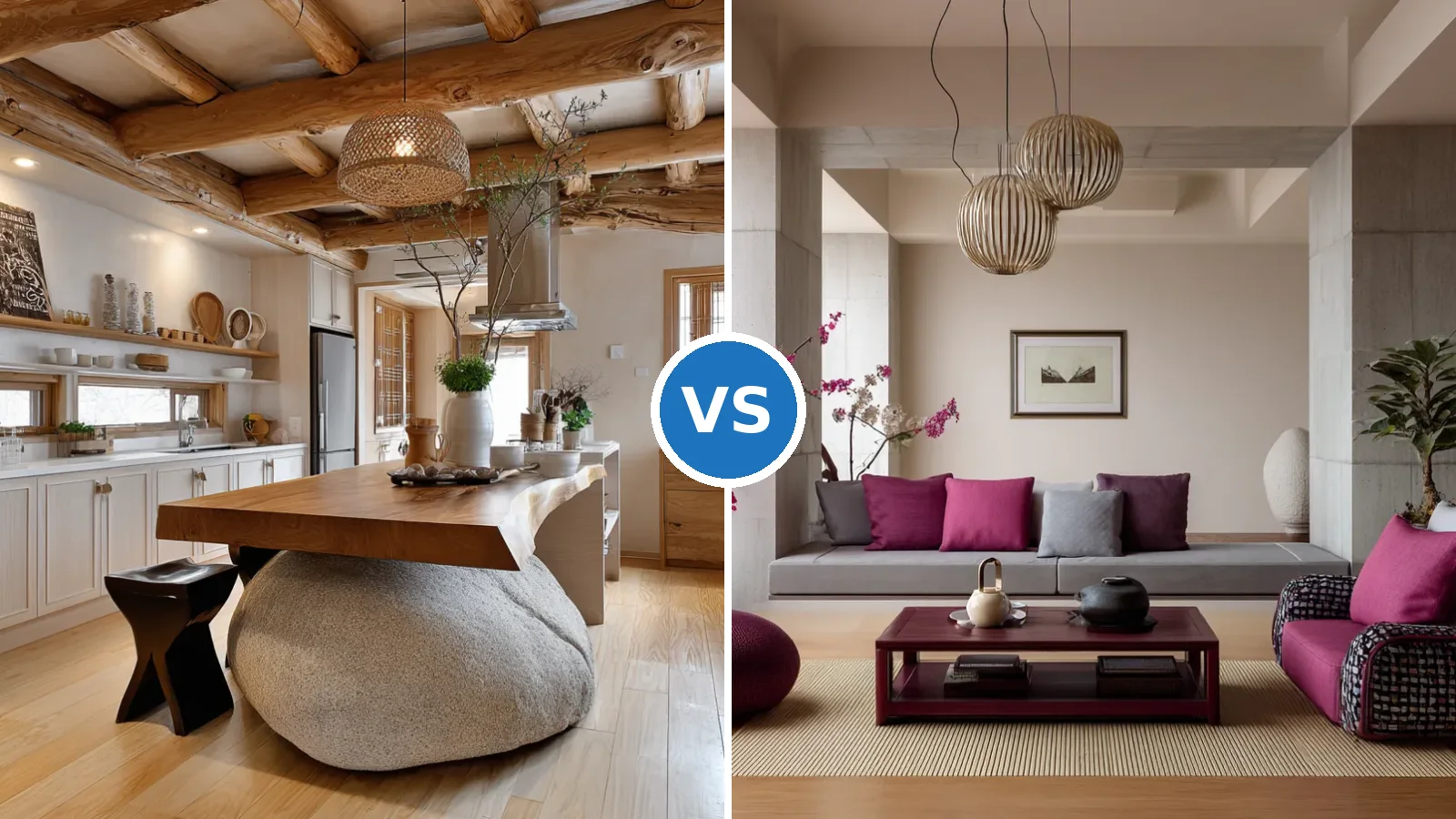
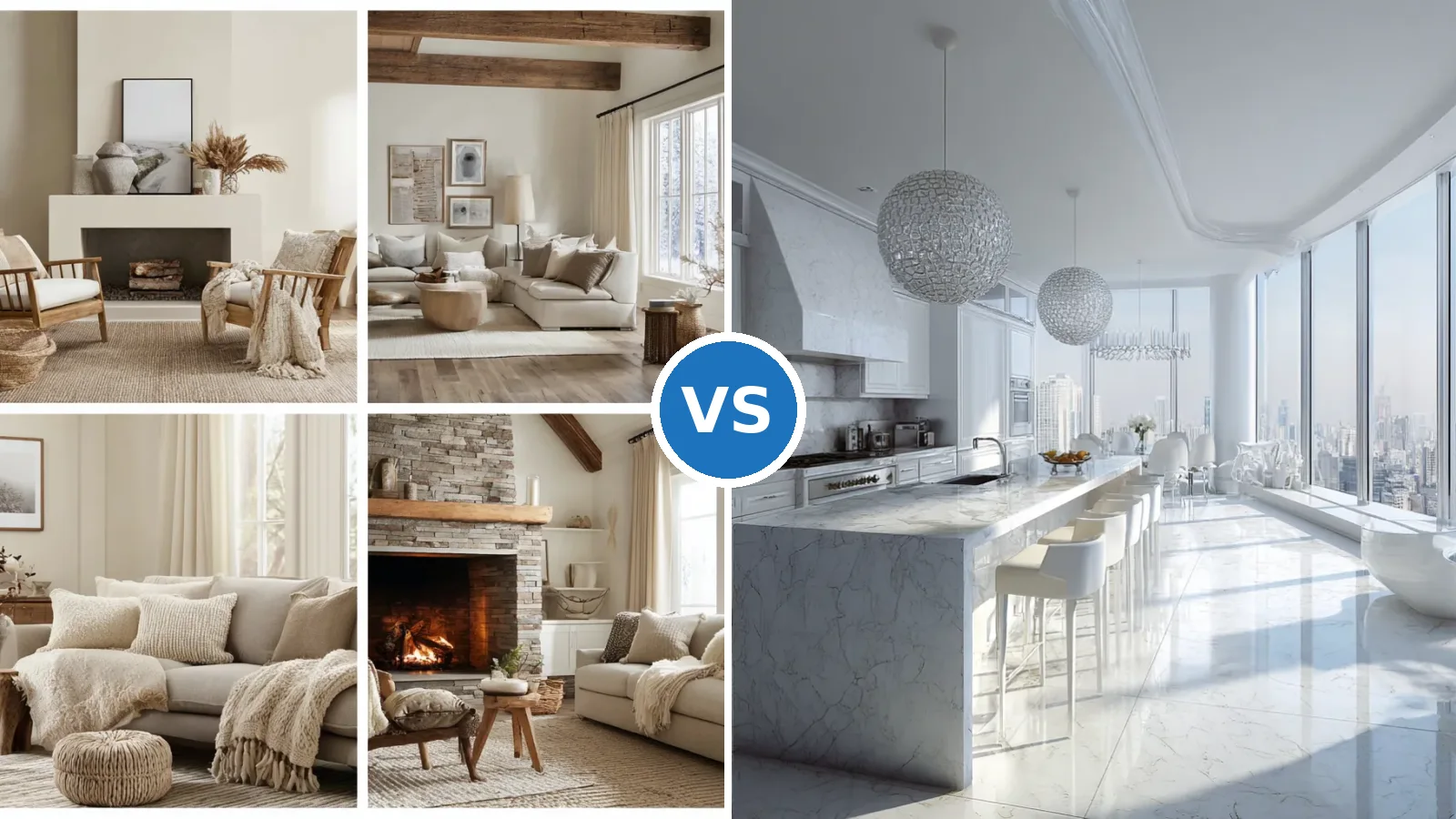
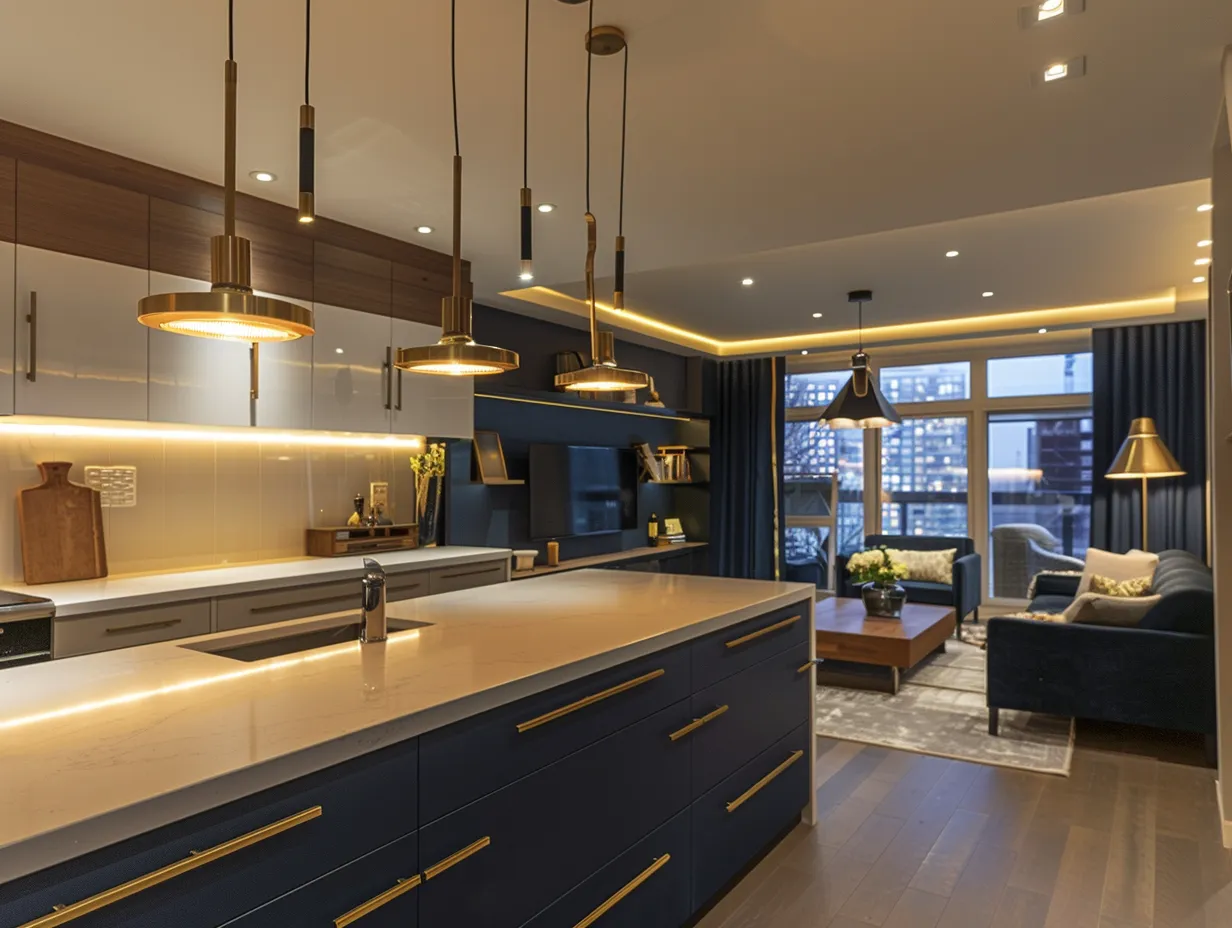
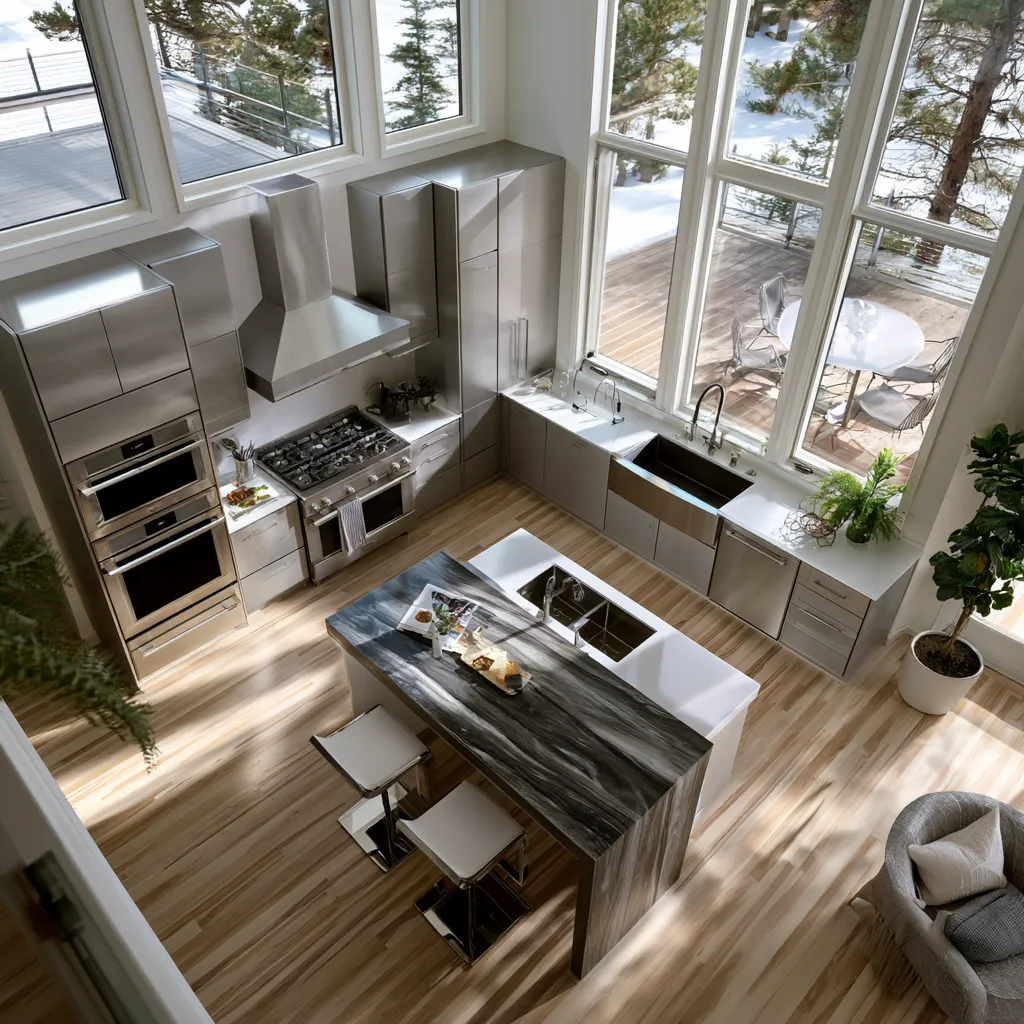
Eclectic kitchen design is the rare approach where more actually works — provided the “more” has been chosen deliberately, not accumulated accidentally. The style layers periods, materials, and cultural references into a single room without letting any one of them dominate. Done well, the result feels like the kitchen was lived in rather than installed.
The challenge is that eclecticism has a failure mode. Kitchens that try to hold every trend simultaneously tend to read as chaotic rather than collected. Stylists recommend anchoring the space with one strong material — marble, aged wood, or a statement tile — then letting the surrounding choices contrast against it. The anchor prevents the room from looking like a showroom clearance sale.
What follows covers three distinct approaches to the eclectic kitchen, from harmonious multi-era blending to deliberate clash and contrast, to the integration of modern function within a layered aesthetic. Each section focuses on how the decisions actually work — not just how they photograph.
✦ Carrara marble countertops start around $40/sq ft for material; Calacatta runs $100–$200/sq ft
✦ Patterned geometric backsplash tile runs $15–$30/sq ft installed
✦ One strong anchor material prevents eclecticism from reading as clutter
✦ Vintage lighting over modern appliances is the fastest way to signal the eclectic style
✦ According to Houzz, 44% of renovating homeowners now opt for high-tech appliances — they can be concealed inside eclectic cabinetry
✦ Mixing metal finishes works; mixing more than three does not
✦ The biggest mistake: buying “eclectic” pieces individually and hoping they cohere
Multi-Era Harmony in an Eclectic Kitchen
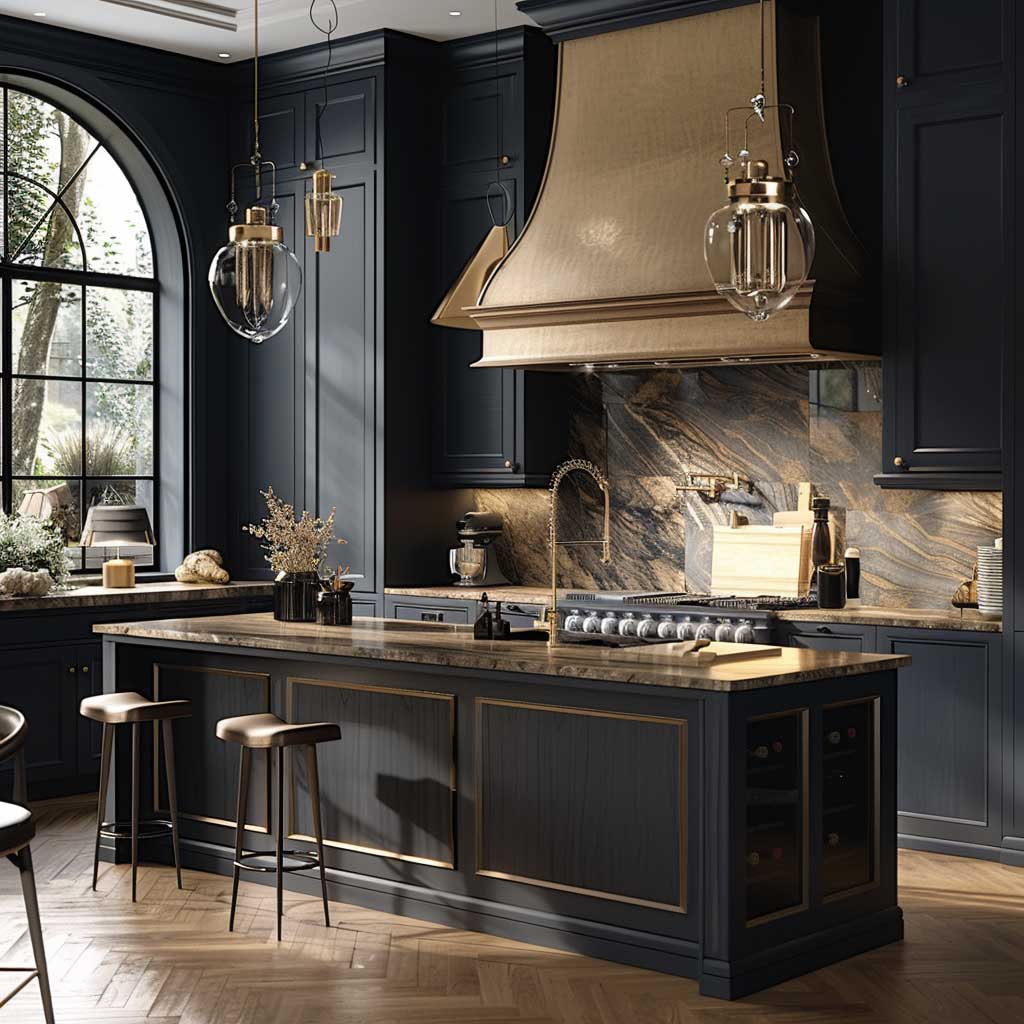
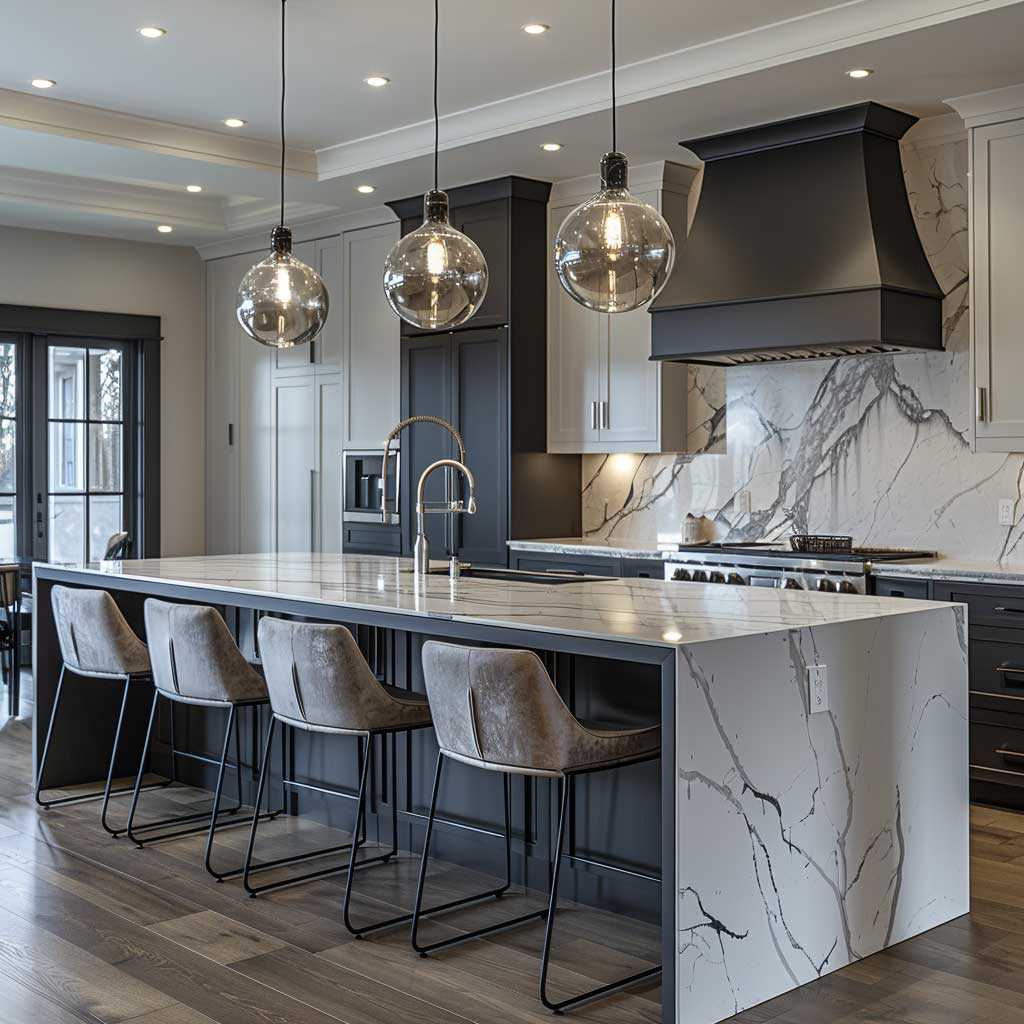
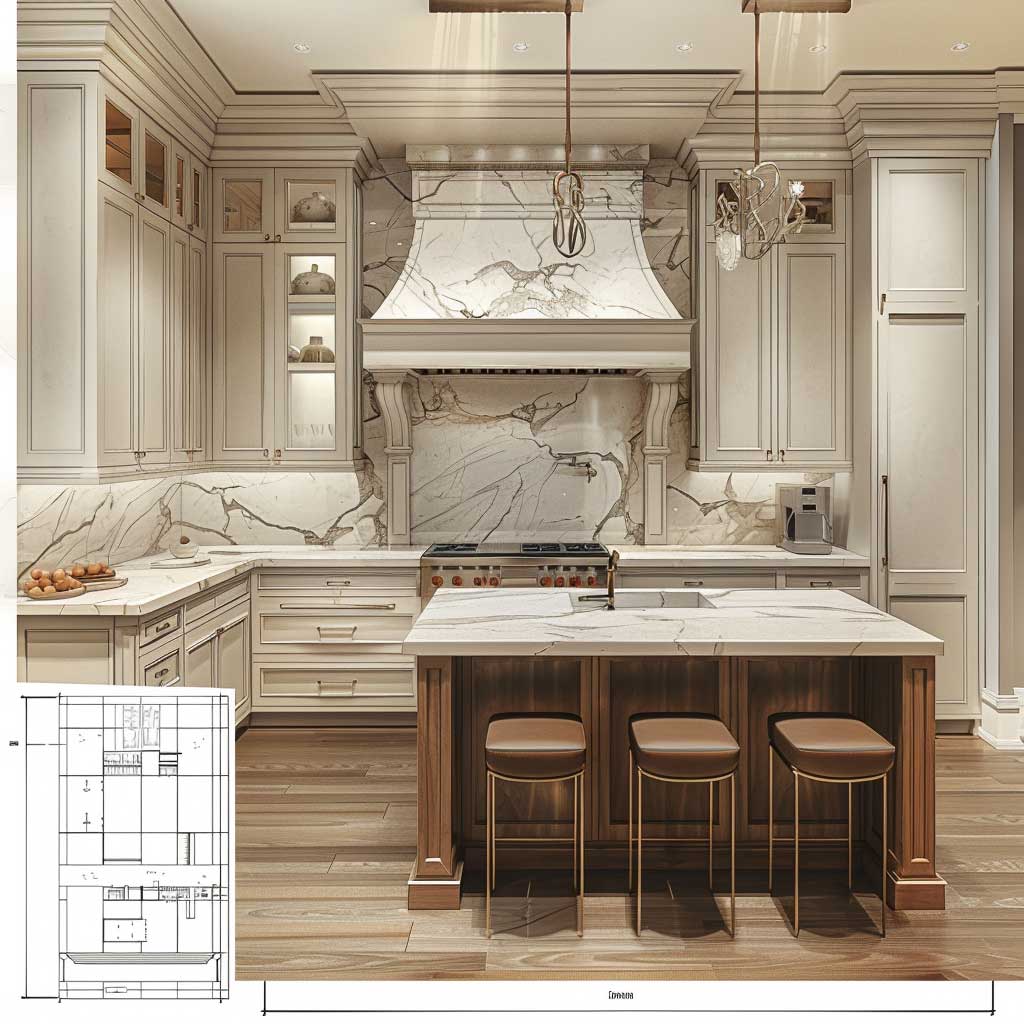
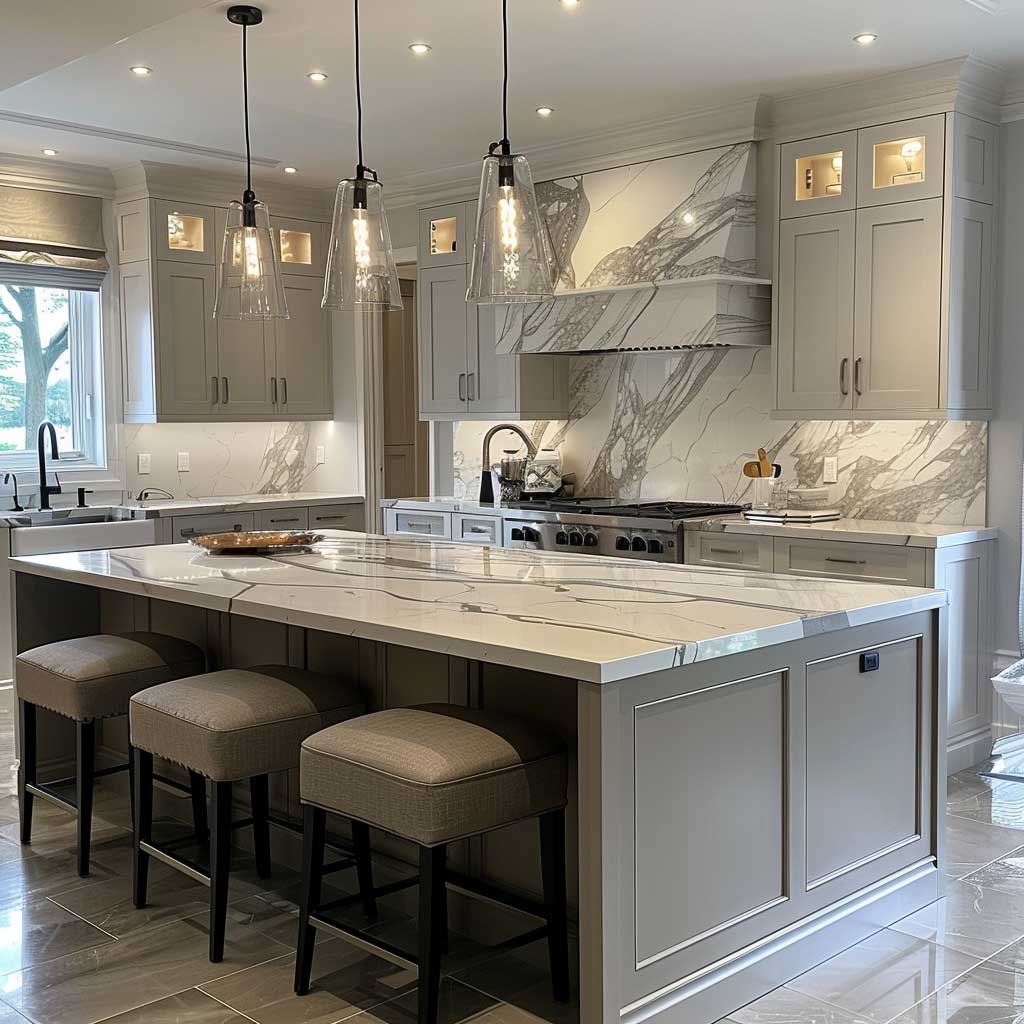
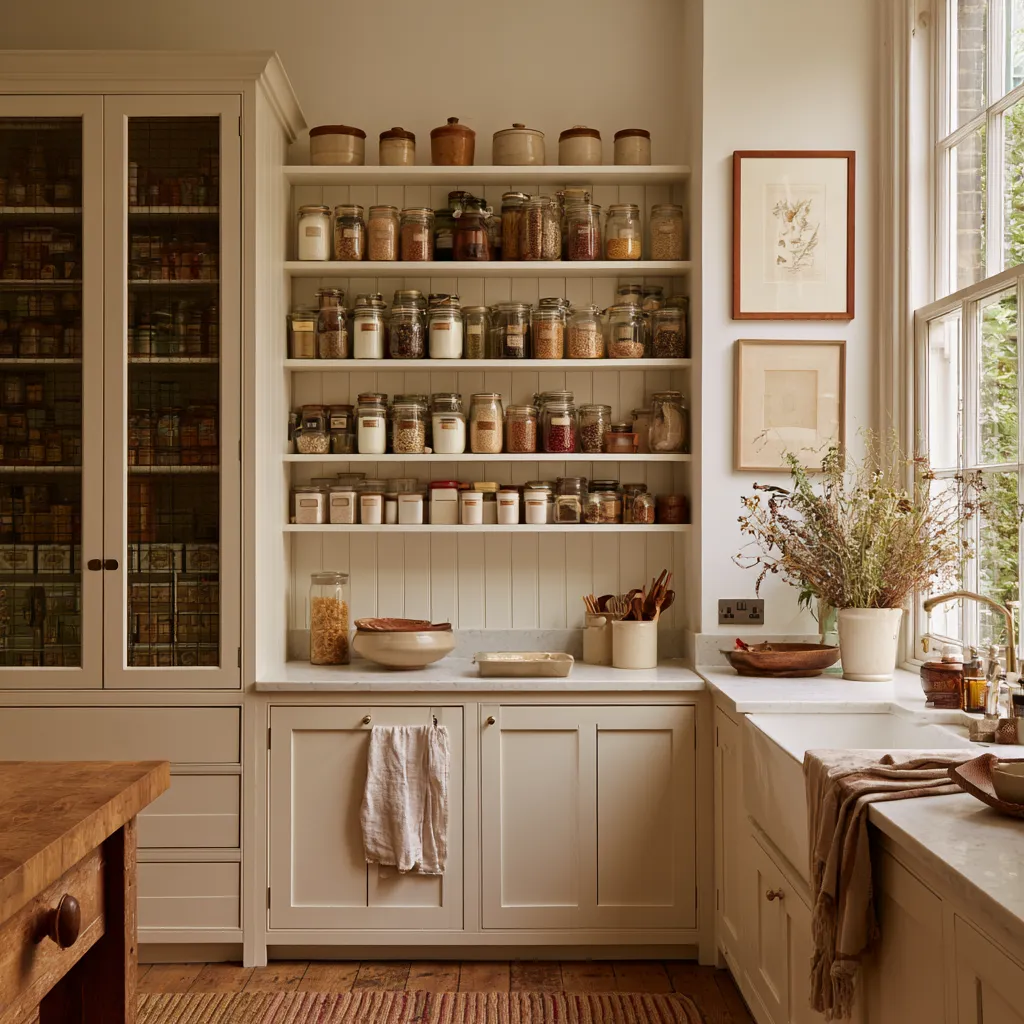
Mixing eras in a kitchen without producing visual noise requires a common thread — usually a shared undertone across materials. A kitchen that balances Shaker-style cabinetry with a veined marble island and unlacquered brass hardware works because all three elements pull warm, slightly yellow tones. Change the brass to polished chrome and the same room starts arguing with itself. The trick here is to pick your temperature — warm or cool — and hold it across every finish, even when the objects themselves come from different centuries.
Carrara marble is the most accessible entry point for this kind of kitchen. Material costs start around $40 per square foot — lower than the $100–$200 range that Calacatta commands — while still reading as Italian stone with genuine veining. Stylists often recommend using Carrara on the perimeter counters, where spills and prep work concentrate, and reserving budget for a statement island top. That island becomes the room’s anchor, and everything else — open shelving, antique-style pulls, large-format windows — plays off it rather than competing with it.
Why does natural light become particularly important in this kind of kitchen? Because it moves across marble differently than it does across tile or laminate — at certain hours it reveals the depth of the veining and makes the room feel like it’s been there for decades. A kitchen that depends on recessed LEDs alone tends to flatten that effect. Position a primary light source above the island, add under-cabinet strips for task work, and let the windows do the emotional heavy lifting. Avoid placing large pendant clusters directly above a prep sink — they block line of sight across the room and make the space feel lower than it is.
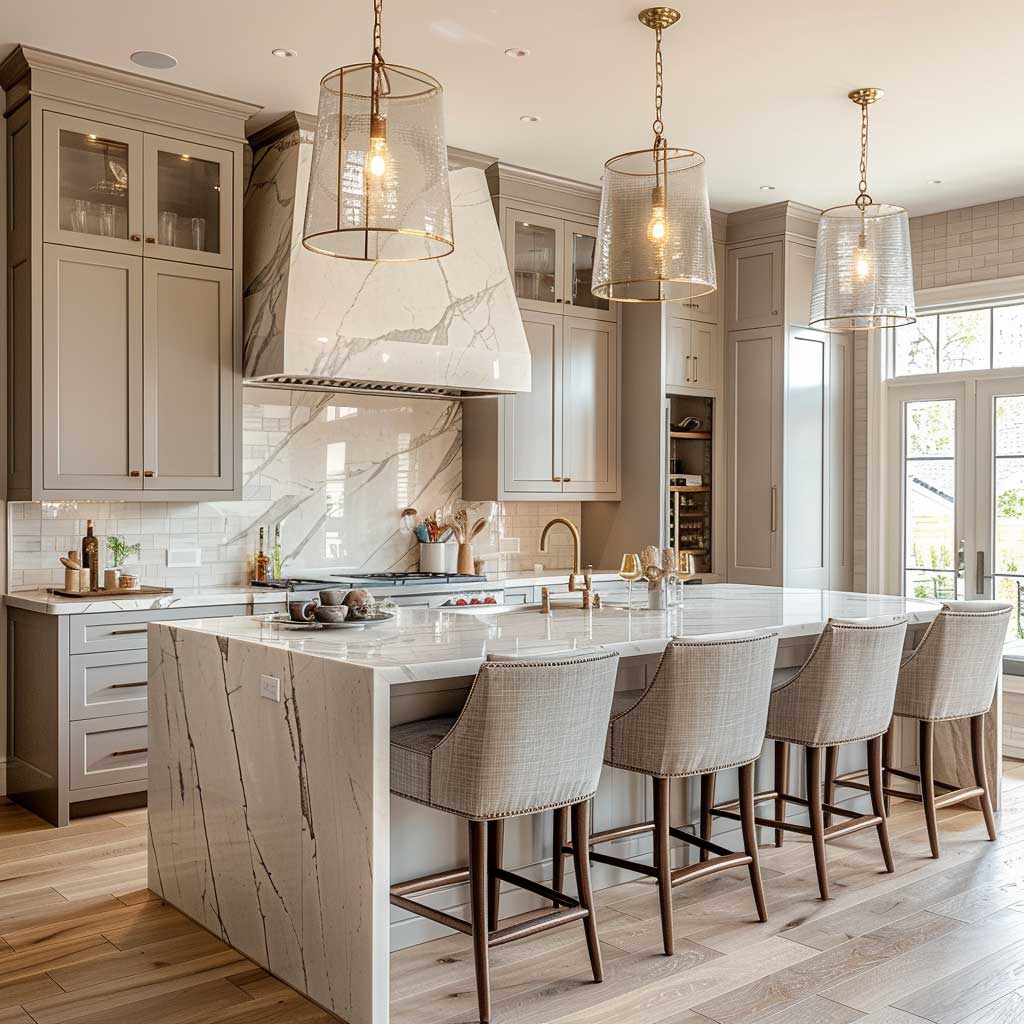
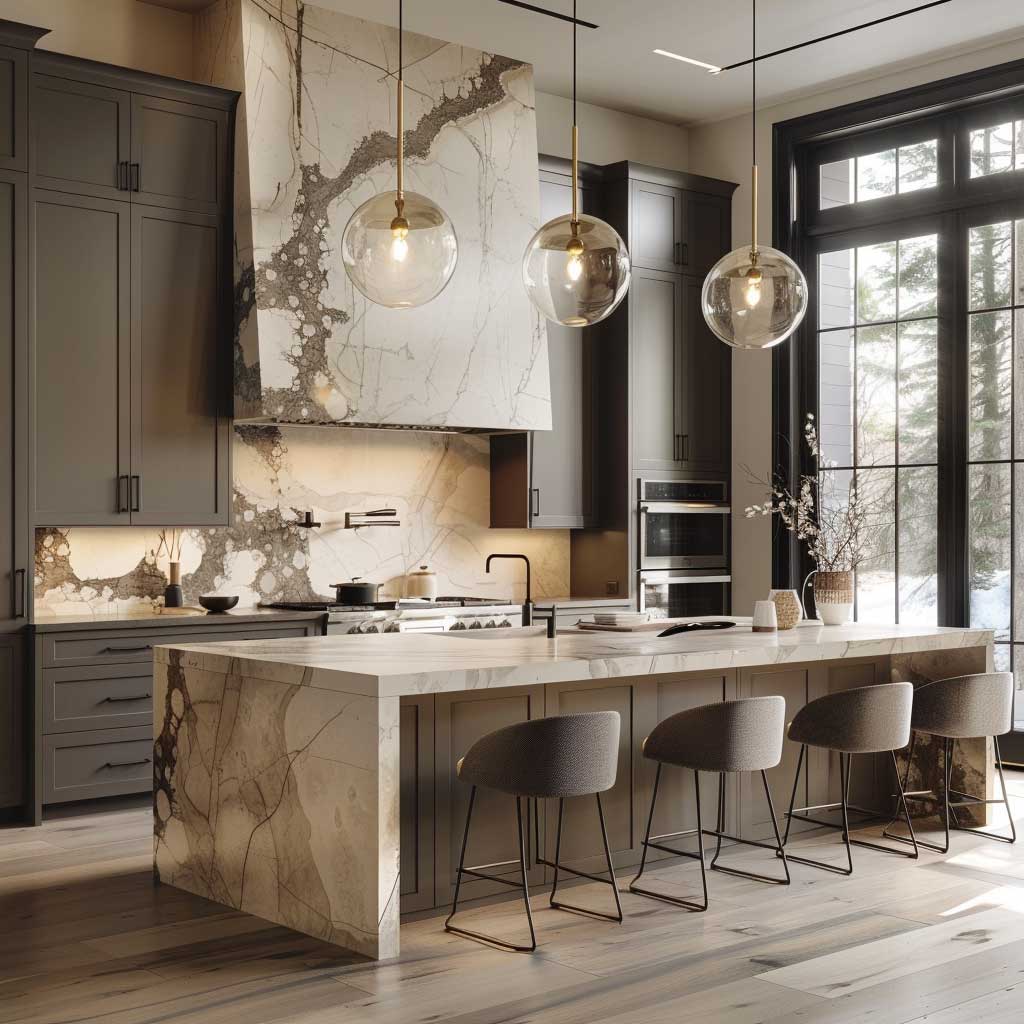
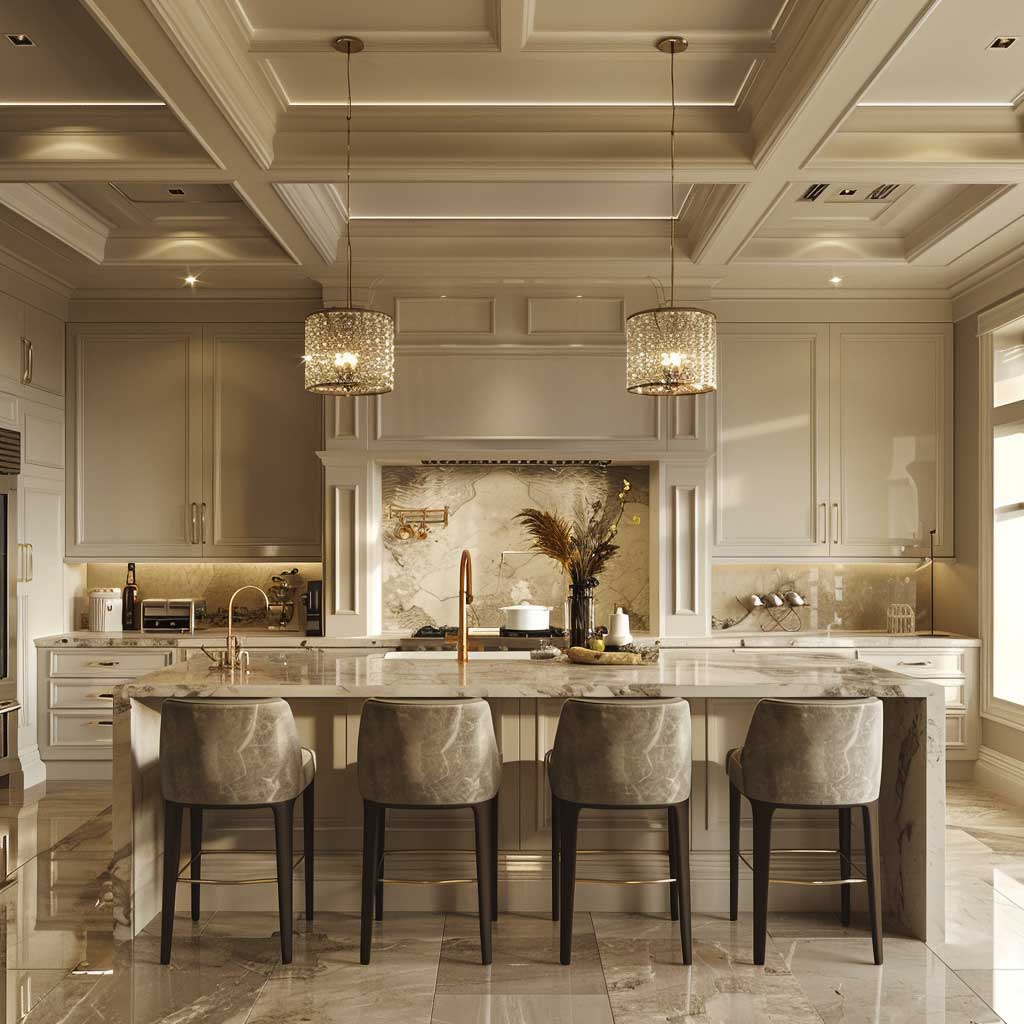
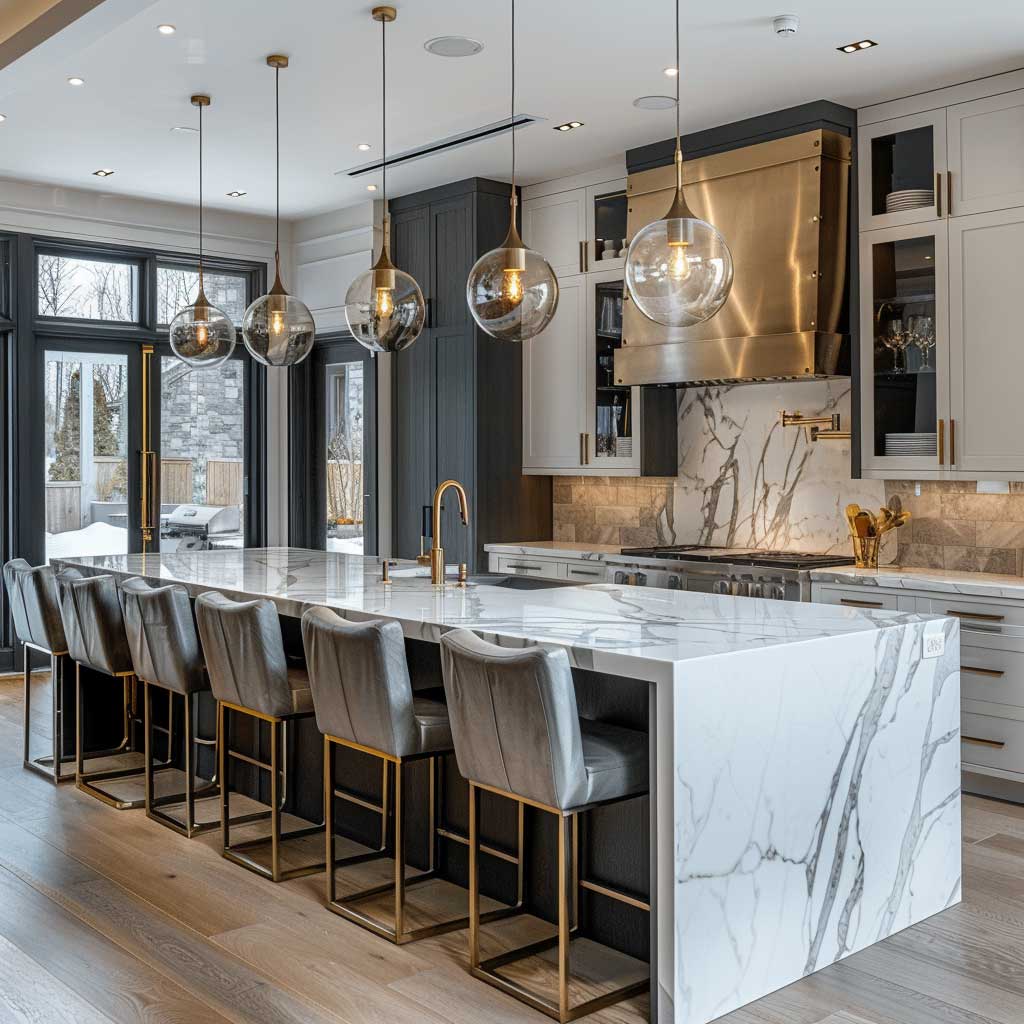
A soft neutral palette — warm whites, aged linens, muted sage — creates the background that lets individual statement pieces register without visual competition. What reads as harmony in this style is really just controlled restraint: most surfaces stay quiet so one or two elements can speak. The rule breaks down when every surface competes equally, which is why all-eclectic kitchens that lack a strong neutral base tend to age poorly. The neutrals are doing most of the work; the eclectic pieces take the credit.
Contrast as Structure in Luxe Eclectic Kitchen Design
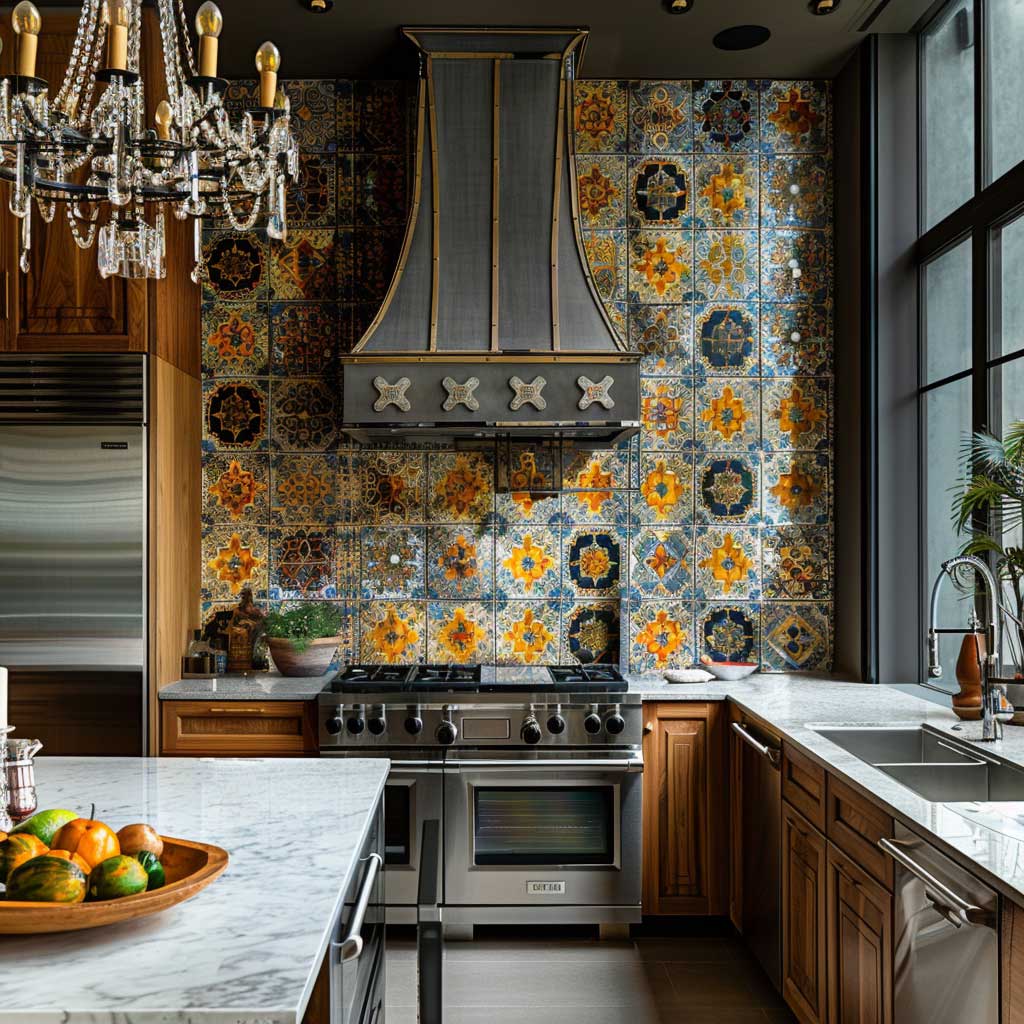
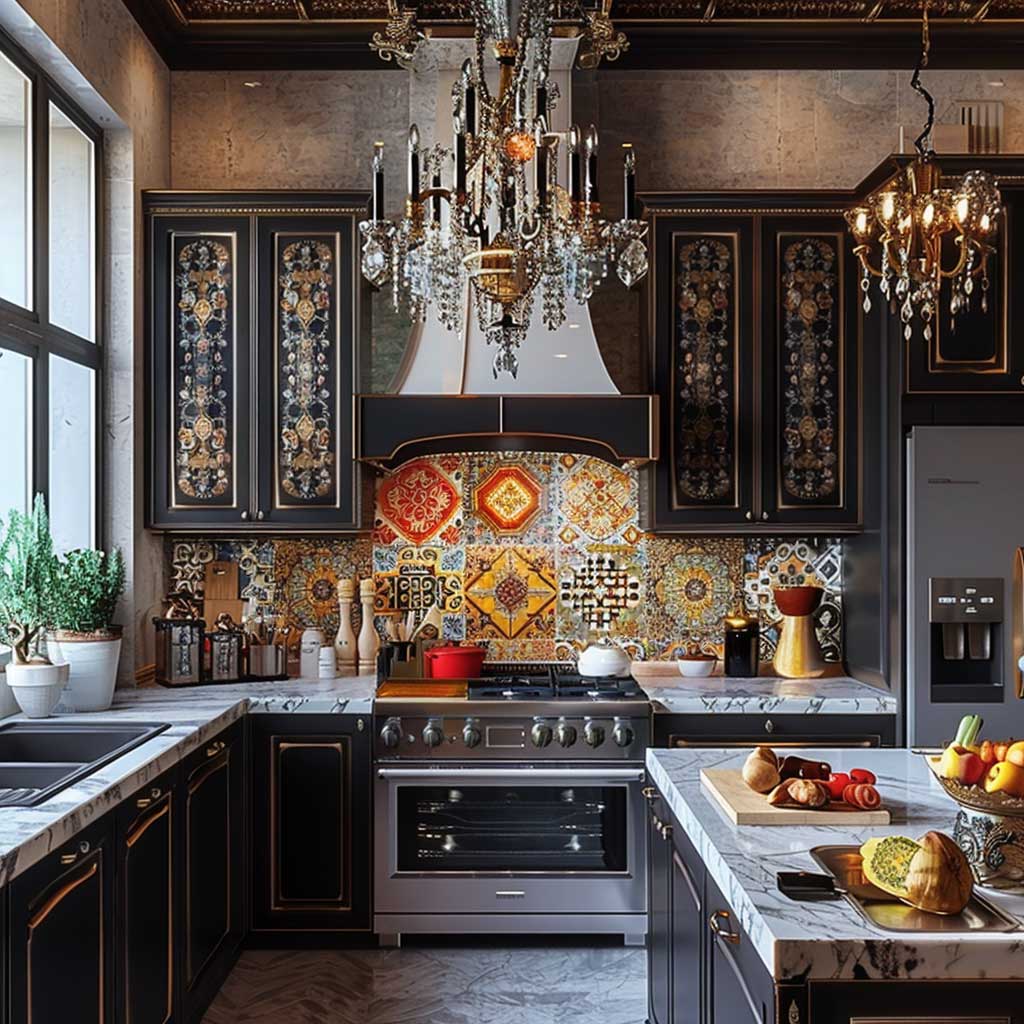
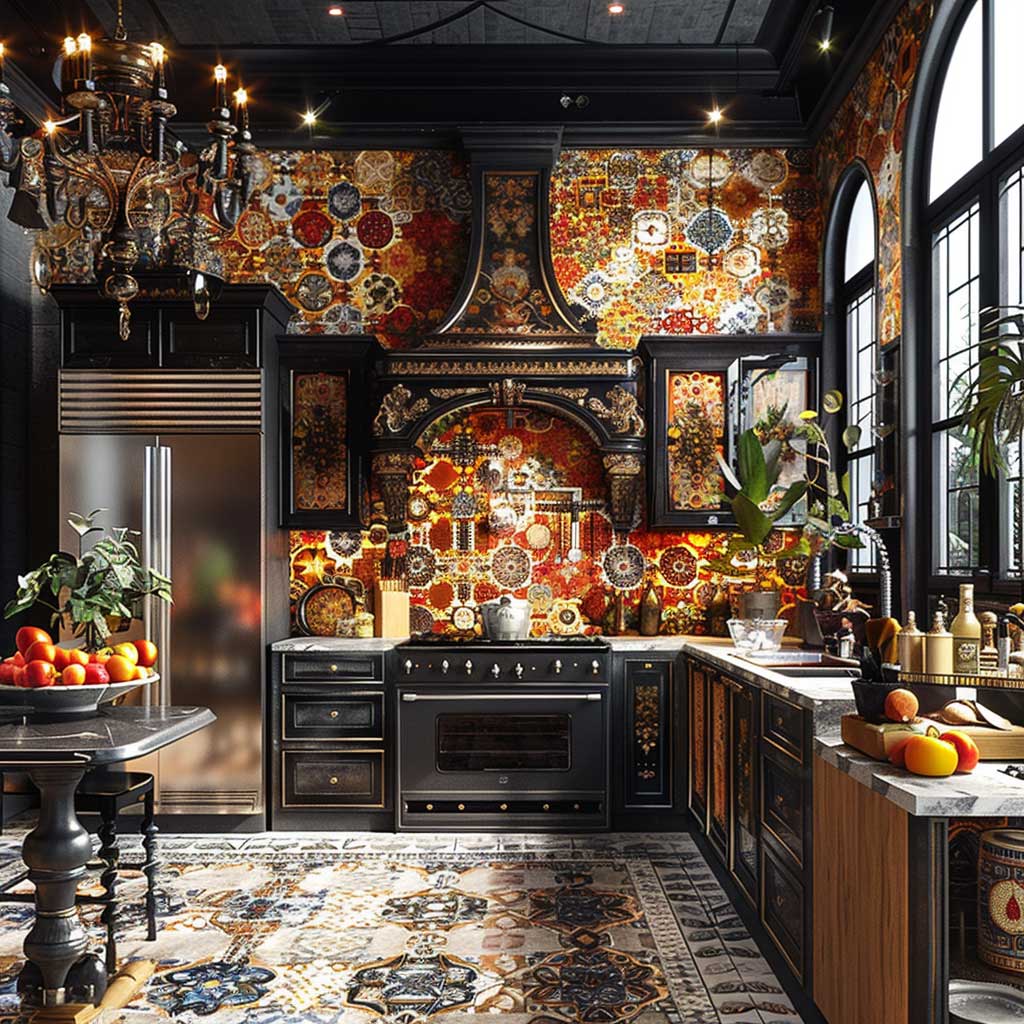
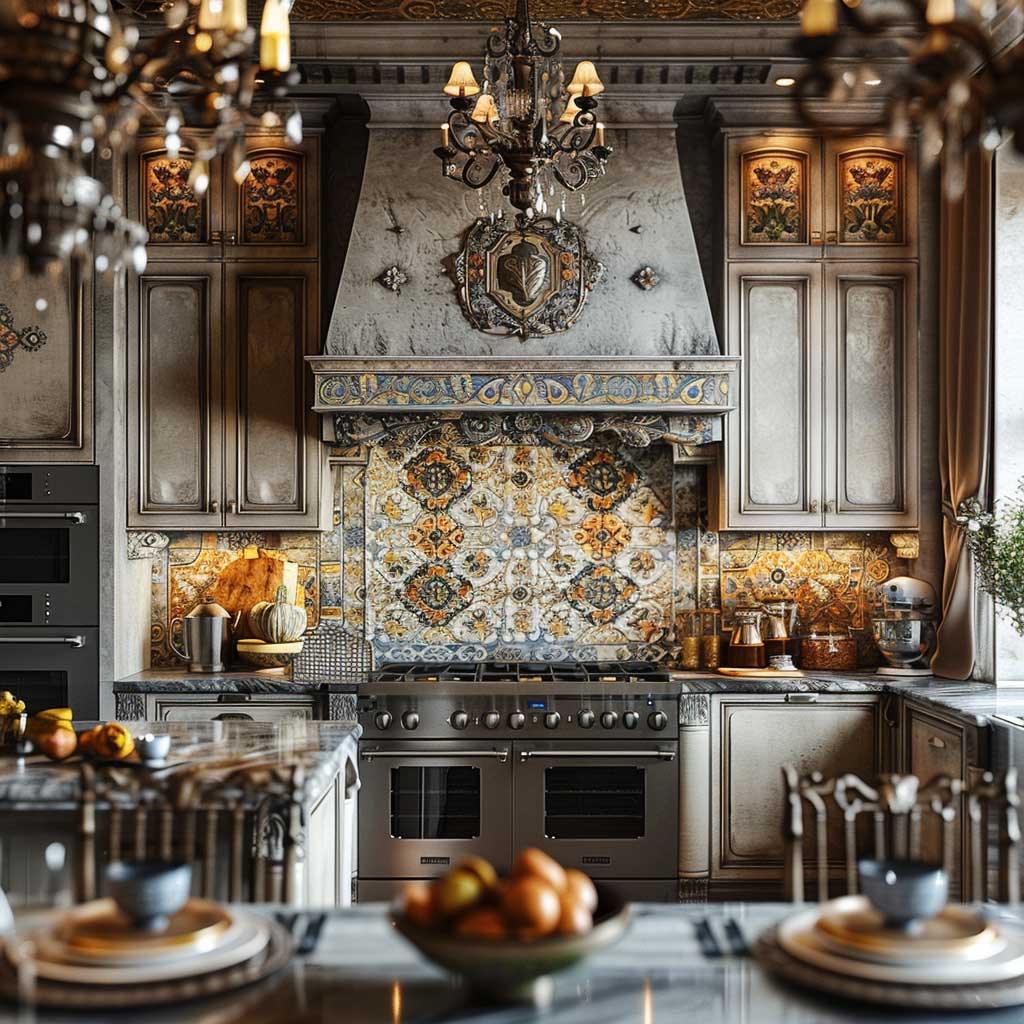
The more demanding version of eclectic kitchen design leans into deliberate contrast rather than harmony. An antique crystal chandelier suspended above a professional-grade stainless steel range is the kind of pairing that defines this approach — the juxtaposition is intentional, not accidental, and neither element softens to accommodate the other. This works because both objects are at the extreme of their respective categories: the chandelier is maximally ornate, the range maximally utilitarian. Two mediocre things in between wouldn’t create the same tension.
Backsplash tile is where pattern enters the kitchen with the most control. Geometric patterned tile runs $15–$30 per square foot installed — a meaningful budget line, but also the room’s most readable design statement after the countertop. The common mistake is choosing a backsplash that matches the countertop’s veining. What reads better is contrast: a bold Moroccan-inspired geometric behind a plain, heavily-veined marble. One draws the eye up; the other grounds the room. Matching them produces a showroom that looks assembled rather than curated. For more eclectic nice kitchen designs that push this contrast principle further, those references are worth studying alongside the examples here.
Metal and wood in the same kitchen surface — a walnut lower cabinet paired with matte black pulls beneath a marble upper shelf — creates a tactile richness that single-material kitchens can’t replicate. The texture contrast is the point. What doesn’t work is mixing more than two or three metal finishes in a single room: brass hardware, chrome faucets, stainless appliances, and black pendants simultaneously produce a kitchen that looks like a hardware store exploded. Stylists recommend choosing a dominant metal (brass or matte black in most eclectic kitchens currently), allowing one contrasting accent metal, and treating stainless appliances as neutral rather than a third finish.
Buying eclectic pieces individually and hoping they’ll cohere once they arrive. The style looks collected; it doesn’t happen by collection. Start with a material anchor, define two or three finishes, and only then source statement pieces that play off those constraints. A vintage chandelier that arrives before you’ve chosen your countertop is a decorating problem, not a design asset.
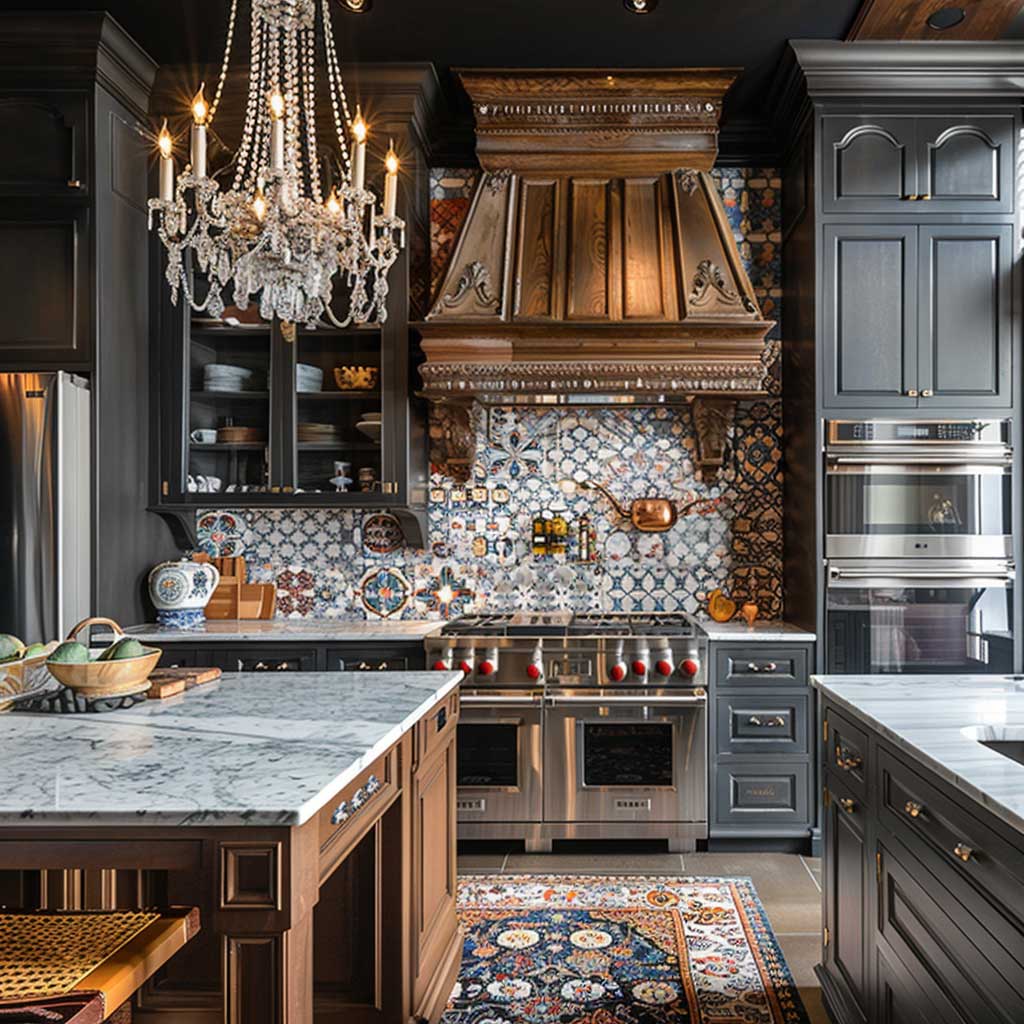
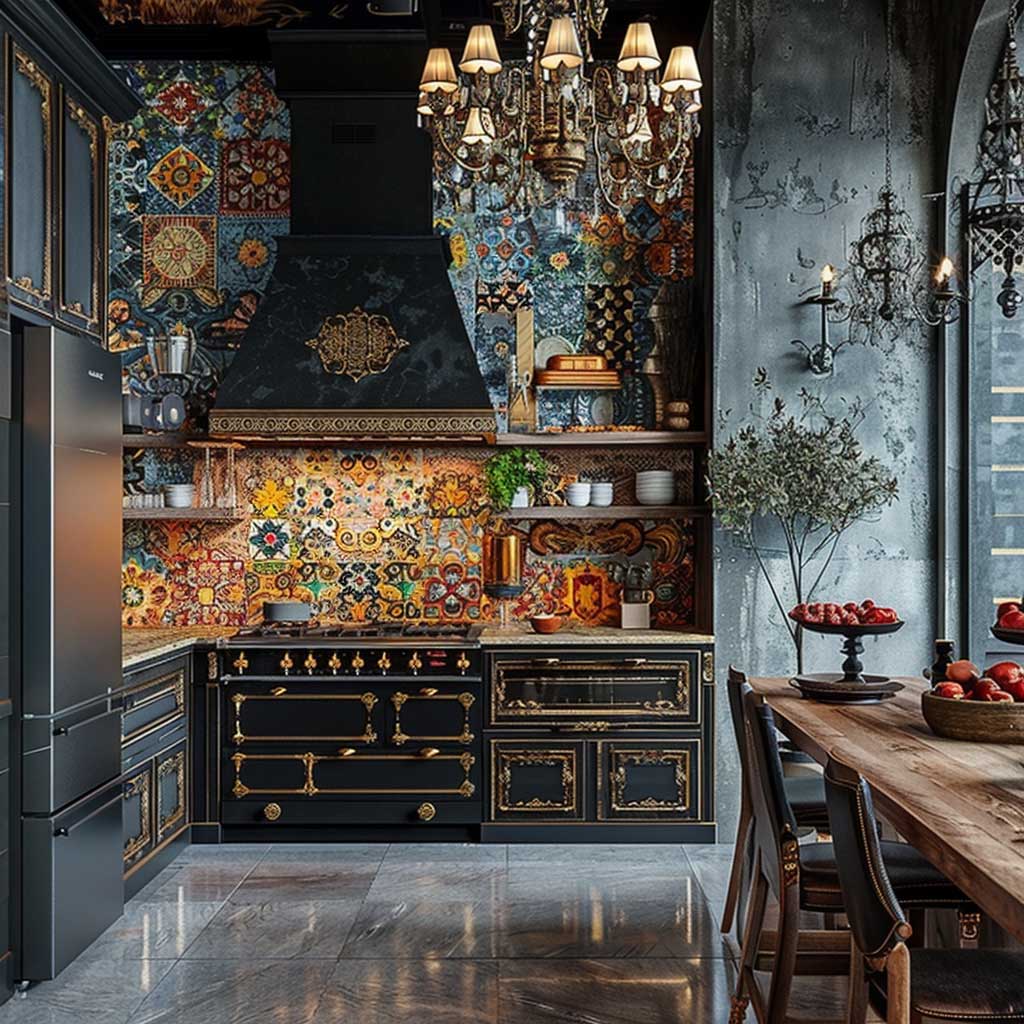
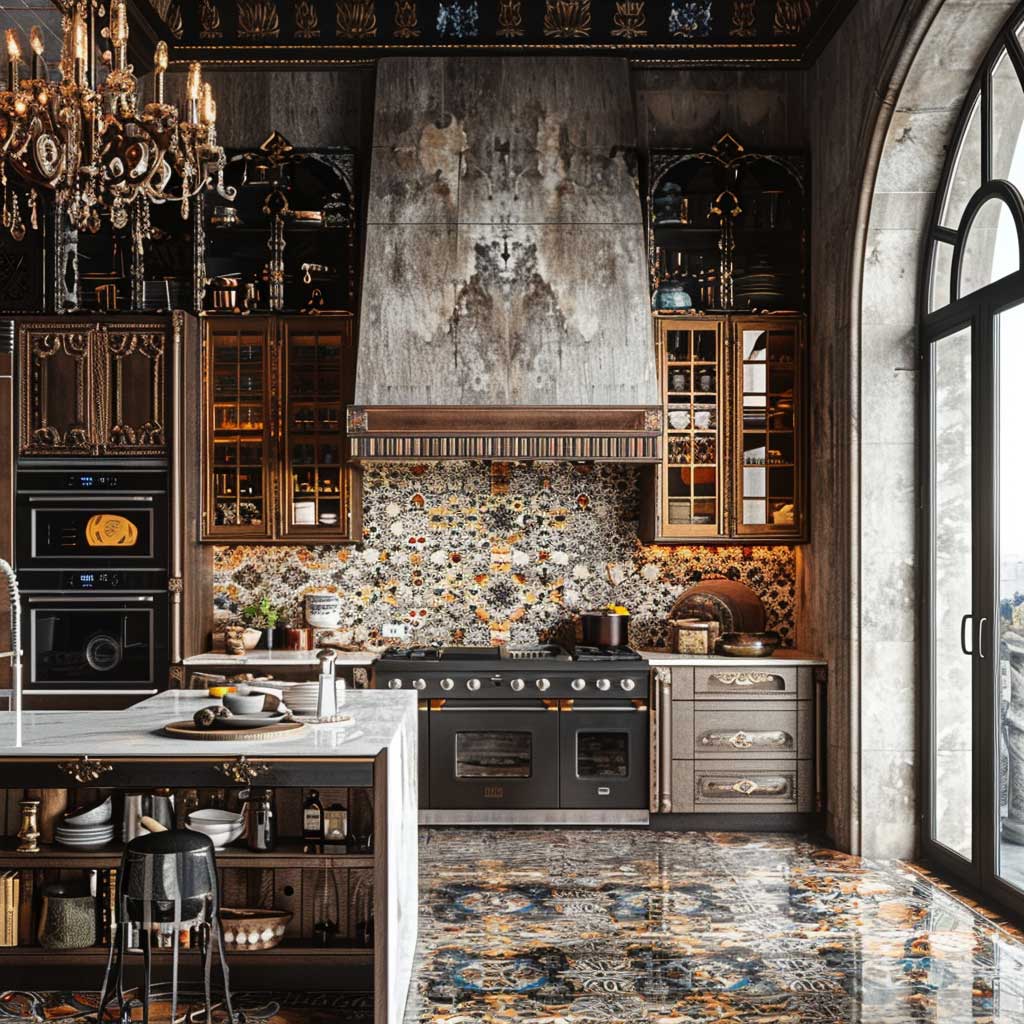
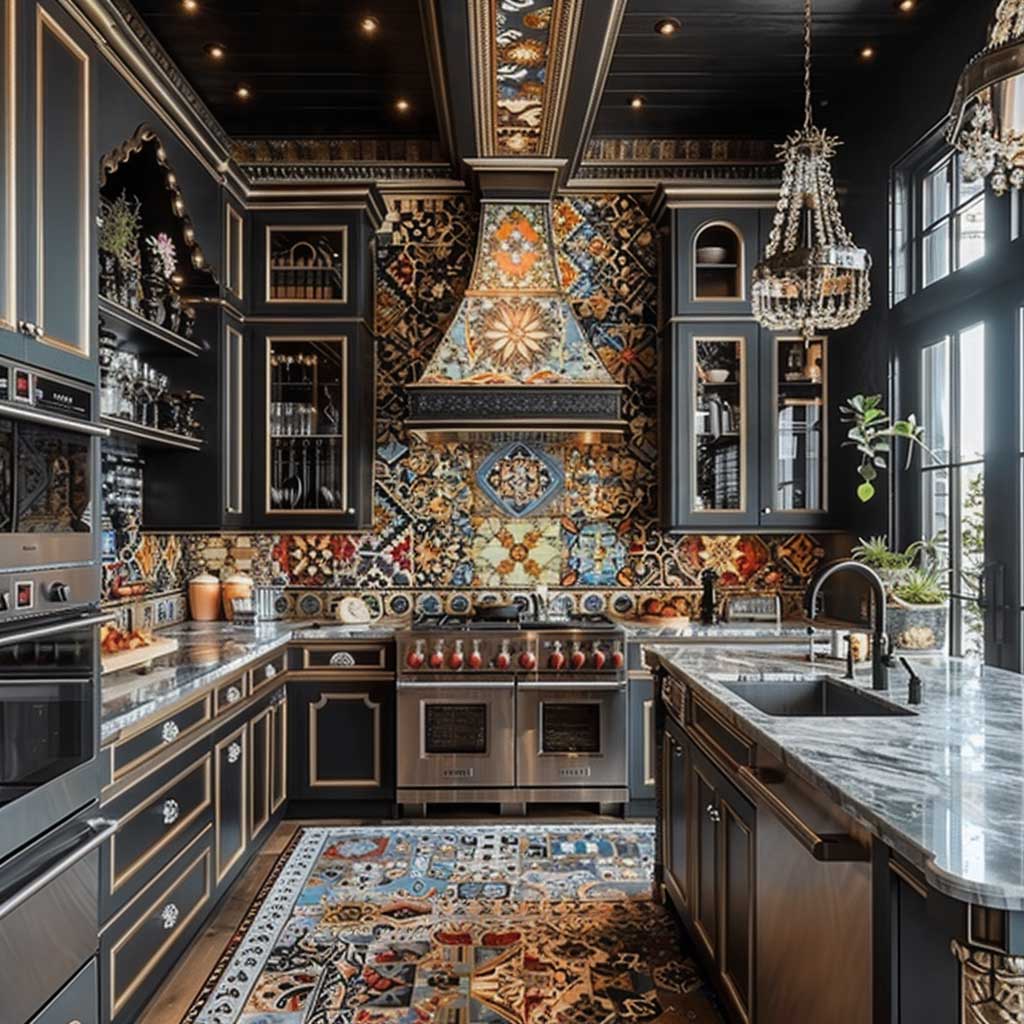
The question worth asking before any eclectic purchase: does this object have a clear visual reason for being here, or does it just feel interesting in isolation? A mid-century ceramic pendant that connects to the tile’s earth tones has a reason. The same pendant in a kitchen with no other warm or earthy reference is a guest that showed up to the wrong party. Eclectic kitchens earn their energy from calculated discord, not random accumulation — and the line between those two states is narrower than it looks in a mood board.
Modern Eclectic Kitchen Function Without Sacrificing Character
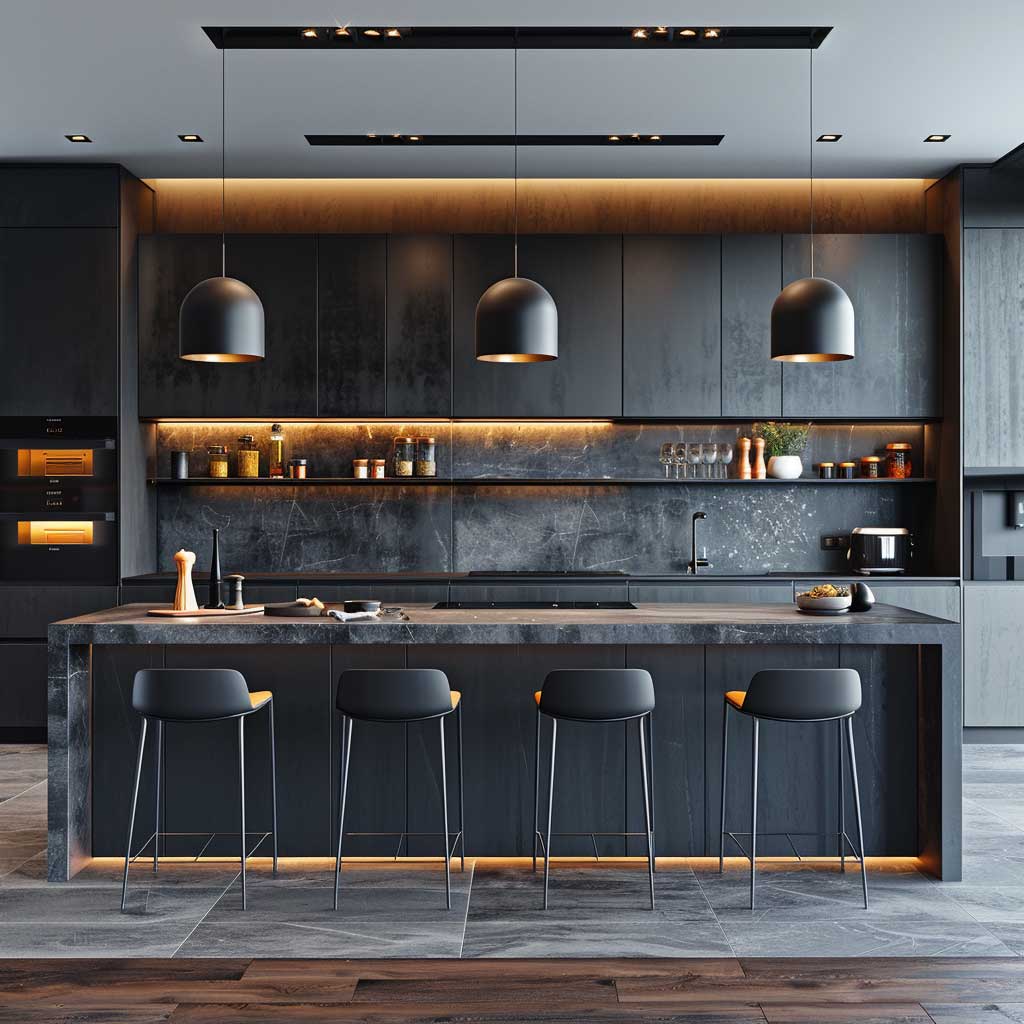
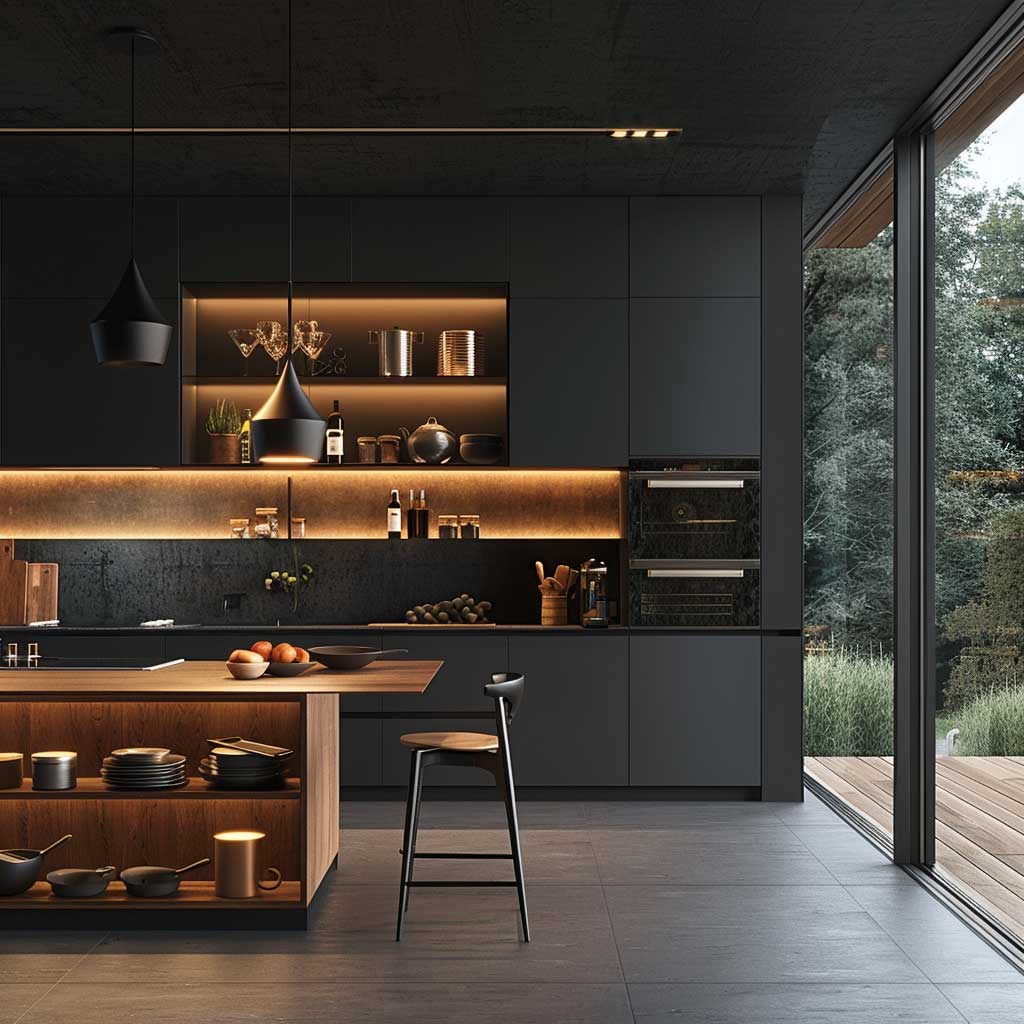
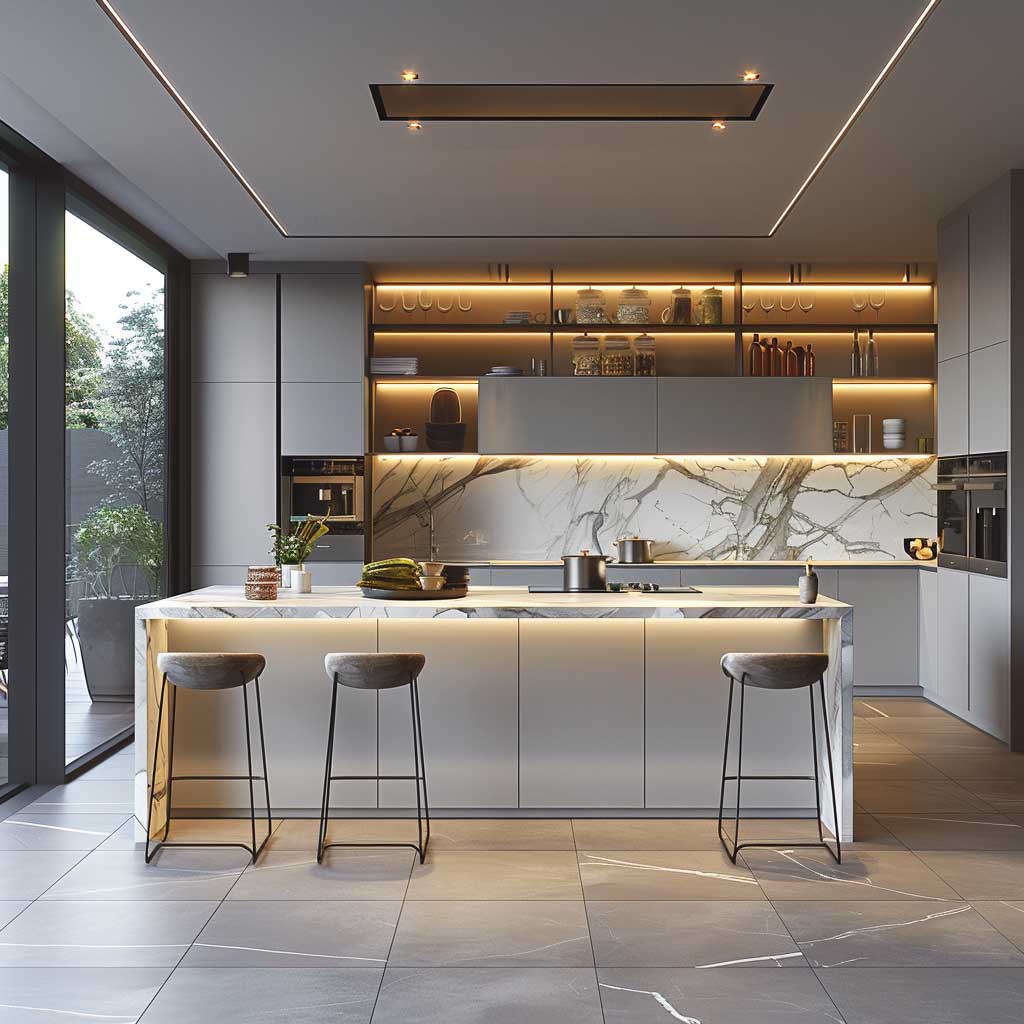
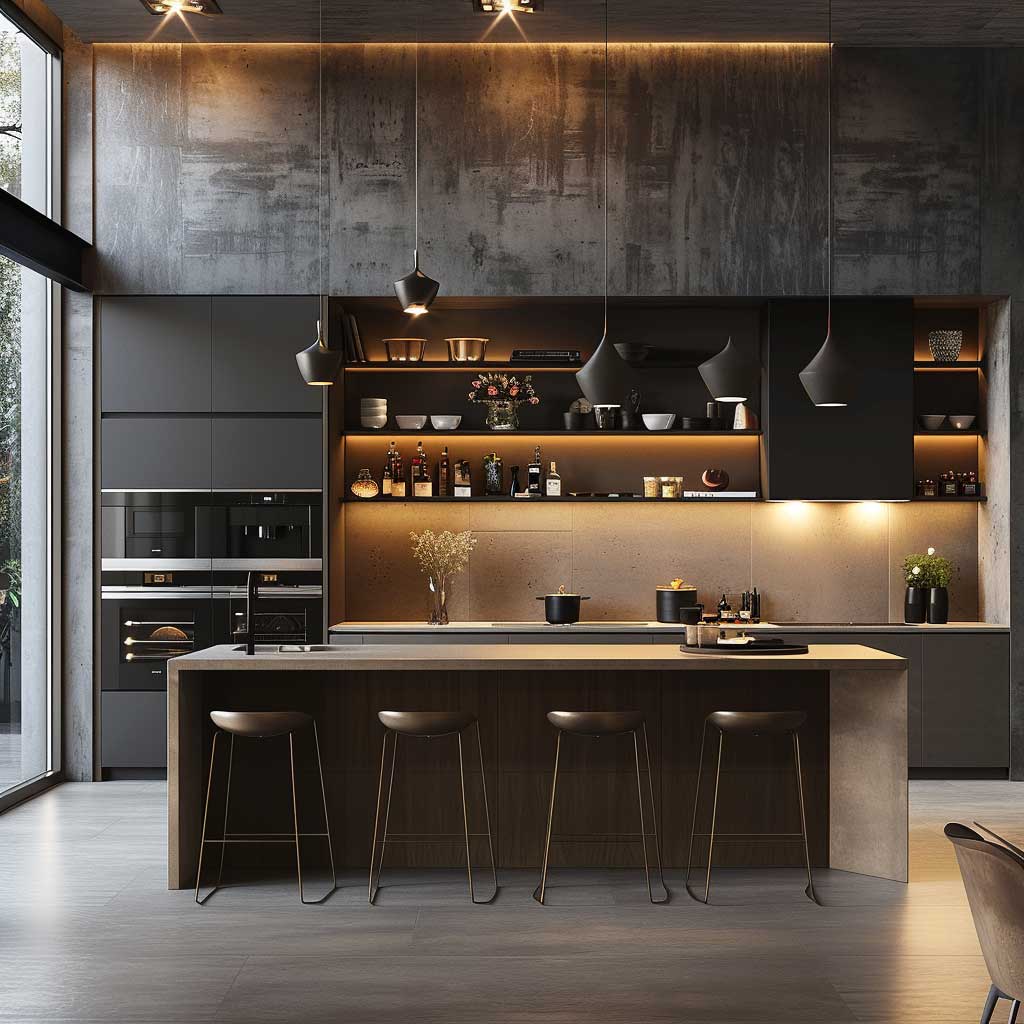
Modern eclectic kitchen design sits at the intersection of curated restraint and layered personality — cleaner in its layout than a purely vintage approach, but far less anonymous than a strictly contemporary one. The layout prioritizes flow: clear prep zones, logical storage, and counter runs that actually support how a kitchen is used. Character gets concentrated into specific decisions — a range hood in handmade ceramic tile, a single row of open shelving with genuine objects, cabinetry painted in a color that most designers wouldn’t touch.
According to Houzz’s 2024 Kitchen Trends Study, 44% of homeowners renovating their kitchens now purchase appliances with high-tech capabilities — touch displays, Wi-Fi connectivity, smart-home integration. Panel-ready refrigerators and integrated dishwashers allow those appliances to disappear behind cabinet fronts that carry the room’s visual story, rather than announcing themselves in stainless steel. That integration is particularly effective in eclectic kitchens where the appliances’ utilitarian surfaces would otherwise conflict with the room’s more layered materials. You can read the full 2024 Houzz Kitchen Trends Study for the complete data on high-tech appliance adoption and renovation priorities.
Storage in a modern eclectic kitchen has a particular logic: concealed where function is purely utilitarian, open where the objects themselves contribute to the room’s character. A wall of deep pull-out drawers for pots and dry goods stays behind flat-front cabinetry. Open shelving holds ceramics, cast iron, and a handful of cookbooks chosen for their spines as much as their content. What goes wrong is inverting that logic — displaying the Costco bulk goods and hiding the beautiful objects. The room then reads as untidy rather than curated, which is the opposite of the intended effect.
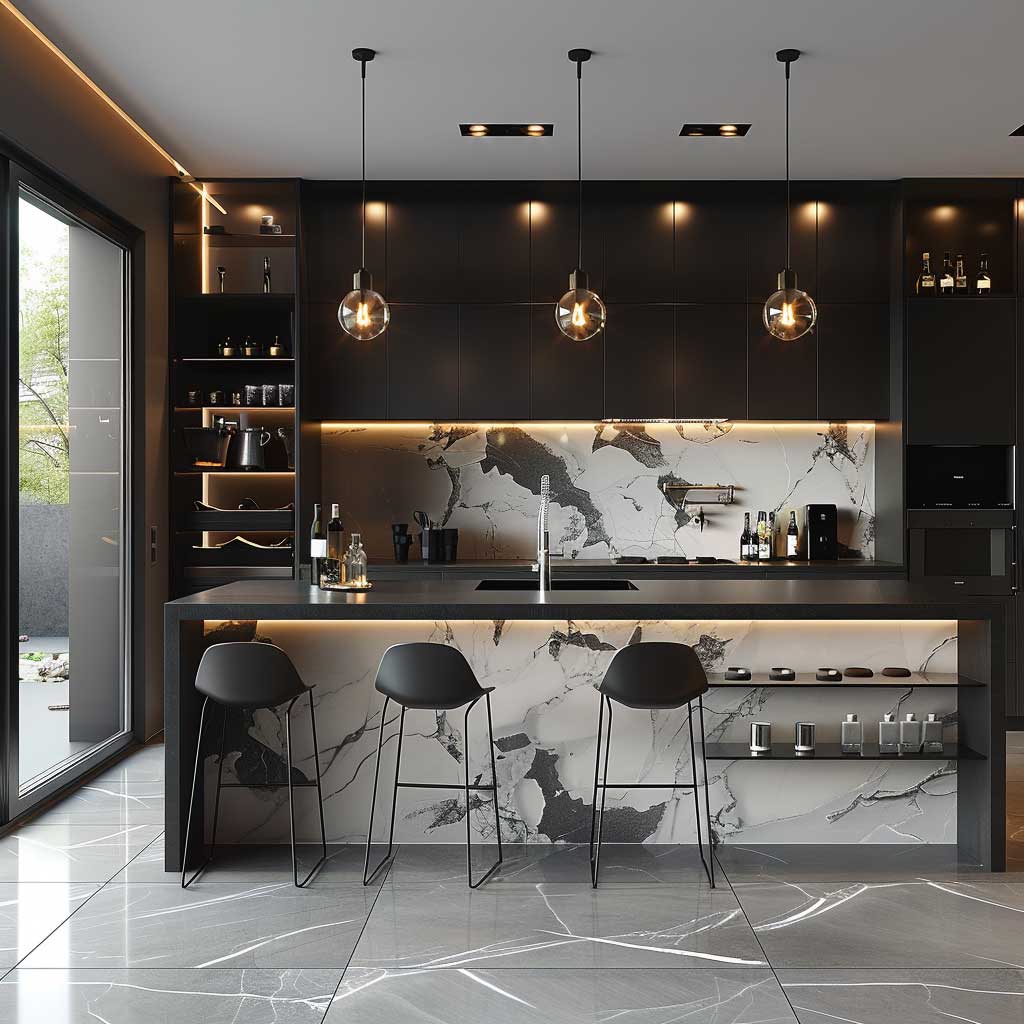
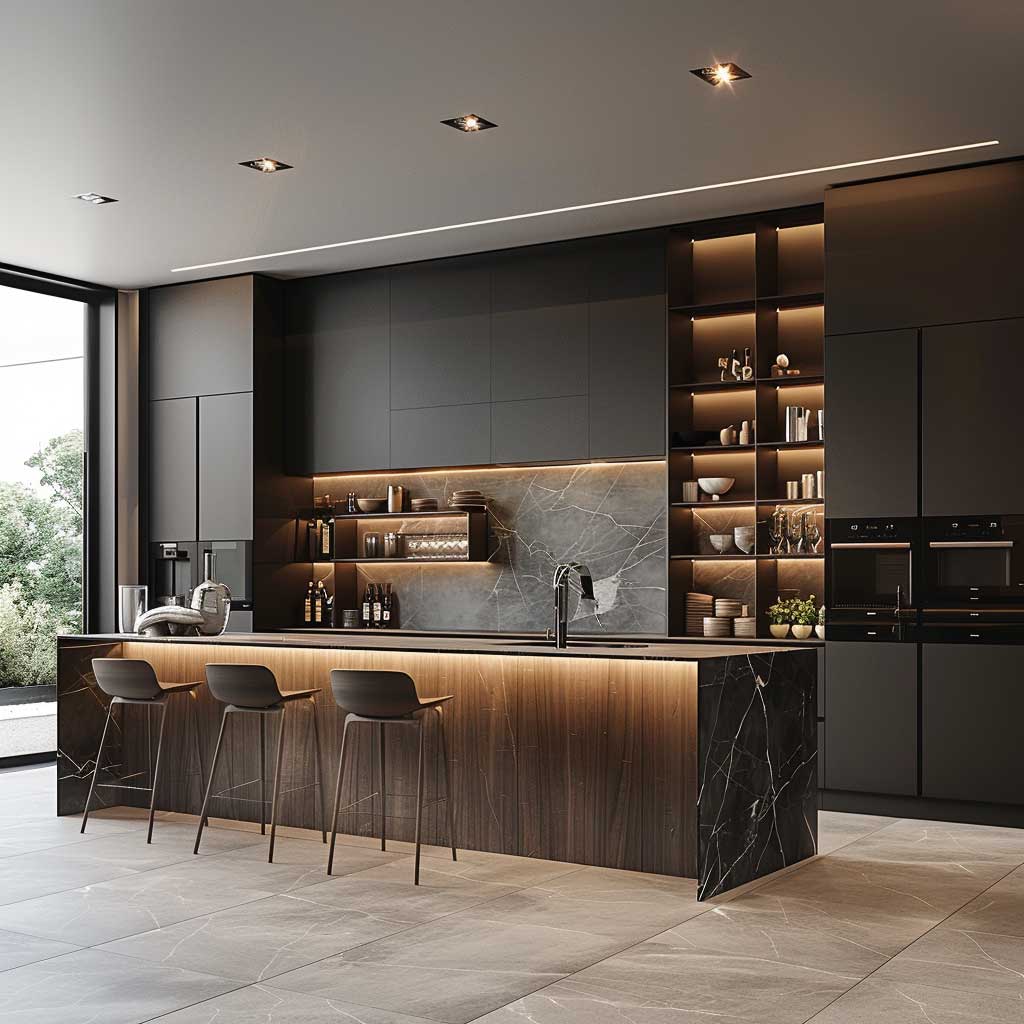
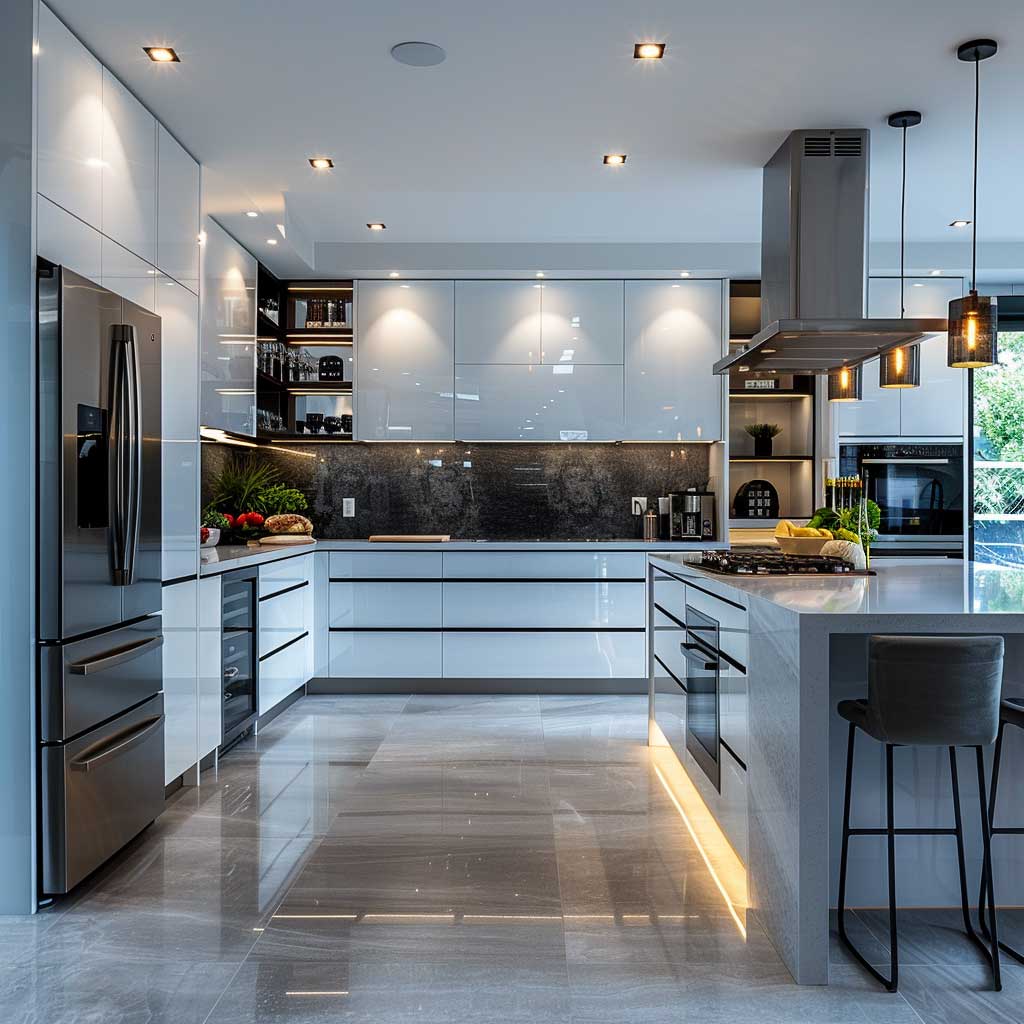
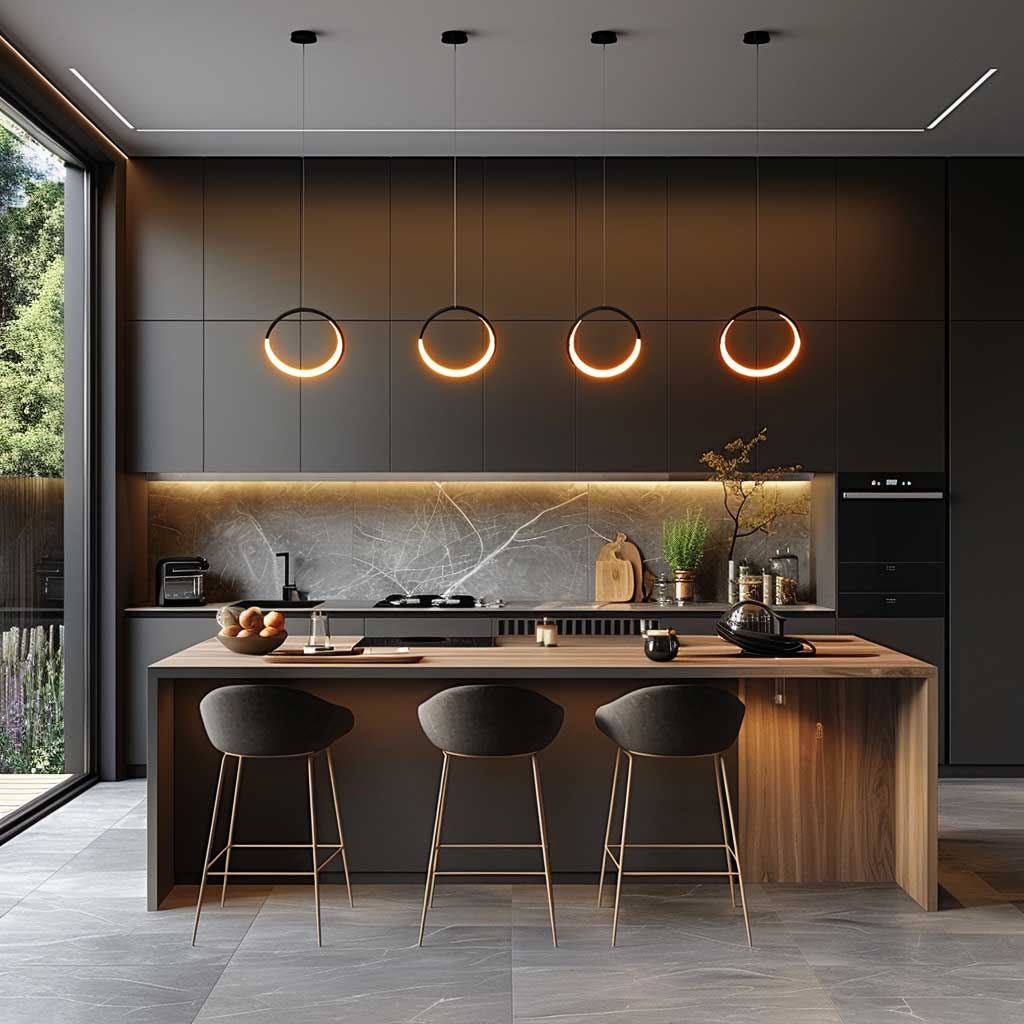
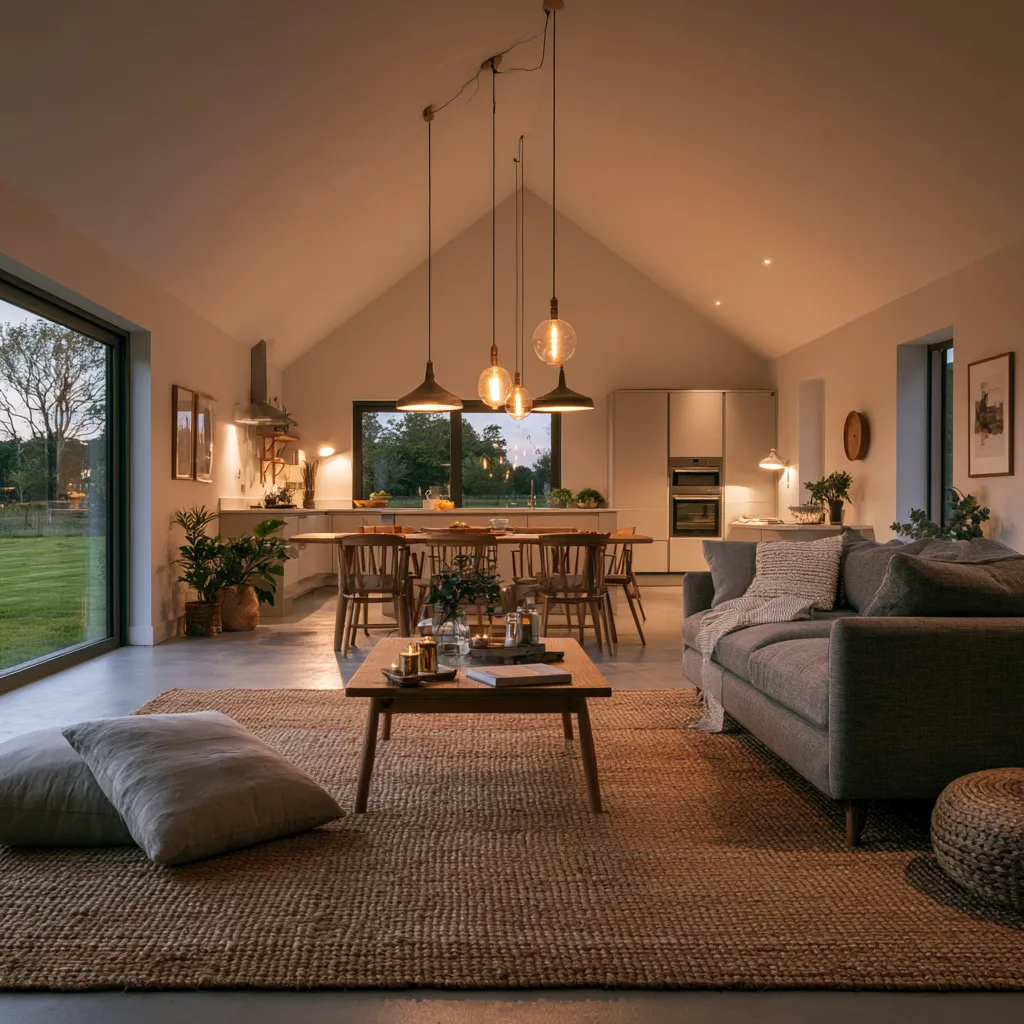
Lighting in a modern eclectic kitchen earns its budget when it works on at least two levels simultaneously — task and atmosphere. Recessed downlights handle the task side reliably. The atmospheric layer is where personality enters: a sculptural pendant over the island that references a completely different era than the cabinetry, or wall sconces that belong in a 1940s Parisian brasserie. That anachronism is structural. If every light fitting in the room matches, the room matches — and matching is the opposite of eclectic. For a comparison with luxury modern kitchen designs that take a stricter contemporary approach, that contrast makes the eclectic method’s character advantages easier to see.
| Approach | Key Anchor | Lighting Strategy | Risk to Avoid |
|---|---|---|---|
| Multi-era harmony | Shared warm undertone across all finishes | Natural light primary, layered artificial | Clashing temperature (warm vs cool metal) |
| Deliberate contrast | One maximalist + one utilitarian element | Statement chandelier over functional zone | More than 3 metal finishes simultaneously |
| Modern eclectic | Concealed function, open character | Recessed task + anachronistic pendant | Displaying utilitarian goods on open shelving |
THE EDIT
Eclectic kitchen design works when contrast is chosen, not stumbled into.
Anchor the room with one dominant material — marble, aged wood, or a statement tile — and let the surrounding pieces argue against it deliberately. Carrara marble starts at $40/sq ft for material; patterned backsplash tile runs $15–$30/sq ft installed. Neither requires a high budget; both require a decision made first, not last.
Limit metal finishes to two, integrate smart appliances behind panel-ready cabinetry, and position open shelving only where the objects themselves earn their visibility.
Save this post before you start sourcing — the decisions that determine whether the room reads as collected or chaotic happen before the first purchase arrives.