Minimalist eclectic decor pairs a quiet, mostly neutral backdrop with a handful of pieces from different eras, so a room feels collected without feeling crowded. Does it actually work in an ordinary home? Yes, once the base color covers about 60% of the room and bold accents stay near 10%, the split behind the classic 60-30-10 palette rule. The calm comes from the backdrop, and the personality comes from the few objects allowed to stand out. Pick the backdrop first and the statement pieces last.
The style suits living rooms, bedrooms and kitchens alike, because each room needs only one strong anchor and a few supporting finds. A vintage chair beside a modern sofa, an old rug under a platform bed or retro stools at a sleek island all follow the same logic. Measurements keep the mix from tipping into clutter: 14–18 inches between sofa and coffee table, 24–30 inches of walkway beside a bed and pendants 30–36 inches above a counter. Treat those numbers as the frame that lets the mix breathe.
The sections below move from the core rules to the living room, bedroom and kitchen, then compare all three rooms in one table. Each part names a palette split, a spacing figure and one common mistake to skip. Start with the ground rules, since every room plan builds on them.
Quick Scan
- Split the palette 60-30-10: walls and large pieces 60%, upholstery and wood 30%, bold accents 10%.
- Keep walls light: whites sit near LRV 82–94, soft grays near LRV 55–72.
- Leave 14–18 inches between sofa and coffee table, and size the table at about two-thirds of the sofa length.
- Choose a rug at least 6 inches wider than the sofa on each side; 8 inches looks more settled.
- Give a bed 24–30 inches of side clearance and use warm 2700–3000K bulbs instead of cool 5000K.
- Hang island pendants 30–36 inches above the counter and 24–30 inches apart.
- Pair one older era with the modern base rather than four eras at once.
The Ground Rules of Eclectic Minimalism
Eclectic minimalism rests on one principle: the room stays sparse, but the few things in it come from different times and places. Think of it like a short playlist with tracks from four decades, where each song is strong enough to stand alone. The minimalist base supplies clean lines, light walls and clear floors, while the eclectic layer supplies one vintage chair, one handmade bowl or one old print. Decide which single piece will carry the story before buying anything else.
Color is where most eclectic minimalist interior design succeeds or fails. The 60-30-10 rule gives a workable split, with roughly 60% of the room in a dominant shade, 30% in a secondary one and 10% in an accent, and a breakdown of the 60-30-10 color rule for interiors shows which surfaces usually fall into each share. Is the rule too strict for an eclectic room? Read loosely it fits well, because the 10% slot is exactly where mismatched finds belong. Put the boldest colors only in that last tenth.
Light walls give the mix a quiet stage. Whites typically land at LRV 82–94 and light grays at 55–72, a gap that keeps trim and furniture outlines readable, as this guide to gray and white interior design measured by real LRV numbers shows. A warm white flatters wood and brass better than a stark blue-white, which can make vintage pieces look tired. Don’t paint the walls a trendy saturated shade when the room already holds three strong objects.
- One older era beside the modern base, not four at once.
- One statement piece per wall or zone.
- Accent colors capped near 10% of the room.
- At least one completely clear surface in every room.
- Natural materials such as wood, linen or stone to bridge old and new.
Pure minimalism vs eclectic minimalism comes down to what fills the final 10%. A strictly minimalist room repeats one material and one tone, while the eclectic version lets that slice hold a kilim cushion, a mid-century lamp or a flea-market mirror. The first reads like an empty white gallery, and the second reads like the same gallery hosting a small private collection. Keep the 60% and 30% shares calm so the 10% has room to speak.
A Minimalist Eclectic Living Room Anchored by One Sofa
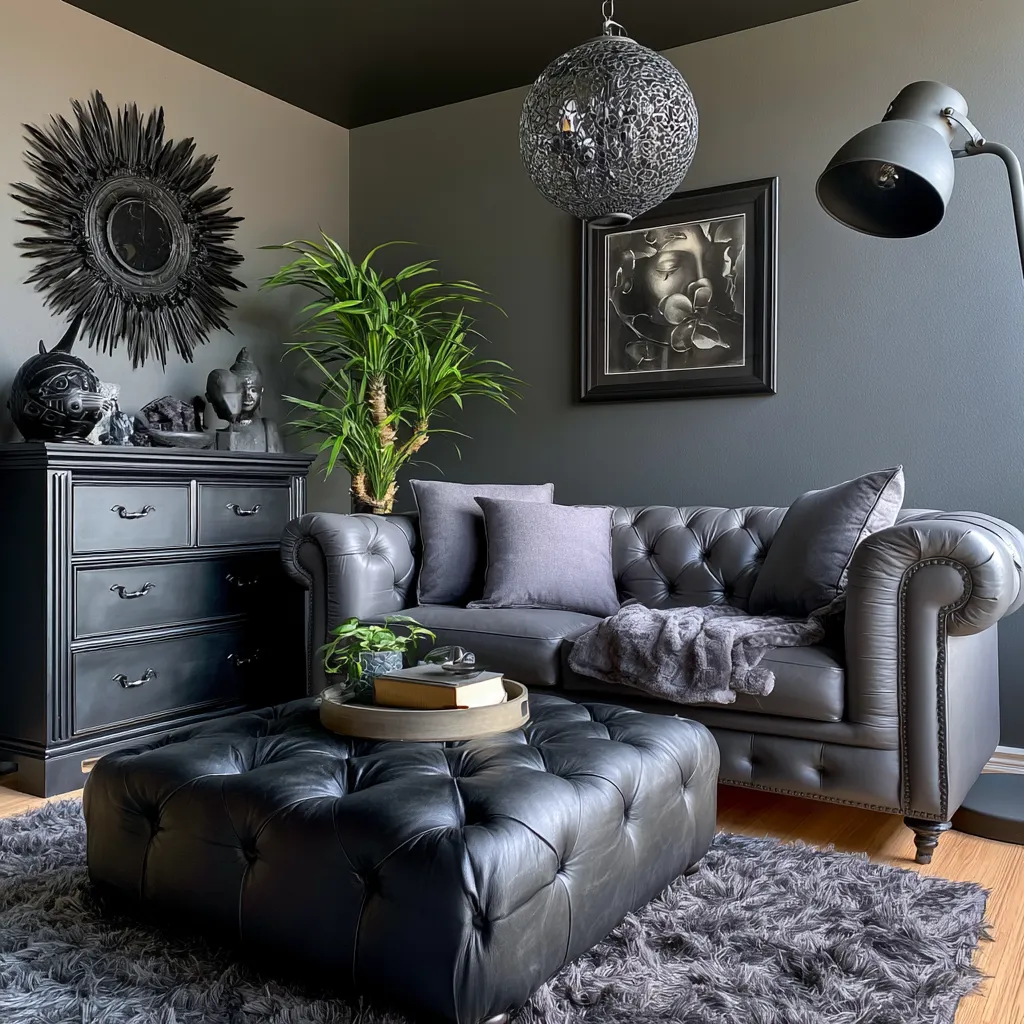
A minimalist eclectic living room starts with the sofa, because it is the largest object and sets the calm tone everything else plays against. A neutral sofa in linen, bouclé or leather works like a plain canvas, while one older piece nearby adds the plot twist. Should the coffee table match the sofa? Not necessarily, as long as it measures roughly two-thirds of the sofa length so the pair look related. Buy the sofa in the dominant room color and let the table bring the contrast.


Spacing keeps an eclectic room from reading as a storage unit. Layout guides put the coffee table 14–18 inches from the sofa, close enough to reach a cup and far enough for legs, and they ask for 30–36 inches of walkway between larger pieces where the room allows. A crowded floor behaves like a bookshelf with no gaps, where even good books start to look like clutter. Don’t push a second side table into a corner just because it was a bargain.
Rugs are the easiest place for minimal eclectic decor to show some history. Typical living room sizes are 8×10 and 9×12 feet, and the rug should run at least 6 inches past the sofa on each side, with 8 inches looking more settled. An 8×10 vintage rug vs a smaller 5×8 changes the whole read: the larger one gathers the seating into one group, while the smaller one floats like an island. Measure the sofa first and buy the rug second.


Lighting adds a second layer of character without adding floor clutter. One sleek floor lamp beside one handmade or vintage table lamp shows two eras in two objects, and warm 2700–3000K bulbs keep both glowing in the same tone. Mixing a 2700K lamp with a 5000K ceiling fixture makes the room look like two different houses after dark. Keep every bulb in the seating area at one color temperature.
Textiles carry pattern so the furniture does not have to. Two or three cushions in an old print, one wool throw and plain linen curtains usually give enough texture on a neutral sofa. Is a busy pattern on the sofa itself a mistake? In this style it usually is, since a patterned sofa swallows the whole 30% share at once. Keep the upholstery solid and swap cushions with the seasons instead.
Bedrooms Where Minimalist Eclectic Decor Lets Art Lead
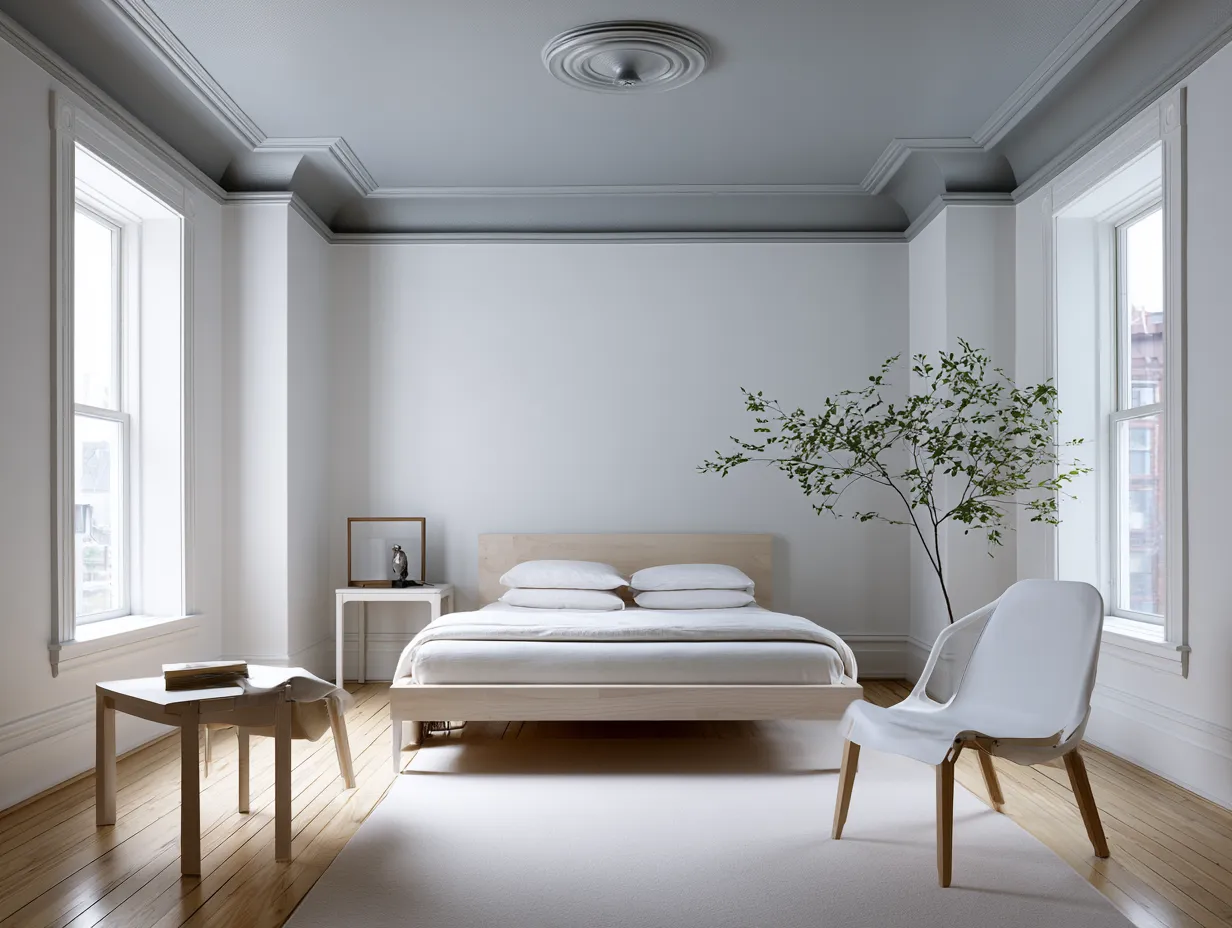
Minimalist eclectic decor in a bedroom hands the eclectic job to the walls and keeps the furniture plain. A low platform bed, slim nightstands and a simple wardrobe form the quiet frame, while prints from different decades hang above like postcards from a long trip. Soft white, warm gray or muted earth tones on the walls keep that small gallery restful rather than busy. Choose the art first and paint the walls to suit it.


Clearance is what makes a pared-back bedroom feel generous. Planning guides suggest 24–30 inches of walkway on each side of the bed, and a queen bed is 60 inches wide, so an 8×10 rug leaves about 18 inches of soft floor on each side while a 5×7 leaves none. Which rug belongs under it? The 8×10 in almost every case, because the smaller one looks like a doormat once the bed is made. Don’t trade walkway space for an extra dresser; one storage piece per wall is plenty.
Wall color affects rest as much as style. In a Travelodge survey of 2,000 people, those sleeping in blue rooms averaged 7 hours 52 minutes a night against 6 hours 12 minutes in gray rooms, a gap explored further in these sky blue bedroom palettes balanced with soft gray. A dusty blue wall behind eclectic art keeps that calm while still letting a warm vintage frame stand out. Treat the survey as a trend rather than a medical promise, and test a large swatch before committing.
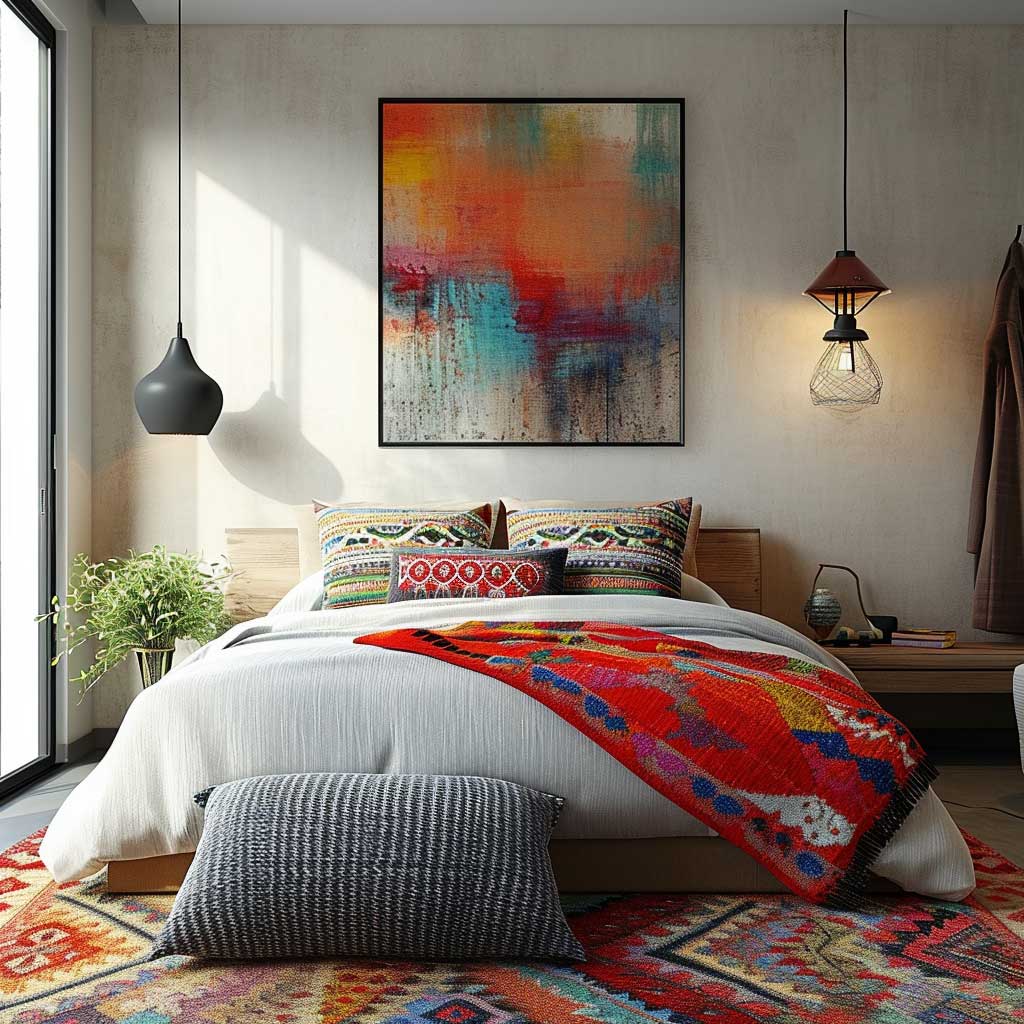


Bedside lighting is the natural spot for one eclectic statement. A vintage lamp on one side and a slim modern sconce on the other shows two eras, provided both run warm at 2700–3000K, the range lighting guidelines recommend for winding down. Reading needs roughly 300–500 lux at the page, so a small decorative lamp may need a second task light beside it. Fit warm bulbs in every bedroom fixture and keep cool 5000K light out of the room.
Textiles are where pattern can return without disturbing the calm. An embroidered cushion or block-printed throw on plain white bedding acts like a single bright stamp on a clean envelope. Are two patterns too many? Two can work if they share one color, while three usually start to argue with each other. Keep the duvet solid and put pattern only on small pieces.
Kitchens That Carry Modern Minimalist Eclectic Decor
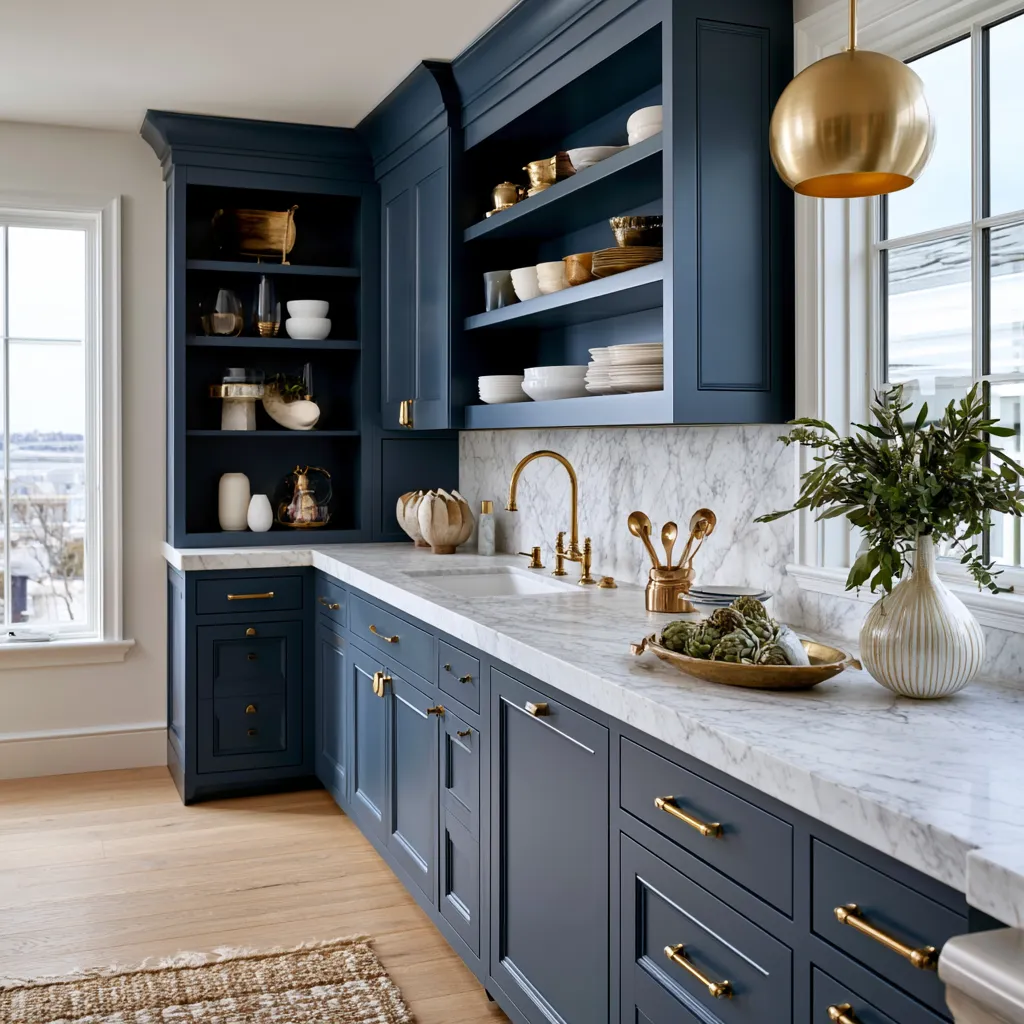
Modern minimalist eclectic decor in a kitchen starts with plain cabinetry and saves the personality for a few fixed points. Flat fronts in white, gray or black form the backdrop, much like a plain white plate that makes the food look better. The eclectic layer then lands on the backsplash, the stools, the hardware or the lighting, never on all four at once. Pick two of those four zones and leave the other two simple.


Counters stay clear in this style, but the materials can still tell a story. A marble top or reclaimed wood island brings age and texture, while a plain quartz run elsewhere keeps daily upkeep low. Is open shelving worth it? It can be, if the shelves hold mixed dishes in two or three colors, since a full rainbow of mugs turns them into a display of clutter. Limit open shelves to one wall and keep everyday items behind doors.
Pendants are the most visible eclectic gesture in a kitchen. Lighting guides hang them 30–36 inches above the counter, space them 24–30 inches apart center to center and keep the outer fixtures 6–12 inches in from the island ends. Three small pendants vs two larger ones changes the mood: the trio reads lighter and more rhythmic, while the pair reads bolder. Don’t hang a vintage pendant low enough to block the view across the island.


Task light and mood light can come from different eras if their roles stay clear. Counters and prep zones work best at 3000–4000K, while island pendants usually drop to 2700–3000K for a warmer glow where people sit. Artisan knobs or a retro-style fridge then act like jewelry on a plain outfit, small details that shift the whole impression. Swap the hardware first, since it is one of the least expensive eclectic upgrades in the room.
Eclectic Minimalism Compared Room by Room
Comparing the three rooms side by side shows that eclectic minimalism keeps one rule set and changes only the measurements. The palette split stays near 60-30-10 everywhere, while spacing and bulb temperature shift with how each room is used. A living room needs reach and walkways, a bedroom needs clearance, and a kitchen needs light at the right height. Use the table as a checklist before buying the statement piece.
| Room | Palette split | Key spacing | Bulb temperature | Where the eclectic piece goes | Common mistake |
|---|---|---|---|---|---|
| Living room | 60% walls and sofa, 30% wood and textiles, 10% accents | 14–18 in from sofa to coffee table; rug 6–8 in past sofa per side | 2700–3000K | Vintage chair, rug or table lamp | A second side table in every corner |
| Bedroom | 60% soft walls, 30% bedding and rug, 10% art and lamp | 24–30 in on each side of the bed; 8×10 rug for a queen | 2700–3000K | Art wall above the bed, bedside lamp | A 5×7 rug under a 60-in queen bed |
| Kitchen | 60% cabinets, 30% counters and floor, 10% stools and hardware | Pendants 30–36 in above counter, 24–30 in apart | 3000–4000K counters, 2700–3000K island | Backsplash, stools or pendants | Bold tile, stools and pendants all at once |
Don’t do this
- Don’t mix four eras in one room; one older era beside the modern base reads intentional.
- Don’t let accent colors climb past roughly 10% of the room.
- Don’t set the coffee table closer than 14 inches or farther than 18 inches from the sofa.
- Don’t put a 5×7 rug under a queen bed; an 8×10 leaves about 18 inches per side.
- Don’t run 5000K bulbs next to 2700K lamps in the same room.
Restraint Wins, Character Stays
Minimalist eclectic decor succeeds when about 90% of the room stays calm and roughly 10% carries the history. That split, borrowed from the 60-30-10 palette rule, separates a collected room from a cluttered one more reliably than any single purchase. Plan the quiet 90% before shopping for the story.
In the living room, spacing does most of the work: 14–18 inches to the coffee table and a rug at least 6 inches past the sofa on each side. One vintage chair or lamp beside a modern sofa gives enough contrast. Add a second older piece only after the first has settled in.
In the bedroom, give the bed 24–30 inches on each side and keep every bulb at 2700–3000K. Let the art wall carry the eclectic layer while the bedding stays solid. An 8×10 rug under a queen bed finishes the room better than any extra accessory.
In the kitchen, hang pendants 30–36 inches above the counter and choose only two zones for character. Plain cabinets with one bold detail beat three competing statements. Start with hardware, then decide whether the room still wants more.