Mediterranean front doors turn a simple threshold into the strongest first impression of the home. Stone surrounds, arched frames and solid wood panels with mosaic accents deliver the look that matches the region’s climate and architecture. These entrances work because they combine durable materials with soft planting and balanced lighting that feel lived-in rather than staged.
Homeowners choose this style when the facade already carries stucco, terracotta or natural stone. The right door and framing raise curb appeal without forcing a full renovation. Expect solid wood units to start around $750–$1,500 installed for basic grades and climb past $2,750 for custom carved or double-door versions according to current market ranges.
The following sections break down the three most reliable approaches so you can match material, scale and maintenance to the actual house.
- Stone walls pair best with carved wood doors and low soft lighting
- Arched frames gain drama from cascading bougainvillea that grows 24+ inches per year
- Mosaic-tile surrounds around wood doors create the classic Mediterranean signal
- Expect wood entry doors in the $750–$6,500 installed range depending on grade
- Avoid chrome hardware and over-pruned planting that erase the natural layer
- Place lanterns or sconces at eye level for evening warmth without glare
Rustic Stone Walls Shape the Strongest Mediterranean Front Door
Rustic stone creates the backbone of many mediterranean front door compositions. Rough or stacked stone walls give the entrance weight and age that stucco alone cannot match. The material reads permanent, almost like the house grew out of the ground.
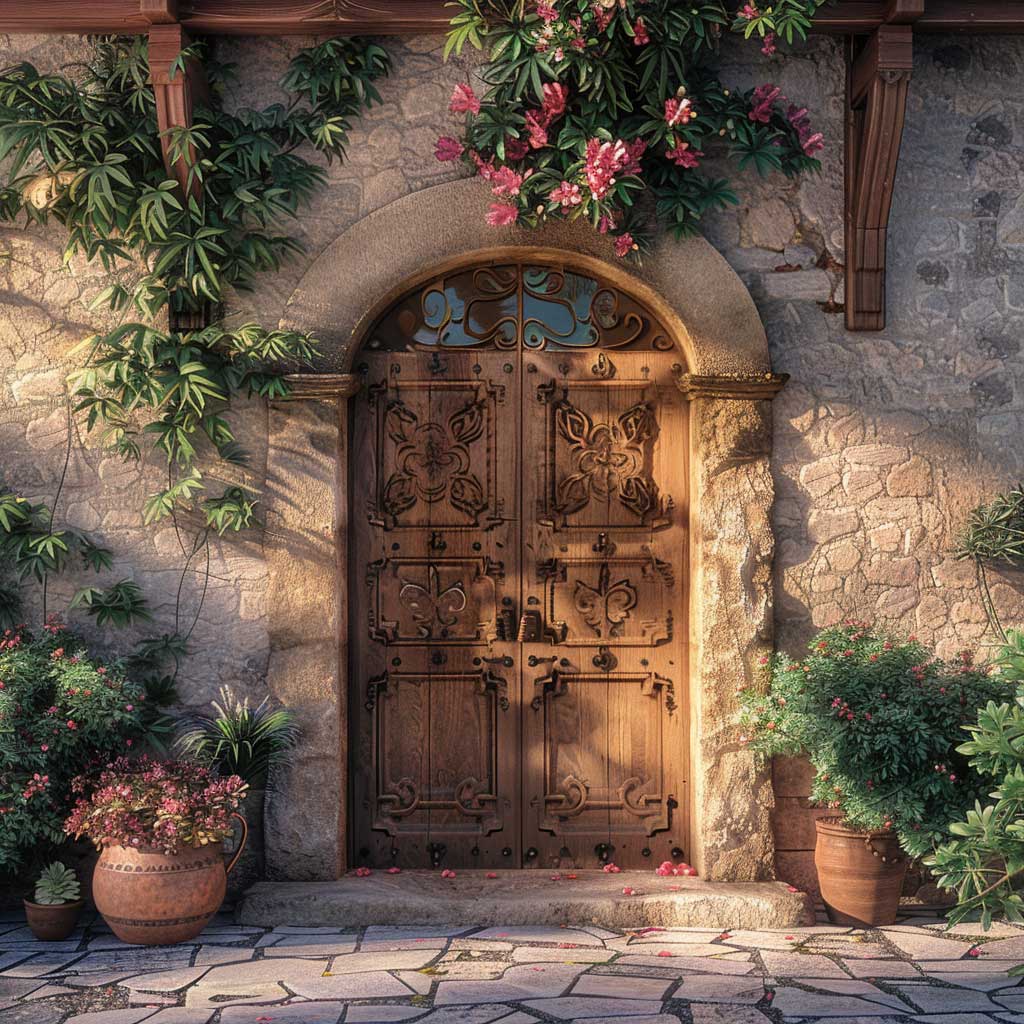
What happens when the stone sits too smooth or too uniform? The entrance loses the hand-built character that defines the style. Leave some irregular joints and let the stone’s natural color variation show. Pair it with a solid wood door whose grain softens the cooler surface.
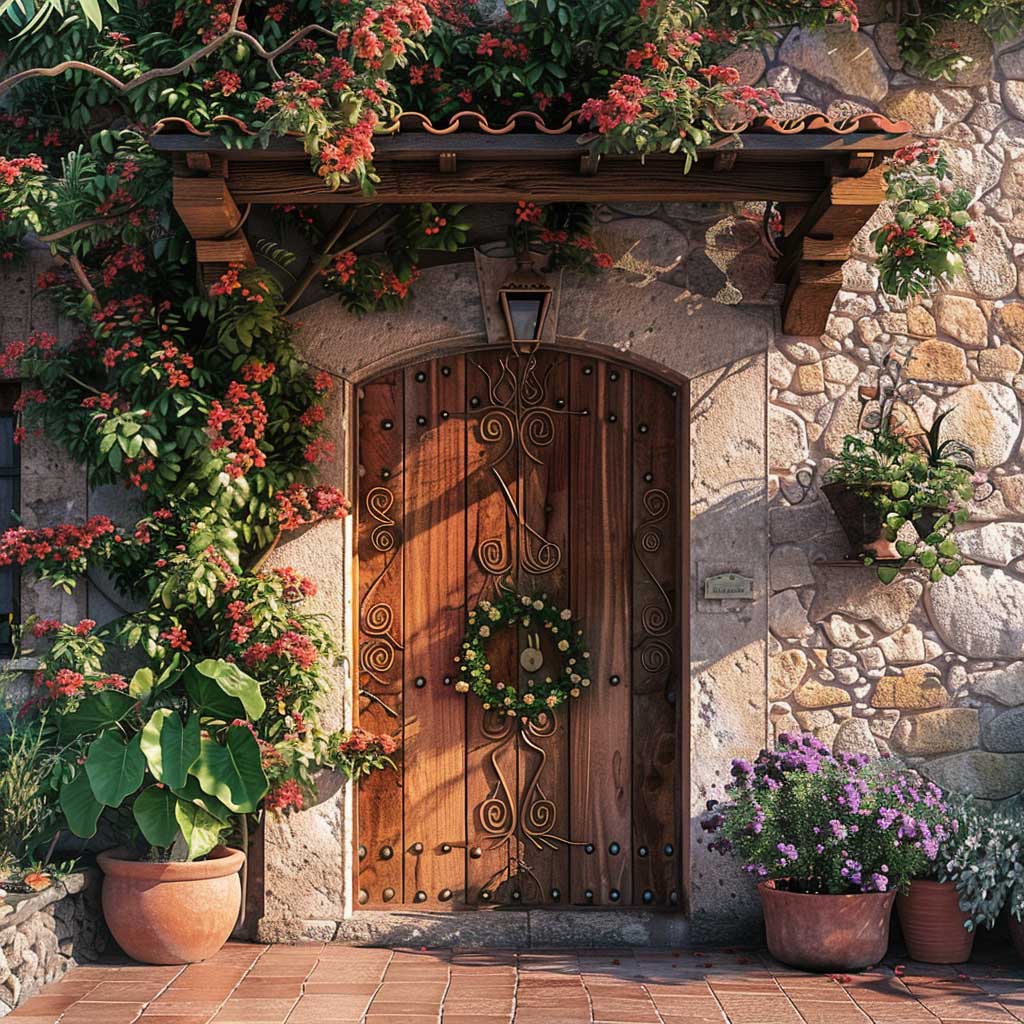
Carved wood doors act as the focal point against the stone. Hand-worked panels or simple geometric reliefs keep the door from looking mass-produced. The warmer tone of the timber balances the cooler stone and invites people closer. Skip factory-smooth finishes that fight the rustic setting.

Greenery softens the hard edges. Climbing vines, potted citrus or flowering shrubs placed near the threshold create a natural frame. Think of the planting as a living arch that guides visitors toward the door. Place the largest pots slightly off-center so the composition feels organic rather than rigid.
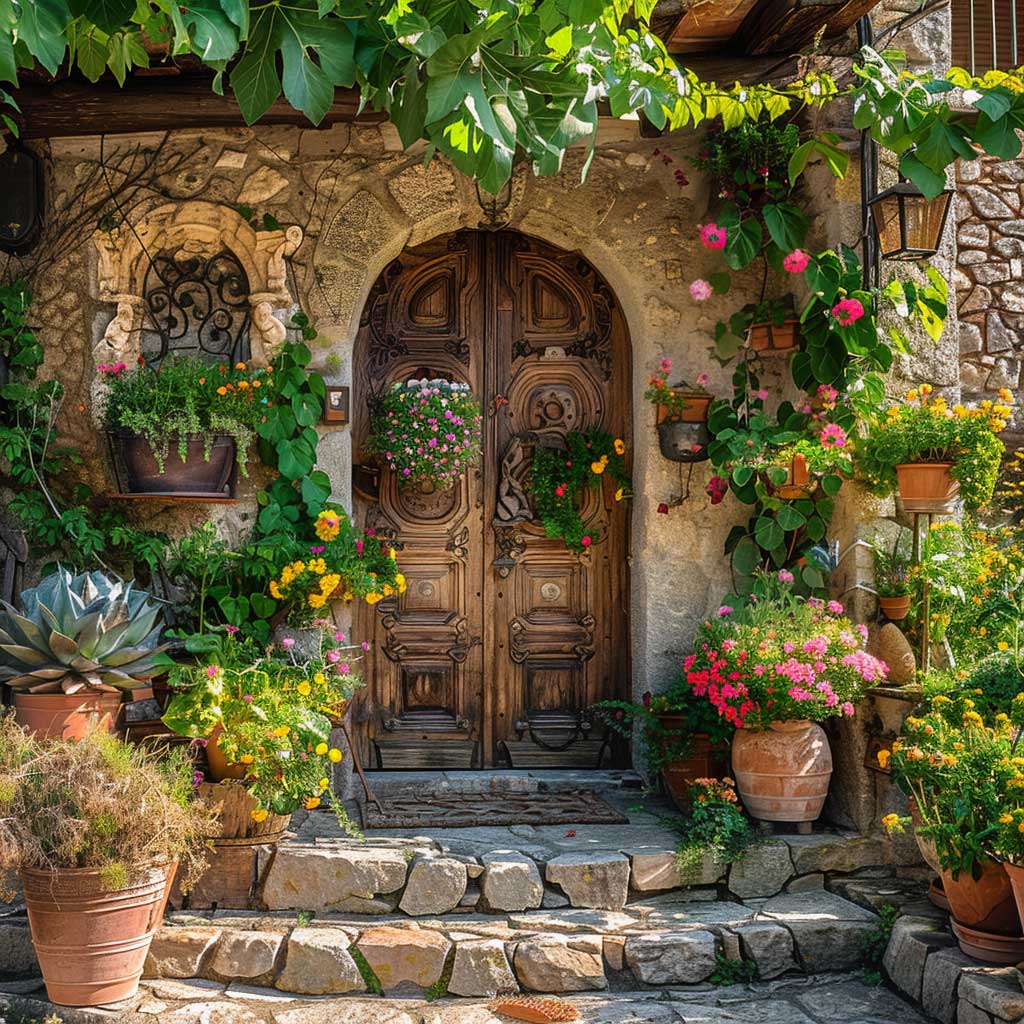
Lighting finishes the picture. Soft golden light from wrought-iron lanterns or simple wall sconces reveals the stone texture after dark. Aim for warm-white bulbs around 2700K and keep fixtures low enough that the glow falls across the door rather than above it. The result feels like a courtyard that has been used for generations.
For broader context on how different entrance materials perform across styles, see the full range of main entrance design and front door ideas that cover wood, steel and stone options side by side.
Arched Frames Bring Grace to Mediterranean Entryways
Elegant archways define the second major approach to mediterranean front doors. A stone or whitewashed stucco arch creates a soft transition that feels both grand and welcoming. The curve itself becomes the invitation.
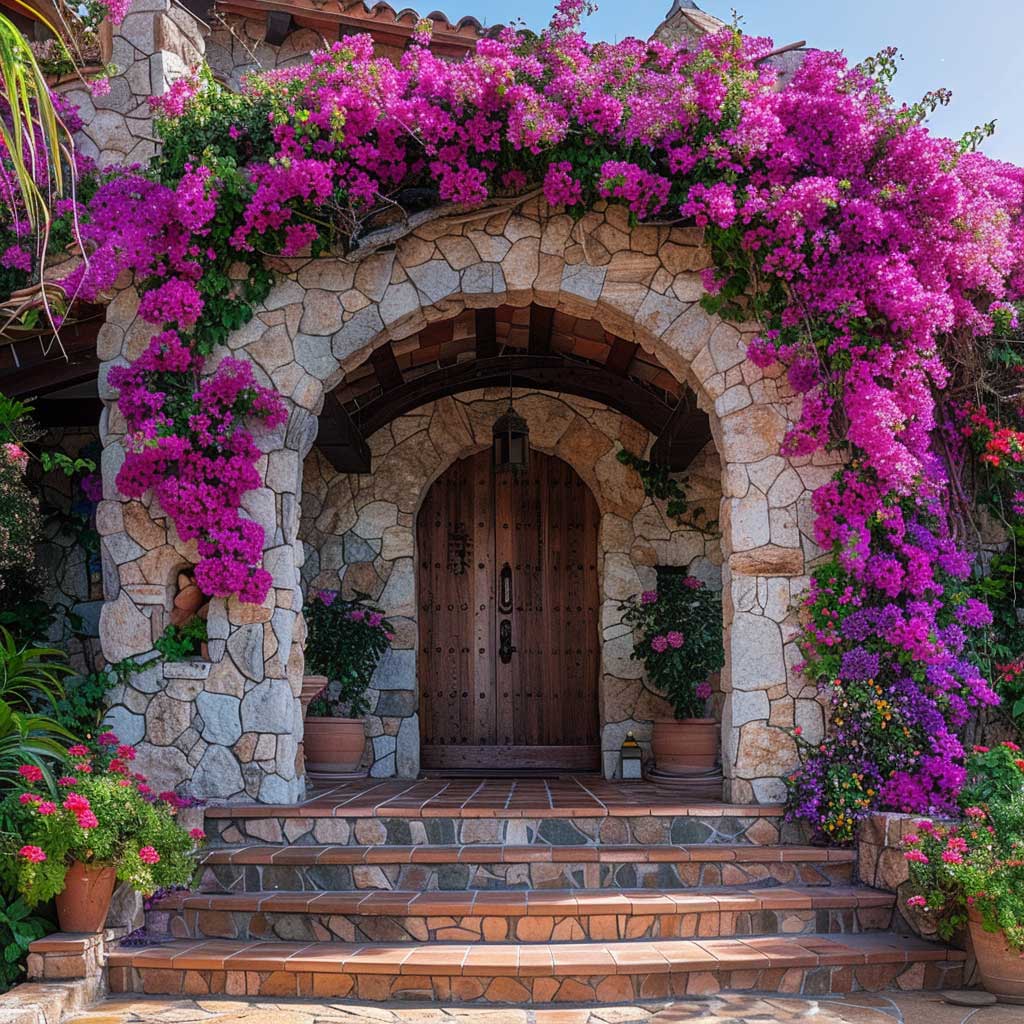
Bougainvillea is the classic companion. In Mediterranean climates the vine can put on more than 24 inches of growth each year and easily reach 20 feet once established. Cascading color over the arch turns a simple opening into a living canopy. Keep the plant pruned just enough to maintain shape without removing the new wood that produces the brightest bracts.
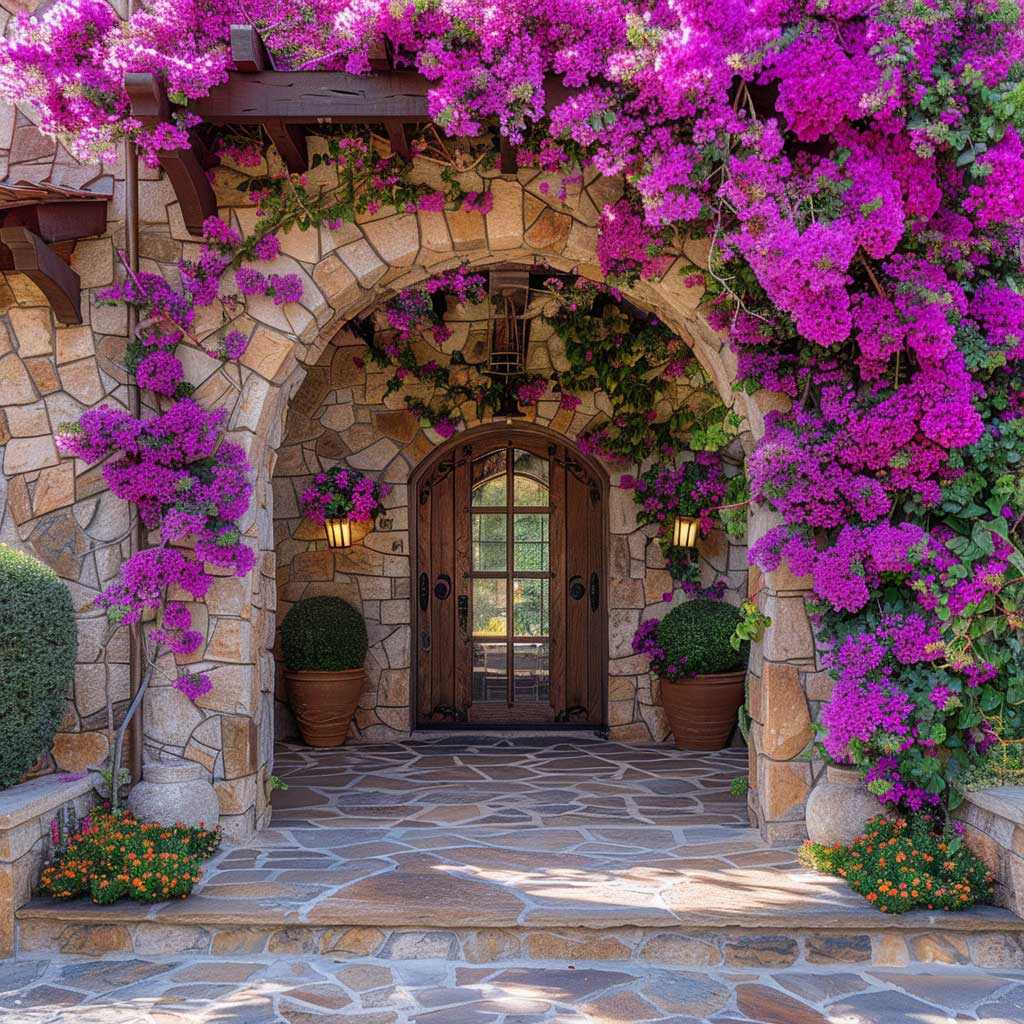
The door inside the arch should carry equal visual weight. A well-proportioned wood door with iron hardware or subtle carving holds the center without competing with the frame. Deep grain and warm stain stand out against the cooler stone or stucco. Avoid doors that sit flush and flat; a slight recess or panel depth adds the necessary shadow lines.

Landscaping around the base completes the transition from garden to house. Low shrubs, climbing vines and a few larger pots keep the hard architecture from feeling abrupt. The plants act like a buffer zone that softens every edge. Place taller elements to one side so the arch itself remains the clear focal point.

Evening lighting should outline the curve rather than flood it. Small uplights at the base of the arch or lanterns mounted just outside the opening create a gentle glow that makes the entrance feel safe and inviting after sunset. Too much light flattens the texture; a restrained approach keeps the drama intact.
Traditional Wooden Doors with Mosaic Accents
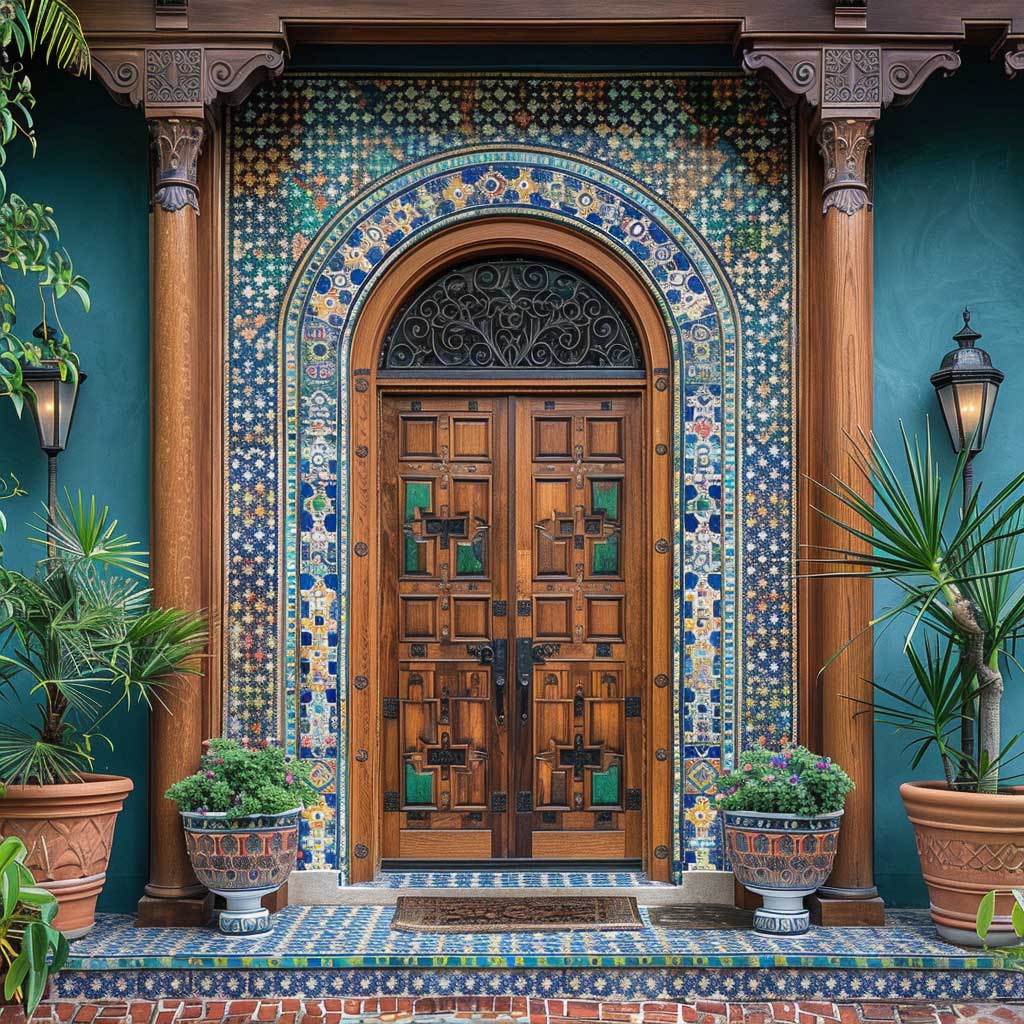
Traditional wooden doors surrounded by mosaic tile capture the cultural layer of Mediterranean design. Rich wood grain meets patterned ceramic in blues, greens and golds. The combination feels handcrafted and rooted in the region’s long building history.

The door itself should be solid hardwood—knotty alder, mahogany or similar species that hold outdoor exposure. Current pricing for quality wood entry units runs from roughly $1,200 for simpler arch-top single doors to well over $3,500 for double or heavily detailed versions. Choose a finish that deepens the grain rather than covering it.
Mosaic bands around the opening add color and texture that change with the light. Geometric or floral patterns work equally well; the key is consistency of scale so the tile does not overwhelm the door. The reflective surface of the glaze also brightens the threshold during the day.
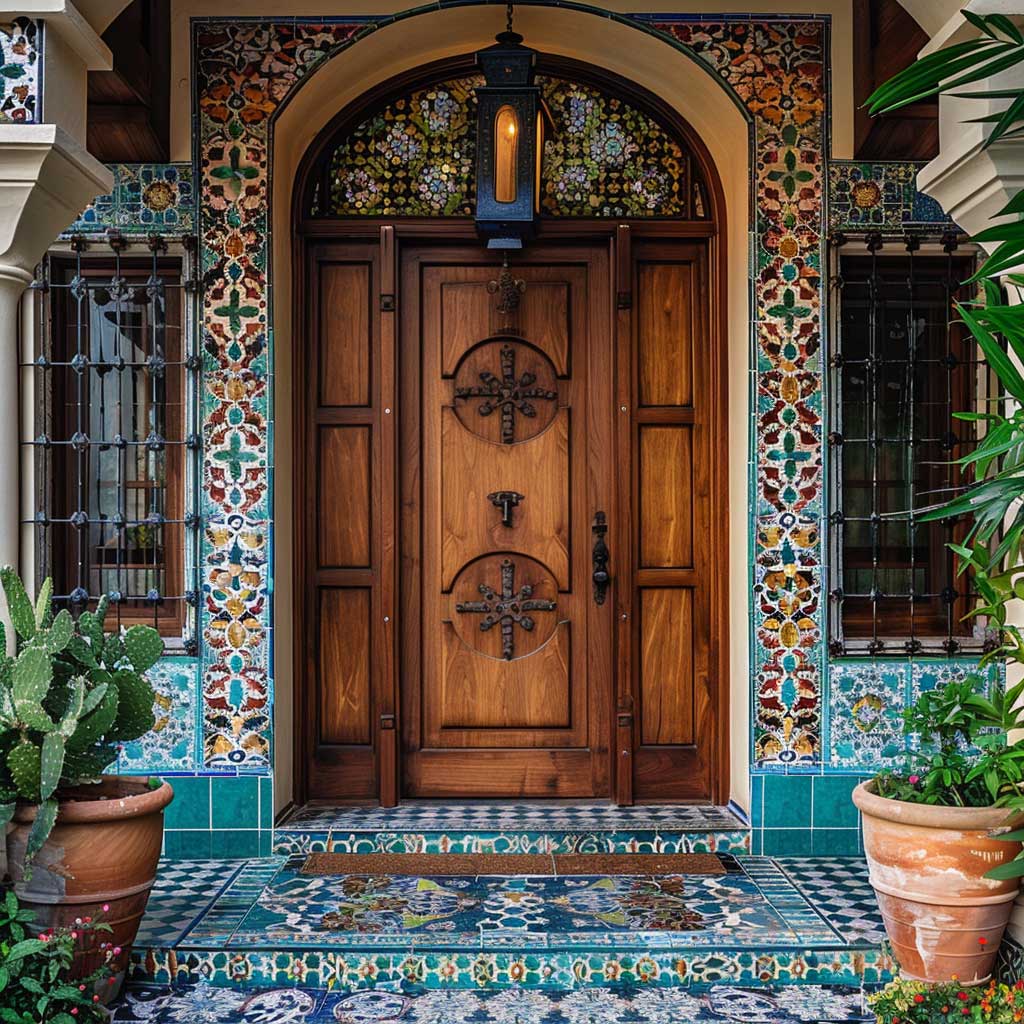
Iron hardware—knockers, handles or simple grilles—adds the final layer of authenticity. Dark metal contrasts cleanly with both wood and tile. Mount pieces at comfortable heights and avoid mixing finishes that compete for attention. For more detailed options on wood species and hardware pairings, explore wooden front door designs for grand entryways.
Planting softens the tiled surround the same way it softens stone. Climbing vines or a few well-placed pots keep the composition from feeling too formal. The greenery also helps the entrance blend with the larger landscape rather than standing apart as a decorative object.

Soft ambient light after dark brings out the glaze of the tiles and the depth of the wood. Lanterns or low sconces work better than bright overhead fixtures. The goal is a warm pool of light that welcomes visitors without washing out the materials.
Material Choices Compared Side by Side
| Approach | Main Materials | Visual Strength | Maintenance Level | Typical Cost Signal |
|---|---|---|---|---|
| Rustic Stone | Natural stone + carved wood | Weight and permanence | Low to moderate | Wood door $750–$3,500+ |
| Arched Frame | Stone or stucco arch + wood door | Grace and drama | Moderate (planting care) | Similar door range + arch work |
| Mosaic Wood | Hardwood + ceramic mosaic | Color and craft | Moderate (tile cleaning) | $1,200–$6,500+ for detailed units |
Cost figures reflect installed ranges for wood entry doors drawn from current market data. Stone and mosaic work add labor that varies by region and complexity. Choose the approach that matches the existing facade rather than forcing a foreign material onto the house.
Common Mistakes That Undermine the Look
Do not pair chrome or bright stainless hardware with Mediterranean materials. The cool metal fights the warm palette of stone, wood and terracotta. Stick to dark iron, oil-rubbed bronze or aged brass that ages with the rest of the entrance.
Avoid over-pruning the planting. A tightly clipped hedge next to a rustic stone wall looks like a hotel lobby rather than a lived-in home. Let vines cascade and leave some natural irregularity so the greenery feels like part of the architecture.
Skip doors that are too flat or too modern in proportion. A flush slab without panel depth or grain interest disappears against textured stone or mosaic. Choose doors with visible thickness and surface variation that can hold their own beside the surrounding materials.
Practical Next Steps for the Entrance
Start with the door and the framing material that already exist on the house. Adding stone cladding or a simple arch around a solid wood door often delivers more impact than replacing every surface. Measure the rough opening carefully before ordering any unit so the proportions stay correct.
Budget for the full sequence: door, hardware, planting and lighting. A beautiful door with no soft landscaping or evening light still feels unfinished. Even two large pots and a pair of wall lanterns change the perception of the entire entrance.
Check local climate tolerance for the plants you choose. Bougainvillea thrives in warm zones and needs strong sun; in cooler areas it may need winter protection or a different vine. Match the living layer to the actual conditions rather than forcing a plant that will struggle.
For cost planning on the door itself, current national ranges show front and premium entry doors typically land between $650 and $3,300 installed depending on material and complexity. Use those figures as a starting point when comparing quotes.
Source for installation cost ranges: RealCost IQ door installation data.
The Entrance That Feels Like Home
The strongest Mediterranean front door does not shout. It simply looks as if it has always belonged to the house and the landscape around it.
Stone, arch or mosaic-tile surrounds each deliver a distinct character. Match the approach to the existing facade and keep the materials honest—wood that shows its grain, stone that keeps its texture, tile that reflects the light.
Add planting that softens edges and lighting that reveals texture after dark. Those two layers turn a good door into a complete entrance sequence.
Choose the version that fits the climate, the budget and the daily use of the house. A well-proportioned door with the right surround will welcome people for decades without needing constant revision.