A pink tile bathroom works when the shade stays soft and the layout stays deliberate. Soft blush or muted rose on walls or floors turns a standard bath into a calm, modern space without tipping into nursery territory. Material costs for ceramic pink tiles typically sit between $3 and $12 per square foot, while installed projects for a mid-size room land around $12–$25 per square foot according to recent contractor averages.
Herringbone, mosaic, and geometric patterns each change the room’s scale and mood in different ways. Choose the pattern first, then lock the pink tone to fixtures and lighting so the result feels intentional rather than trendy for a season.
Most homeowners who succeed with this palette keep white or pale gray as the secondary surface and limit pink to one or two planes. That restraint keeps the color from dominating the light and makes daily cleaning simpler.
Quick Scan
- Ceramic pink tiles average $3–$12/sq ft materials; installed total often $12–$25/sq ft.
- Herringbone labor runs 50–75% higher than straight lay because of angled cuts.
- Mosaic sheets cover about 0.97 sq ft each and cost $15–$25/sq ft material.
- Soft blush vs hot pink: blush pairs with gold or black; hot pink needs cooler neutrals.
- Typical full-bath pink tile job (floor + walls) falls between $1,800 and $5,000.
- Grout lines in mosaic create 15–25 joints per sq ft vs 1–2 for large format.
- Allow 10–15% extra tile for cuts; herringbone often needs 15–20%.
Herringbone Pink Tile Bathroom Layouts That Add Movement

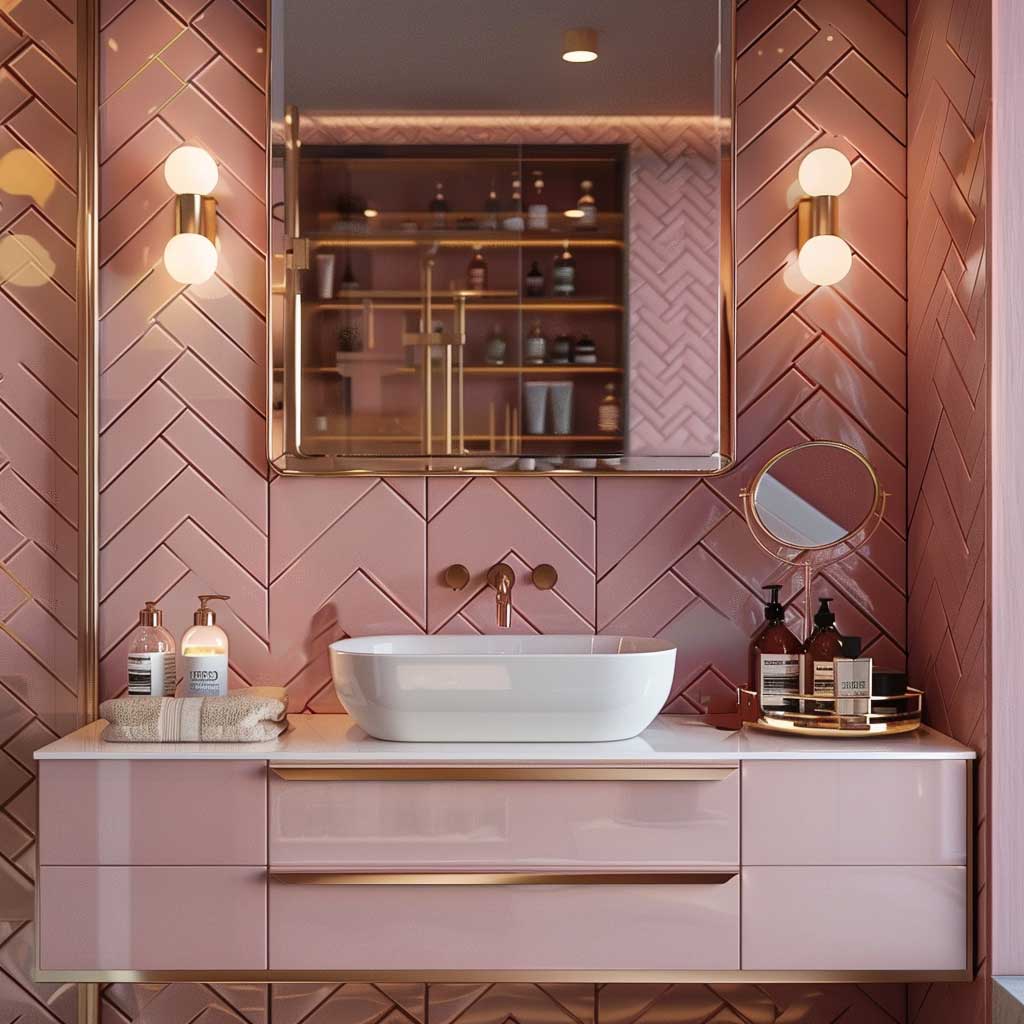
Herringbone pink tile bathroom walls create diagonal movement that makes a compact room feel longer. The angled layout acts like a series of arrows pointing across the space, similar to how chevron flooring draws the eye in a hallway. Expect labor to cost 50–75% more than a straight running-bond pattern because nearly every perimeter piece needs a 45-degree cut.
Soft muted pink ceramic in a 3×6 or 2×8 format keeps the pattern readable without visual noise. Pair it with crisp white fixtures and brushed gold or matte black hardware. The contrast keeps the pink from reading as sweet and instead feels tailored. Do not use bright white grout; a tone one shade lighter than the tile hides soap film longer.
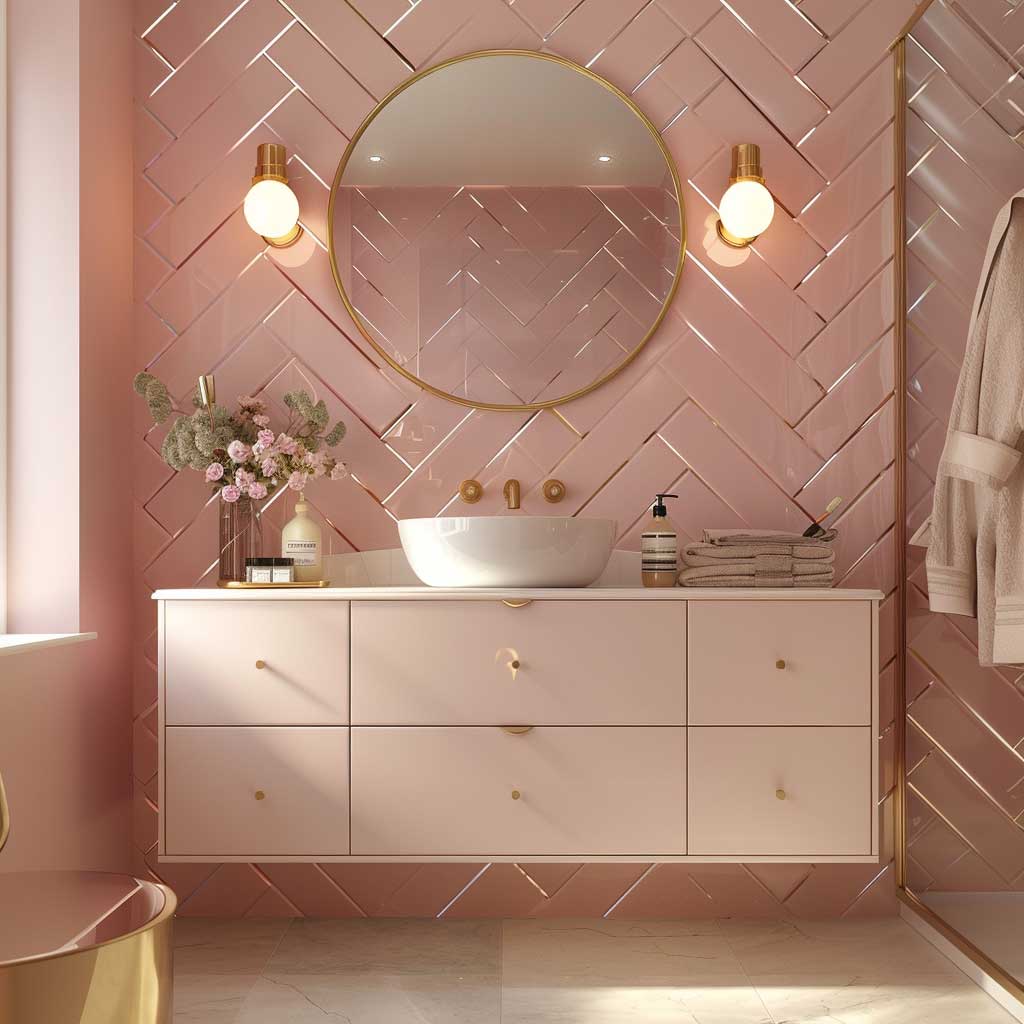
Why does herringbone cost more? The extra cuts and layout time add roughly $4–$8 per square foot in labor compared with a simple grid. A 40-square-foot feature wall can therefore carry an extra $160–$320 just for the pattern. Order 15–20% more tile than measured area to cover waste. For a complementary palette that mixes pink with cooler tones, see these shower tile ideas with pink and grey.
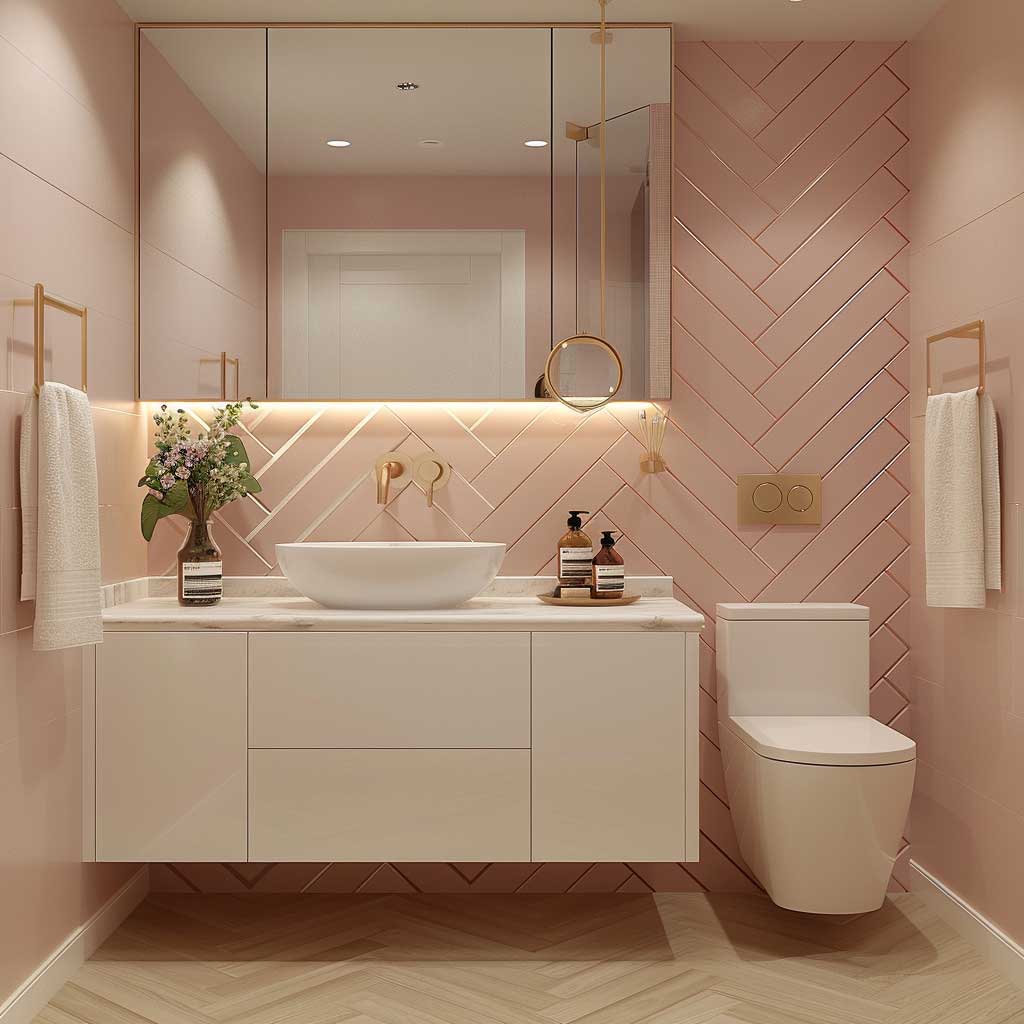
Skip glossy high-contrast pink in herringbone if the bathroom has only one window. The reflections multiply and the pattern can feel busy after a few weeks. Matte or soft-gloss finishes stay quieter under mixed lighting. Keep the same pink on no more than two walls so the room retains breathing room.
Blush Mosaic Tile Surfaces for Calm Texture

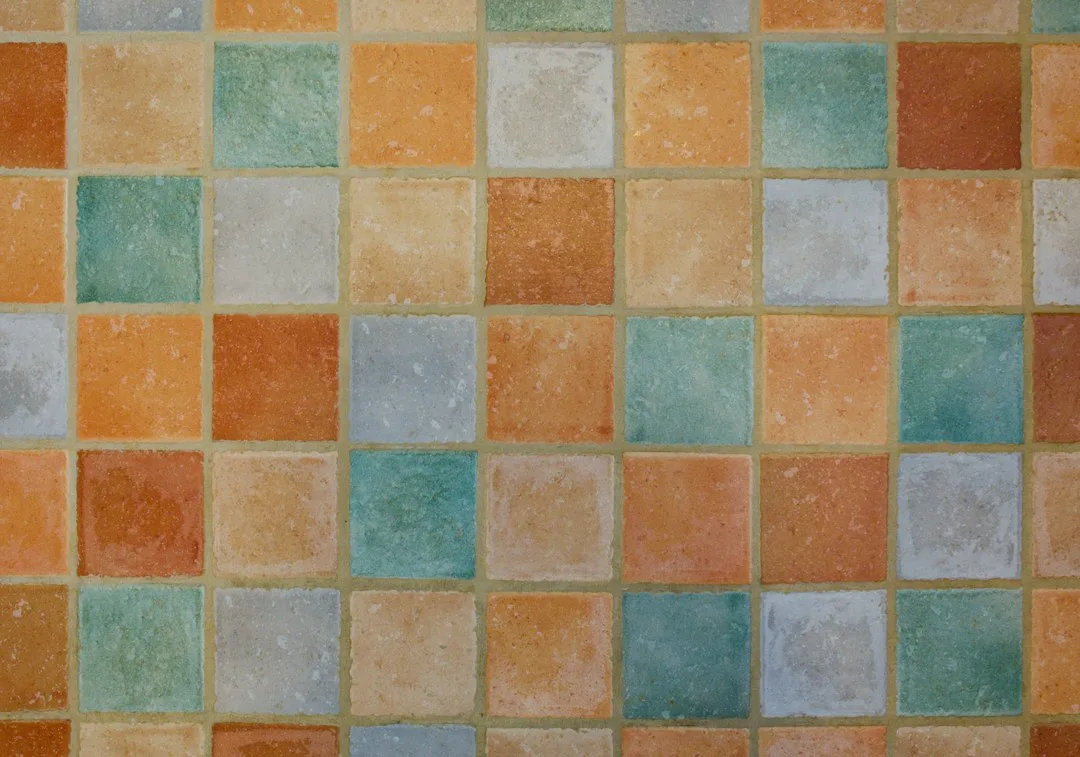
Blush mosaic tiles turn a flat wall into a low-relief surface that catches light like fine fabric. Tiny 1-inch or 1.2-inch squares on mesh sheets install faster than loose chips and still deliver hundreds of small joints that soften the overall look. Material prices for porcelain mosaics commonly fall between $15 and $25 per square foot, with each sheet covering roughly 0.97 square feet.

How does mosaic compare with larger tile? A mosaic field creates 15–25 grout lines per square foot versus one or two for a 12×24 format. That density adds grip underfoot in a shower but also means more maintenance if you choose light grout. Epoxy grout reduces staining and keeps the soft pink clean longer. Pair the mosaic with a freestanding tub or simple floating vanity so the texture stays the main event.
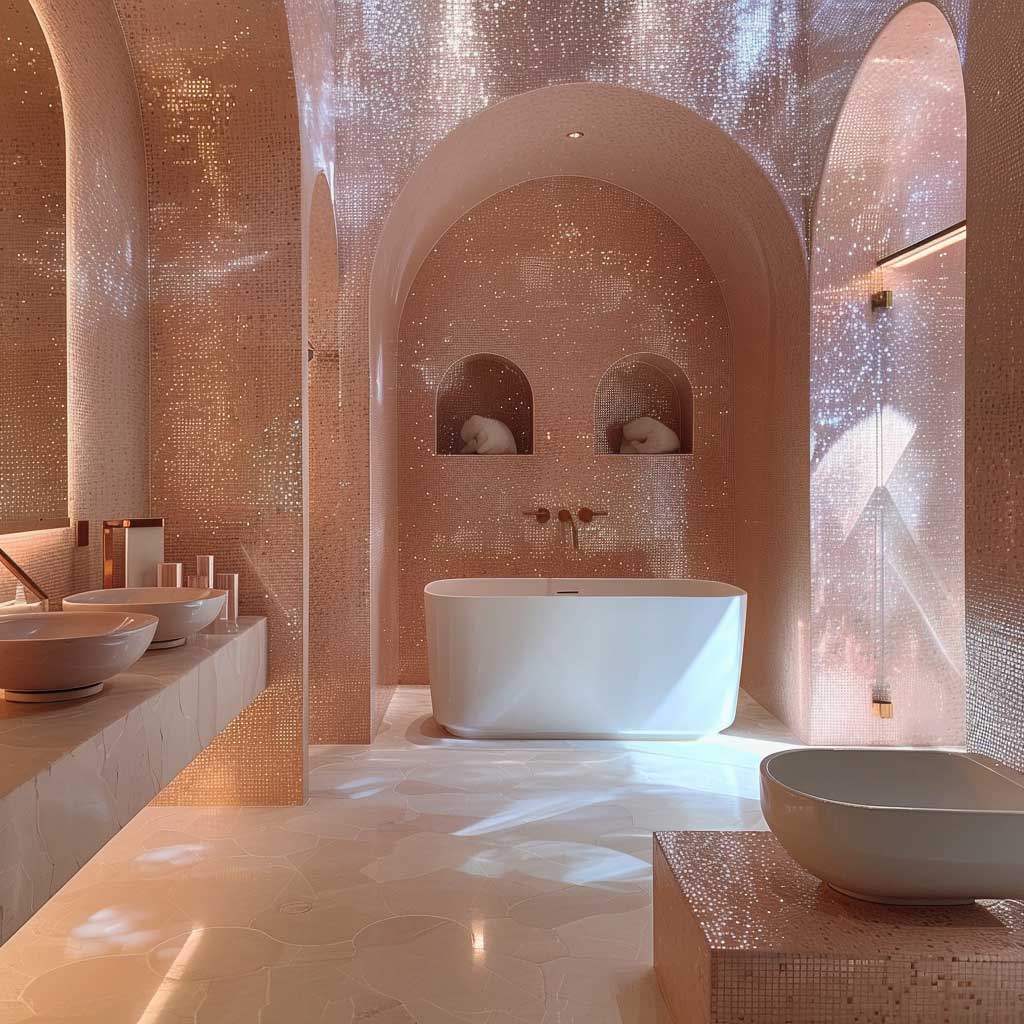
Avoid mixing mosaic with another small-scale pattern on adjacent walls. The two textures compete and the room loses focus. Limit mosaic to the shower surround or one accent wall, then use larger-format white or pale gray elsewhere. Average installed cost for a mosaic shower surround sits higher than plain ceramic because of the joint volume—often $20–$40 per square foot all-in.
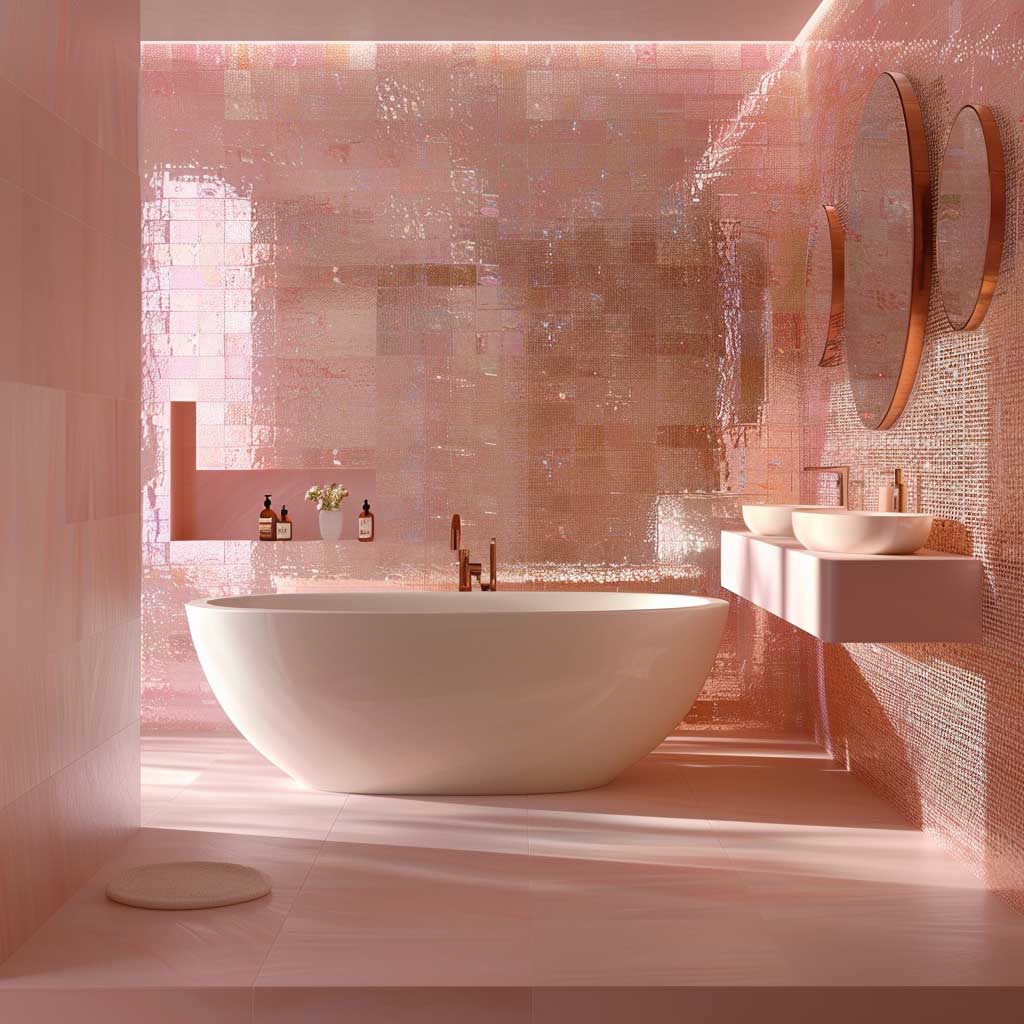
Think of mosaic as the quiet cousin of wallpaper: it adds depth without demanding constant attention. Soft blush works especially well in north-facing baths where natural light stays cool; the pink warms the space without needing extra lamps.
Modern Geometric Pink Tile Patterns That Stay Sharp
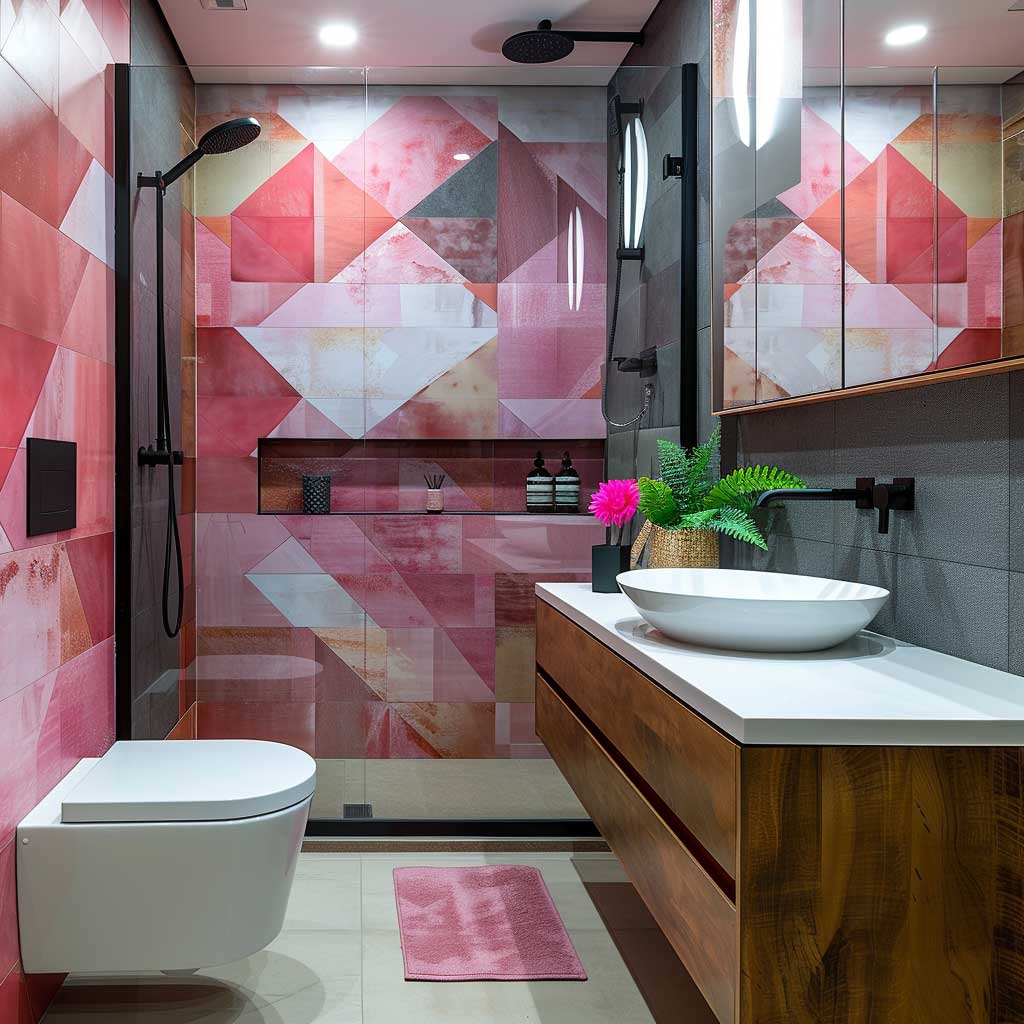
Modern geometric pink tile bathrooms rely on clear shapes—hexagons, diamonds, or offset rectangles—to create structure. Multiple shades of pink within the same pattern add dimension while still reading as one family. Material costs for geometric porcelain often start around $7–$15 per square foot, with labor similar to standard layouts unless the shapes require frequent cuts.

Black matte fixtures against geometric pink create a deliberate contrast that feels current rather than playful. Floating vanities and frameless glass keep the lines clean so the pattern does the talking. Soft pink versus brighter coral: soft pink pairs cleanly with black or brass; brighter tones need more neutral balance to avoid fatigue. For broader color pairings beyond pink, explore these green tile bathroom ideas with subway mosaic and herringbone.
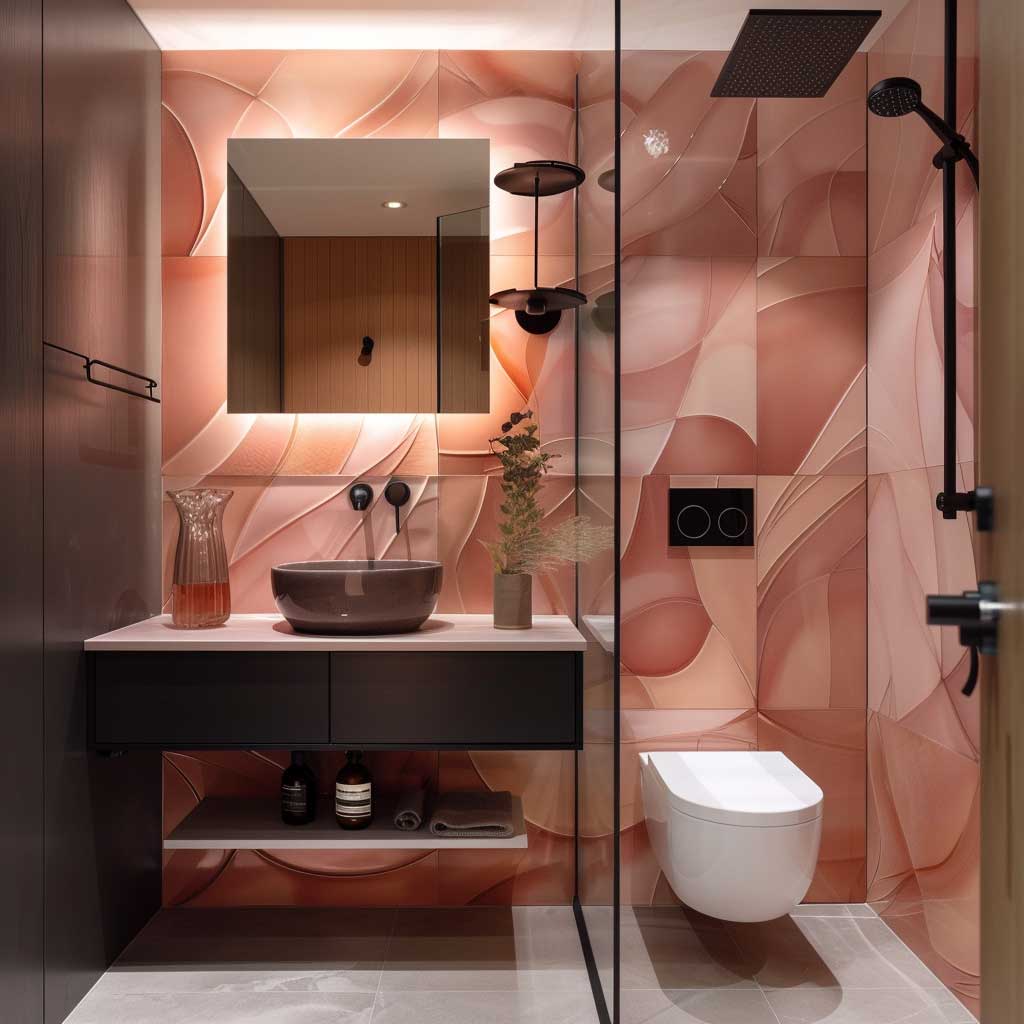
Do not cover every surface with the same geometric field. One strong wall or the shower niche is enough. Full-room coverage in busy geometry can shrink a space under 50 square feet. Keep floors large-format and neutral so the eye has a place to rest. Typical waste factor for geometric layouts stays near 10–12% if the shapes are mesh-mounted; loose tiles may need more.
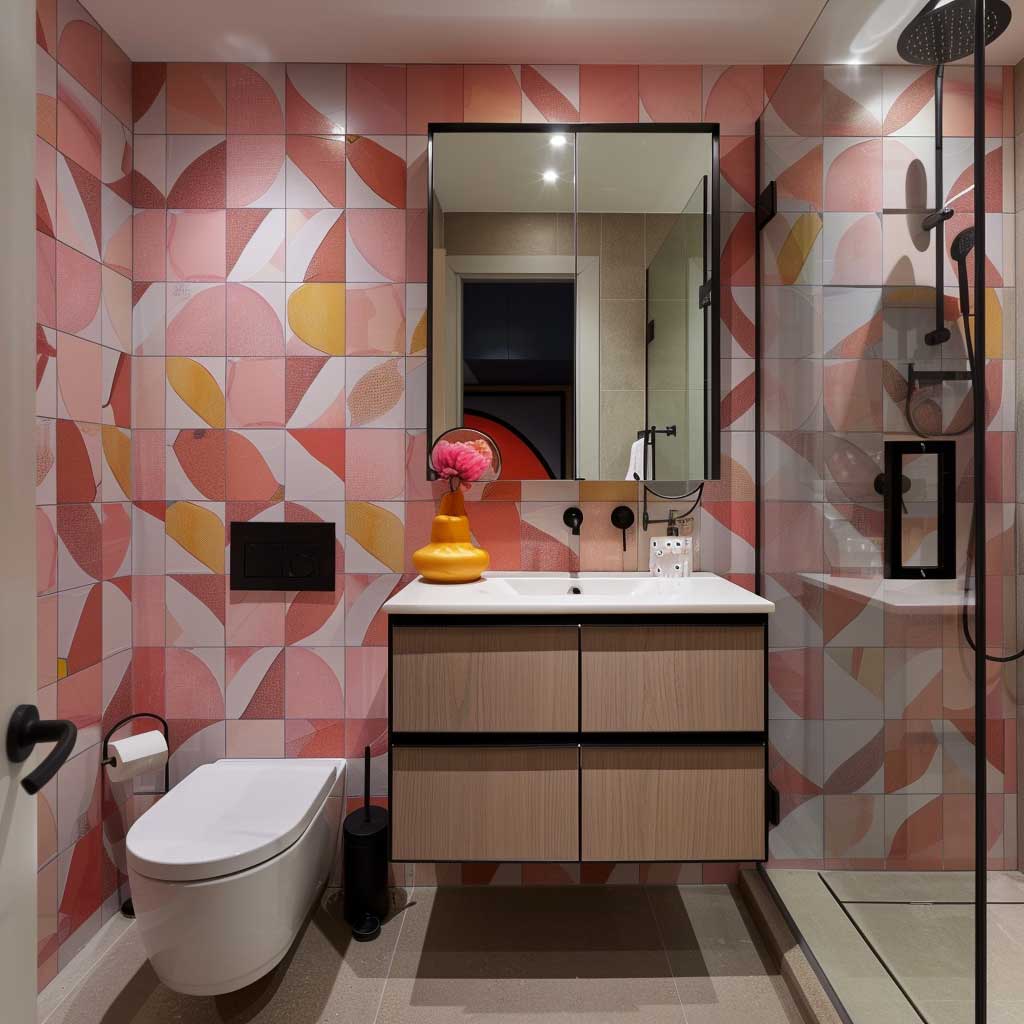
A geometric pink tile bathroom rewards precision in lighting. Side-mounted sconces or a large mirror that reflects the pattern will amplify the design without extra fixtures. Avoid recessed cans that create harsh shadows across the joints.
Pattern and Cost Comparison for Pink Tile Choices
| Pattern | Material Cost / sq ft | Installed Cost / sq ft | Labor Multiplier vs Straight | Best Use | Grout Joints / sq ft |
|---|---|---|---|---|---|
| Herringbone ceramic | $3–$12 | $16–$28 | 1.5–1.75× | Feature wall | 4–8 |
| Blush mosaic porcelain | $15–$25 | $20–$40 | 1.2–1.4× | Shower surround | 15–25 |
| Geometric porcelain | $7–$15 | $14–$25 | 1.1–1.3× | Accent wall or niche | 3–10 |
| Straight subway pink | $3–$10 | $12–$20 | 1.0× | Full walls | 2–4 |
The table shows why many projects keep herringbone or mosaic to one plane. The labor premium and higher joint count add both cost and maintenance. Straight-lay pink subway remains the fastest and least expensive route when budget is tight.
Practical Decisions That Keep the Look Working
Choose one primary pattern and one pink intensity. Mixing herringbone with mosaic in the same room usually creates visual competition rather than richness. Soft blush reflects light better in small baths under 40 square feet; deeper rose can make the same space feel closed.
Budget 10–15% extra tile regardless of pattern, then add another 5% for herringbone. Store leftover boxes for future repairs—pink shades shift between batches more than neutral colors. For an external reference on typical installed ranges, recent national averages place standard ceramic or porcelain bathroom tile between $10 and $50 per square foot depending on complexity (HomeGuide data).
Test a full sheet or sample board under both daylight and evening bulbs before ordering. Pink that looks calm in the store can shift warmer or cooler once installed. That single check prevents the most common regret.
Final Selection Path
A pink tile bathroom succeeds when the color stays restrained and the pattern serves the room’s proportions. Herringbone delivers movement at a clear labor premium of 50–75%. Mosaic adds texture at higher material cost and denser joints. Geometric layouts offer structure with moderate extra effort.
Start with the wall or floor that will carry the pink, then choose the pattern that matches both budget and skill of the installer. Soft blush paired with white and one metal finish remains the most reliable combination across different light conditions.
Measure twice, order the documented overage, and keep the secondary surfaces simple. The result holds its appeal longer than a full-room color statement.