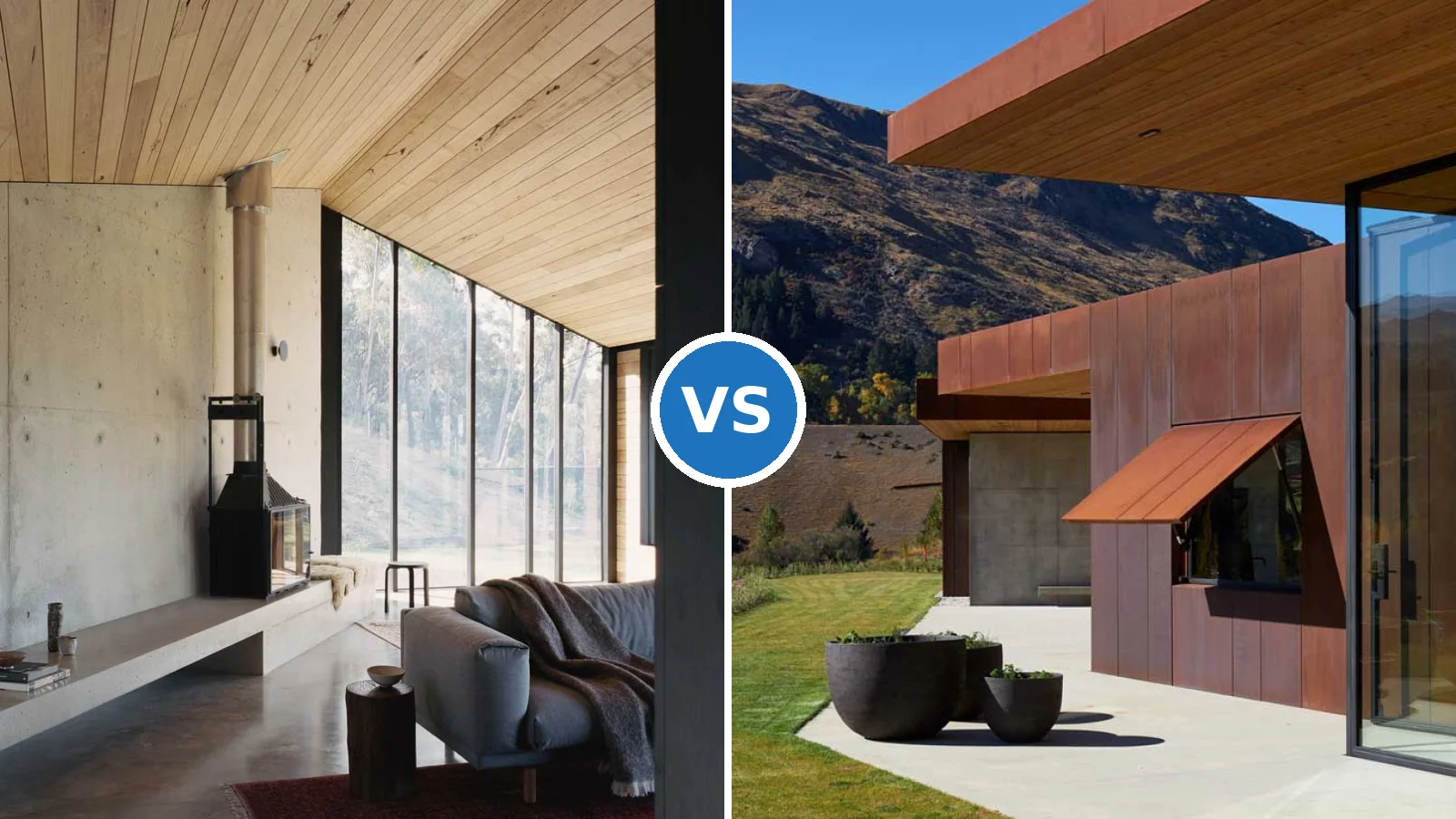
Modern wood paneling has quietly become the most copied wall treatment in contemporary interiors — and the gap between rooms that look designed and rooms that look dated comes down to three decisions made before a single panel goes up. Contemporary wood paneling for walls works when the profile is slim, the species is consistent, and the coverage is restrained. I’ve watched homeowners get all three wrong in a single renovation, and the result is always the same: a room that feels smaller, darker, and ten years older than it actually is. Modern wood wall panels installed correctly do the opposite.
Wood panel design ideas have expanded dramatically since the slotted groove sheets of the 1970s. Today’s contemporary wood wall options include acoustic slat systems, floating panels on hidden clips, herringbone hardwood runs, and reclaimed barn wood in formats that look nothing like their source material. The wood paneling ideas covered here span $6 to $40 per square foot — real price ranges from real products, not aspirational estimates.
Quick Scan
- Vertical slat panels — tricks a low ceiling into reading taller; white oak slats from $6/sq ft
- Geometric patterns — hexagon and chevron designs work on one wall only, never four
- Reclaimed wood — pairs with concrete and steel; fights with floral and pattern
- Horizontal panels — widens narrow rooms; wrong choice for low ceilings
- Dark wood accents — walnut and smoked oak need light stone or plaster nearby
- Textured ribbed panels — grooved and fluted surfaces add depth without changing color palette
- Painted wood panels — matte deep tones only; bright primaries erase the grain
- Herringbone pattern — most movement, most waste; budget 25% extra material
- Mixed materials — wood plus brushed metal or honed stone reads contemporary
- Floating wood panels — most architectural option; demands laser-level precision
Vertical Slat Panels Lie About Your Ceiling Height
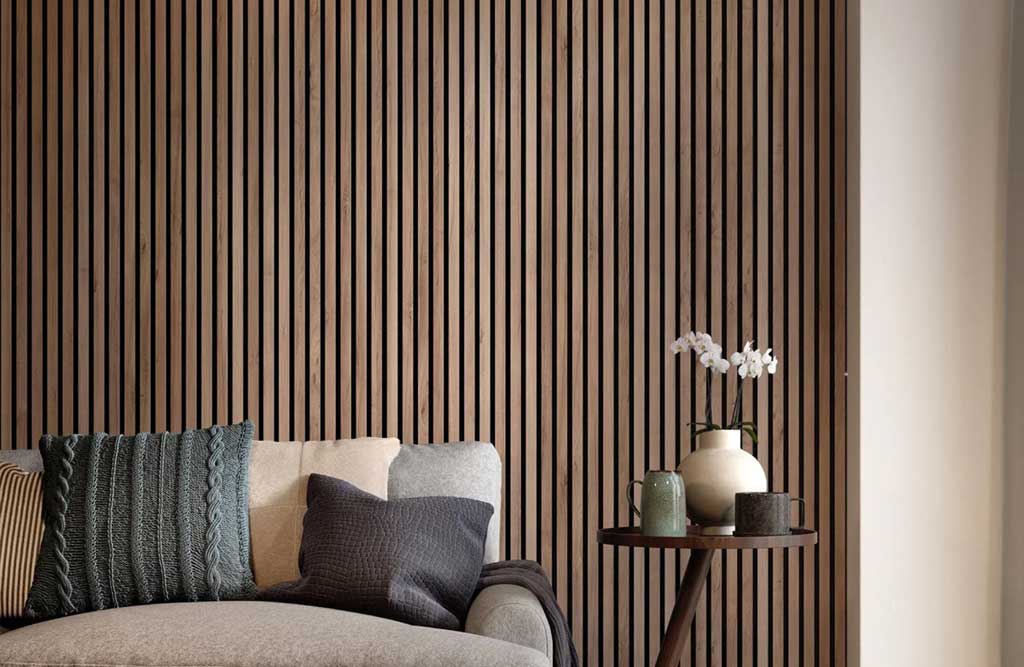
Sleek vertical panels are the most requested contemporary wood paneling format for one reason: they pull the eye upward and make 8-foot ceilings read closer to 10. My go-to spec is 2-inch white oak slats with a 0.5-inch shadow gap on a felt backing panel — Roomset Studio sells this system for around $8 per linear foot and the whole wall installs in under four hours. Modern wood paneling in this orientation works in living rooms, bedrooms, and hallways with equal reliability. You’ll notice every modern interior wood wall design that photographs well uses slats narrower than 4 inches; wider boards flatten the effect and make the wall look like a sauna rather than architecture.
Wood panel ideas for walls that use vertical orientation also carry a functional payoff: the shadow gaps between slats absorb sound by breaking up flat reflective surfaces. For a home office or bedroom, that acoustic benefit is real. Don’t stop the panels at chair-rail height hoping for a “wainscoting look” — in a modern wood panel living room, half-height panels read as a budget signal, not a design decision. Floor to ceiling or nothing.
Geometric Wood Panel Designs Need One Constraint to Stay Readable
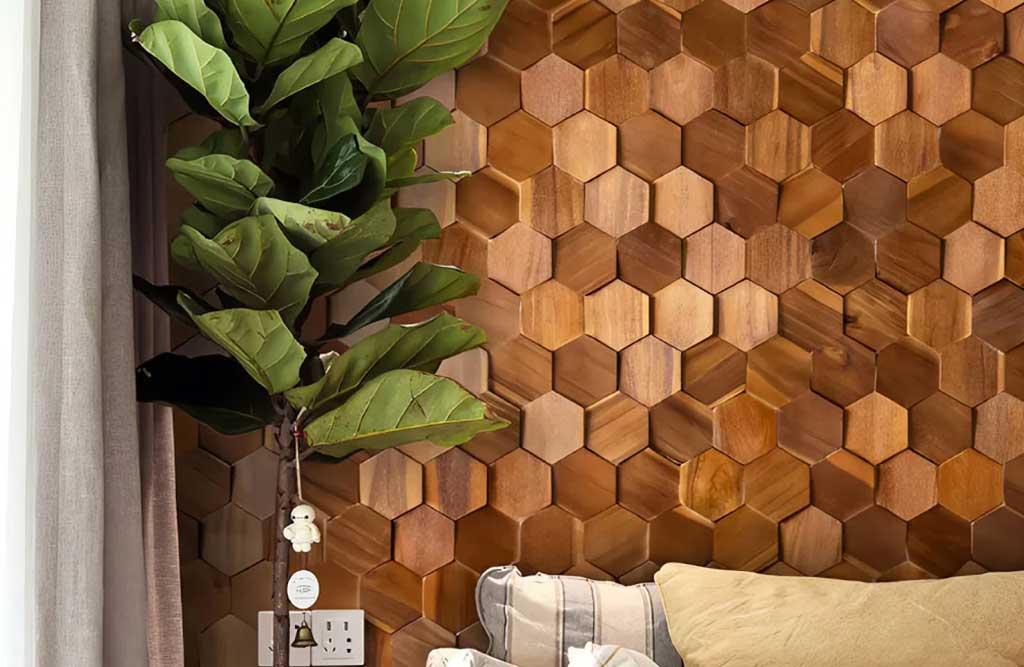
Design ideas for wood panel walls built around geometric shapes — hexagons, chevrons, offset rectangles — look architectural when every piece uses the same species and the same finish. I stole this constraint from a designer who ran a hexagonal white ash pattern on a single dining room wall in 2022: one species, three different surface textures within the same shape, and the result looked like a $15,000 custom installation. It cost $4,200 in materials. Contemporary wood wall panels in geometric patterns lose their authority the moment you introduce a second wood tone — the pattern starts reading as a craft project.
Wood panel wall designs using chevron or diamond shapes work best as a focal point behind a sofa or bed. What doesn’t work: geometric patterns on a wall interrupted by multiple windows and doors. The pattern needs clear unbroken horizontal runs to read properly — a wall with three windows is the wrong place for this wood panel wall design. One wall. One species. One finish level.
Rustic Reclaimed Wood Belongs Next to Concrete, Not Cushions
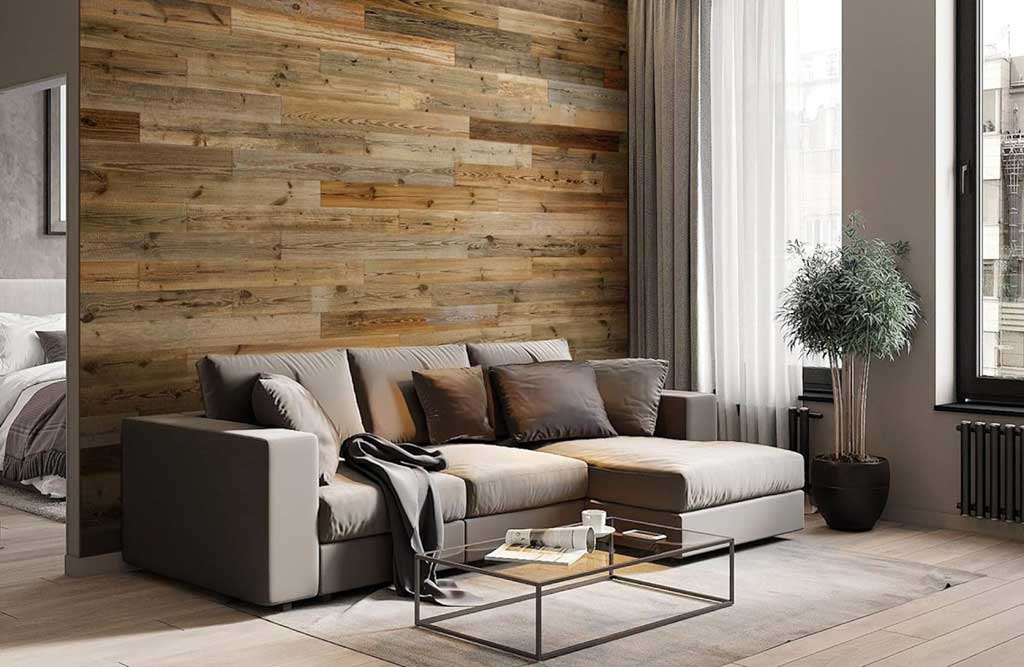
Wood paneling ideas using reclaimed barn wood reach their contemporary ceiling when placed against raw industrial materials — polished concrete floors, exposed steel beams, matte black plumbing fixtures. The aged grain and color variation in reclaimed panels read as intentional contrast in that context. Elmwood Reclaimed Timber out of Kansas City ships curated barn wood panel systems starting at $14 per square foot, and each order includes a provenance note about the source structure. That detail changes how the room feels. Ideas for wood paneling with reclaimed material carry authenticity that new wood stained to look old simply cannot replicate.
Where reclaimed wood panel wall ideas fail consistently is in rooms already loaded with visual texture — patterned upholstery, printed rugs, busy tile backsplashes. The natural variation in reclaimed wood competes with pattern rather than anchoring it. Keep the rest of the room sparse: one linen sofa, a ceramic lamp, bare floors. Wood paneled walls decorating in reclaimed style demands restraint everywhere else. For a full breakdown of how reclaimed materials pair with different interior styles, this interior wall paneling design overview covers the matching logic room by room.
Horizontal Wood Panels Make Narrow Rooms Breathe
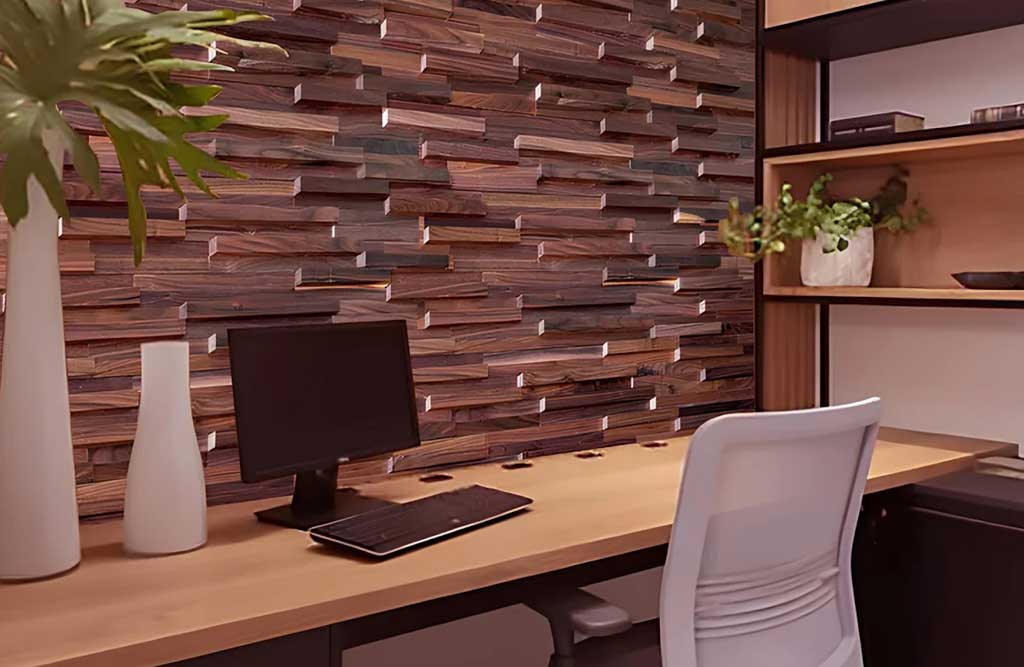
Horizontal wood wall panels act like a wide-angle lens on a camera — they push the walls out visually and make tight corridors and narrow rooms feel wider than the tape measure says. Light-stained maple or white oak in a continuous horizontal run creates the widening effect most dramatically when the panels run wall-to-wall without breaks. Contemporary wood panelling in horizontal orientation also costs less to install than vertical slat systems because horizontal runs require fewer precision cuts at corners and transitions. You’ll notice wall wood paneling ideas using this layout dominate narrow hallway inspiration boards for exactly that reason.
Wall wood panelling ideas that use horizontal orientation belong in rooms that are narrow but normally tall. Don’t apply horizontal wood wall paneling in rooms that are already wide but low-ceilinged — the horizontal line emphasizes the ceiling plane and makes a short room feel compressed. I made that exact mistake in a basement renovation and spent three months trying to correct it with uplighting. The lighting didn’t fix it. Modern paneled walls in horizontal format are an optical tool; use the tool in the right direction.
Dark Wood Accents Anchor a Room Until They Swallow It
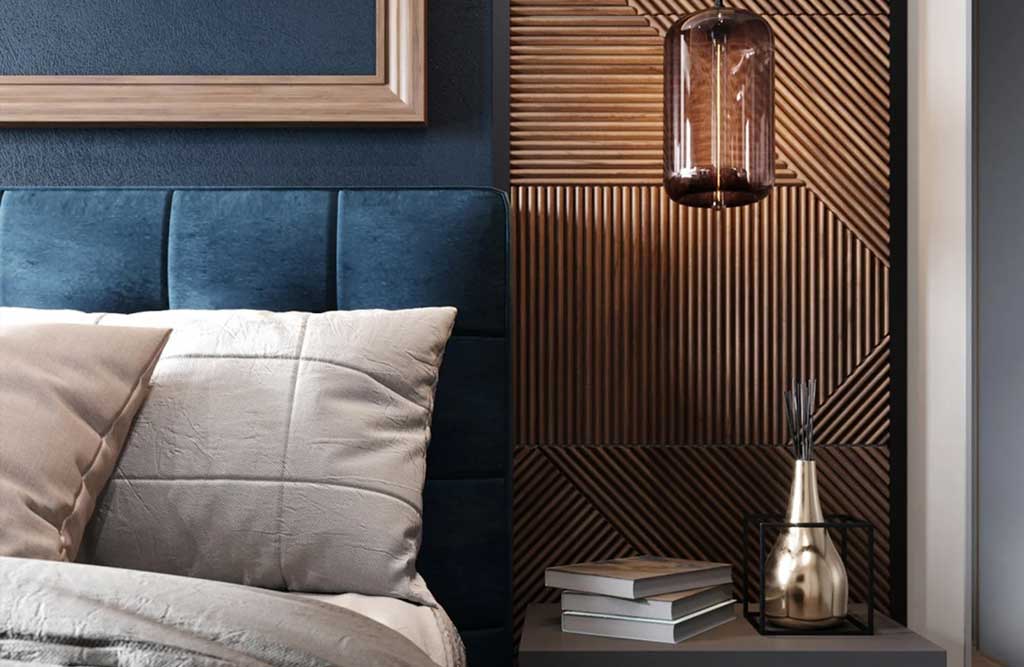
Dark wood panels — walnut, smoked oak, blackened cedar — are the most dramatic wall wood modern treatment available and also the easiest to overdo. One dark panel wall in a room with white plaster, pale stone floors, and a linen sofa reads as intentional luxury. The contrast ratio does all the work. Modern wood wall paneling in dark species fails when it covers more than one wall — the room stops reading as designed and starts reading as a bunker. My rule for dark wood wall treatment ideas: the darker the panel, the lighter everything touching it needs to be.
Walnut veneer panels from Plyboo or Oshkosh Designs run $20–$35 per square foot installed and deliver a surface depth that painted drywall cannot approach. What doesn’t work is achieving this look with dark stain over pine — the open grain absorbs unevenly and the finish looks like furniture, not architecture. Modern wood paneling walls in dark species need dense-grain hardwood or quality veneer over engineered substrate. No shortcuts on the substrate. This dedicated breakdown of black wood wall paneling covers the extreme end of the dark panel spectrum with real room examples and contrast ratios that work.
Ribbed and Grooved Panels Add Depth Without Touching the Color Palette
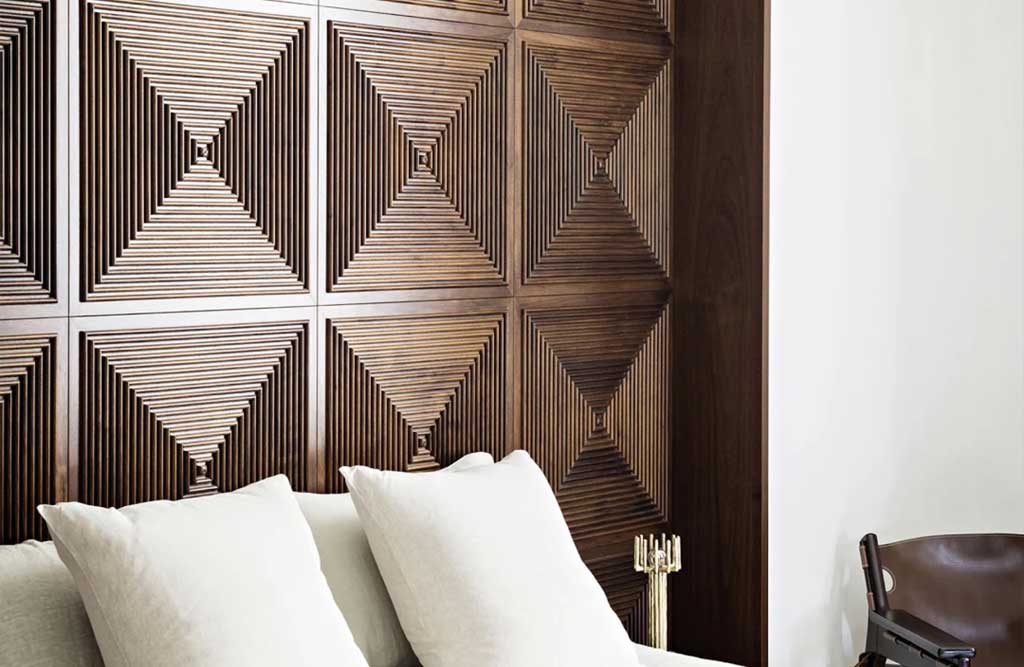
Textured wood panels — ribbed, fluted, micro-grooved — are the stealth upgrade in contemporary wood wall design. From across the room they read as flat wood; up close, shadow lines make the wall three-dimensional. I own two panels from Decor Wonderland’s ribbed oak line at $45 per 12×48-inch panel and the shadow depth at different times of day genuinely surprises me. Directional afternoon light turns a ribbed wall into something that looks custom-installed by an architect. This is one of the wood panel ideas that photographs differently in every season without any changes to the room.
Modern interior wood wall panels with carved or deeply figured surfaces belong in traditional or maximalist interiors, not contemporary ones. For modern wood wall paneling ideas, stick to ribbed, fluted, or micro-grooved profiles — the shadow line stays clean and geometric, which reads as designed rather than decorative. Deeply carved panels with organic motifs fight with modern furniture silhouettes and require a specific decorating skill set that most rooms don’t support.
Don’t Do This with Wood Wall Panels
- Don’t panel all four walls — even in a small room, full wood coverage reads as oppressive. One or two walls is the maximum for contemporary wood paneling for walls.
- Don’t mix wood species in the same panel run — oak beside pine beside walnut on the same wall is a design disaster regardless of how the individual pieces look in isolation.
- Don’t stop panels at chair-rail height — in a modern interior wood wall context, half-height panels look like a renovation budget, not a design decision. Go floor-to-ceiling or skip it entirely.
- Don’t apply latex wall paint directly to wood panels — it cracks at the joints within two heating seasons as the wood moves. Use alkyd primer formulated for wood movement.
- Don’t skip the shadow gap — butted panel edges telegraphing seasonal wood expansion look cheap and amateur. A 0.25-inch gap between panels is structural, not optional.
- Don’t use dark stain over pine for a walnut effect — the open grain absorbs unevenly and the result looks like furniture, not architecture.
Painted Wood Panels in Moody Colors, Never Primary Ones
Painted wood panel walls work when the color is complex enough to hold the room’s attention on its own. Deep sage green, aged navy, and warm charcoal sit naturally on wood grain because matte finish absorbs light the same way raw wood does — the wall reads as considered rather than bold-for-bold’s-sake. Benjamin Moore Newburyport Blue (HC-155) and Farrow & Ball Mole’s Breath (No. 276) are the most-pinned painted panel colors on design boards right now, and both share the same quality: enough pigment complexity that the color looks different at 9am and 9pm. Budget $60–$90 per quart for alkyd wood paint. Wood panel design with painted surfaces is one of the most cost-effective contemporary wood paneling updates available — no new panels required.
Bright primaries — red, yellow, cobalt blue — on wood panel walls kill the grain texture and turn the surface into flat color. You’ve eliminated the entire reason to use wood. Wall panel wood in modern interiors painted with saturated primaries looks like a daycare, not a designed room. If you want saturated color on a wall, use plaster. Save the wood for anything that benefits from natural grain variation — paint at the wrong saturation level destroys all three of wood’s advantages simultaneously.
Herringbone Wood Pattern Has One Flaw That Kills the Budget
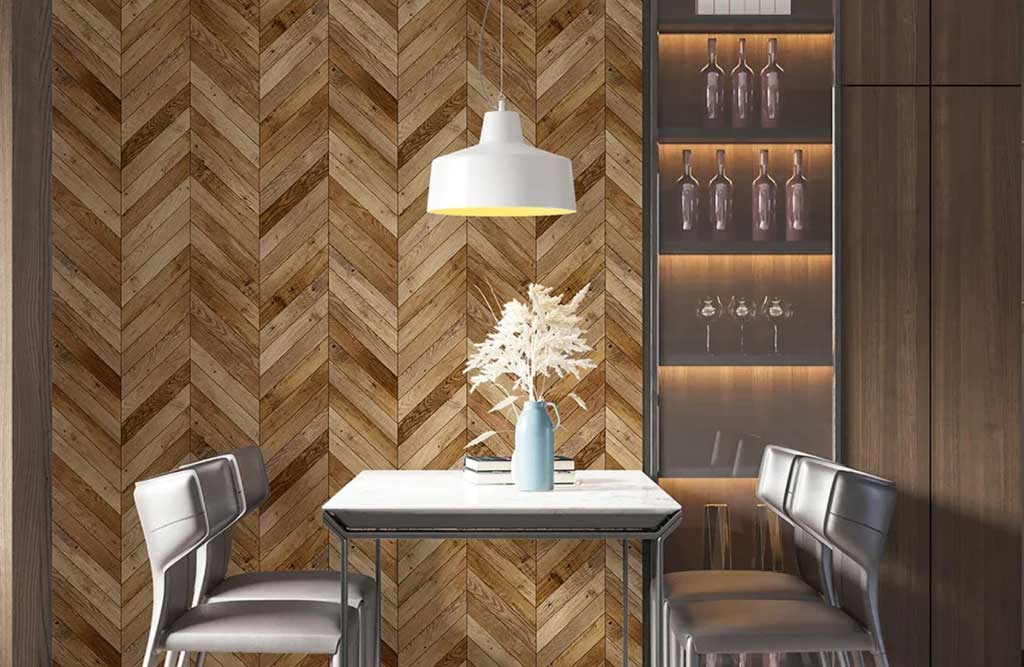
A herringbone pattern in modern wood wall paneling creates diagonal movement that flat vertical or horizontal layouts cannot match — and in a hallway or living room, that movement makes the space feel alive. I’ve seen 3-inch white oak strips run in a herringbone pattern behind a TV console produce a wall that looked like a $14,000 custom installation but cost under $3,800 in materials and labor. Wall wood paneling ideas built around herringbone are the most visually dramatic wood wall paneling ideas on this list. The diagonal lines of the herringbone create a sense of energy that straight-run modern wall paneling ideas simply can’t replicate.
The flaw: herringbone requires every strip to end at the same angle at every wall edge, which produces 20–30% material waste compared to a straight-run installation. Budget that overage explicitly before you order. Ideas for wood paneling walls using herringbone also need a clear, uninterrupted wall plane — windows, doors, and outlets break the pattern logic and make the diagonal lines read as interrupted rather than dynamic. Decorating ideas for wood panel walls with herringbone succeed on one wall only. Pick the right wall first.
Mixed Materials Where Wood Meets Metal or Stone
Contemporary wood panelling reaches its most architectural expression when wood shares a wall plane with a contrasting material — honed limestone sections, brushed brass inlay strips, or raw blackened steel dividers. The contrast in surface reflectivity between matte wood grain and a brushed metal edge is what makes a mixed-material wall feel like a design decision rather than a coincidence. Wall wood modern installations that mix materials appear in most high-end residential projects for exactly that reason: wood alone reads warm but singular; wood plus stone or metal reads like a material conversation. Modern wall wood paneling with mixed materials costs more to detail but photographs at a level that pure wood walls rarely reach.
What fails in the mixed material approach is pairing wood with high-gloss tile or polished marble — the shine gap between matte wood grain and a mirror-polished stone face is too extreme and the wood always looks dull by comparison. Keep the stone honed, keep the metal brushed, keep the wood at a satin or matte finish level. HGTV’s wood-paneled wall roundup shows professional examples of wood-and-stone combinations where the material pairing is executed at the right finish level — worth reviewing before you spec your stone.
Floating Wood Panels Read as Architecture, Not Decoration
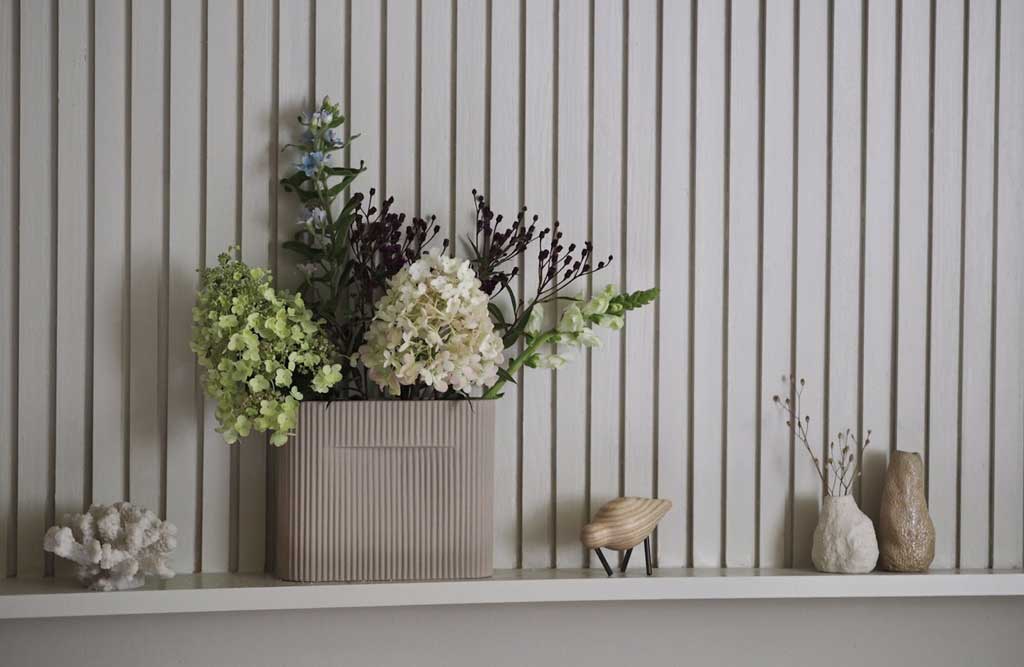
Floating wood panels — mounted on hidden Z-clips or magnetic track systems that hold each panel 0.5 to 0.75 inches off the wall surface — are the most architectural modern wood wall design available outside a custom millwork budget. The shadow gap between panel edge and wall plane catches light at every angle of the day and makes the installation read as a designed object. Modern interior wooden wall design using floating panels carries visual weight without visual clutter, which is exactly what contemporary rooms need. Häfele and Richelieu both make quality hidden clip hardware for $2–$4 per linear inch; don’t substitute cheaper alternatives, the clip tolerance determines whether the shadow gap stays consistent.
Precision is the non-negotiable requirement. Floating panels must be level to within 1/16 inch across their full span — any variation is amplified by the shadow line at the base edge and immediately visible from across the room. Modern wood wall design at this level of detail rewards a laser level and punishes a standard bubble level. If you’re not confident with a laser level setup, hire the installation. A warped floating panel looks significantly worse than no panel at all, and the wood panel wall design impact you paid for disappears completely. For more on achieving this kind of wall treatment, this wood paneling makeover overview covers installation approaches across different skill levels.
Why Wood Panel Walls Outlast Every Other Wall Trend
Contemporary wood wall panels hold their design relevance longer than painted accent walls, wallpaper, or decorative tile because the material itself ages well. Oak darkens slightly over years, walnut lightens a tone, reclaimed wood develops additional patina with every season — unlike paint, which chips, or wallpaper, which peels at the seams. The investment math on modern wood paneling is compelling: quality wood paneling designs for walls run $8–$35 per square foot installed, and a well-executed panel wall genuinely increases the perceived value of the room in resale assessments. Ideas for wood paneling walls that hold their value over time always use natural species rather than wood-look PVC or laminate alternatives.
Wood wall treatment ideas also carry a functional advantage no paint can match: natural wood dampens sound by absorbing mid-frequency reflections off flat wall surfaces. Modern wood panels for walls in a bedroom or home office reduce echo during calls and lower the ambient noise level from adjacent rooms. Wood panels modern enough to use acoustic slat formats — like the Muuto-inspired felt-backed slat systems — combine visual warmth with measurable acoustic performance. Wood paneling designs that work on two levels simultaneously are the definition of a material investment, not just a wall covering decision.
Final Thought
Every wood wall that photographs well made one decision with restraint.
One wall, one species, enough bare surface around it to let the material read clearly — that is the formula behind every contemporary wood paneling installation that looks designed rather than renovated.
Wood panel wall ideas that age well share the same quality: the wood is doing one job, not five. Pick the job before you pick the panel.
Save this post before your next mood board session — these wood paneling ideas cover every budget from $6 per square foot slat systems to full floating panel installations.