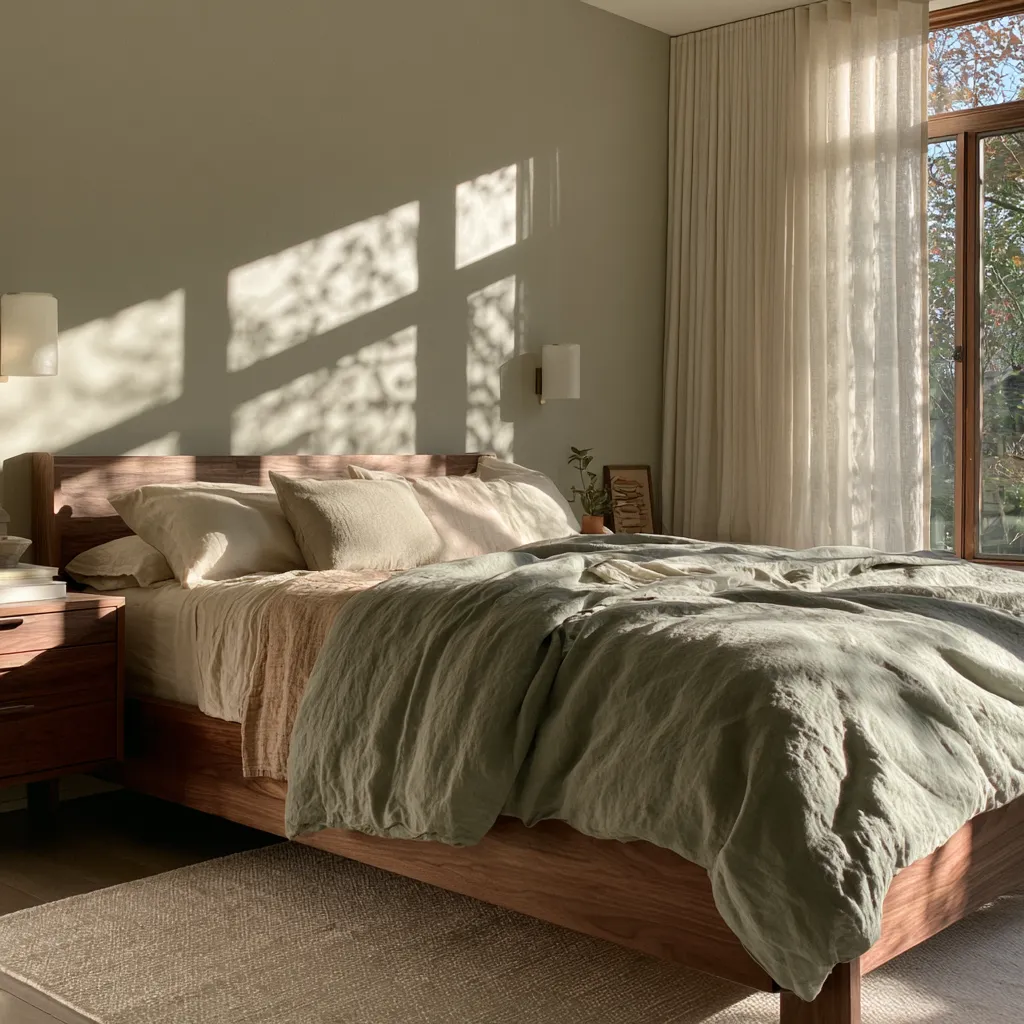
A bedroom with slate flooring stops looking like a renovation project the moment you pair it with the right wall colour and textile layers. Most people who choose slate for a bedroom land on grey — which is fine — but the rooms that actually hold up on camera are the ones where the floor colour was chosen last, not first. I’ve seen polished charcoal slate under a linen platform bed look better than anything hardwood can do in that space. You’ll notice the effect immediately: the room feels grounded in a way that painted wood floors and vinyl planks never quite achieve.
Slate runs $10–$16 per square foot installed, which puts it above porcelain but well below marble — and unlike either, it gets better-looking as it ages. The cleft surface absorbs ambient light rather than bouncing it, so even a small bedroom with slate flooring reads as calmer and more intentional than the same room on hardwood. That quality is hard to replicate artificially. Seal it once a year with a penetrating sealant like Aqua Mix Sealer’s Choice Gold and you won’t touch it again for twelve months.
What You’ll Find in This Article
- Grey slate — the neutral that works even in north-facing rooms
- Charcoal slate — wood furniture’s best pairing option
- Black slate — the colour to reach for when you want drama without wallpaper
- Green slate — why it reads as earthy, not mint
- Slate vs porcelain look-alike tiles — what the price difference actually buys
- Sealing, cost, and the one mistake that makes slate floors look cheap
Grey Slate Reads as a Neutral Until You Put the Wrong Rug On It
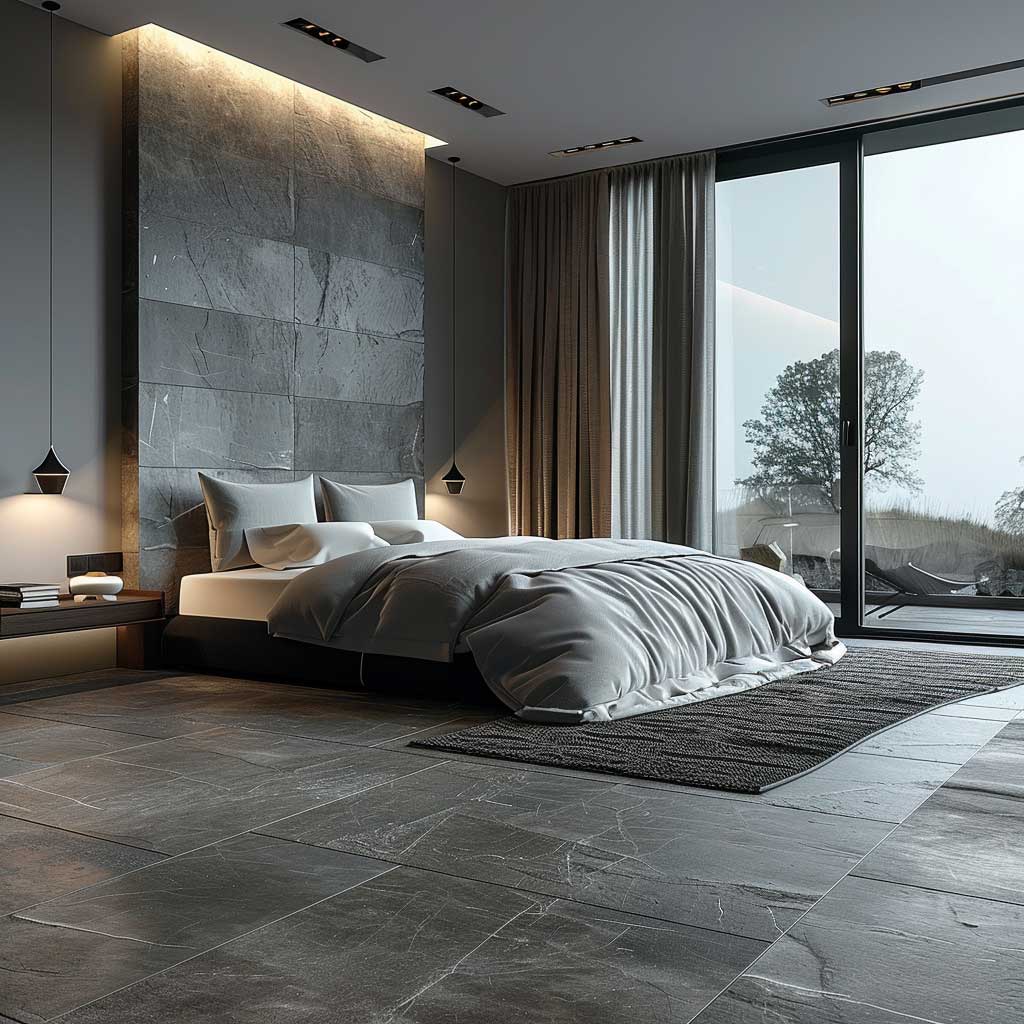
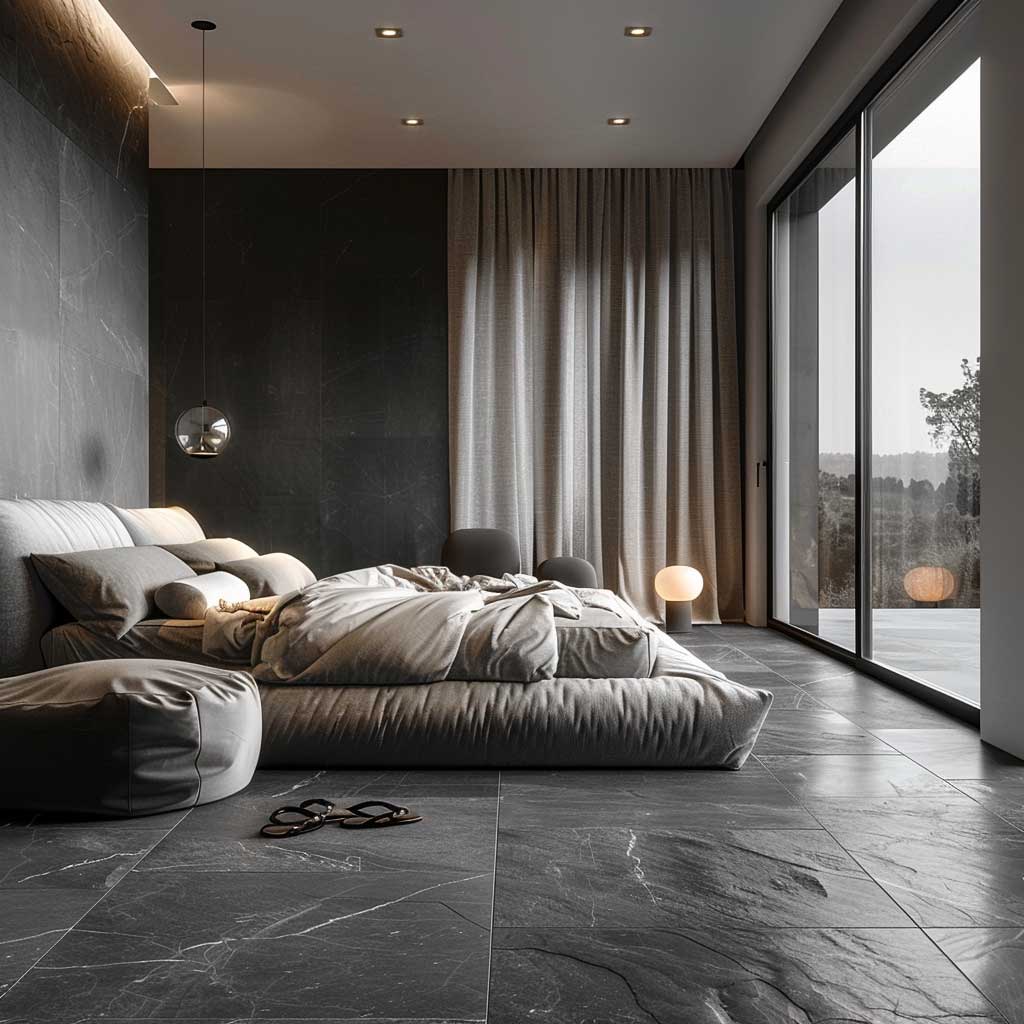
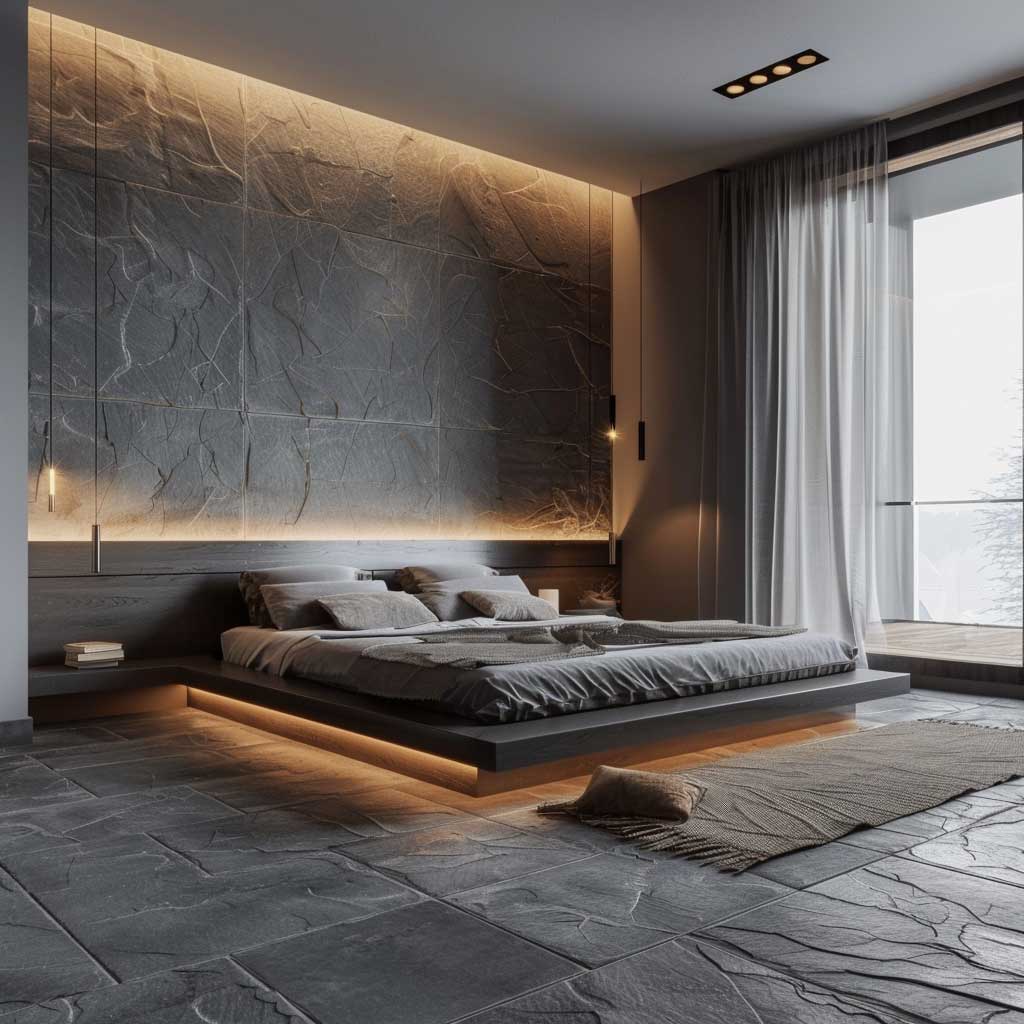
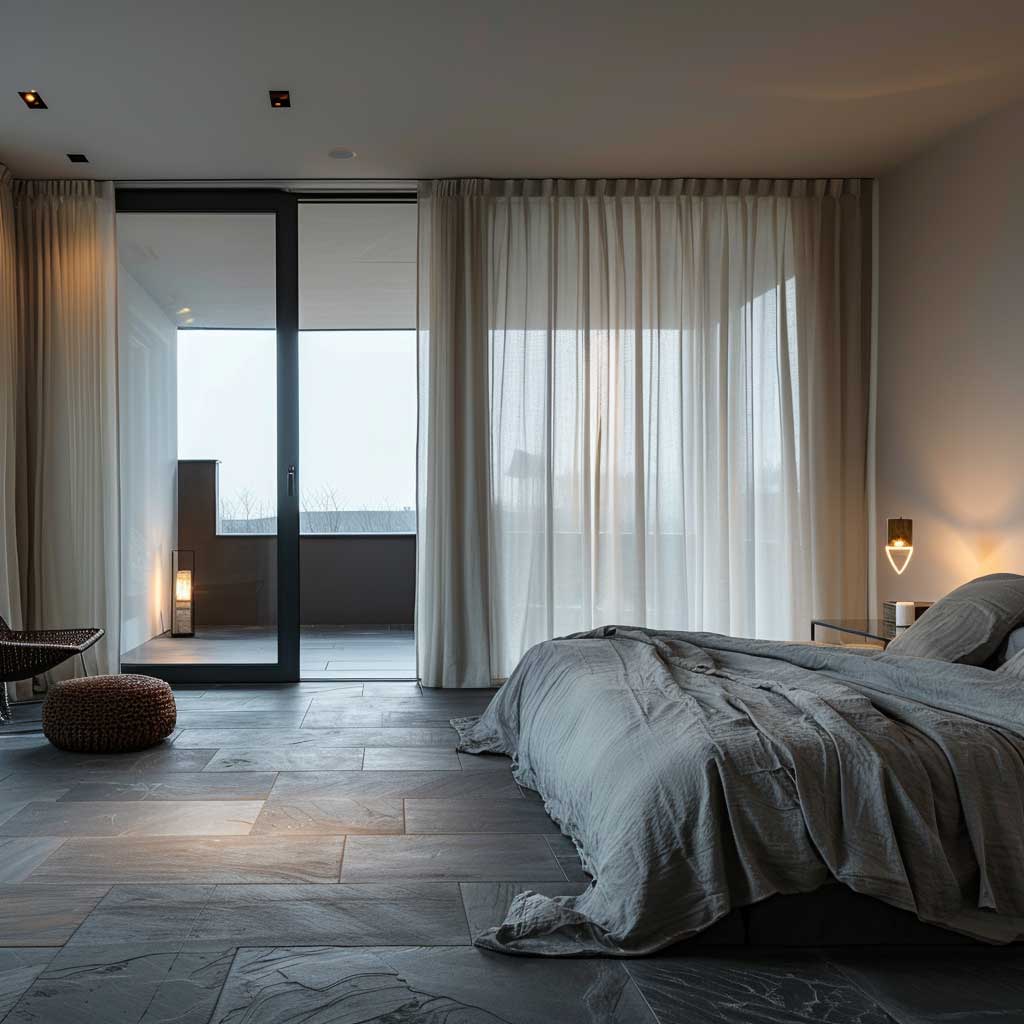
Grey slate behaves like a photograph’s grey card — it shifts colour based on everything around it. In a north-facing bedroom, light silver slate tiles (think Montauk Blue from MarbleWarehouse, around $4–$6 per square foot for the tile alone) read almost lavender in morning light, which is genuinely attractive. Deep charcoal-grey slate in the same room reads almost black by evening. I made the mistake of pairing grey slate with a warm ivory rug once and the floor looked green. Cool greys — cream whites, soft blues, even a dark teal wall — are what unlock grey slate’s actual potential.
The variation in grey slate is its main structural advantage. No two tiles are identical, so the floor moves visually the way a stone path does — it draws the eye without demanding attention. Slate from Brazilian or Welsh quarries tends toward blue-grey with sharper contrast; Indian slate runs warmer and muddier. You’ll notice the difference most in the grout joints, where warmer slate needs a grey grout to stay cohesive. White grout on grey slate looks like a bathroom. Every time.
Maintenance for grey slate is minimal once sealed. Sweep daily, mop weekly with a pH-neutral stone cleaner — StoneTech BulletProof Sealer at around $30 for a quart covers about 400 square feet. What doesn’t work: vinegar. Acid cleaners strip the sealant off within a few weeks and leave the surface chalky and porous. I’ve watched two friends learn this the expensive way. Reseal annually and the floor will outlast every other surface in the room by about 60 years.
For a bedroom with slate flooring, the cleft-face finish is almost always the right call over a honed finish. Honed grey slate goes slippery when bare feet meet it at 7am, which is not the sensory experience anyone’s designing for. The natural cleft surface stays matte and textured, which also reads as more intentional in a bedroom context — like the floor was chosen, not defaulted to. Pair it with a low-pile wool rug in a warm stone tone and the whole room settles into itself.
Charcoal Slate and Dark Wood Furniture Solve Each Other’s Problems
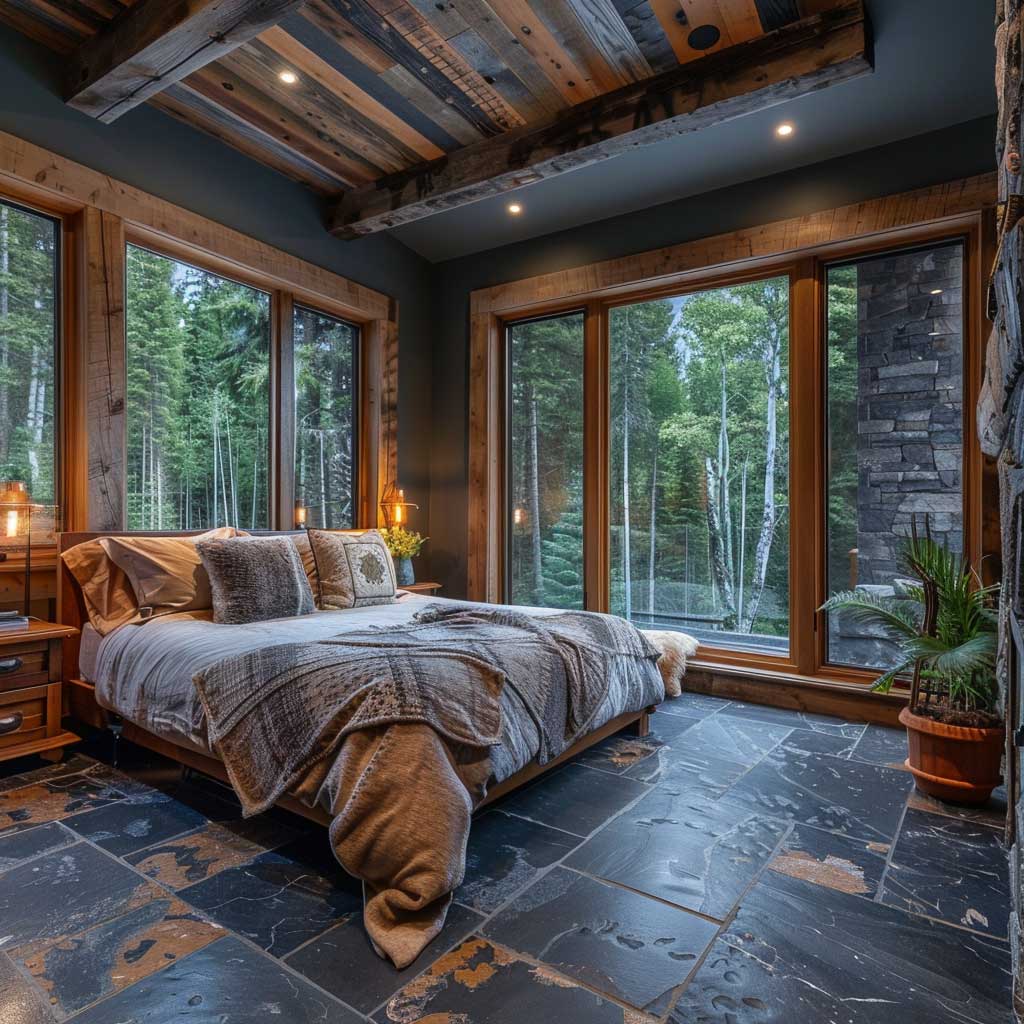
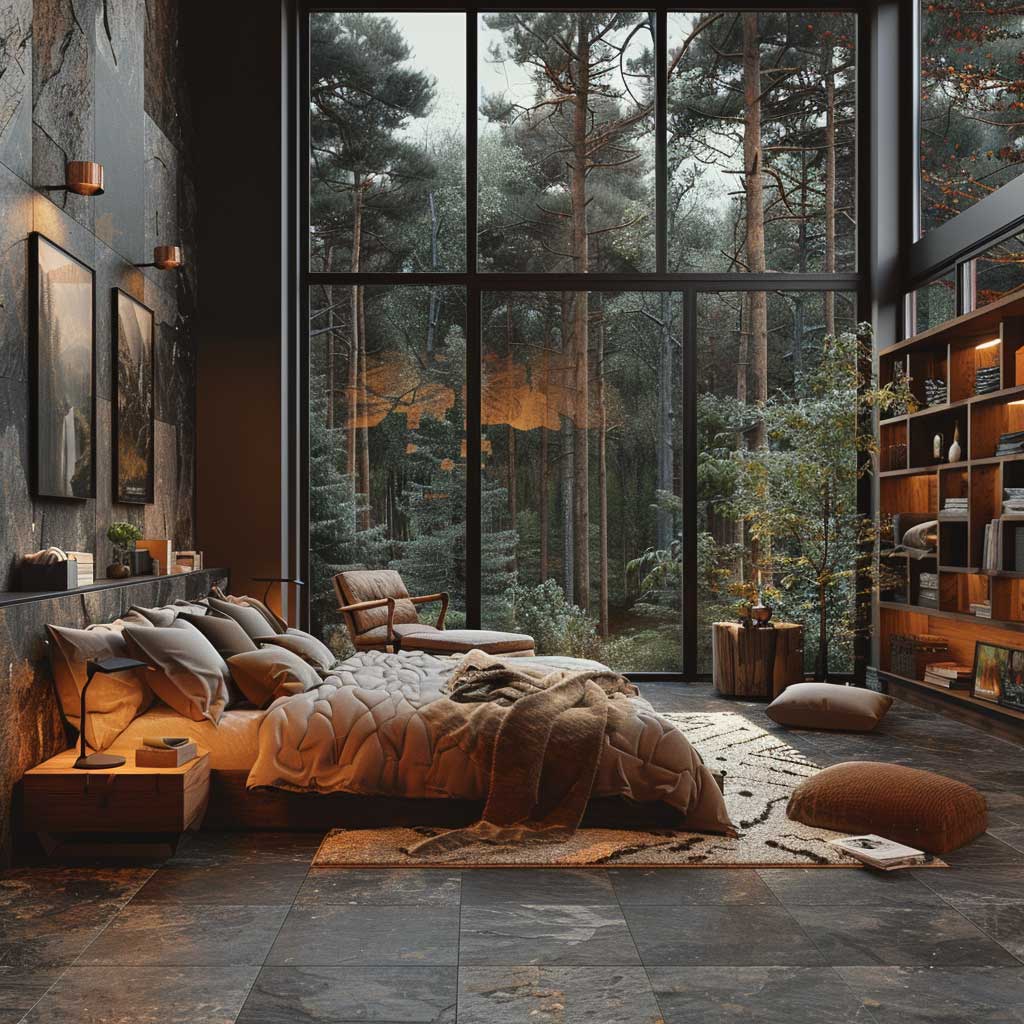
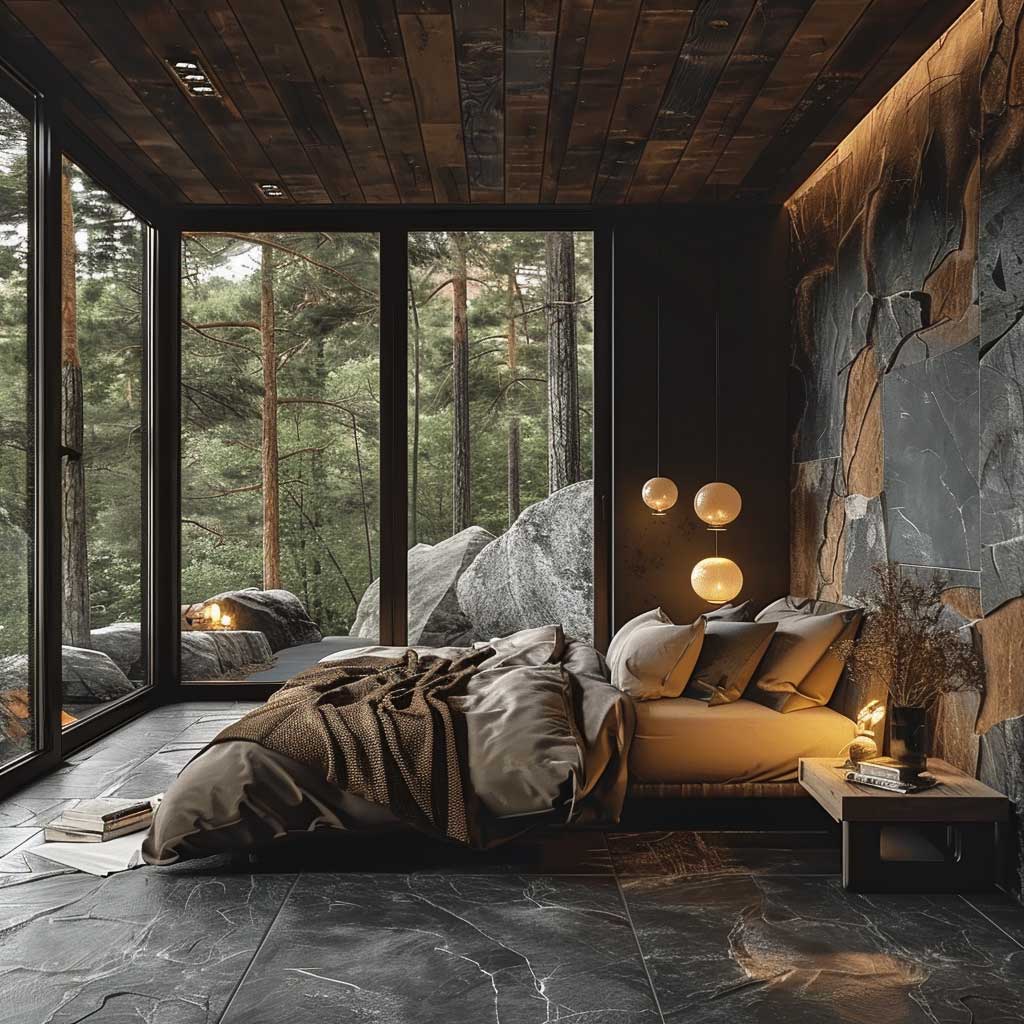
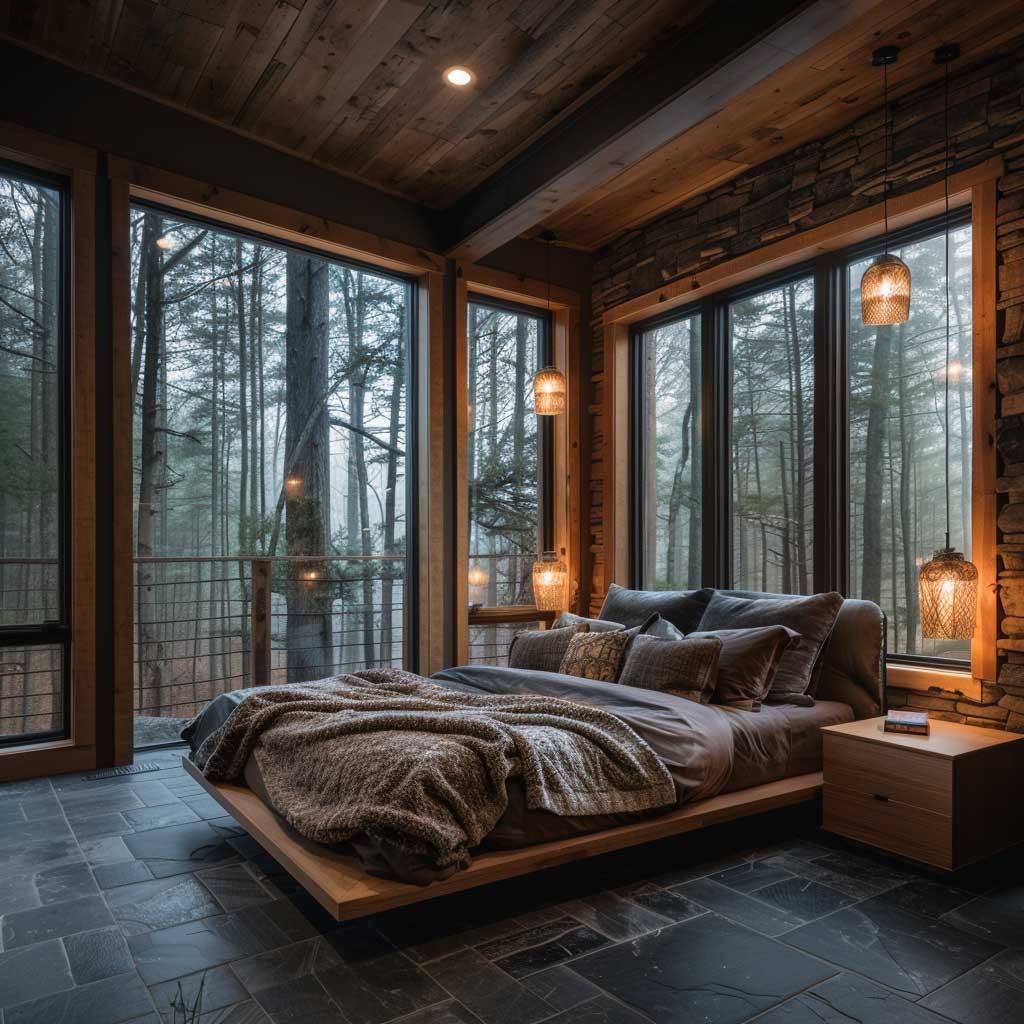
Charcoal slate is the flooring equivalent of a dark grey wall — it does the heavy lifting in any room that has too many competing light wood tones. My go-to pairing is medium-toned oak furniture (Crate & Barrel’s Keane bed frame, around $1,299, is the right warm undertone) against charcoal slate. The contrast is enough to read clearly in photos but not so stark it turns the room into a showroom. What doesn’t work: pale blonde Scandinavian furniture on charcoal slate. It looks washed out. The floor eats the furniture visually.
Can you use charcoal slate in a bedroom without it feeling like a cave? Yes — and the answer is the wall. Keep walls two tones lighter than the floor. An off-white like Farrow & Ball Pointing (No. 2003) or a warm putty like Benjamin Moore Pale Oak (OC-20) gives the room breathing room without fighting the floor’s darkness. The slate itself acts like a photograph’s horizon line — everything above it feels lighter because of it. This is the opposite of how most people think about dark floors.
Charcoal slate in a bedroom with slate flooring ideas performs particularly well in rooms where you’ve invested in window treatments. Heavy linen curtains — especially the kind that pool slightly on the floor — make charcoal slate look intentionally dramatic rather than just dark. I stole this trick from an interior designer who works mostly on mountain cabins: the curtain hem touching the slate floor creates a visual anchor that makes the whole room look designed. It costs nothing extra and works every time.
Don’t Do This with Slate Flooring
Don’t install slate over a wood subfloor without adding cement backer board first. The flex in the subfloor will crack the grout joints within 18 months — sometimes sooner in rooms with foot traffic near a bed. The backer board adds $2–$4 per square foot but makes the installation permanent rather than temporary. Skipping it is the single most common reason slate floors fail.
Don’t apply a topical glossy sealer instead of a penetrating sealant. Glossy sealers sit on the surface, scratch off in traffic zones, and make the floor look plasticky — exactly the opposite of why you chose natural stone. Penetrating sealants (Miracle Sealants 511, around $25/quart) soak into the stone and leave no surface film.
Don’t use porcelain look-alike slate tiles and expect the same result. Porcelain slate-effect tiles (available from $2–$5/sqft at Home Depot) photograph well but feel hollow underfoot and have zero resale impact. Natural slate adds measurable home value; its imitators do not.
Black Slate Earns Its Place Only If the Room Has One Soft Surface
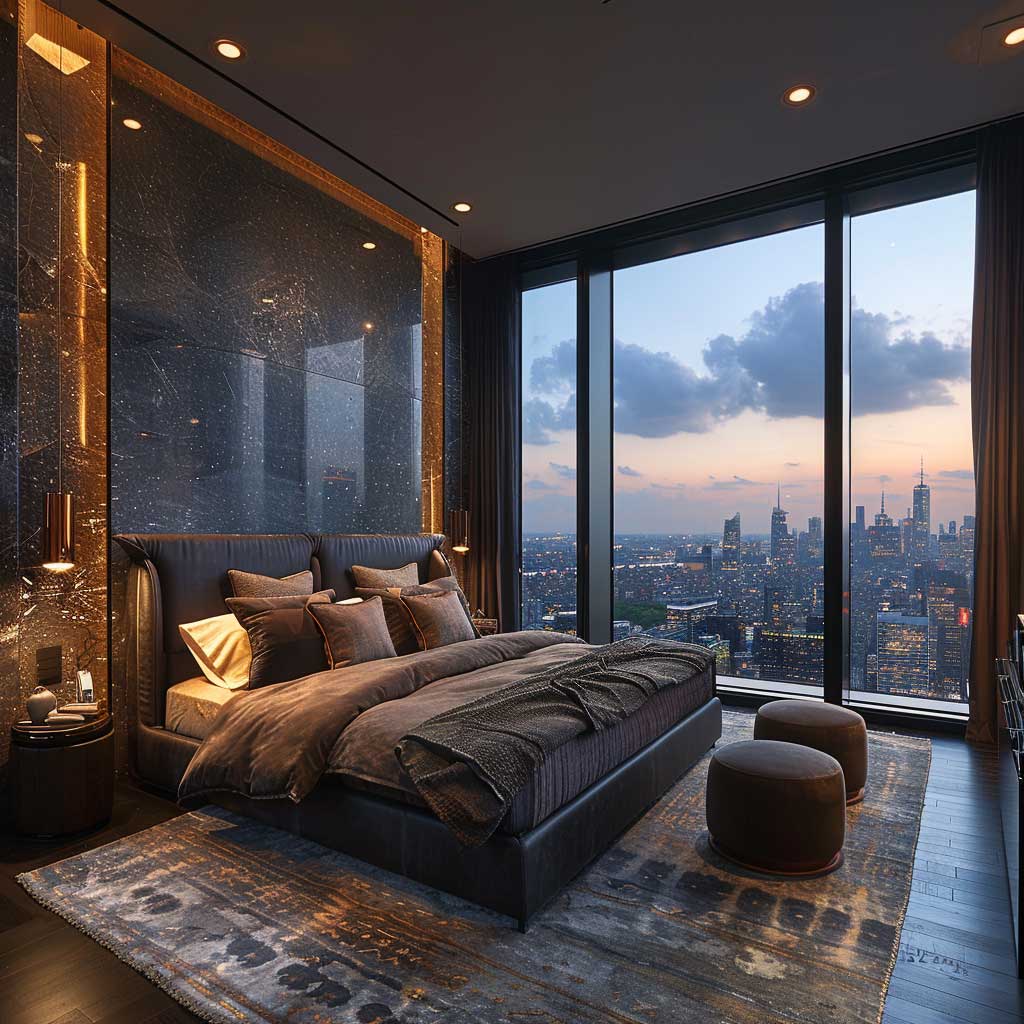
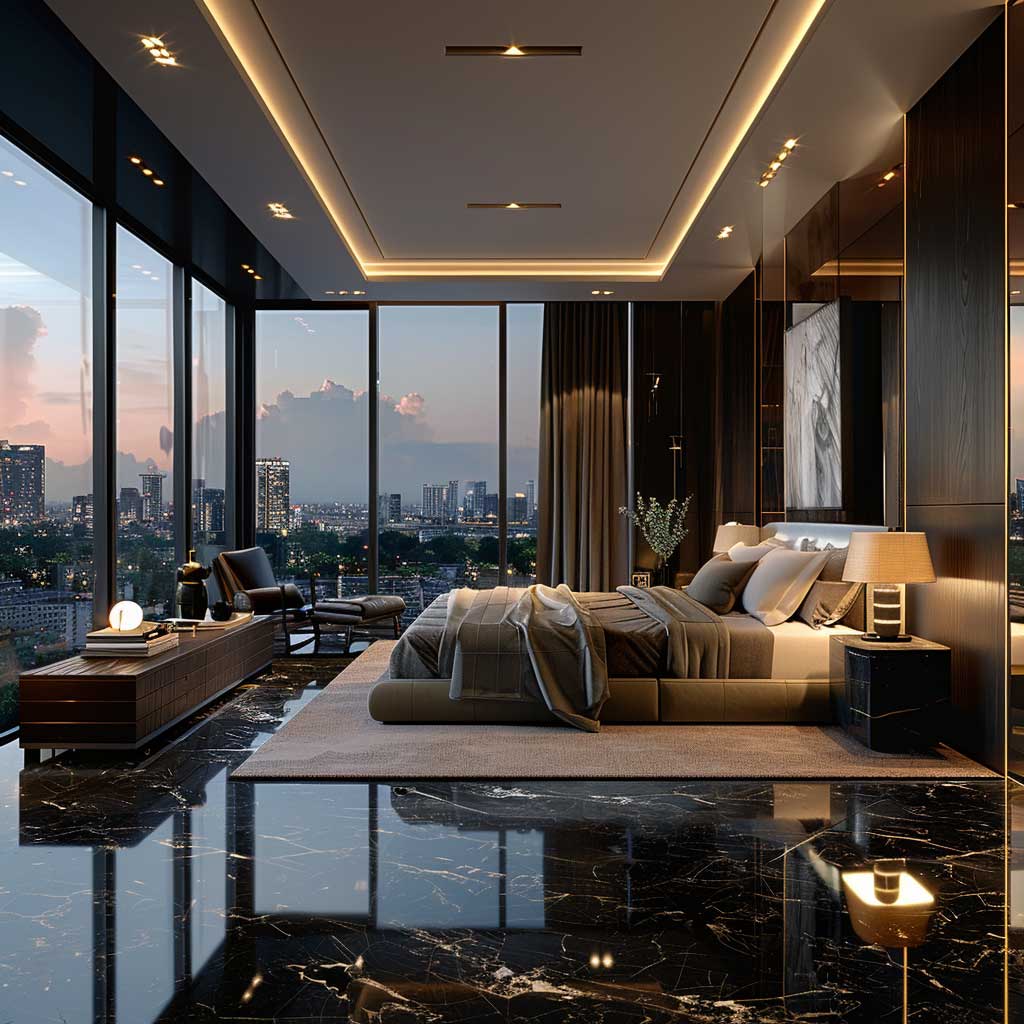
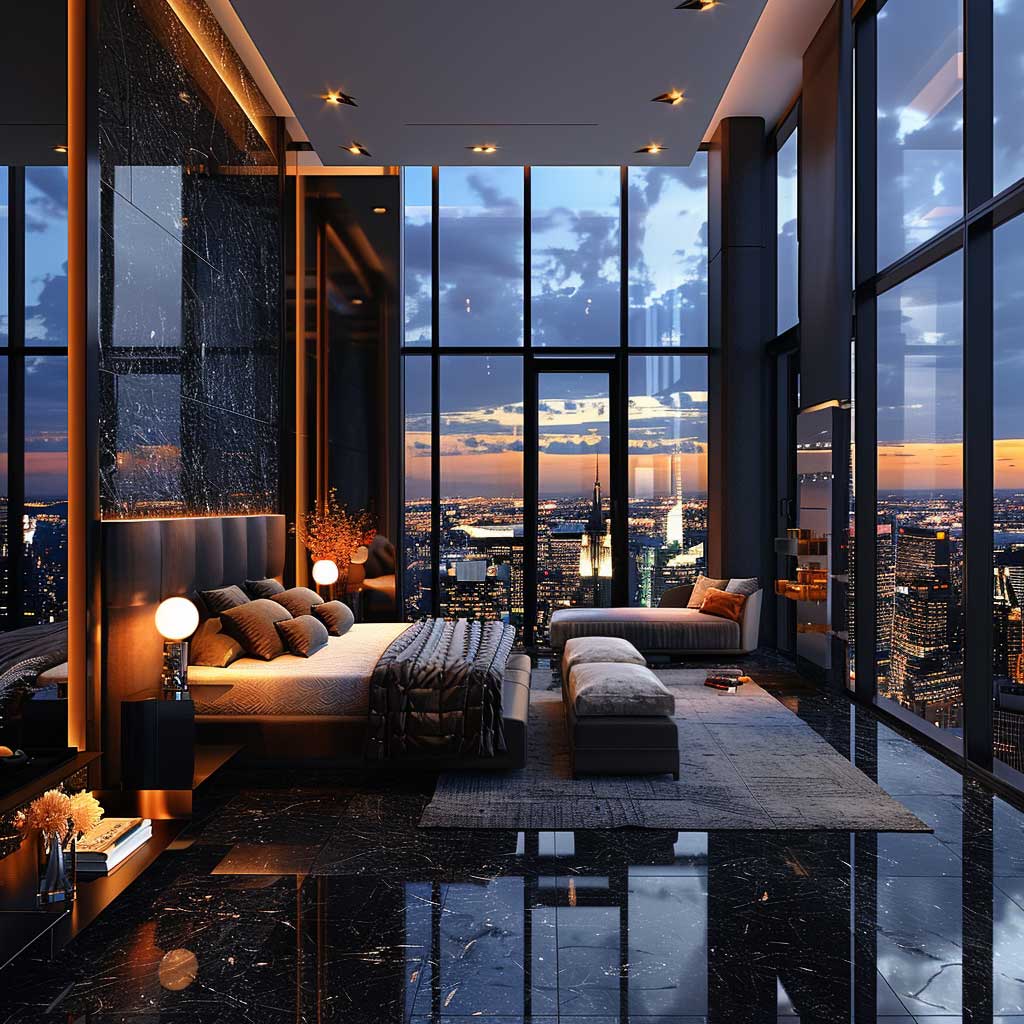
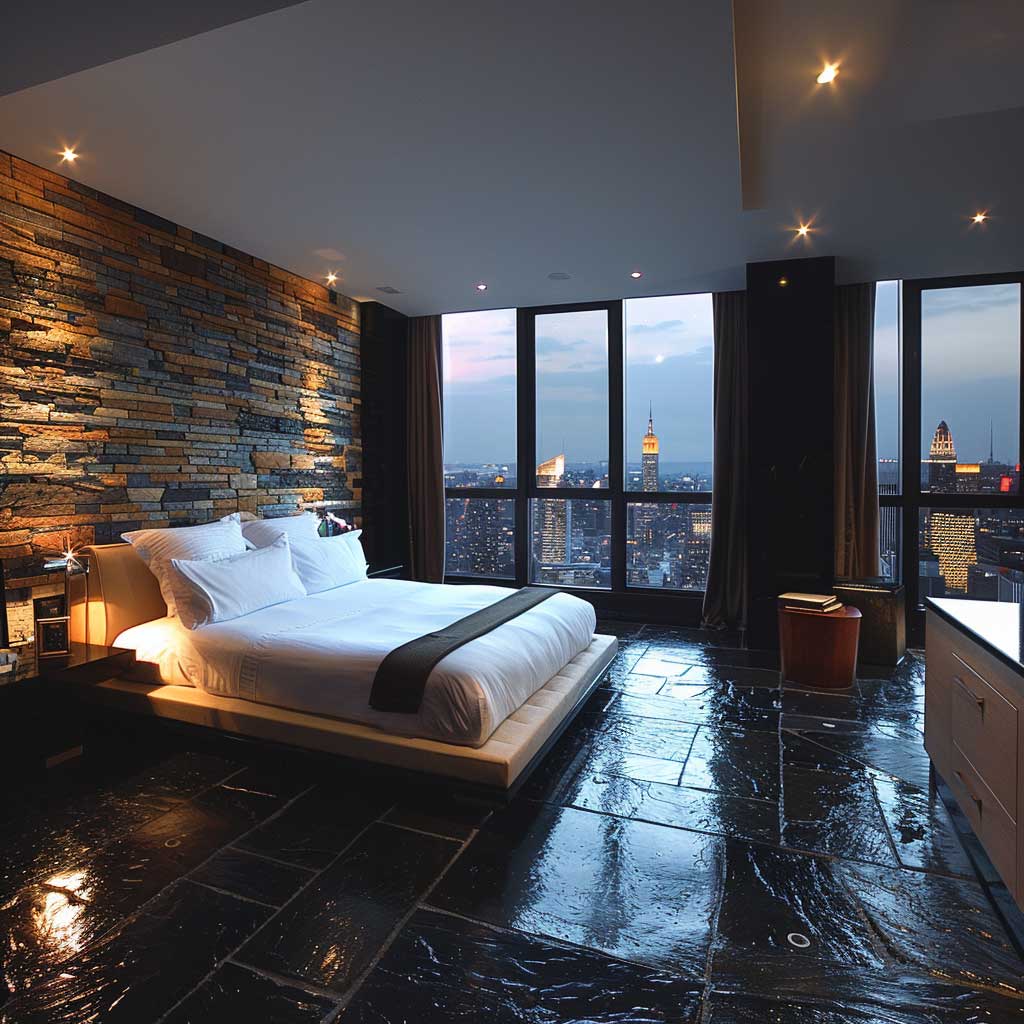
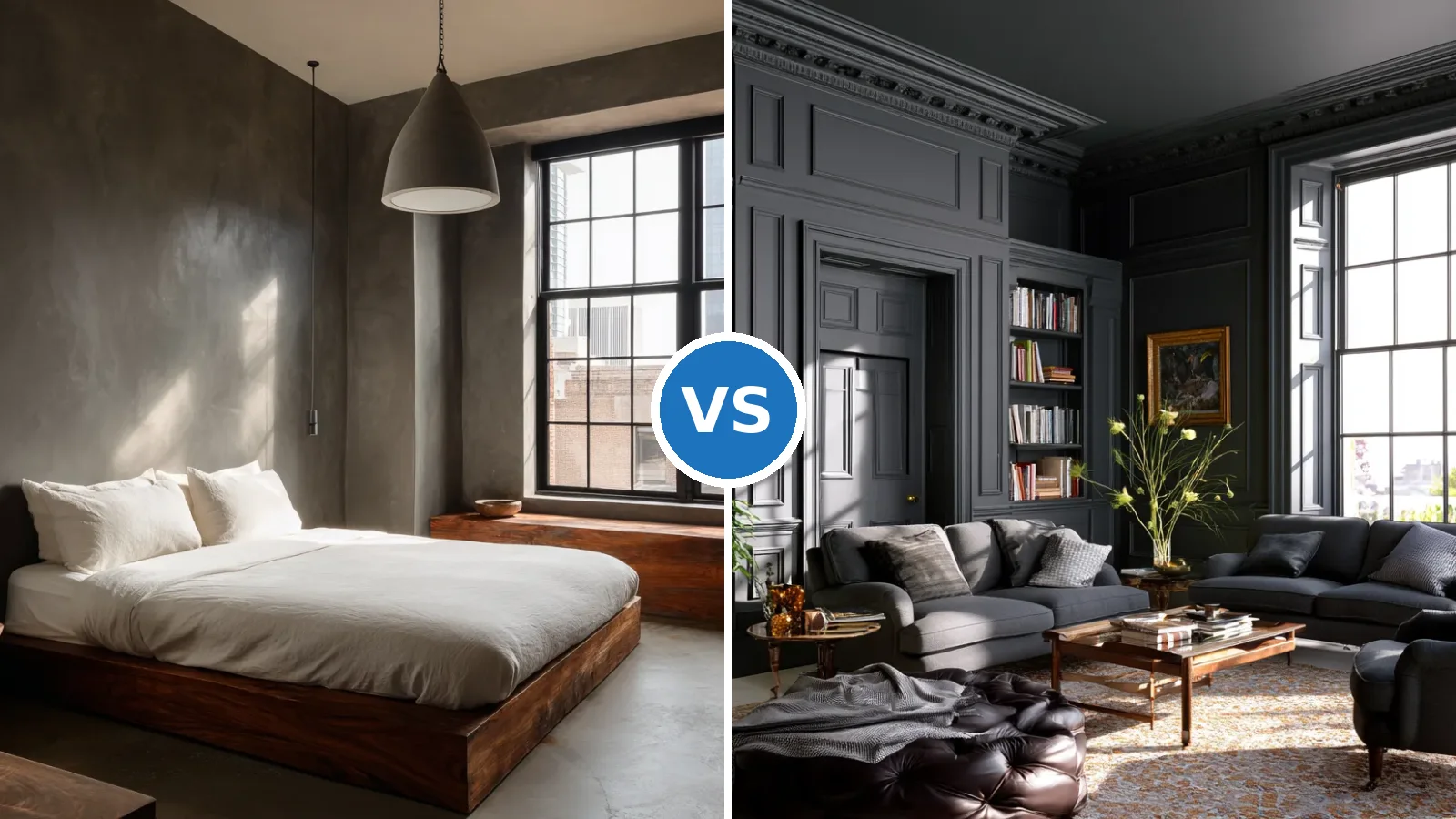
Black slate does one thing that no other bedroom floor does: it makes white bedding look intentional. The contrast ratio is extremely high — white linen on black stone reads like a hotel you’d actually pay to stay in. I own two properties with black slate in the master bedroom and in both cases, visitors ask about the floors within minutes of walking in. The trade-off is that black slate shows dust and pet hair almost immediately. If you have a golden retriever or a white cat, charcoal grey is a more realistic choice.
Rarer colours on the slate spectrum — black, deep indigo, and blue-black — cost toward the higher end of the $9–$40 per square foot range. Black slate from Brazil or South Africa tends toward the truest dark; Indian black slate often has subtle bronze or green undertones that only show up in strong natural light. You’ll notice it most at noon in summer. Neither is wrong, but they’re different floors and worth distinguishing before you commit to 200 square feet of the material.
The room architecture matters more with black slate than with any other colour. Low ceilings plus black floors equal a room that feels like a subway tunnel — not the goal. Black slate works in bedrooms with ceiling heights of 9 feet or more, or in rooms where one entire wall is glass. If your ceiling is 8 feet or lower, charcoal grey does 80% of the same visual work without the compression effect. For related flooring design ideas, the bedroom floor tiles design breakdown covers how dark-toned floors interact with room proportions across different tile materials.
Lighting is the other variable. Black slate under warm-toned Edison bulbs looks rich and deep. Under cool white LEDs (5000K and above), it reads flat and slightly dirty-looking, like a garage floor. My rule is 2700K–3000K colour temperature for any bedroom with dark floors. A single floor lamp in a warm-toned bulb positioned in the corner of the room makes the slate look like a deliberate luxury decision rather than a bold mistake.
Green Slate Has an Undertone Problem Most Designers Don’t Warn You About
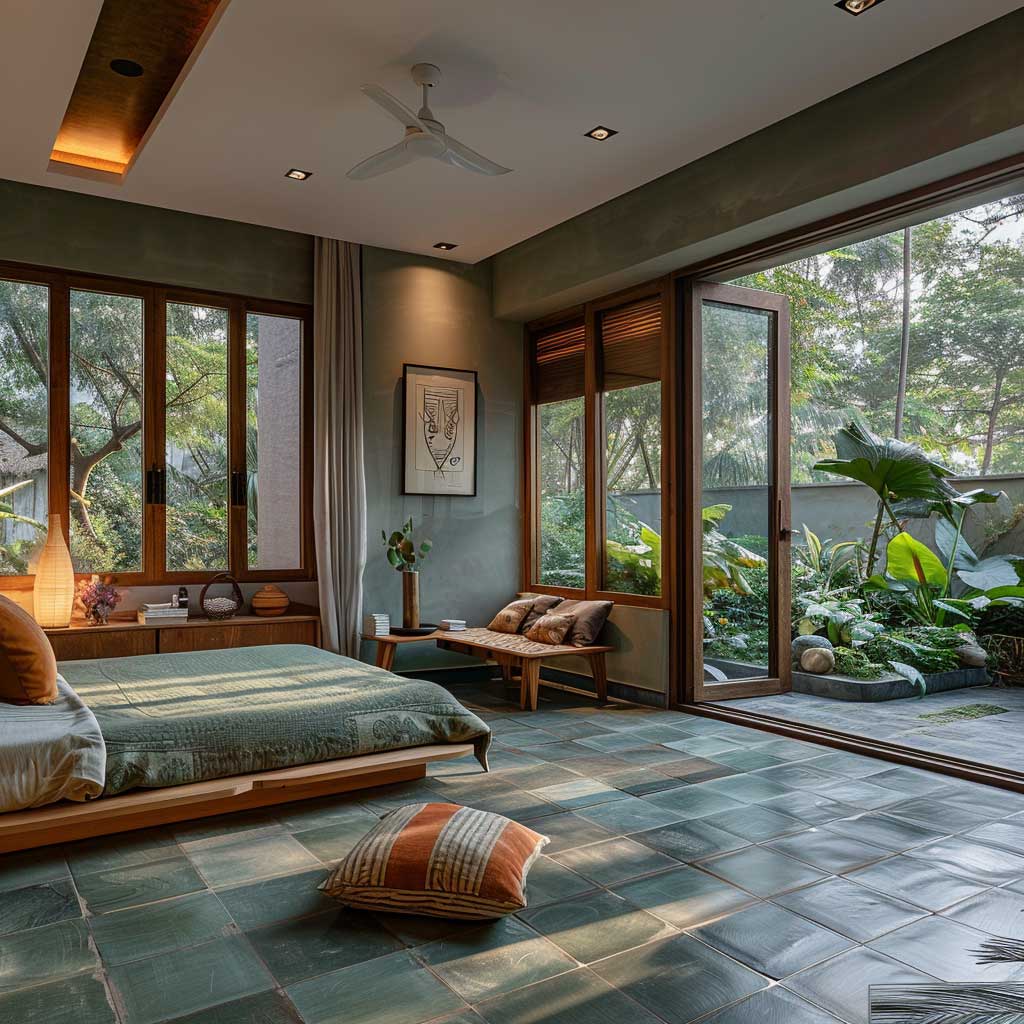


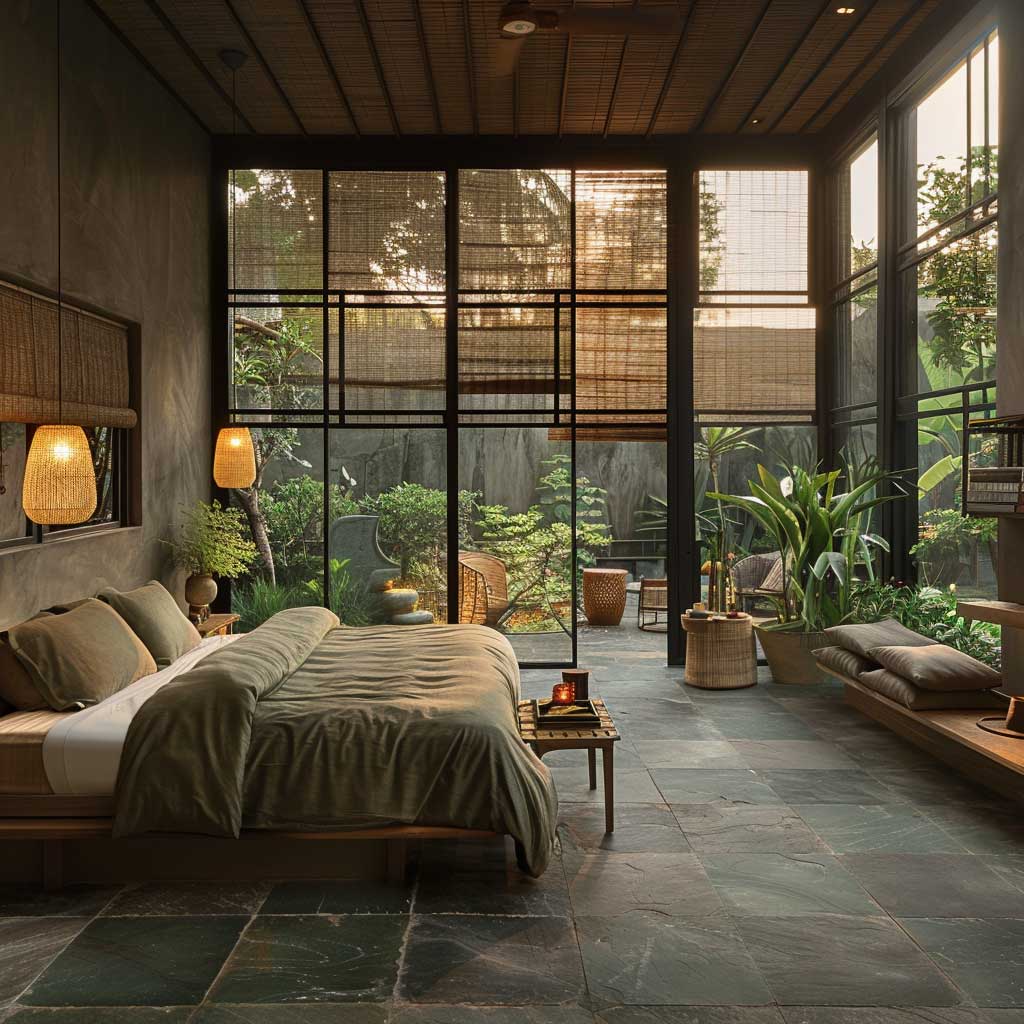
Green slate is priced at the higher end of the natural slate range — expect $12–$20 per square foot for material depending on origin — because it’s mined in smaller quantities. Brazilian green slate has the most consistent colour; Vermont verde slate veers toward a grey-green that reads almost teal under certain light conditions. The undertone question matters enormously here. If the floor turns teal next to your cream-coloured walls, you’ll spend the next five years repainting every surface in the room trying to compensate for it.
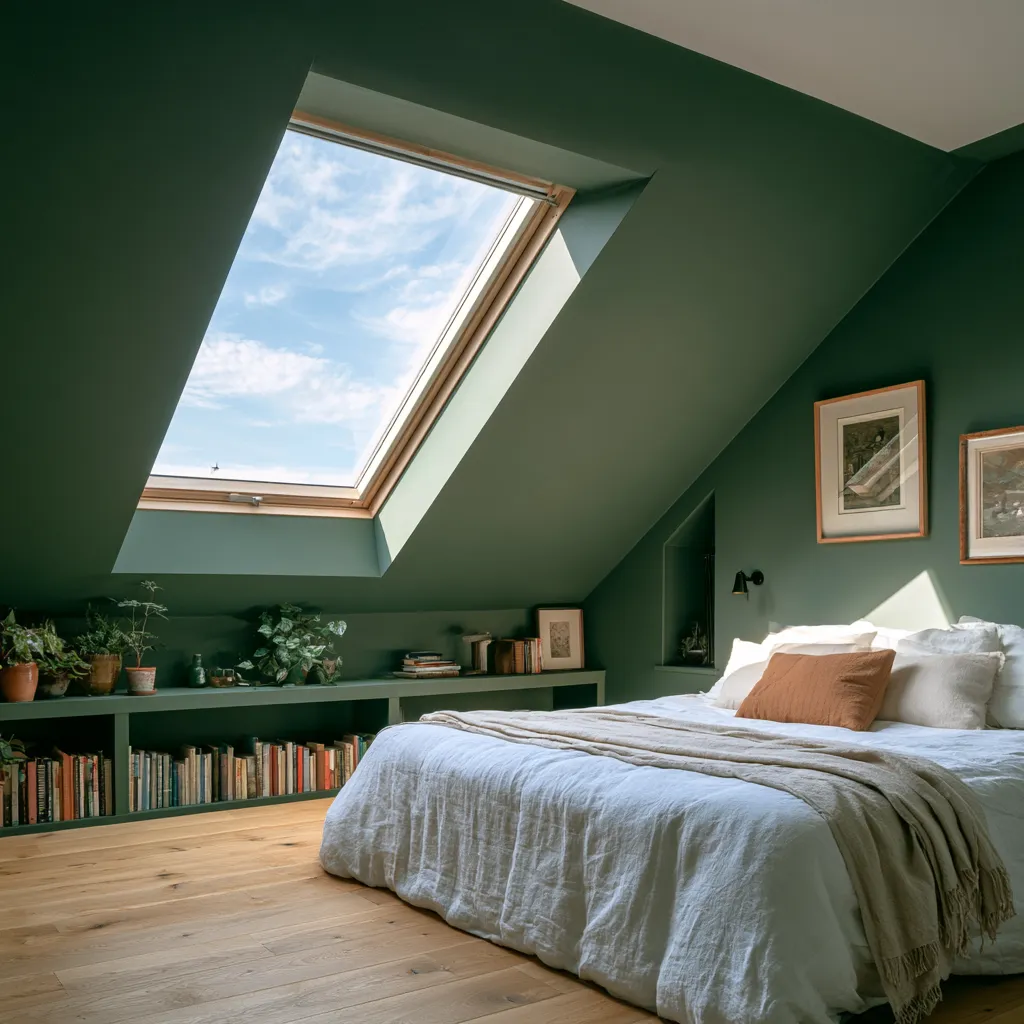
What makes green slate work in a bedroom is its relationship to organic materials. It pairs with terracotta ceramics, linen, jute, and raw oak the way soil pairs with grass — the combination reads as natural rather than designed. This is the flooring I’d recommend for anyone building a biophilic bedroom: it grounds the palette in a way that manufactured flooring simply cannot. Potted plants (fiddle leaf figs, snake plants, monstera) look dramatically better against green slate than against wood or carpet. The contrast between the stone’s cool surface and the plants’ warm organic shapes is why high-end hotel rooms in eco-resort properties almost always use this combination.
The mistake I see most often with green slate in bedrooms is applying a colour-enhancing sealant without testing it first. A colour-enhancing sealant — which costs an additional $2–$4 per square foot on top of installation — intensifies the green dramatically, sometimes pushing it into a range that overwhelms the room. Test on a single tile first. If the enhanced colour works with your wall samples, proceed. If it reads as too saturated, use a standard penetrating sealant instead and accept the more muted tone. Hardwood bedroom flooring ideas cover similar sealant decisions for those weighing green slate against warm wood alternatives in the same biophilic design direction.
Green slate in a bedroom with slate flooring ideas performs at its absolute best when the room faces south or west. Morning light on green slate looks grey. Afternoon light on the same floor turns it into the colour photographs from. This isn’t a flaw — it’s the behaviour of natural stone reacting to its environment. Think of it less like a fixed element and more like a material that participates in the light cycle of the room, the way a well-chosen curtain fabric does.
Slate vs Slate-Look Porcelain — What Per Square Foot Actually Buys
| Feature | Natural Slate | Porcelain Slate-Look |
|---|---|---|
| Material cost per sqft | $9–$40 | $2–$8 |
| Installed total per sqft | $10–$25 | $6–$15 |
| Lifespan | 100+ years | 20–30 years |
| Colour consistency | Variable (natural) | Uniform (repeating) |
| Scratch resistance | Moderate — sealing required | High — surface hardness |
| Resale value impact | Measurable increase | Minimal to none |
| Feel underfoot (bare feet) | Dense, grounded, textured | Hollow, slightly plasticky |
| Annual maintenance | Seal once per year | Grout cleaning only |
The table above reads like a simple cost comparison, but the actual gap between natural slate and porcelain look-alikes is mostly tactile. Porcelain slate-effect tiles (MSI’s Montauk Blue porcelain is a common example at around $3.50/sqft at Lowe’s) photograph acceptably well. What they can’t replicate is the density underfoot — the feeling of walking on something geological. Natural slate has a thermal mass that porcelain doesn’t approach: it stays slightly cooler than room temperature in summer, which most people find pleasant first thing in the morning. That’s the difference $8 per square foot in material cost is actually buying.
For a bedroom with slate flooring ideas on a tighter budget, there’s a middle-ground move worth considering: install natural slate in the main floor area and use porcelain slate-look in the ensuite or walk-in wardrobe if those are adjacent spaces. The tile profile stays visually continuous but the cost drops significantly in the rooms where the tactile difference matters less. A local slate tiles supplier can usually cut and sort tiles to match a consistent thickness across both materials, which makes the grout lines align seamlessly at the threshold.
Scratch resistance is the one area where porcelain genuinely wins. Natural slate, being a softer metamorphic rock, can scratch if you drag furniture across it without felt pads. This is not a dealbreaker — it’s manageable — but it’s a real difference. For detailed information on how slate compares to alternatives and what maintenance actually involves long-term, Today’s Homeowner’s slate flooring guide is among the more thorough resources available at no cost.
Final Word
A Bedroom with Slate Flooring Repays the Investment Every Morning
Grey, charcoal, black, or green — each slate colour solves a different room problem and rewards a different set of design decisions. The floor is not decorative here; it’s structural. Get the colour right relative to your wall and ceiling, seal it annually, and this is the last flooring decision you’ll make for this room.
Budget $10–$16 per square foot installed for standard grey or charcoal. Add $2–$4 per square foot if you want the colour-enhancing sealant. Use a penetrating sealant, not a topical gloss. Everything else is furniture arrangement.
Save this post before your next flooring consultation.