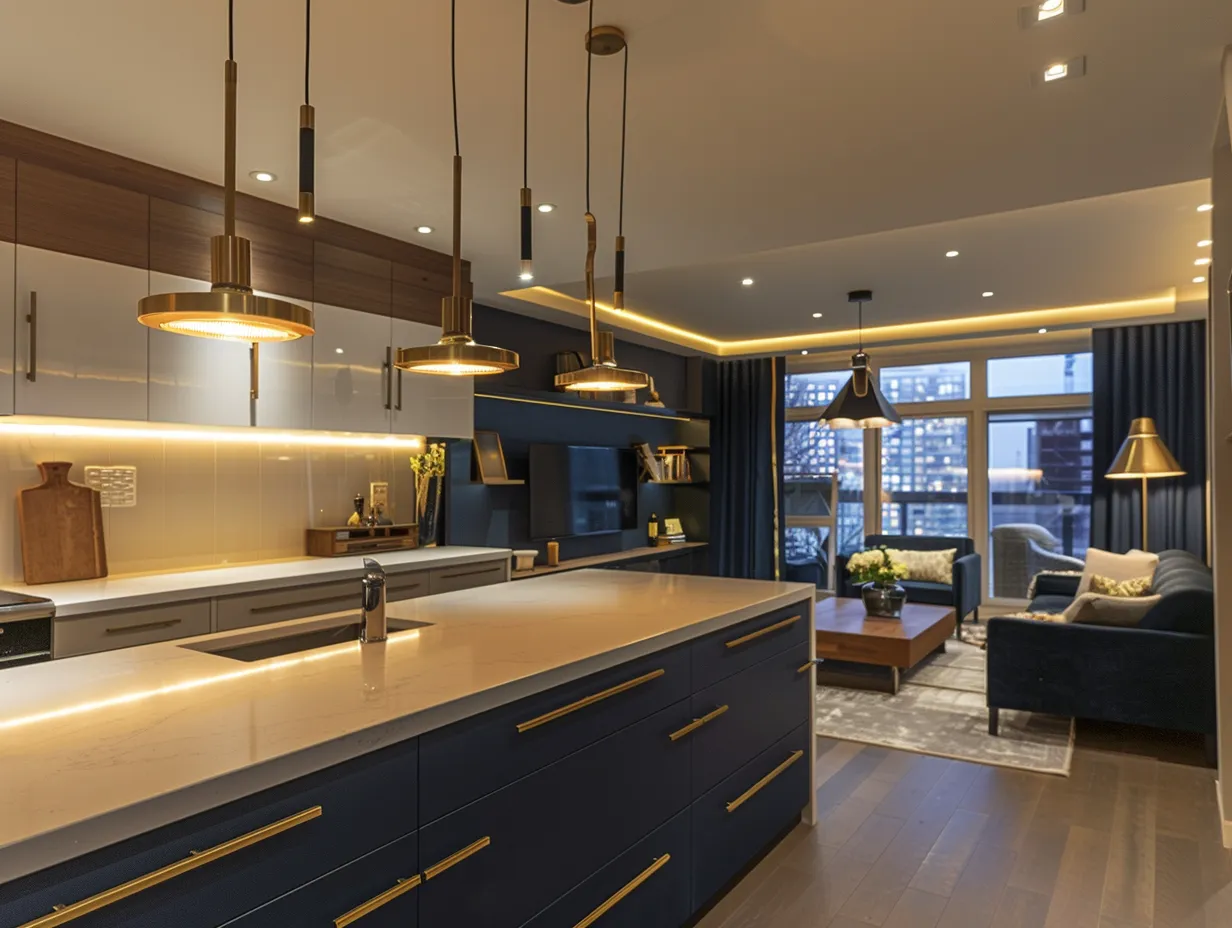
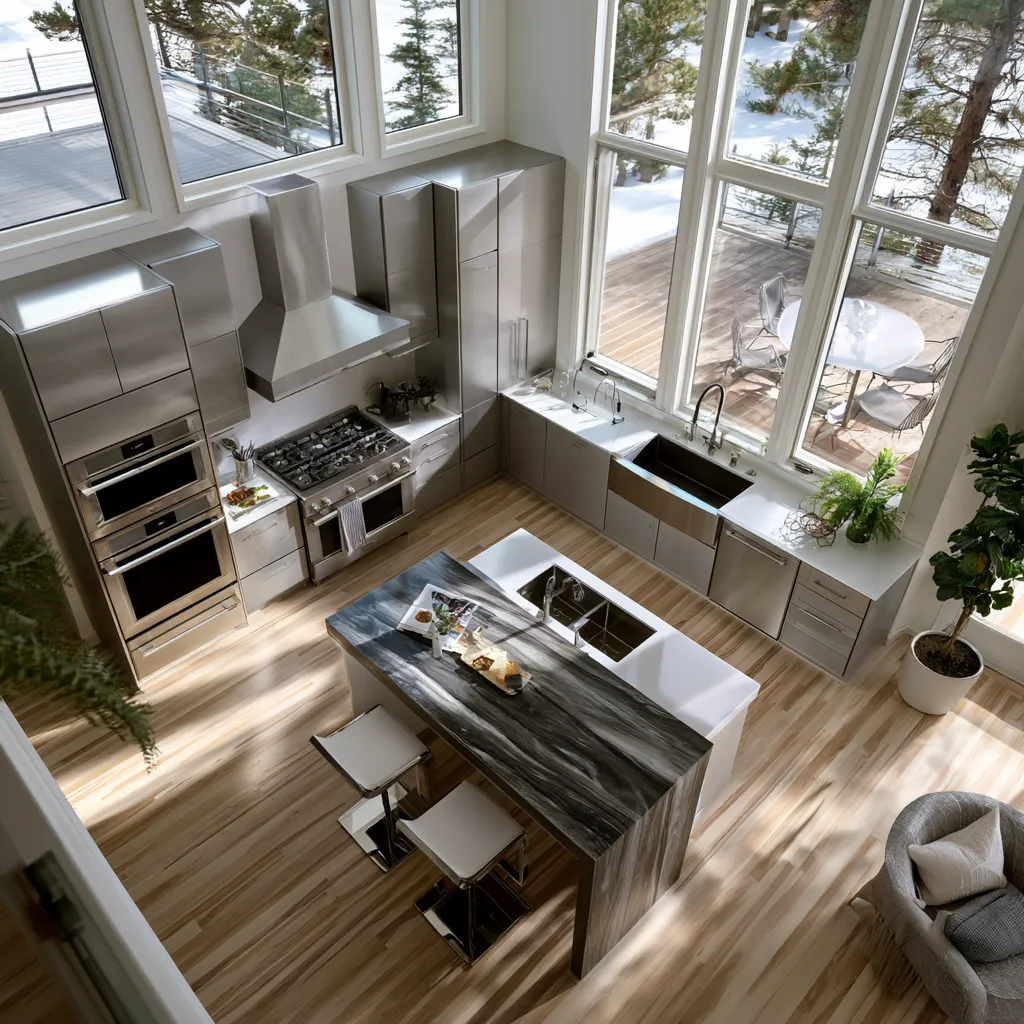
A simple modern kitchen design is the one room choice that pays dividends every single morning. You walk in, surfaces are clear, every cabinet has a reason for existing, and the whole room feels about thirty percent bigger than its square footage should allow. I’ve toured dozens of kitchens in the last few years and the ones that stay with me are always the restrained ones — not the showroom kitchens packed with gadgets, but the ones where a single quartz countertop stretches uninterrupted from the sink to the window. This post breaks down what actually makes these kitchens work, from cabinet hardware decisions to the neutral palette moves that don’t go stale after eighteen months.
Quick Scan
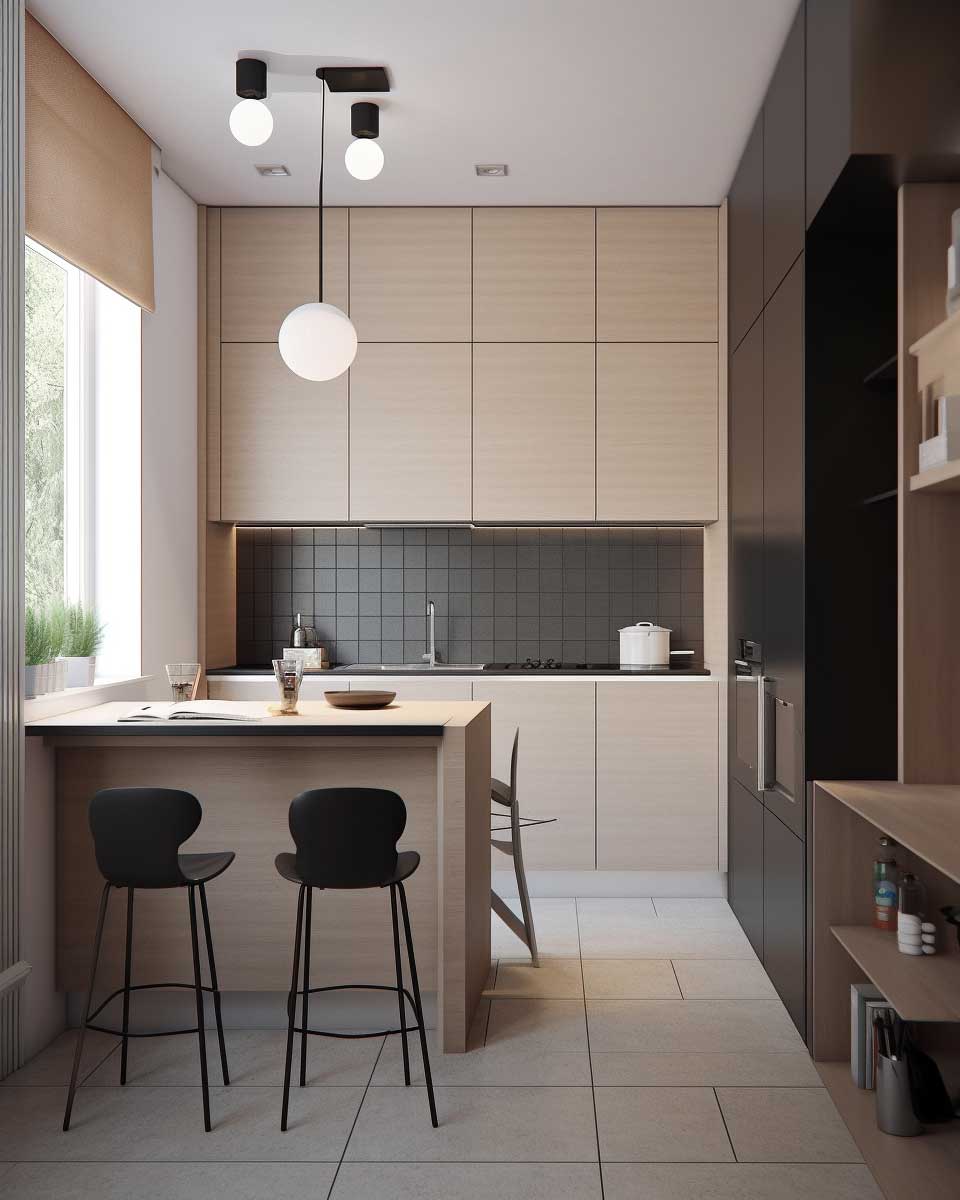
- Flat-panel slab cabinets with push-to-open or slim bar pulls — not chunky knobs
- Neutral palette: white, warm greige, or matte grey — pick one and commit
- Hidden storage: pull-out drawers, integrated appliance garages, touch-latch systems
- Open layouts with natural light — remove upper cabinets on one wall if needed
- Hardware-free handles cost $0 extra with touch-latch systems; they read 10x cleaner
- Sustainable countertop materials: Silestone recycled quartz starts around $55–$90/sq ft installed
- Integrated appliances: panel-ready fridge and dishwasher from brands like Fisher & Paykel or Bosch
Minimalist Flat-Panel Cabinets Change the Whole Room Before You Touch Anything Else
Flat-panel slab doors — also called Euro-style or slab fronts — have no molding, no beveling, no ornamentation. Nothing to collect grease. Nothing to visually compete with your countertop. I switched from shaker to slab in my own remodel and the kitchen immediately looked like it had gained four feet of wall space, even though nothing structurally changed. The catch? Cheap flat-panel doors in a low-quality MDF telegraph themselves within eighteen months: edges chip, the finish goes dull, and the whole thing reads budget in exactly the way you were trying to avoid.
Stick with thermofoil-wrapped or lacquered MDF at minimum, or splurge on actual solid wood veneer if your budget allows. Brands like minimalist kitchen designs covered on ArtFasad consistently show cabinets in matte white or warm white-wood combinations — and that’s deliberate. High-gloss is gorgeous in photos and fingerprint hell in real life. Matte hides smudges, ages better, and reads more current through 2025. Skip the ornate knobs while you’re at it — slim bar pulls in brushed nickel or matte black cost $4–$12 each and do more for the look than any backsplash tile ever will.
Neutral Palette Done Wrong Looks Like a Hospital. Here Is the Fix.
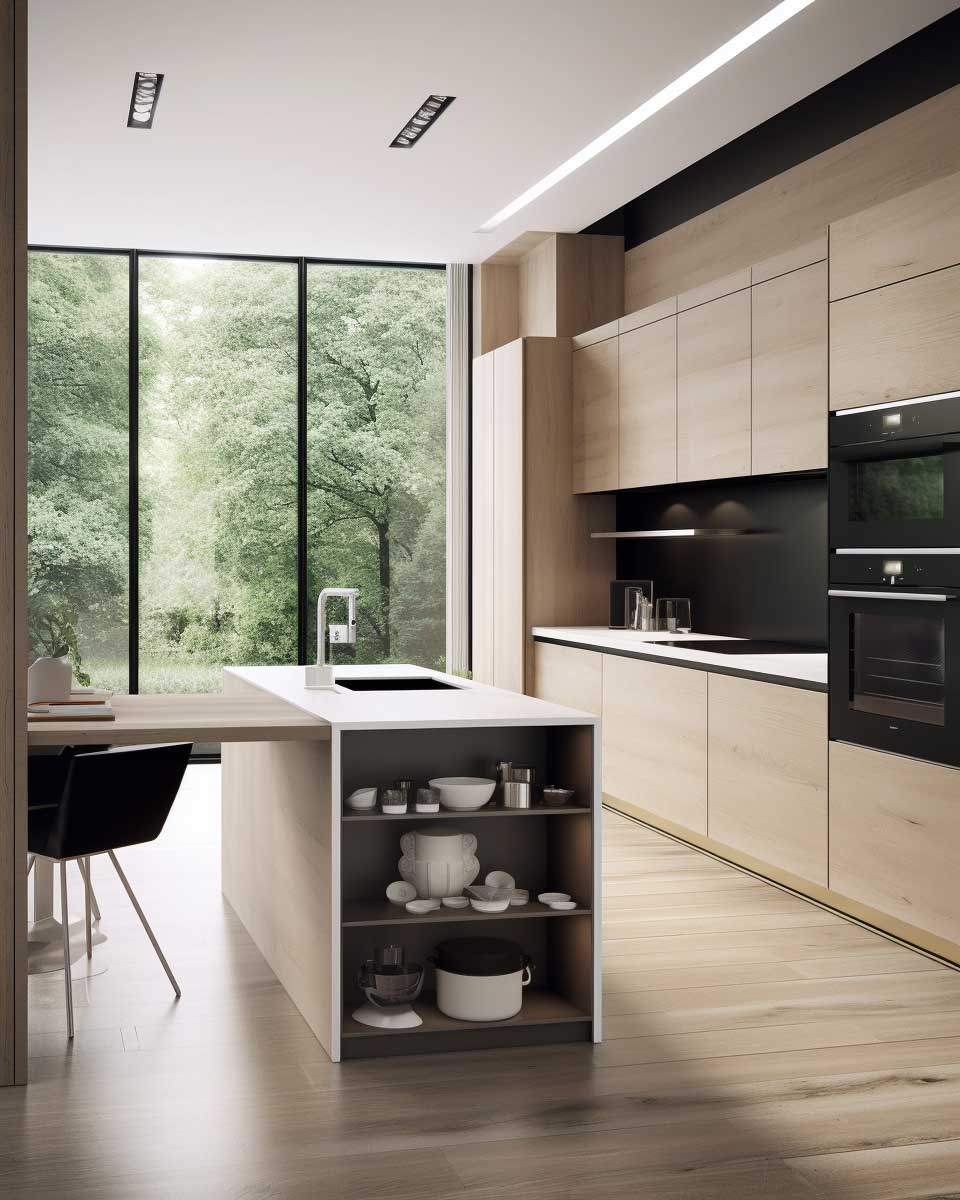
Neutral doesn’t mean cold. That distinction is the single mistake I see most in simple modern kitchen styles that fall flat — someone picked pure bright white for every surface, including the floor, including the backsplash, and the whole room glows like a fluorescent tube. You need at least two values in your neutral palette: something light and something slightly warmer or darker to anchor the space. My go-to formula is matte warm-white upper cabinets plus a slightly deeper greige or warm grey on the lower run — same family, different weight.
Cambria and Silestone both make quartz slabs in warm stone tones in the $60–$95/sq ft installed range that layer beautifully against white cabinetry without reading beige-on-beige. The veining is subtle enough that it doesn’t fight the minimalism but adds the visual texture the room needs. One anti-advice here: skip the stark grey kitchen with cold-white quartz combination unless you’re running a Michelin-starred restaurant. It photographs perfectly, feels dead to cook in, and turns every winter afternoon into an overcast Tuesday.

Storage That Disappears into the Wall
Pull-out drawers are the unsung hero of a simple and modern kitchen design. Not the shallow drawer that barely fits a spatula — I’m talking full-extension, soft-close drawers from Blum or Häfele that pull a 24-inch-deep cabinet completely out into the room. You reach the back without bending sideways and contorting your shoulder. I own two of these in a base cabinet and use them for pots — the kind of pot storage that used to involve removing every other pot just to get to the one at the back.
Appliance garages are the second move worth making, especially if you have a KitchenAid stand mixer or an espresso machine you use daily but don’t want sitting on the counter. A flip-up door cabinet at counter height, wired with a receptacle inside, costs around $300–$600 in materials to build and removes roughly forty percent of the visual noise from your counter. What doesn’t work: open shelving above the counter if you’re the kind of person who accumulates. Open shelves read beautifully in shoots and gather cooking residue for the rest of us. Minimalist kitchen storage strategies for small spaces go deeper on pull-out and vertical options worth considering.
Don’t Do This
Don’t install a mix of open shelving and closed cabinets on the same wall unless you’re prepared to style those shelves like a magazine set every single day. The look requires exactly one-third the items you own and curated objects you’d never actually use. In real life: cluttered shelves next to pristine cabinet fronts make the whole kitchen read as disorganized. Pick one or the other per wall and stick to it.
Open Layouts Earn Their Keep Only If the Light Source Is Right
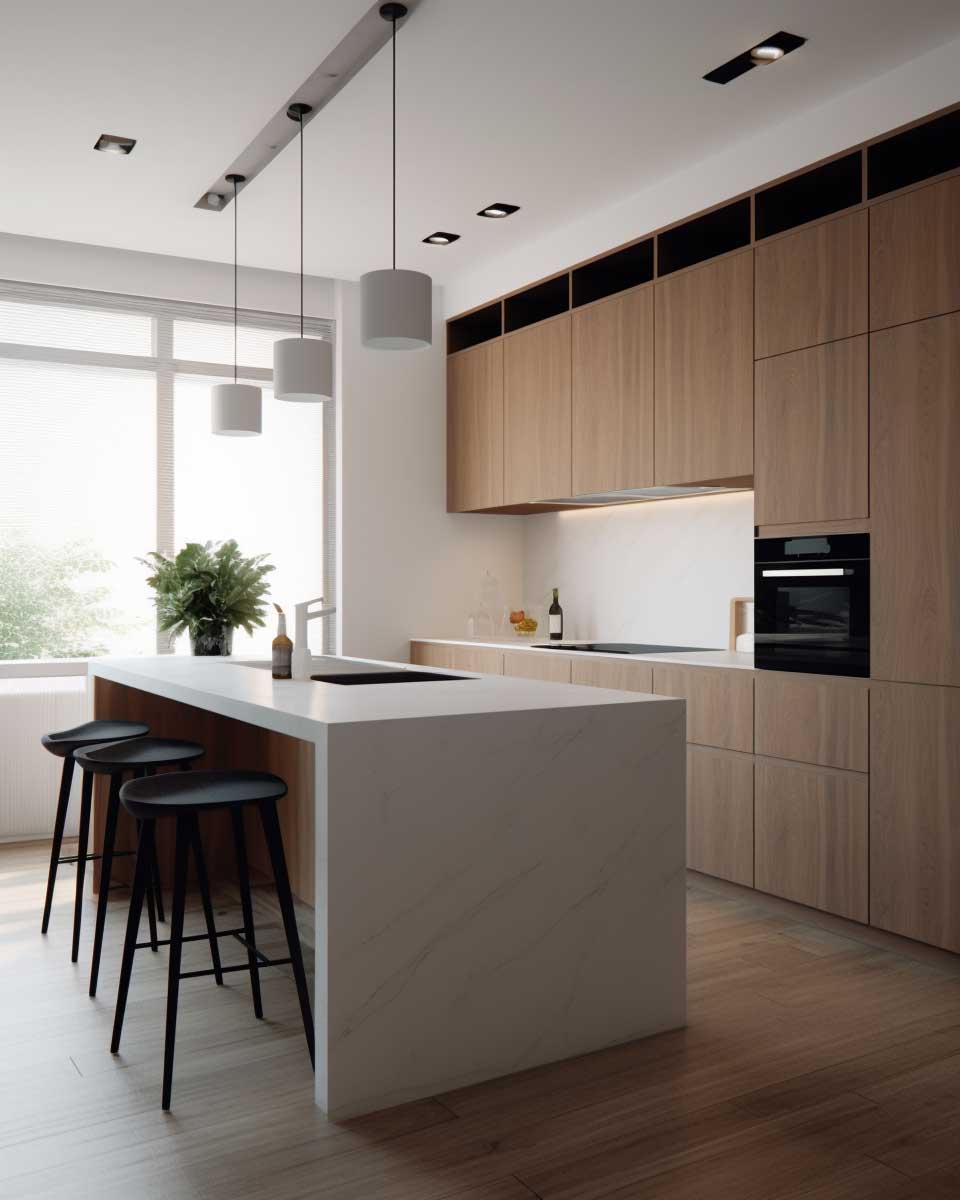
Removing the wall between the kitchen and living area is the first move most designers recommend for a simple modern kitchen layout — and it’s correct about sixty percent of the time. The other forty percent of the time, the kitchen ends up with no natural light at all because the only window was on the wall you just demolished. You need to audit your light source before you touch structural anything. Is there a window above the sink? Is there a skylight option? If the answer is no to both, opening the floor plan creates a bigger, darker room rather than a bigger, brighter one.
Under-cabinet LED strips at around $25–$60 per linear meter (Hafele, Sensio, and Kichler all make reliable options) do more for kitchen daylight feeling than most people expect. They cast light on the counter surface rather than the ceiling, which is where you actually work. I stole this trick from a designer in a small-apartment project where a window wasn’t an option — the LED strips along two cabinet runs turned a dim north-facing kitchen into something that read as open and airy at 7 a.m. on a winter day. Task lighting first. Pendant drama second.
Hardware and Backsplash Are Where Restraint Saves You From a Renovation You’ll Regret
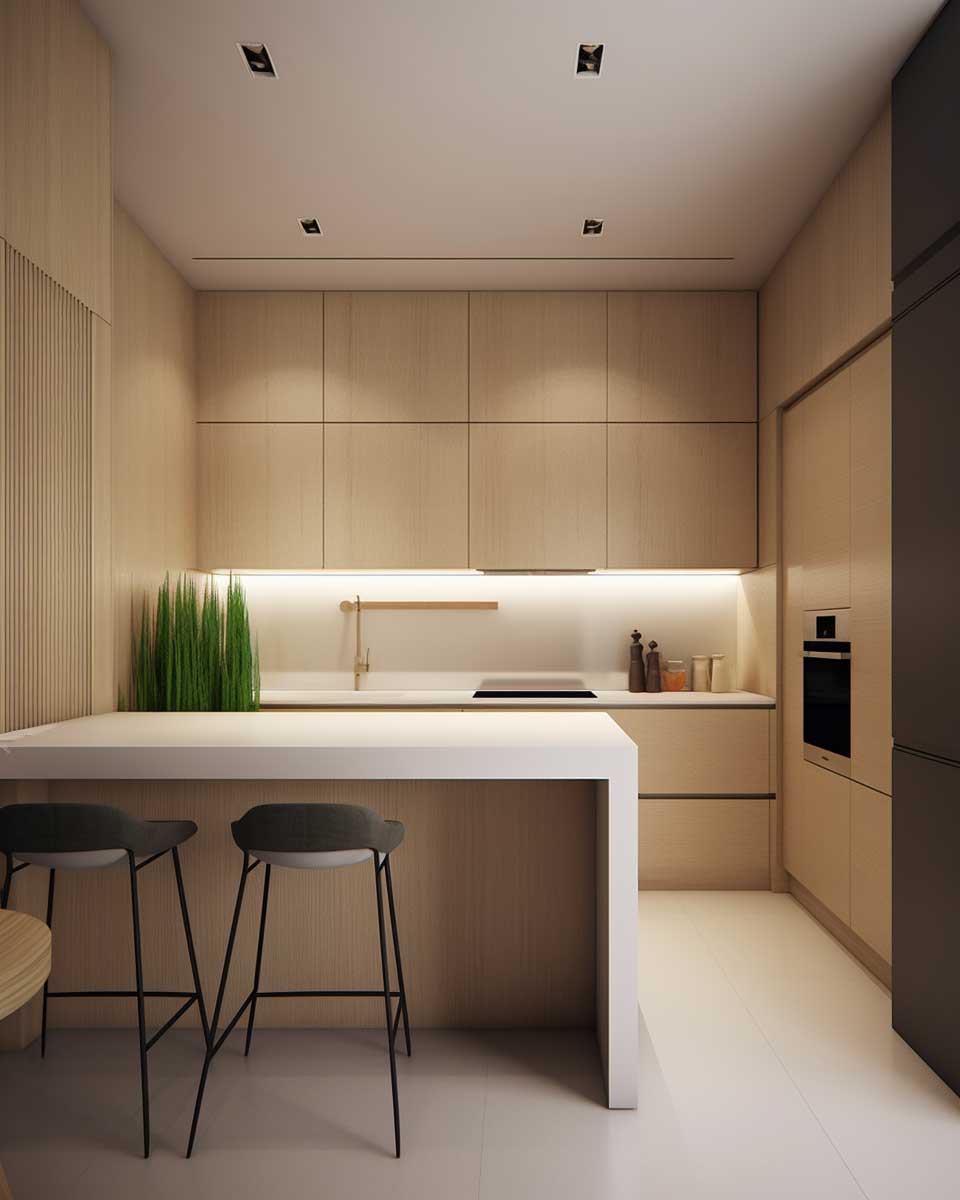
Backsplash is where simple kitchen style decisions get expensive and irreversible. Large-format porcelain tiles in 12×24 or 24×48 inch format — Marazzi, Porcelanosa, or Daltile all make decent options starting around $4–$9/sq ft — read clean without the busy grout lines of subway tile. Subway tile is not inherently bad, but it’s been the default for twelve years and in a simplified kitchen, it no longer reads as a choice; it reads as indecision. Go large format or go solid slab — extending your quartz countertop material up the backsplash wall in a waterfall is the most expensive option and also the one that photographs beautifully for the next twenty years.
Hardware is the jewelry. You want consistency: if your faucet is brushed nickel, your bar pulls are brushed nickel. Mixing metals in a minimal kitchen is a calculated risk — you need them at least two visual zones apart (pulls on lowers, pendant in a different finish above) or it reads as a mistake rather than a design decision. Matte black is the forgiving choice: it works with warm woods, cool whites, greige stone, and every cabinet color currently trending. Don’t pick polished chrome if you have hard water. End of discussion.
Eco-Friendly Materials That Don’t Add a Green Tax to the Total
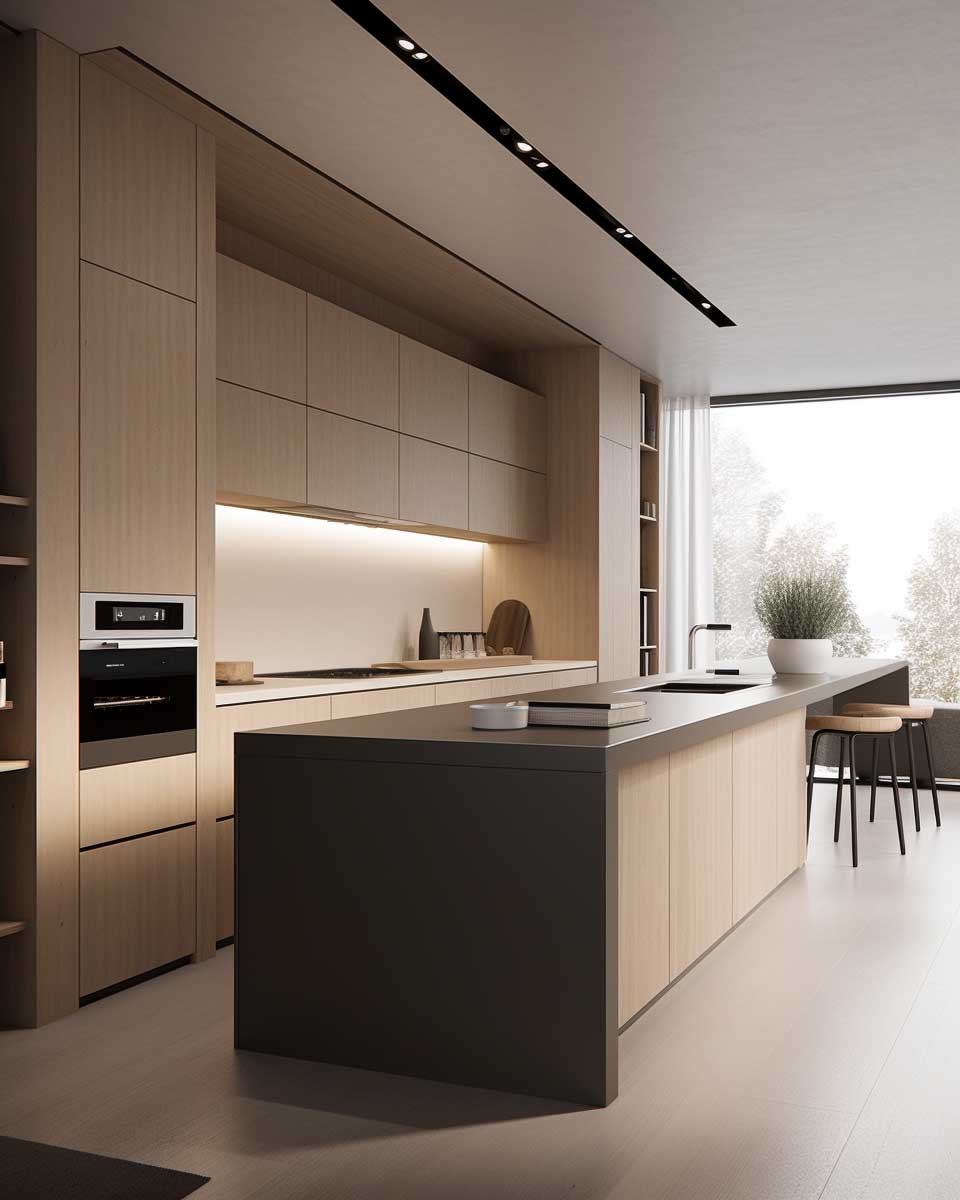
Sustainable doesn’t mean $400/sq ft of reclaimed barnwood countertop anymore. Silestone’s HybriQ+ line — recycled quartz content, no polyester resins — runs $65–$95/sq ft installed and is indistinguishable in finish from standard quartz. Bamboo cabinet interiors from brands like Plykea (IKEA-compatible fronts) start around $150–$300 per door and are made from a grass that regrows in five years rather than hardwood that takes sixty. Cork flooring at $3–$8/sq ft installed is warmer underfoot than tile, softer on dropped ceramic, and a genuinely better environmental choice than the LVP everyone’s defaulting to this decade.
What you should skip: recycled glass countertops. They photograph beautifully, chip at the edges with normal use, and require sealing twice a year in a kitchen context. I’ve seen three of these in person and all three had visible chips along the counter edge within two years of installation. The concept is right but the durability isn’t there yet. Stick with recycled content quartz for the sustainability story without the maintenance headache. Real Homes’ roundup of contemporary kitchen designs covers sustainable material choices that hold up in real conditions worth bookmarking before a spec meeting.
Appliances That Disappear vs. Appliances That Perform
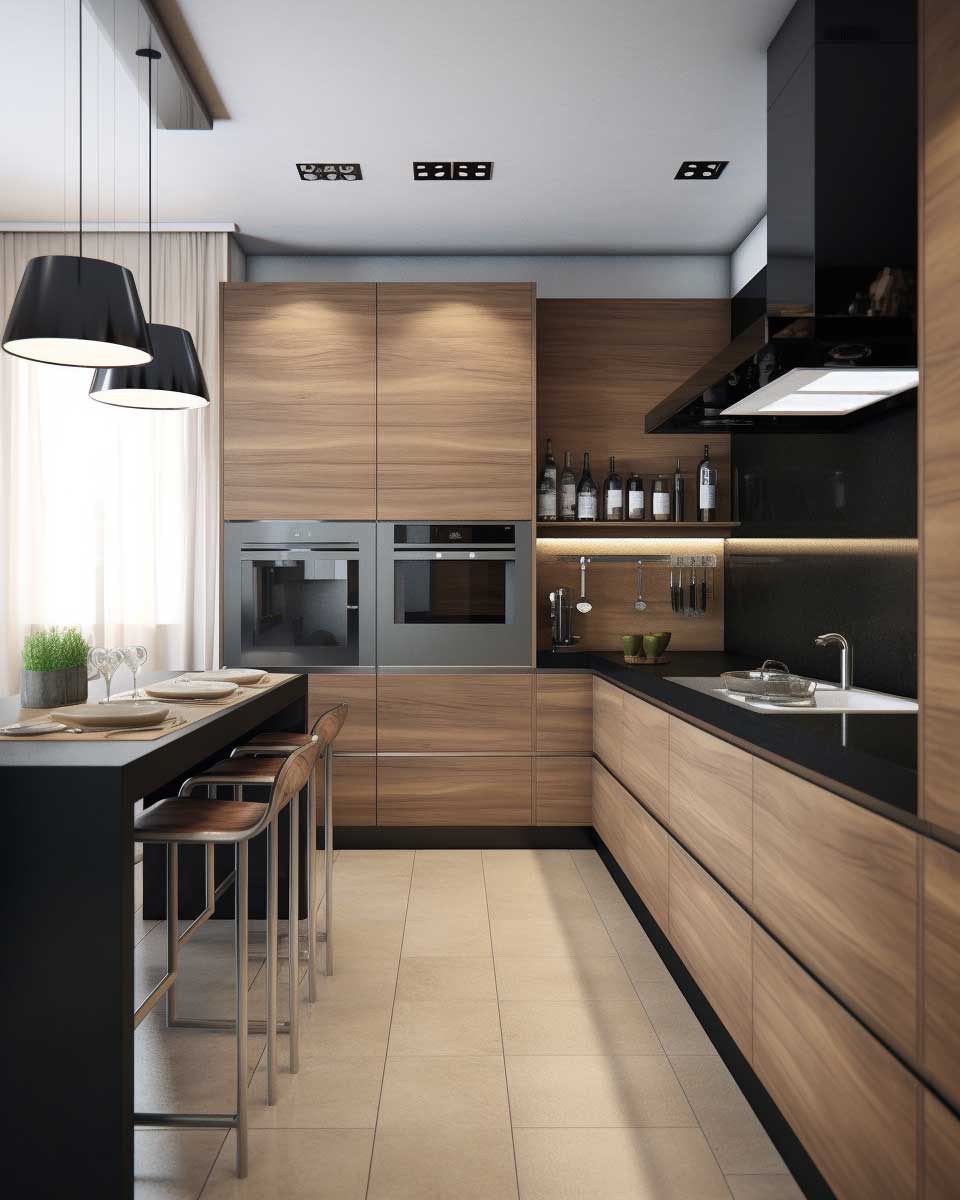
Panel-ready appliances are the standard recommendation for a simple modern kitchen and for good reason — a panel-ready Fisher & Paykel dishwasher drawer (around $1,400–$1,800) or a panel-ready Bosch 800-series dishwasher ($1,100–$1,400) takes a cabinet door overlay and visually vanishes into the run of cabinetry. The fridge is harder. Integrated column refrigerators from Sub-Zero or Liebherr hit $5,000–$10,000+. The practical middle ground is a counter-depth stainless fridge from Bosch or Samsung — it protrudes about an inch past the cabinet face rather than the standard six, which reads as intentional rather than incidental.
Induction cooktops are the right call for a simple kitchen style and I’ll defend this position. They’re flush-mounted, they clean with a single wipe, they’re faster than gas at boiling water, and they don’t leave char marks at the burner edges that require a toothbrush. The Bosch 800-series 36-inch induction cooktop at around $1,500–$1,700 is the one I’d buy. The thing no one tells you: your existing cookware needs to be magnetic for induction to work — test it with a fridge magnet before you commit to a $1,600 appliance and discover your beloved copper pans are now decorative.
Personalizing Without Cluttering the Design You Worked Hard to Get Right
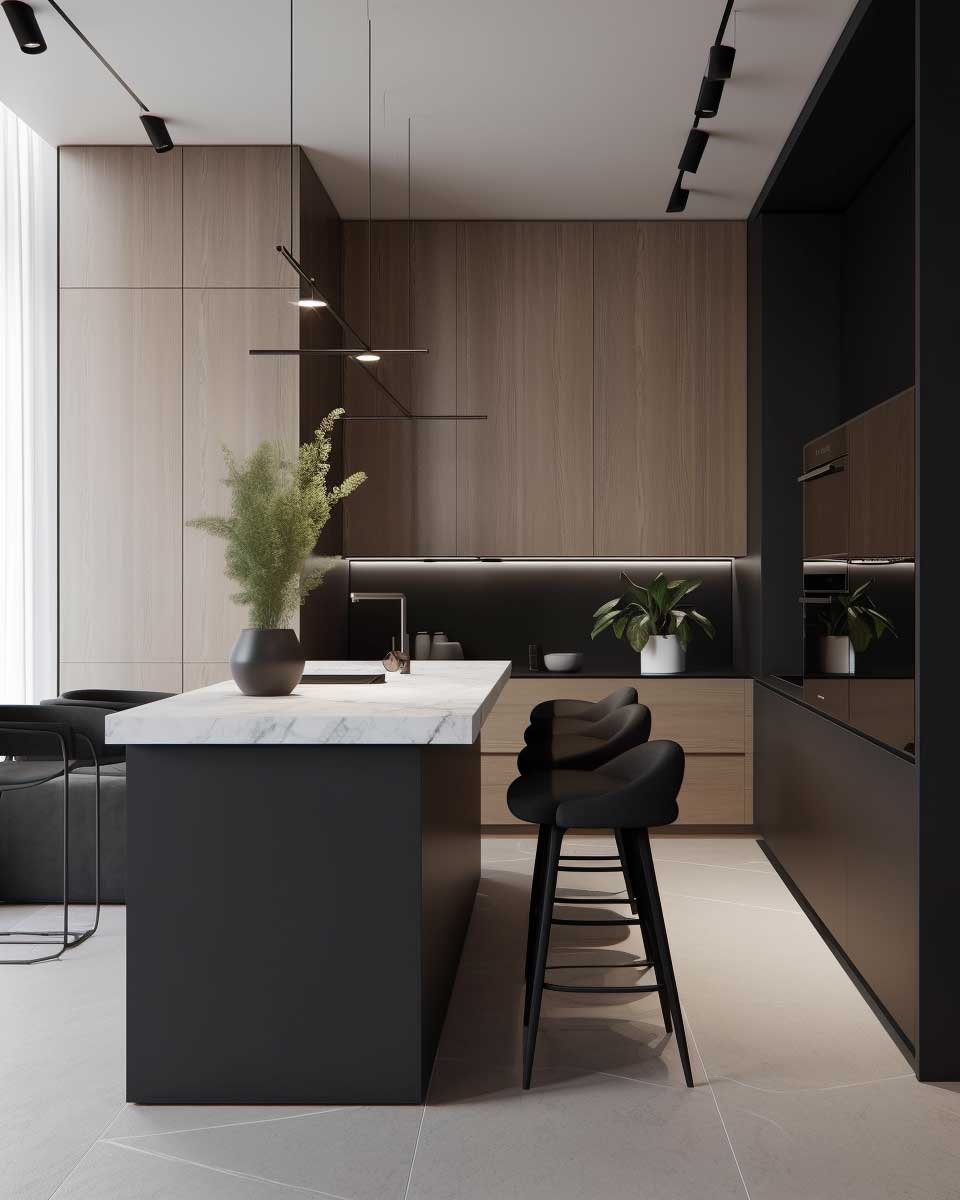
The one personal element most simple modern kitchens lack is texture at eye level. Everything is smooth — flat cabinets, polished quartz, matte walls — and the room ends up feeling like a well-designed hotel rather than somewhere a person actually lives. A single material shift fixes this: fluted oak or white oak panels on the kitchen island base, a textured plaster hood surround, or a slim open shelf in white oak holding three things you actually use every day. You don’t need more. One warm material at eye level is the difference between “show kitchen” and “lived-in kitchen.”
What doesn’t work: adding personality through small decorative objects scattered across the counter. A collection of ten small things looks like a collection of ten small things. Pick one statement object — a ceramic bowl, a single architectural vase, a Staub cocotte in a color you love — and put it somewhere intentional. A $250 Staub braiser in Navy Blue sitting next to the cooktop does more visual work than $600 worth of scattered ceramics. The kitchen should look like you make decisions, not like you can’t throw anything away.
Layouts That Read Clean Because They Were Drawn That Way
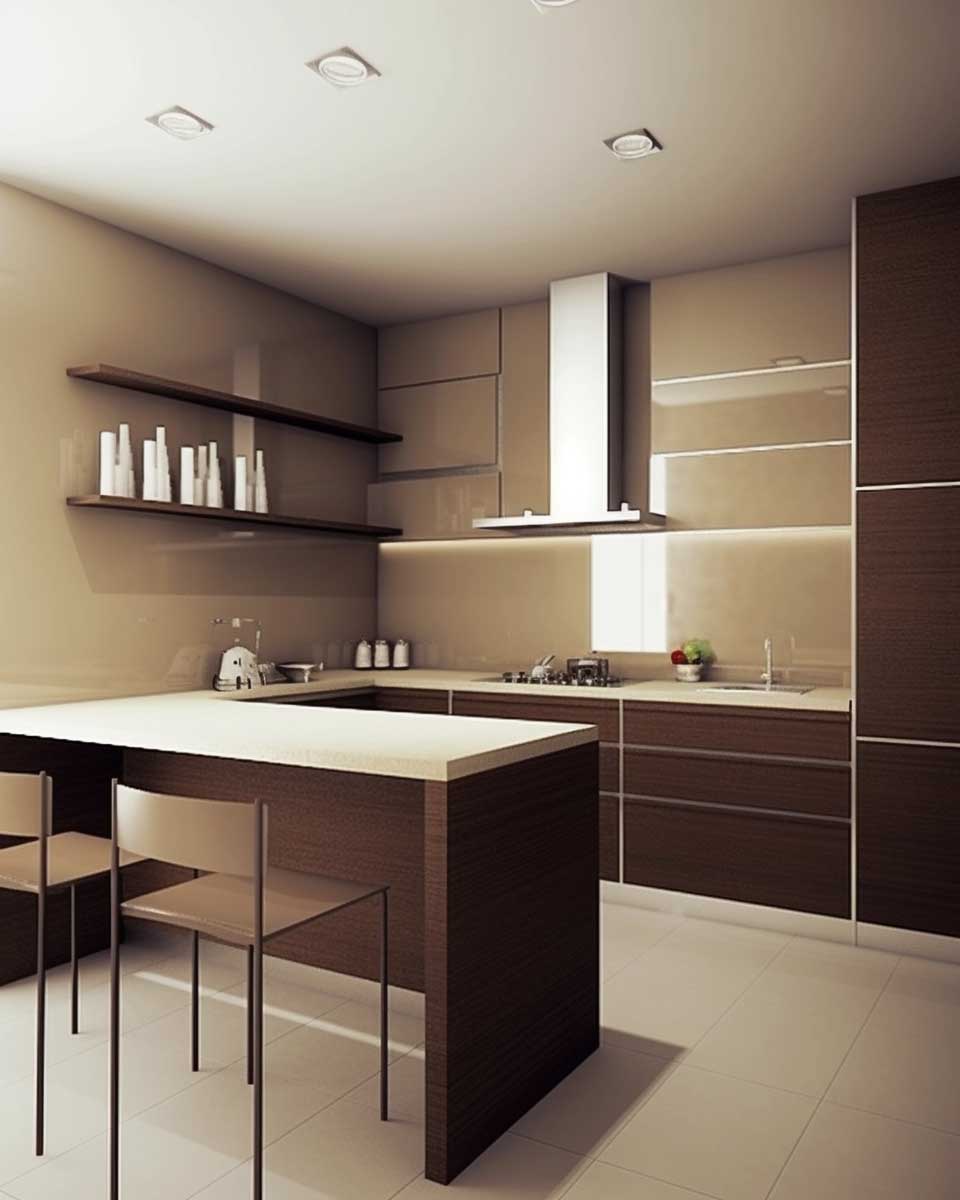
The triangle — sink, cooktop, fridge — still matters in a simple kitchen design even when the open-plan trend pushes everything into an island-centered layout. If your prep zone is on the island, your cooktop on the perimeter, and your fridge on the wall behind the island, you’re walking a circle every time you cook. You need the fridge within arm’s reach of the prep zone and the cooktop no more than three steps from the sink. This sounds obvious until you look at renovation plans where the island has been positioned for visual drama rather than cooking logic and the layout requires eleven steps to move a pot of pasta from flame to colander.
L-shaped layouts and single-wall galley configurations are the two formats that deliver the cleanest visual read in a simple modern kitchen. L-shaped gives you the corner for storage and puts the triangle naturally in place. The galley is a corridor and that’s exactly its strength — everything is within two pivots and the parallel counter run forces the clean line aesthetic the style is built on. I’ve seen galley kitchens in 90-square-foot apartments look more resolved than island kitchens in 300-square-foot rooms because the proportions were right and nothing was added for effect.

Countertop material selection is the other layout decision nobody frames correctly. The countertop is the most-touched surface in the room — it needs to be durable before it needs to be beautiful. Silestone, Caesarstone, and Cambria quartz all perform similarly at the $65–$90/sq ft installed tier. The difference is in the edge profile: a straight eased edge reads cleaner and costs less than a bullnose or waterfall, which matters if you’re building a simplified kitchen where every detail is visible. Thin-profile countertops at 2cm rather than the standard 3cm are also available now and shave visual weight off the counter edge without compromising structural integrity.
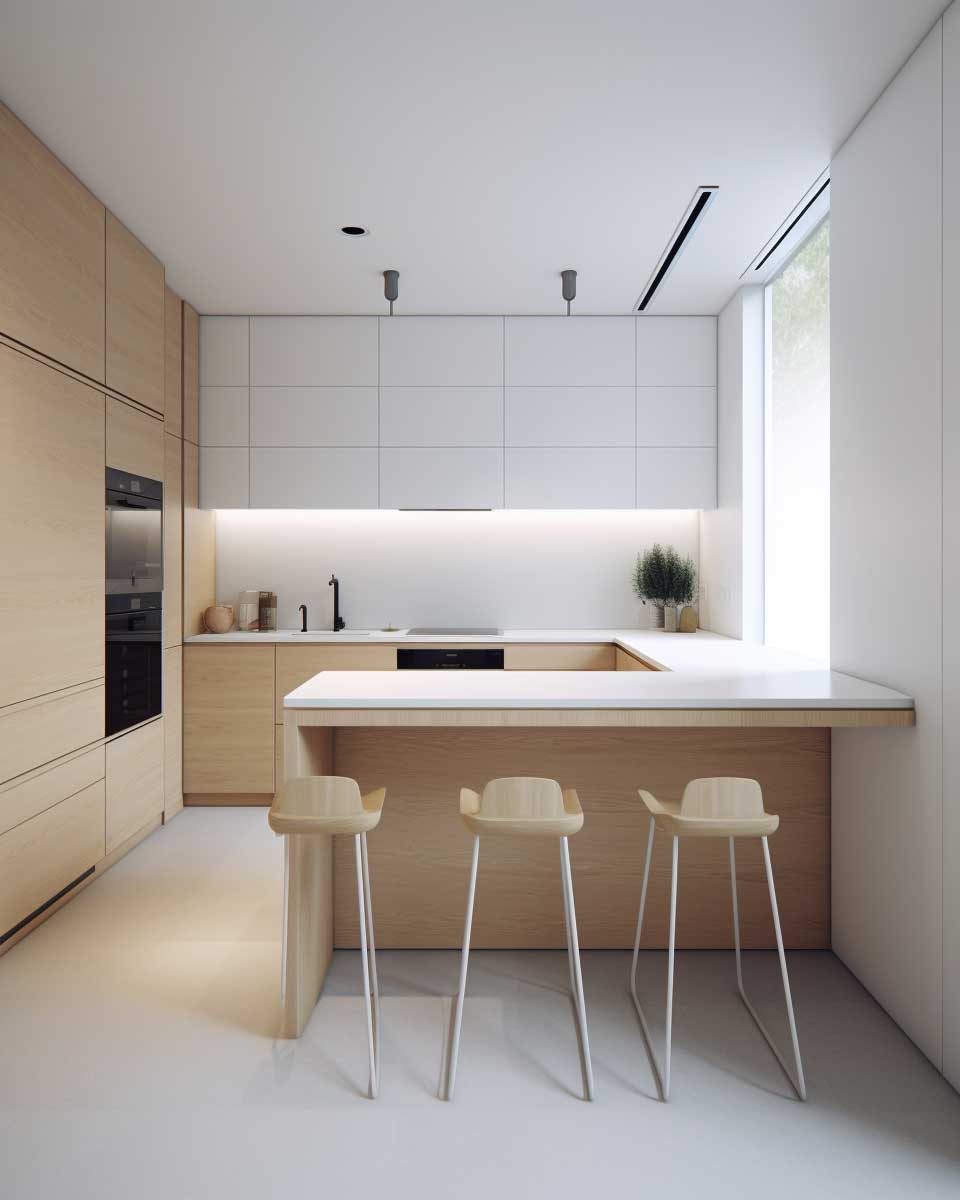
Lighting layers are the final layout decision that most renovation budgets underfund. Recessed downlights for ambient light, under-cabinet strips for task light, and one statement fixture — a Ferm Living or &Tradition pendant over the island — for the visual anchor. Three layers, not one. A single overhead fixture in a simple modern kitchen is like a single sentence in a paragraph: technically complete, not particularly interesting. Budget $800–$2,000 for lighting fixtures specifically and treat it as non-negotiable rather than an afterthought you’ll handle post-move-in.
The Verdict
Simple Modern Kitchen Design Is a Decision Made Once That Pays Off Every Day
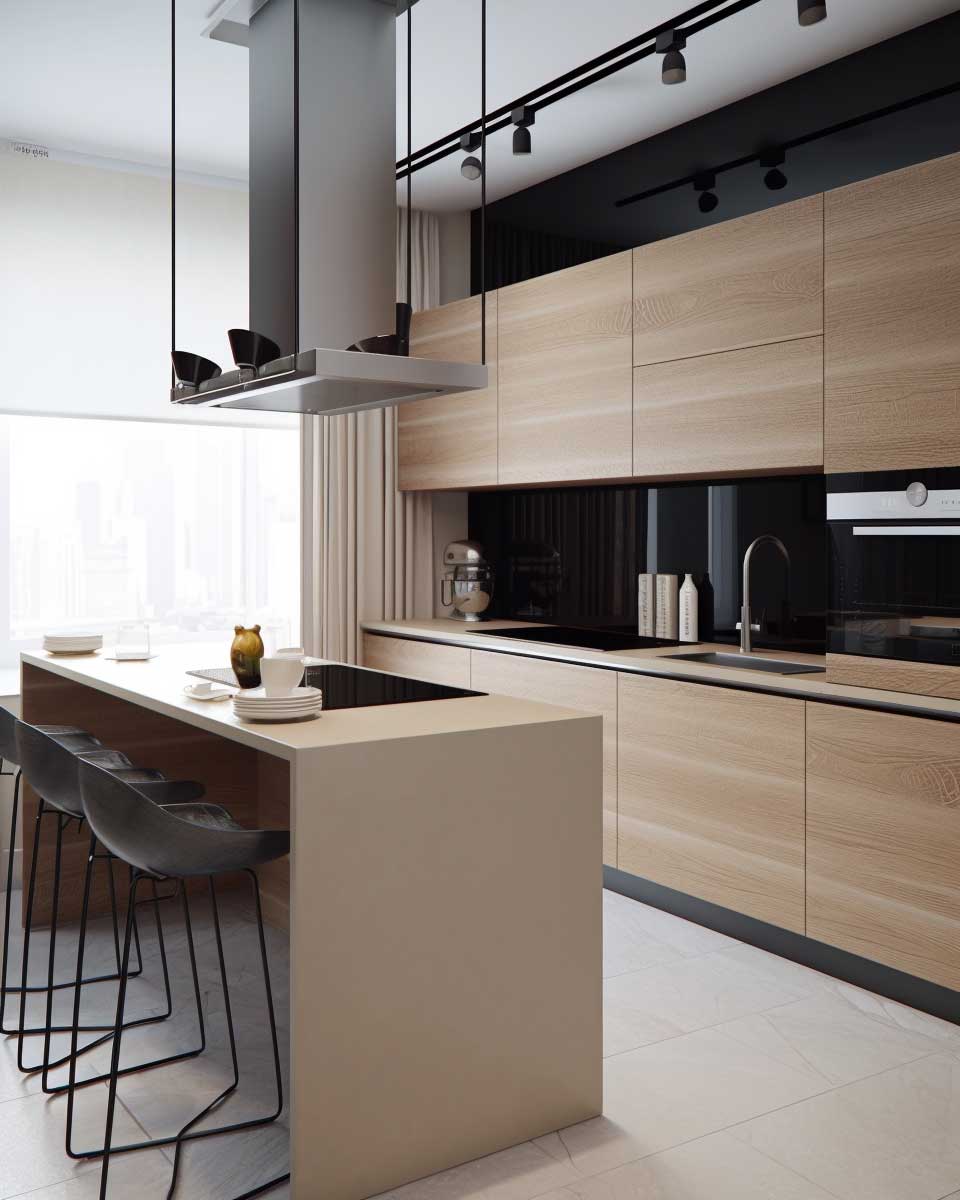
Flat-panel cabinets, a committed neutral palette, hidden storage, and a properly planned layout aren’t trends — they’re the structural logic of a kitchen that works. You don’t need to spend Sub-Zero money to get there.
Pick two changes from this post and start with those. The cabinet hardware swap costs $150 and takes a Saturday. The countertop choice matters more than the backsplash tile. Light in layers, not from above only.
Save this post before your next kitchen conversation with a contractor — the details in here will save you from at least three decisions you’d regret.