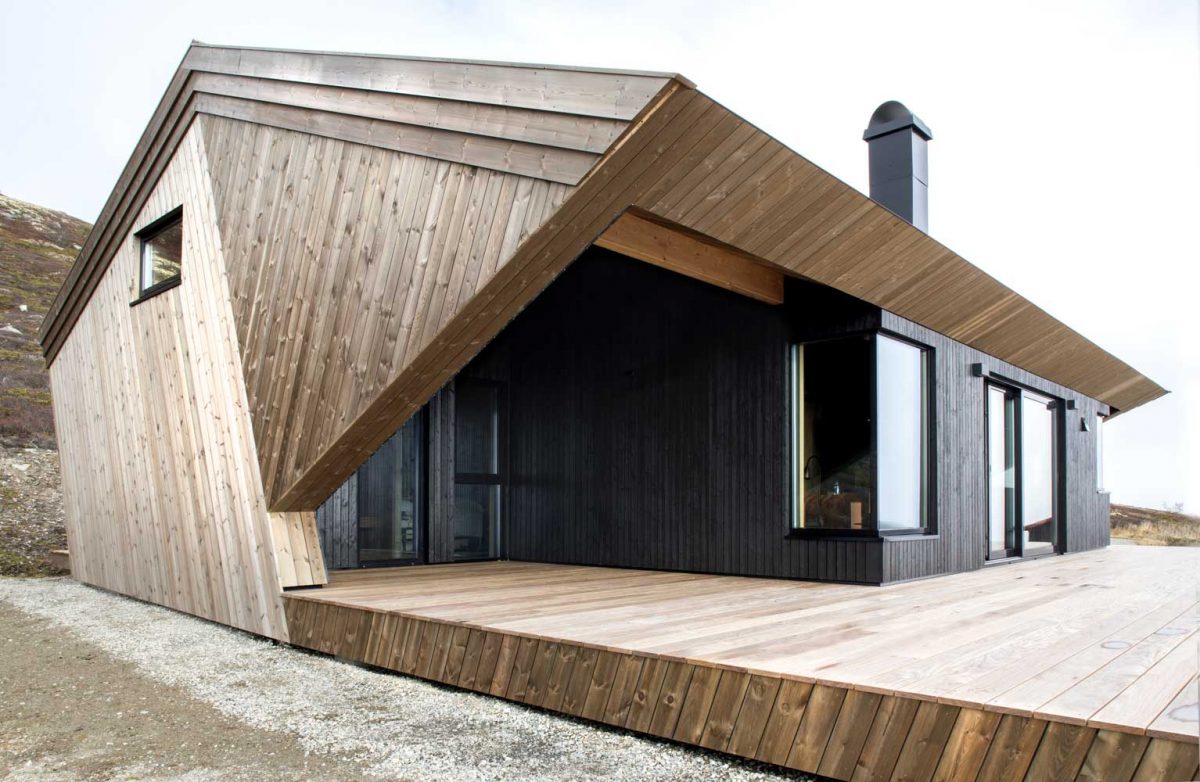
Accent siding is the single fastest way to add depth and personality to a home exterior that would otherwise read as flat and forgettable. I’ve been obsessing over exterior siding combinations for years, and the houses that stop me cold on a walk always share one thing: a deliberate material or color contrast that makes the facade feel designed, not assembled. You don’t need a full reclad to get that effect — targeted accent siding on a gable, a bump-out, or a lower zone changes the entire read of the building.
The mistake most homeowners make is treating the whole exterior as one surface. Layering a wood siding accent panel over board-and-batten, or dropping a stone veneer zone below a lap siding field, creates shadow lines and visual weight that a single material never can. My neighbor spent $4,200 on a HardiePlank accent gable — it made a $180,000 house look like a $280,000 house before she’d repainted a single shutter.
Below, I’ve broken every major accent siding approach into real-world categories with costs, brand names, and the honest mistakes worth avoiding. Scroll straight to the section that matches your house type, or read through to build a shortlist for your contractor meeting.
– Wood siding accents (cedar shingles, board-and-batten) give the best warmth-to-cost ratio — cedar runs $3–$7/sq ft installed.
– James Hardie fiber cement accent panels run $8–$15/sq ft installed and last 30–50 years without rot or pests.
– Stone veneer accent zones deliver the highest perceived value but cost $15–$30/sq ft for real ledgestone.
– A siding accent wall on a gable or dormer changes the entire exterior read — often costs under $3,000 for the zone alone.
– Mixing two siding materials adds more curb appeal than any single premium upgrade to just one material.
– Exterior house accents — shutters, corbels, decorative trim — amplify a siding contrast and should always be specified last, not first.
Mixing Two Siding Materials Changes More Than Just the Look
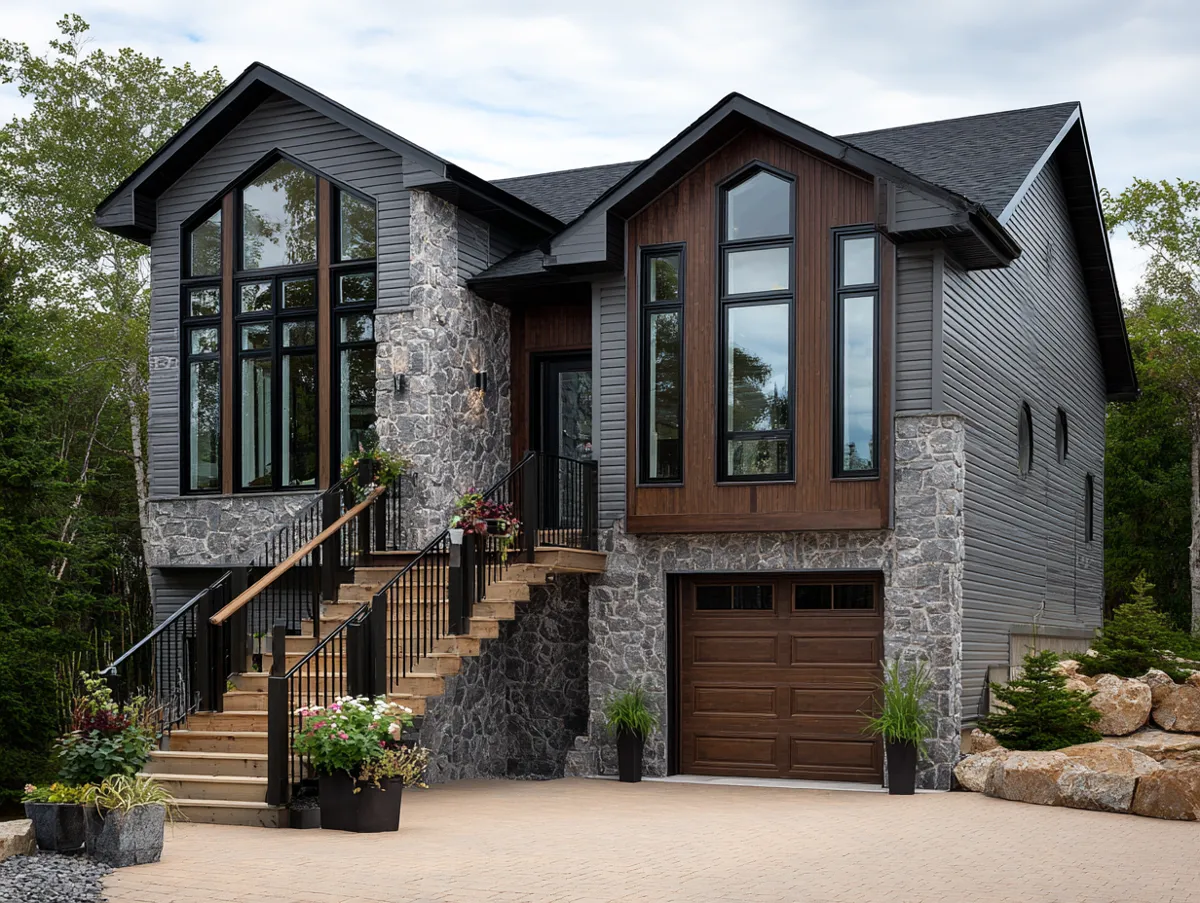
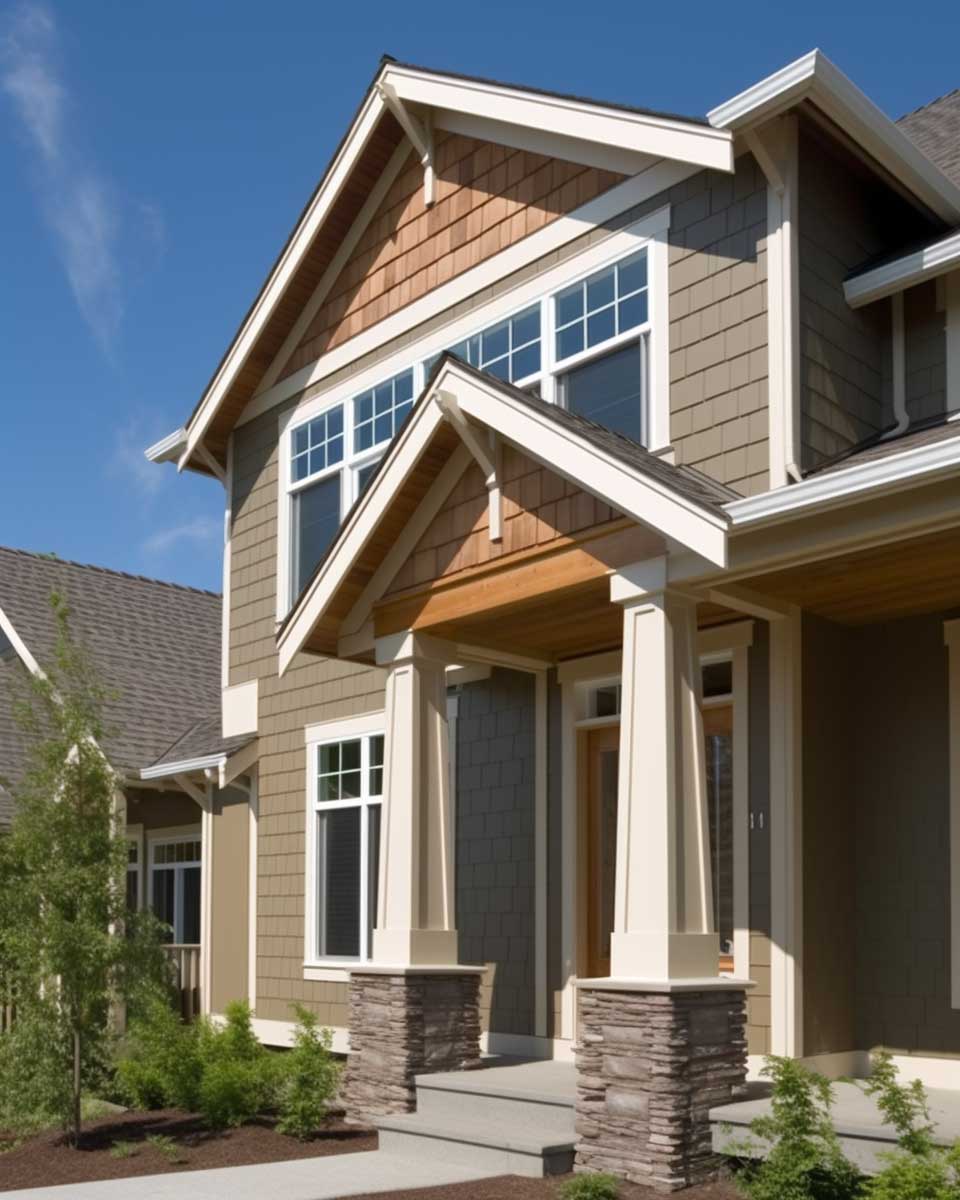
Accent siding works because the human eye craves contrast — and mixing two materials delivers that contrast on a structural level, not just a paint level. My go-to combination is horizontal lap siding on the main body with vertical board-and-batten on a gable or entry bump-out. That shift from horizontal to vertical reads as intentional architecture, not accident. James Hardie’s HardiePlank lap siding ($8–$12/sq ft installed) pairs with their HardiePanel vertical board-and-batten at roughly the same price — both use ColorPlus Technology finishes that are warranted for 15 years, so the two zones weather at the same rate.
What doesn’t work: picking two materials in the same texture family, like two vinyl profiles. You’ll notice the difference in gloss and surface detail reads as a mistake rather than a design choice. The contrast has to be legible from the street at 40 feet — if you can only see it up close, it won’t move the curb appeal needle. I’d also skip mixing more than three materials on any single facade; beyond that, it looks chaotic, not layered.
Wood Siding Accent Panels Deliver Warmth No Synthetic Material Can Fake
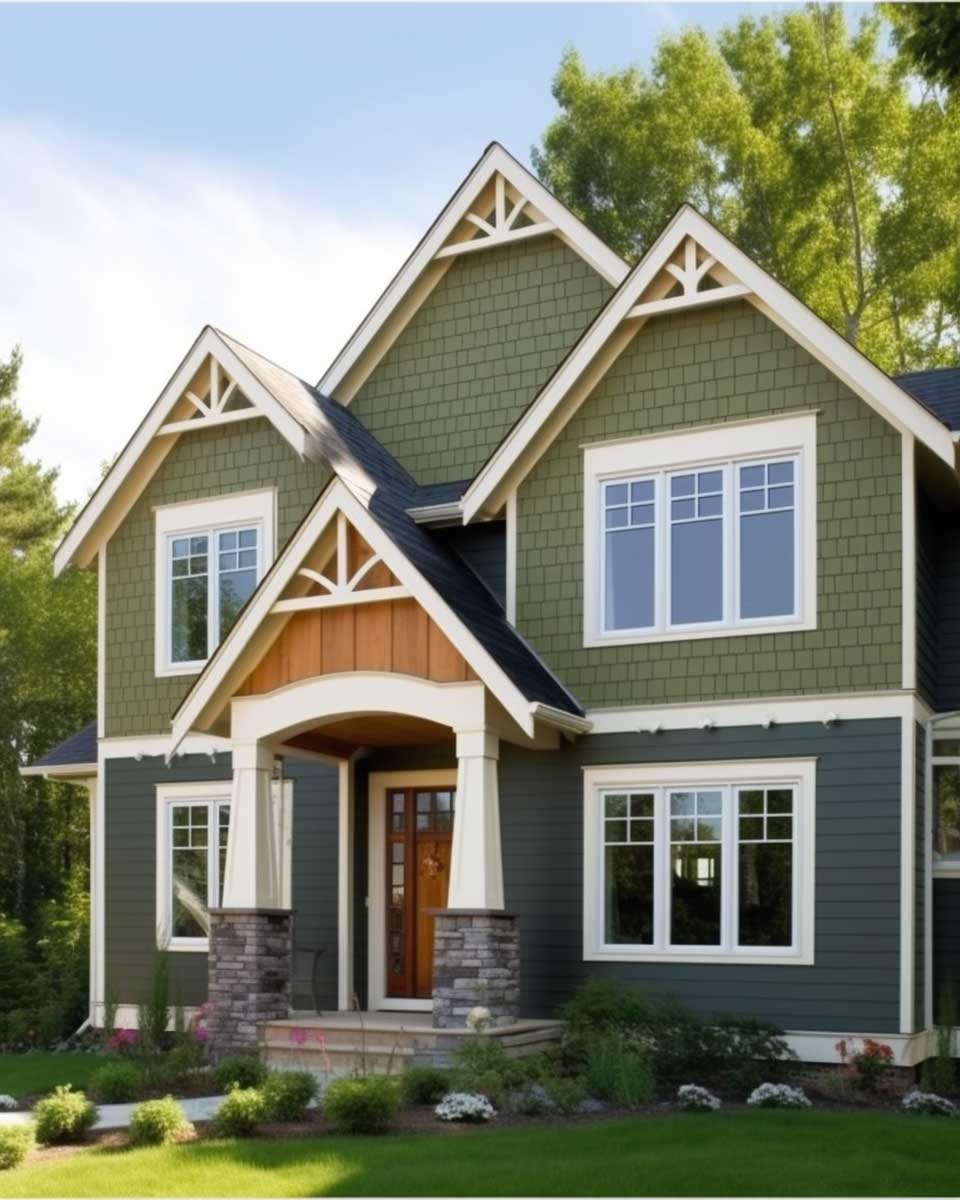
Wood siding accents are the material I reach for first when a house feels cold or corporate. Cedar shingles on a gable run $3–$7/sq ft installed and have a hand-cut irregularity that catches light differently throughout the day — think of it like the difference between a printed textile and woven fabric. You can also use reclaimed barn wood as an accent zone on a lower facade section; it costs $5–$12/sq ft but brings 150-year-old character that a Craftsman or Farmhouse exterior genuinely needs.
Cedar performs best in dry or moderate climates — if you’re in the Pacific Northwest or Florida, cedar shingles will need a penetrating oil sealer every 3–4 years or they’ll gray and split. Therma-Tru and Woodtone both make pre-sealed cedar accent panels that cut maintenance significantly. The one mistake I see constantly: using raw, unsealed cedar on the north face of a house where it stays damp. Two years later you’re pulling it off and starting over.

Color Contrast in Accent Siding Reads as Architecture, Not Just Paint
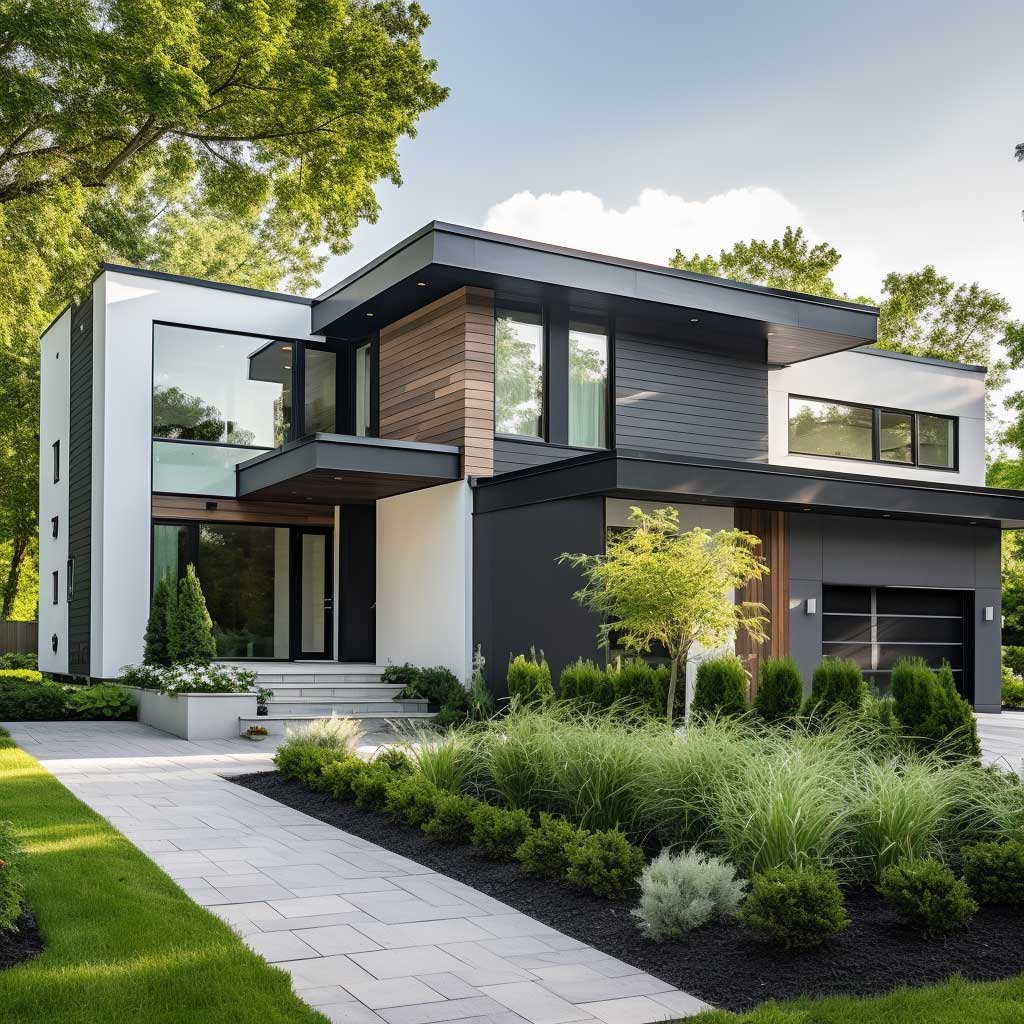
Exterior home accents hit differently when the color contrast is structural — meaning the accent zone is a different material, not just a different paint color on the same lap siding. I own two houses with contrasting color accent zones, and the one with an actual material change (dark fiber cement panel vs. light lap siding body) draws far more comment than the one where I just painted the gable a different shade. Sherwin-Williams Tricorn Black (SW 6258) on a HardiePanel accent zone against a warm greige body is my current go-to — it runs about $200 in materials for a standard gable, plus labor.
Avoid the trap of picking a bold accent color that has no relationship to your roof, trim, or door. A navy accent panel on an orange-toned cedar shingle roof is a fight, not a contrast. The rule I stole from a designer friend: pull one color from your roof and either deepen it or lighten it two steps for your accent zone. You’ll notice the whole exterior suddenly coheres. Also skip trendy colors for the main body — save the risk for the accent zone, which costs a fraction as much to repaint later.
Stone Veneer Accents Add the Weight That Lap Siding Alone Never Has
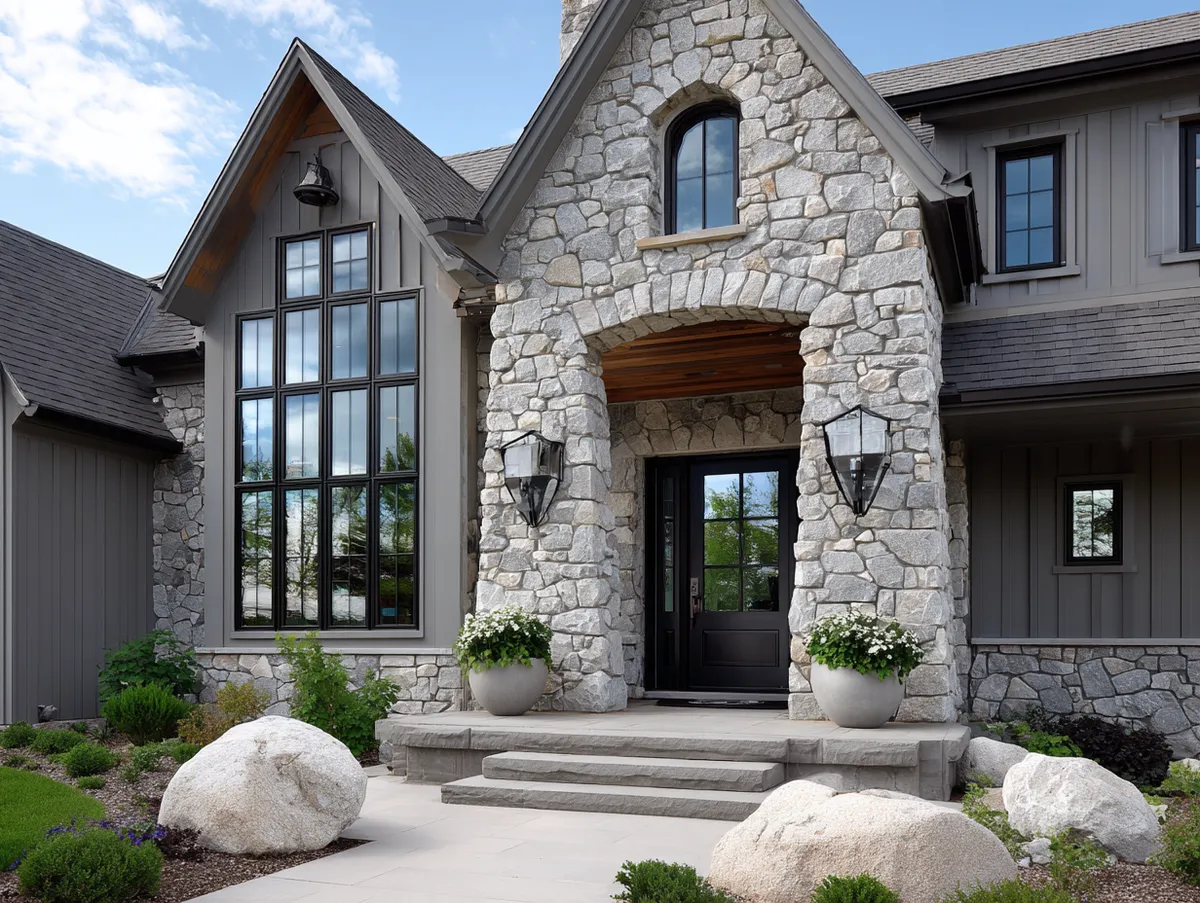
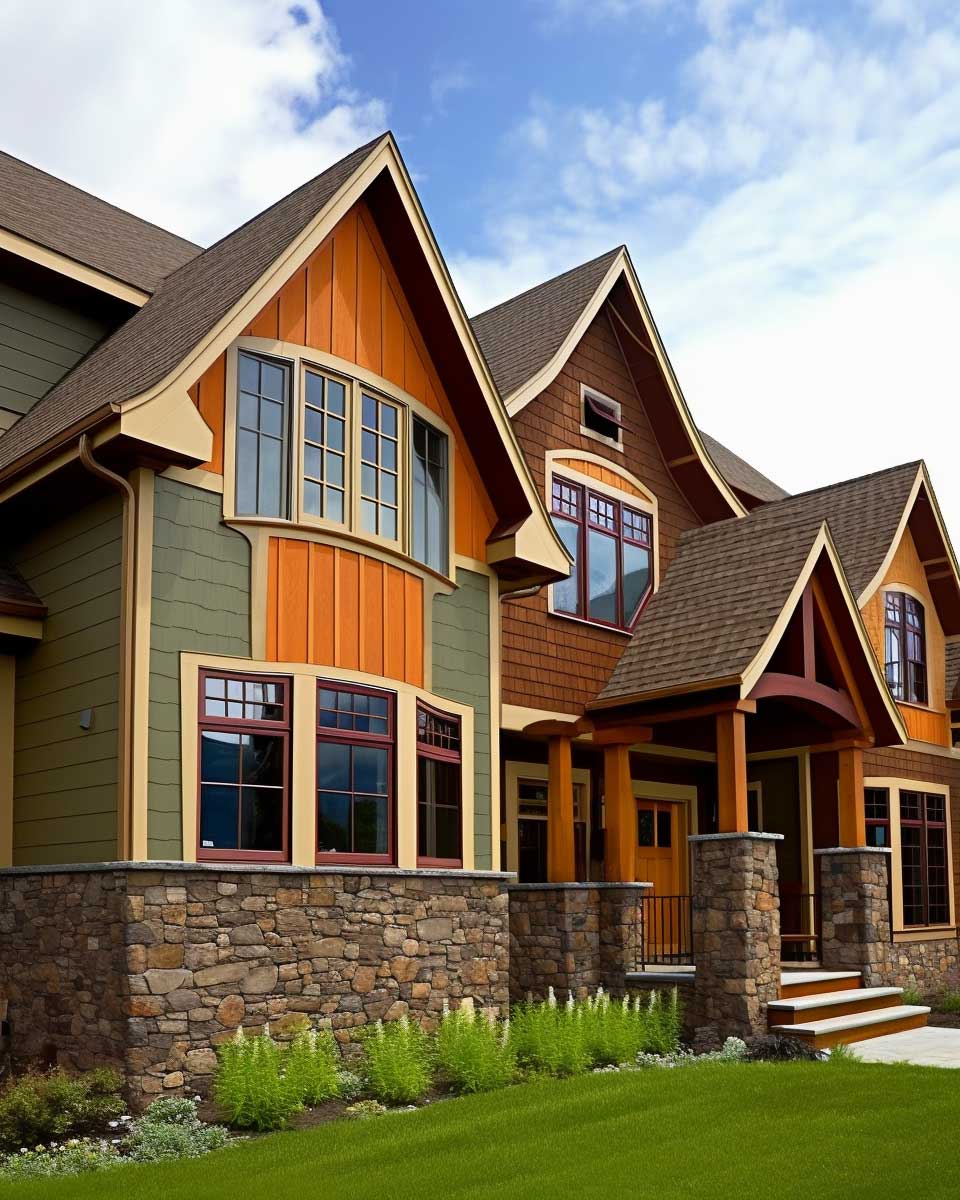
Stone veneer as an exterior house accent works because it solves a proportional problem: most framed homes look slightly weightless at the base, as if they’re floating above the foundation. A ledgestone or ashlar veneer skirt — even just 18–24 inches tall along the foundation line — grounds the house visually the way a heavy cuff grounds a shirt sleeve. Eldorado Stone and ProVia make manufactured stone veneer panels at $6–$12/sq ft for materials alone; real quarried ledgestone runs $15–$30/sq ft installed, but the return on visual impact is genuinely proportional to the cost.
Where stone accent siding fails is when it appears randomly — a short column clad in stone flanked by bare vinyl looks like a kit-bashed model, not a designed home. You need the stone to wrap a corner or terminate at a clear architectural line (a porch edge, a chimney breast, a bump-out wall). I’ve seen homeowners apply stone veneer only on the front face of a corner pier and leave the return bare — it reads as unfinished. Wrap every visible corner, or don’t start. Combining stone with other siding materials in a planned material hierarchy keeps the facade readable and intentional.

Geometric Siding Patterns Make a Plain Gable the Focal Point of Your Street
Pattern is the accent siding move that costs the least and reads the most boldly from the street. A herringbone cedar shingle pattern on a gable, a chevron fiber cement panel on a dormer, or a diagonal board accent on a garage bay — any of these turns a generic architectural detail into the feature you describe when giving someone your address. I’ve priced herringbone cedar shingle installation at $9–$14/sq ft because the cuts are labor-intensive, but on a typical gable that’s only 80–120 sq ft — so the total runs $720–$1,680. For that money you get something no two other houses on your block have.
The pattern has to respond to the home’s existing geometry — a strong horizontal coursing on the main body calls for a vertical or diagonal accent pattern on the contrast zone. If everything runs horizontal, the pattern accent disappears. Also avoid overly complex patterns like running bond brick or basketweave on a single accent wall — from the street they collapse into visual noise. Simple herringbone, diagonal, or vertical stack reads cleanest at residential scale. Is a custom pattern worth the upcharge? Yes — but only if the main siding body is quiet enough to let it breathe.
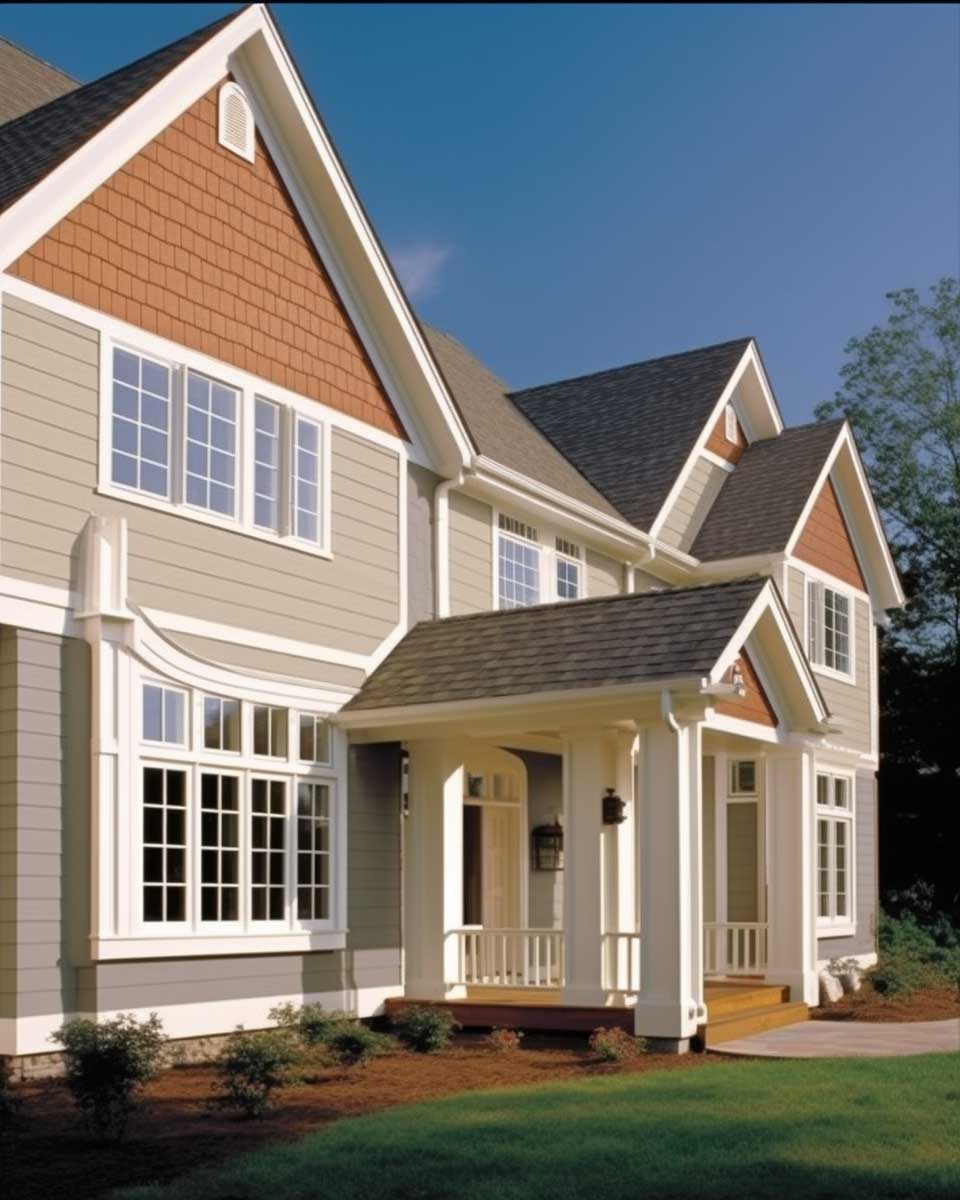
Reclaimed and Vintage Materials as Siding Accents
Reclaimed materials as decorative siding accents hit a specific nostalgia nerve that new manufactured products can’t replicate — and the market has caught up to this. Salvage yards in most mid-size cities now sell pre-dimensioned barn wood siding at $4–$8/sq ft; architectural salvage services like Longleaf Lumber (Boston) or Duluth Timber Company (Minnesota) ship nationally. I’ve used reclaimed Douglas Fir boards as an accent zone on a 1960s ranch remodel — the contrast between the aged wood and fresh fiber cement siding was the main thing every visitor commented on.
Decorative tin panels — a Victorian-era cladding material — are back as an accent on porches, entry overhangs, and garage bump-outs. Classic Products sells pressed steel accent panels at around $3–$5/sq ft that install with a staple gun, and they take paint exceptionally well. What kills the vintage-modern mix: over-applying it. One reclaimed wood accent wall per facade elevation is the ceiling. Two starts reading as a salvage store, not a home. Pair the vintage zone with the cleanest, most modern material you can afford for the main body — the contrast is the point.
❌ Don’t use more than two accent siding materials per facade elevation. Three or more reads as indecision, not creativity.
❌ Don’t apply a patterned accent to a zone that is under 60 sq ft. The pattern needs room to repeat; a tiny herringbone patch looks like a repair, not a feature.
❌ Don’t pick an accent siding color before confirming your roof color under natural light. Paint chips lie indoors. I’ve seen homeowners choose a gray accent that reads green next to a brown roof.
❌ Don’t skip sealing raw wood accent panels before installation. Six months of unprotected wood on a north-facing wall will rot at the ends and void any manufacturer warranty.
❌ Don’t use high-gloss paint on accent siding panels. Flat or satin finishes hide imperfections; gloss telegraphs every wavy board and nail pop from the street.
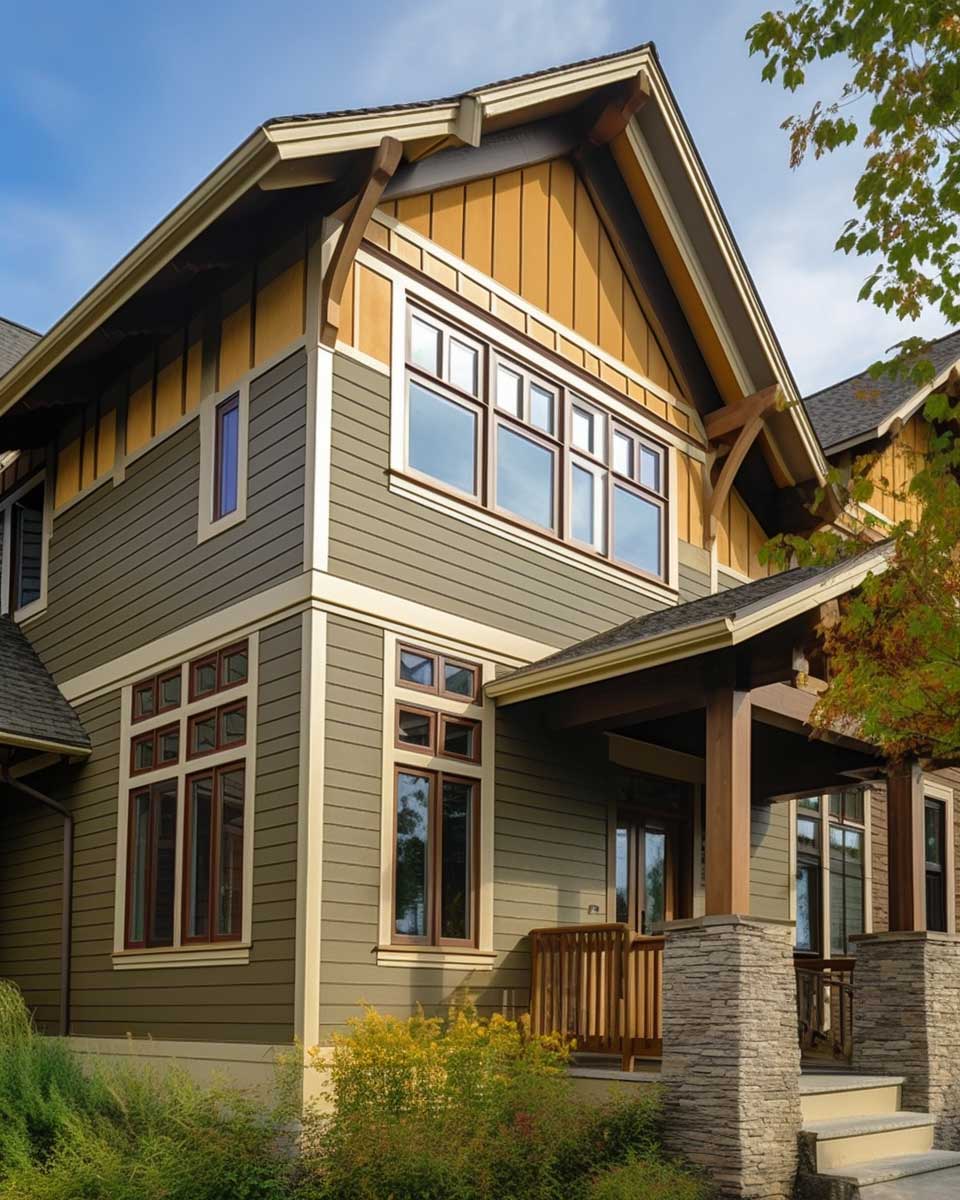
Decorative Siding Accents Like Corbels, Gables, and Shutters Multiply the Effect
Decorative siding accents — the trim layer on top of the material layer — are where you lock in the style category. A craftsman-style corbel under a gable overhang signals something specific; a clean metal fascia bracket signals something else. I specify these after the siding material is decided because the wrong accent detail on the right siding material is worse than no detail at all. Fypon makes PVC decorative gable brackets starting at $45–$120 per piece, and they’re dimensionally stable — no split, no rot, no repainting every five years the way wood brackets demand.
Shutters are one of the most misused exterior home accents in the country. Functional shutters are sized to fully cover the window when closed — most decorative shutters installed today are two-thirds the required width, which announces itself as fake from the street. If you’re going decorative, at least size them correctly: shutter width should equal half the window width. Vantage makes composite shutters in 36 colors starting at $60/pair that are dimensionally correct by default. The house I grew up in had mismatched shutters for fifteen years before my mother finally replaced them — the difference was immediate.
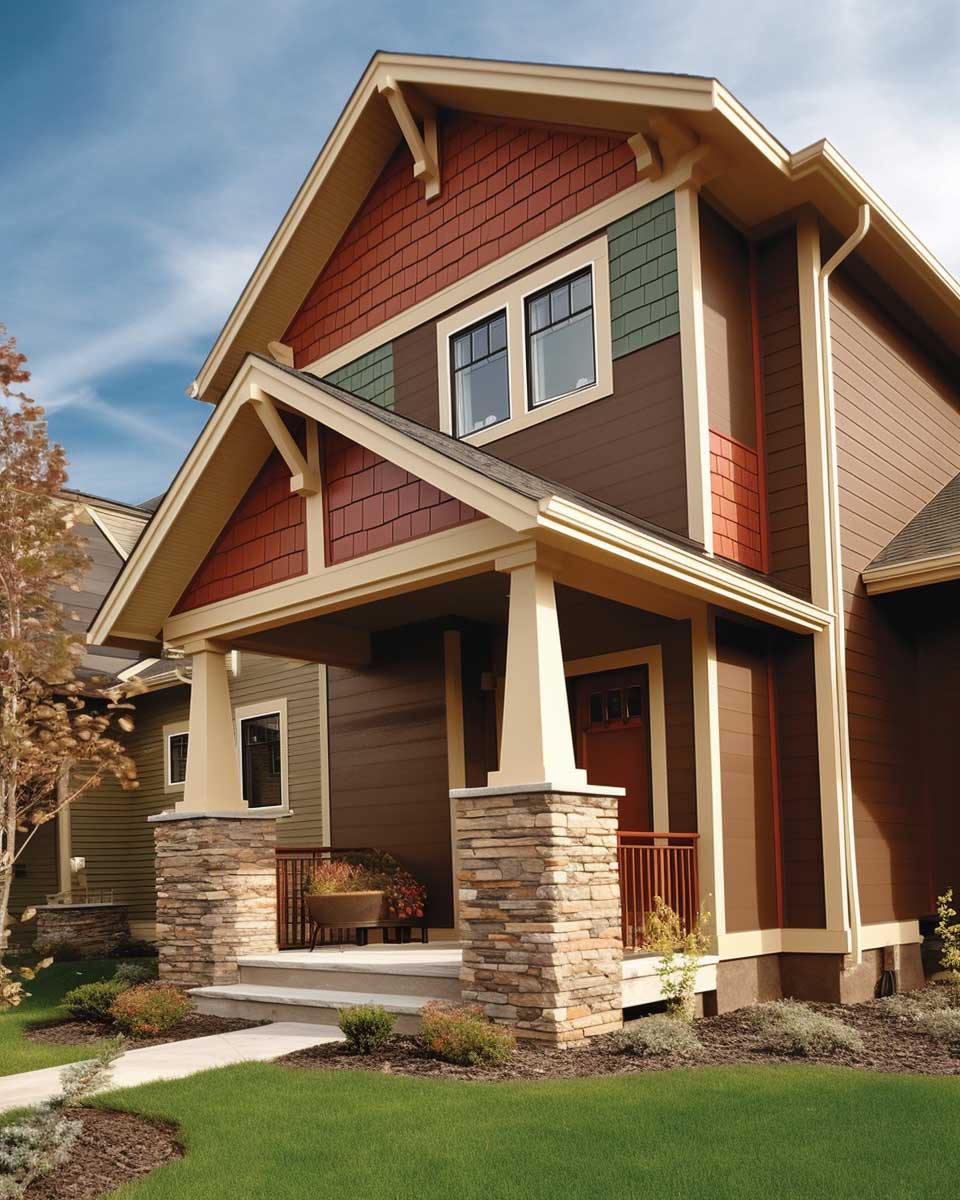
Fiber Cement Accent Siding Panels Outlast Every DIY Shortcut You’re Considering
James Hardie fiber cement is my recommendation for accent siding on any house that needs to perform in a real climate. HardiePlank lap siding costs $8–$12/sq ft installed, and their HardieShingle accent panels — the ones that mimic cedar shakes — run $4–$6/sq ft for material alone, with installation pushing the total to $12–$17/sq ft for typical gable work. The 30-year limited warranty covers rot, pest damage, and delamination — I’ve never had a warranty claim honored faster from any building material brand. For a 2,000 sq ft home doing a partial reclad of accent zones only, budget $3,000–$8,000 total depending on zone complexity.
What fiber cement can’t do: bend. Any curved accent wall, rounded corner, or compound-curved soffit needs a different material — fiber cement cracks under any deliberate flex. For those situations, LP SmartSide engineered wood trim boards are flexible enough for mild curves and start at $1.20/linear foot at most lumber yards. Also, decorative siding panels from manufacturers like Nichiha offer factory-finished fiber cement in wood-grain and smooth patterns — the factory finish holds color far longer than field-painted products. You’ll pay 15–20% more upfront but skip two repaints over ten years.
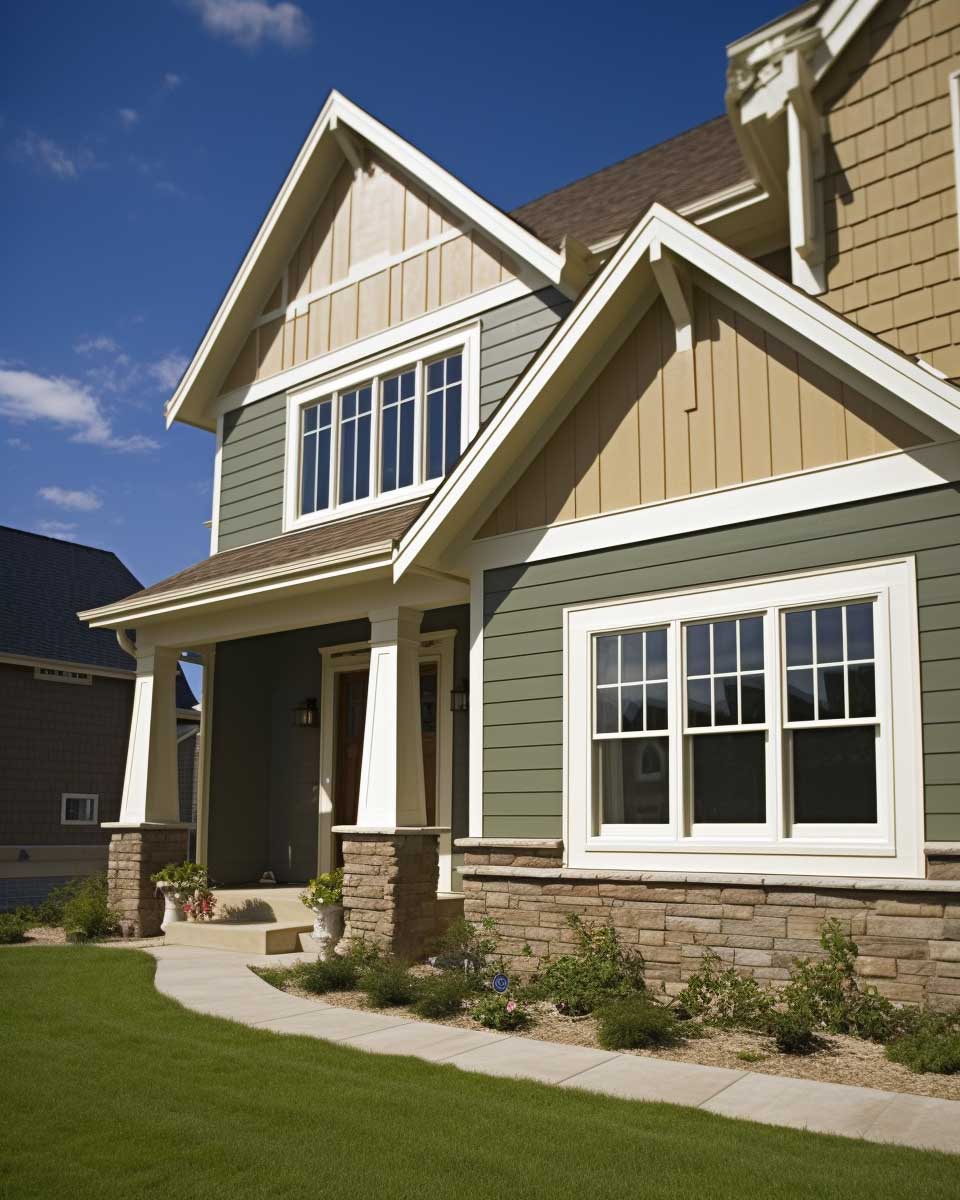
Exterior Lighting Exposes Your Accent Siding Texture After Dark
Exterior house accents read completely differently after dark, and most homeowners plan their siding palette in daylight then forget the building exists for twelve hours a day. Up-lighting a stone veneer accent zone from a low-voltage fixture at grade creates raking shadows across the surface relief — it’s the same principle a museum uses to light a sculpted marble wall. I installed four $35 Kichler landscape spots along my home’s stone veneer base last spring, and the evening curb appeal now outperforms the daytime version.
Grazing light — placed 6–12 inches from the wall surface and angled parallel to it — is the technique that makes textured siding sing at night. Smooth fiber cement panels don’t benefit as much; they reflect rather than catch light. The materials that perform best with up-lighting are rough-split ledgestone, cedar shingles, and board-and-batten with deep shadow lines. VOLT Lighting sells a fully dimmable brass up-light at $49 that handles the job without corroding in rain or salt air. Pathway lighting matters too, but solve the accent wall first — that’s what your neighbors actually see.
Window Trim and Surrounds as a Low-Cost Exterior Accent That Earns Its Price
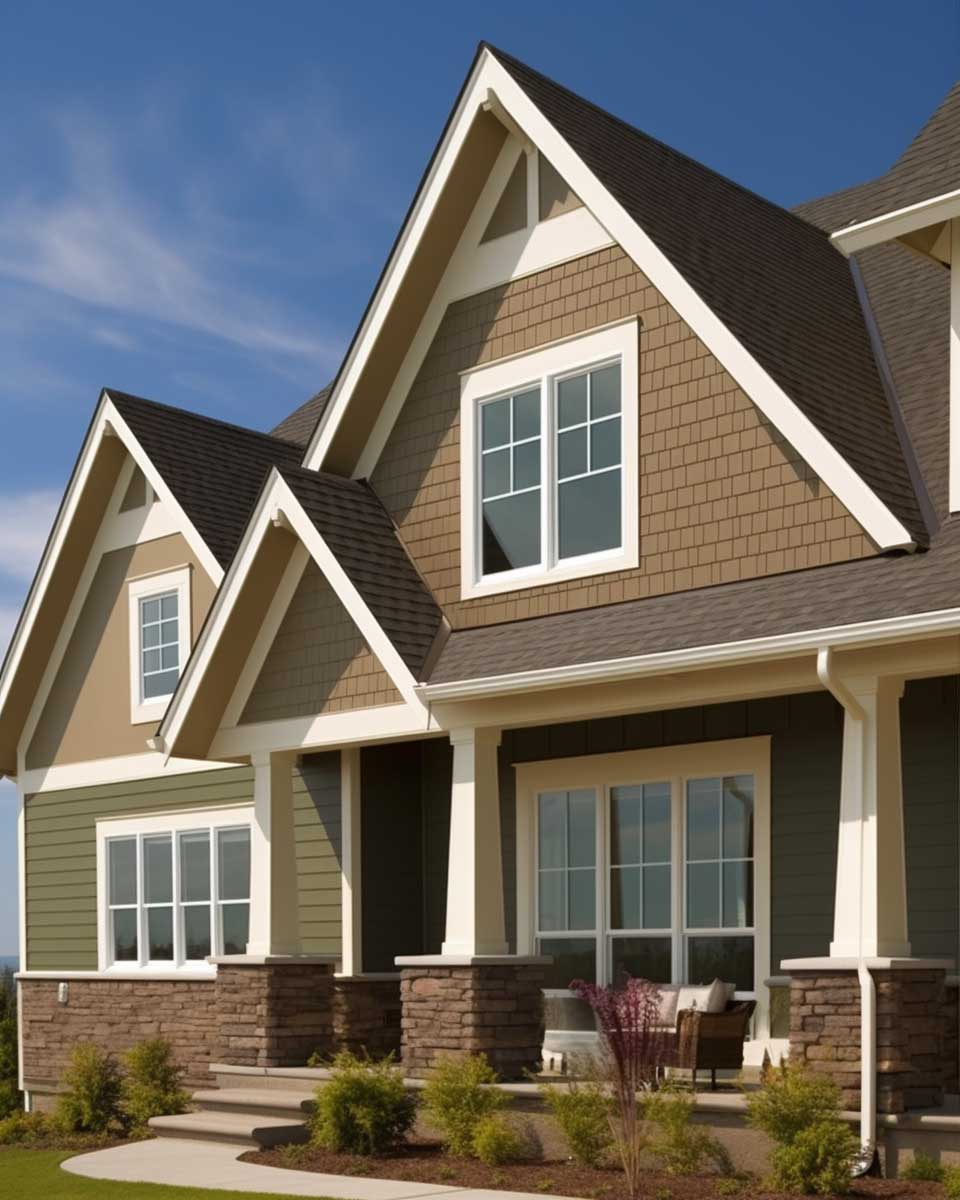
Window trim is the accent siding detail that costs the least and gets noticed the most on close approach — and most builders install it as an afterthought. A 4-inch flat trim board framing a double-hung window is forgettable; a 6-inch crosshead surround with built-up layers and a drip cap is a statement. Fypon PVC window surrounds run $80–$180 per window and install in under two hours with construction adhesive and a finish nailer. I’ve done six windows on a single afternoon and had the neighbors texting by evening asking what I’d changed.
Window boxes function as a decorative siding accent that ties the landscaping plane to the facade plane — they visually bridge the gap between the ground and the windows. Hooks & Lattice sells self-watering fiberglass window boxes starting at $55 that weigh 70% less than wood versions and never rot. Paint them to match your accent zone, not your trim, and you’ll notice the window reads as a designed unit rather than a punched opening in a wall. Don’t mount window boxes on windows above the first floor without checking the structural bracket capacity first — a saturated soil box can exceed 80 lbs.
Eco-Friendly Accent Siding Materials That Perform Without the Greenwashing
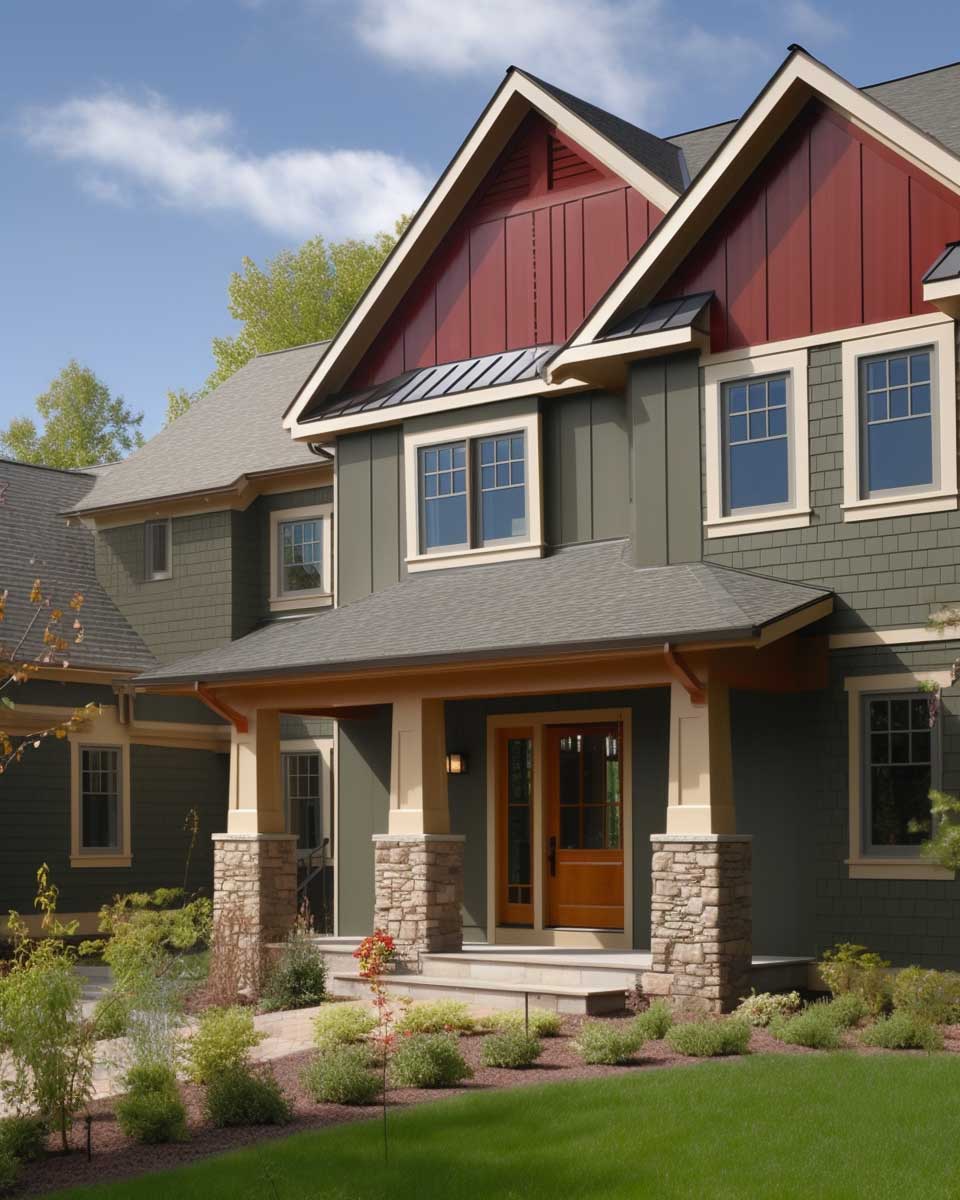
Sustainable accent siding is no longer a trade-off between performance and values — the product options have genuinely caught up. LP SmartSide engineered wood siding is made with 90% pre-consumer recycled wood fiber, treated with a zinc-borate preservative that resists fungal decay and insects, and runs $1.50–$3.50/sq ft for materials. I’ve had LP SmartSide on a lake cabin for seven years with zero rot issues — the coast-facing wall stays wet for weeks at a time. Reclaimed wood accents obviously carry the lowest embodied carbon of any option, but they require more prep and sealing time before installation.
Metal siding accent panels — Cor-Ten weathering steel, aluminum, or zinc — are arguably the most durable and lowest-lifecycle-impact option available. Cor-Ten forms a stable rust patina that actually protects the steel underneath, requires zero maintenance or painting, and pairs with wood or fiber cement in a material contrast that reads as architectural rather than industrial. This Old House covers fiber cement and metal siding options in depth for homeowners comparing lifecycle costs. Aluminum accent panels from Alside or Gentek start at $2.50/sq ft — and unlike steel, they’ll never develop surface rust in high-humidity zones.

Landscaping and Siding Accent Walls Read as One Design or Two Competing Mistakes
Your accent siding and your landscaping share one frame — the view from the street — and they either work together or actively undermine each other. A dark fiber cement accent wall at the base of the house needs a planting bed of medium-height grasses or low perennials in front of it, not a row of overgrown arborvitae that hides the whole zone by August. I learned this the hard way with a slate-colored accent panel I spent $2,800 installing on a garage bump-out; by mid-summer, the landscaping in front of it had grown tall enough to block the contrast entirely from the street.
Hardscape elements — a concrete pathway, a paver approach, a gravel border — should reflect the material vocabulary of the siding accents. A stone veneer accent zone paired with a concrete paver approach feels unified; that same stone zone paired with a brick pathway fights for your eye’s attention. Keep the ground plane material count as low as the facade material count. What’s the easiest landscaping decision that improves any accent siding scheme? Consistent edging — a clean steel or aluminum lawn edging strip at the bed line makes even basic plantings read as deliberate design.

Accent Siding Maintenance Varies Wildly by Material — Know This Before You Buy
Maintenance is the variable that separates a good accent siding decision from a regrettable one, and it’s rarely discussed at the point of sale. Cedar shingles need a penetrating oil sealer every 3–5 years ($0.30–$0.80/sq ft in materials) or they gray, crack, and curl. Fiber cement accent panels need repainting every 7–15 years depending on sun exposure — budget $1.50–$3.00/sq ft for a quality exterior repaint. Stone veneer requires periodic joint inspection and re-pointing of any mortar gaps every 10–15 years, particularly in freeze-thaw climates.
The lowest-maintenance accent siding options in descending order: aluminum panels (wash annually, never paint), engineered wood with factory finish (repaint every 10–12 years), fiber cement with ColorPlus factory finish (repaint every 15 years), PVC trim and decorative panels (wash only, never paint). If your lifestyle doesn’t allow for annual or biannual maintenance checks, don’t specify raw cedar or untreated reclaimed wood as an accent material — you’ll see it deteriorate faster than anything else on the facade.
Bottom Line
Accent Siding Pays Off Fastest When You Choose the Right Zone, Not the Most Material
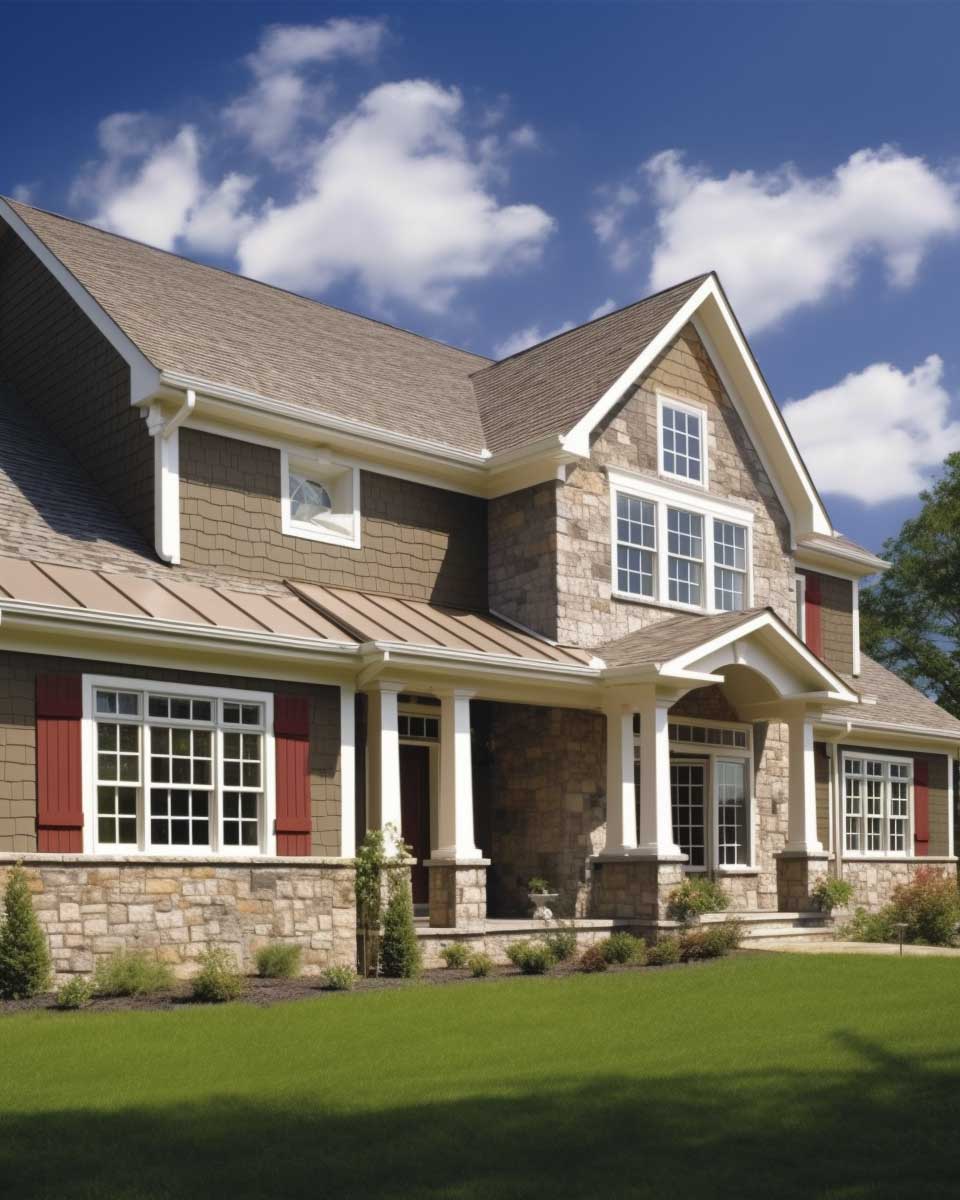
A single gable, entry bump-out, or foundation band done in a contrasting material — cedar shingles, fiber cement board-and-batten, or stone veneer — returns more visual value than repainting an entire house.
James Hardie HardieShingle and HardiePanel accent zones run $3,000–$8,000 for most partial reclads and carry a 30-year warranty. Cedar shingle accents cost less upfront but need sealer every 3–5 years.
Don’t mix more than two accent materials per facade elevation, size your decorative shutters to the correct window proportion, and always coordinate your landscaping bed line with the accent zone it fronts. Save this post before your contractor meeting — these specifics matter.
Related Topics