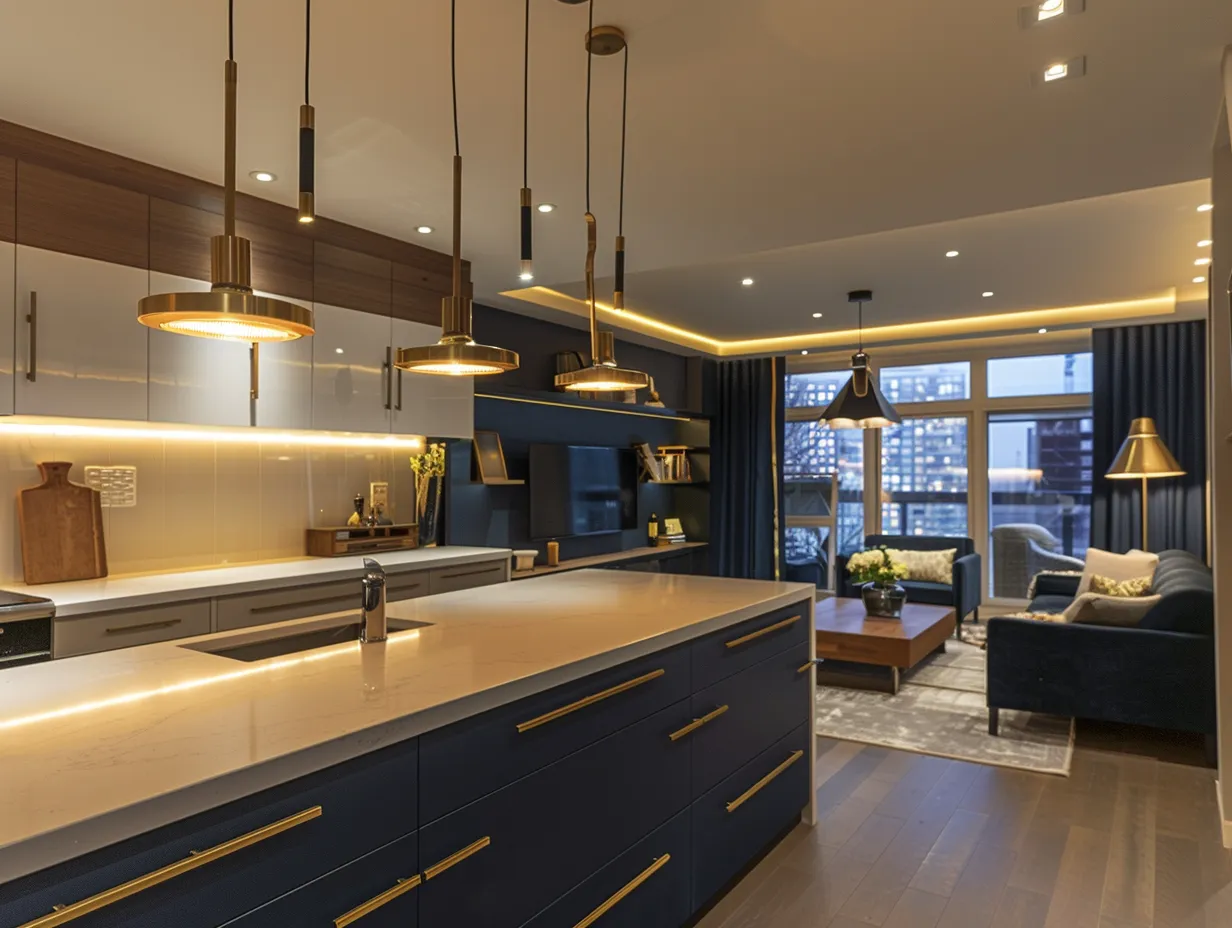
Modern kitchen wall tiles today mean porcelain, glazed ceramic, glass, stone or metal set in a clean band between the counter and the upper cabinets, and they remain the most practical finish for that wall. Most homeowners spend $600 to $1,500 on a tiled backsplash, with a national average near $1,000, and installed prices typically run $30 to $75 per square foot. Do they really beat paint behind a stove? Yes, because a glazed or porcelain face wipes clean after grease that would stain a painted wall. Budget for tile and labor together, since labor often decides the final number.
What makes kitchen tiles look modern is less the material than the format: bigger pieces, tighter joints, matte or handmade surfaces and one controlled pattern instead of three. The tile industry counts a piece as large format once any edge reaches 15 inches, and those sizes cut grout lines sharply compared with a small field tile. Contemporary kitchen tiles also lean on contrast in finish, matte beside gloss, more than on loud color. Pick the format first and the color second.
The sections below move from color, texture and grout to specific tile types, then finish with a price table that puts ceramic, porcelain, glass, stone and metal side by side. Each one names real price ranges and installation rules rather than mood words. Read the grout and layout sections before ordering, because both change how much tile you buy.
Quick Scan
- Installed backsplash tile runs about $30–$75 per sq ft; most kitchens land at $600–$1,500 in total.
- Porcelain absorbs 0.5% water or less, while standard ceramic sits above 0.5%.
- Large format starts at a 15-inch edge and needs a flatter wall than small tile.
- Herringbone and other angled layouts need about 20% extra tile for off-cuts.
- Epoxy grout never needs sealing, while cement grout needs resealing every 1–2 years.
- Glass mosaics usually use 1/16-inch joints, unsanded grout and white thinset.
- Hand-painted tile can reach $100 per sq ft, so use it as a panel, not a whole wall.
Picking Color for Modern Kitchen Wall Tiles
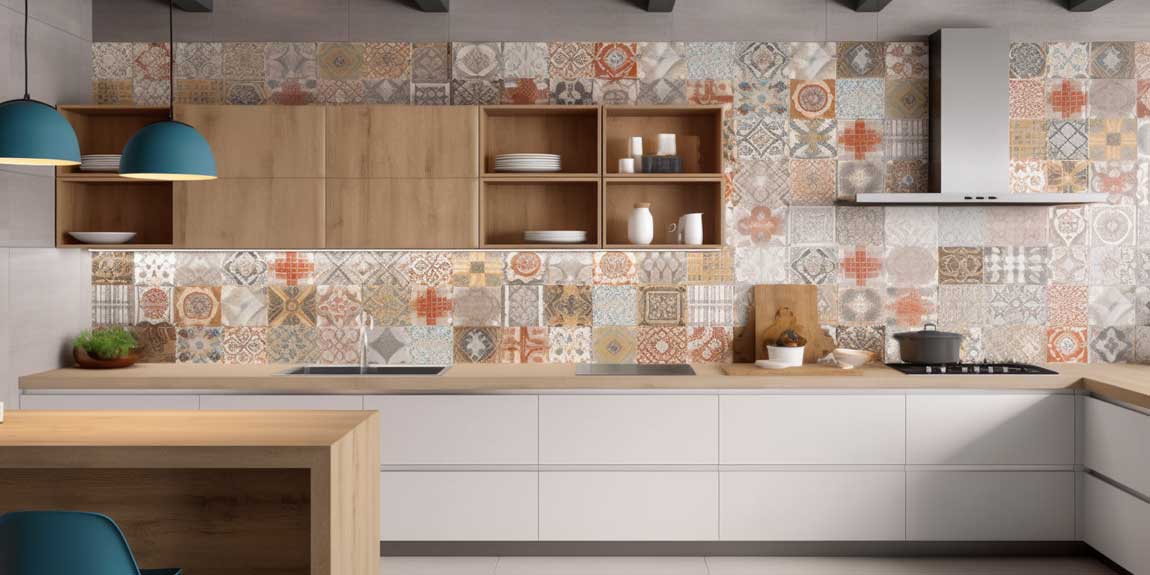
Color in modern kitchen wall tiles works best when it follows the light the room already gets, not the swatch on a showroom board. Paint and finish scales rate whites at a light reflectance value of roughly 82–94, so a pale glazed tile sends back more than four-fifths of the light that hits it, while charcoal tones around LRV 10–20 swallow most of it. That gap explains why a deep green backsplash looks rich in a sunny kitchen and like a cave wall in a north-facing one. Is a bold color risky in a small kitchen? Only when it covers every wall, so keep saturated tile to the 18-inch band between counter and cabinets.
Tone-on-tone schemes are the quiet trend in contemporary kitchen tile designs: sage tile with sage grout, or warm white tile against warm white cabinets. Compare that with white tile and black grout, which reads graphic from across the room like a sheet of graph paper. Don’t choose color under showroom lighting alone, since cool store light flattens warm undertones. Tape a sample board to the actual wall and live with it for 48 hours before ordering.

Texture Adds Depth Without Adding Color
Textured kitchen wall tiles give a plain palette depth, because raised glaze, ribbing or a handmade wave catches side light the way ripples catch sun on a pond. Machine-made ceramic typically costs $2 to $20 per square foot, while handmade pieces with visible surface movement start around $20 to $30, so texture usually raises the material bill. Is the extra cost worth it? On a focal wall it often is, since texture across 15–20 square feet changes the whole room for a few hundred dollars more.
Deep relief has one weak spot: directly behind a cooktop it traps grease in every groove. A flat-faced tile wipes clean in one pass, while a fluted profile needs a brush and patience. Don’t put heavily sculpted tile inside the splash zone of the range. Save it for the sink wall or a coffee corner, and pair it with a matte counter so the two surfaces don’t compete.

Contemporary Kitchen Tiles and the Rule of Proportion
Contemporary kitchen tiles look balanced when the backsplash plays one clear role against cabinets, counters and floor instead of fighting all three. A typical backsplash covers the roughly 18-inch strip between counter and upper cabinets plus the wall behind the cooktop, often 15 to 20 square feet in total. That small area works like a tie on a suit: one bold choice reads confident, while bold tie, bold shirt and bold jacket read as noise. Decide which surface leads, then let the tile follow it or lead alone.
Busy veined counters usually call for a calm tile, while a plain quartz top leaves room for pattern on the wall. Compare a marble-look slab under a patterned encaustic tile with the same slab under a solid matte tile: the second version keeps the veining as the star. Can tile run to the ceiling? It can, and full-height tiling makes the wall read as one surface, though it needs roughly three times the tile of an 18-inch band. Don’t choose tile, counter and floor on three separate shopping trips; lay all samples on one table.

Greener Tile Choices That Hold Up in a Kitchen
Sustainable kitchen wall tiles have moved from niche to standard catalog item, and recycled glass leads the category. Manufacturers report that a recycled glass tile takes roughly half the energy of an equivalent ceramic tile to produce, and some mosaic lines contain up to 98% post-consumer glass. Prices start near $24 per square foot for a 60% recycled line and reach $40–$70 for premium ranges, so eco content costs more than basic ceramic. The brand-by-brand numbers sit in this recycled glass tile backsplash breakdown of prices, recycled content and install rules. Ask for a product sheet with a stated recycled percentage before you order.
Is every eco claim equal? No, because “eco-friendly manufacturing” can describe a factory process rather than what the tile is made of. A tile body with a documented 60% recycled content is a measurable choice, while a vague green label is just a slogan on a box. Durability counts too, the way one good cast-iron pan beats three cheap nonstick ones. Don’t apply stone sealer to glass faces, since it leaves a haze; seal only the grout.

Custom Layouts Give Standard Tile a Signature Look
A custom modern kitchen tile design rarely needs custom tile; it needs a custom plan for ordinary pieces. Mixing two colors of the same machine-made tile at $2 to $20 per square foot gives a bespoke result, while commissioned hand-painted pieces can reach about $100 per square foot. Think of it as a tailor altering an off-the-rack suit rather than weaving new cloth. Draw the pattern to scale on graph paper before buying a single box.
Setting the tile yourself saves roughly $10 to $15 per square foot in labor, which on a 20-square-foot backsplash means $200 to $300 kept. Adhesive tile mats add about $2 per square foot but remove the mixing and the wait for thinset. Should a first-timer try a complex custom pattern? Keep a first DIY job to a straight or stacked layout and hire out anything with angled cuts. Don’t improvise the pattern on the wall mid-install; dry-lay the full run on the counter first.

Grout Choices That Make or Break Modern Kitchen Wall Tiles
Grout decides whether modern kitchen tiling looks crisp or tired after two years, so it deserves as much thought as the tile. Joints of 1/8 inch or less take unsanded grout, while wider joints need sanded grout to resist shrinkage cracks. Cement grout is porous and typically needs resealing every 1–2 years, while epoxy grout needs no sealing at all. Which one belongs behind a stove? Epoxy, because grease and tomato sauce stain cement joints the way coffee stains a white mug.
Epoxy costs more, as much as $8 per pound versus $1 to $2 for cement-based grout, and it sets fast enough to punish slow cleanup. Matching grout to tile makes a wall read as one field, while contrasting grout outlines every piece like a pencil sketch. Don’t choose bright white cement grout for a cooking wall unless scrubbing is a hobby. A grout one shade darker than the tile is the easiest to live with day to day.

Herringbone, Stacked and Offset Layouts Compared
Layout is the cheapest way to change how kitchen wall tiles read, since one box of rectangles can look classic, modern or busy. A stacked grid feels architectural and calm, an offset brick feels familiar, and herringbone or chevron adds motion. Angled layouts carry a hidden cost of about 20% extra material for off-cuts. On a 20-square-foot backsplash, that means ordering 24 square feet instead of 20.
- Stacked grid, vertical or horizontal: lowest waste and the most modern read.
- Half offset: the classic brick look, simple for a first DIY job.
- One-third offset: a softer rhythm that suits long, slim tiles.
- Herringbone: about 20% extra tile, many more cuts and higher labor.
- Chevron: needs pre-angled tiles and reads as a bold pattern.
Is vertical stacking just a passing fad? It has staying power because vertical lines make a wall feel taller, much like pinstripes on a suit. Herringbone on a short backsplash crowded with outlets turns into a puzzle of angled cuts around every cover plate. Don’t pay for a busy layout where appliances will hide half of it. Put the most complex pattern on the largest uninterrupted wall.

Hand-Painted Panels Turn a Backsplash Into Art
Aesthetic kitchen wall tiles with painted motifs work best as a framed panel rather than wall-to-wall pattern. Intricate hand-painted ceramic can cost up to $100 per square foot, so a 6-square-foot panel behind the range runs about $600 in material, compared with about $2,000 for the same tile across a 20-square-foot wall. A plain field tile around the panel acts like the mat around a framed print. Center the panel on the hood and size it to the cooktop width.
Murals built from several tiles need a numbered layout drawing, because one piece out of order breaks the image. Should the art follow a food theme? Not necessarily, since abstract or botanical designs usually age better than lemons and roosters. Don’t place a painted panel where a toaster or knife block will cover half of it. Keep the central motif clear of everything that lives on the counter.

Porcelain or Ceramic for a Hard-Working Kitchen
Choosing modern kitchen wall tiles for real daily cooking starts with the body of the tile. Porcelain absorbs 0.5% water or less, while standard ceramic sits above 0.5% and many wall ceramics fall in the 3–7% range, so porcelain resists stains better where steam and grease collect. Ceramic is softer, lighter and easier to cut, which suits walls and DIY projects. Is porcelain always worth it on a wall? Behind a busy range yes, while on a dry coffee-bar wall ceramic does the job for less.
Labels can mislead: in lab testing, the North American tile council found 305 of 1,274 tile series sold as porcelain absorbing well over 0.5%. The difference can’t be seen by eye, any more than you can see the octane rating in a tank of fuel. Don’t pay a porcelain premium without a spec sheet listing water absorption. Ask the seller for test data before checkout.

Lighting That Shows Tile at Its Best
Lighting changes kitchen wall tiles more than most people expect, since glaze, texture and grout all depend on where the light lands. Kitchen lighting guides put task light over counters at 3000K to 4000K and warmer 2700K to 3000K light over islands and seating. Under-cabinet strips graze the tile face, so texture pops and every uneven edge shows, while ceiling cans flatten the wall. Do glossy tiles create glare under strips? Bare LED dots reflect as bright spots, so choose a strip with a diffusing lens.
Grazing light explains why large and handmade tiles are judged so differently: a slight lip between pieces looks like a ledge under a strip light, the way low sun exaggerates bumps on a road. Matte tile softens that sideways light, while gloss bounces it back. Don’t finalize under-cabinet lighting before testing it on a sample board. Keep one color temperature along the whole counter run.

Geometric Shapes Lead Trending Kitchen Wall Tiles
Trending kitchen wall tiles keep moving toward shape rather than color, with hexagons, fish scales, elongated diamonds and arches replacing plain squares. Those shapes cost more to install, because every edge row needs cuts and angled patterns add about 20% material for waste. Small geometric glass mosaics usually ship on sheets with 1/16-inch joints, which calls for unsanded grout. Are geometric tiles just a fad? Simple hexagons and diamonds age gracefully, while hyper-specific novelty shapes date faster.
A single shape in one color reads modern and calm, like a honeycomb seen from a distance, while three colors in random order tire the eye quickly. Kitchen tile trends reward restraint more than novelty. Don’t combine a geometric wall with a patterned floor in the same sightline. Choose one geometric surface per room and keep the rest plain.

Subway Tile Still Earns Its Place in Modern Kitchens
Subway tile stays central to modern kitchen tile design because it is cheap, easy to install and endlessly adjustable through layout and finish. Machine-made ceramic subway tile typically costs $2 to $20 per square foot, and installed ceramic work generally runs $11 to $60 per square foot depending on labor and pattern. What makes subway look current rather than dated? Long, slim formats, stacked vertical layouts and handmade-look glazes, compared with the standard horizontal brick in bright white gloss.
White subway behaves differently in warm and cool rooms, and this comparison of creamy versus bright white kitchen palettes shows why one glaze can look fresh or flat. A cream glaze softens against wood cabinets, while a stark white sharpens against black hardware, like a white shirt under a navy jacket. Don’t assume all whites match, because tile whites and paint whites rarely line up. Hold the tile against a cabinet door before buying.

Marble and Stone Bring Weight to the Wall
Marble and natural stone wall tiles cost about $3 to $50 per square foot as tile, while a full slab backsplash starts around $50 and can reach $200 per square foot. Stone installed as tile typically lands between $15 and $65 per square foot. Tile versus slab is the core trade-off: tile has grout lines and costs less, while a slab shows one continuous vein, like a single page versus a torn stack. Choose a slab mainly when the counter is the same stone.
Is marble practical next to a stove? Polished marble etches from acids like lemon juice and wine, so a honed finish or a porcelain marble-look tile is the safer pick behind the range. Porcelain lookalikes cost $3 to $30 per square foot and skip the sealing routine. Don’t seal real stone once and forget it. Drip water on the surface every few months and reseal when it darkens.

Metal Finishes for Kitchens That Want an Edge
Metallic kitchen wall tiles in stainless steel, copper or brass add a commercial-kitchen edge in a small dose. Stainless runs about $20 to $30 per square foot as material, other metal sheets about $20 to $25, and installed metal backsplashes typically cost $20 to $50 per square foot. Stainless versus copper is mostly a care question: stainless stays steady, while copper darkens into a patina like an old penny. Pick copper only if that aged look appeals to you.
Soft metals have limits, and aluminum should stay away from the cooktop because heat can damage it. Brushed finishes hide fingerprints far better than mirror polish. Does metal suit a small kitchen? In a strip yes, but a whole metal wall reflects every bit of clutter back into the room. Use metal as a band behind the range and tile the rest.

Large Format Panels Cut the Grout Lines
Large format kitchen wall tiles are defined by the tile industry as any piece with an edge of 15 inches or more, and they suit modern kitchens because fewer joints mean less to clean. A 24-by-48-inch panel covers 8 square feet in one piece, compared with 64 pieces of 3-by-6-inch subway tile for the same area. The trade-off is flatness: installers aim to keep the edge lip between pieces within about 1/32 inch, often with leveling clips. Can big tiles work on a short backsplash? Yes, and they make the wall read wider, like one large window versus a row of small panes.
Large tile also needs full mortar contact, around 80% coverage in dry areas and 95% in wet ones under industry standards, which means back-buttering each piece. Porcelain in big formats costs $3 to $30 per square foot, but labor rises with size and weight; this national kitchen backsplash cost guide by material shows how installed prices stack up. Don’t hire an installer who has never set large format; ask for photos of past jobs. Plan the layout so the cut pieces at both ends match in width.

Mosaics Fit Curves, Niches and Tight Spots
Mosaic kitchen wall tiles come on mesh or paper-faced sheets, and their small scale lets them wrap curves, niches and window returns that large tile can’t handle. Glass mosaics cost about $10 to $50 per square foot, and most glass sheets are set with 1/16-inch joints. Paper-faced glass costs more in labor, because the paper must be soaked off and every joint checked. Is glass a good pick behind a stove? Yes, since glass doesn’t absorb moisture, but it needs white thinset so gray adhesive doesn’t show through.
Mosaics work like pixels on a screen: from across the room they blend into one color, up close every piece shows. That charm comes with a cleaning cost, since a small mosaic carries far more grout per square foot than a 12-inch tile. Don’t cover an entire backsplash in tiny mosaic if you cook daily. Use it as a band or a niche lining and pair it with epoxy grout.

Mixing Materials Without Making a Mess
Mixed-material kitchen walls combine two surfaces, such as porcelain with a metal strip or stone with glass, into one planned composition. Porcelain that mimics wood, stone or metal costs $3 to $30 per square foot, which makes it an affordable partner for a pricier accent like a $20-to-$30 stainless panel. The idea works like a band: one lead instrument and supporting players, not three soloists. Limit the mix to two materials plus the counter.
Where materials meet, the transition decides whether the wall looks planned or patched. A metal trim or a clean vertical break at a cabinet edge reads intentional, while a ragged change mid-wall reads like a repair. Does each material need its own grout color? Use one grout across both when joint widths match, and switch only at a trim. Don’t place two different whites side by side, because each makes the other look dirty.

Handmade Tile Softens a Hard-Edged Kitchen
Handmade kitchen wall tiles, including zellige-style glazes and hand-pressed ceramic, bring color variation and soft edges that factory tile can’t copy. Handmade ceramic typically starts at $20 to $30 per square foot and can climb to $100 for intricate designs, compared with $2 to $20 for machine-made tile. The variation is the whole point, like hand-thrown pottery beside factory plates. Order every box in one batch and blend pieces from several boxes as you set them.
Is handmade tile practical to clean? The glaze wipes as easily as factory glaze, but irregular edges usually need joints wider than 1/8 inch, which means sanded grout. Forcing handmade pieces into razor-thin joints makes every wobble obvious. Don’t light a handmade wall with a harsh grazing strip that turns charm into unevenness. Light it from above and let the glaze glow.

Ranking the Best Modern Kitchen Wall Tiles by Price
The best modern kitchen wall tiles for a given home depend on budget, water exposure and how much cleaning you will tolerate, and the table puts the main options in one place. Prices are typical national ranges from industry cost guides, and local labor shifts them up or down. Compare installed cost rather than tile cost, since labor alone can add $10 to $15 per square foot. Use the last column to match each tile to the right spot.
| Tile type | Material price per sq ft | Installed price per sq ft | Water and care | Best spot |
|---|---|---|---|---|
| Machine-made ceramic | $2–$20 | $11–$60 | Absorbs above 0.5%; cement grout reseal every 1–2 years | Dry walls, budget backsplash |
| Porcelain | $3–$30 | Ceramic range, more for large format | 0.5% or less; verify spec sheet | Behind the range, large panels |
| Glass mosaic | $10–$50 | $20–$60 | Non-porous; 1/16-inch joints, white thinset | Bands, niches, curves |
| Recycled glass | About $24–$70 | Glass range plus labor | Non-porous; up to 98% recycled content | Eco-focused focal walls |
| Marble and stone tile | $3–$50 | $15–$65 | Porous; needs periodic sealing | Away from acid splashes |
| Stone slab | $50–$200 | $35–$200 | No grout lines; seal like the counter | Matching a stone counter |
| Stainless and metal | $20–$30 | $20–$50 | Non-porous; no aluminum near heat | Strip behind the cooktop |
| Handmade ceramic | $20–$100 | Material plus $10–$15 labor | Wider joints over 1/8 inch, sanded grout | Feature walls, sink wall |
Don’t Do This
- Don’t order the exact square footage for herringbone or chevron; add about 20% for off-cuts.
- Don’t put cement grout behind a busy range unless you will reseal it every 1–2 years; epoxy needs no sealing.
- Don’t trust a porcelain label without a spec sheet showing 0.5% water absorption or less.
- Don’t set tile with a 15-inch edge or longer on a wavy wall; the lip between pieces will show under lighting.
- Don’t use gray thinset under translucent glass, and don’t mount aluminum panels near the cooktop.

Where Your Tile Budget Should Go
For most kitchens, a porcelain or glazed ceramic field tile at $11 to $60 per square foot installed, paired with epoxy grout behind the range, outperforms a premium tile set with cheap cement grout. The tile face lasts for decades, while the grout is what ages first. Spend on the joint as carefully as on the tile.
Put the money where eyes land first, the 15 to 20 square feet behind the cooktop and sink. A 6-square-foot hand-painted or metal panel there costs a fraction of covering the whole wall in the same material. Keep the rest of the run calm and affordable.
Plan quantities before you shop. Add about 20% for angled layouts, check that large format pieces with a 15-inch edge have a flat wall to sit on, and confirm porcelain claims against a 0.5% absorption spec. Those three checks prevent most expensive surprises.
Test the finished look before committing. Tape samples to the wall for 48 hours and view them under 3000K to 4000K task light, since that is how the tile will look at dinner time. Buy only after the sample still looks right on day two.