Industrial wall decor built around metal is one of those choices that looks intentional no matter what else is in the room. I’ve rearranged three different living spaces around a single steel wall panel, and each time the surrounding furniture suddenly looked more considered. You’ll notice it fast: metal absorbs visual noise instead of adding to it. Industrial wall decor doesn’t demand a matching set — it anchors whatever you already own.
The range here is wider than most people expect. Rustic gears and pipe arrangements, geometric modern panels, and large-scale sculptural pieces for loft ceilings all fall under the industrial metal category. Each works differently depending on your wall size, your lighting, and whether you want warmth or edge. I’ll break down exactly which version does what — and which ones I’d skip.
Quick scan
- Rustic gears and pipes — best against exposed brick; adds warmth via contrast with leather and reclaimed wood
- Modern geometric panels — works in minimal, high-light rooms; matte black reads cleaner than polished chrome
- Loft-scale sculptural metal — needs ceiling height above 9 ft; brushed steel and copper outperform raw iron in longevity
- Bar and café wall displays — repurposed industrial tools, vintage signage, and pipe grids hit different from residential art
- Rustic industrial mix — reclaimed wood shelving combined with black metal brackets bridges the gap between cabin and warehouse
Gears and Pipes on Brick Do the Work Your Furniture Can’t
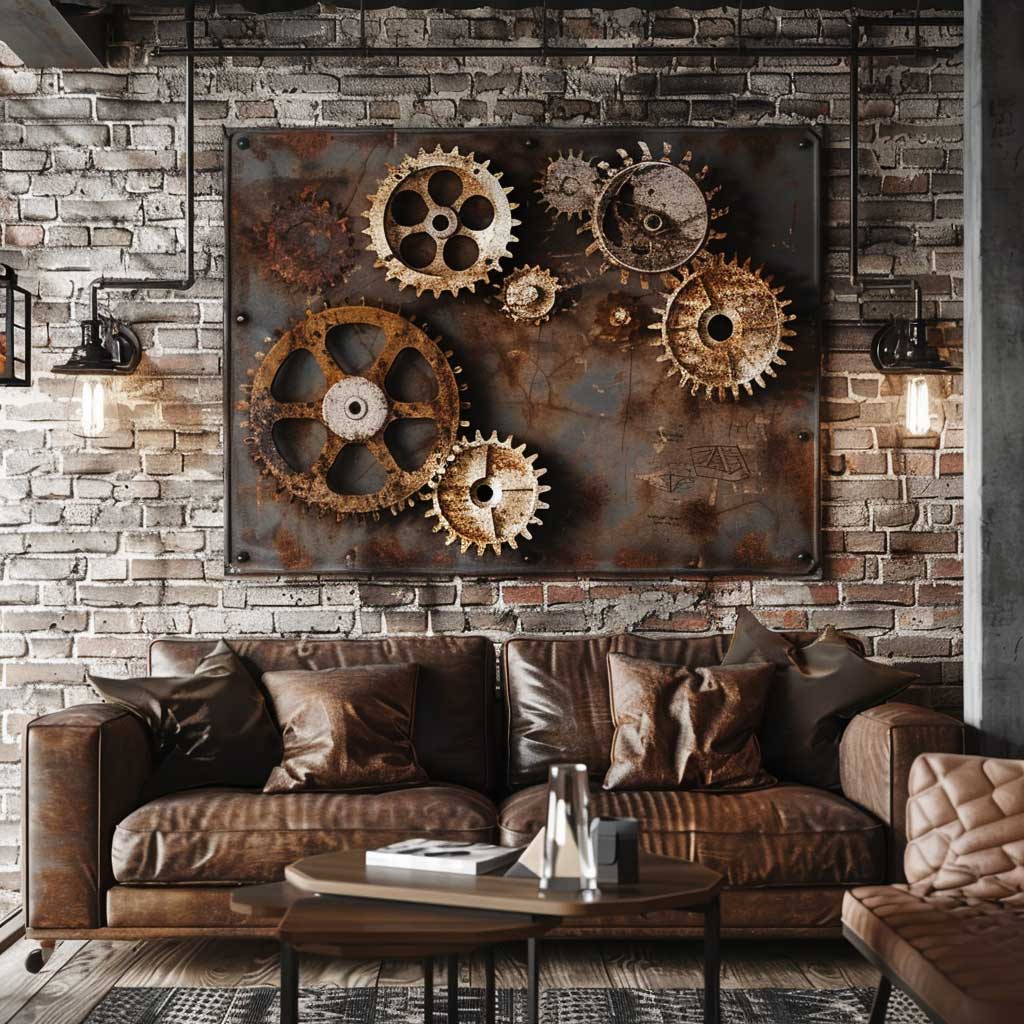
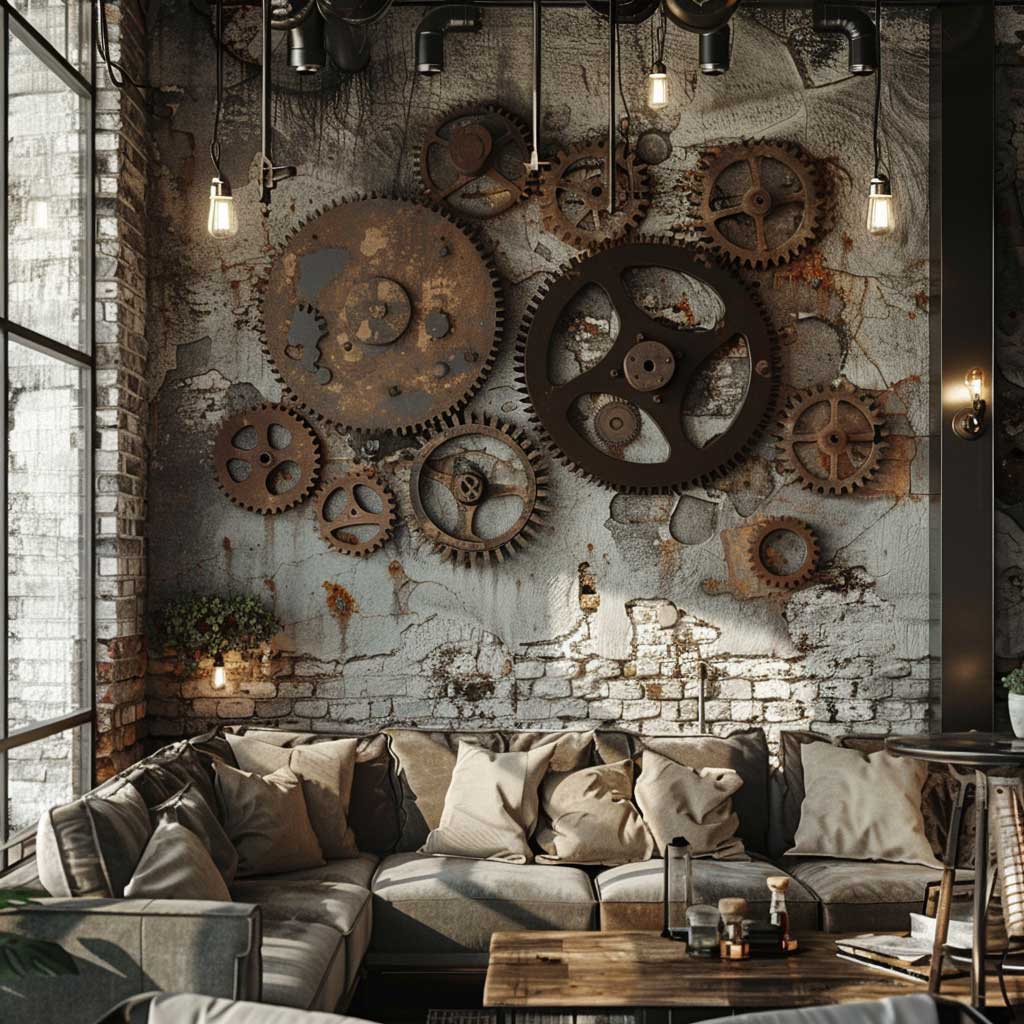
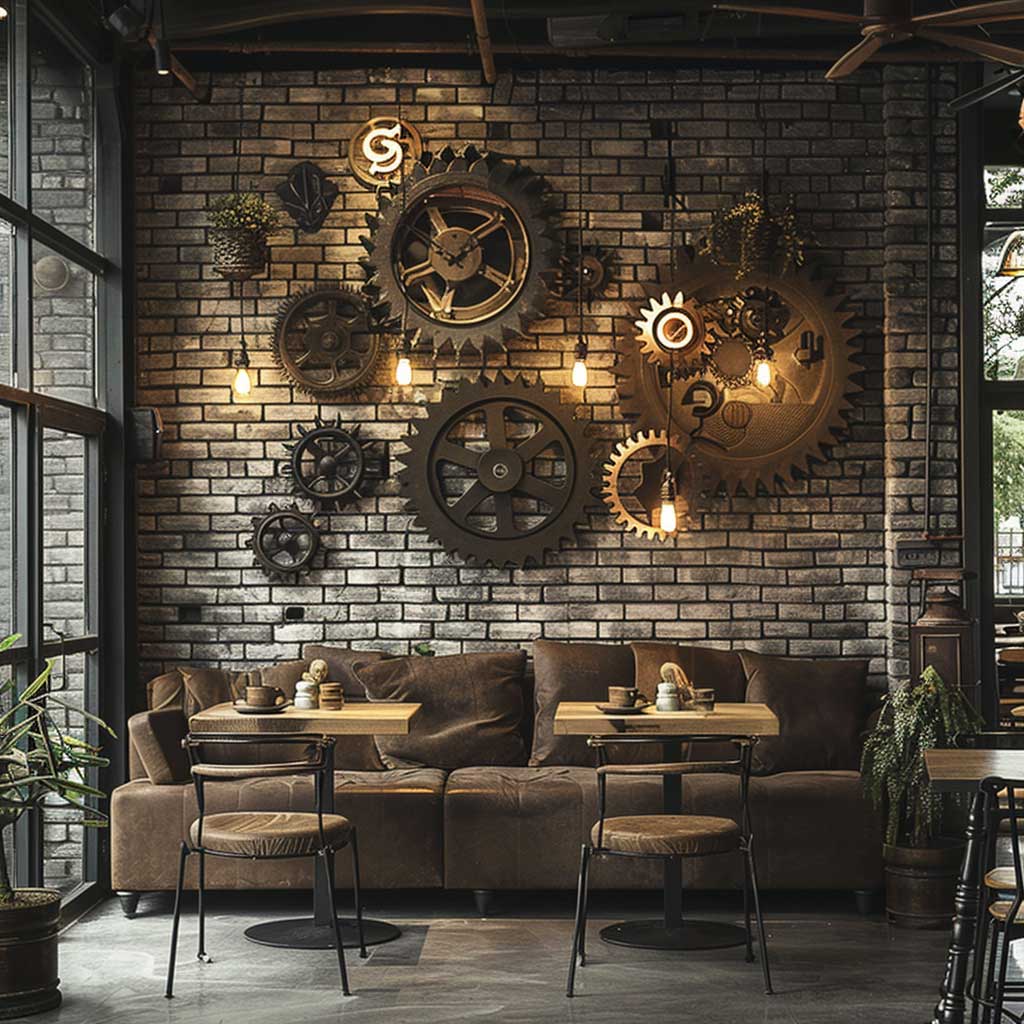

Think of exposed brick as the canvas that gears and pipes were always meant for. My go-to pairing is a cast-iron gear cluster mounted low and wide, about 18 inches above the sofa line, so the wall reads like a factory floor diagram instead of a random collection of hardware. You’ll notice that the ruggedness of raw iron against brick creates depth without needing any paint or wallpaper treatment. The contrast does the decorating for you.
Warm lighting is not optional here. I made the mistake once of pairing a pipe-and-gear wall with cool white LEDs — it looked like an IKEA showroom, not a factory. Amber-toned Edison bulbs at around 2700K pull out the rust and oxidation tones in the metal, which is exactly where all the visual interest lives. A $40 clip-on Feit Electric Edison bulb fixture mounted beside the arrangement changed everything.
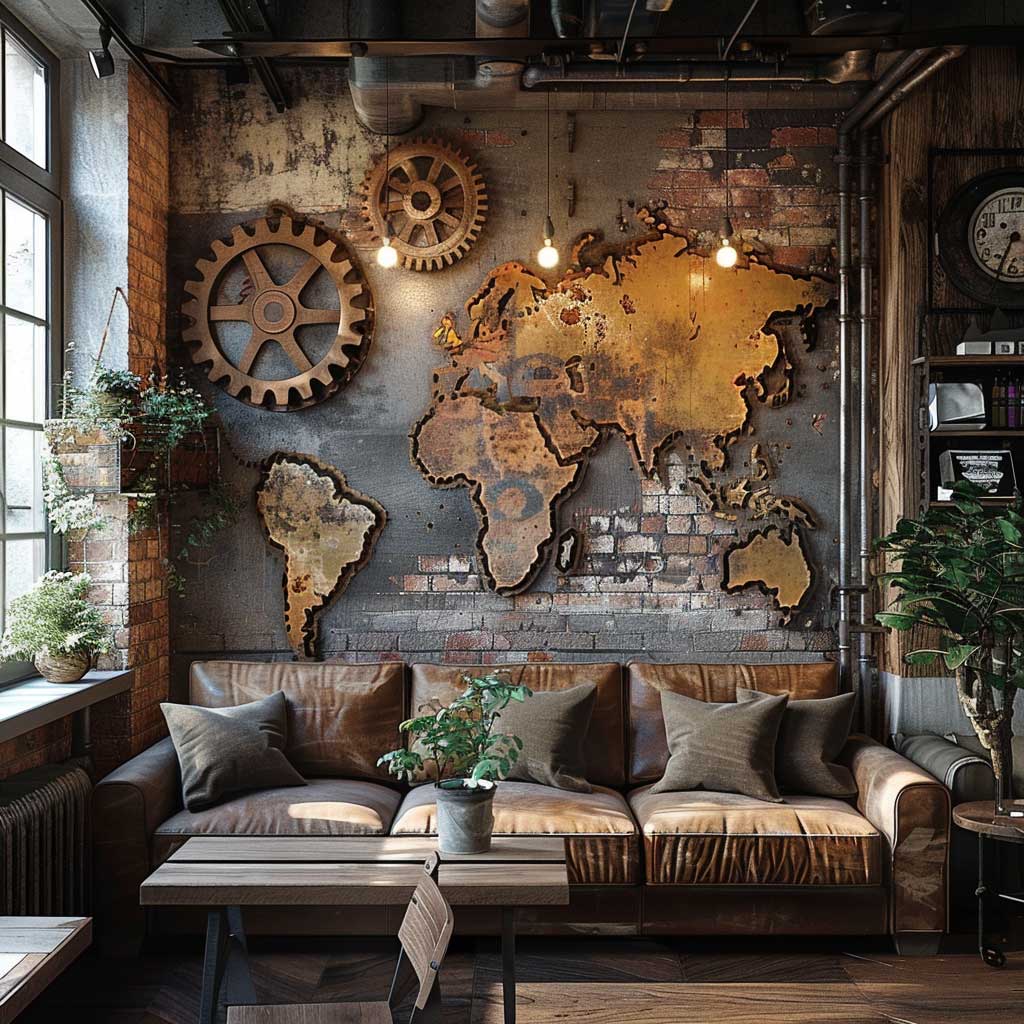
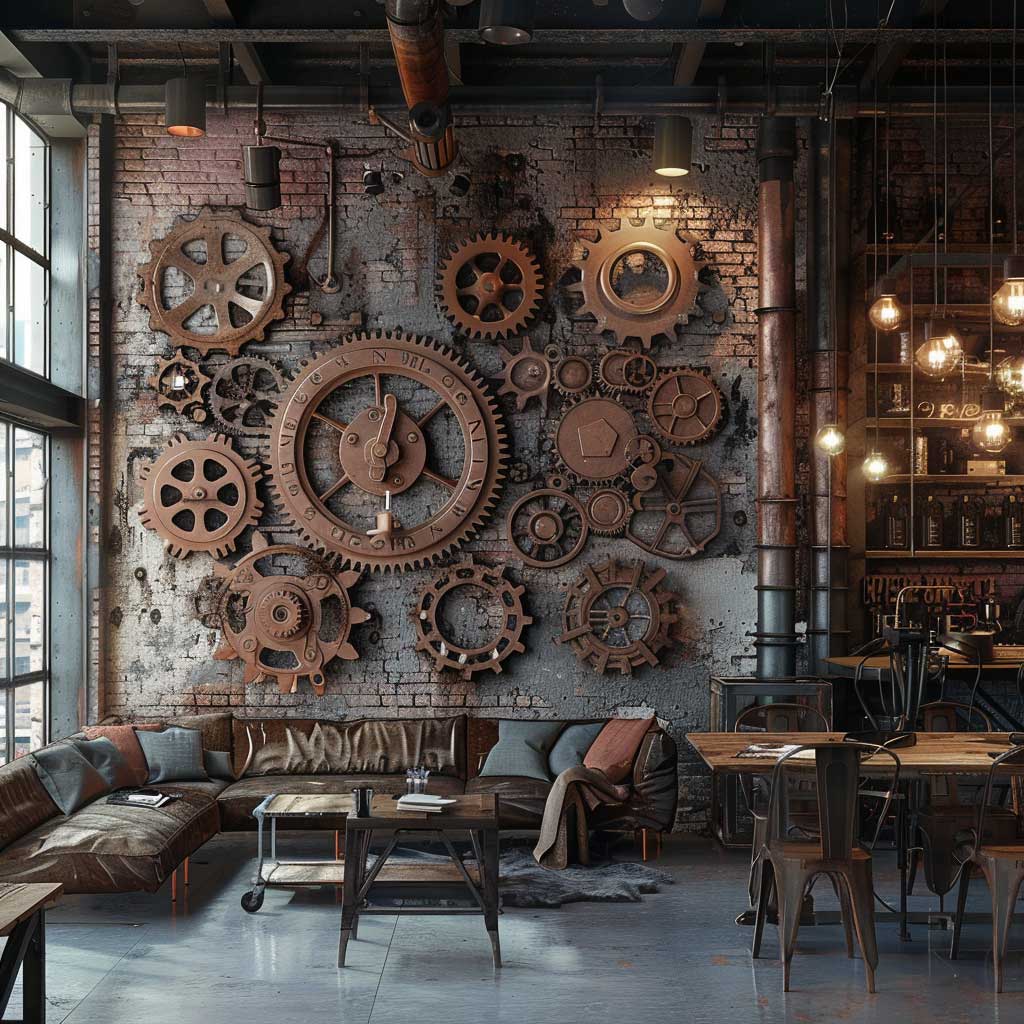
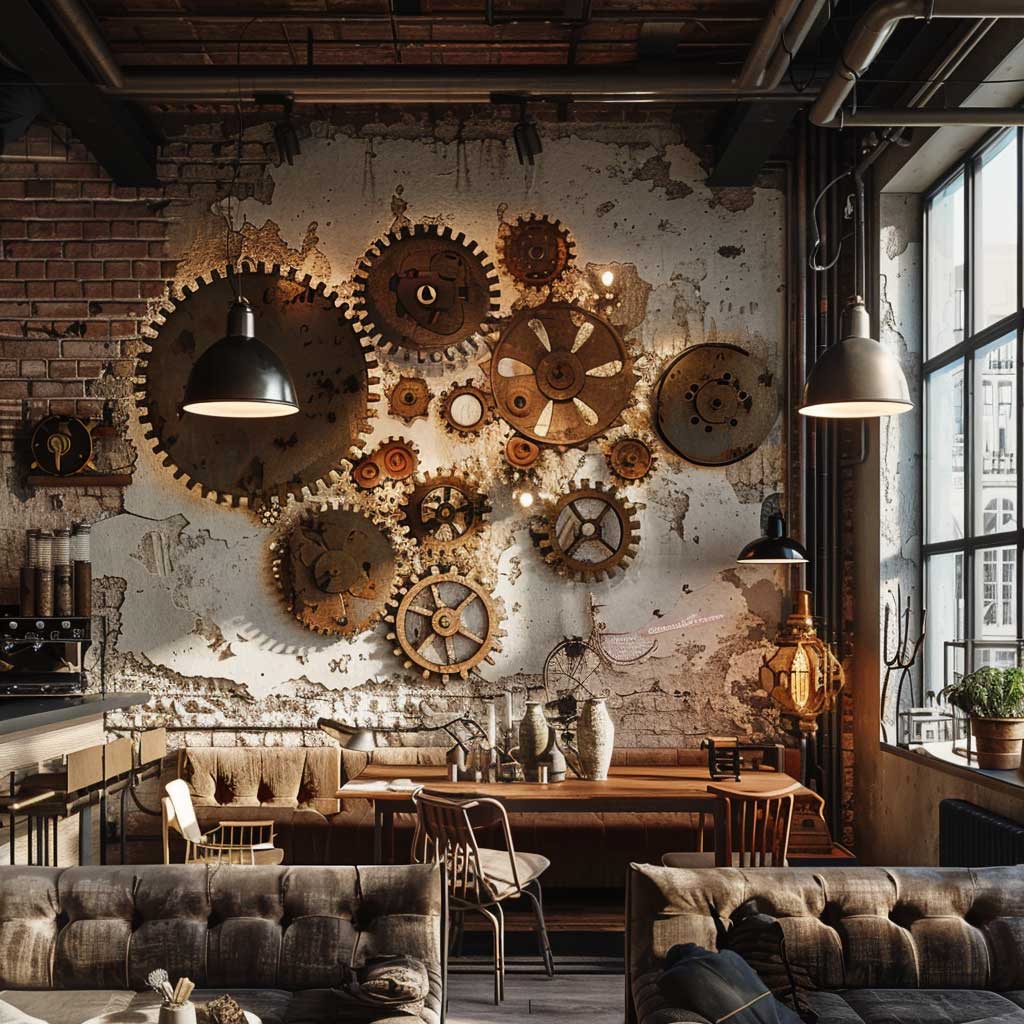
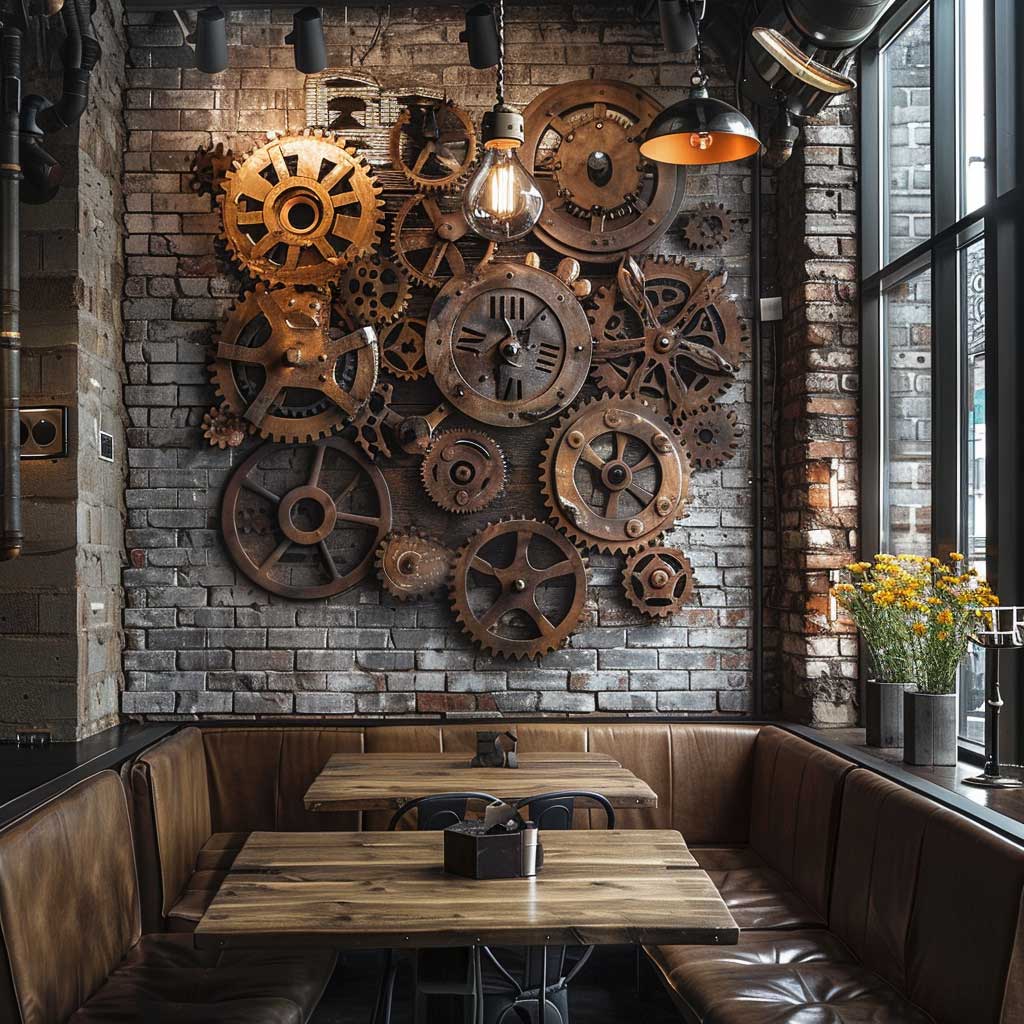
The wood-and-metal pairing that balances this style best is a reclaimed oak shelf on black iron pipe brackets running horizontally across the same wall. It breaks up the vertical density of the gear arrangement and gives the room something functional to point at. I stole this trick from a coffee shop in Kyiv that charges $8 for a flat white and somehow looks worth every cent. Worn leather nearby seals it — a cracked Chesterfield sofa underneath costs $300 used and pulls the whole composition into something coherent.
What doesn’t work here: symmetrical gear arrangements. Matching sets from AliExpress at $25 each look like a themed hotel lobby, not a personal space. Odd numbers, mismatched sizes, and at least one piece that’s genuinely old — even a $15 flea market find — break the pattern in the right direction. Asymmetry is the whole point of this style.
Don’t Do This
Avoid buying a pre-packaged “industrial gear wall set” from mass-market retailers. Sets like the Stratton Home Decor 3-piece gear collection ($89 at Target) are designed to look complete on their own — which means they read immediately as a single product, not a room. Real industrial wall displays look assembled over time. Mix one new cast-iron piece with one genuinely vintage find and one repurposed object, and the whole arrangement reads differently. Also skip polished chrome in this style. It belongs in a mid-century bathroom, not a gear wall.
Modern Metal Panels in Minimal Rooms Pull Focus Without Filling Space
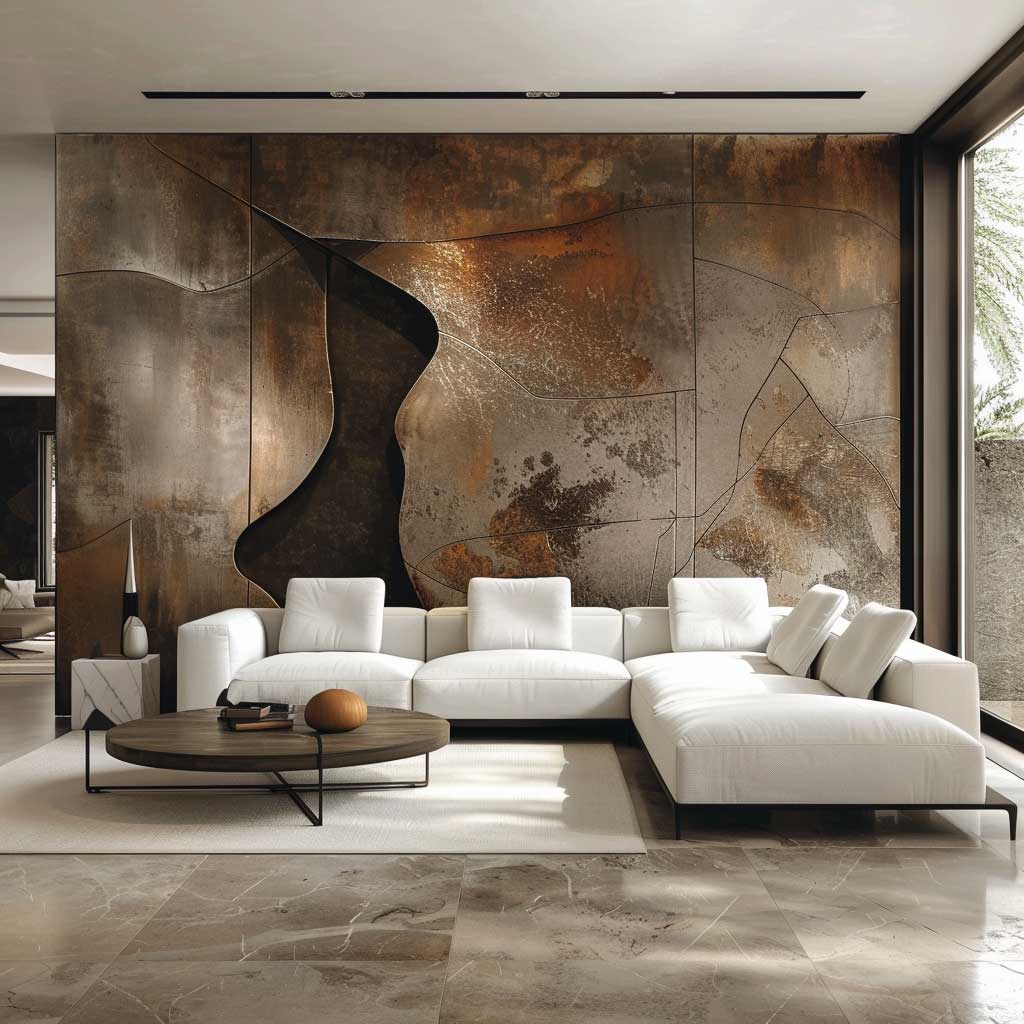
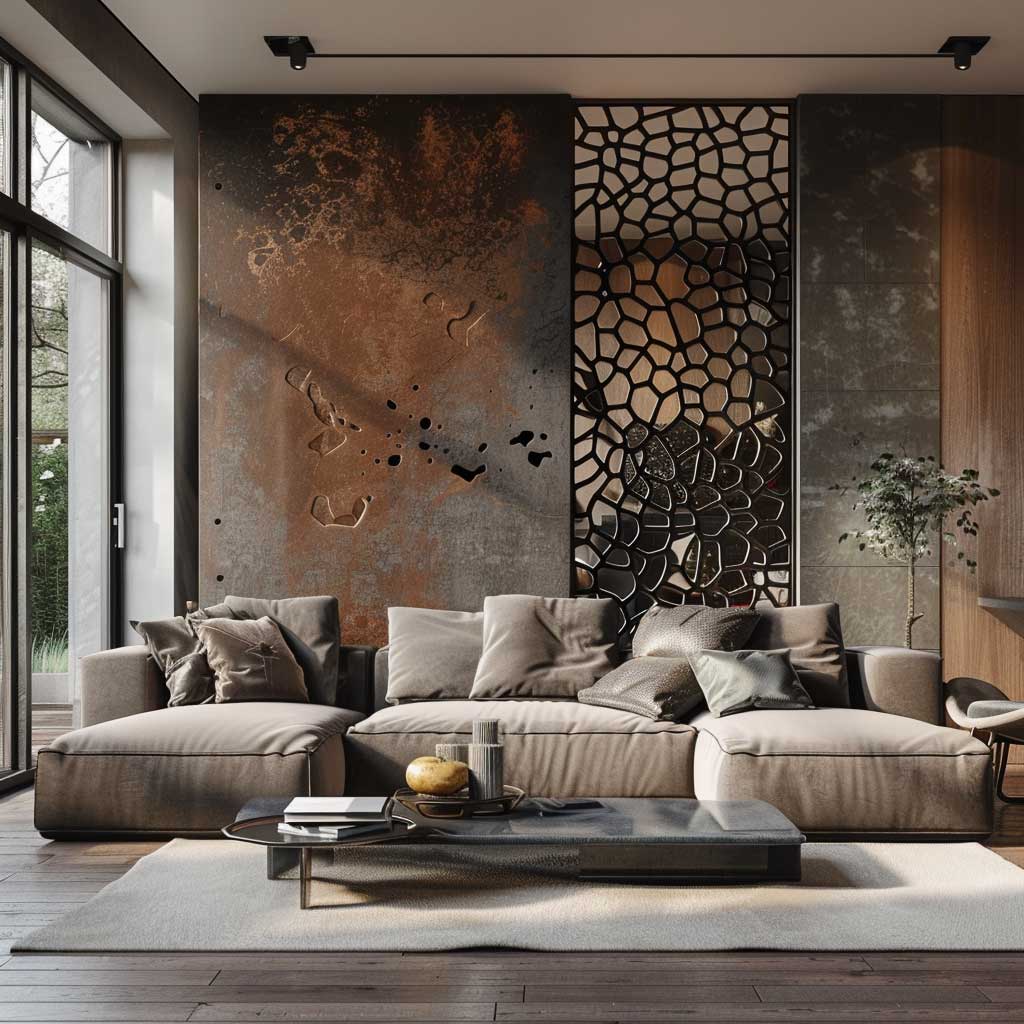
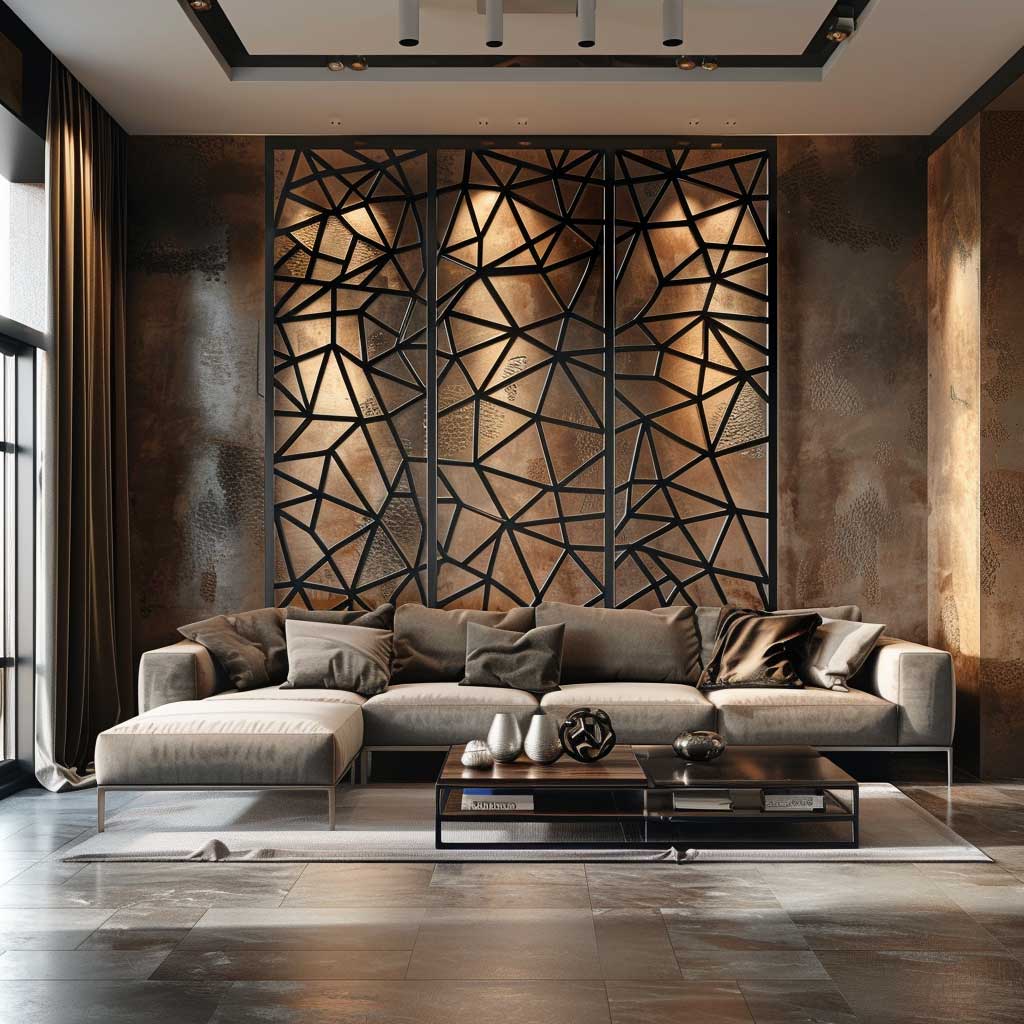
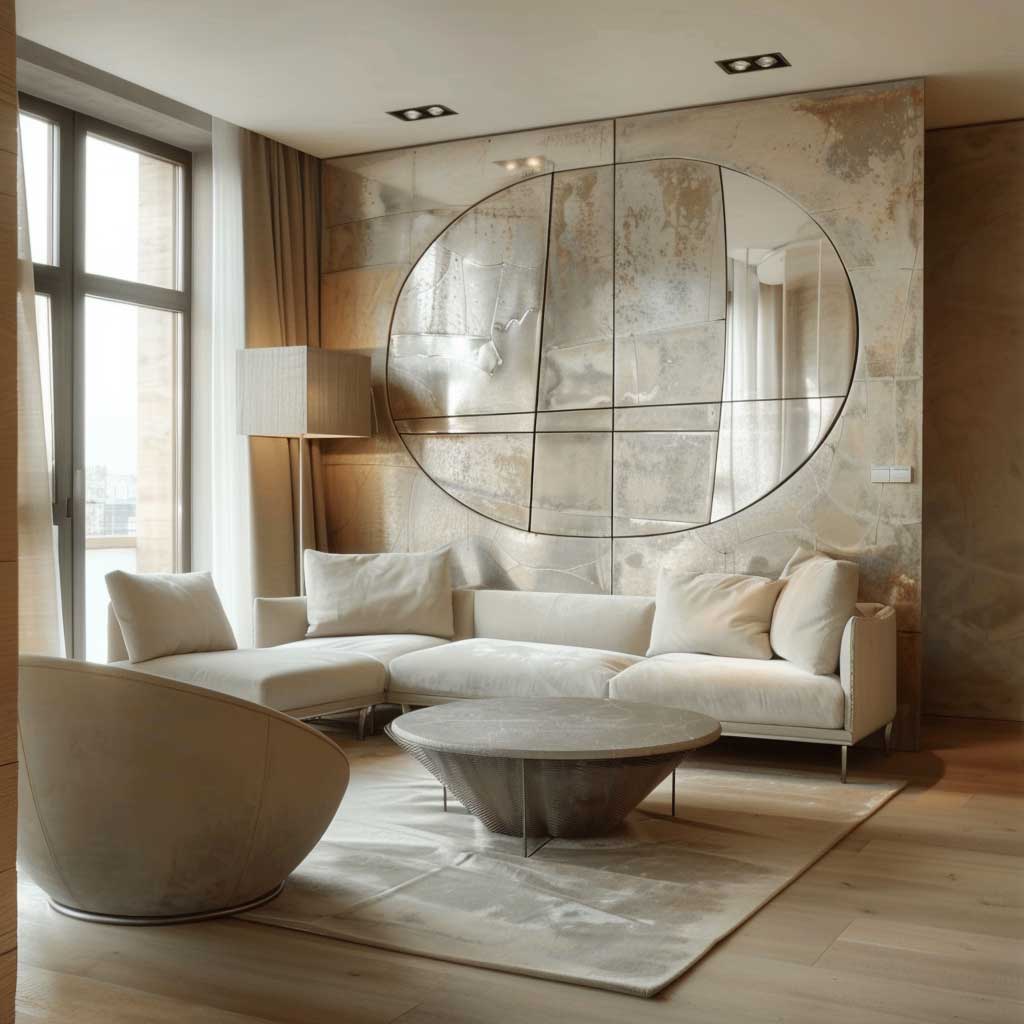
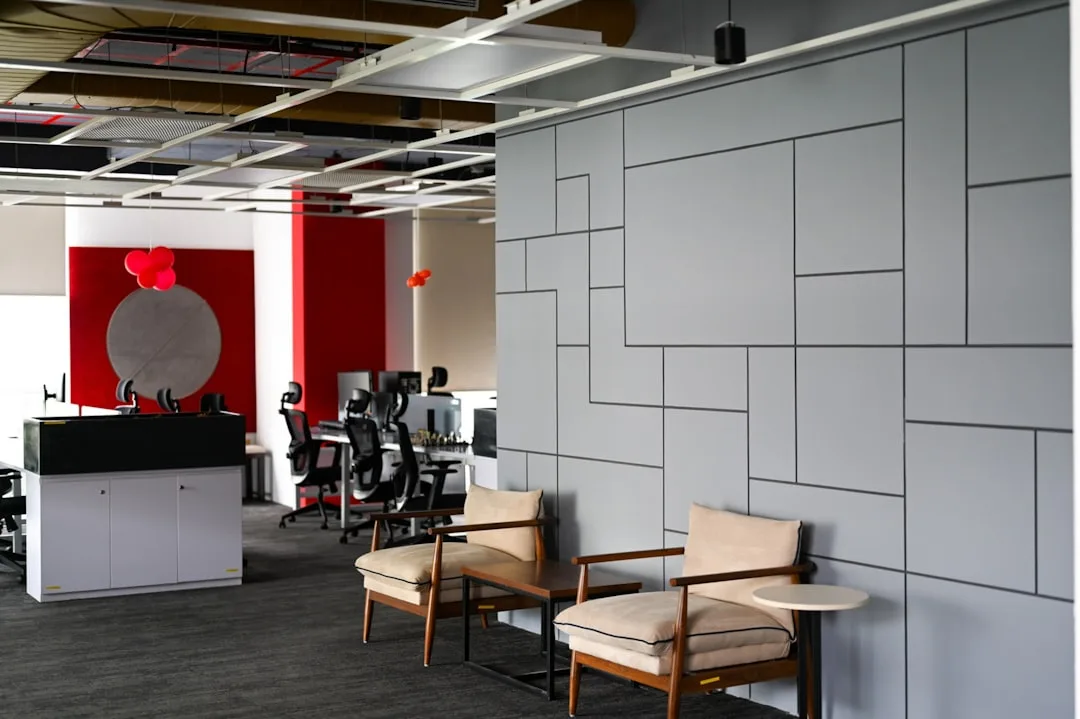
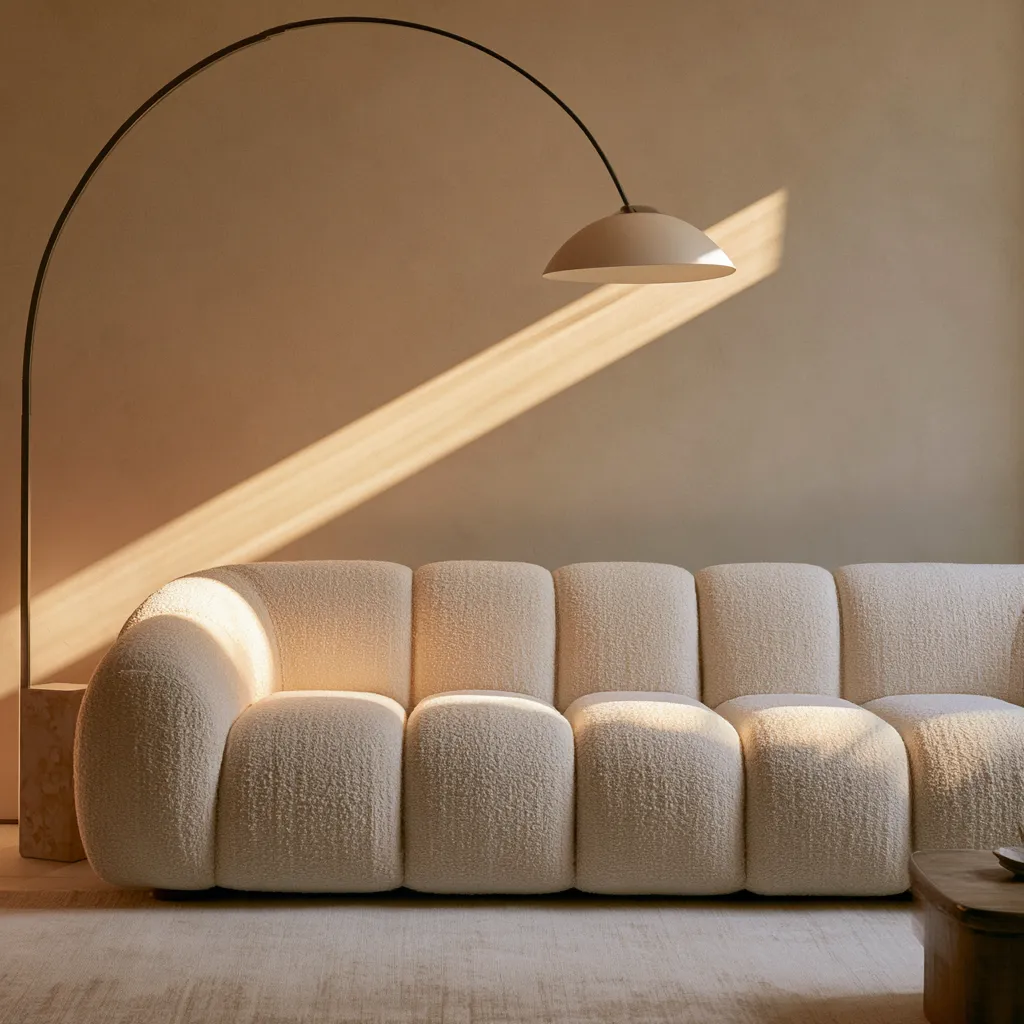
Modern industrial wall decor runs on contrast: cold material in a warm, neutral room. I own two oversized matte black steel panels — one abstract geometric cut from a local metalworks shop for around $180, one mass-produced Umbra piece at $65 — and the custom one wins every time because the proportions were cut to my specific wall. You’ll notice that off-the-shelf panels tend to be slightly too small for a wall that needs anchoring, so they float awkwardly rather than commanding the space they’re supposed to fill.
Natural light matters here more than in the rustic version. Flat matte panels absorb light, which works beautifully when sunlight is washing across from a large window — you get subtle shadows along the cut edges that shift through the day. In a dim north-facing room, the same panel disappears into the wall and looks like a dark smear. Add a directional track light aimed at a 45-degree angle to solve this: the Kichler Evoke LED track fixture at around $120 does this without requiring an electrician.
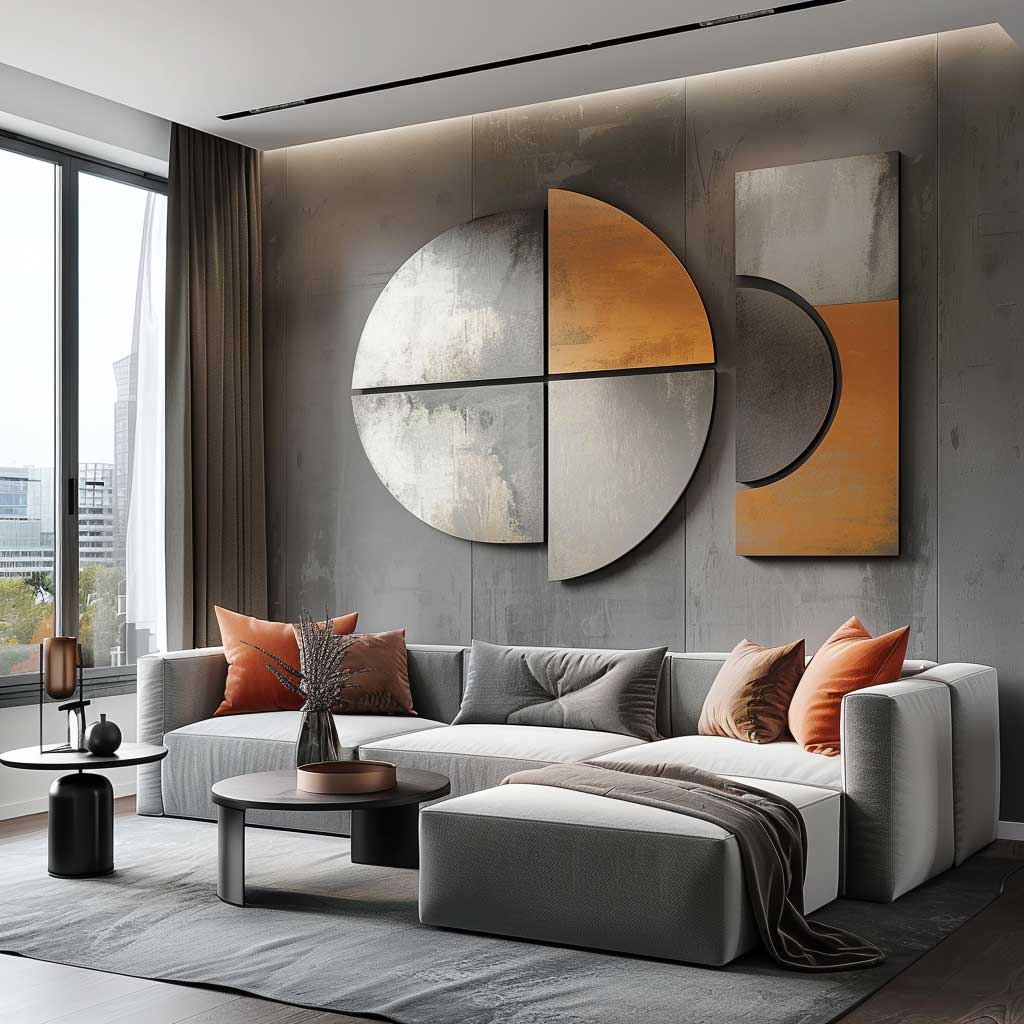
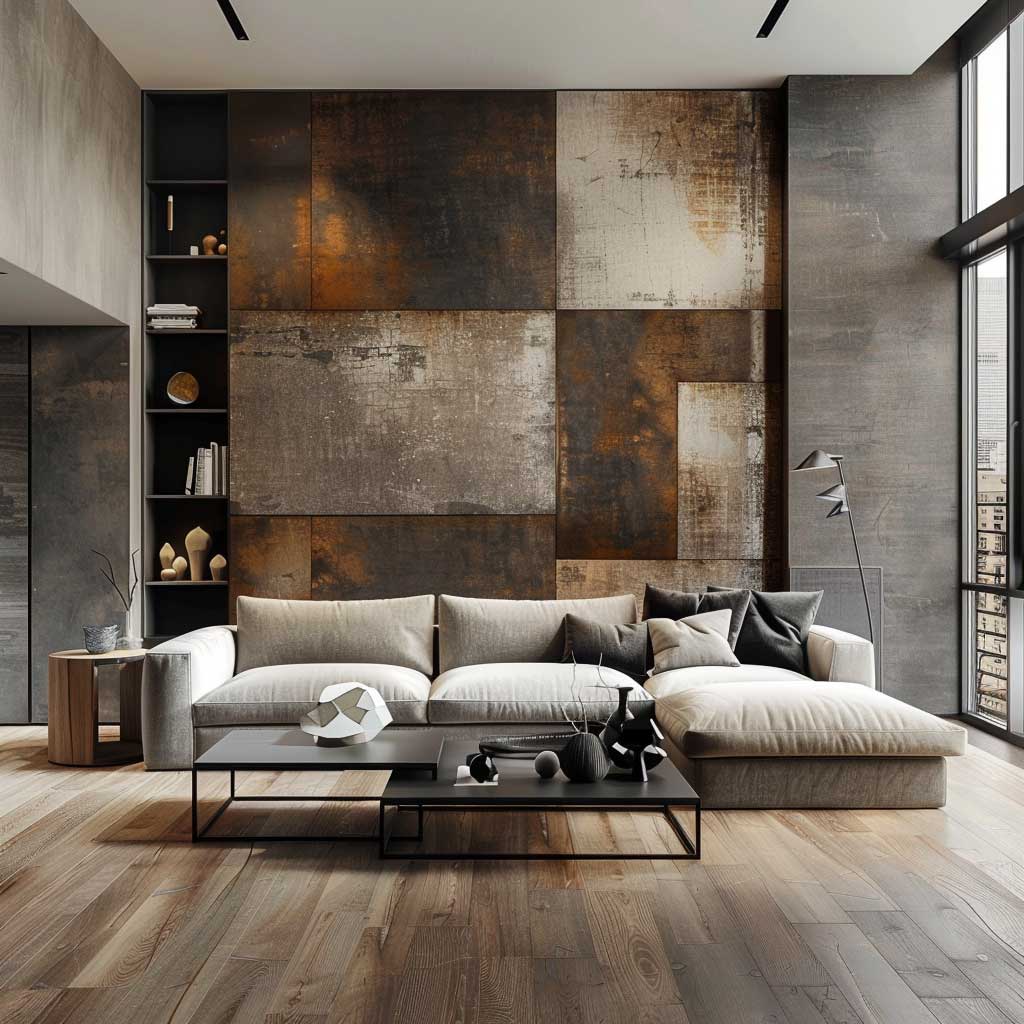
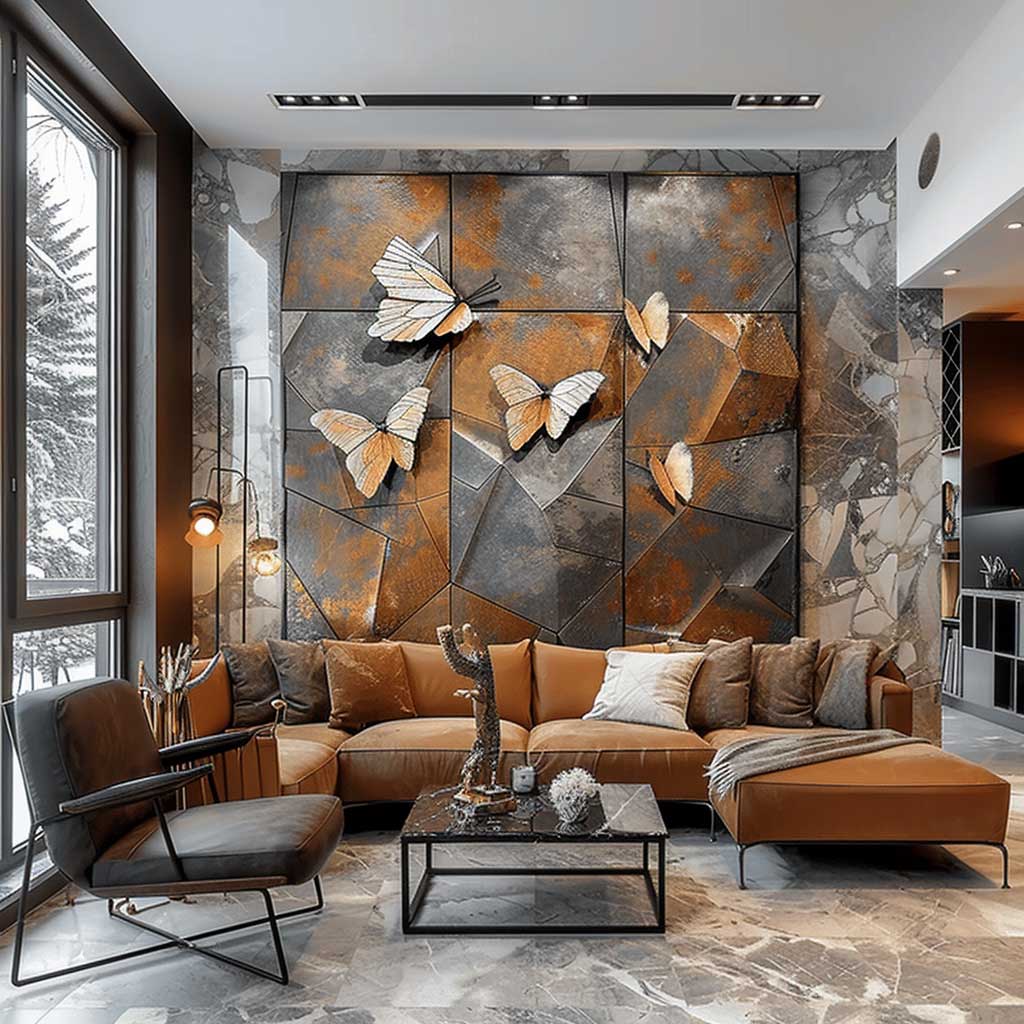
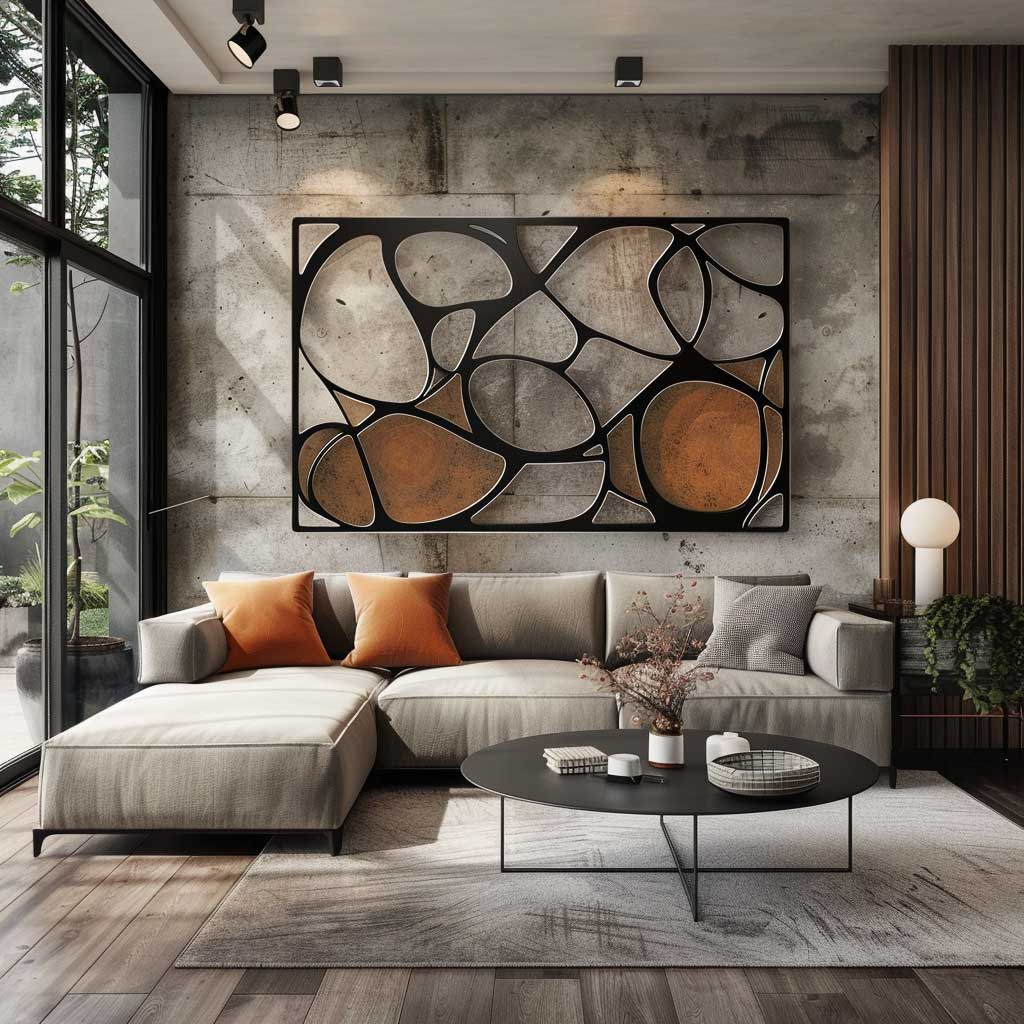
Color in the room should stay neutral when the metal panel is doing the visual work. A splash of personality is fine — one textile with a warm terracotta or olive — but anything saturated pulls the eye away from the steel and the arrangement looks like a fight between competing focal points. Modern industrial wall design is architecture, not decoration. Treat it like a built-in, not an accessory.
For bar owners and café designers who asked about unique wall displays: a grid of raw steel pipe in a 4×4 pattern, powder-coated matte black, gives you the industrial aesthetic without requiring actual art. Attach small rotational clips and swap seasonal prints, menus, or found objects. Total material cost runs about $200 for a 6-foot section. It reads cleaner than a gallery wall and photographs better for social media — which I know because this approach translates directly to urban office wall decor setups that need flexibility alongside a strong visual identity.
Loft Ceilings Change What Metal Wall Art Is Allowed to Do
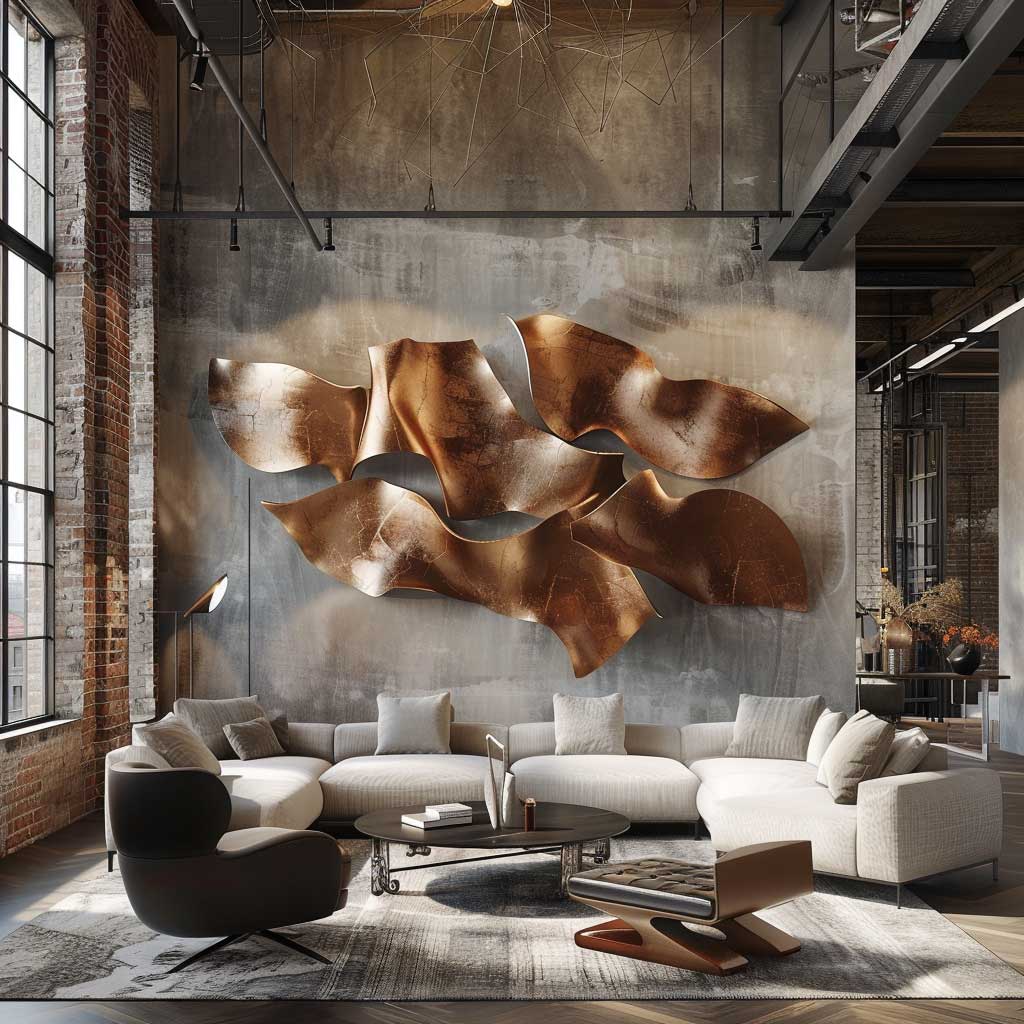
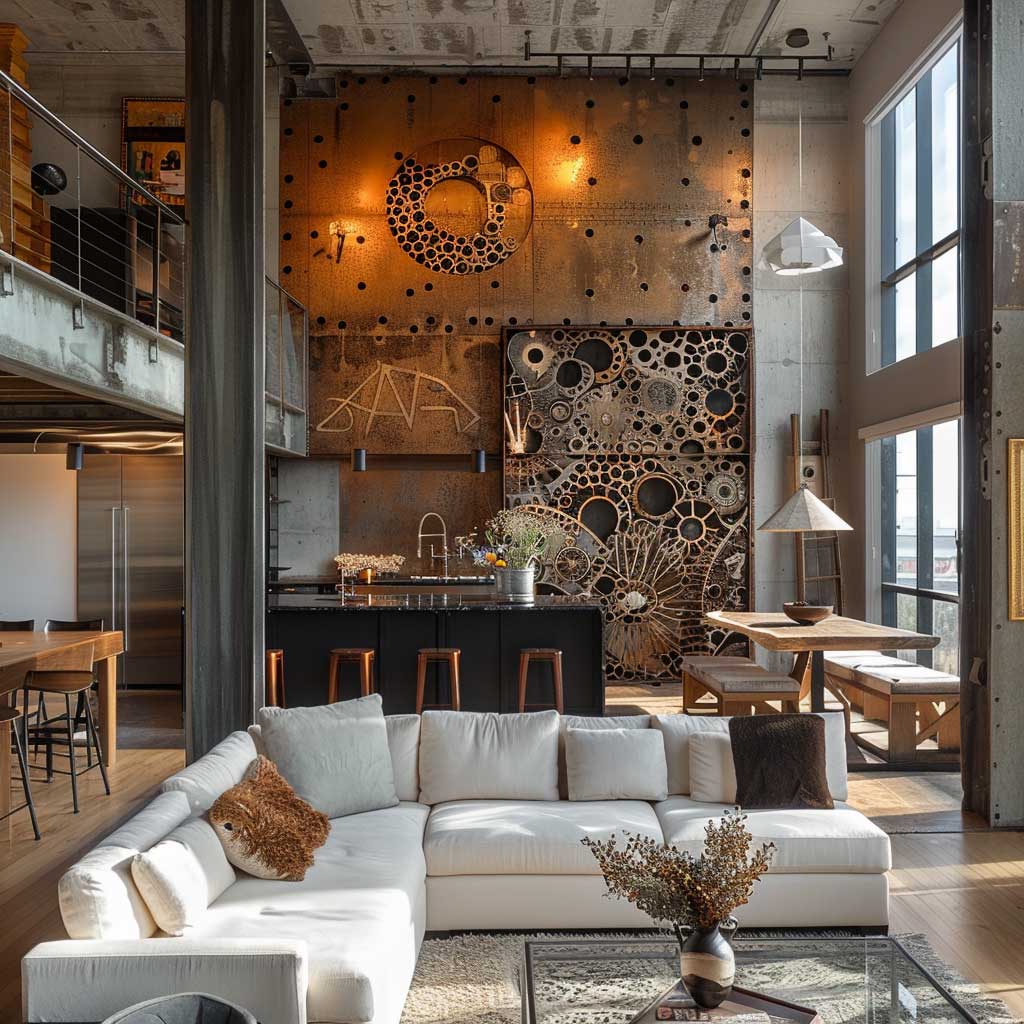
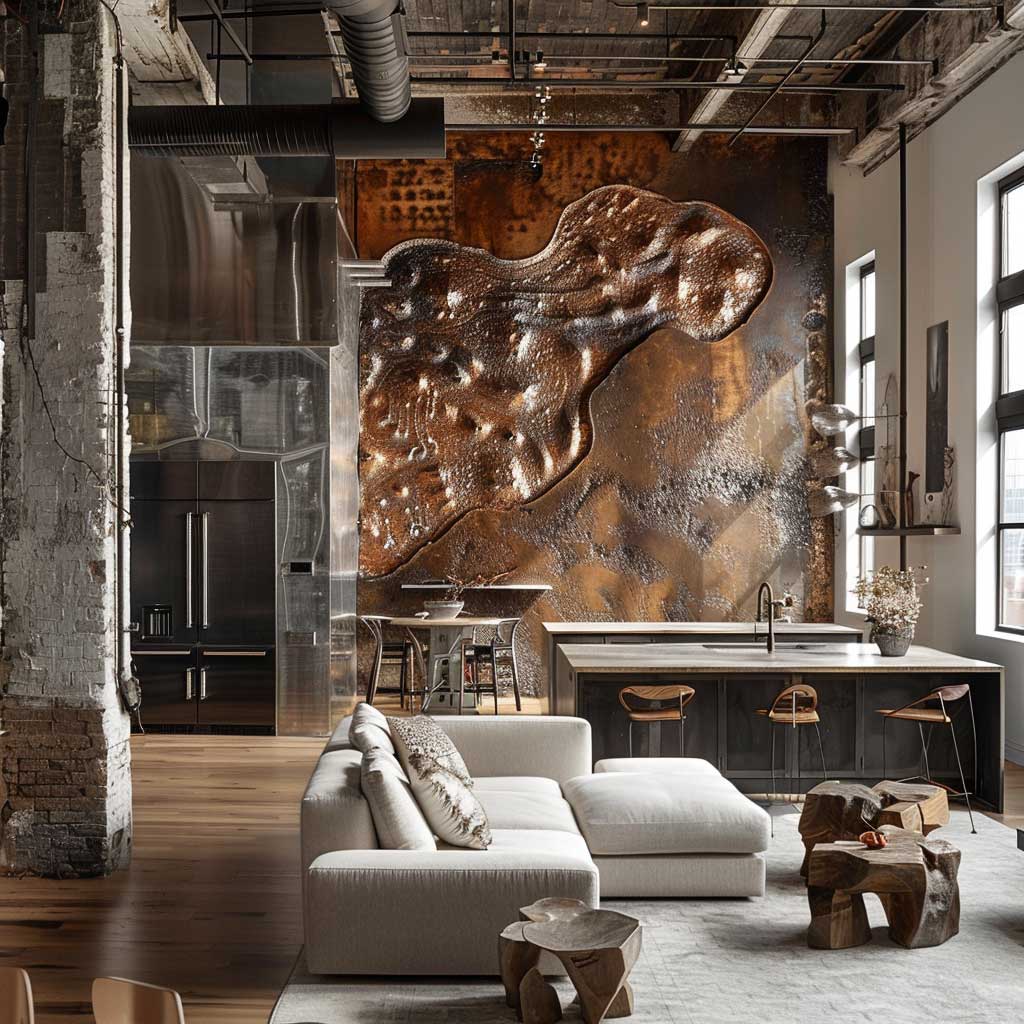
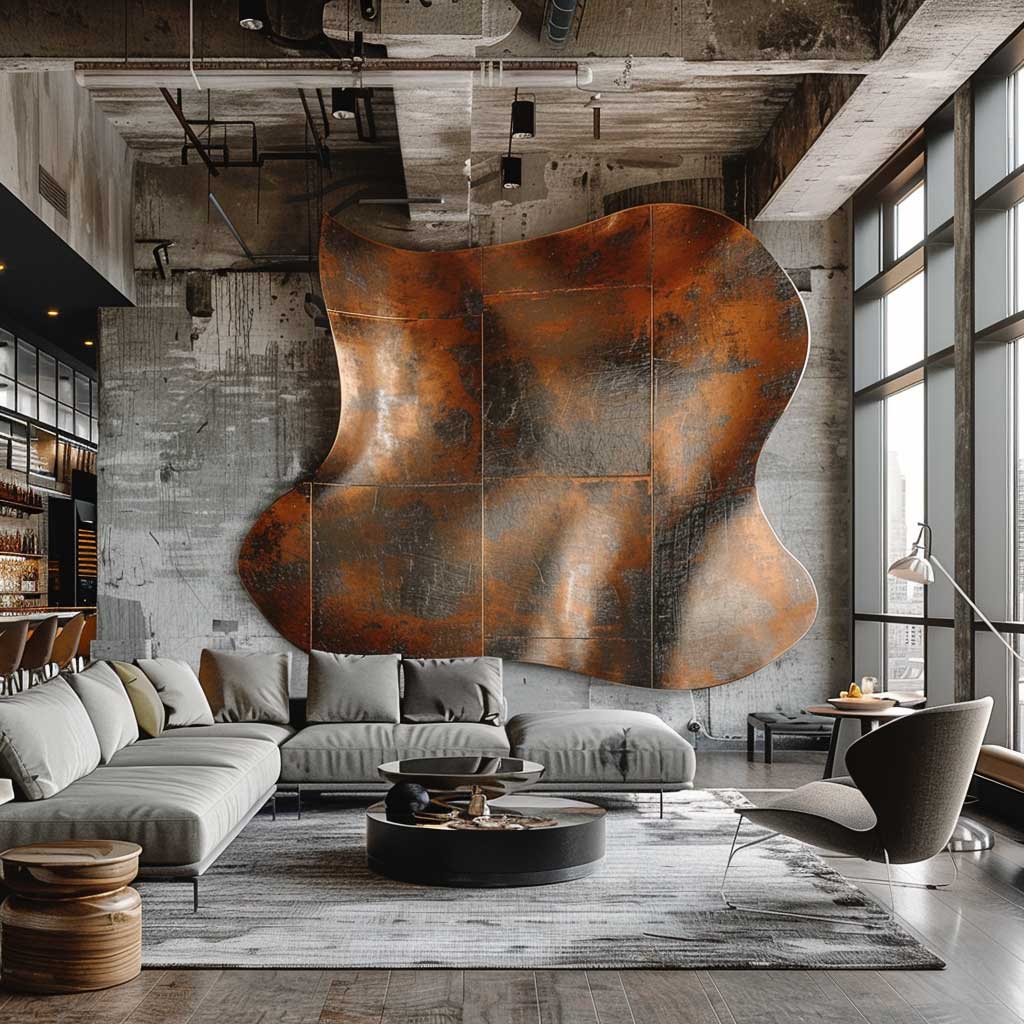
High ceilings don’t just allow larger metal art — they demand it. I’ve seen loft apartments where the owner hung standard 24-inch wall pieces on a 14-foot wall and the room looked like a child drew furniture in an empty warehouse. Scale up or don’t bother. Brushed steel wall sculptures starting around $350 from brands like Uttermost or Howard Elliott work in this range because they’re built with vertical extension in mind — 48 to 72 inches tall — and actually read from across an open floor plan.
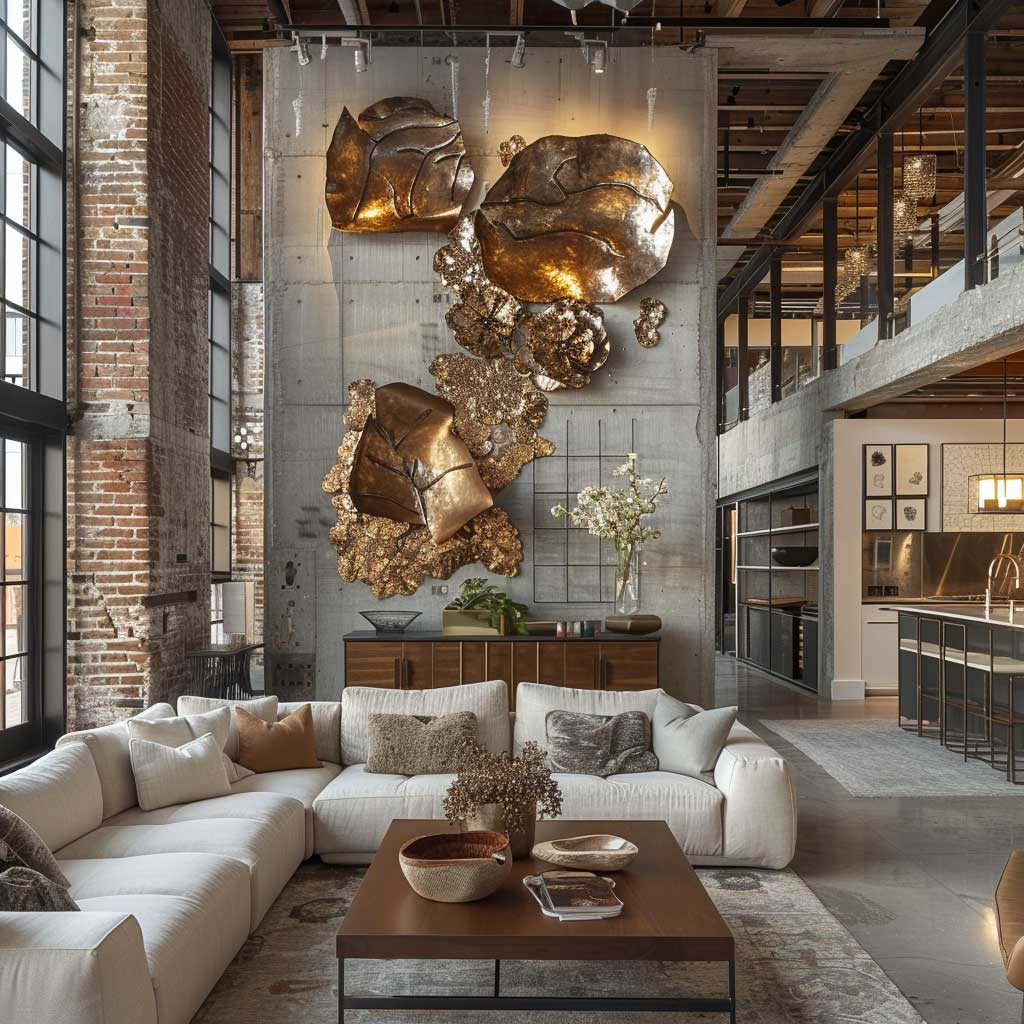
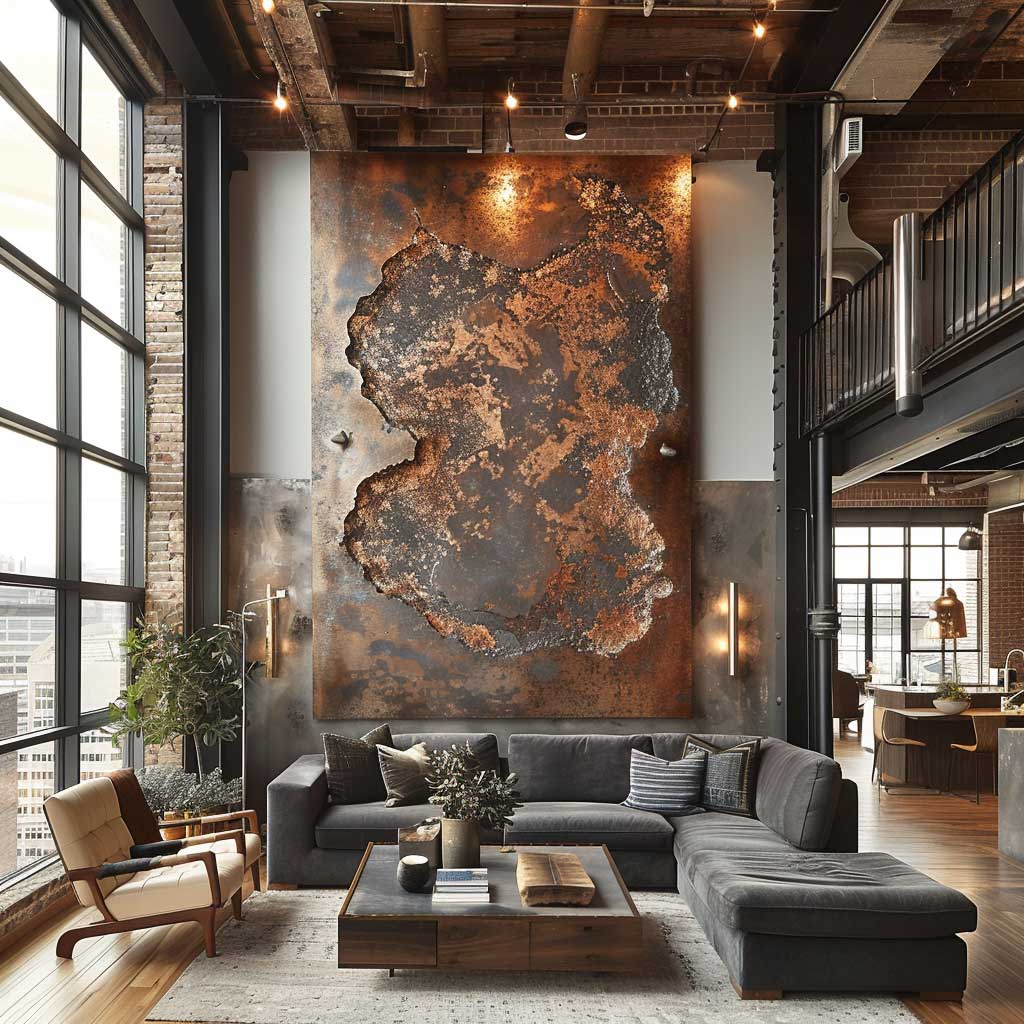
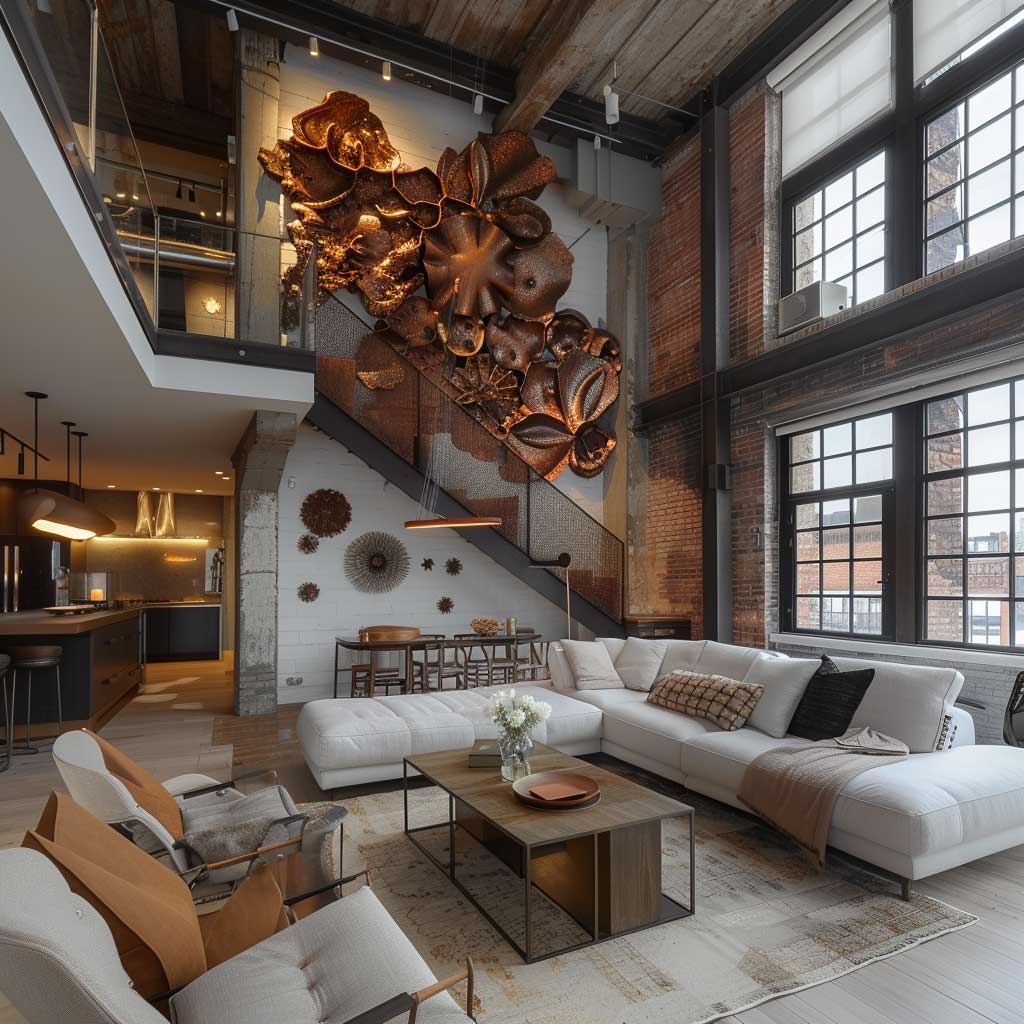
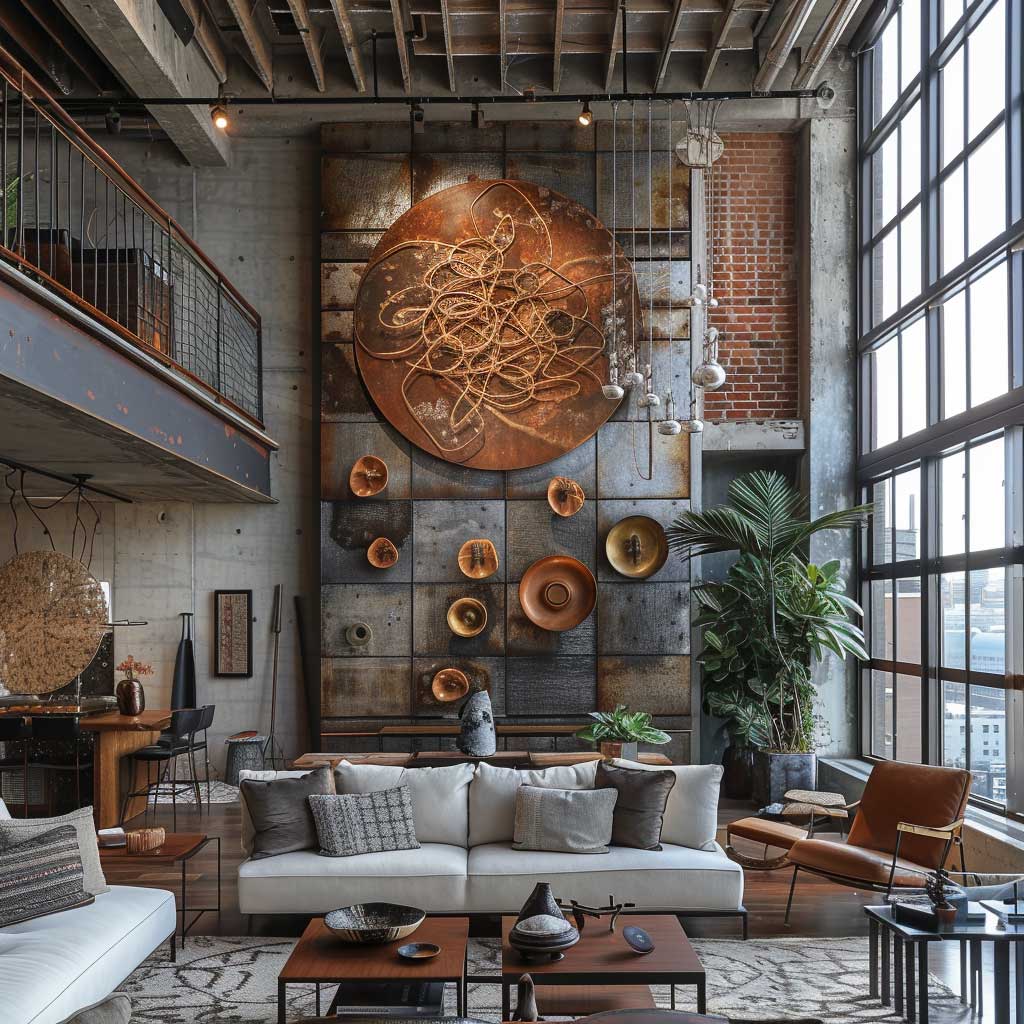
Brushed steel and copper is the finish combination that performs best in lofts with natural light — both surfaces react differently to daylight through the day, giving the wall composition a quality that polished chrome or raw iron simply doesn’t have. Raw iron oxidizes and stains. Polished chrome reflects everything around it, including the less photogenic parts of your space. Brushed steel stays consistent; copper warms as light changes. That’s the texture combination I’d always choose.
Eclectic furniture mixes are not a compromise here — they’re the correct choice. A loft with an all-matched furniture set under a dramatic metal wall installation looks like a hotel lobby that lost its budget. Mix a vintage credenza at $200 from a secondhand market with a modern concrete side table and the metal on the wall reads as art instead of product. The same logic applies to industrial dining room wall decor — one matched set kills the editorial quality that industrial style depends on.
Rustic industrial loft decor often gets this wrong by going too reclaimed-wood heavy. Wood is warm; it’s needed. But once the wall treatment, the floor, and two pieces of furniture are all reclaimed oak, the metal loses its contrast. Think of metal as the sharp suit in the room — everything else should be slightly rougher to make it read correctly.
Final Take
Metal on the wall earns its place when nothing else in the room needs to fight for attention.
Industrial wall decor in metal works because it’s already resolved — it doesn’t need color coordination, thematic accessories, or a matching set. Mount one right piece, add the right light temperature, and the room settles.
Scale to your ceiling. Finish to your light. Never buy a pre-packaged set. Those three decisions separate the spaces that look lived-in from the ones that look like a design blog mock-up.
Save this post before you start shopping — the finish and scale notes here will save you at least one expensive return.