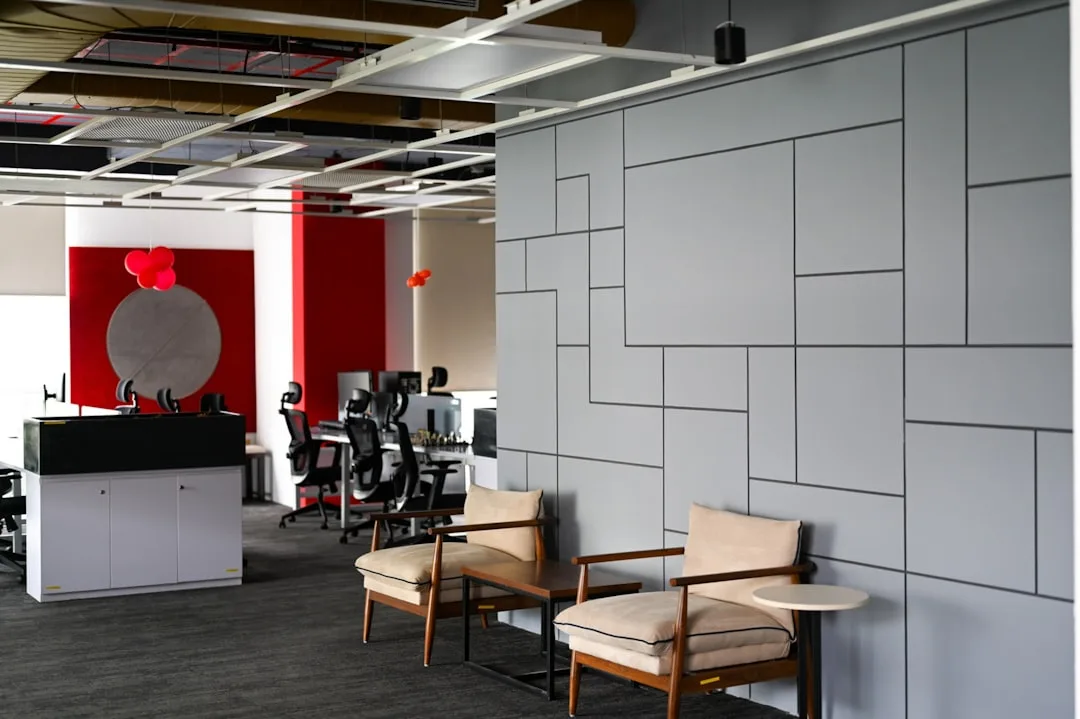
Industrial dining room wall decor works because it stops pretending the room is something it’s not. Raw brick stays raw. Metal stays metal. A vintage factory blueprint hangs where a gallery print would feel too precious. My own dining room spent three years looking like a furniture showroom until I ripped off the drywall panel hiding the original brick — and suddenly the whole space had a reason to exist. If you’re building an industrial dining room from scratch or retrofitting one that feels lifeless, the wall treatment decides everything before you even pick a table.
The urban dining room isn’t just a loft fantasy. It’s a real design strategy for people who’d rather spend $300 on one honest pendant than $1,200 on a chandelier that looks like a prop.
Quick Scan
- Exposed brick dining room wall: leave it raw or use a matte sealer, never full paint
- Metal accents: brushed nickel ages better than polished chrome in a dining space
- Vintage industrial art: patent prints from Etsy run $15–$60 framed
- Lighting: one oversized pendant over the table does more than four recessed cans
- Brick wall dining rooms need warm-toned bulbs — 2700K, not 4000K
Exposed Brick Dining Room Walls Hold the Room Together Without Trying
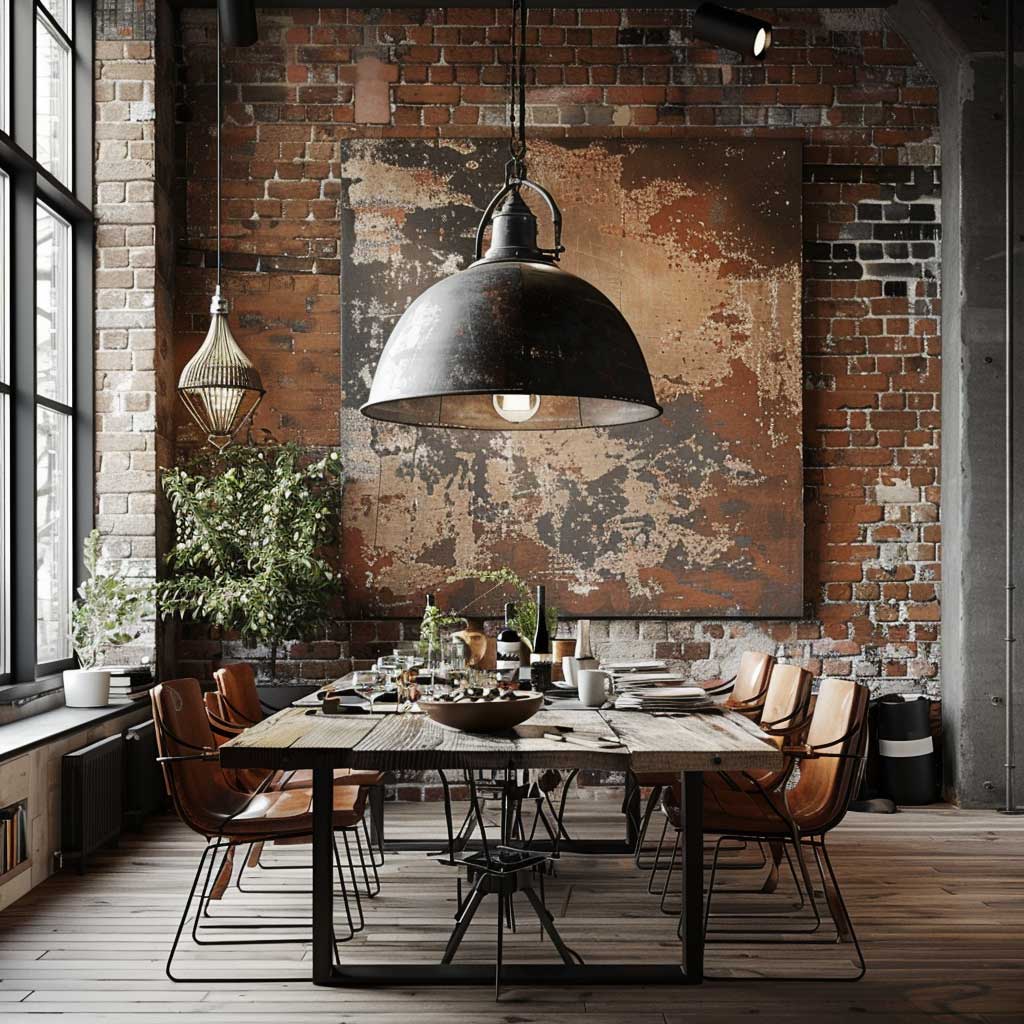
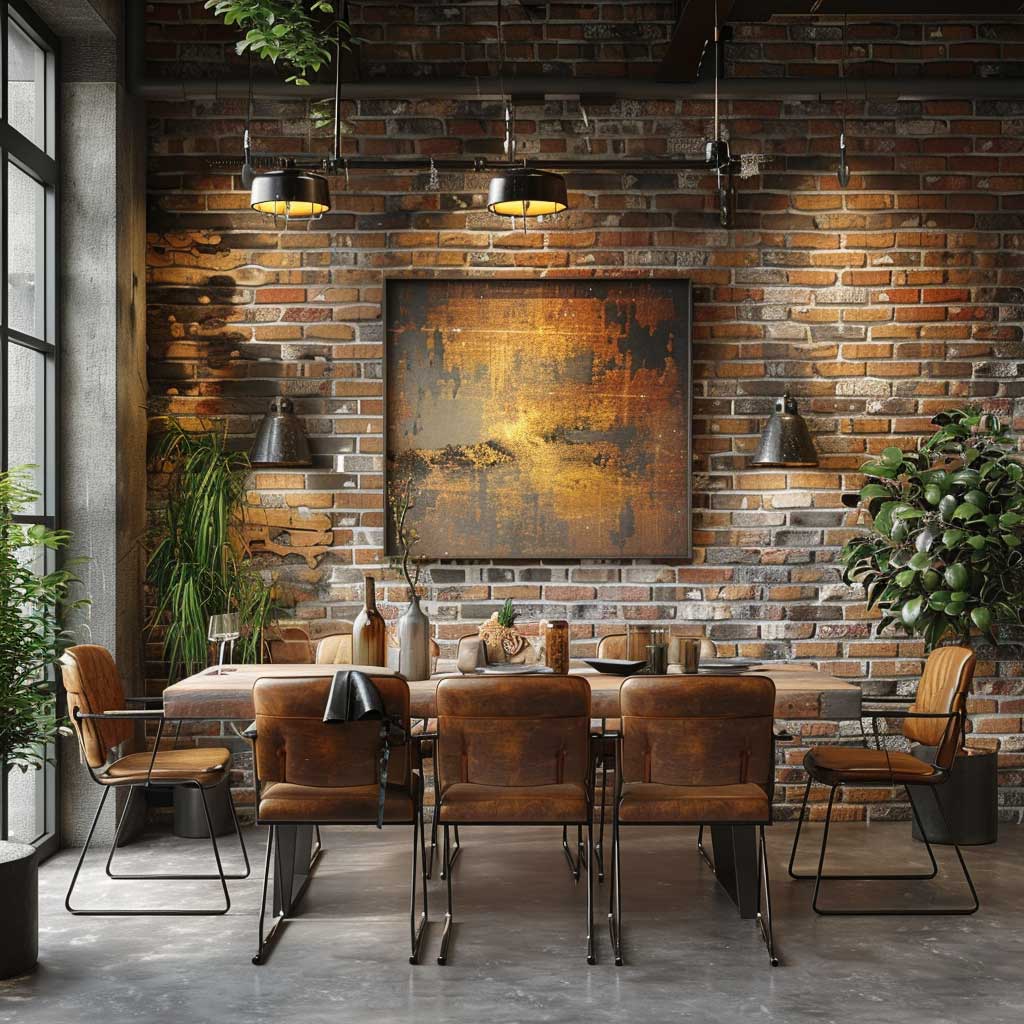
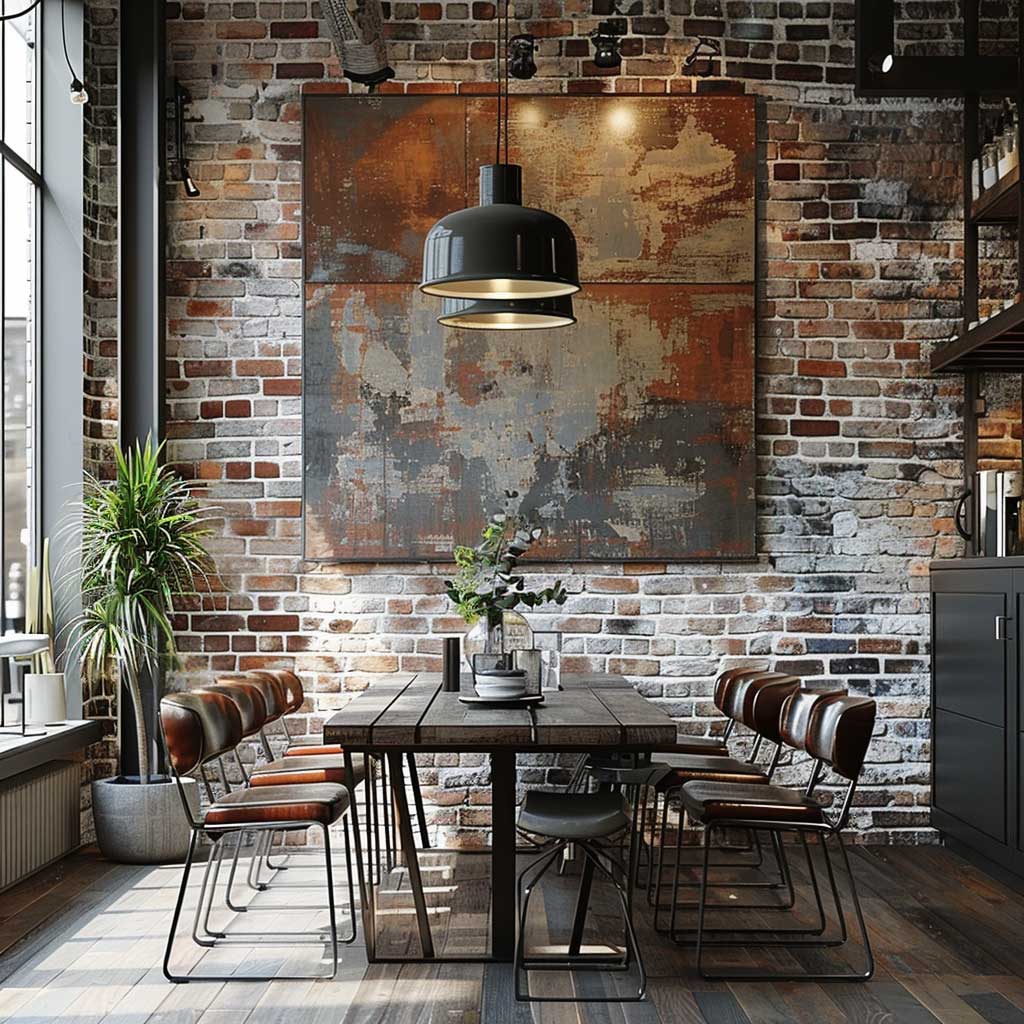
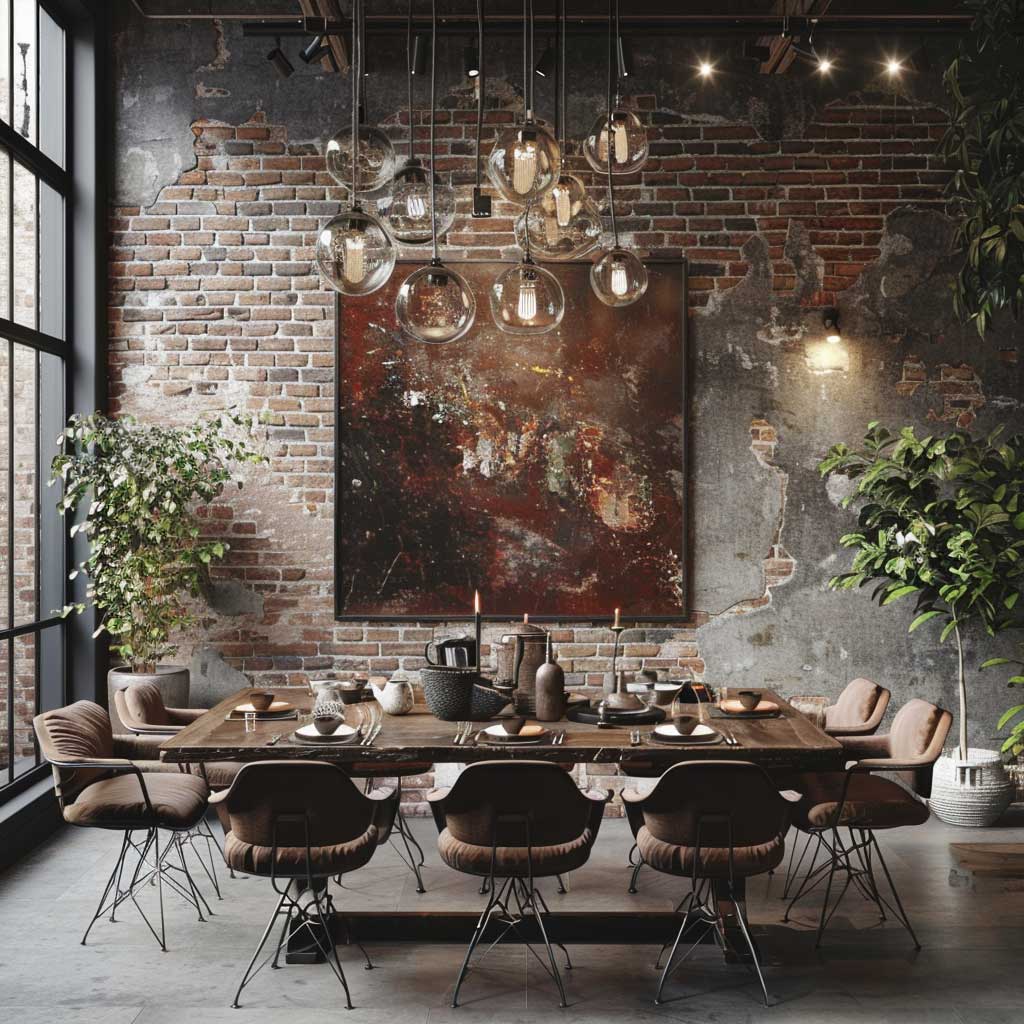
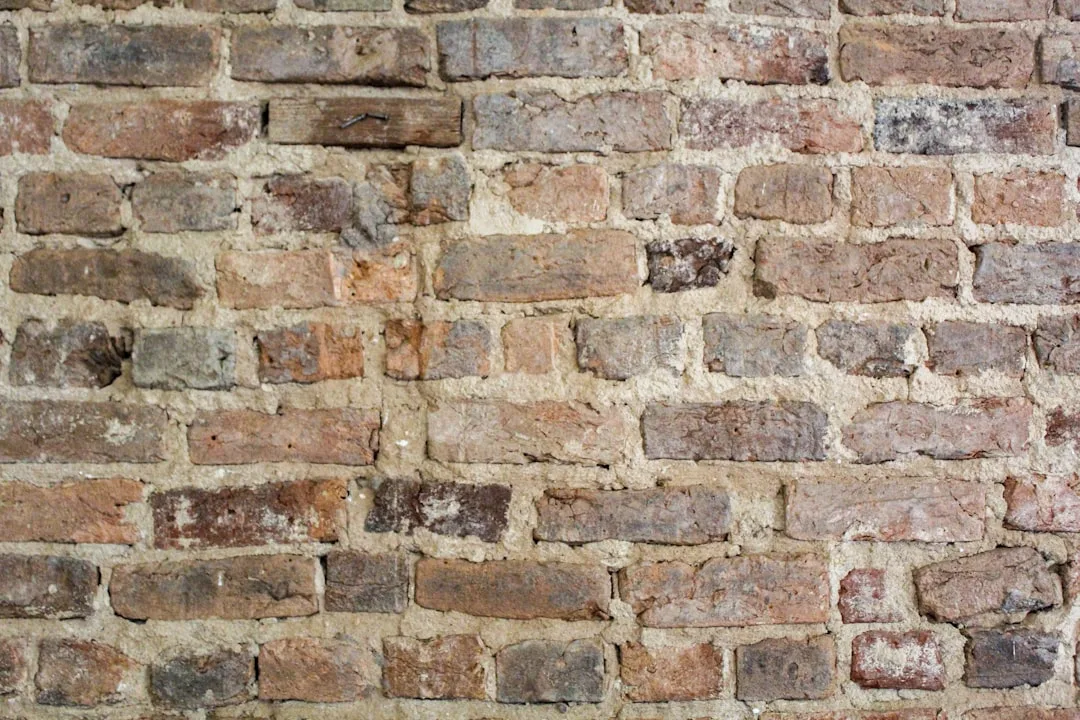
Brick is the one material in an industrial dining room that never needs explaining. It arrived before you did, it has a texture no paint can replicate, and it does the wall’s job without asking for help. I’ve bought faux-brick panels — PVC sheets you stick to drywall — and they look exactly like what they are. Don’t. Real brick, exposed or lightly sealed with Rust-Oleum’s Zinsser Bulls Eye clear coat ($18 per quart), reads completely differently from six feet away. You notice the inconsistency, the variation in tone, the fact that it’s not trying to be anything else.
Make the brick wall your focal point and resist adding anything to it for two weeks after you expose it. You’ll see where the lighting lands. A modern industrial chandelier — the Kichler Braelyn in matte black runs around $280 — hung directly over your dining table at 30 inches above the tabletop throws light that makes brick look like a Renaissance painting. 2700K bulbs only. 4000K turns warm brick orange-pink and the whole thing gets weird.
The furniture equation against exposed brick is specific: heavy solid wood table, thin metal chairs. What doesn’t work is two heavy materials fighting each other. A chunky table and chunky upholstered chairs in front of an already-dense brick wall turns the room into a cave. I use Tolix-style metal bistro chairs with flat leather seat pads — $120–$180 per chair from Article or Wayfair — against a reclaimed Douglas fir table I had built locally for $600. The contrast between warm wood grain and cool metal reads as intentional rather than accidental.
One plant. Not six. A single large-leafed Monstera or olive tree in a terracotta pot on the floor near the brick wall does more than a shelf of succulents ever will. The living green against aged brick is the closest a dining room gets to outdoor dining without actually being outside.
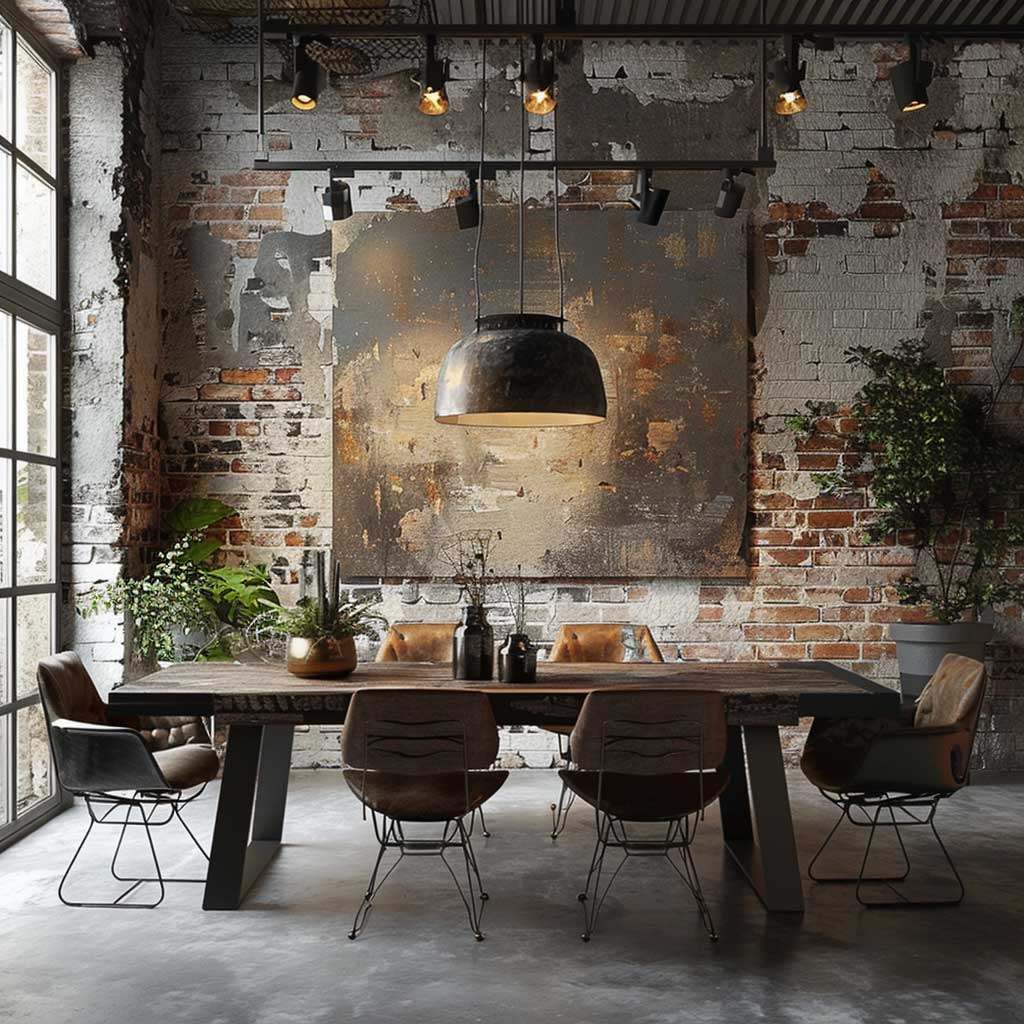
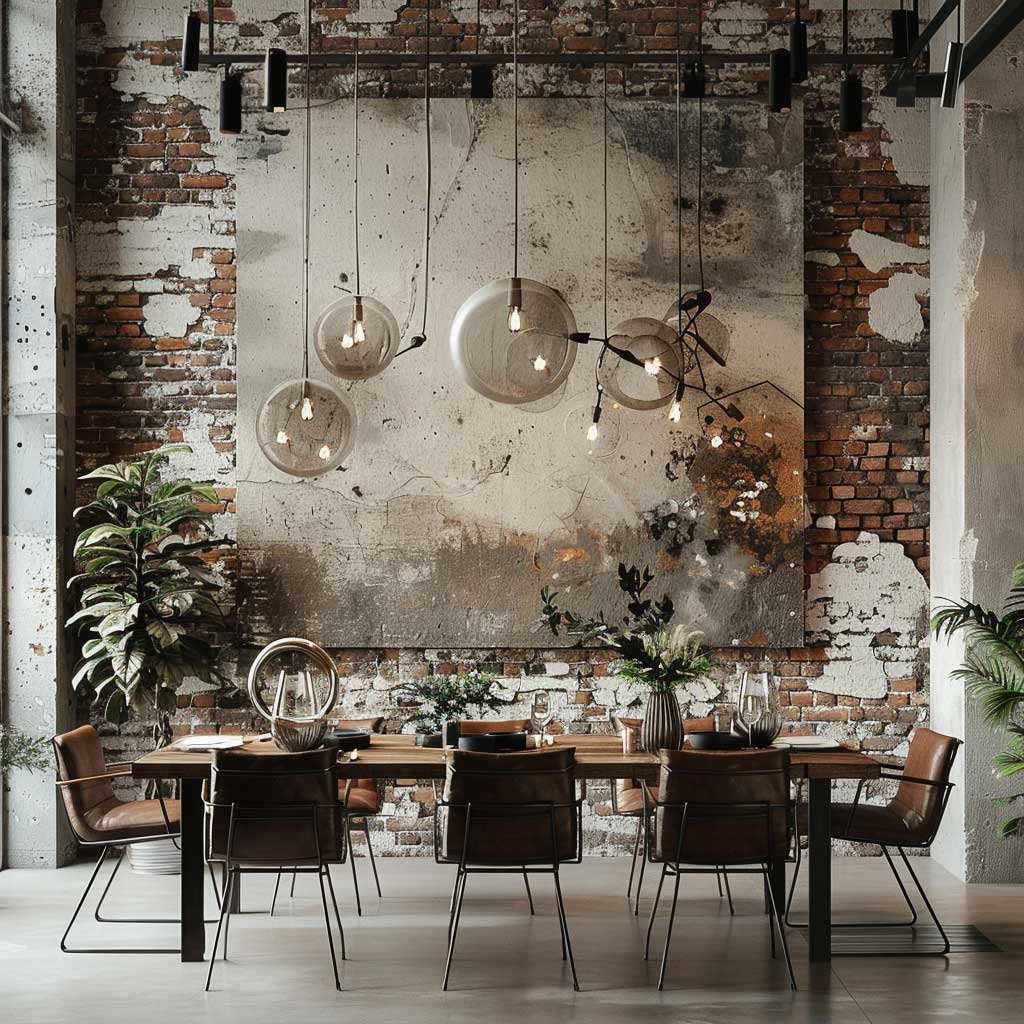

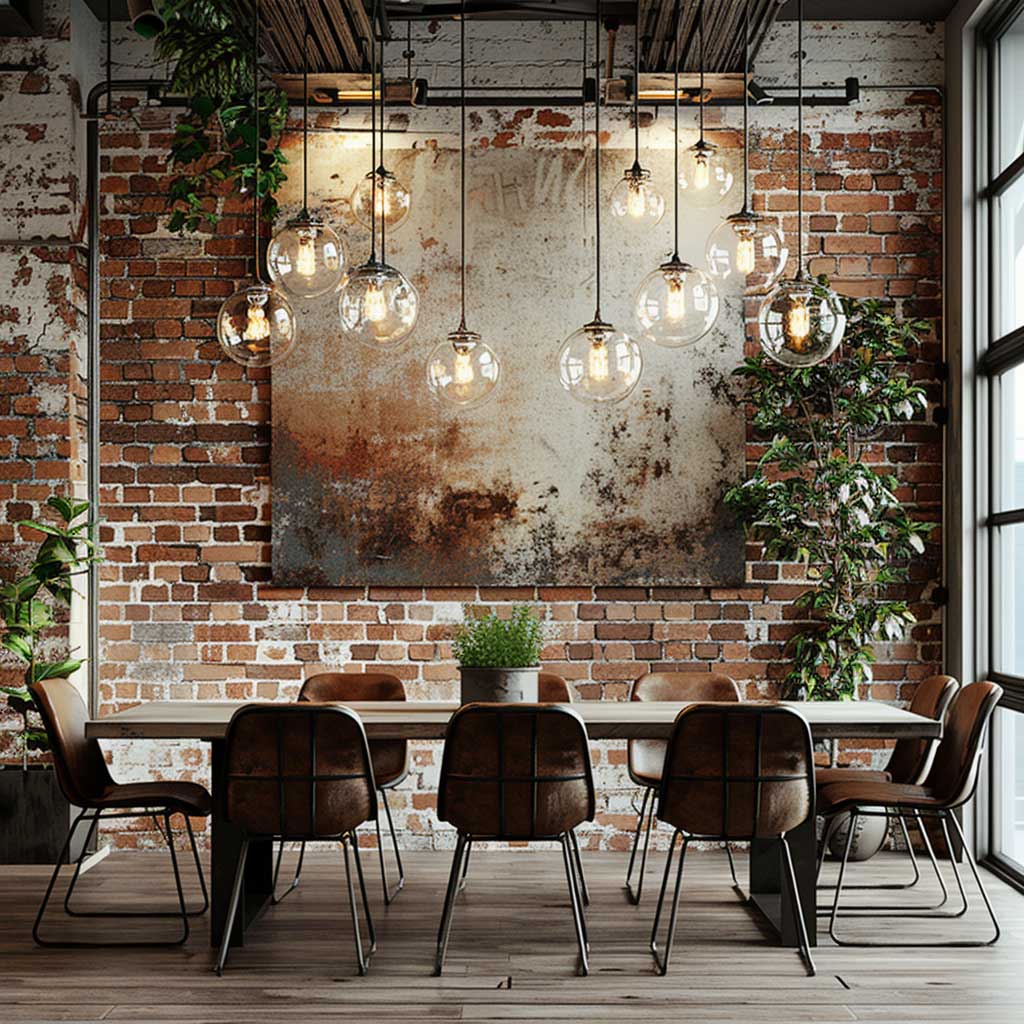
Artwork on a brick wall is a commitment. Anything smaller than 24 inches wide disappears. Go large or go empty — a single 36×48 abstract canvas in charcoal and ochre is the floor of what works here. Gallery walls on brick look frantic. Brick already has visual texture; stacking small frames on top of it is like talking while someone’s already talking. Pick one piece, center it at eye level, leave the rest of the wall alone.
Don’t Do This
Don’t paint over exposed brick with a solid opaque color, even white. You kill the texture that made the brick worth having. If the brick’s coloring bothers you, a translucent lime wash — Portola Paints’ Roman Clay runs about $95 per gallon — keeps the surface variation intact while shifting the overall tone. Full-coverage paint turns real brick into fake brick, and you cannot un-do it cheaply.
Metal on Metal Is Too Much. Here’s the Ratio That Actually Reads as Modern
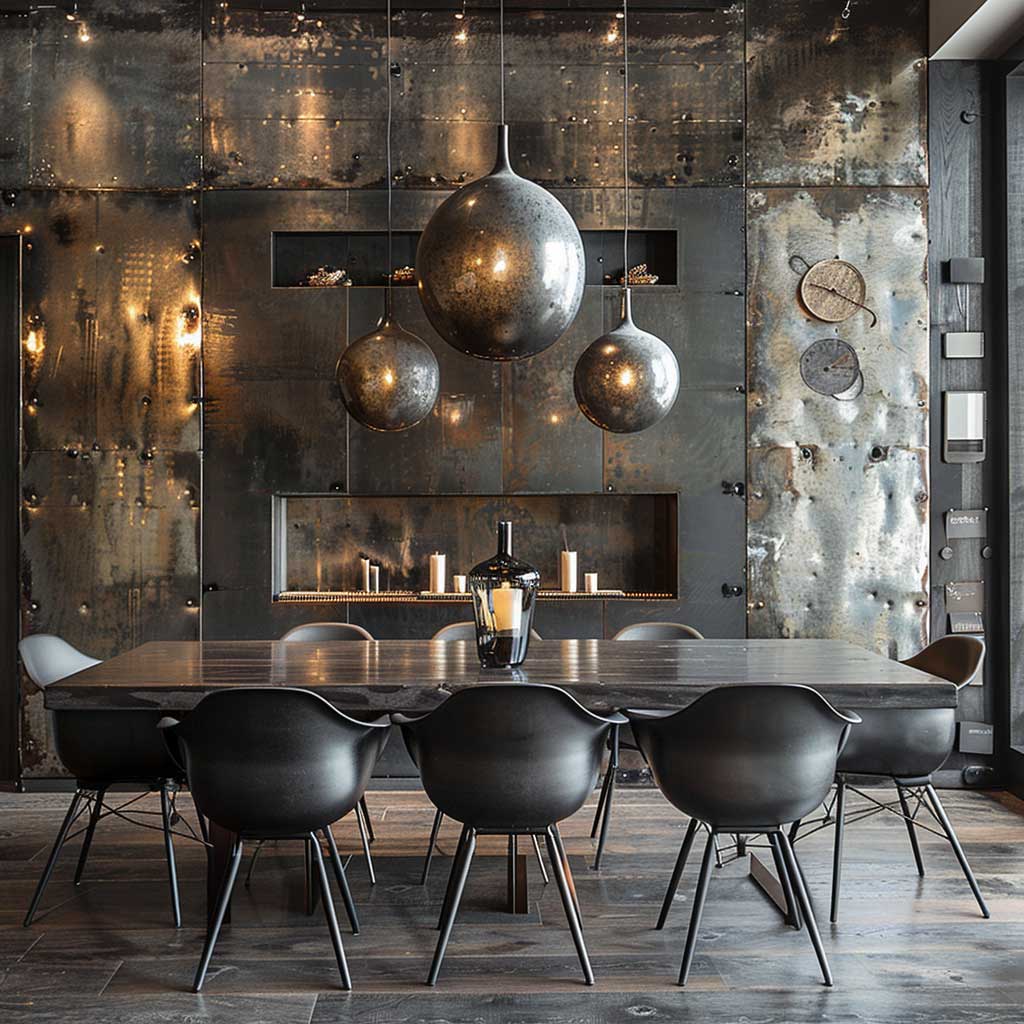
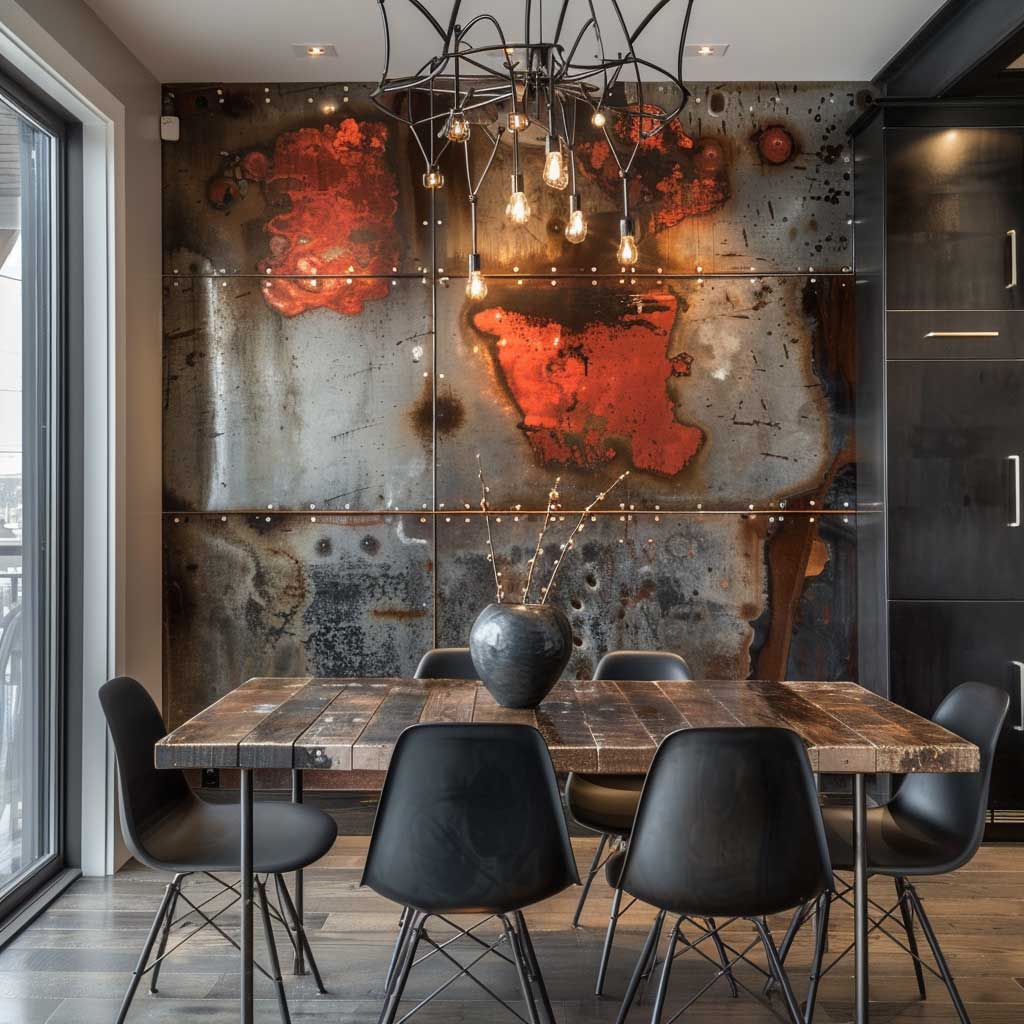
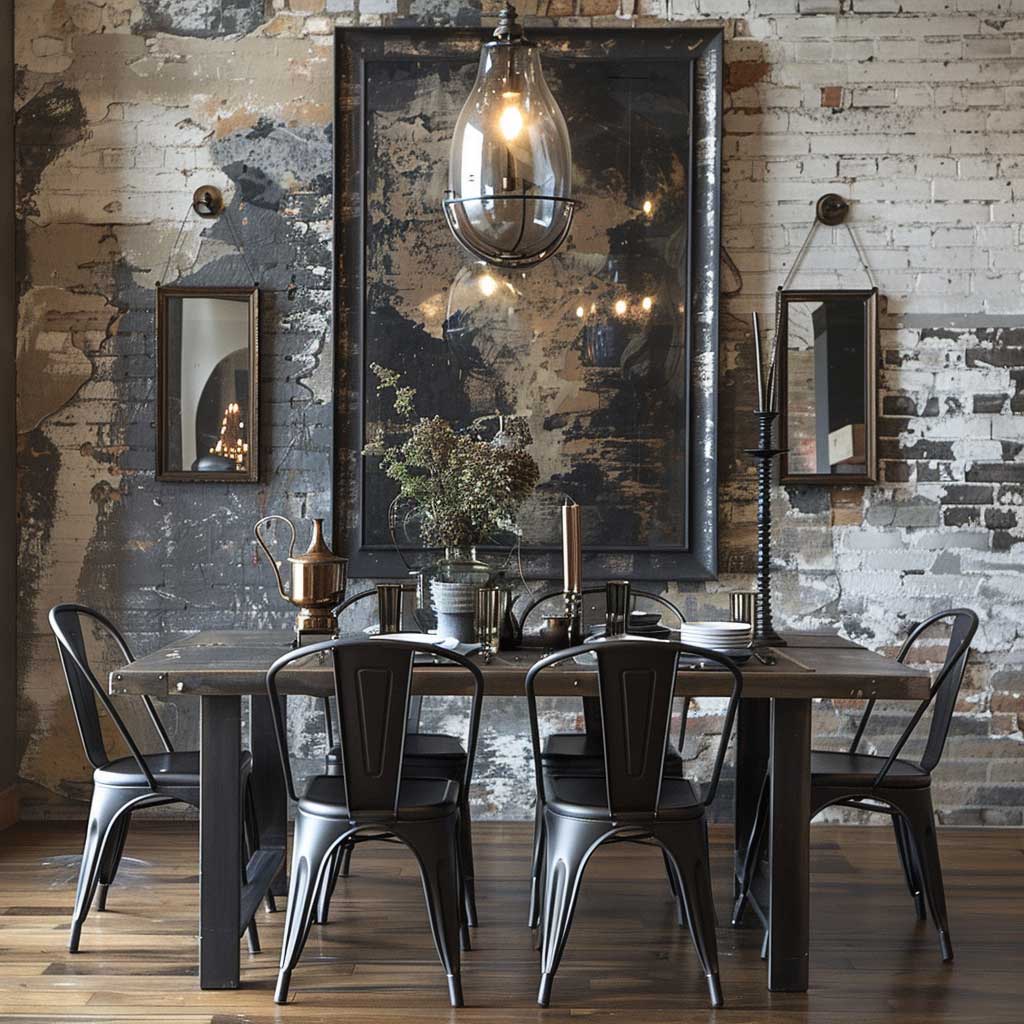
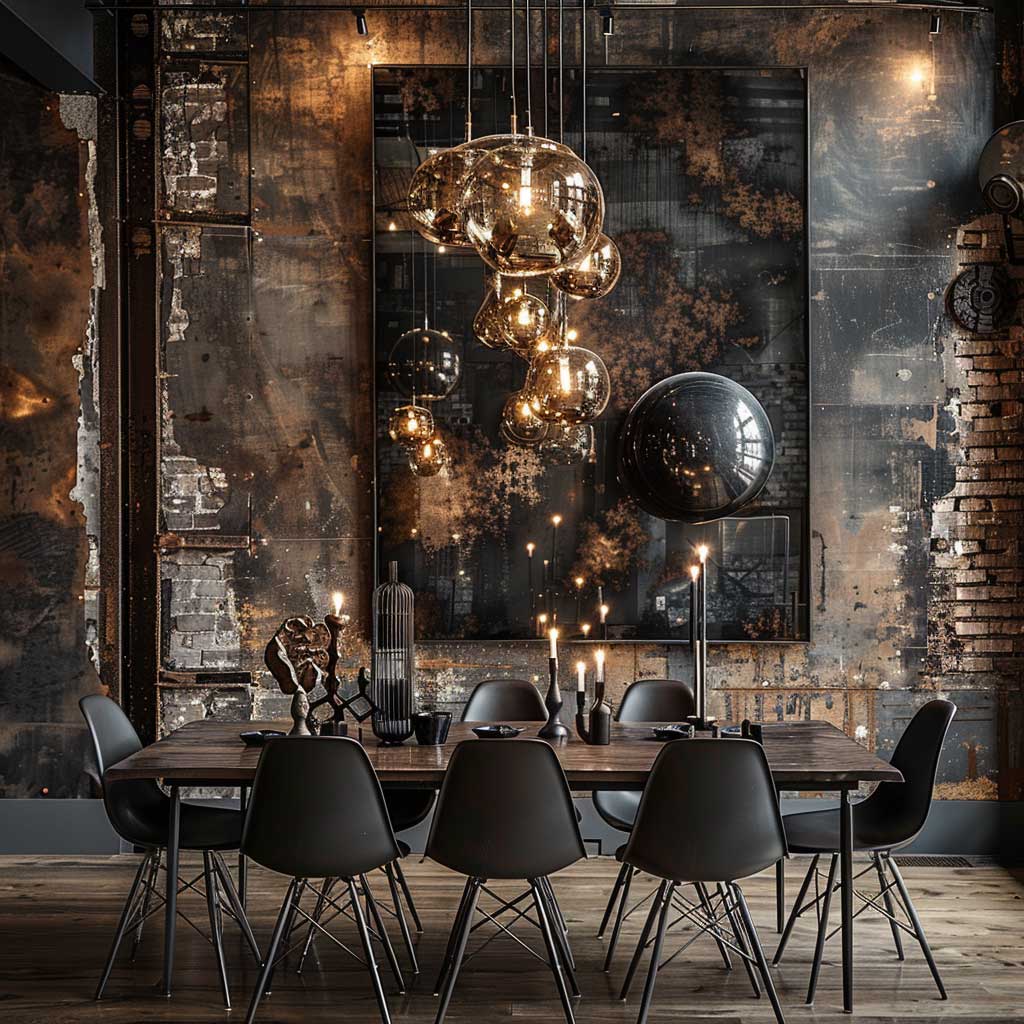
Metallic accents in an industrial dining room work on a ratio: roughly 30% metal to 70% matte. Push past that and the room starts reading like a restaurant equipment supplier. My go-to is brushed nickel or raw iron — not polished chrome, not mirror stainless. Polished chrome reflects everything including the stuff you don’t want reflected. Brushed and matte finishes absorb light rather than bouncing it, which makes a room feel deliberate instead of accidental.
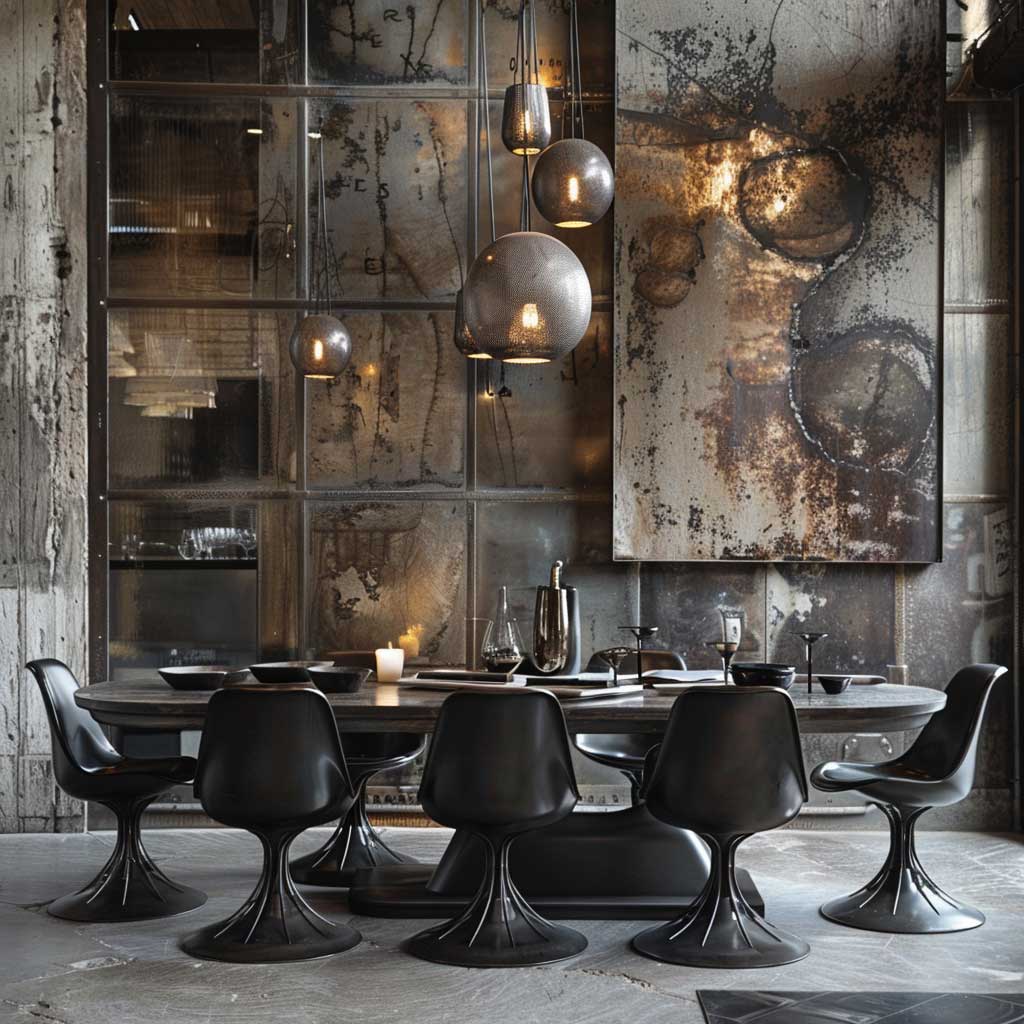
Start with one metal statement piece on the wall, not five smaller ones. A large-format abstract metal sculpture — the kind made from laser-cut iron panels — runs $200–$600 from makers on Etsy or West Elm’s industrial line. Hang it at 57 inches to center, measured from the floor. What doesn’t work is arranging eight small metal wall hangings in a cluster: that’s a craft fair, not a dining room. One oversized piece reads as art. Eight small pieces read as a collection of things.
The table matters more than anything else in this scheme. A matte black powder-coated steel dining table from CB2 (the Stainless Steel Harlo runs $1,299) functions as both surface and sculpture. Pair it with chairs in a different material — wood, leather, or upholstered linen — so the metal table has somewhere to breathe. An all-metal dining setup, table plus chairs, feels like a hospital cafeteria. You need warmth somewhere in the seating.
Lighting does the heavy lifting here. A single geometric pendant in blackened steel, hung 30–34 inches above the table surface, casts patterned shadows onto any metallic wall piece you’ve hung. That’s the trick: the pendant and the wall art work together, with the ceiling light animating the wall sculpture. I stole this trick from a restaurant in Kyiv that spent almost nothing on decor but placed one industrial cage pendant perfectly and the whole room felt designed.


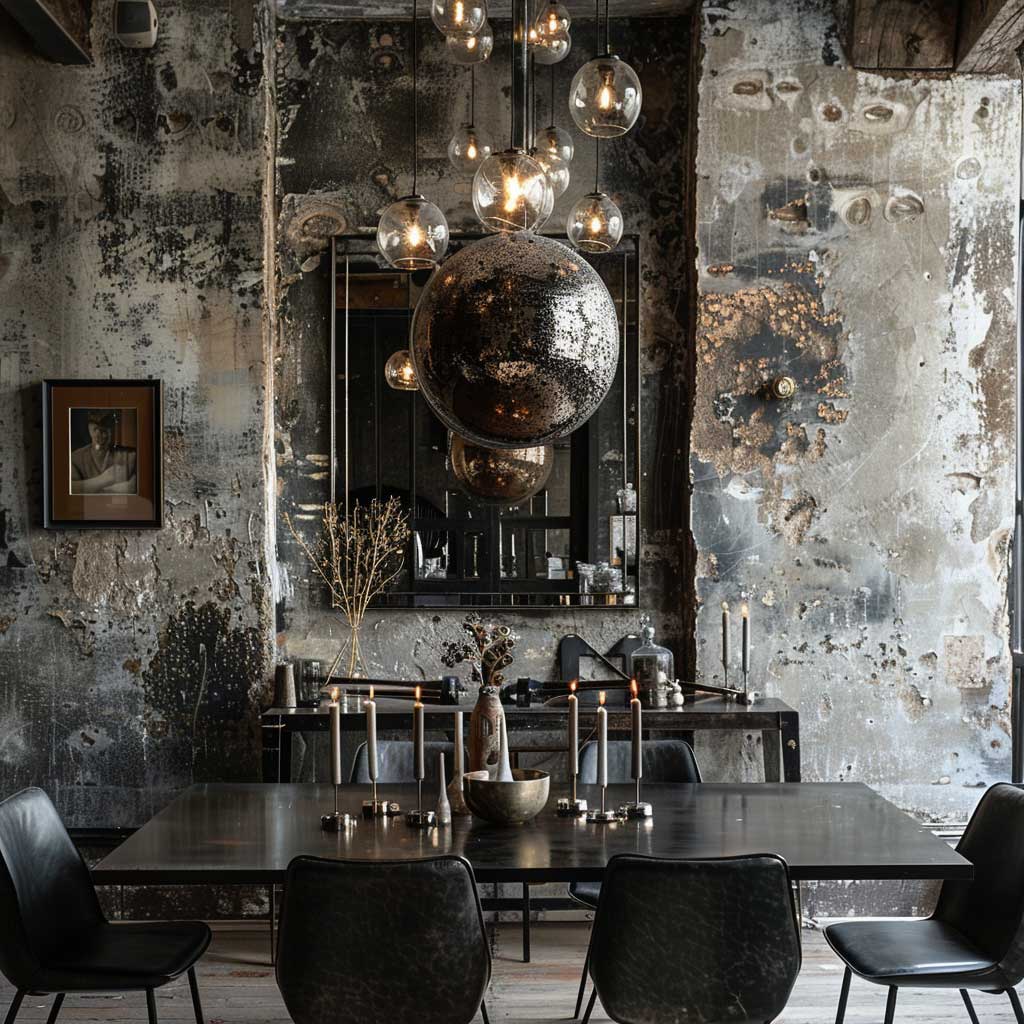
Mirrors with industrial metal frames do something useful: they make a narrow dining room feel wider without you having to knock down a wall. An oversized rectangular mirror in a blackened or oxidized frame hung on the long wall of a dining room bounces light and depth simultaneously. The frame does the design work; the reflective surface does the spatial work. Skip round mirrors here — round reads soft, and soft is the opposite of what you’re building.
Add a layered lighting plan for your industrial dining room before you commit to any wall decor placement — where the light falls changes everything about how metal reads in the space.
Vintage Industrial Art Costs on Etsy and Outperforms Gallery Prints at 0
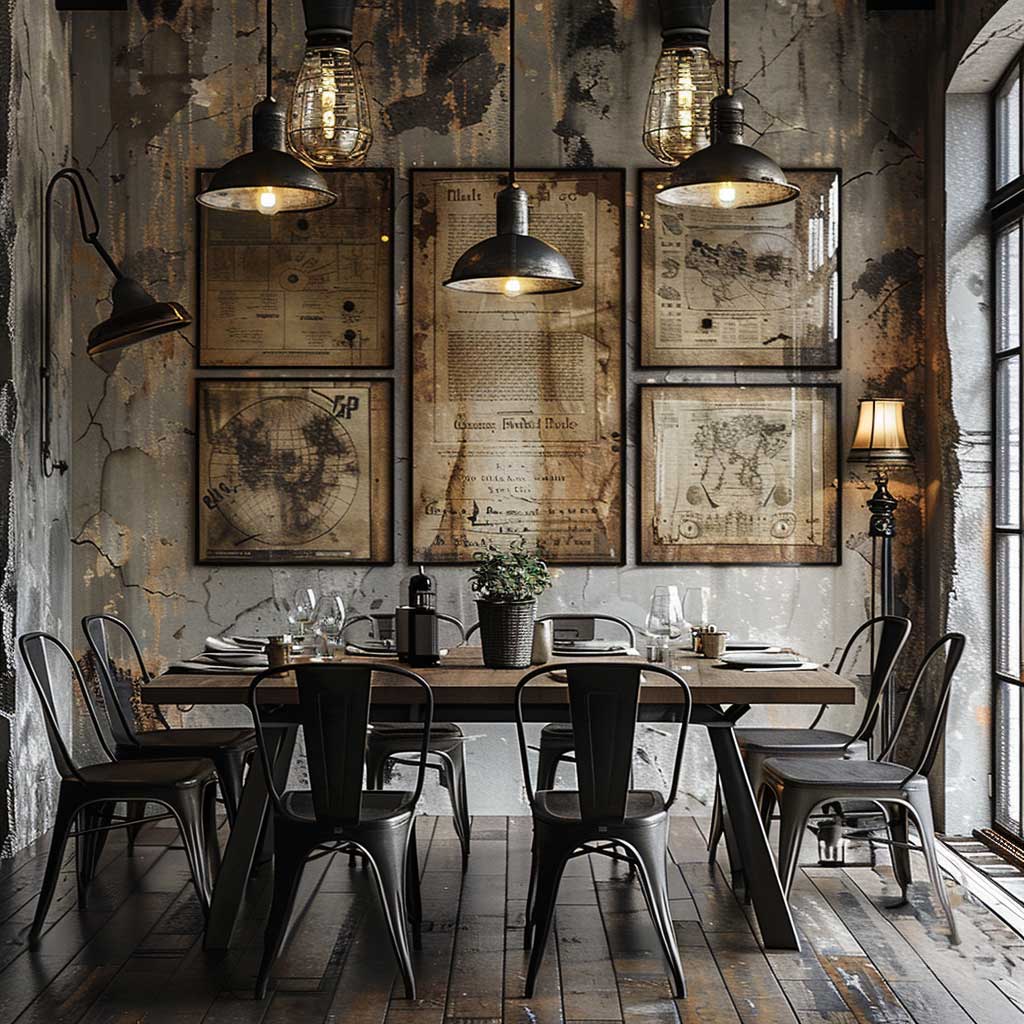
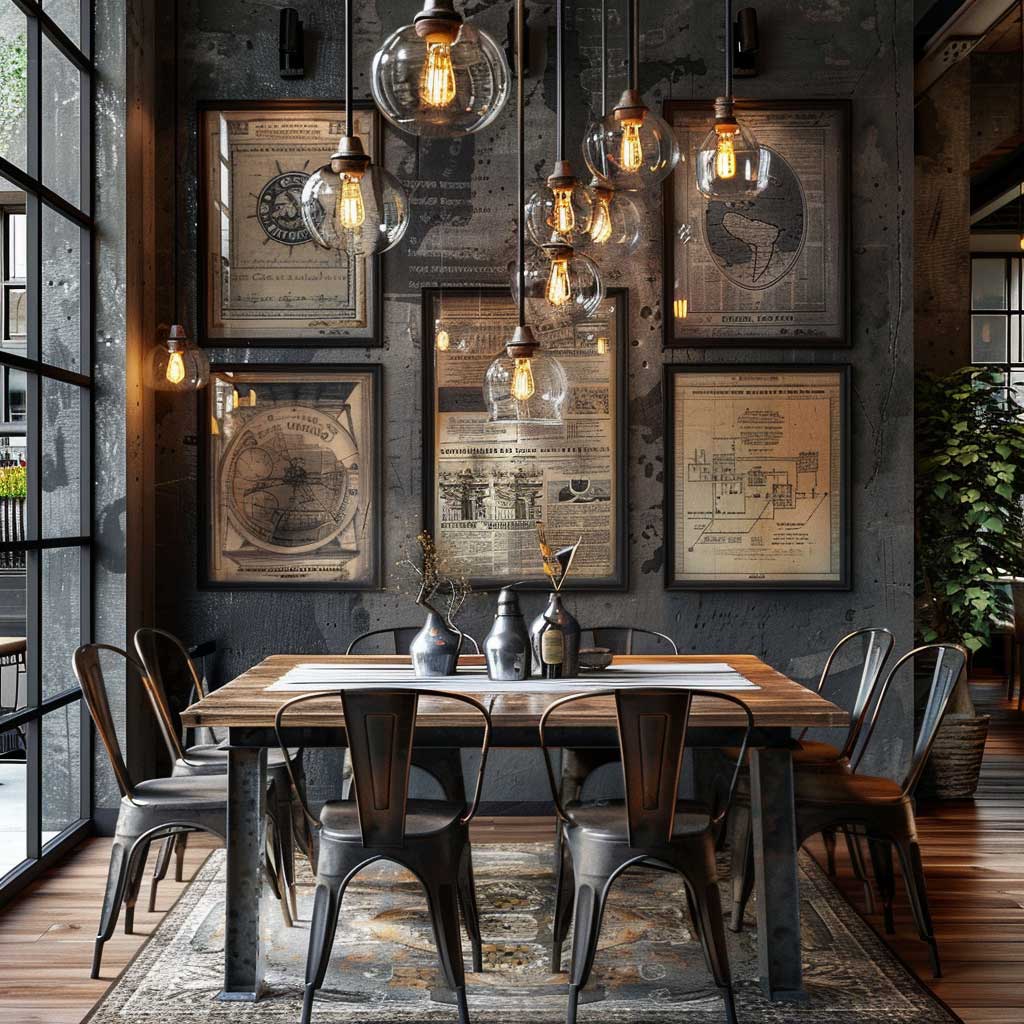
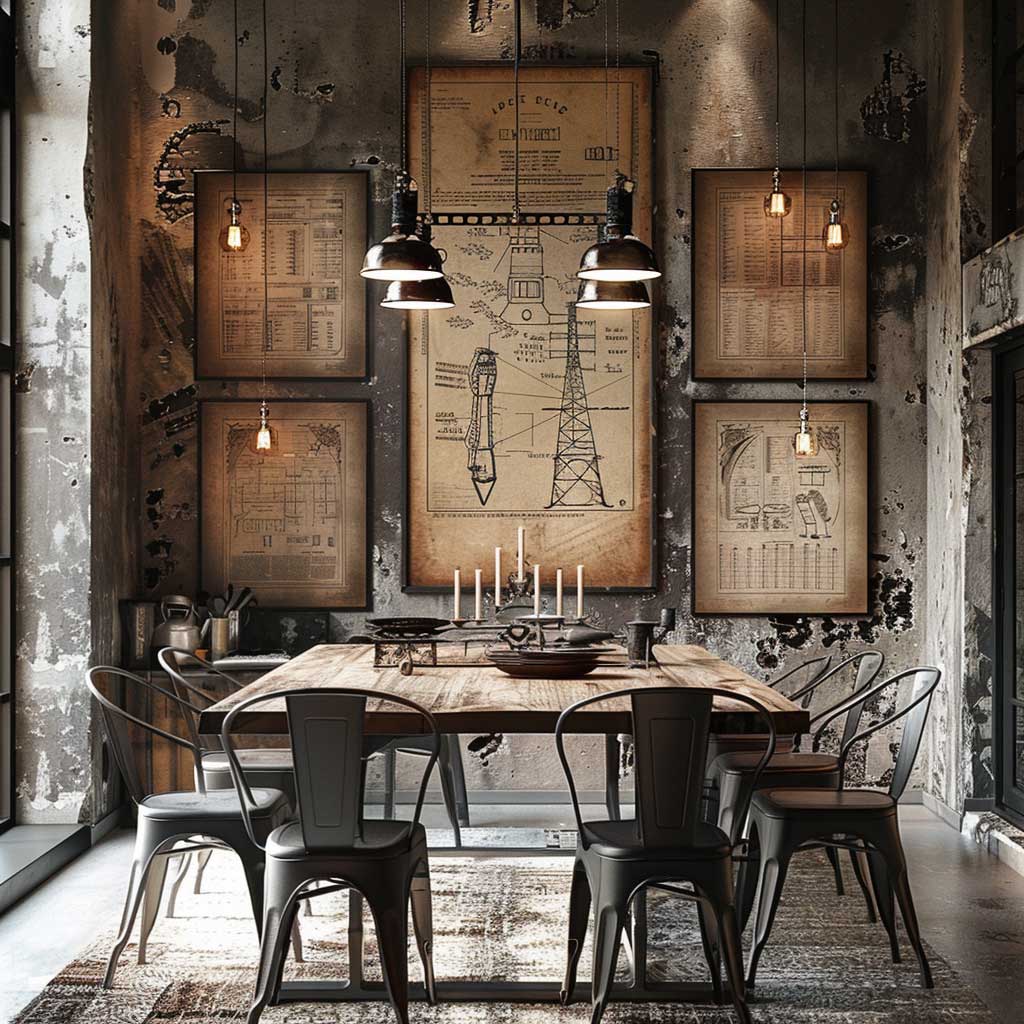
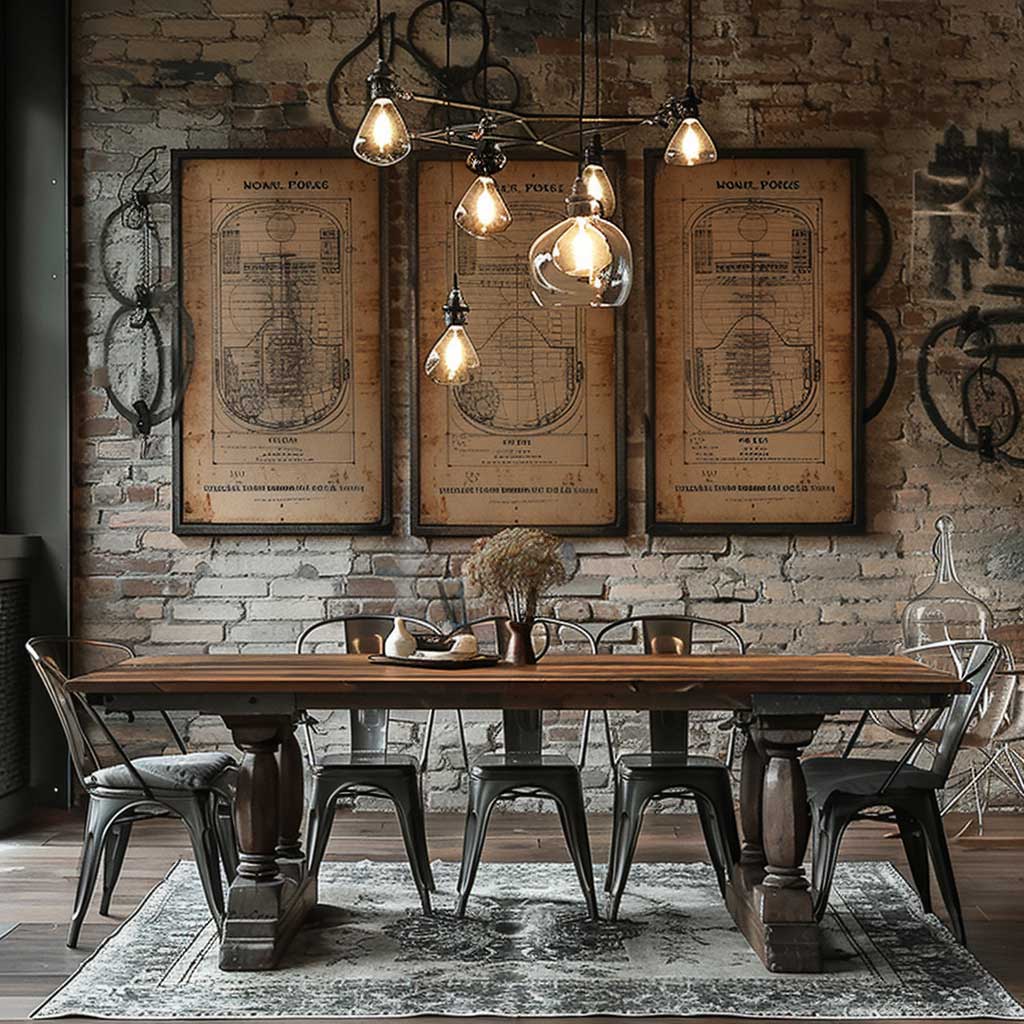
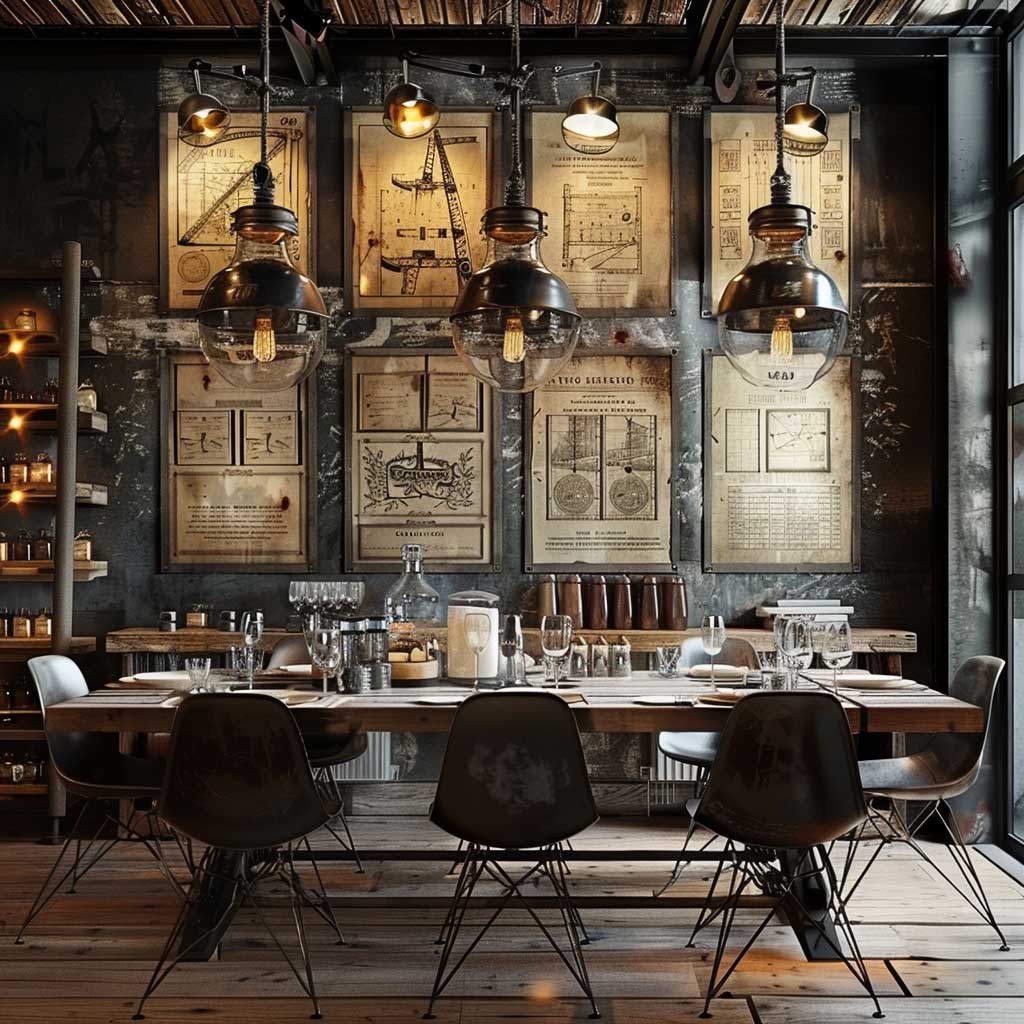
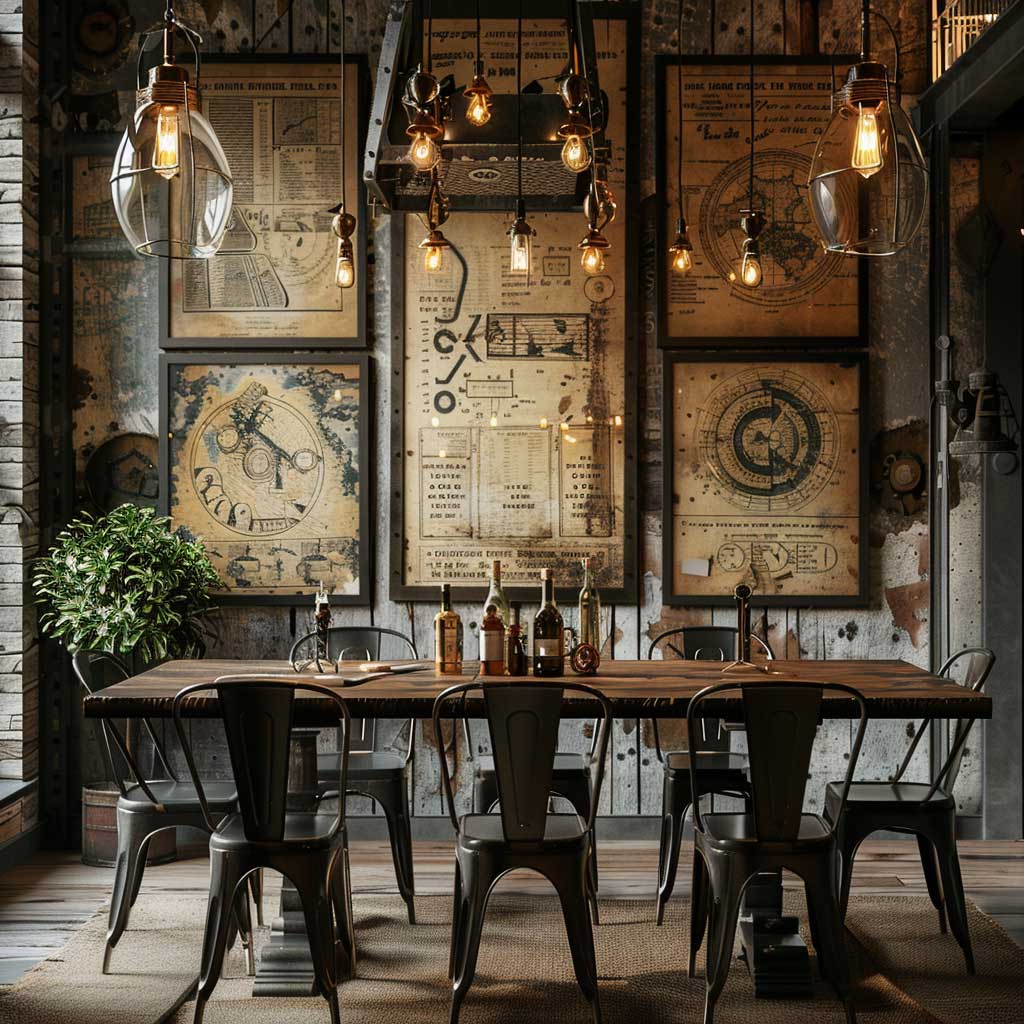
Patent blueprints are the most underused wall decor category in home design. The original 1890 Edison light bulb patent, printed at 24×36 on heavyweight matte paper and framed in a simple black metal Nielsen frame ($22 at IKEA), looks like something a museum paid $800 to source. Etsy shops like PatentPrints and VintagePrintable sell digital downloads of original USPTO patent drawings for $5–$15 per file. Print at your local FedEx for under $20 per large format print. I own two of these and everyone who comes to dinner asks where I got them.
The furniture pairing for vintage industrial art is more specific than people think. A reclaimed wood table with visible grain, knots, and history reads as a partner to period artwork. A glossy lacquered dining table does not — it looks like the art ended up in the wrong room. The rougher the table surface, the more the vintage prints feel at home above it. Metal chairs with a patinated or powder-coated matte finish complete the set without competing for attention.
Lighting for vintage art should not be white. Period Edison bulbs — the squirrel-cage filament kind — in pendants at 40–60 watts put a warm amber light on sepia-toned blueprints that looks genuinely old. The Westinghouse Vintage 40W E26 bulb costs about $8 at Home Depot. Avoid LED-daylight bulbs anywhere near vintage prints; the blue-spectrum light bleaches the warmth out of aged paper tones and the whole arrangement looks cheap. Dim and amber. That’s the setting.
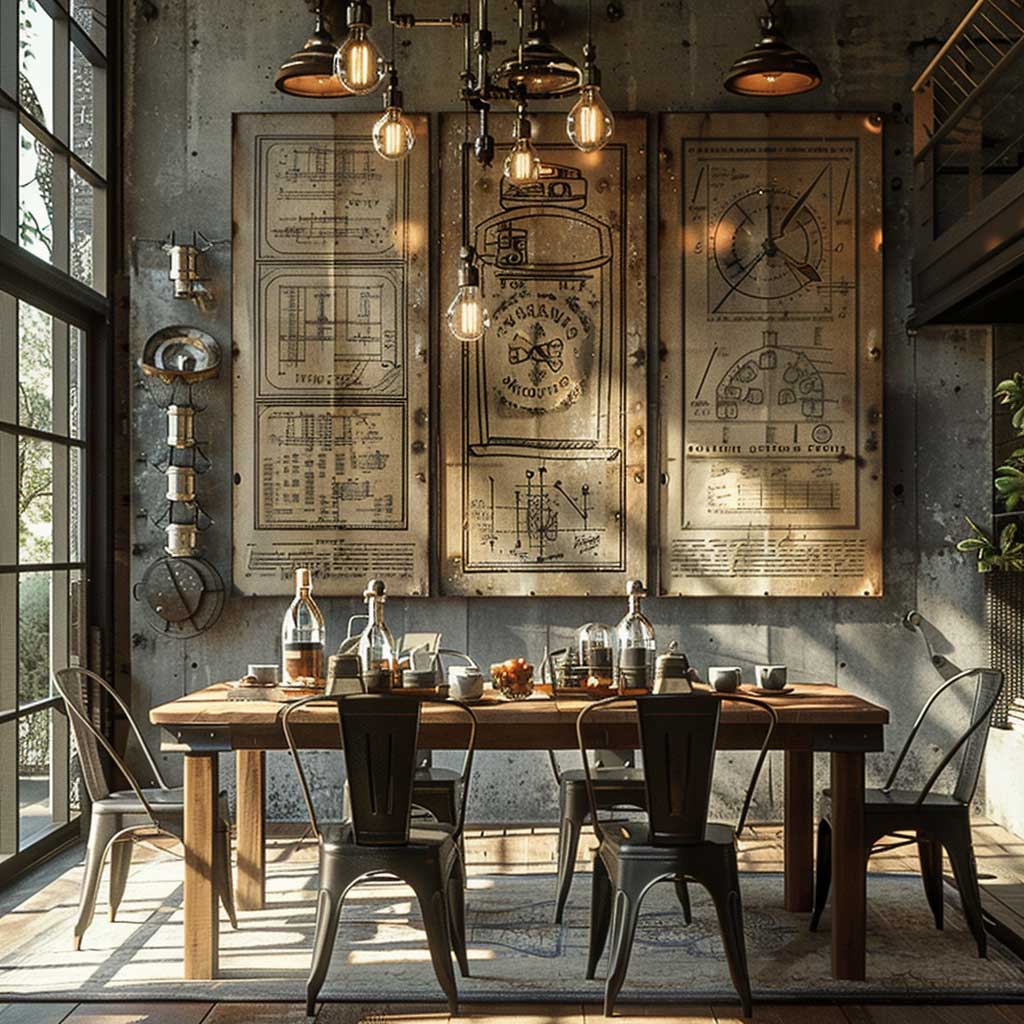
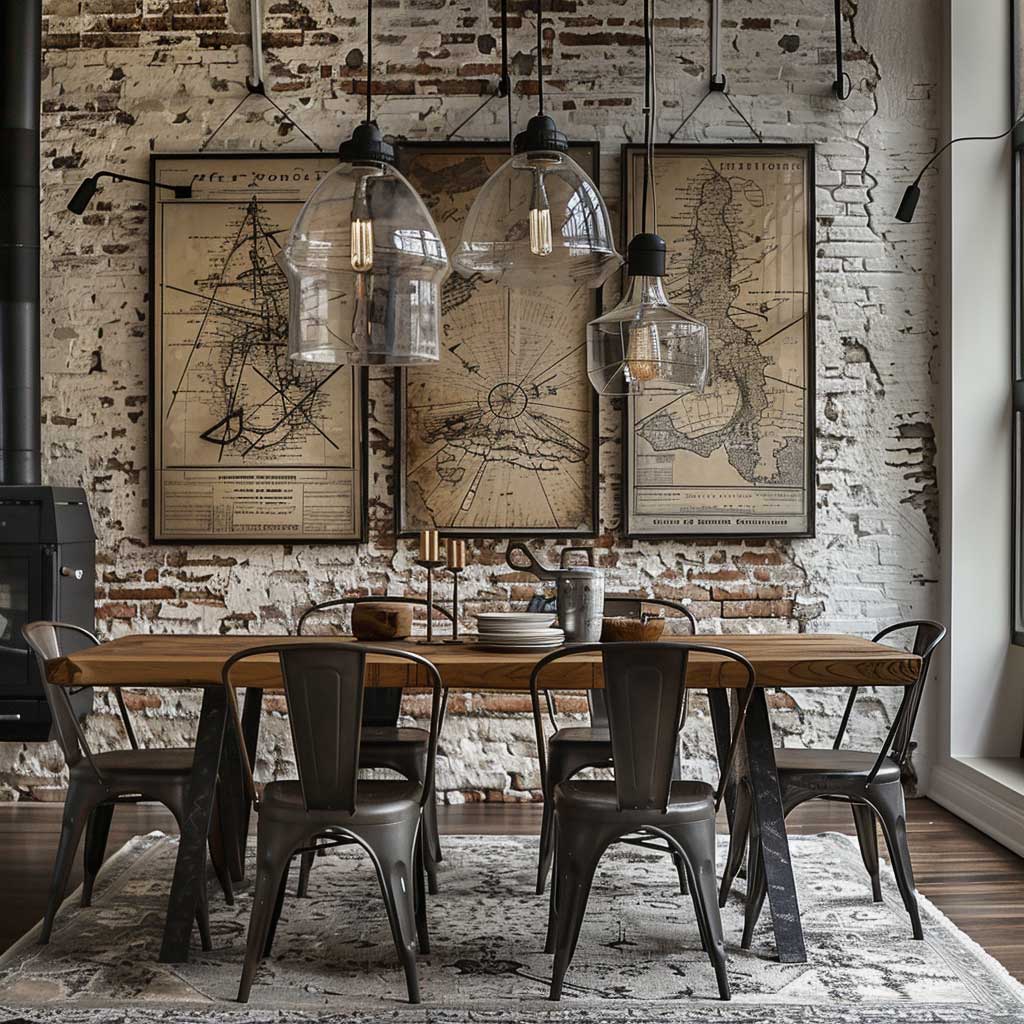
An area rug ties vintage industrial art into the floor plan rather than leaving it floating on the wall. A worn Persian or Turkish kilim in terracotta and navy — the kind you find at estate sales for $80–$150, or Rugs USA for around $200 — adds color and softness underfoot without contradicting the industrial tone above eye level. What I’d skip: jute rugs. Jute reads as farmhouse, not factory, and it muddies the urban clarity of the rest of the scheme.
For context on how vintage industrial art fits into wider interior design movements, Architectural Digest’s industrial design history covers why early 20th-century factory aesthetics have stayed culturally durable — the short answer is that honesty in materials never dates. You can also explore accent wall ideas for industrial spaces to frame exactly which wall your vintage art should live on before you start drilling.
Final Word
An industrial dining room earns its look through material honesty, not decoration quantity.
One exposed brick wall, one oversized pendant, one piece of vintage art. That’s the whole formula. Everything else is just furniture.
The room that photographs best on Pinterest is almost always the one with the fewest objects — because industrial design is about what you leave visible, not what you add.
Save this post before you start pulling permits for that brick wall.