Orange teen bedroom decor works best when orange plays the accent role instead of covering every wall. Does it suit a room where someone sleeps, studies and hangs out with friends? Yes, as long as the warm shade stays near 10–30% of what the eye sees and calmer neutrals hold the rest. A 12×12 room with 8-foot ceilings takes about 2–3 gallons of paint for two coats, so even a full repaint fits into one weekend. Start with one orange anchor piece and build outward from it.
The same logic holds for boys and girls, from a burnt orange room with dark wood to a soft apricot space with white furniture. Bright tangerine energizes, while muted terracotta and peach calm things down, so the shade matters more than the amount. Lighting finishes the job: warm 2700K bulbs keep orange glowing at night, while cool 5000K bulbs flatten it toward a dull rust. Choose the shade under the exact bulbs the room will use every evening.
Quick Scan
- Split the room 60-30-10: neutrals 60%, a supporting tone 30%, orange accents 10%.
- One gallon covers 350–400 sq ft per coat, so a 12×12 bedroom needs 2–3 gallons for two coats.
- One orange accent wall means about 96 sq ft of painting vs roughly 384 sq ft for all four walls.
- Reading corner: 400–600 lumens at 2700–3000K vs 450–800 lumens for desk work.
- Study light should reach about 500 lux on the desk, with 4000–5000K for homework.
- Soft peach suits small, dim rooms; burnt orange and tangerine suit larger, sunnier ones.
- Navy or teal sits opposite orange on the color wheel and sharpens it fast.
Warm Orange Accents That Carry a Teen Bedroom

Warm orange accents give a teen bedroom personality faster than any wall color, because bedding sits at eye level the moment the door opens. A rich orange bedspread with two or three matching cushions fills the 10% accent share in the 60-30-10 color rule explained by interior experts, leaving 60% for walls and 30% for furniture and the rug. Think of orange like chili in a recipe: a pinch wakes the dish up, a cupful takes it over. Keep the cushions within one shade of the bedspread so the bed reads as a single block of color.

Orange wall art turns personal interests into decor, whether that means an abstract print, a sports poster or a sketch the teen framed. One large print holds a wall on its own, while a grid of six small frames reads busier and suits a gallery corner. Softer members of the same color family work too, and these peach and cinnamon room palettes with real paint values show how pale peach at LRV 58–69 behaves next to darker wood. Let the teen choose the art and keep the color rules for yourself.

Natural light changes how loud orange looks across the day. Sheer white curtains spread daylight through the room, so a tangerine throw looks bright at noon and softer by evening. Should the furniture be orange too? Usually not, since a white desk, a light oak bookshelf and a pale chair keep the bold color from swallowing a small room. Don’t paint all four walls bright orange in a 12×12 bedroom, because one accent wall covers about 96 sq ft against roughly 384 sq ft for the full room.

Small pieces finish the look: a soft rug, a knitted throw and bedside lamps with orange shades. Warm 2700K bulbs inside those shades make orange glow like late sun, while 5000K bulbs push the same fabric toward brown. Each piece is cheap to swap, so the room can change as the teen’s taste shifts. For more color directions, compare these teenage bedroom ideas built around darker palettes and sharper contrast. Buy accents in pairs so each color appears at least twice in the room.
A Reading Nook Built Around One Orange Chair

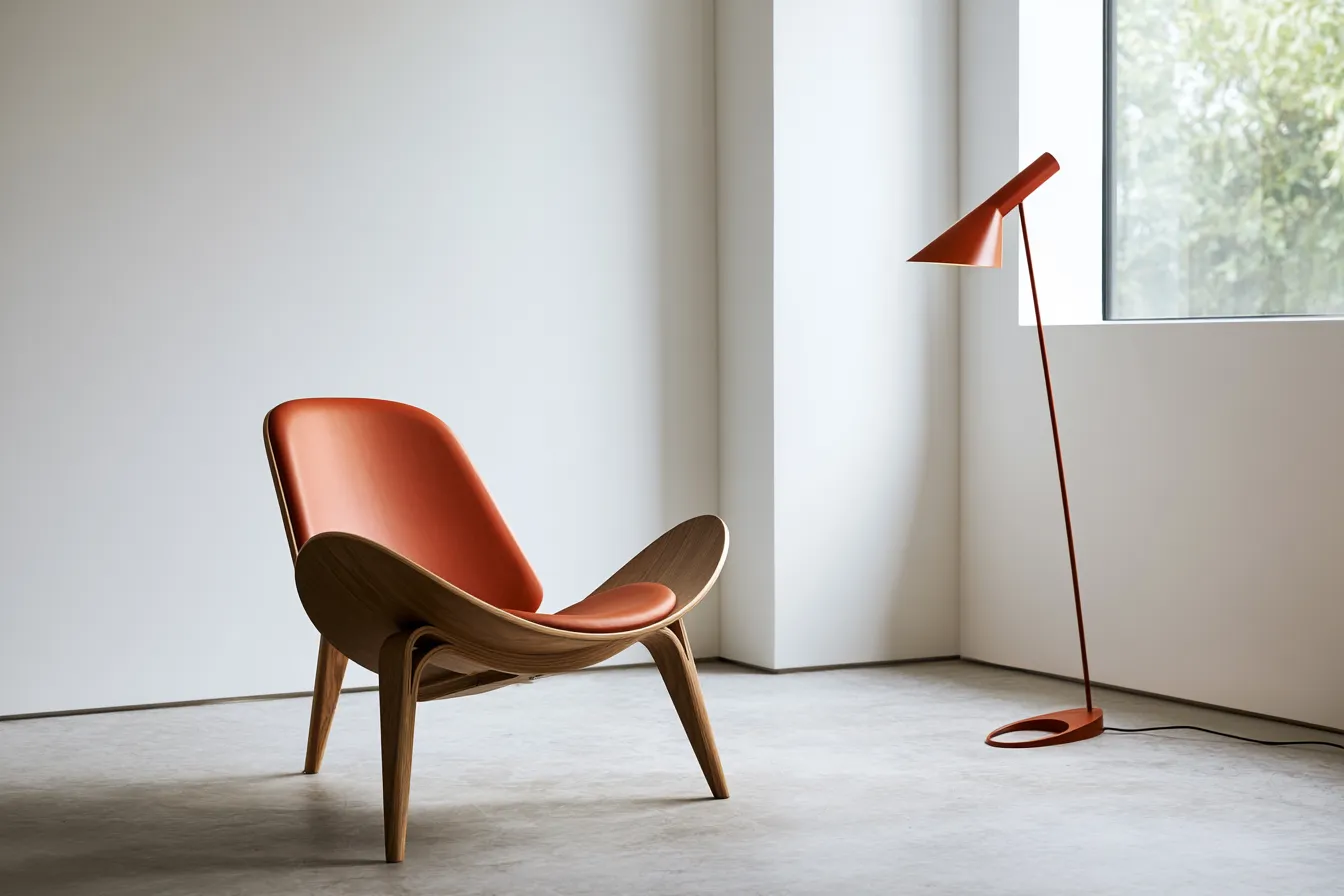
A reading nook built around one orange chair gives a teen a real reason to put the phone down. The chair takes the accent role, so the walls around it can stay cream, white or pale gray. Picture the nook as a small island: one bold piece in the middle and calm water all around. Pick a chair deep enough to curl up in rather than a stiff desk-style seat.

A small open bookshelf beside the chair keeps textbooks and novels within arm’s reach. Open shelves show spines and covers, while closed cabinets hide clutter but make the corner feel like storage instead of a retreat. A soft orange rug under the chair marks the zone the way a doormat marks an entrance. Keep that rug smaller than the room’s main rug so the nook reads as its own space.

Lighting decides whether the nook gets used after dark. Lamp makers suggest 400–600 lumens at a warm 2700–3000K for relaxed reading, compared with 450–800 lumens for desk tasks. Is warmer light bad for reading? Not for novels, since the softer glow is gentler on the eyes in the evening and makes orange fabric look richer. Don’t rely on the ceiling light alone; place an adjustable lamp beside the chair and aim it over the shoulder.

Personal touches make the corner feel owned rather than staged: framed photos, a small plant, a pinboard for notes. Three to five objects are enough, since a crowded shelf pulls attention away from the chair. A hardy plant such as a pothos survives missed waterings better than fussy leafy varieties. For calm neutral backdrops that let a single color stand out, browse these interior design tips built on gray and white. Rotate the photos every school term so the nook keeps feeling current.
Study Corners That Keep Orange Teen Bedroom Decor Practical
Study corners keep orange teen bedroom decor practical, because the desk is where the room has to work hardest. An orange desk or desk chair makes the zone obvious, while the surface should fit a laptop, notebooks and a lamp at once. Should the desk itself be orange? It can be, but an orange chair at a white desk gives the same pop with less color reflecting onto homework pages. Choose the desk size first and treat color as the second decision.

Comfort matters for a chair that sees homework every night. Pair the desk with a supportive chair in orange, and let motivational prints or study posters in the same family tie the corner together. Orange works like a highlighter on a page: it marks the important spot without coloring the whole sheet. Don’t buy a desk chair purely for its color, because adjustable height and back support come first.

Storage keeps the corner usable from September to June. Neutral shelves and drawers carry the 30% supporting share, while orange bins for chargers, pens and cables add the accent without more paint. Fabric bins are lighter and quieter than plastic, while plastic boxes wipe clean after spills. Label every bin so supplies go back to the same place.

Task light is where the numbers matter most. Typical guidance calls for 450–800 lumens for reading and writing, roughly 500 lux on the desk surface, and a neutral 4000–5000K tone for focused work. A teen may find 400 lumens bright enough where an adult at the same desk needs 700 or more. Pick a lamp with a CRI of 80 or higher and switch it to warmer light late in the evening.

A pinboard, a wall calendar and a few mementos make the desk feel personal instead of institutional. Keep the board within reach of the chair, since notes pinned across the room get forgotten. Orange pins or a cork board with an orange frame repeat the accent at eye level. For layouts that squeeze a desk into a shared or combined room, look through these creative study room designs. Clear the board at the end of each month so it stays a planning tool.
Shades and Pairings for Orange Teen Bedroom Decor
Choosing shades for a teen orange room starts with size and daylight, not with whether the room belongs to a boy or a girl. Soft peach and apricot suit small or north-facing rooms, burnt orange and terracotta suit rooms with dark wood, and bright tangerine works best in sunny rooms as a 10% accent. Treat the shade like a volume knob: peach is background music, tangerine is the chorus. Pale peach paints sit around LRV 58–69, so they bounce back far more light than deep burnt shades. Paint two 2×2 ft samples and check them at noon and after dark before buying.
What pairs best with orange? Blue sits opposite it on the color wheel, so navy bedding or a teal chair sharpens orange instantly, while gray and white calm it down. The pairing has sleep data behind it too: in a Travelodge survey of 2,000 people, blue bedrooms averaged 7 hours 52 minutes a night against 6 hours 12 minutes in gray ones, as these sky blue and soft gray bedroom looks explain. An orange and navy boys’ room reads sporty, while orange with white and kelly green feels fresh for a girl’s room. Let blue be the calm base and give orange the speaking part.
| Shade or pairing | Best room type | Share of the room | Bulb pairing | Paint for a 12×12 room, 2 coats |
|---|---|---|---|---|
| Soft peach or apricot | Small or north-facing bedroom | Up to 60% on walls | 2700K warm white | 2–3 gallons |
| Burnt orange or terracotta | Rooms with dark wood furniture | 30% on textiles or one wall | 2700K warm white | About 2 quarts for a 96 sq ft accent wall |
| Bright tangerine | Sunny, south-facing rooms | 10% accents only | 2700–3000K | No paint, accessories only |
| Orange + navy | Sporty boys’ room | 10% orange vs 30% navy | 2700K warm white | 2–3 gallons neutral + 2 quarts accent |
| Orange + white + kelly green | Fresh girls’ room | 60% white, 30% green, 10% orange | 2700–3000K | 2–3 gallons white |
A 70-20-10 split is a looser alternative when the teen wants more of one neutral, and some designers stretch it to 50-40-10 in white-walled rooms. Finish changes the budget as well: semi-gloss covers about 250–300 sq ft per gallon against up to 400 for flat, and premium gallons often run $50–$100. Is cheap flat paint fine for a teen room? On open wall it is, but eggshell or satin wipes clean where backpacks and hands hit the paint. Price the finish before the color so the budget holds.
Don’t Do This
- Painting four walls bright tangerine in a 12×12 room instead of one accent wall of about 96 sq ft.
- Mixing 2700K and 5000K bulbs in one room, so orange looks warm on one wall and brown on the next.
- Buying one gallon for a full repaint instead of planning 2–3 gallons for two coats.
- Lighting the reading nook with a cool 5000K lamp at night instead of 2700–3000K.
- Letting orange cover more than 30% of surfaces in a room with one small window.
Where Orange Wins
Orange earns its place in a teen room as an accent, and 10% bold color against 60% calm neutrals beats a fully orange room in almost every layout. One accent wall needs about 96 sq ft of paint versus roughly 384 sq ft for all four walls. That gap keeps repainting cheap when tastes change.
For the bed zone, use an orange bedspread, two matching cushions and lamps with 2700K bulbs. Swap the throw and pillows first when the teen wants a refresh. Those pieces cost far less than one premium gallon at $50–$100.
For the reading nook, one orange chair, an open shelf and a 400–600 lumen warm lamp are enough. For the study corner, aim for 450–800 lumens, about 500 lux on the desk and a neutral 4000–5000K tone. Orange bins and a pinboard repeat the color without adding clutter.
Pick the shade by light: soft peach for small, dim rooms, burnt orange beside dark wood, tangerine only in sunny rooms. Pair it with navy or teal for contrast, or with white and gray for calm. Test two samples before ordering 2–3 gallons.