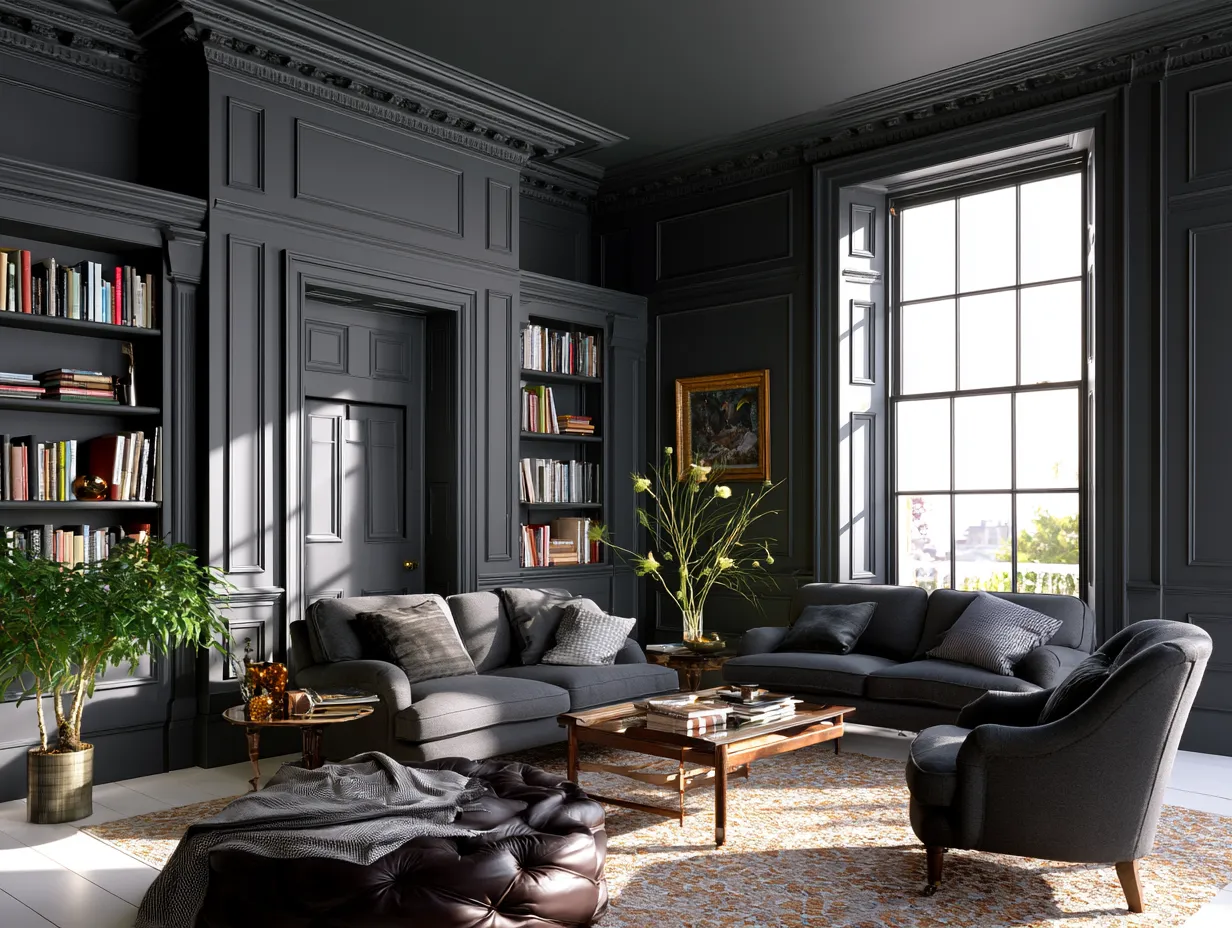
Grey and white interior design earns its reputation not because the palette is safe — it’s because, executed with the right furniture weights and one deliberate contrast decision, the combination genuinely transforms a room in a way louder schemes can’t. The appeal is architectural: grey grounds a space without stripping warmth from it, white keeps surfaces from closing in, and together they create a backdrop that works in a living room, a bedroom, and a kitchen with equal authority.
Most rooms in this palette go wrong at the furniture selection stage, not the color choice. A grey sofa against white walls reads completely differently depending on whether the undertone is warm greige or cool blue-grey — and matching those undertones across rooms is the call most people skip and later regret. The combination also shifts dramatically under artificial evening light, which means the grey that looks serene at 2 PM can read cold and flat by 7 PM without a warm-bulb correction.
Three distinct applications of grey and white interior design are covered here — the living room, the bedroom, and the kitchen — each one solving a different room problem with the same foundational palette.
→ Grey and white living rooms need at least three textures per seating area to avoid reading flat
→ Window area should cover 10–20% of floor space to make the palette feel bright rather than dim
→ Grey upholstered beds start around $265 for entry-level and reach $1,000+ for velvet queen frames
→ Sheer white curtains outperform blackout panels in rooms under 150 sq ft — they keep the space visually open
→ Carrara marble countertops run $40–$100 per sq ft installed; Calacatta runs $100–$200 per sq ft
→ Grey cabinets with Sherwin-Williams Agreeable Gray (SW 7029) pair best with white countertops that have warm veining
Grey and White Living Room — Where Texture Decides Everything
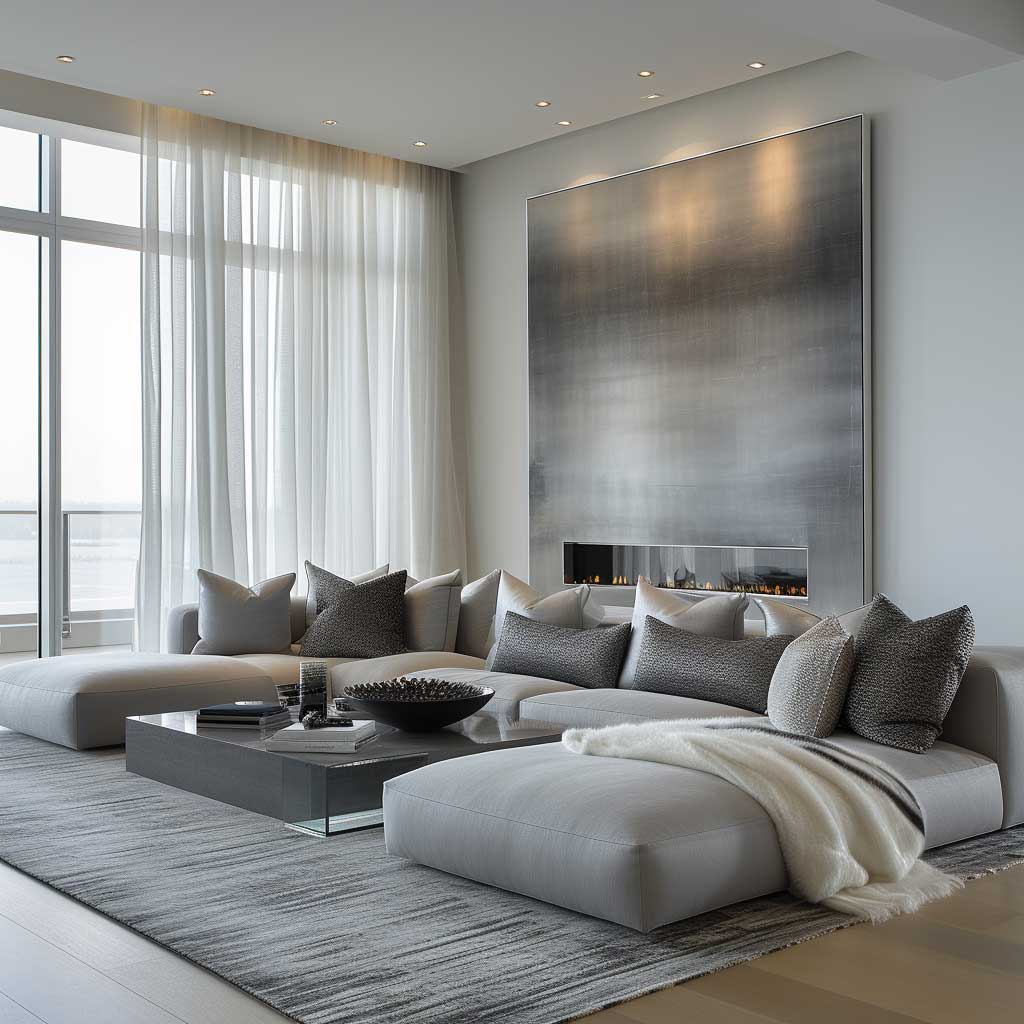


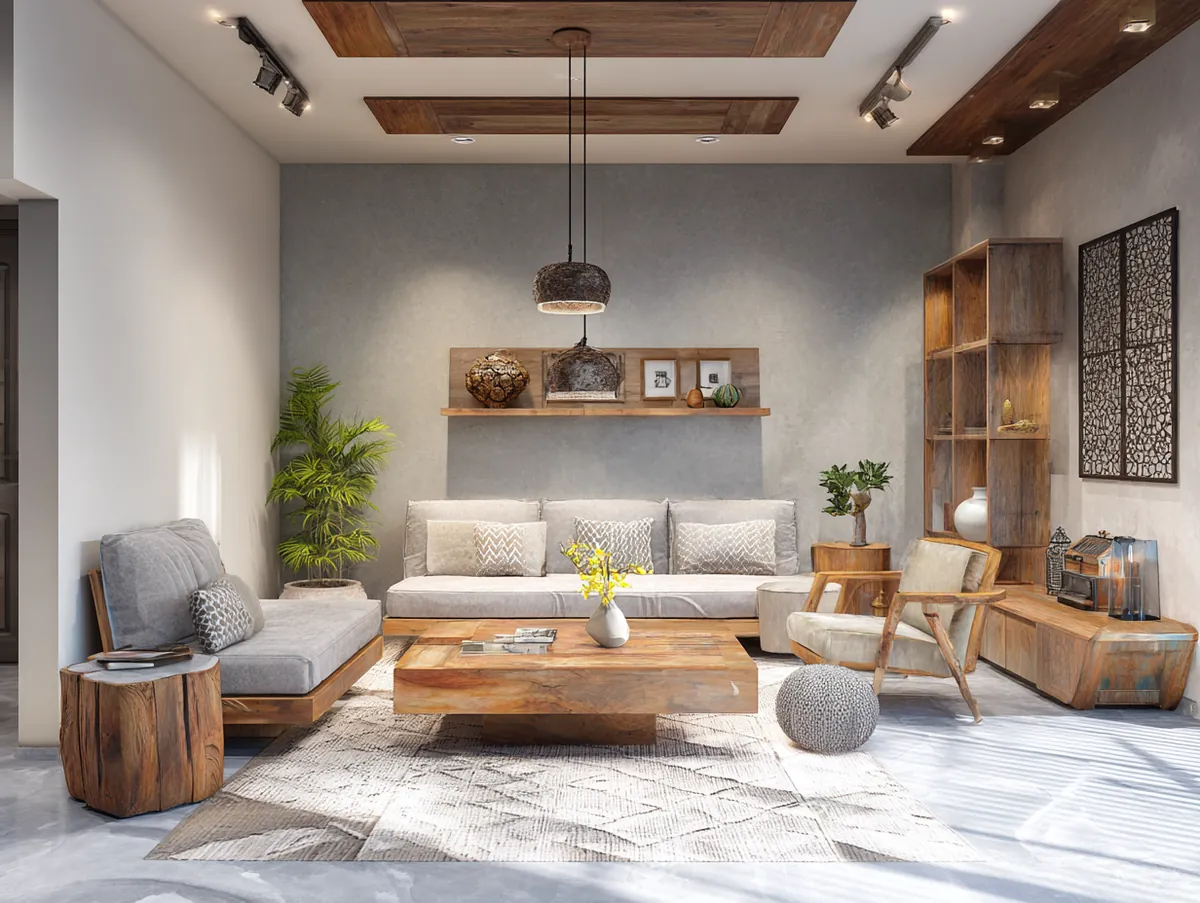
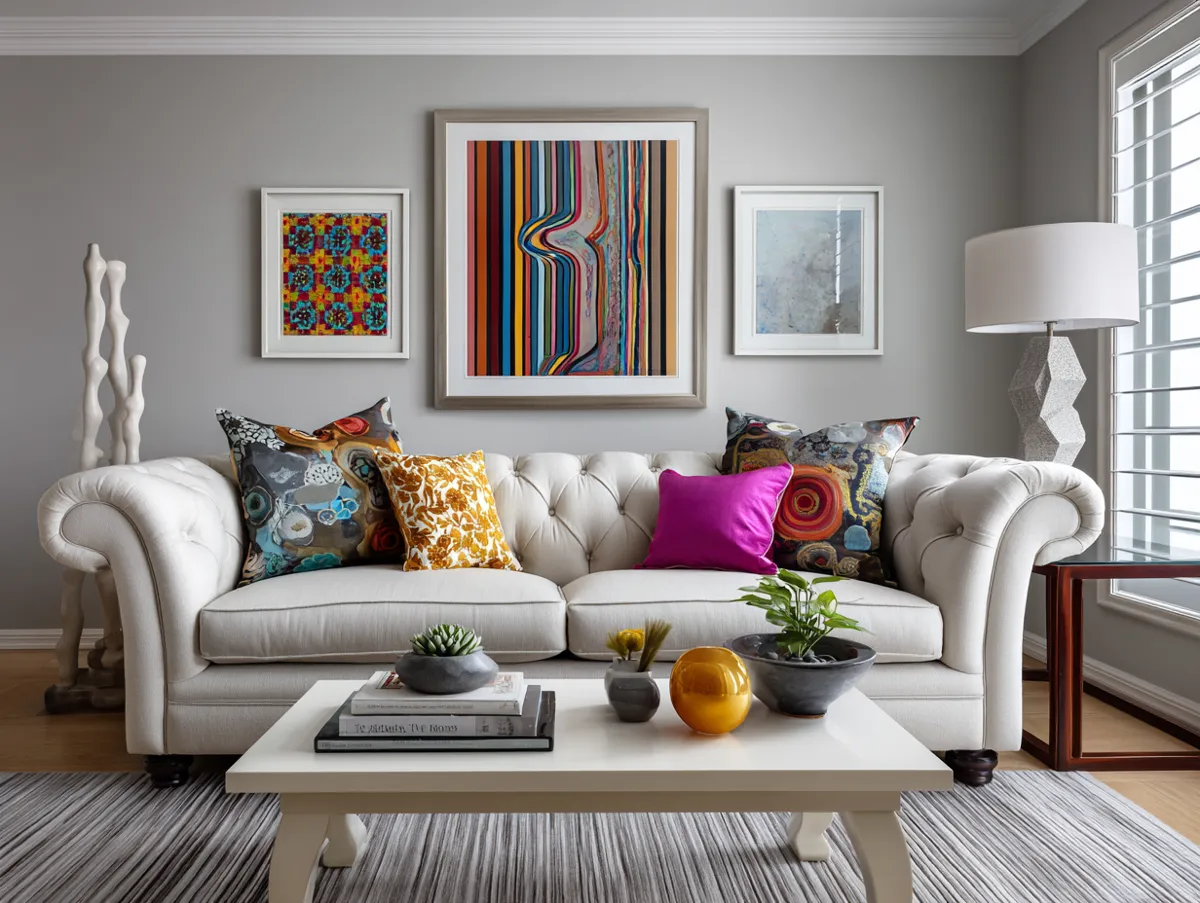
Grey and white living room design lives or dies on a single variable: texture. The palette is inherently low-contrast — take away texture differences and the room reads like an unfinished render. Stylists recommend pairing at least three textures per seating area: a velvet cushion, a linen throw, and a wool rug give the eye somewhere to travel rather than glazing over. A grey sofa that reads “corporate lobby” in a showroom transforms completely when draped with a chunky knit throw in a slightly darker or lighter grey shade.
Natural light is the other factor that makes or breaks a grey and white space. According to the International Code Council, habitable rooms need glazing that covers at least 8–10% of their floor area to supply sufficient natural light — but designers typically recommend 15–20% for a grey and white scheme specifically, because the palette depends on daylight to show as grey rather than charcoal. Large windows with sheer white curtains achieve this while diffusing harsh light into the soft, even fill that the combination needs. What doesn’t work: heavy blackout panels in rooms under 150 square feet, which close off the very quality — airiness — that makes this palette worth choosing. For more on how to layer this palette in a living room, the approach in grey and white living room decor ideas covers textures, accent colors, and specific furniture picks in depth.
Silver and glass accents serve a specific function in this scheme: they reflect light across the room without adding color, which means they amplify rather than compete. A glass coffee table or a mirrored side piece bounces daylight back toward darker corners. A modern fireplace anchors the social end of the room while its glow softens the grey tones at night — the warm 2700K light that fire produces is exactly what corrects the cold-leaning quality that some grey undertones carry after sunset. Abstract art in grey and white keeps the walls from going stark without introducing a competing color story.

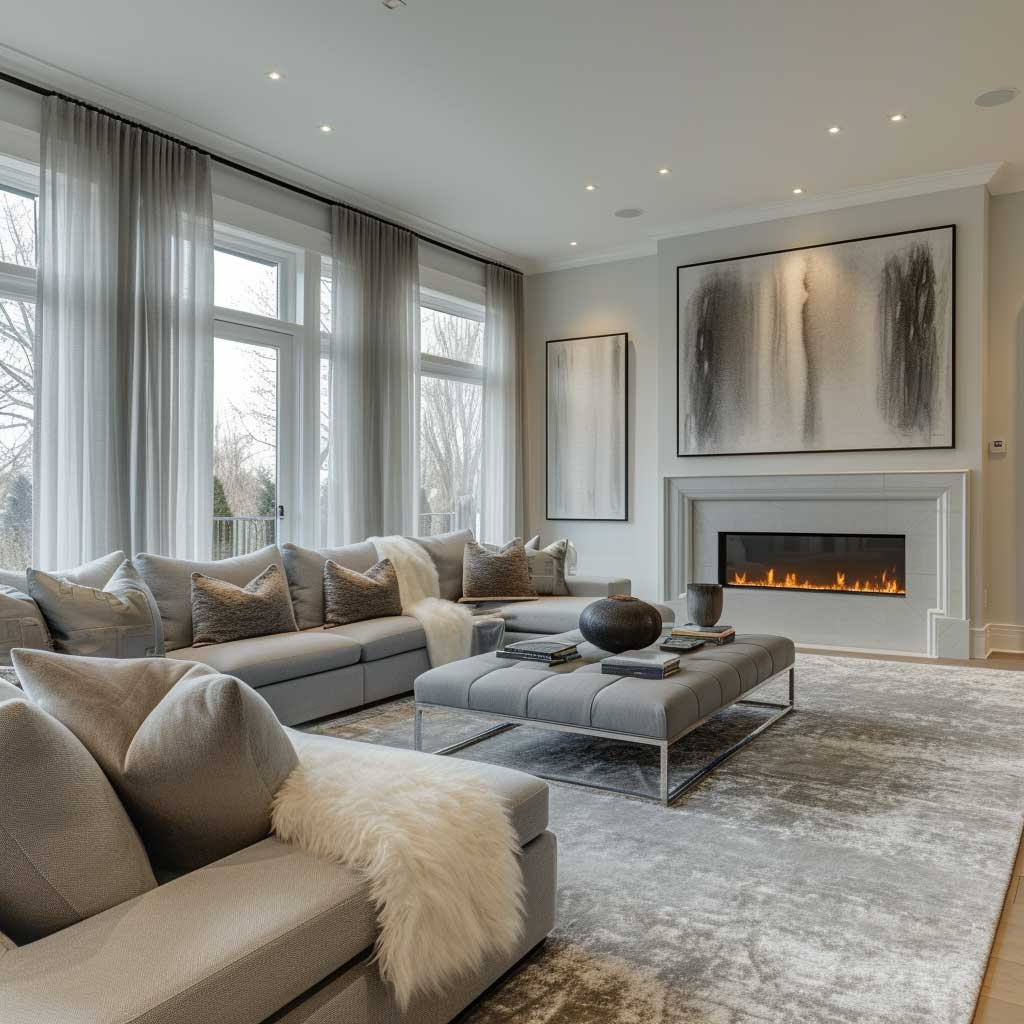
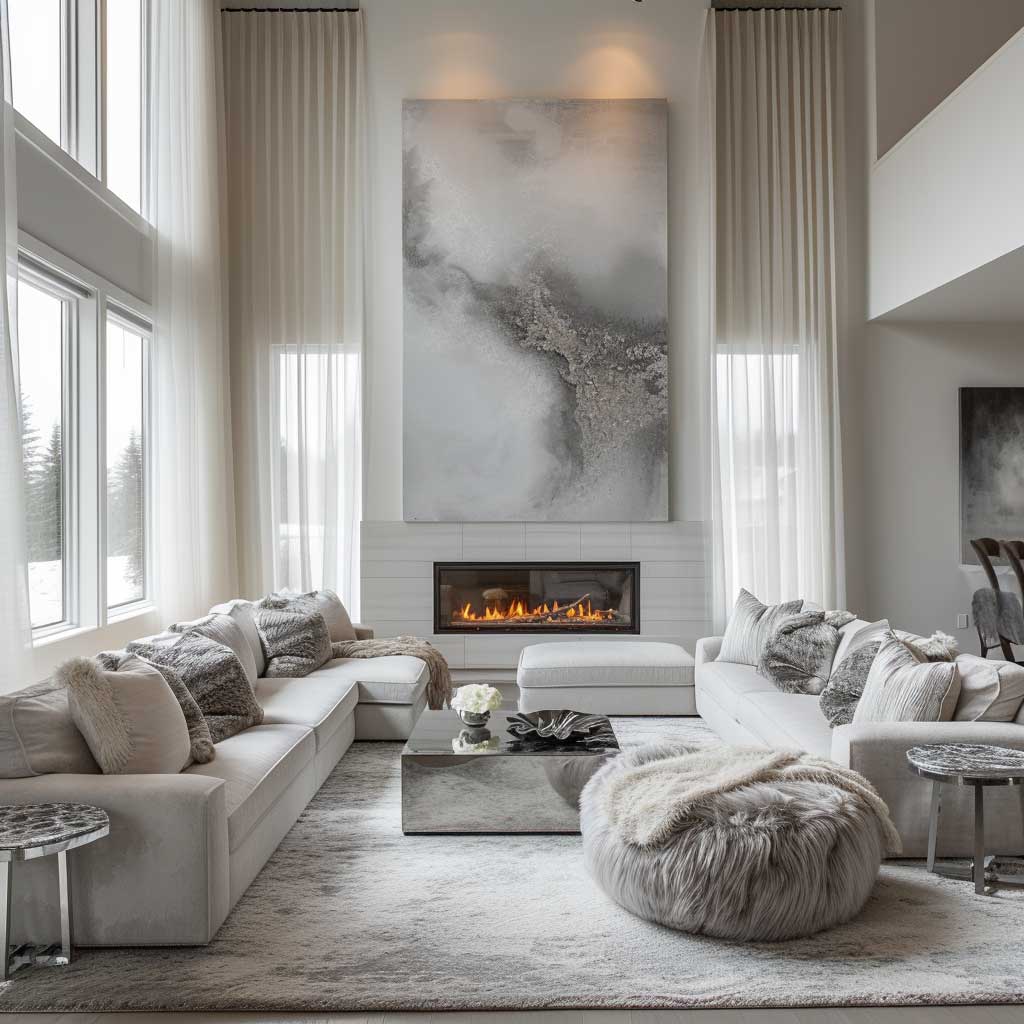
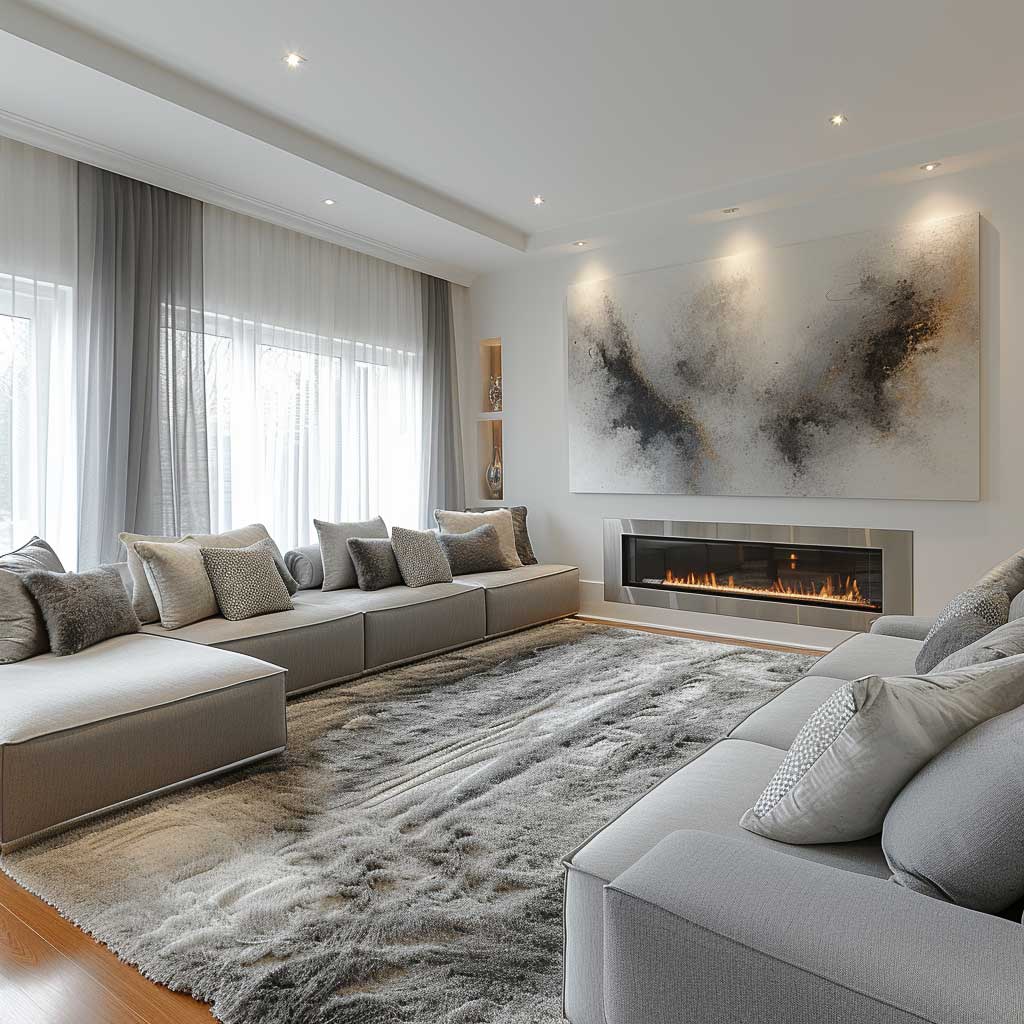
Does the grey sofa shade matter more than the white wall shade? The answer is: the undertone matters more than the depth. A grey sofa with a blue undertone against a warm-white wall with yellow undertones produces a clash that neither color alone would suggest — the two undertones work against each other instead of reinforcing the calm the palette is meant to deliver. Hold the sofa fabric and the wall paint chip together in natural midday light before committing to either. The single most common reason grey and white rooms look off in person but not in photographs is a mismatched undertone combination that the camera’s white balance corrects automatically.
Painting all four walls in the same dark charcoal grey. A room painted entirely in charcoal absorbs daylight and reads as a dim, closed space by mid-afternoon. Use a dark grey on one accent wall only, and keep the remaining three in a light grey or white to preserve the openness the palette depends on.
Buying a matching bedroom or living room set as a package. A complete suite from one manufacturer reads as a catalog page, not a room. Grey and white interior design creates its character from mix-and-match pieces where each item looks considered — a grey upholstered sofa paired with white-painted side tables reads completely differently than a matchy-matchy set from a single brand.
Skipping the undertone check. Cool blue-grey walls with warm honey-oak flooring create a visible tension that is hard to correct without replacing one or the other. Greige tones — grey with a beige or taupe undertone — bridge the gap between grey and warm wood most naturally.
Bedroom Retreat — How the Grey and White Combination Controls Calm


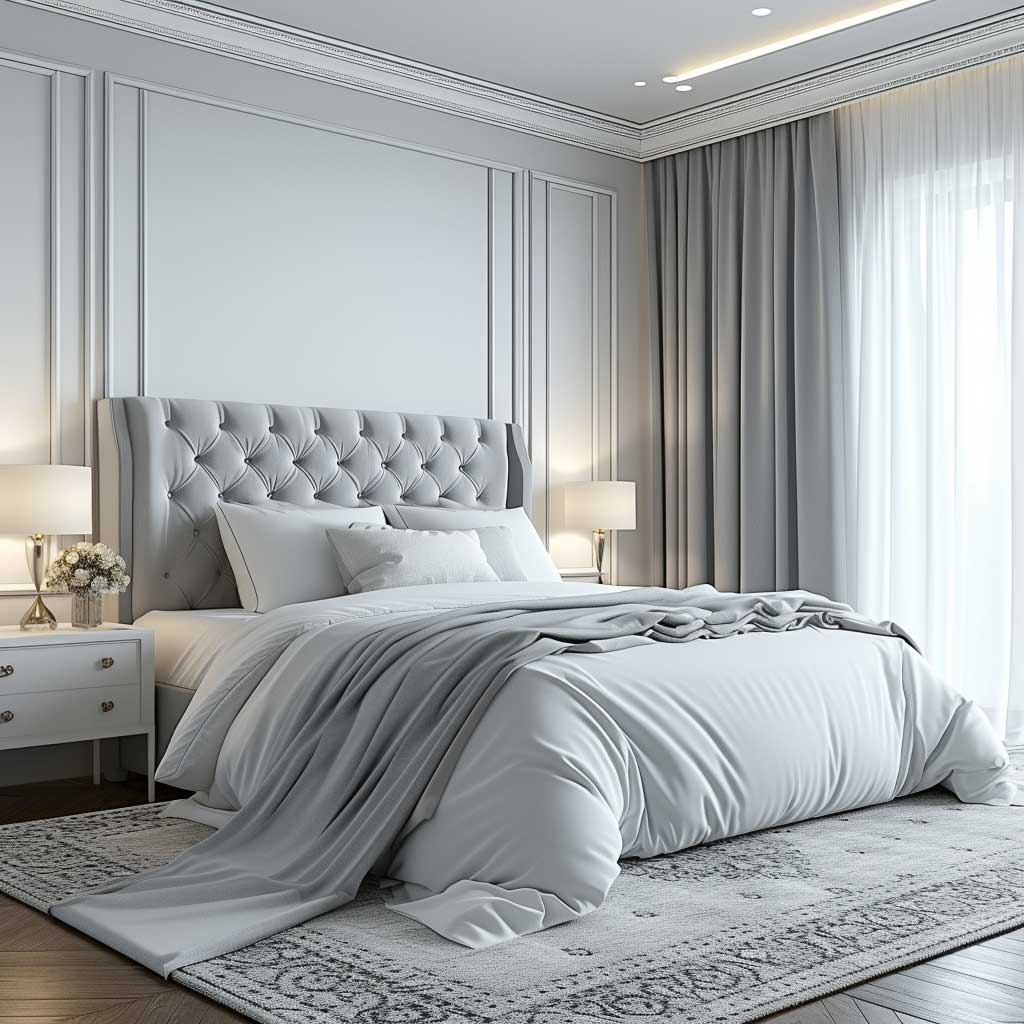
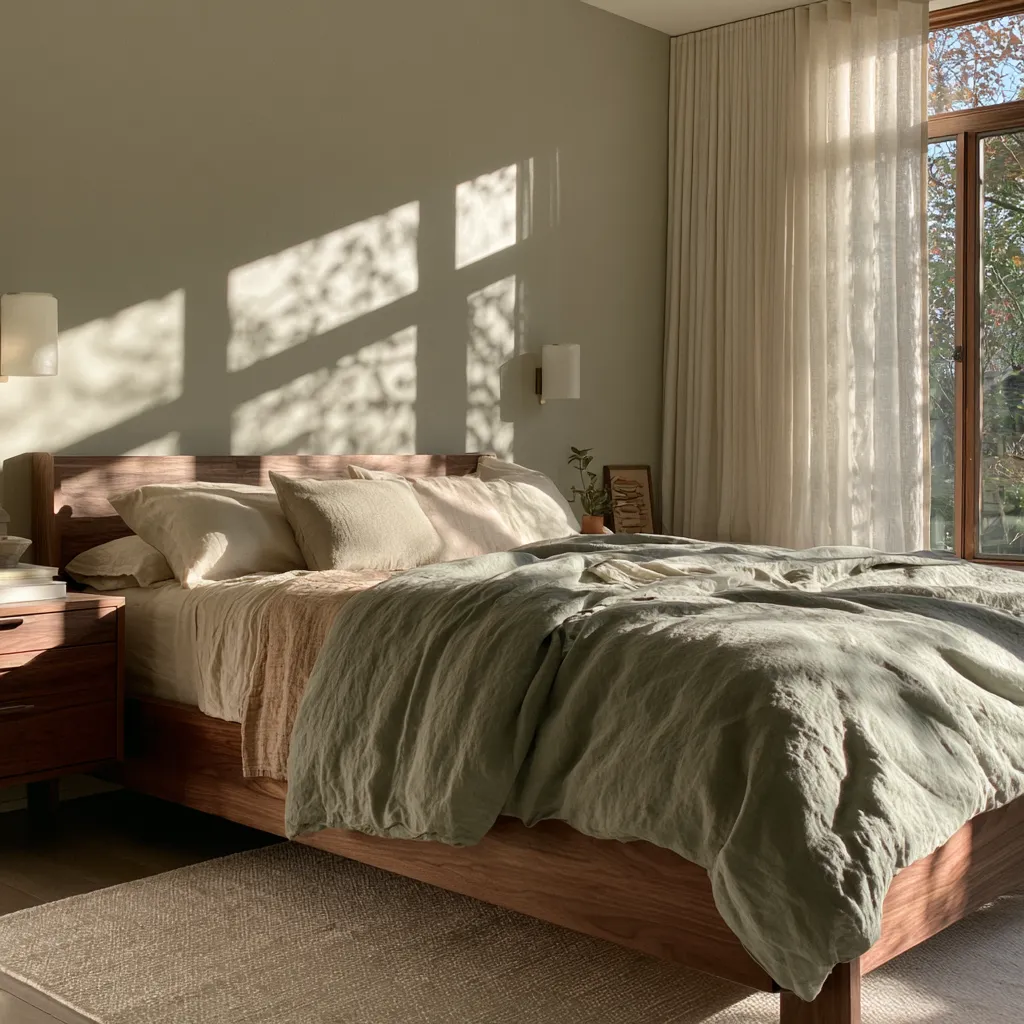
A grey upholstered bed against crisp white walls is the foundational move in a grey and white bedroom — but the proportion of the frame matters as much as the color. A low-profile frame sitting 14–16 inches off the floor makes the same ceiling appear taller and the same floor area appear larger, the same optical principle that makes Japanese-style interiors feel spacious despite compact square footage. Grey upholstered queen bed frames range from around $265 for entry-level platform options to $689–$1,072 for mid-range velvet frames (Ashley Furniture), with the frame height being a functional design decision, not merely a style preference. Tall, bulky frames in rooms under 150 square feet eat the very visual space the grey and white palette is supposed to create.
A grey and white area rug placed under the bed anchors the scheme and introduces texture underfoot — the tactile contrast between a plush rug and smooth white bedding creates the same effect as a textured throw in a living room: it stops the room from reading as a staged set. The placement matters more than the pattern: extend the rug at least 60 cm past the foot of the bed so a visible portion shows from the doorway. A rug that disappears entirely under the frame loses its function as a visual anchor and the scheme flattens. White bedding with subtle grey accents keeps the bed as the room’s focal point without competing with the wall tones.
Sheer white curtains at the bedroom windows do the same work in a bedroom that large windows do in a living room — they diffuse rather than block daylight, which means the light shifts across the grey walls throughout the day and prevents the palette from feeling static or institutional. Minimalist bedside tables with geometric lamps keep the visual weight symmetrical around the bed, which is what gives the room the calm rather than the neglect quality. What fails here: ambient lighting from cool-white bulbs (5000K+) that push the grey tones toward blue and make the room feel clinical instead of restful. A warm 2700K bulb at the bedside changes how the same grey reads without touching the paint. For a deeper look at how furniture choices interact with this palette in a bedroom, the modern grey and white bedroom furnishing ideas article covers frame proportions, feature wall options, and specific product picks in detail.
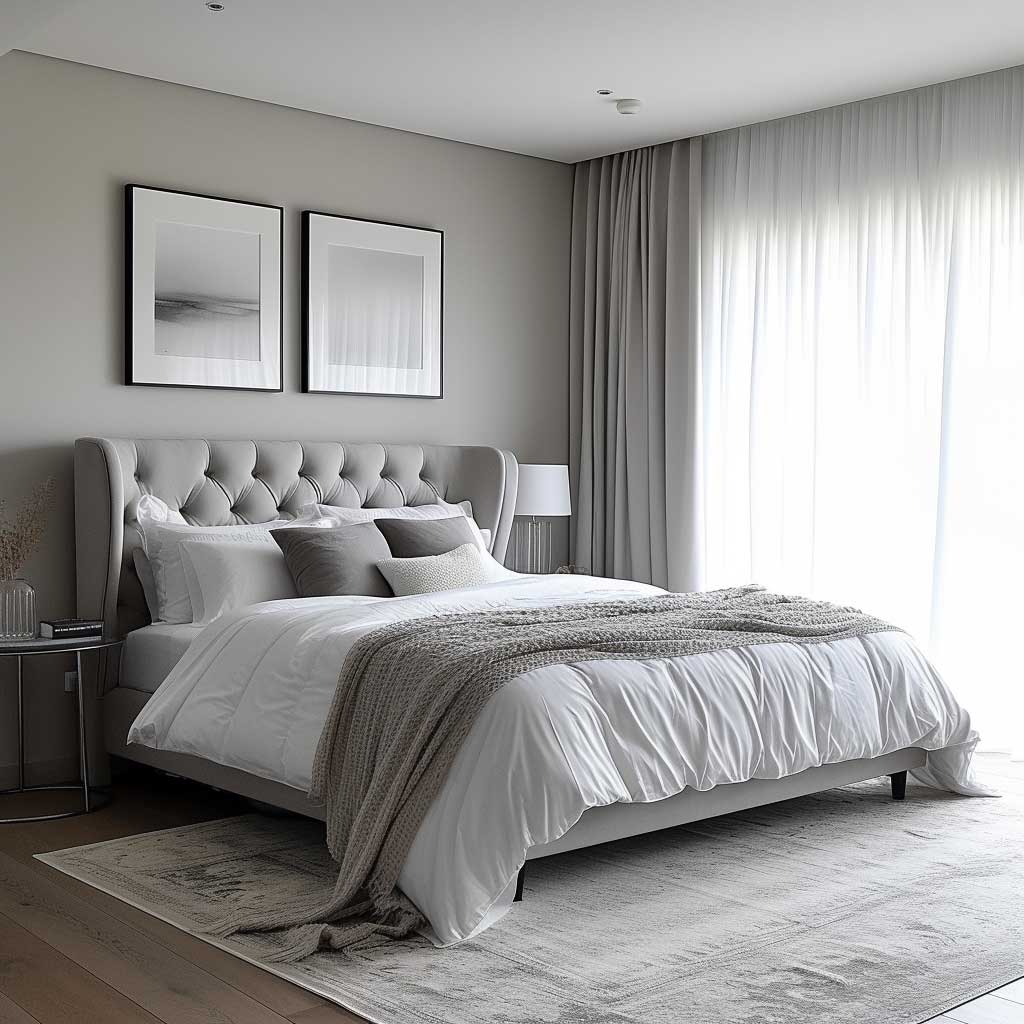
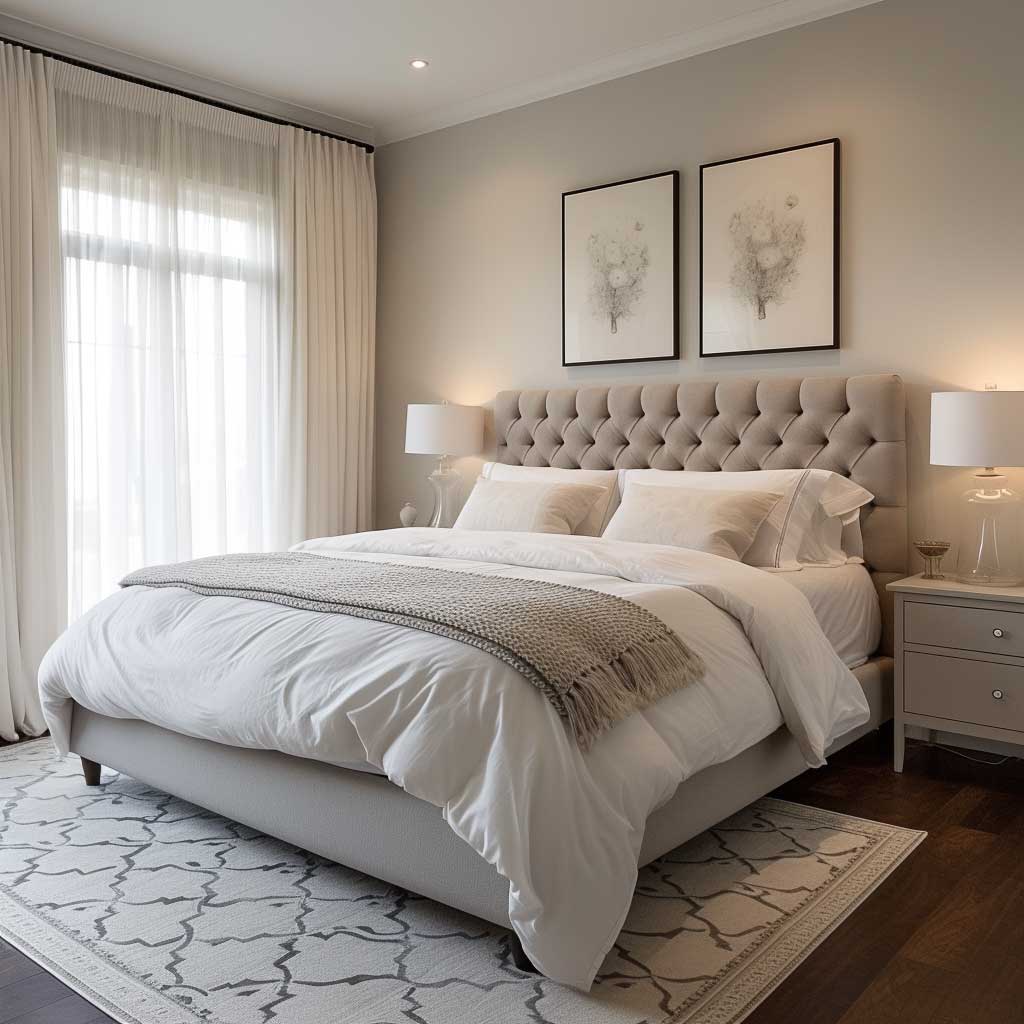
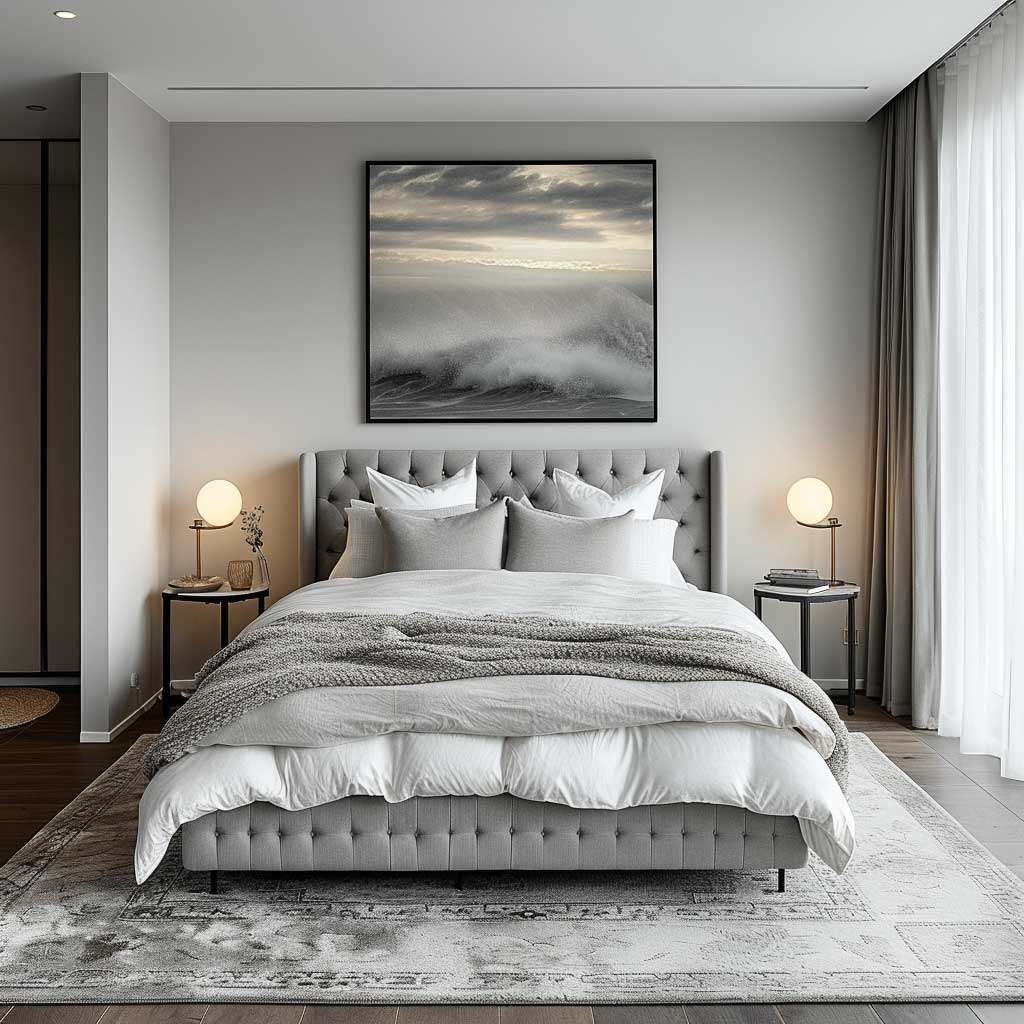

The grey and white bedroom also responds well to a single feature wall in a deeper grey — not two walls, not a painted ceiling, just one. That wall functions like a shadow behind the headboard, making the white furniture and bedding in front of it appear lighter and more defined. Paint choice matters here: mid-tone greys with an LRV (Light Reflectance Value) between 48 and 57 are deep enough to create the contrast without closing the room in. Benjamin Moore Metropolitan AF-690 and Coventry Gray HC-169 both sit in this range. A grey bedroom palette from Benjamin Moore Regal Select runs $65–$75 per gallon, Sherwin-Williams Emerald $90–$120 per gallon — a wall’s worth of premium paint costs less than a single night table and makes a more significant visual difference.
Grey Cabinets and White Countertops — the Kitchen Combination That Holds Up
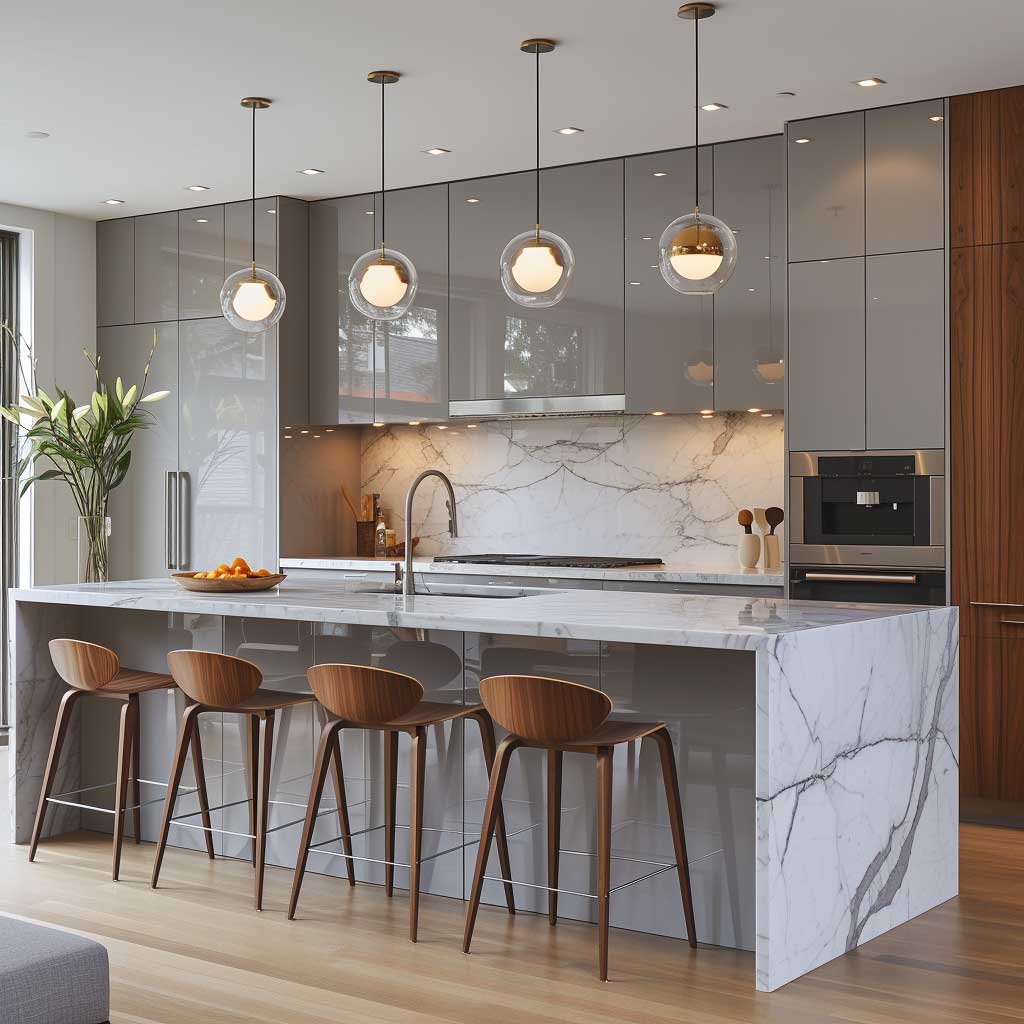
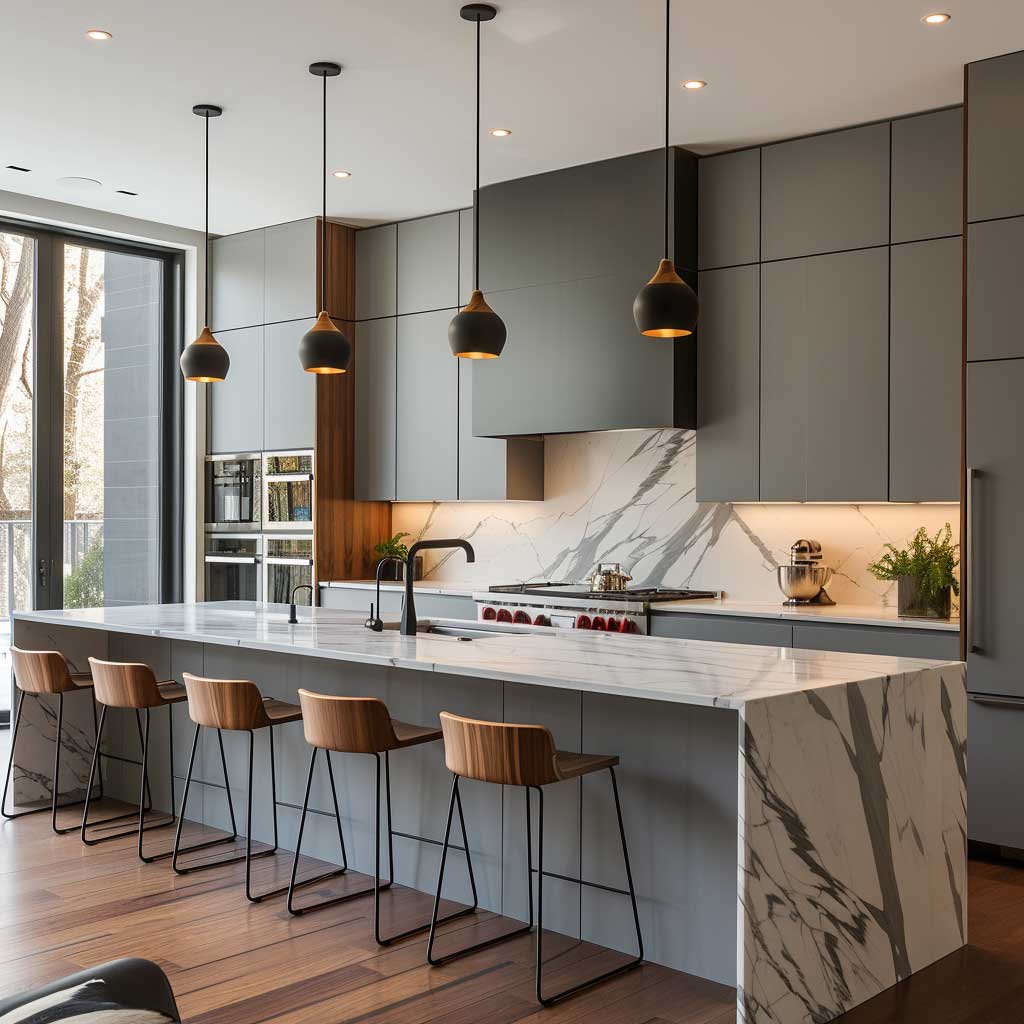
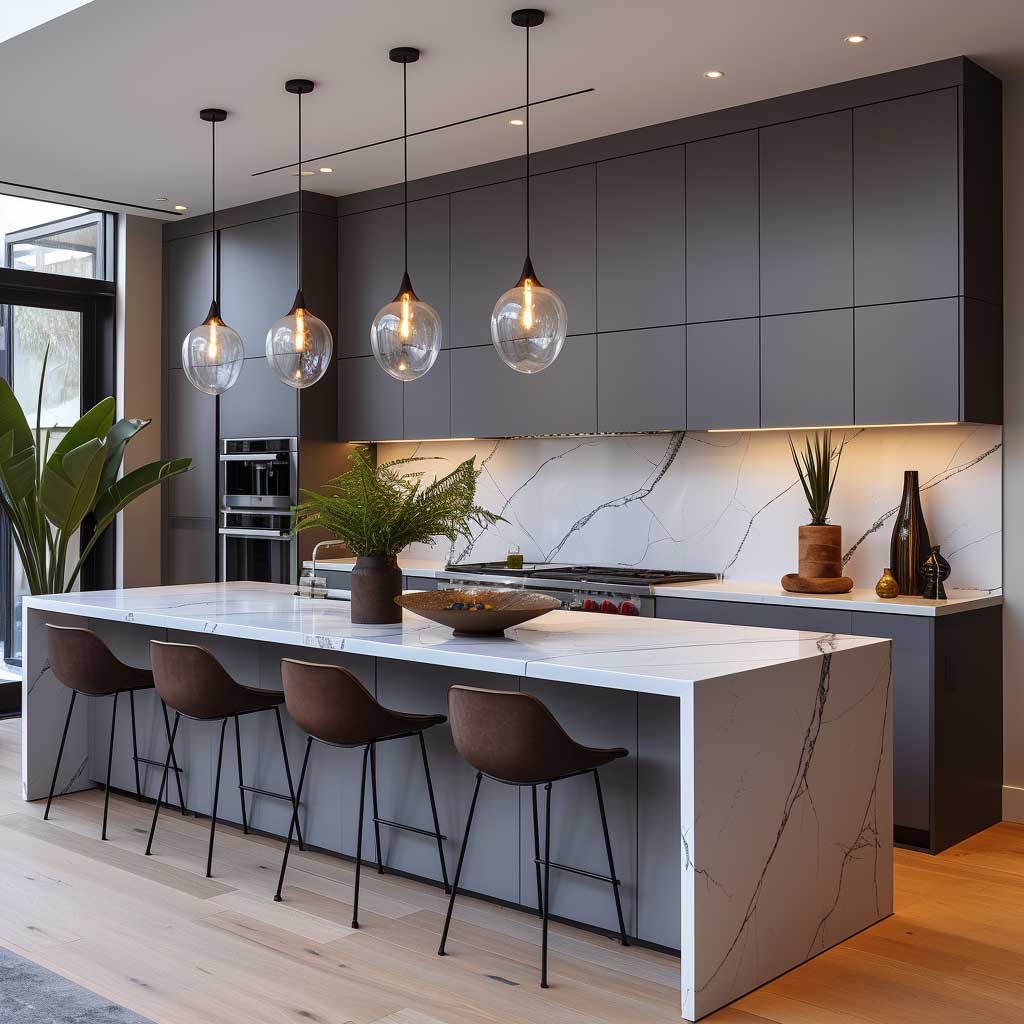
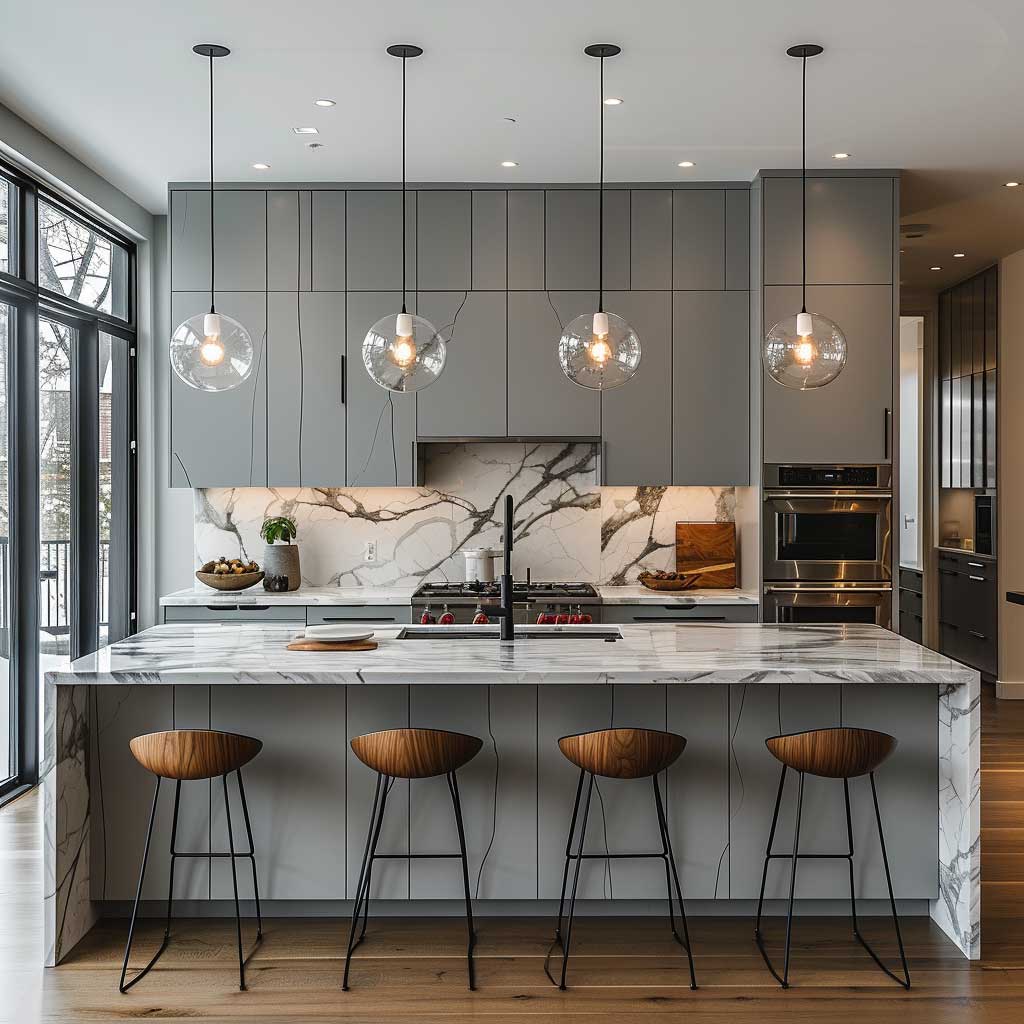
Grey cabinetry paired with white marble countertops is the kitchen application of grey and white interior design that generates the most questions — and the most avoidable mistakes. The grey cabinet shade carries everything. Sherwin-Williams Agreeable Gray (SW 7029) is the single most widely used grey-beige cabinet color in U.S. kitchens, and it pairs well with white countertops that have warm veining like Calacatta gold quartz or honed Carrara marble precisely because the warm undertone in the cabinet connects to the warm movement in the stone. A grey cabinet with a cool blue undertone against a warm-white Carrara surface creates a subtle clash that looks fine in photographs but registers as slightly off in person.
Carrara marble is the most common white countertop choice in grey and white kitchens: it runs $40–$100 per square foot installed, making it the most accessible genuine Italian marble. Calacatta, which has bolder veining and a brighter white base, runs $100–$200 per square foot installed. For a typical 30-square-foot kitchen island, mid-grade Carrara with a standard edge comes to roughly $1,200–$3,000 installed — a significant investment, but one that also requires sealing every 6–12 months to prevent staining (sealing does not prevent acid etching, which is a separate chemical reaction and the most common complaint from marble kitchen owners). For a detailed breakdown of grey marble varieties, durability, and care requirements, SlabWise’s gray marble countertop guide covers installed cost by variety, sealing frequency, and how to choose a slab at the yard.
A central island with bar seating is the feature that makes a grey and white kitchen function as a social space rather than a utility corridor. The white marble surface extending to the island creates visual continuity and makes the kitchen feel wider. Pendant lights above the island — minimalist in profile, warm in color temperature — provide focused illumination that highlights the veining in the marble at close range: the same way daylight does at a window, artificial light at 2700K makes the grey veining in a white surface read as intentional texture rather than variation to work around. Stainless steel appliances in this context add a professional edge without competing with the palette, since stainless reads as neutral in a grey and white scheme the same way glass does in a living room.

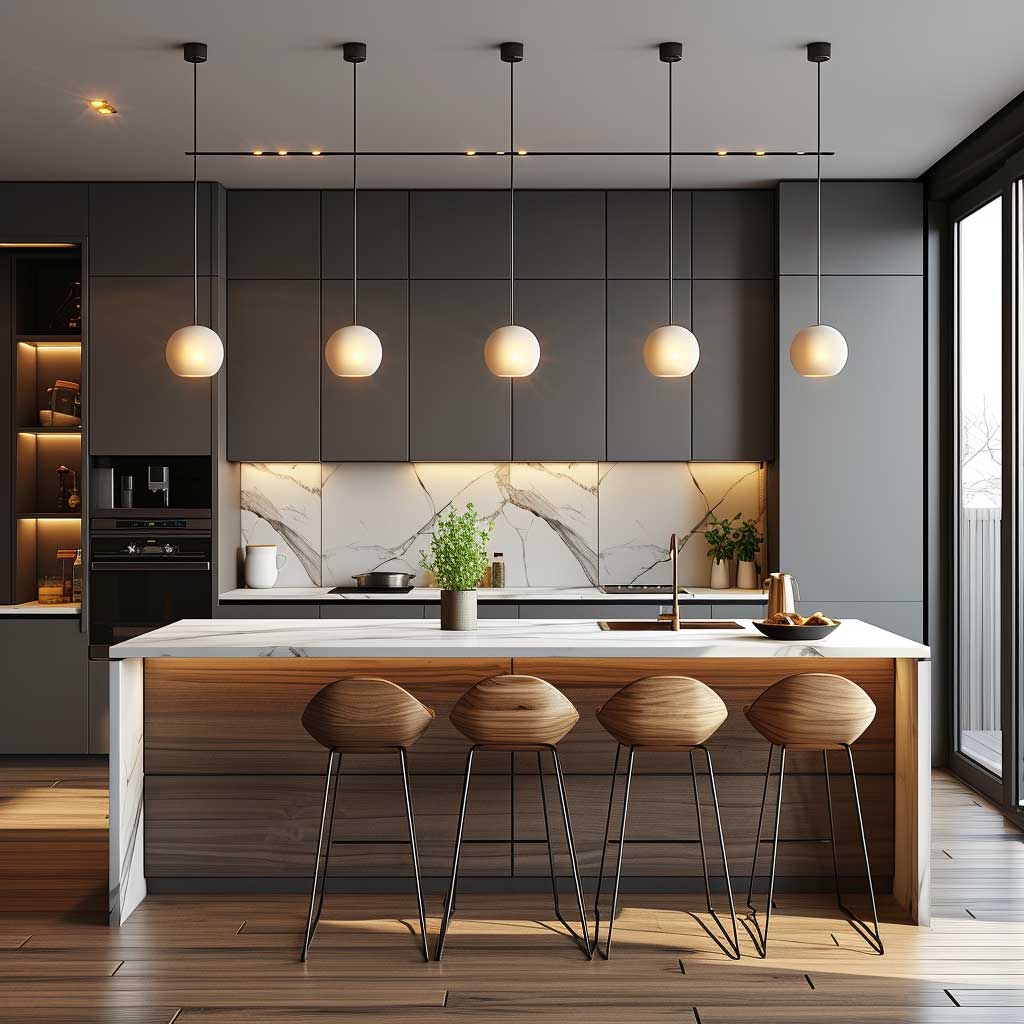
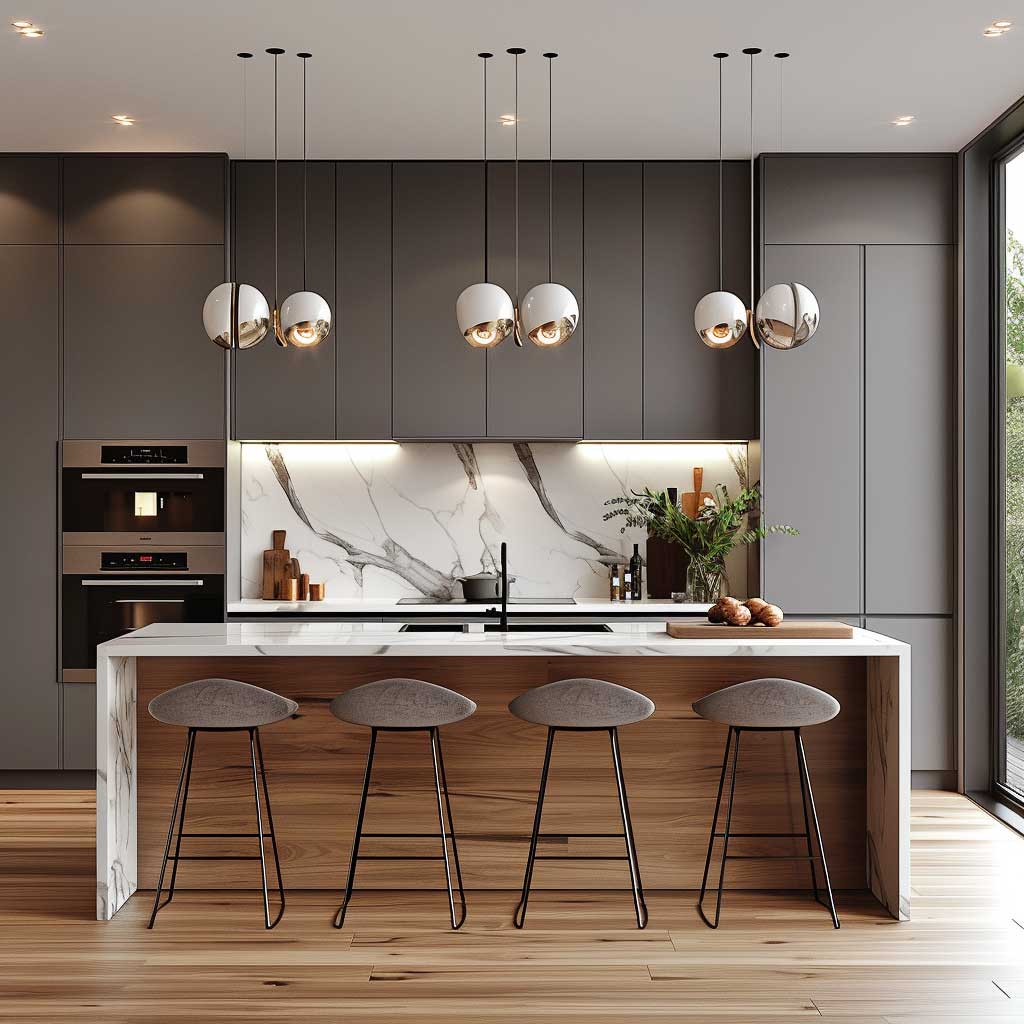
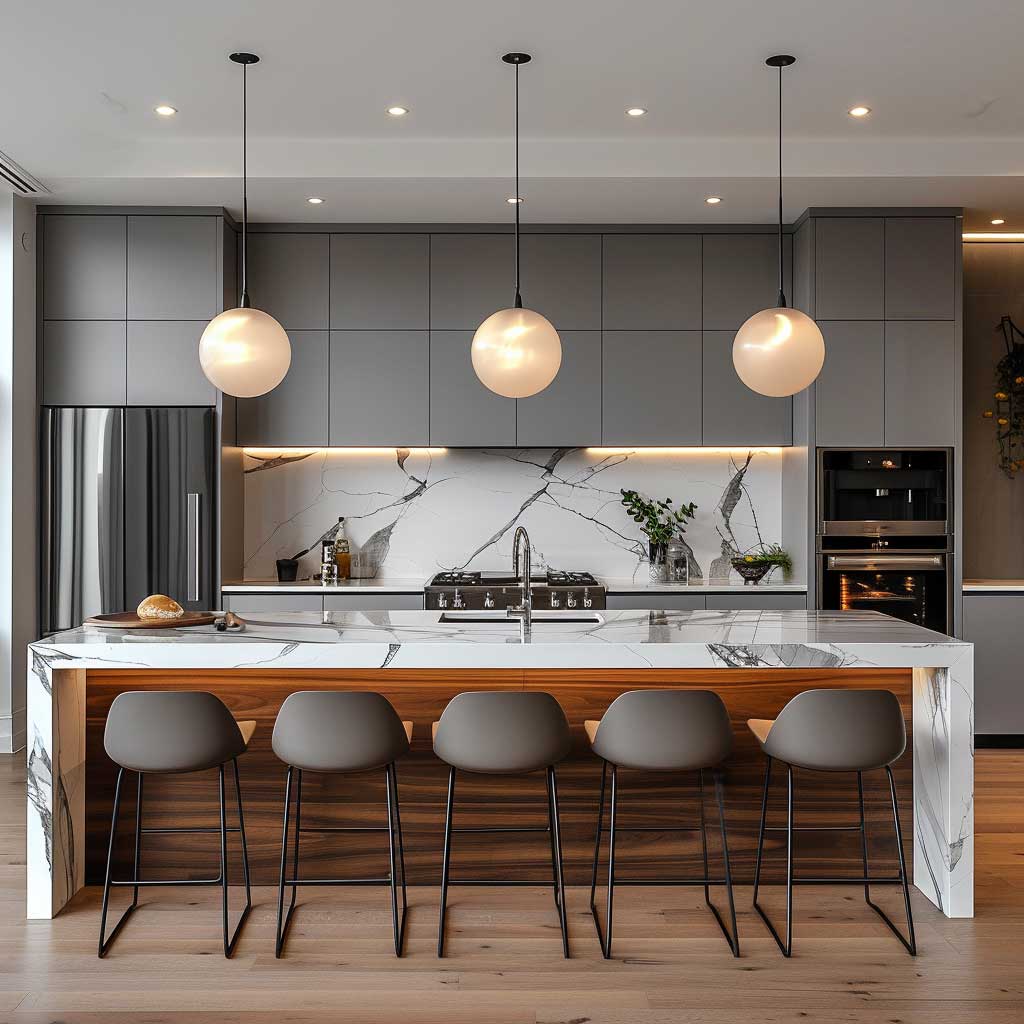
Raw wood accents — a cutting board, a ceramic bowl, a small herb planter — are the one addition that keeps a grey and white kitchen from reading as sterile. The same principle operates here as in the living room and bedroom: a natural texture introduced against an otherwise hard-surface palette creates the sense of a space that is inhabited rather than staged. The wood needs to be raw or lightly sealed; high-gloss varnished wood in a grey and white kitchen stops reading as warm and starts reading as a dated 1990s finish. Small but specific: use unfinished acacia or maple rather than the clear-coated pine that comes with most budget kitchen accessories, and the warmth difference at close range is immediate.
| Room | Key Move | What Fails | One Number |
|---|---|---|---|
| Living Room | Three textures minimum per seating area | Matching satin-on-satin finishes | 15–20% of floor area in window glass |
| Bedroom | Low-profile grey bed (14–16 in frame height) | Blackout panels in rooms under 150 sq ft | $265–$1,072 range for grey upholstered queen |
| Kitchen | Warm-undertone grey cabinets + veined white countertop | Cool grey cabinets against a flat-white surface | Carrara marble $40–$100 per sq ft installed |
Grey and White Interior Design
Three Rooms, One Rule — Undertone Controls Everything
A grey and white scheme that photographs beautifully and feels right in person starts with one decision: confirm the grey undertone before buying anything else. Warm greige cabinets with warm-veined Carrara. Cool blue-grey walls with white oak, not honey oak. That match, made in natural daylight before committing, is what separates rooms that consistently impress from rooms that look vaguely off without anyone being able to name why.
Texture is the second lever — three minimum in a living room, at least rug-plus-throw in a bedroom, raw wood in a kitchen. Remove texture and the palette collapses into something that reads like a showroom floor rather than a home.
Light is the third: 2700K warm bulbs in the evening, sheer curtains over blackout panels, window glass covering 15–20% of floor area. The palette depends on light to show correctly. Save this post.