In today’s urban living scenarios, maximizing space is more than just a design trend; it’s a necessity. Combining the living room and bedroom can be a smart solution for those with limited square footage or those looking to create a multifunctional space. The concept of a living room bedroom combo not only optimizes space but also offers a unique aesthetic appeal. Dive into these five creative ideas that seamlessly blend relaxation with recreation.
My first studio had 340 square feet. The bed was three steps from the couch. Not a choice — a fact.
Most people treat a living room bedroom combo like a problem to solve. It’s not. It’s a design constraint, and constraints force better decisions than unlimited space ever does. The living rooms with beds that actually work aren’t just small apartments making do — they’re intentional spaces where every piece earns its place.
Dual-purpose furniture, elevated sleeping platforms, sliding dividers that close in 10 seconds flat. These aren’t magazine concepts. They’re real solutions people are using in bedroom and living room combined spaces right now.
Scroll through all five ideas. At least two will fit your situation exactly.
Quick Scan: What’s Inside
- Dual-purpose furniture — sofa beds, lift-top tables, storage beds that replace dressers
- Elevated platforms — zone separation without walls, with built-in drawer storage underneath
- Sliding dividers — shoji screens, frosted glass, ceiling-track panels for instant privacy
- What not to buy — futons, mirrored panels, and colored platforms that ruin the look
- Prices included — from $30 LED strips to $12,000 custom builds, with real budget alternatives
Dual-Purpose Furniture: The Backbone of Any Living Room Bedroom Combo
A Murphy bed from Resource Furniture starts around $3,000 — yes, that’s real money, but it gives you back 50 square feet every morning. I’ve seen people try to cheap out with a $400 futon from Amazon instead. Don’t. Futons look like futons. Nobody walks into a room and thinks “wow, that futon really works.” They think “that person has a futon.”
| Solution | Price Range | Space Saved | Best For | Avoid If |
|---|---|---|---|---|
| Murphy Bed (Resource Furniture) | $3,000–$6,000 | ~50 sq ft | Daily use, full apartment feel | Rentals (wall mounting) |
| Sofa Bed (West Elm sectional) | $1,800–$2,400 | ~20 sq ft | Occasional sleep, guest use | Nightly use (back issues) |
| Storage Bed (IKEA Malm 4-drawer) | ~$350 | Replaces dresser | Budget builds, small combos | Elevated platform designs |
| Lift-Top Coffee Table (Sauder) | ~$180 | Replaces desk | WFH setups, small living zones | Heavy monitor setups |
| Elevated Platform (custom build) | $6,000–$12,000 | Under-storage + zoning | Long-term, owner-occupied | Rentals, low ceilings |
The pieces that actually pull double duty in a living room bedroom combo are the ones that don’t announce what they are. A West Elm sectional with a pull-out queen sleeper ($1,800–$2,400) reads as a sofa all day. A Sauder lift-top coffee table ($180) disappears as a desk the moment you need it. The visual trick is simple: choose furniture that looks like it belongs in only one of the two zones, then secretly does the job of both.
Storage is where bedroom living room combo spaces quietly fall apart. A bed frame without drawers wastes the most valuable real estate in the room. IKEA’s Malm bed with 4-drawer storage runs about $350 — not glamorous, but it replaces a full dresser. That’s one less piece competing for floor space in your living room and bedroom together.
The anti-advice nobody gives you: don’t buy a sofa bed as your primary sleep surface if you’re using it every single night. The mattresses in most convertible sofas are around 4 inches thick. Fine for guests twice a year. Brutal for your back at 6 a.m. on a Tuesday.


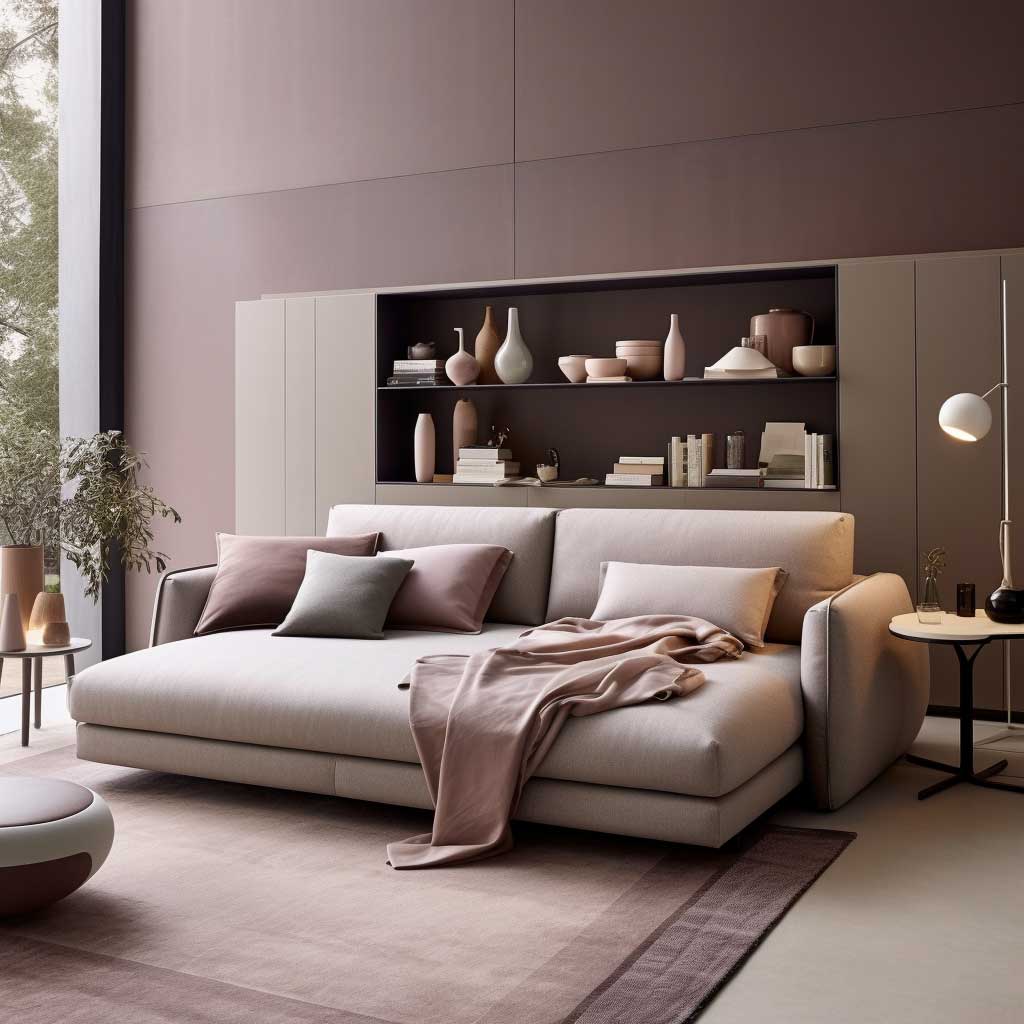

The limitation in the world of interior design is often not huge space to play with but limited ones. A living room combined with a bedroom speaks volumes on this, and the solution often lies in dual-purpose furniture. If you’re also dealing with a small footprint, the same principles apply — see how color and texture can make a small bedroom design feel twice its size. Here, in the realm of dual-purpose furniture in the design of living room bedrooms, it is not so much a trend as maxing out without compromising aesthetics. Imagine entering a space where every piece of furniture tells a tale of its dexterity. A settee that with a gentle pull transforms into a comfortable bed.
A coffee table that rises to the level of a study table. Bookshelves that are also privacy partitions stand. This is the magic of dual-purpose furniture in a living room bedroom design. But the clincher is in the word ‘dual’: a piece of furniture that adapts; a living room bedroom design that transforms. In the day, the living room is a busy space filled with conversation and work. When the sun sets, the same room erases its identity from the world of hustle and transforms into a haven and the living room bedroom design is going to fall in with the same. And for this transition to be facilitated the dual-purpose furniture becomes an enabler.
The reason that dual-purpose furniture became so cemented into the living room bedroom design lies in the changing dynamics of urban living: with cities becoming more crowded and real estate prices skyrocketing, the luxury of its expansiveness is limited to very few, for everyone else, every square inch needs to be maxed out and that’s where the living room bedroom combo, enhanced by dual-purpose furniture, comes into relief. Yet, it’s not just about utility.
The design aesthetics in dual-purpose furniture have taken a huge leap. No longer are such furniture purely functional, with not much thought being paid to design, as seen during former times. Today, they are works of art. Precision-crafted, decoratively ornamented with fine detailing, from head to toe, and designed keeping in mind the living room bedroom’s dual nature, they are a visual treat—at least so it seems.
Finally, “Dual-Purpose Furniture in Living Room Bedroom Design” speaks to the changing requirements of urban denizens. It is a celebration of design with marriage between form and function. It is an ode to versatility and a solution to the perennial problem of optimizing space. As we move toward a future where space is going to come at a bigger premium, the role of dual-purpose furniture in living room bedroom design is only going to be more pronounced.
Elevated Platforms: How to Zone a Bedroom and Living Room in One Space
A raised sleeping platform does something no rug or curtain can — it uses architecture to separate the bedroom from the living room without walls. Step up 8 inches and your brain registers a zone change. It works the same way a stage works in a theater: same room, completely different function.
The platform itself becomes storage if you build it right. Custom carpenter work in most mid-size cities runs $60–$120 per square foot for a platform with integrated drawers. For a 10×10 sleeping area, that’s $6,000–$12,000 installed. IKEA hackers have pulled off similar results with Kallax units as the base structure for around $800–$1,200 in materials — the finish isn’t the same, but the storage math works.
Lighting is what actually sells the “oasis” effect in a bedroom with living room design. LED strip lighting under the platform edge costs about $30 and creates a floating-bed illusion that makes the whole space look like it was designed by someone who charges a lot. Pair it with a pendant over the sleeping area and keep the living zone on a separate circuit. Two moods, one room.
What doesn’t work: painting the platform a different color to distinguish it from the rest of the room. I’ve seen this done in three different apartments and it looks like the floor had an accident. Keep the platform material consistent with the floor or go with a complementary natural wood on a neutral base. Same palette, different elevation — that’s the move.


The art of differentiation in design mostly lies in subtlety — creating different zones in spaces where the living room and bedroom meet without using walls is the real challenge. Houzz documented five real studio apartments under 550 sq ft where owners found creative ways to separate bedroom from living room using furniture placement alone — worth looking at before you commit to any structural changes. Elevation of the sleeping area slightly above the living space is a clear distinction. This elevation, though subtle, makes a great difference in how the space is perceived and used.
There are several uses of an elevated platform in a living room bedroom design. It demarcates spaces. Elevation of the sleeping area slightly above the living space is a clear distinction. This elevation, though subtle, makes a great difference in how the space is perceived and used.
But the elevated platform is a statement of use of space; it gives great design opportunity in the living room bedroom. Imagination of stepping up to a wooden platform—the sleeping area luxuriously coated with oversized cushions and horsetail linens—is in itself a move, though elevation in steps. In its subtlety, this elevation oozes grandeur into the living room bedroom design, with the sleeping area feeling like a special retreat inside the same space.
The designs that you can experiment with in an elevated platform for the living room bedroom combo are endless. There can be manifestations of various materials: from rich hardwoods to sleek metals. Platforms can have sides fitted with drawers or pull-out baskets to serve other storage solutions in the living room bedroom design.
Lighting will also come to accentuate these platforms. Under-platform lights will cast a floating effect, while lamps set in strategic points will highlight the elevation to add depth and dimension to the space. The play of shadow and light with this elevation can transform a basic living room bedroom combo into a multi-dimensional oasis.
Indeed, Living Room Bedroom Oasis with Elevated Platforms, at its core, is all about creative design. About reimagining spaces, creating layers, adding depth. If there was one thing that hurt urban homes, that was space. It finds solutions like having elevated platforms within the design of a living room bedroom that oozes the perfect blend of functionality with finesse, a blend where every inch counts, while proving that the space is an aesthetic marvel.
How to Design a Living Room Bedroom Combo in a Small Space
Real steps for turning one room into a functional bedroom and living room combined — with specific furniture picks, zone logic, and decisions that actually matter at under 500 sq ft.
-
1
Map Your Zones Before You Buy Anything
Tape out the floor plan first. Use painter’s tape to mark the sleeping zone, the living zone, and any circulation paths. Most bedroom living room combo mistakes happen at the furniture store, not in the room. If the zones aren’t clear on paper, they won’t be clear in practice. You need at least 36 inches of clearance around the bed and the sofa.
-
2
Choose a Bed Frame That Replaces Other Furniture
The IKEA Malm with 4 drawers ($350) replaces a dresser. A platform with built-in storage replaces both a dresser and a side table. Don’t buy a bed and then figure out storage — pick the bed frame based on what other furniture it eliminates. Every piece that disappears is floor space returned to the living zone.
-
3
Pick One Divider Method and Commit
Ceiling-track sliding panels, a freestanding bookcase, or an elevated platform — choose one. Layering multiple divider types in a bedroom and living room in one space creates visual noise and shrinks the room psychologically. The IKEA Kallax as a bookcase divider costs around $150–$250 and does the job without blocking light.
-
4
Set Up Two Separate Lighting Circuits
This is the single most overlooked step. One overhead fixture serving both zones means both zones are always on. Install a floor lamp or pendant for the sleeping area on a separate switch from the living zone lighting. Under $100 in hardware for a plug-in pendant and a $30 smart plug makes the whole room feel intentionally designed.
-
5
Place the Sofa with Its Back to the Bed
Float the sofa away from the wall with its back facing the sleeping area. This creates a psychological separation stronger than any curtain. Interior designer Kristy Degina called this the key move in studio apartments — the sofa back acts as a soft wall, directing attention to the living zone and away from the bed.
-
6
Test the Layout for One Week Before Anything Permanent
Live in the taped-out floor plan before buying furniture. Move through the space at 7 a.m. when you’re half asleep, at noon when you’re on a video call, and at 11 p.m. when someone else is still awake in the living area. The problems always show up in the actual use, not in the plan. One week of testing saves $2,000 in wrong furniture.
Sliding Dividers: The Smartest Way to Separate Bedroom from Living Room
IKEA’s PAX sliding door system, adapted as a room divider, runs around $400–$700 depending on panel count. For something with more visual weight, a custom Japanese shoji screen from places like Shoji Designs starts at $800 per panel. Both work. The shoji looks significantly better in a living room bedroom combo that has any natural light — the paper panels glow.
The practical argument for sliding dividers over curtains: curtains move when HVAC kicks on. At 2 a.m. that’s not relaxing. A proper sliding panel on a ceiling-mounted track stays exactly where you put it. Hafele makes hardware kits for DIY installations starting at $95 — the track mounts directly to the ceiling joists and supports panels up to 110 lbs.
Frosted glass panels keep light moving between zones while blocking direct sightlines. That matters in a living room and bedroom in one space where one person wants to sleep and another wants to watch TV. It’s not perfect sound blocking — nothing short of a real wall is — but the visual separation alone reduces the psychological intrusion by more than you’d expect.
Skip mirrored panels entirely. Mirrored dividers in a bedroom living room combo design feel like a hotel gym. Nobody needs to watch themselves make coffee from across the room.


Modern living opened up the idea of open-concept canvas and fluid design. The solidity of what a wall represents is now getting replaced by more flexible options in the modern home. “Open-Concept Living Room Bedroom with Sliding Dividers” best reflects such change, combining openness and privacy into one design. Couples navigating this layout have an added layer to consider — if two people share the space, the approach to blending both personalities in couple bedroom interior design becomes just as important as the divider itself.
Literally, sliding dividers in the designs of living room bedrooms can be the epitome of flexibility. As the day proceeds, they open entirely differently to create a vast, unified space, sending natural light in and allowing people to move easily. After dusk, the same dividers close to morph this wide open space into cozy and closed zones.
More important, the real flexibility of sliding dividers in a living room bedroom combination lies in the adaptability in myriad materials: from frosted glass to wooden lattices, from fabric screens to metal grids. Each of these brings a different texture and aesthetics to the living room bedroom design, thereby enabling homeowners to customize the look and feel of their space.
In terms of design, sliding dividers are clean and smooth, providing an excellent solution of aesthetics for living room-bedroom combinations, especially when an apartment’s residents often need to multitask. One can be on a video call in the living space, while in the next room, some other family member can be napping—all because the sliders give their assurance of privacy.
Don’t Do This in a Living Room Bedroom Combo
- Don’t use a futon as a permanent bed. The mattress is 4 inches thick. Your spine will file a complaint by month two.
- Don’t skip zone lighting. One overhead fixture covering both areas kills any sense of separation — two circuits, two moods.
- Don’t paint the sleeping platform a contrasting color. It looks like a mistake, not a design choice.
- Don’t buy mirrored sliding dividers. They belong in a gym, not in a bedroom and living room combined space.
- Don’t ignore sound. A visual divider doesn’t block TV audio. Add a white noise machine ($30–$50) if the zones share a sleeping schedule.
FAQ
What is a living room bedroom combo called?
How do you separate a bedroom and living room in one space?
What furniture works best in a bedroom living room combo?
How do you make a living room with a bed not look like a dorm room?
Can a living room and bedroom combination work for two people?
What is the best room divider for a bedroom and living room combined?
Your Next Step
The Best Living Room Bedroom Combo Is the One You Actually Build
Every layout here has been done in real apartments, not staged showrooms. The platform with under-storage took one weekend and a trip to IKEA. The sliding divider track cost $95 in hardware. None of this requires a contractor, a huge budget, or a Pinterest-perfect starting point.
Pick the one idea that fits your footprint. Just one. A bedroom and living room in one space doesn’t need to be solved all at once — it needs one good decision made today, not a full renovation plan made never.
Save this post. You’ll want it open when you’re measuring your space and second-guessing the furniture layout at 11 p.m.