Entrance gate designs come down to three choices: the material, the opening style and whether a motor does the work. A typical installed driveway gate costs $1,000–$6,000, with a national average near $4,000, so the style you like has to fit both the budget and the driveway. Does a gate really change how a home reads from the street? Yes, because it frames the house the way a mat frames a photograph. Settle the opening style first, since it limits every other choice.
Wood and steel start around $300–$600 for a manual gate, while aluminum begins closer to $1,800. Adding a motor moves most installed projects from the $700–$3,000 manual range into $2,500–$5,000. A sliding gate needs a straight run beside the opening roughly equal to its width, while a swing gate needs a clear arc behind it. Measure both spaces before you look at a single photo.
The 14 entry gate ideas below cover classic, modern, rustic and garden looks, each with real price ranges and lifespans. Two comparison tables near the end line up cost, upkeep and space, so a shortlist takes minutes instead of weekends. Cross off any design your driveway physically cannot open.
Quick Scan
- Installed driveway gates average about $4,000, and most land between $1,000 and $6,000.
- Manual vs automatic: $700–$3,000 vs $2,500–$5,000 installed.
- Sliding gates install for $1,800–$7,650, swing gates for $2,500–$8,500.
- Cedar lasts 20–30 years, pressure-treated pine 15–20 years.
- An 8 ft gate costs roughly 20% more than a 6 ft one.
- Gate motors and controls wear out in 10–15 years, while a well-kept gate often lasts 20 or more.
- Wood needs a yearly check and a fresh sealer every 2–3 years; steel needs far less attention.

Wrought Iron Scrollwork Holds Its Value at the Curb
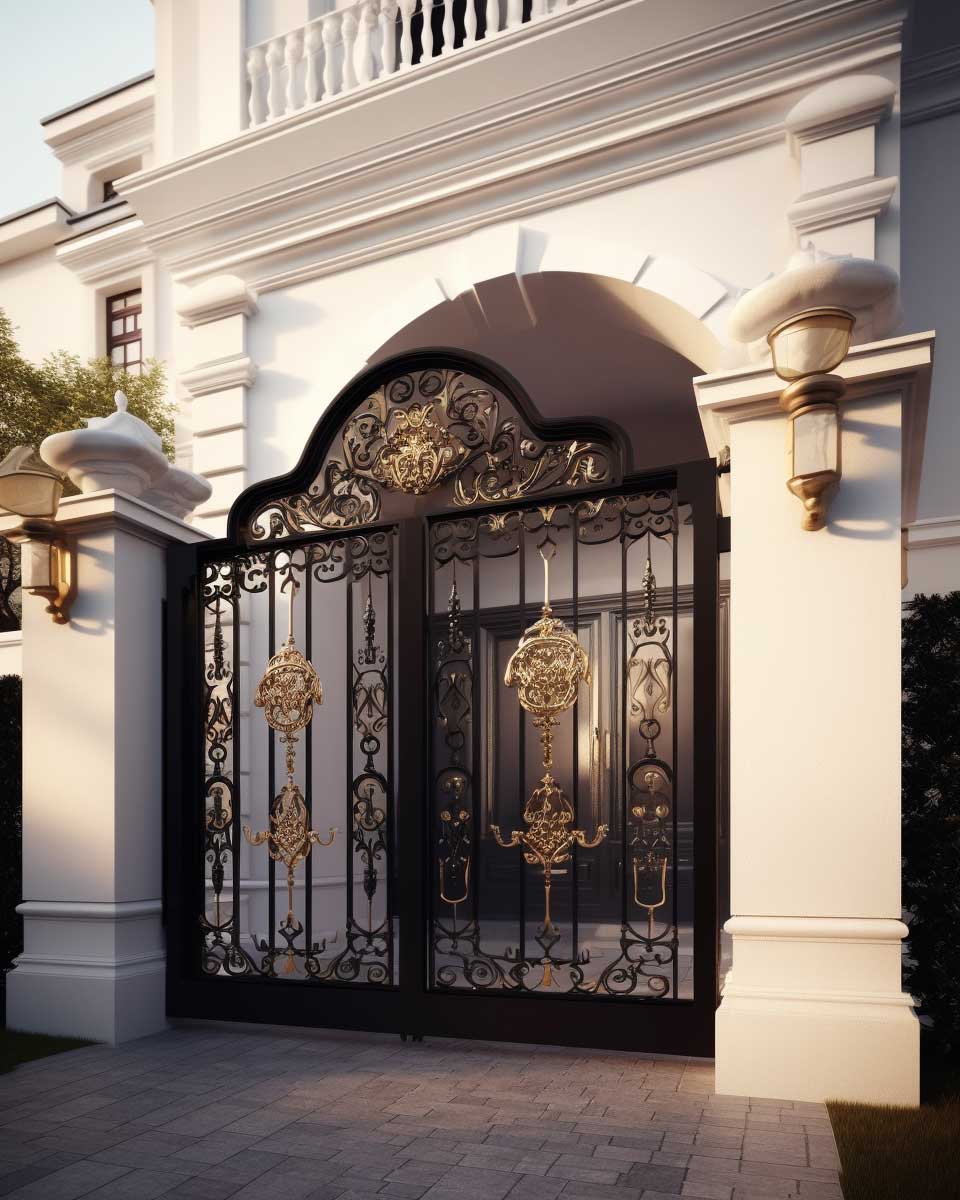
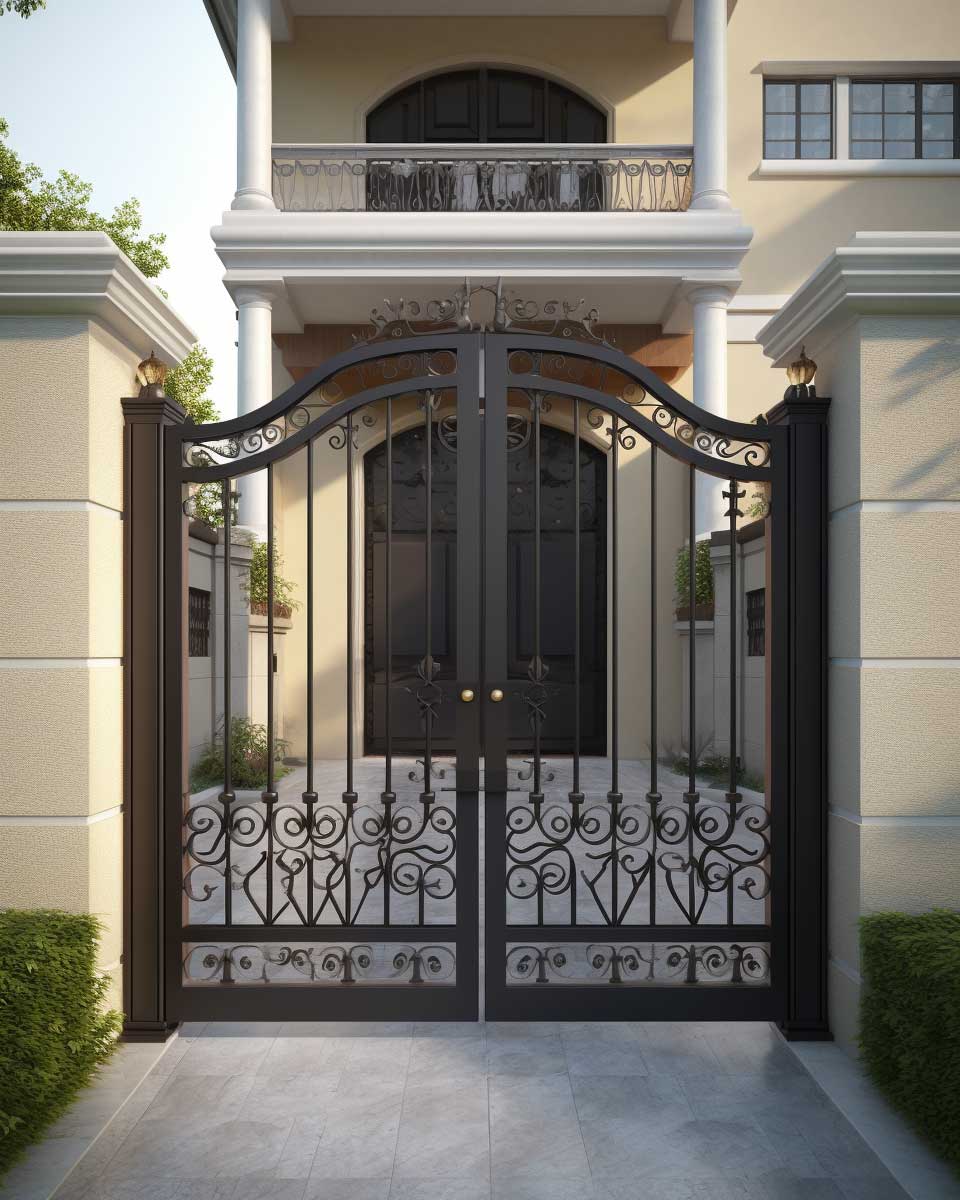
Wrought iron entrance gate ideas remain the classic answer for brick, stone and traditional facades, because scrollwork reads as craftsmanship from the street. Typical prices run $600–$4,000 for a manual iron driveway gate and $1,150–$8,600 once automation is added. Compared with steel in the same price band, iron offers more ornament but asks for more care. Choose iron when the house itself has detail worth echoing.
Iron is heavy and prone to rust, so cost guides recommend regular rust inspections, a fresh protective coating when it wears, and lubricated hinges every year. Is it worth the upkeep? For a gate that can last 20 years or longer, a weekend of wire brushing every few seasons is a fair trade. Think of the coating as a raincoat: once it splits, water goes straight to the metal. Avoid training heavy climbing roses through the bars, because damp foliage holds moisture against the joints.
Modern Gate Design Photos Favor Powder-Coated Steel
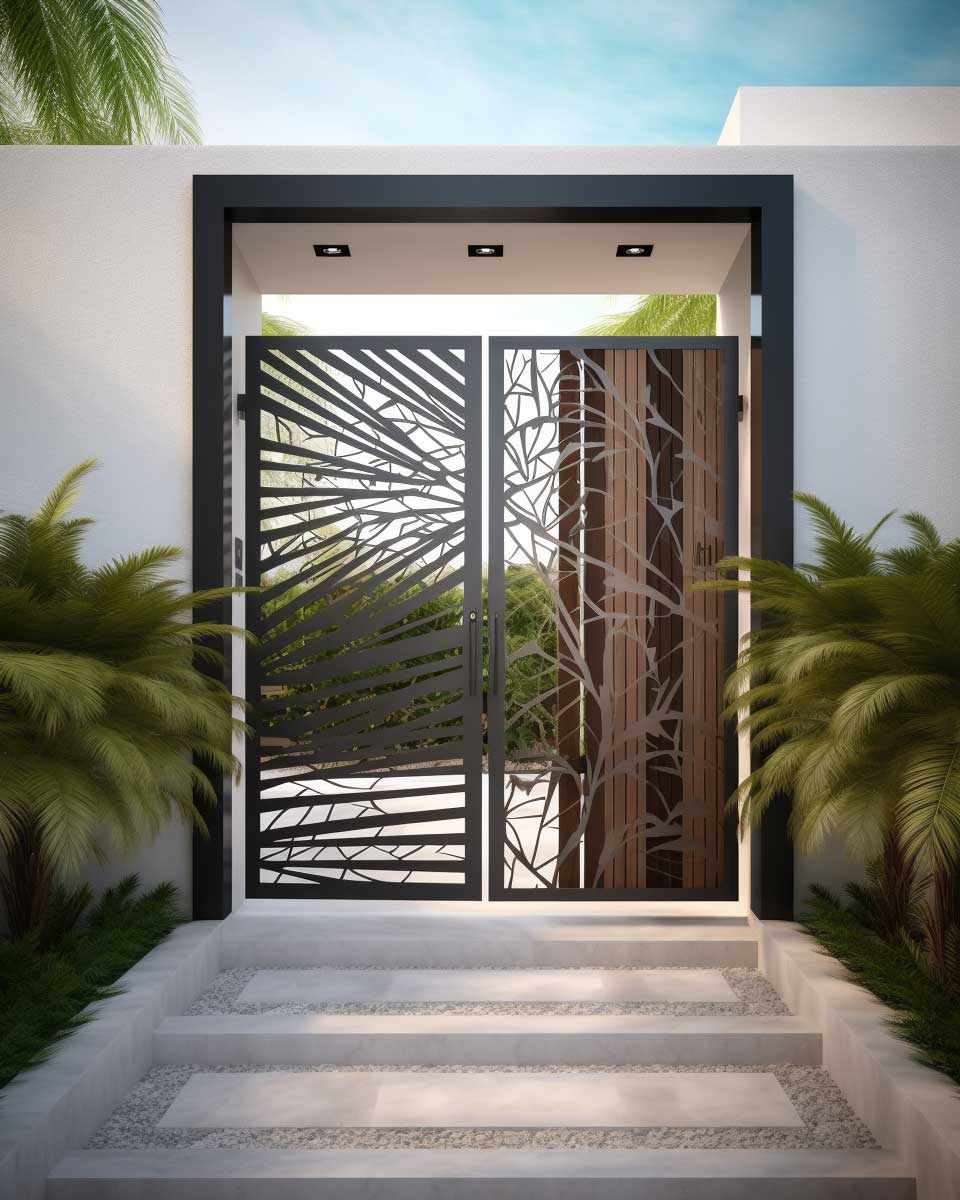
Modern gate design photos lean heavily on flat steel bars, horizontal slats and dark powder-coated frames. Steel driveway gates average $600–$4,000 manual and $1,150–$8,500 automated, almost the same bracket as iron. The difference sits in the metal: steel is stronger than wrought iron and resists rust without the extra coatings iron demands. Pick black or charcoal when the walls are pale, so the gate works like a frame around a picture.
Aluminum is the lighter cousin, priced higher at $1,800–$4,100 for a manual gate, yet it will not rust and aluminum fencing commonly lasts 50 years or more. Is aluminum or steel better for a modern main gate design for home? Steel suits wide, heavy openings and security, while aluminum wins near the coast and on gates opened by hand every day. Skip thin, unbraced slats on a 16 ft span, since long leaves twist like an unsupported shelf. Ask for a diagonal brace or a full frame on anything wider than a single car.
Cedar, Redwood and Teak Warm Up a Wooden Entry Gate
A wooden entry gate design for home brings warmth that metal cannot match, and the species decides how long that warmth lasts. Cedar typically holds up for 20–30 years, while pressure-treated pine lands closer to 15–20 years. Western red cedar can pass 30 years, but eastern white cedar may last only 5–15, so the label matters as much as the price. Ask the supplier exactly which cedar you are buying before you sign.
Wood driveway gates cost $300–$4,000 manual and $850–$8,500 automated, one of the widest ranges of any material. Does wood need more upkeep than steel? Yes: cost guides call for a yearly check for flaking stain, and fence specialists suggest restaining or sealing every 2–3 years. A wooden gate behaves like a deck, looking rich when fed and gray when ignored. Avoid solid slab leaves on windy sites, because a 6 ft solid panel catches wind like a sail and strains the hinges.
Mixed Materials Make the Boldest Entrance Gate Designs
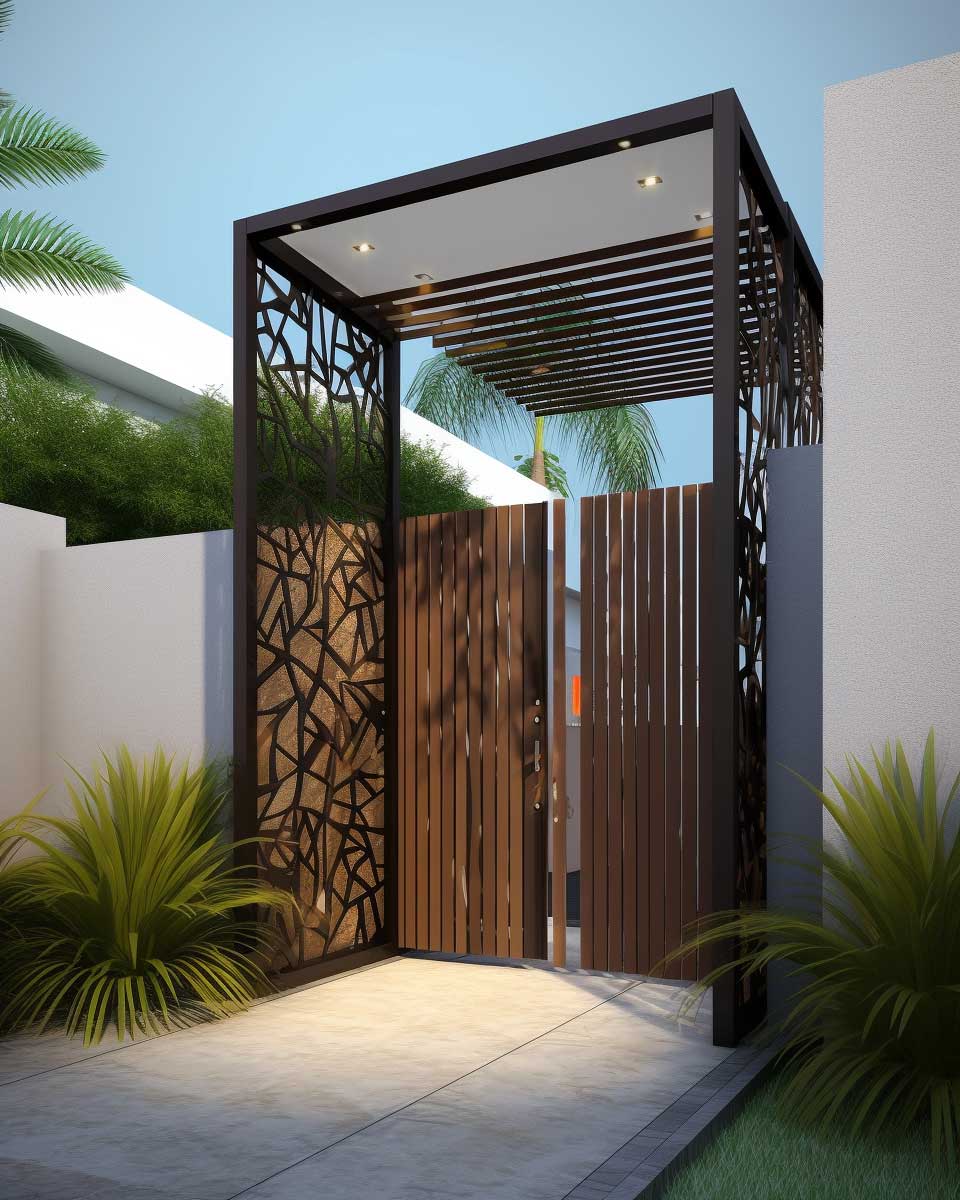
Mixed-material gates pair a steel frame with wood or composite infill, and they produce some of the most photographed entrance gate designs on modern homes. Composite gates cost $800–$5,000 manual and $1,200–$9,000 automated, and composite boards typically last 20–25 years with little maintenance. Compared with all-wood infill, composite skips the sealing cycle entirely. Choose one metal and one warm material, then stop, because three textures start to look like a sample board.
The pillars count as part of the gate. Full brick runs about $15–$25 per square foot against $6–$9 for thin veneer, a gap explained in this comparison of brick vs concrete for exterior walls. Should the gate match the house cladding exactly? Not necessarily, since repeating one color, such as the black of the window frames, ties everything together. Avoid pairing untreated steel with pale stone, because rust streaks can stain the masonry within a few seasons.
Automation Turns a Main Gate Into a Daily Convenience
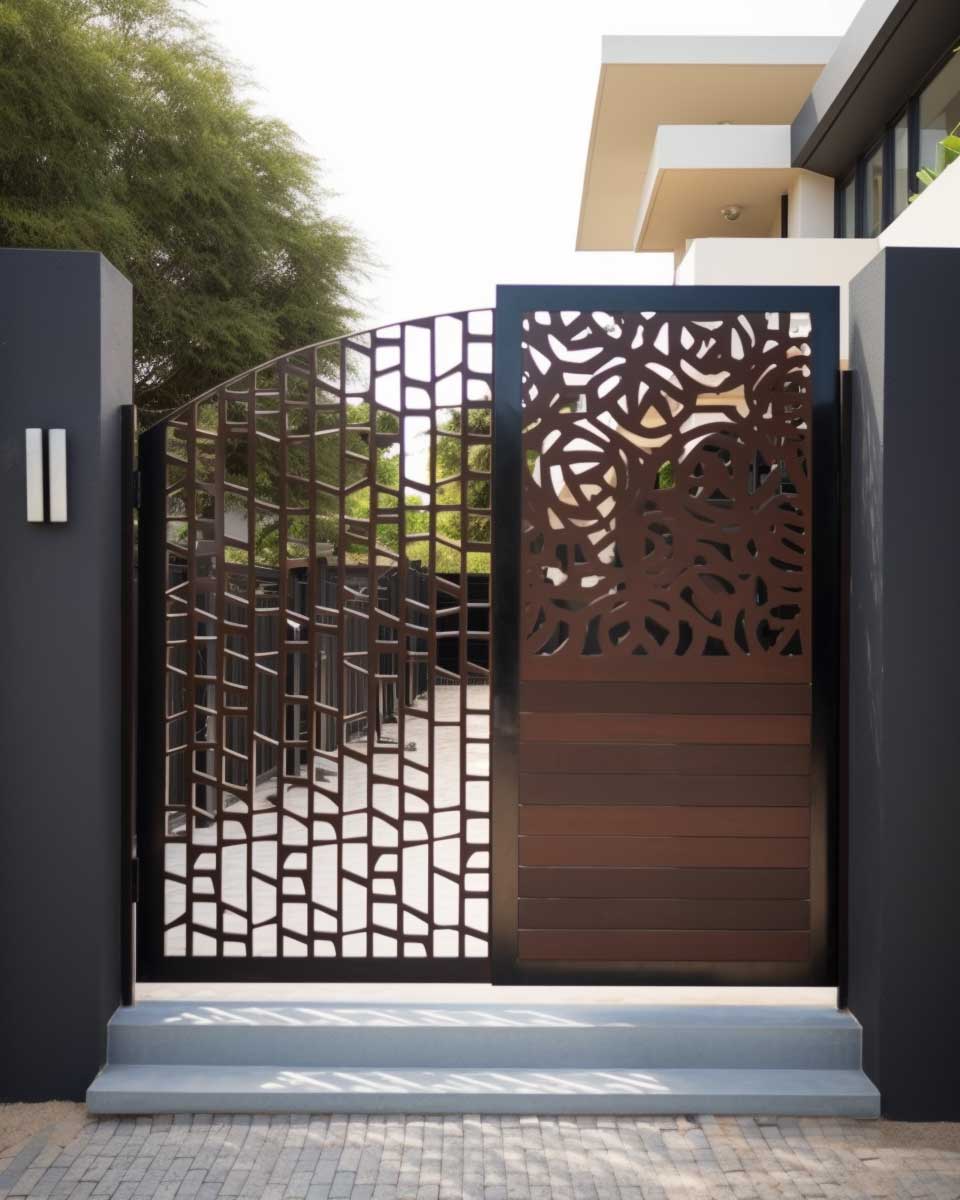
An automatic gate entrance trades a walk in the rain for a button press, and that convenience carries a clear price. Installed manual gates run $700–$3,000, while automatic gates usually cost $2,500–$5,000. The motor, power source and controls wear out faster than the gate itself, typically after 10–15 years. Budget for one opener replacement over the life of a good steel gate.
Do you lose access in a power cut? No: most electric gates include a battery backup or a manual release key that switches them to hand operation. Think of the opener as the car and the gate as the garage, where one ages fast and the other barely moves. Avoid ordering every gadget on day one, since add-ons quickly cost more than the motor. Start with the ones you will use every week.
- Exit probe that senses a departing car: $250–$350, with a 50–100 ft detection range
- Outdoor security camera: $125–$2,000 per unit
- Visitor intercom: $1,000–$7,000 installed
- Yearly inspection of the motor, sensors and backup battery
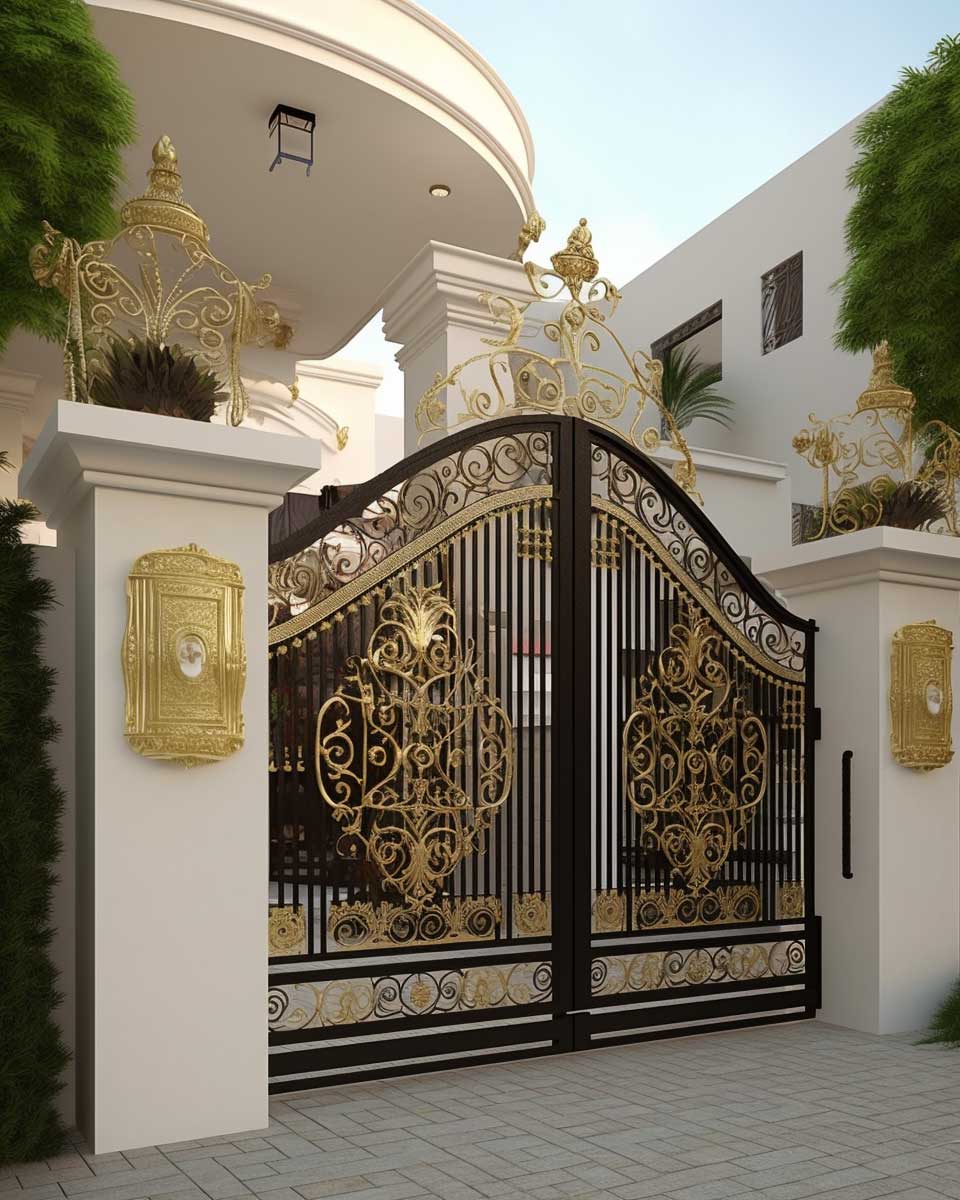
Sliding Gates Win Where the Driveway Runs Short
A sliding entry gate design suits short or sloping driveways, because it rolls sideways instead of sweeping an arc. Installed sliding gates cost $1,800–$7,650 compared with $2,500–$8,500 for swinging driveway gates. The catch is run-back space: the leaf needs a clear, straight strip beside the opening roughly equal to the opening width. Measure that strip before ordering, including any trees or meter boxes in the way.
Single sliding gates start around $500–$1,200 manual, and an automated single slider runs $1,050–$3,350 before installation. Is sliding more secure? Generally yes, since one rolling leaf is harder to force than a pair of hinged ones. Installers often prefer a single sliding leaf over two long swing leaves once the opening passes about 4 meters, roughly 13 feet. A slider works like a pocket door for the driveway, so sweep the track whenever leaves or gravel collect.
Don’t Do This: Don’t install an inward swing gate on a driveway that climbs toward the house. Each leaf needs a clear arc equal to its full width, so a 12 ft opening split into two 6 ft leaves needs about 6 ft of level ground behind it. On a slope the bottom rail scrapes, and a slider that starts about $700 lower installed becomes the smarter buy.
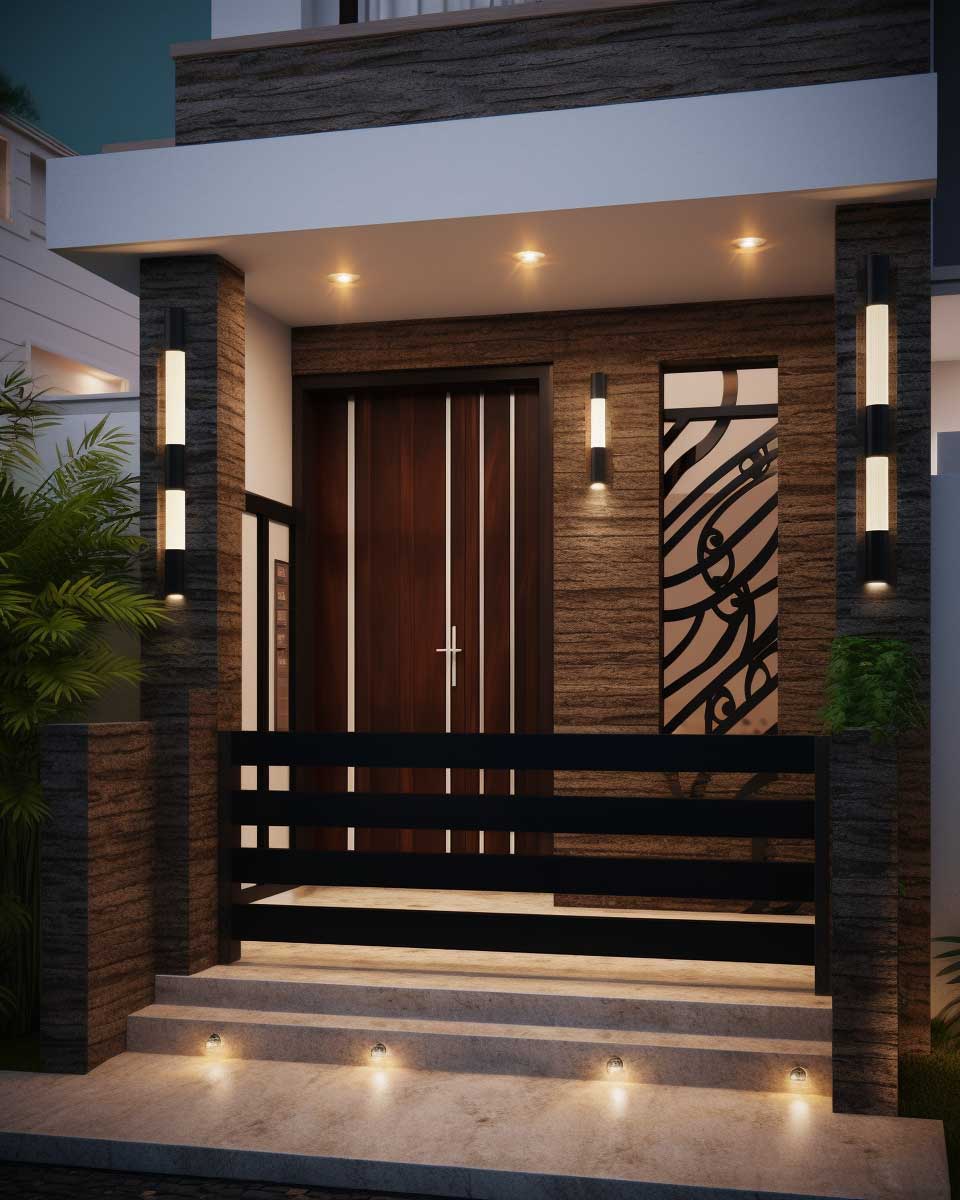
Bi-Fold Panels Split the Difference on Tight Lots
Bi-fold gates hinge each leaf in the middle, so a gate entrance idea that would normally need a deep swing zone fits a much tighter lot. A standard swing leaf needs clear space equal to its own width, which means a 12 ft opening with two 6 ft leaves needs about 6 ft behind it. Fold each leaf in half and that depth drops to roughly 3 ft. Pick bi-fold when you have neither the depth for swing nor the side run for sliding.
Pricing tracks the double swing gate, which runs $1,000–$4,000 manual and $1,900–$8,500 automated, with extra hinges and a specialist operator on top. Are more hinges a weakness? They add wear points, so the yearly hinge lubrication that cost guides recommend matters twice as much here. A bi-fold opens like a folding screen, quick and compact. Avoid heavy solid timber on bi-folds, because the added weight sags the center hinges first.
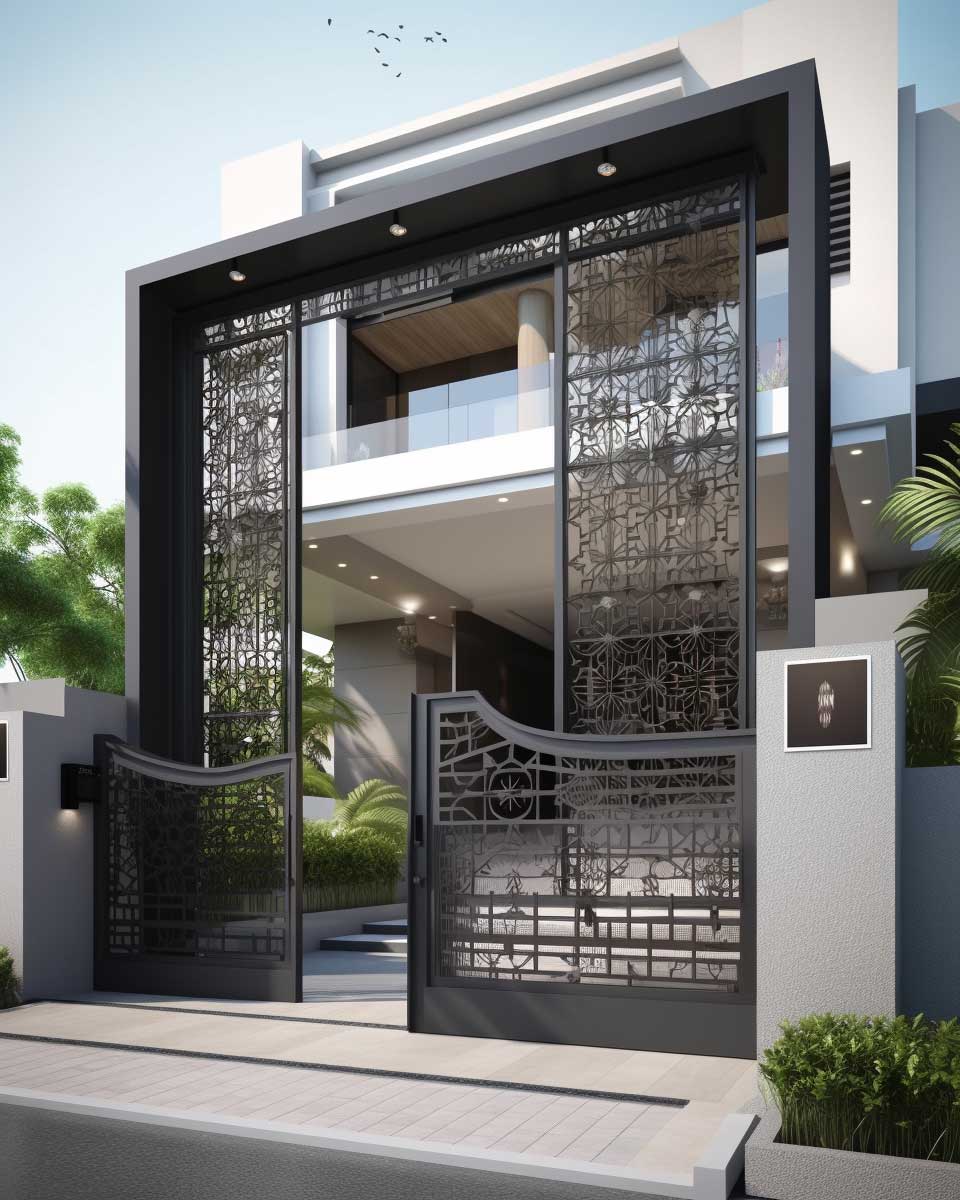
Arched Tops Give Front Entry Gate Ideas Real Height
Front entry gate ideas with an arched top add height and ceremony without adding much cost. Cost guides note that the shape, whether standard arc, inverted arc, peak or bell curve, does not significantly change the price. Height does: an 8 ft gate costs about 20% more than a 6 ft one. Put the money into the arch, not the extra two feet, unless privacy demands it.
A standard arc peaks in the center, while an inverted arc dips there and frames the house like a smile. Which one suits a home gate entrance? A raised arc suits tall two-story facades, and an inverted arc suits low ranch houses where the roofline should stay visible. Width moves the price too, with a 16 ft manual gate at $700–$4,000 against $200–$2,000 for a 10 ft one. Skip ornate arches on narrow 10 ft openings, where the curve looks squeezed.
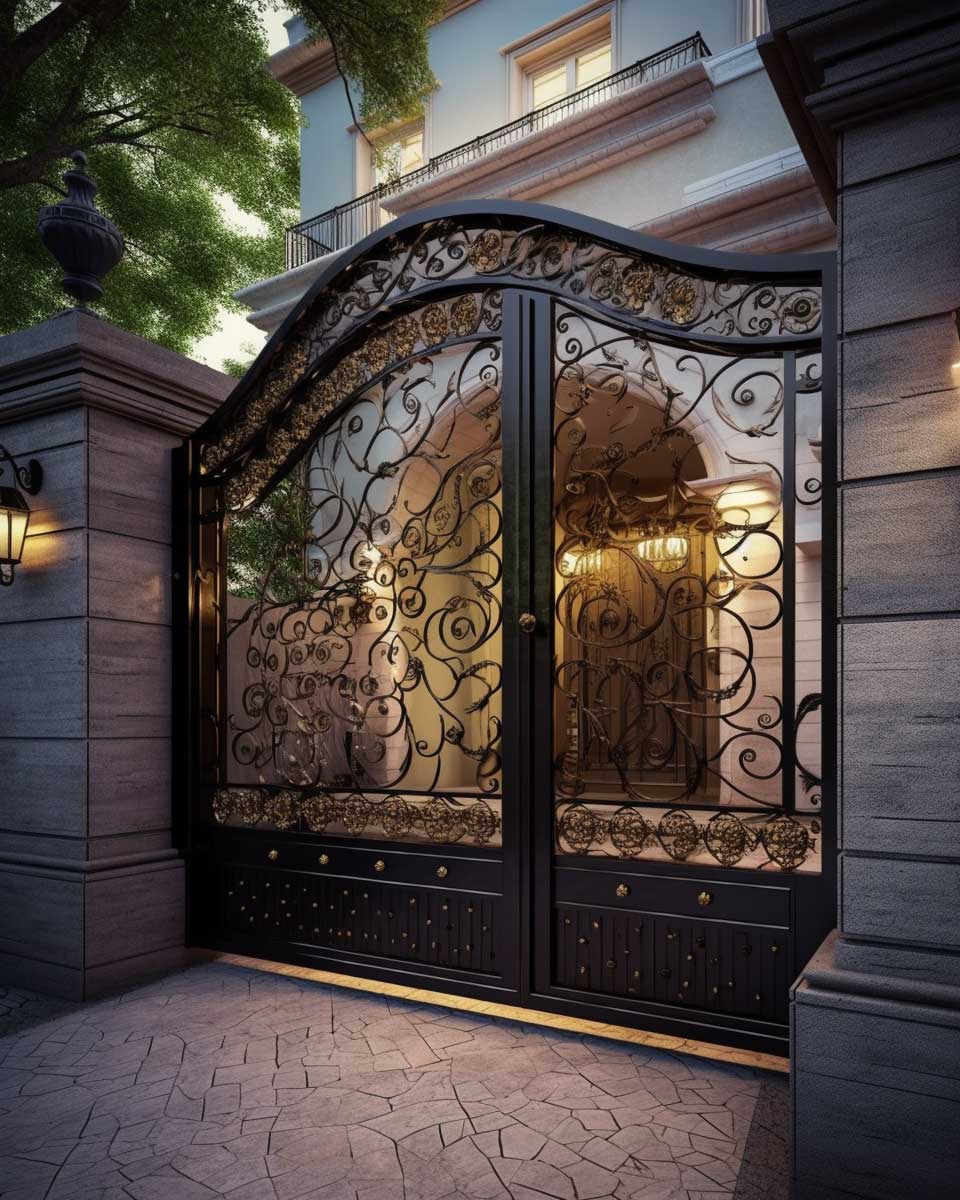
Custom Work Pays Off on Oddly Shaped Openings
A custom-designed main gate design for home makes sense when the opening is unusual or no catalog gate fits the architecture. Custom driveway gates typically cost $2,000–$12,000 or more, depending on size, material and features. Installation alone accounts for $750–$2,500 of an average project, with crews billing $50–$150 per hour. Get the fabrication and installation quotes in writing as separate lines.
Is custom worth roughly double the price of a prefab steel gate? It is when the driveway is angled, extra wide or sloped, where a standard leaf would never sit square. A custom gate works like a tailored suit, where the fit matters more than the fabric. Avoid custom work for a standard 12 ft opening on level ground, since prefab gates in that size start around $300 manual. Spend the savings on hinges, latches and a reliable operator instead.
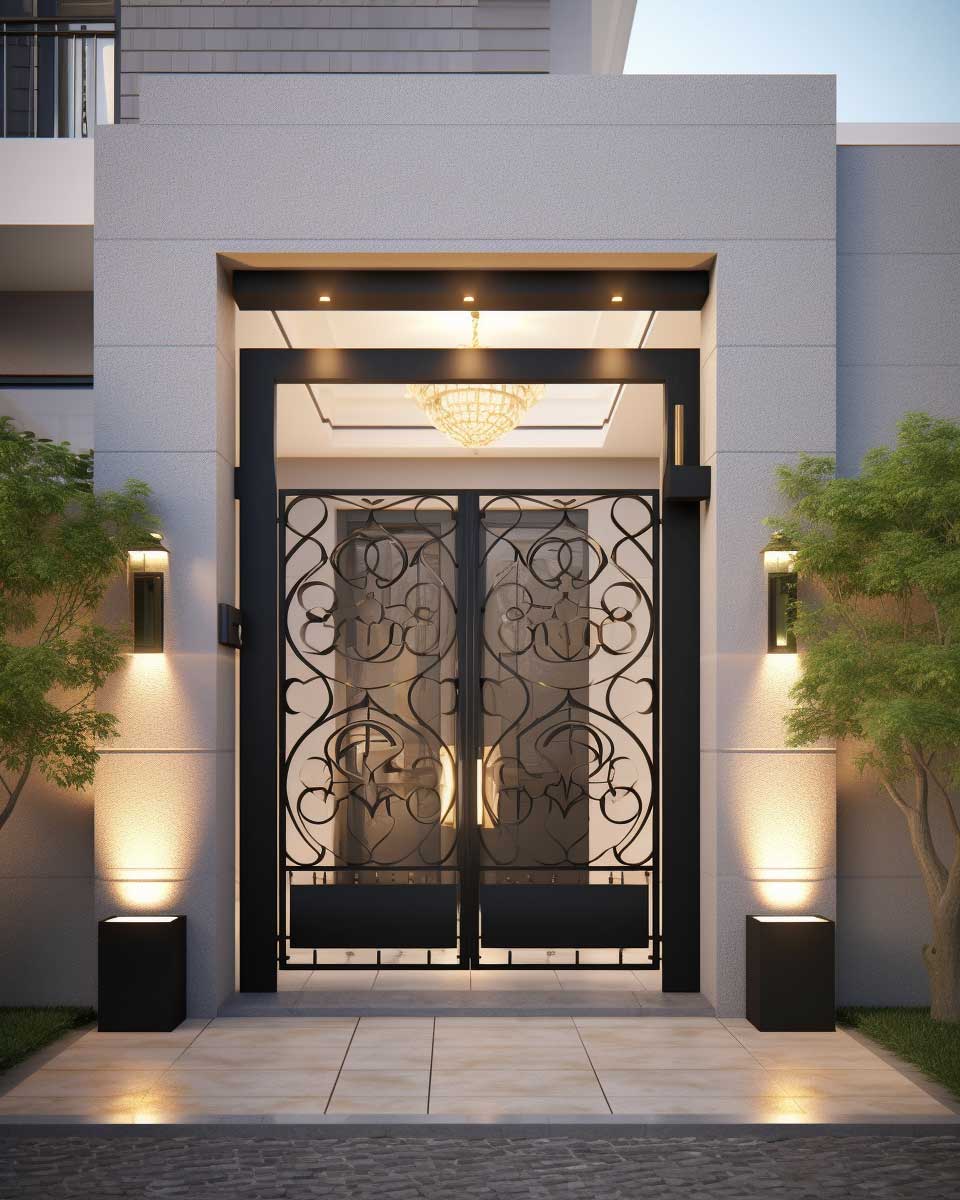
Color Turns a Simple Gate Entrance Into a Landmark
Simple gate entrance ideas often need nothing more than paint, and a bold color can make a plain design the most memorable thing on the street. Painting usually adds 10–25% to the gate cost, with painters charging about $25–$100 per hour. Metal and composite gates come painted to order, while wood is often painted on site. Ask for a factory finish on metal, because it usually outlasts brush-on paint.
Should the gate match the front door? A matched pair reads calm and intentional, while a contrasting gate pulls the eye like a red mailbox on a white street. Deep green, navy and oxblood stay classic, while yellow or turquoise suit modern and coastal homes. Regular washing plus a coat of wax or protectant slows fading, which is why cost guides list it as basic upkeep. Avoid high-gloss bright paint on a wood gate in full sun, where UV fades it fastest.
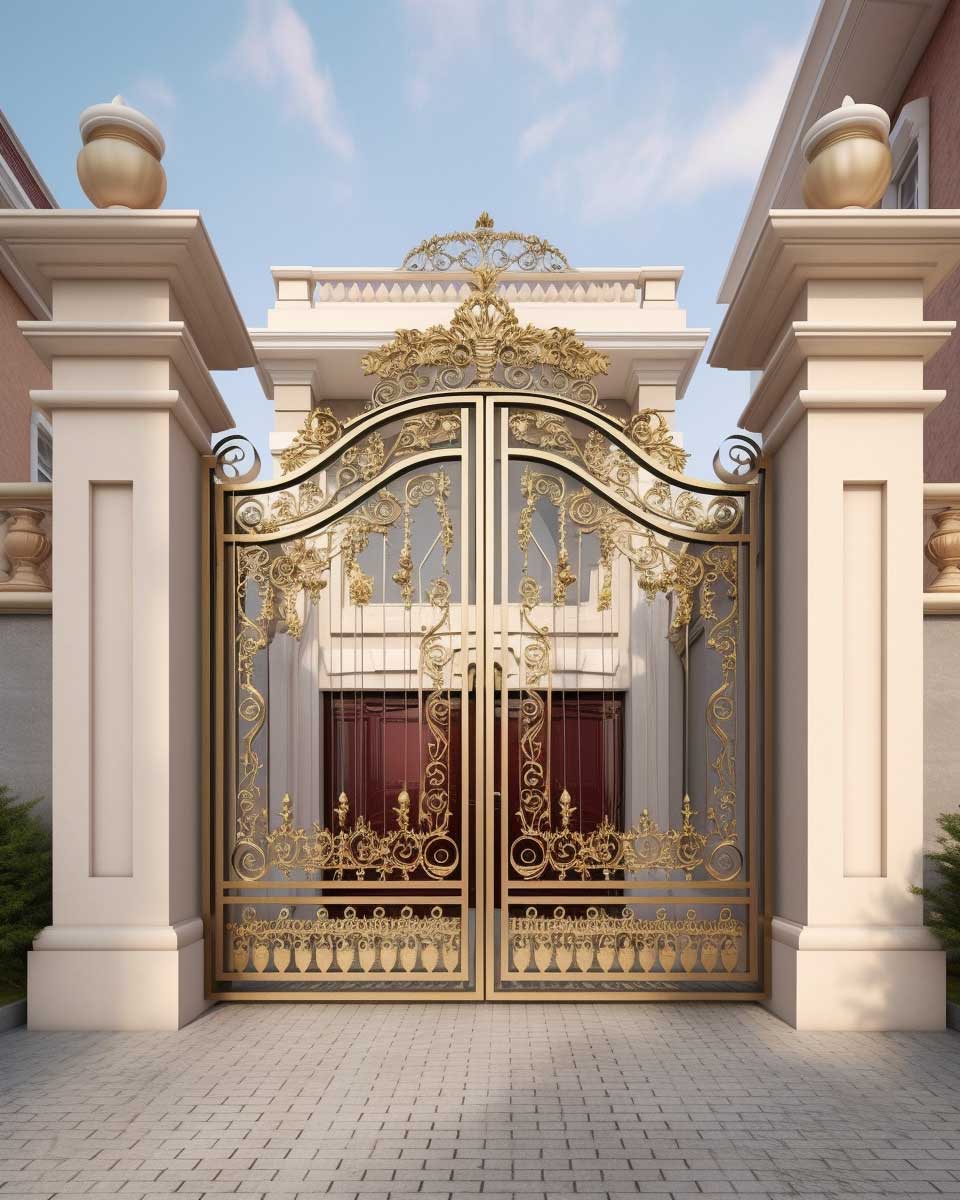
Reclaimed Wood Brings Old-World Character Home
Rustic entrance gates use reclaimed boards, distressed finishes and black strap hinges to suggest a farm gate that has stood for decades. Farm-style and ranch-style gates are traditionally wood, which puts most builds in the $300–$4,000 manual range. Compared with new cedar rated for 20–30 years, reclaimed timber varies widely, so check every board for rot and old nails. Ask the supplier where the wood came from and whether it was ever treated.
Does rustic mean low maintenance? No, because weathered wood still needs a yearly inspection and a clear sealer every 2–3 years to keep moisture out. A reclaimed gate is like a vintage car: the patina charms, but the frame still needs care. Pair old boards with a galvanized steel frame so the wood becomes decoration rather than structure. Avoid painting over a distressed finish, which erases the reason you chose it.
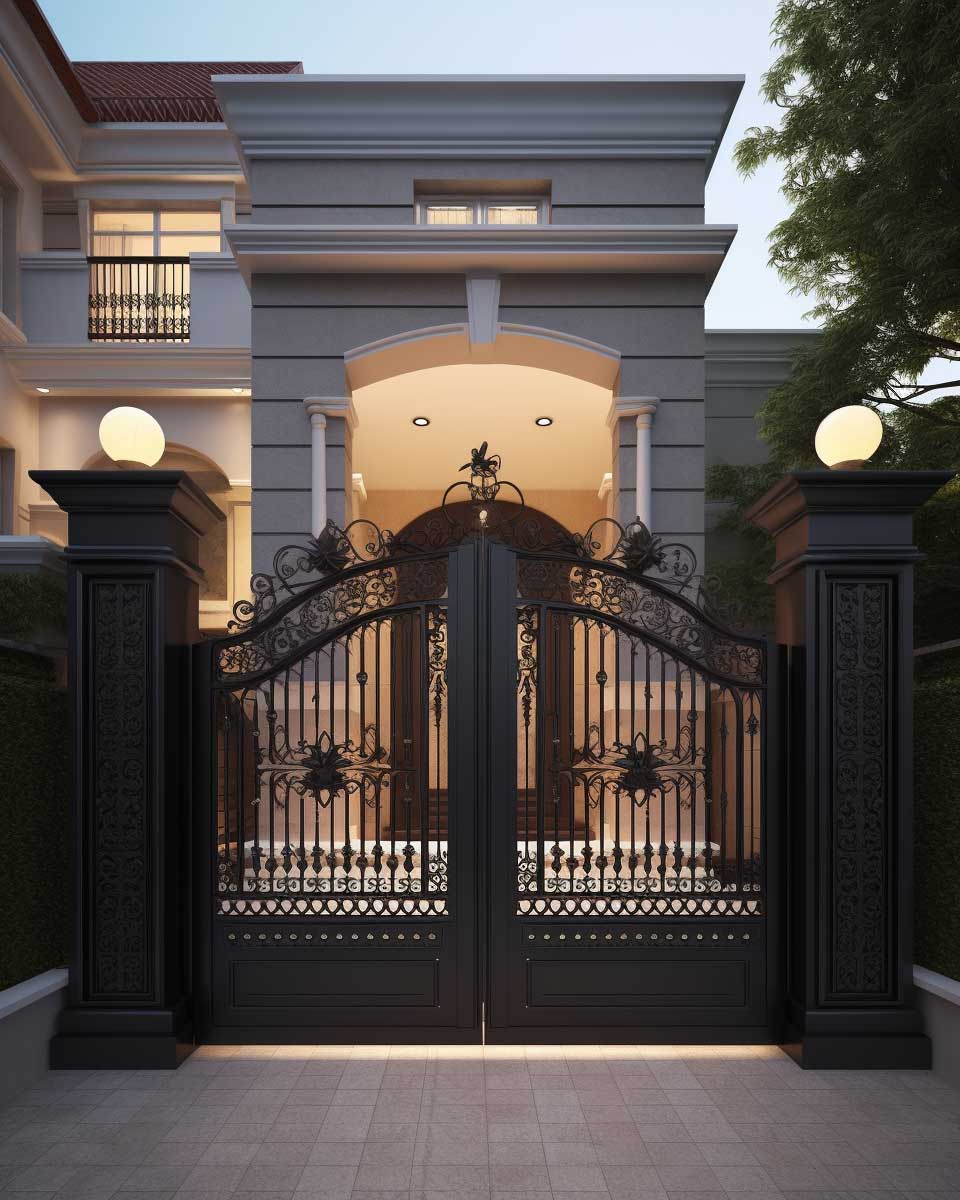
Lattice Screens Give Asian-Inspired Gates Quiet Privacy
Asian-inspired and screened entrance gates use lattice, slats or bamboo-style panels to filter the view rather than block it. Western red cedar, a favorite for lattice work, can last 30 years or more, while eastern white cedar may give out in 5–15 years. Compared with a solid privacy gate, a screen lets air and light through and catches far less wind. Choose a screen when you want privacy at eye level without building a fortress.
How often does a cedar screen need attention? Sealing every 3–5 years keeps the color from fading to silver-gray, if you want to keep the original tone. Thin lattice strips act like a paper lantern, so the shadows they cast on the drive become part of the design. Keep proportions simple, with one frame, one pattern and one finish. Avoid mixing Japanese lattice with ornate iron scrolls, which pulls the entry in two directions.
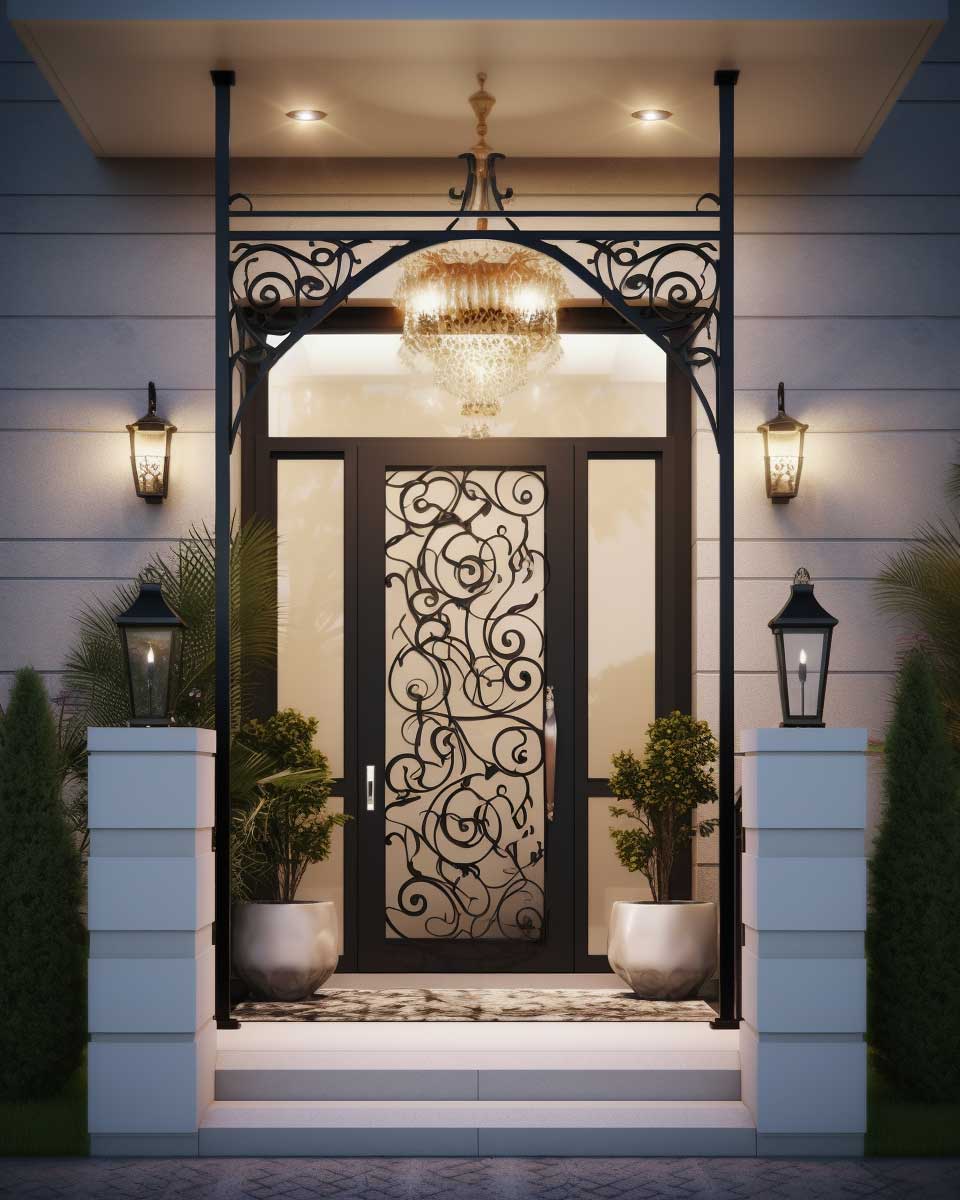
Art Deco Metalwork Brings Glamour Gate Style
Glamour gate photos almost always trace back to Art Deco, the 1920s style of sunbursts, chevrons and stepped geometry. Brass accents and polished metal raise the price, which pushes many Deco designs into the custom range of $2,000–$12,000 or more. Compared with a scrollwork iron gate, Deco reads sharper and more graphic, like jewelry rather than lace. Keep the pattern bold and symmetrical so it reads clearly from the street.
Lighting finishes the look, and warm 2700K–3000K fixtures with their centers about 66–72 inches high flatter metal best, as this guide to exterior garage lighting with mounting heights and Kelvin values explains. Does brass need special care? Unsealed brass darkens outdoors, so decide early between a living patina and a lacquered shine. Avoid cool 5000K bulbs near a Deco gate, which turn gold tones gray.

Living Trellises Blend the Gate Into the Garden
Garden-inspired gateway ideas use arbors, trellis tops and floral motifs so the entrance grows into the planting around it. A cedar arbor gate fits this style naturally, with a typical lifespan of 20–30 years against 15–20 for pressure-treated pine. Compared with training vines over a freestanding iron gate, a trellis version gives climbers their own frame. Plant climbers on the arbor posts, never on the moving leaf.
How much upkeep does a planted gate add? The wood still needs sealer every 2–3 years, and the hinges need lubrication at least once a year so stems never jam the swing. An arbor gate works like a picture frame for the garden beyond it. Avoid letting heavy climbers such as wisteria wrap the hinges, since their stems tighten as they thicken. Trim growth back from the latch every spring.
Comparing Entrance Gate Designs by Cost, Lifespan and Space
Lining up entrance gate designs by material shows that price ranges overlap far more than the looks suggest. Steel and wrought iron share the same $600–$4,000 manual bracket, while aluminum starts three times higher at $1,800. Price ranges below follow national averages from the Fixr driveway gate cost guide, and lifespans follow typical fence industry figures. Use the first table to shortlist a material and the second to confirm your driveway can open it.
| Material | Manual gate | Automatic gate | Typical lifespan | Upkeep |
|---|---|---|---|---|
| Vinyl | $200–$1,100 | $750–$5,600 | 20–30+ years | Low, but can turn brittle in hard frost |
| Wood (cedar) | $300–$4,000 | $850–$8,500 | 20–30 years | Yearly check, reseal every 2–3 years |
| Steel | $600–$4,000 | $1,150–$8,500 | 20+ years | Low, resists rust without extra coatings |
| Wrought iron | $600–$4,000 | $1,150–$8,600 | 20+ years | Regular rust checks and recoating |
| Composite | $800–$5,000 | $1,200–$9,000 | 20–25 years | Very low |
| Aluminum | $1,800–$4,100 | $2,350–$8,600 | 50+ years | Very low, no rust |
Opening style decides what physically fits. A swing gate needs a clear arc behind it, a slider needs side run-back about as long as the opening, and a bi-fold needs roughly half the depth of a swing leaf. Check both tables against your tape measure before requesting a single quote.
| Opening style | Typical cost | Space needed | Best for | Watch out for |
|---|---|---|---|---|
| Sliding | $1,800–$7,650 installed | Side run about equal to opening width | Short or sloping drives | Track must stay clear |
| Swing (double) | $2,500–$8,500 installed | Arc equal to each leaf width | Level, deep driveways | Sagging on long leaves |
| Bi-fold | Close to double swing plus extra hardware | About half a swing leaf | Tight lots with little depth | More hinges to service |
| Overhead or vertical | $1,050–$9,000 automatic, before installation | Vertical clearance above the opening | Sites with no room to swing or slide | Costly and mostly commercial |
The Verdict at the Curb
The strongest entrance gate designs start with the driveway, not the photo. Measure the swing arc and the side run first, then choose a style that fits both. An average $4,000 project buys more on a well-matched steel or cedar gate than on a custom piece that fights the site.
Steel and wrought iron share a $600–$4,000 manual price band, so pick iron for ornament and steel for strength and lighter upkeep. Aluminum costs more upfront but can last 50 years or more, which makes sense near salt air. Wood stays the warmest choice if you can commit to sealing every 2–3 years.
Go automatic only if you will use it daily, because the $2,500–$5,000 installed price includes parts that wear out in 10–15 years. Choose sliding on short or sloped drives, where installation starts about $700 below a swing pair. Add extras one at a time, beginning with an exit probe at $250–$350.
Style comes last and costs least. Shape barely changes the price, paint adds 10–25%, and a 2700K–3000K light near the gate makes any design look finished after dark.