Natural modern interior design works when every material in the room earns its place — wood for warmth, stone for grounding, linen for softness — and nothing arrives purely for decoration. I’ve toured enough “organic” spaces where the reclaimed shelf held six items too many and the whole effect collapsed into clutter. The style sits at the intersection of eco-conscious living and contemporary restraint, and getting that balance right is harder than the Pinterest images suggest. You’ll notice the rooms that pull it off share one thing: negative space treated like a material, not an afterthought.
The appeal is real and the demand is growing. Homeowners want spaces that feel genuinely calm — not the performative minimalism of a hotel lobby, but something that actually lowers your cortisol when you walk in. Natural modern interiors do that through texture layering, biophilic connection, and a strict edit on palette. Miss any one of those, and the room just feels beige and tired.
Quick Scan
- The living room section covers neutral palettes, wood selection, and furniture scale that actually works in an open-plan space
- Kitchen covers sustainably sourced cabinetry, stone countertops, and a lighting mistake most people make
- Bedroom covers organic textiles, biophilic accessories, and why hiding technology matters more than buying it
- Materials section breaks down reclaimed wood, stone, bamboo, and rattan with price context
- Biophilic elements covers plants, natural light strategy, and the one pattern that elevates every room
- Sustainable choices covers low-VOC paint brands, FSC-certified furniture, and LED lighting that doesn’t look clinical
- Furniture selection, textiles, art, storage, lighting, and indoor-outdoor connection each get their own section
A Living Room That Reads Serene Instead of Empty
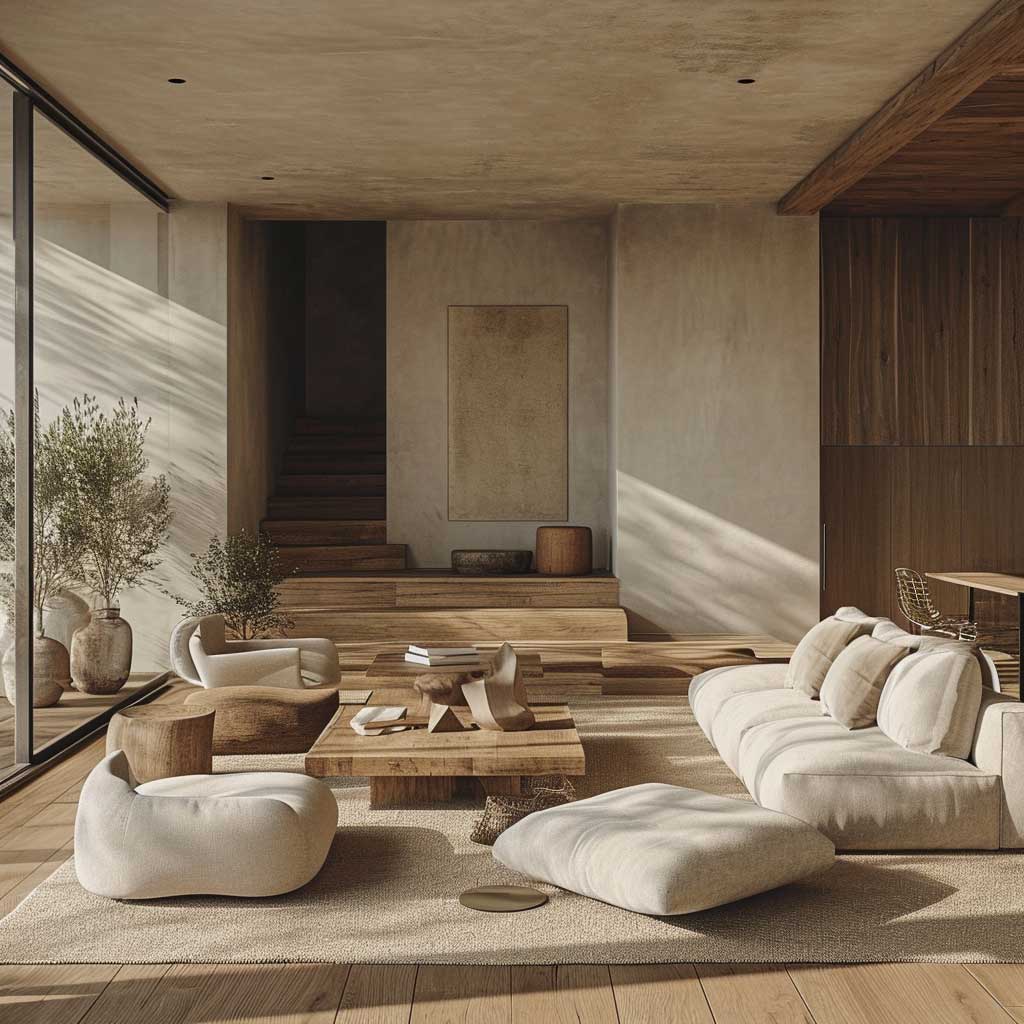


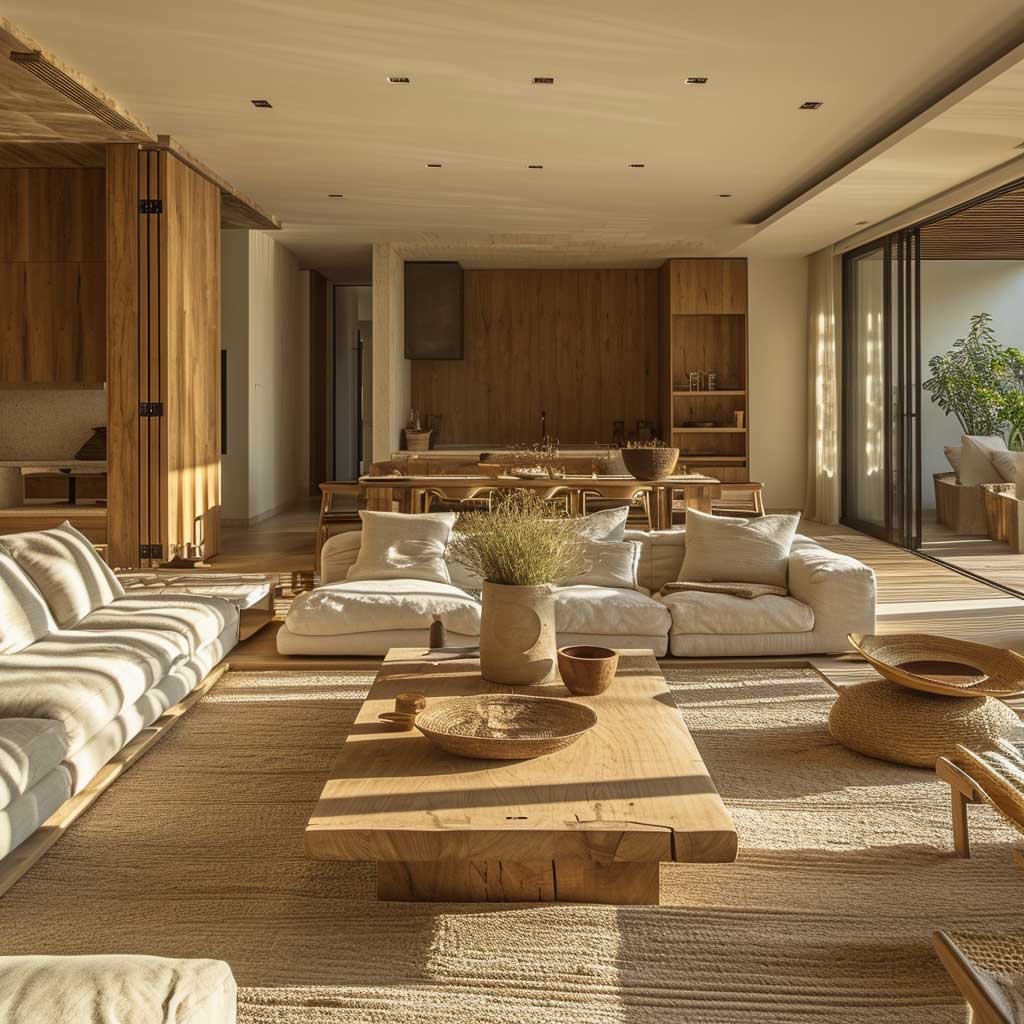
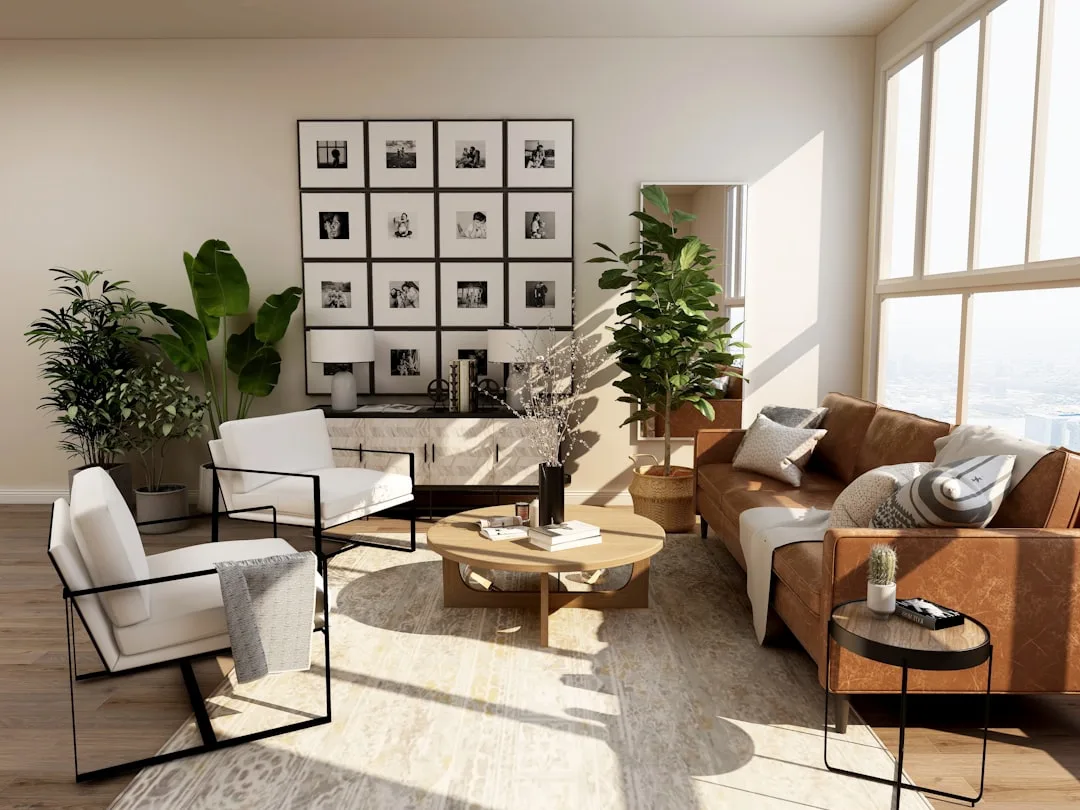
Natural modern interior design in a living room lives or dies on the wood choice. Oak and ash read warm without going rustic. Cherry tips too red. I bought a cherry side table once thinking it would age beautifully — it just aged dark, and the room never felt right again. The better move is a white oak coffee table (West Elm’s Hudson solid wood version runs about $599) left with a matte oil finish rather than a glossy lacquer. The grain stays visible. The room breathes.
Large windows are doing more structural work here than any piece of furniture. Natural light at the right angle makes a cream sofa glow and makes a cheap one look washed out — so the sofa fabric matters. Linen and cotton in warm white or oat hold color well across changing light. Avoid polyester blends if you’re going for this look; they read flat under afternoon sun. You’ll notice the difference within a week of living with the room.
The layout question almost everyone gets wrong: pulling furniture away from walls. It feels counterintuitive in smaller rooms, but floating a sofa 18 inches from the wall and anchoring it with a jute rug creates a room within the room — which is exactly the sanctuary effect this style is after. Cluster seating to face each other, not the television. The TV can be hidden behind a sliding panel or recessed into a built-in; when it disappears, the whole room’s intention changes.
Color stays in the earthy range: bone, warm grey, linen, sage, terracotta as a single accent. What kills the look is adding too many accent colors at once — I’ve seen rooms with terracotta throws, sage cushions, and dusty blue art all competing, and the result reads more boho than natural modern. One accent. Pick it, commit, move on.

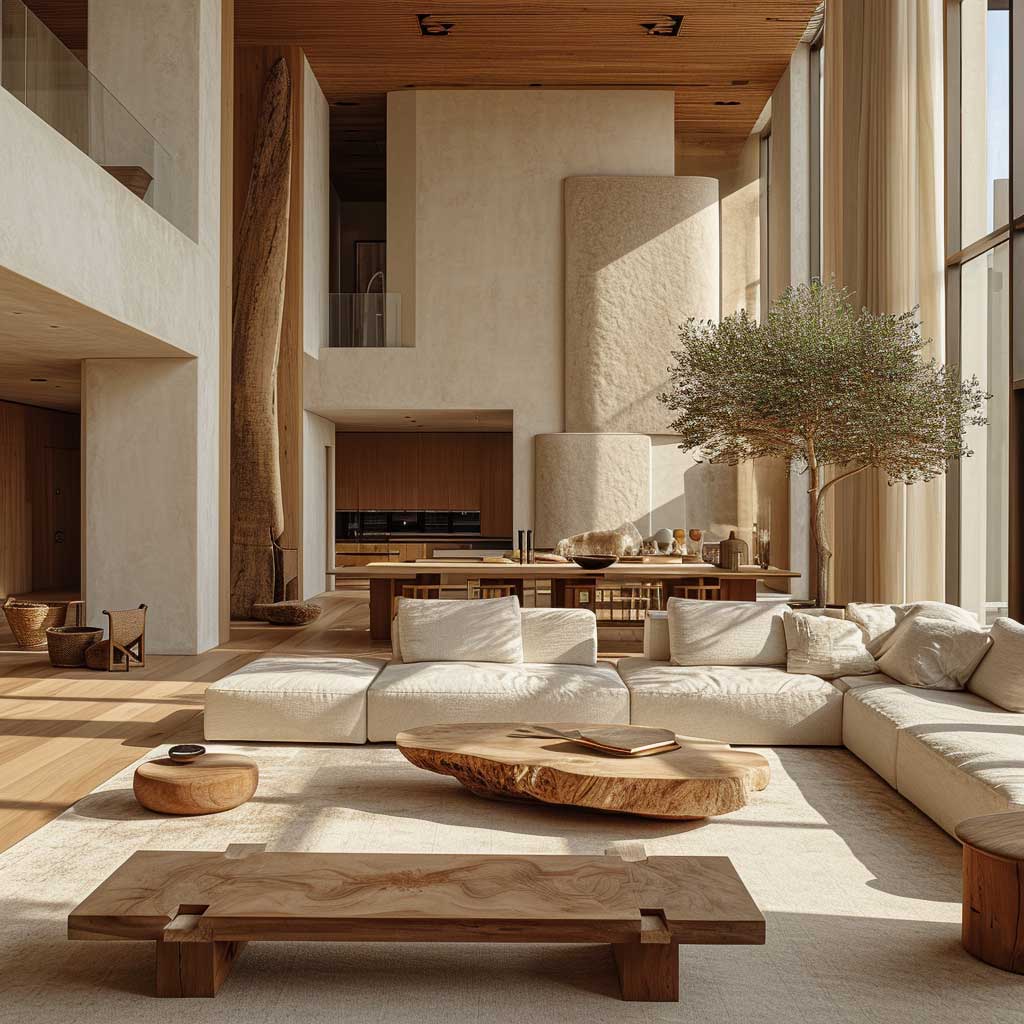


Decorative objects: fewer, heavier, better. A single large handmade ceramic vessel from a local potter beats a shelf of six small Anthropologie finds every time. My go-to is sourcing one or two pieces from Etsy makers who work in stoneware — prices range from $80 to $250 and nothing looks mass-produced. Skip the wicker trays styled with cotton balls and candle stubs. That’s a staging trick for real estate photos, not a room you actually want to live in.
The Kitchen Where Sustainable Sourcing Shows Up in the Grain
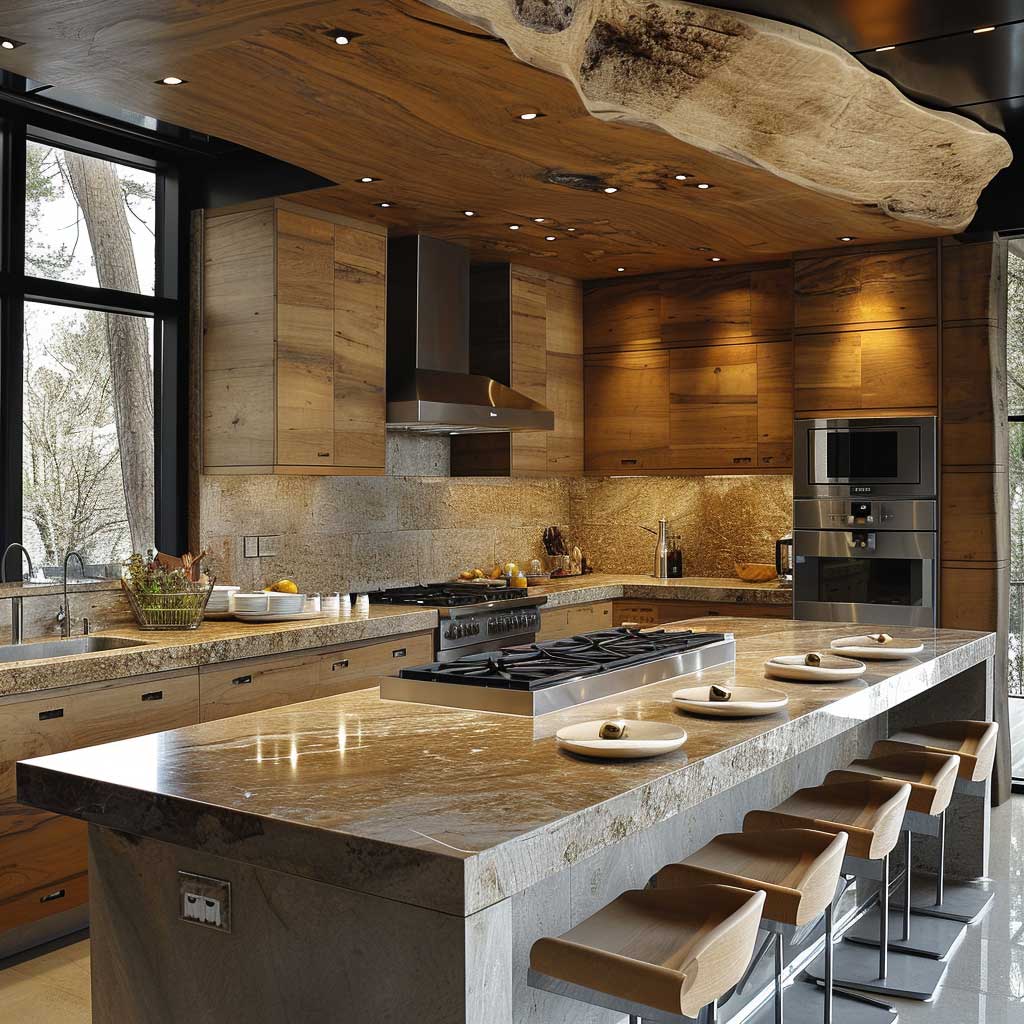


FSC-certified walnut or white oak cabinetry is the foundation of a natural modern kitchen — and the gap between FSC-certified wood and standard particleboard-faced cabinets is not subtle once you know what you’re looking at. Run your hand along a solid wood door edge and you feel it immediately: weight, warmth, slight texture variation from the grain. IKEA’s SEKTION carcasses with solid-wood fronts from Semihandmade cost around $400–$600 per linear foot installed, which sounds steep until you remember you’ll never replace them.
Countertops in honed slate or leathered quartzite do something polished granite can’t: they absorb light rather than reflecting it, which keeps the room from feeling cold. Quartzite starts around $70 per square foot fabricated and installed — not budget territory, but not the $150 marble price point either. The natural vein patterns mean no two kitchens look identical. That individuality is the whole point of this aesthetic.
Lighting is where most eco-modern kitchens stumble. Recessed LED downlights in a grid across the ceiling look like a Costco warehouse, not a considered home. The fix I’ve seen designers use repeatedly: a single dramatic pendant over the island (Muuto’s Under the Bell in natural oak runs about $380) plus under-cabinet strip lighting for task work. Bring in as much natural light as the structure allows — a window over the sink is worth more than any fixture.


Energy-efficient appliances complete the sustainability picture: Bosch’s 500 series dishwasher is one of the quietest and most water-efficient on the market at around $900, and Miele’s induction cooktops sit at a premium ($1,800–$2,500) but use 30–40% less energy than gas. Bosch and Miele both come in matte stainless and panel-ready versions that disappear into cabinetry — which matters when you want the wood to read, not the hardware.
Color palette in the natural modern kitchen stays neutral but not cold. Soft whites, warm greys, and greyed greens avoid the clinical feel of pure white while keeping the space feeling clean. Skip open shelving as your primary storage solution — it looks beautiful in photos and becomes a dust-and-grease trap within three months of real cooking. Use it for display only: a few olive wood cutting boards, a handmade bowl, herbs in terracotta pots.
Organic Textiles and Quiet Light Make the Bedroom Actually Work


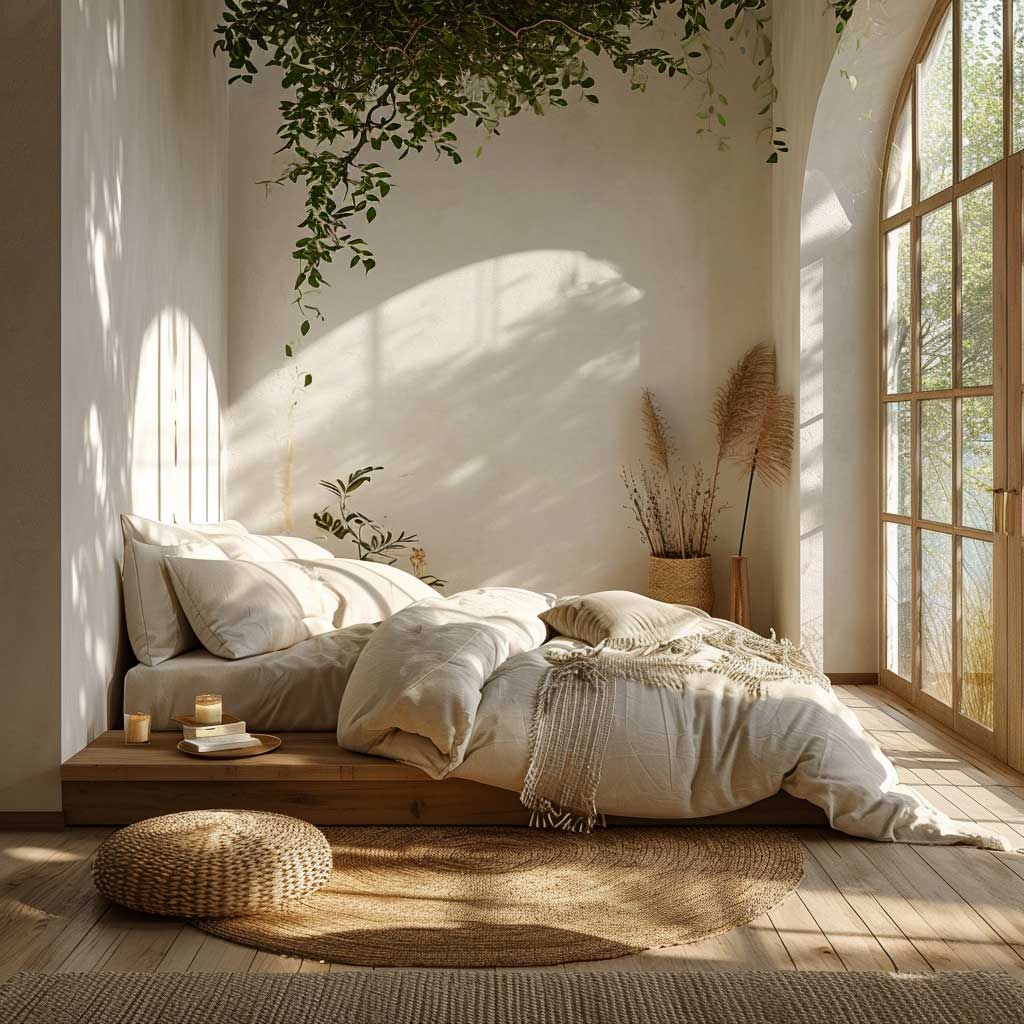
Brooklinen’s Hardcore Sheet Bundle in linen runs about $270 for a queen set — and if you haven’t slept on washed linen, you’re missing the single biggest sensory upgrade in an organic modern bedroom. The fabric gets softer with every wash, which is the opposite of what happens to a $40 microfiber set from Target. Parachute and Cultiver are in the same price range and both use OEKO-TEX certified linen, so you know the dye process didn’t introduce anything nasty.
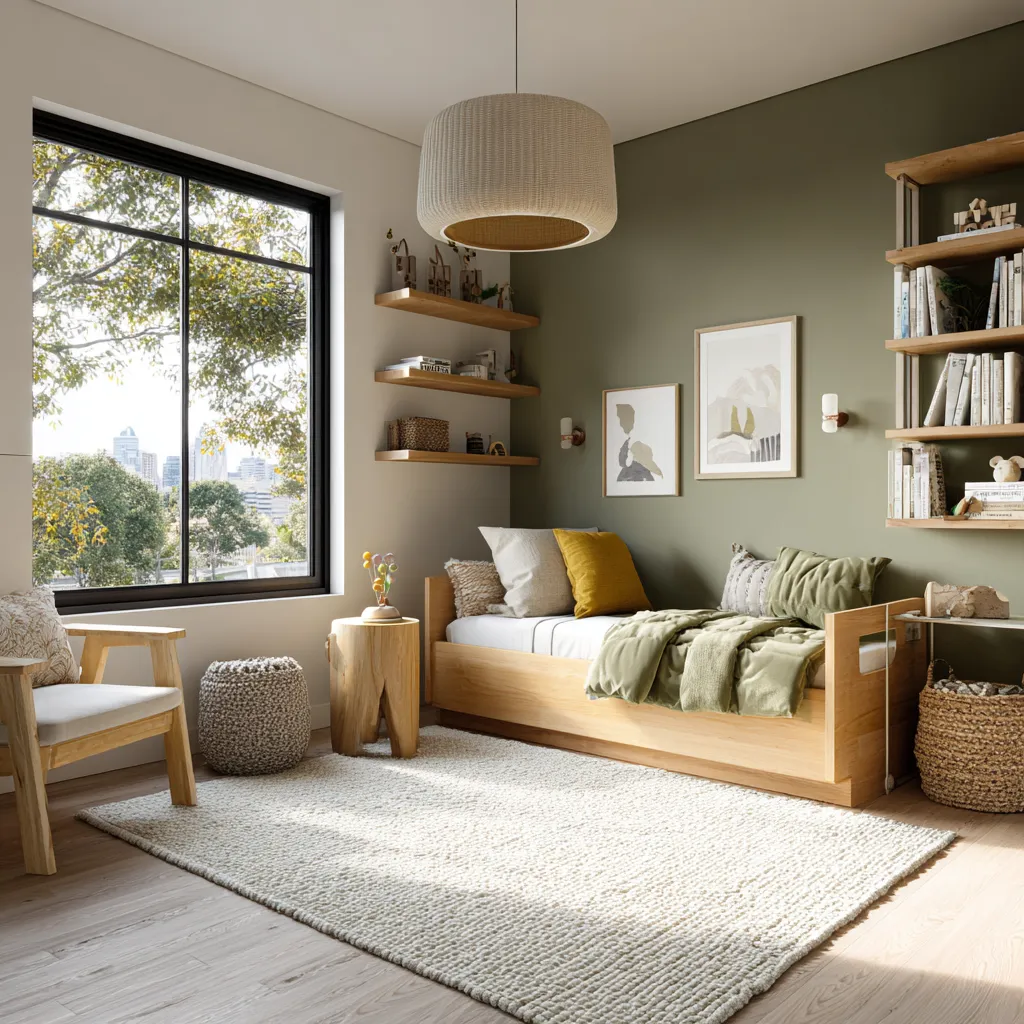
The bed frame sets the room’s entire register. Low platform frames in solid ash or white oak (Article’s Sven bed starts at $899 in queen) keep the ceiling feeling taller and the room feeling calmer. Upholstered headboards covered in boucle or natural linen are another good option — they add acoustic softness that bare walls can’t. Avoid tufted velvet headboards in this context; they push the room toward glam, which is a different aesthetic entirely.
Plants do real work in the bedroom beyond looking good. A fiddle leaf fig or a large pothos can purify air and raise humidity slightly — both things that improve sleep quality in dry climates. I stole this trick from a designer friend: place a monstera in a matte black ceramic pot in the corner behind a floor lamp, so at night the lamp casts a leaf shadow on the wall. Free art. Changes with the seasons as the plant grows.


Storage in the organic modern bedroom stays invisible or becomes furniture. Built-in wardrobes flush to the wall with touch-latch doors (no visible handles) are the clean version. Under-bed storage in a platform frame handles linens, seasonal clothing, anything that would otherwise land on a chair. The “chair with clothes on it” is the real enemy of the serene bedroom — not the lack of art or the wrong paint color.
Technology gets hidden or removed. The television, if present, lives inside a cabinet with doors that close. Phone charging happens inside a drawer, not on the nightstand in plain view. You need one lamp per bedside and one reading light — that’s it. Dimmable LED bulbs in a warm color temperature (2700K, not 4000K) are the difference between a room that winds you down and one that keeps you alert.
Textiles layer: linen duvet, wool throw folded at the foot of the bed, a natural fiber rug underfoot. The rug is the most skipped element and the one that makes the biggest difference. A jute or sisal rug grounds the room the way soil grounds a tree — without it, the furniture floats and nothing feels settled. Lorena Canals makes washable wool-cotton blends starting around $180 in a 5×8 size.
Wood Ages Into the Room; Particleboard Just Ages
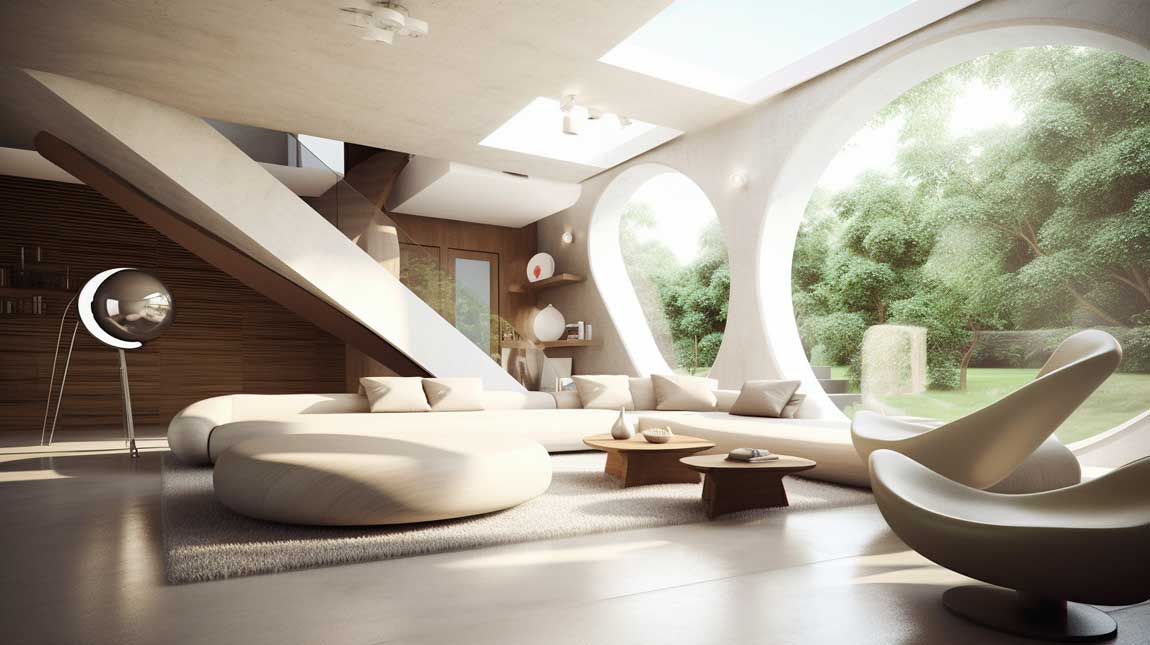


Reclaimed wood is a reliable foundation material — pulled from old barns, factories, or demolished buildings, it carries density and patina that new-growth timber simply doesn’t have. My go-to source for reclaimed wood flooring is Elmwood Reclaimed Timber, whose pricing runs $8–$14 per square foot depending on species. Antique heart pine reads warm and southern; reclaimed Douglas fir reads slightly cooler and more Pacific Northwest. Pick based on your palette, not just what’s available.
Stone adds weight and permanence that no other material replicates. Marble is beautiful but soft — it etches from lemon juice and stains from red wine, facts that somehow surprise people who read only the design blogs and skip the maintenance forums. Quartzite is harder and more resistant; granite is the most durable of the natural stones and starts around $40–$60 per square foot installed. Slate is the underrated option in this category: dark, matte, tactile, and cheaper than all three at $30–$50 per square foot.
Bamboo, rattan, and jute are the supporting cast materials — never the lead. A rattan accent chair from Serena & Lily (the Palisades chair runs about $898) works beautifully in a corner of a natural modern living room. A rattan sofa does not — at that scale, the material reads casual and tropical rather than considered and modern. Use these materials as punctuation, not sentences.


Don’t Do This
Don’t mix more than two primary natural materials in the same room — wood plus stone works; wood plus stone plus rattan plus exposed brick does not. The room stops reading as curated and starts reading as collected, which is a completely different and less coherent aesthetic. Also avoid faux versions of these materials: vinyl wood-look flooring, printed stone-effect wallpaper, and “wood veneer” furniture with a paper-thin surface all undermine the authenticity that makes this style worth pursuing in the first place. You can feel the difference with your hand and so can every person who visits.
Biophilic Design Is Structural, Not Decorative
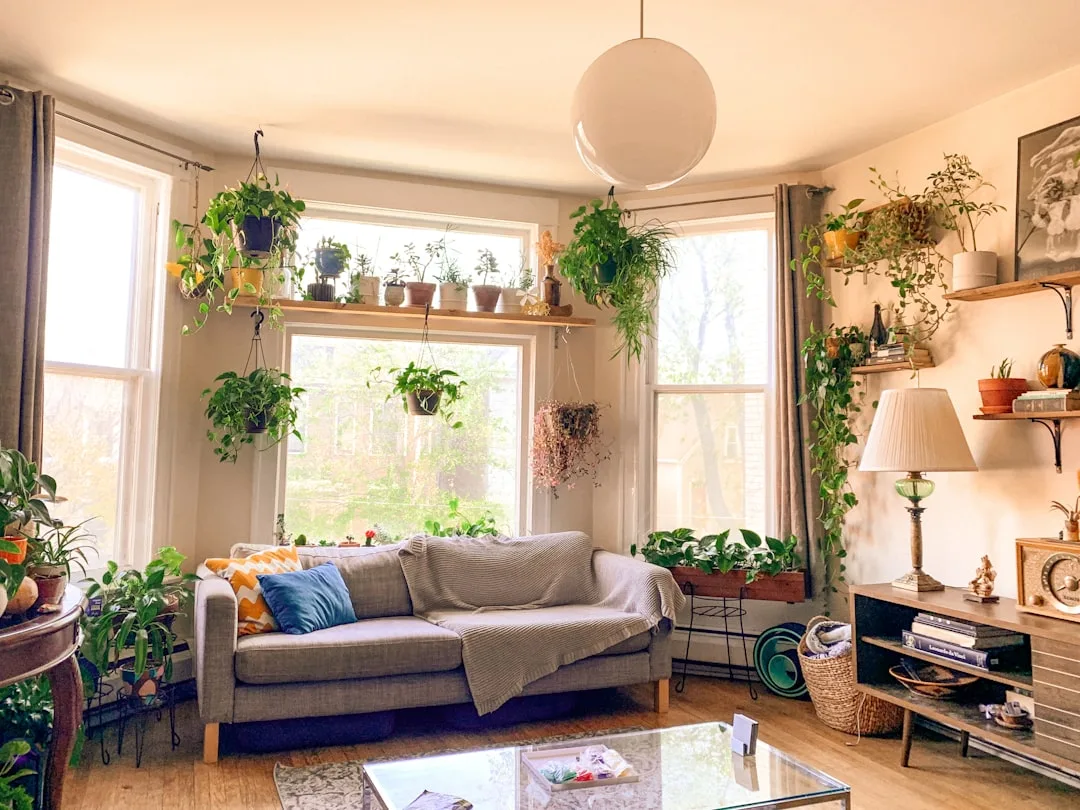
Biophilic design gets treated like a synonym for “add some plants” — but the actual framework is about building a persistent sensory connection to the natural world into the structure of the space. Plants are one layer. Natural light is another. Acoustic texture from natural materials is a third. Water features, natural airflow patterns, views to exterior greenery — all of these count, and a room that incorporates three or four is noticeably different to be in than one that only adds a fiddle leaf fig in a corner.
For plants specifically, the species choice matters. Pothos and snake plants handle low light and irregular watering — good for rooms without strong southern exposure. Monstera deliciosa, fiddle leaf figs, and olive trees need bright indirect light and will punish you if they don’t get it: yellow leaves, root rot, general decline. I’ve killed two fiddle leaf figs in north-facing rooms before accepting they belong near windows, not in corners where they look compositionally perfect.
Natural light strategy works at the window treatment level. Sheer linen curtains in off-white diffuse direct sun without blocking it — this is what makes rooms glow rather than glare. Heavy blackout curtains in a natural modern space are a contradiction in terms; if you need darkness for sleep, layer a linen sheer with a thin roller blind that retracts completely during the day. Skylights are the most impactful upgrade of all — a 24-inch square skylight changes the quality of light in a room the way no fixture can replicate.
Natural textures in fabric and surface materials engage touch and sight simultaneously — which is what makes a well-done biophilic interior feel restorative rather than merely attractive. Botanical motifs in textiles are fine used sparingly; a linen cushion with a leaf print works, a rug plus curtains plus wallpaper all in botanical prints becomes a greenhouse, not a home. Natural living room design works best when texture variety — smooth stone, rough linen, matte wood — does the visual work that pattern might otherwise try to do.


Sustainable Interior Design Starts With the Paint, Not the Furniture
Most people start their eco-friendly redesign at the furniture stage and then spray the walls with conventional paint containing VOC levels up to 150 g/L. That’s backwards. The walls are the largest surface area in any room, and conventional paint off-gasses for weeks after application — longer in poorly ventilated spaces. Low-VOC or zero-VOC paint addresses that immediately. Benjamin Moore’s Natura line is zero-VOC and comes in a full palette; Farrow & Ball’s water-based formulas run low-VOC at about $130 per gallon and in colorways that read genuinely sophisticated, not chalky.
FSC certification on furniture is the clearest signal that sourcing was responsible. What you need to know: FSC-certified wood is harvested under management standards that protect forests, biodiversity, and local communities. Look for the FSC logo on the brand’s product pages, not just their “about” page. IKEA offers FSC-certified options in most solid-wood product lines; at the mid-to-high end, Room & Board sources domestically from FSC-certified suppliers and publishes the mill locations for its solid-wood pieces.
Vintage and antique markets are the most sustainable furniture source of all — zero new production, zero new packaging, zero shipping from overseas factories. I’ve found solid teak sideboards at estate sales for $80 that retail new for $1,200. The hunting takes time. It pays off in pieces with actual provenance and character that flat-pack alternatives can’t replicate.

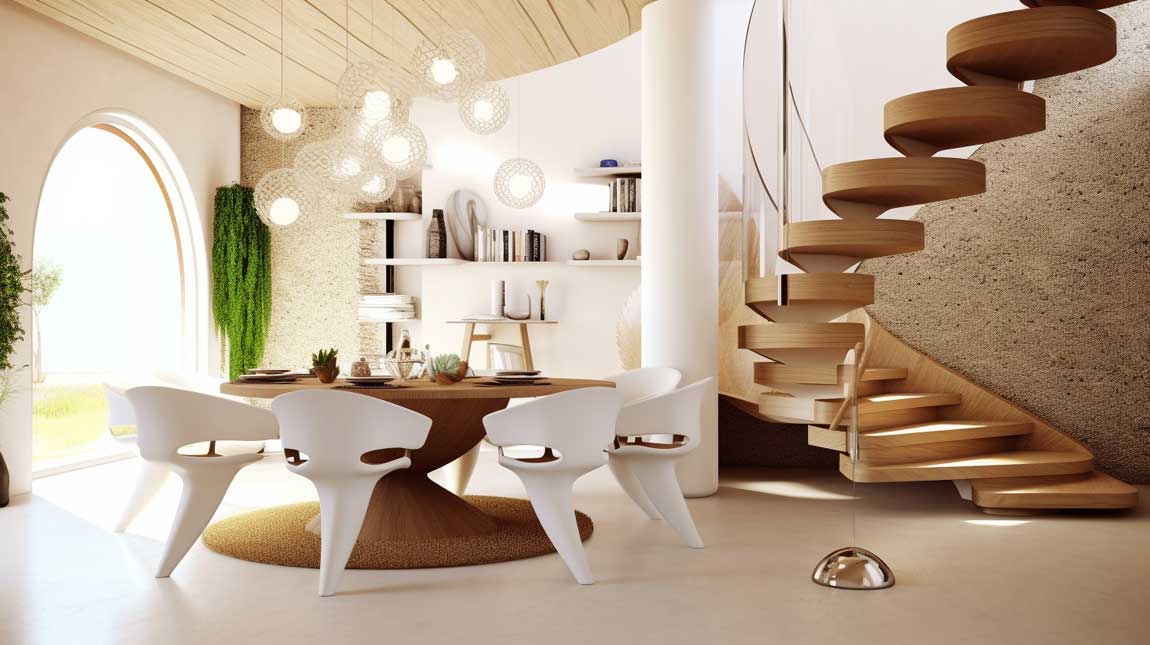
Furniture Selection Comes Down to Scale, Not Just Material
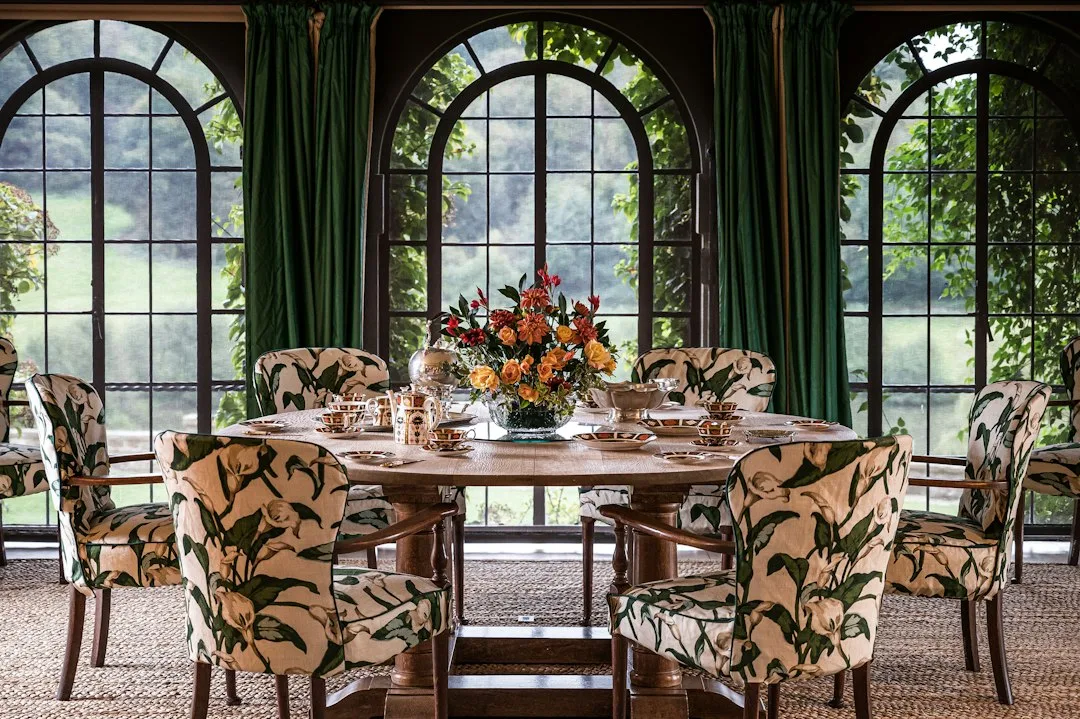
Natural materials in the wrong scale destroy a room faster than the wrong color. A solid walnut dining table at 96 inches in a room that needs 84 inches maximum will make every meal feel like you’re eating in a hallway. Measure the clearance: 36 inches from table edge to wall is the minimum for comfortable seating and movement, and 48 inches feels right. Get this wrong in solid wood and you’re looking at a very expensive problem.
My approach to mixing materials: anchor with one dominant wood tone, then add metal in one finish (not two), then one upholstered piece per room in natural fabric. A white oak dining table with black powder-coated steel legs (a classic combination — Article does this well in the $500–$900 range) reads contemporary and grounded. Add a walnut credenza to that same room and suddenly you have two competing wood tones fighting each other. Pick one. Be ruthless about it.
Vintage sourcing adds the patina and irregularity that new furniture can’t fake. A 1960s Danish teak armchair reupholstered in natural wool felt costs $300–$600 at a good vintage market and anchors any natural modern room better than a new version at twice the price. The imperfections in the wood — small dents, variations in the grain — are features, not flaws. That’s a perspective shift worth making early in the process.


Layered Textiles Solve the Room That Looks Finished in Photos But Cold in Person
The gap between a natural modern room that photographs well and one that actually feels good to inhabit is almost always resolved by textiles. Hard surfaces — stone, wood, plaster — are what the camera loves. But your nervous system needs softness. An area rug, a throw, cushions in varying textures, window treatments in natural fabric: these are the elements that make you want to sit down and stay.
Natural fibers are non-negotiable here. Linen wrinkles, which some people hate — but in an organic modern room, that wrinkle reads as texture and life, not sloppiness. Cotton is the workhorse: durable, washable, comes in every weight from light voile to heavy canvas. Wool is the premium layer, worth the price in throws and rugs. A good wool throw from Faribault Woolen Mill (a Minnesota mill that’s been running since 1865) costs about $120–$160 and will outlast everything else in the room.
Layering technique: start with the rug as a foundation (jute, wool, or wool-cotton blend), add upholstery in a solid natural fabric, then introduce one textile with a subtle pattern — a botanical linen, a geometric weave — in the throw or cushion position. Three layers of texture, maximum one pattern. More than that and the room starts working too hard to convince you it’s cozy instead of just being cozy.


Art and Decor Should Look Like You Lived With It, Not Like You Styled It
Nature-inspired art in a natural modern interior lands best when it’s abstract rather than literal. A painting in ochre, raw sienna, and cream that suggests landscape without depicting it will hold up over years in a way that a botanical print or a framed fern photo will not. I own two large-format abstracts from independent artists found on Saatchi Art — both under $400, both still make me stop when I walk past them five years later. The literal stuff usually bores me within six months.
Ceramic objects from working potters are the most coherent decor choice for this aesthetic. They’re handmade, tactile, irregular, and they age beautifully. A collection of three stoneware pieces in varying heights on a shelf reads more intentional than twelve different objects in a similar footprint. Edit aggressively. If something doesn’t produce a response when you look at it, it belongs somewhere else or not in the room at all.

Clutter-Free Doesn’t Mean Sparse — It Means Resolved
Organic modern interior design gets confused with minimalism constantly, and they’re not the same thing. Minimalism accepts emptiness as a value. Organic modern fills space — just with fewer, better things. The distinction matters when you’re shopping: you’re not editing down to nothing, you’re selecting up to something specific. Every object should be there because it’s useful, beautiful, or meaningful — ideally more than one of those.
Smart storage is the infrastructure that makes this aesthetic possible. Built-in shelving with closed lower cabinets and open upper shelves handles the dual mandate: hide the functional stuff, display the beautiful stuff. IKEA’s KALLAX and BILLY systems, customized with solid-wood fronts, get surprisingly close to a built-in look at a fraction of the cost. Hidden storage under stairs, in window seats, and under platform beds handles the overflow that would otherwise sit on surfaces.
Assess each room annually. Things accumulate. The coffee table book that felt curated in January feels like clutter in July. A natural modern interior is a living system, not a finished object — it needs editing as your life changes. Sustainable interior elegance and a clutter-free environment reinforce each other: when every object is considered, the materials themselves carry the room.

Lighting Fixtures Made From Natural Materials Do Double Duty
Pendant lights in woven rattan or spun ceramic aren’t just aesthetic — they diffuse light in a way that bare bulbs or glass globes don’t, scattering warm light in multiple directions and creating soft shadow patterns on the ceiling. Serena & Lily’s Hewn pendant in natural rattan runs about $498 and produces the kind of light that makes every dinner feel like it’s happening at the right hour. Worth every dollar if you eat at that table most nights.
Lighting layers are the framework: ambient (general illumination), task (specific-use lighting at desks, islands, reading chairs), and accent (directed light on art, shelving, or architectural features). You need all three to avoid the flat, bright-everywhere look of a room lit by one overhead fixture. Floor lamps in arc shapes with linen or rattan shades handle ambient without the commitment of hardwired installations — useful in rented spaces or rooms you’re not ready to renovate.
LED color temperature determines whether a room reads warm or cold. The specific numbers: 2700K is warm and amber, closest to candlelight. 3000K is warm white, good for kitchens. 4000K is cool white, appropriate for bathrooms or studio workspaces but not for living areas. Most people buy whatever’s on the shelf at the hardware store and then wonder why their carefully designed room feels like a dentist’s office after dark. Buy deliberately. Color temperature is on every LED box.

Glass Walls and Retractable Panels Connect the Interior to Actual Nature
Floor-to-ceiling sliding glass doors or NanaWall folding glass systems blur the interior-exterior boundary in a way that no amount of interior greenery can replicate. The NanaWall SL82 system starts around $1,000 per linear foot installed — significant, but it physically eliminates the wall between inside and outside, which changes the experience of every room it touches. Resale value impact is also meaningful in markets where indoor-outdoor living is valued.
Interior materials that echo the exterior landscape create visual continuity without requiring structural changes. Limestone tile on an interior floor that runs out to a limestone patio reads as one space. An exterior stone wall that becomes an interior accent wall does the same. These decisions need to happen at the design phase, not as afterthoughts — but even a window framing a particular view of a tree or garden functions as the same principle at smaller scale.
If you’re renting or working with an existing structure, the connection happens through material choice and plant placement. A row of tall grasses in floor pots near a window, an olive tree in a terracotta pot on a balcony visible from the living room, a small water feature on a covered porch — all of these extend the visual and sensory reach of the interior outward. The goal is for the room to feel like it’s in conversation with what’s outside, not sealed off from it.

Personal Objects Make the Room Yours Rather Than a Reference Photo
Natural modern interior design done without personal objects looks like a showroom — technically correct and completely cold. The goal is a room that reads as curated but inhabited. Meaningful objects — a grandmother’s ceramic bowl, a piece of stone picked up on a hike, a handmade basket from a market you actually visited — carry a density that purchased decor can’t fake. They also tend to be in the right scale and material family for this aesthetic, which is a useful side effect.
Colors you love belong in this room even if they’re not strictly in the organic palette. The rule isn’t that everything must be beige — the rule is that the palette is cohesive. A deep indigo cushion can work against warm linen if it’s the only cool note in the room. A terracotta vase with a single stem works against stone grey. Your personal color preferences are data, not obstacles; the design should incorporate them, not suppress them in favor of a generic mood board.
Travel objects integrate naturally here: a woven tray from Morocco, a small carved figure from Japan, a printed textile from India used as a wall hanging. Keep the scale large enough to read and the number small enough to avoid the collected-clutter problem. One significant object from a trip matters. Fourteen small ones from the same trip create a different problem entirely. For current sustainable furniture brands that align with this aesthetic, The Good Trade’s eco-friendly furniture roundup covers FSC-certified and reclaimed-wood brands with honest price comparisons.

The Bottom Line
Natural Modern Interior Design Is a Materials Argument, Not a Mood Board
Get the wood, stone, and textile right and the room assembles itself. Get the material wrong and no amount of plants or careful lighting recovers it.
Spend on what you touch most — flooring, bedding, the sofa you sit on for three hours every evening. Save on what’s background: the lamp cord, the hardware, the tray on the coffee table.
Save this post before you start sourcing — the brand and price references here will still be useful when you’re standing in front of a marble slab wondering if it’s worth the premium. It usually isn’t.