Simple veranda design ideas work because they force you to make exactly one commitment — and every chair, plant, and lighting choice falls from there. I redesigned my own narrow front veranda twice before figuring this out, and the second attempt, which cost under $400 in new Ikea ÄPPLARÖ chairs and a jute rug, looked ten times better than my first $1,200 attempt. You’ll notice the difference immediately: when the material palette is settled first, nothing in the space looks accidental. For a small house, a clean veranda design can turn an afterthought strip of concrete into the most-used room you own.
Most people start with the furniture and work outward. That’s backward. Start with the floor material and one dominant natural element — wood or stone — and build the whole visual from there. My go-to recommendation for any budget under $800: teak-look composite decking from Fiberon (~$3.50/sq ft), two Keter chairs in warm gray ($120 each), and a vertical planter from IKEA’s HYLLIS shelf. Done. It reads like a magazine photo and requires zero maintenance decisions at three in the morning.
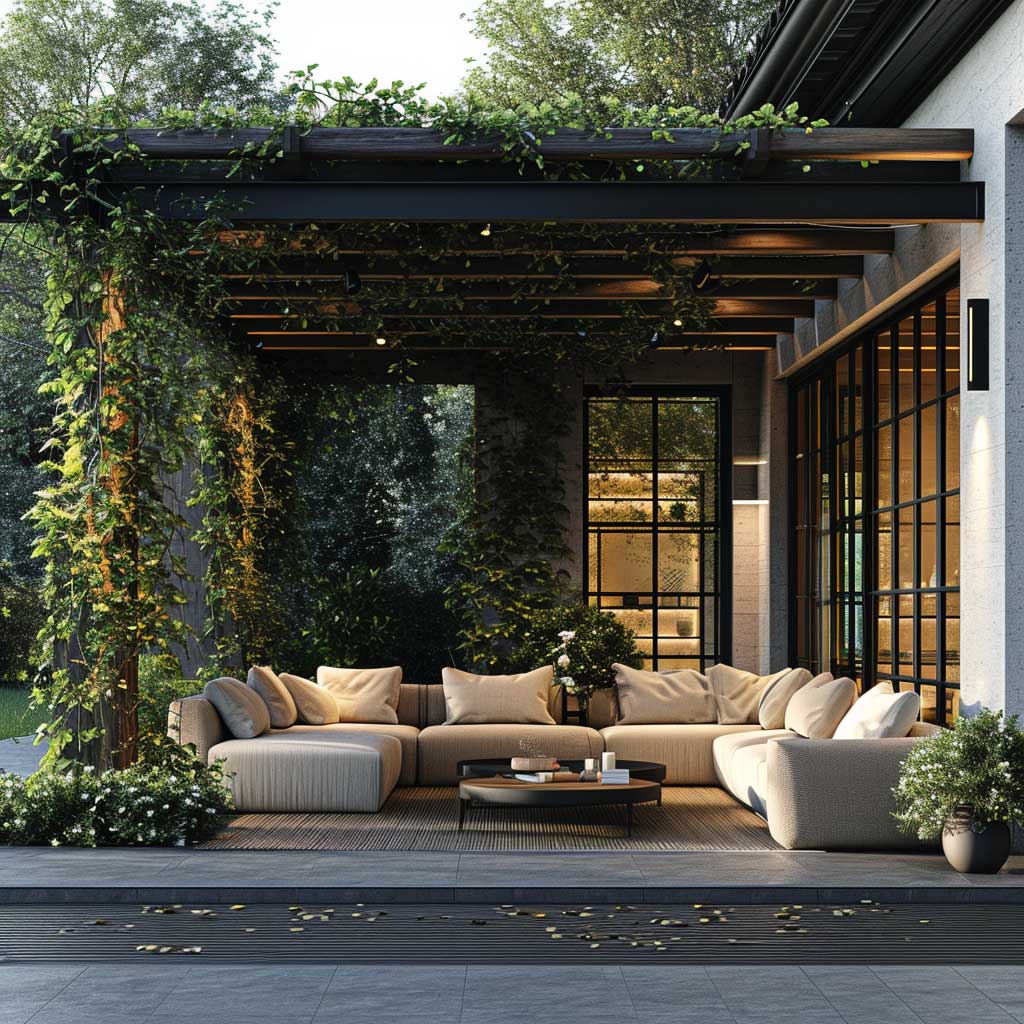
Nature-Inspired: Wood furniture in natural or light stain, potted ferns, earthy cushions. Works on any size.
Minimalist: Monochrome palette, one statement piece, zero clutter. Best for modern facades.
Rustic: Distressed wood, vintage lanterns, deep earth tones. Ideal for country or cottage homes.
Quick fixes that actually move the needle:
— Replace mismatched pots with three identically-sized terracotta planters ($12 each at Home Depot)
— Swap overhead bulb for a warm-white Edison string light (Brightech Ambience Pro, ~$35 on Amazon)
— Add one outdoor rug to anchor the seating zone. Rugs USA Bordoni flatweave starts at $49.
Wood and Greenery Do the Heavy Lifting
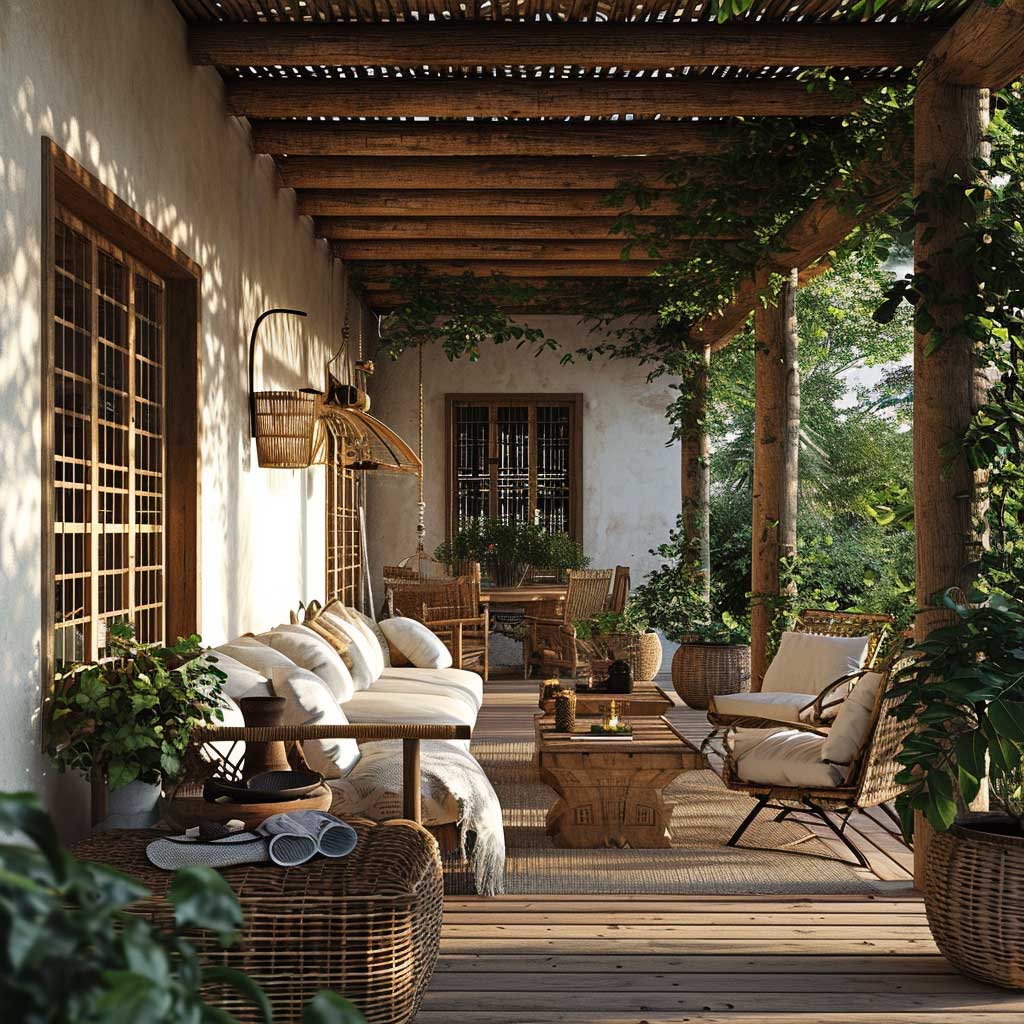
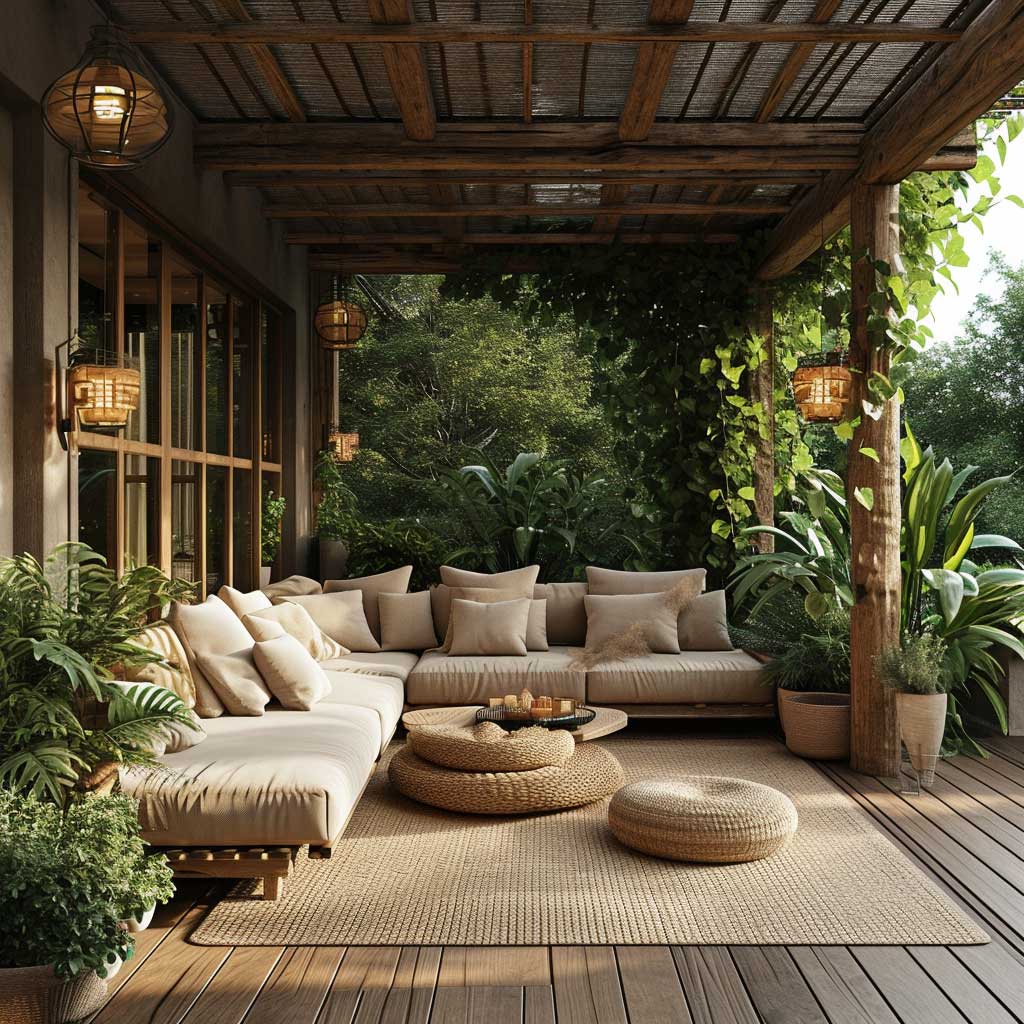
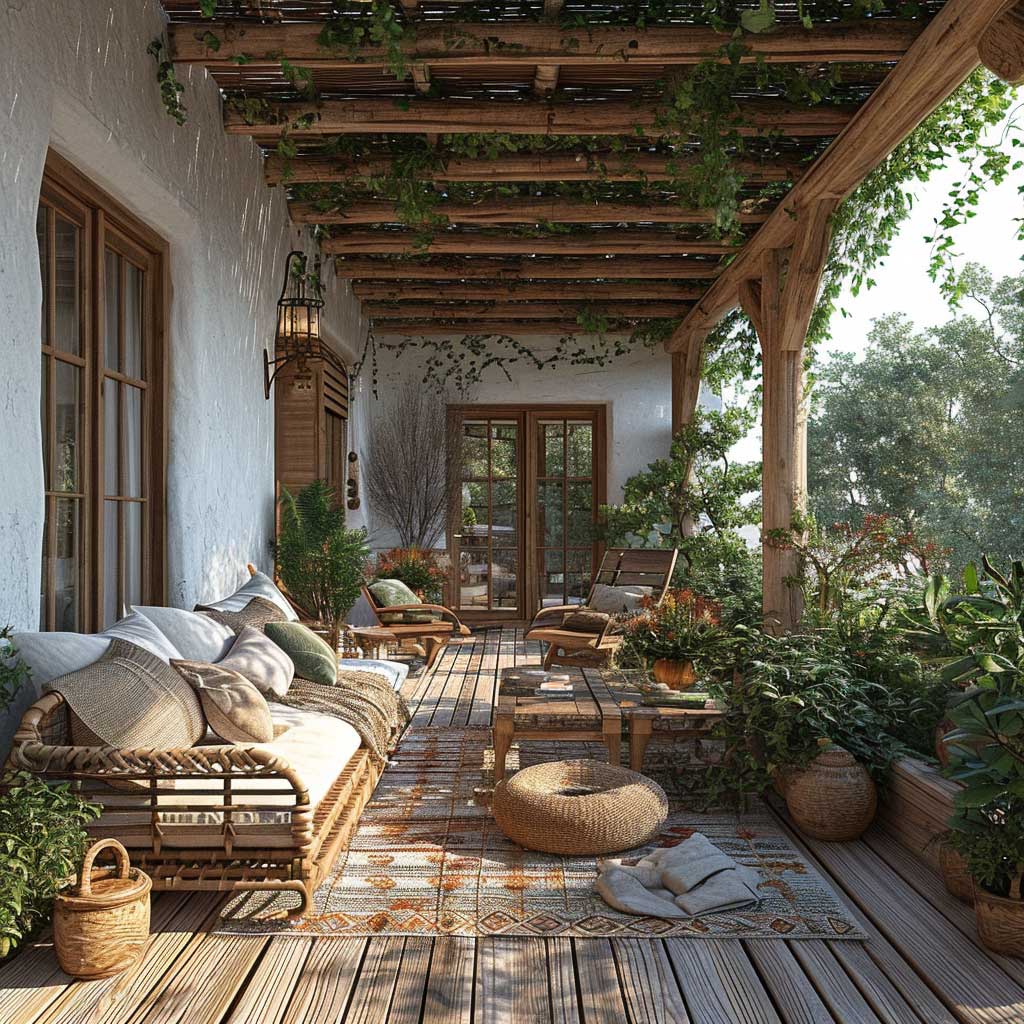
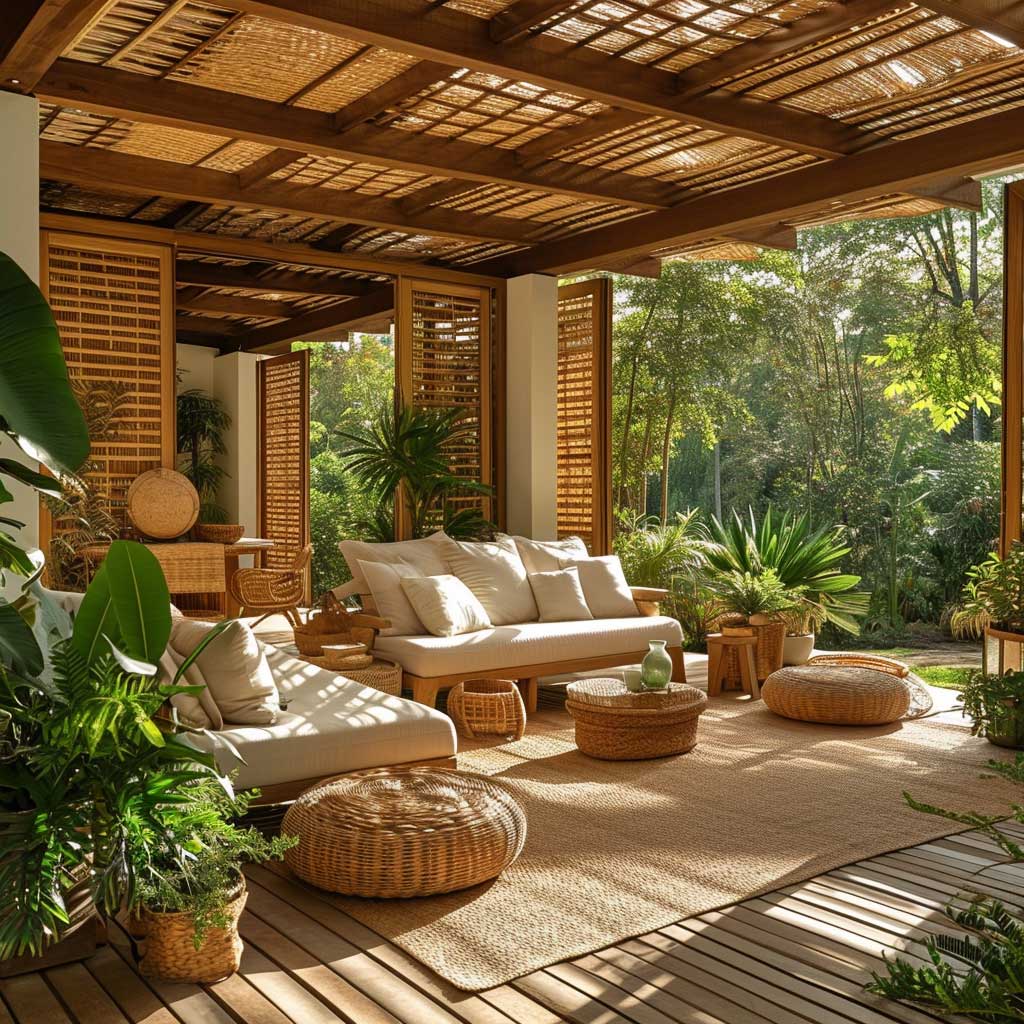
The strongest nature-inspired veranda designs I’ve seen treat plants the way a chef treats seasoning — not decoration, not filler, but the thing that pulls everything together. Teak or acacia furniture in its natural oil finish (Teakwood Direct’s Grade A sets run $450–$900) provides a warm anchor that no painted-metal set can replicate. You’ll notice the grain variation does what throw pillows always fail to do: it adds texture without adding noise. The floor material matters just as much — natural wood decking that continues the same tone as the furniture turns the veranda into a single cohesive object rather than a collection of stuff.
I stole this trick from a landscape architect friend: use odd numbers of pots, and always plant something trailing, something upright, and something textural in the same grouping. Three terracotta pots at $12 each with a pothos (trailing), a snake plant (upright), and a variegated ivy (textural) create more visual interest than a $200 statement planter with a single specimen. For small verandas under 6 feet deep, skip floor-level pots entirely and go wall-mounted — IKEA’s SKURUP brackets plus plastic pots keep the floor clear and the eye moving upward.
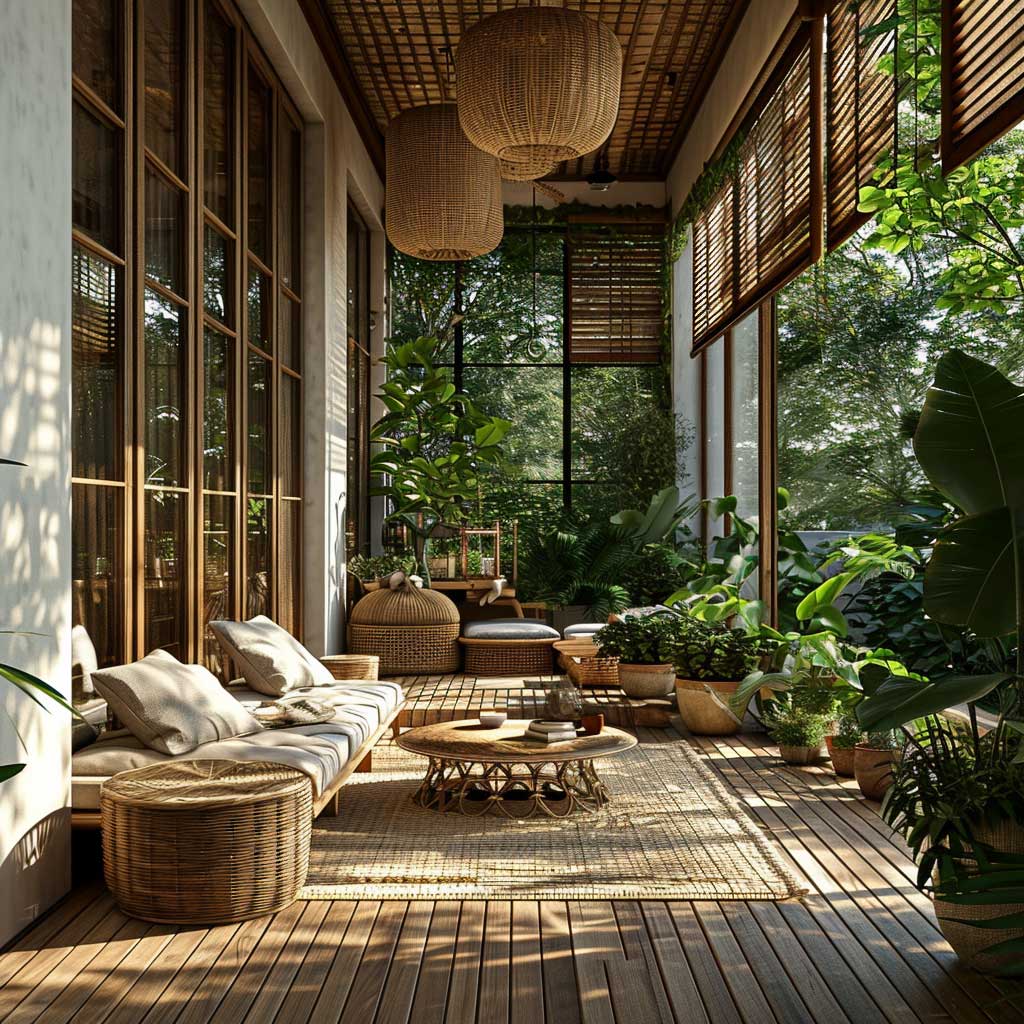
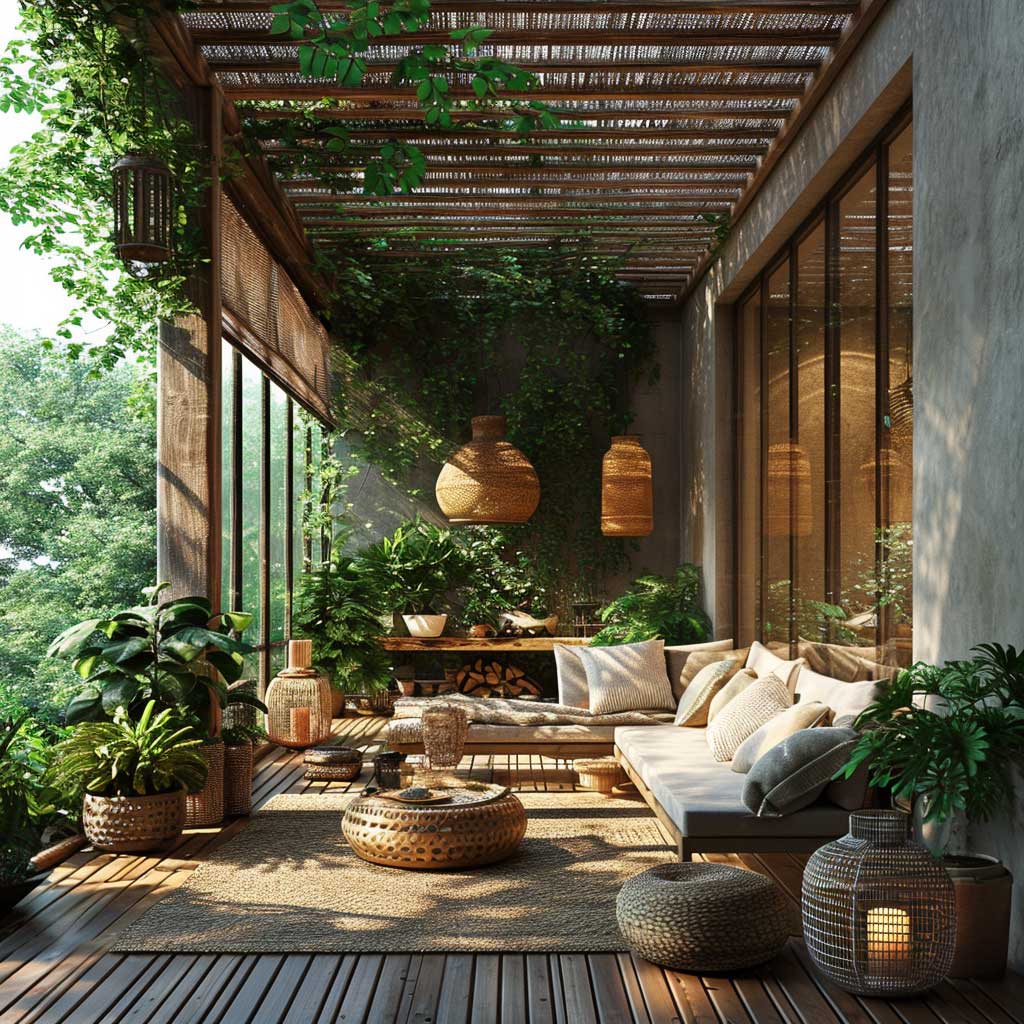
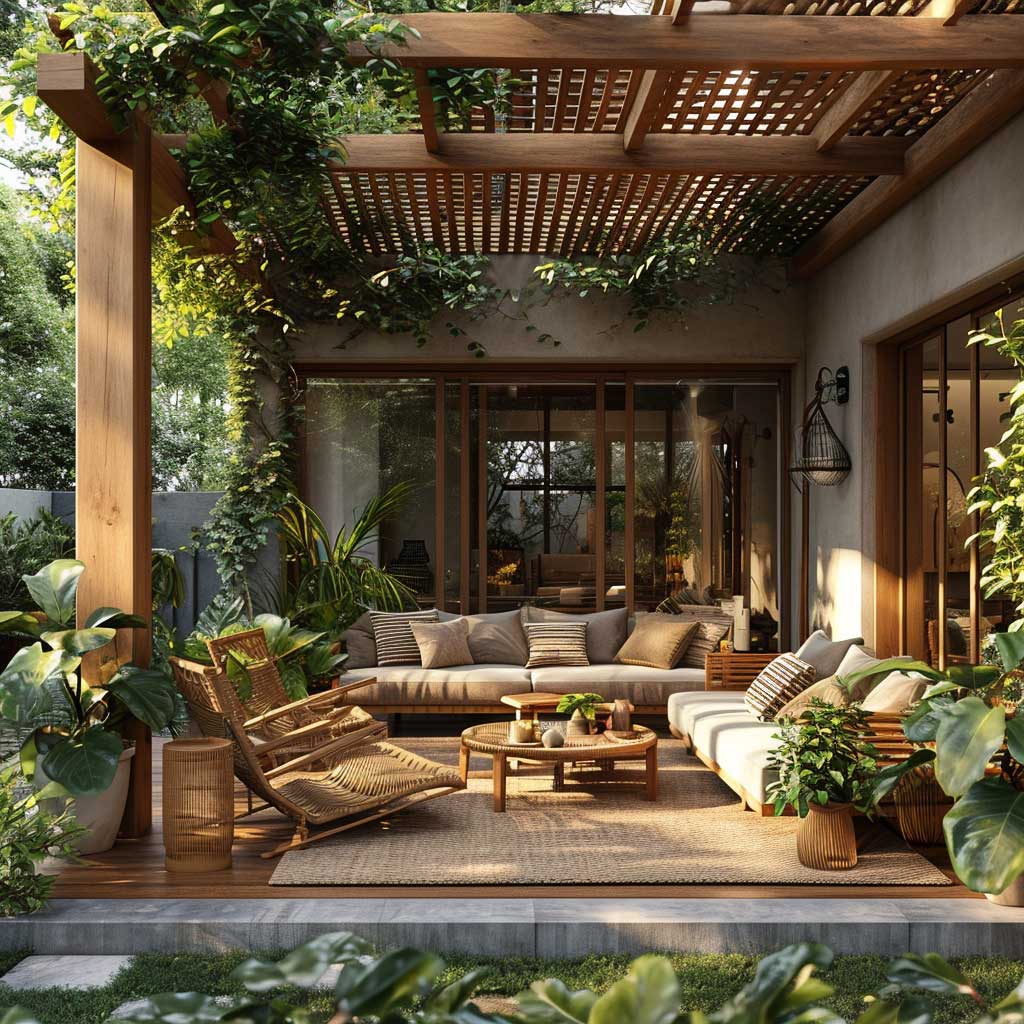
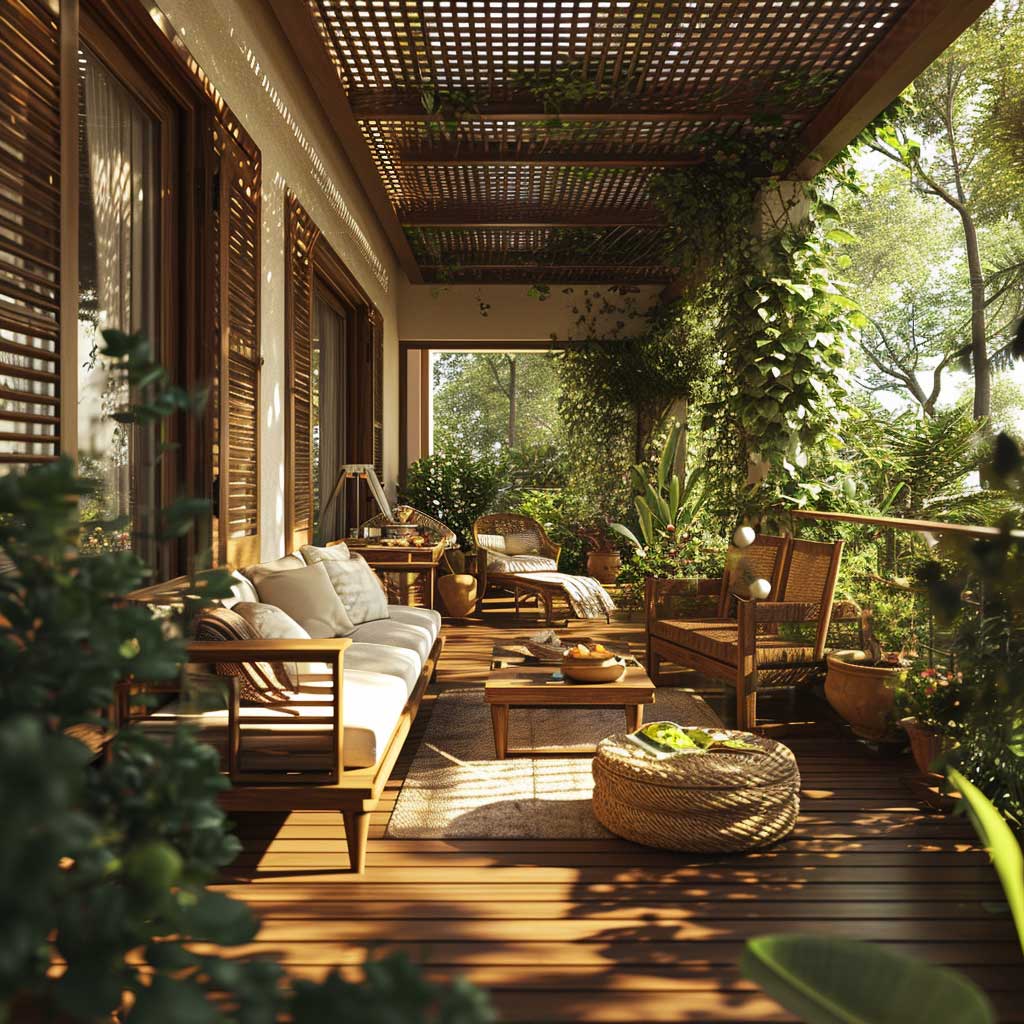
The color palette here is almost not a choice — let the wood and the plants make it. Linen or oatmeal cushion covers (Bemz makes outdoor versions from $45) tie the tones together without competing. What doesn’t work, and I’ve tried it: bold accent colors like terracotta-red cushions or cobalt-blue pots. They photograph beautifully and read exhausting in real life after a single season. Stick to sage green, natural tan, or off-white and you won’t ever feel the urge to redecorate.
Easy-maintenance plants make or break how the space feels eleven months into the year. My go-to list for all-climate verandas: cast iron plant (Aspidistra elatior, $18 at most nurseries), golden pothos, and outdoor rosemary in a terracotta pot. The rosemary pulls double duty as fragrance and herb. Skip lavender unless you’re in zones 5–8 — it dies in high humidity and looks worse dead than never planted.
Monochrome Materials Read Louder Than Furniture Count
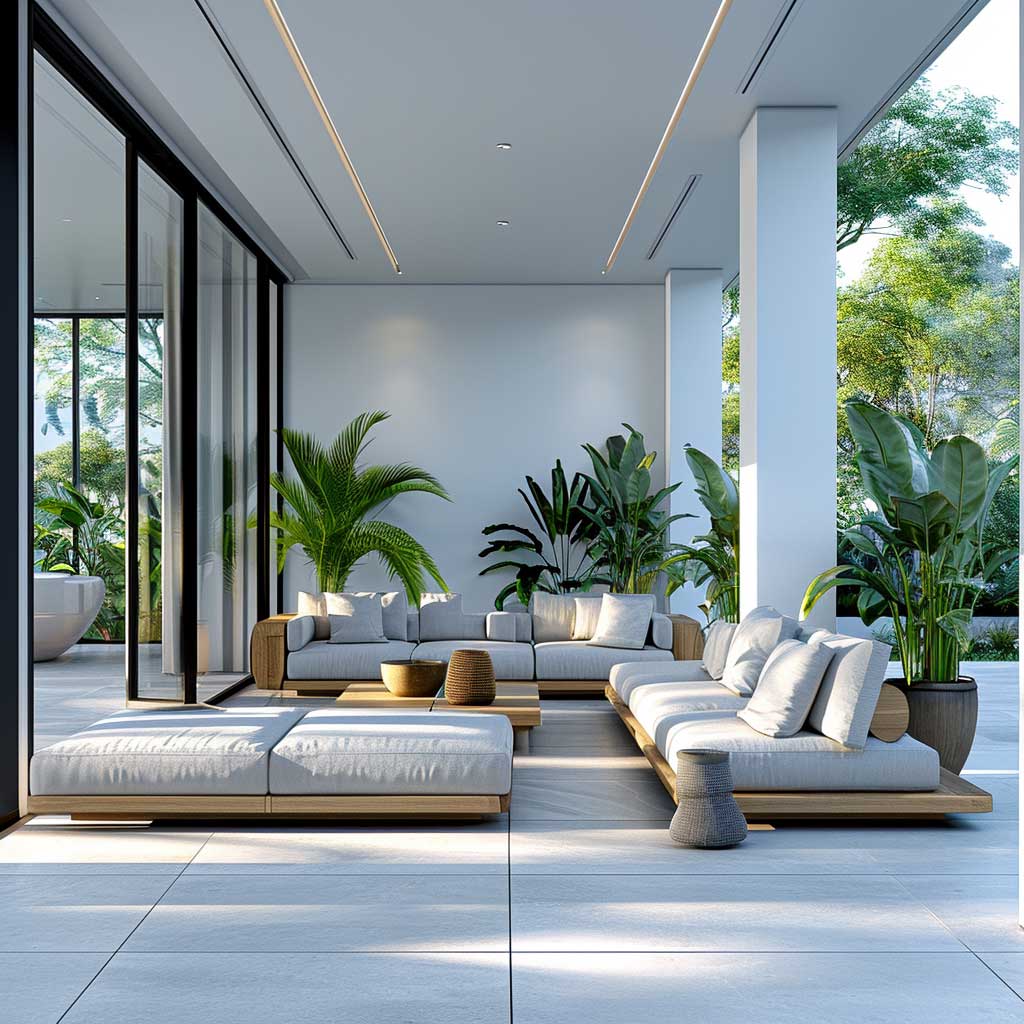
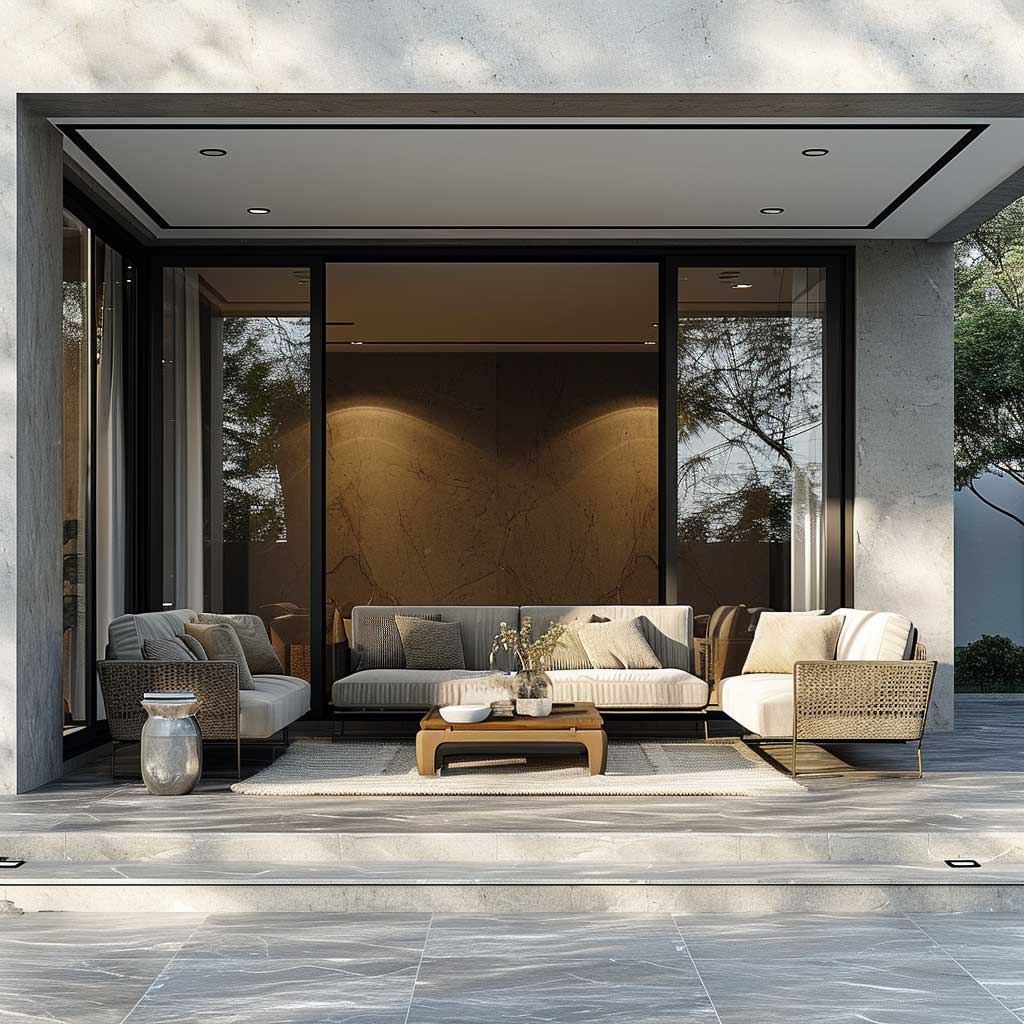

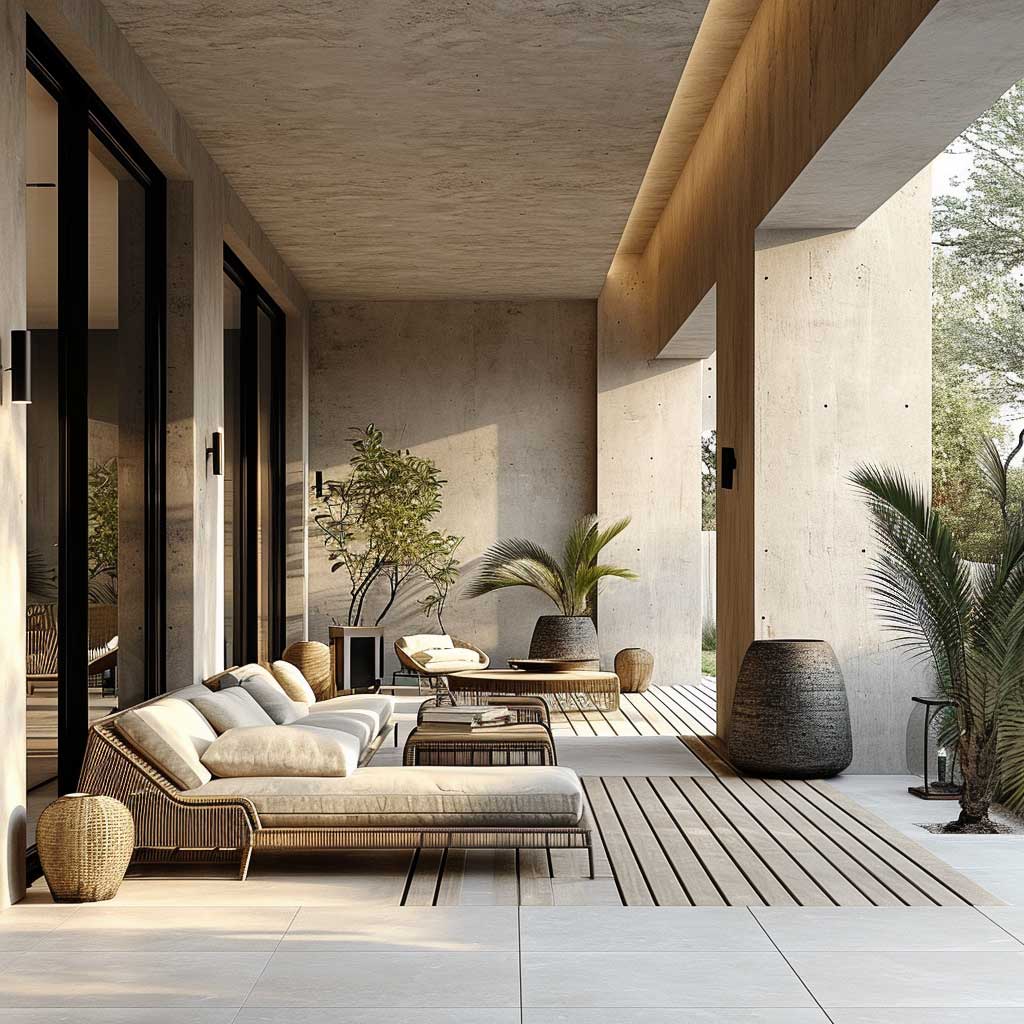
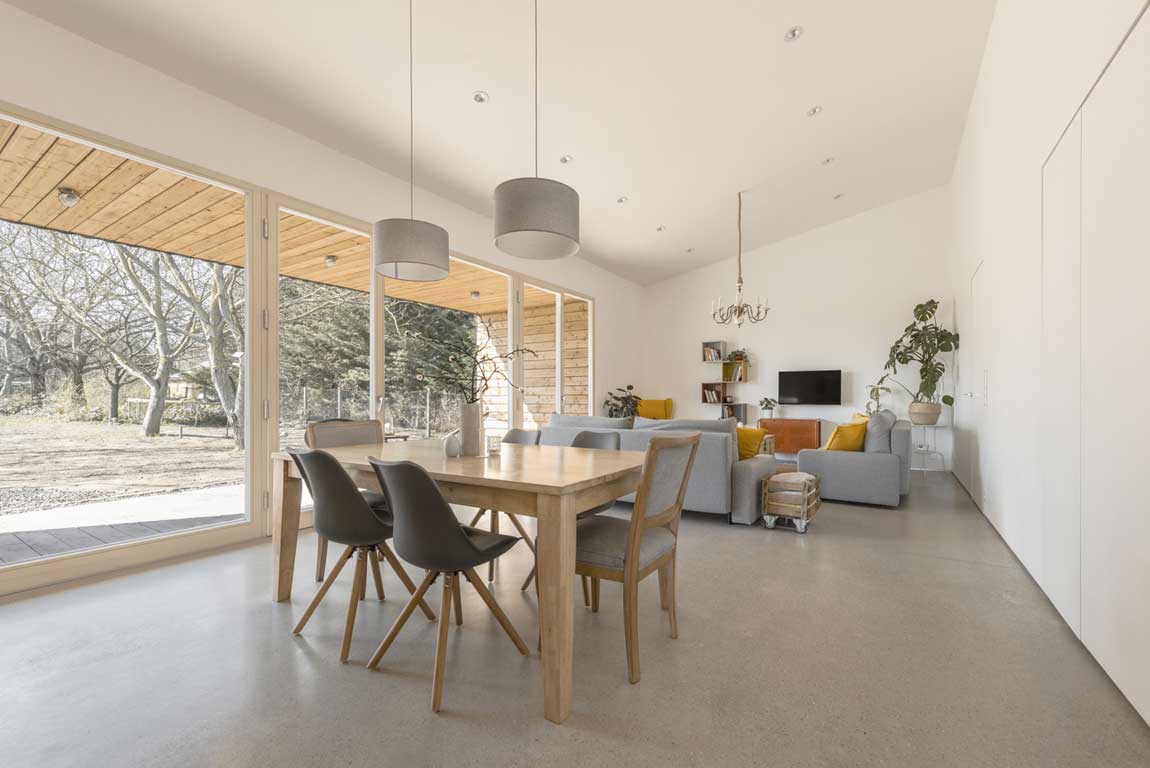
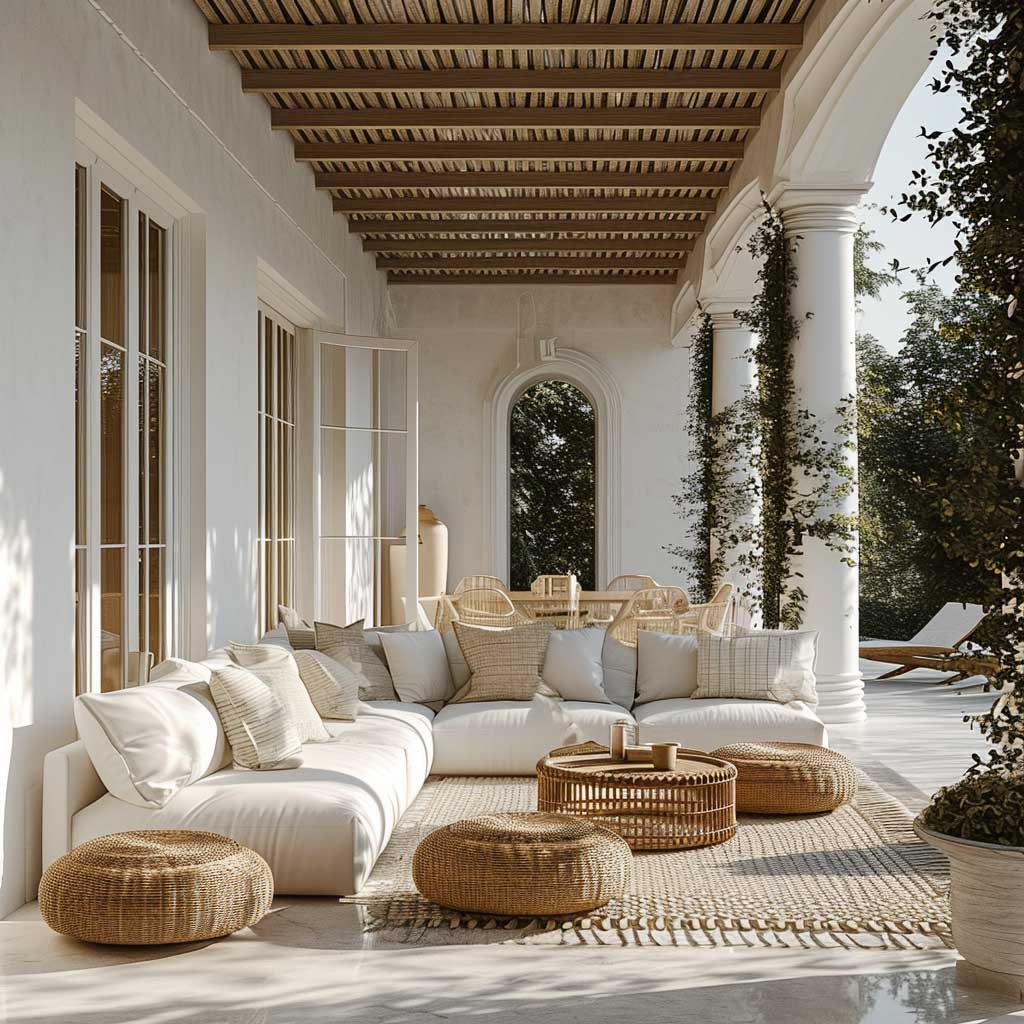
A minimalist veranda is essentially a bet that restraint is more impressive than abundance — and it almost always wins. The furniture count is irrelevant; the material story is everything. My rule: pick one dominant material for every visible surface (white-painted concrete block walls, smooth grey composite deck, matte black powder-coated steel furniture) and repeat it mercilessly. The CB2 Afuera lounge chair at $299 does exactly this — its single-pour concrete-look finish reads as intentional rather than sparse. You need one piece like this, not five pieces from five different aesthetic universes.
The mistake I see constantly in minimalist veranda attempts: keeping too many small decorative objects “because they’re neutral.” A collection of grey pebbles, a white candle, two beige coasters, and a small succulent don’t cancel each other out — they create noise at low volume, which is the worst kind. Edit down to two objects maximum at any surface. If you own three and can’t decide which to cut, remove all three. Empty is always better than ambiguous.
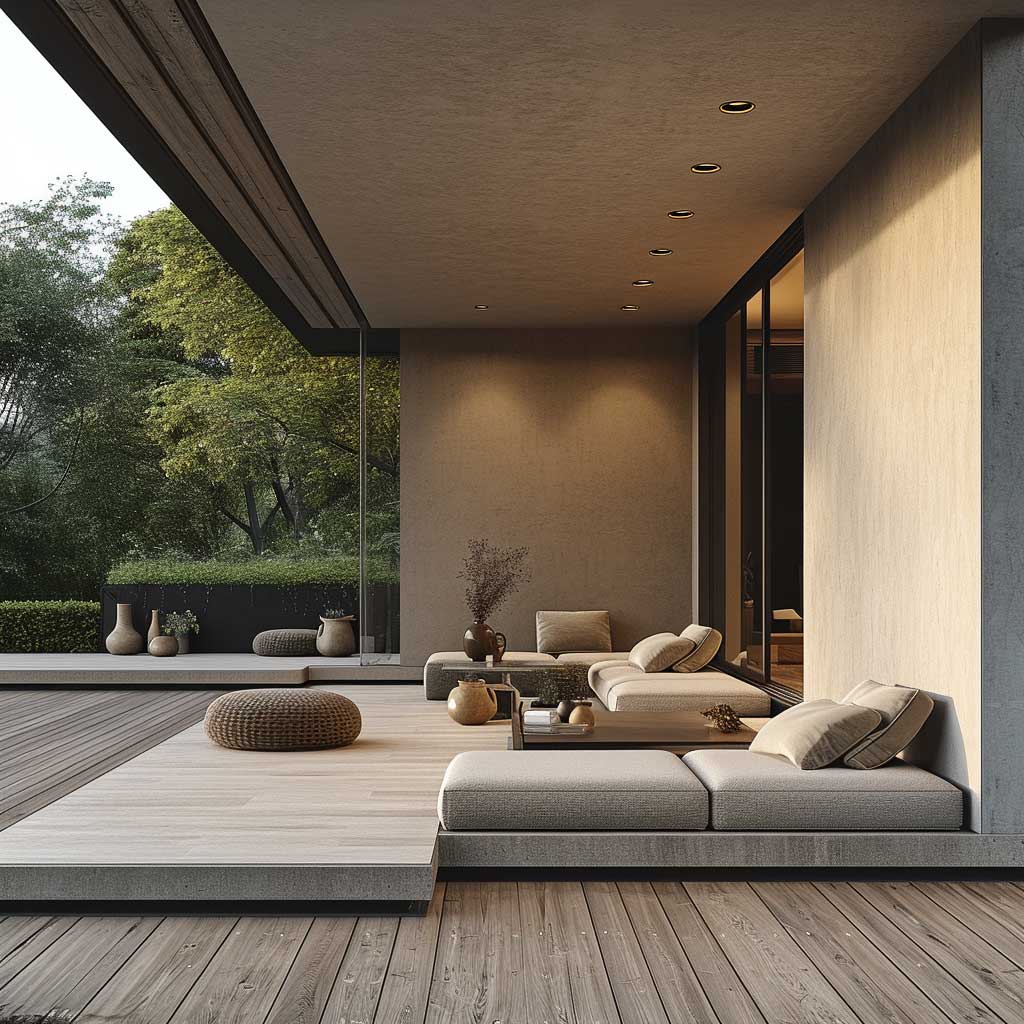
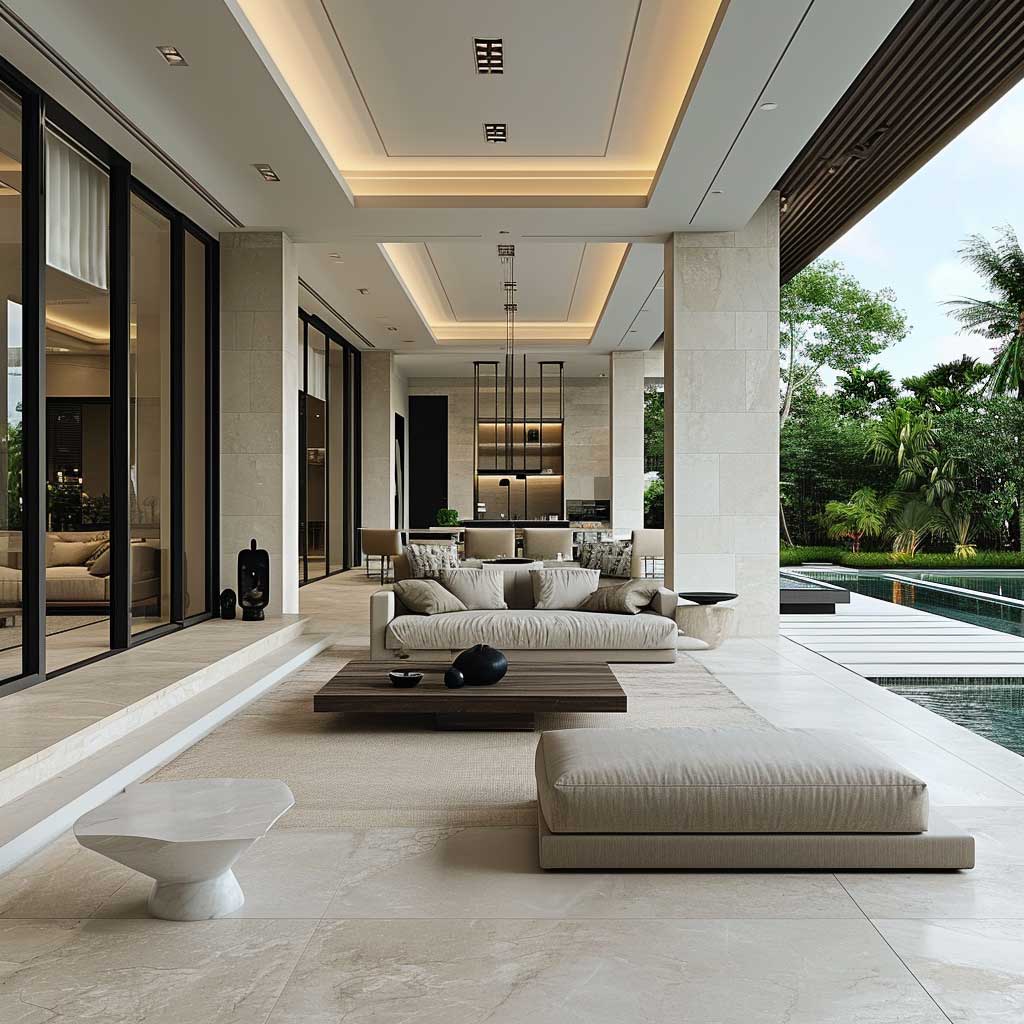
Lighting is where minimalist verandas go from looking rented to looking designed. A single wall-mounted Astro Lighting Dartmouth sconce ($180 from AstroLighting.co.uk, available via US retailers) in matt black does more for the space than four pendant lights from a chain store. The rule is the same as with objects: one fixture, placed with intent, beats three placed for coverage. Position it 66 inches from floor height so it casts light across the seating, not down onto it. Down-light feels institutional; side-light feels residential.
Does minimalism work for small verandas specifically? Absolutely — it’s actually the only style that doesn’t punish you for limited square footage. A 4×8 foot strip between a front door and a step can hold two Hay AAC chairs ($295 each), a Muuto stem side table ($195), and nothing else, and look like a deliberate design decision. The same space with wicker furniture, a striped rug, and three mismatched planters looks like storage. Small-space outdoor design solutions follow the same logic at every scale.
Distressed Wood Carries Emotional Weight That Paint Never Does
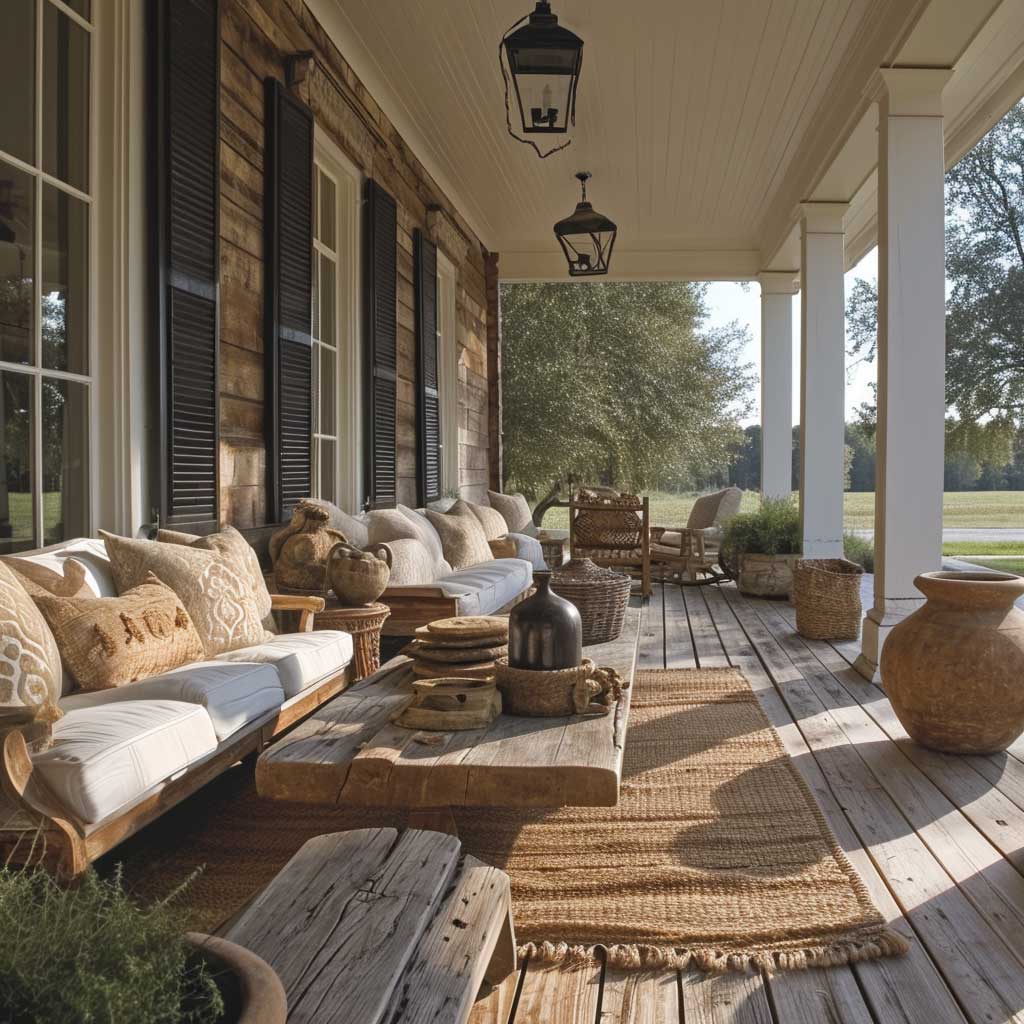
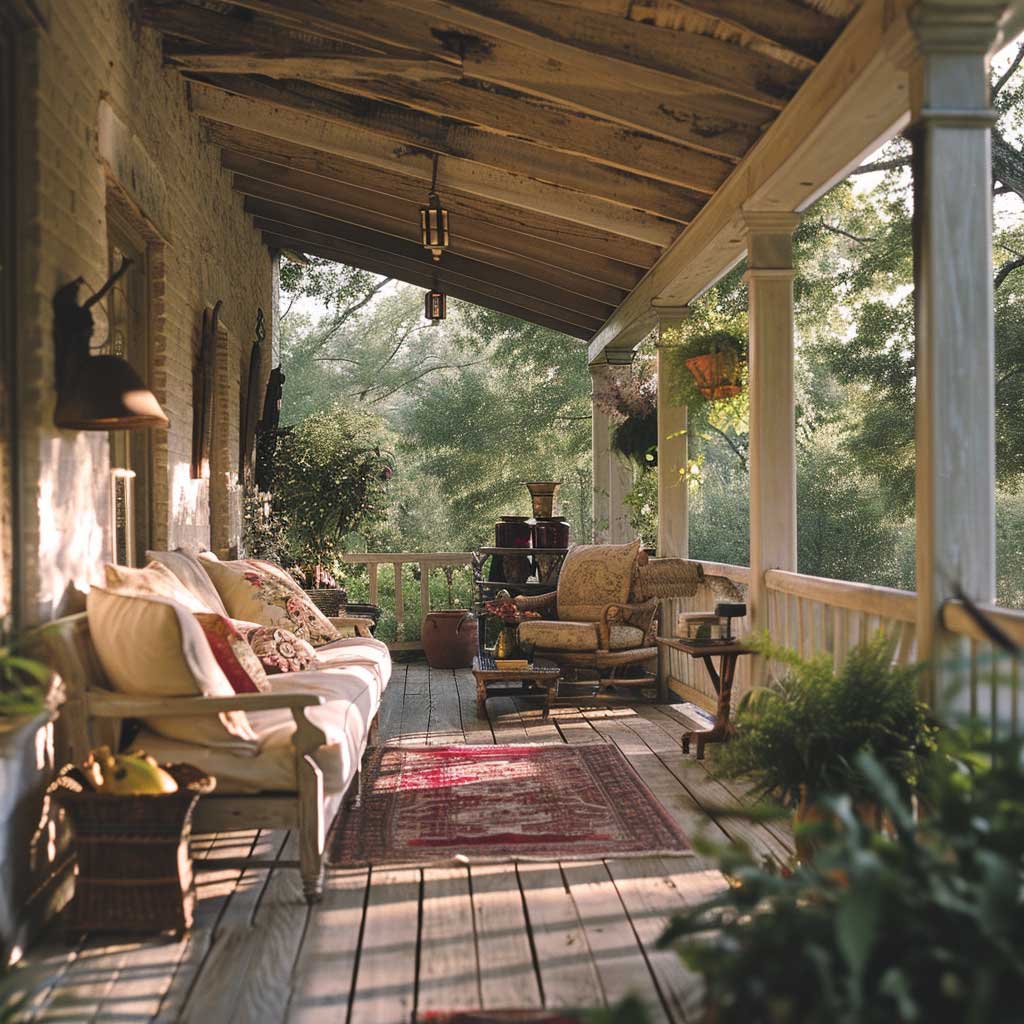
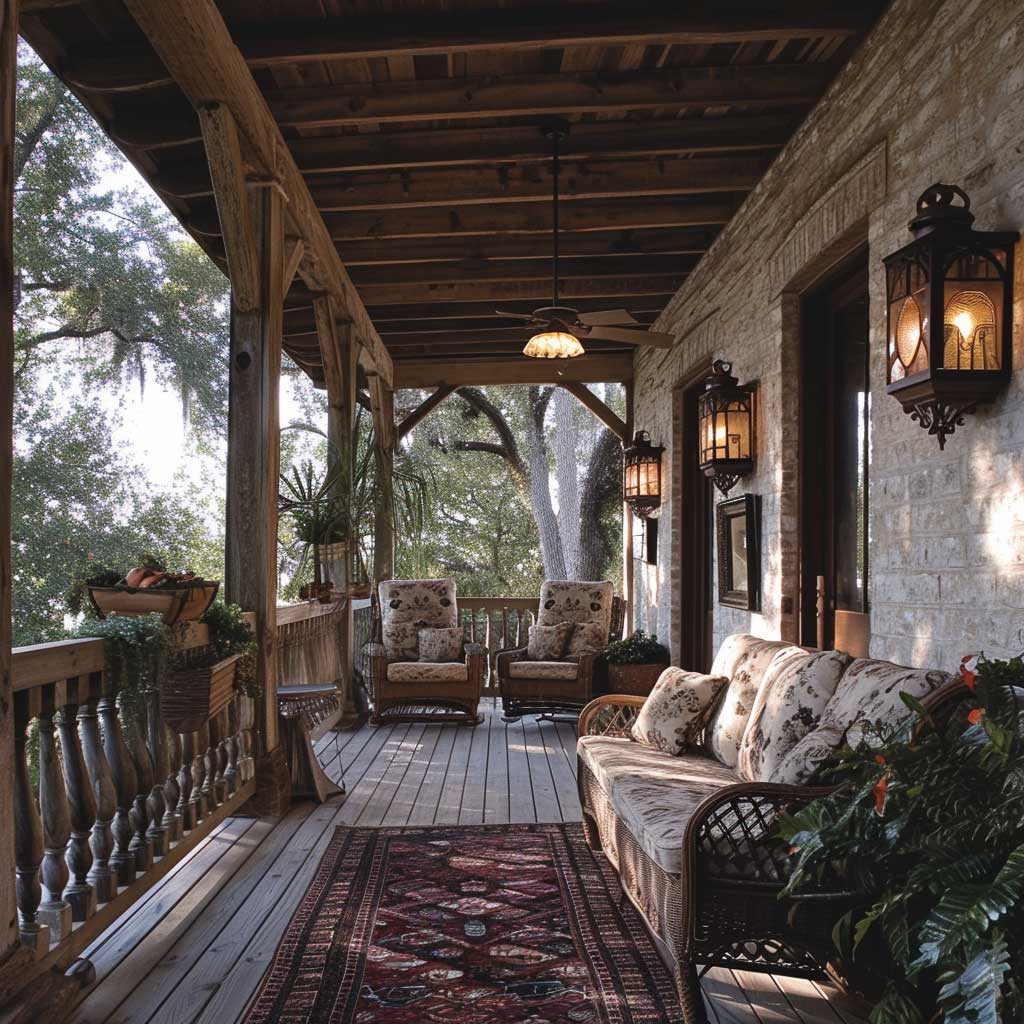

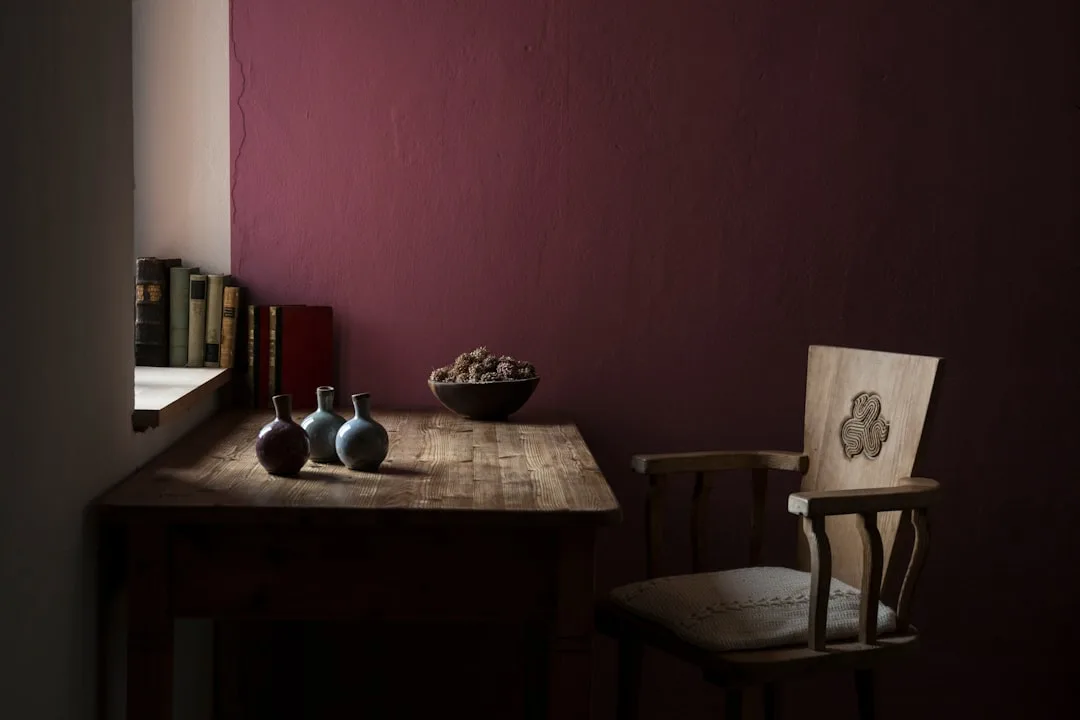
Rustic veranda design is the only style where imperfection is the product. The knot in a reclaimed pine bench, the slight warp in a weathered shutter — these are the things you’re paying for, not despite. My own back veranda runs on this principle: a $280 reclaimed teak bench from Pottery Barn Outdoor paired with a $40 weathered wood lantern from HomeGoods, and the whole thing looks like I’ve lived in the house for forty years. The trick is density of texture — at least three different surface materials visible from the seating position: wood grain, woven textile, terracotta or stone.
The color palette goes deeper than nature-inspired versions. Burnt orange, tobacco brown, forest green, and dusty sage all belong here — not as accent colors, but as primary cushion and textile choices. Sunbrella’s Foster Metallic fabric in brown ($22/yard) works outdoors for three-plus seasons without fading. You’ll need at least four cushions minimum; rustic spaces die when they look sparse. Think of a rustic veranda like a library — the fullness is part of what makes it feel good.
Don’t buy matching outdoor furniture sets. Every major home store sells them because they’re easy to photograph and easy to ship. They make verandas look like floor displays, not lived spaces. Buy pieces separately, from different brands, across two or three different materials. The mix is the design.
Don’t use white string lights year-round in a rustic setting. Warm Edison bulbs (2700K) only — white LEDs in a distressed-wood veranda look like a hardware store staged a photo shoot.
Don’t crowd a small veranda with plants in every corner. Three deliberate plants beat twelve random ones. One large statement plant in a quality pot (Lechuza Classico, $95) anchors the space better than a dozen two-inch nursery pots in mismatched containers.
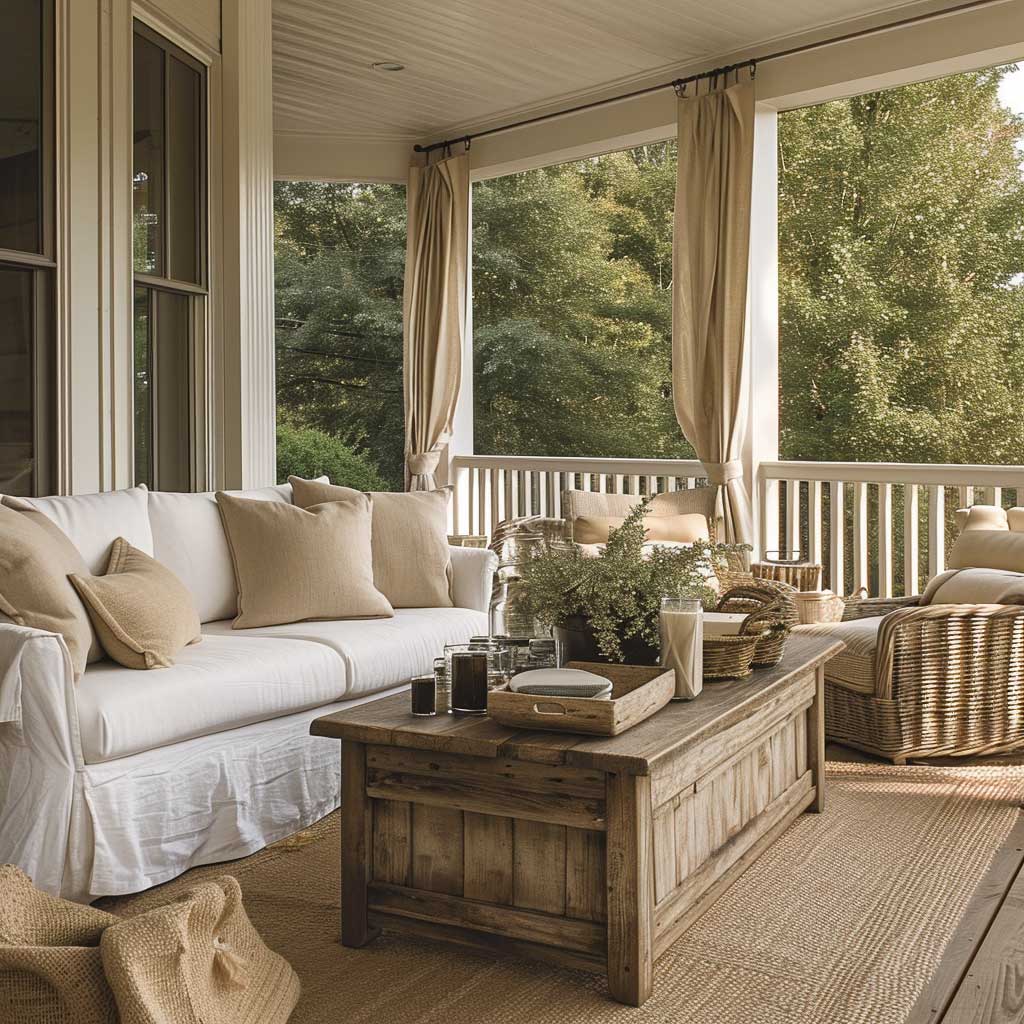
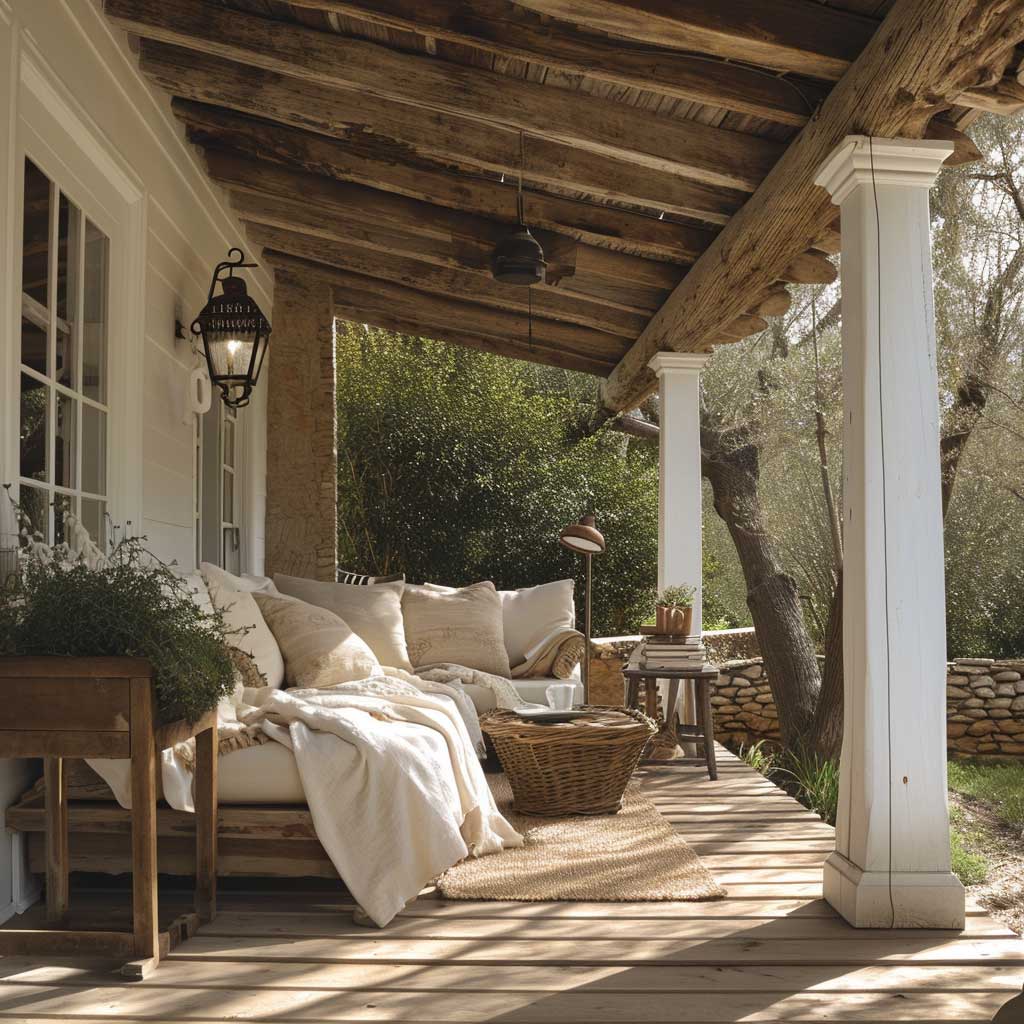
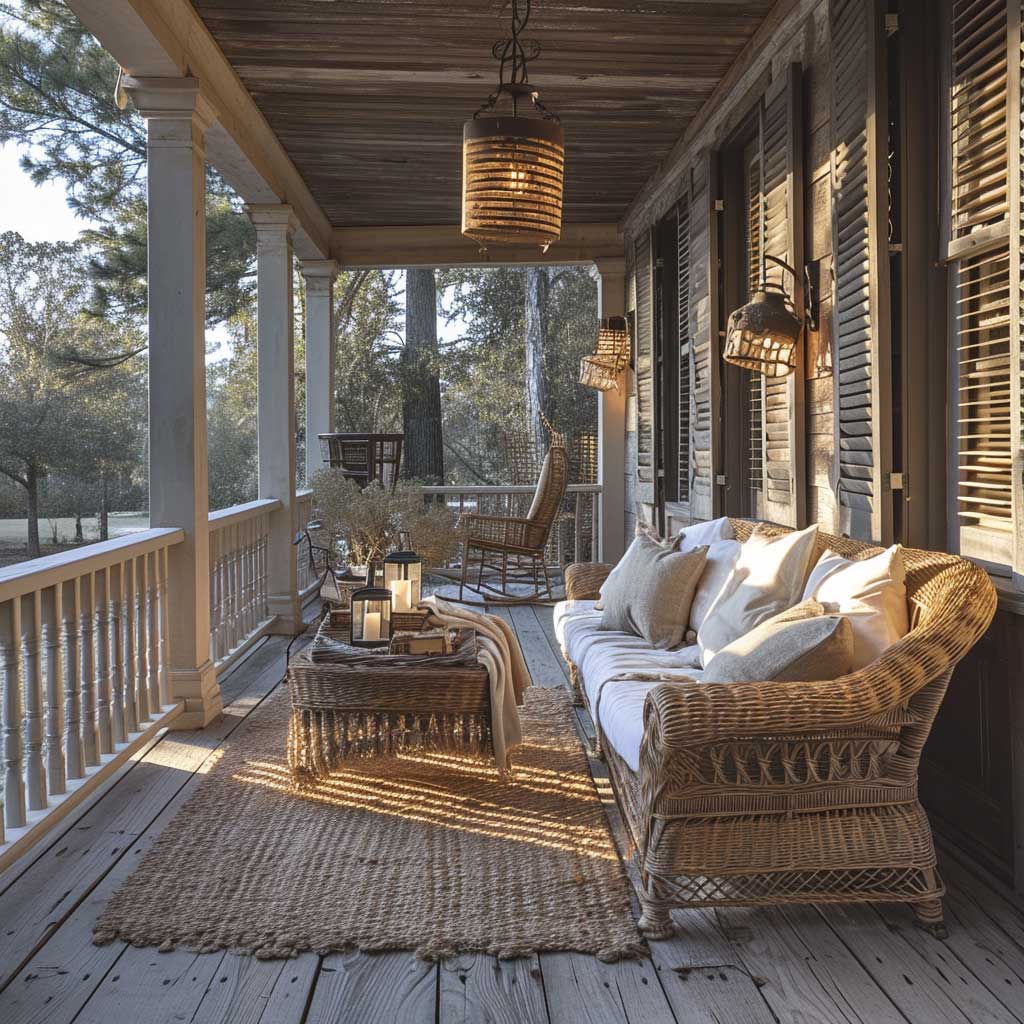
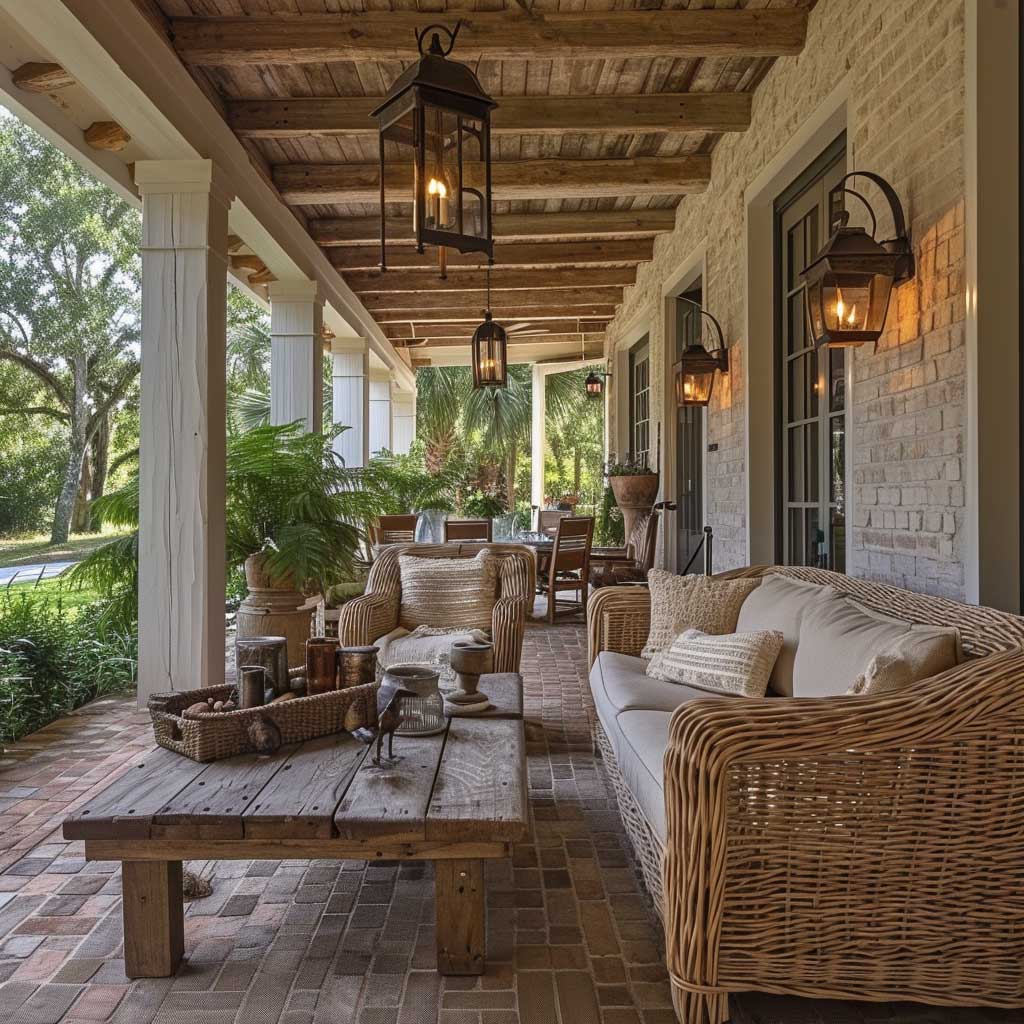
Vintage and antique objects work specifically because they carry specificity. An old cast-iron watering can found at an estate sale says something about the person who owns it. A “distressed” metal watering can from Target says nothing, even if it looks identical in a photo. I own two of the real things — both under $20 from flea markets — and they do more for my veranda’s credibility than $400 of brand-new rustic-look merchandise ever could. The rule is: if the object has no story, it has no value in a rustic space.
What genuinely doesn’t work here is barn-door hardware and reclaimed pallet furniture simultaneously. Pallet furniture became a Pinterest cliché precisely because it’s free — and it looks it. Pallets are designed for freight, not sitting; the gaps catch rain, the wood splinters, and the proportions are wrong for human bodies. Spend $150 on a proper reclaimed-wood bench from Etsy sellers like MagnoliaWoodDesigns instead. Same aesthetic. Doesn’t disintegrate after one summer. Terrace house design ideas with natural wood cover this exact tradeoff across dozens of material combinations.
For veranda inspiration that feels genuinely curated rather than assembled from a single store run, The Architects Diary’s veranda design roundup is one of the few non-retailer resources that actually distinguishes between styles rather than lumping everything under “outdoor living.” Their coverage of kitchen-integrated veranda spaces is particularly strong.
THE TAKEAWAY
Simple veranda design rewards commitment to one material language — everything else is just furniture shopping.
Pick your palette before your first purchase. Wood and stone don’t need explaining. The veranda that works in year three is the one where the floor material, the furniture finish, and the plant choices were decided as a single system, not bought separately over time.
Budget reality check: a fully functional nature-inspired veranda for a small house costs $300–$600. A minimalist version with quality pieces runs $600–$1,200. Rustic done right (real reclaimed materials, not simulated) lands at $400–$900. None of these require a contractor.
Save this post. Come back when you’re standing in the outdoor furniture aisle wondering why nothing looks right together.