Organic modern kitchen design succeeds when the cabinet finish does one thing right: it shows grain without screaming rustic. I’ve bought two sets of kitchen cabinets in the last decade — the first batch was glossy white, and the second was flat-panel white oak from IKEA’s VOXTORP line at around $3,200 installed. The second kitchen finally looked the way I’d been pinning for three years. Natural organic modern kitchens aren’t about adding plants to a regular kitchen; they’re built from the material choices up, with wood, stone, and light doing all the heavy lifting.
You’ll notice the difference immediately when you walk into a kitchen where the countertop has natural veining and the cabinet fronts have visible grain. It reads like a room that was planned rather than assembled. The mistake most people make is buying warm-toned wood cabinets and pairing them with stark white quartz — the result looks like a showroom floor sample, not a kitchen. Organic modern kitchen design is about the relationship between materials, not the individual pieces.
Quick Scan
- Target keyword: organic modern kitchen — appears in H1 logic, first paragraph, and multiple H2s
- Cabinet material that defines the style: flat-panel white oak or walnut, matte or satin finish, $180–$320/linear foot installed
- Stone options ranked: leathered granite, honed marble, quartzite — in that order for durability vs. look
- Warm organic modern kitchen palette: greige walls + medium oak cabinets + darker stone countertops
- Natural island lighting: rattan pendant or linen shade, 2700K bulbs, hung 30–34 inches above counter
- One thing to skip: high-gloss lacquer cabinets — they destroy the organic feeling immediately
- Color temperature matters: cool-white LEDs (5000K) make natural wood look fake and cold
Natural Light Chooses Your Cabinet Color for You
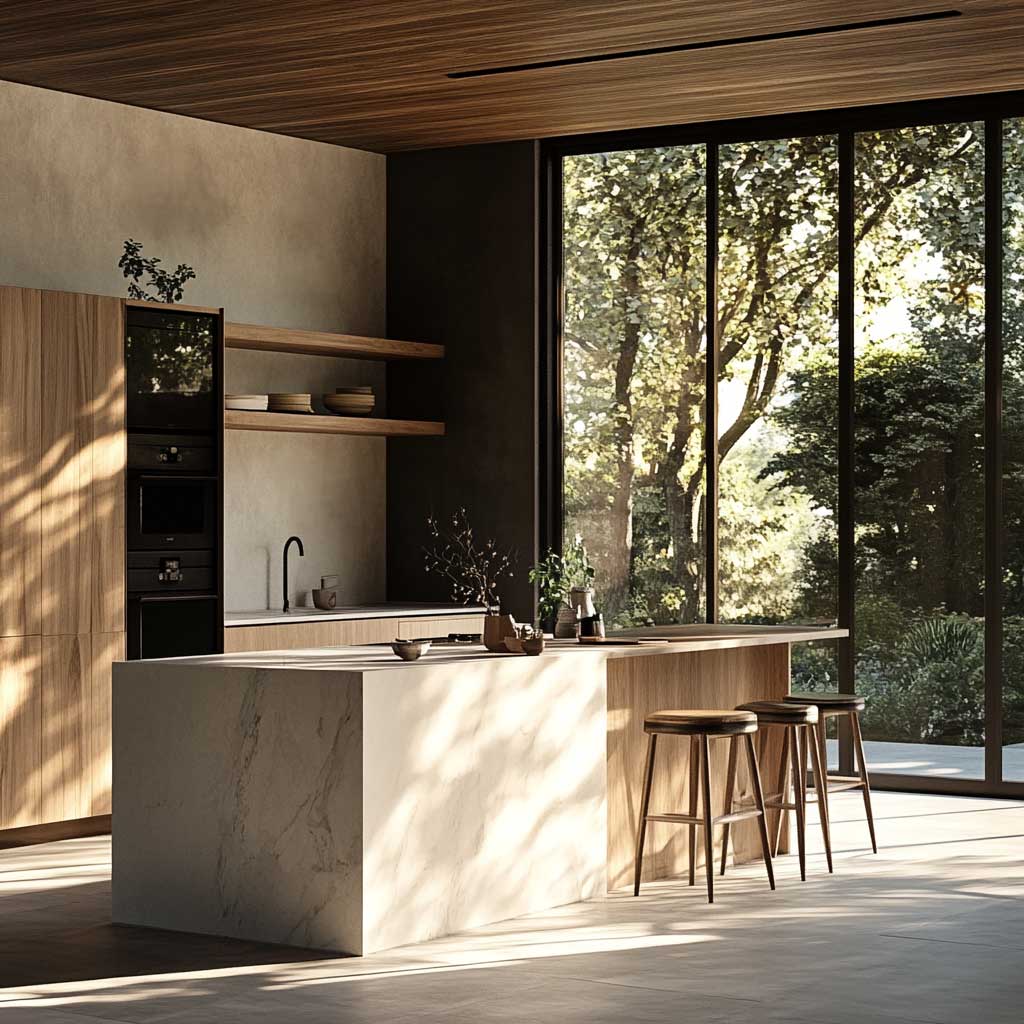
My go-to move when advising on organic modern kitchen design is to bring a wood sample into the space at noon and again at 4pm. The shift is dramatic. Oak cabinets that looked honey-warm under LED showroom lights turn almost grey in north-facing rooms with cool natural light — which means you’ll end up with a kitchen that feels cold, not organic. South- and west-facing kitchens give the most flexibility; they make lighter wood pop and warm up even mid-toned walnut without any help.
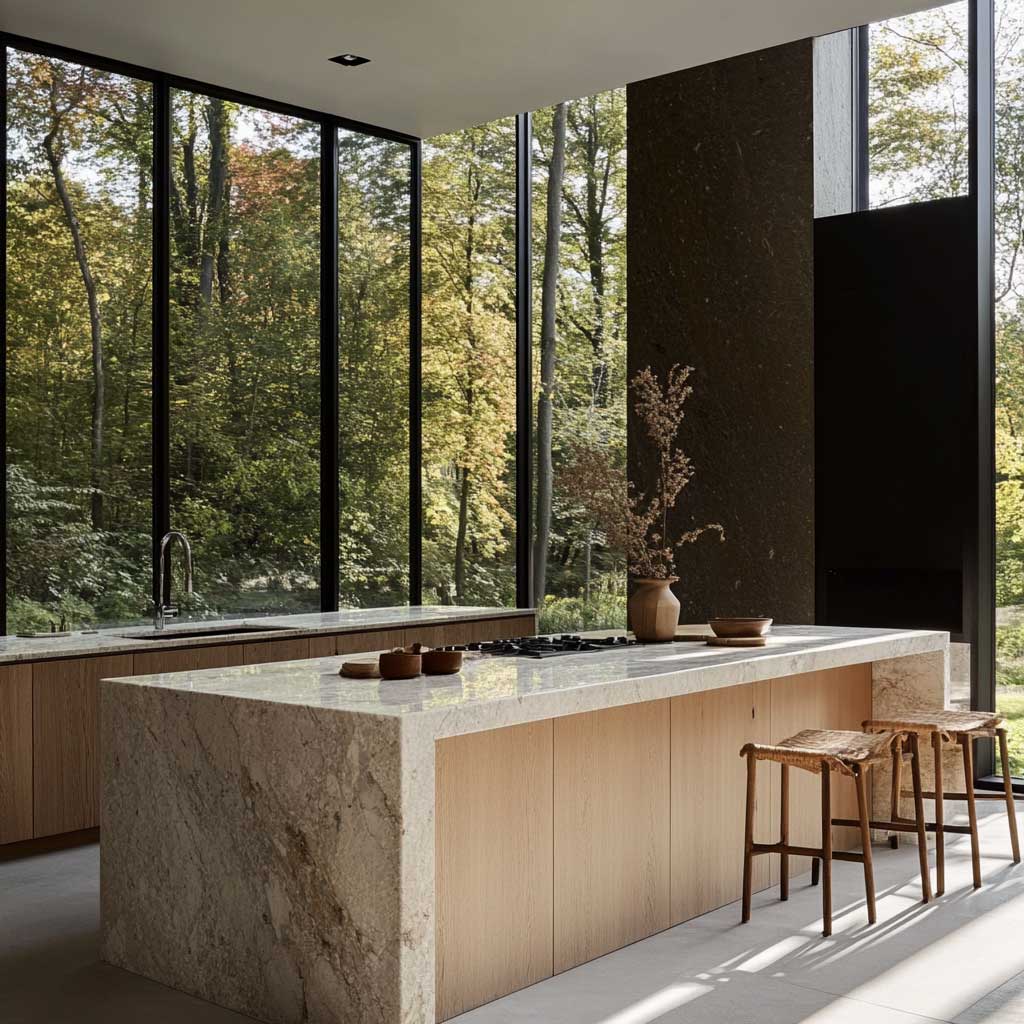
Large windows are doing more structural work in an organic modern kitchen than most people realize. They’re not decorative — they’re the material that activates everything else. I stole this trick from a designer I interviewed: install the windows first, then choose the cabinet tone, not the other way around. Floor-to-ceiling glazing running 8–12 feet wide costs around $4,000–$8,000 installed but eliminates the need for expensive backlighting under cabinets. You need the light to land on the stone countertop and show the veining.
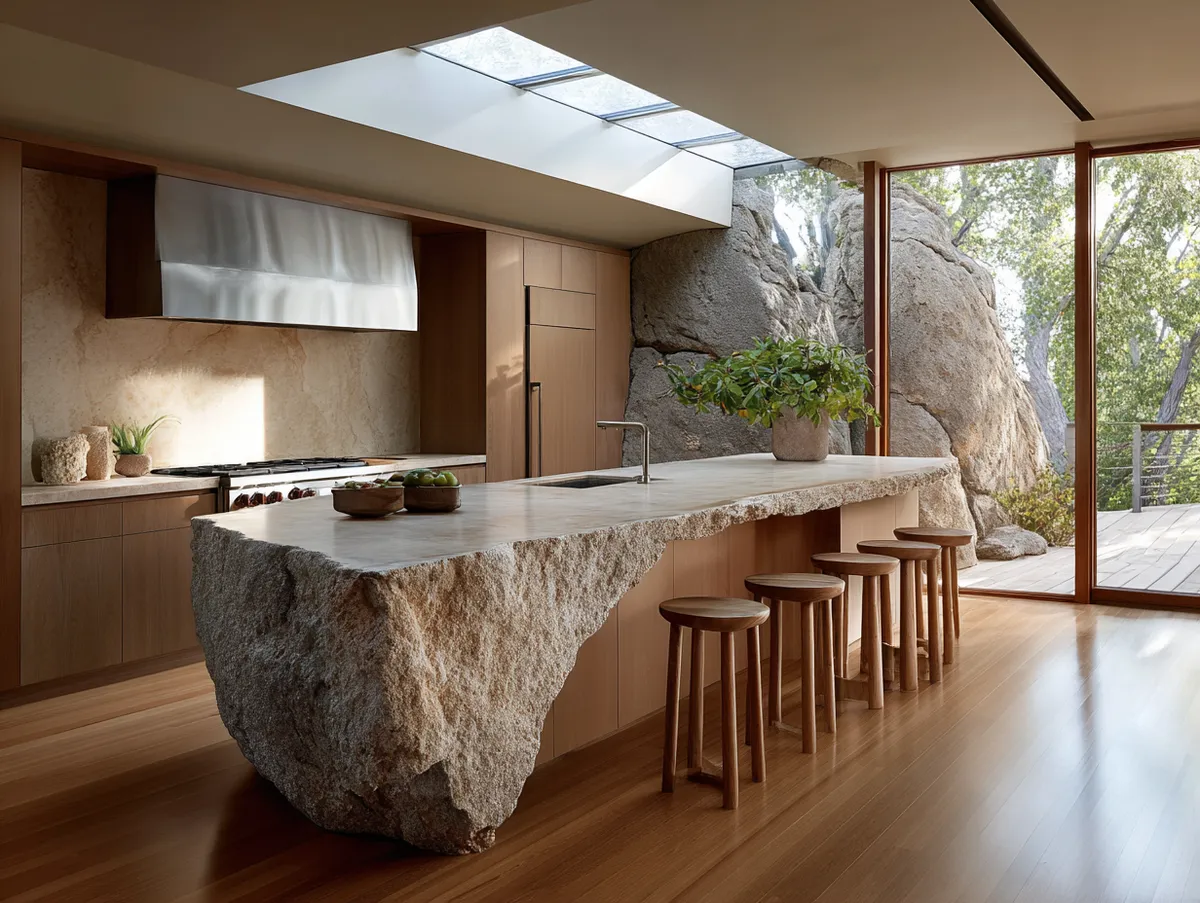
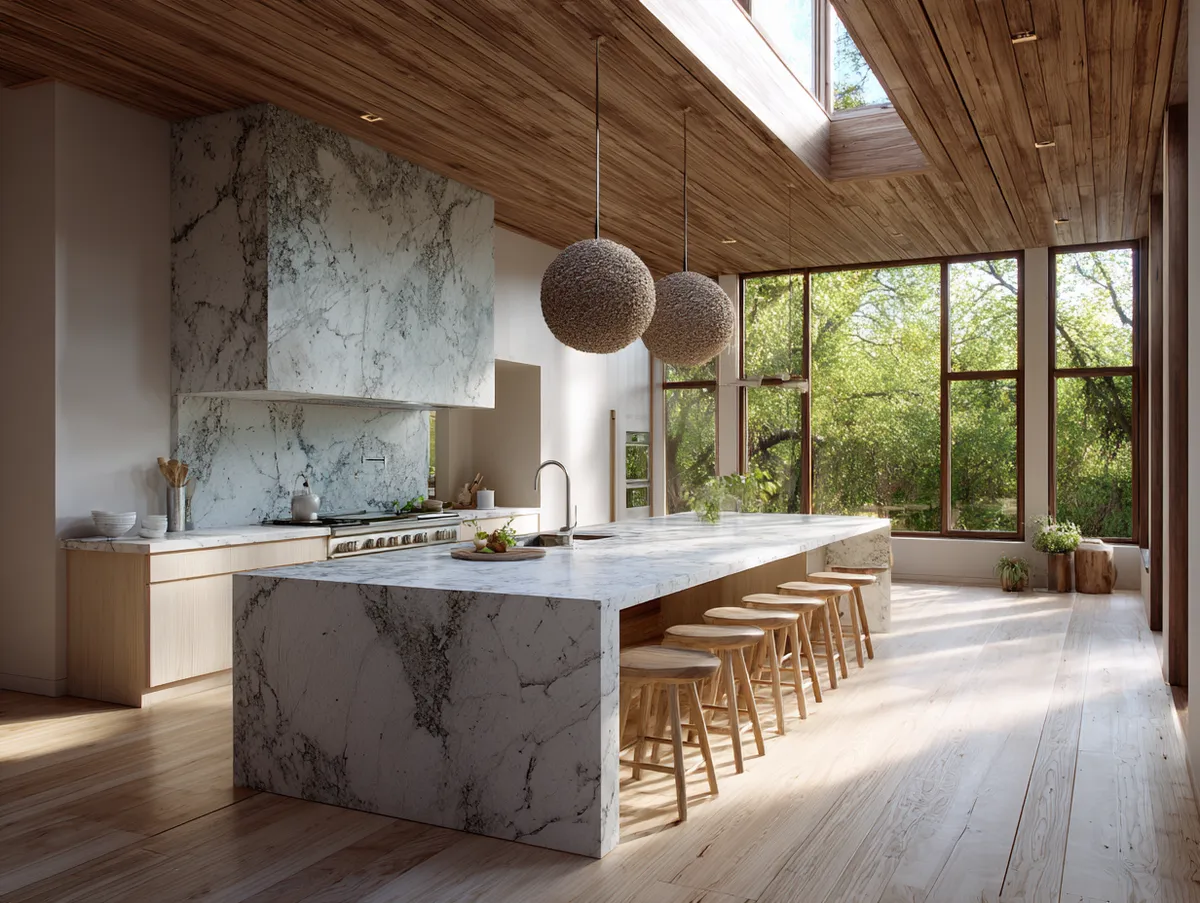
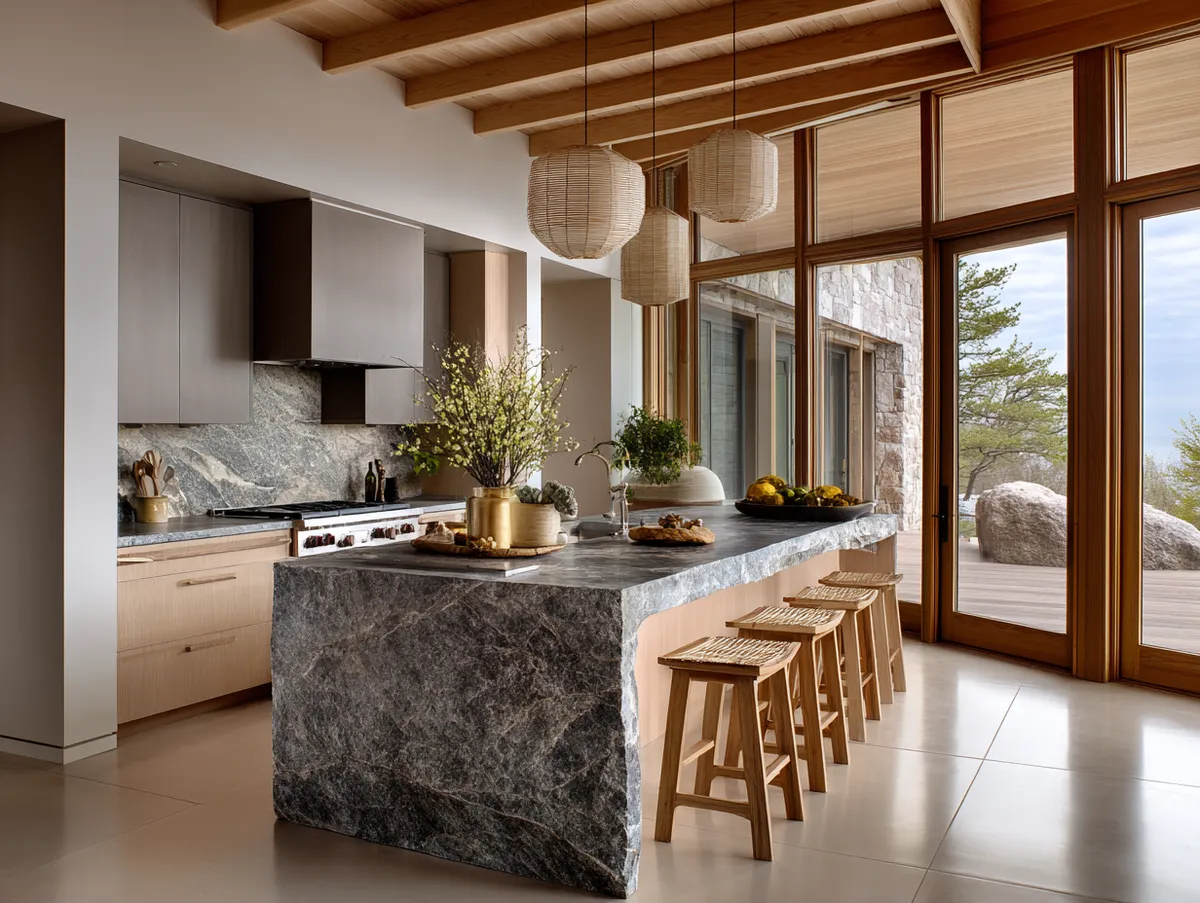
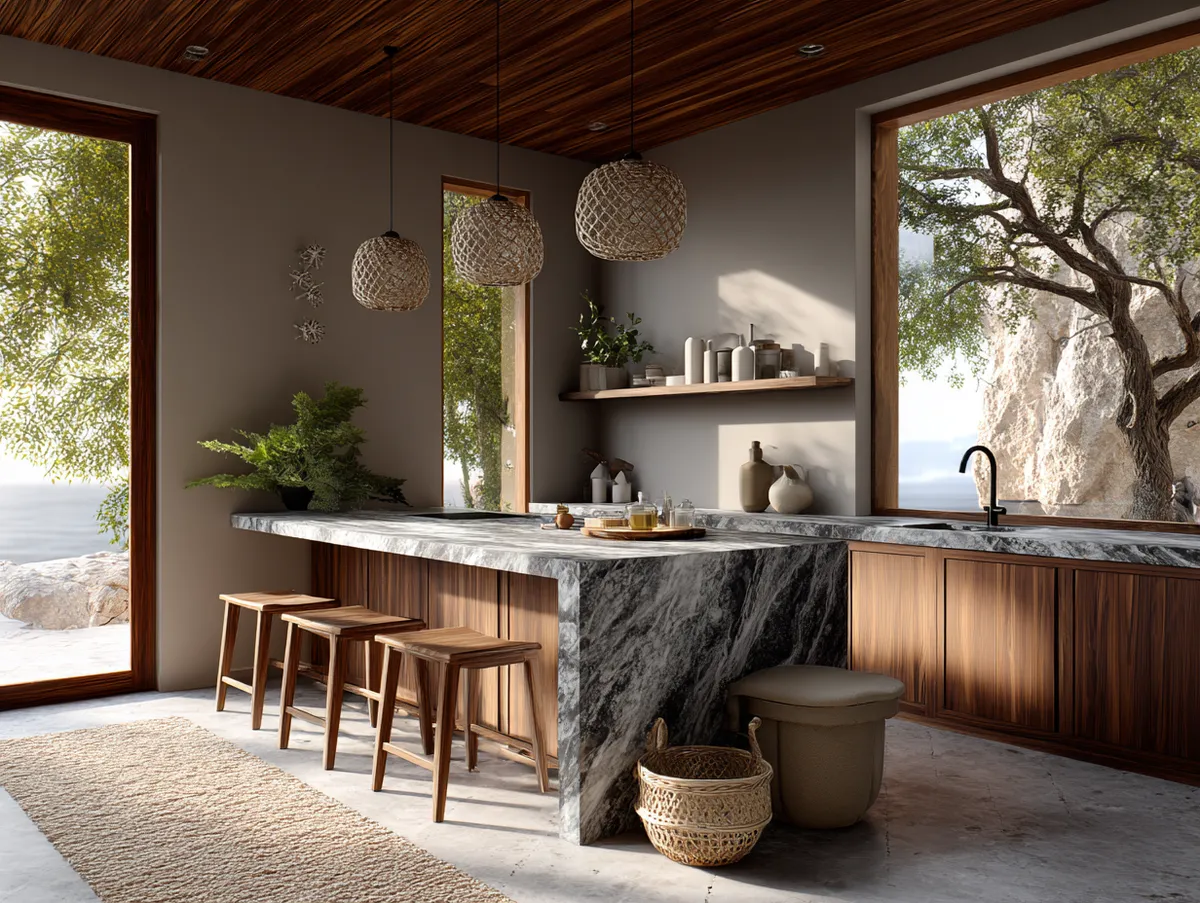
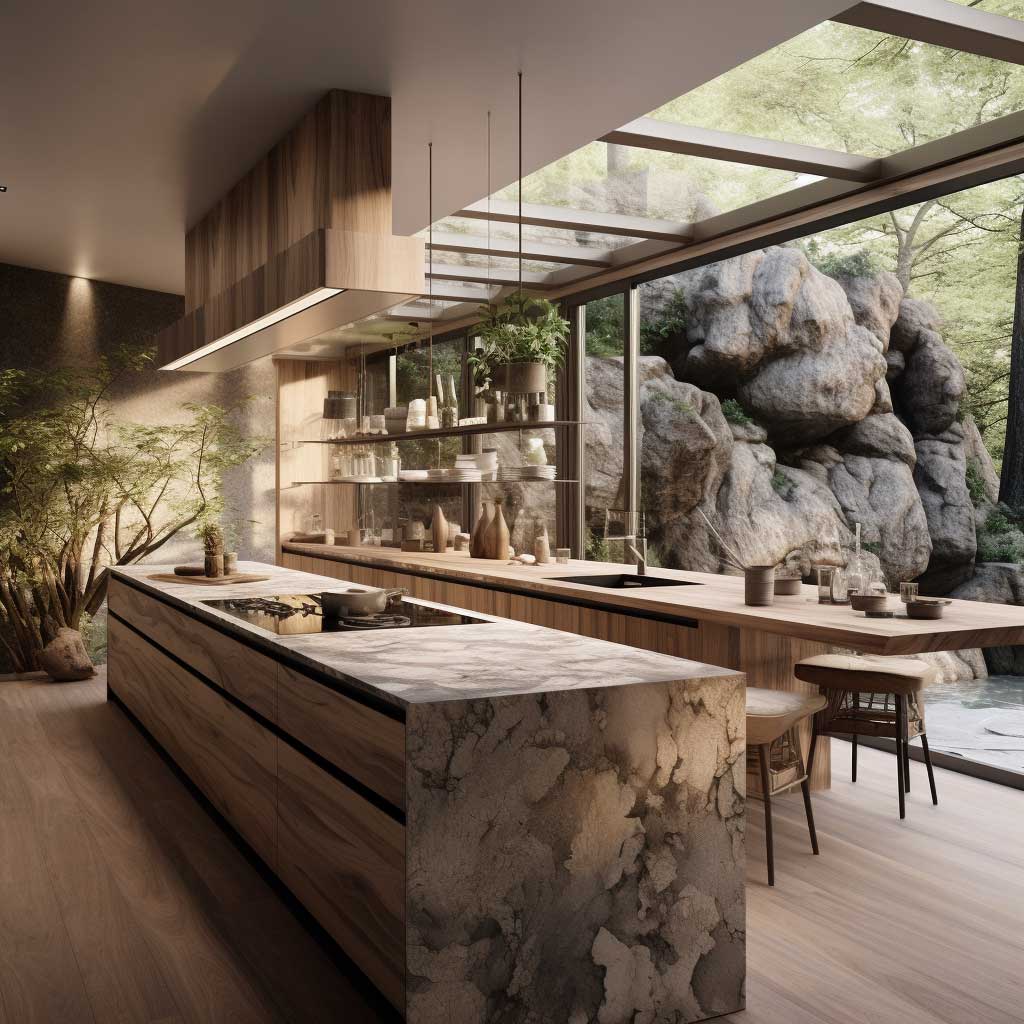
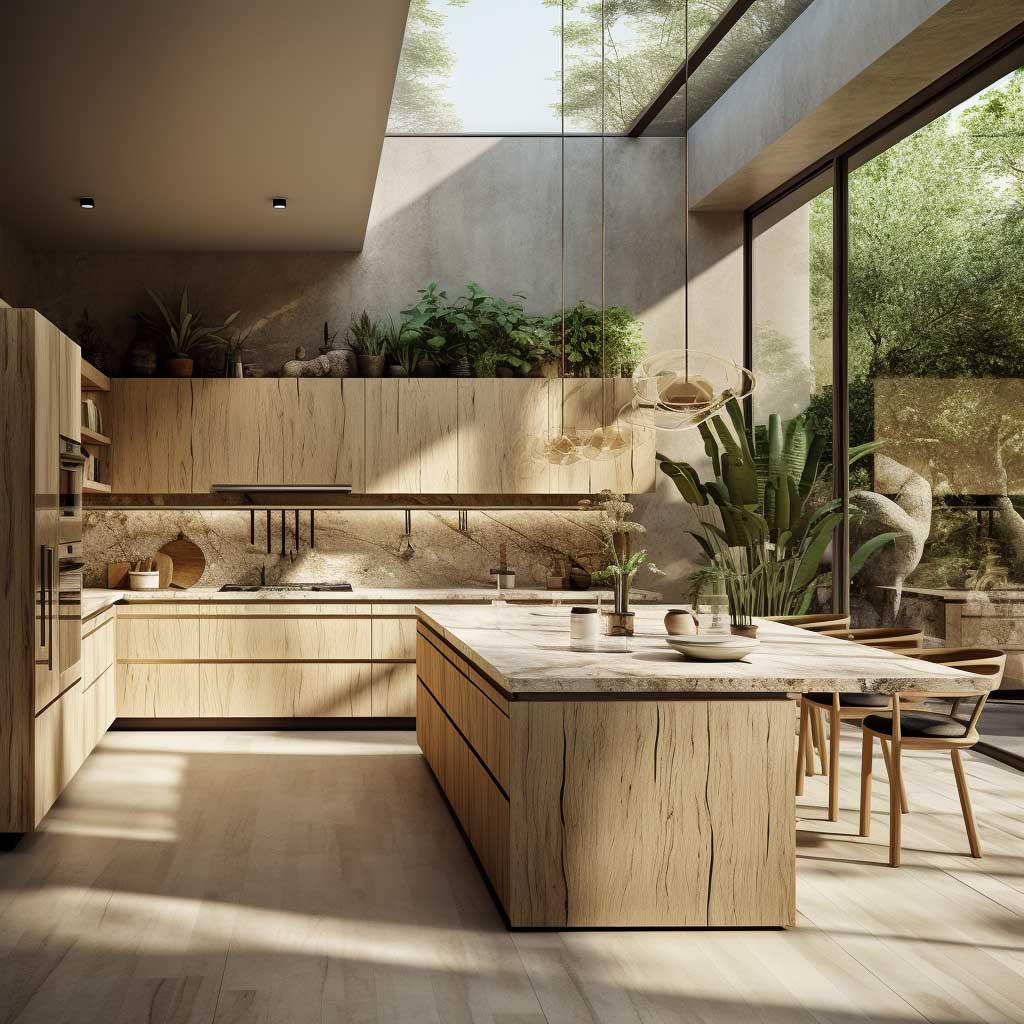
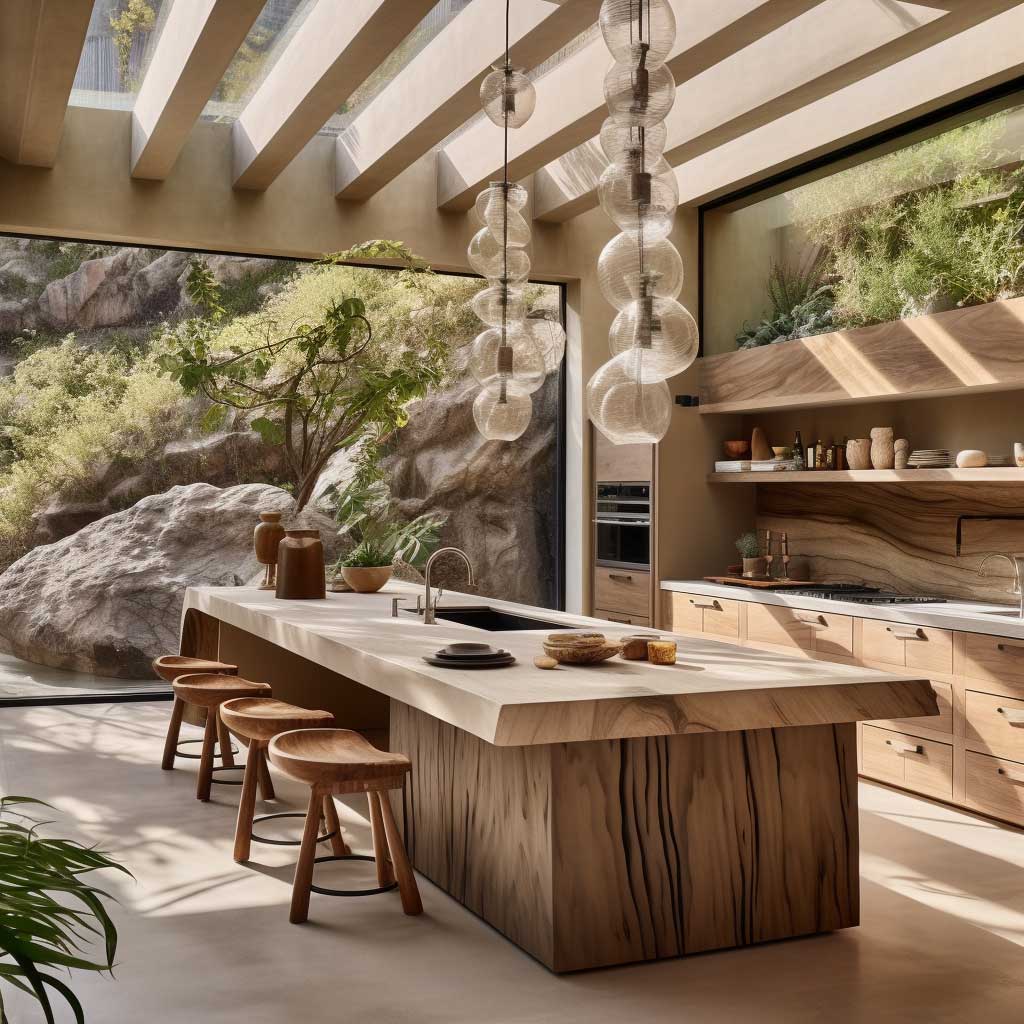
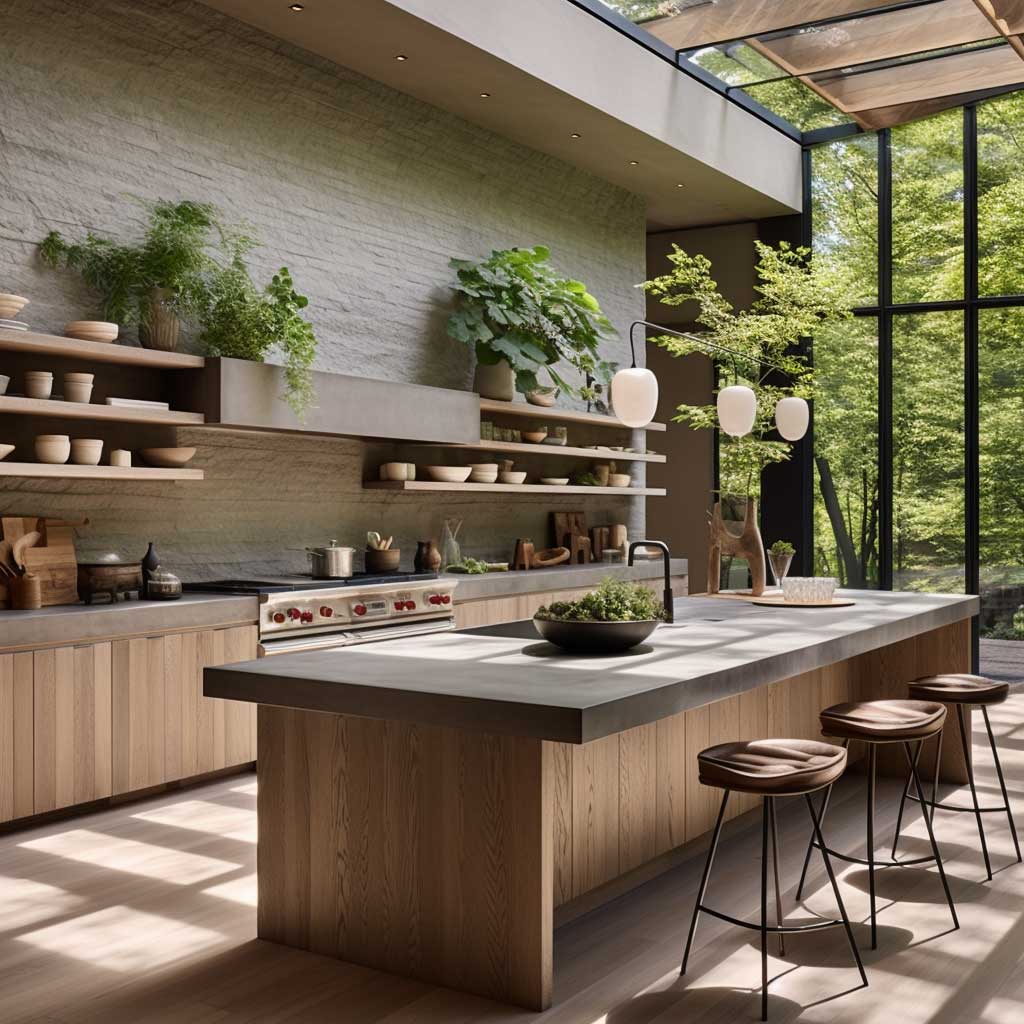
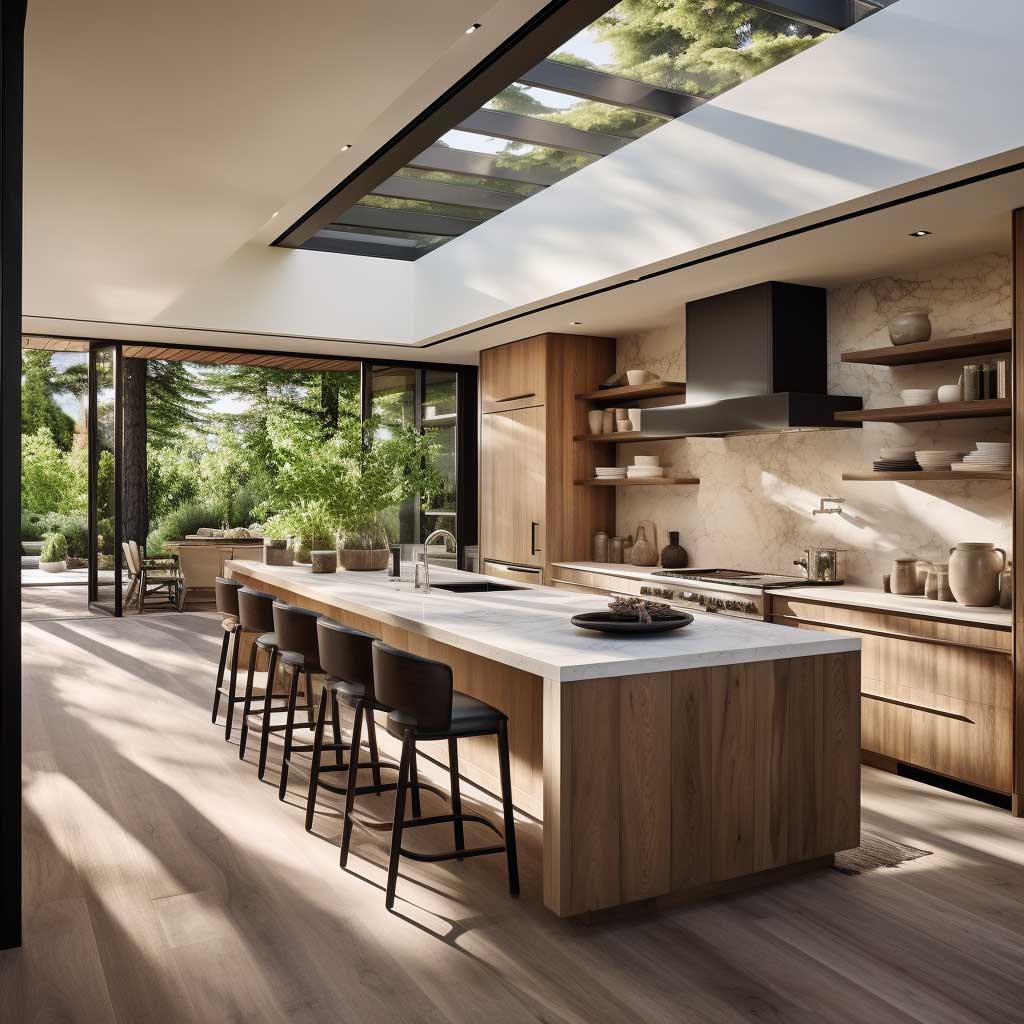
What doesn’t work: skylights directly above an island. You’d think they’d be perfect, but they create a harsh noon-light effect that bleaches stone and makes wood grain look flat. Diffused side light — from tall vertical windows beside the kitchen — is the version that actually photographs well and feels good to cook in. Sleek, minimalist cabinet faces with flat profiles let that side light skim across the grain, which is the whole point of choosing real wood over painted MDF.
I own two pendant lights above my island — both 2700K warm white — and switching from the 4000K bulbs I started with was the single biggest visual improvement I made in my organic modern kitchen. The countertop suddenly looked like leathered quartzite instead of cheap gray stone. Lighting temperature is the cheapest fix in the room.
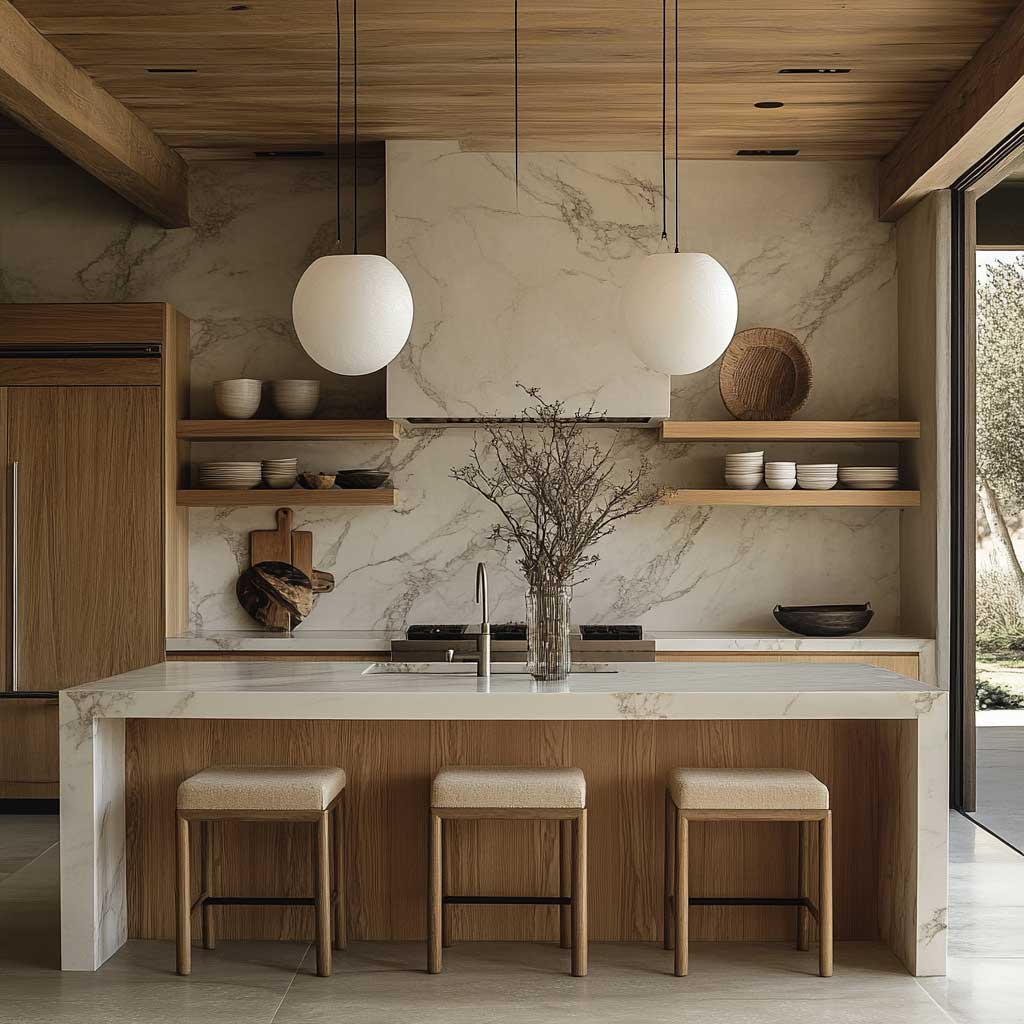
For island lighting specifically, rattan or woven pendants at 30–34 inches above the counter surface read as organic without trying too hard. I’ve written more about this in a full breakdown of natural island lighting ideas for an organic modern kitchen — the bamboo pendant section alone has changed several readers’ minds about replacing their recessed cans.
Wood Island, Stone Counter — Why the Order of Materials Matters
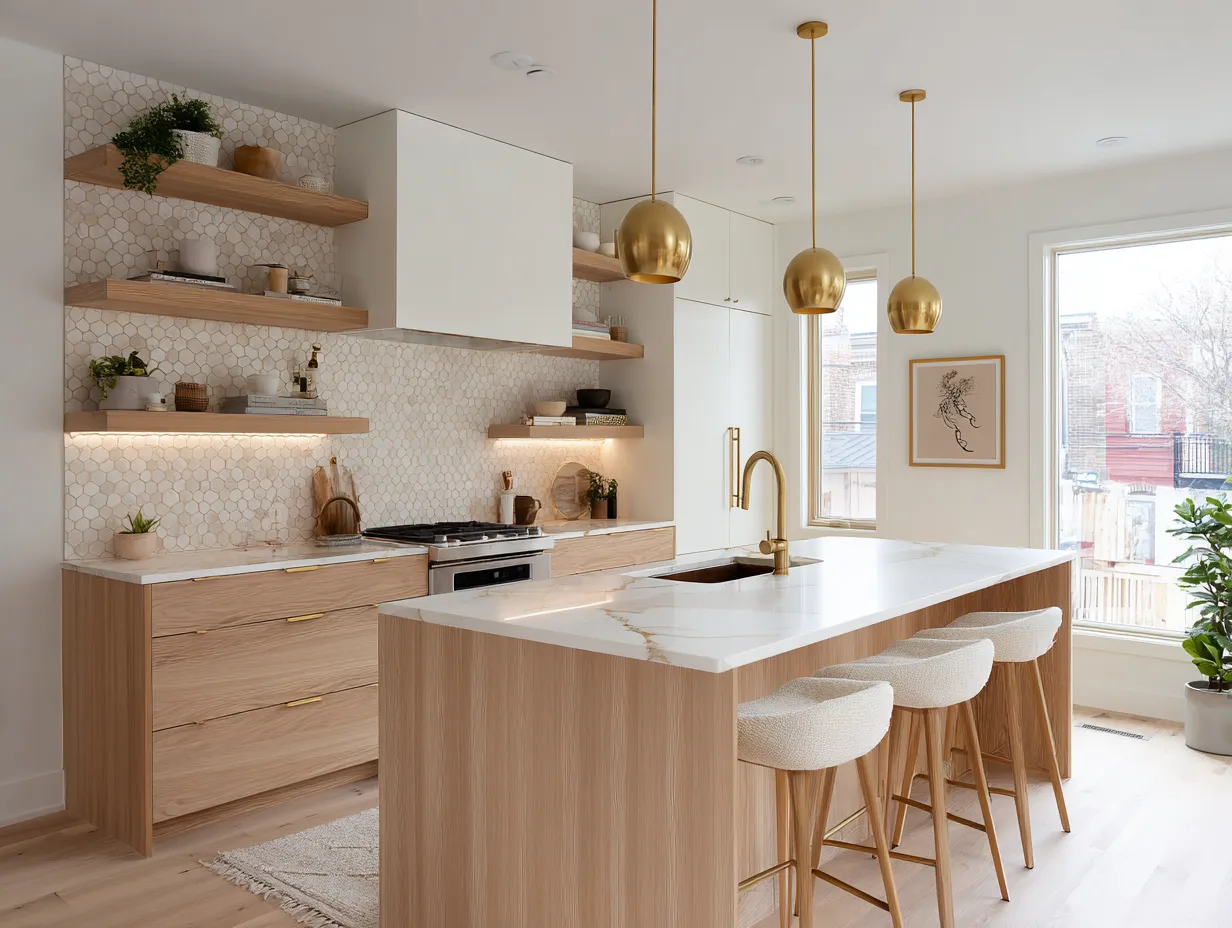
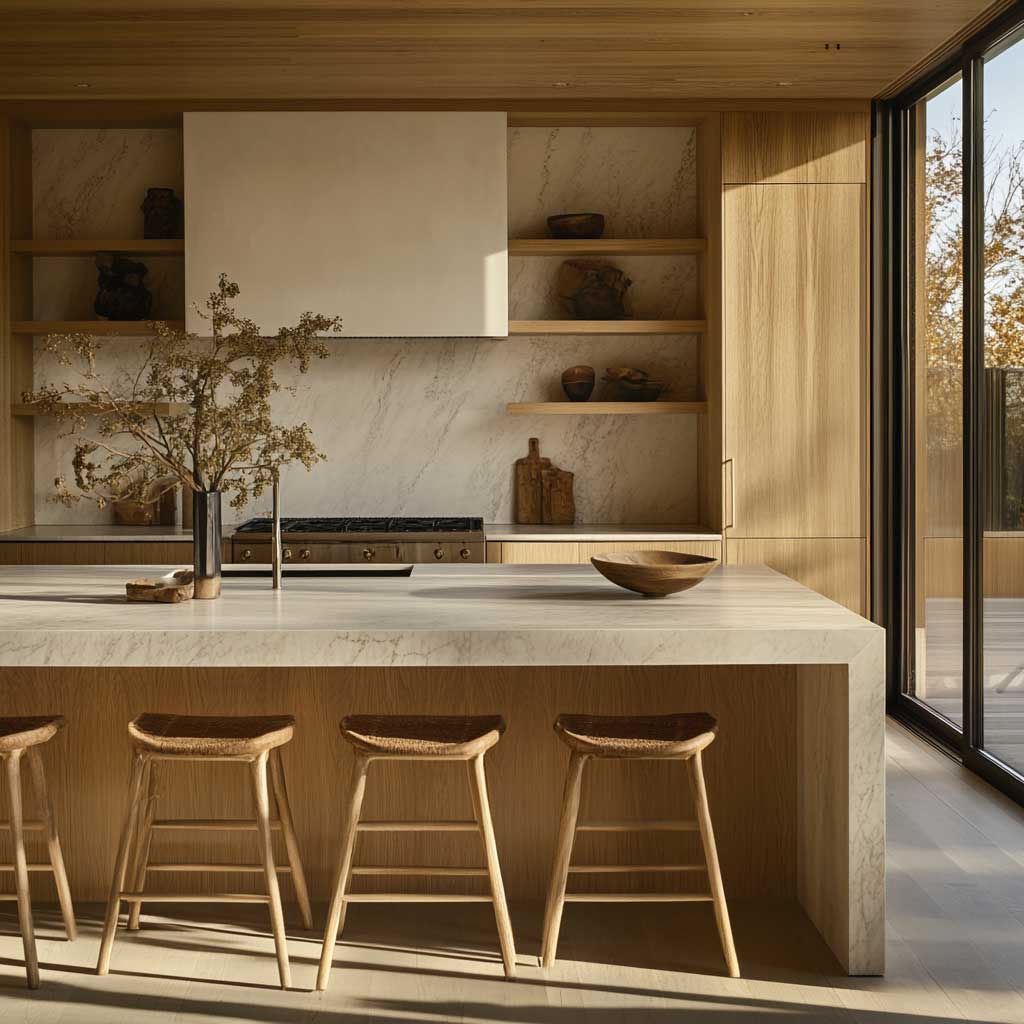
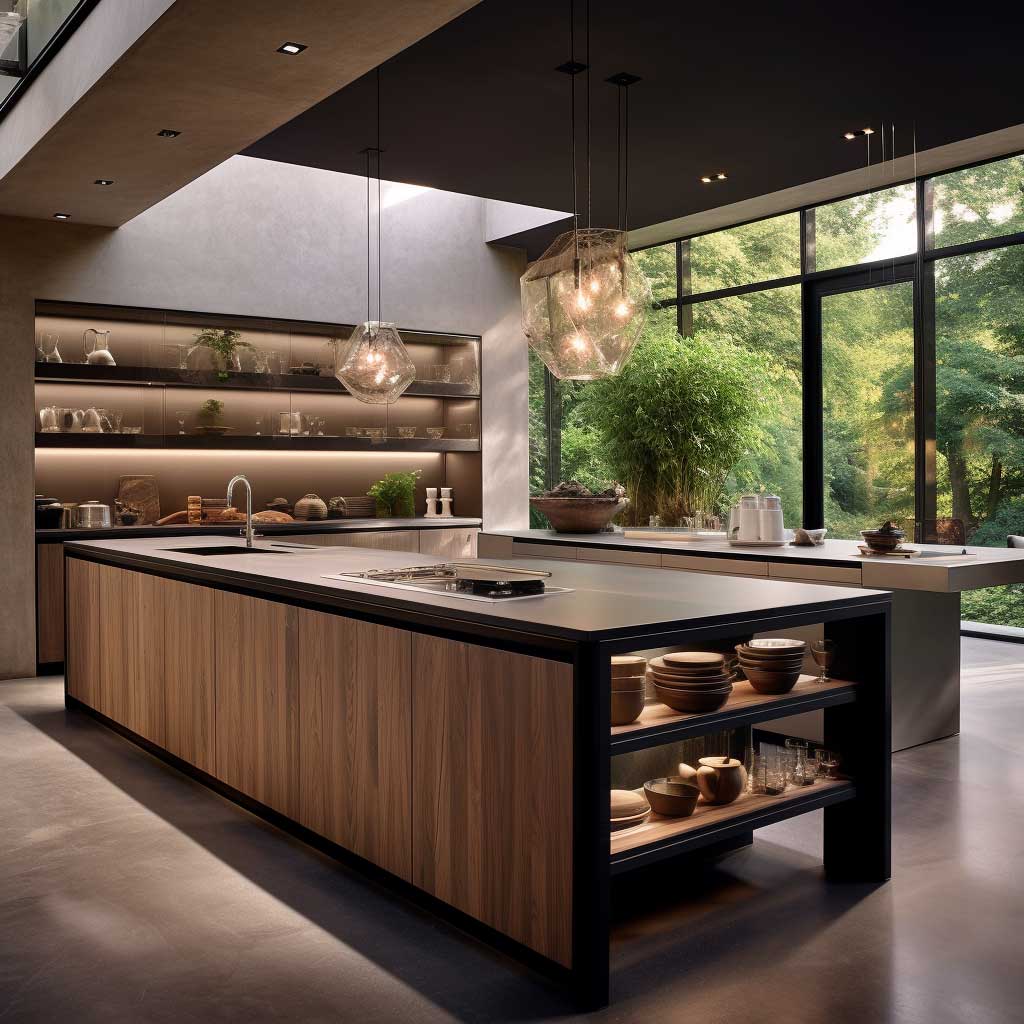
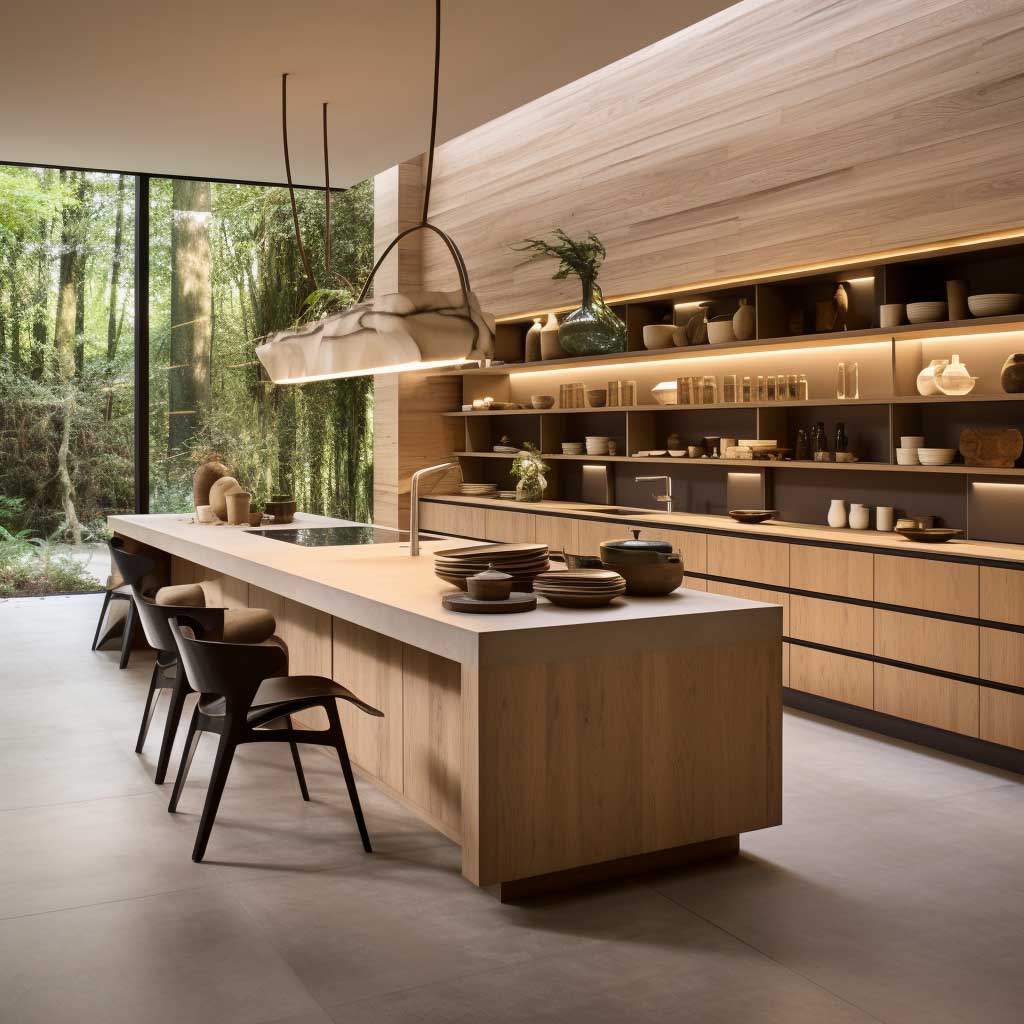
Walnut or white oak for the island base, stone for the top. That’s the formula. Reversing it — stone base, wood counter — gives you a cold, formal kitchen that looks more like a boutique hotel bar than a natural organic modern kitchen. The island base in wood anchors the warmth; the stone counter on top adds the geological heft that makes the room feel grounded. Think of it the way soil works in a garden: the dark organic layer is on the bottom, the mineral layer sits on top.
For stone countertops in an organic modern kitchen, you’re choosing between leathered granite ($65–$110/sq ft installed), honed Calacatta marble ($90–$140/sq ft), and quartzite like White Macaubas ($85–$130/sq ft). I’ve had honed marble and I’ll tell you what nobody says upfront: it etches from lemon juice within six months. Quartzite is the practical version of the same look, and it doesn’t lie to you about its durability. The veining reads as organic; the surface doesn’t need to be babied.
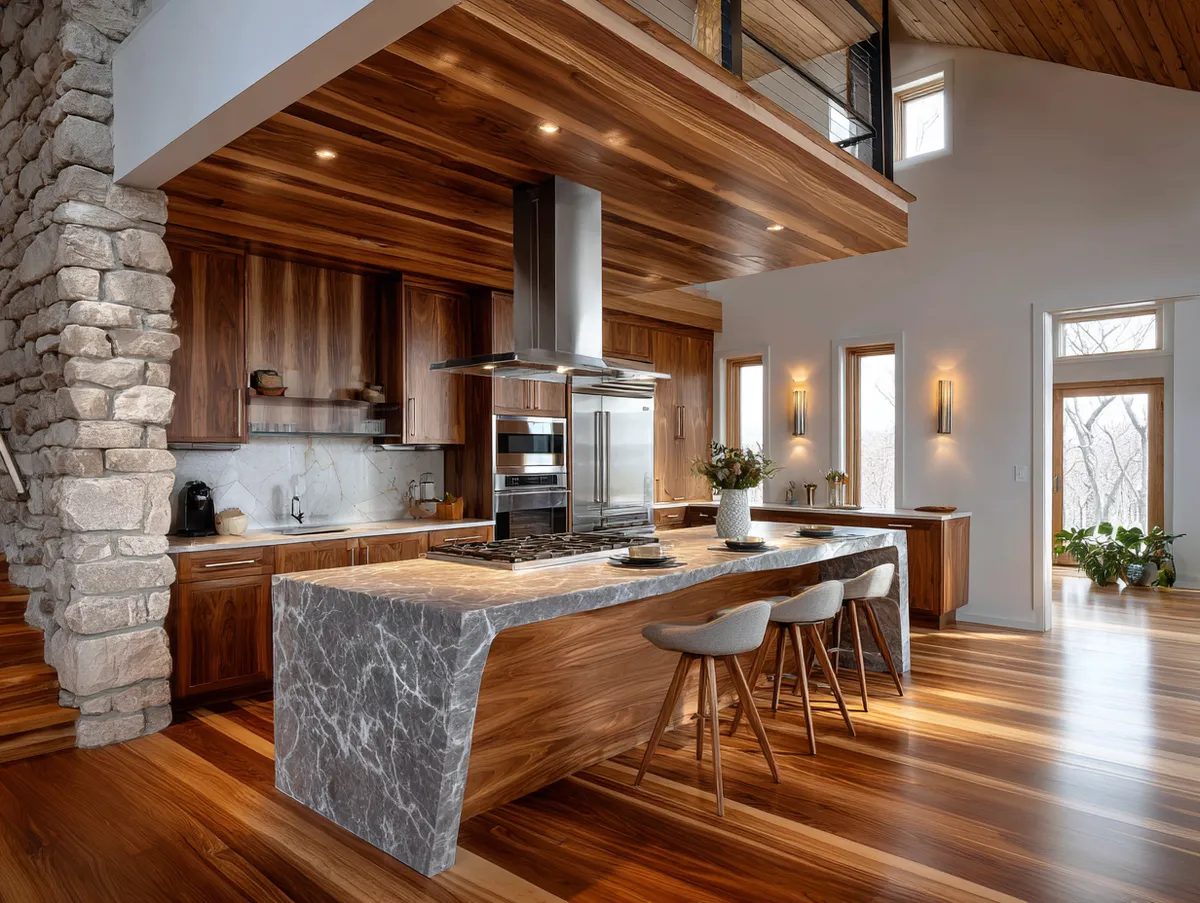
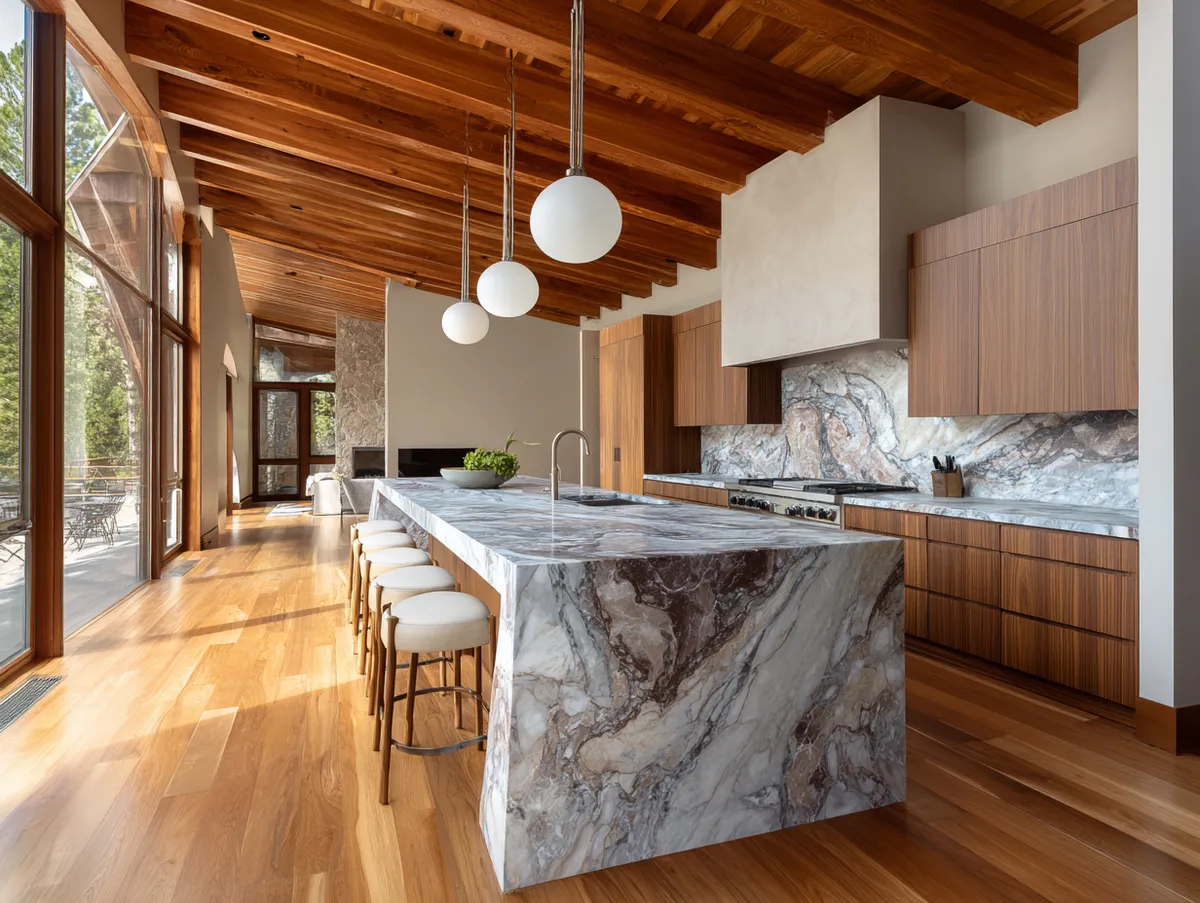

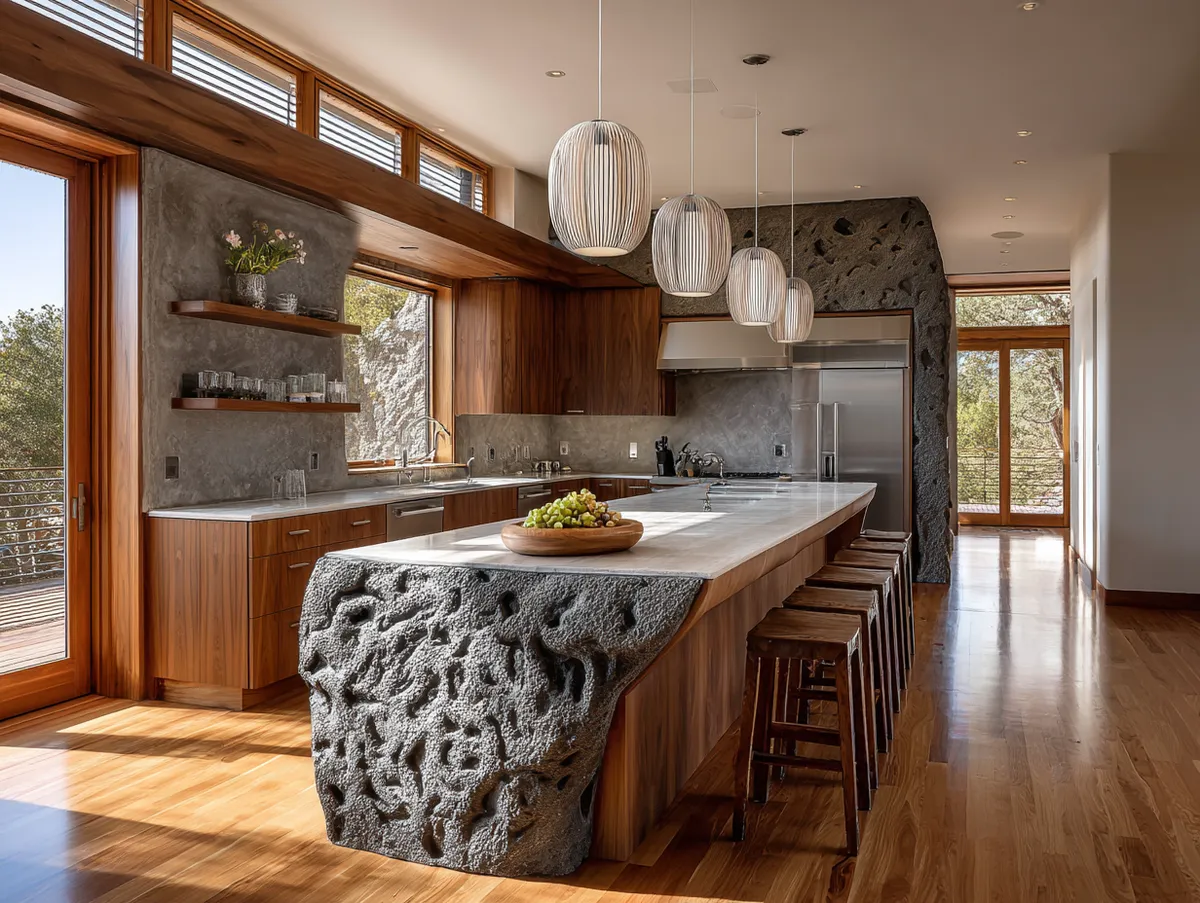
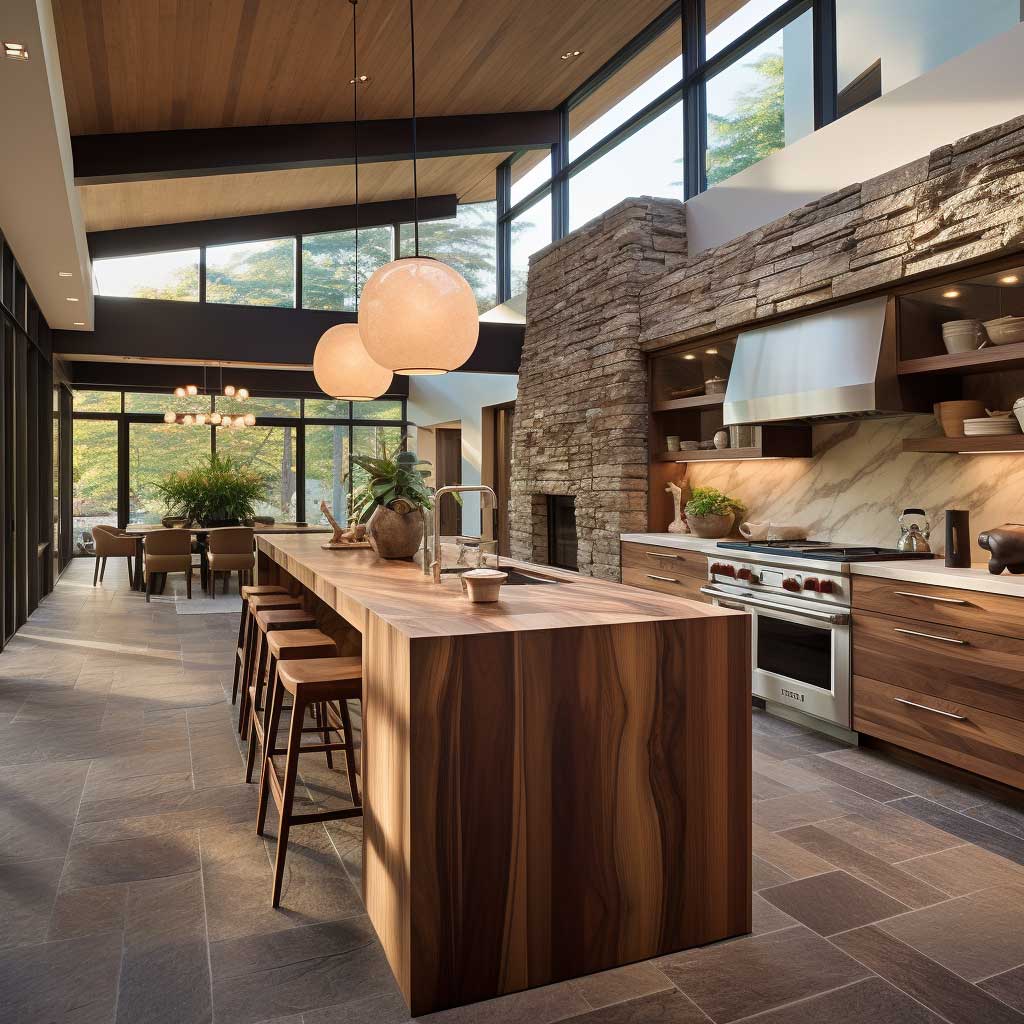
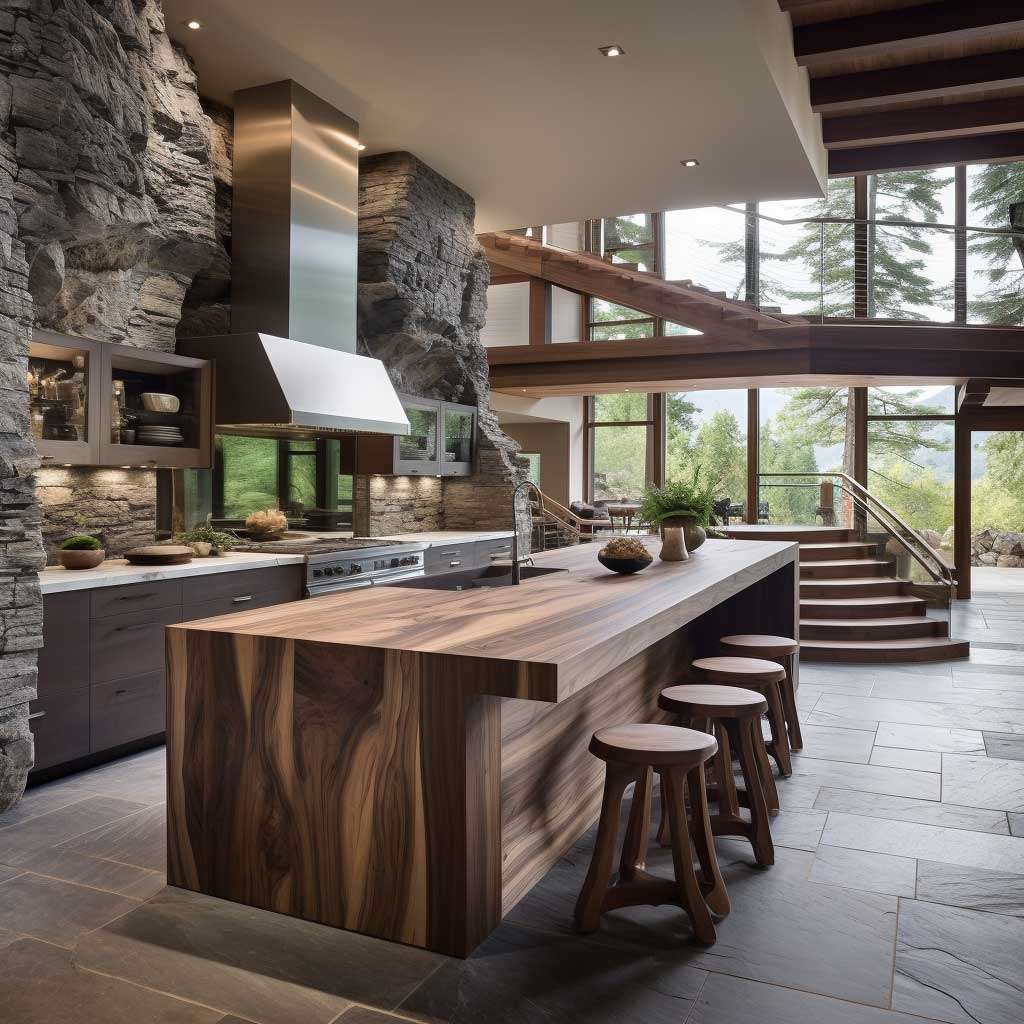
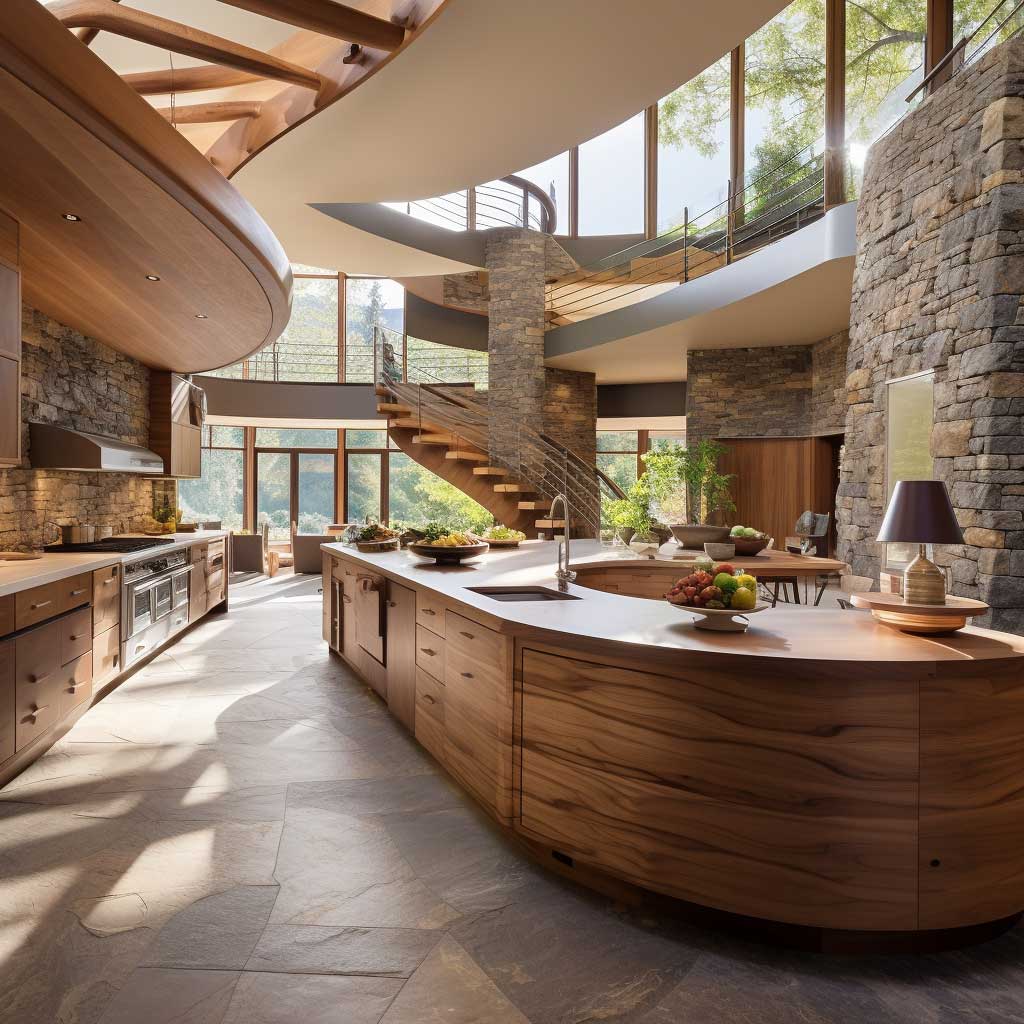
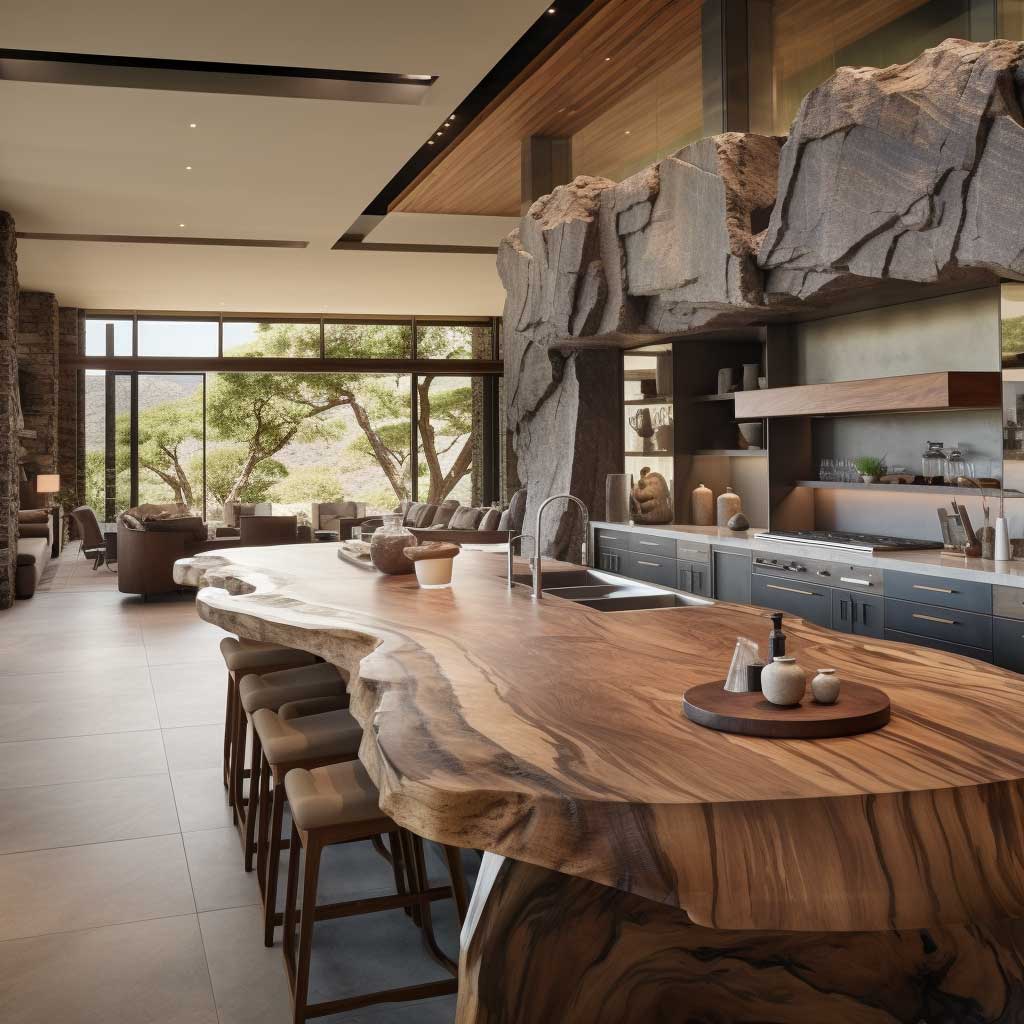
Bar stools at the island are where people get the material wrong. Rattan or leather in a warm caramel or cognac tone keeps you in the organic modern register. Chrome or brushed steel stools — even nice ones — pull the room toward industrial, and you’ll lose the softness you worked hard to build. My go-to is the HAY Copenhague stool in solid oak, around $420/piece, which looks like it belonged in the kitchen from the beginning.
A stone backsplash running the full wall length works better than tiled mosaic in an organic modern kitchen. The continuous slab eliminates grout lines, which read as fussy and dated next to the clean cabinet profiles. What didn’t work in my kitchen: a honed black slate backsplash — it absorbed light and made the whole back wall recede. Earth-toned slabs with warm grey or amber veining reflect light back into the room.
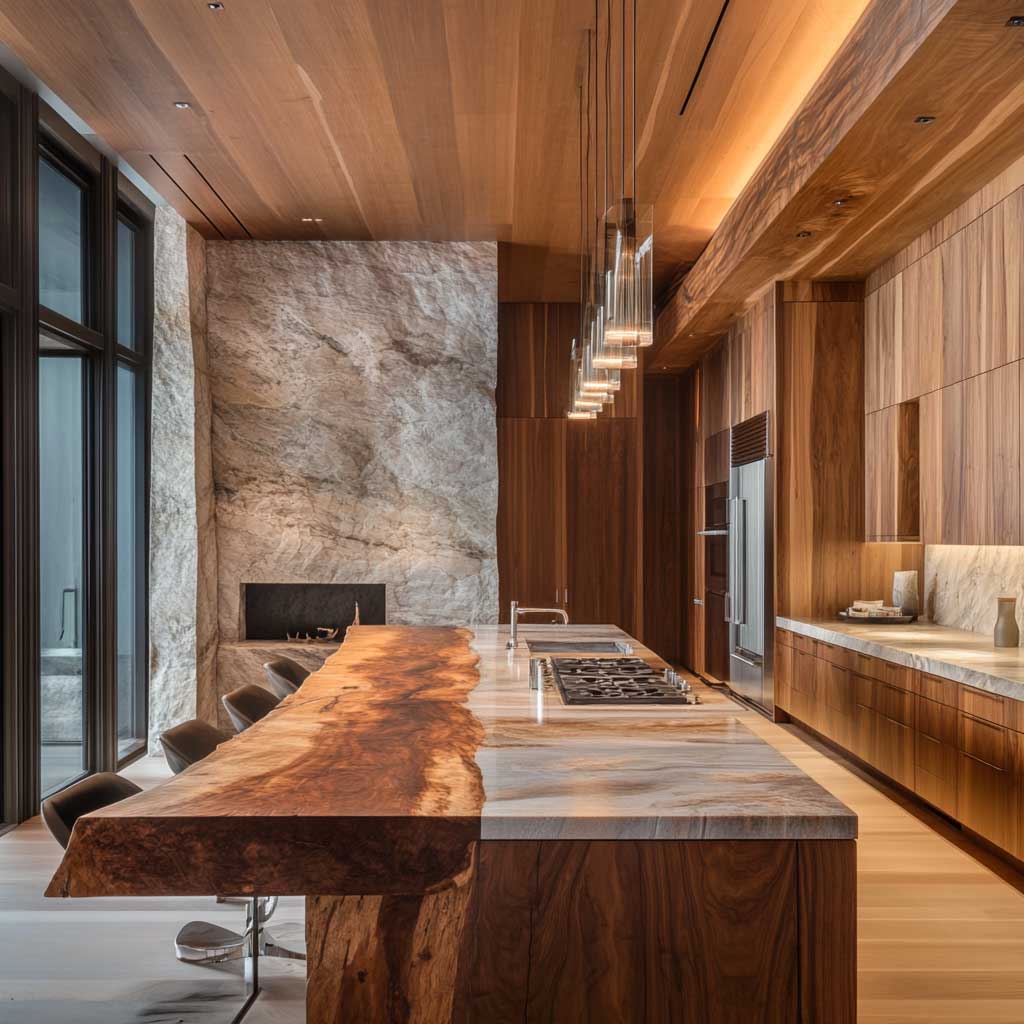
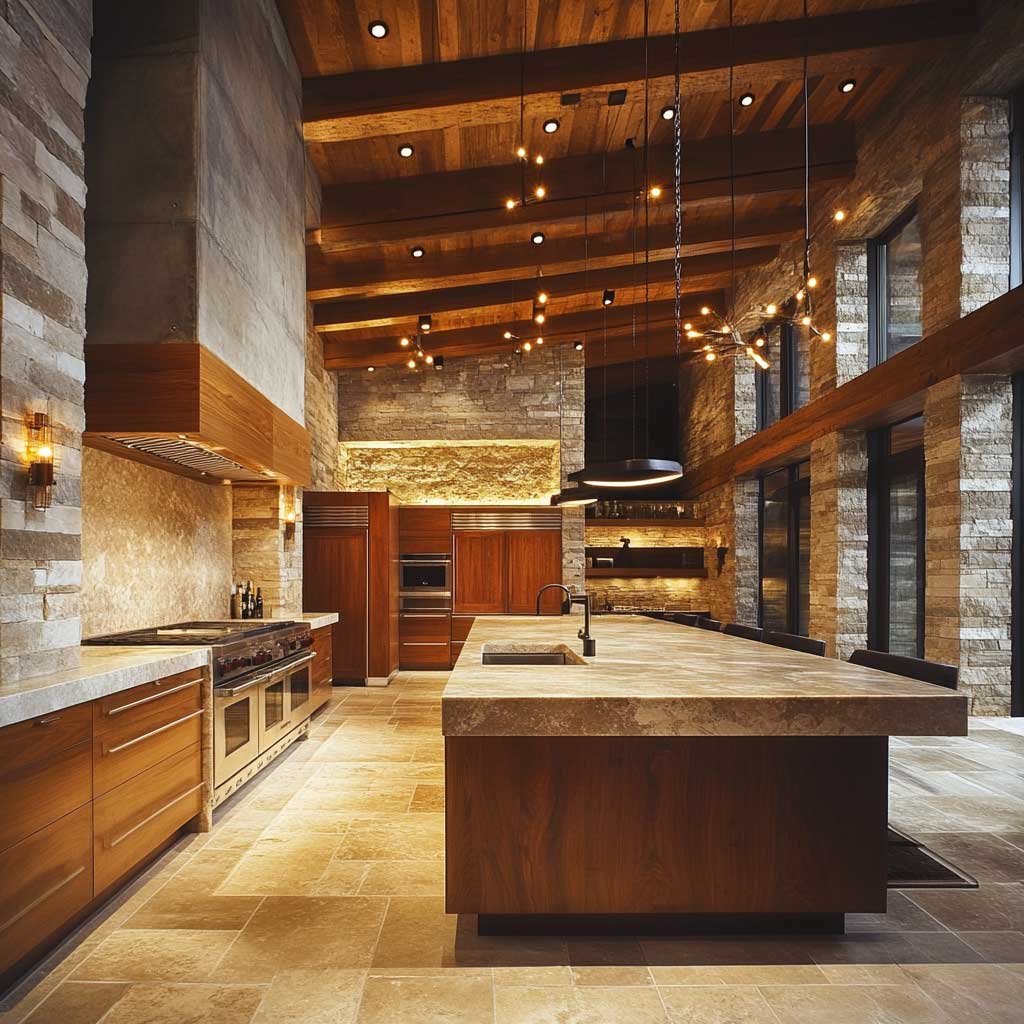
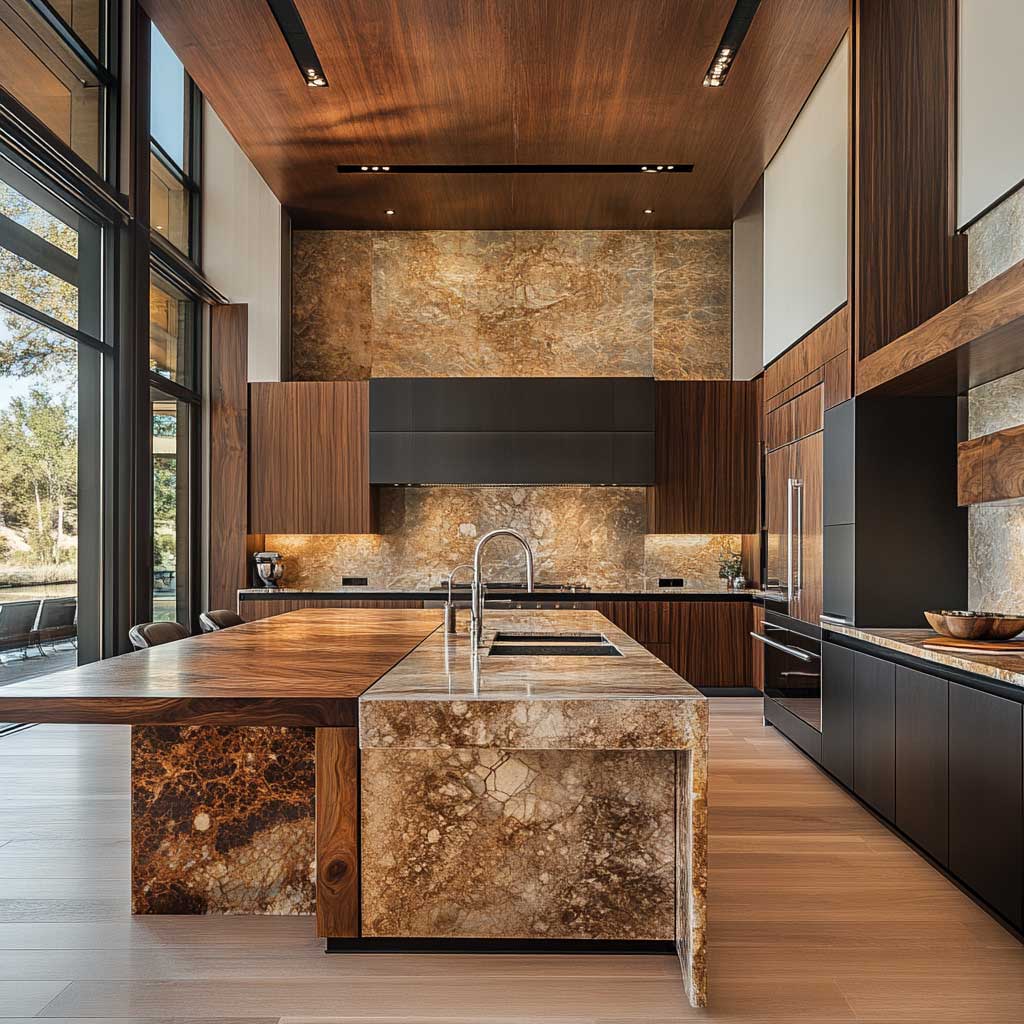
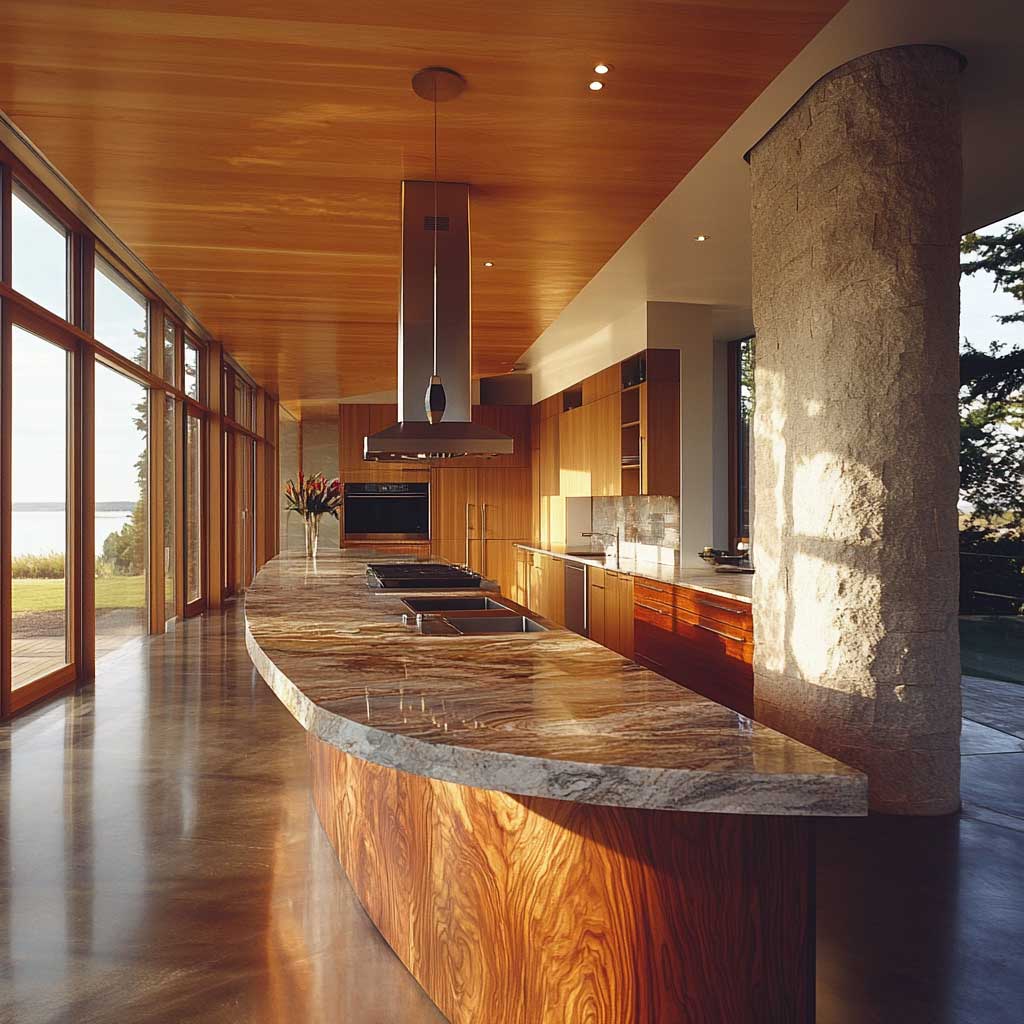
The layout question nobody asks early enough: should the island run parallel to the windows or perpendicular? Parallel placement lets natural light land evenly along the full stone counter surface — you see the veining at its best. Perpendicular creates one bright end and one shadowed end. Remodelista’s feature on age-old natural materials in modern kitchens — oak and Douglas fir in a London extension — shows exactly what parallel island placement does to the way light reads on raw wood surfaces.
Organic Modern Cabinets Fail When the Finish Gets Shiny
Satin or matte finish. Full stop. High-gloss cabinets — even in white oak — look like they belong in a 2012 Italian kitchen renovation, not a natural organic modern kitchen. The gloss reflects every fingerprint, every overhead light, and it visually hardens the grain until it reads as fake wood-look laminate. I’ve seen this mistake in three different renovation reveals on Instagram and each time the designer blamed the photographer. It wasn’t the photographer.
For cabinet species, white oak is the current default because its ray fleck pattern reads clearly at medium scale — you see it from across the room, not just up close. Walnut reads darker and moodier, which works in rooms with south-facing light and warm plaster walls. Ash is the budget version at $150–$220/linear foot installed, with a grain that’s more linear and less dramatic than oak. Avoid alder if you want the grain visible — it’s almost featureless.
Don’t Do This
- High-gloss cabinet finish on natural wood. It defeats the purpose of choosing real oak — grain disappears and the room reads as a 2010s remodel.
- Mixing too many wood species. Oak island + walnut floating shelves + pine ceiling beams = a lumber yard, not a kitchen.
- Cool-white LED bulbs (4000K–5000K). They make quartzite look like poured concrete and warm wood look grey. Use 2700K.
- Honed marble in a working kitchen. It etches. Permanently. Use quartzite if you want the same visual result without the regret.
- Open shelving for everyday dishes. In theory: beautiful. In practice: grease film on everything within four months. Reserve open shelves for ceramics you actually use daily.
Handleless cabinets — J-pull or push-to-open — keep the face frame reading as one continuous surface, which is what lets the grain do its work. Adding hardware isn’t wrong, but it changes the visual weight of the cabinet wall. If you go hardware, use matte black or unlacquered brass in a minimal bar shape from brands like Armac Martin or Kethy. Avoid anything with more than 4mm of visual thickness — it starts to compete with the wood.
Floor-to-ceiling cabinetry is the right call for most organic modern kitchens because it eliminates the dark strip above upper cabinets where grease and dust collect. Integrated appliances — refrigerator panel, dishwasher front — maintain the flat plane of the cabinet wall. What you lose: the ability to display things on top of cabinets. What you gain: a room that looks like a real kitchen designer touched it, not a box store install. That’s the trade I’d make every time.
For a deeper look at how wood species and cabinet profiles interact in a full kitchen remodel, the breakdown at modern wood kitchen cabinet design transformations covers specific finish options and hardware pairings that hold up over time.
Warm Organic Modern Kitchen Palette Starts With the Wall, Not the Island
Most people pick the island stone first, then try to build a wall color around it. That’s backwards. You need the wall tone to establish the base temperature of the room — everything else reads against it. For a warm organic modern kitchen, the wall goes in first: warm greige (Benjamin Moore HC-85 Revere Pewter is the most-used version, around $60/gallon), soft linen, or a very pale terracotta. Medium oak cabinets land on top of that wall color and immediately look intentional rather than default.
Warm organic modern kitchen palettes layer three tones: the lightest goes on the walls, the middle tone goes on the cabinets, and the darkest goes on the countertop or island. Think pale greige walls, medium oak cabinet fronts, and a darker leathered granite or quartzite for the stone. This is the same logic as getting dressed — you don’t wear three pieces of the same value; you layer light, medium, and dark to give the eye somewhere to travel.
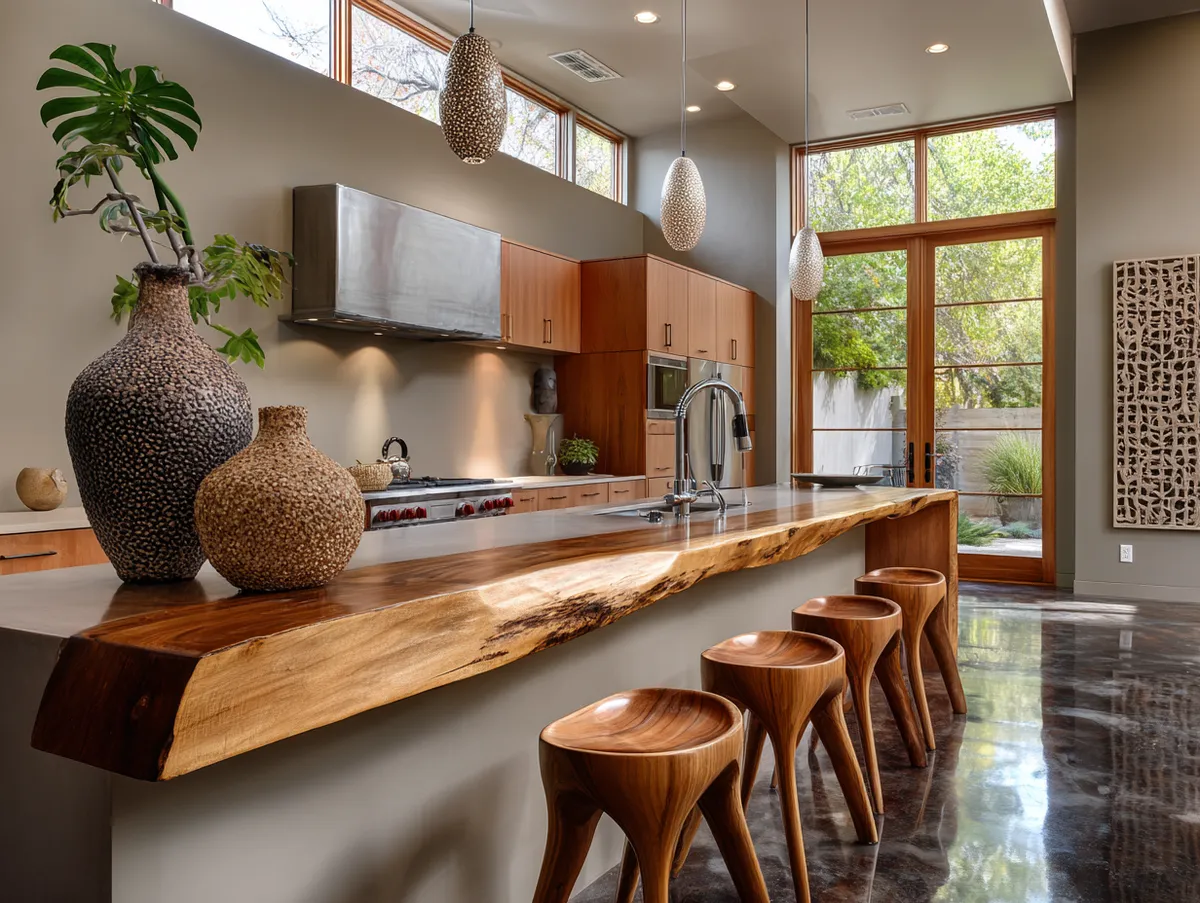
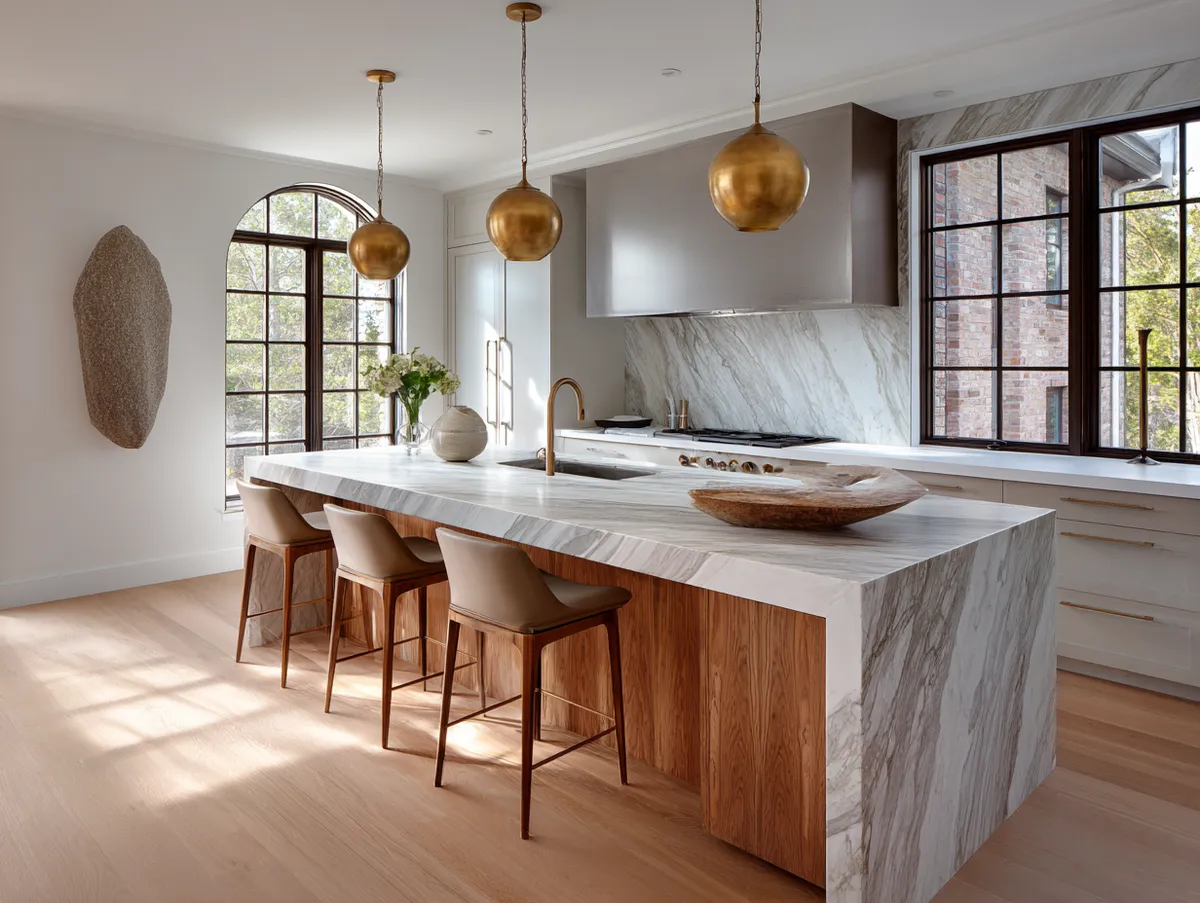
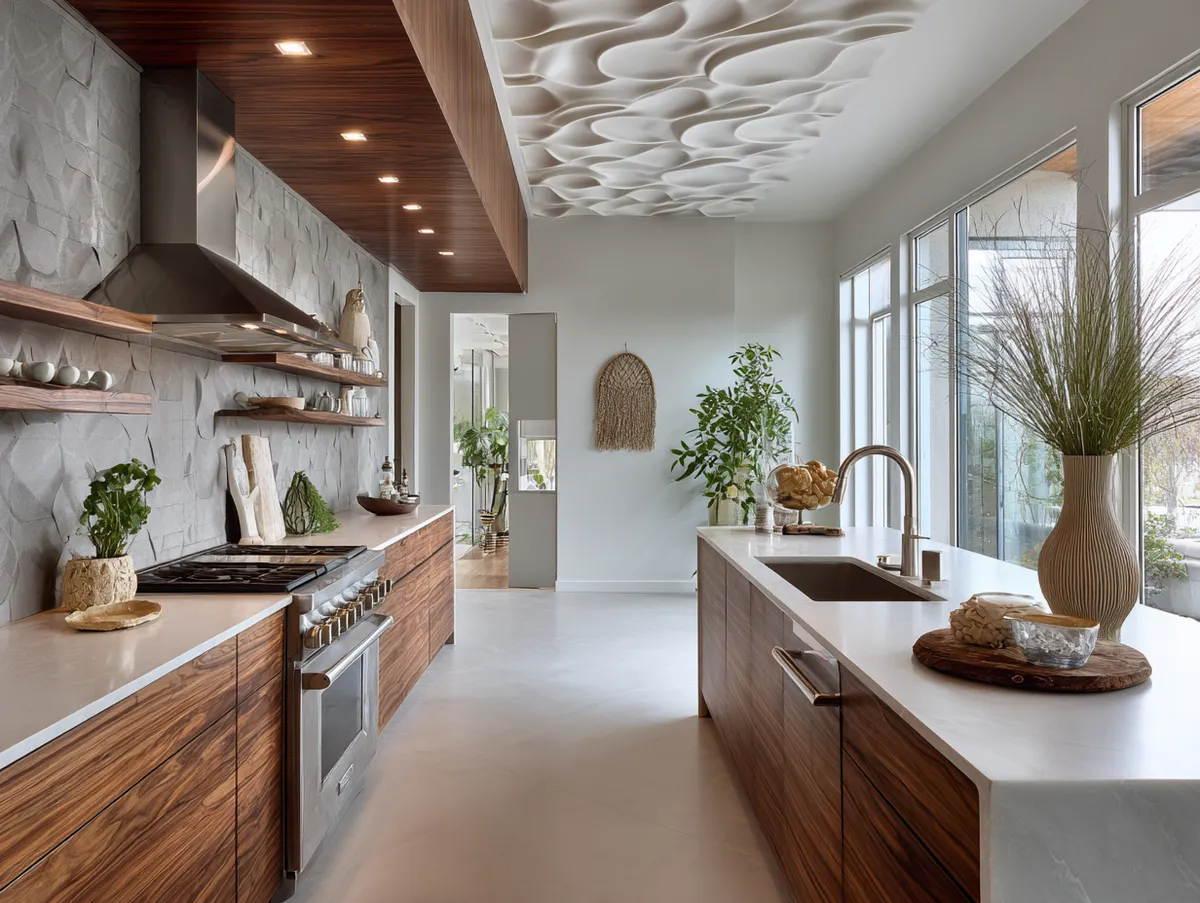
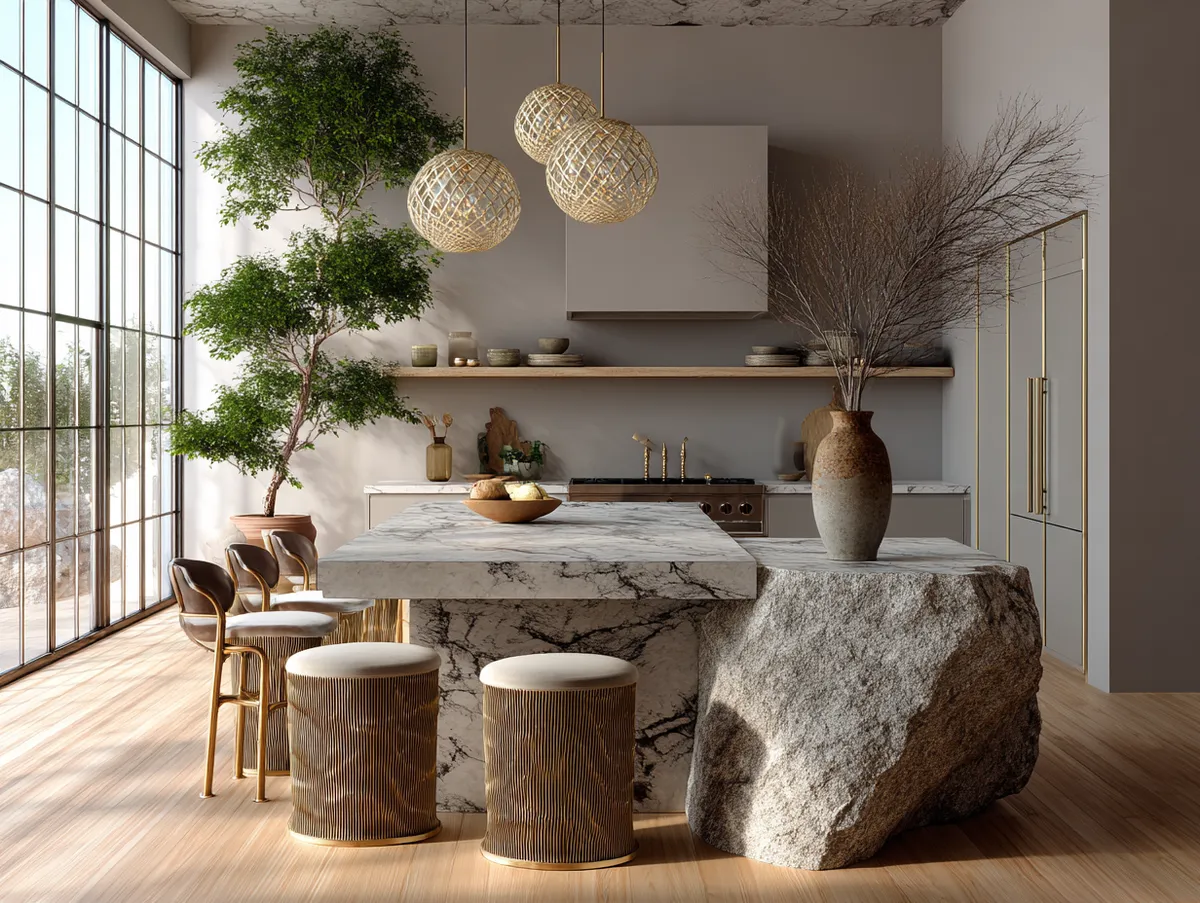

Earth-toned tile in a herringbone pattern on the backsplash is one of the few places where pattern is allowed in a natural organic modern kitchen. It adds texture without introducing color contrast — the herringbone reads as movement rather than a graphic statement. Behind the range, where you want a focal moment, run the tile vertically in a stacked configuration instead; the change in direction from herringbone to stacked gives the eye a pause point.
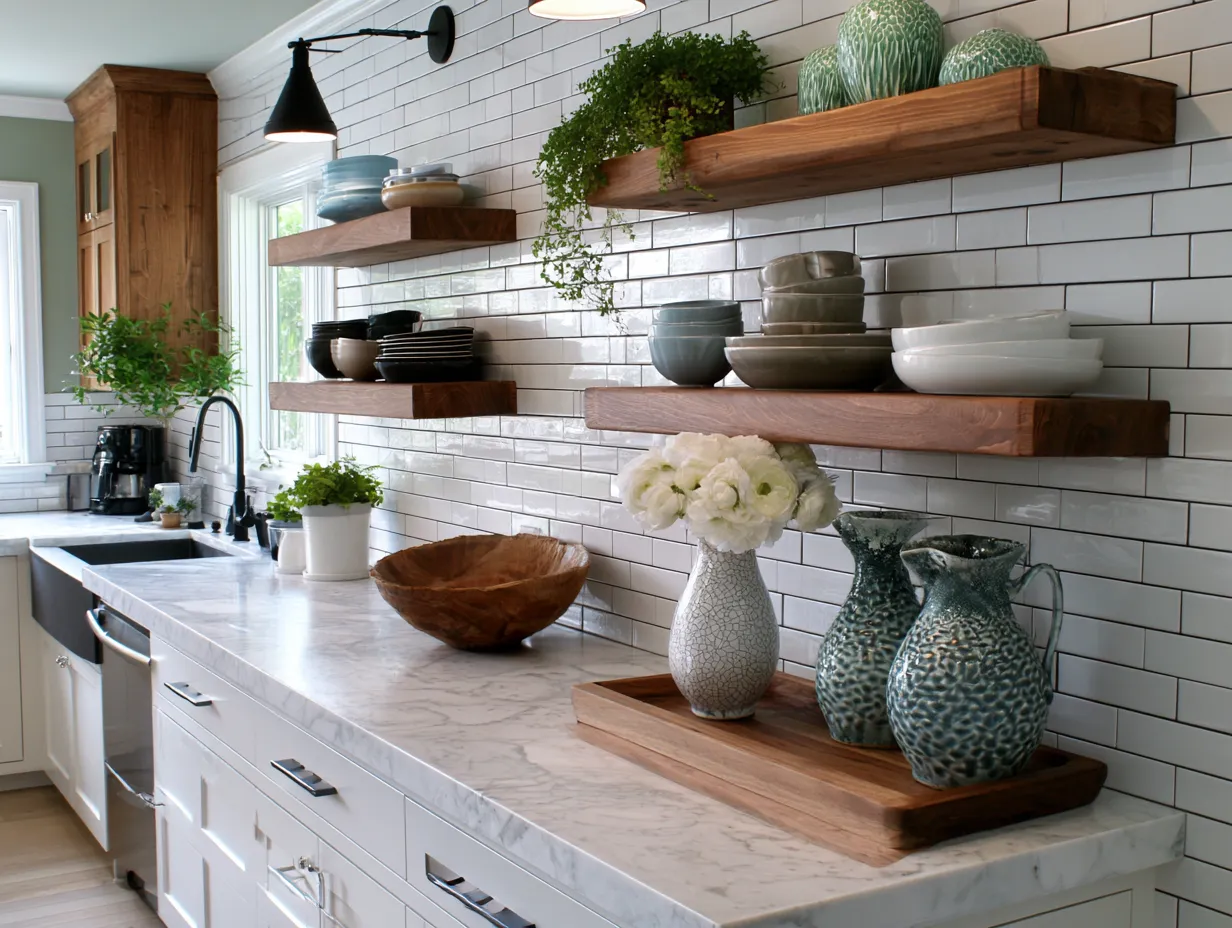
What fails here: adding open shelves in a contrasting dark wood against pale walls. I’ve tried this. The shelves immediately become the visual anchor of the room — not the stone counter, not the cabinets — and everything else fights for attention. If you want open shelving, keep it in the same wood tone as the cabinet fronts. Contrast kills the palette cohesion faster than any single wrong material choice.
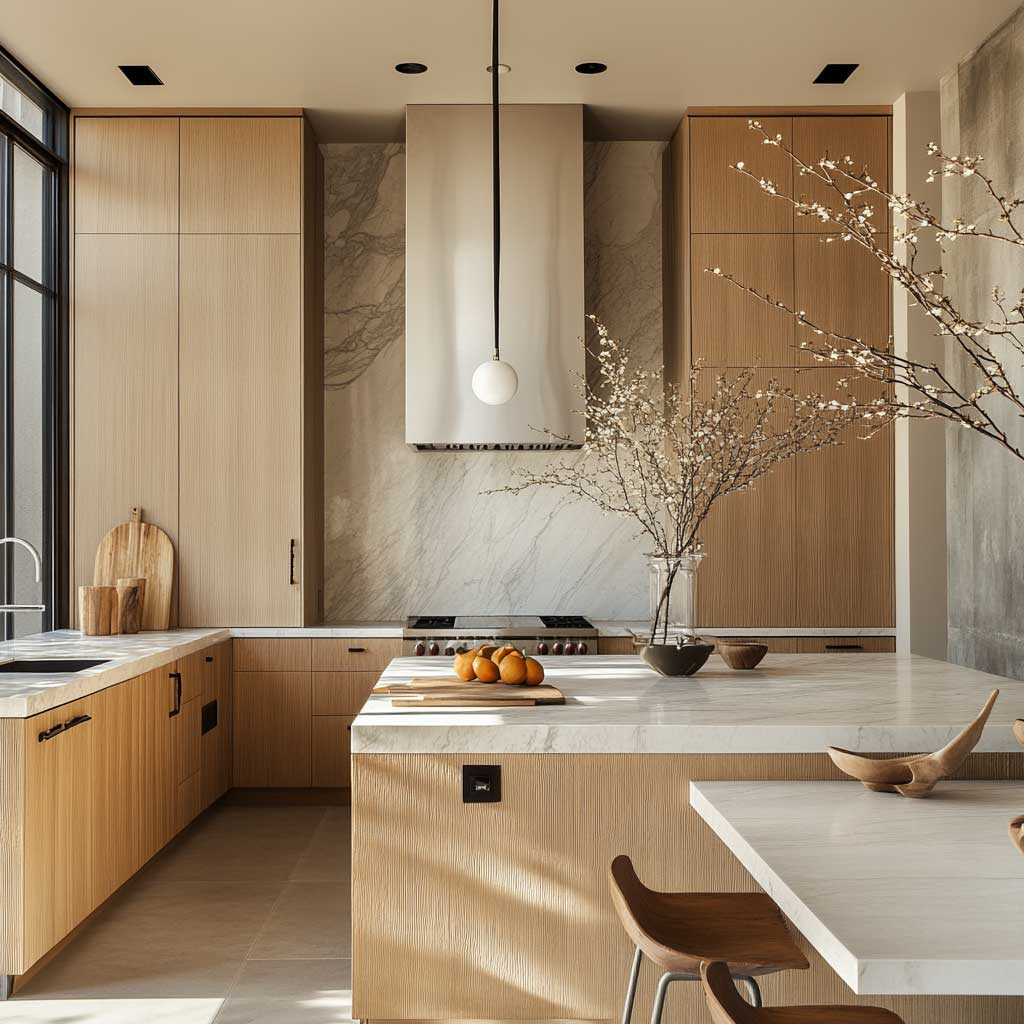
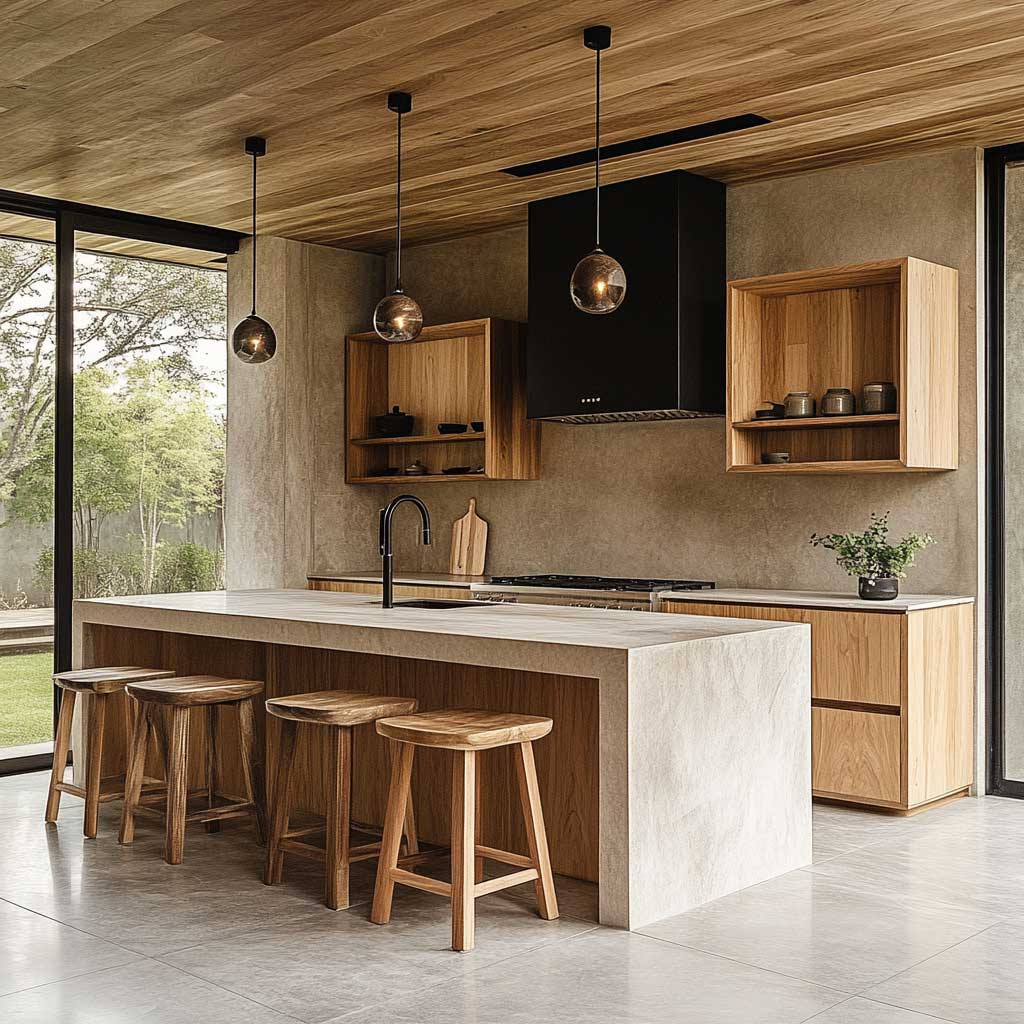
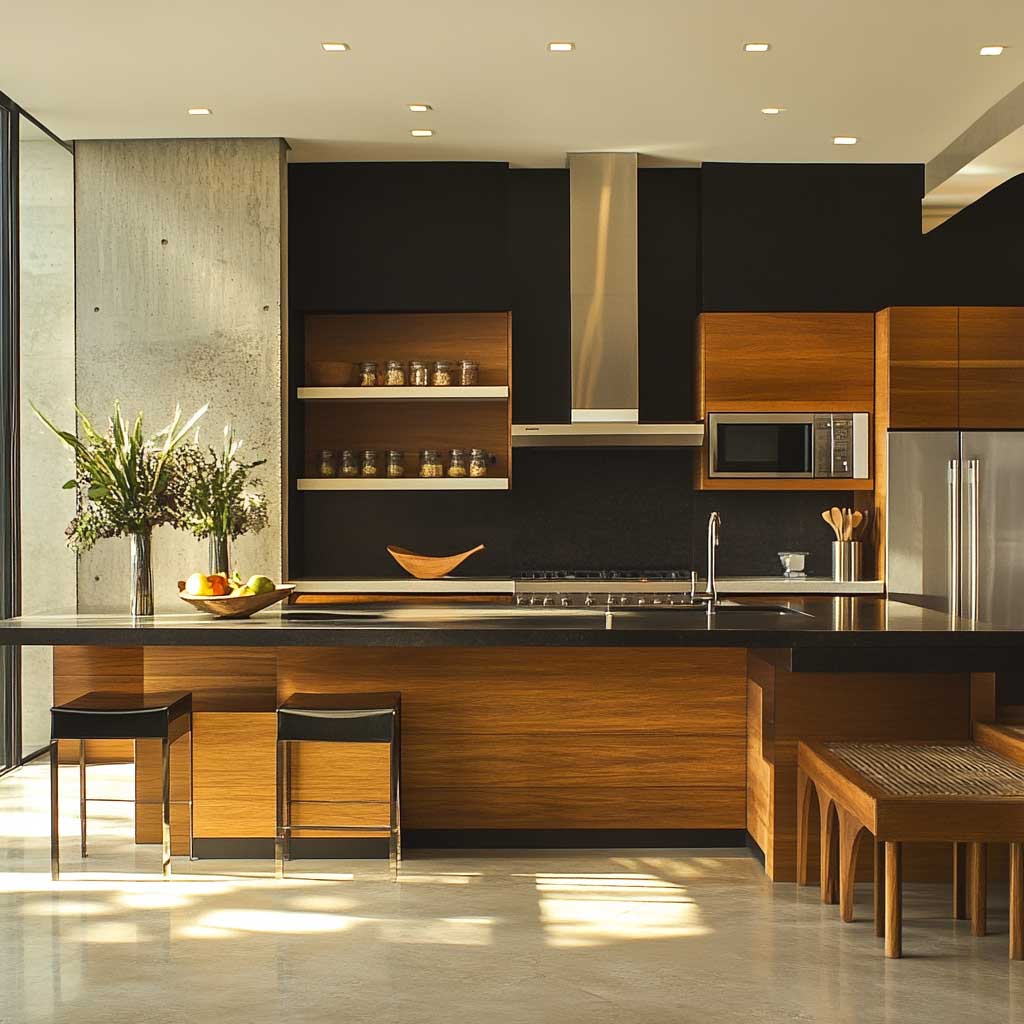
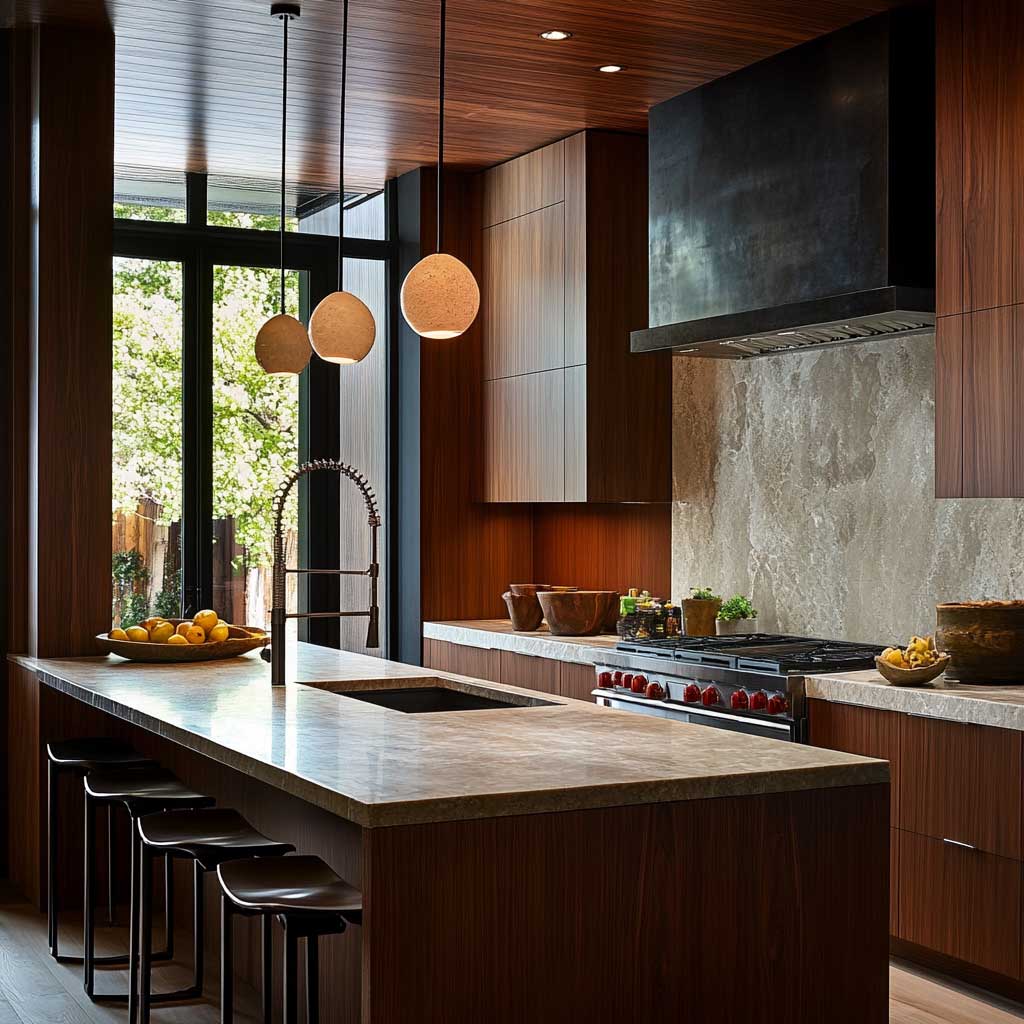
Pendant lights above the island should disappear into the room, not announce themselves. Brushed brass with a simple dome shade, or a woven rattan sphere — either reads as organic without consuming visual attention. Anything with colored glass or an elaborate silhouette starts competing with the stone counter, and you’ve lost the material-first principle of organic modern kitchen design. Keep the fixtures quiet; let the grain speak.
For anyone approaching a full redesign that goes beyond kitchen into the larger living areas, it’s worth reading about organic modern interior design applied across the full home — the principles for cabinetry and material layering translate directly from kitchen to living room without any adjustment.
Bottom Line
The Material Order Is the Design. Get It Wrong and No Amount of Styling Fixes It.
Organic modern kitchen design isn’t a mood board exercise — it’s a decision sequence. Wall tone first, cabinet species second, stone third, lighting fourth. Miss one step and the room fights itself.
The cheapest upgrade with the biggest visual payoff: swap to 2700K bulbs throughout. Second cheapest: get a large stone slab sample and hold it against your cabinet fronts in actual daylight before ordering.
Save this post before you make any irreversible calls — the finish decisions especially.