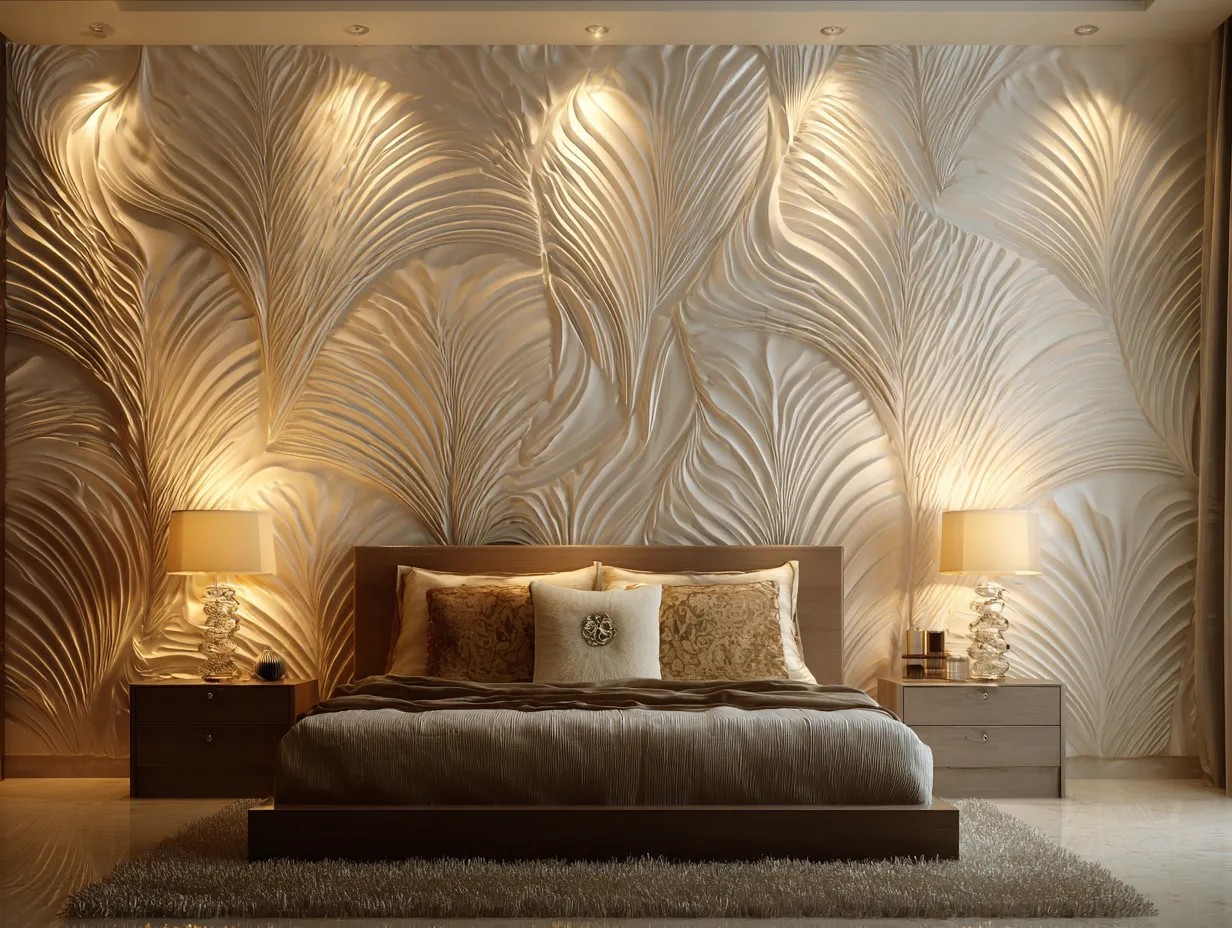
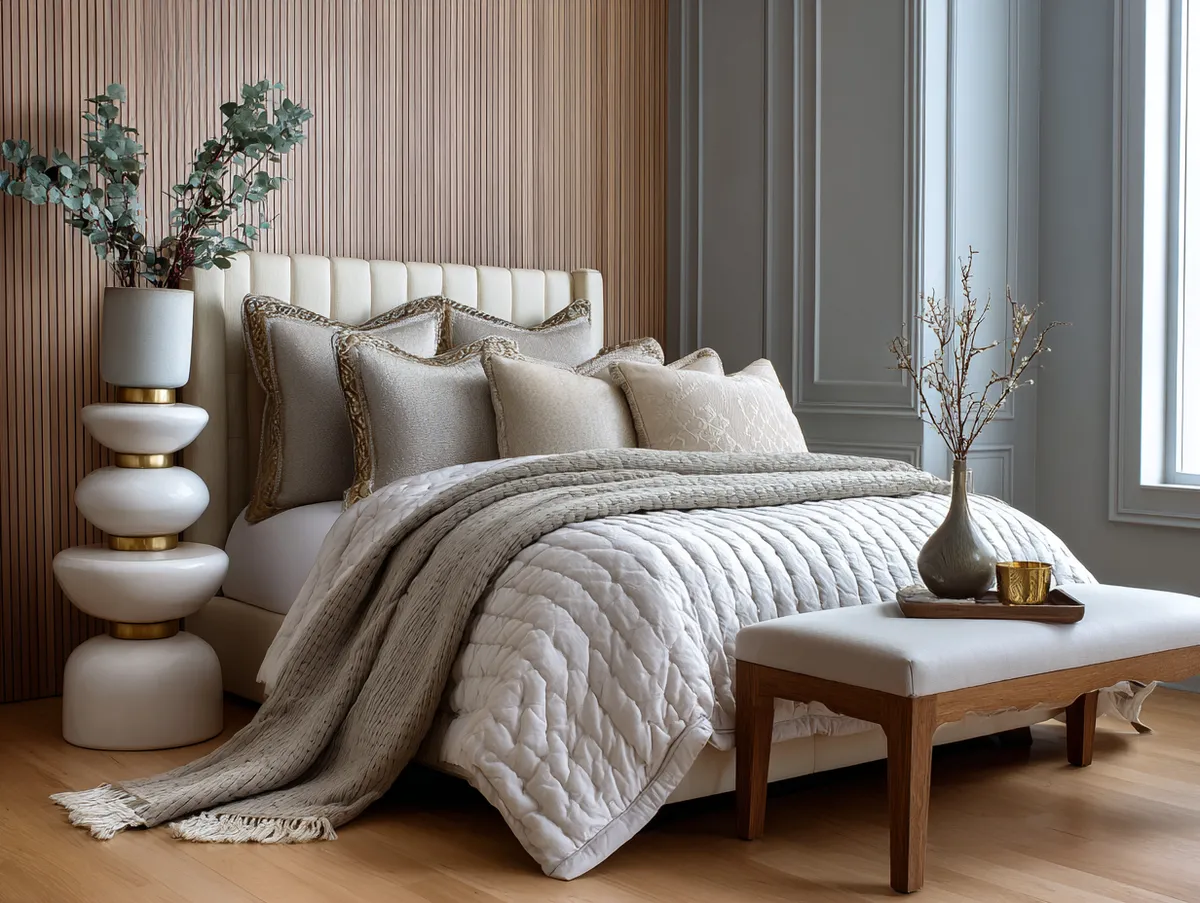
Bathroom wall paneling ideas deliver faster installation and cleaner lines than traditional tile while handling daily moisture without grout maintenance. PVC and laminate options range from $2 to $15 per square foot for materials, with full-room installs often finishing in a single day instead of the three-to-five days tile typically requires.
The right panels expand visual space, hide imperfect substrates, and create feature walls that read as intentional design rather than afterthoughts. Choose moisture-rated materials for wet zones and pair them with sealed joints to keep humidity from reaching the wall behind.
From textured stone-look surfaces to geometric relief and classic beadboard, the options below cover budget and high-end routes that actually perform in real bathrooms.
- PVC panels start at $2–$6 per sq ft and install over existing tile in many cases
- Full bathroom coverage averages $470–$1,280 installed for budget materials
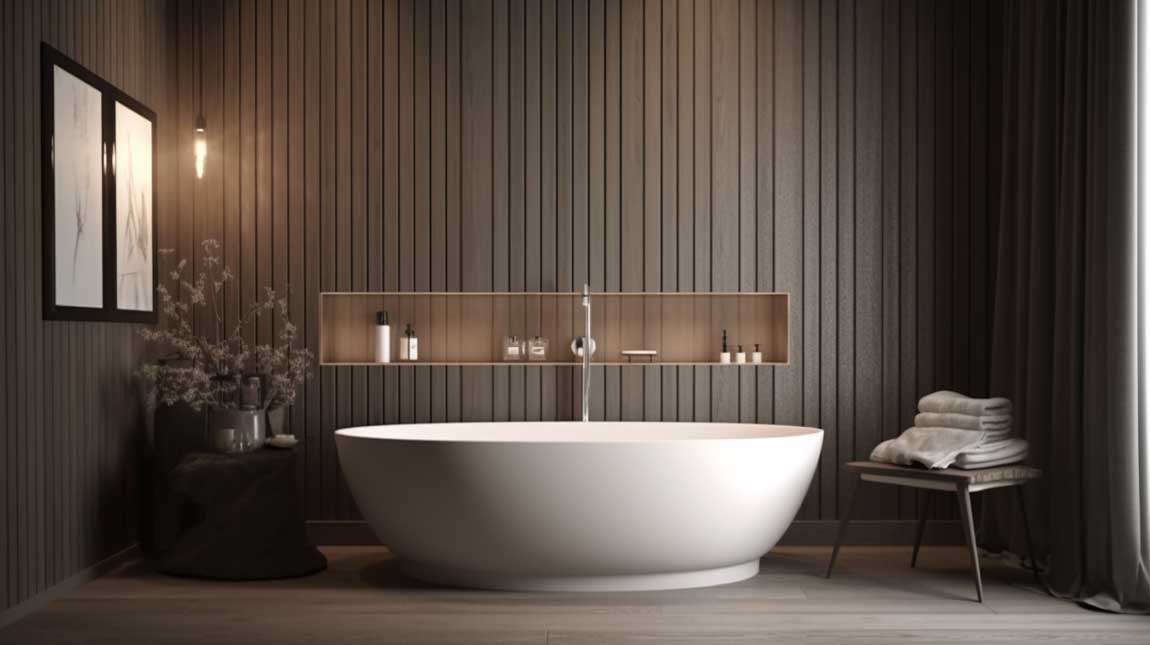
- Vertical lines lift ceiling height; horizontal runs widen narrow rooms
- Skip unsealed wood in splash zones — moisture-resistant composites last longer
- Mirrored and 3D panels amplify light but need professional fixing in wet areas
- Mixed materials work when color and scale stay consistent across the room


Textured Surfaces That Catch Light and Hide Wear
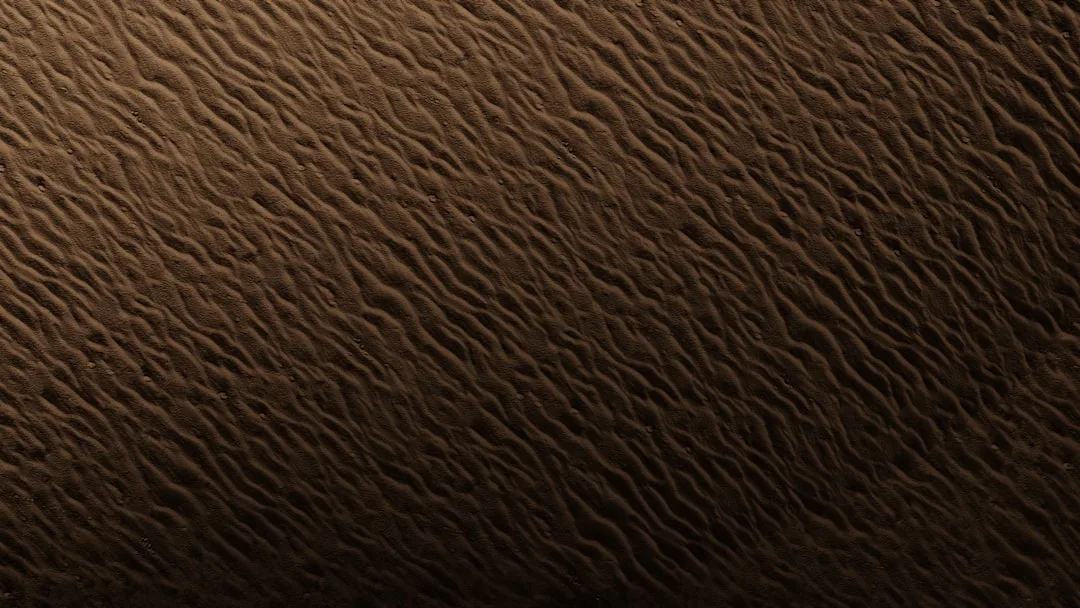
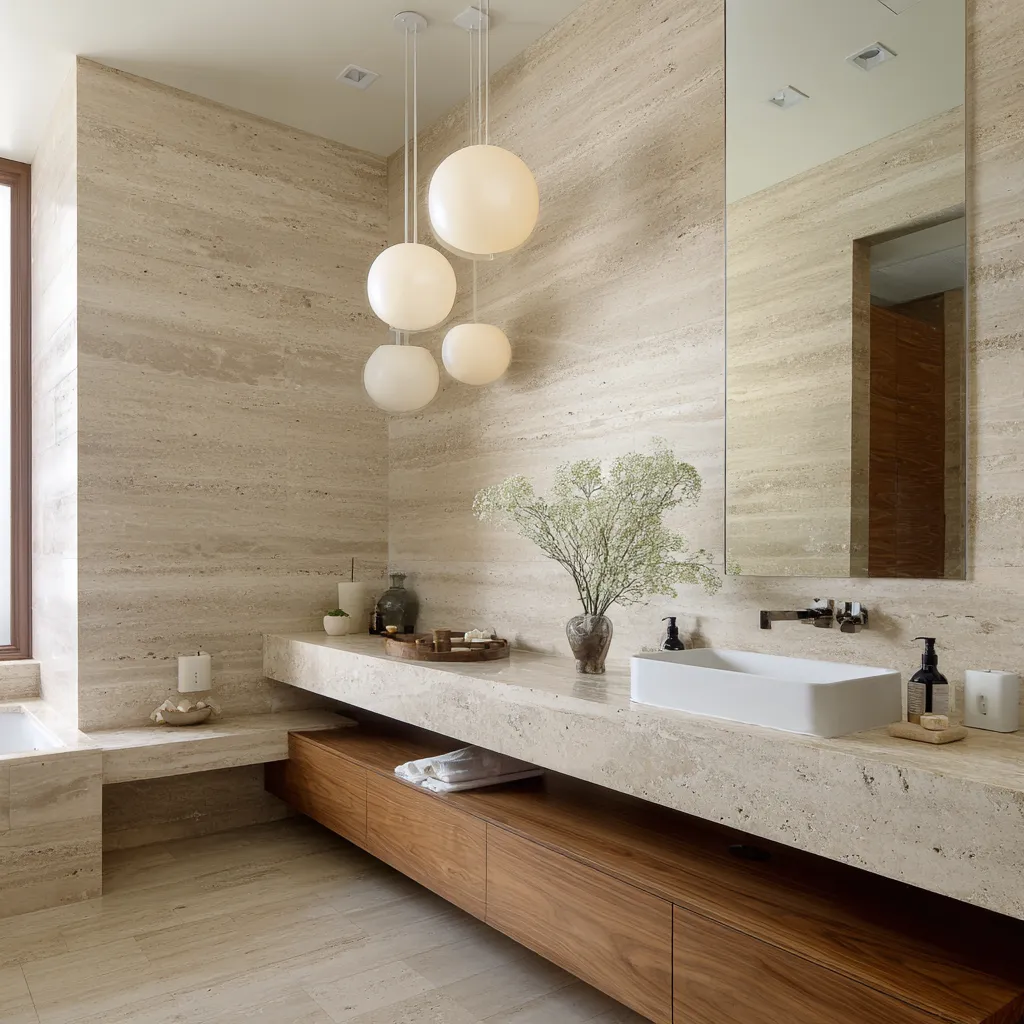
Textured bathroom wall paneling ideas add depth without relying on busy tile patterns. Natural stone veneer panels run $12–$35 per square foot and bring real grain variation that flat paint cannot match. Wood-look composites warm the room while staying dimensionally stable in humidity.
Why choose texture over smooth? It disguises minor wall imperfections and softens hard lighting. Metal finishes lean contemporary but show water spots faster unless wiped regularly. Match the panel material to the zone: stone or PVC in the shower, warmer wood-look outside the wet area.
Avoid untreated solid wood in direct splash zones — it absorbs moisture and can cup within months. Seal every joint and choose panels rated for wet rooms. A single textured feature wall often delivers more impact than covering every surface.


Geometric Patterns That Define the Room Without Overwhelm
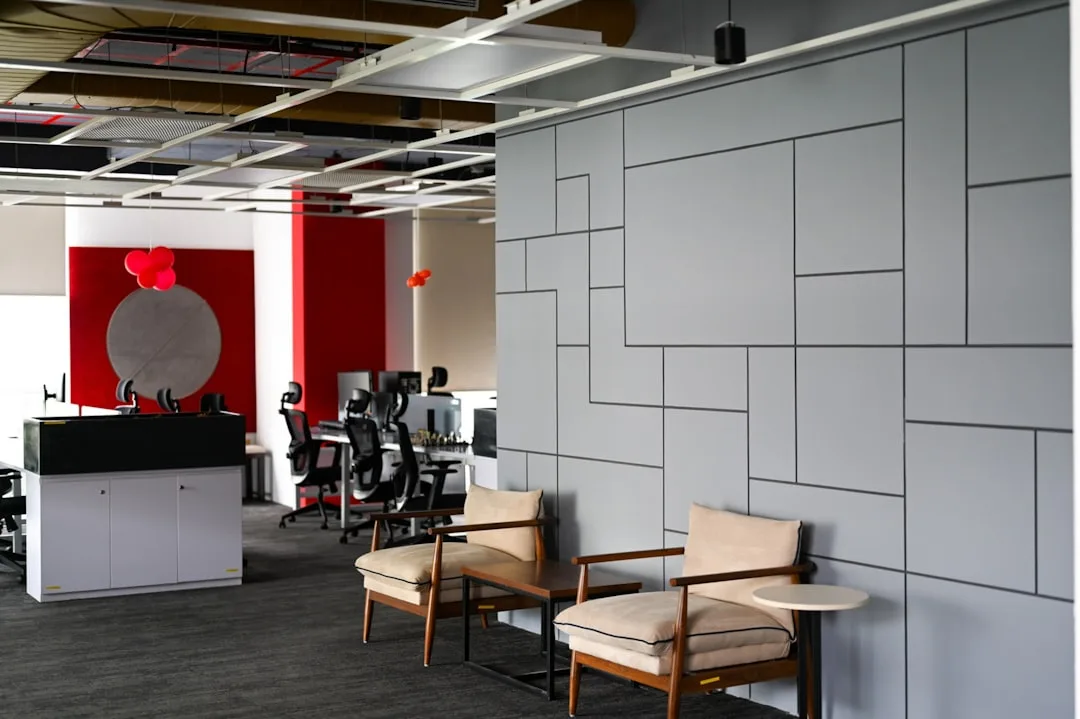
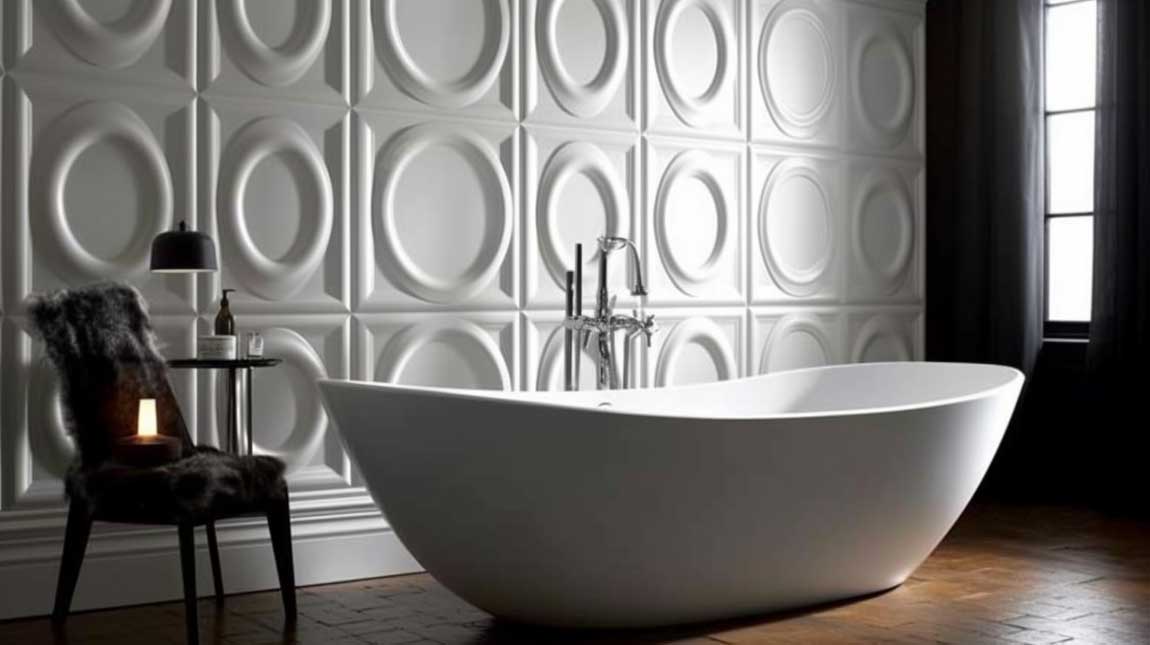
Geometric patterns turn bathroom wall panels ideas into focal points rather than background. Oversized shapes read modern; finer repeats feel tailored. Panels, large-format tiles, or custom cut pieces all work when the scale matches the wall size.
How large should the pattern run? Keep bold motifs to one wall so the rest of the room stays calm. Mixing finishes inside the same geometry — matte and gloss, or wood and metal — creates movement without visual noise. Balance is the difference between intentional design and busy walls.
Skip tiny repeating shapes on every surface; they shrink the space and collect more cleaning effort. One strong geometric wall plus simple adjoining surfaces keeps the look sharp and easier to maintain long-term.

Art Deco Details That Bring Glamour Back
Art Deco-inspired bathroom wall paneling ideas favor bold geometry, rich tones, and materials such as brass inlay or marble accents. The style still reads luxurious decades later because the shapes stay crisp and the materials age gracefully.
Inlay or marquetry panels create the signature layered look. Pair them with metallic fixtures and simple lighting so the walls remain the star. Soft textiles and vintage-style glass pull the room together without competing for attention.
Do not crowd every wall with ornate pattern. One statement surface plus quieter adjoining walls prevents the space from feeling like a period set. Choose panels that tolerate humidity so the finish stays intact year after year.


Mirrored Panels That Expand Light and Space
Mirrored bathroom wall paneling ideas bounce light and make compact rooms feel larger. Antique or smoked finishes soften the reflection and add character that plain clear glass lacks. Beveled edges catch extra sparkle under vanity lighting.
Where should mirrors sit? Opposite a window or light source multiplies brightness most effectively. Avoid placing large mirrored sections where they create endless reflections of clutter or plumbing. Secure fixing is non-negotiable in humid zones.
Never rely on adhesive alone for heavy mirror panels in a wet area. Professional mechanical fixing and sealed edges keep the installation safe and free of moisture damage behind the surface.


Wainscoting and Beadboard That Protect and Define
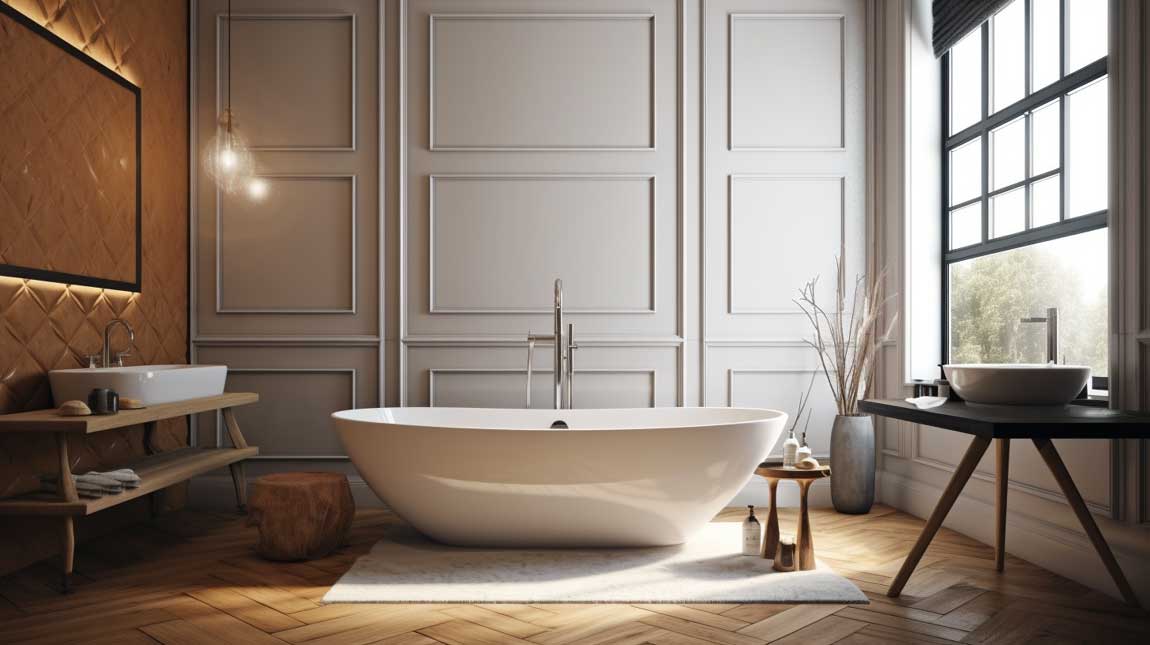
Wainscoting and beadboard remain reliable bathroom wall paneling ideas for lower walls that take the most wear. They shield surfaces from splashes while adding classic proportion. Paint or stain them to match the rest of the scheme, or contrast for clearer definition.
Combine lower beadboard with a different upper finish to create two zones without visual conflict. Moisture-resistant MDF or PVC versions hold up better than standard wood in steamy rooms. Average material costs for this style sit around $6–$15 per square foot before labor.
Do not run untreated beadboard into the shower itself. Keep it to dry or splash zones and seal every edge. The protective function only works when the material can handle repeated wetting.


Vertical and Horizontal Lines That Change Proportions
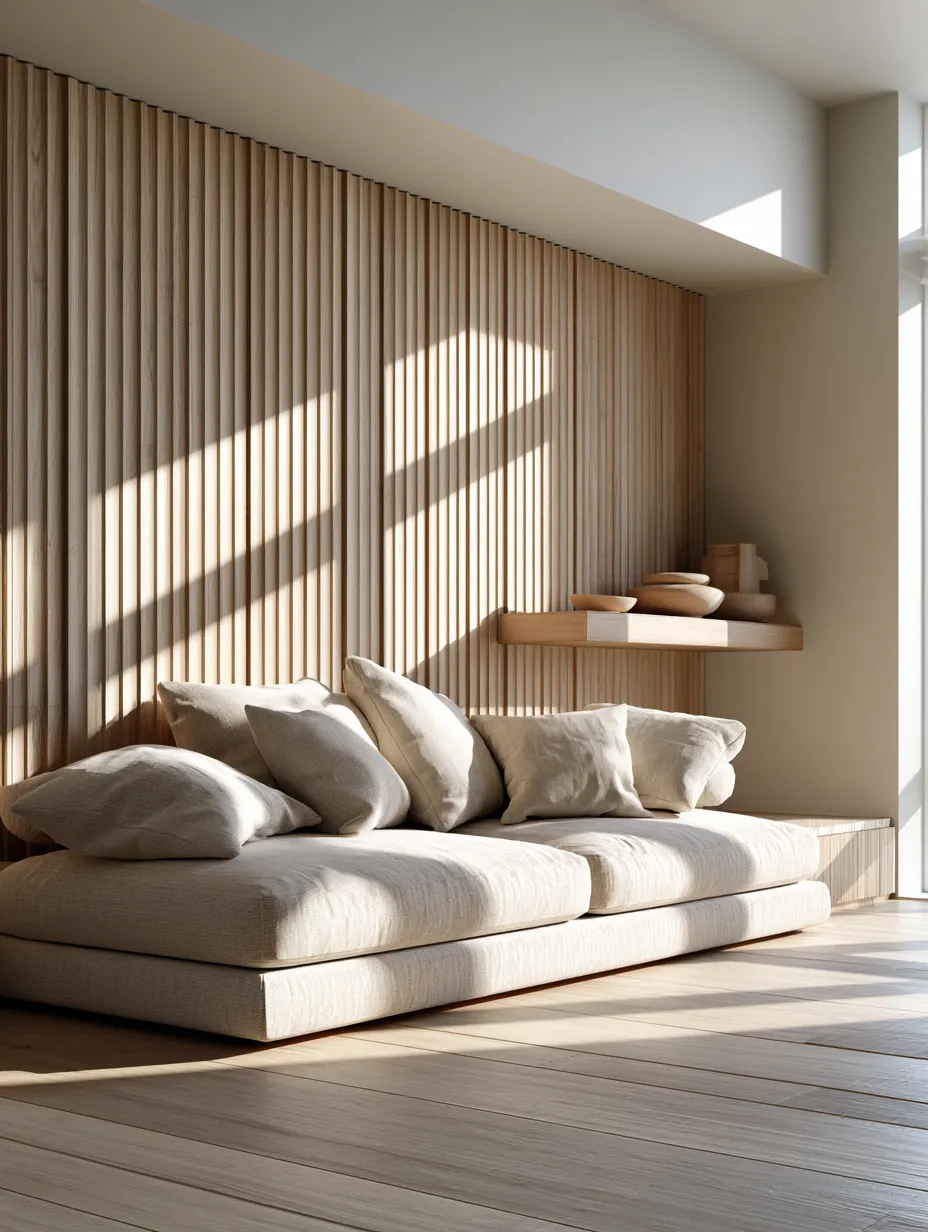
Direction of bathroom wall panels ideas alters how the room feels. Vertical runs draw the eye upward and make low ceilings appear taller. Horizontal lines stretch narrow walls and can make a compact bathroom feel wider.
Sleek continuous boards create a calm modern look. Varying widths or alternating tones introduce rhythm without extra pattern. Measure the wall first so the final joint lands cleanly rather than mid-panel.
Avoid mixing directions on adjacent walls unless the break is deliberate. Conflicting lines confuse the eye and make the space feel restless instead of ordered.


Mosaic Accents That Add Crafted Detail
Mosaic bathroom wall paneling ideas concentrate small pieces of glass, ceramic, or stone into intricate surfaces. Use them as a single feature wall or as a band that frames the vanity or shower niche. Metallic or iridescent pieces catch light and raise the perceived value of the room.
Installation takes longer than large panels and costs more per square foot, often landing in the $15–$40 range for materials alone. Plan extra time for sealing and cleaning the many joints. The payoff is a surface that feels custom rather than mass-produced.
Limit mosaics to areas that stay relatively dry or are easy to reach for wiping. Dense patterns in high-splash zones demand more frequent attention than larger smooth panels.


Three-Dimensional Relief That Creates Real Depth
3D bathroom wall paneling ideas push the surface forward or back to catch light and shadow. Geometric, organic, or abstract reliefs turn a flat wall into a sculptural element. PVC versions remain the most practical for wet rooms because they resist moisture and clean easily.
Material costs for 3D panels typically fall between $10 and $25 per square foot for waterproof options. Complex shapes may need professional installation to keep seams tight and patterns aligned. Use them on a single feature wall so the rest of the room stays calm.
Deep relief collects dust and moisture more readily than flat surfaces. Choose shallower profiles in the shower and reserve deeper designs for drier walls that are easier to reach with a cloth.


Mixed Materials That Feel Collected Rather Than Matched
Mixed-material bathroom wall paneling ideas combine wood, stone, metal, or glass on the same wall or across adjacent surfaces. Success depends on a shared color family and consistent scale so the combination reads deliberate. Subtle mixes feel refined; strong contrasts make a clear statement.
Check durability ratings for every material in the mix. Some pairings need extra sealant at the junctions to prevent moisture migration. Average installed costs for mid-range mixed schemes often land between $900 and $2,200 for a typical bathroom wall area.
Do not mix more than three distinct surfaces in a small room. Too many textures compete and make the space feel unresolved. One dominant material plus one accent usually produces the cleanest result.
Practical Comparison of Common Panel Types
| Panel Type | Material Cost per Sq Ft | Best Use | Key Trade-off |
|---|---|---|---|
| PVC | $2–$6 | Full wet-room coverage | Less natural look than stone or wood |
| Laminate / HPL | $5–$15 | Realistic wood or stone patterns | Edges need careful sealing |
| Acrylic | $8–$20 | High-gloss modern walls | Shows scratches more readily |
| Stone veneer | $12–$35 | Feature walls with authentic texture | Higher weight and install time |
| 3D PVC | $10–$25 | Statement walls with relief | Deeper profiles need more cleaning |
Budget PVC systems can cover an average bathroom for $470–$1,280 fully installed, while premium acrylic or stone-look options climb toward $1,260–$2,880 according to current project averages. Panels cut installation time roughly in half compared with traditional tile and eliminate ongoing grout maintenance.
For compact layouts that need every visual trick, pair panels with space-saving fixtures shown in these small bathroom renovation ideas for city apartments. The combination of clean panel surfaces and floating elements keeps tight rooms feeling open.
Don’t Do This
Installing standard MDF or untreated wood panels in the shower or directly above a tub. Moisture reaches the core, the material swells, and the finish fails within months. Always specify wet-rated composites or fully sealed systems for any surface that sees regular water contact.
Warm earth tones and handcrafted surfaces pair especially well with panel textures. Explore how those materials work together in Mediterranean bathroom design ideas that favor natural variation over perfect uniformity.
Detailed cost and installation guidance for different panel systems is available from independent sources such as this bathroom wall panels overview that breaks down material ranges and labor expectations.
Final Take
The strongest bathroom wall paneling ideas combine moisture-rated materials with one clear visual focus.
Pick a single feature approach — texture, geometry, or relief — and keep the remaining walls quieter so the room stays balanced.
Budget for proper sealing and wet-rated products rather than the cheapest board that happens to look good dry.
Measure twice, order 10 % extra for cuts, and the finished surface will perform as well as it looks.