White wood interior design pairs the clean brightness of white with the natural grain of timber to create spaces that feel open yet grounded. It works because the pale finish reflects light while the wood texture prevents the room from reading as cold or clinical. Homeowners choose it for bedrooms, kitchens, and living rooms when they want timeless calm without sacrificing warmth.
The combination delivers in both modern and traditional settings. Light-toned oak or ash painted or stained white keeps the surface soft underfoot and on furniture, while the visible grain adds depth that flat paint cannot match. Expect the look to hold for years with proper sealing, and average installed white-oak flooring runs $8–$20 per square foot according to current market ranges.
Start with one dominant surface—floors, cabinetry, or paneling—then echo the tone in smaller pieces. This keeps the palette coherent and avoids the scattered effect that happens when every element fights for attention.
- White wood reflects light and softens hard edges in compact rooms
- Pair with soft textiles and one deeper wood accent for contrast
- Cabinetry and floors in the same family create visual continuity
- Skip high-gloss finishes that erase grain and age poorly
- Budget mid-range white oak floors at roughly $8–$15 per square foot installed
- Keep accessories sparse so the material itself remains the quiet hero
Calm White Wood Bedrooms Built for Rest


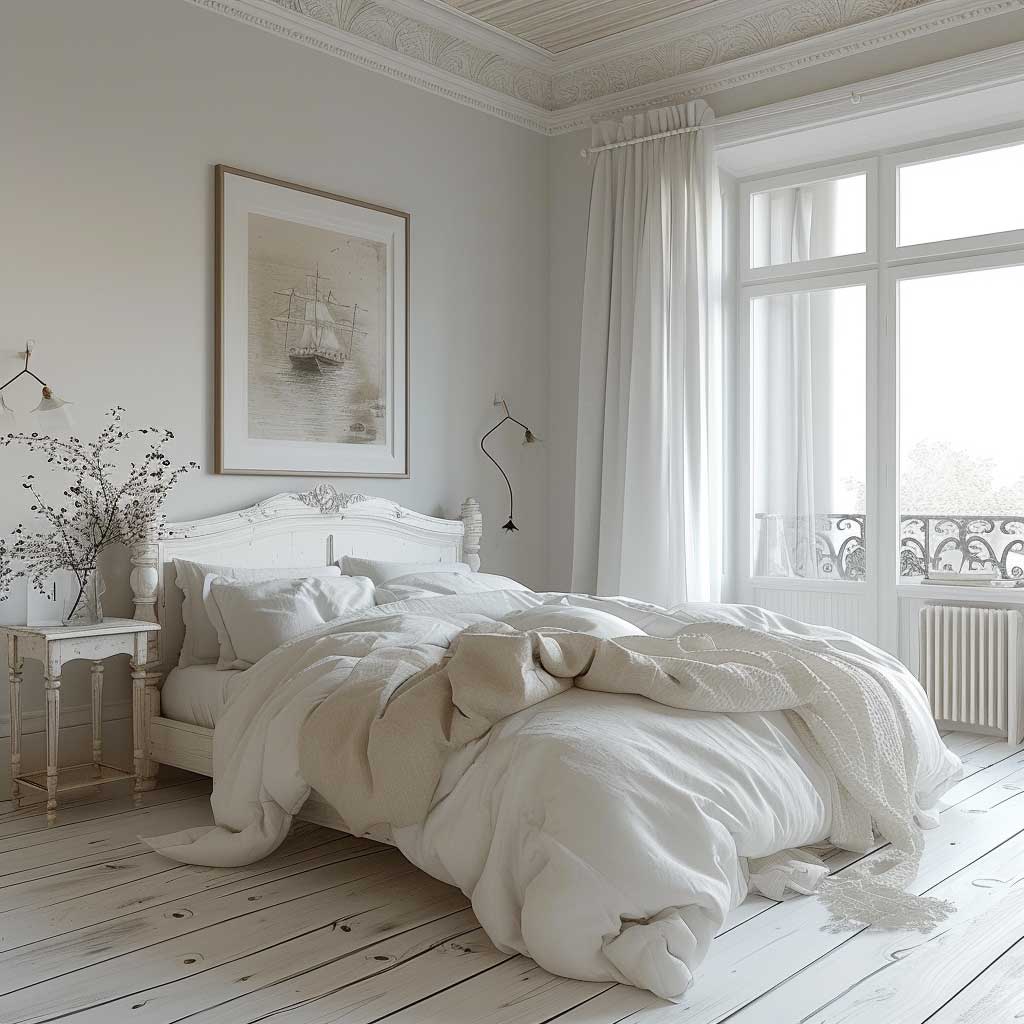

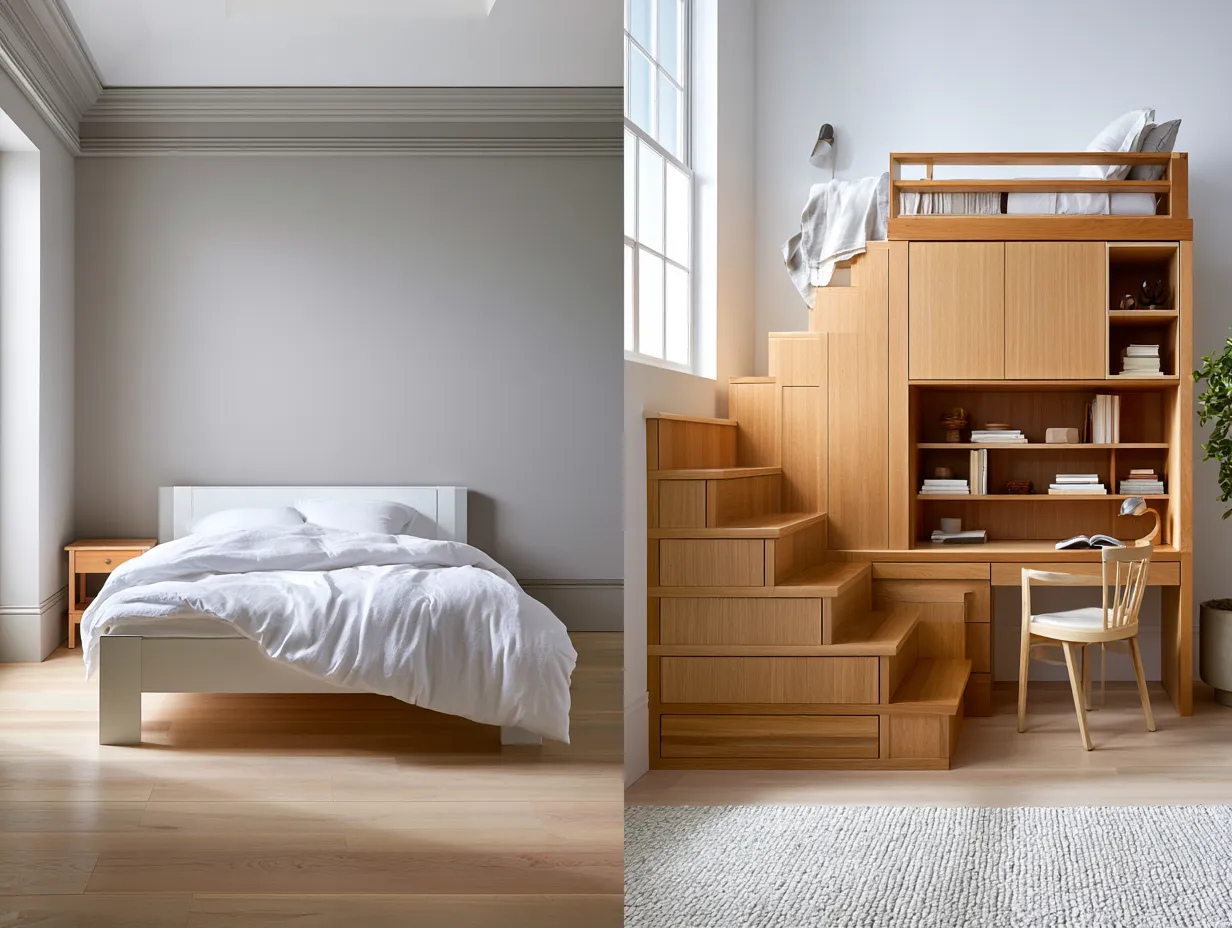
White wood bedroom schemes succeed when the bed frame and floors share the same pale tone. The light surface bounces morning sun across the room and keeps the eye from catching on dark corners. How much warmer does the space feel once the grain is visible? Most people notice the difference the first evening they sit down without overhead lights.
Choose a low platform or simple four-poster finished in white-washed oak. The clean silhouette anchors the room while the wood grain prevents the look from sliding into hotel sterility. Avoid matching every piece of furniture to the exact same shade; a slightly deeper nightstand or bench adds the contrast a restful room needs.
Flooring in the same family multiplies the sense of space. White oak planks installed at $8–$15 per square foot typically last decades with occasional resealing. Think of the floor as a quiet stage: rugs in linen or wool sit on top without fighting the grain. One common misstep is covering every board with thick carpet—leave enough wood visible so the material can do its job.
Textiles finish the calm. Soft cotton or linen bedding in off-white or pale grey layers texture without introducing color noise. Curtains that filter rather than block light keep the white wood glowing after sunset. For more ideas on combining white surfaces with timber, see how white and wood interior design creates warm homes.
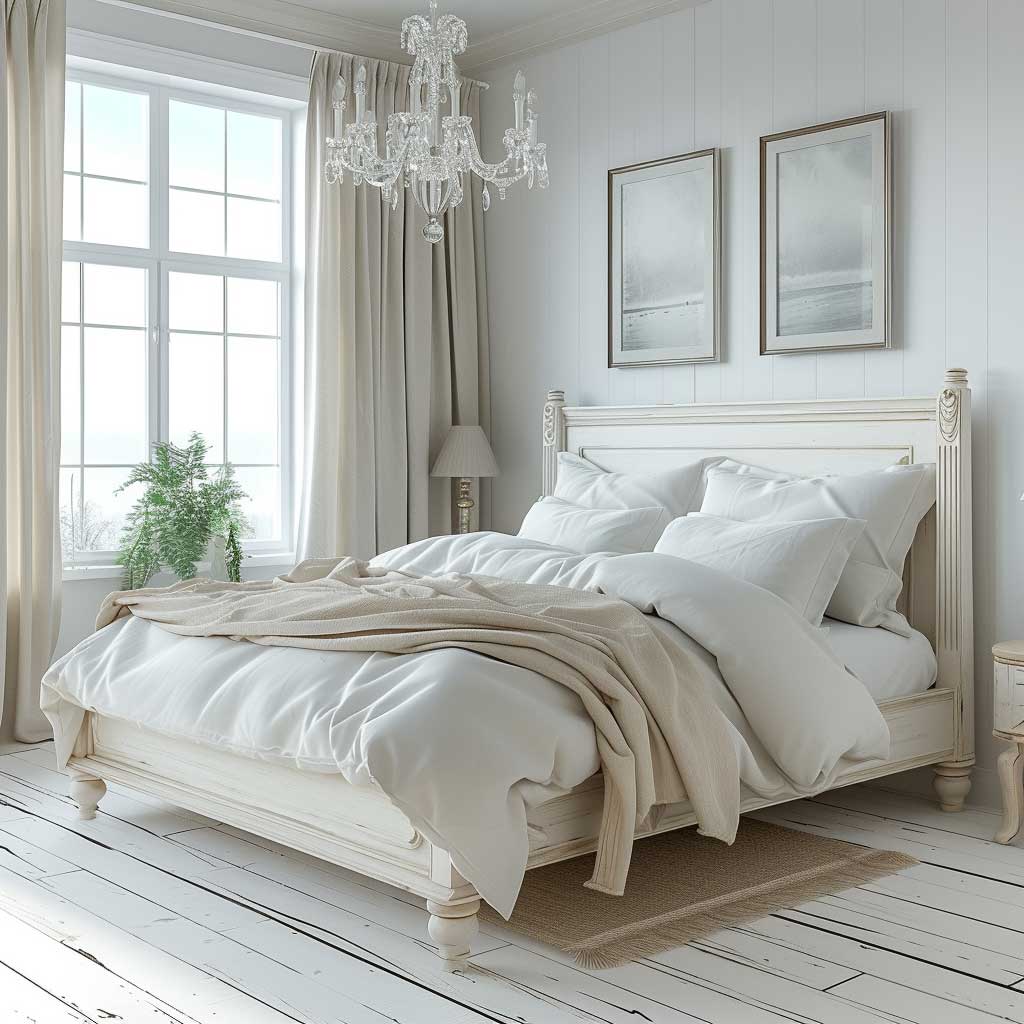


Lighting should stay soft and adjustable. Wall sconces or simple table lamps with warm bulbs create pools of light that flatter the wood rather than flatten it. Dimmer switches let the same room shift from reading brightness to sleep mode without changing fixtures.
Keep decorative objects few and purposeful. One piece of quiet artwork and a single plant usually suffice. The white wood itself becomes the main visual interest, so clutter works against the goal. This approach mirrors a clear desk that helps focus: less visual noise equals deeper rest.
White Wood Kitchen Harmony for Daily Use


White wood kitchen designs turn the hardest-working room into a calm workspace. Cabinets finished in pale oak or painted white with visible grain reflect task lighting and make counters easier to keep clean. Semi-custom white oak cabinetry currently sits in the $450–$750 per linear foot range for quality mid-tier work.
Open shelving in the same material keeps the upper walls light and displays the pieces that earn their place. Closed storage below hides the everyday clutter. The balance feels like a well-organized toolbox: everything needed is reachable, nothing extra distracts.
An island finished to match the perimeter cabinets becomes both prep surface and gathering spot. Choose a solid-wood top or a durable veneer that can take daily impact. Avoid high-gloss sealers that show every fingerprint; a matte or satin finish hides wear better and lets the grain stay readable.
Flooring that continues the white wood theme unifies the space. Light planks make the room feel larger and bounce light from windows onto work surfaces. For practical numbers, engineered white oak floors often install between $9 and $15 per square foot and handle kitchen moisture better than solid boards in many climates.

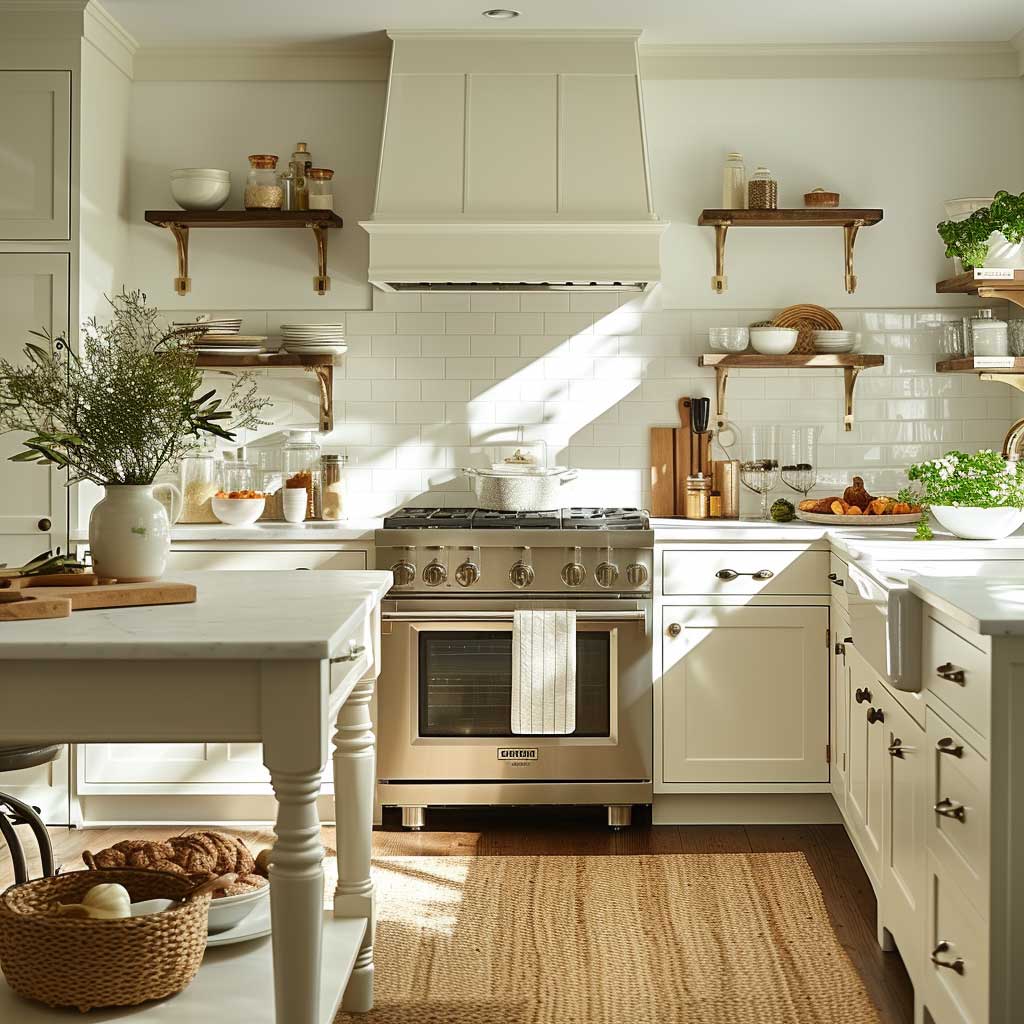


Lighting layers complete the picture. Pendant fixtures over the island and under-cabinet strips keep counters bright without harsh overhead glare. Warm-toned LEDs flatter the wood and make evening cooking more pleasant. One anti-advice: do not rely solely on recessed cans—they flatten the grain and leave work zones in shadow.
Minimalist White and Wood Living Room Spaces
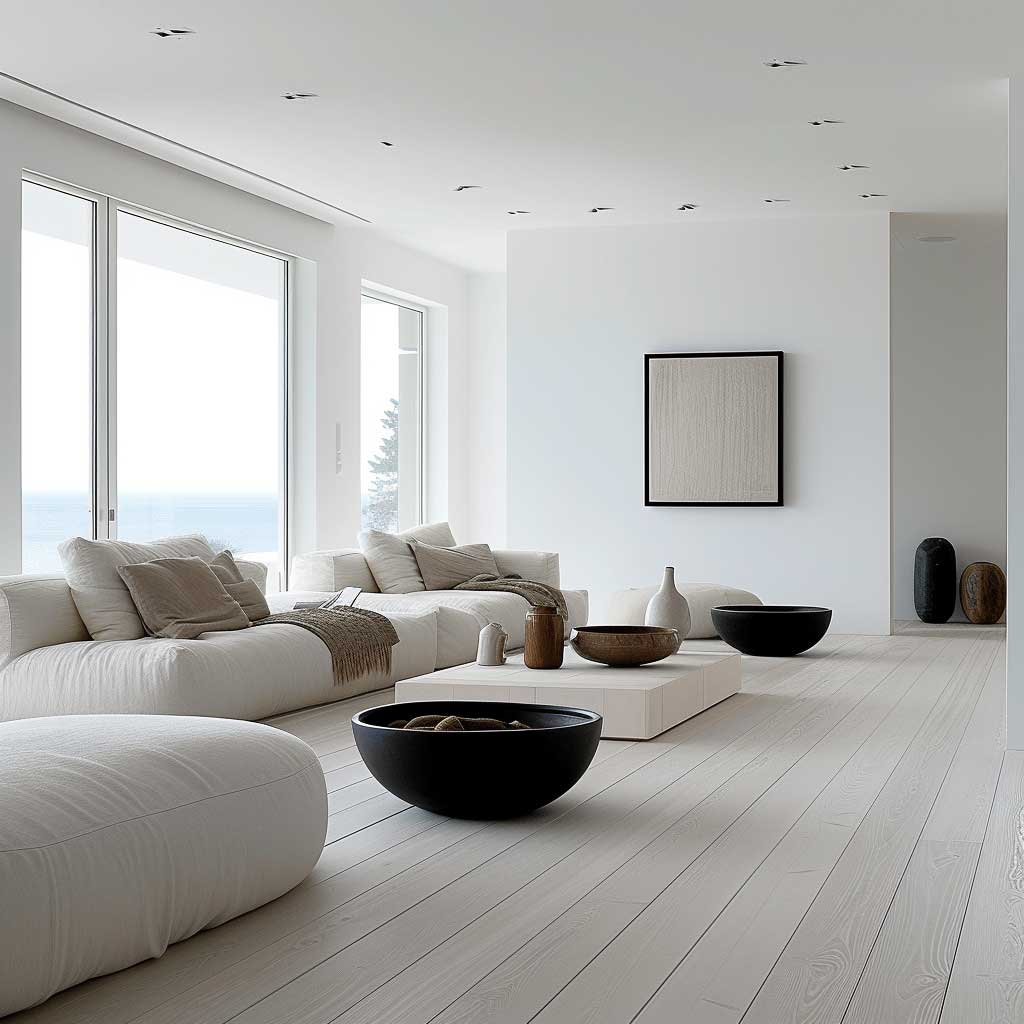
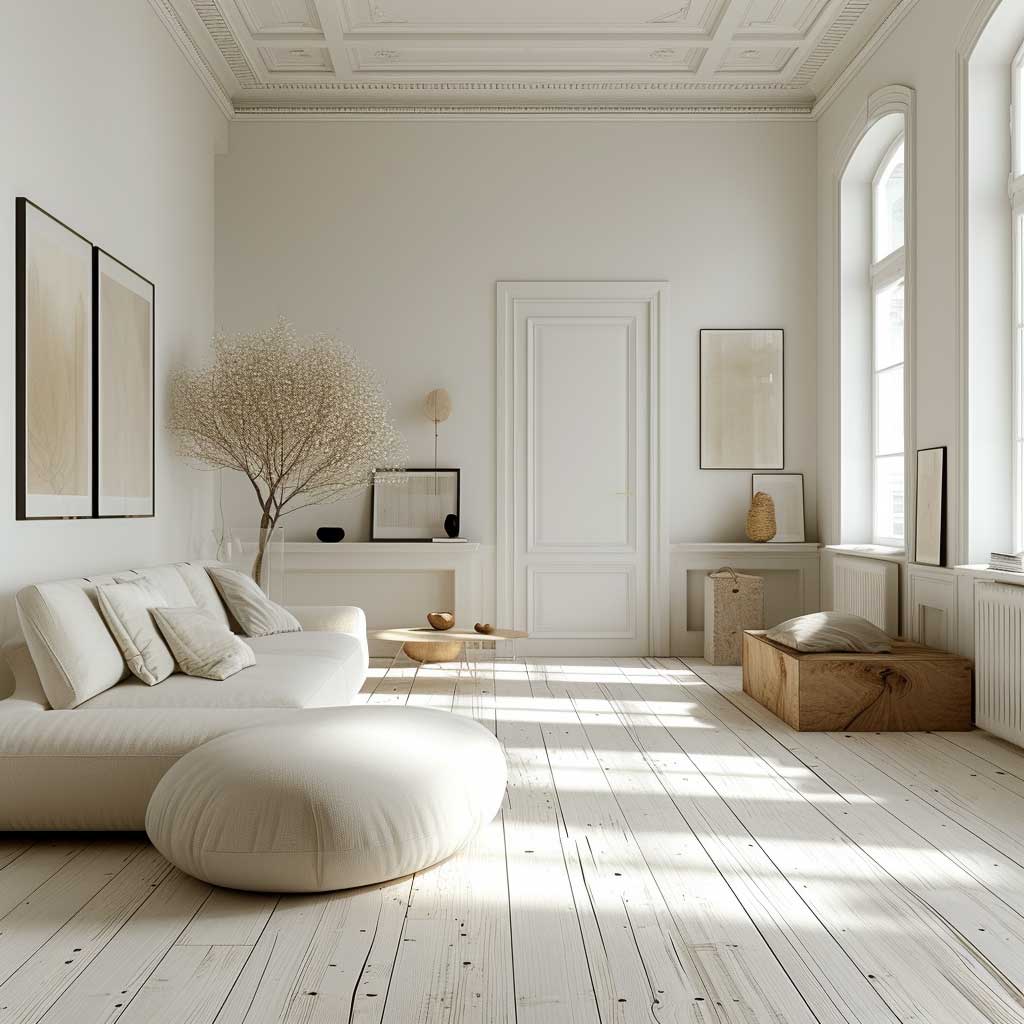

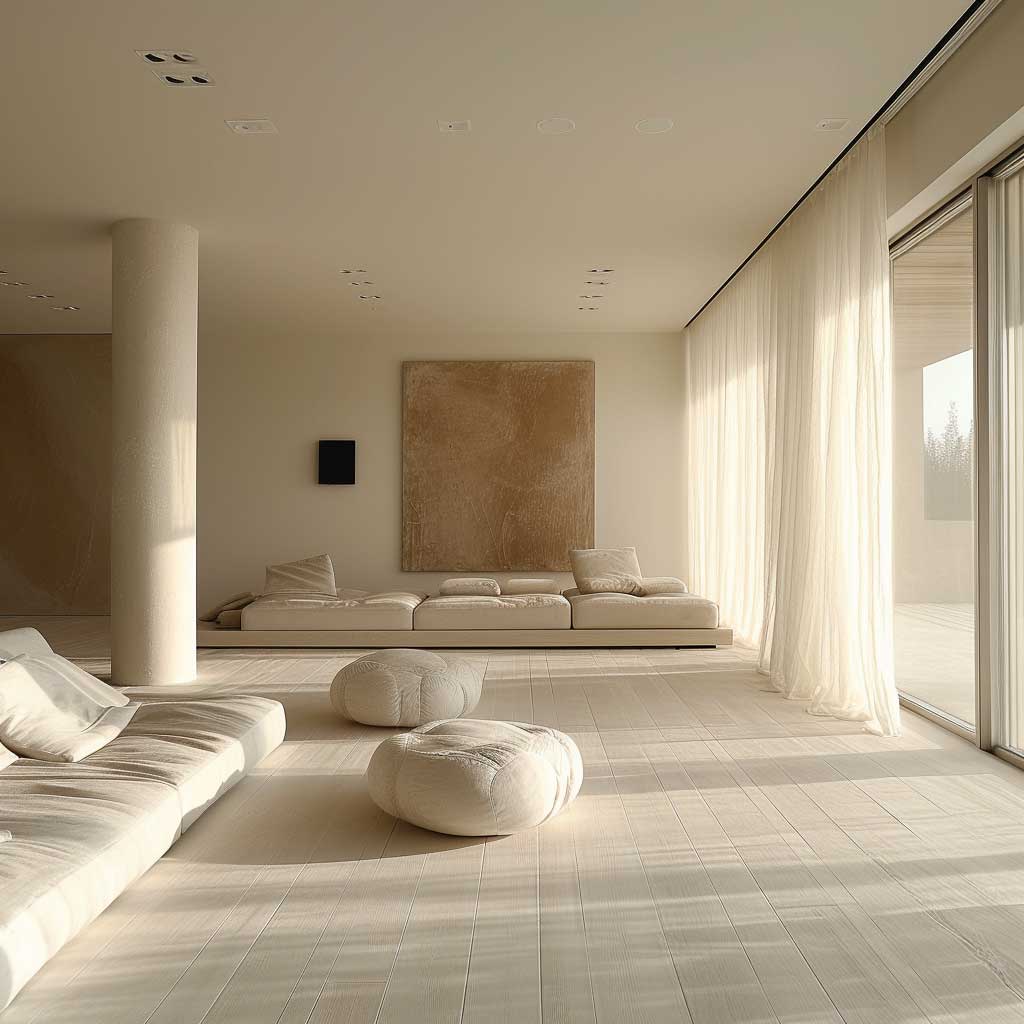
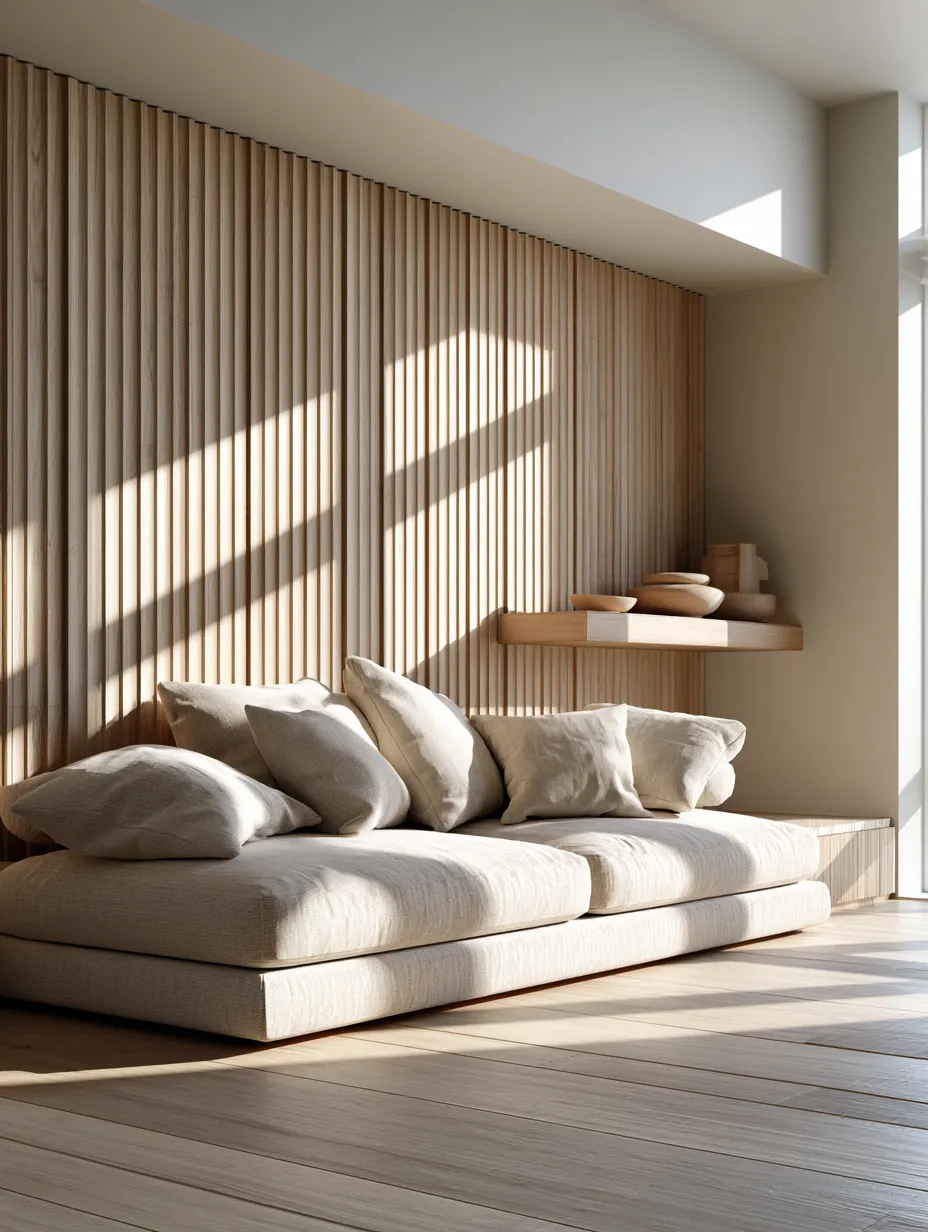
White and wood living room layouts thrive on restraint. Pale floors and a few carefully chosen timber pieces create the backdrop; furniture stays low-profile and neutral. The result feels larger than the square footage because nothing interrupts the flow of light.
Start with the floor. White oak or similar species in a matte finish sets a continuous plane that makes walls recede. A mid-range coffee table or media unit in matching tone becomes the quiet center without competing for attention. How does the room change once the dark furniture is replaced? Most notice an immediate lift in perceived height and calm.
Upholstery stays soft and simple—linen, cotton, or wool in off-white or light grey. One deeper wood accent, such as a side chair or frame, stops the palette from feeling washed out. This is the same logic as a well-cut jacket with a single contrasting detail: the whole outfit gains definition.
Accessories stay minimal. A single large plant, a few books, and one piece of quiet art are usually enough. Over-decorating is the fastest way to lose the airy quality that makes white wood interior design effective. For additional living-room approaches that pair white surfaces with timber, explore modern white living room trends that stay warm.


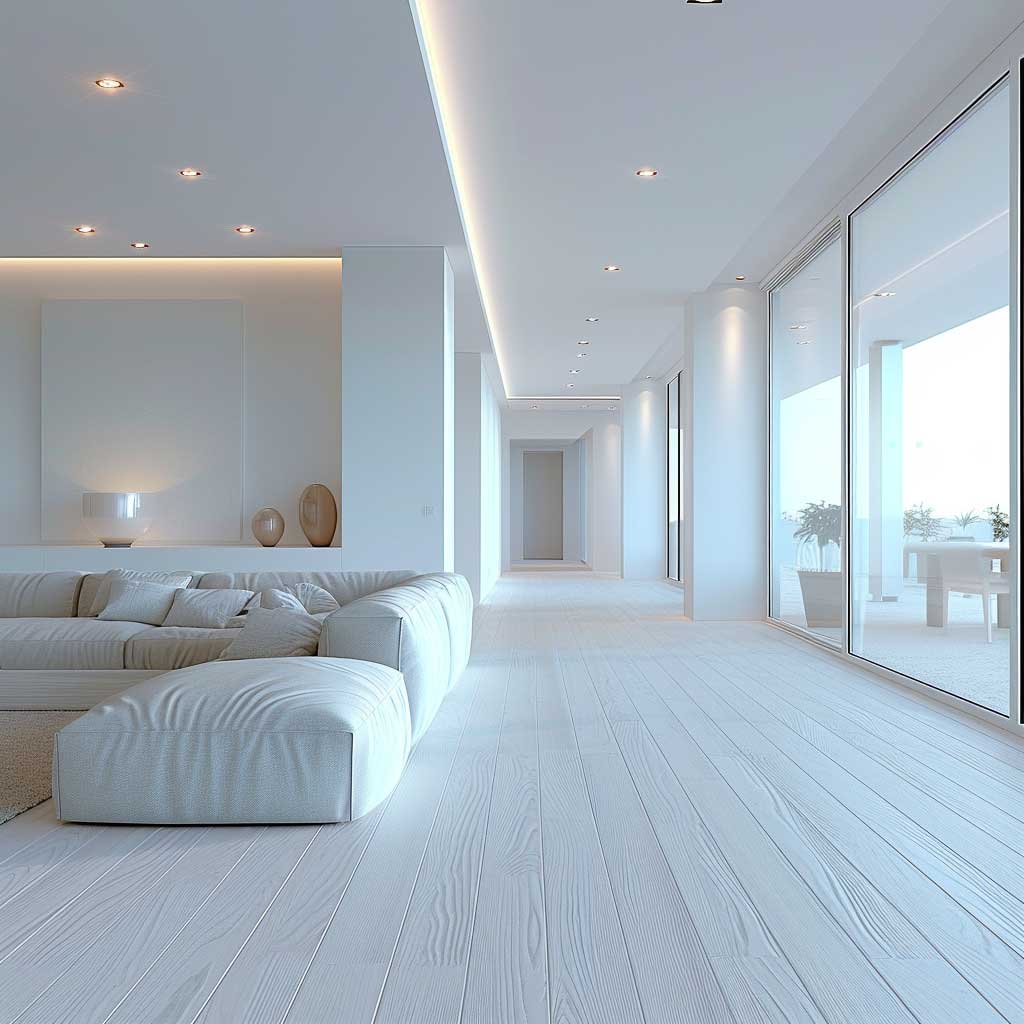

Maximize daylight with sheer treatments that diffuse rather than block. Artificial light should stay simple—recessed fixtures or a single sculptural pendant—so the wood surfaces remain the focus. Avoid heavy drapes that swallow the brightness the pale finishes were chosen to create.
Comparing White Wood Finishes Across Rooms
| Room | Primary Surface | Typical Cost Range | Key Benefit |
|---|---|---|---|
| Bedroom | Floors + bed frame | $8–$15 / sq ft floors | Soft light reflection for rest |
| Kitchen | Cabinetry + island | $450–$750 / linear ft | Bright work surface, easy clean |
| Living room | Floors + low furniture | $8–$20 / sq ft floors | Expanded sense of space |
The table shows why the same material family performs differently in each zone. Bedrooms prioritize softness underfoot, kitchens demand durability and cleanability, living rooms gain the most from continuous floor runs that stretch sight lines.
Dont Do This With White Wood Finishes
Never coat every surface in high-gloss white that completely hides the grain. The result looks plastic and shows every mark. Skip matching every furniture piece to the exact same pale tone; without at least one deeper or textured contrast the room loses depth. Avoid sealing floors with a finish that yellows quickly under sunlight—choose a quality matte or satin product rated for the traffic level of each room.
Steady Choice for Lasting Calm
White wood interior design delivers rooms that stay bright and inviting without constant updating. The material combination works because it balances reflection and texture in equal measure.
Start with floors or cabinetry in a consistent pale species, then layer soft textiles and one or two deeper accents. Keep accessories sparse so the grain remains visible and the light keeps moving.
Budget realistically: mid-range white oak floors and cabinetry sit in established price bands that reward quality over the cheapest option. A well-chosen finish lasts decades with basic care.
For further living-room examples that use the same pairing, the Houzz collection on white and wood living rooms offers additional real-home references worth reviewing.
Choose the approach that fits daily life first. The visual calm follows once the practical decisions are solid.