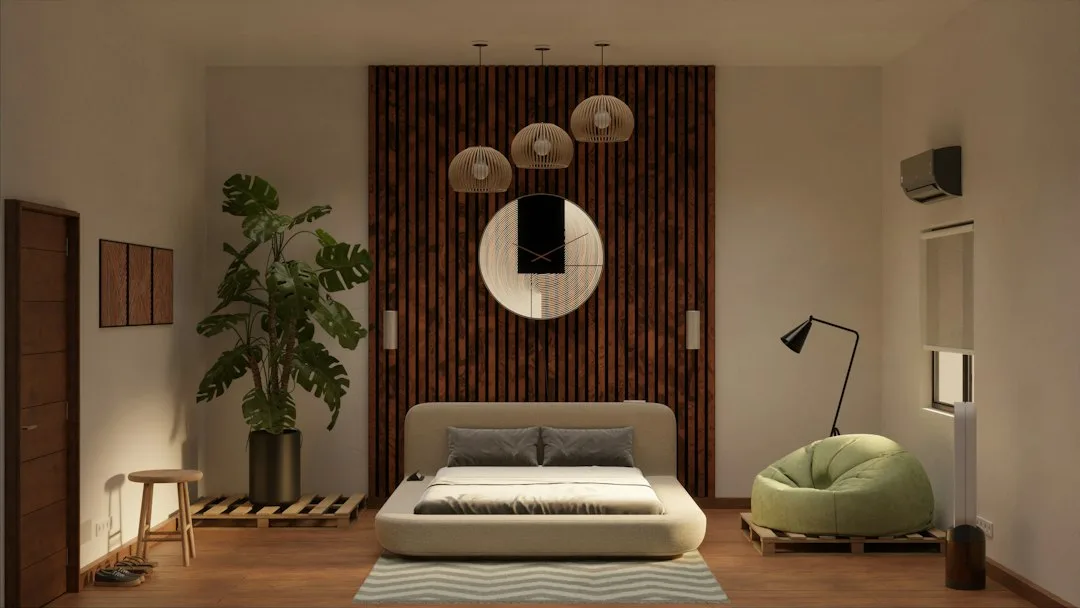
Bamboo wall designs do something paint can’t — they add physical depth, warmth, and an organic texture that shifts how you experience a room the moment you walk in. I’ve tested three distinct approaches in my own home, from high-gloss modern paneling to deliberately rough rustic slats, and the difference in atmosphere is dramatic every time. You’ll notice that bamboo reacts to light differently throughout the day, almost like a living material on your walls.
Bamboo wall ideas span a wider range than most people realize. Rolling panels starting at $1.00–$2.80 per square foot make it one of the most affordable natural wall materials, yet it photographs and presents as high-end. That gap between cost and perceived value is exactly why it keeps showing up on Pinterest boards for living rooms, bedrooms, and even home offices.
Real talk: bamboo is not a one-look material. The same plant can produce sleek lacquered panels that read as very contemporary, razor-sharp geometric cuts that lean architectural, or stripped rough slats with that honest, imperfect quality that makes a space feel instantly cozy. Choose your direction before you buy anything.
- Bamboo wall panels cost $1–$3/sq ft for rolls; geometric engineered panels run $8–$15/sq ft
- High-gloss modern finishes work best with grey/black furniture — avoid mixing with warm wood tones in the same room
- Geometric bamboo panels need professional installation; rustic rolls are true DIY-friendly
- Matte sealant every 3–5 years keeps bamboo from yellowing or cracking — skip this and you’ll regret it
- Rustic unfinished bamboo suits bedrooms and living rooms; avoid it in bathrooms unless fully sealed
Modern Bamboo Wall Design with High-Gloss Finishes
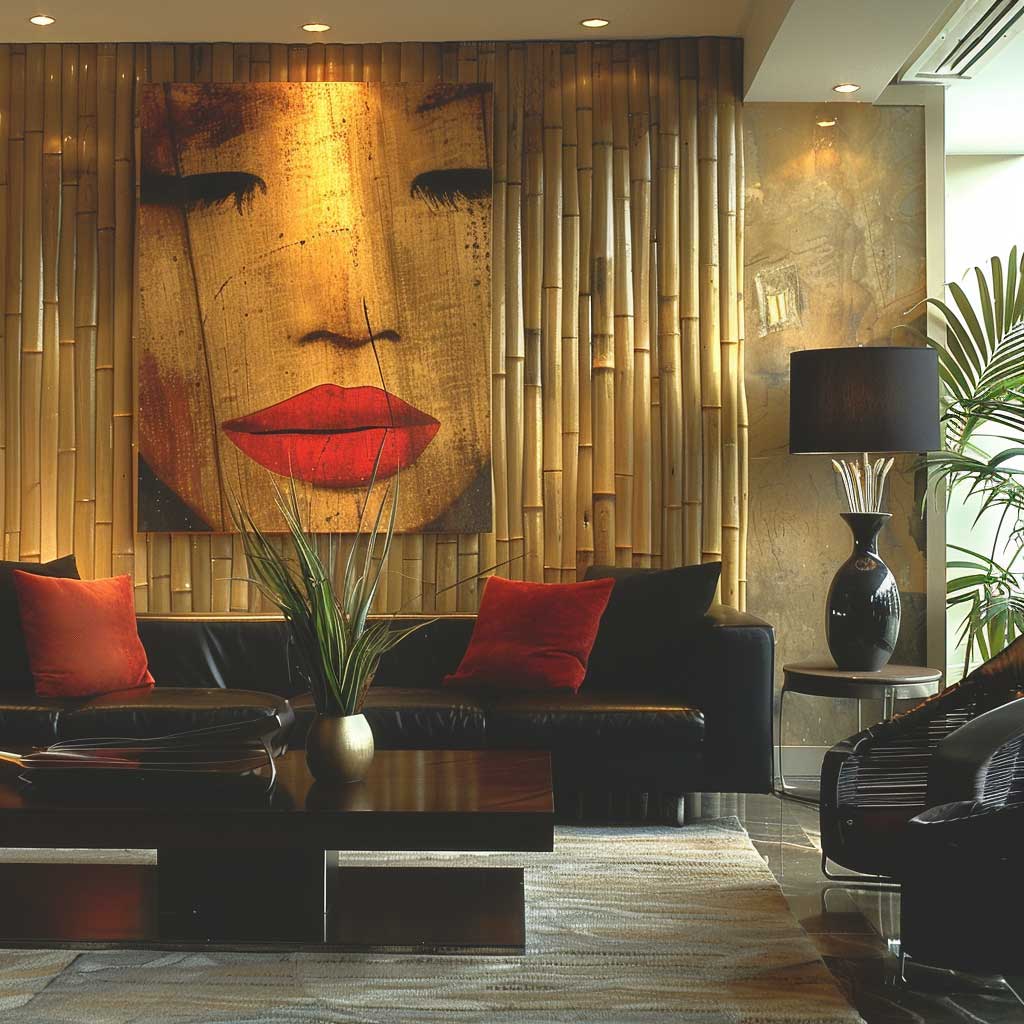
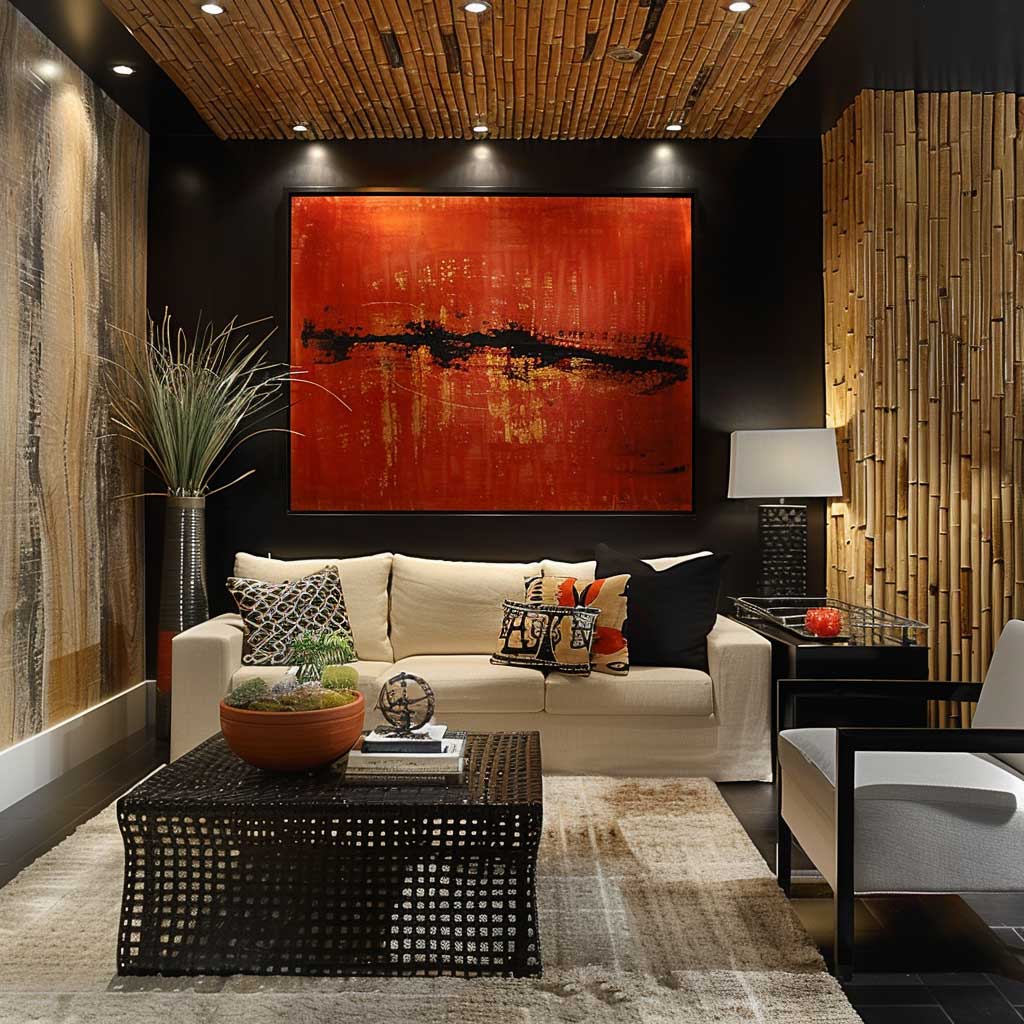
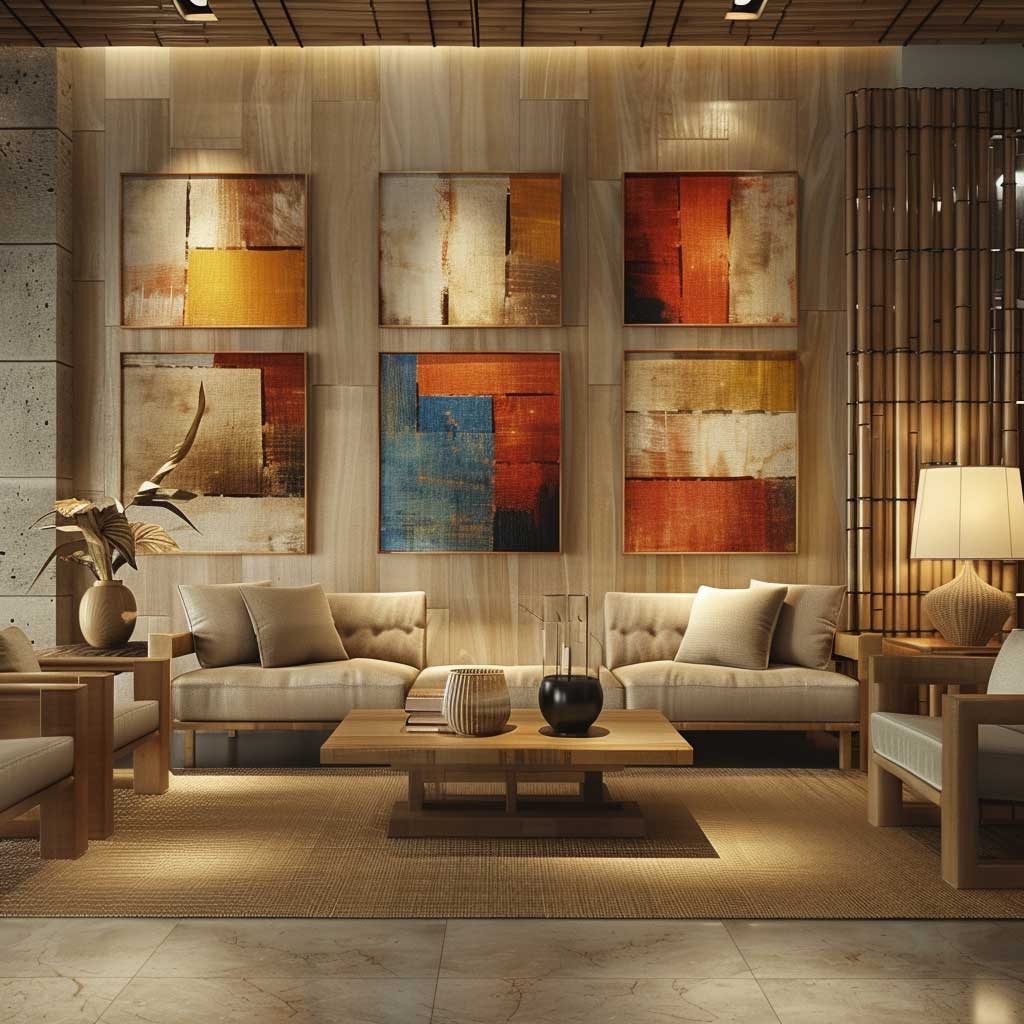
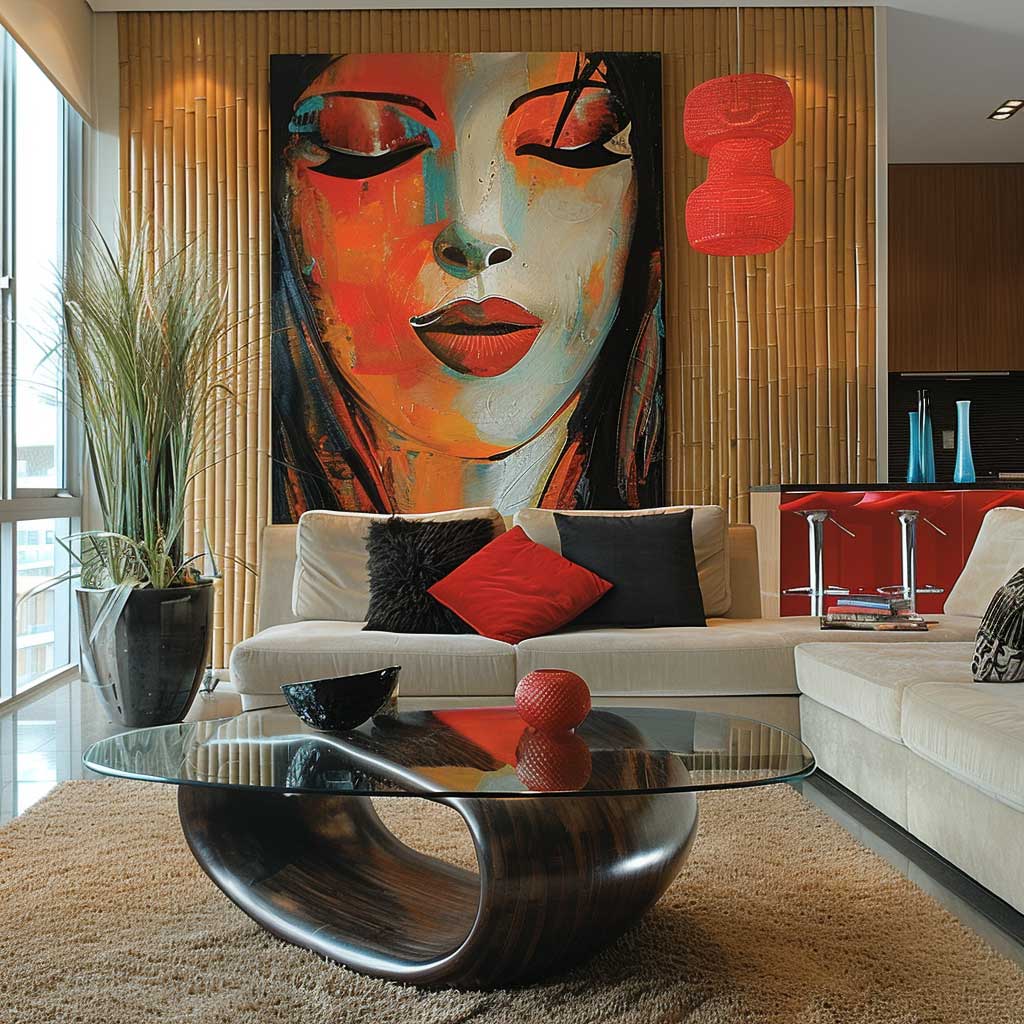
Modern bamboo wall design relies on factory-applied polyurethane or UV-cured lacquer to turn the raw material into something that looks closer to high-end resin paneling. The surface becomes light-reflective, which in a living room creates that airy, almost doubling effect — my south-facing wall looked noticeably larger after installation. Does this work in every room? No. In a bedroom it can feel cold and clinical rather than restful.
Brands like Plyboo and Smith & Fong make engineered bamboo panels with factory gloss finishes that run around $8–$12 per square foot — significantly more than raw rolls, but the finish is baked in and won’t need resealing for 7–10 years. You can also DIY a gloss finish on standard bamboo rolls using Minwax Polycrylic, which brings cost down to $2–$4 per square foot total. I’ve done both; the factory panels have a more even sheen but the DIY version has a slight warmth I prefer.
The pairing that works: gloss bamboo with matte-finish furniture in charcoal grey or slate. The contrast is sharp without being jarring. What doesn’t work — and I’ve seen this mistake everywhere — is pairing high-gloss bamboo with warm honey-toned wood floors or furniture. Both compete for visual dominance and the room ends up looking muddy. If your floors are warm oak, go with matte-finished bamboo instead.
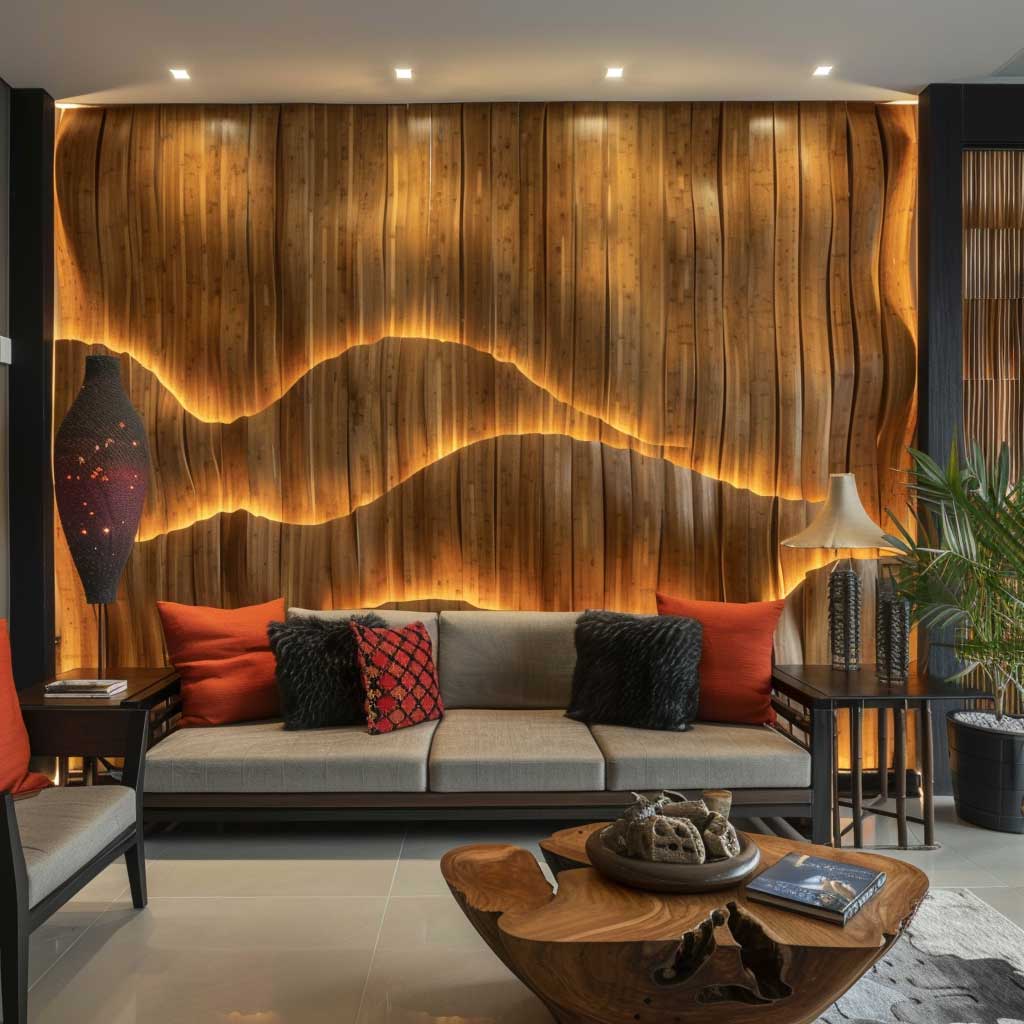
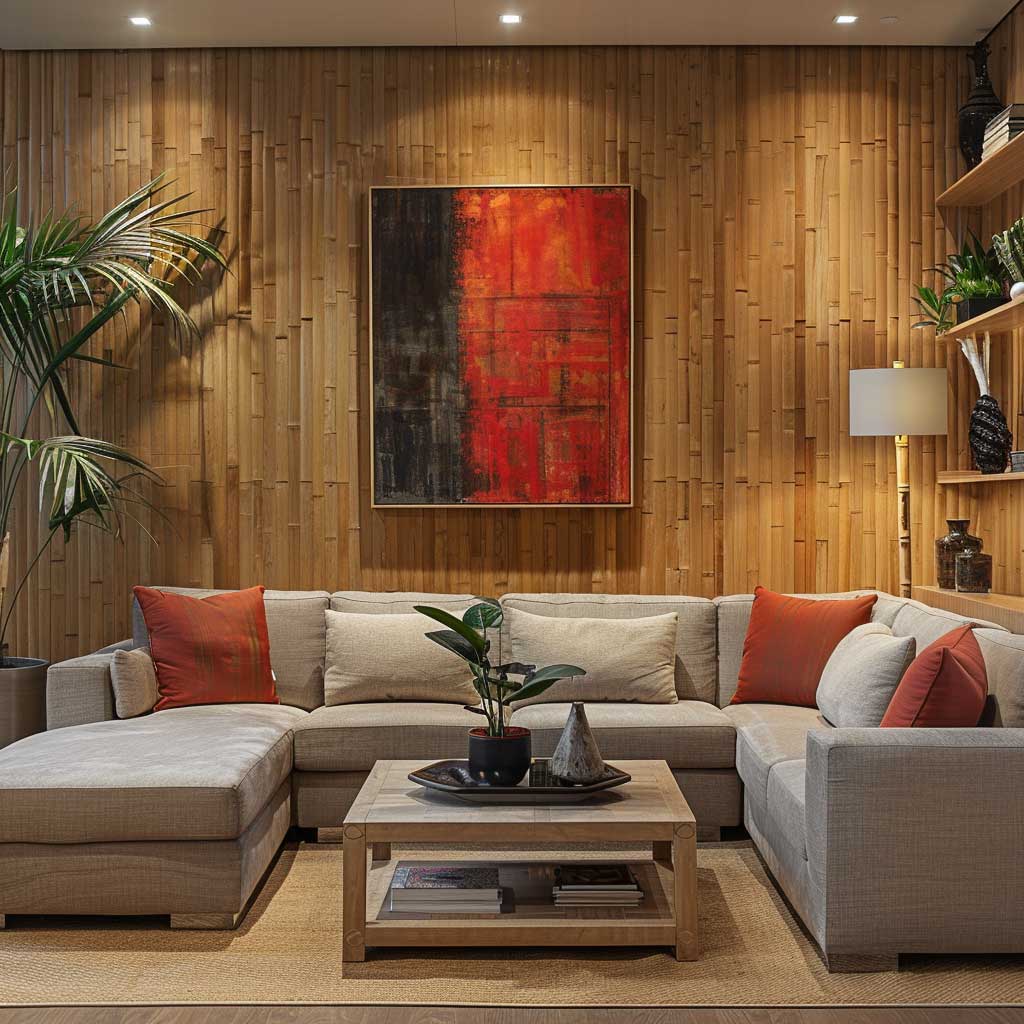
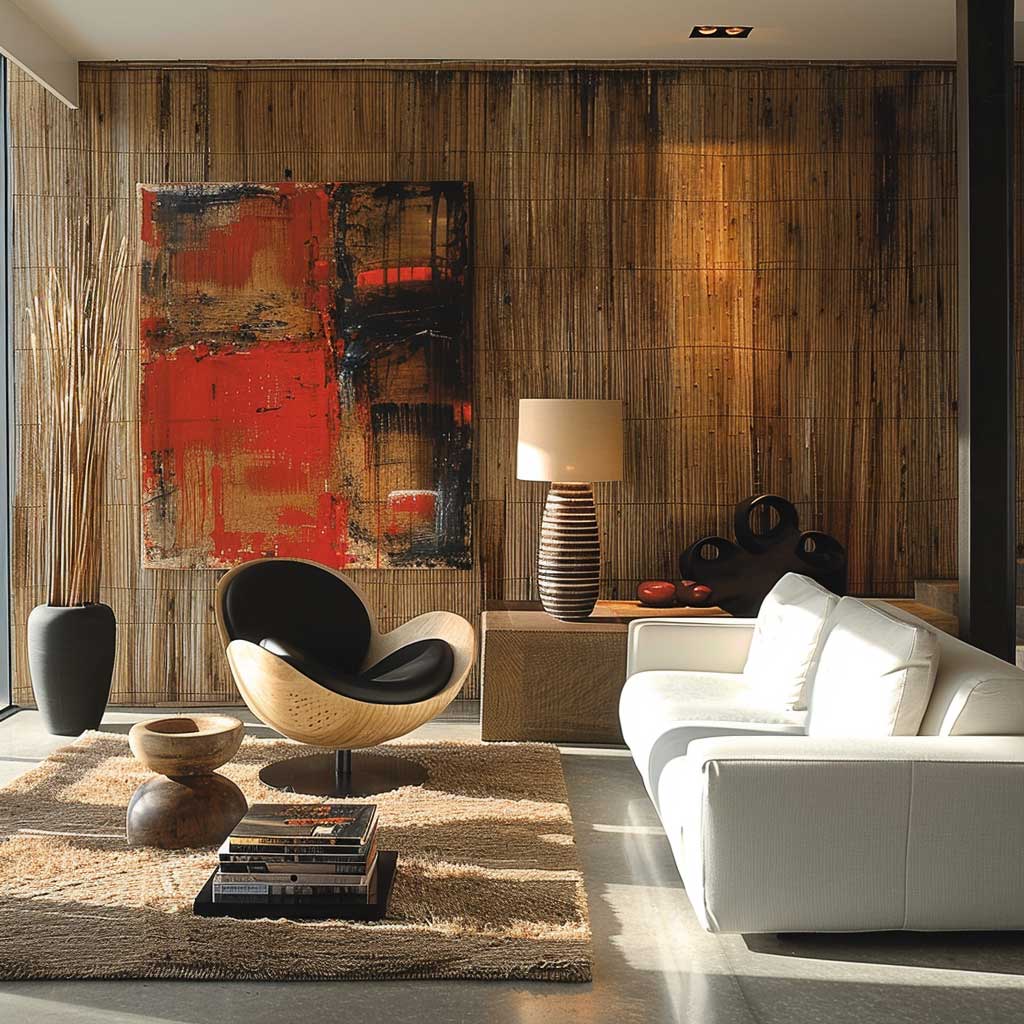
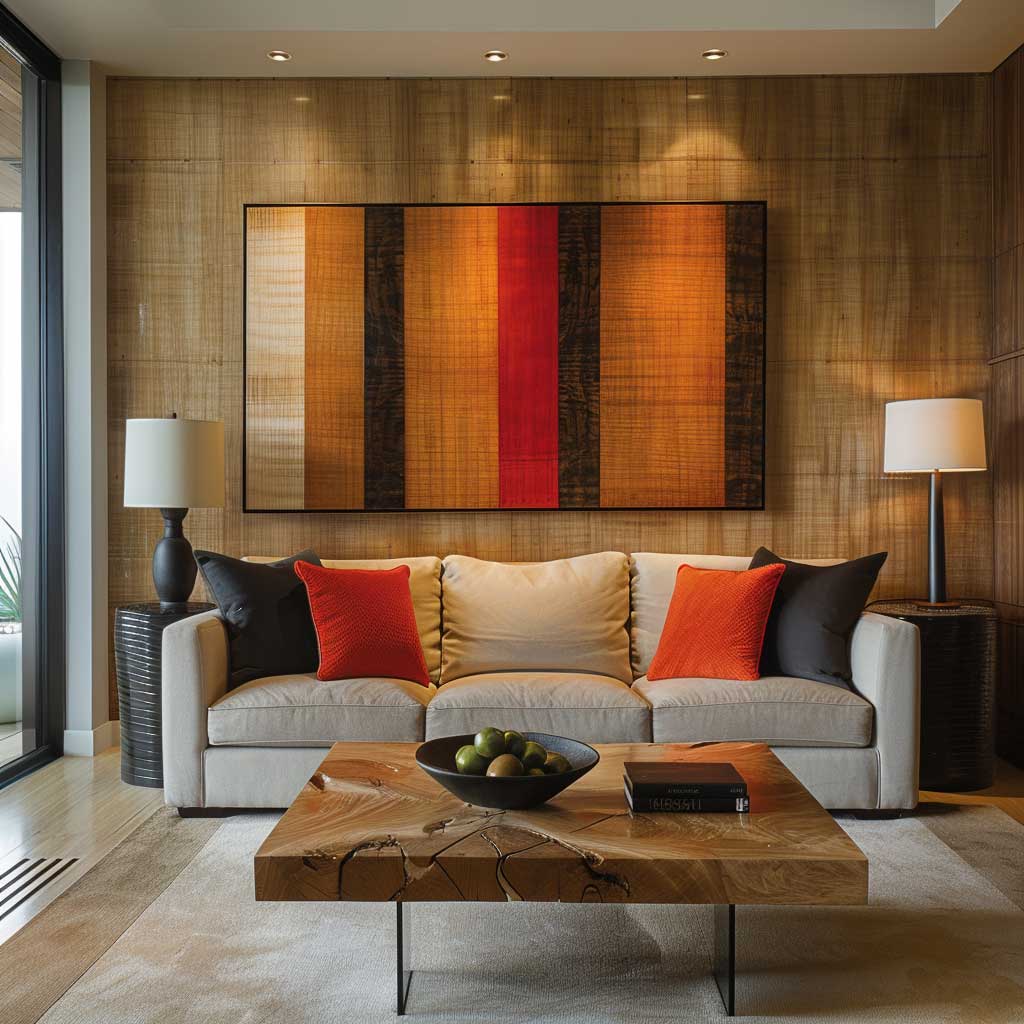
One trick I stole from a Tokyo interior designer: route a channel for LED strip lighting horizontally behind the bamboo panel, 18 inches from the ceiling. The glow catches the grain and amplifies the texture tenfold at night. This trick works specifically because bamboo is semi-translucent at thin cross-sections — solid wood or stone would block the light entirely. Budget around $60–$80 for the LED channel on a standard accent wall.
Modern bamboo wall designs also handle functional additions well — floating shelves, cable management grooves, and wall-mounted fixtures all integrate more cleanly into bamboo than drywall. The material holds screws firmly and doesn’t crumble around anchors the way plaster often does. Horizontal wood slat walls follow a similar logic and are worth considering if your space needs a warmer tone than bamboo delivers.
Geometric Bamboo Wall Patterns That Play with Light and Shadow
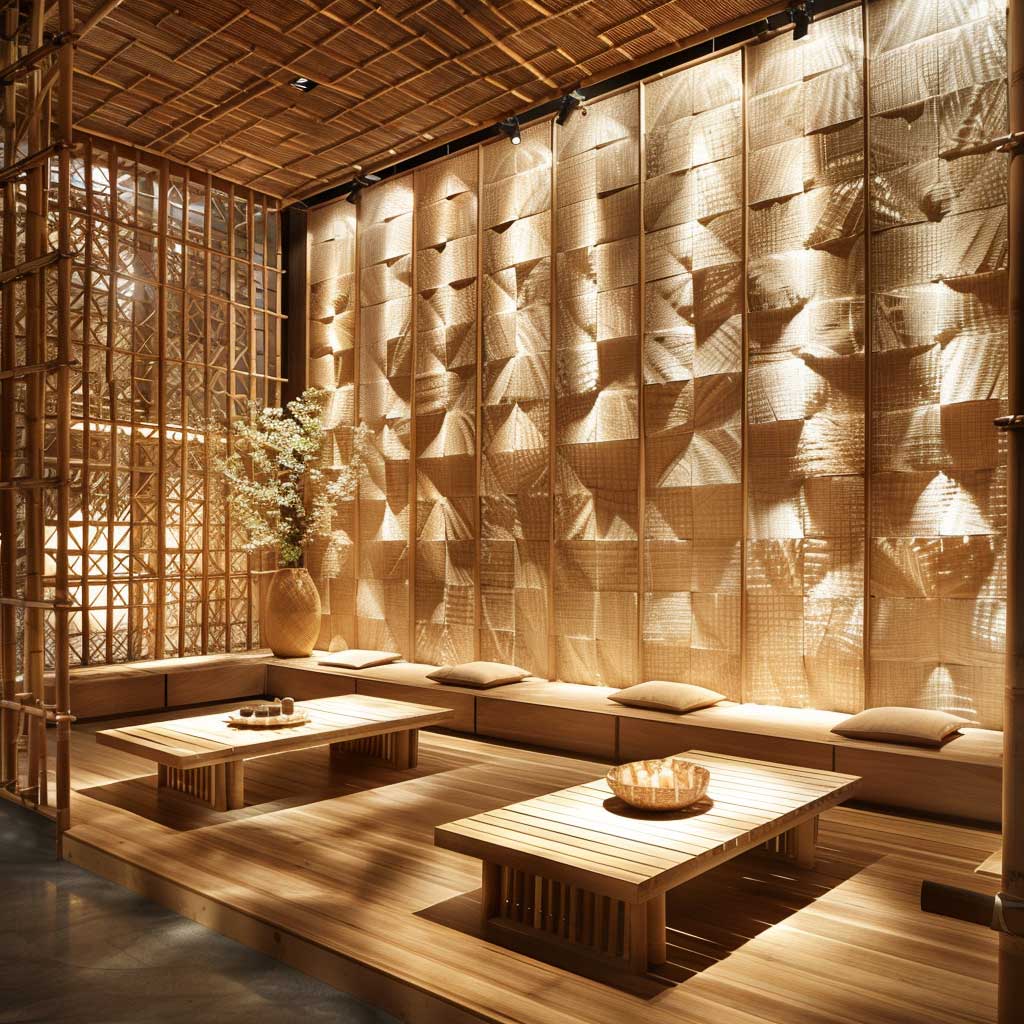
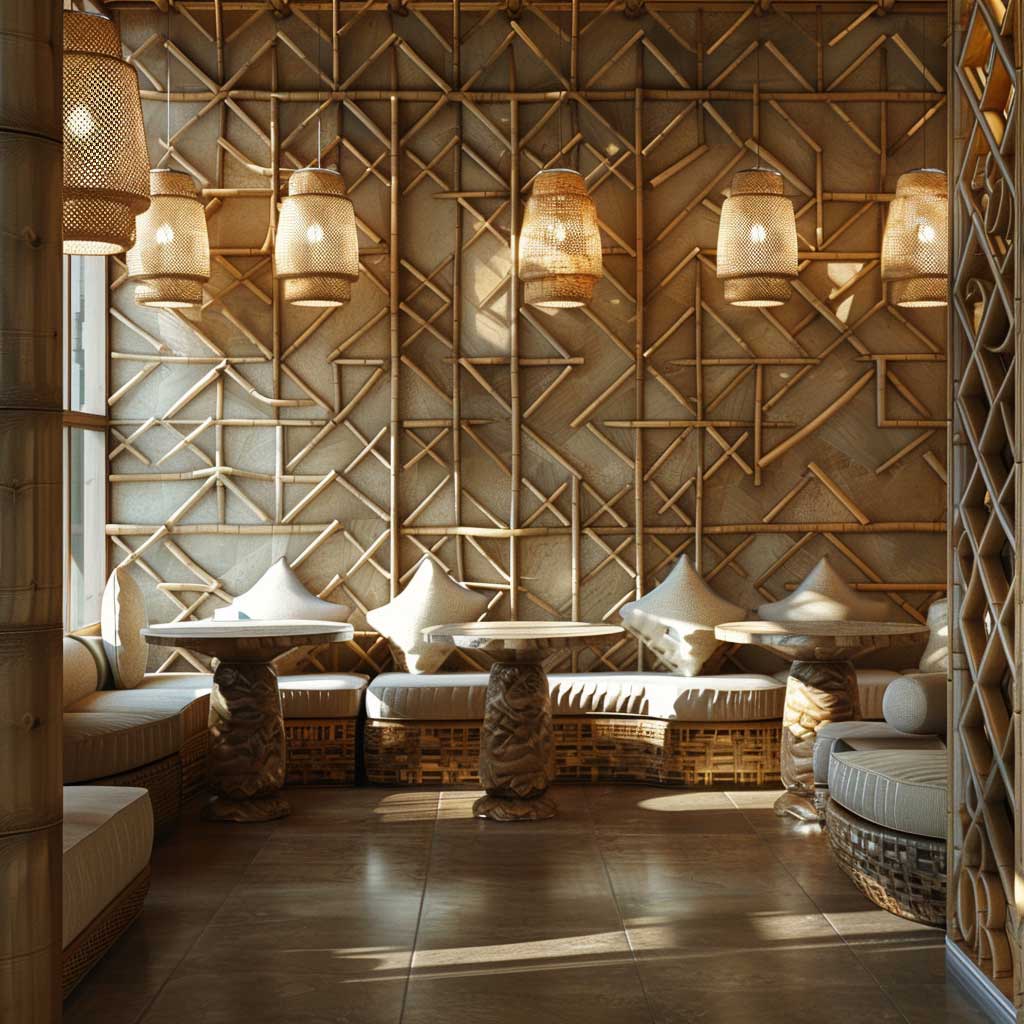
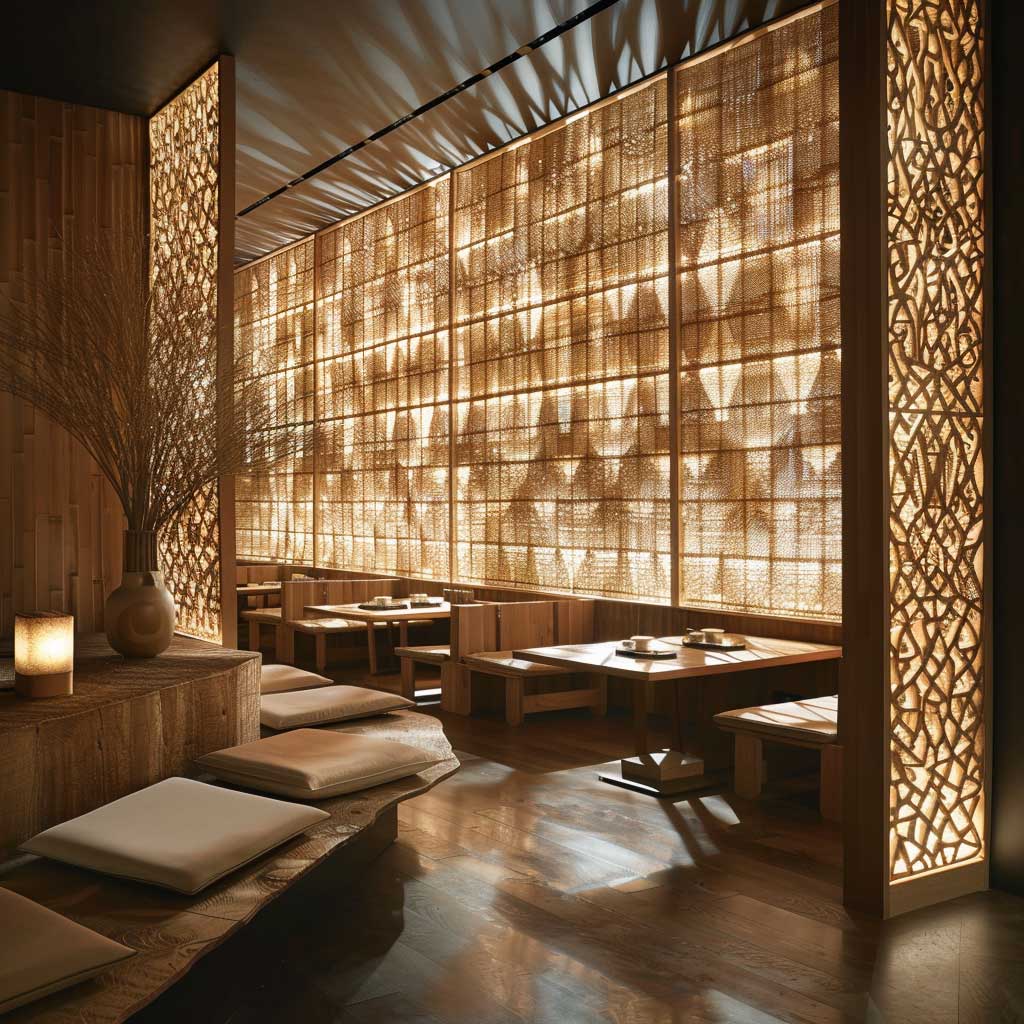
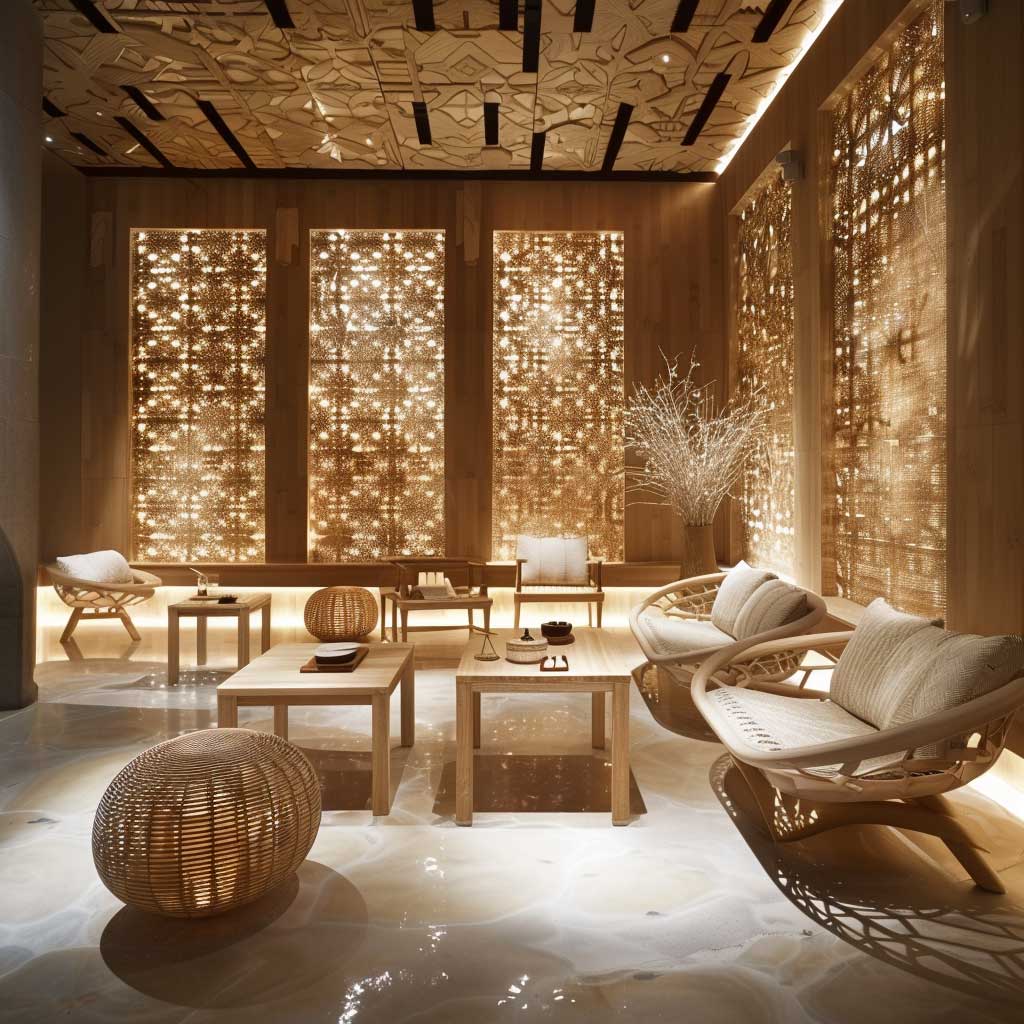
Geometric bamboo wall patterns work because bamboo is naturally dimensionally consistent — unlike wood, which knots and warps, bamboo culms can be split and pressed into uniform slats that hold precise angles reliably. I’ve installed a chevron pattern on a 10-foot accent wall, and the precision you can achieve at $10–$15 per square foot rivals custom millwork at $35+. The material does the work; you just need to plan the layout carefully before cutting.
What should you know before committing to geometric bamboo? Diagonal and interlocking cuts generate significant waste — budget 20–25% extra material. On a 120 sq ft wall, that means ordering for 148–150 sq ft minimum. Plyboo’s Flat Grain panels in Natural are my go-to for geometric work because the tight grain doesn’t fight the cut angles visually. Carbonized finish (which has a warm caramel tone) adds another $1.50/sq ft but photographs beautifully.
Never mix geometric bamboo wall patterns with other strong geometric elements in the same room — striped rugs, herringbone floors, and grid-tiled fireplaces all compete for the same visual attention. Geometric bamboo is a statement surface; everything around it needs to be quiet. Also, avoid using low-lumen overhead lighting with geometric bamboo: the shadows are what make the pattern read. Flat, bright ceiling lights wash out the entire effect. Use directional spotlights or wall sconces angled across the surface instead.
Sustainability is genuinely a selling point here, not just marketing copy. Moso bamboo — the species used in most architectural panels — reaches harvestable size in 3–5 years versus 25–50 years for most hardwoods. Plyboo specifically sources from FSC-certified forests. For a 150 sq ft geometric wall project, you’re looking at material cost of $1,500–$2,250, plus professional installation at $3–$10 per square foot depending on pattern complexity. The interlocking patterns require experienced hands; don’t DIY a herringbone layout on your first project.
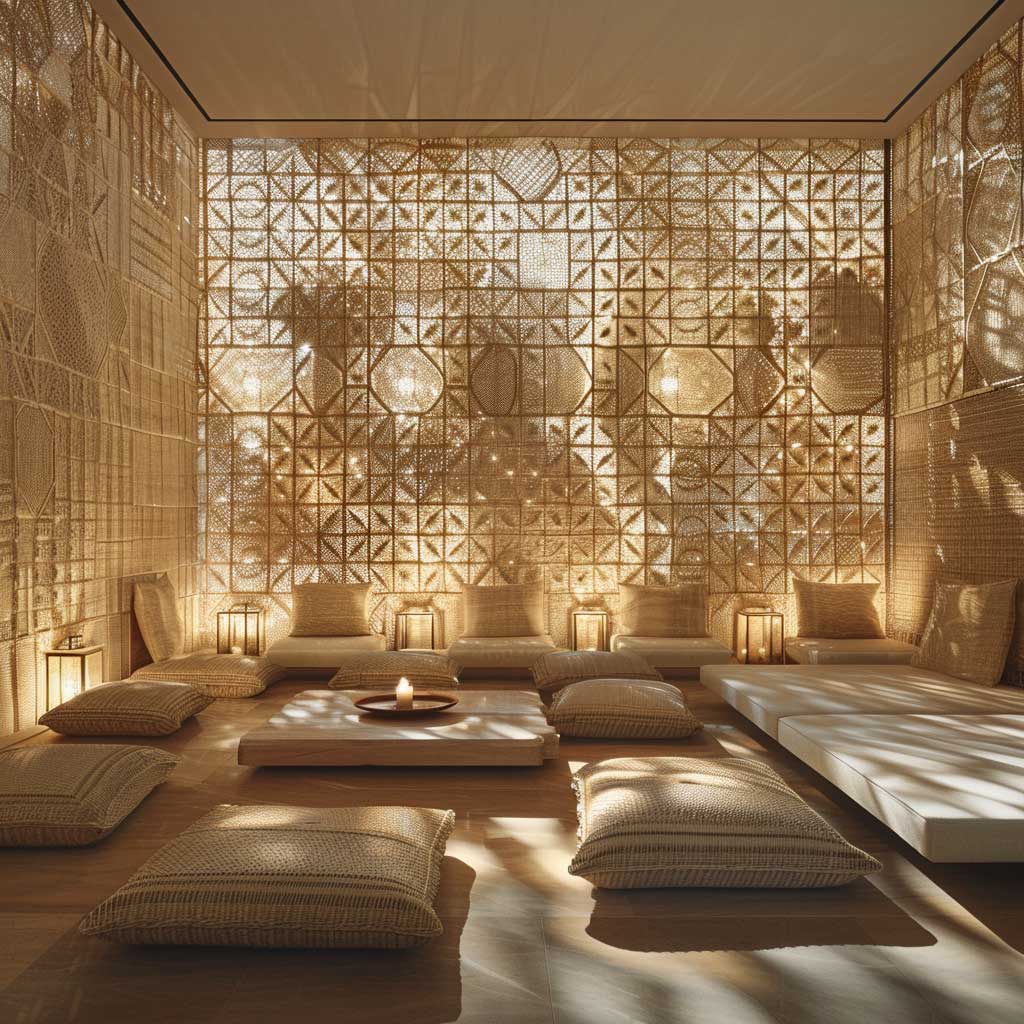
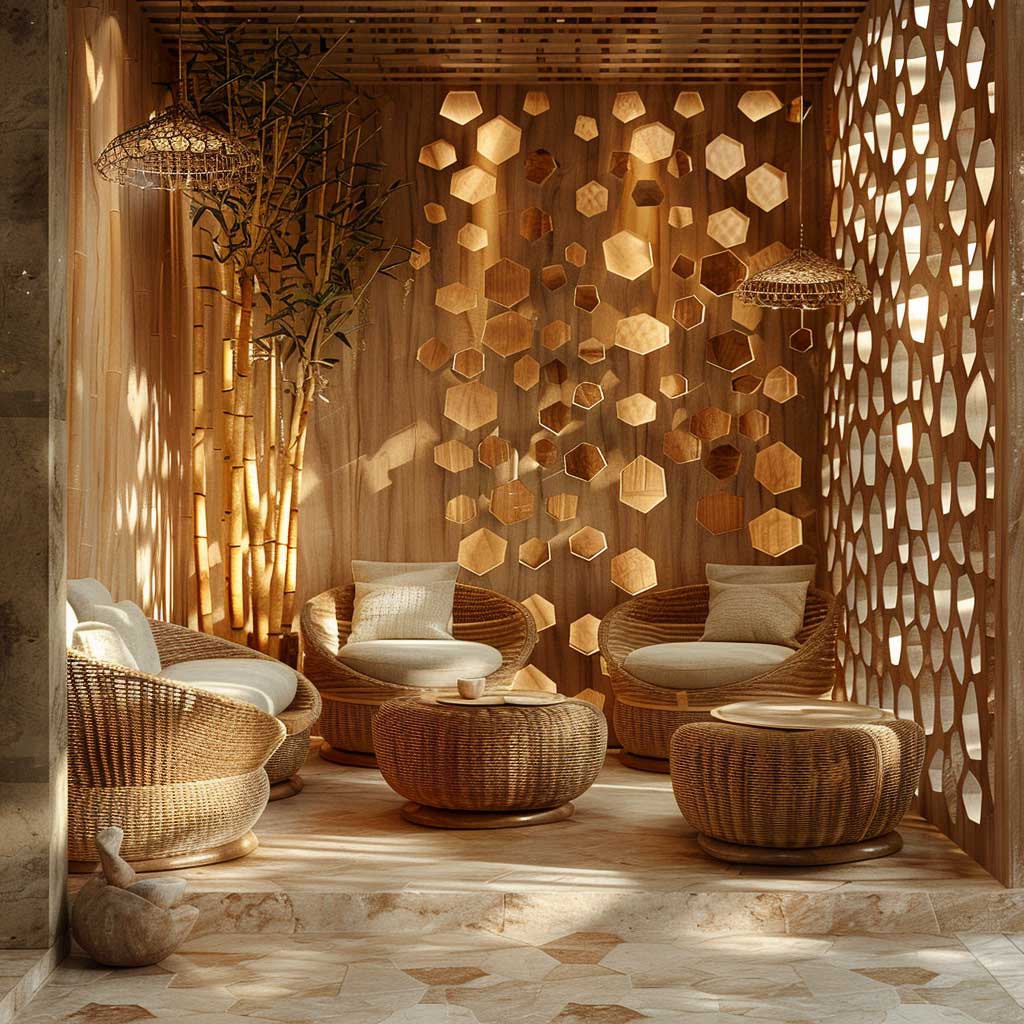

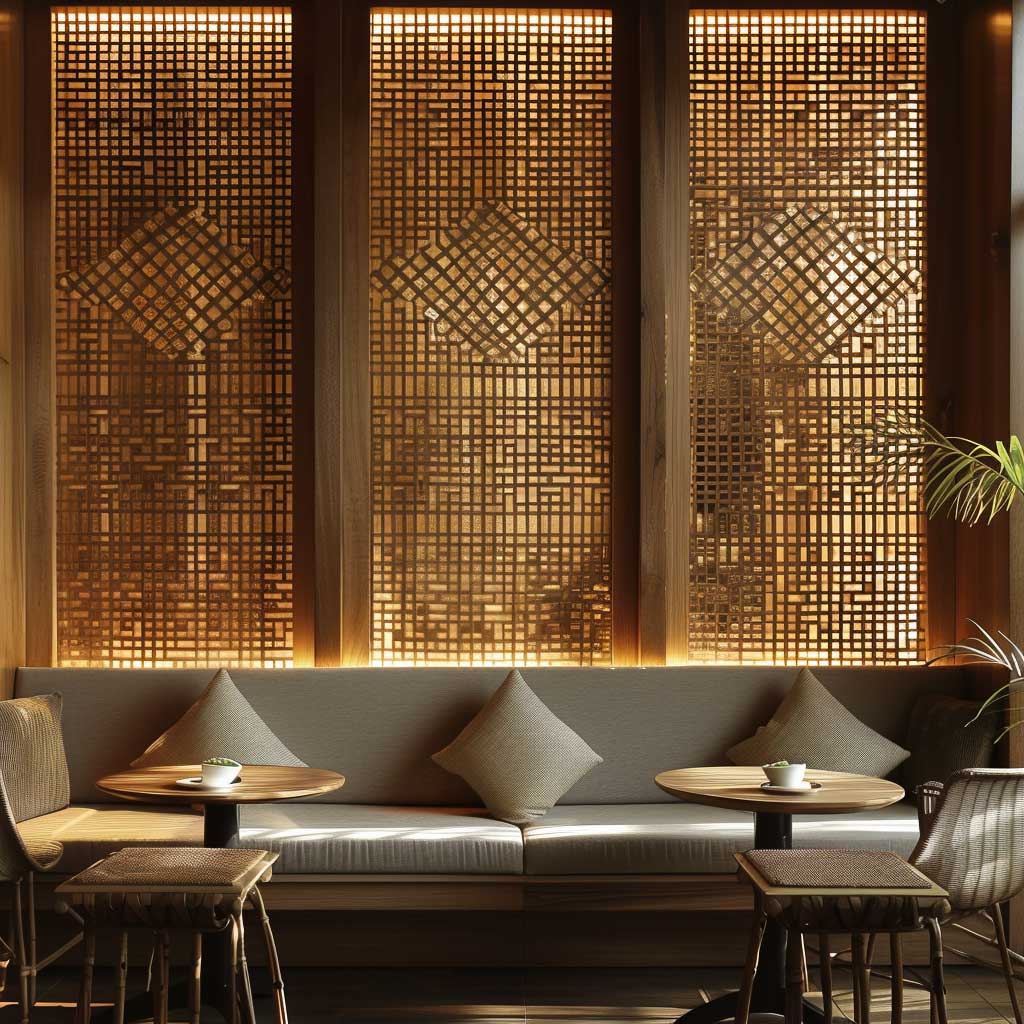
You’ll notice that geometric bamboo walls shift in character as daylight moves — the shadow lines from morning sun differ completely from late afternoon. That’s the bamboo wall pattern doing exactly what it should: acting like a sundial on your wall. A client of mine was skeptical until she lived with it for a week. Now she calls it the most interesting surface in the house. The pattern feels different at 8 AM versus 6 PM without changing a single thing.
Customization is the other underrated strength. Each geometric bamboo installation is cut specifically for the wall dimensions, which means no two are identical. Bamboo corner wall designs follow the same principle and extend geometric patterning into awkward architectural angles that most materials can’t handle cleanly.
Rustic Bamboo Wall Ideas for Rooms That Need Warmth
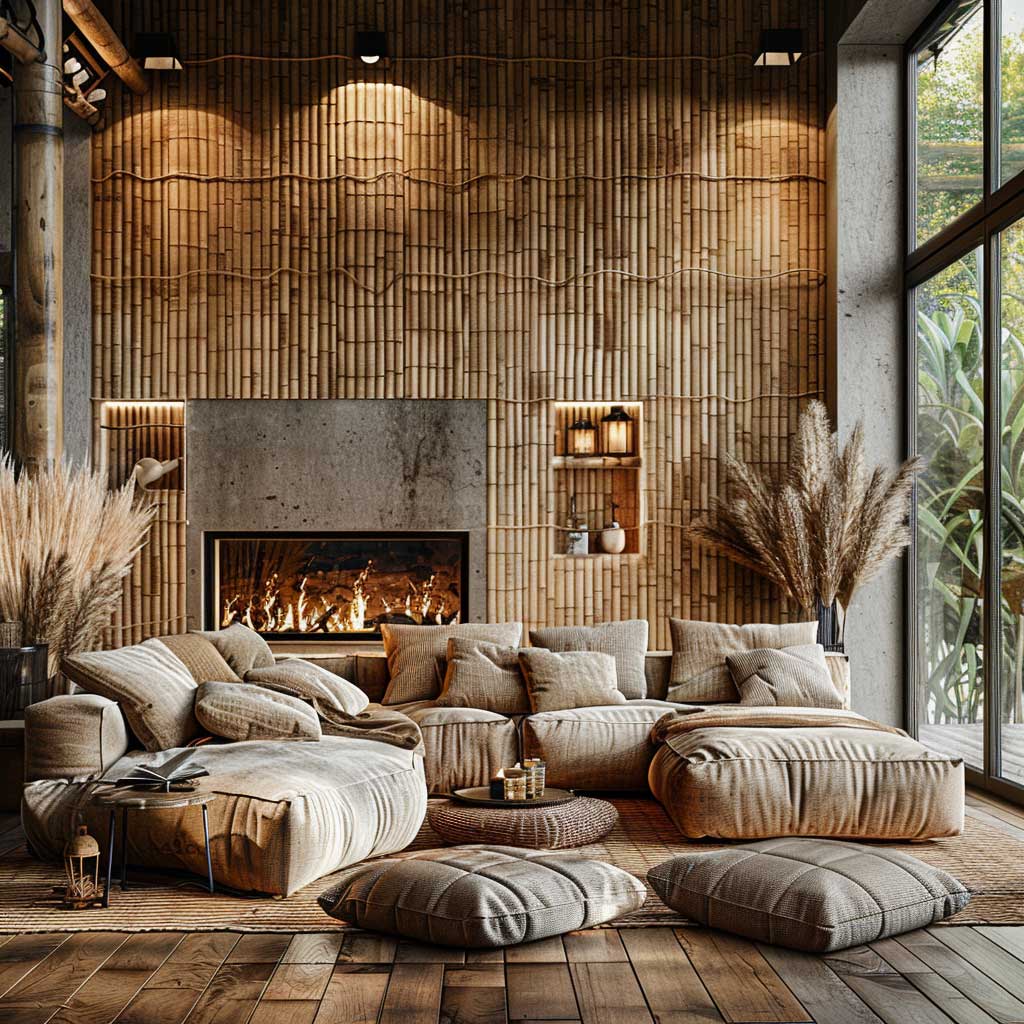
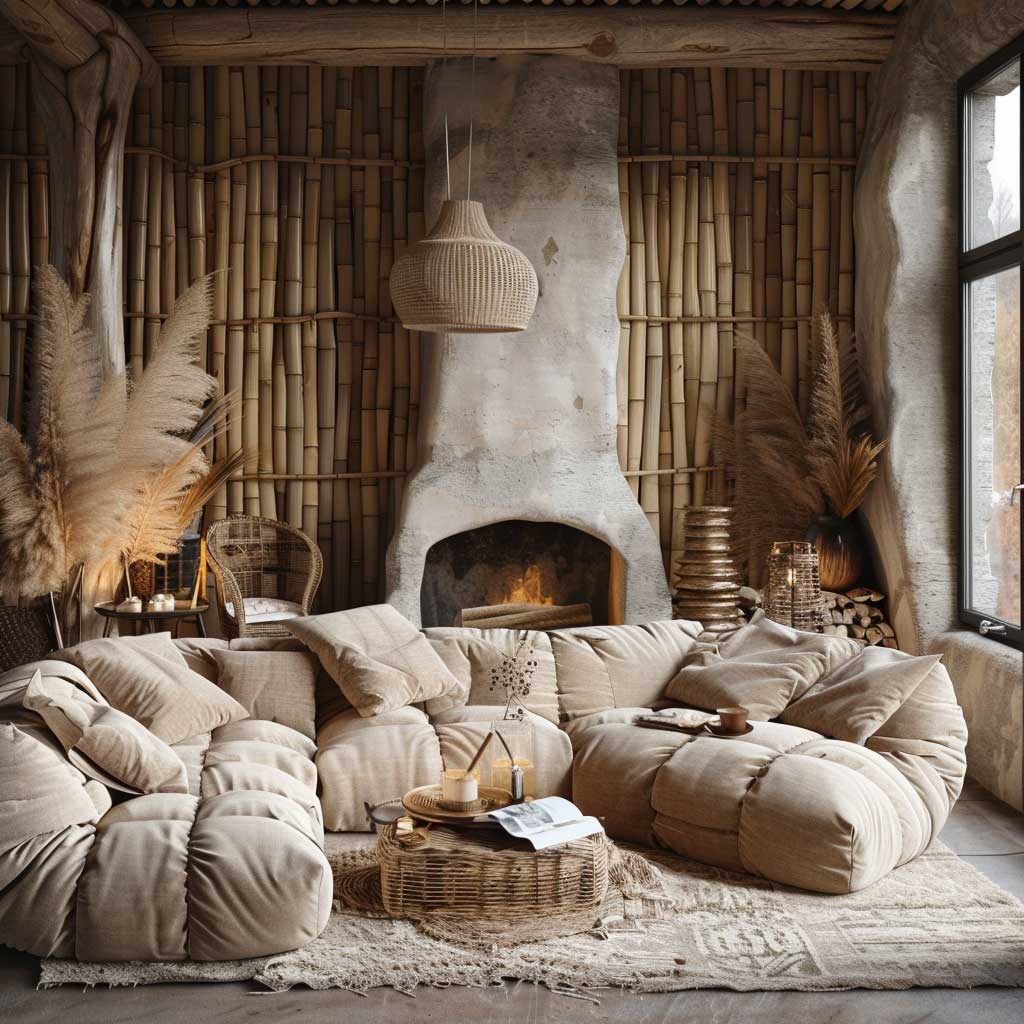
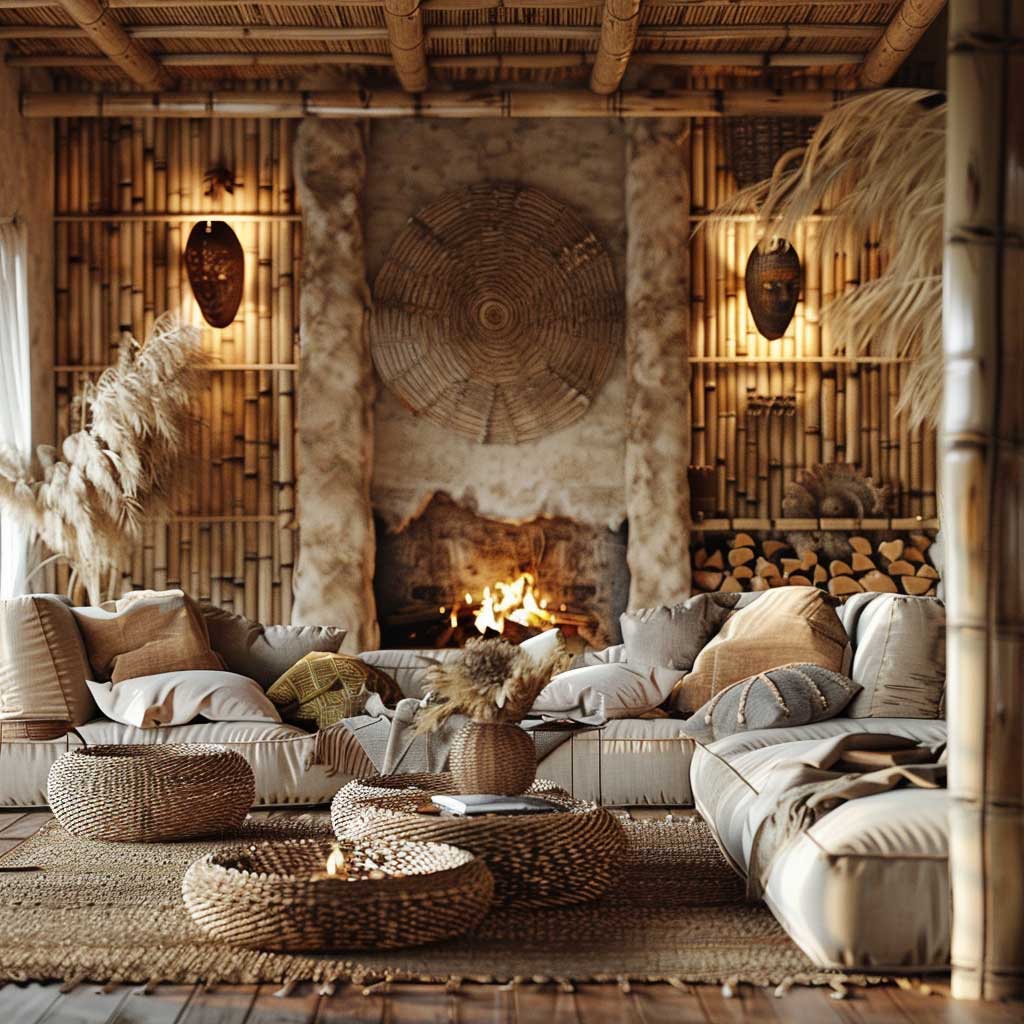
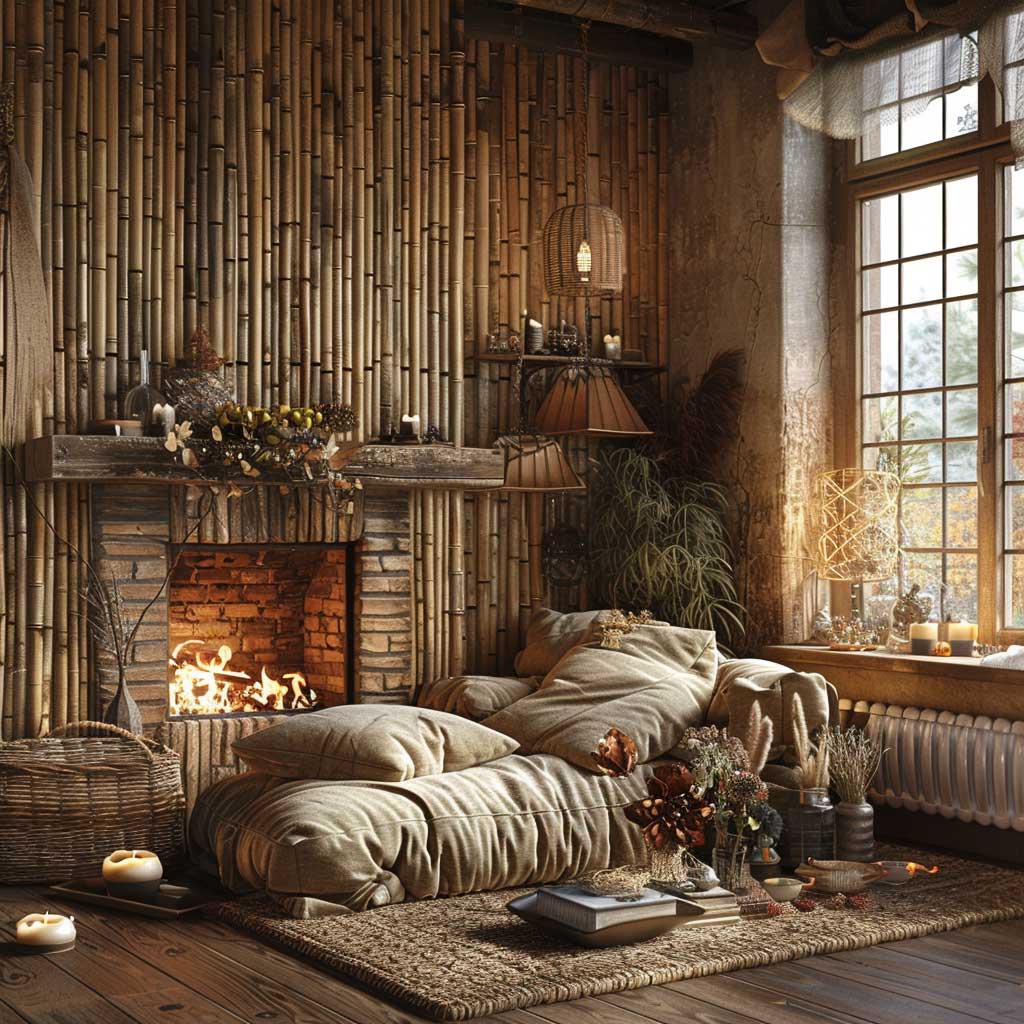
Rustic bamboo wall ideas use the material’s imperfections as the design — the nodes, color variation, and slightly irregular spacing are the point, not something to hide. Think of it like exposed brick: you’re not fighting the raw quality, you’re framing it. I own two rooms with this treatment, and the one with rustic bamboo is where every guest instinctively gravitates at parties. There’s a reason a crackling fireplace feels warmer than a flat screen playing a fireplace video.
Bamboo wall covering rolls — the kind sold by Cane-line, Bamboo54, and similar suppliers — run $1.00–$2.80 per square foot and come in natural, black, and carbonized tones. The natural (blonde) tone is the most forgiving with existing decor. Black-dyed bamboo rolls look dramatic in photos but tend to read heavier in real rooms. Carbonized — that warm brown — is my go-to for rustic applications because it pairs with almost any warm-toned furniture without competing.
What not to do with rustic bamboo: don’t pair it with ultra-modern furniture or polished concrete floors. The contrast isn’t the kind of interesting tension designers love — it just looks like a mismatch. Rustic bamboo walls need grounding companions: linen cushions, jute rugs, wooden coffee tables with visible grain. Think of the bamboo as the lead singer; everything else is the band, playing quieter.
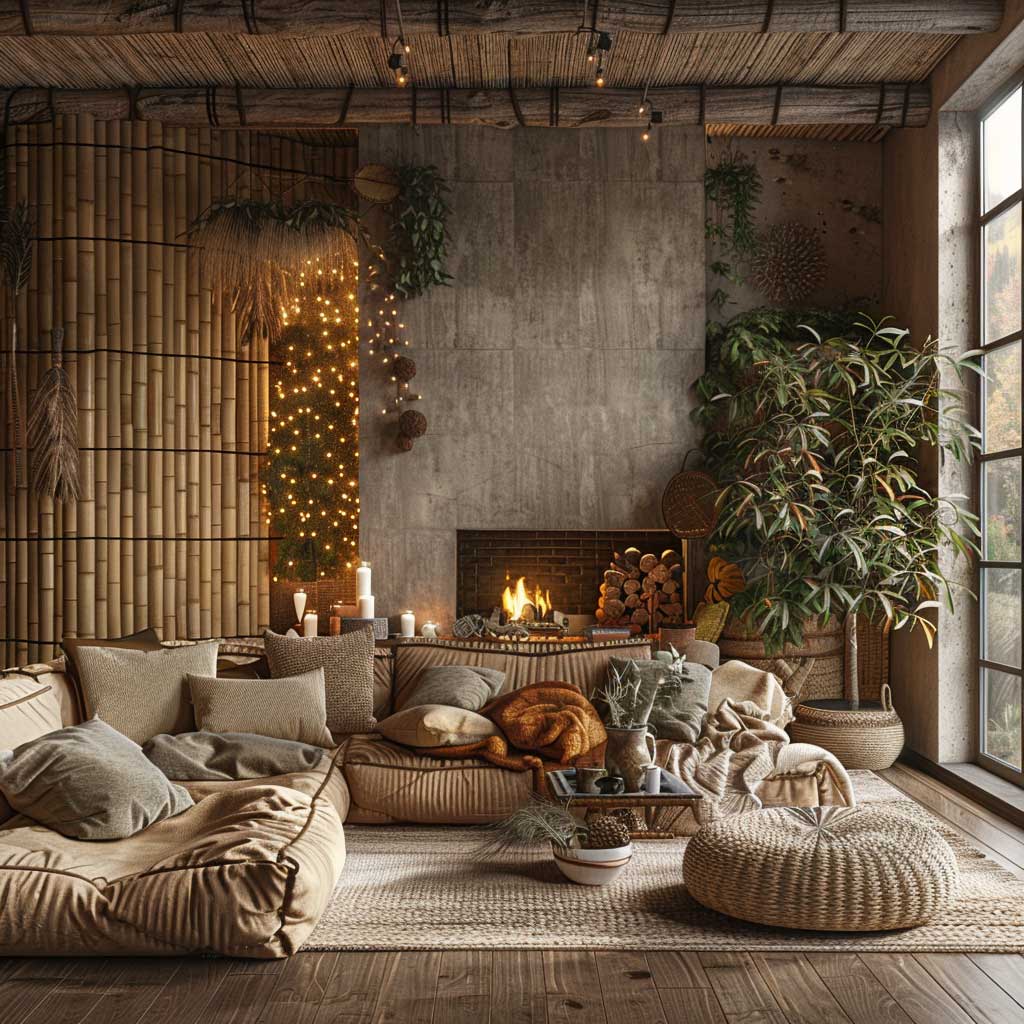
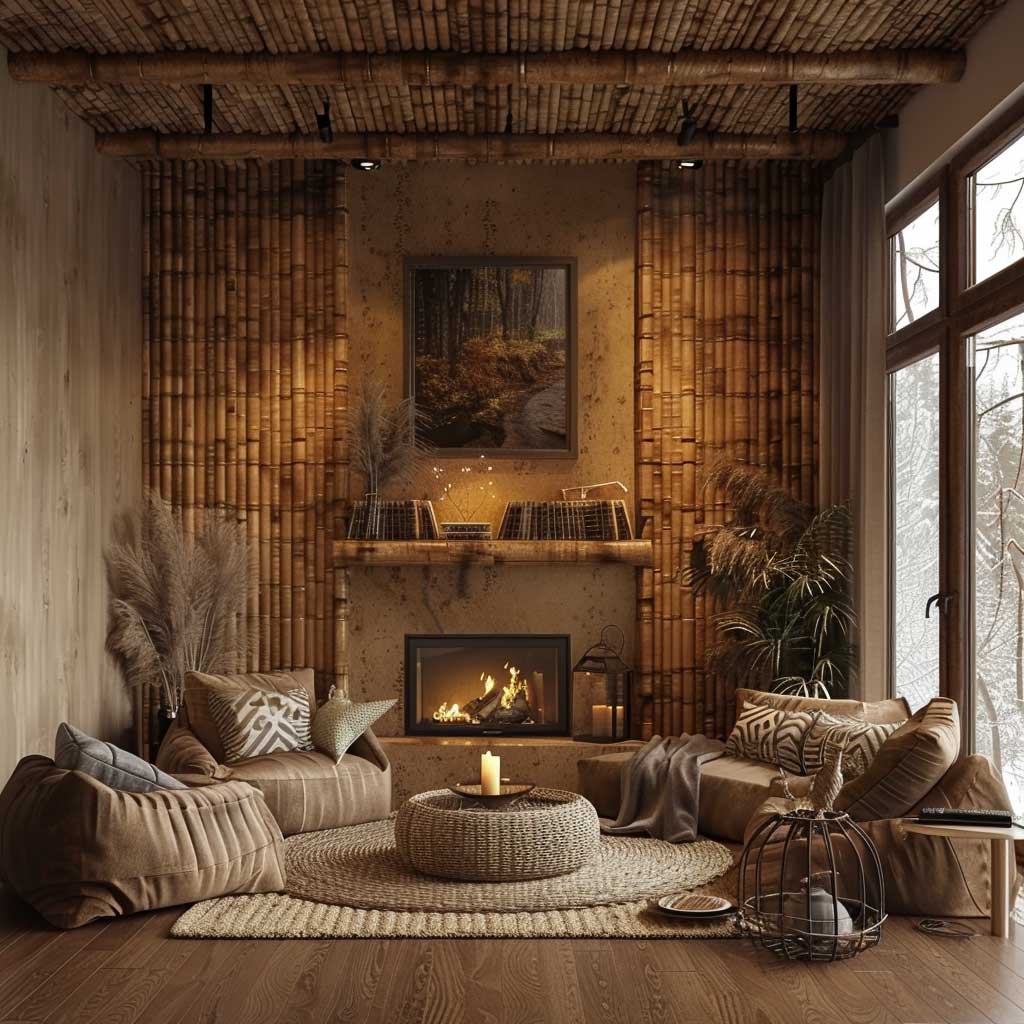
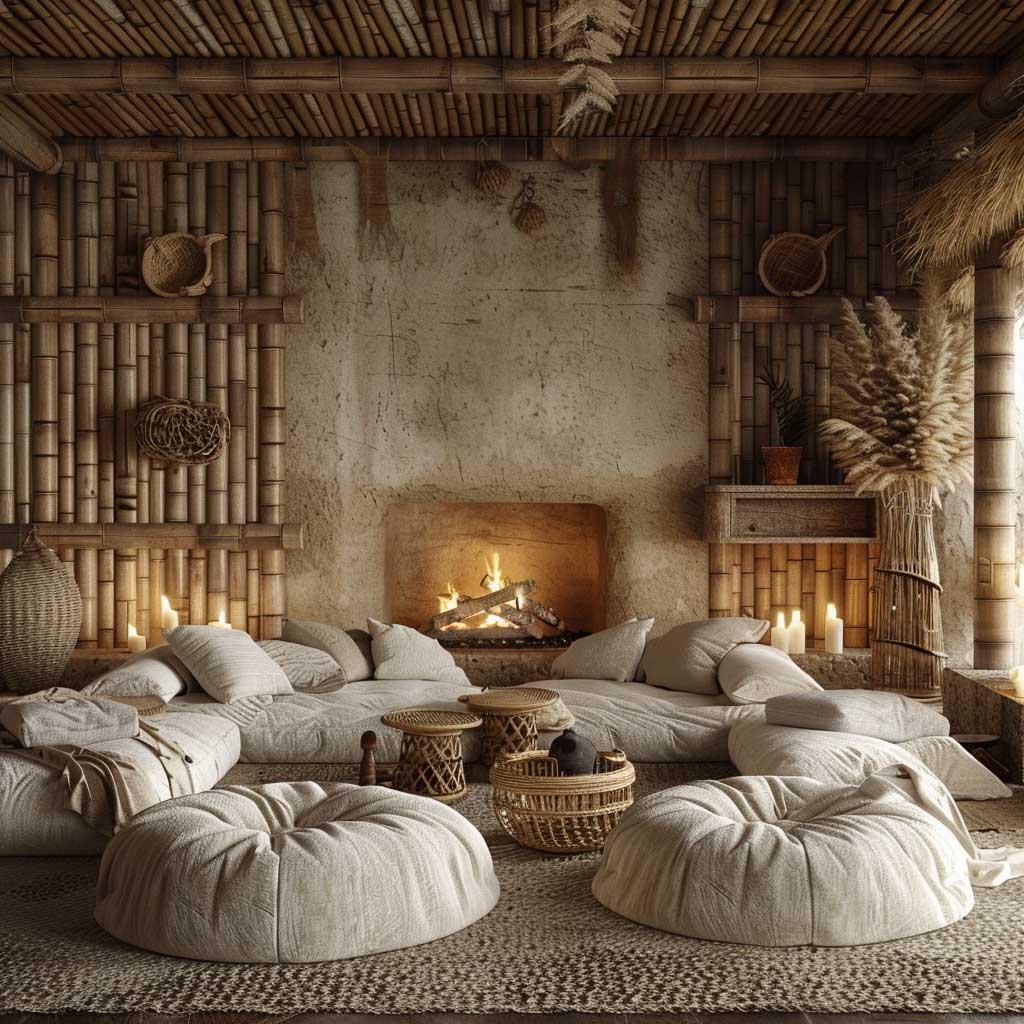
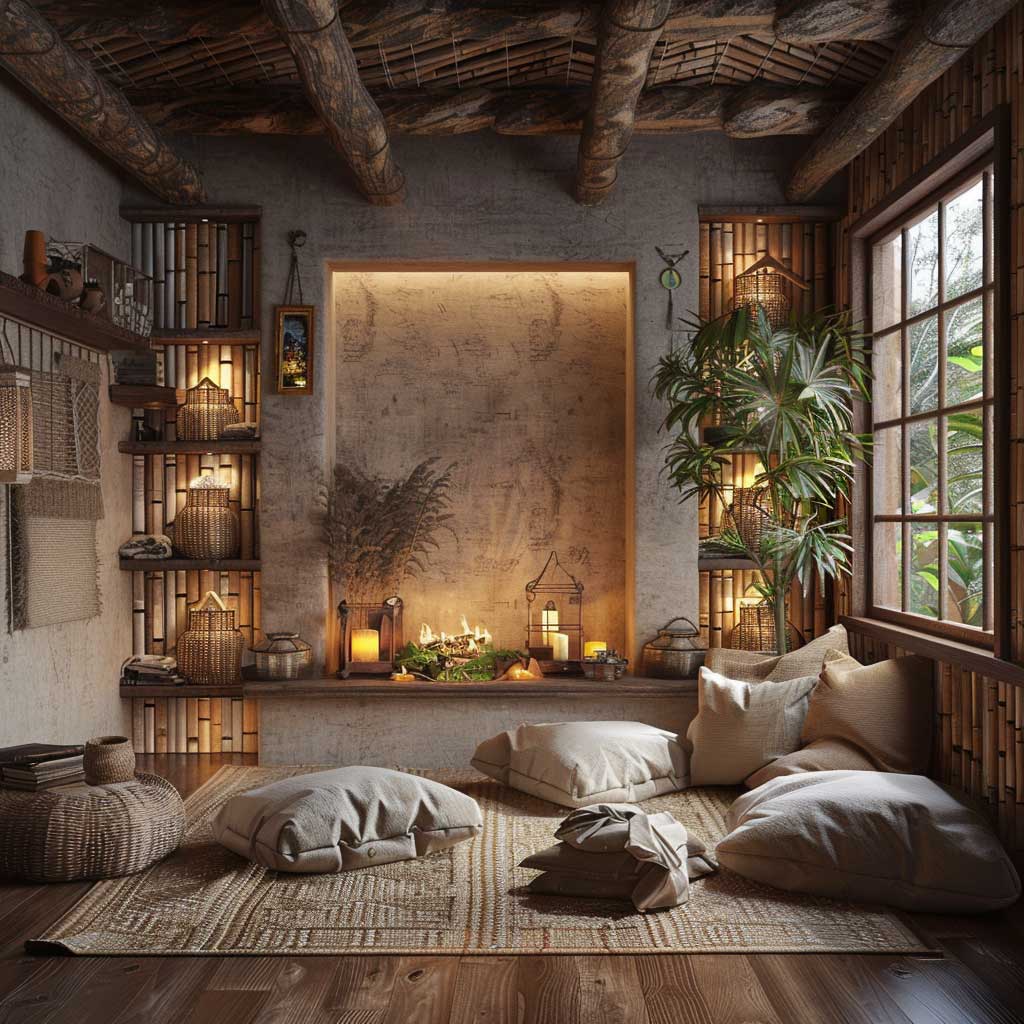
Installation for rustic bamboo rolls is genuinely DIY-territory — staple gun and construction adhesive, no specialized tools. A standard accent wall (roughly 80–100 sq ft) takes 3–4 hours solo. The rolls come in widths from 4 to 8 feet and need to be trimmed around outlets and windows. Leave a 1/4-inch gap at ceiling and floor to allow for expansion, especially in rooms with humidity fluctuations. Skip this step and you’ll find the material buckling within a year.
Maintenance on rustic bamboo is minimal but not zero. Every 3–4 years, a single coat of tung oil or Danish oil revives the color and prevents the surface from drying and splitting. Cost of maintenance per application: about $15–$25 in oil. That’s a better long-term deal than repainting a drywall accent wall every few years. Bamboo also resists mold naturally thanks to its density — a real advantage over fabric wallcoverings in rooms that see temperature swings.
FINAL WORD
Bamboo wall design gives you three completely different rooms from the same material — your job is just picking the right one
Modern gloss finishes make small rooms read larger and pair with contemporary furniture; budget $8–$12/sq ft for factory-finished panels.
Geometric patterns reward rooms with natural light — the shadow play is half the design. Allow 20–25% extra material for cutting waste.
Rustic rolls at $1–$2.80/sq ft are the most forgiving entry point — DIY-friendly, low maintenance, and effective in any warm-toned room. Save this post.