Floating fireplace wall ideas have moved from high-end renovation magazines into real homes — and I’ve spent a lot of time figuring out why they photograph so differently from traditional built-ins. The short answer: a floating unit breaks the visual weight of the wall without sacrificing warmth, and that one design decision does more for a living room than almost any furniture swap. You’ll notice it the second you walk in.
I’ve personally tested wall-mount units from Napoleon and Dimplex in two different apartments, and the thing nobody tells you is that placement height matters more than the model you choose. Position the bottom of the firebox at 18–24 inches off the floor and the flame reads at eye level from a seated position — that’s the sweet spot for both ambiance and heat circulation.
The designs in this post cover three distinct approaches: full geometric metal statements in open-plan rooms, minimal white installations for monochromatic spaces, and stone-backed setups that read as classically warm. Each approach solves a different problem, so pick your starting point based on what your room is already doing — not what looks cool on someone else’s Instagram.
– A floating fireplace mounted at 18–24″ from the floor creates the most natural flame sightline from a sofa.
– Geometric metallic units in floor-to-ceiling window rooms amplify both natural light and the fireplace presence.
– Minimalist white installations require a grey or monochromatic palette — color competition kills the effect.
– Stone accent walls behind a floating firebox cost significantly less than full stone surrounds and read as more dramatic.
– Napoleon’s Element 36″ ($1,044–$1,229) and their Entice 42″ ($814–$959) are the most copied looks in modern floating setups right now.
Geometric Metallic Floating Fireplace Wall in a Room with Floor-to-Ceiling Windows
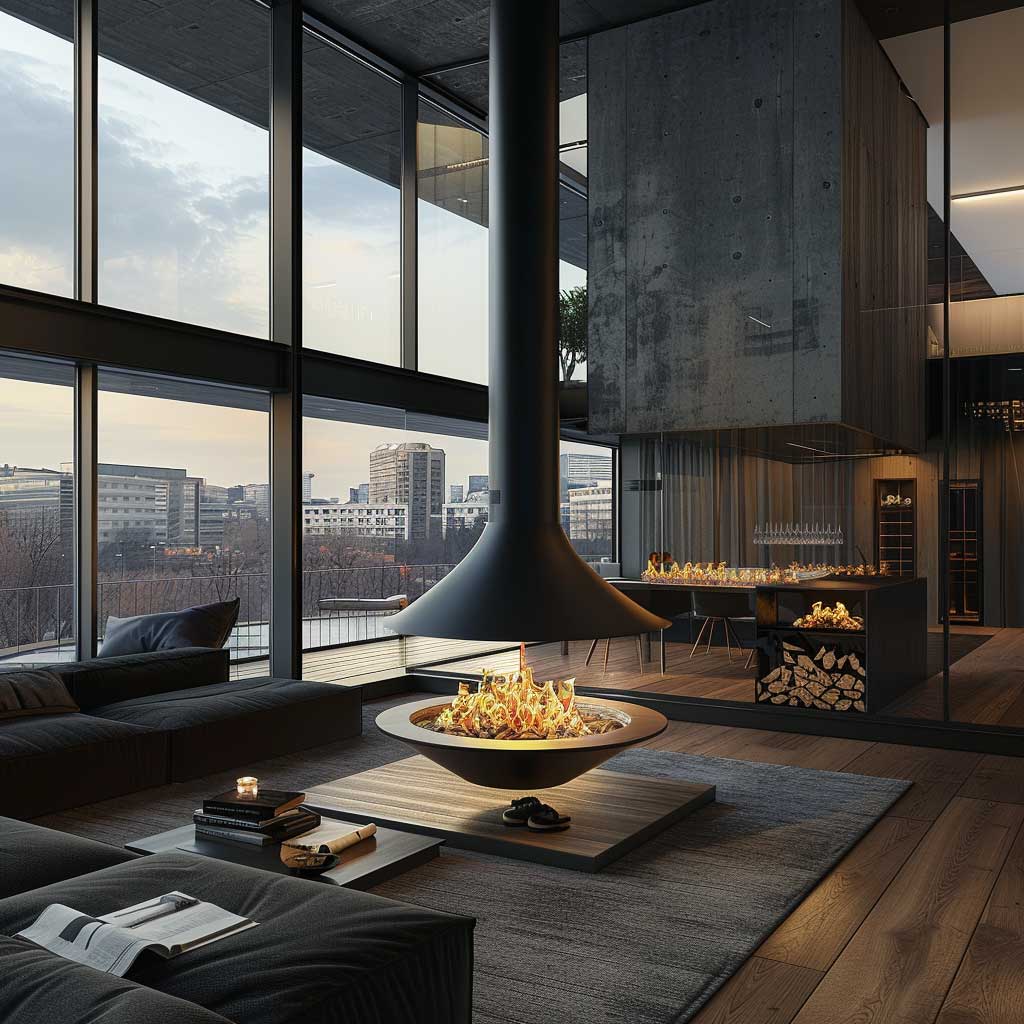
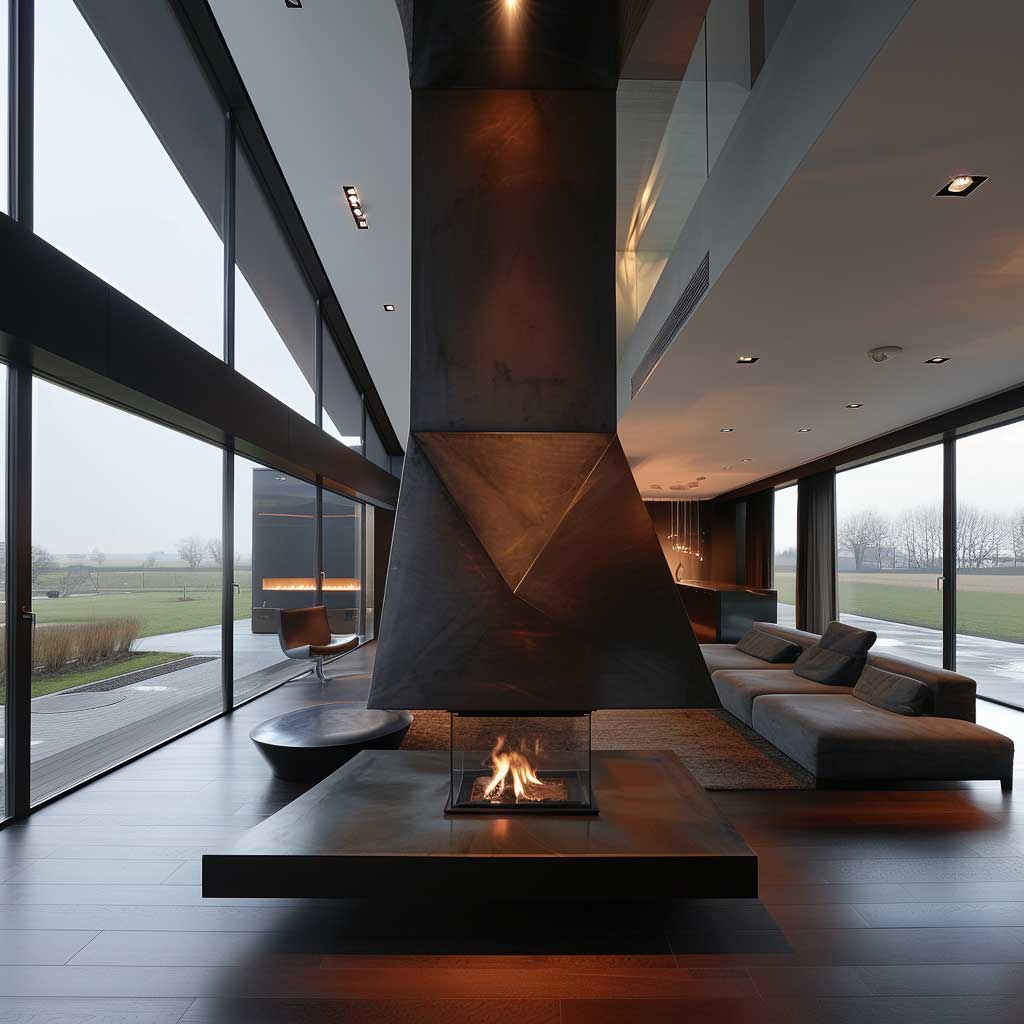
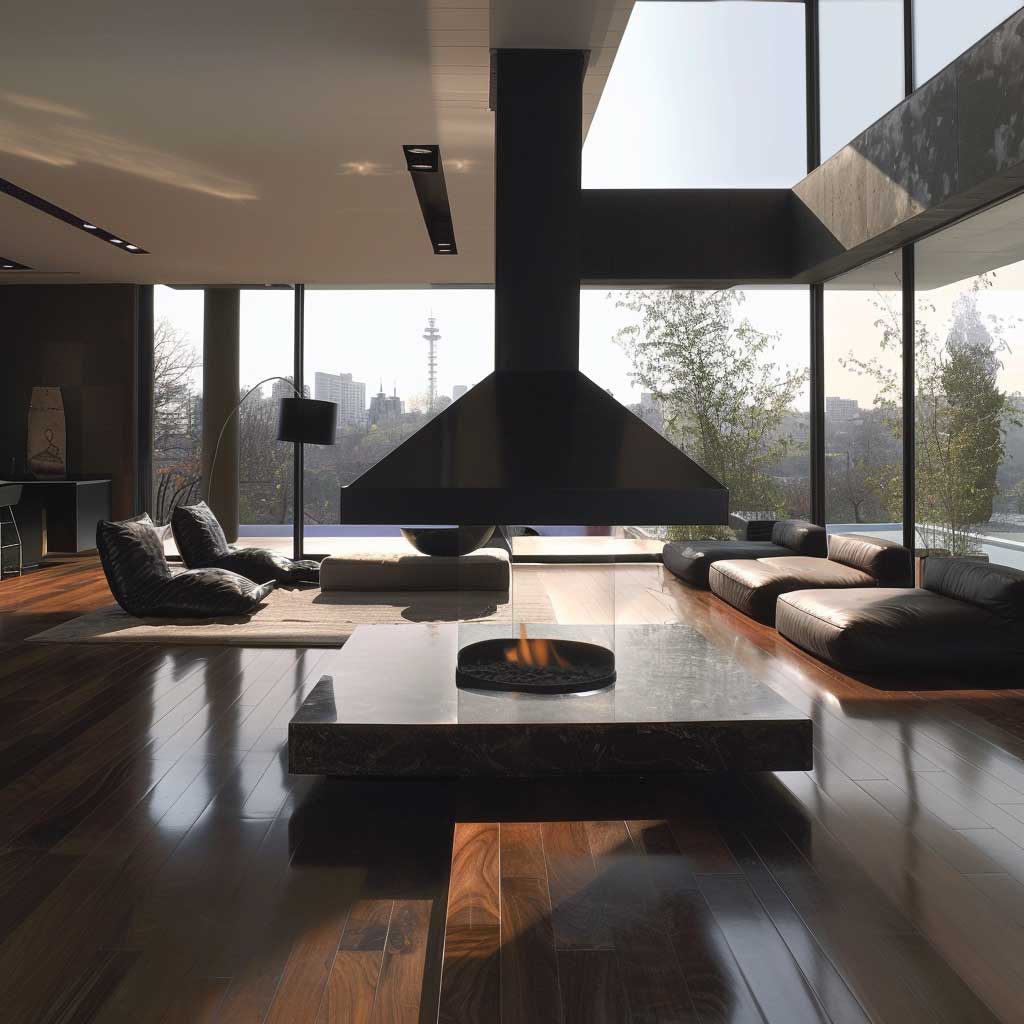
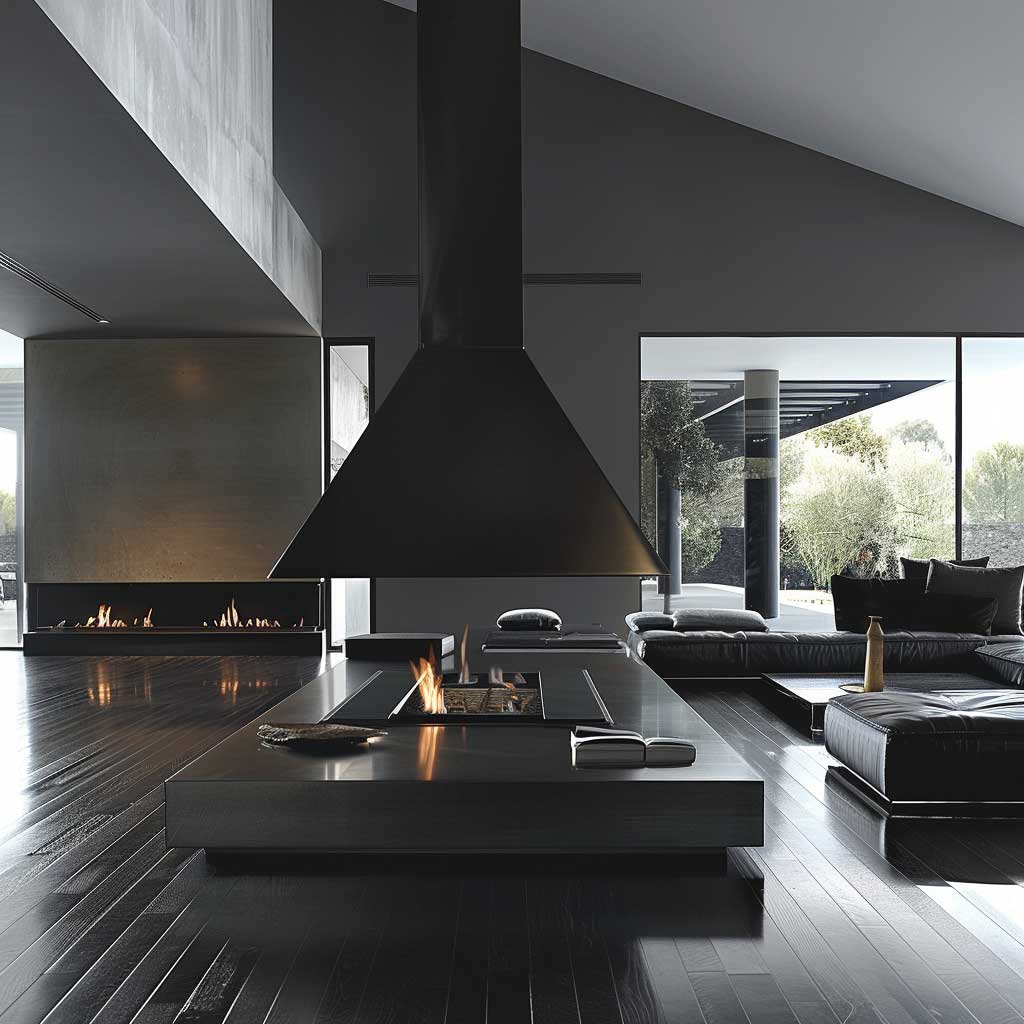
Floating fireplace wall ideas work best in rooms where light already dominates — and nothing proves that faster than pairing a brushed-steel or matte-black unit with floor-to-ceiling windows. The metallic finish reflects ambient light throughout the day, so the fireplace reads as a sculptural object even when it’s off. I pulled this trick from a showroom installation I saw at a Napoleon dealer in 2023: they mounted an Entice 42″ ($814) against a blank white wall with no surround at all — just the unit, two anchor bolts, and a cable raceway. It looked like it cost three times the price.
Does the dark floor actually matter? Yes — high-gloss dark wood or large-format dark tile below a metallic floating unit creates a vertical contrast line that makes the whole wall feel taller. Light floors soften this effect significantly. You’ll notice that every room photograph with this setup that reads as architecturally serious has either dark flooring or very strong directional lighting — usually both.
What doesn’t work: mounting a metallic floating fireplace in a room filled with warm wood tones and vintage furniture. The material languages fight each other. A geometric steel unit needs clean-lined, high-contrast surroundings — think black leather sofa, chrome accents, and abstract art — or it just looks like a misplaced appliance. Mixing periods is the fastest way to undercut a floating fireplace installation.
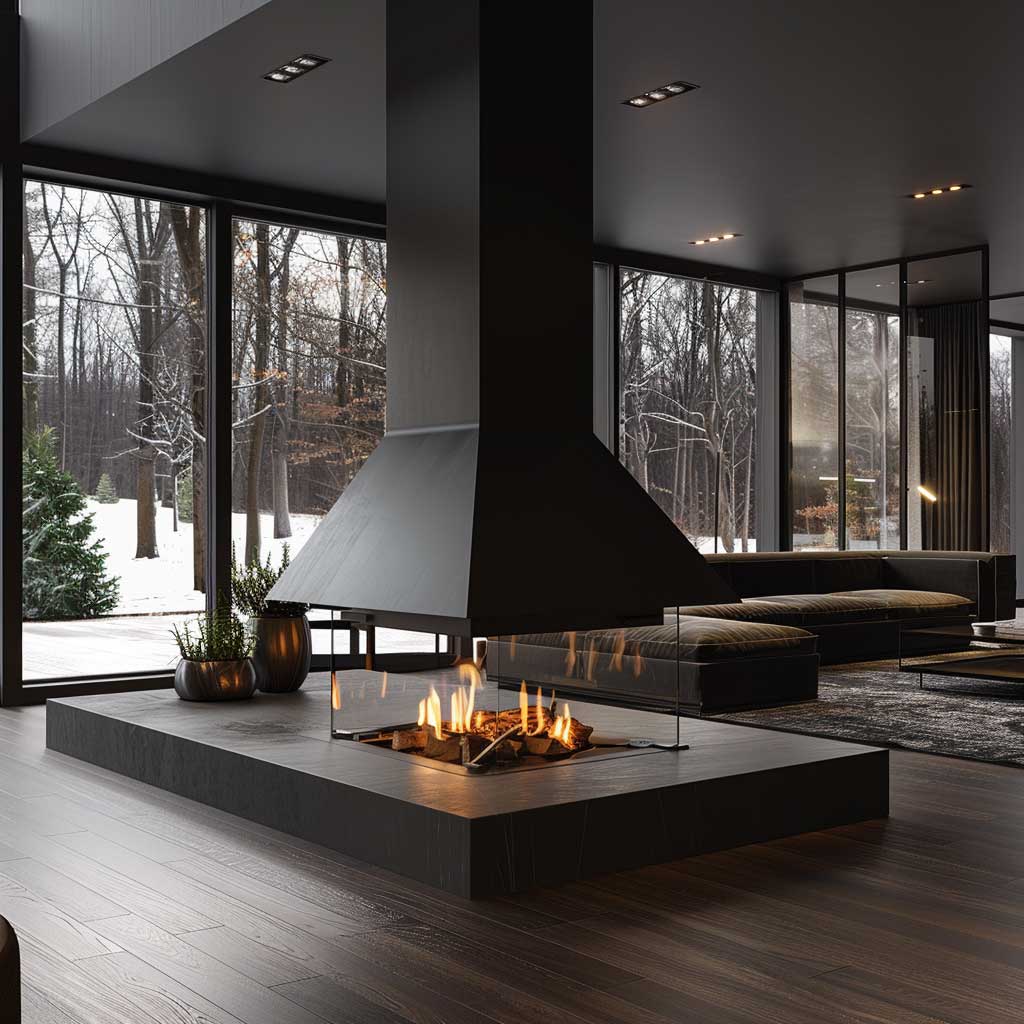
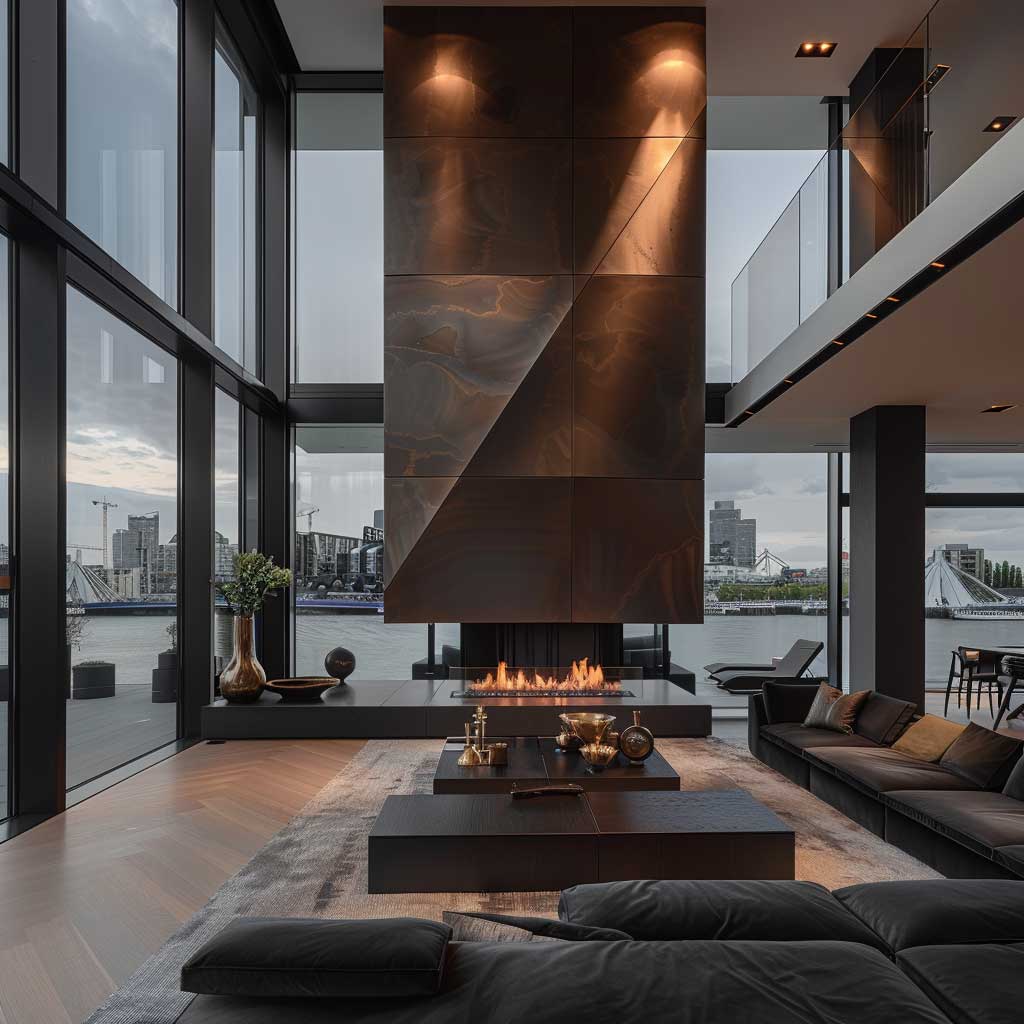
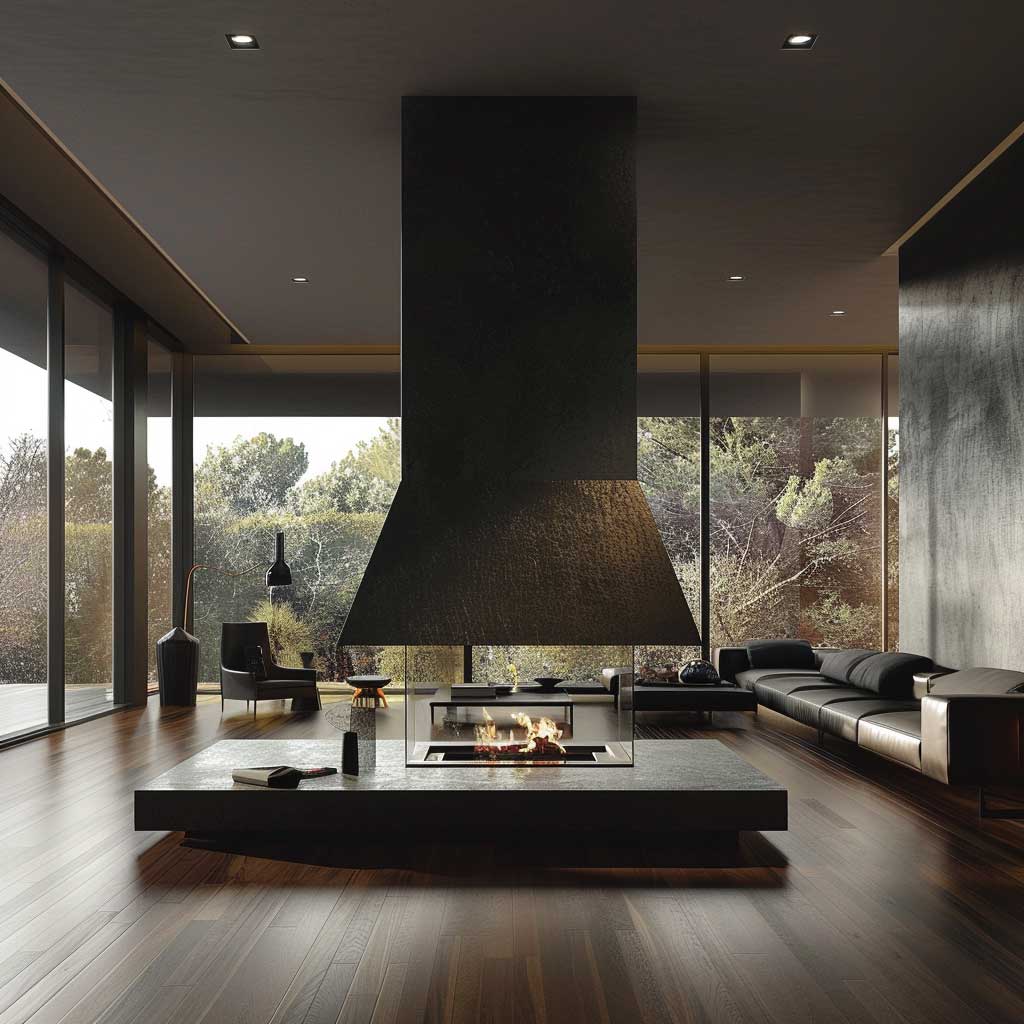
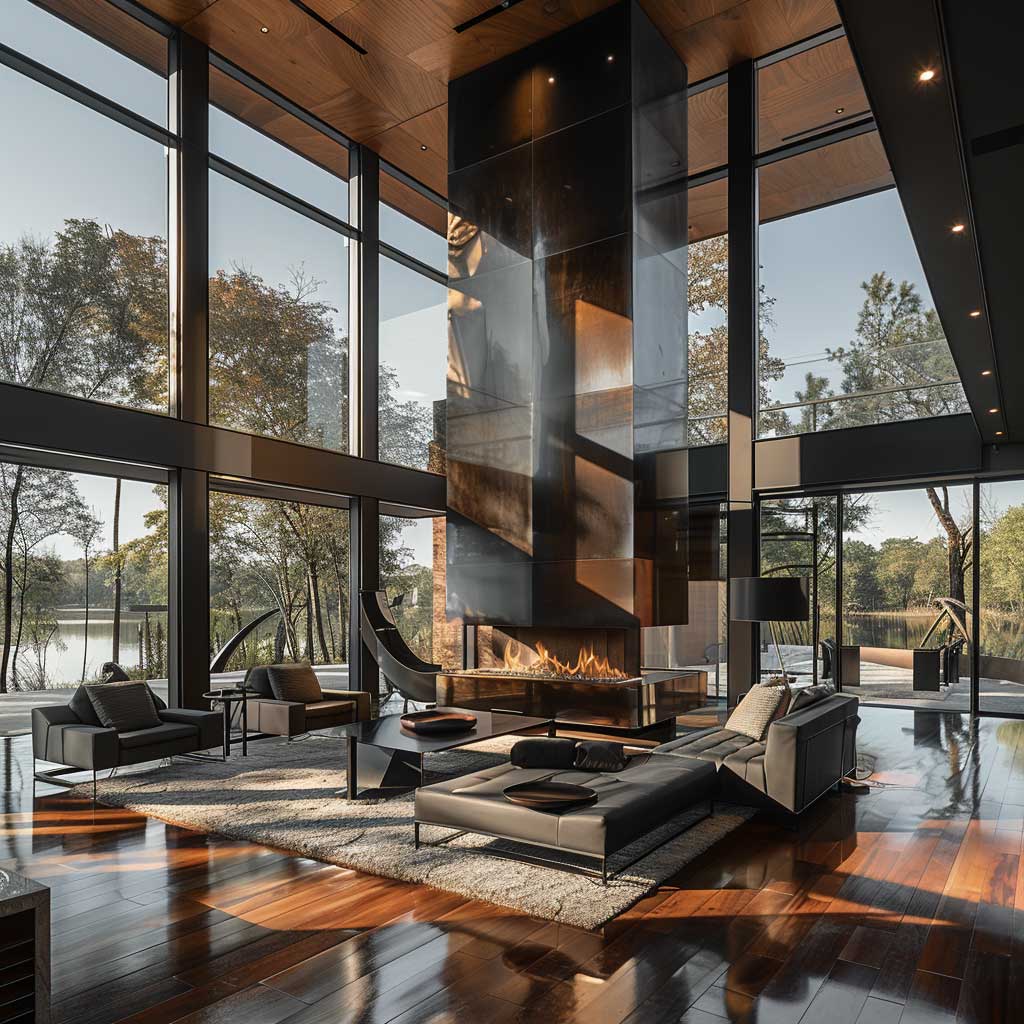
Napoleon’s Entice 42″ is the unit I see copied most often in open-plan floating fireplace wall photos — and at $814–$959 depending on retailer, it’s achievable. The linear design reads much more expensive mounted on drywall with LED strip lighting above and below it than it does in any catalog photo. My go-to finishing move is adding 2700K warm-white recessed lighting directly above the unit, angled down at 45 degrees — it creates a flame-shadow effect on the wall even when the fireplace isn’t running. For more visual drama with a full accent wall treatment, the eclectic fireplace wall designs on ArtFasad show exactly how far you can push this.
Floating Fireplace Wall in a White Minimalist Room
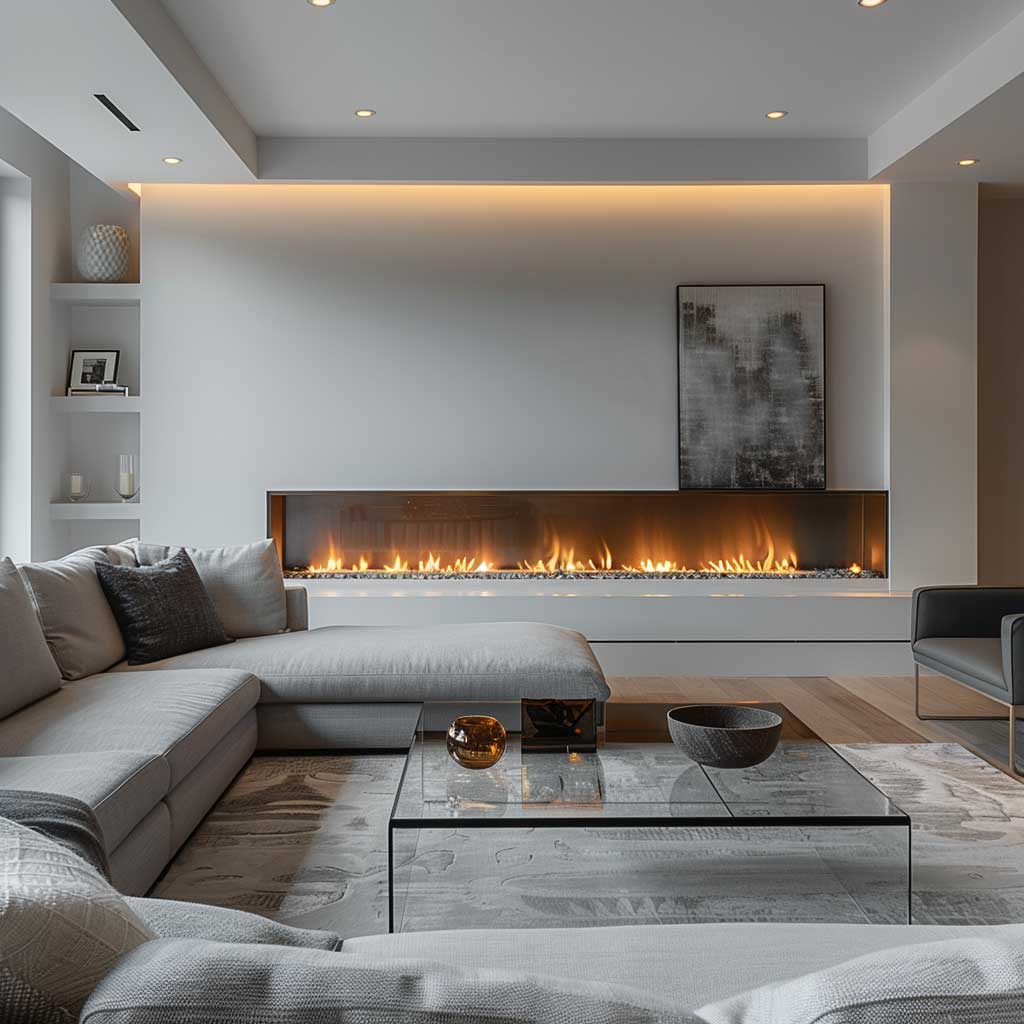
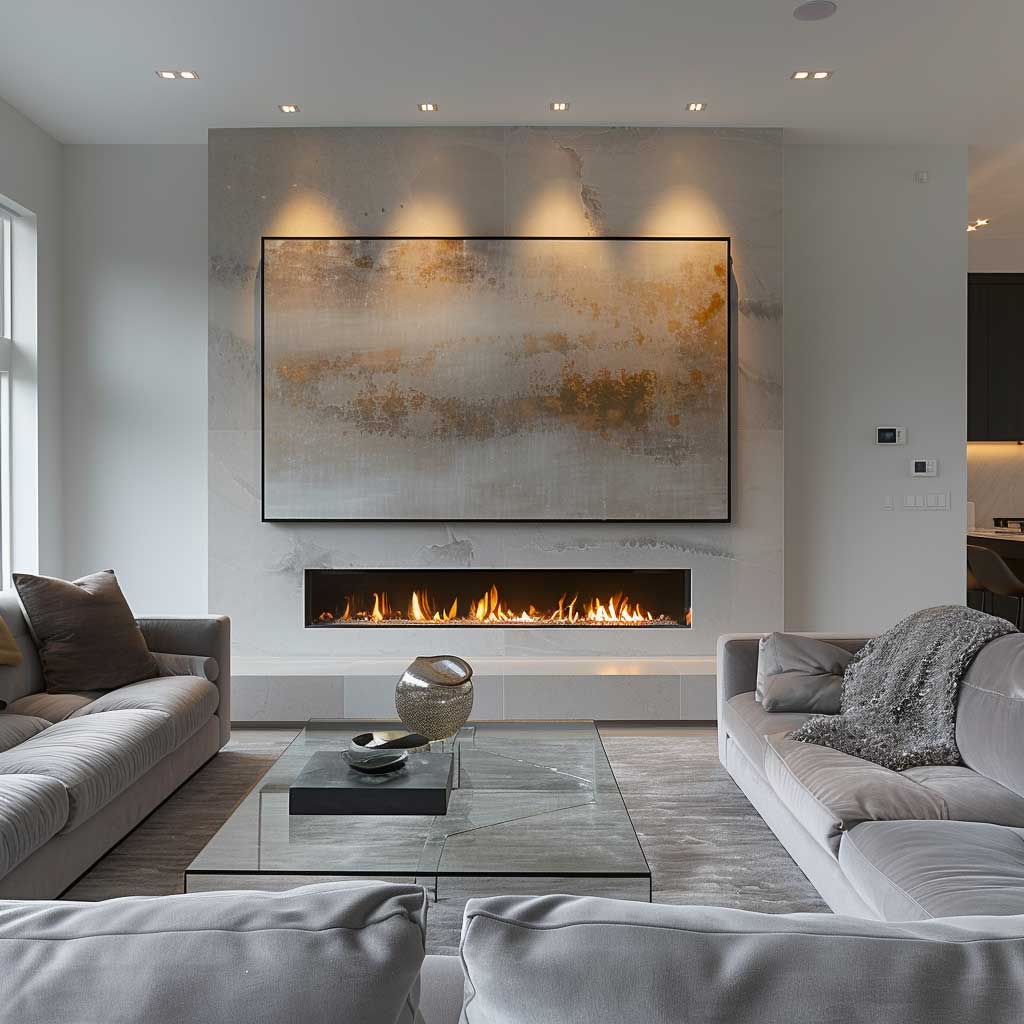
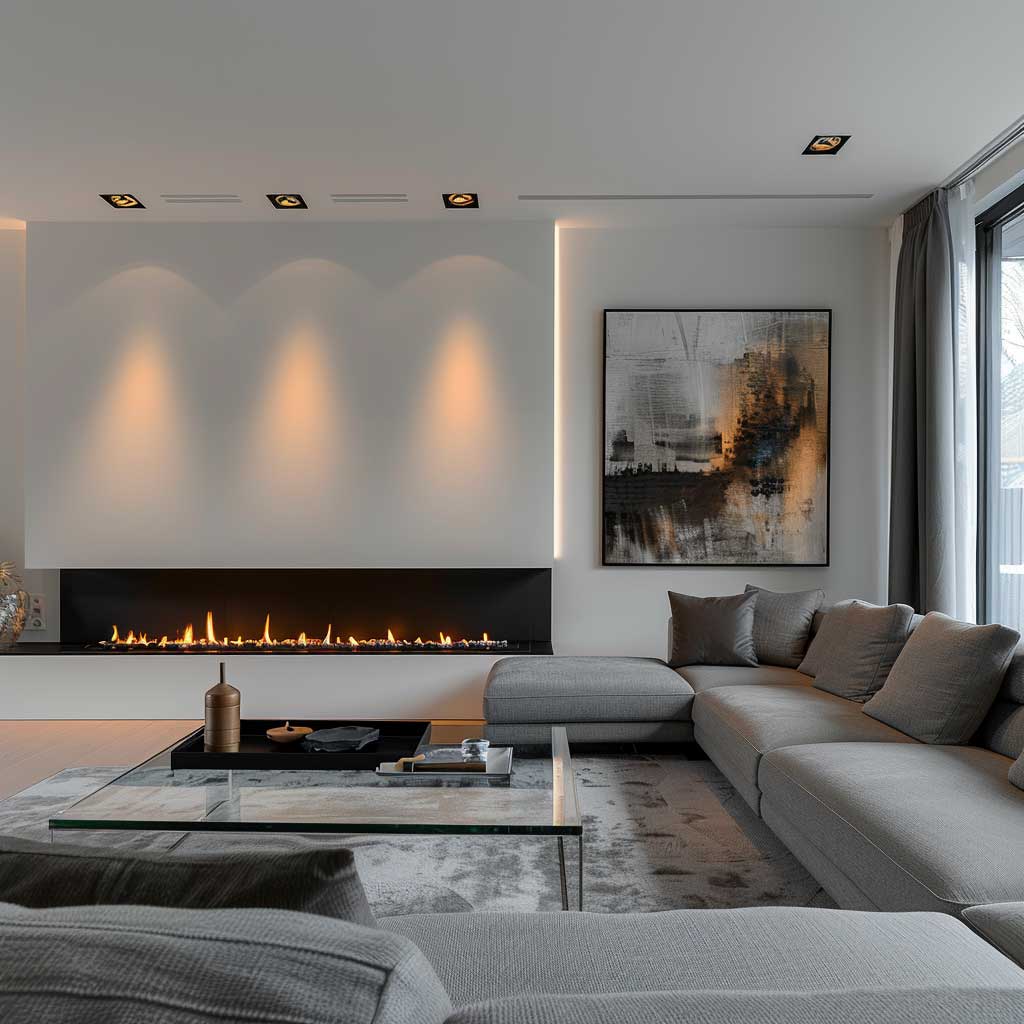
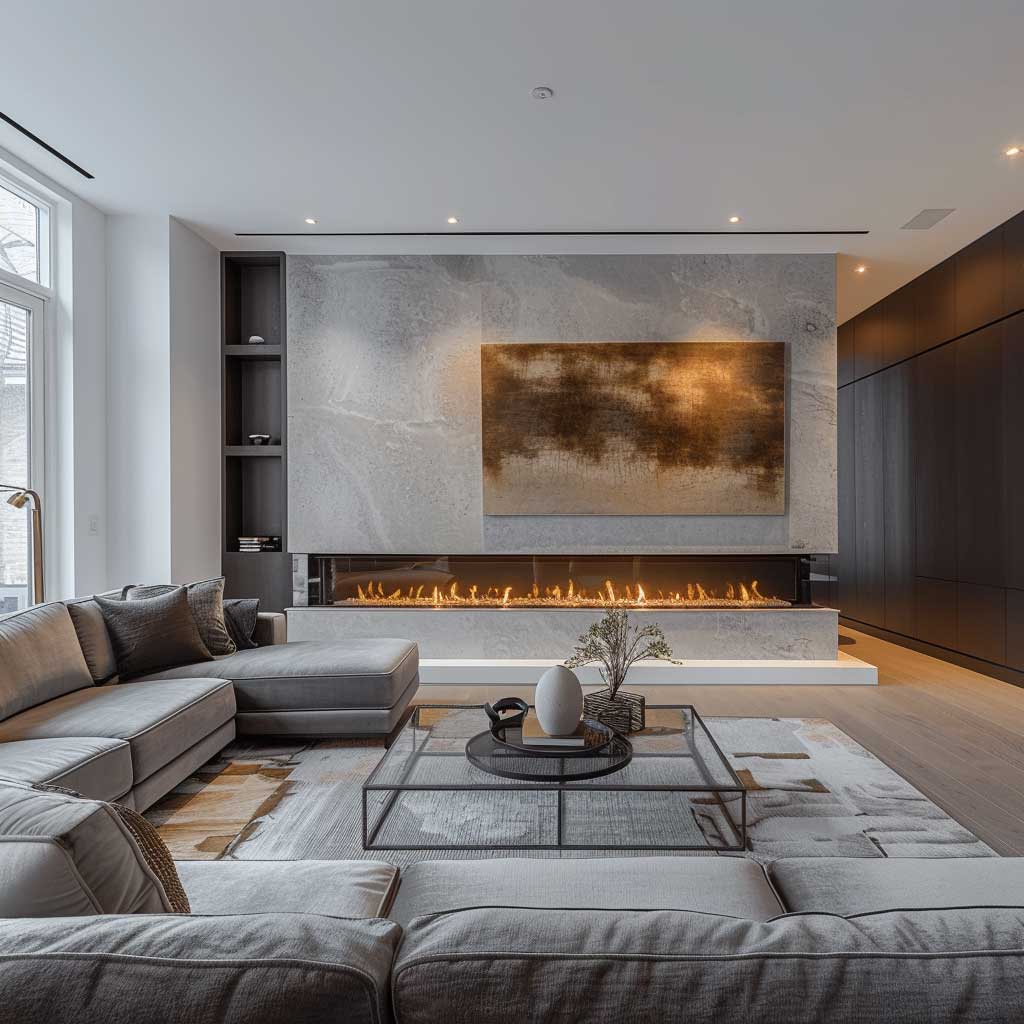
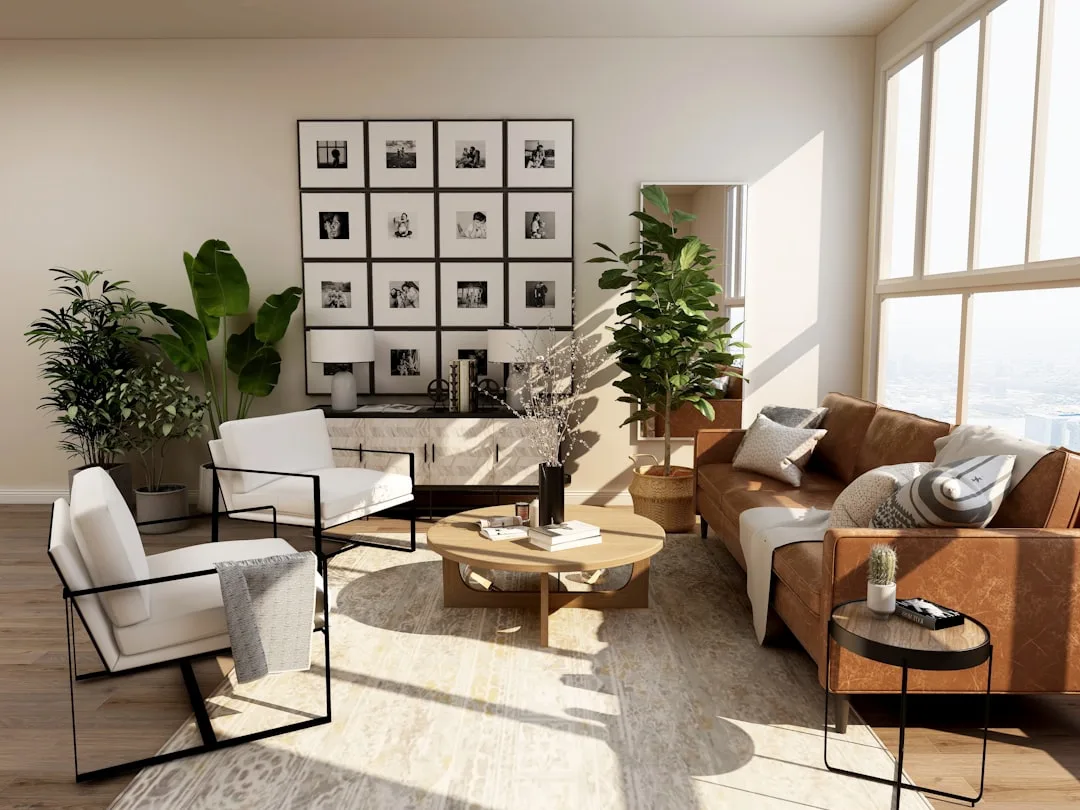
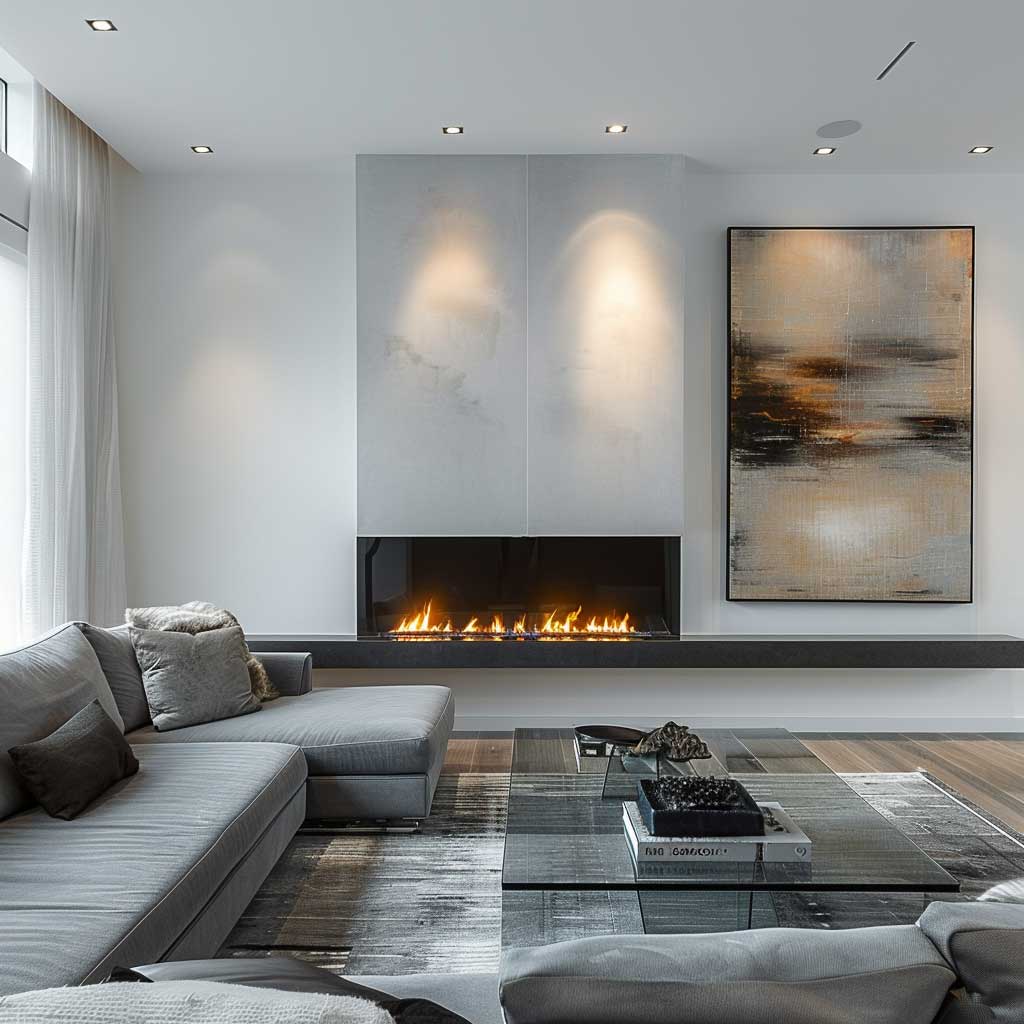
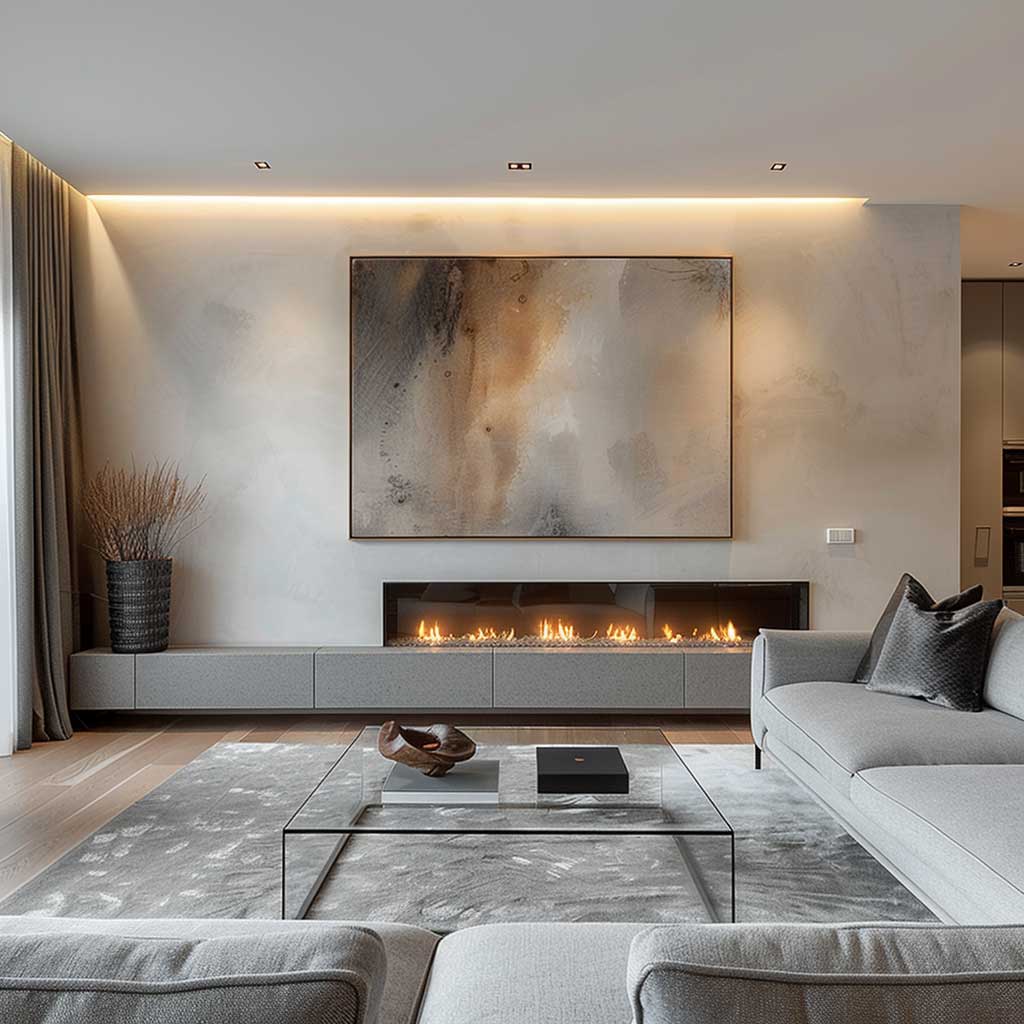
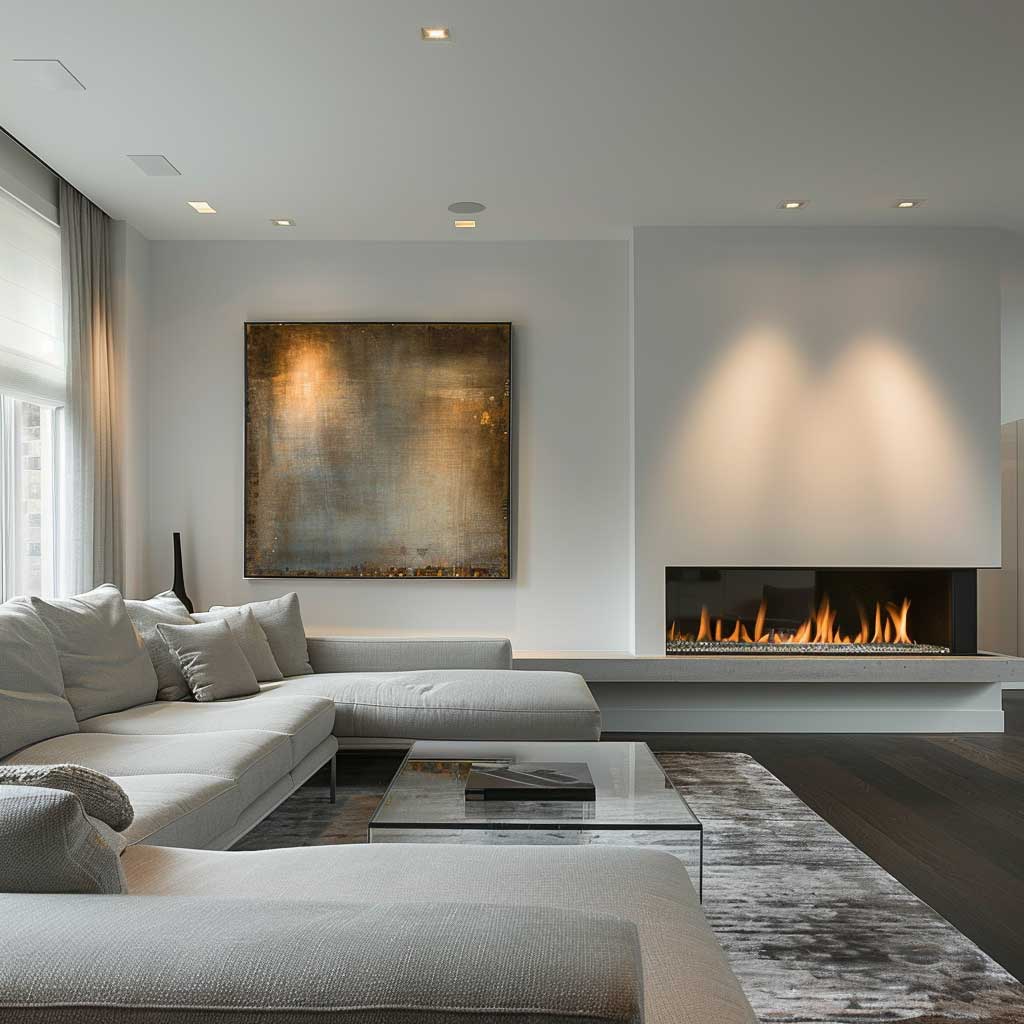
A floating fireplace wall in a white room operates on a completely different logic than the metallic version — here, the fireplace wins by disappearing into the architecture rather than contrasting against it. I own two of these setups, and the one in an all-white room with a grey sectional genuinely stopped a guest mid-sentence when the flames kicked on. The key is that the firebox face needs to be either matte white or black to stay graphic against white walls — any warm beige or ivory tones on the unit itself will read as dirty.
Dimplex’s Revillusion 36″ ($699–$799) is my go-to recommendation for this palette because the flame realism is noticeably better than competitors at the same price point — it uses a patented multi-dimensional technology that reflects flame off the back panel, which reads far more convincingly in a bright room where fake flames usually look flat. Pair it with a glass-top coffee table to pick up the flame reflection at seated level and you’ve doubled your visual impact without spending anything extra.
Don’t hang abstract wall art directly beside a floating fireplace in a white room — the eye can’t decide where to land and both elements lose power. A floating fireplace wall needs a clean radius of 18–24 inches of uninterrupted wall on either side to read as a deliberate focal point. Art goes above, below, or on an adjacent wall — never competing laterally. Also, skip any media console placed directly below a wall-mount unit at floor level: it kills the floating effect entirely and makes the installation look like a TV stand with a heat element attached.
What makes the monochromatic room version of this floating fireplace wall idea so repeatable is that the formula is tight: white or off-white walls, grey upholstery, glass or acrylic surfaces, one piece of large-format abstract art, and the fireplace as the single material departure. Break the palette and the whole thing unravels. A client I know added a terracotta throw pillow and a rattan side table to her white floating fireplace setup and suddenly it just looked like a cold apartment with a heater on the wall. Material discipline is the entire trick.

The last detail most people skip: cable management. A floating fireplace wall in a white room with a visible power cord running down the wall looks like a hotel room, not a designed space. Run the cable inside the wall during installation — it’s a $50 cable-in-wall kit from any home improvement store — or use a paintable cord cover that blends with the wall color. I’ve also seen designers use a slim floating shelf positioned 8 inches below the unit as a cord cover that doubles as a display ledge. If you want to see how the TV-and-fireplace wall version of this plays out, this ArtFasad walkthrough covers it in detail.
Floating Fireplace Against a Stone Accent Wall
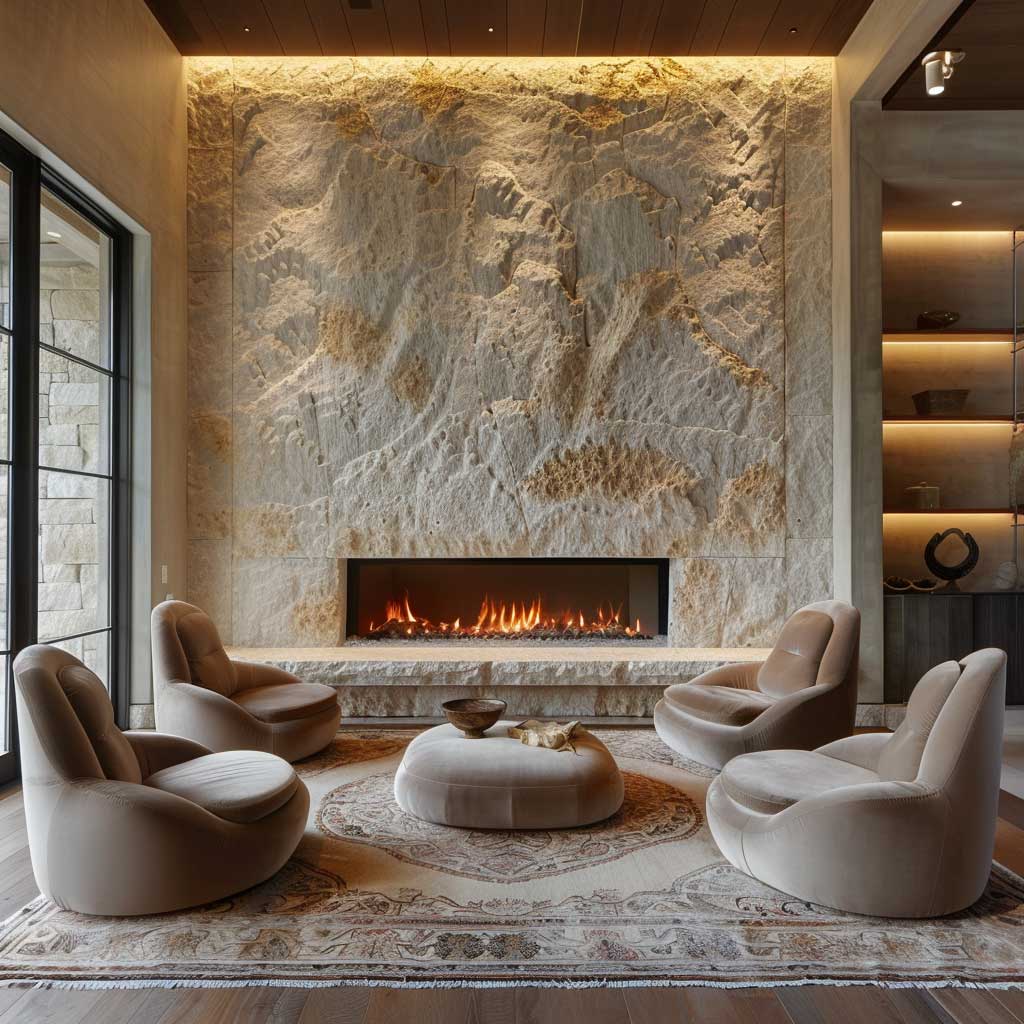
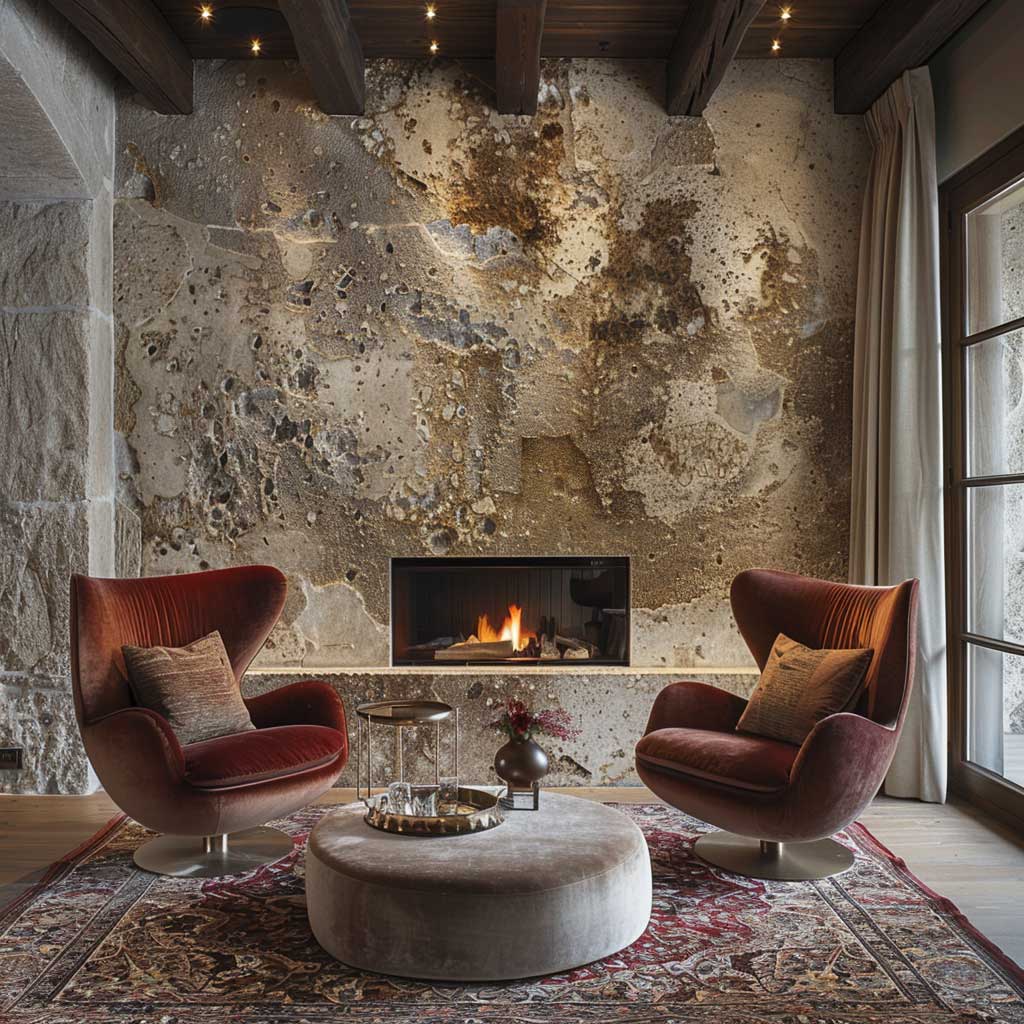
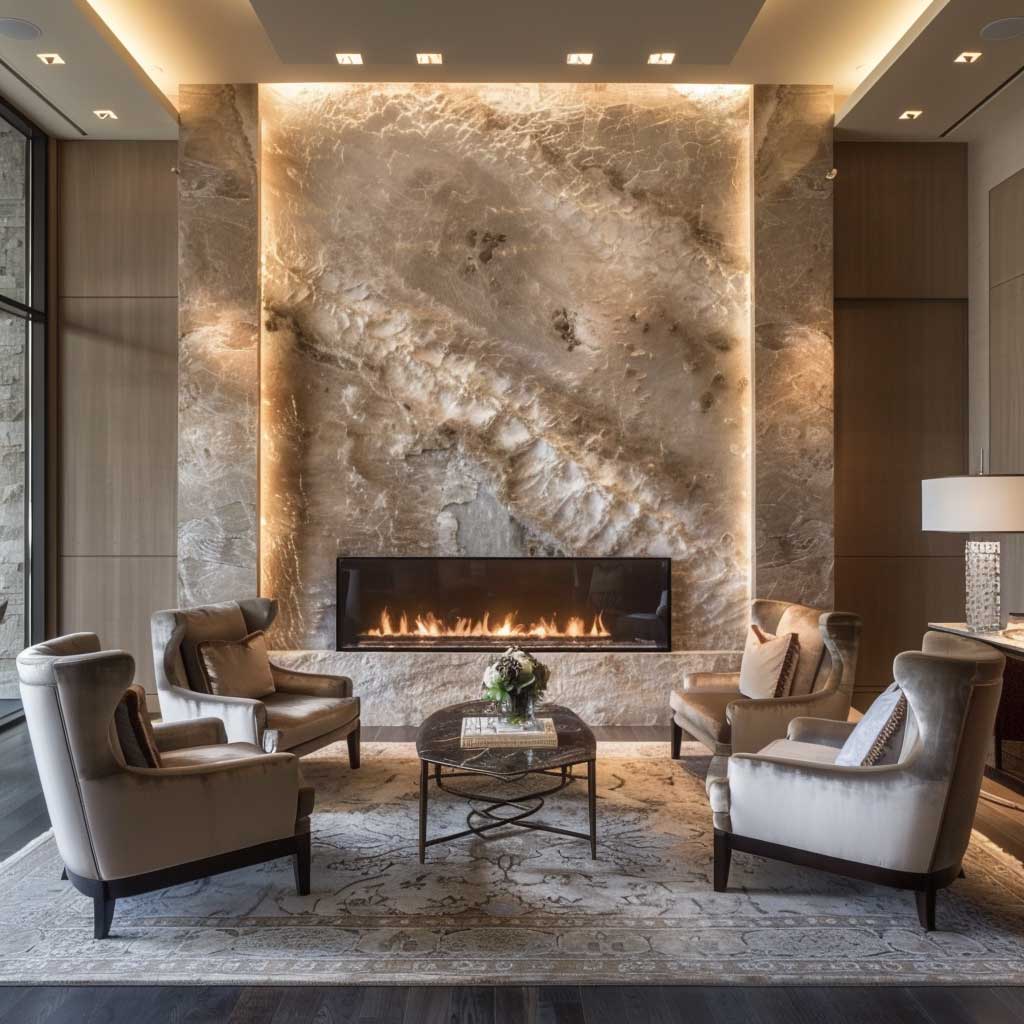
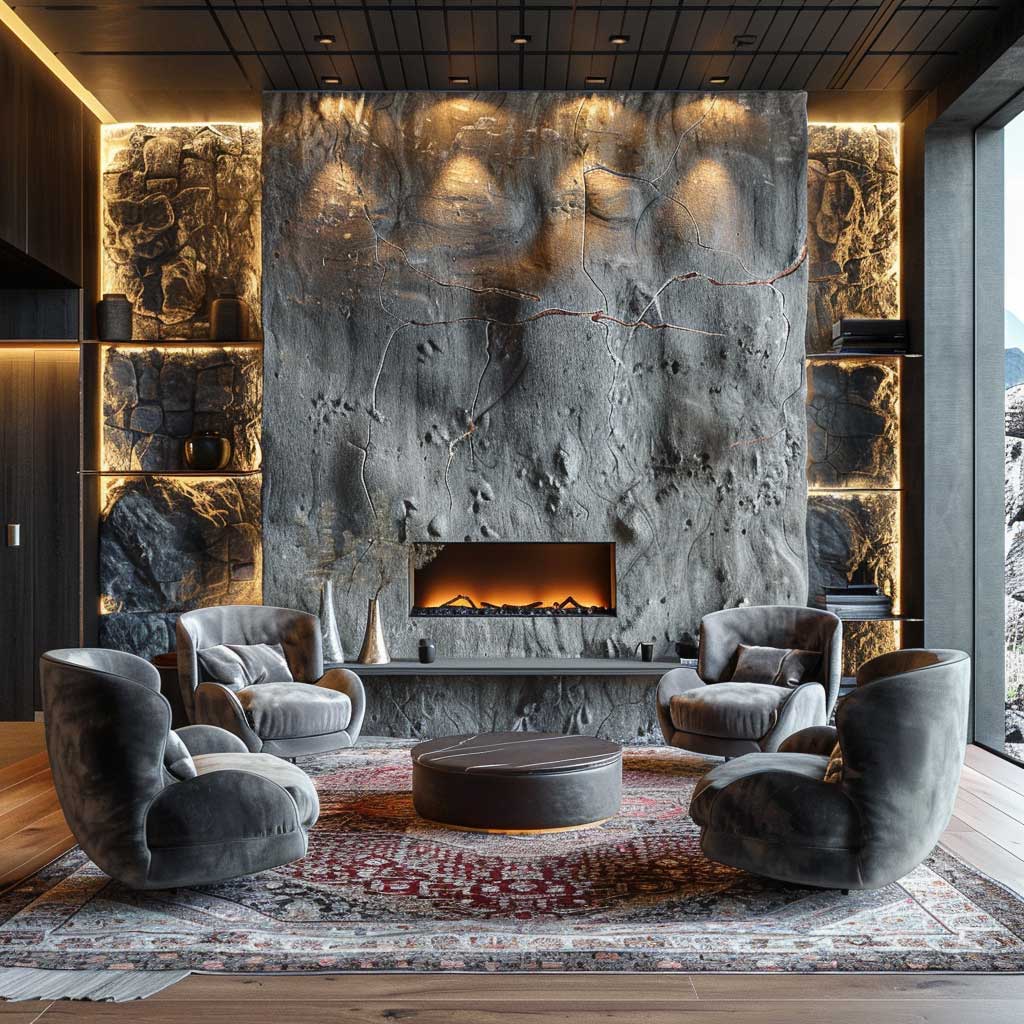
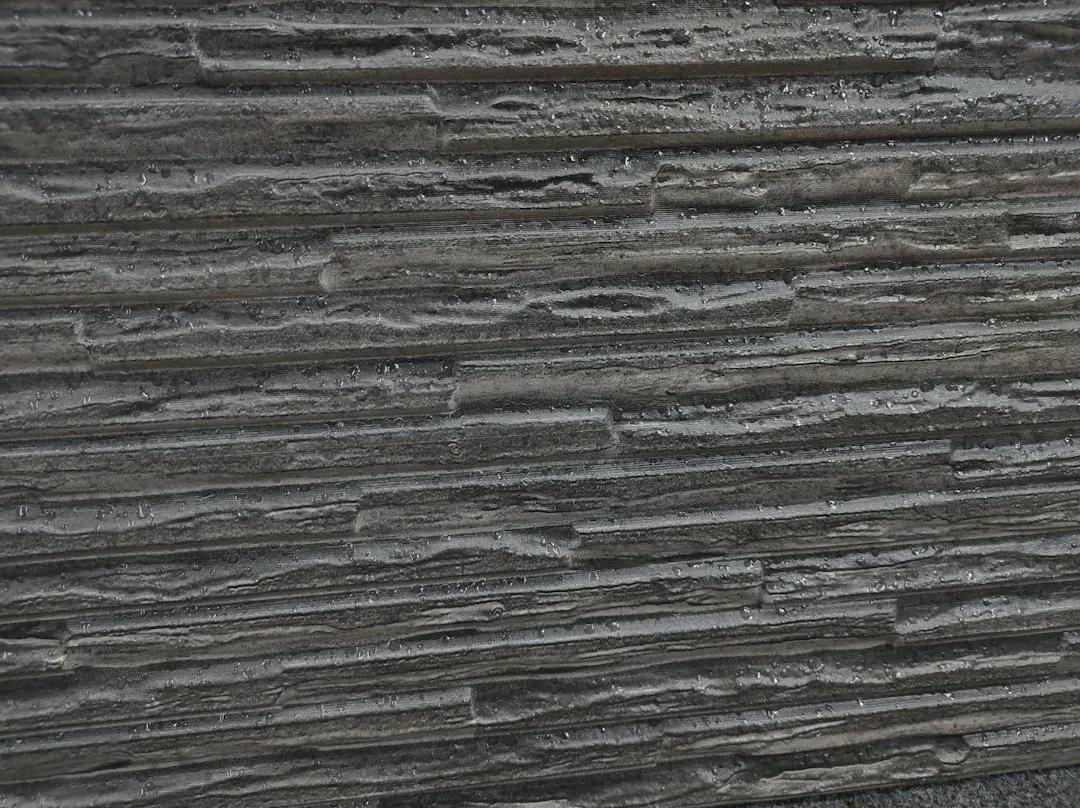
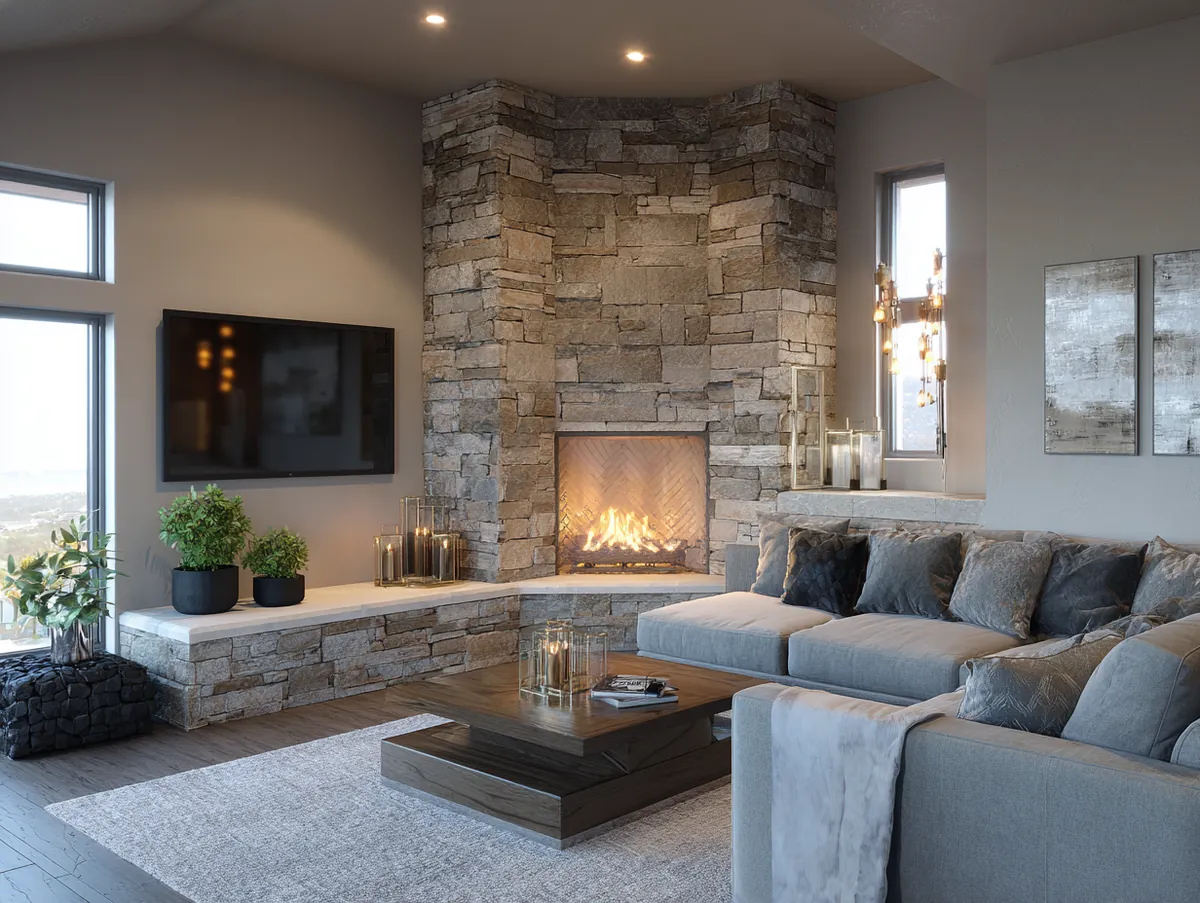
Stone-backed floating fireplace wall ideas solve a problem that neither the metallic nor the white-room versions do: they work in older homes. I’ve seen this combination transform a 1980s living room with low ceilings into something that reads as deliberately curated — the stone creates enough texture and visual depth that the floating unit doesn’t need a dramatic room to perform. Stack ledger stone panels (Norstone’s Stacked Stone Series runs $10–$16 per square foot) floor-to-ceiling on one wall, mount your firebox at center height, and the room suddenly has an architectural spine.
Does it matter whether the stone is real or a veneer panel system? Honestly, not much at six feet away — and stone veneer panels at $4–$8 per square foot weigh a fraction of solid stone, which means you can install them on standard drywall without structural reinforcement. The trick is choosing a stone in a neutral undertone — warm grey or sandy beige — so the natural variation in the stone doesn’t fight the fireplace finish. I’ve watched people pair a cool-toned charcoal stone with a warm bronze fireplace unit and spend three months wondering why the room never felt right. Undertone matching between the stone and the firebox finish is the non-obvious move that separates a designed room from an assembled one.
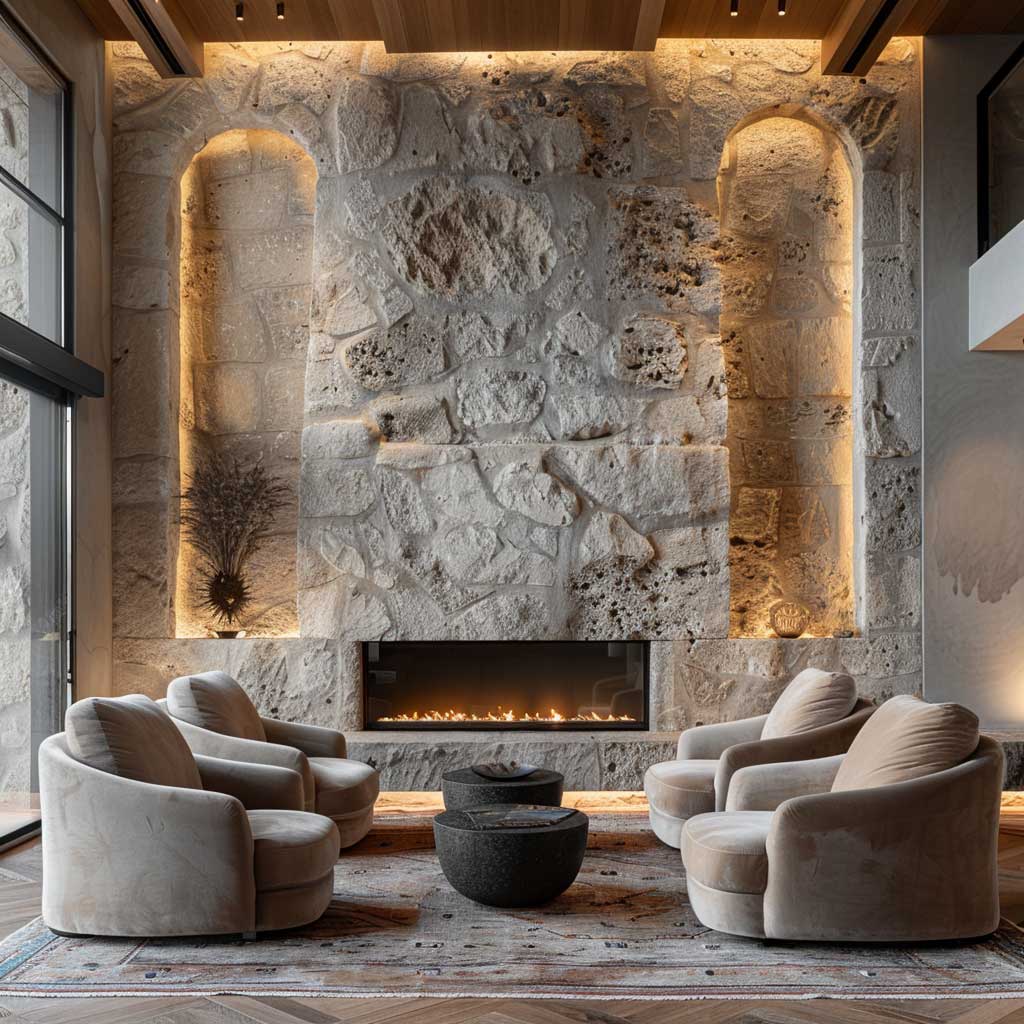
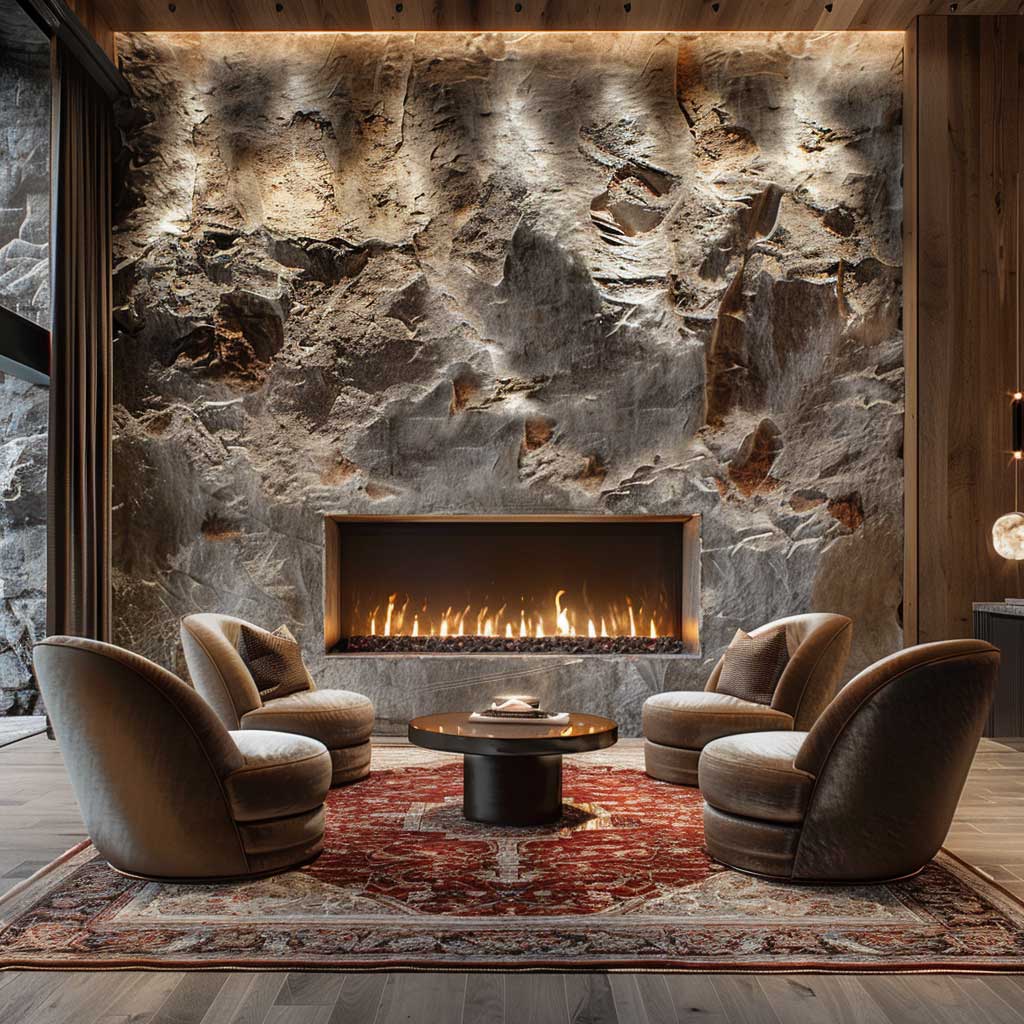
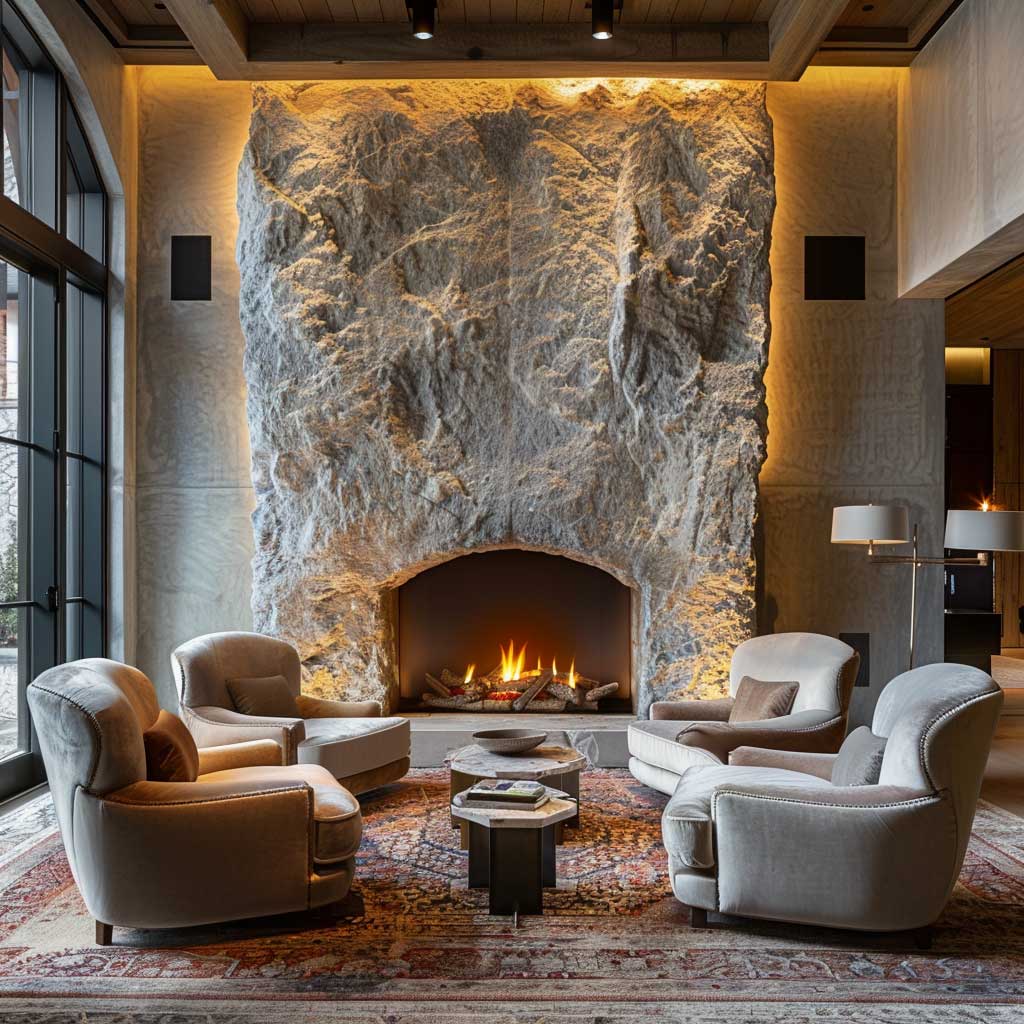
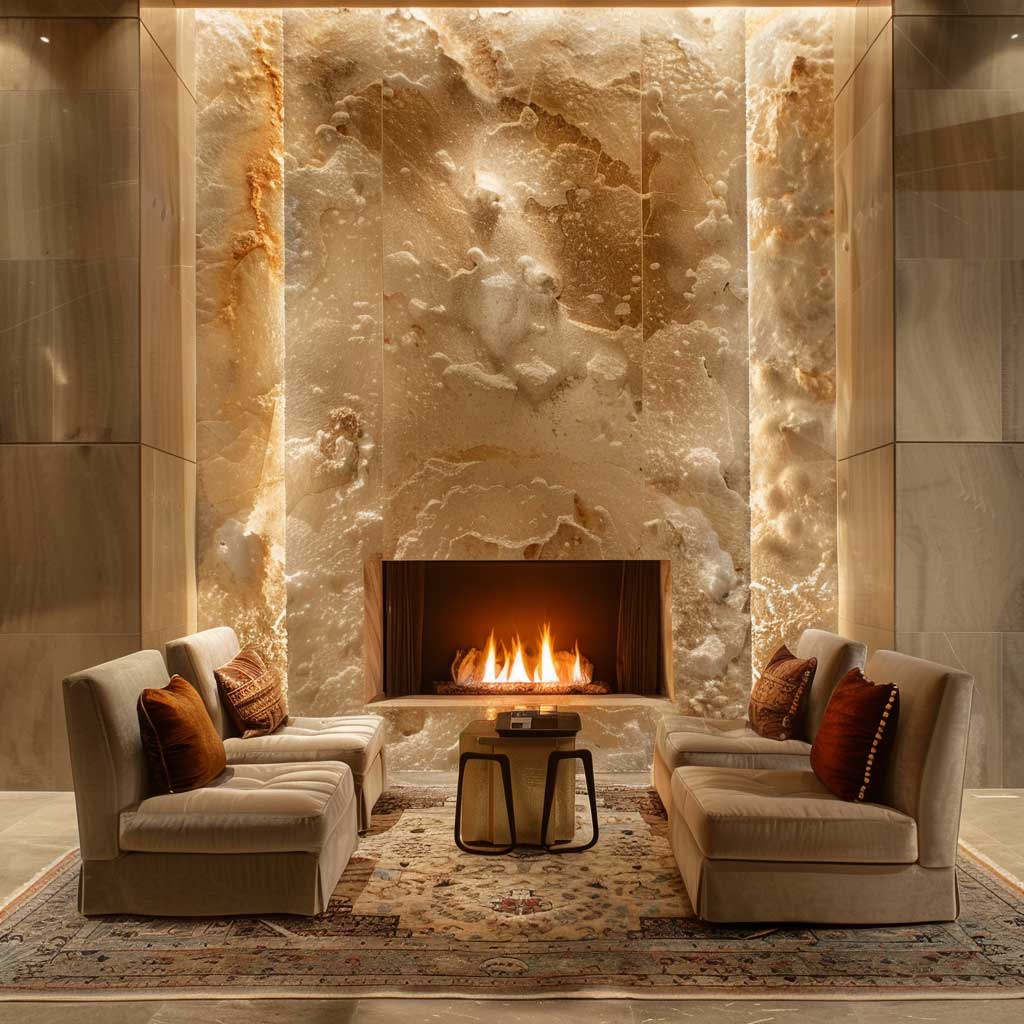
Velvet armchairs in a deep jewel tone — emerald, sapphire, or burgundy — are the seating pairing that consistently makes stone-backed floating fireplace rooms read as rich rather than rustic. Plush velvet next to rough stone is like silk next to concrete: the contrast does the decorating. A Persian or Moroccan rug on the floor grounds it without competing. What you don’t want here is glossy furniture — lacquer finishes, high-shine chrome legs, or glass surfaces all fight the matte, textured quality that makes the stone wall compelling. Matte, plush, and warm: those are the three material rules for this version of a floating fireplace wall. For more context on how stone and natural materials work together in a living space, the deep-dive on stone walls and indoor intimacy from ArtFasad lays out the material logic clearly.
Final Word
A floating fireplace wall earns its place by making a room look considered, not decorated
Placement height determines everything: 18–24 inches off the floor puts the flame at seated eye level, which is the difference between a showroom photo and an actual functional room. Get that wrong and even a $3,000 unit will look like an afterthought.
Material matching between your firebox finish and stone undertone — or your firebox and wall palette — is the invisible work that makes floating fireplace wall ideas succeed or fail. Most rooms that “don’t come together” have a finish-undertone mismatch hiding somewhere.
Napoleon’s Entice 42″ ($814–$959) and Dimplex’s Revillusion 36″ ($699–$799) cover 90% of the floating fireplace wall looks shown here. Both install on standard drywall with no venting required. Save this post.