Bamboo partition ideas for the living room and hall hit different when you’ve actually lived with one — I installed a slat-style divider two years ago and the way it filters afternoon light into my entryway still stops me every time. Bamboo grows to harvestable size in three to five years (compared to 20-plus for oak), which means you’re choosing a material that’s structurally strong, genuinely renewable, and warmer in tone than almost anything else you can put in a hallway.
You’ll notice bamboo partitions fall into three distinct categories: slat-based screens, woven panels, and hybrid builds that pair bamboo with glass or metal. Each one reads differently in a space and suits a different room width, light level, and design intent. Picking the wrong format — say, a dense woven panel in a narrow, dark hall — kills the effect entirely.
Freestanding bamboo room dividers from brands like FDW and Bamboo54 start around $75–$92 on Walmart for a 4-panel, 72-inch screen. Custom built-in versions run significantly higher — plan on $400–$900 in materials alone for a floor-to-ceiling hall partition, depending on bamboo grade and whether you’re adding a glass or steel frame. The photos below cover all three approaches with real installations worth stealing.
- Bamboo + glass is the format for narrow halls where you need light to pass through — the glass panel does structural work while bamboo adds warmth.
- Slat partitions work in minimalist interiors; spacing between slats determines how much privacy you actually get — tighter than 1 inch and you lose the airy effect.
- Woven bamboo panels suit bohemian or tropical rooms; diamond and lattice weaves cast the best shadow patterns at midday.
- Freestanding screens ($75–$239) are the right call if you rent or move frequently; built-in versions need professional installation but last decades.
- Bamboo darkens with age and UV exposure — seal it with a matte tung oil finish on installation day to lock in the original tone.
Bamboo and Glass Hall Partition Ideas
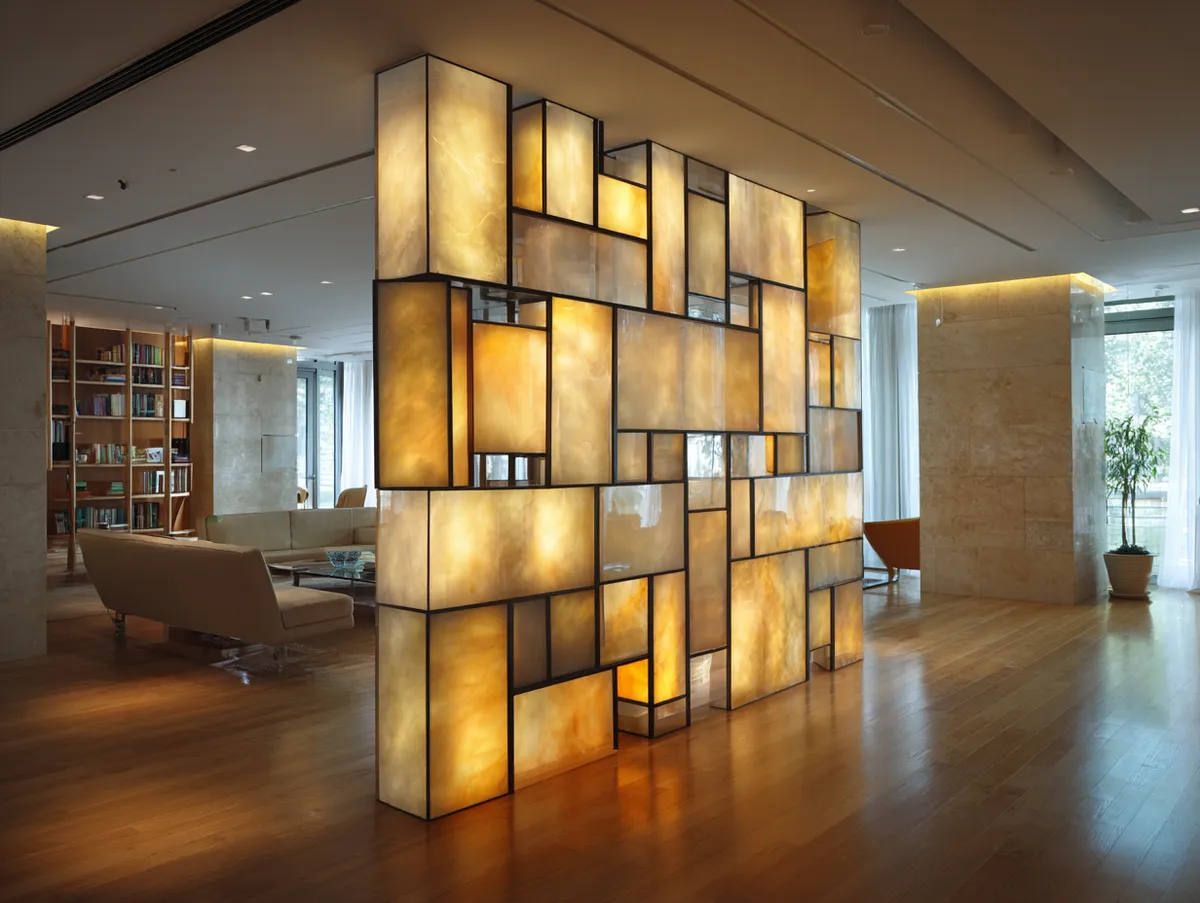
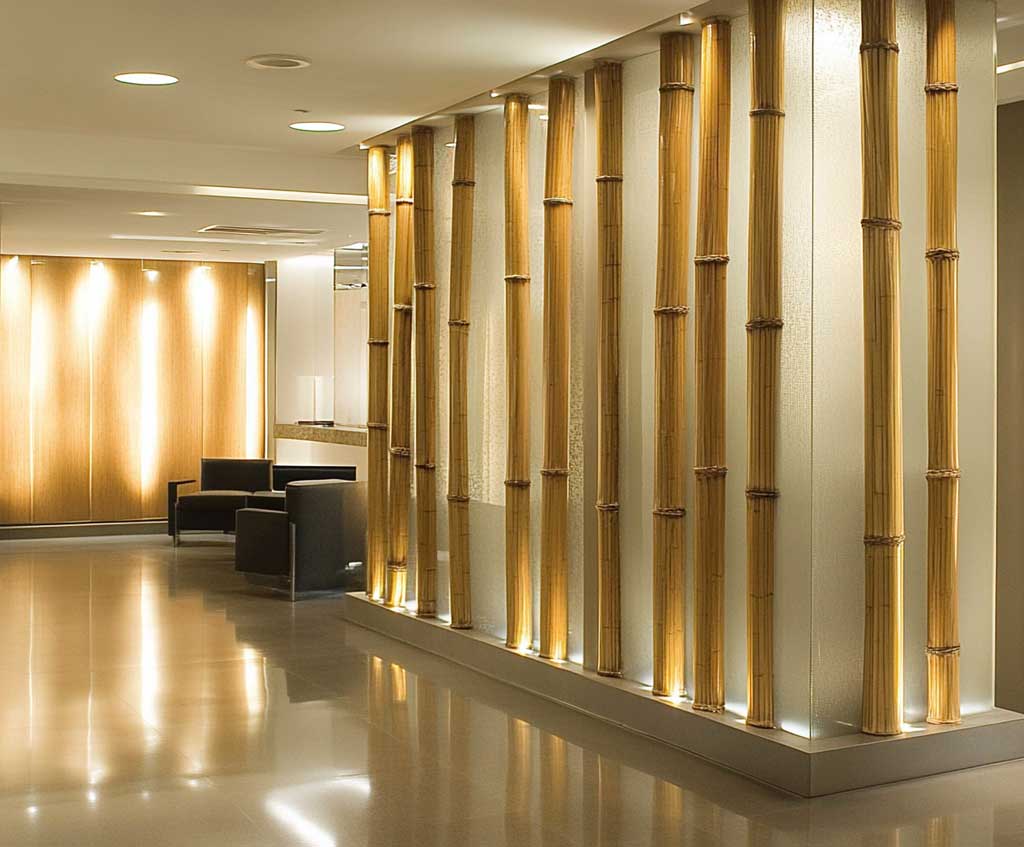
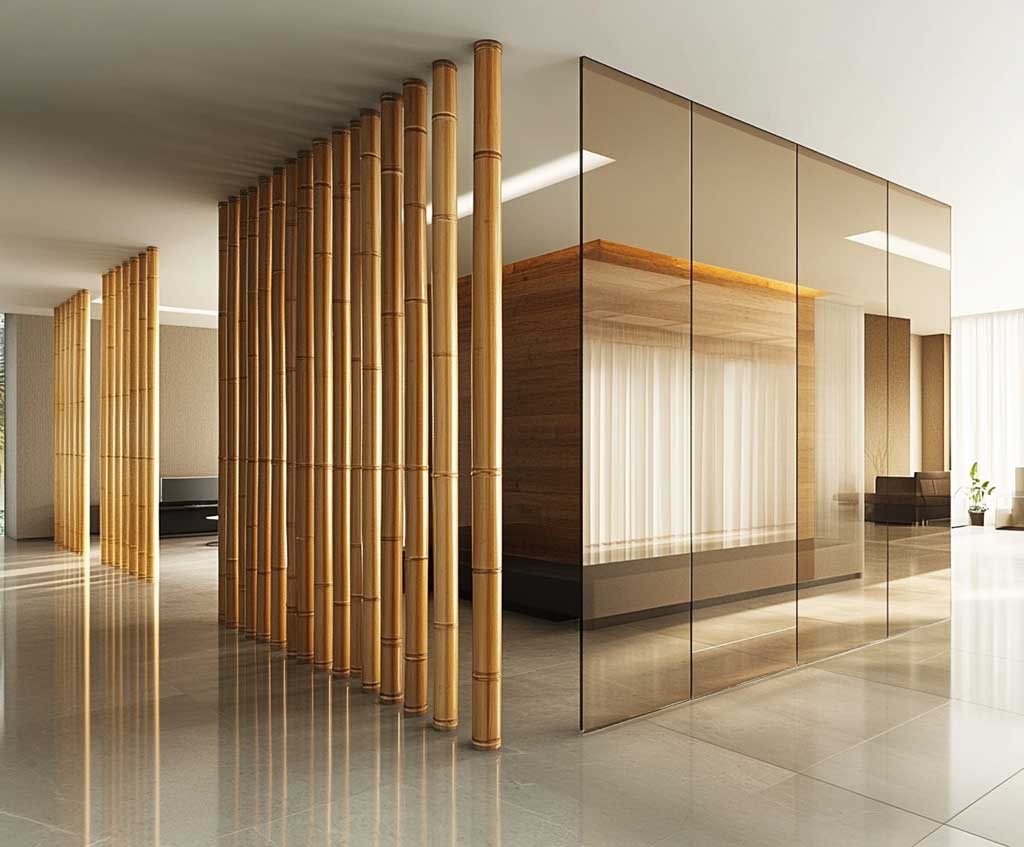
Bamboo partition ideas that combine poles with glass panels are the format I’d choose for any hall under eight feet wide — the glass carries the structural load while the bamboo does the visual heavy lifting. The contrast between warm amber-toned culm and cool, reflective glass is the closest thing to a sure bet in interior design: it reads as modern without being cold. I’ve seen this done well in an urban loft where the designer used frameless tempered panels from Dulles Glass ($18–$32 per square foot) and sourced the Moso bamboo poles locally for about $3 per linear foot.

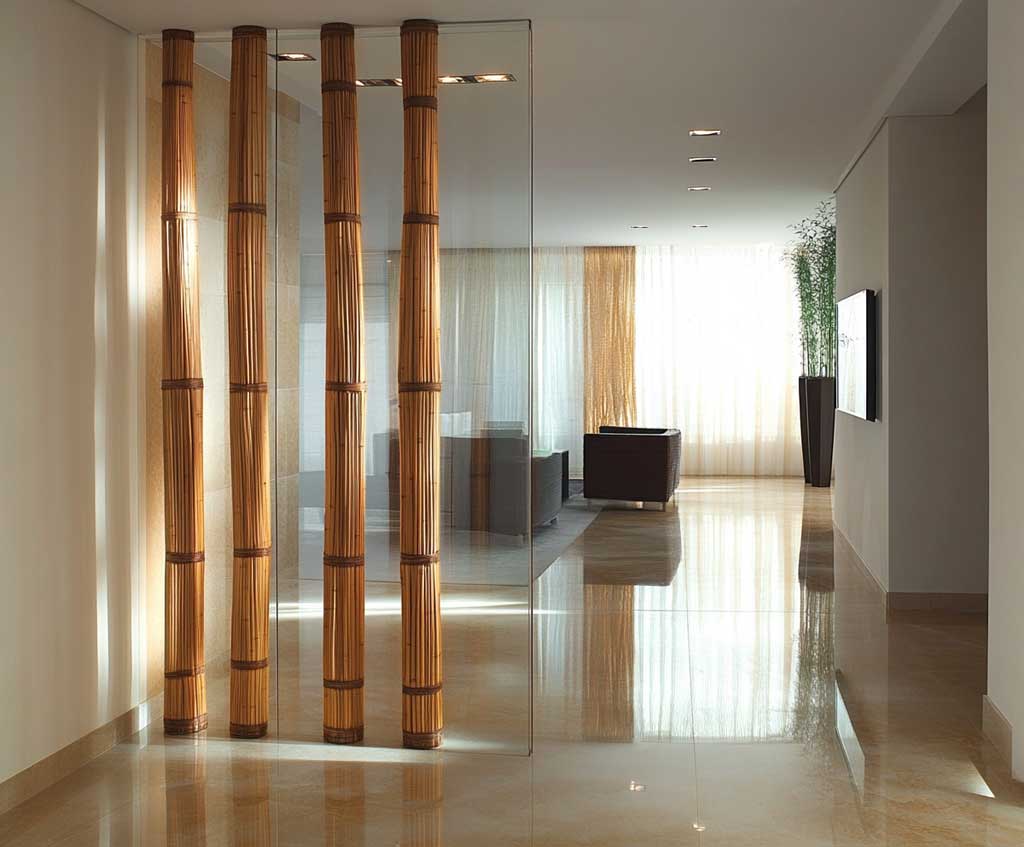
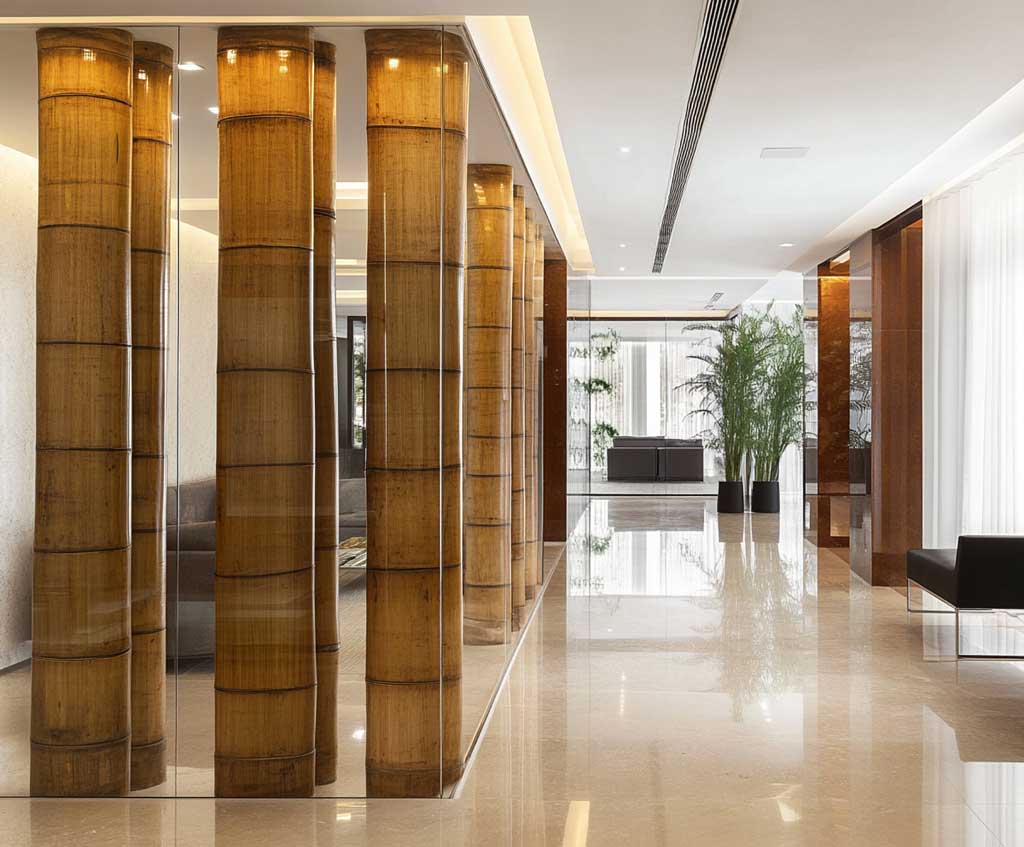
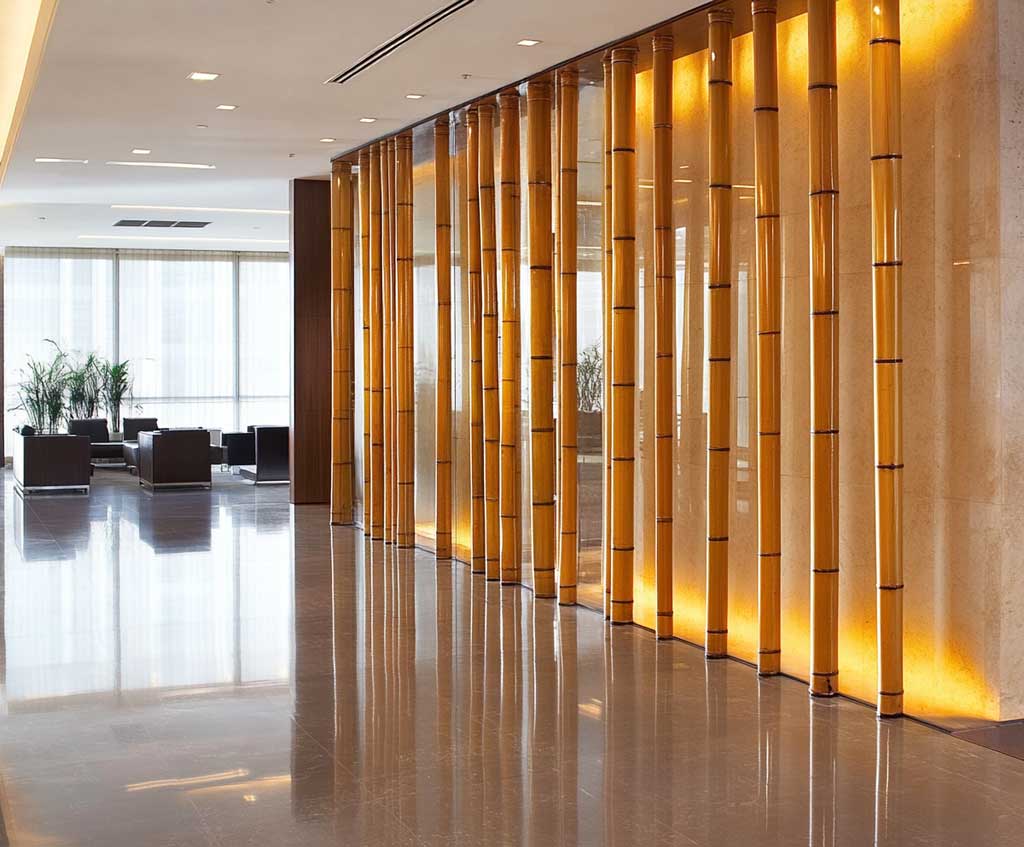
Vertical bamboo pole arrangements inside glass panels work because the geometry is unambiguous — parallel lines, clean spacing, nothing competing for attention. Does this style suit every home? No. Skip it if your interior is already heavy with wood grain and warm materials; adding more bamboo reads as overcrowded. In spaces with white walls, concrete floors, or grey upholstery, the bamboo-glass combination lands exactly right, softening the mineral coldness without muddying the palette.
Maintenance is the quiet advantage nobody talks about with this format. Glass wipes clean with a microfiber cloth and a spray of white vinegar solution; the bamboo needs a light dusting monthly and a wipe-down with tung oil or beeswax polish twice a year. I use Howard Feed-N-Wax ($10 at most hardware stores) and it keeps the poles from drying out and splitting, which is the main failure mode for untreated indoor bamboo. The partition will look better at year three than it did at installation if you stay consistent.
For bamboo and glass hall partitions in living rooms, consider how the light changes through the day — west-facing halls get dramatic late-afternoon backlight through the glass that makes the bamboo glow amber. East-facing installations look best in morning. If you want the bamboo to be a focal point rather than a background element, add a small LED strip behind the bottom rail; it reads like a lightbox and turns the partition into a feature wall after dark. See how bamboo pairs with wall decor for a full zen-inspired room treatment.


- Don’t use round hollow-core bamboo poles in a glass frame without end caps. The hollow ends collect dust, attract spiders, and look unfinished. Cap every pole or use solid culm bamboo from the start.
- Don’t skip the sealant on new bamboo. Raw bamboo absorbs moisture from cooking steam and bathroom humidity and will crack within a year in most homes.
- Don’t center a freestanding bamboo screen in a wide-open room. It reads like furniture placed randomly. Anchor it to a wall on one side or run it floor-to-ceiling for architectural weight.
- Don’t mix carbonized (dark) bamboo with warm-toned wood floors. The two browns fight each other. Natural or bleached bamboo against a medium walnut floor is the combination that actually works.
Bamboo Slat Hall Partition Ideas
Bamboo slat partitions are what I’d call the workhorses of bamboo partition ideas — they define space, allow light, and suit almost any interior without demanding attention. The vertical slat format is a direct descendant of Japanese shoji screens, but it lands as modern rather than traditional when you keep the palette neutral and the slat spacing consistent. My go-to rule is 0.75 to 1 inch of gap between slats for a hall partition: enough for light to filter, not enough to lose privacy entirely.
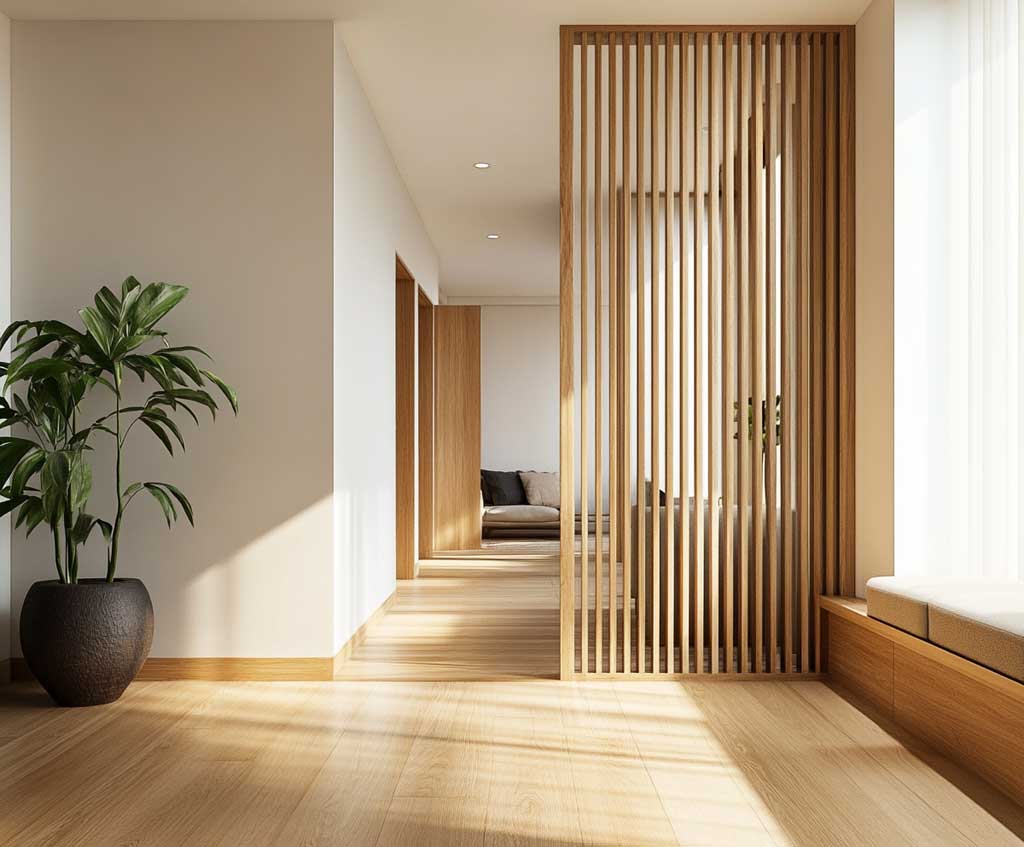


Sustainability is real with bamboo slats, not just a marketing claim — Moso bamboo, the species used in most interior applications, reaches structural maturity in four years and doesn’t require replanting because it regenerates from the root system. You’re not clearing forest to make this partition. The slat format also wastes almost no material in production because the culm is split into flat strips and used whole. Cali Bamboo (the same brand known for flooring) sells raw bamboo strips in the $1.50–$3 per linear foot range, and the difference between their standard and premium grades is visible immediately: the premium strips are uniform in color and flex-test consistent.
What doesn’t work with bamboo slat partitions? Painting them. I’ve seen painted-white bamboo slat screens in magazine shoots that look credible, but in real rooms, the paint cracks at every node within eighteen months because bamboo expands and contracts with humidity changes. Staining is fine — a diluted ebony or walnut stain applied with a cloth gives you a darker, richer tone without sealing the surface tight. The natural color is still the best choice in most interiors because the variation between nodes catches light in a way no uniform finish replicates.
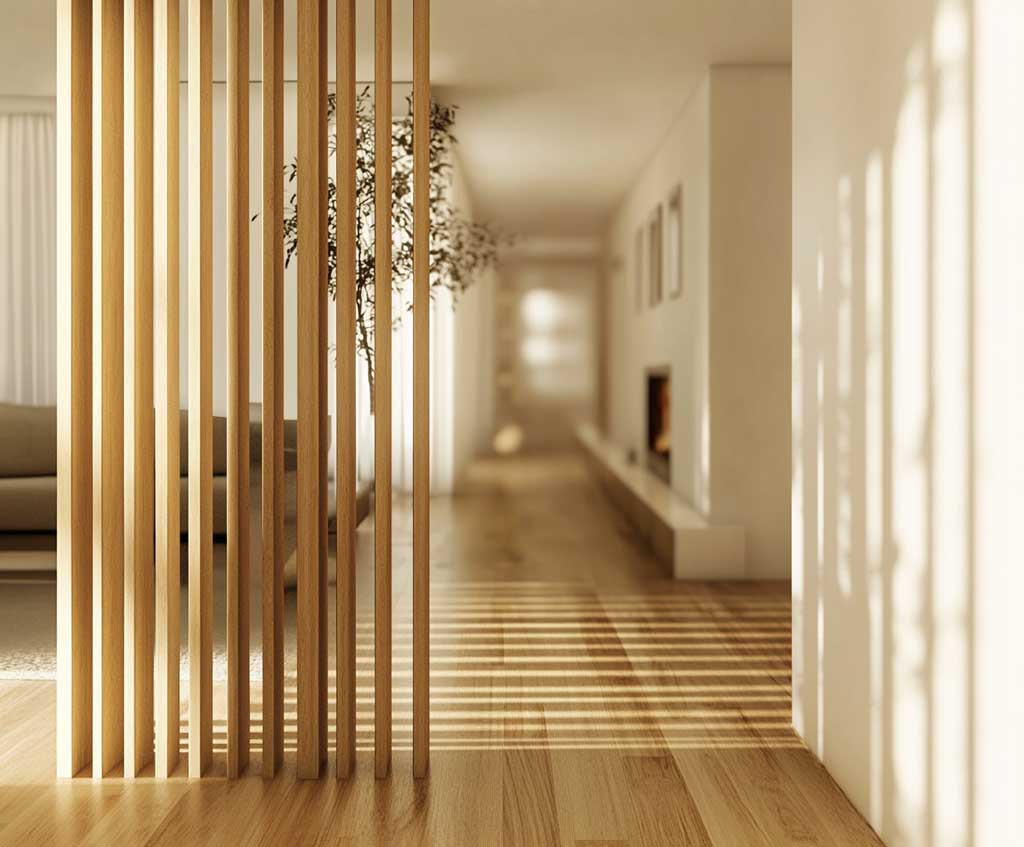

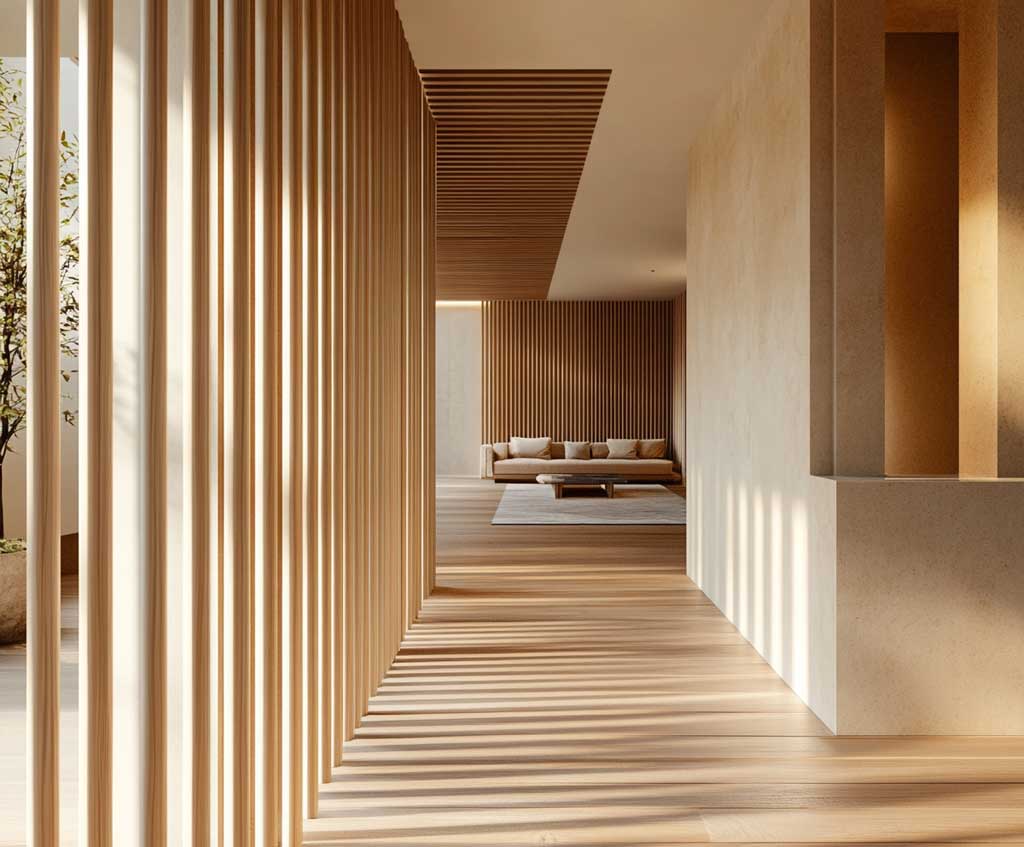
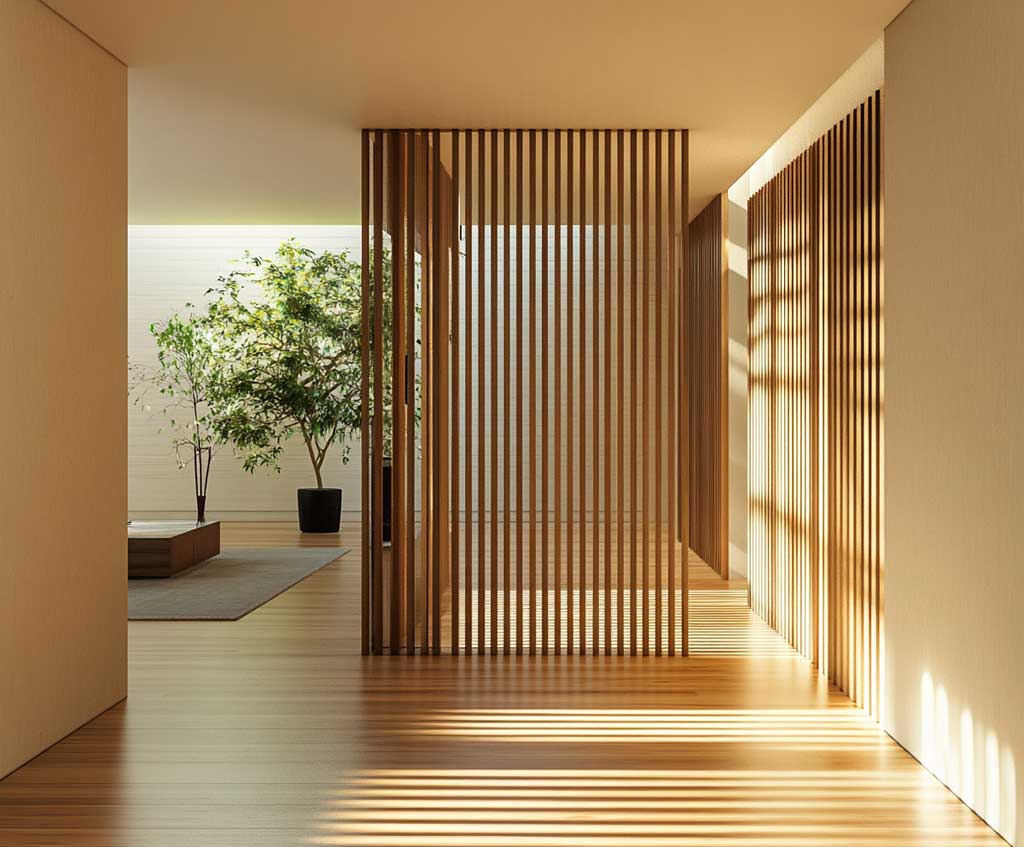
You’ll notice the shadow pattern from a bamboo slat partition changes every hour — at noon it throws crisp parallel lines across the floor; by 4pm those lines angle and soften into something almost painterly. That’s the functional case for bamboo over MDF or drywall in a hallway: it’s a material that performs differently throughout the day and never looks static. Read about how modern partition trends are reshaping living room layouts beyond the hallway.
Woven Bamboo Panels Bring Texture Where Slats Bring Lines
Woven bamboo partition ideas operate on a completely different visual frequency from slat screens — where slats give you architecture, weaving gives you craft. The interlocking diamond and lattice patterns used in traditional Indonesian and Filipino basket weaving translate directly to hall partition scale, and when you’re standing in front of one in person, the surface depth is genuinely surprising. I stole this technique from a restaurant in Bali that used floor-to-ceiling woven bamboo panels as the kitchen-to-dining partition; the tactile quality made the entire room feel handmade in a way no other material could.
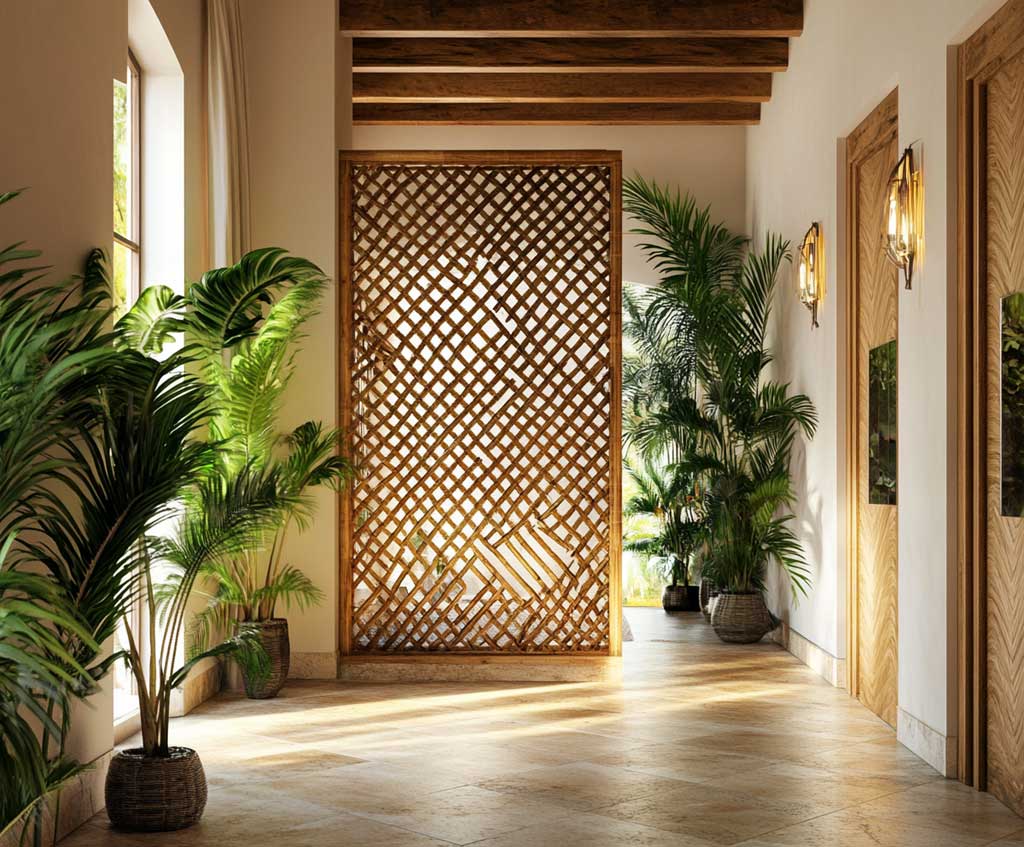
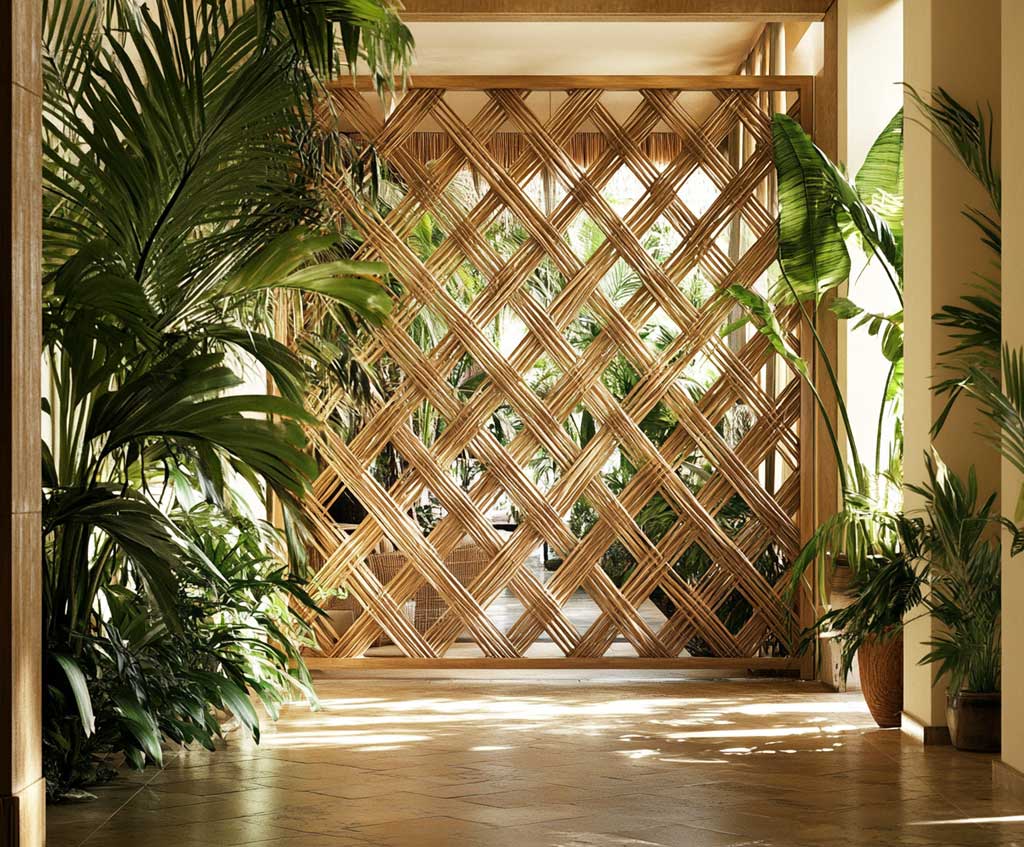

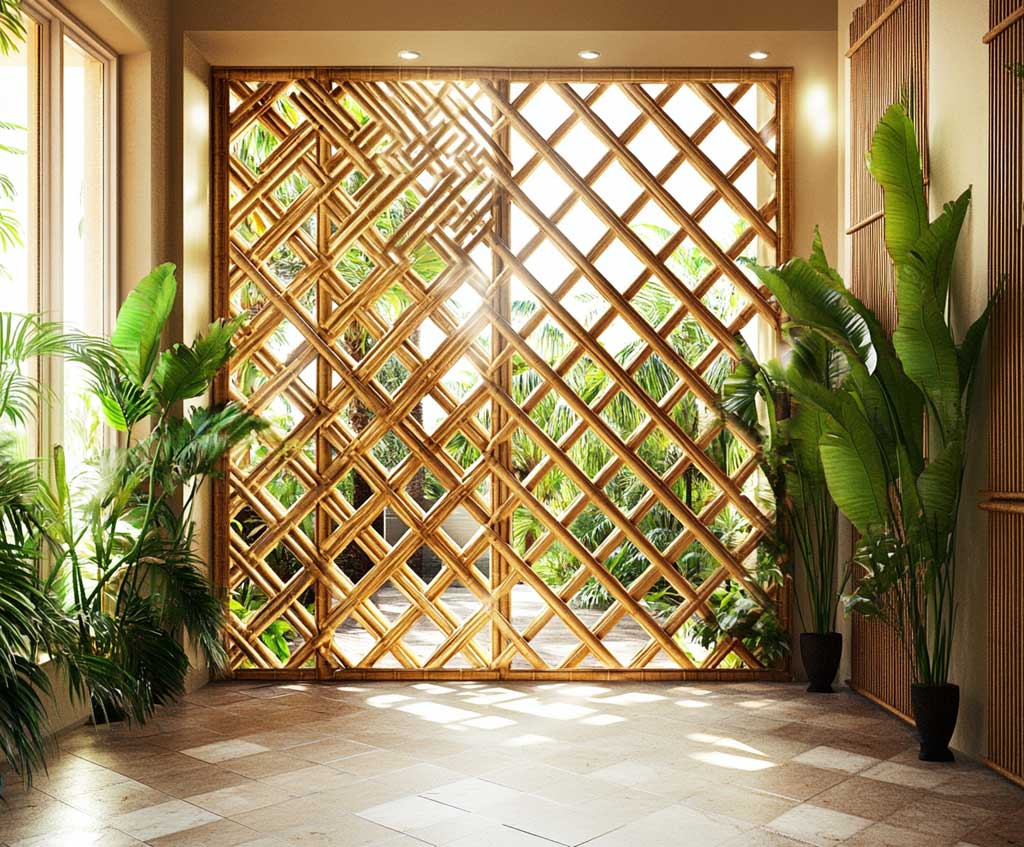
The weave density matters more than most people realize when choosing a woven bamboo partition. A tight weave — gaps under 3mm — gives you near-complete visual privacy but blocks light significantly; it’s the right call for a bedroom partition but wrong for a hallway where you want to feel the space extend beyond the divider. An open lattice weave with 8–12mm gaps lets 40–60% of ambient light through and creates the mosaic shadow effect that makes these partitions so photogenic. Legacy Decor sells a 3-panel woven bamboo screen at Walmart for $82–$195 that gives you a reasonable sense of the proportions before committing to a custom built-in.
Does woven bamboo hold up in high-traffic halls? Better than most people expect. Bamboo fiber under compression — which is what weaving produces — is actually harder and more impact-resistant than the same bamboo in a straight slat format. The cross-linking of the weave distributes force the way a wicker basket distributes it: individually each strip is flexible, collectively they’re rigid. The weak point is moisture — a hall near a front door in a wet climate will need a light coat of exterior-grade bamboo sealant like Cabot’s Australian Timber Oil ($30/qt) applied annually.
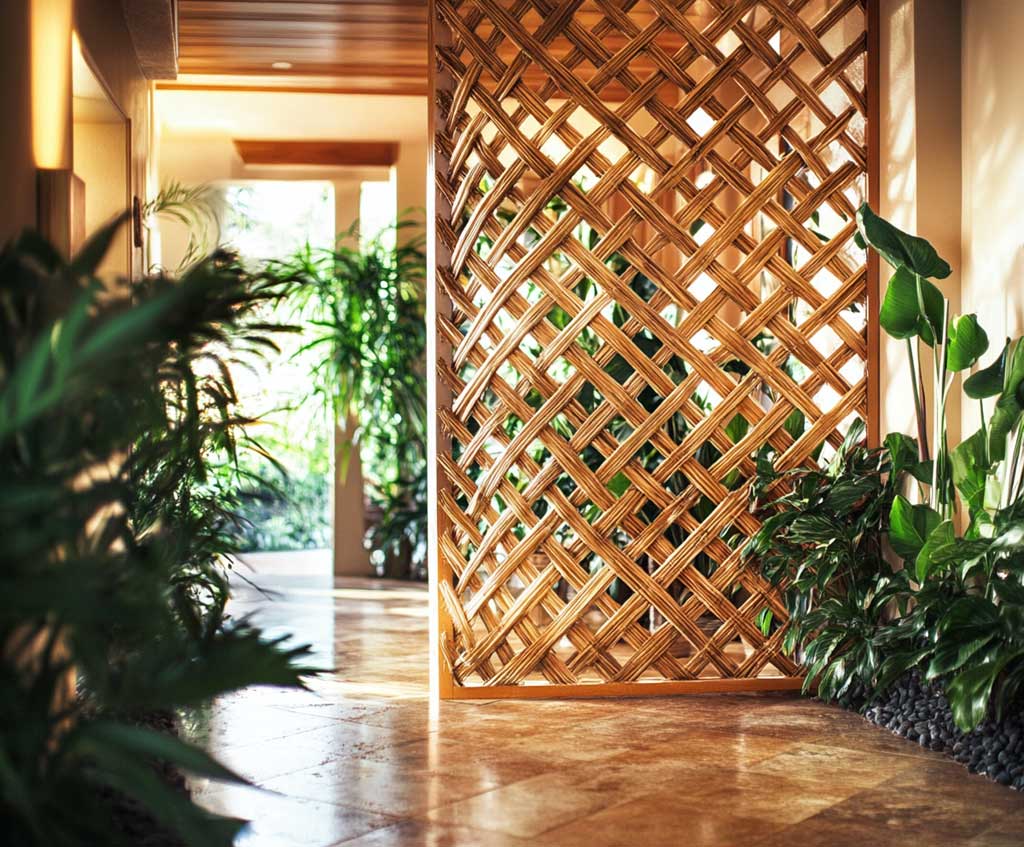
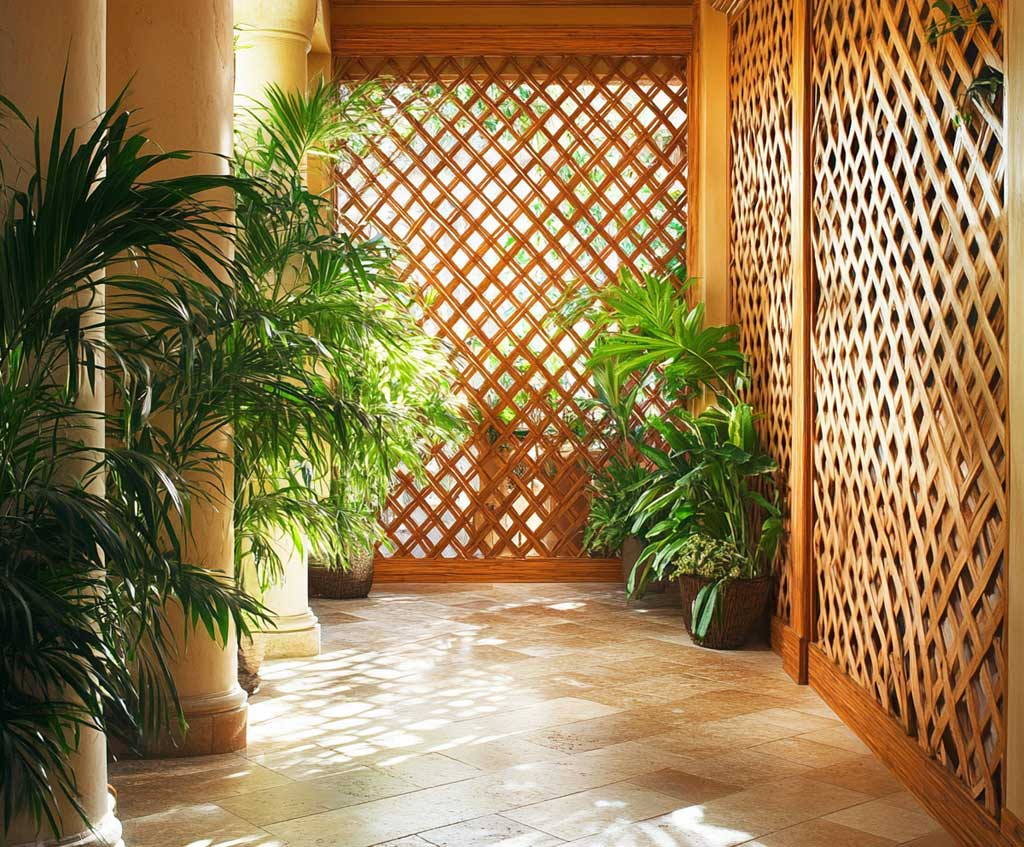


Think of a woven bamboo partition as a textile stretched over a frame, not a wall. That framing analogy is useful because it tells you how to hang it: the frame needs to carry the weight, not the weave. A steel or solid hardwood perimeter frame — even simple 1.5-inch square steel tube powder-coated matte black — transforms a woven bamboo panel from a floppy screen into a structural-feeling partition that reads as architectural. I own two of these panels in a narrow hall at home; with the steel frame they function as door surrogates for a room without a door, and nobody has ever noticed they move.
Final Thoughts
Bamboo Partitions Work Because the Material Has Memory
Glass and steel partitions divide space. Bamboo partitions change it — the light, the shadow, the warmth of the material all shift how a hall feels without adding a single square foot.
Slat partitions are for minimalist rooms where structure matters. Woven panels are for rooms where texture is the point. Bamboo and glass hybrids work in contemporary spaces that need organic softening without sacrificing transparency.
A freestanding FDW 4-panel bamboo screen at $75–$92 gets you into the look immediately. A built-in with Cali Bamboo slats and a steel frame runs $400–$900 in materials and lasts a generation. Save this post before you start shopping.