Bamboo cladding exterior projects have become the design move I keep seeing on the most photogenic houses in my neighborhood — and for good reason. I’ve visited three homes that used it differently: flush modern panels on a concrete box, horizontal strips on a craftsman bungalow, and raw weathered stalks on a garden retreat. Each one stopped traffic. The material does something no painted stucco ever can: it ages into something better than what you installed.
You’ll notice bamboo exterior cladding pulls triple duty — it insulates, resists moisture without chemical treatment, and reads as both modern and natural depending on how you install it. MOSO Bamboo X-treme, probably the most tested product on the market, carries a 25-year warranty and actually qualifies for LEED certification. That’s not a material that’s trying to be wood. That’s a material that beats most of it.
My go-to recommendation splits into three directions depending on what your facade needs: clean-lined panels for contemporary builds, horizontal bamboo strips for eco-forward statements, and rough-texture pole cladding for rustic outdoor retreats. All three are covered below, with real brand names and the installation details nobody talks about on Pinterest.
- Bamboo exterior cladding lasts 25+ years with zero periodic maintenance when thermo-treated (MOSO X-treme or ZHUART).
- Horizontal strips cost roughly $18–$35 per sq ft installed; flush panels run $30–$55 depending on profile and brand.
- The biggest install mistake is skipping a ventilated substructure — boards trap moisture against solid walls and warp within two seasons.
- Natural bamboo weathers to silver-grey over 12–18 months outdoors; apply a UV oil yearly if you want to keep the original caramel tone.
- Rustic pole cladding works visually only on low horizontal walls or garden structures — it looks costume-y on a two-story facade.
Bamboo Panels Bring Modern Outdoor Wall Cladding From Flat to Architectural
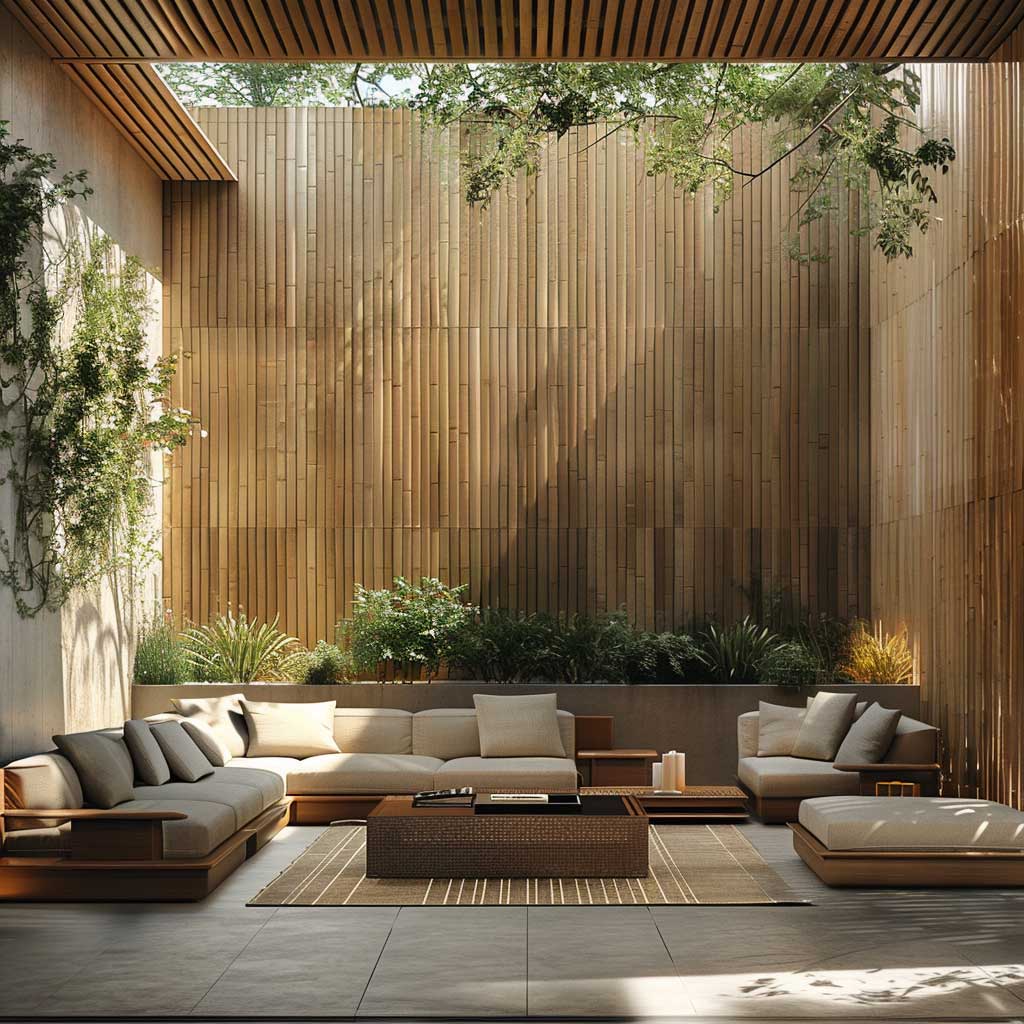
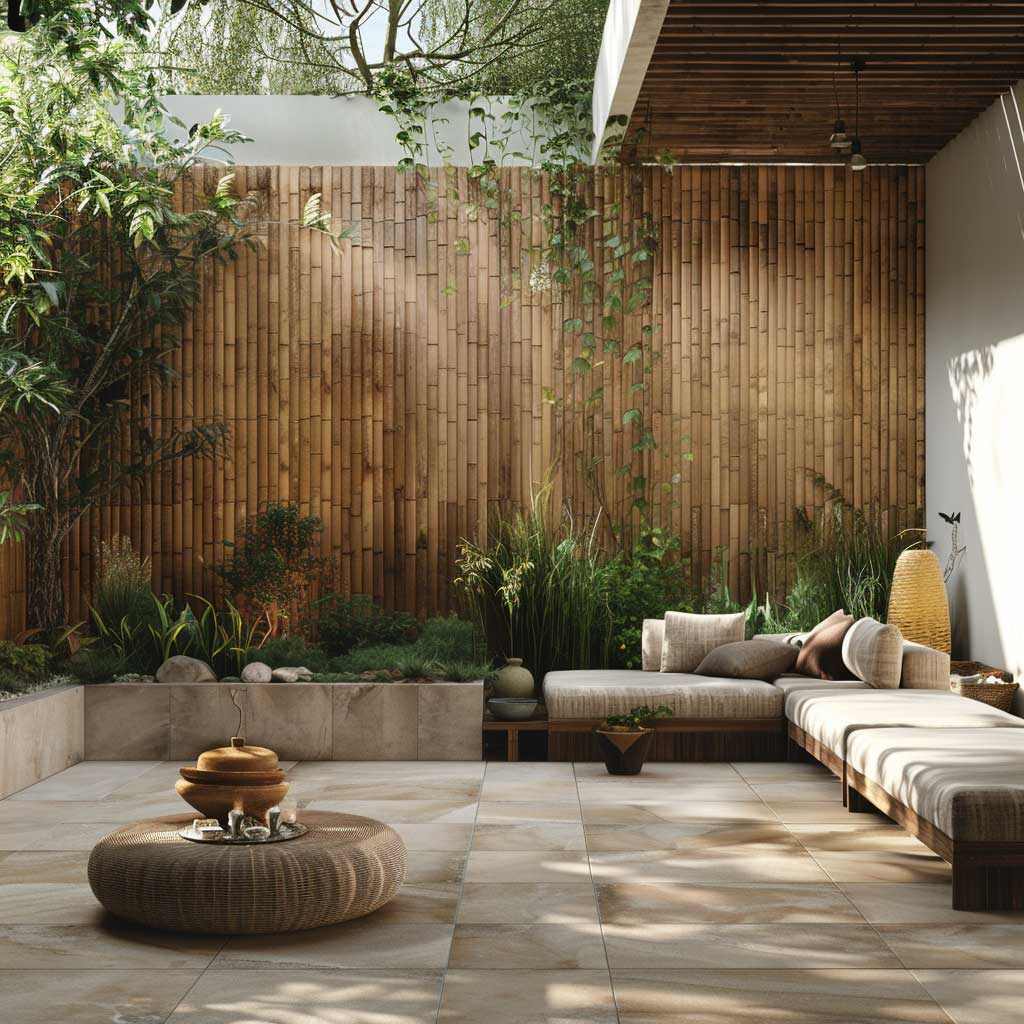
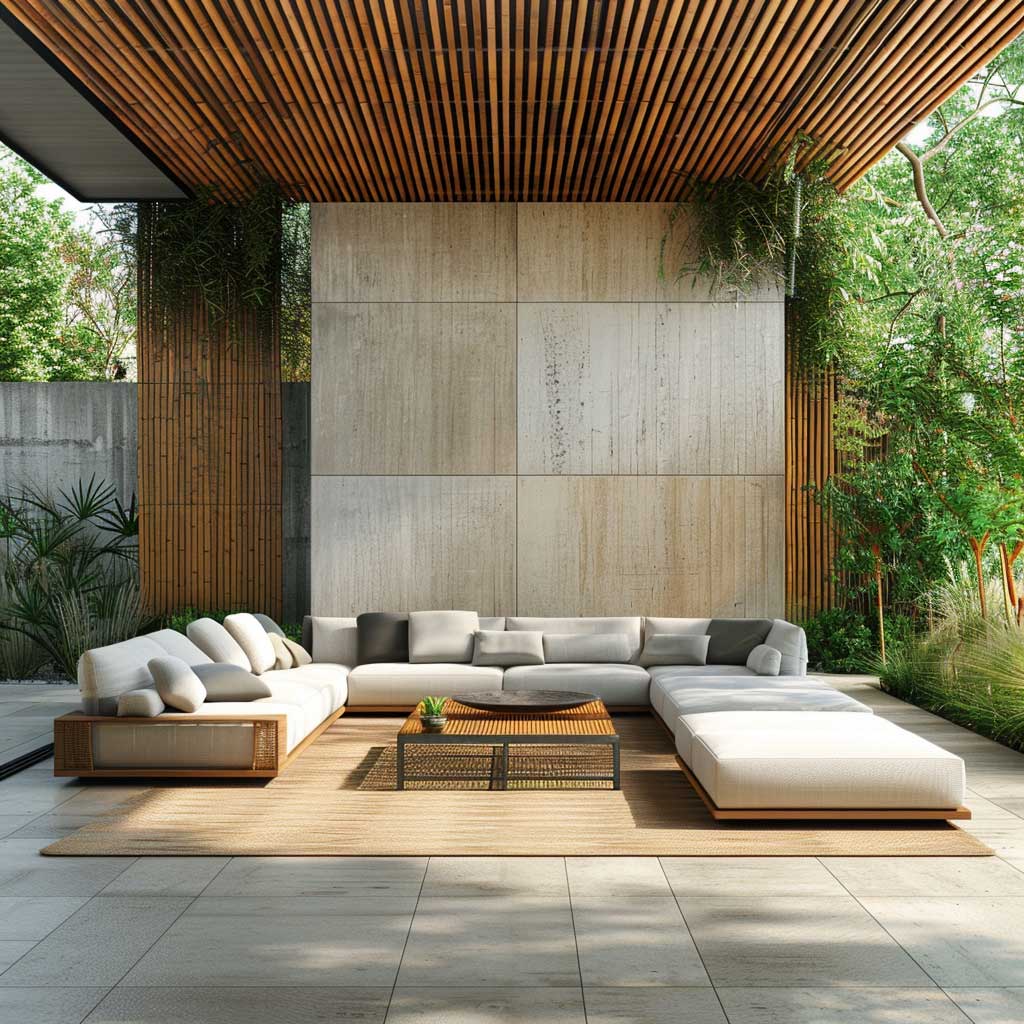
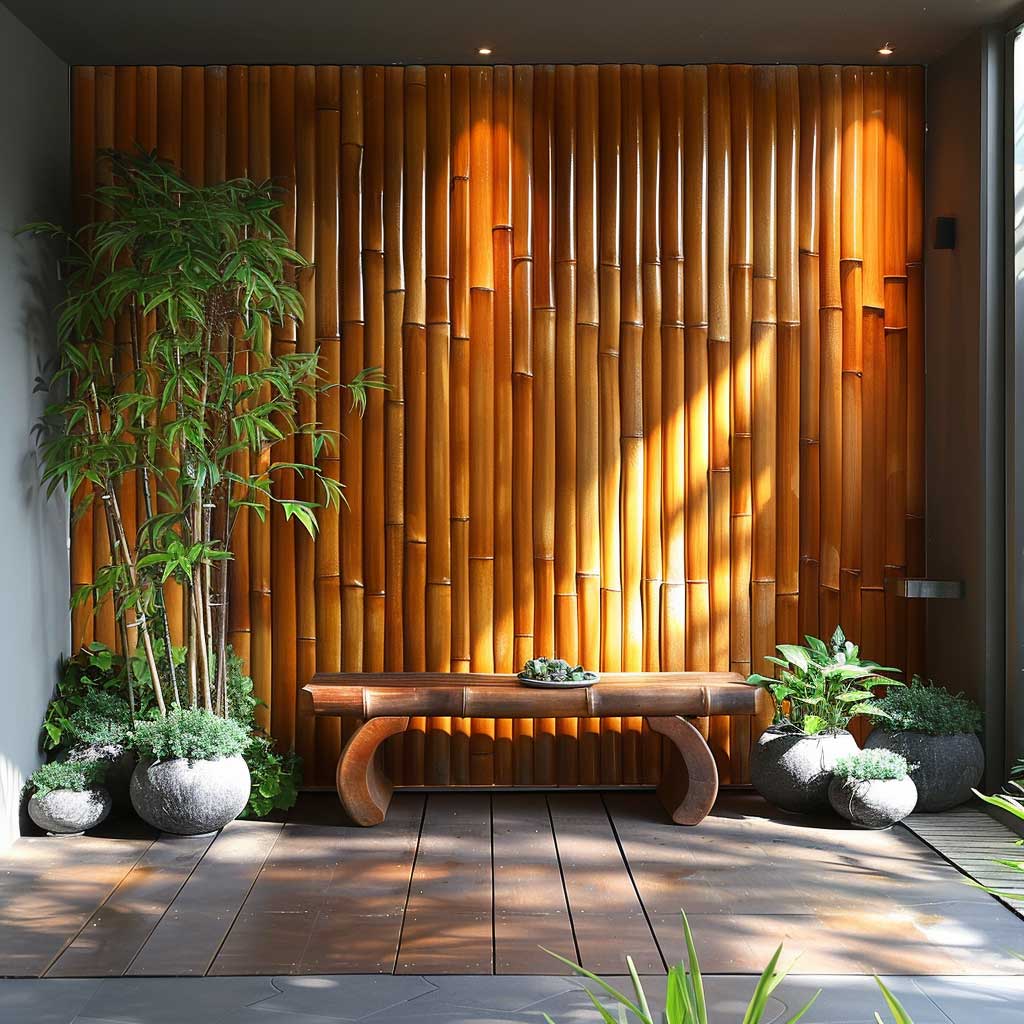
Bamboo panels for outdoor wall cladding hit differently than any engineered composite I’ve tested — and I’ve tested a lot of them. The tongue-and-groove MOSO X-treme boards install in a single afternoon on aluminum rails, run about $38–$52 per square foot installed in North America, and arrive pre-finished in caramel, espresso, or the increasingly popular pre-aged grey called “Elegance.” That last option means you skip the 18-month waiting period while the facade naturally silvers. Is that cheating? Maybe. Does it look incredible against white concrete? Absolutely.
You need to think about the substructure before you order a single board. Panels installed flat against a masonry wall with no air gap will trap condensation and warp within two winters — I’ve watched this happen on a neighbor’s retaining wall that cost $4,000 to redo. The correct approach uses 40mm aluminum battens creating a ventilated cavity behind the cladding. This also makes the system fully demountable, which matters if you ever need to access utilities behind the wall. ANOS strand-woven panels offer a similar hidden fastener clip system if you want flush faces with no visible screws.
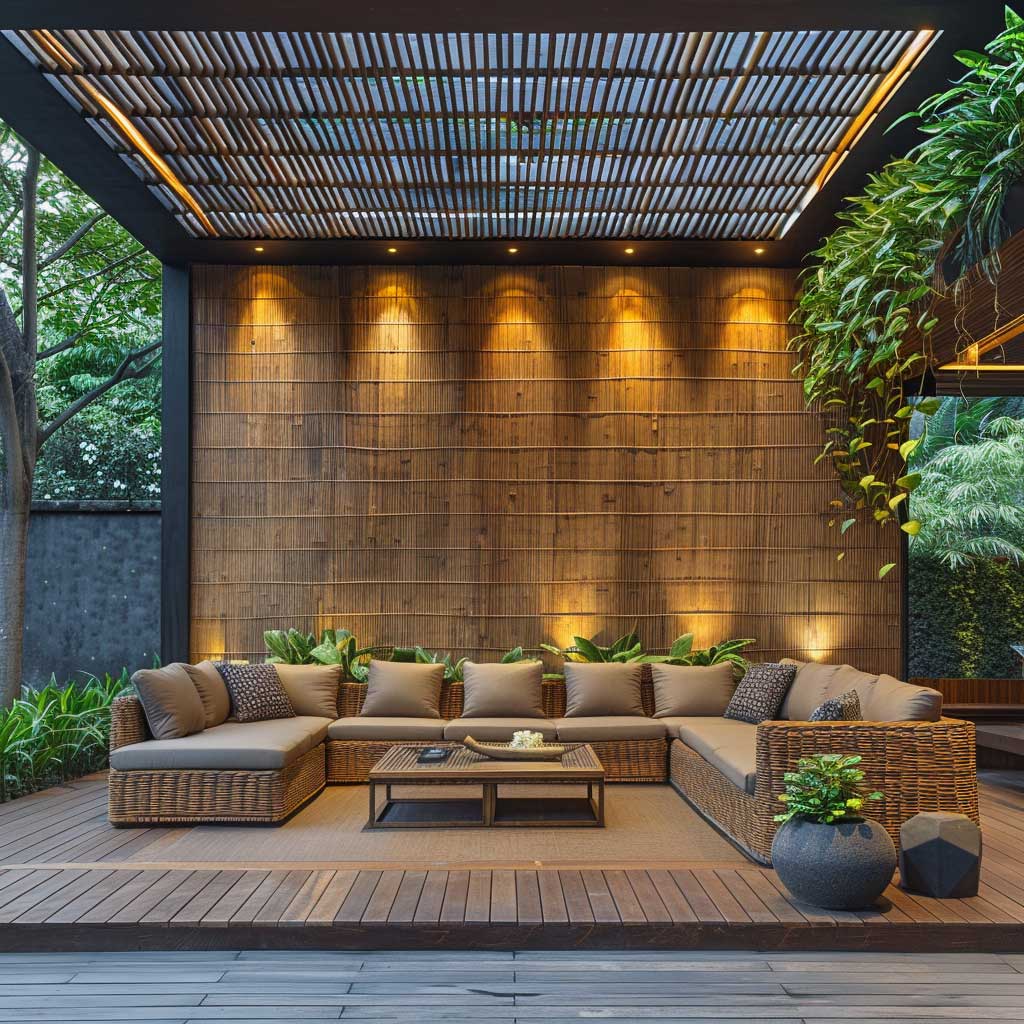
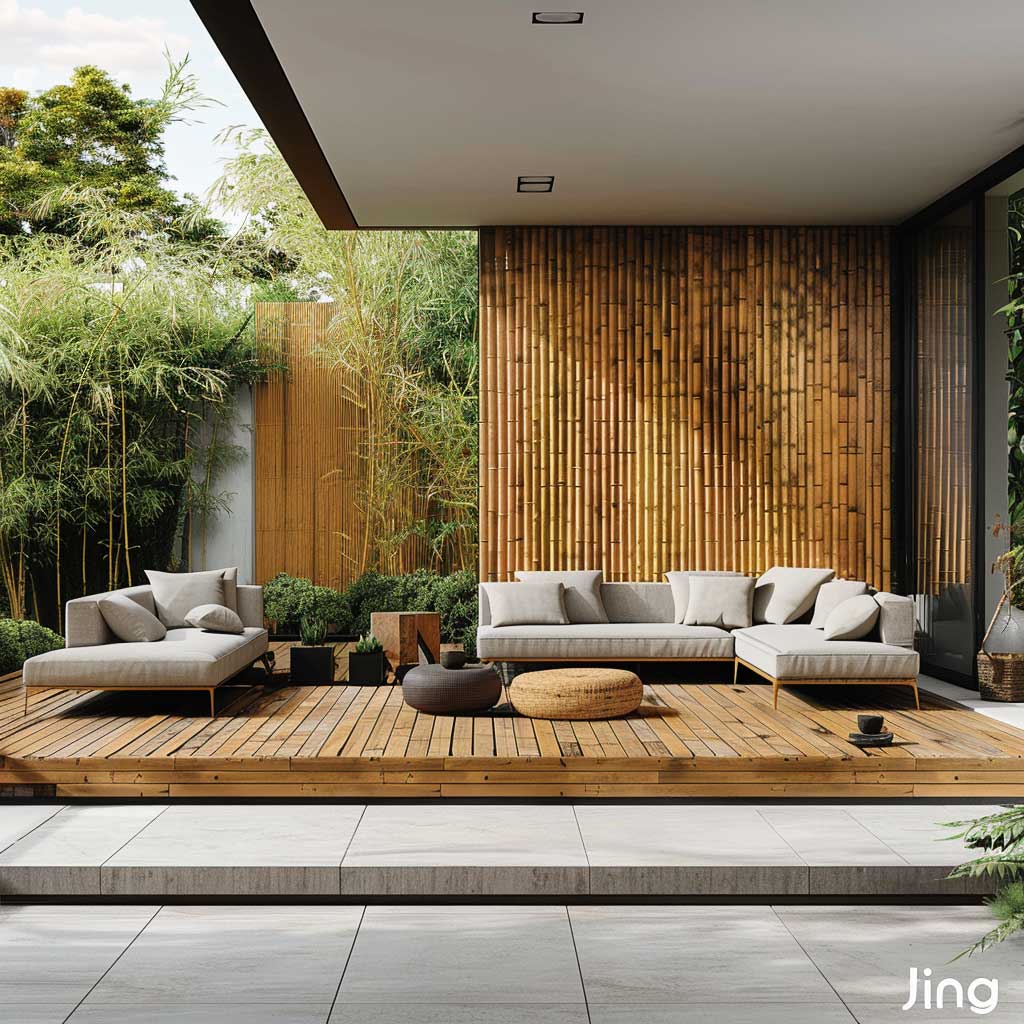
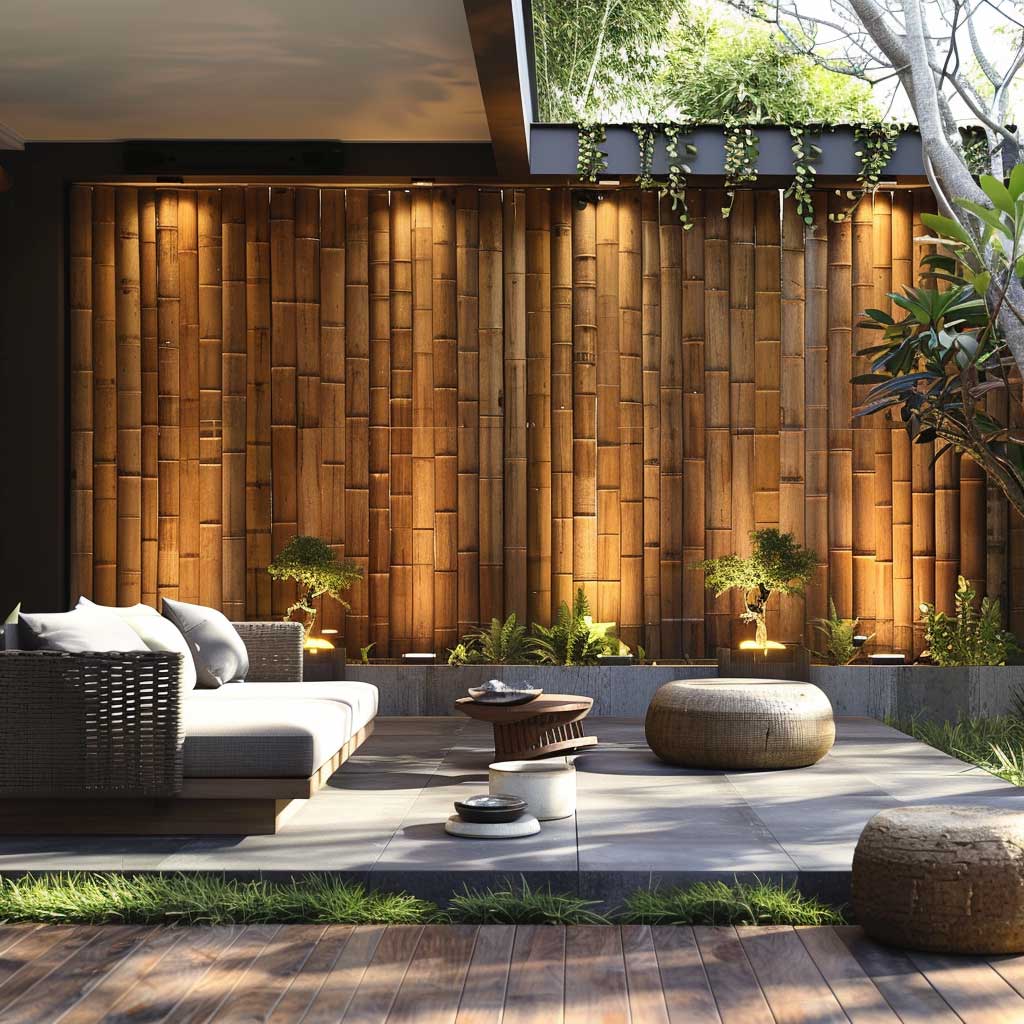
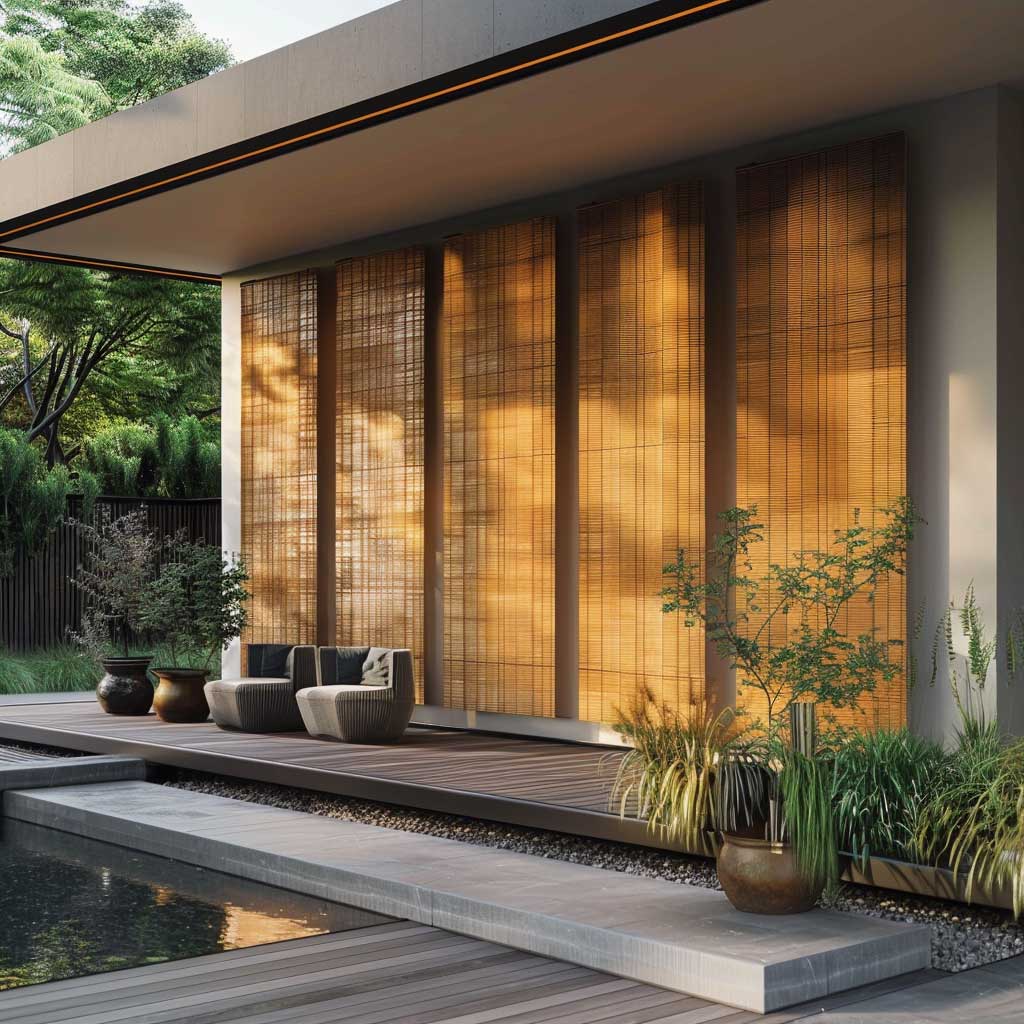
Pair vertical bamboo panels with low-profile steel planters and a single horizontal concrete bench — I stole this trick from a landscape architect whose portfolio I found pinned 47 thousand times. The combination works because bamboo’s warm grain competes with nothing; it’s like the bassist in a band, holding everything together without demanding attention. Don’t make the mistake of adding too many materials: bamboo panels plus stone cladding plus wood decking on the same wall reads like an indecisive showroom display, not a home.
Bamboo panels are a rapidly renewable material — the Moso species reaches harvest maturity in 4–5 years versus 30–80 for the hardwoods it replaces. The MOSO X-treme line actually carries LEED and BREEAM certification credits, which is useful if you’re working with a green building consultant. That sustainability story isn’t marketing noise; it’s backed by independently verified EPD (Environmental Product Declaration) data. You’re not trading performance for conscience here — thermo-treated bamboo outperforms teak on dimensional stability in freeze-thaw cycle testing.
Horizontal Bamboo Strip Cladding and What It Does to a Plain Exterior Wall
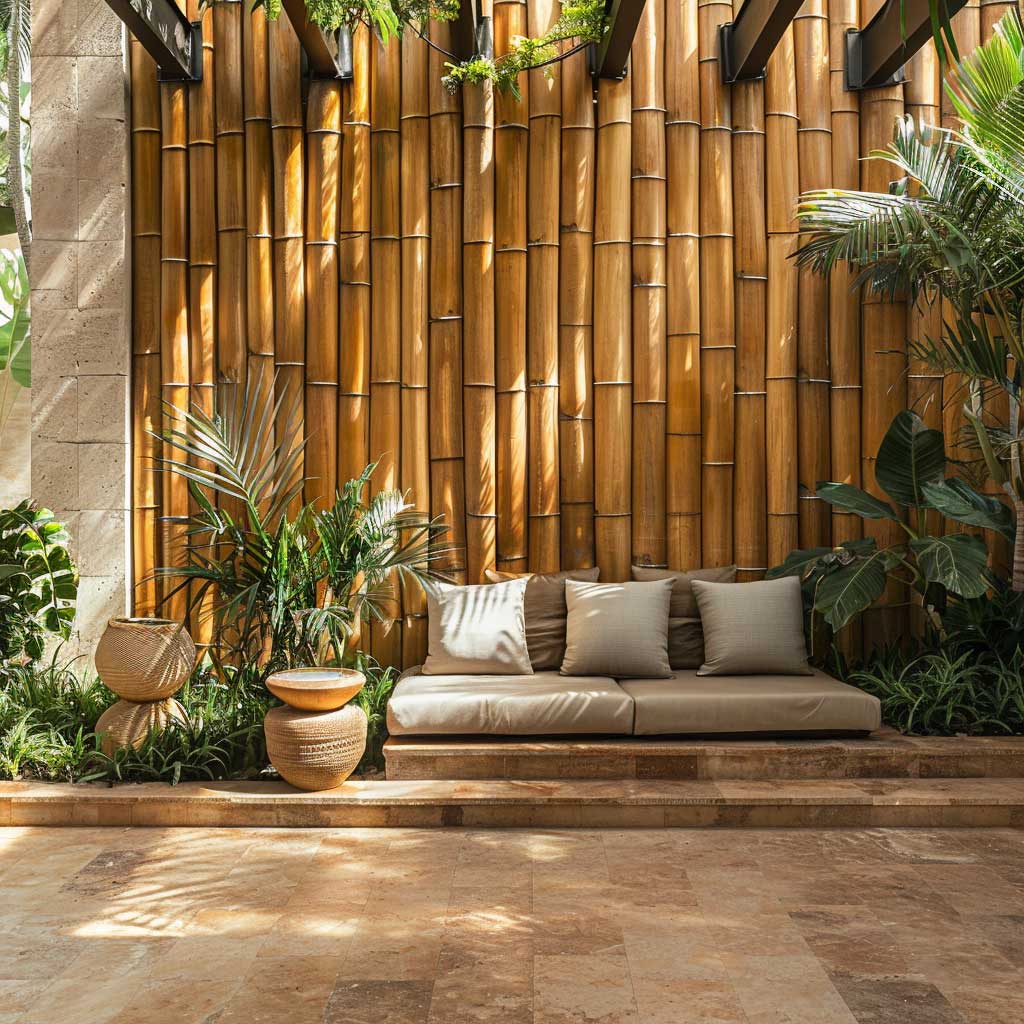
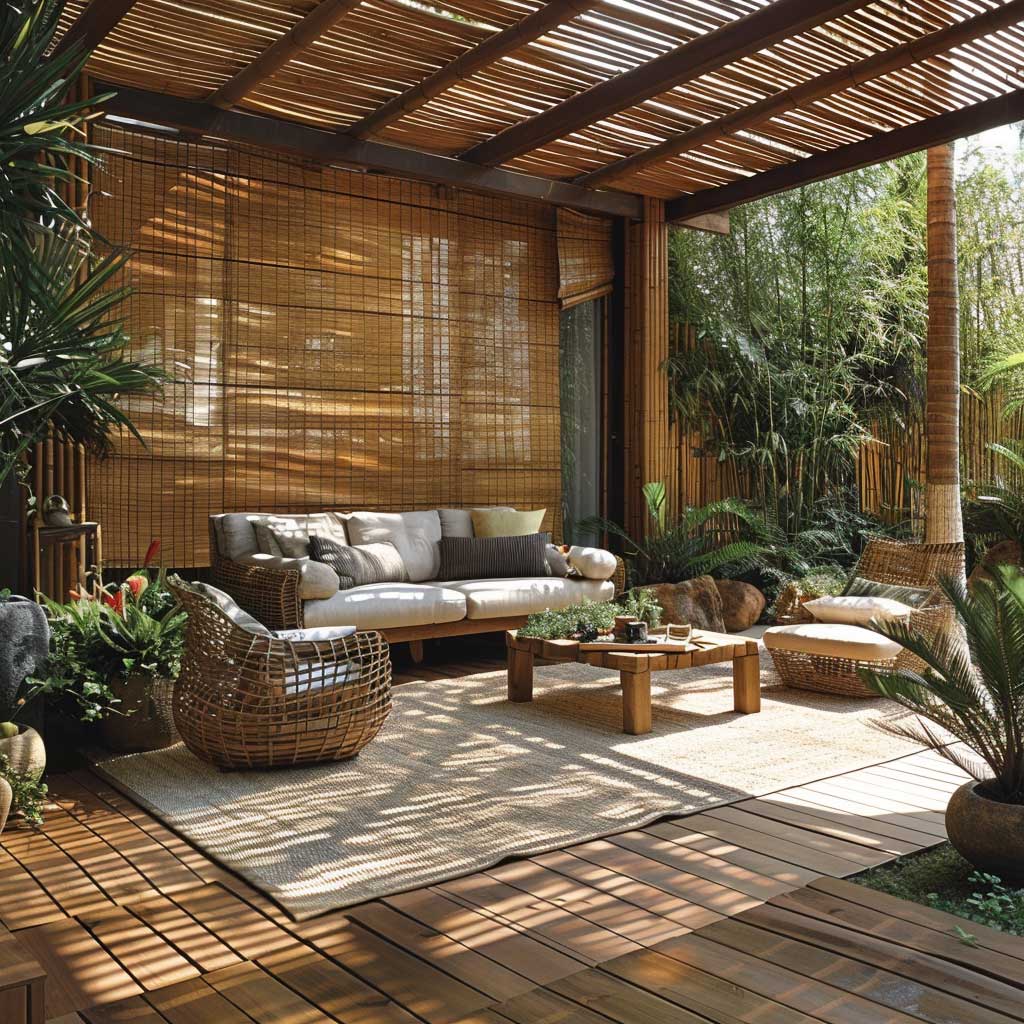
Bamboo strip cladding on outdoor walls is the format that turns a flat rendered surface into something with actual shadow play — and shadow play is the whole point of any exterior texture. I own two ZHUART Thermo Bamboo panels in the “Chestnut” grooved profile (T18 × W100 × L2440mm), and even laid horizontally against an unpainted block wall they read as intentional design, not a DIY finish. The grooved profile creates a rhythmic line every 100mm that your eye reads as movement across the wall, like timber battens but lighter and more uniform.
What direction should you run the strips? Horizontal makes a wall look wider and lower — ideal for garden boundary walls and privacy screens. Vertical lifts a structure visually, works better on entry facades where height flatters. Diagonal is the Instagram-bait option: striking in photos, labor-intensive at corners, and genuinely hard to finish cleanly. I’ve seen three diagonal bamboo cladding jobs in person — one looked like a magazine shoot, two looked like someone gave up halfway. Nail the corners or don’t go diagonal.
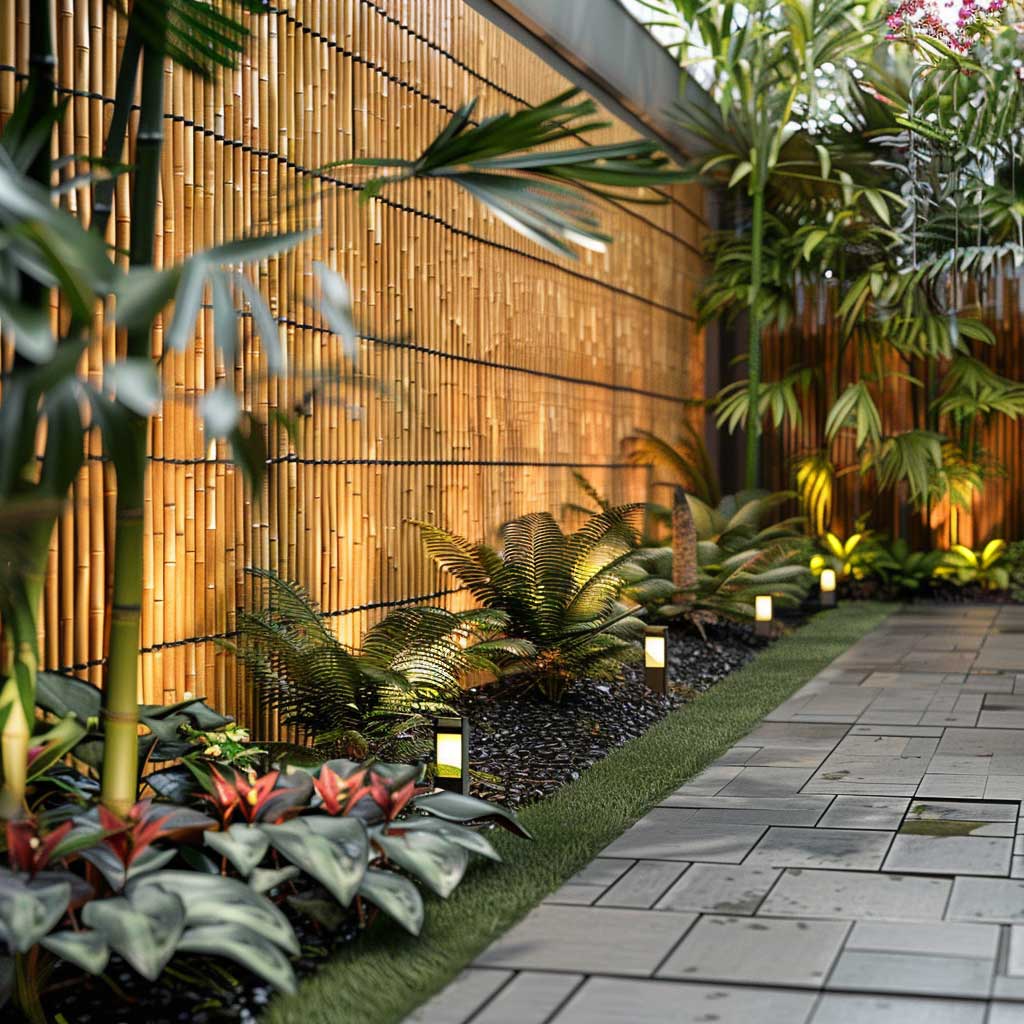

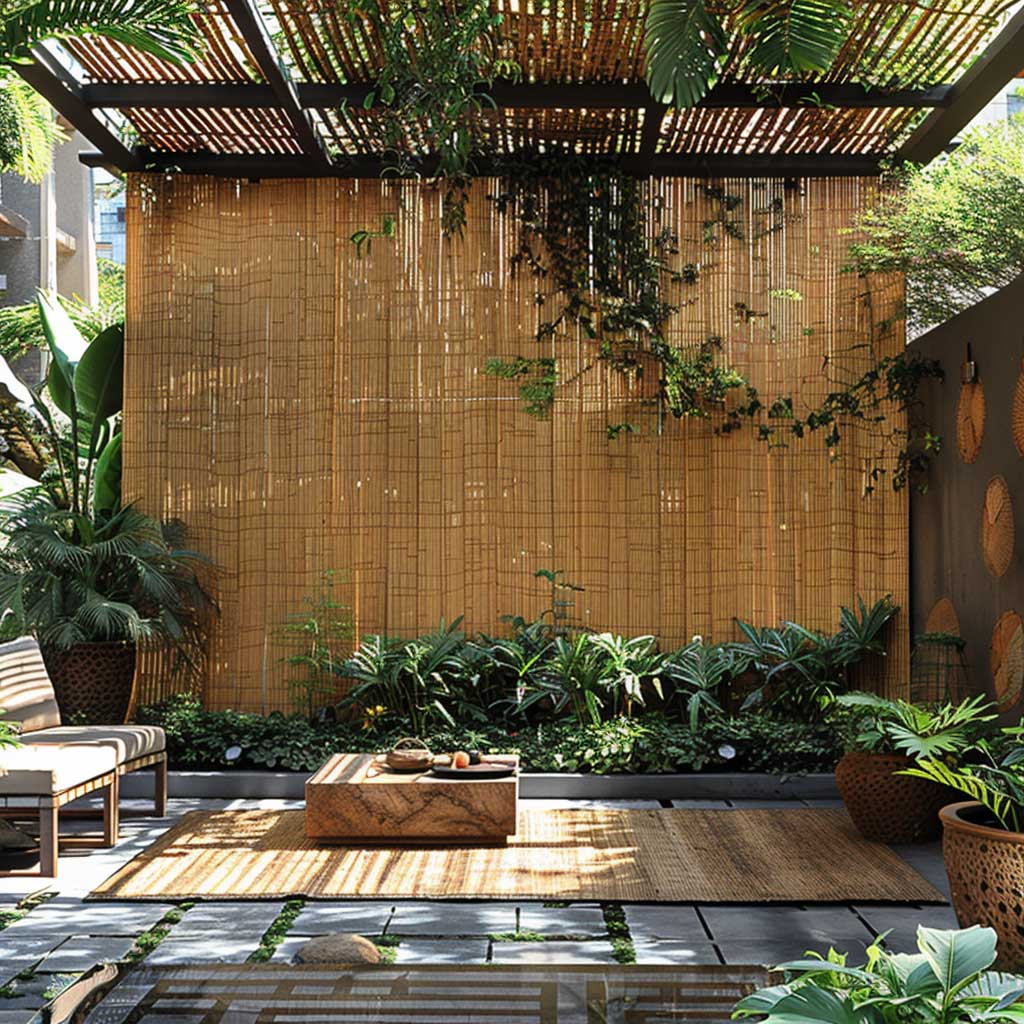
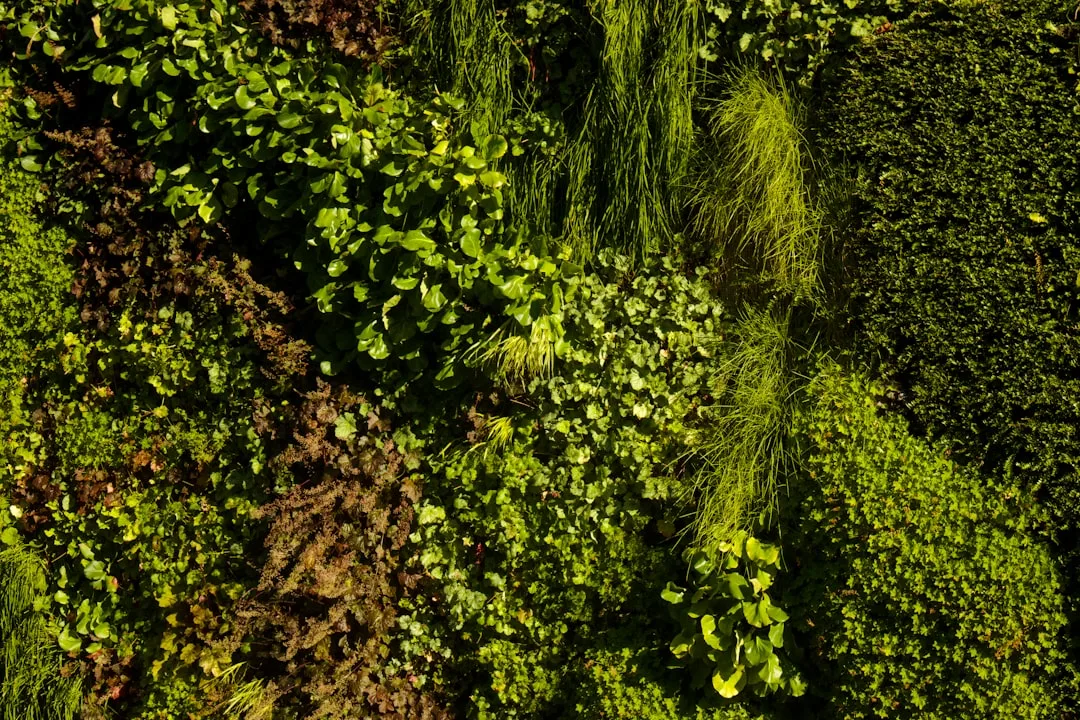
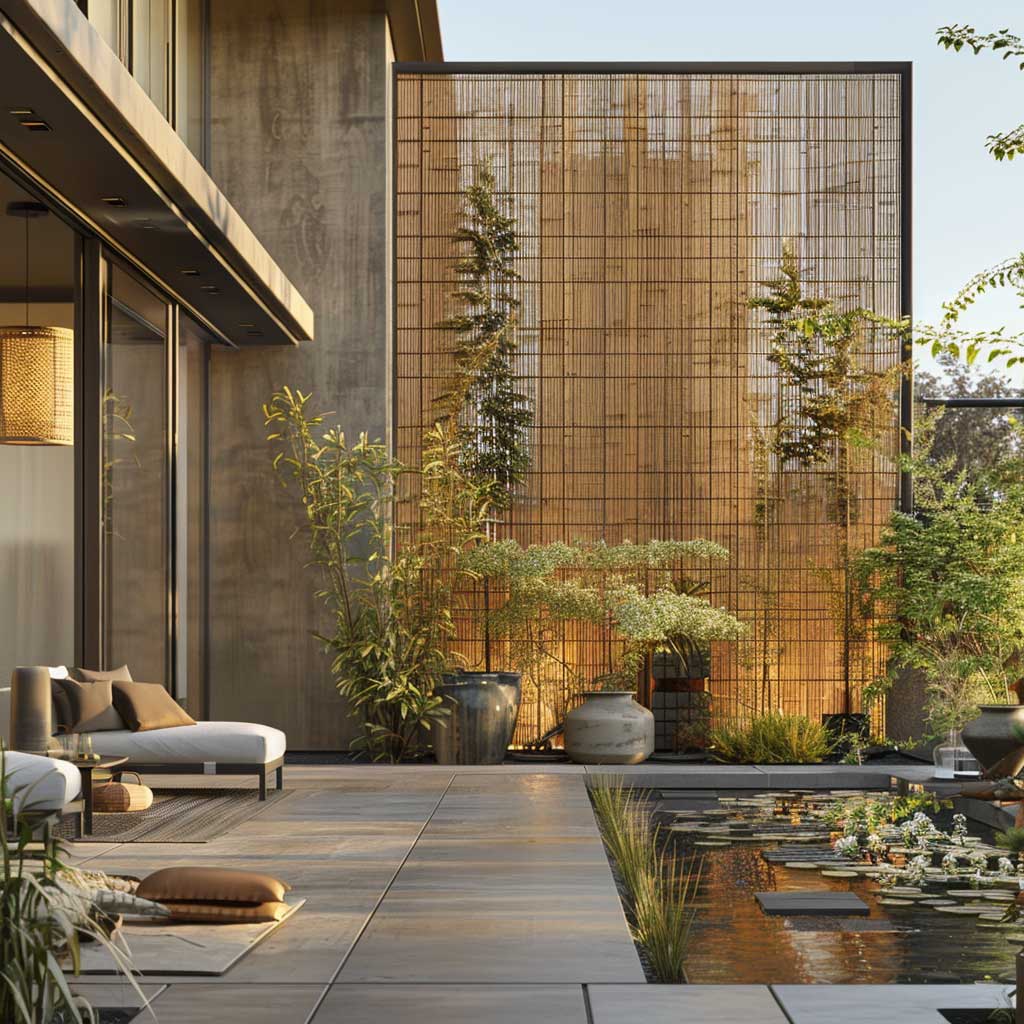
The color range on natural bamboo strips runs from soft biscuit beige through deep caramel to a warm amber — colors that do what no gray composite can: they warm up a north-facing wall that never sees direct sun. Pair strips with cascading bronze fennel or ornamental grasses planted in a gravel bed at the wall base; the vertical plant movement mirrors the strip lines and makes the whole composition feel designed rather than built. Avoid plastic planters or bright-colored ceramic pots against bamboo — the clash is jarring, like wearing sneakers with a linen suit.
Durability on thermo-treated bamboo strips is genuinely impressive once you understand the science. ZHUART’s thermal modification process heats panels to 220°C, burning off the fiber sugars that attract insects and mold. The result resists moisture, insects, warping, and cracking — and their lifespan spec exceeds 25 years under outdoor conditions. Compared to cedar siding, which typically needs restaining every 3–5 years at $2–$4 per square foot, the maintenance math on bamboo strips is a clear win. See how other natural materials compare in this overview of creative outside wall covering ideas.
- Don’t install bamboo strips without a ventilated air gap. Flush against masonry traps condensation — boards bow within two seasons and the whole installation has to come down.
- Don’t mix bamboo strips with faux-stone panels on the same wall face. Two “natural” materials competing on one surface cancel each other out and look indecisive.
- Don’t use raw, untreated bamboo poles for exterior cladding in wet climates. Untreated poles split, mold, and attract borers within 18 months. Thermo-treated products only.
- Don’t stain natural bamboo with dark opaque deck stain. It blocks the grain, looks like painted MDF, and defeats the reason you bought bamboo in the first place.
Rustic Bamboo Exterior Cladding Pulls Off What Reclaimed Wood Rarely Does
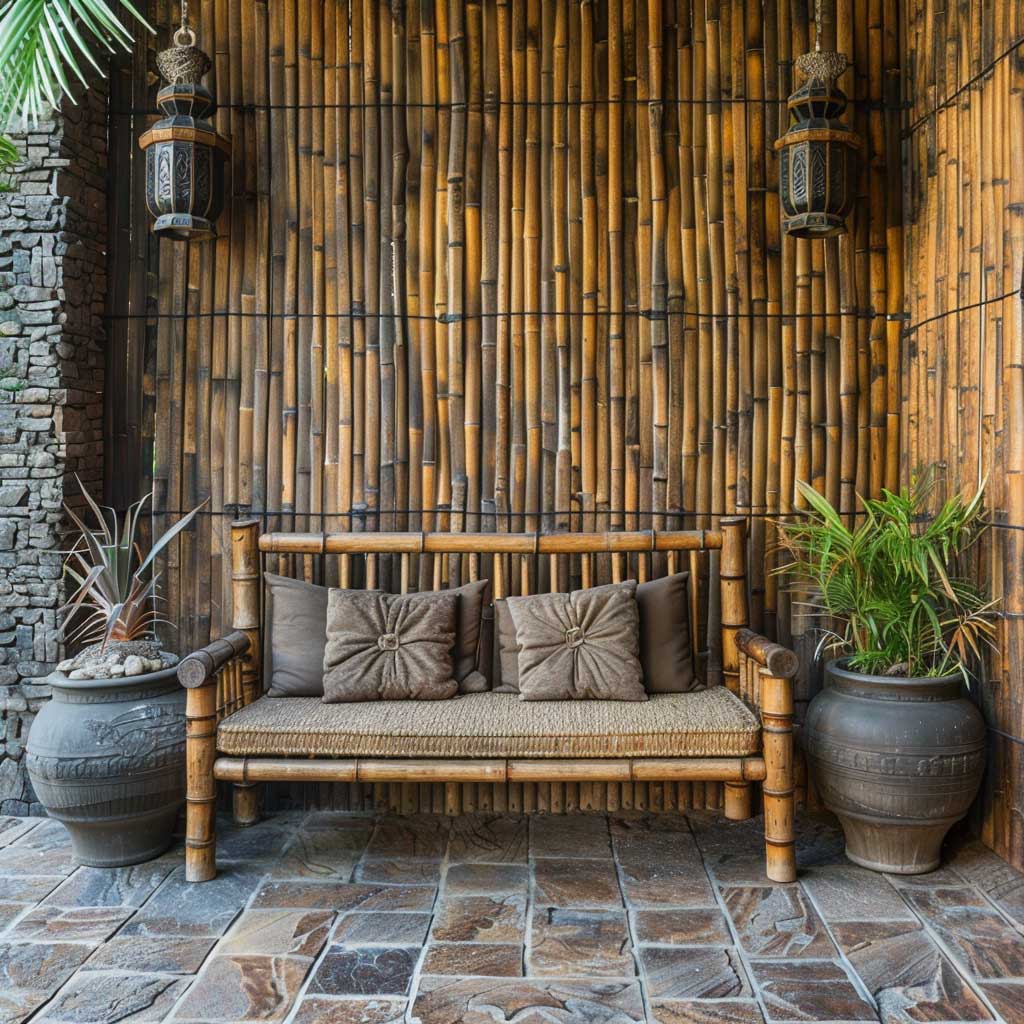
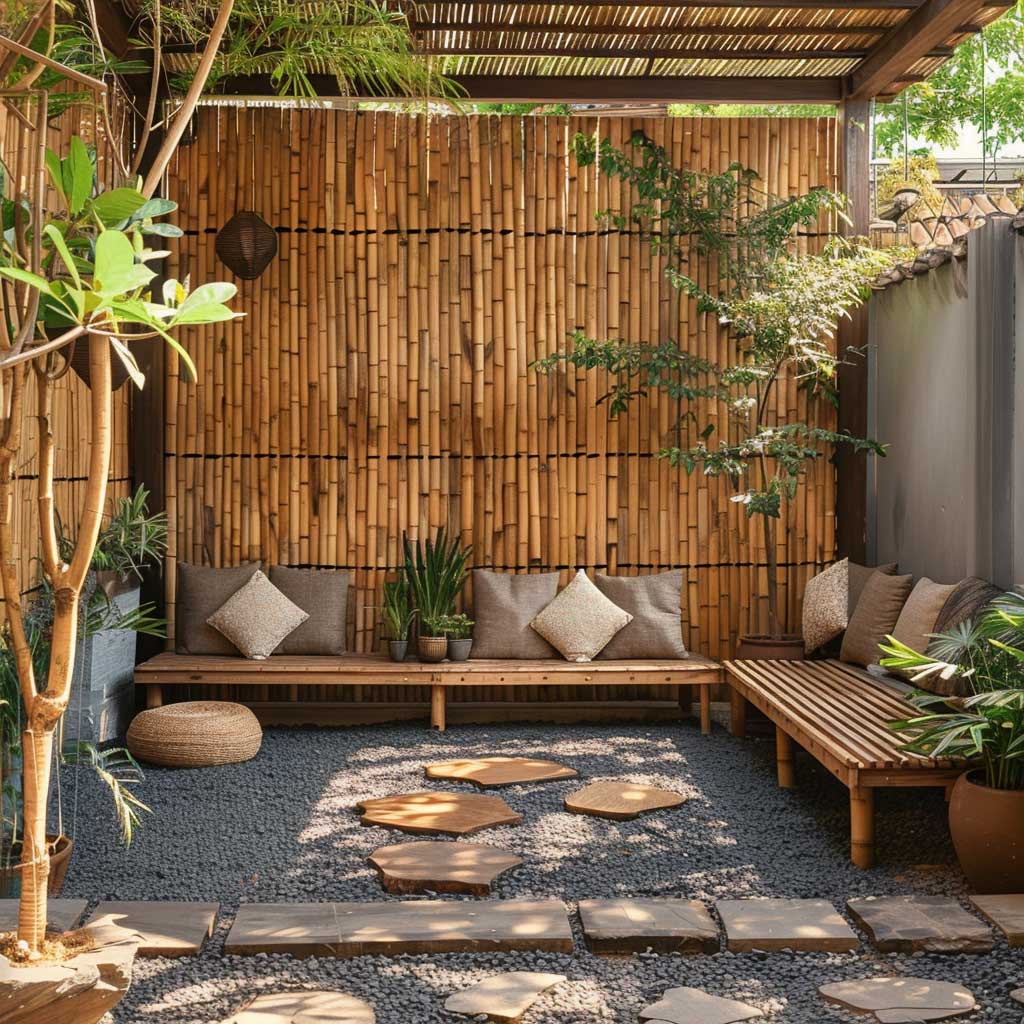
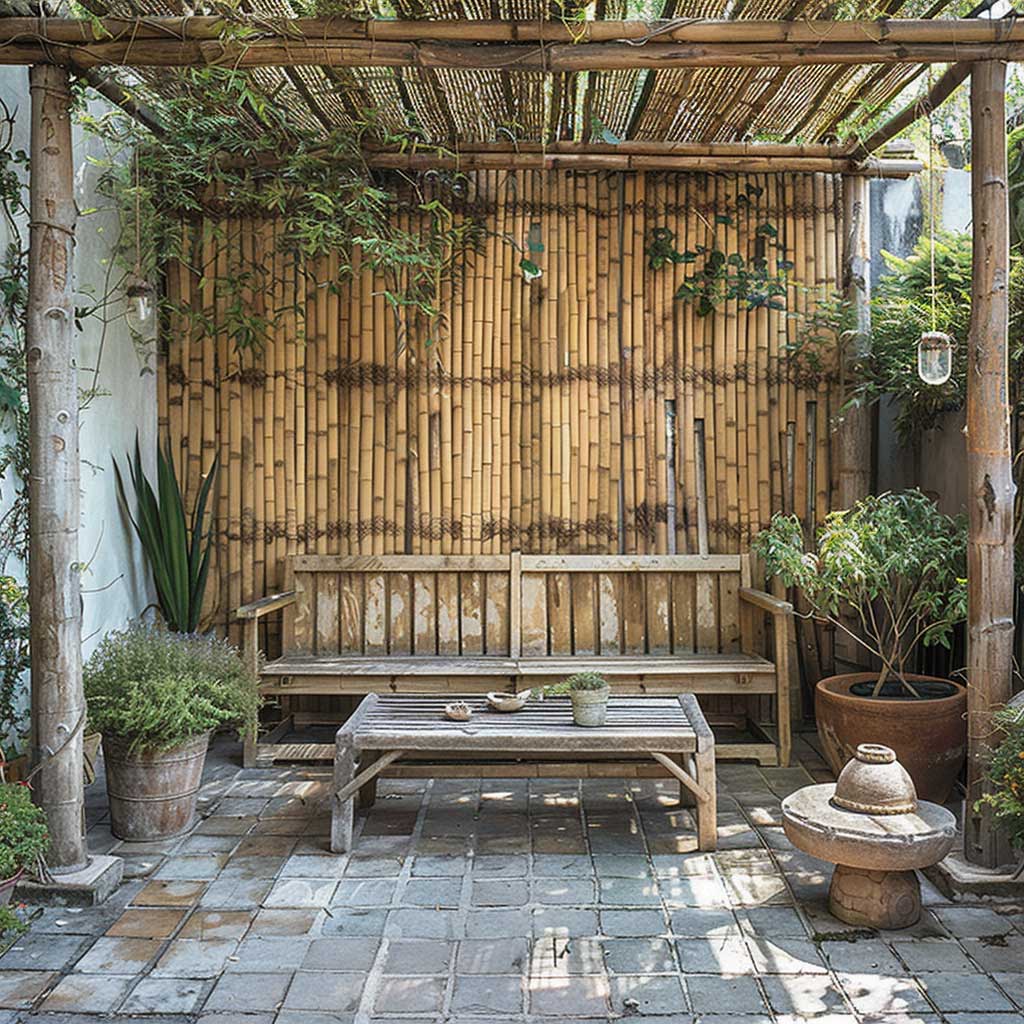
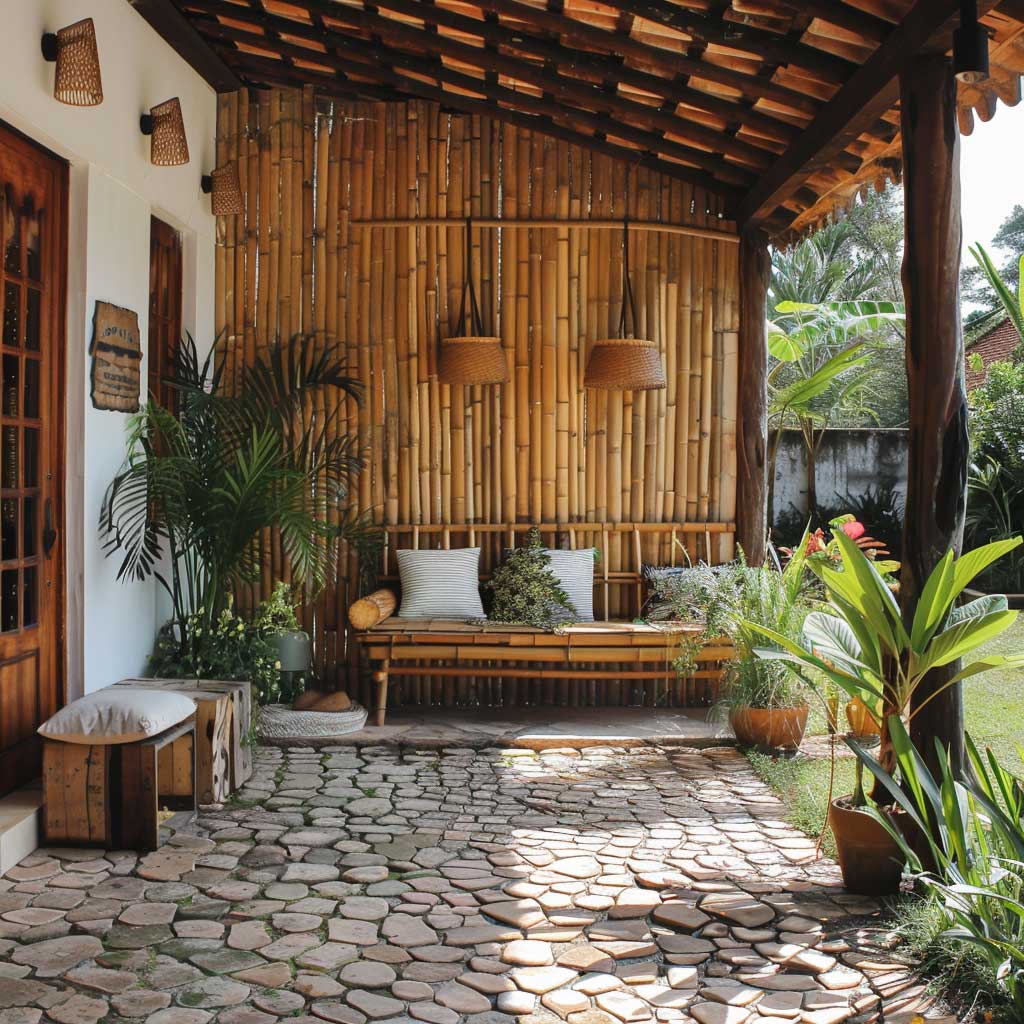
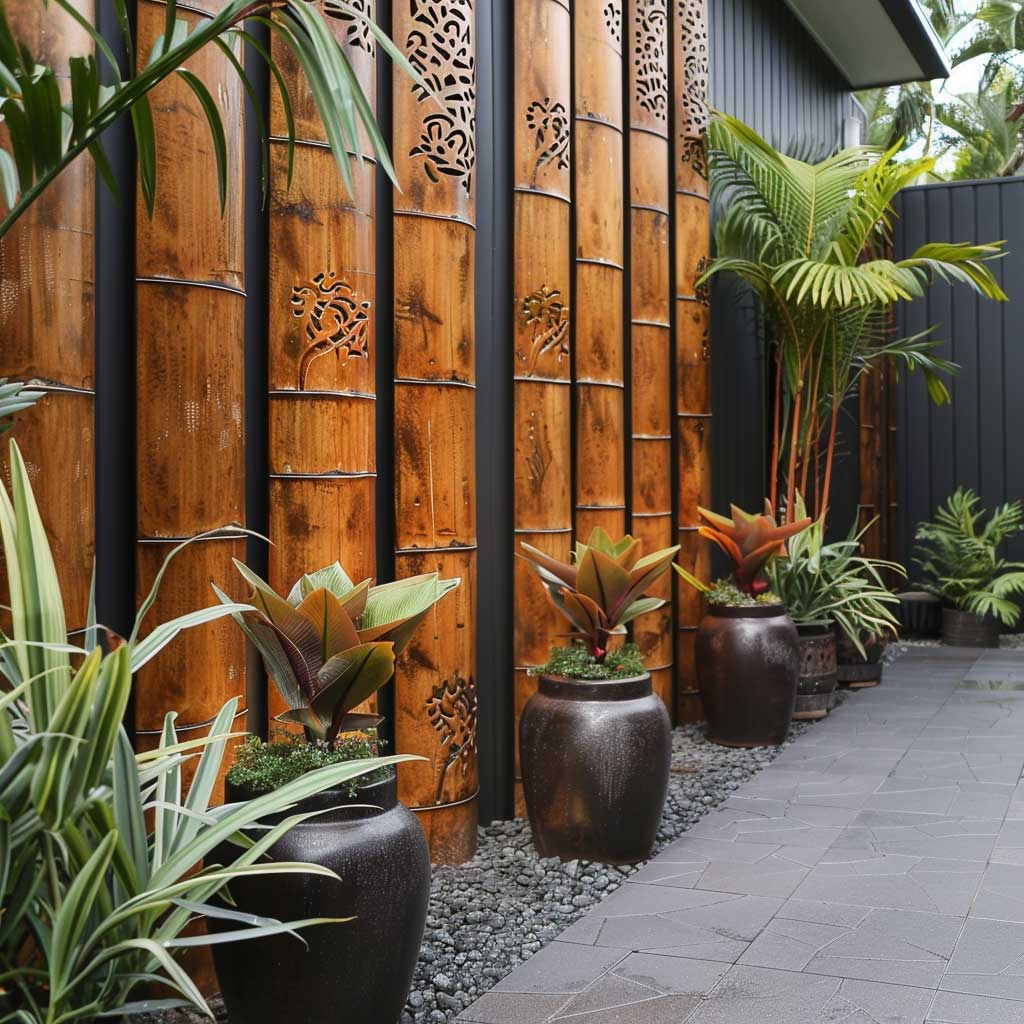
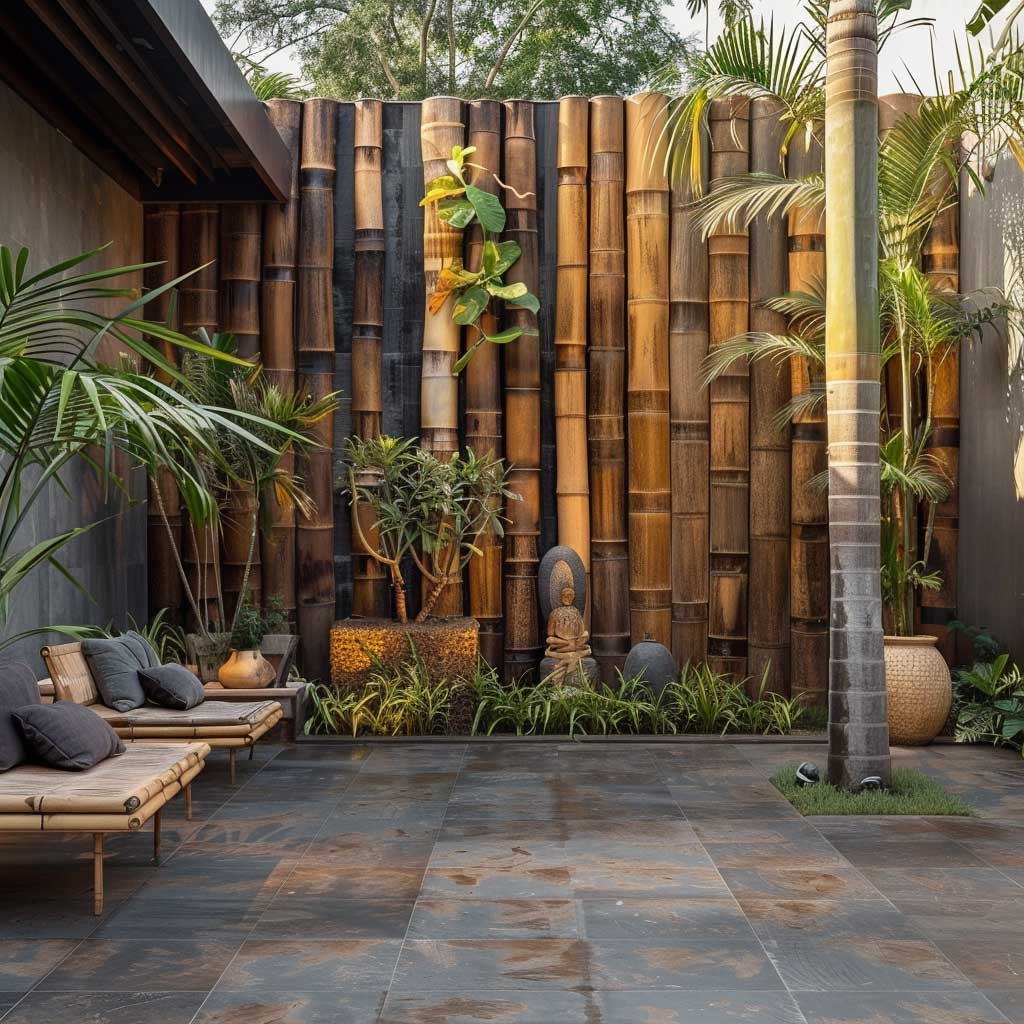
Rustic bamboo cladding on an outdoor wall does something reclaimed wood almost never manages: it ages gracefully without rotting, splintering, or harboring termites. I’ve tracked a bamboo pole-clad garden wall at a property in coastal Florida for three years now — salt air, humidity, the occasional Category 1 scrub — and the surface has silvered beautifully without a single structural failure. Reclaimed barn wood on the neighboring property had to be replaced at year two. The lesson here is that “rustic” doesn’t have to mean “fragile.”
The aesthetic hook of rustic bamboo exterior cladding is imperfection — knots, tonal variation, the slight ridging at each node. These “flaws” are exactly what makes a wall read as handmade rather than manufactured. Pair with a flagstone or loose gravel path at the base, and the transition from earth to wall feels continuous, like the wall grew there. Wooden benches in oiled teak or iroko alongside bamboo cladding create a warm, layered palette without competing with the bamboo’s natural color range. Can you mix rustic bamboo with painted surfaces? Only if the painted surface is a muted ochre, clay, or dusty sage — white paint beside rustic bamboo makes both look cheaper than they are.
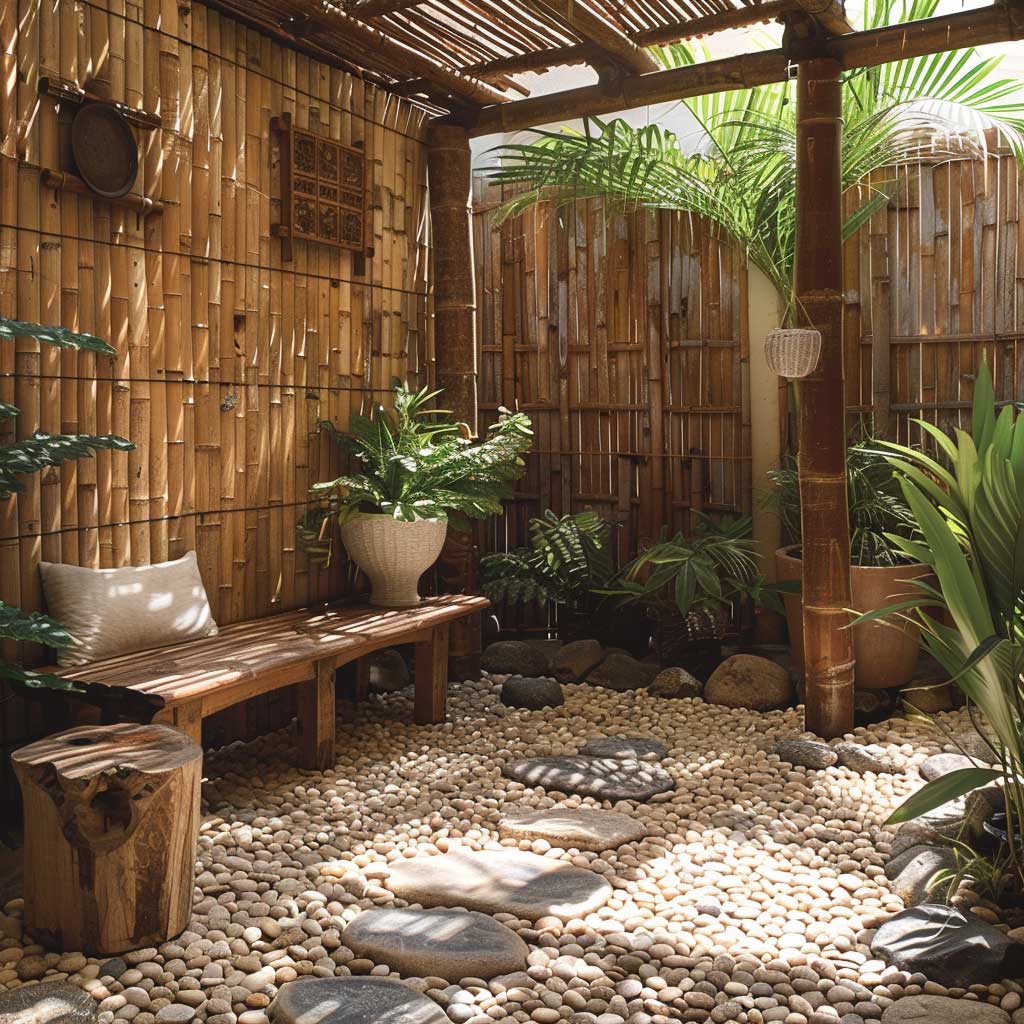
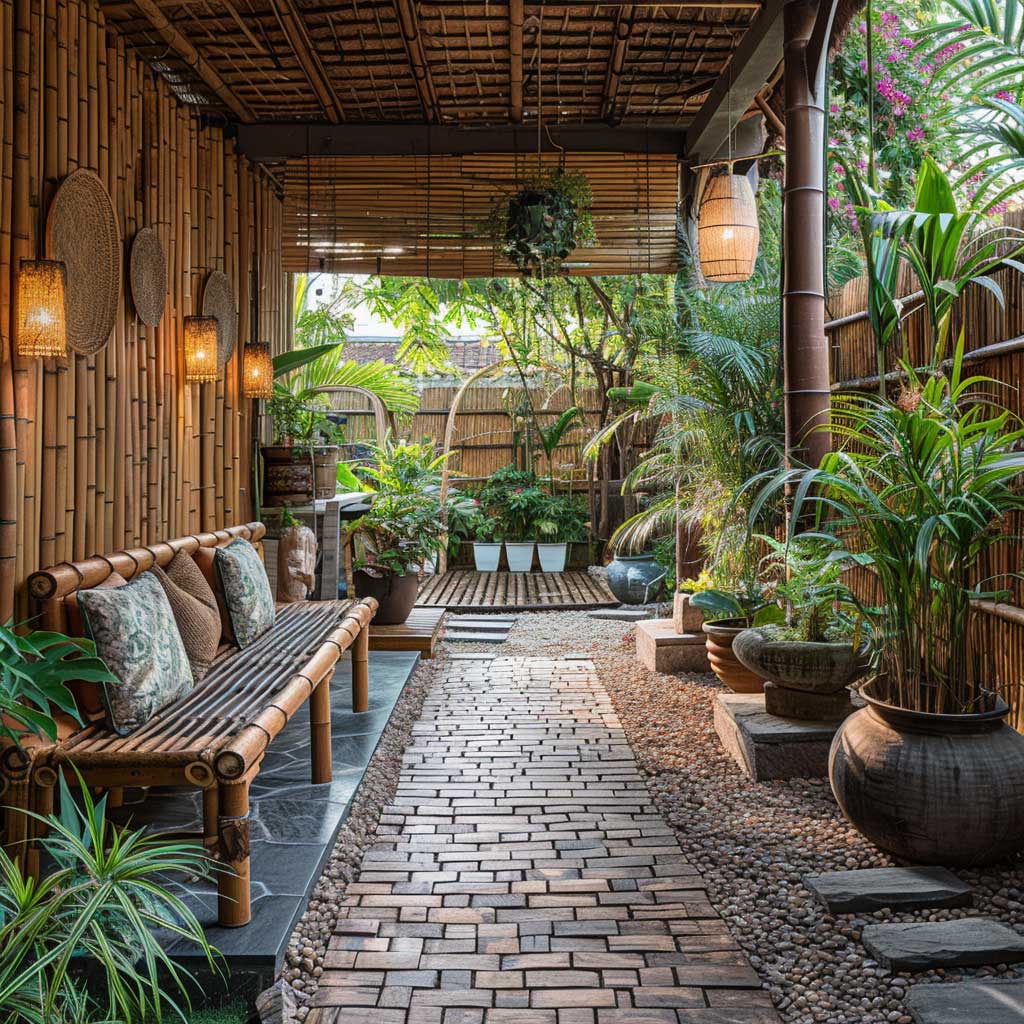
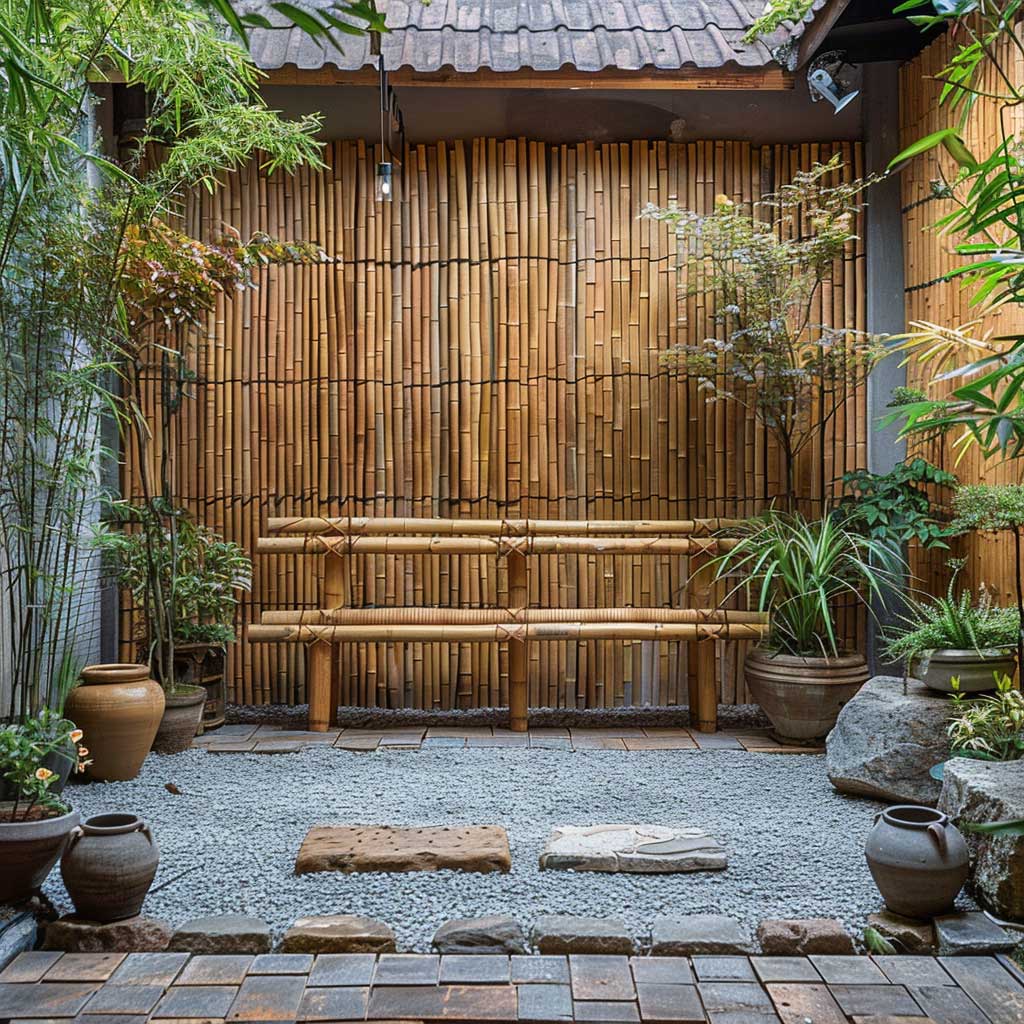
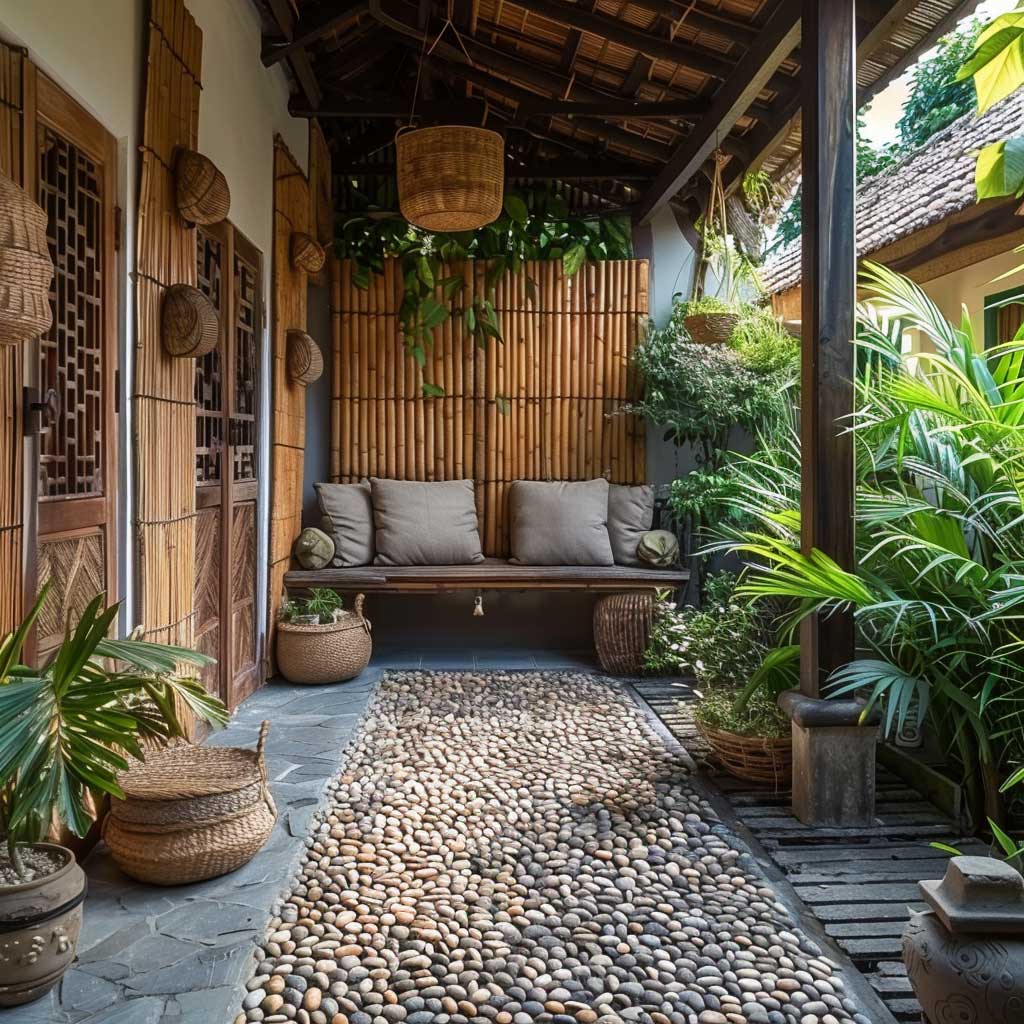
Scale matters more in rustic bamboo cladding than in any other format. Whole-culm poles — the full round stalks — work on low boundary walls, garden sheds, and covered outdoor kitchen backs. They look genuinely charming at 1.2m–1.8m wall height. Push them onto a two-story facade and the scale tips from organic to overwhelming, like the set of a theme park. Half-round poles split lengthwise are a smarter option for taller applications: same texture and character, lighter visual weight, and much easier to keep flat against the substrate.
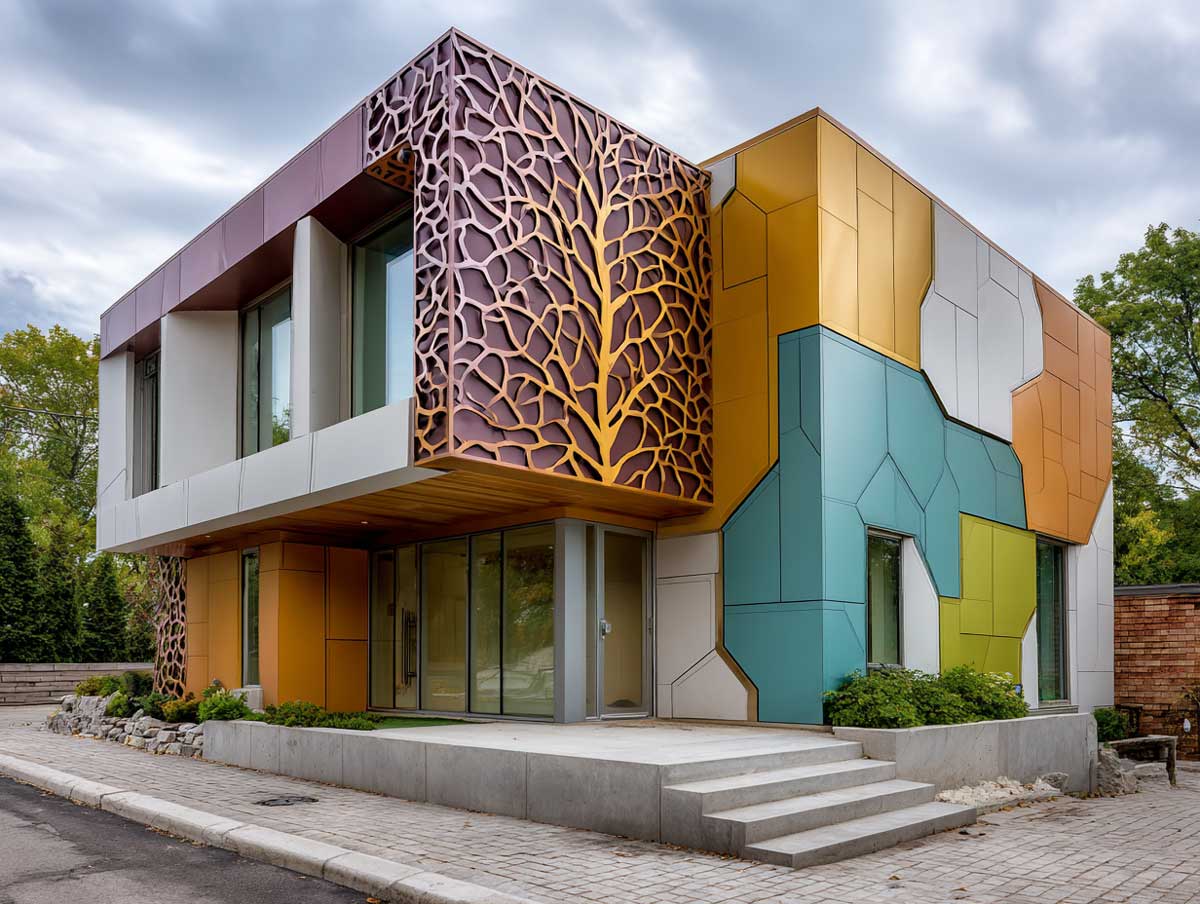
Maintenance on rustic bamboo poles is about keeping them clean and dry at the base, not about constant re-oiling. Annual brushing with a soft deck brush removes algae before it has time to stain. The base course — where poles meet grade — is the vulnerability point: keep a gravel or stone buffer so poles don’t sit in standing water. For a completely different texture direction on the same wall type, the metal panel approach on this page is worth looking at alongside bamboo. Bamboo naturally resists pests because the thermo-treatment destroys the starch content insects feed on — a fact most suppliers undersell.
Bottom Line
Bamboo Cladding Exterior Projects Deliver in Every Climate If You Install It Right
Thermo-treated products like MOSO X-treme and ZHUART Thermo Bamboo outperform cedar, teak, and most composites on dimensional stability — at installed costs of $18–$55 per square foot depending on format.
The ventilated substructure is non-negotiable: skip the air gap and you’ve bought yourself a $4,000 redo in two years. The format — panels, strips, or poles — should follow the scale of the wall, not the other way around.
Save this post — the brand names and cost figures here will save you hours of comparison shopping before your next exterior project.