Bedroom wall panel ideas have moved far beyond accent-wall territory — the right paneling changes the acoustic quality of a room, hides structural imperfections, and creates a focal point that no amount of art or lighting can replicate on a flat painted surface. Panels do something paint can’t: they add physical depth that catches light differently at 7am than at 10pm, which means the room never quite looks the same twice.
Three distinct approaches dominate what’s actually being installed in bedrooms right now: sleek modern and 3D panels that lean into geometry and materiality, warm wood paneling that brings grain and natural insulation into a space, and textured decorative panels that play with shadow and light more aggressively than either. Each approach solves a different problem and fits a different bedroom personality.
According to 2026 cost data from Homewyse, professional installation of wall paneling runs between $7.78 and $11.55 per square foot — which puts a standard bedroom headboard wall (roughly 90–120 sq ft) at $700 to $1,400 in labor alone before materials. That number should anchor your budget conversation before you fall in love with a material.
– Modern and 3D panels run $1–$40+/sqft in materials; PVC is the budget-friendly entry point, solid hardwood the premium end
– Horizontal panels visually widen a room; vertical panels push the ceiling higher — direction is a design decision, not a default
– Wood paneling provides genuine insulation and sound dampening, not just aesthetics
– Textured panels change appearance throughout the day as light angles shift — a feature, not a flaw
– The single biggest installation mistake: skipping primer on MDF panels before painting, which causes swelling at seams over time
– A single paneled wall behind the bed outperforms full-room paneling for both budget and visual impact in most bedrooms
Modern Bedroom Wall Panel Ideas That Earn the Square Footage
Modern bedroom wall panels succeed or fail based on one decision made before installation: direction. Horizontal panels create a sense of width — they make a narrow bedroom read as wider than it is, which is why designers consistently choose them for rooms where the bed wall is the shorter dimension. Vertical panels push the eye upward and are the standard recommendation for rooms with ceilings under nine feet. Mixing both directions on the same wall is almost always a mistake; the effect cancels rather than compounds.

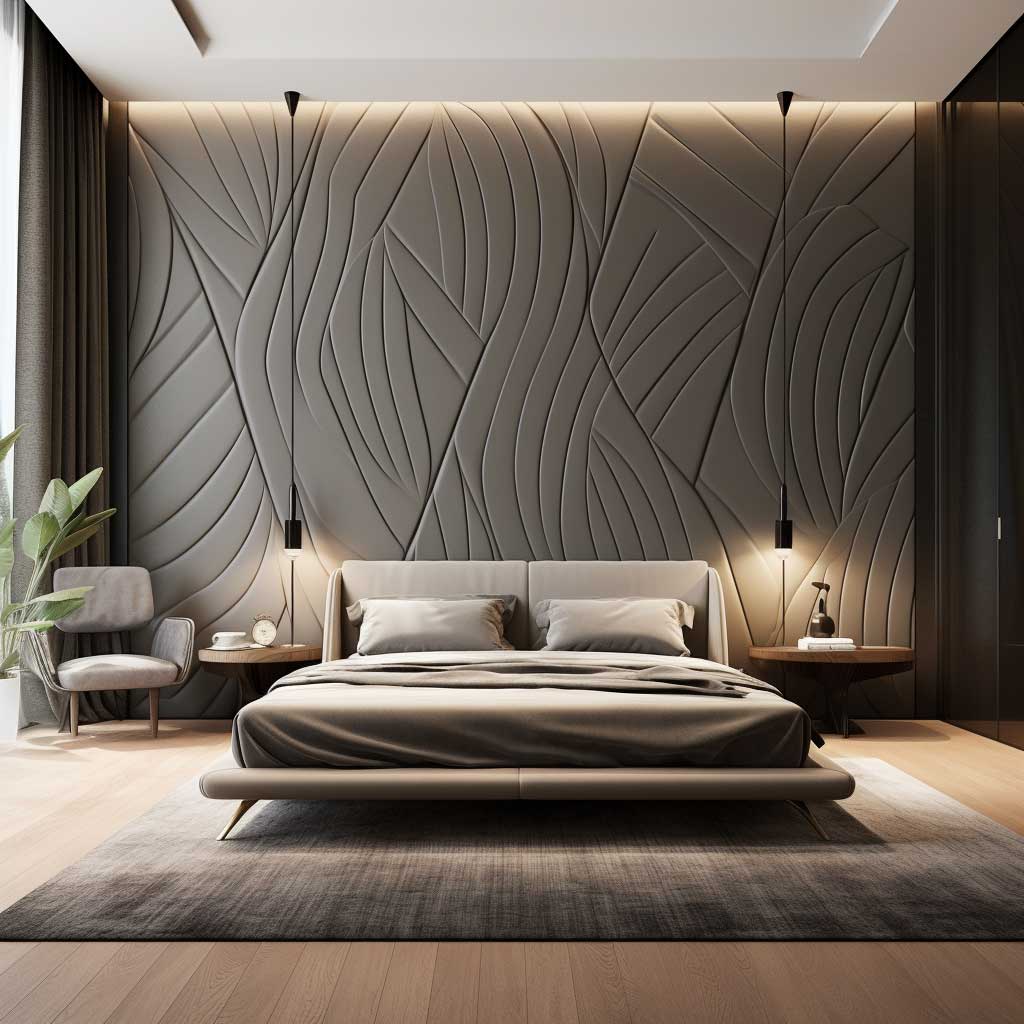

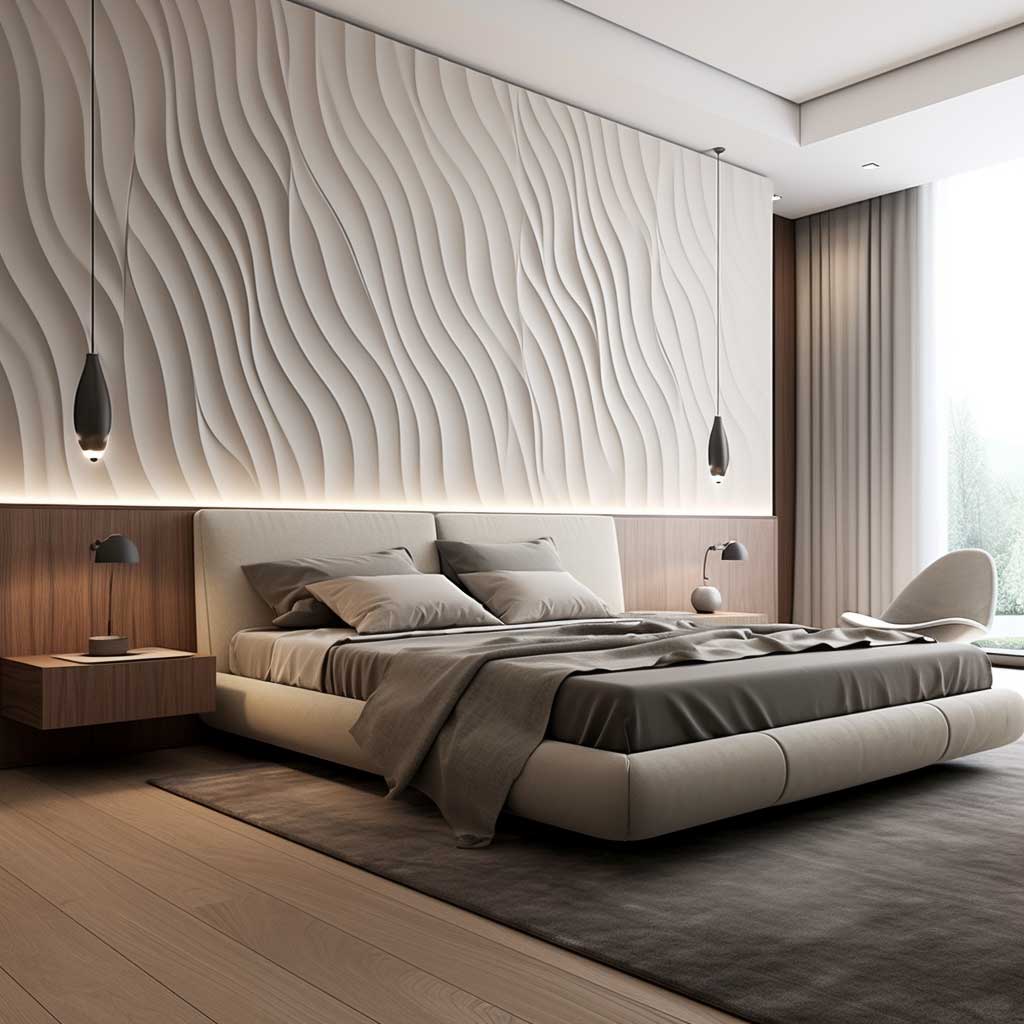
Material choice separates modern paneling from dated paneling more than any visual trend does. MDF panels painted in a matte finish read as contemporary because they eliminate grain variation entirely — the wall becomes a texture study rather than a material display. At the budget end, PVC 3D panels from brands like Inhabit Living start around $0.31 per square foot for paintable tiles, which makes a feature wall achievable for under $200 in materials. The trade-off is density: PVC feels lighter underfoot and produces a hollow knock when tapped, which some people find unconvincing up close.
Integrated LED lighting behind or within panels is a legitimate design move rather than a gimmick — but only when the light source itself is invisible. Strip lights recessed into a reveal or routed channel behind a floating panel produce the shadow line that makes a room look like a hotel suite. Surface-mounted LED strips glued to the front face of a panel do the opposite. What’s the actual trick here? Buy panels with a pre-cut reveal on the back edge rather than trying to route one yourself after installation; the depth is already calibrated for standard 10mm LED strip width.


One consistently overlooked practical benefit: modern wall panels add measurable insulation value. A 12mm MDF panel with an air gap behind it reduces heat transfer through an exterior wall — not dramatically, but enough to notice in rooms that run cold in winter or hot in summer. This is also why panels on interior walls help with sound: the air gap acts as a decoupling layer that interrupts vibration transmission between rooms, which matters in multi-story homes or thin-walled apartments.
Avoid the instinct to panel every wall in a modern bedroom. It almost always reads as overworked. The approach that consistently photographs well and lives well is a single paneled wall — the one behind the bed — with the remaining walls left in a complementary matte paint. The panel wall earns its complexity because everything around it is quiet.
Don’t install 3D relief panels in a bedroom smaller than 120 sq ft. The pattern demands visual distance to read correctly — from a bed six feet away, deep geometric relief collapses into visual noise rather than pattern. In small bedrooms, a flat-profile slatted panel or a simple beadboard achieves the same architectural interest without overwhelming the space. Also: don’t gloss-paint 3D panels. Gloss catches light at angles that expose every joint and edge imperfection. Matte or eggshell only.
Wooden Bedroom Wall Paneling Costs More Than You Think — and Lasts Longer Than Anything Else
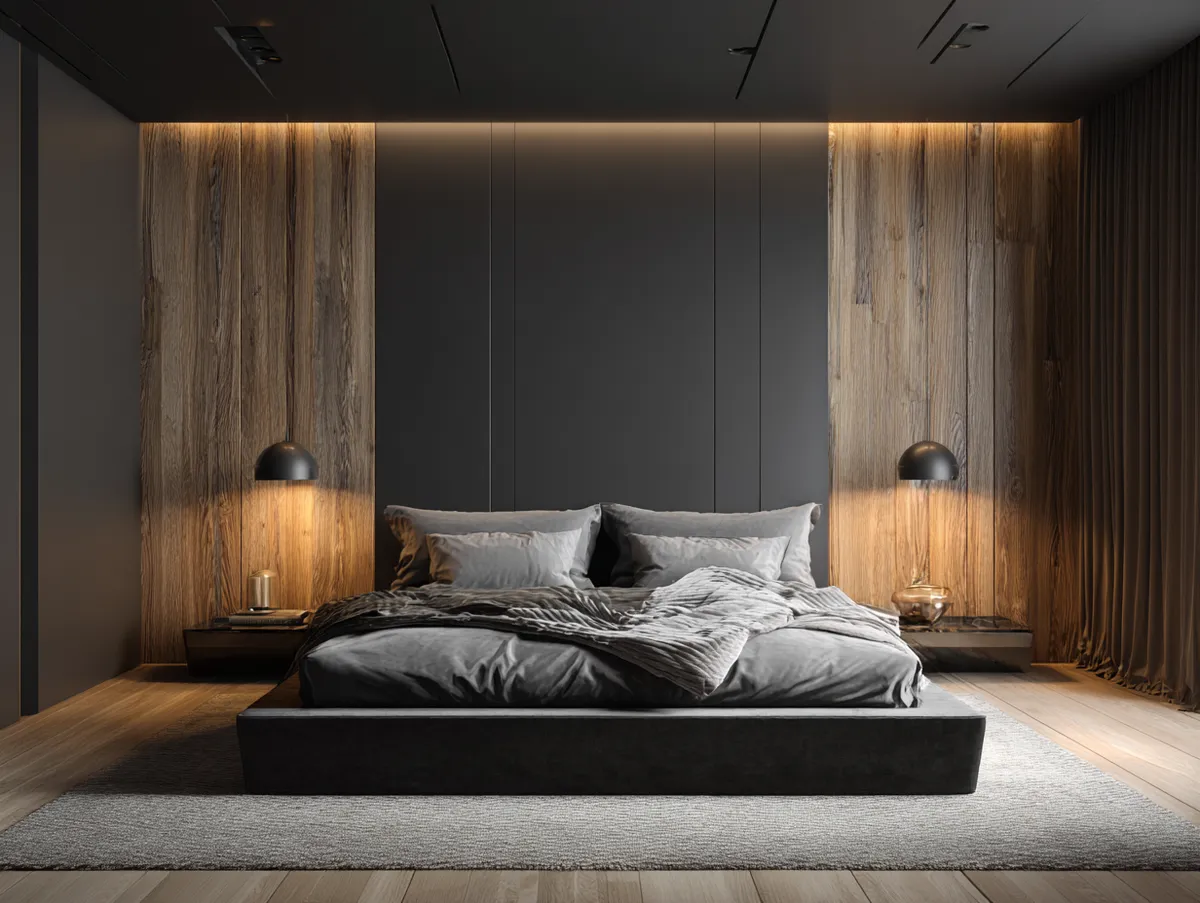
Wooden bedroom wall paneling starts at around $99.99 per panel for the Wood Veneer Hub’s Luxury American Oak Slatpanel — a real-wood acoustic slat panel that covers roughly 8 to 9.5 square feet per box and also reduces room echo because of the felt backing layer. That price point is the accessible entry into genuine-wood territory; solid hardwood veneer panels from premium suppliers run $15 to $35 per square foot in materials before installation. The cost is real, and it’s worth understanding what you’re actually paying for.


Wood is the only panel material that improves with age in a way that reads as intentional rather than worn out. Oak and walnut develop patina from UV exposure that deepens their grain over years; MDF yellows, PVC fades, and gypsum chips. That longevity changes the ROI calculation — a wood panel installed correctly can last 20-plus years and be refinished at least twice before replacement, where a PVC 3D panel typically shows fatigue within a decade in a heavily-used room. The choice of finish matters here too: oil-finished wood panels can be spot-treated, while lacquered finishes require complete stripping if they need repair.
Stylists recommend thinking about wood paneling orientation the same way you’d think about laying hardwood floors. Slatted wood wall panels running parallel to the longer wall of the room tend to shorten visual space — which can feel cozy in a large master bedroom but suffocating in a smaller one. Running slats perpendicular to the longer wall elongates the room. For an accent headboard wall in particular, vertical slats consistently outperform horizontal ones because they draw the eye upward rather than sideways, giving the illusion of higher ceilings regardless of the room’s actual dimensions.


Solid oak and walnut are highly sensitive to humidity fluctuations — a known risk in rooms that experience significant seasonal temperature swings. Boards expand and contract with changes in moisture content; panels installed too tightly in summer will gap in winter, and panels installed in winter can buckle in summer if not given proper expansion gaps. The industry standard is a 3mm gap on every edge; skipping this step because the installer wanted a seamless look is the most common cause of warping complaints in real-wood installations.
For a warmer look without the humidity sensitivity of solid wood, consider a quick bedroom wall panelling upgrade using wood-effect MDF or engineered veneer over a felt backing — the visual result at seven feet reads identically to solid wood, with a fraction of the maintenance concern and roughly 40% lower material cost.
Textured Wall Panels for Bedroom Walls That Don’t Look the Same After Noon
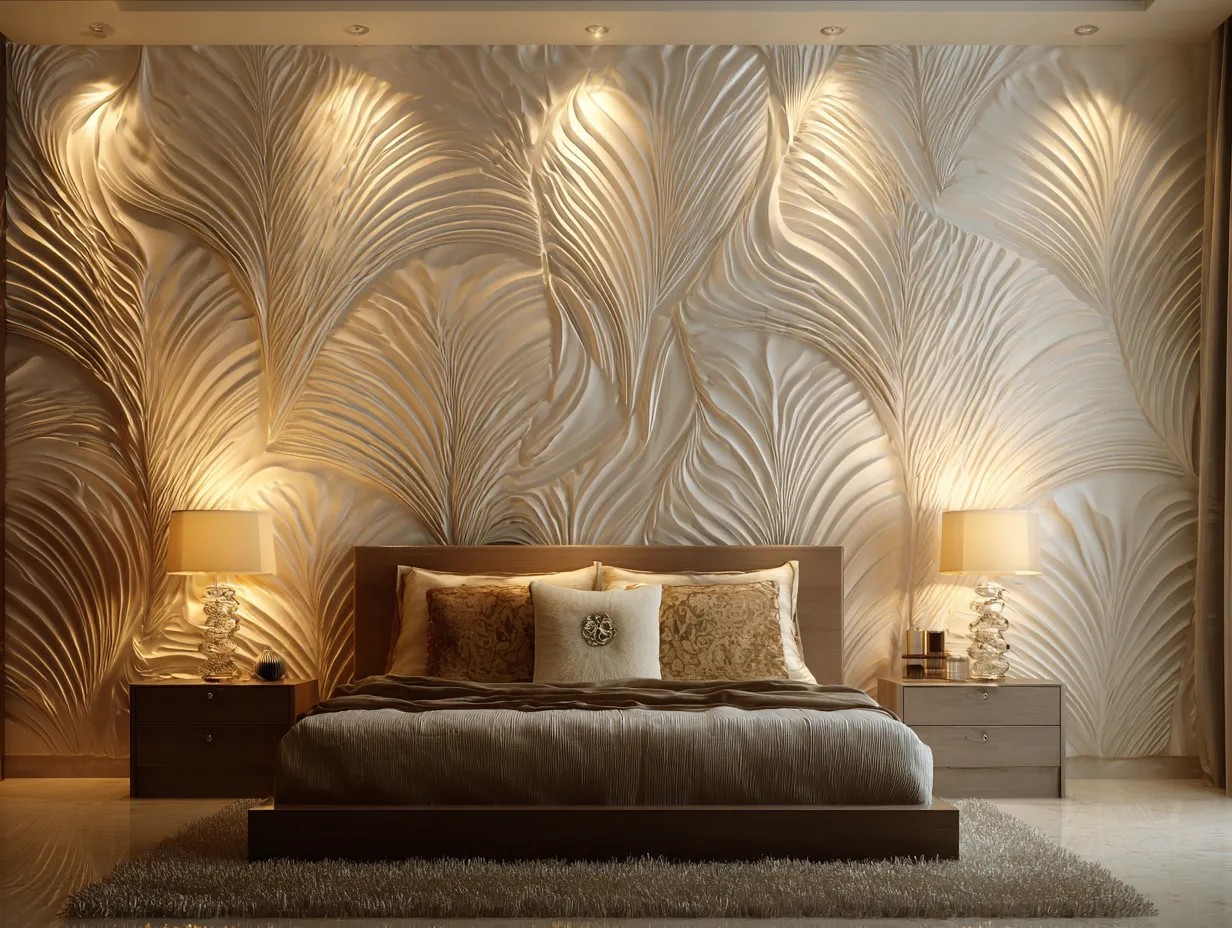
Textured bedroom wall panels work on a principle that flat surfaces never can: they borrow light from the room and redistribute it as shadow, which means the same panel looks completely different at 7am with raking morning sunlight than it does at 9pm under warm artificial light. This dynamic quality is the primary reason textured panels have become one of the fastest-growing categories in bedroom wall covering — they deliver a room that never quite looks static.


Material determines how aggressively the texture reads. Gypsum and plaster panels produce the sharpest relief because the material casts hard shadow edges — think the kind of crisp geometry you’d see in a boutique hotel. They run $15 to $40 per square meter in materials and require a stable substrate because gypsum cracks if the wall behind it flexes. PVC textured panels are softer in their shadow lines and more forgiving on uneven walls, with entry-level options at Walmart running around $34.99 for a 30-pack covering 29 square feet — a workable test-budget for one accent wall before committing to a full bedroom treatment.
Color does more work in textured paneling than in any other panel type. All-white or off-white textured panels look architectural and spa-like during the day; the same panel painted in a deep navy or forest green becomes dramatic and enclosing, working like a low-lit photography backdrop in a room with evening ambiance. Stylists often recommend committing to a single color across the textured wall rather than multicolor treatments — the depth of the relief is already doing enough visual work that additional color contrast tips into sensory overload. You’ll notice this intuitively the first time you see a two-tone textured panel: it reads busy even when both colors are neutral.
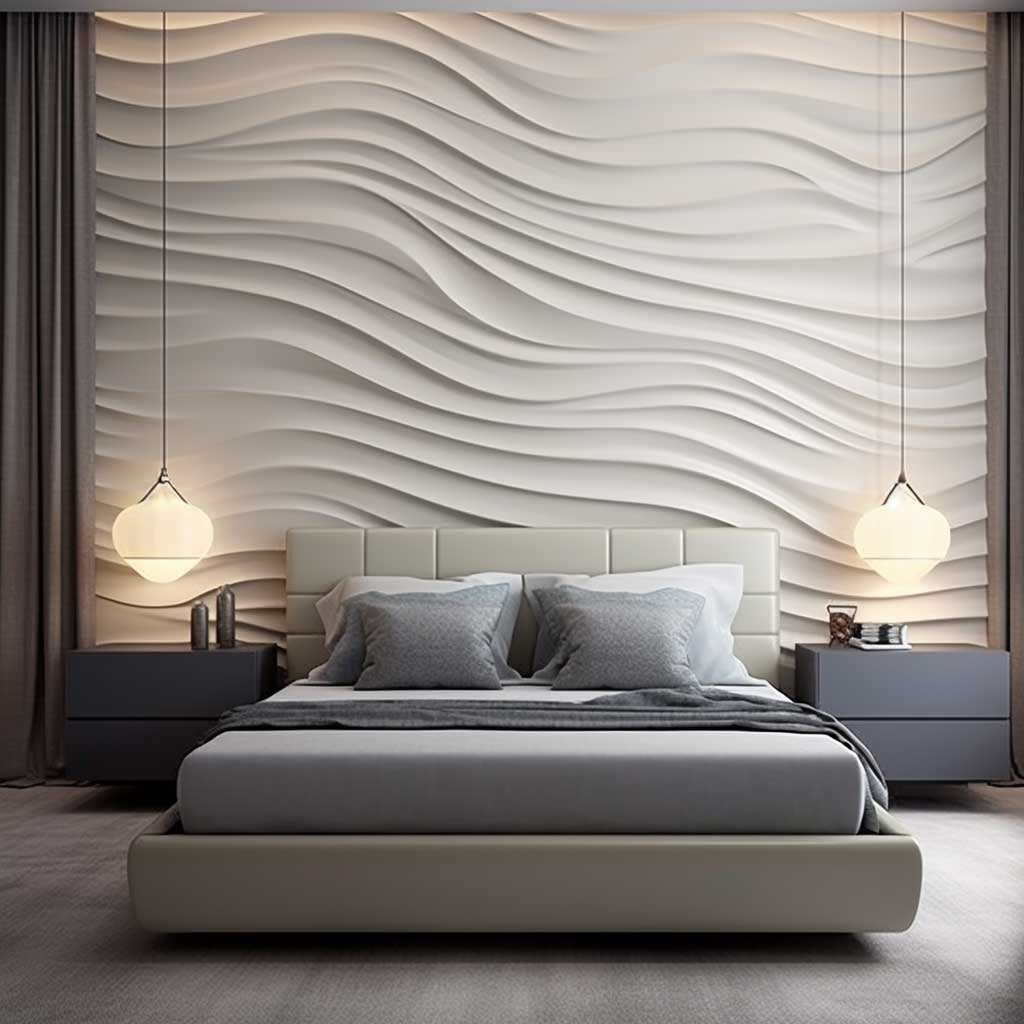

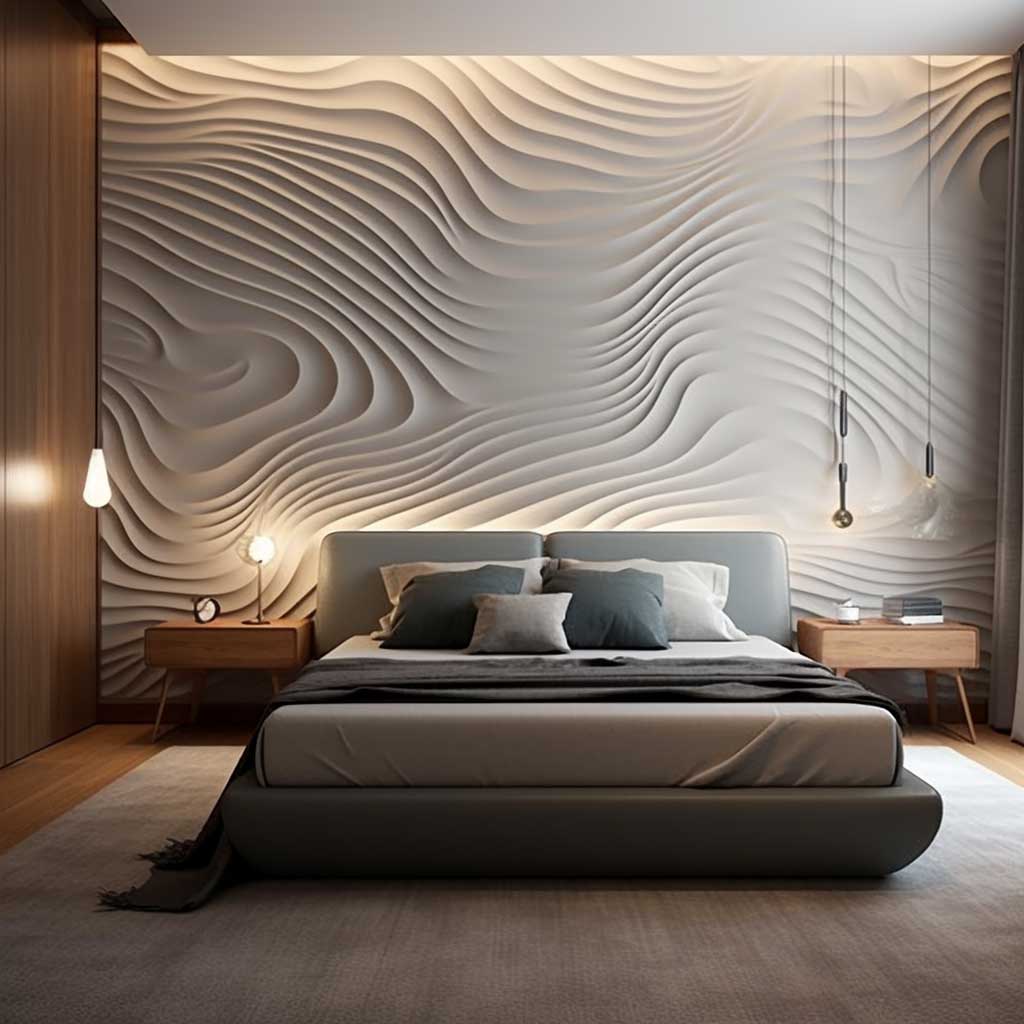

Acoustic performance is a legitimate reason to choose textured panels over flat ones in a bedroom. An irregular surface breaks up sound waves rather than reflecting them back into the room — the effect is measurably similar to adding soft furnishings, without the visual weight of extra cushions or rugs. For bedrooms with bold wall panelling color choices, textured panels in a complementary tone add depth that flat colored panels cannot achieve on their own.
One practical note often omitted from design content: textured panels collect dust in their recesses at a rate that flat walls don’t. High-relief geometric patterns require regular attention with a soft brush or low-suction vacuum attachment — particularly in bedrooms where air quality matters for sleep. Low-relief profiles (wave, subtle ripple, shallow geometric) are significantly easier to maintain than deep angular patterns, and the visual impact in a bedroom context is nearly identical because the room is rarely viewed from more than eight feet away.
| Panel Type | Material Cost (per sqft) | Lifespan | Best For |
|---|---|---|---|
| PVC 3D Panels | $1–$8 | 7–10 years | Budget accent wall, DIY install |
| MDF / Paintable | $2–$12 | 10–15 years | Custom color, modern profile |
| Wood Veneer Slat | $10–$20 | 20+ years (refinishable) | Warmth, acoustics, natural aesthetic |
| Solid Hardwood | $15–$35+ | 30+ years | Luxury finish, resale value |
| Gypsum / Plaster | $15–$40 | 15–20 years | Hard shadow relief, hotel aesthetic |
Wall Veneer Hub’s Luxury American Oak Slatpanel, starting from $99.99 per panel, remains one of the most frequently cited benchmarks for mid-range wood paneling — it covers roughly 8 to 9.5 square feet per box and provides genuine acoustic dampening through its felt backing layer, which makes it a practical double-duty choice for bedrooms that also function as reading or work spaces.
Bottom Line
The Panel Type You Choose Depends on How the Bedroom Fails Right Now
A room that feels cold and acoustically harsh needs wood paneling with a felt or foam backing — not 3D PVC, which adds visual complexity without solving the underlying problem. A room that feels flat and forgettable despite good furniture benefits most from textured panels on a single feature wall, where the light interaction adds life without adding clutter.
For bedrooms where the goal is a hotel-level finish on a controlled budget, MDF panels in a matte paint match the visual result of solid wood at roughly 40% of the material cost — the tradeoff is longevity and refinishability, not appearance.
Save this post before your next hardware store visit — the price and material comparison table above is the reference you’ll want on-site.