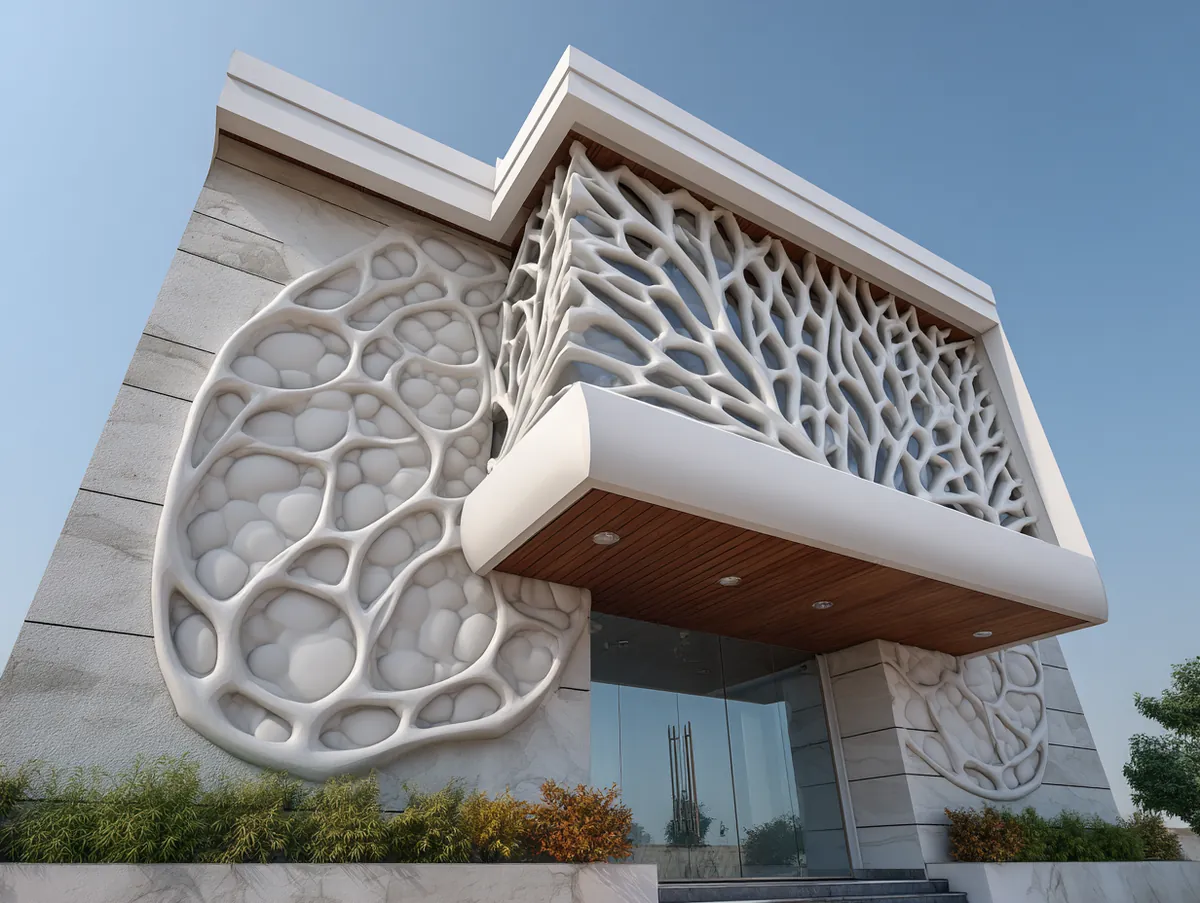
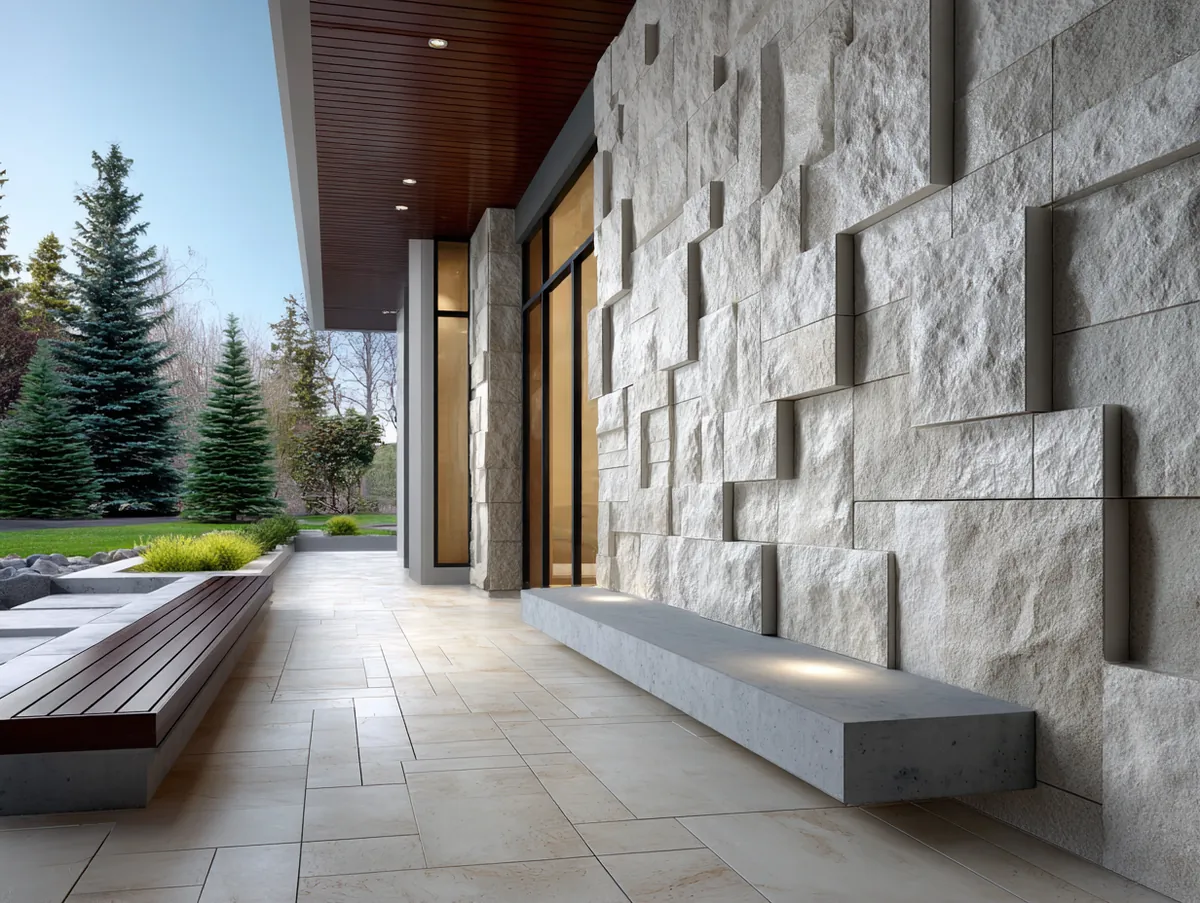
Outdoor wall cladding ideas rarely start with plain stucco anymore. Homeowners are pairing that smooth base coat with wood, stone, and bolder color choices to give a flat facade some depth instead of leaving it as a single blank plane. Stucco earns its spot as the anchor material for good reason: a traditional cement mix runs about $6 to $9 per square foot installed and can last 50 to 80 years when it’s maintained, so anything layered on top of it gets to borrow that durability.
The three approaches below cover a wide range — wood accents for warmth, color and texture play for a cleaner modern look, and stone pairings for sharp contrast. Each one works with the same base material but changes what the house says from the curb. Pick the wall or elevation you actually see most often and start there instead of trying to touch every side of the house at once.
Quick scan
- Traditional cement stucco runs $6–$9 per sq ft installed and lasts 50–80 years with upkeep.
- Cedar wood accents add roughly $6–$12 per sq ft and need restaining every 3–5 years.
- Manufactured stone veneer costs about $5–$8 per sq ft in material alone, more once labor is added, and needs almost no upkeep.
- Repaint stucco every 5–10 years with an elastomeric paint to stop hairline cracks from spreading.
- Pick one accent material per wall — mixing wood, stone, and bold color on the same elevation reads as clutter, not layering.
Cedar Slats Give Outdoor Wall Cladding a Warmer Edge Than Stucco Alone

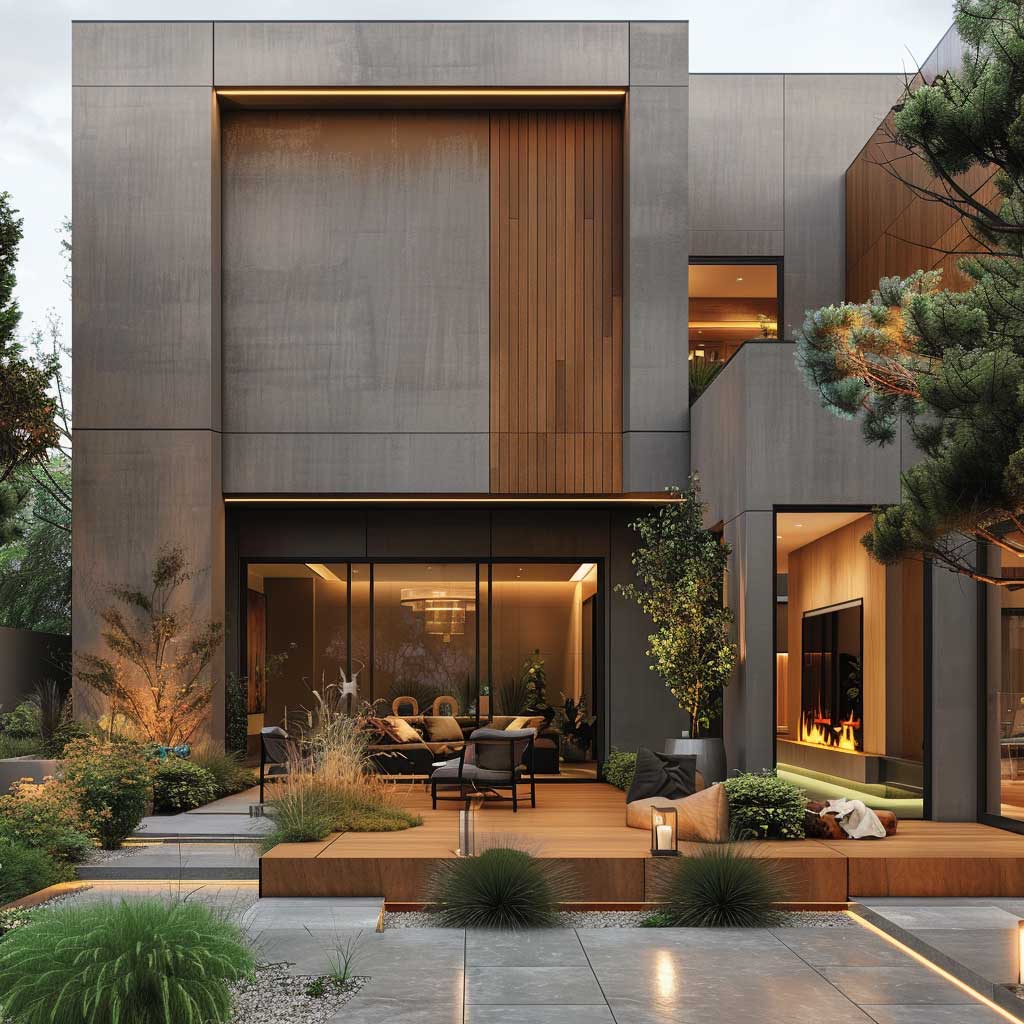
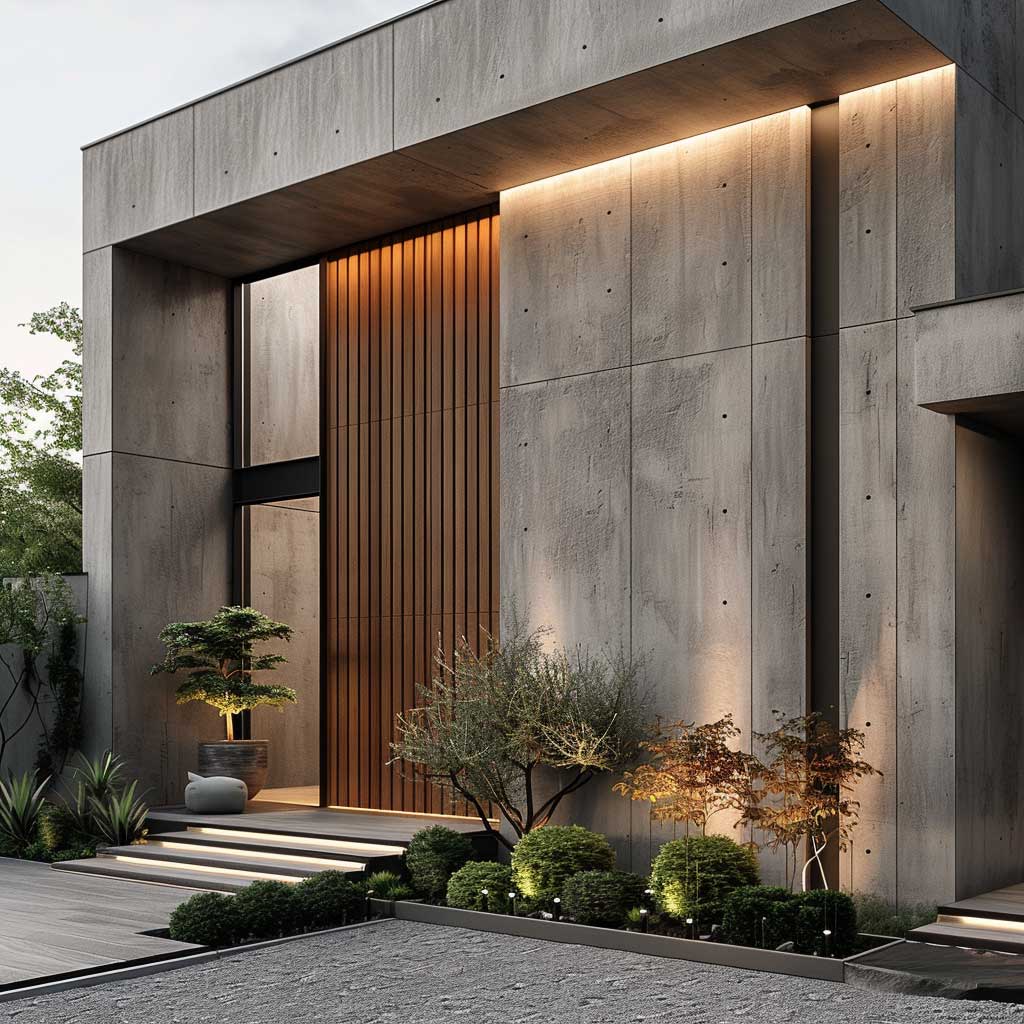
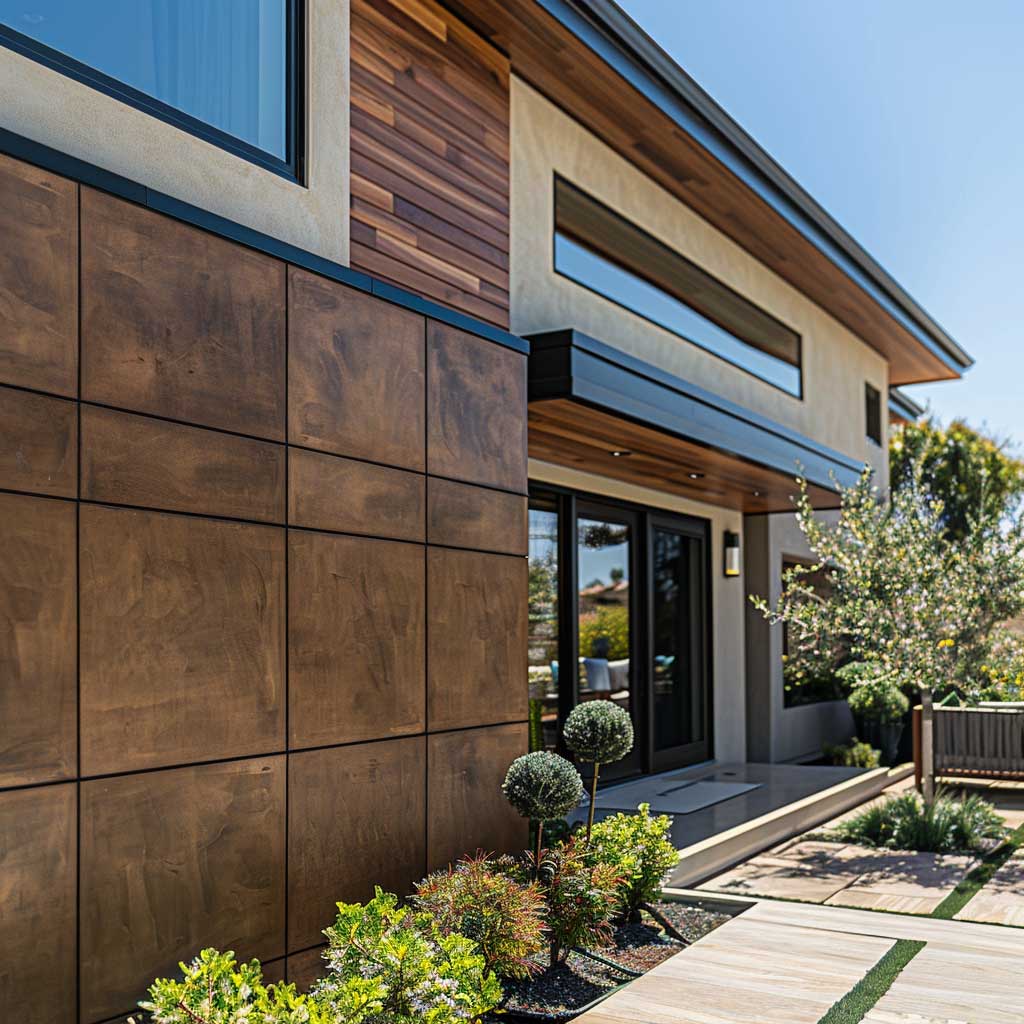
A stucco and wood exterior works because the two materials do opposite jobs on the same wall. One is flat and matte, the other has grain, shadow, and a bit of movement in changing light. Vertical cedar slats break up a long run of plaster without hiding it, so the wall still reads as one continuous surface instead of two materials fighting for attention. Cedar siding runs $6 to $12 per square foot installed, and running it as a partial accent rather than full coverage keeps that cost tied to a single wall or entry feature.
Does the wood need to touch the stucco directly? No — leave a small air gap behind the slats so moisture can drain instead of pooling against the plaster. Skip pressure-treated lumber left unsealed against a stucco wall; moisture wicks between the two materials and rot starts within a couple of seasons, hidden until the wood already needs replacing. Staining or resealing cedar every 3 to 5 years keeps that risk low and holds the color instead of letting it gray out unevenly. A stucco and wood exterior built this way tends to age the way raw denim does — the contrast gets more interesting, not messier, as the wood weathers.
Reclaimed wood is the more common upgrade right now, and it earns that popularity honestly. It carries visible saw marks, nail holes, and color variation that new lumber can’t fake without looking staged. Pair it with a smooth stucco finish rather than a heavily textured one, or the wall starts to feel busy instead of layered. A single accent wall of reclaimed wood next to a plain stucco run photographs better than wood wrapped around every corner of the house.
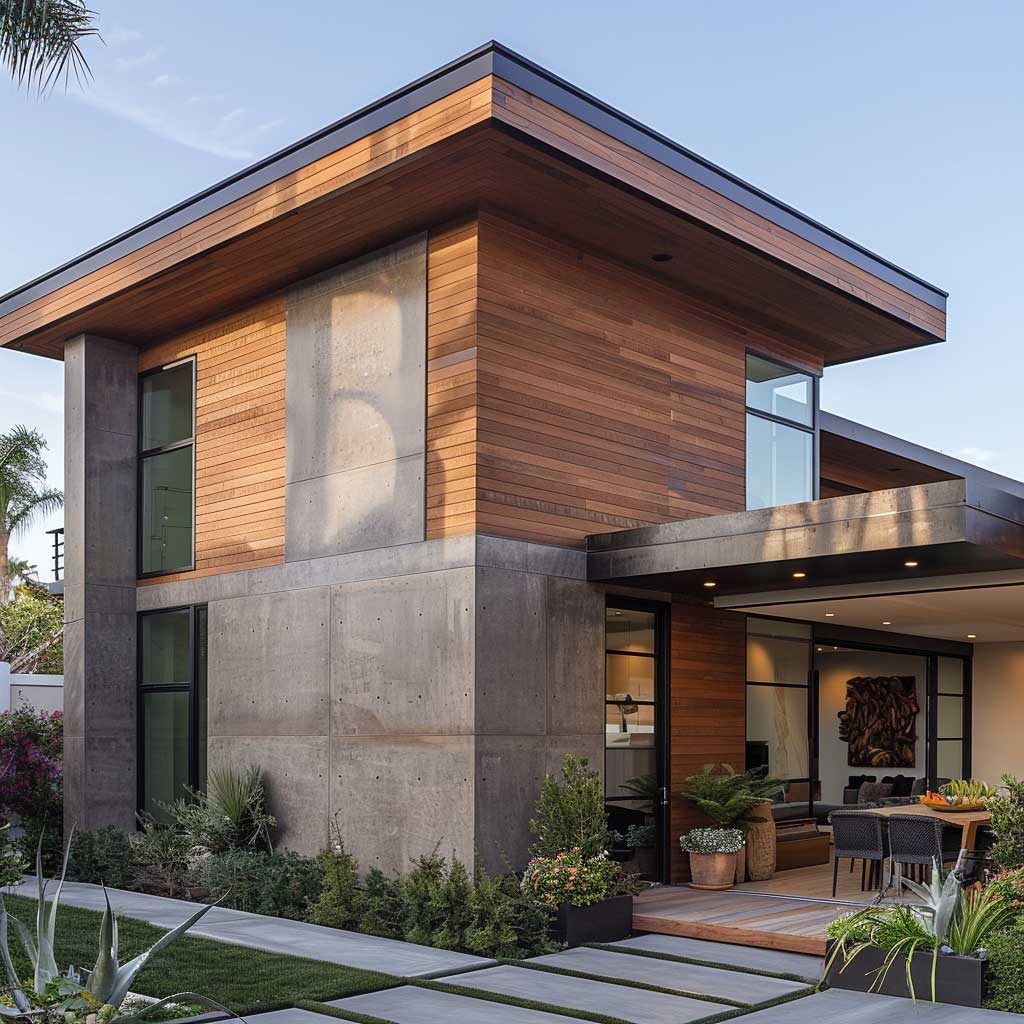
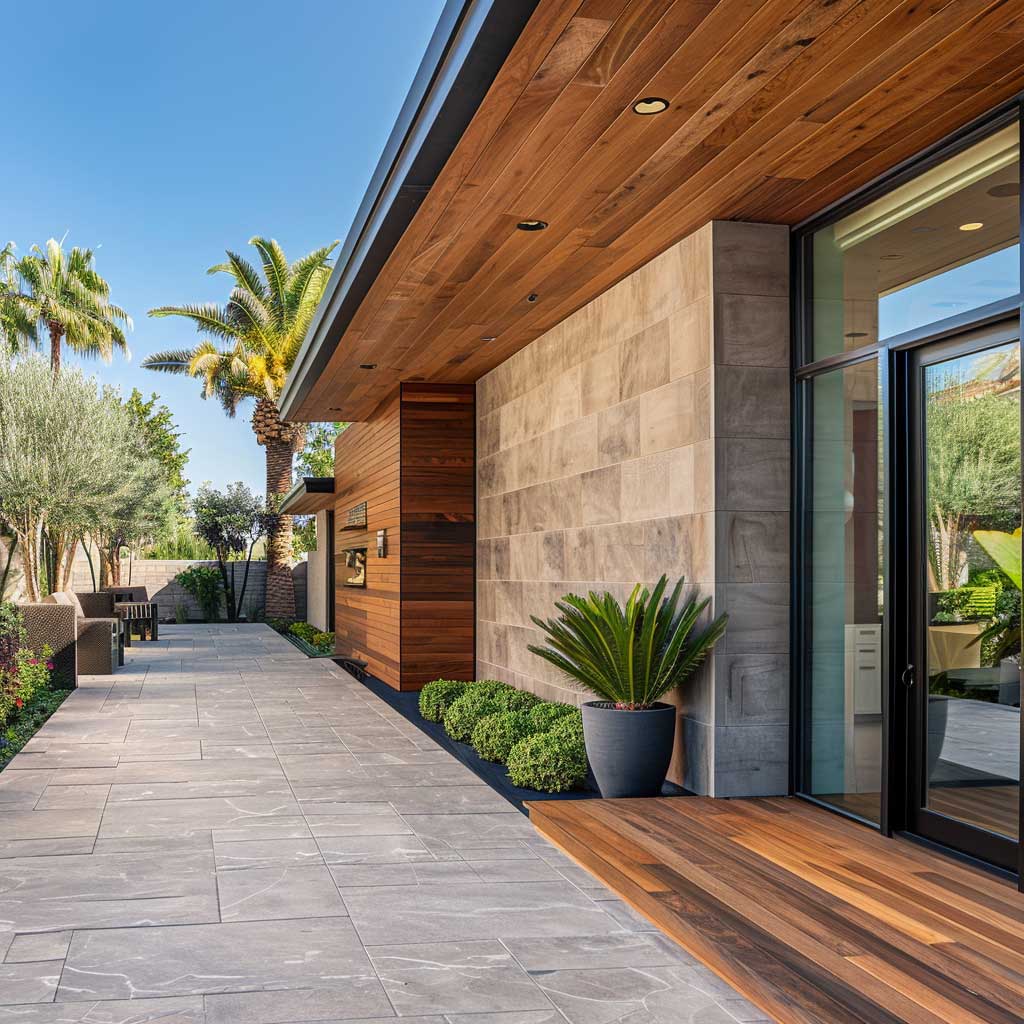
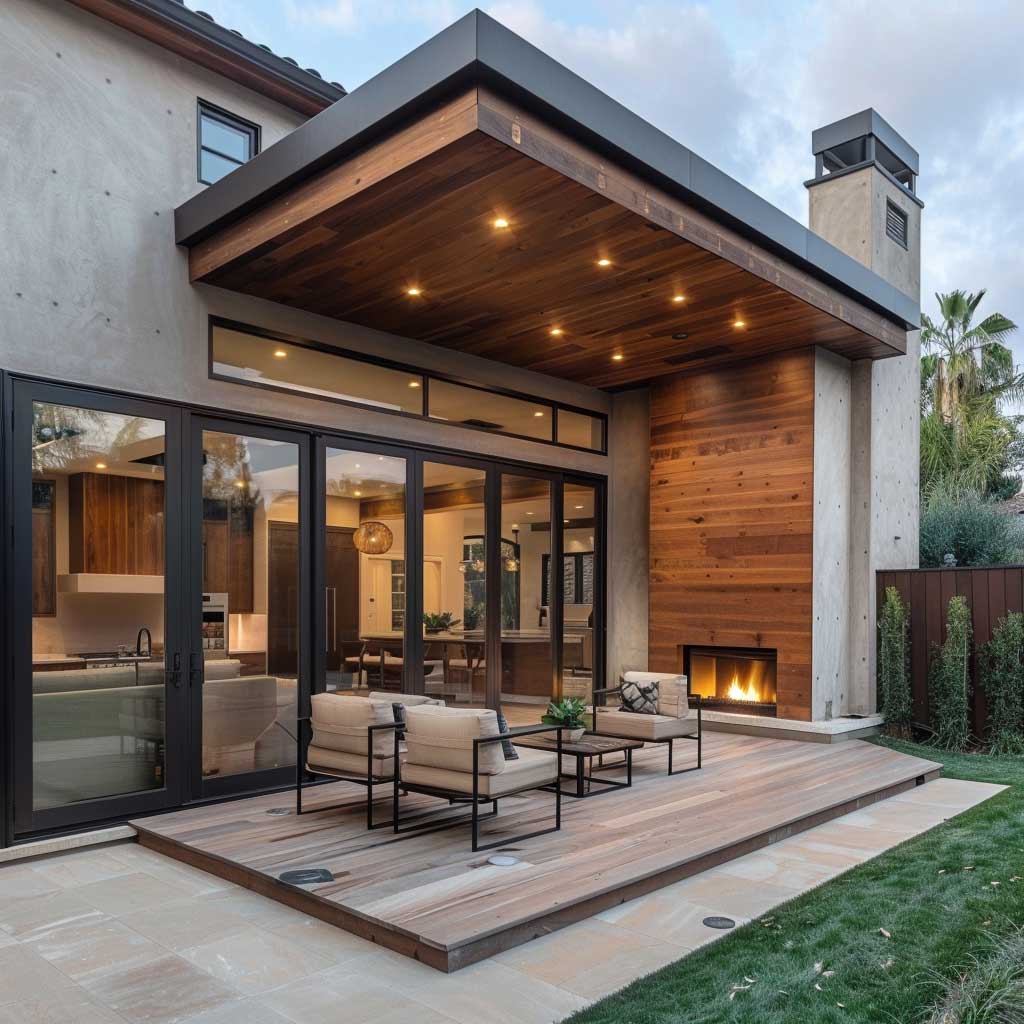
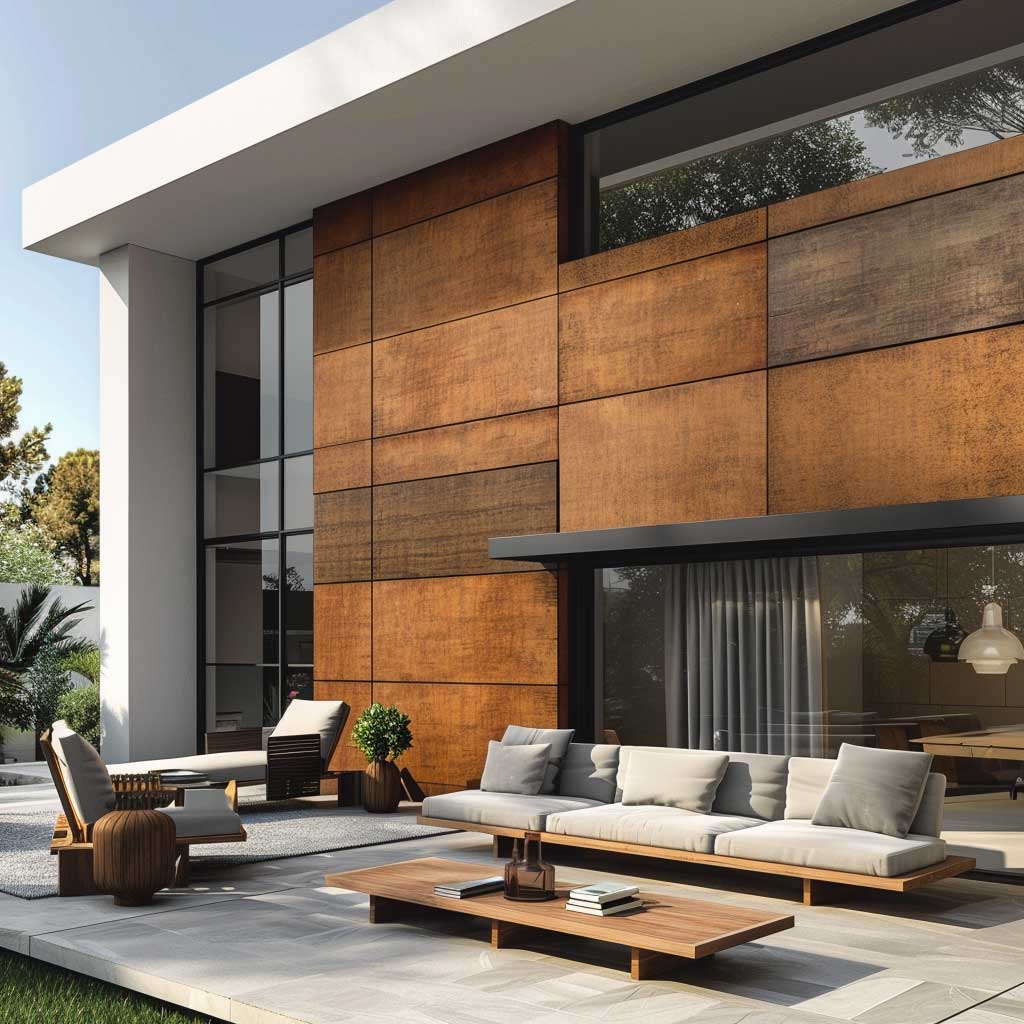
Stone pathways, metal fixtures, and outdoor lighting all read better once wood has already broken up the wall’s texture. A single row of uplights aimed at the slats casts long shadow lines at night that a flat stucco wall can’t produce on its own. Add those elements one at a time instead of all in the same season — it’s easier to tell what’s actually improving the look when each change stands on its own for a while.
Wood against stucco isn’t just a look; it’s a maintenance trade-off homeowners should plan for before installation, not after the first stain fades. Budget for that 3-to-5-year resealing cycle from the start, and the combination stays sharp instead of turning into a patchwork of weathered and fresh sections.
Neutral Palettes Aren’t the Whole Story Behind Outdoor Wall Cladding Ideas
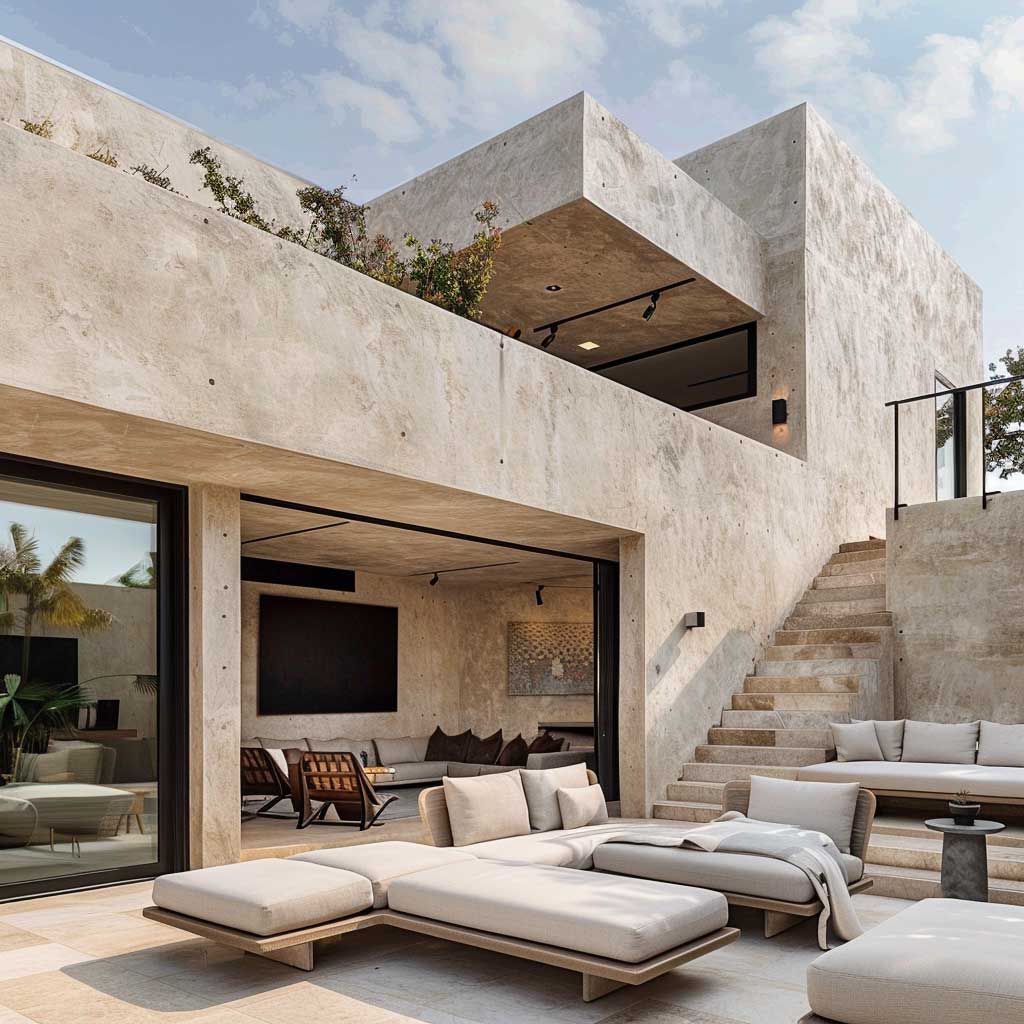
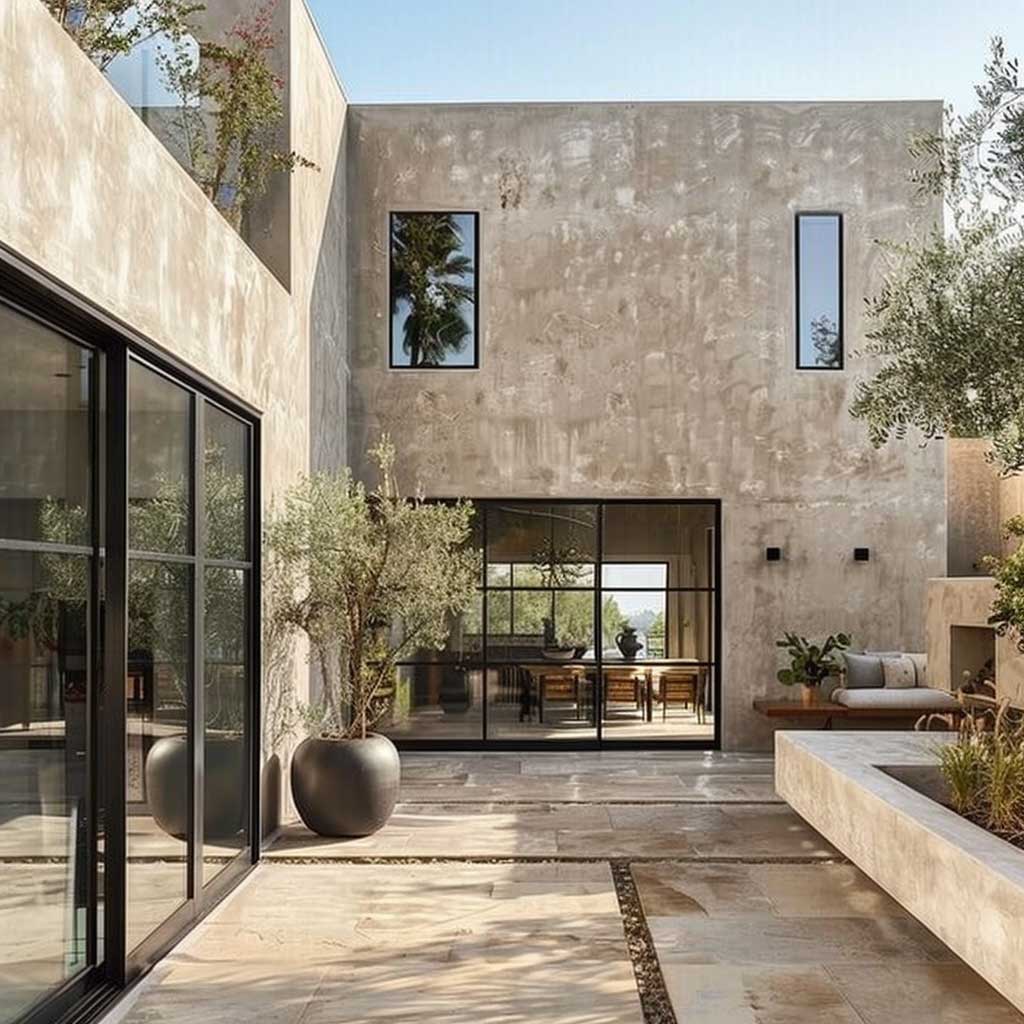
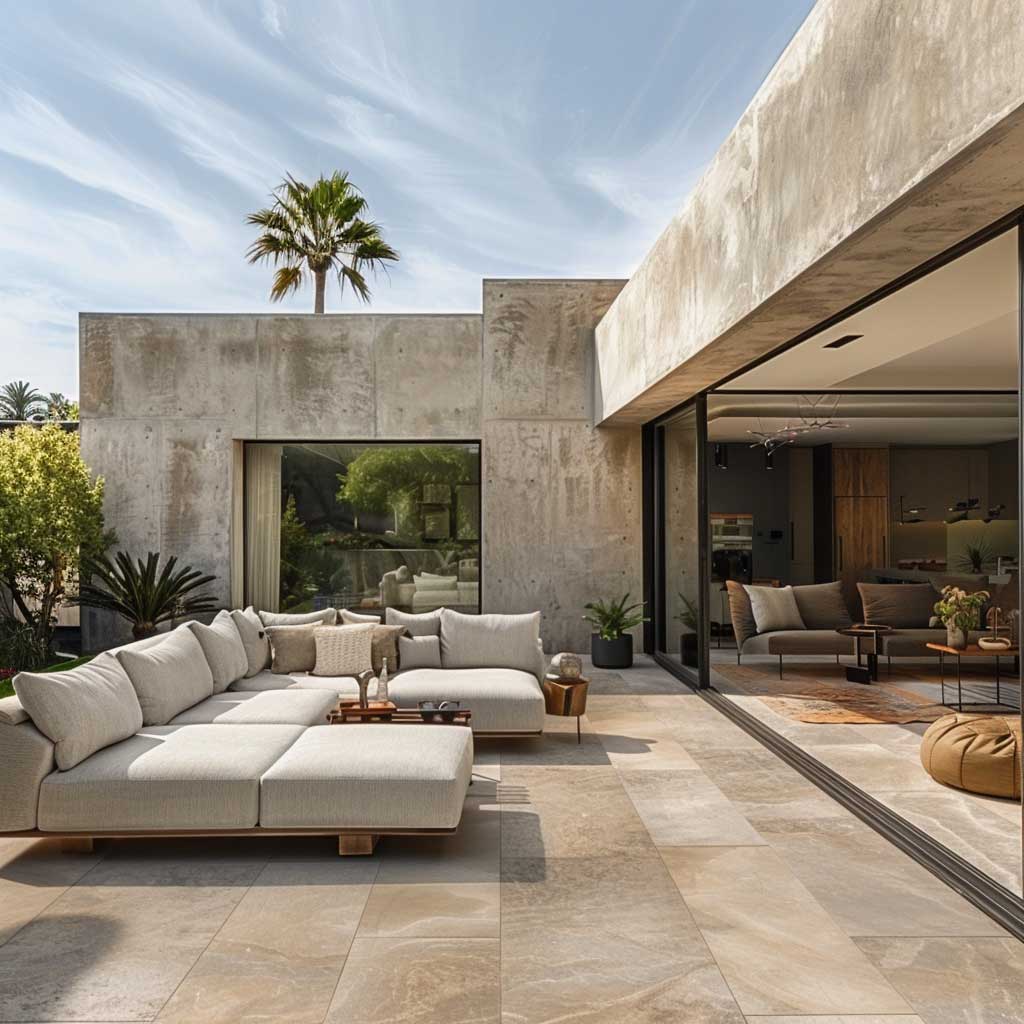
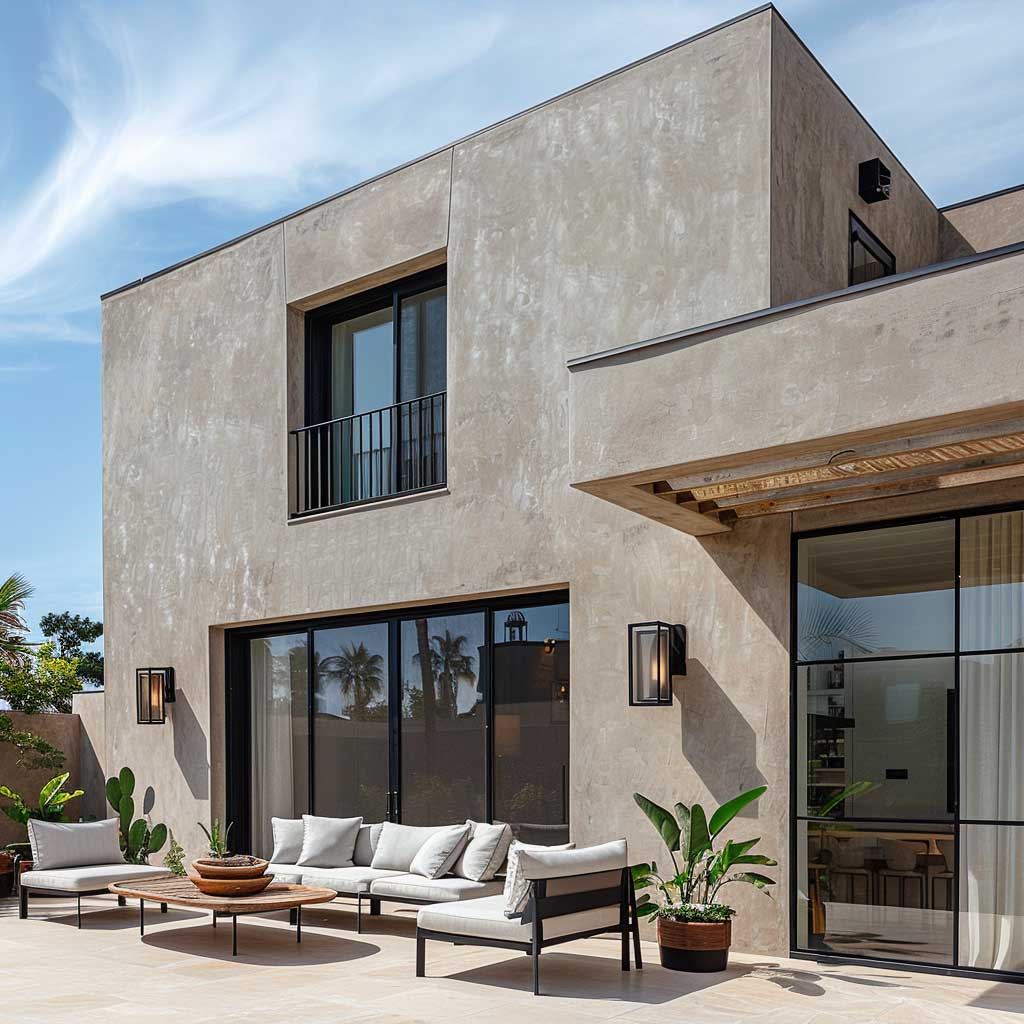
Most outdoor wall cladding ideas built around stucco alone lean on whites, grays, and beiges, and for a reason that has nothing to do with trend cycles — those tones reflect heat instead of absorbing it, which matters on a material that sits in direct sun most of the day. Charcoal and deep blue push the opposite direction, trading some of that heat performance for a wall that reads as deliberate rather than default. Either direction works as long as the color choice matches how much direct sun that wall actually gets.
Texture does more for a stucco wall than color ever will on its own. Troweling, brushing, or embedding aggregate into the finish coat catches raking light at dawn and dusk in a way a flat sprayed finish can’t replicate. A traditional three-coat cement application costs $6 to $9 per square foot installed, according to Angi’s 2026 stucco cost data, and that price holds whether the finish coat ends up smooth or heavily textured — the texture is a technique choice, not a material upcharge.
Don’t do this
Don’t repaint stucco with a standard flat latex house paint. Stucco moves slightly with temperature and humidity, and a rigid paint film cracks along with it. Use an elastomeric masonry paint that flexes with the surface — it costs a bit more per gallon but avoids the fine spiderweb cracking that shows up within a year or two on standard latex over stucco.
What actually keeps stucco looking new longer, color aside? A repaint cycle. Plan on repainting stucco every 5 to 10 years even if it looks fine — catching hairline cracks before they widen is far cheaper than the $200 to $800 typical minor repair bill once water gets behind the finish coat. Large seamless stucco panels paired with sleek metal window frames or glass push the look toward contemporary architecture, but that clean-line effect depends entirely on the surface staying crack-free, which is a maintenance habit, not a one-time install choice.
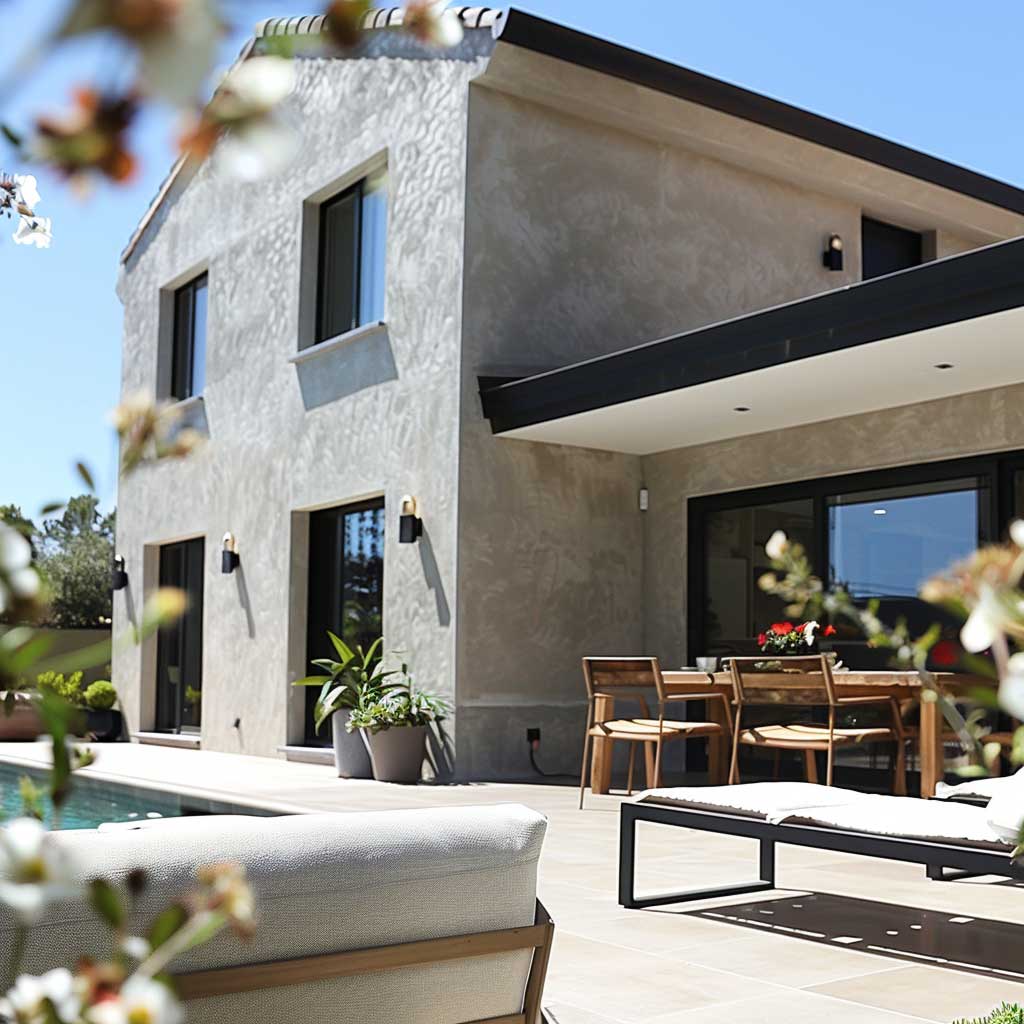
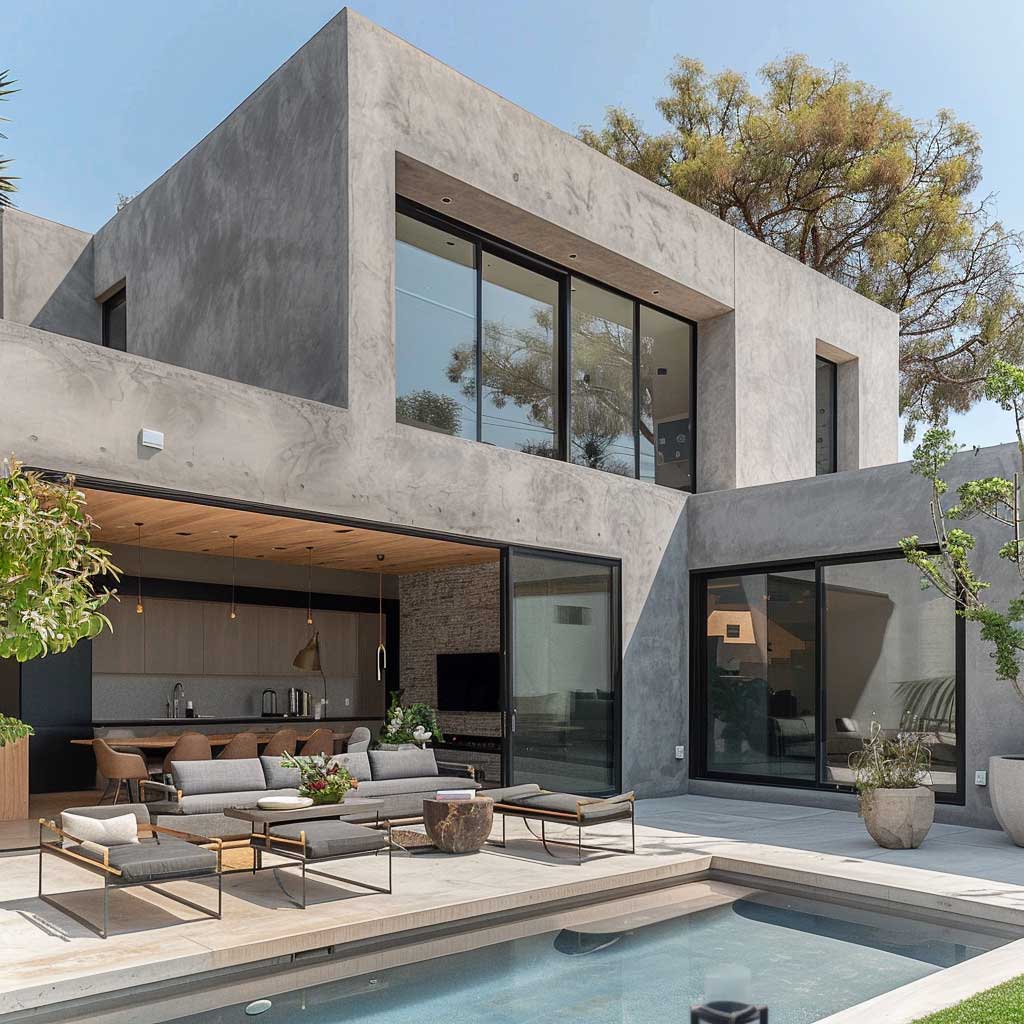
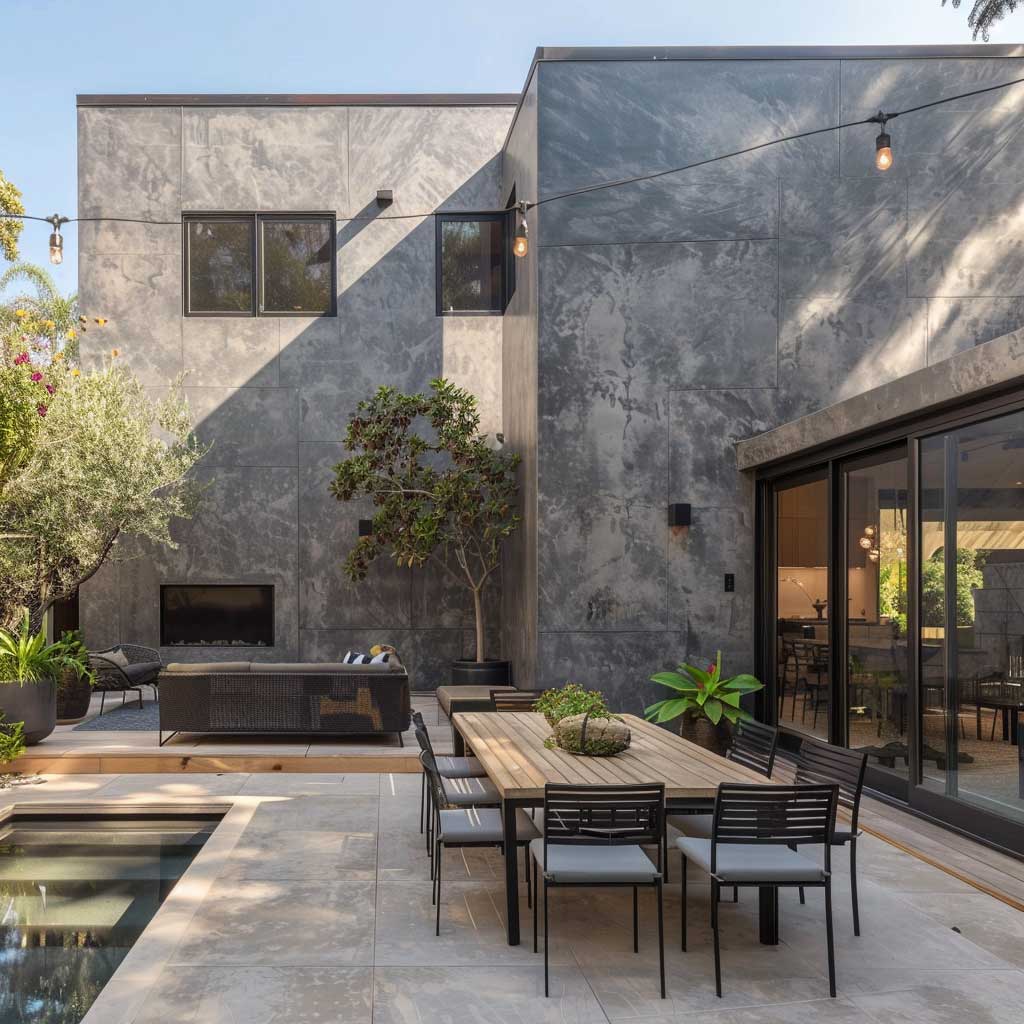
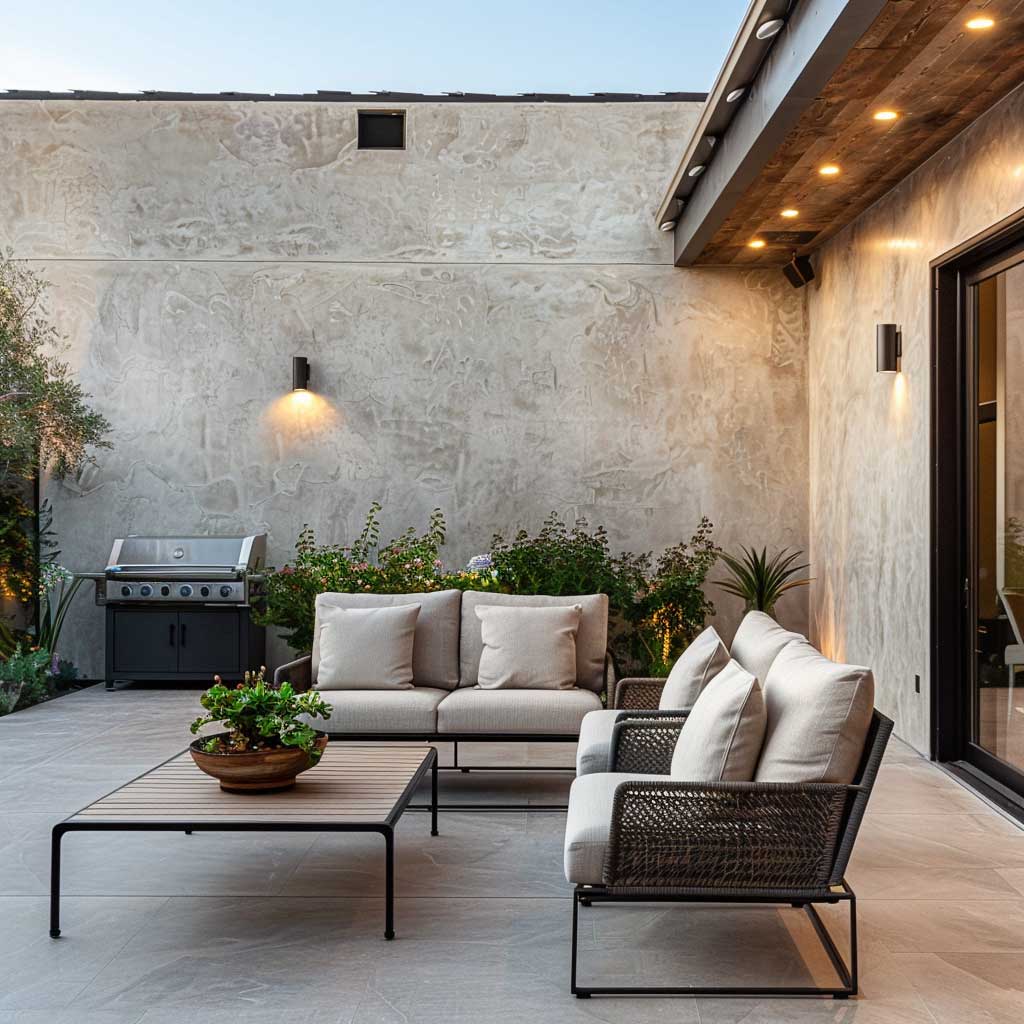
Landscaping finishes what the wall starts. A stucco facade in a light neutral gets visually anchored by darker hardscaping — a stone path, a metal pergola frame, low black-framed lighting — because the wall alone reads as flat without something to contrast against. Skip landscaping that competes for the same neutral palette; a beige stucco wall next to beige gravel and beige furniture disappears into itself instead of standing out.
Rough Stone Meets Smooth Stucco Without Softening Either
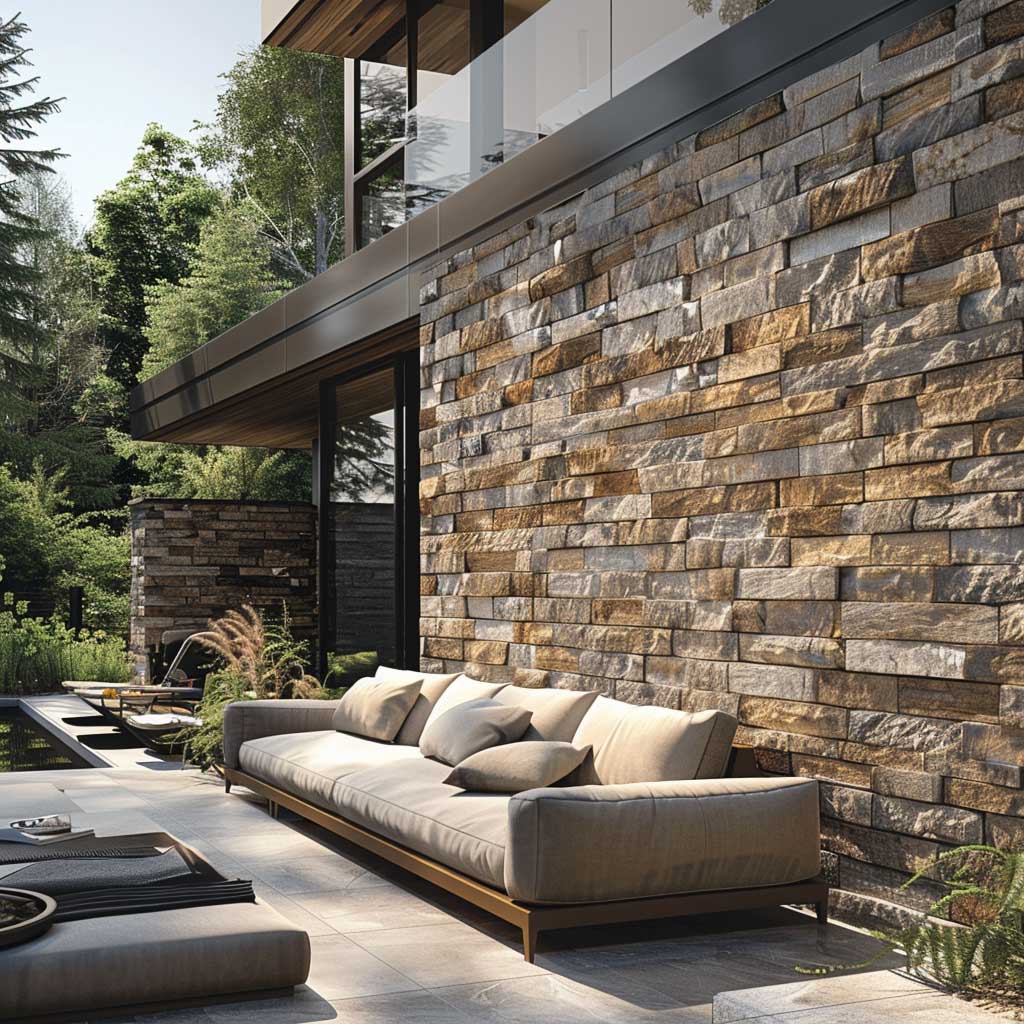
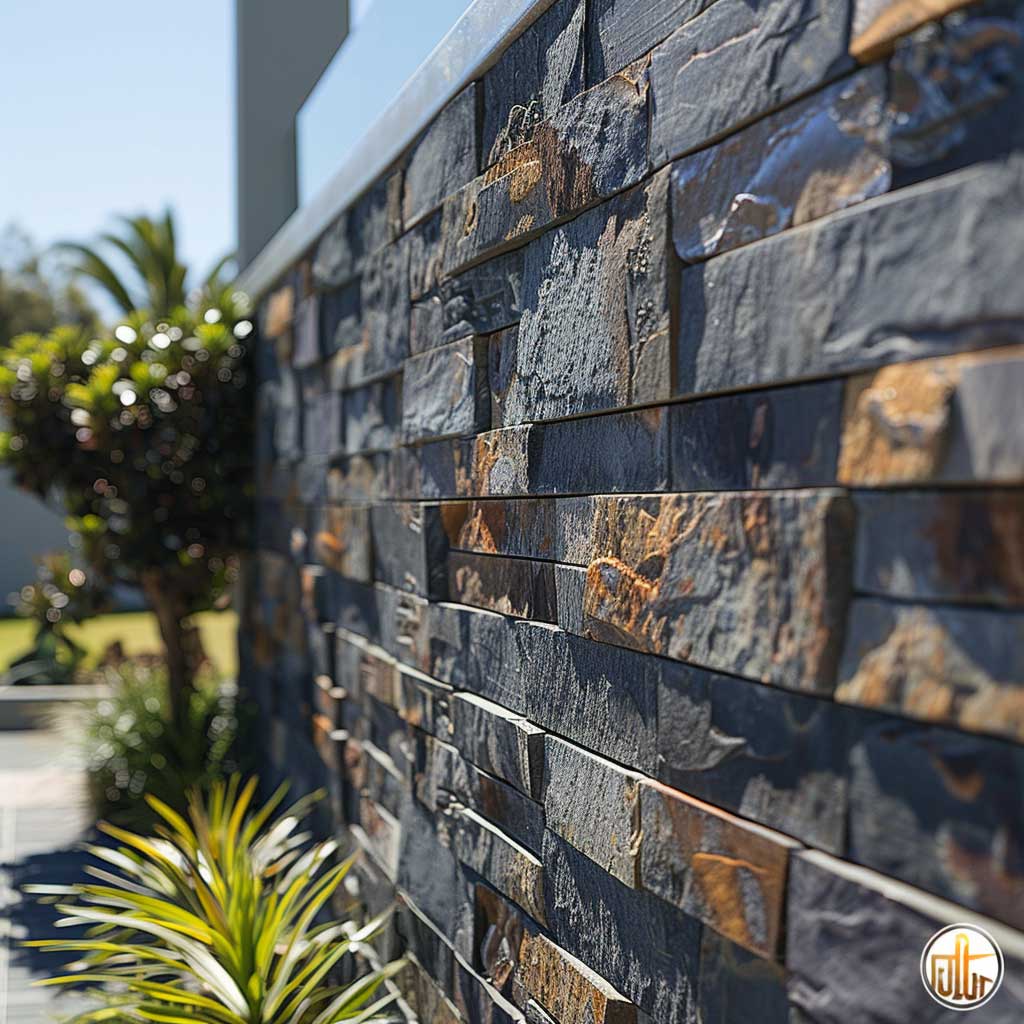
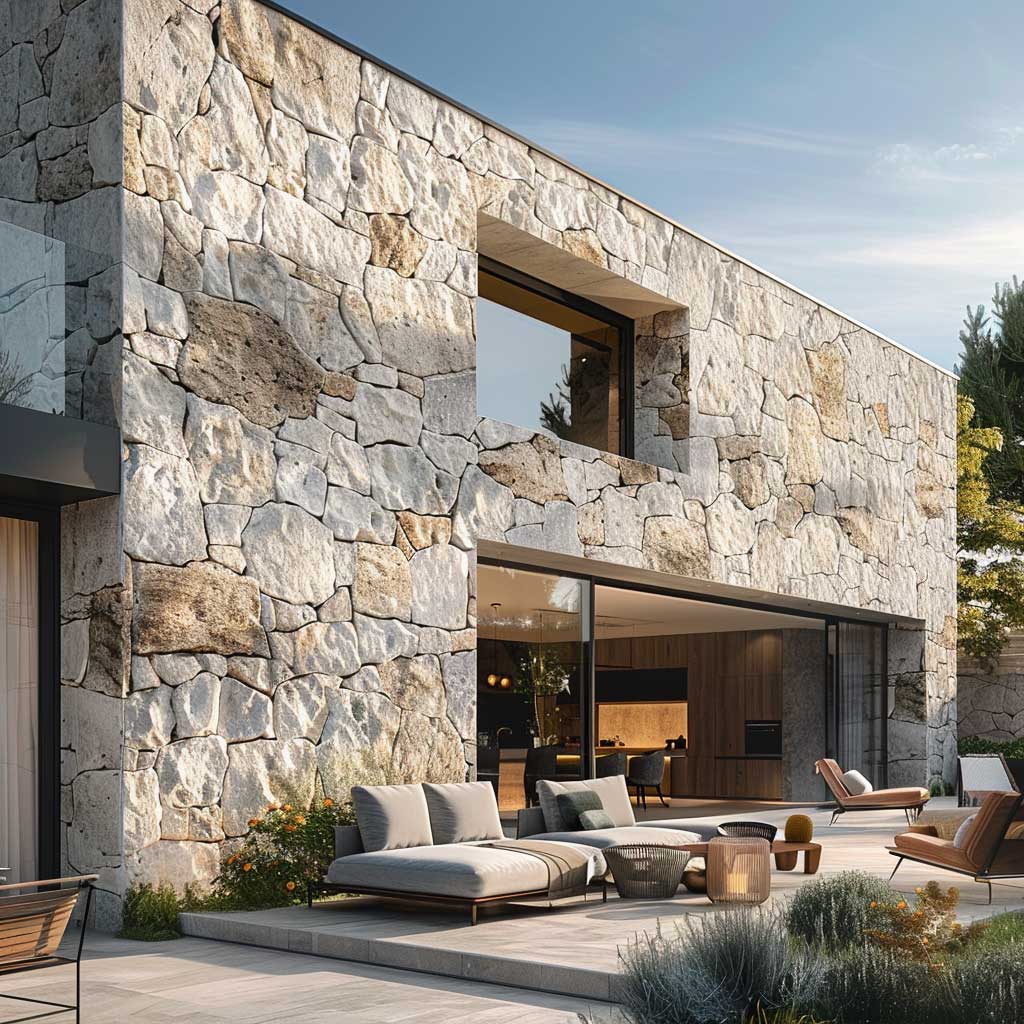
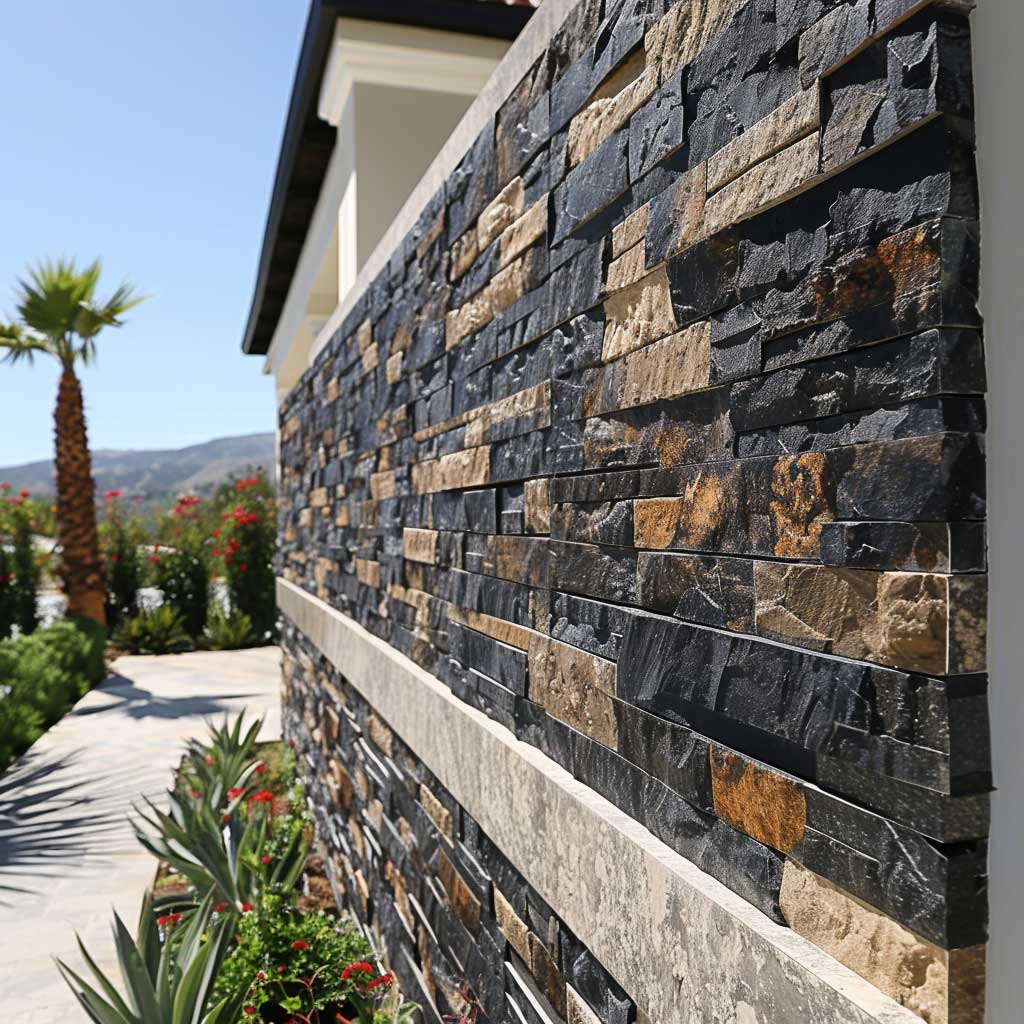
Stucco and natural stone sit at opposite ends of the texture spectrum, and that gap is exactly what makes the pairing work on a home’s exterior. The stucco stays smooth and light-reflecting while the stone brings weight, shadow, and a rougher hand-feel right next to it. Stone cladding for exterior walls holds up to decades of weather with almost no upkeep once it’s set, which is part of why it shows up so often as a lower-wall or entry accent rather than full coverage.
Which stone actually makes sense for a budget-conscious accent wall? Manufactured stone veneer, not full natural stone. Manufactured veneer runs about $5 to $8 per square foot for material alone, compared with $35 to $50 per square foot for real quarried stone, and it weighs a fraction as much — light enough that most homes don’t need any extra foundation reinforcement to carry it. Framing windows or doors in stone against a stucco field creates the sharpest contrast, since the eye reads the stone as structural even when it’s a thin veneer layer.
Skip mixing more than two stone colors on one elevation — a wall built from four different stone tones because “more variety looks richer” ends up looking like a clearance bin instead of a considered material palette. Two tones, one dominant and one accent, read as intentional. A horizontal layering approach — rough stone at the base, smooth stucco above — mimics how older stone-and-plaster buildings were actually constructed, starting heavy at ground level and lightening toward the roofline.
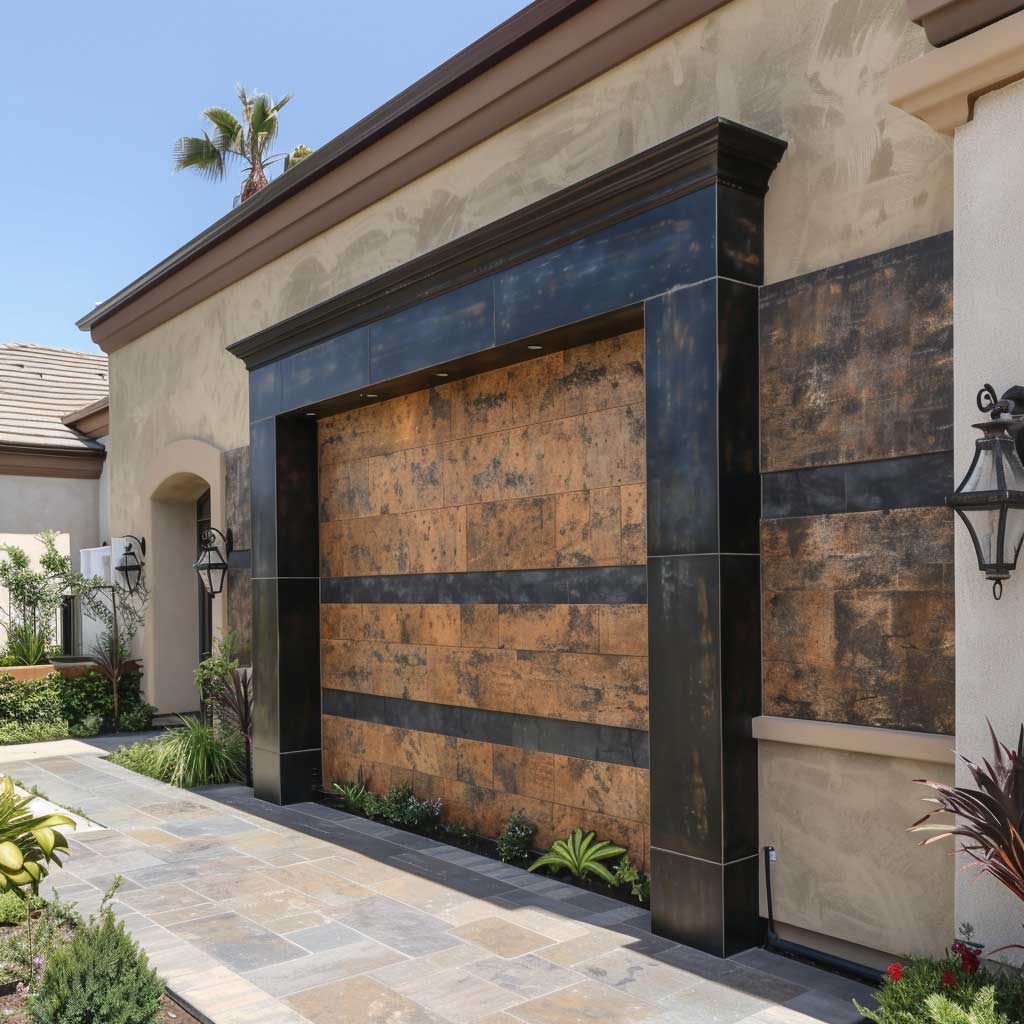
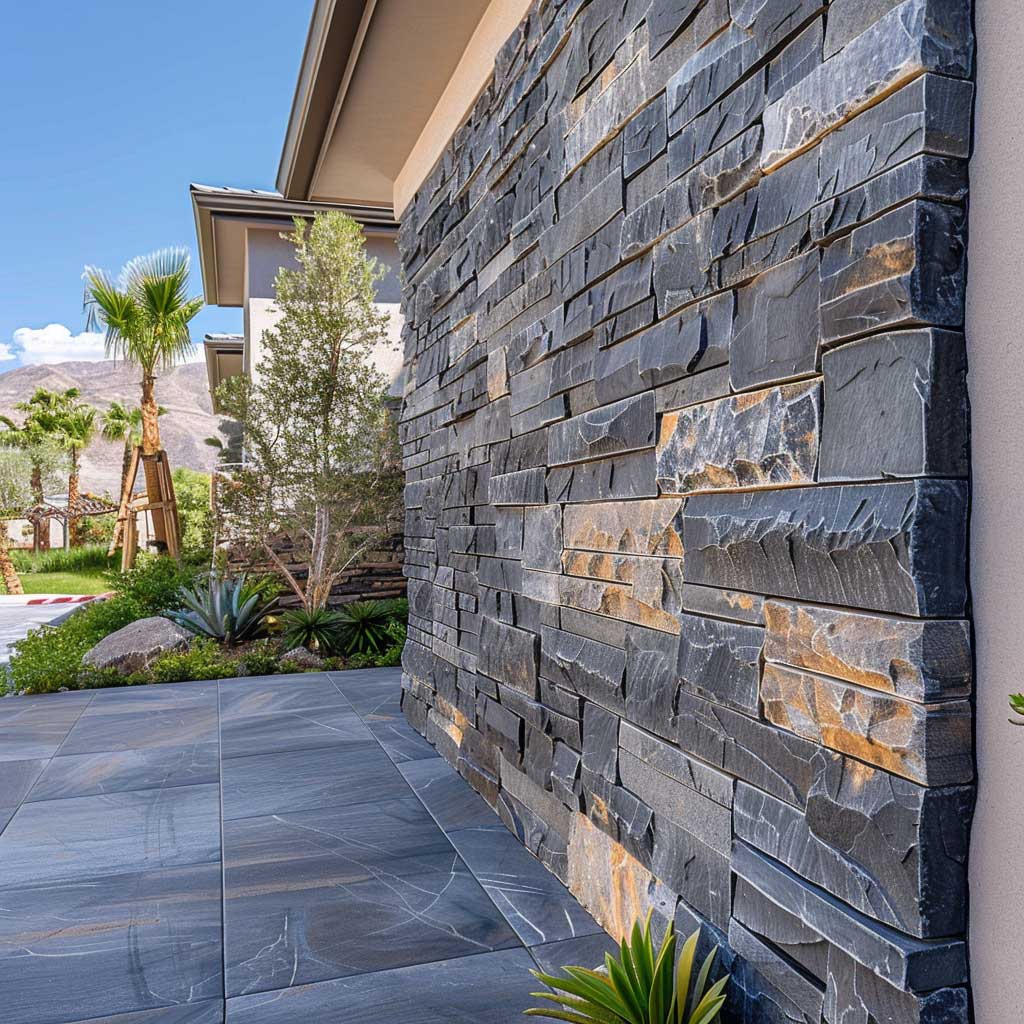
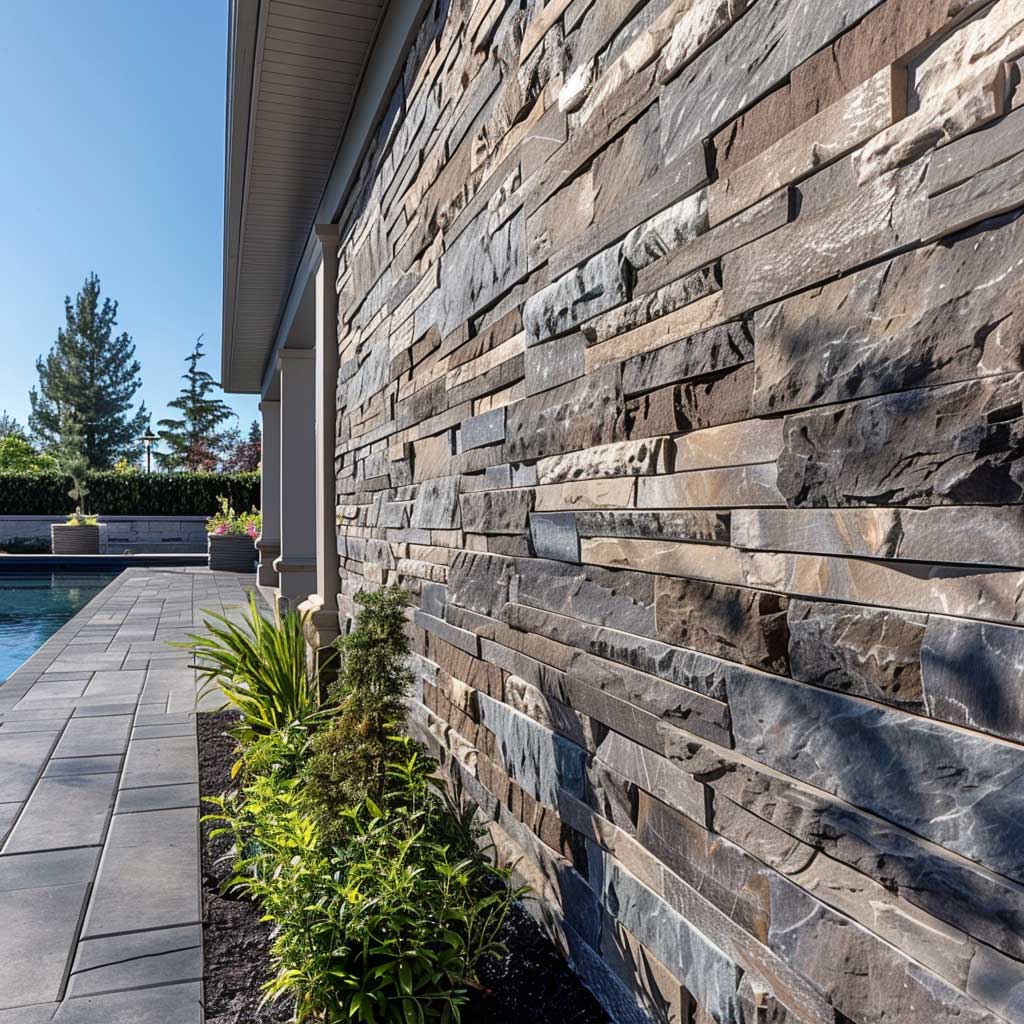
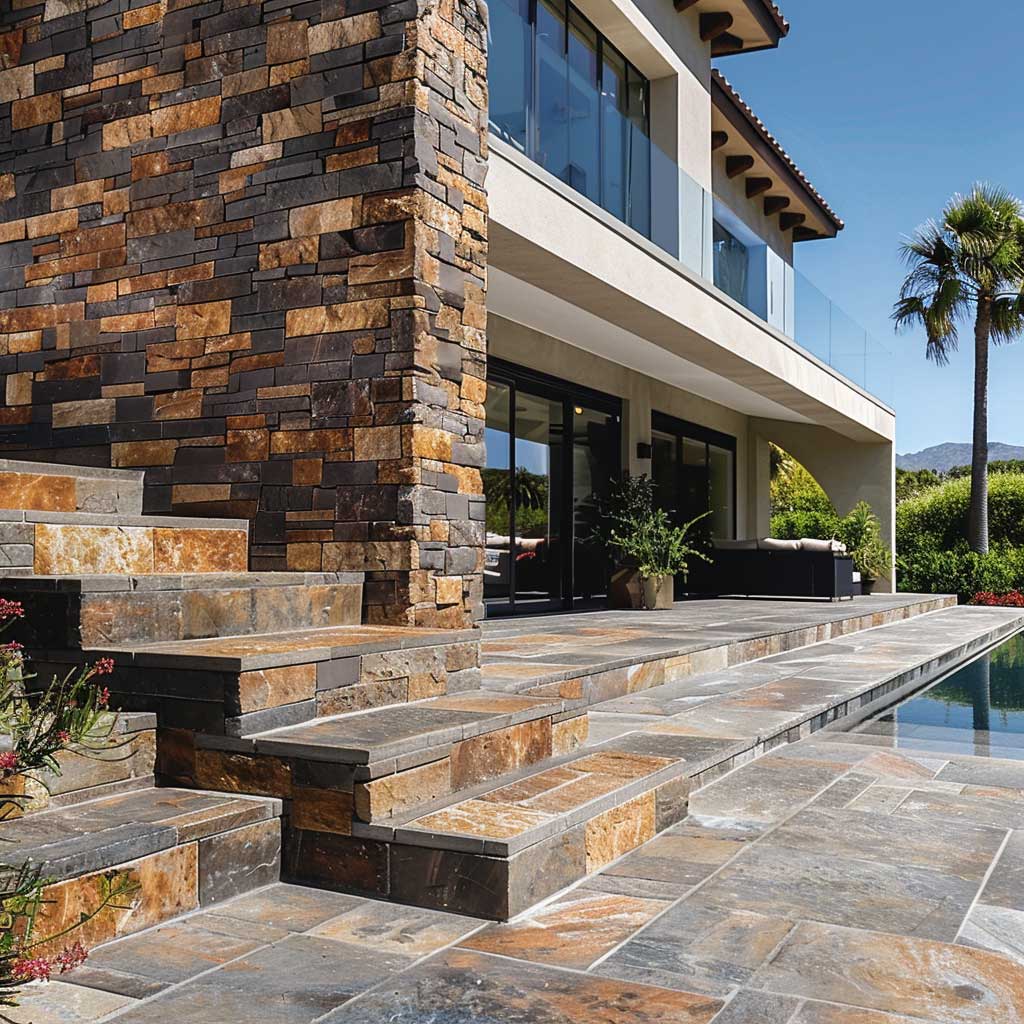
Gravel paths and planters finish the look the same way lighting does with the wood-accent wall — they give the eye a place to land between the stucco and the stone instead of jumping straight from one texture to the other. A stucco-and-stone wall built this way tends to age like a well-worn stone farmhouse rather than a house that’s chasing a trend, which is exactly the point of choosing a material pairing this durable in the first place.
| Style | Best For | Maintenance | Installed Cost |
|---|---|---|---|
| Wood Accent Stucco | Warm, rustic curb appeal | Restain every 3–5 years | $6–$12 / sq ft (cedar) |
| Color & Texture Stucco | Clean, minimalist facades | Repaint every 5–10 years | $6–$9 / sq ft (traditional) |
| Stone & Stucco | High-contrast entries | Near zero, occasional rinse | $5–$8 / sq ft (veneer material) |
Before You Pick a Wall
Stucco is the constant. What you pair it with is the decision that actually matters.
Wood warms up a facade fastest but asks for a resealing habit every few years.
Stone costs more upfront and then almost nothing again for decades.
Color and texture alone are the cheapest way to change how a stucco wall reads from the street. Save this post before you start pricing out contractors.