Metal panel outdoor wall cladding transforms an unremarkable exterior into a facade that reads as intentional from the curb — and the three main material directions (brushed aluminum, corrugated steel, and powder-coated color panels) pull the result in completely different directions. According to Fixr’s 2026 cost data, fully installed metal cladding runs $4 to $16 per square foot, which means the material choice you make at the start determines both the aesthetic for decades and your budget by thousands of dollars. Getting that decision right requires understanding how each panel type actually behaves outdoors — not just what it looks like in a mood board.
Each of the three directions covered here suits a different architectural context. Brushed aluminum reads as precision and restraint; corrugated steel reads as raw and honest; colored panels read as authored and deliberate. None of them is universally superior — all three will last 40 years or more with correct installation. The variable is fit: fit to the house’s proportions, to the surrounding landscape, and to how much visual noise the homeowner actually wants to maintain.
The mistake most people make is treating the panel profile as a cosmetic afterthought and focusing the whole budget conversation on cost per square foot. Panel direction, fastener visibility, and coating type have as much influence on the final result as the material itself — and those decisions don’t cost extra to get right.
- Brushed aluminum panels last 40–70 years with only annual washing; concealed-fastener systems cost $10–$16/sq ft installed.
- Corrugated steel (exposed fastener) runs $7–$12/sq ft and suits industrial or farmhouse aesthetics; Corten corrugated costs more but self-protects via patina.
- Powder-coated colored panels add approximately $8–$15/sq meter to base material cost; PVDF coatings hold color for up to 30 years.
- Running panels vertically in a small outdoor space creates the illusion of height; horizontal orientation emphasizes width.
- Reflective aluminum panels can visually enlarge a compact terrace — the same effect that mirrors produce indoors.
- Never apply corrugated Corten in constantly wet or coastal environments: the patina never stabilizes and corrosion progresses.
Aluminum Panels Deliver Contemporary Metal Wall Cladding at 40-Plus Years
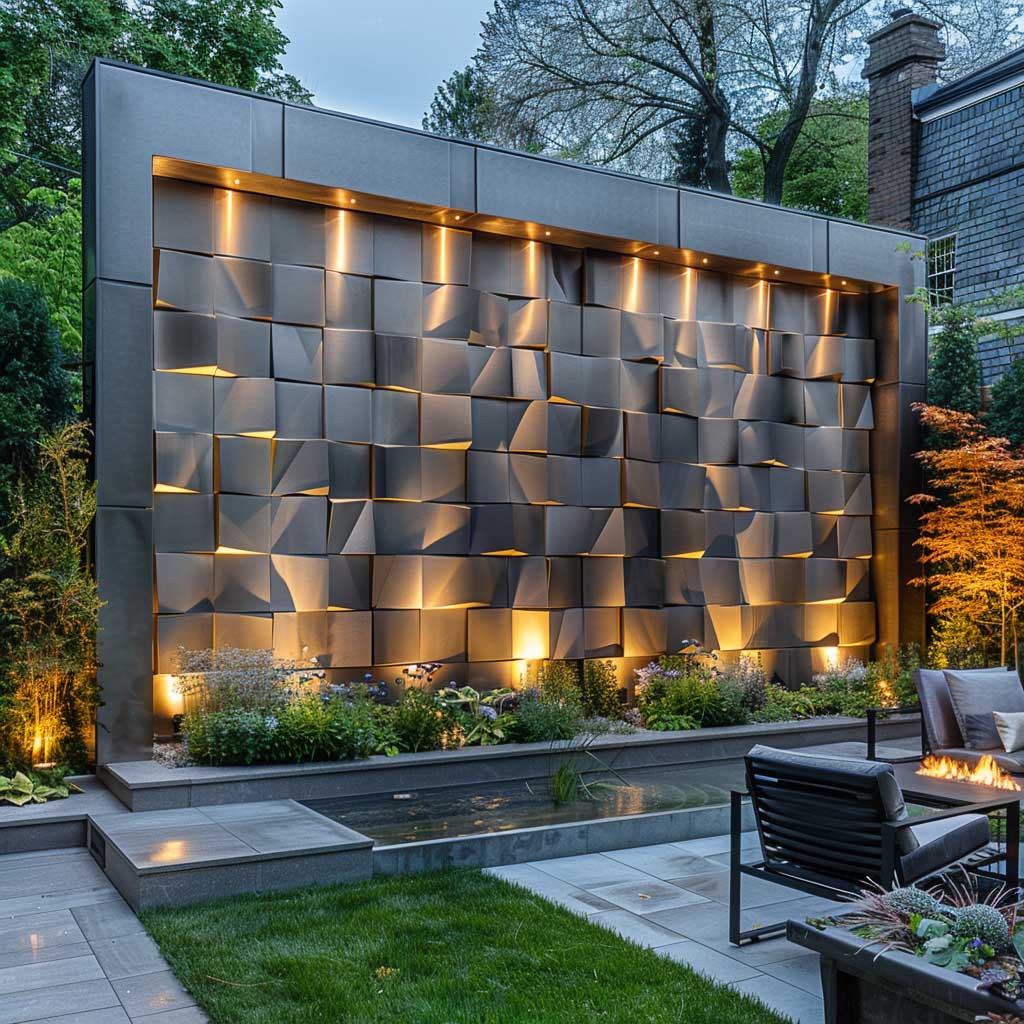


Brushed aluminum contemporary metal wall cladding behaves like a sundial: the surface shifts character as the sun moves, producing soft directional reflections in the morning and near-mirror effects by midday. Aluminum panels last 40–70 years with proper installation and minimal care — Xtra Metal’s technical data specifies that annual or twice-yearly washing with mild detergent is the primary maintenance requirement. That lifespan is the real argument for the higher upfront cost of concealed-fastener aluminum systems, which Fixr’s 2026 data puts at $10–$16 per square foot fully installed.
Panel orientation matters more than most homeowners expect. Vertical runs read as height and formality; horizontal runs read as ground-hugging and relaxed. What rarely gets mentioned is the reflectivity angle: a reflective aluminum surface angled slightly outward catches the sky and makes a compact outdoor space feel significantly wider — the architectural equivalent of a full-length mirror in a small room. Do you want the wall to recede into the background or become the focal point? That question, not budget, should determine the finish direction — matte oxide for the former, brushed or polished for the latter.


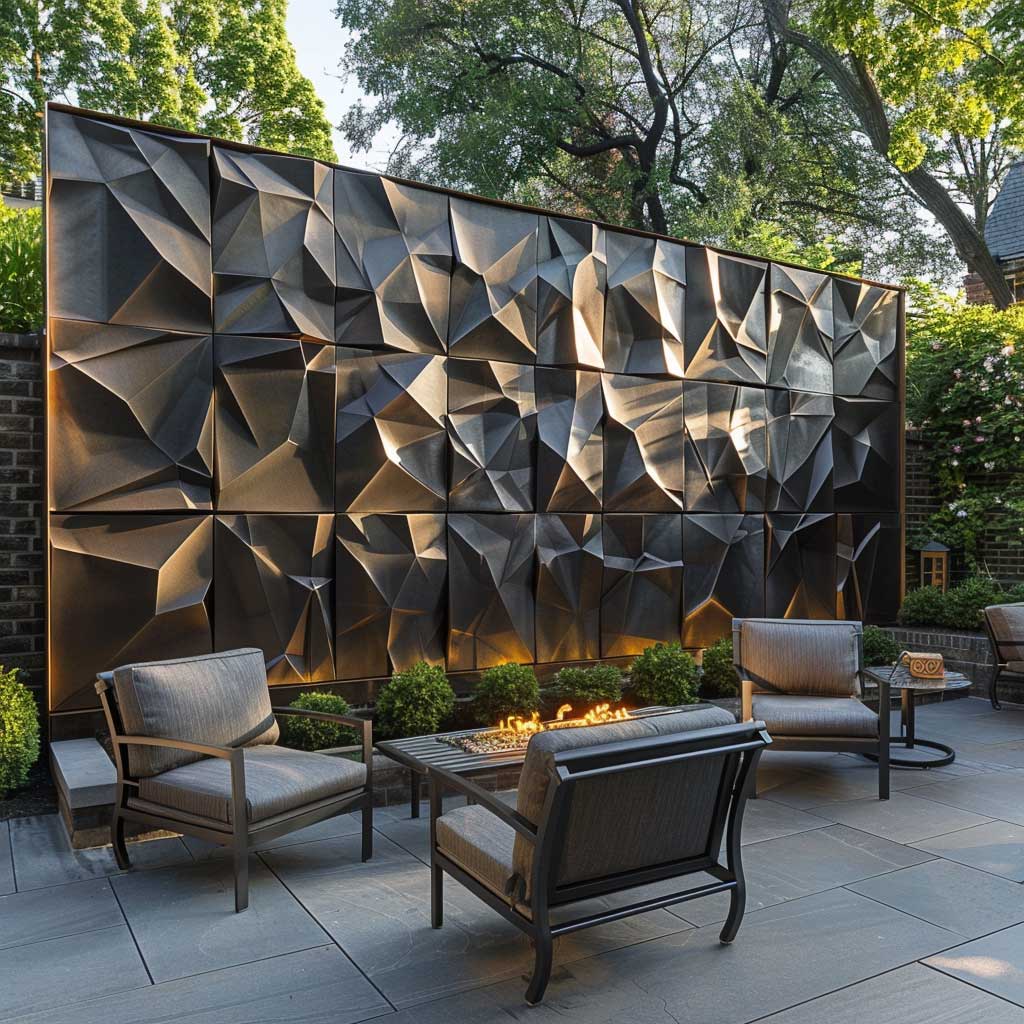
The coating choice directly affects how long the surface stays sharp. PVDF (Kynar) coatings carry paint warranties of 30–40 years and maintain UV resistance in coastal climates; standard polyester finishes are cheaper upfront but chalk and fade within 10–15 years. For outdoor wall applications in direct sun, PVDF is not a luxury — it’s the correct specification. One anti-advice worth noting: do not mix polished and matte aluminum panels on the same wall in alternating strips. The two finishes reflect light at different intensities and the result looks like a calibration error rather than a design decision. Use a single finish across the panel field and introduce contrast through panel width and direction instead. A well-matched natural material like modern exterior cladding with mixed materials — stone or wood trim against aluminum — reads far more coherent than mixed metal finishes.
Corrugated Steel Pulls the Industrial Outdoor Wall Cladding Look Out of the Factory


Corrugated steel outdoor wall cladding works because the ribbed profile carries a cultural memory — grain silos, factory walls, mid-century warehouses — and that reference lands with real weight in an outdoor setting. Exposed-fastener corrugated panels are the most affordable metal wall option: Fixr’s 2026 data puts them at $7–$12 per square foot fully installed. That accessible cost point makes them popular for accent walls and garden room exteriors where the full perimeter isn’t being clad.
Corten (weathering steel) corrugated panels push the budget higher — basic corrugated Corten runs $5–$7 per square foot for material alone before installation — but produce a self-protecting rust patina that stabilizes into a warm iron-oxide skin. Think of it as a material that ages the way good leather does: the early weathering looks rough, but after 12–18 months outdoors in alternating wet and dry conditions, the surface develops a density and richness that no paint can replicate. The trick is placing vegetation at the base rather than against the face: soil contact and standing water prevent the patina from stabilizing and accelerate corrosion instead.


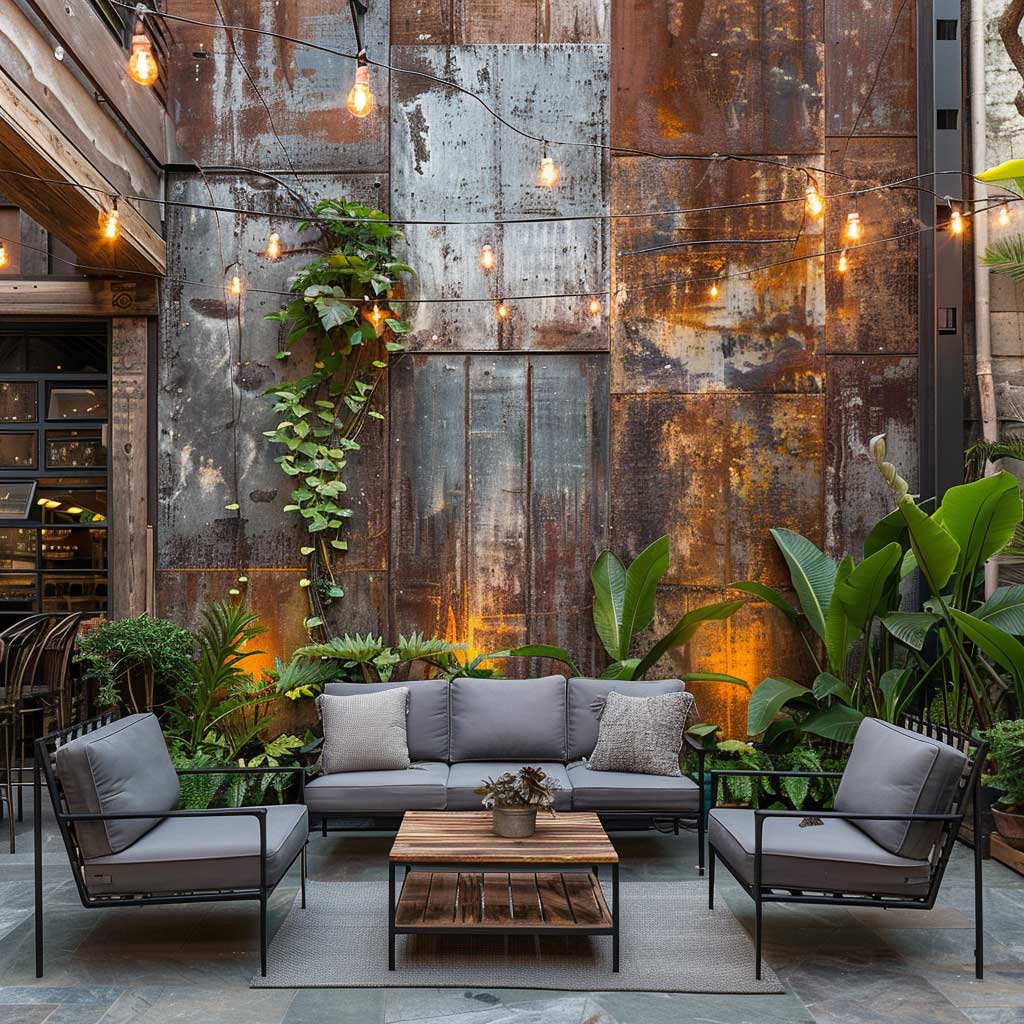
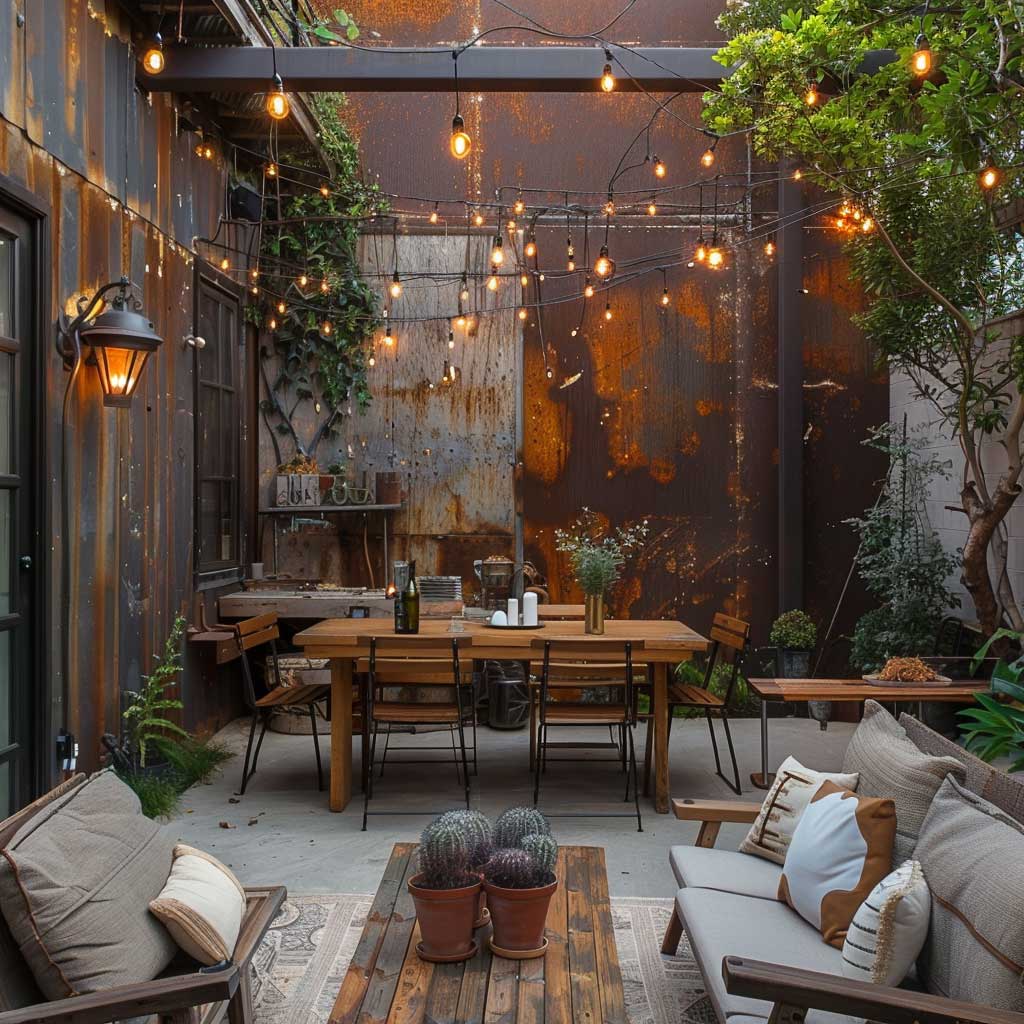
The rib depth creates shadow lines that shift direction through the day — similar to how fluted concrete columns catch raking light in the afternoon. Narrow-rib corrugated reads as finer-grained and more residential; wide-rib (7/8″ profile) reads as more emphatically industrial. Warm light sources — Edison filament strings at 2700K, for example — sit particularly well against the russet tones of aged steel and make the surface appear almost lacquered by evening. Avoid pairing corrugated steel with bright white contemporary outdoor furniture: the contrast reads as stylistic conflict rather than intended tension. Linen, raw wood, and matte black pieces share the visual vocabulary.
- Don’t install Corten steel in coastal salt-spray or permanently wet environments — the patina cannot stabilize, and the core corrodes progressively without forming a protective layer.
- Don’t use bare galvanized corrugated panels without a high-density paint or PVDF coating if color retention matters — galvanized surfaces weather to a chalky gray within a few years and scratch easily.
- Don’t run corrugated panels horizontally on a wall narrower than 8 feet — the ribbed profile emphasizes horizontal span and makes narrow walls look compressed, not wide.
- Don’t mix corrugated profiles in different rib widths on the same wall surface — it looks like a material inventory, not a design choice.
Powder-Coated Outdoor Wall Metal Cladding Ideas for Color-Forward Facades
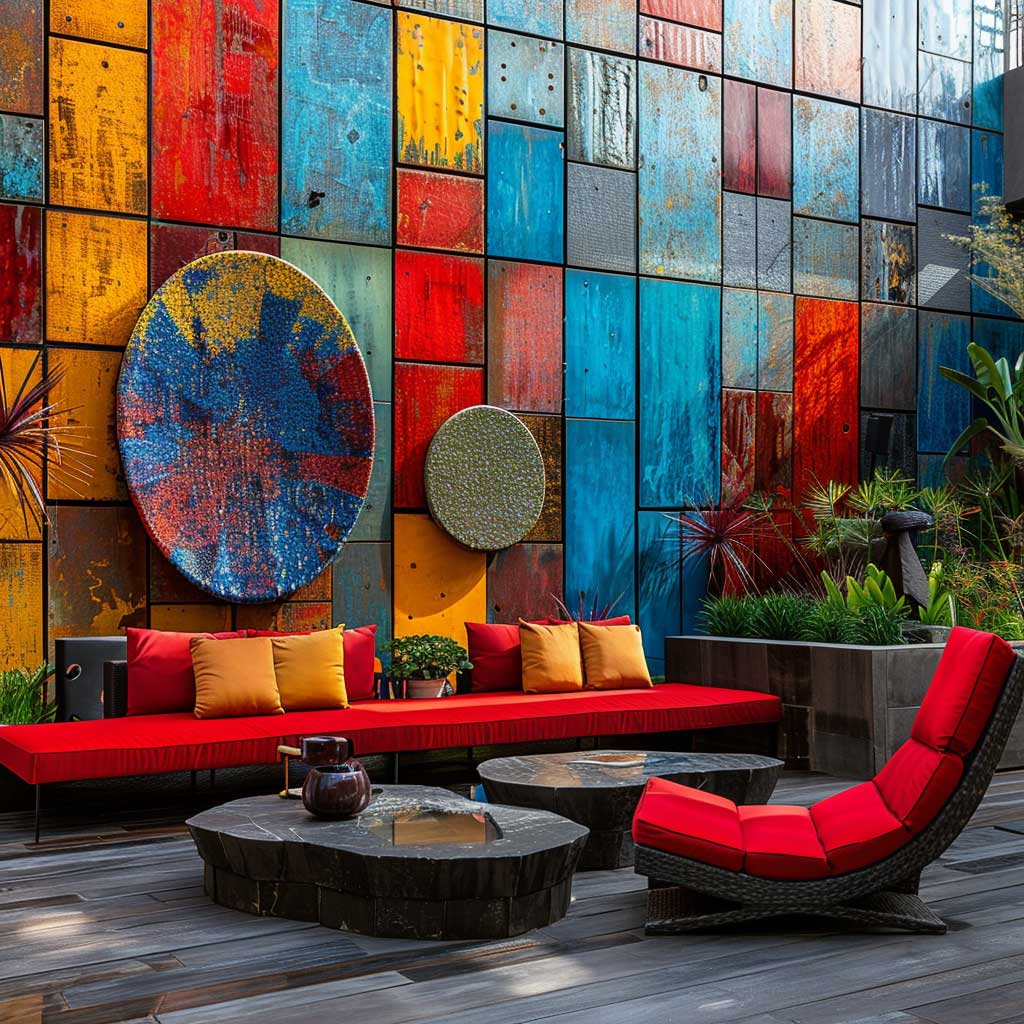

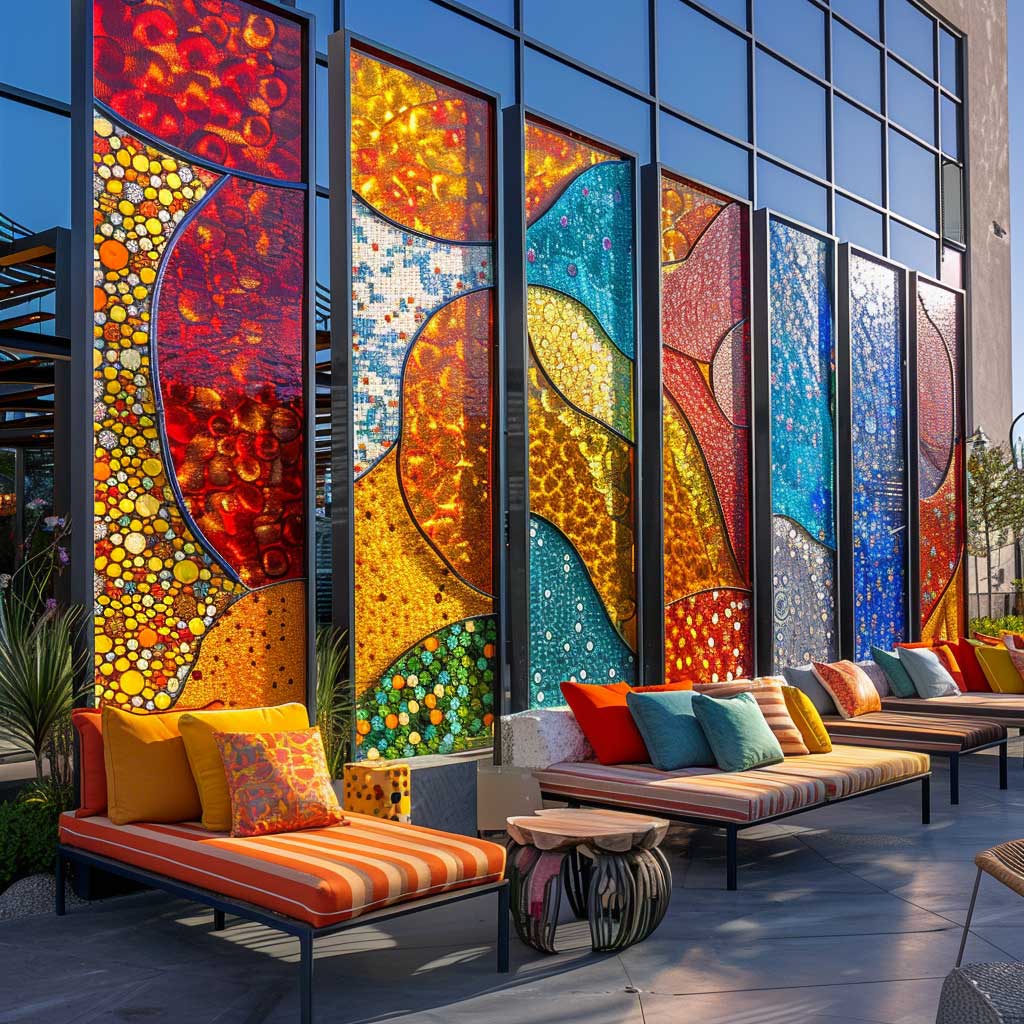

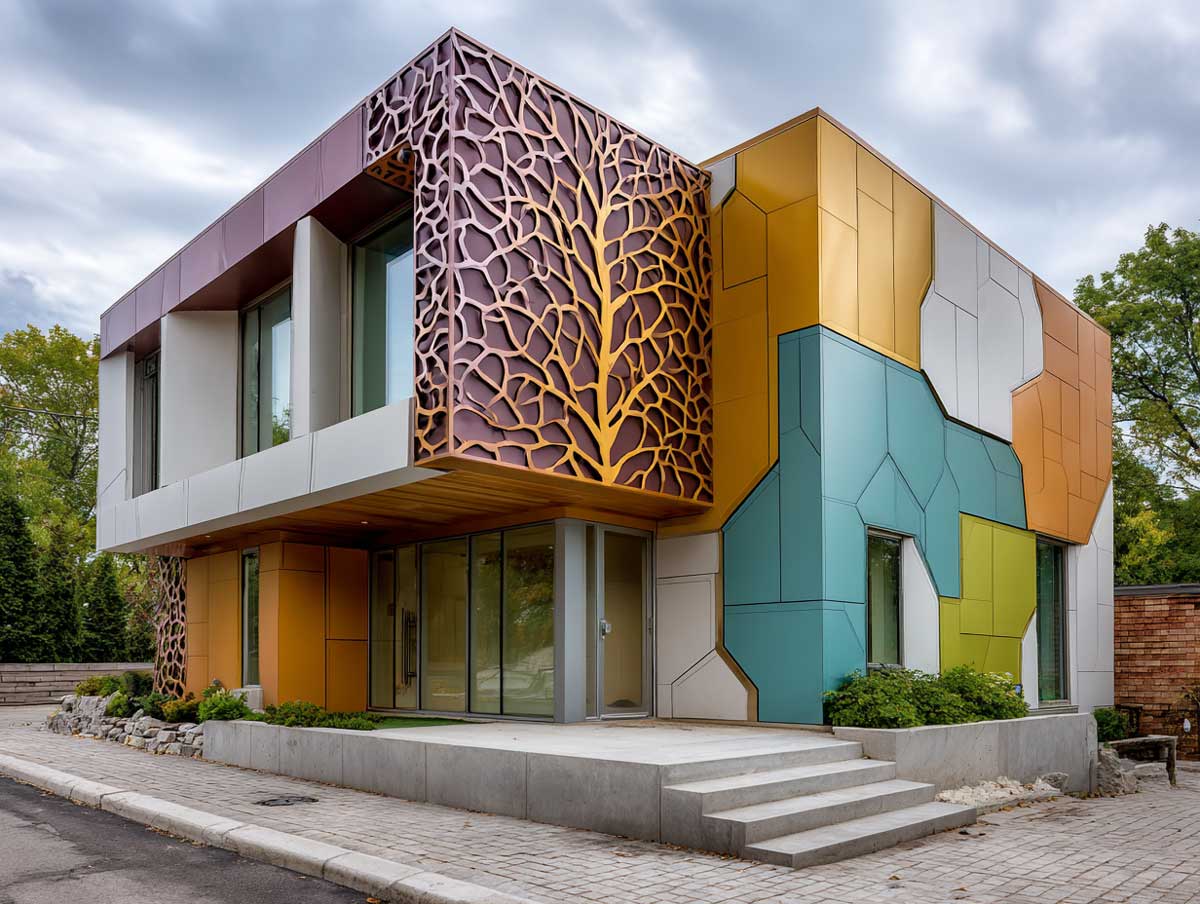
Powder-coated colored metal panels treat the exterior wall as a canvas rather than a skin — the palette decision carries the same weight as a paint color on an interior accent wall, except the stakes are higher because the surface is visible from the street and irreversible without significant cost. PVDF-coated powder finishes from manufacturers like Xtra Metal maintain color stability for up to 30 years against UV, acid rain, and temperature cycling, which means a color chosen today will look substantively similar in 2045. That durability justifies the coating premium: powder-coated and anodized finishes add approximately $8–$15 per square meter to the base panel cost according to alu-wallcladding.com’s technical specifications.
Color works on an outdoor wall the same way it works in typography: contrast ratio determines legibility. A monochromatic field of deep charcoal panels reads as sophisticated and recessive — the landscape and furniture become primary. A multi-panel arrangement using two or three colors creates zoning: warmer tones define seating areas, cooler tones frame transitions to lawn. What stylists in this space consistently flag as a mistake is treating a colored metal wall like a mural — filling every panel with a different hue produces visual noise rather than composition. Limit any arrangement to three colors maximum, with one dominant, one secondary, and one accent distributed in unequal areas.

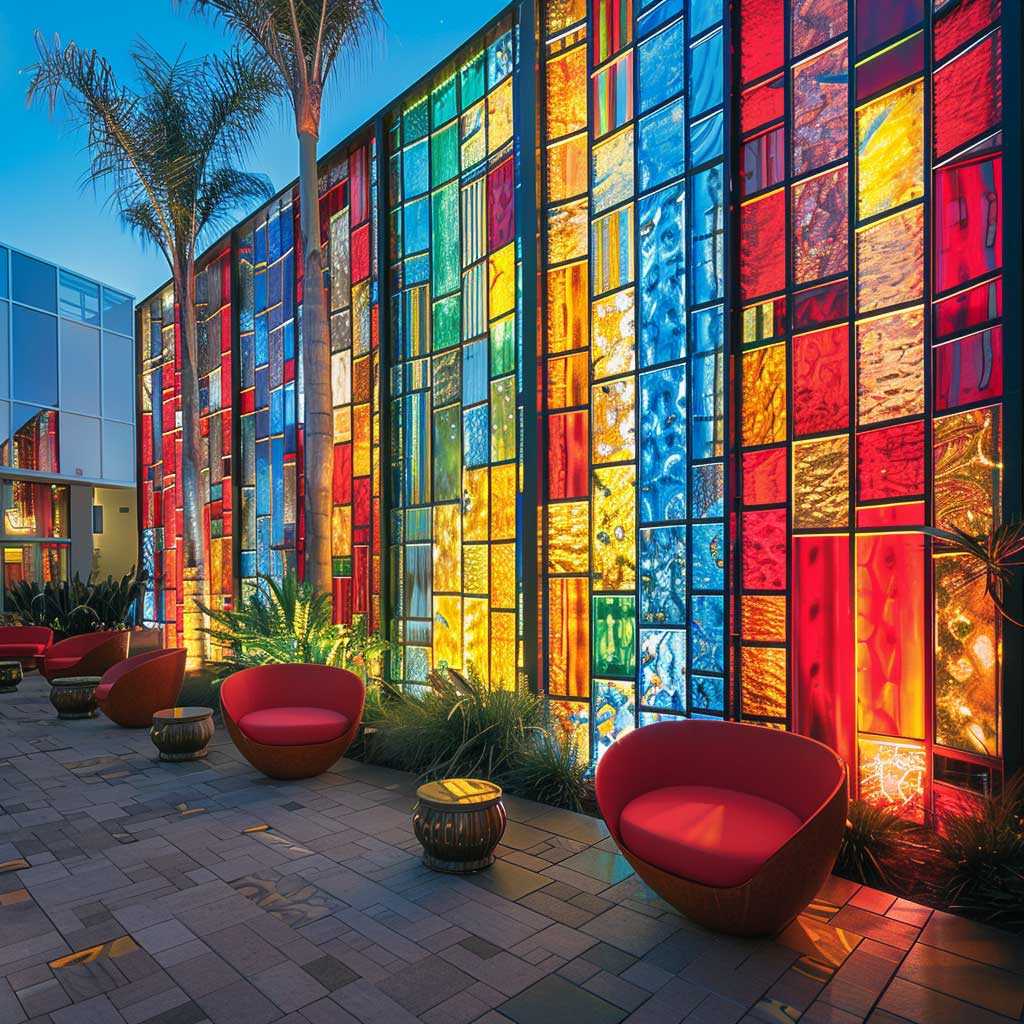
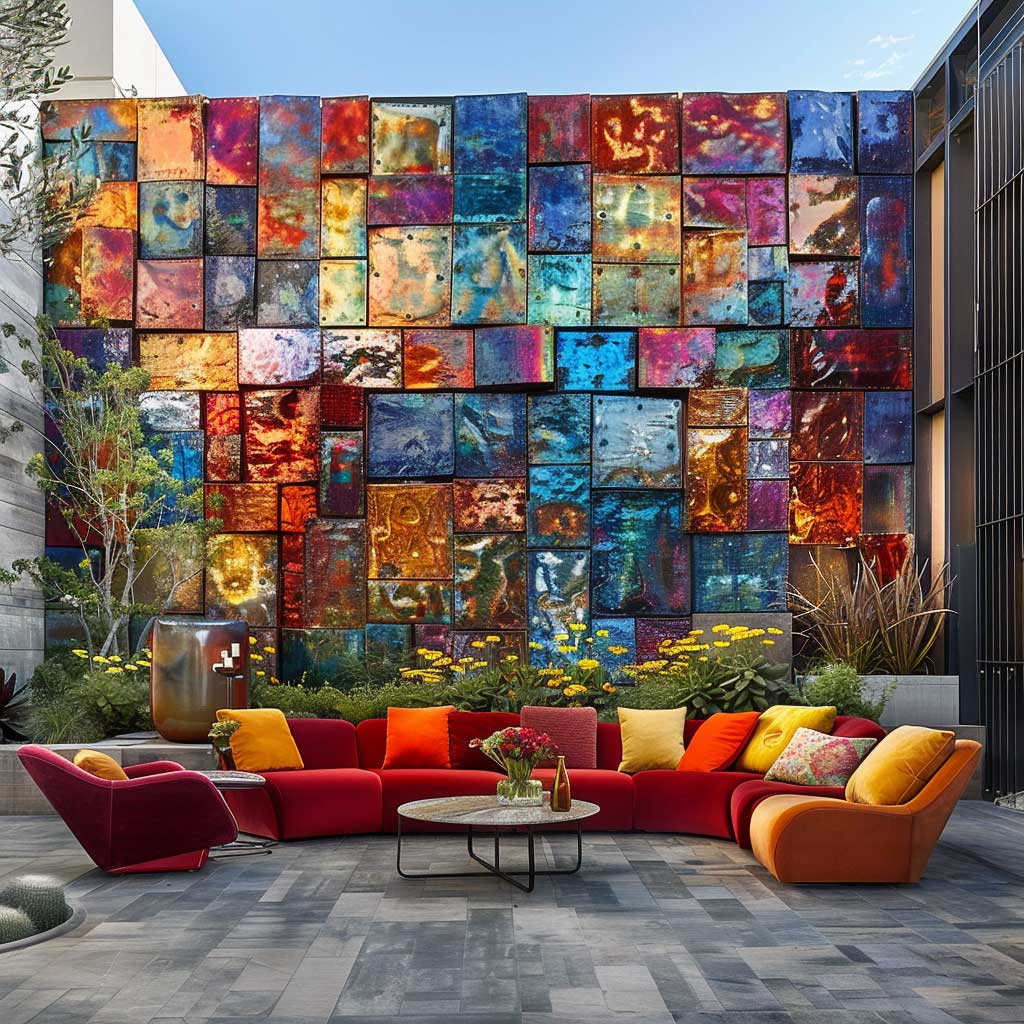
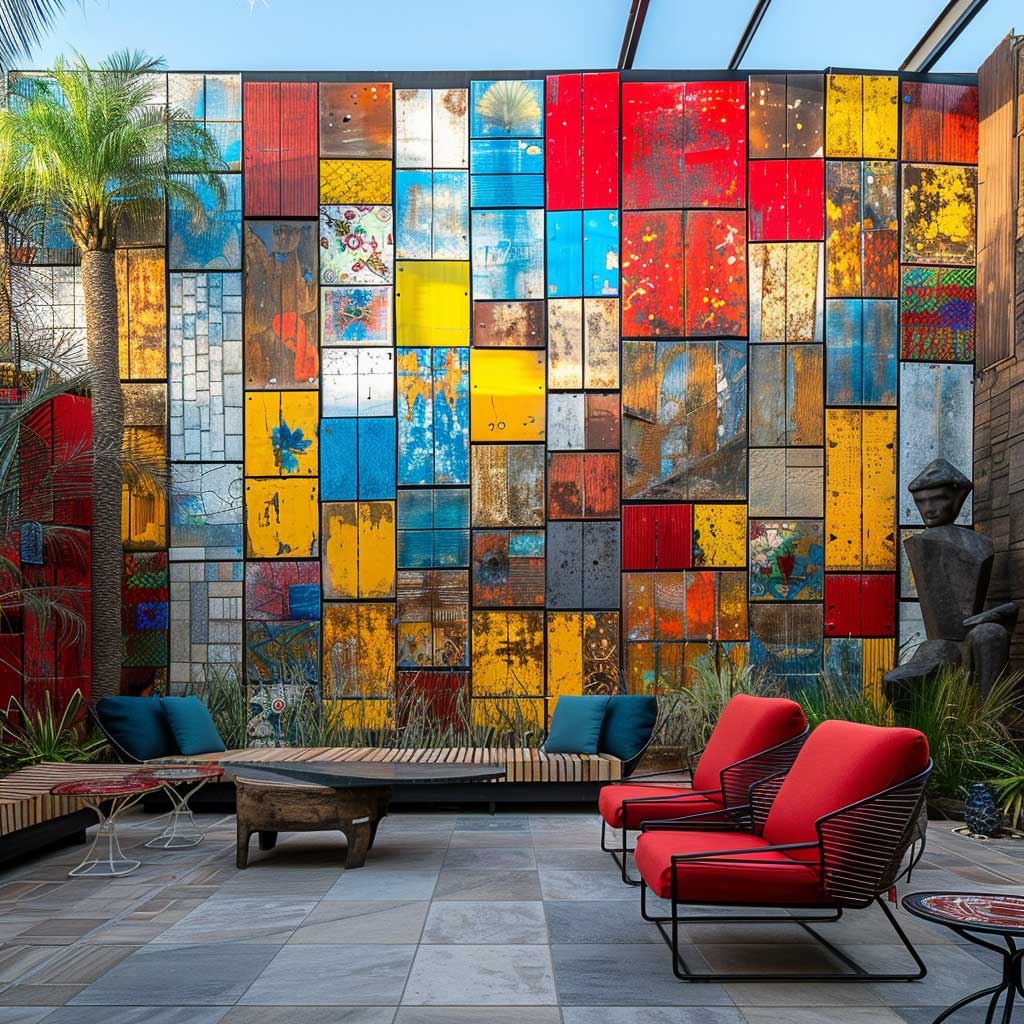
Perforated colored panels add a layer of complexity that solid panels cannot: they filter light, cast patterned shadows that move through the day, and allow controlled glimpses through the wall without removing privacy entirely. For outdoor dining spaces, a perforated colored screen at one end creates a sense of enclosure without trapping summer heat — the perforation density controls the balance. Perforated aluminum systems in architectural grades run $9–$17 per square foot installed, per alu-wallcladding.com’s 2025 project data. The lighting dimension alone makes colored and perforated panels worth specifying for outdoor spaces used in the evening; solid panels go dark at night, while perforated screens with a backlight source become architectural features. For a broader look at how exterior exterior wall panel designs can change a facade’s character across different material systems, the range is considerably wider than metal alone.
| Panel Type | Installed Cost | Lifespan | Key Risk |
|---|---|---|---|
| Brushed Aluminum (concealed fastener) | $10–$16/sq ft | 40–70 years | Mixing matte and polished on same wall |
| Corrugated Steel (exposed fastener) | $7–$12/sq ft | 40–70 years | Patina failure in coastal/wet conditions |
| Corten Corrugated (weathering steel) | $5–$7/sq ft material only | Decades if patina stabilizes | Never use in permanently wet environments |
| Powder-Coated Colored Panels (PVDF) | $9–$17/sq ft | 30-year coating warranty | Over-complex color palette, too many hues |
According to Fixr’s April 2026 cost report, metal siding installations nationwide average $17,000 for a full home exterior — a figure that provides useful context for budgeting an outdoor accent wall, which at 150–300 square feet typically runs $1,500–$4,800 depending on panel type and fastener system. For a full breakdown of current metal cladding costs by panel profile, gauge, and finish, the Fixr metal siding cost guide is one of the more detailed publicly available references.
Metal Wall Cladding
Pick a Direction, Not Just a Material
The panel profile, fastener visibility, and coating specification shape the final result as much as aluminum versus steel. Brushed aluminum suits contemporary low-maintenance builds; corrugated steel anchors industrial and farmhouse contexts; powder-coated panels work where the wall needs to be the focal point.
Corrugated Corten ages into something no paint can replicate — but only in alternating wet-dry climates. In coastal or permanently damp settings, opt for painted galvanized or PVDF-coated aluminum instead.
Save this post before your next outdoor wall project — the cost and coating details change how the material decision lands.