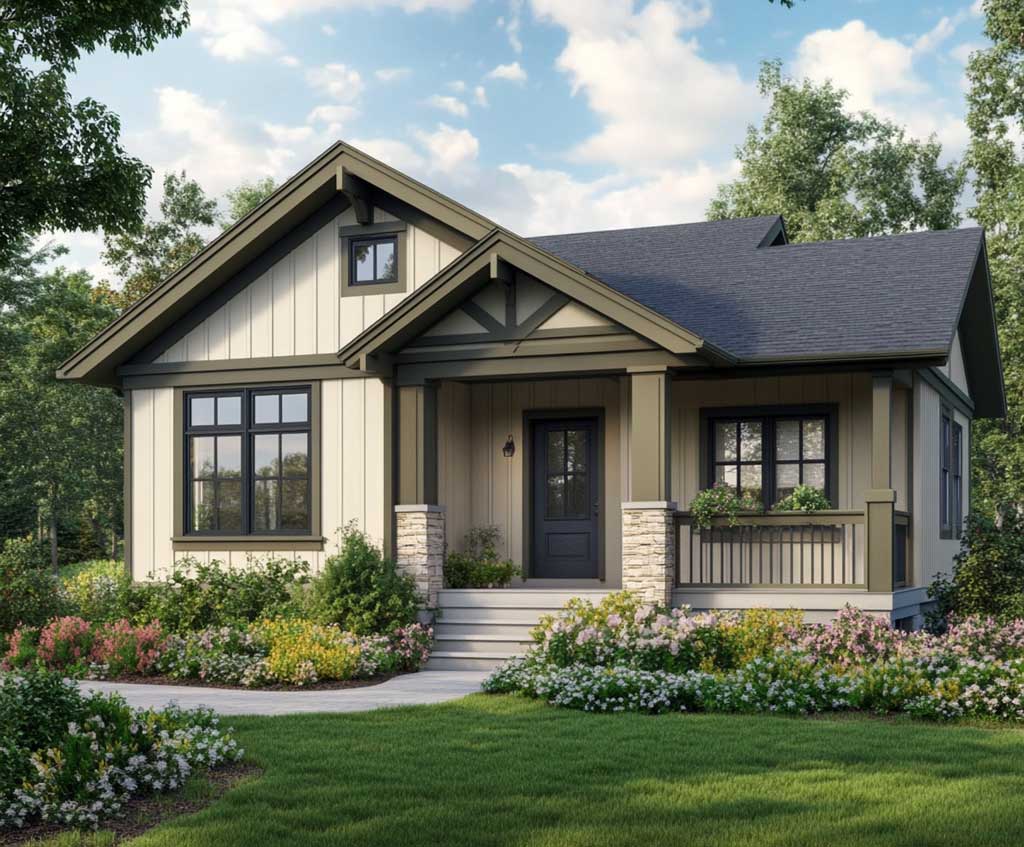
Pale greens are the color choice that keeps outperforming expectations on house exteriors — and not because they’re safe. A well-chosen pale green for a house exterior lands somewhere between Sherwin-Williams Comfort Gray (SW 6205) and Benjamin Moore Seafoam Green (2039-60): enough pigment to read from the street, light enough to shift beautifully with morning and evening sun. The four shades covered here — minty, sage, seafoam, and willow — each behave differently on siding, and each has a specific situation where it performs best.
Pale green exterior paint sits at an LRV (Light Reflectance Value) range of roughly 55–75, which means it reflects enough light to stay cool-feeling in summer while holding its color in open shade. That’s the practical reason painters recommend pale greens for south- and west-facing facades where darker greens would absorb heat and fade within five to seven years. The visual reason is simpler: pale green reads as deliberate next to brick, natural wood, and white trim in a way that beige rarely does.
Choosing wrong in this family still costs money. Minty tones with blue undertones can turn clinical against certain roof materials. Sage pulled too warm reads olive, not pale green. Willow-family shades go yellow-gray in overcast climates. The sections below break down each shade, what it does right, and where it fails — with confirmed paint references and prices so you’re not starting from a chip under store fluorescents.
- Pale green exterior paint performs best at LRV 55–75 — enough color to read from the curb, light enough to stay cool on sun-exposed walls.
- Minty pale green suits modern and cottage styles; avoid it if the roof has warm brown or orange tones.
- Sage pale green is the most HOA-friendly and resale-safe choice in this family.
- Seafoam works on coastal and inland homes alike — the blue-green balance matters more than the location.
- Willow-spectrum shades need a warm undertone to avoid going muddy gray in overcast or shaded conditions.
- Premium exterior paint (Sherwin-Williams Duration at ~$80/gal, Benjamin Moore Aura Exterior at ~$85–$90/gal) is the right product for pale greens — budget paint chalks within three to five years in UV-heavy climates.
- Satin sheen on the body, semi-gloss on trim. No exceptions.
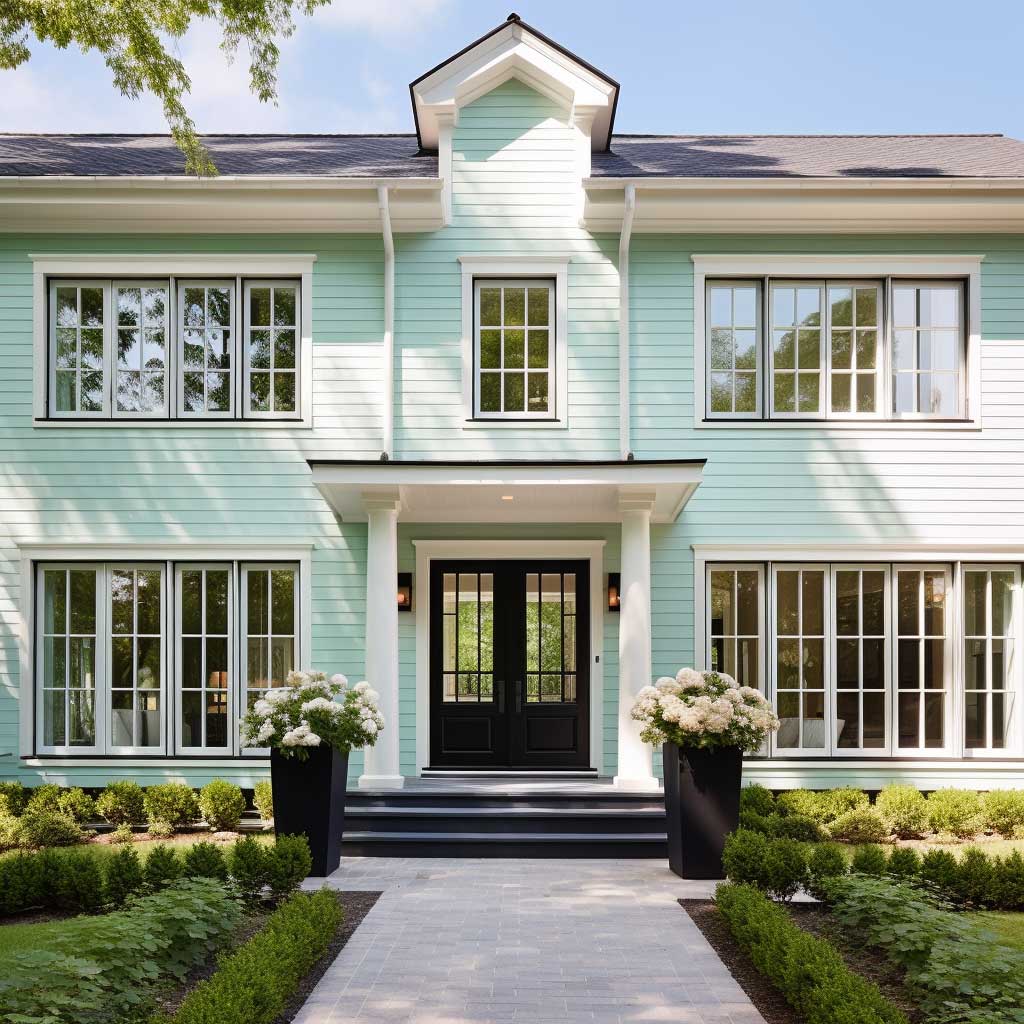
Minty Pale Green on a House Exterior — Freshness That Actually Holds
Minty pale green works on a house exterior the way a pressed white shirt works in August: it reads clean when everything around it is heavy. Sherwin-Williams Comfort Gray (SW 6205) is a go-to reference in this range — classified as a green-gray, it leans cool enough to read as minty in direct sun while staying sophisticated in shade. A gallon of Sherwin-Williams Duration exterior in a mint-range green runs around $80, covers approximately 350 square feet per coat on smooth siding, and is rated for 10–15 years when applied in two coats with a tinted primer.
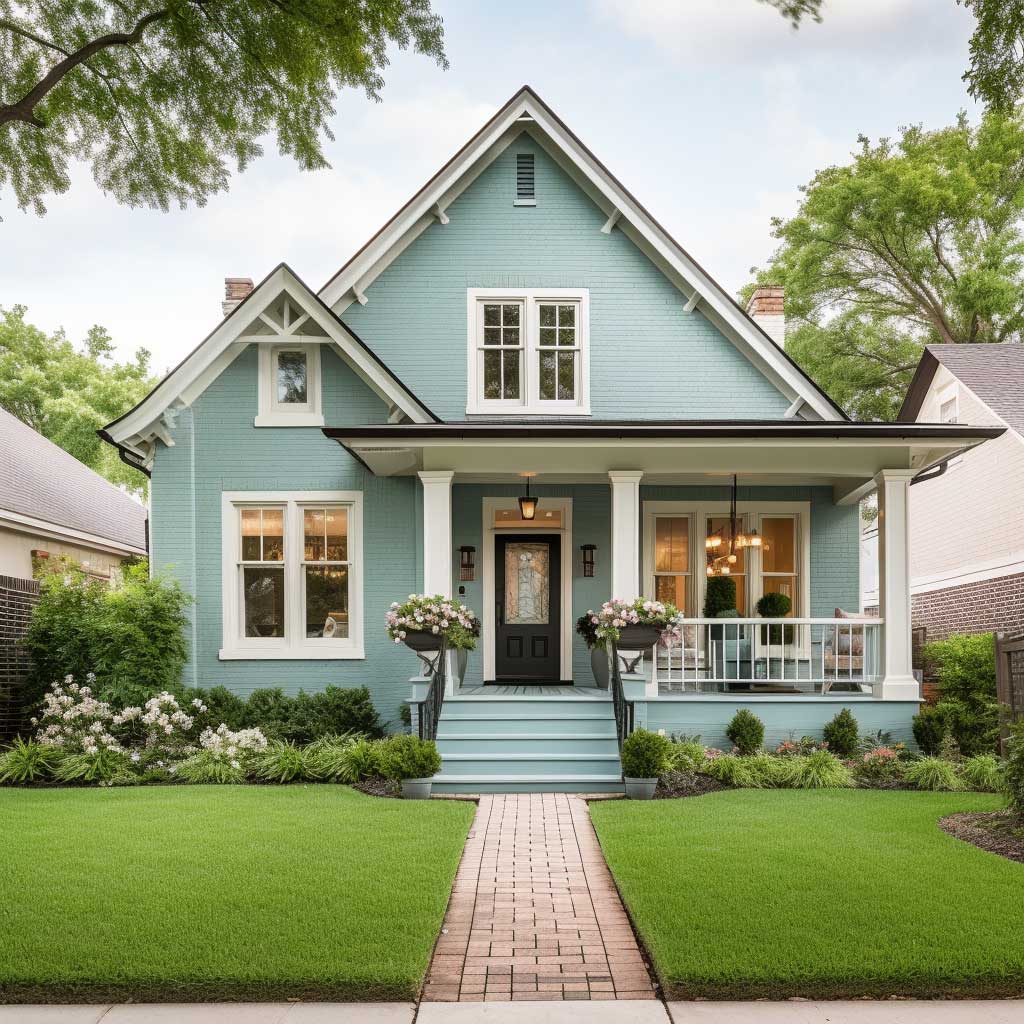
What makes minty pale green work architecturally is its LRV behavior: a color in the 65–75 LRV range reflects enough light to prevent heat absorption problems on south-facing walls while still registering as a true color choice rather than off-white. The practical test — does this shade hold on a north-facing wall at noon? — is what separates the minty pale greens worth buying from those that go flat and institutional-looking by midday. Hold the paint chip against your siding in the shade first, not in direct sun.
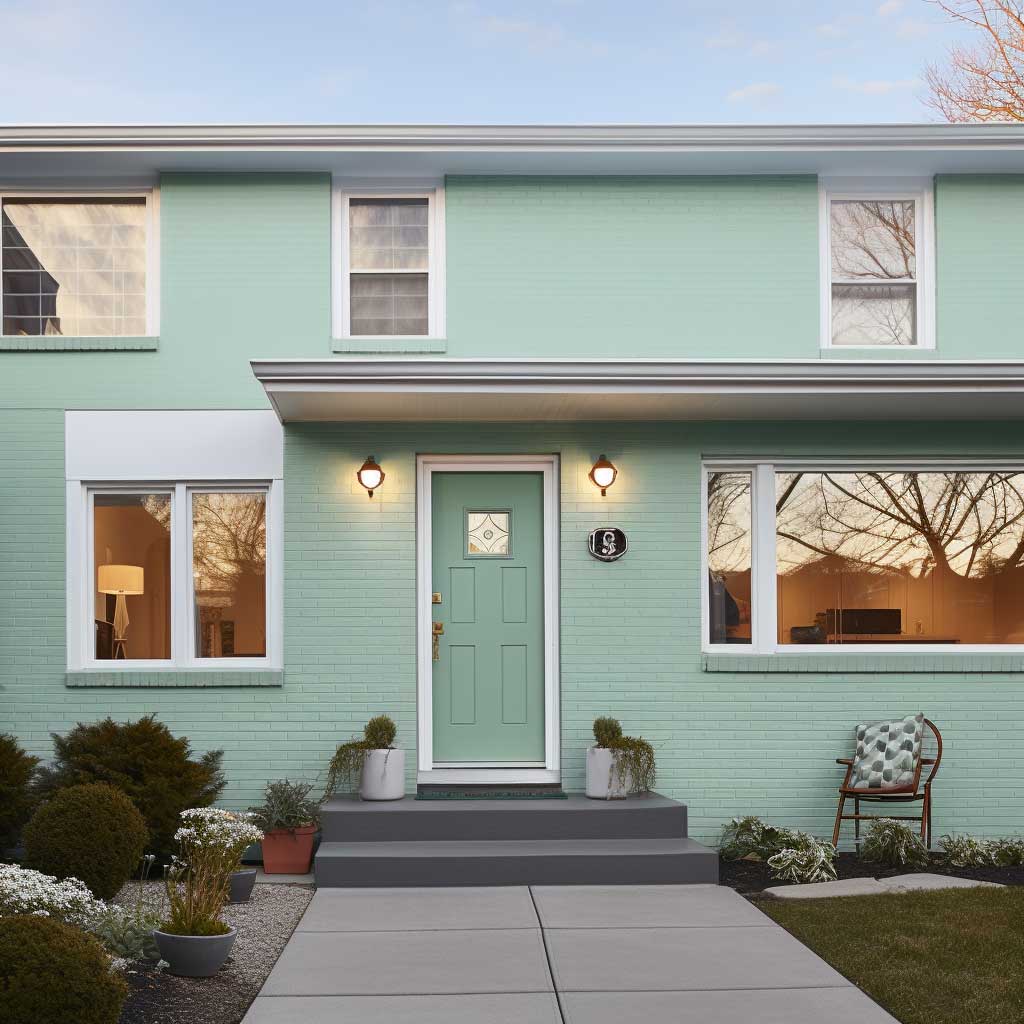
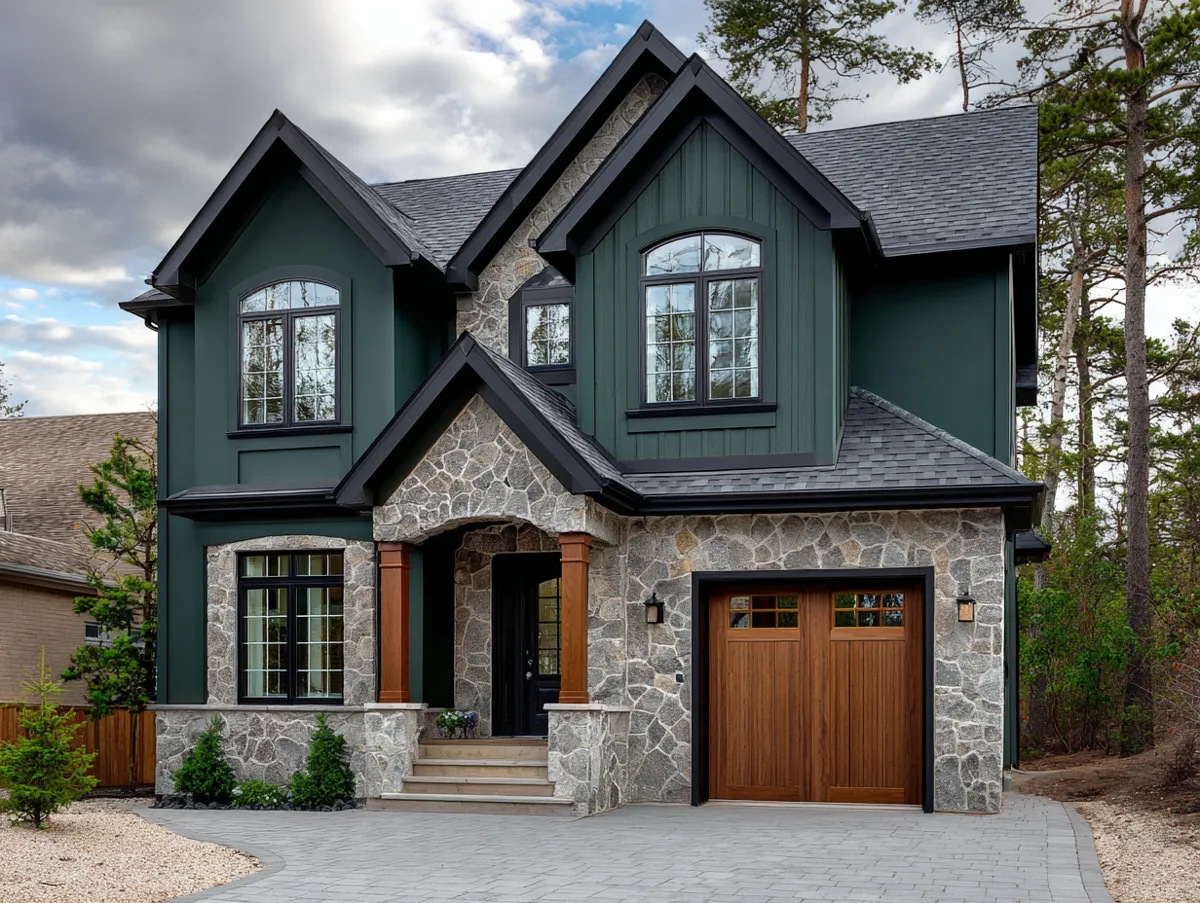
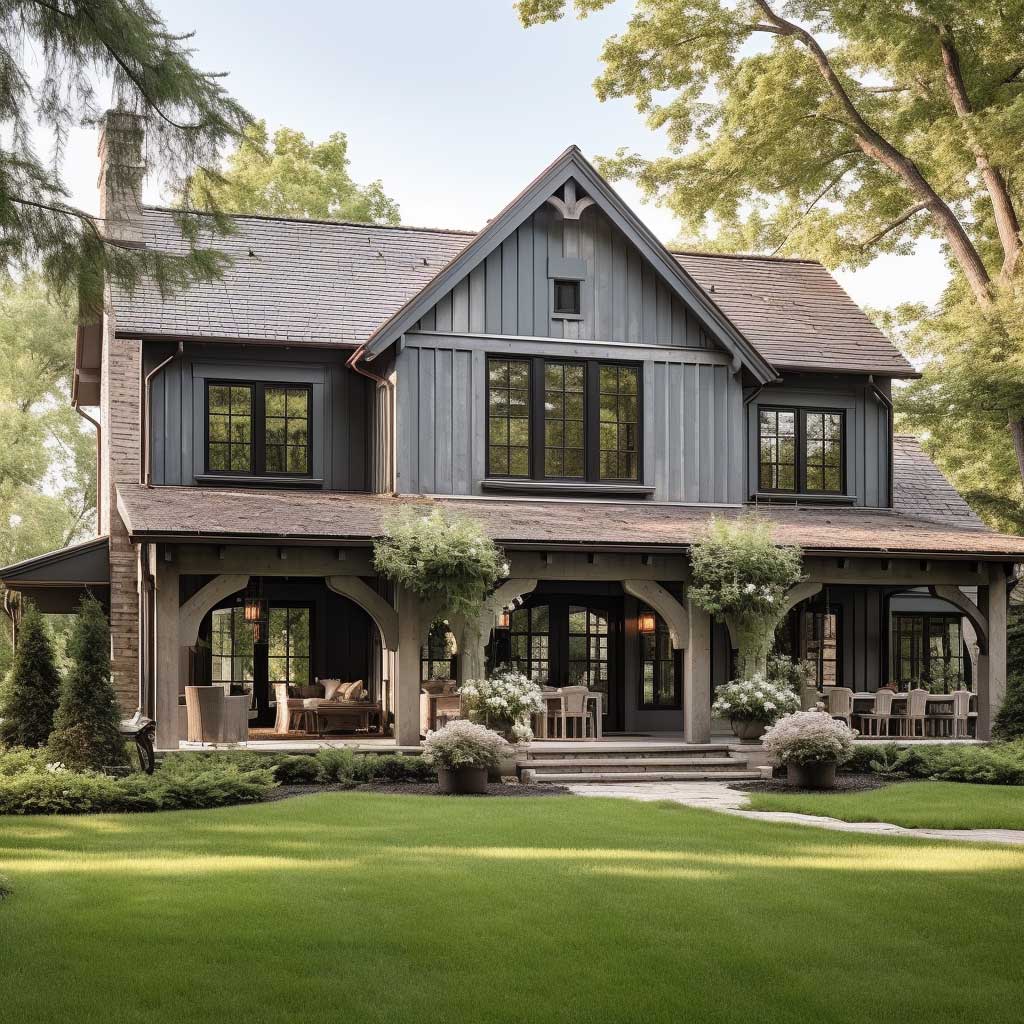
Minty pale green pairs naturally with warm white trim — Sherwin-Williams Alabaster or Benjamin Moore Simply White — rather than pure bright white. The slight warmth in the trim prevents the combo from reading cold or clinical. Black or dark charcoal window frames add grounding without fighting the freshness of the green. For modern homes with board-and-batten siding or flat roof lines, this shade of pale green on a house exterior delivers the kind of contrast that photographs well for listing photos and pins well for renovation inspiration boards.
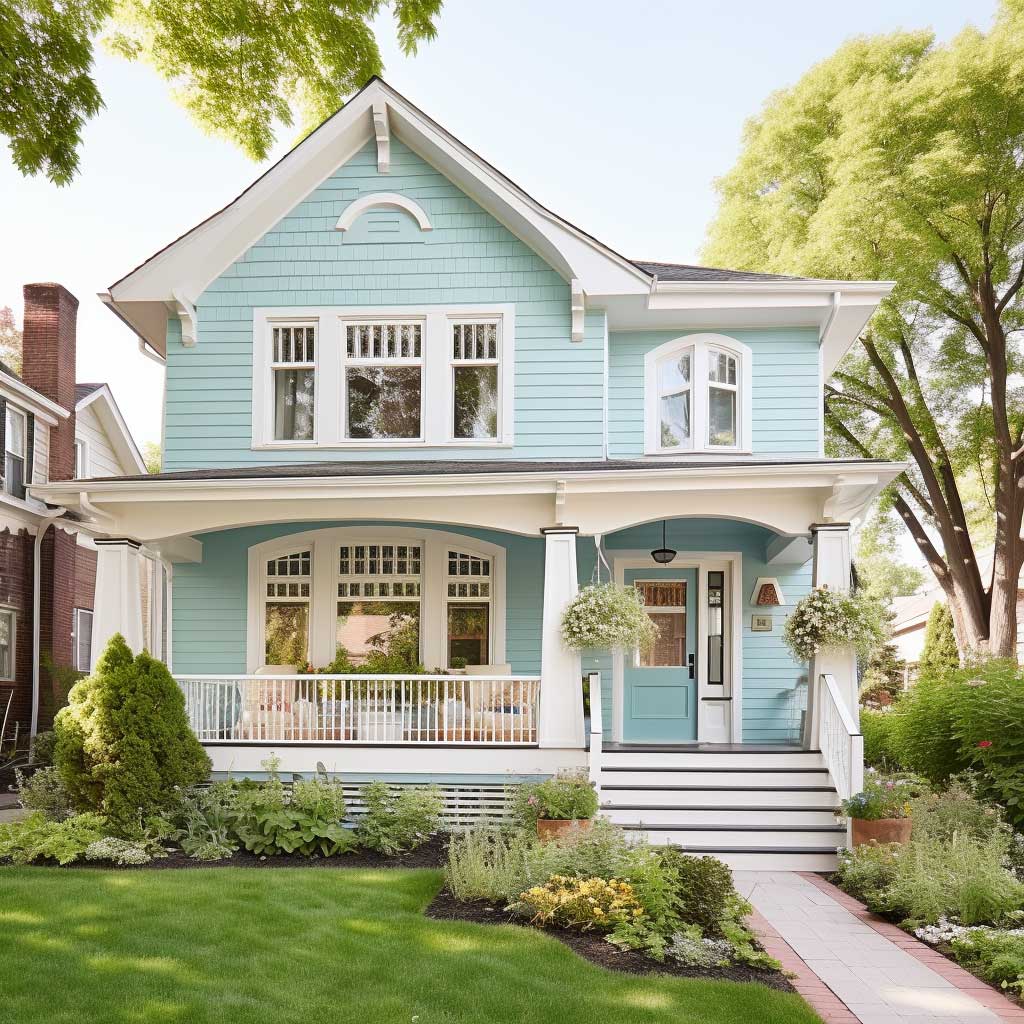
Don’t choose a minty pale green with strong blue undertones for a house with a warm brown, terracotta, or rust-toned roof — the cool green against warm-toned roofing creates a clash that reads as unfinished rather than coastal-fresh. Test the chip against your actual roof shingles in outdoor light before committing.
Don’t apply mint-range pale greens in flat sheen to get a “softer” look. Flat exterior paint collects mildew in humid climates within one wet season and shows every imperfection on the wall surface. Satin is the correct sheen for body paint — it sheds water, cleans easier, and still reads as low-sheen from the street.
Don’t skip the tinted primer. A white primer under a pale green means two full coats may not fully cover a previously beige or tan wall — the underlying color telegraphs through within two seasons. Ask the paint counter to tint the primer to roughly 50% of the final paint formula.
Sage in the Pale Green Range — What Stylists Mean When They Say Timeless
Sage pale green on a house exterior is the most consistently recommended shade in this family — and that frequency is earned rather than default. Pale sage sits at an LRV of roughly 55–65, meaning it holds color across most lighting conditions without the extremes of mint (which washes out) or deeper sage (which can look gray on overcast days). Benjamin Moore Guilford Green HC-116 and Sherwin-Williams Evergreen Fog (SW 9130) are the two most-requested names in this range among exterior painting contractors. The Sherwin-Williams Evergreen Fog in Duration exterior costs around $80 per gallon — the same price bracket as all premium-line exterior products from major manufacturers.

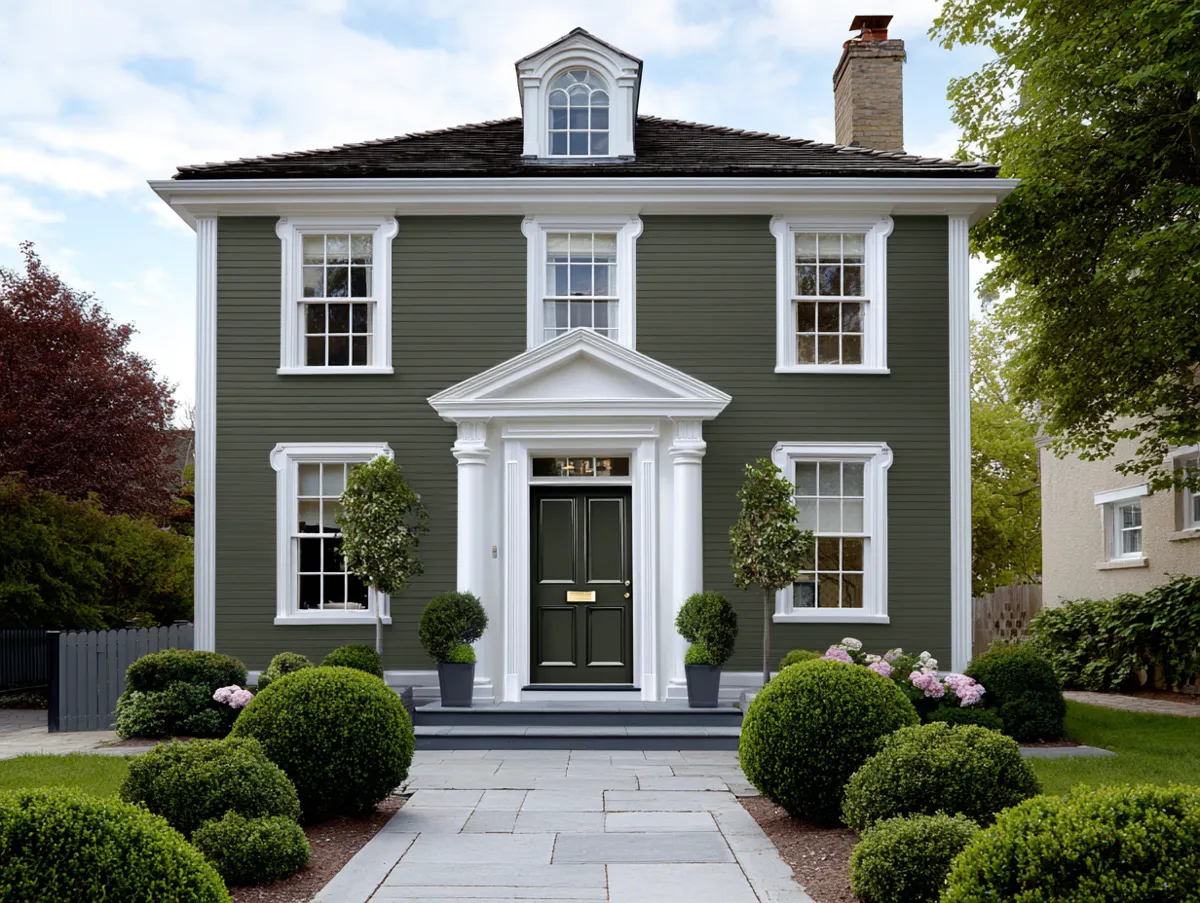
What stylists mean by “timeless” with pale sage is something specific: the gray undertone in most sage-range greens prevents the color from reading as a trend moment. Pale sage works on Colonial, Craftsman, ranch, and contemporary facades without fighting the architectural style. A homeowner painting a Craftsman bungalow in pale sage green and warm white trim is making a choice that will look considered rather than dated across multiple color-trend cycles. The practical corollary: exterior paint on wood siding typically needs repainting every seven to ten years; on fiber cement, closer to ten to fifteen years. Pale sage tends to hold its character across that interval better than more saturated greens.
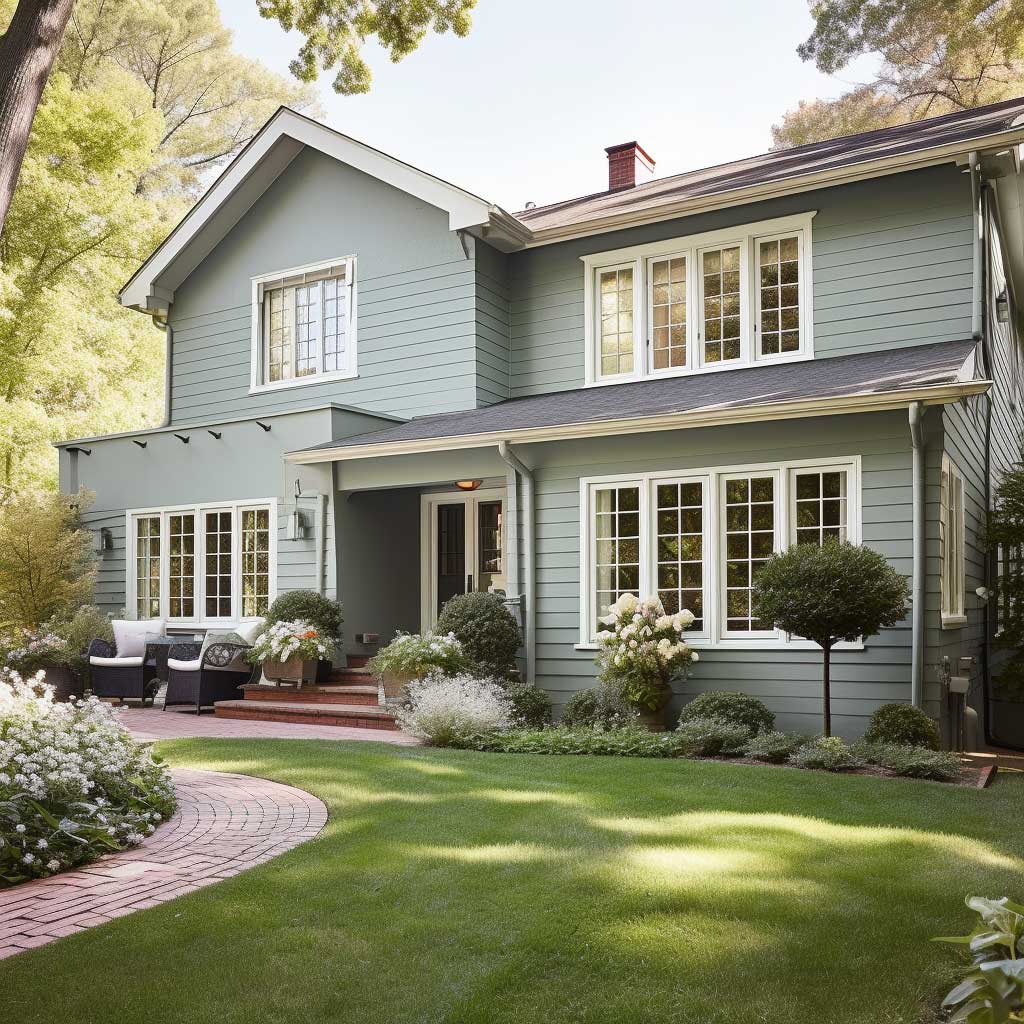
The trim question with pale sage matters: warm whites (Alabaster, White Dove, Simply White) rather than bright cool whites. Cool-toned bright white against sage pulls the green toward gray and makes the exterior read as indecisive — neither warm nor cool, neither green nor gray. Warm white creates a contrast that clarifies both colors without overpowering either. For anyone weighing sage against mint in the pale green family, here’s the practical difference: sage forgives more. It reads consistently on east-, north-, south-, and west-facing elevations where mint green can look washed out on the brightest wall. For a side-by-side comparison of how green exterior house paint colors across sage, mint, olive, and forest behave on different facades and architectural styles, the LRV data and trim pairings there make the choice sharper.
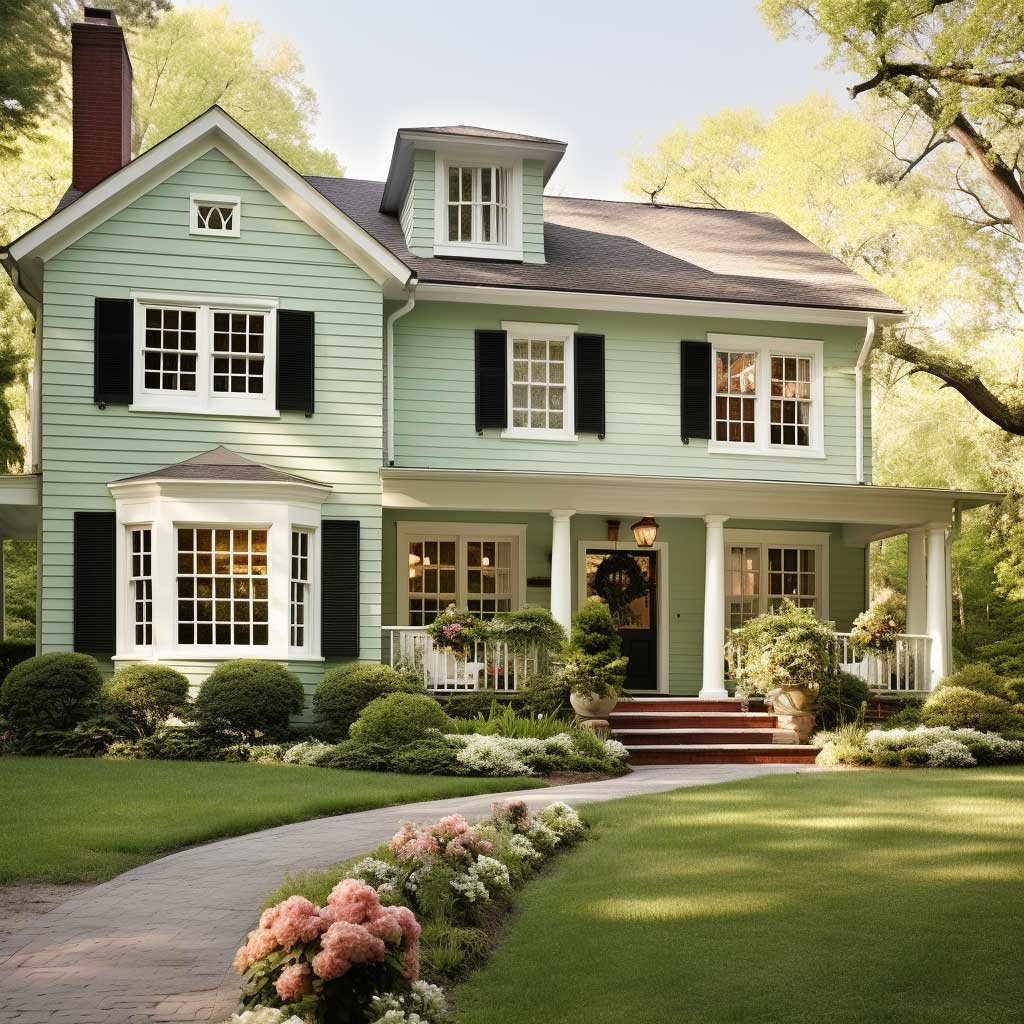
Pale sage pulled too warm — toward olive or khaki — loses the quality that makes it worth choosing. The undertone shifts from green-gray to green-yellow, and on a home surrounded by warm stone, brick, or terracotta, that warm-olive shift creates visual mud rather than harmony. What separates a pale sage that works from one that doesn’t is usually a single LRV step. Ask the paint counter to pull three adjacent swatches in the same green-gray family and hold them against your siding material and roof in outdoor light before mixing a full batch.

Seafoam Pale Greens — What the Blue-Green Balance Actually Does to a Facade
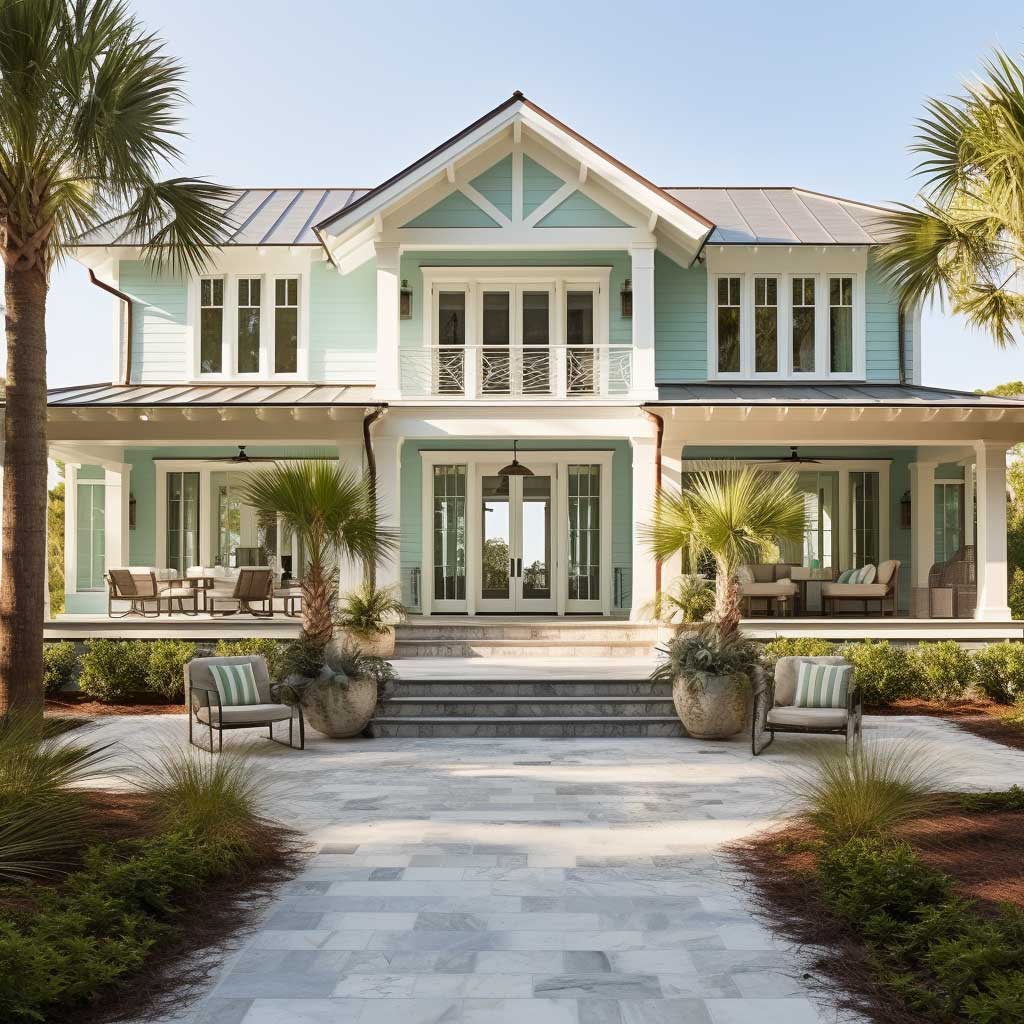
Seafoam pale green on a house exterior is a blue-green hybrid: more teal-adjacent than pure green, but not enough blue to read as a coastal-specific choice. Benjamin Moore Seafoam Green (2039-60) is the canonical reference — it sits in the Color Preview Collection and is formulated for both interior and exterior use. The LRV puts it in the high-reflectance zone for a green, which means it performs similarly to mint on sun-exposed walls: bright in full sun, still holding color in shade. A gallon of Benjamin Moore Aura Exterior, the premium product line, runs $85–$90 per gallon and covers 350–400 square feet per coat on smooth siding.

Seafoam works as an exterior color because the blue component prevents the green from reading as too organic or garden-like — the blue pulls the palette toward a composed, architectural register that looks at home on both coastal properties and urban infill houses nowhere near water. This is the shade in the pale green family where the surrounding landscape matters most. Seafoam against deep green plantings — hedges, mature shrubs — creates a color-on-color situation that can look competing rather than harmonious. Against stone, white gravel, or a minimal garden bed, it reads with real clarity.
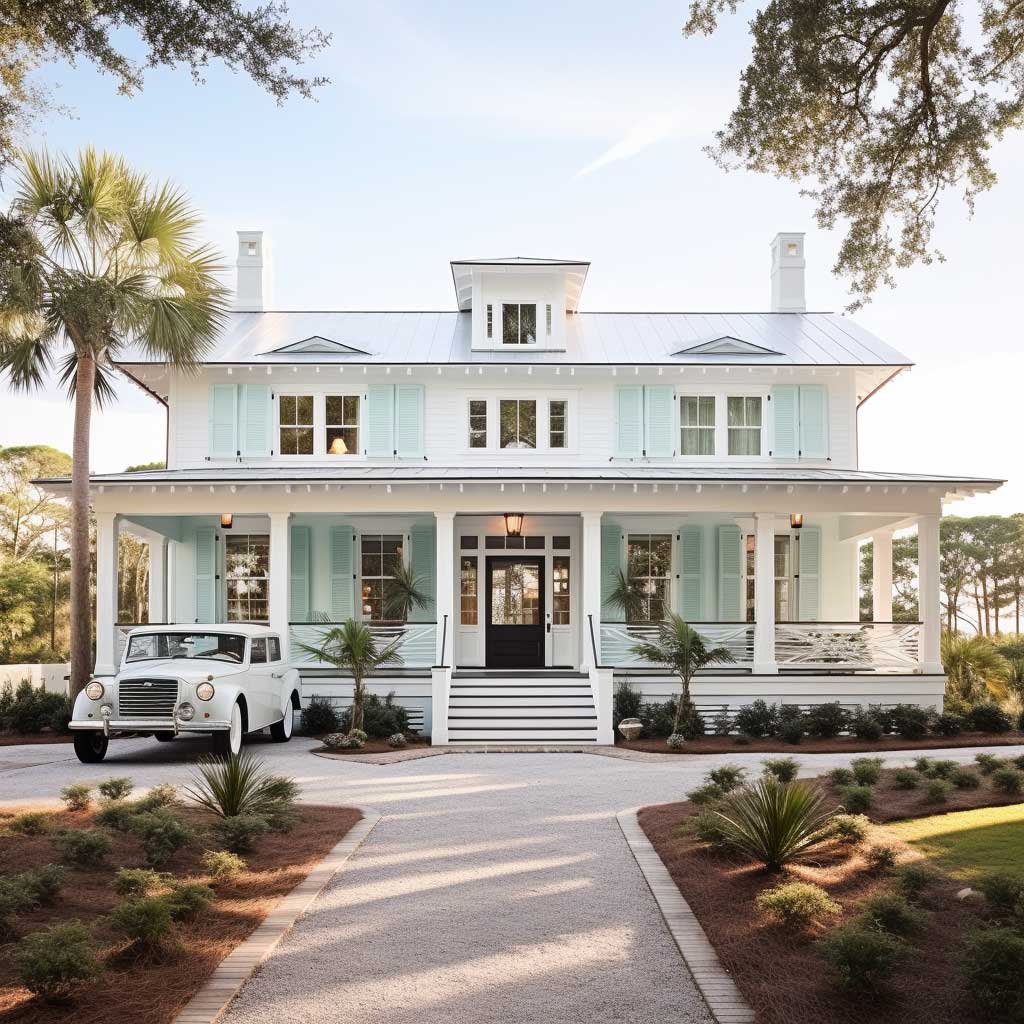
The sheen question with seafoam-range pale green is the same as with all light-reflective exterior colors: satin on the body, semi-gloss or gloss on trim. The higher the LRV, the more a flat or eggshell sheen shows every roller mark and surface imperfection under direct sunlight — a light-reflective pale green in flat sheen is essentially an imperfection-amplifier on exterior walls. Trim in semi-gloss or gloss defines the boundary between body and trim in a way that matte trim dissolves, particularly at dusk or in overcast conditions when both the body color and the trim need the contrast to keep reading separately.
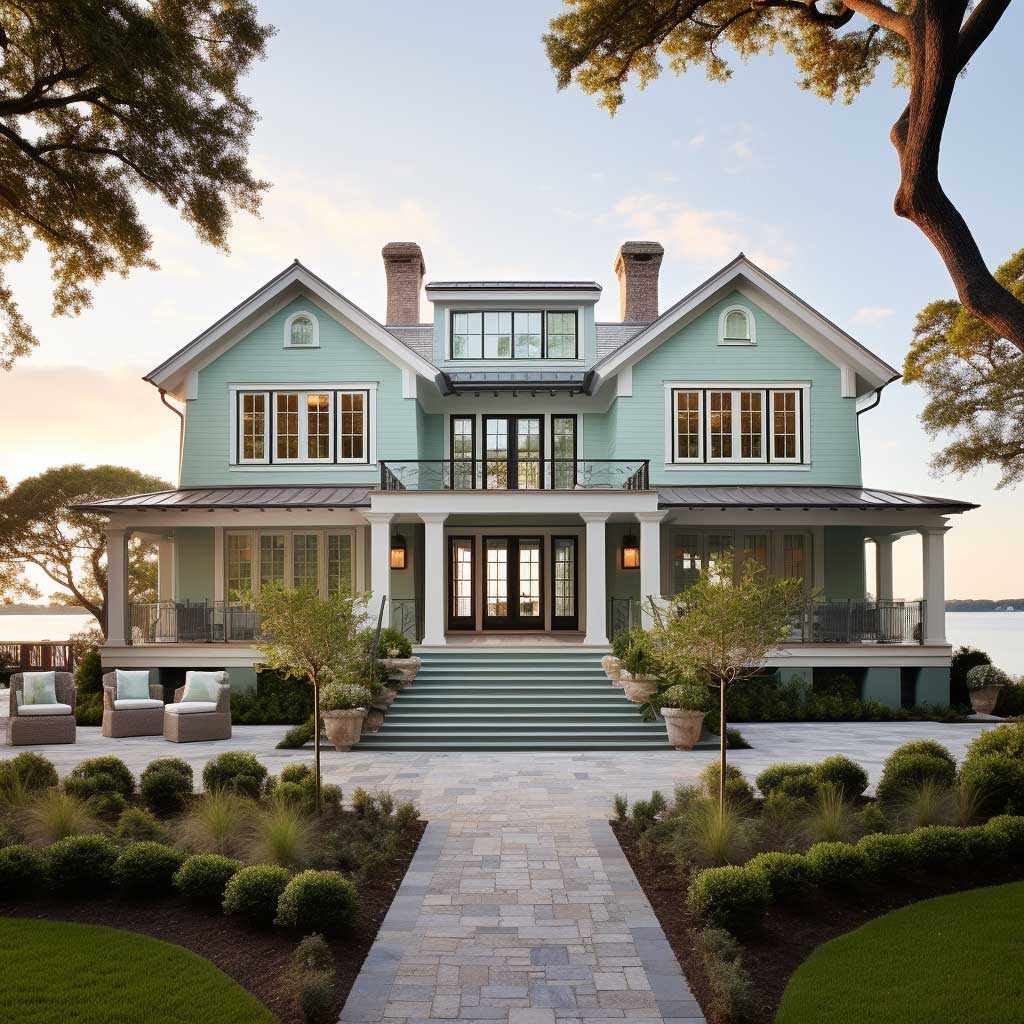
Stylists note one consistent mistake with seafoam on exteriors: choosing it specifically for the “coastal” association and then pairing it with warm-toned materials — terracotta planters, red brick, warm sandstone. The blue undertone in seafoam fights warm materials rather than complementing them. The correct pairing logic here is: cool-toned stone (gray limestone, blue-gray fieldstone), natural cedar or driftwood-gray wood tones, or clean white trim with black hardware. Warm wood stains on doors and window boxes work only if they’re toward the gray-brown end rather than honey or amber.
Willow-Range pale greens — Where the Color Earns Its Place Against Stone and Wood
Willow-range pale greens sit at the warm end of the pale green exterior palette — more yellow-green than blue-green, with a gray softening that prevents them from reading as lime or chartreuse. This is the pale green shade where LRV and undertone management matter most. A willow-range green with a yellow undertone that’s too strong will shift toward a faded military color in open shade, or a dull yellow-green in the evening. The version that works reads as a desaturated, sophisticated green — the color of the underside of a willow leaf rather than the bright top.
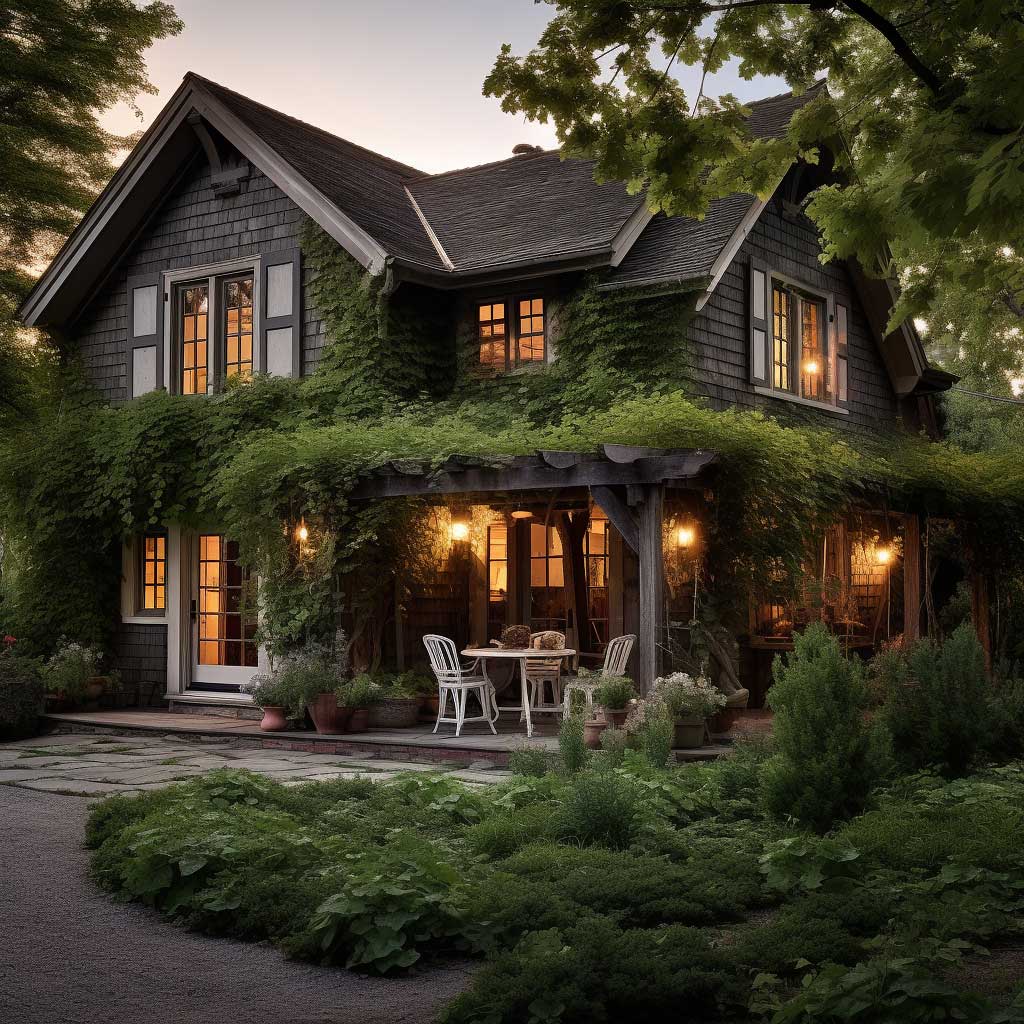
Willow-range greens are the pale green shade that performs best alongside natural materials — stone foundation walls, cedar siding, timber porch beams. The warm green undertone bridges the gap between the house color and warm stone or wood in a way that cooler pale greens (seafoam, mint) don’t. Stylists recommend this shade specifically for homes on wooded or rural lots where the surrounding landscape has significant brown, tan, and amber tones — the willow green connects the house to the landscape rather than sitting apart from it. For more on how dark green shades — which share the same warm-undertone logic — pair with stone and timber, the breakdown of dark green exterior house paint color combinations with stone and wood covers the material-pairing mechanics in detail.

The failure mode for willow-range pale green is overcast climates or heavily shaded lots. Without direct sun to warm the yellow undertone, the color collapses toward a dull gray-green that reads as a painting mistake rather than a design decision. The correction is to move one LRV step lighter within the same shade family — enough to compensate for the light loss without shifting to a different green family. Exterior paint in light colors on wood siding requires repainting every seven to ten years; choosing a slightly lighter value within the willow family reduces the visual impact of gradual fading between paint cycles.
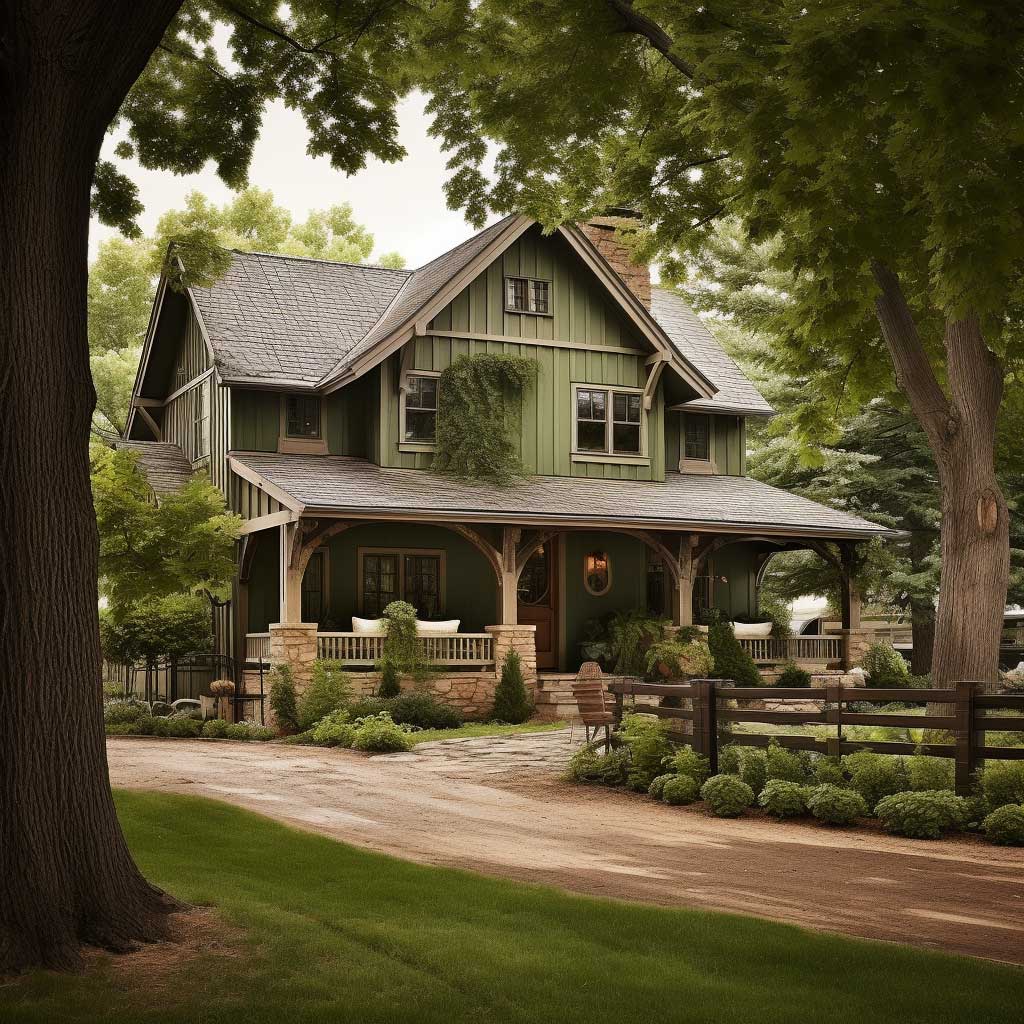
The trim pairing logic for willow-range pale green is different from sage or mint: this shade works with both warm white and natural wood tones on the same facade. A willow-green body with cream or warm white trim plus walnut-stained window frames and a cedar front door is the combination that pulls everything together without overworking any single element. Benjamin Moore Regal Select exterior paint runs $57–$75 per gallon at standard retail — a good product-tier choice for this shade family, which doesn’t demand the premium-line pricing that darker, more UV-vulnerable greens require. For a broader view of how green exterior paint colors behave by undertone and LRV across product tiers, Benjamin Moore’s green exterior paint collection at benjaminmoore.com lets you filter by tone and palette family before ordering samples.
| Shade | Best For | Maintenance Interval | Key Risk |
|---|---|---|---|
| Minty Pale Green | Modern, cottage, contemporary facades | 10–15 yrs (premium paint) | Turns clinical with warm-toned roof |
| Sage Pale Green | Colonial, Craftsman, most styles | 10–15 yrs (premium paint) | Shifts gray on overcast days if too cool |
| Seafoam Pale Green | Coastal, urban, minimal landscaping | 7–10 yrs (wood siding) | Clashes with warm stone and terracotta |
| Willow Pale Green | Rural, wooded lots, natural materials | 7–10 yrs (wood siding) | Goes muddy gray in heavy shade |
Final Take
Pale Green on the Exterior Isn’t a Safe Choice — It’s a Specific One
Minty pale green delivers freshness on modern facades but fights warm-toned roofing. Sage is the most forgiving shade in this family — right LRV, right undertone balance, works across architectural styles. Seafoam earns its look against cool stone and minimal landscaping, not warm terracotta and dense plantings. Willow-range pale green is the only shade here that actively connects the house to a natural, wooded landscape rather than sitting apart from it.
Premium exterior paint at $80–$90 per gallon from Sherwin-Williams or Benjamin Moore is the right product tier for all four. Budget paint in pale green families chalks within three to five years in UV-heavy climates — and repainting a full exterior costs $3,200 to $9,500 in labor, which makes the paint-grade decision easy math. Plan for 350 square feet per gallon on smooth siding, two full coats, and a tinted primer no matter the shade.
Save this post before your next paint store appointment — the LRV logic and trim pairings above apply to any brand’s pale green lineup.
Related Topics
FAQ
What is pale green as an exterior house color?
Which pale green shade is best for a house exterior?
What colors work best as pale green exterior house paint?
How long does pale green exterior paint last?
What sheen should pale green exterior paint be?
Which pale green is better for a shaded lot?
Complete guide
Green Home Color Ideas for Every Room and Every Shade
Sage, emerald, olive, mint — interiors, exteriors, gardens — all in one place