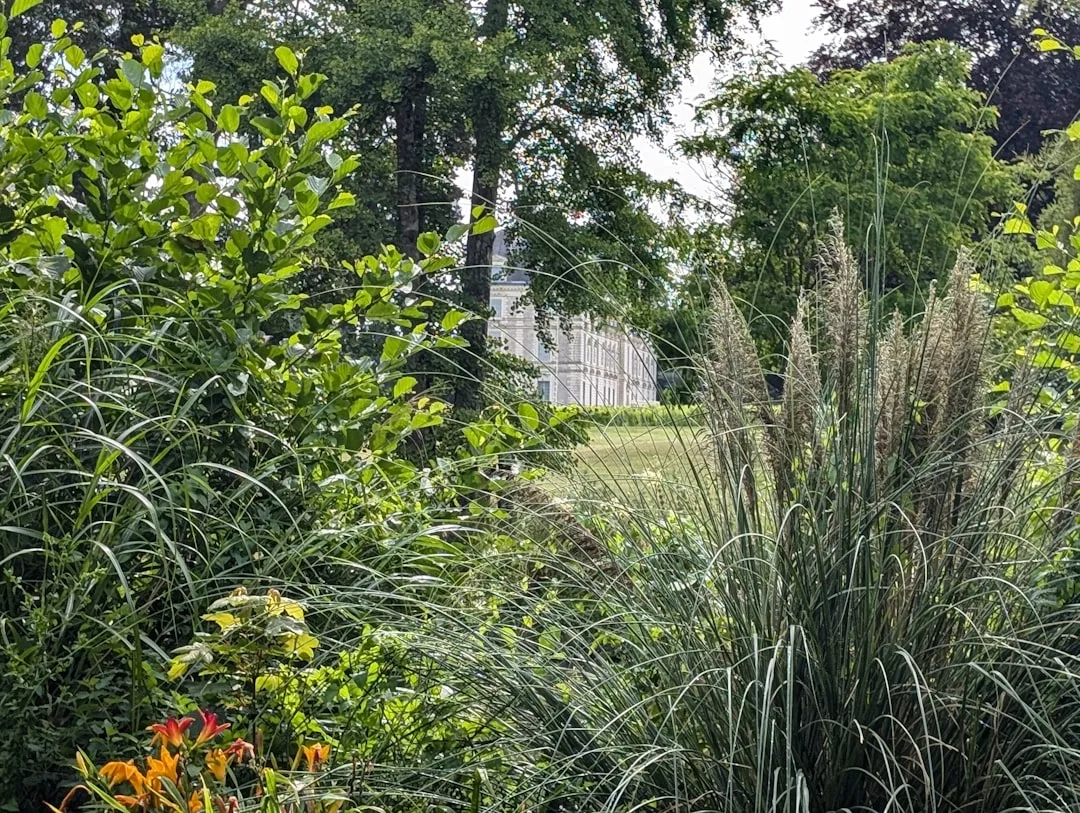
Sage green shutters on red brick house facades are one of those color pairings that reads as both deliberate and effortless — the muted green absorbs the warmth of fired clay without fighting it, the way cool neutrals often do. The combination works because sage sits in the gray-green range, muting the visual temperature difference between the two materials rather than amplifying contrast. Three interpretations of this palette — a countryside cottage, a village home, and a heritage estate — show how much range the pairing actually has.
Behr’s Urban Nature (S380-3) is a strong starting point for anyone choosing the green side of this palette: it blends concrete gray with botanical green in a ratio that reads as composed rather than herbal. On the brick side, traditional red clay in the umber-to-rust range performs best — the closer the brick skews to orange, the more a sage with warm yellow undertones holds the facade together. Undertone match is the mechanic behind every photo of this pairing that actually looks good.
The three homes below cover three different ways to deploy sage green against red brick — shutters on a countryside cottage, window frames on a village terrace, and door and trim accents on a manor. Each one handles proportion differently, and proportion is the real decision: how much green the eye needs to anchor the warmth of the brick without overwhelming it.
– Sage green with LRV 30–41 works on red brick because it absorbs brick’s warmth rather than contrasting against it
– Shutters in sage read as a traditional accent; a sage front door reads as a modern update to the same palette
– Behr Urban Nature (S380-3) and Sherwin-Williams Retreat (SW 6207) are two verified sage picks that hold against warm-red brick
– Painted brick on a traditional home needs repainting roughly every 10 years — unpainted brick with sage accents is lower maintenance
– Warm white trim (not cool bright white) is the third color the palette needs to stay out of the forest green range
– The biggest mistake: choosing a sage with blue undertones for orange-red brick — it looks like two separate design decisions
Sage Green Shutters on Red Brick — How the Countryside Version Gets It Right


Sage green shutters on red brick work differently than any other shutter color because the two materials share an earthy temperature — brick made of fired clay, sage carrying the gray-green of dried herbs and exposed stone. Stylists recommend keeping the sage in the muted, low-saturation range rather than reaching for a brighter leaf green: anything with an LRV above 45 on red brick risks looking like a garden accessory rather than an architectural decision. Sherwin-Williams Retreat (SW 6207), with its LRV of 21 and blue-gray undertones, holds steady in shade and sun, which is exactly what a countryside home needs given how much shadow hits north-facing shutters by afternoon.
The green tiled roof in this example is the riskier call — most traditional homes stop at sage shutters and leave the roof in slate or charcoal. Why does the all-green approach still work here? The roof is darker than the shutters, so the two greens don’t compete. They read as a tonal family, with the brick acting as the warm punctuation between them. Think of it like wearing two shades of the same color with a warm belt in between — the layering feels intentional rather than accidental. For anyone considering green exterior paint palettes beyond sage, the LRV differences between sage, olive, and forest green explain exactly why some combinations hold and others go muddy.
Does warm white trim help or hurt this pairing? It helps, every time. The issue is which white — cool bright whites make the red brick read as orange, which then clashes with the green in a way that looks unintentional. Alabaster or antique white sits between warm and neutral, pulling brick, green, and trim into a shared temperature range. The garden surrounding this home does the same work in planting terms: green foliage running warm-to-neutral keeps the whole composition from splitting into competing color temperatures. Avoid planting bright blue or violet flowers directly against the facade — they’ll make the sage read greenish-gray in a way that loses the warmth the pairing depends on.


What breaks this look on a similar house? Choosing wood shutters with a stain rather than a paint coat in this palette. Stained wood in a green-adjacent tone on red brick reads as weathered and unintentional — the eye can’t distinguish it from aged, peeling paint from a distance, which undercuts all the warmth the brick provides. Painted shutters at full opacity deliver the color relationship cleanly. Behr Marquee exterior paint runs about $67.98 per gallon at Home Depot and covers roughly 350 square feet per coat in satin sheen, which is the correct finish for exterior shutters — flat absorbs moisture and shows mildew within a single wet season.
Don’t paint shutters a sage green with noticeable blue undertones on a red brick house where the mortar leans warm or the brick reads orange-red. Blue-sage against orange-red brick creates a visual dissonance that looks like a renovation made by two people with different reference photos. Test the shutter swatch directly against the brick in full sun before committing — what reads as neutral green in the paint store reads as cool and clinical outdoors.
Village Brick Homes Carry Sage Green Best on Window Frames and Ivy


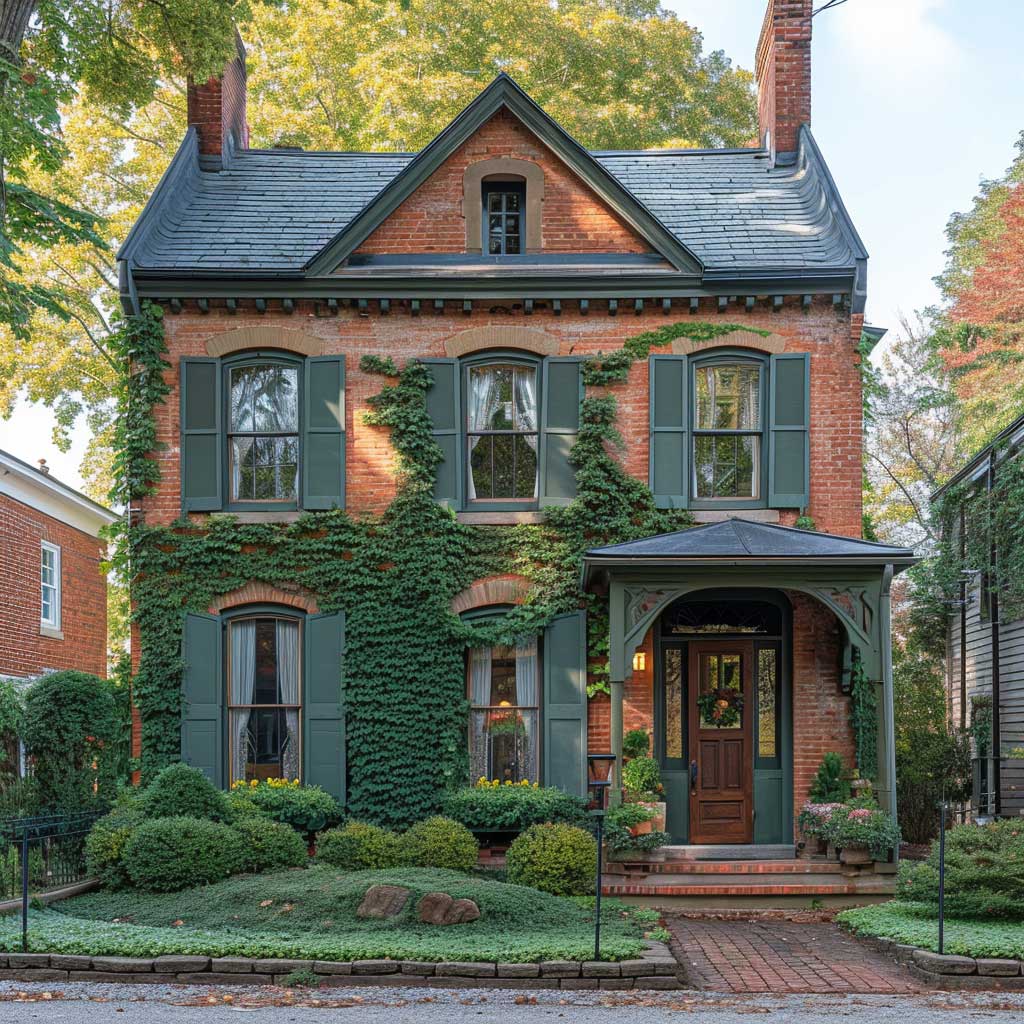
Sage green on window frames rather than shutters is a subtler application of the same color logic — the green appears in narrower bands, framing each window opening the way a mat frames a photograph. The result is less saturated overall, which works in favor of brick homes on denser village streets where the architecture is closer together and a heavily contrasting facade can feel aggressive rather than welcoming. Does this approach lose visual impact? Not if the ivy running up the porch adds coverage: green at multiple scales — trim, climbing plant, surrounding trees — creates depth the frames alone couldn’t deliver.
The brick in a classic village terrace often has more variation than rural brick — multiple firings, different clay sources, patched sections from repairs over decades. A lighter sage on window frames lets that variation show through rather than anchoring the eye to one flat color. For anyone exploring how earthy green exterior paint ideas apply to different architectural eras, Georgian and Colonial brick homes follow this same principle: sage in a support role rather than as the primary body color keeps the historic character of the masonry as the main visual event. The trick is proportion — window frames carry the green effectively when they cover no more than 10–15% of the visible facade surface.
Ivy is the element that most people underestimate in this pairing. A mature ivy covering a porch or side wall adds organic green that photographs as a coherent color family with the sage frames — even when the ivy’s green is several shades darker. The irregular texture of the leaves against smooth painted frames and rough brick creates a layering effect that no paint color alone achieves. The risk is maintenance: unmanaged ivy can work under mortar joints and cause brick damage over time, so stylists recommend trimming it away from all mortar lines and keeping it to surfaces where it grows across brick face rather than into gaps. Replace ivy with Virginia creeper on older homes where mortar may already be compromised — it attaches by suction rather than rootlets and causes significantly less structural risk.


A common approach on village brick homes is to carry the sage frame color through to the front door as well — this creates a coherent palette that reads as intentional rather than incremental. The door reads darker because it sits in a recessed opening, so the same paint color will look 1–2 shades deeper than the frames in direct comparison. That depth works in the door’s favor. Avoid painting both the frames and door in the same batch of paint without sampling in situ: frame paint dries against brick (warm background), door paint dries in shadow (cool background), and the same formula reads as two different colors in the final result.
Red Brick Manor Exteriors Read Richer When Sage Anchors the Entry


A sage green front door on a red brick manor follows the same color logic as shutters and frames, but carries a different kind of weight: the door is a focal point rather than a repeated element. When someone approaches the entrance, the door is the destination, and a sage green at the right depth — darker than the typical shutter sage — gives that moment compositional authority. Zillow’s 2023 survey of approximately 4,700 buyers found that sage green and other subdued classic colors on entry doors signal stability and care, and correlated with stronger buyer interest compared to unconventional pastels. A manor-scale home amplifies this effect: a pale or washed-out green at a grand entrance reads as a missed opportunity.
The window trims on this estate serve the same function as the village window frames — green in a supporting role, brick as the primary material. What shifts at manor scale is the ratio of brick to trim: a larger building means more brick face visible per window, so each frame carries proportionally less color. This is why designers often recommend going a half-shade deeper on the trim color for large buildings — the increased surface area of brick dilutes the visual presence of the green, and a slightly deeper sage keeps the accent reading from a distance rather than disappearing into the masonry. Painting a brick house at this scale runs $3,500 to $10,500 professionally, with an average around $7,000 according to Angi’s current cost data — a commitment that makes the accent color decision worth the extra time to sample properly.
The manicured estate grounds here function as a color palette in their own right — closely cut grass and clipped hedges in neutral green sit between the sage accents and the warm brick without pulling the eye away from the architecture. The fountain in the forecourt draws attention to the entry sequence, which makes the sage front door the visual endpoint of that journey rather than a detail noticed on the way past. You’ll notice how the flatness of formal landscaping actually makes architectural color decisions more legible: textured planting beds would compete with the brick surface texture, while flat lawn gives the facade the visual silence it needs to read clearly. Angi’s guide to painting exterior brick covers the permanence question in detail — a critical consideration before committing to any color change on heritage masonry.


What fails at manor scale is sage green on every accent simultaneously — shutters, frames, door, and garage doors all in the same color. The result looks like a uniform rather than a palette. The approach that works: commit the sage to one dominant accent (door, or shutters, or frames) and keep the remainder in warm white or stone. When green appears at multiple scales with different depths — darker on the door, lighter on frames — the eye reads it as a designed relationship. Flat repetition at one depth reads as paint coverage rather than design intent.
| Sage Green Application | Best For | Key Paint Consideration | Avoid |
|---|---|---|---|
| Shutters | Cottage, farmhouse, countryside | Satin finish; LRV 25–35 holds in shade | Blue-undertone sage on orange-red brick |
| Window Frames | Village terrace, Georgian, Colonial | Semi-gloss on frames; keep under 15% facade coverage | Same depth on frames and door — they read differently in situ |
| Front Door | Manor, large estate, formal entry | Go half-shade deeper than shutters for visual presence | Pale sage at high LRV — disappears on grand-scale brick |
Final Verdict
Sage and Red Brick Work Because They Share a Temperature — Not Because They Match
The color logic is thermal: both sage green and red brick sit in the warm-neutral range, which means they coexist without visual tension rather than creating the hard contrast of a complementary pair. Apply the sage in satin finish, keep trim in warm white rather than cool bright white, and choose undertones — warm yellow-green over cool blue-green — that align with your specific brick’s clay tone.
Shutters carry it best at cottage scale. Window frames carry it at terrace scale. A sage front door carries it at manor scale. The proportion rule is consistent across all three: green should cover no more than 15–20% of the visible facade to let the brick do its job as the primary material.
Save this post before your next hardware store trip — the undertone and LRV notes above will cut the sampling process in half.
FAQ
Do green shutters work on red brick houses?
What color are sage green shutters on red brick house exteriors best paired with?
What is the best sage green paint color for shutters on red brick?
Can I use sage green on a red brick house as a front door color?
Does sage green siding work with red brick accents or trim?
How often do you need to repaint sage green accents on red brick?
Complete guide
Farmhouse Style Ideas for Every Room and Outdoor Space
Kitchens, bathrooms, bedrooms, exteriors, decor, outdoor — all in one place
Complete guide
Green Home Color Ideas for Every Room and Every Shade
Sage, emerald, olive, mint — interiors, exteriors, gardens — all in one place
Complete guide
Brick in Every Room and Facade Worth Seeing
Exteriors, interiors, patios, bathrooms, colors, patterns, materials — all in one place