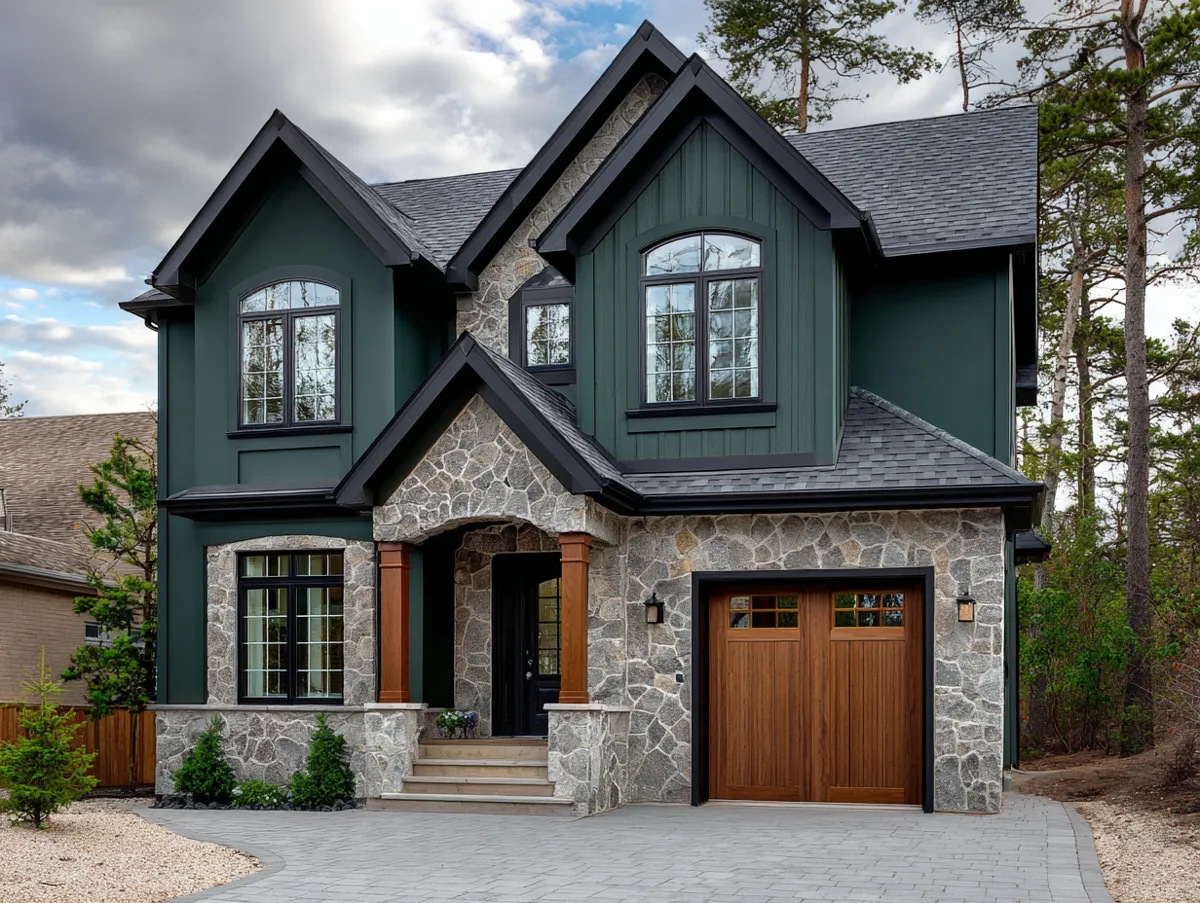
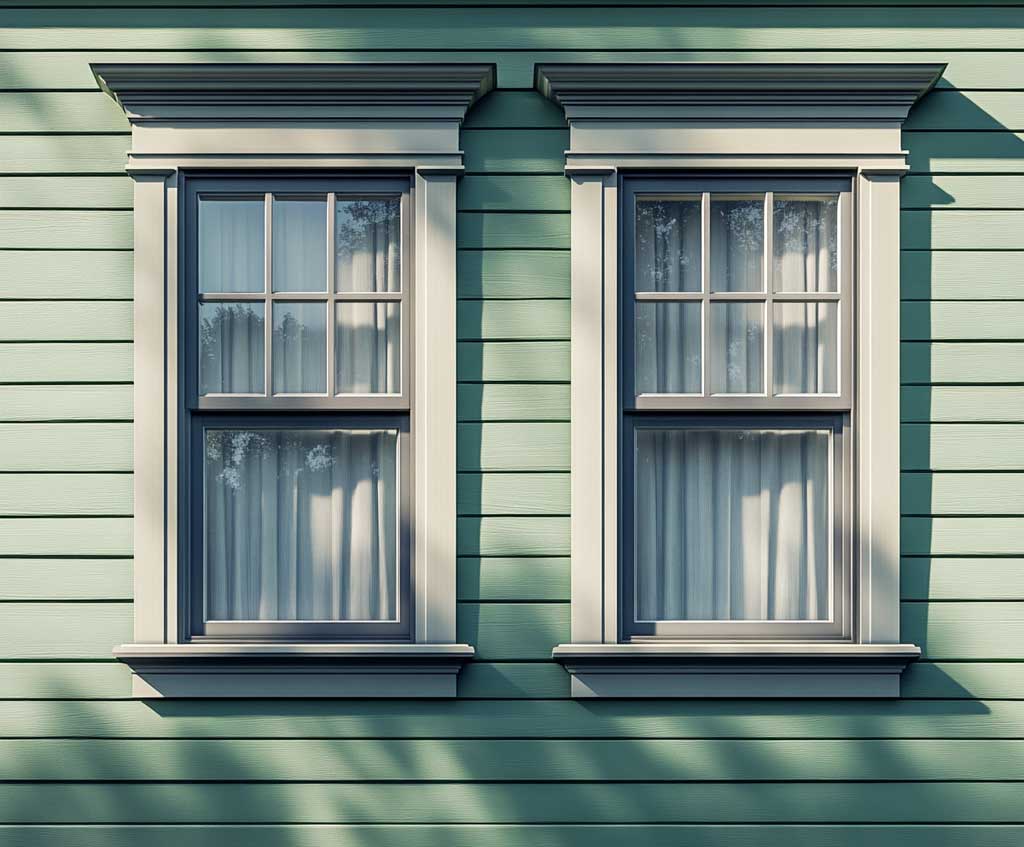
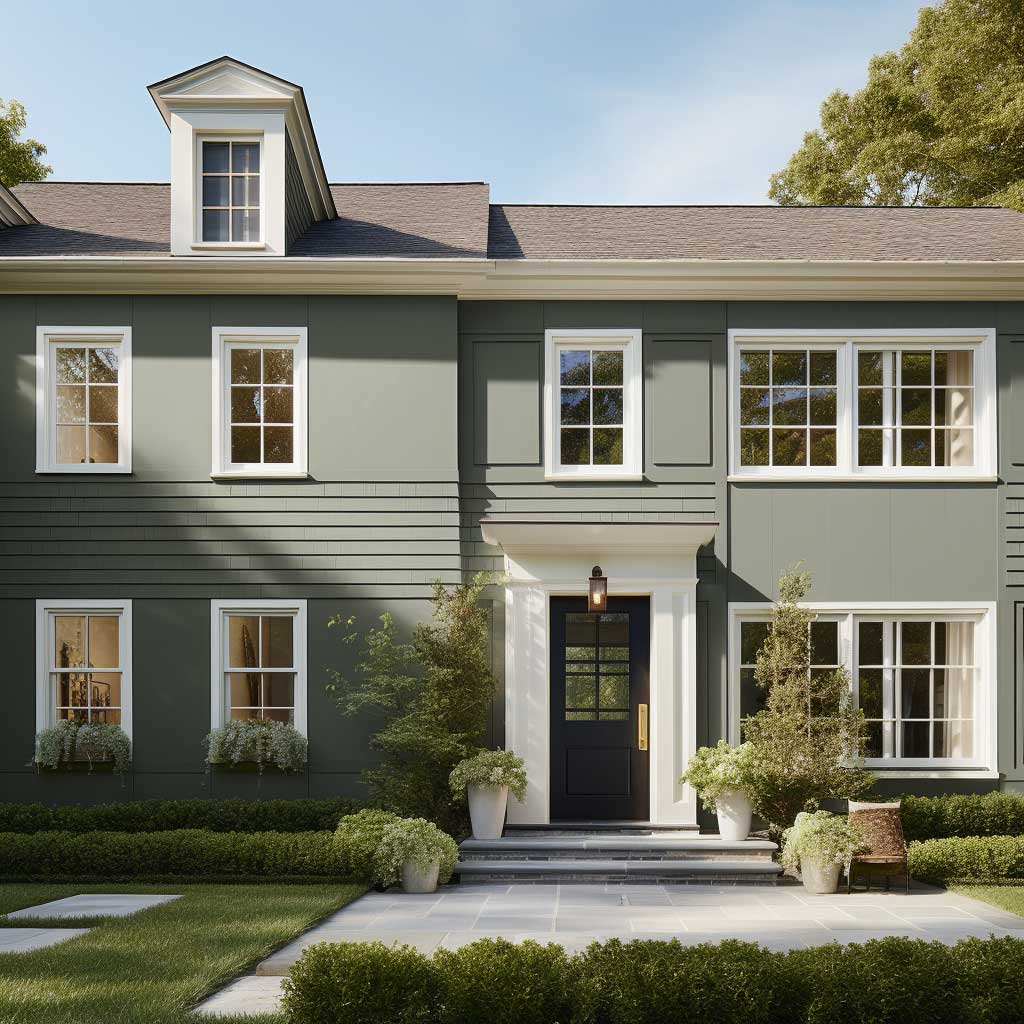
Earthy green exterior paint pulls a house out of the generic and plants it somewhere more specific — closer to landscape, closer to place, closer to the kind of curb appeal that reads as intentional rather than default. According to a 2026 Houzz Home Design Trends report, green-family exterior paints saw a 34% increase in project saves compared to 2024, outpacing every other color family including warm neutrals. That shift is not random. Sage, mossy, and olive tones respond to brick, wood, and stone in ways that cooler or more saturated colors simply cannot replicate.
The three shades covered here — sage, mossy green, and olive — each solve a different architectural problem. Sage tones down ornate brickwork without erasing it. Mossy green gives Victorian detailing a sense of age and permanence. Olive adds warmth to symmetrical colonial facades that can otherwise read cold. Choosing between them is less about personal taste and more about reading what the structure already says.
The practical reality of going dark with earthy green on a south- or west-facing facade: expect to repaint every 3 to 5 years rather than the 5 to 7 years typical for lighter shades. Plan for that before committing to a deep mossy or olive tone on a sun-exposed elevation.
– Sherwin-Williams Evergreen Fog SW 9130 (LRV 30) is the most-recommended sage-adjacent earthy green for exterior use in 2026 — neutral undertone, works on brick and wood alike.
– Behr Mossy Green S-H-430 covers up to 400 sq ft per gallon; pairs with warm white or cream trim on Victorian facades.
– Olive tones such as Sherwin-Williams Renwick Olive SW 2815 read warmest on colonial facades with red brick — the khaki cast reads as tan in warm afternoon light.
– Dark earthy greens on south/west-facing walls need repainting every 3–5 years; lighter sage tones can stretch to 7.
– All three shades perform differently depending on LRV — test samples at both 9 a.m. and 3 p.m. before committing.
Sage Green on Georgian Brick Changes the Conversation
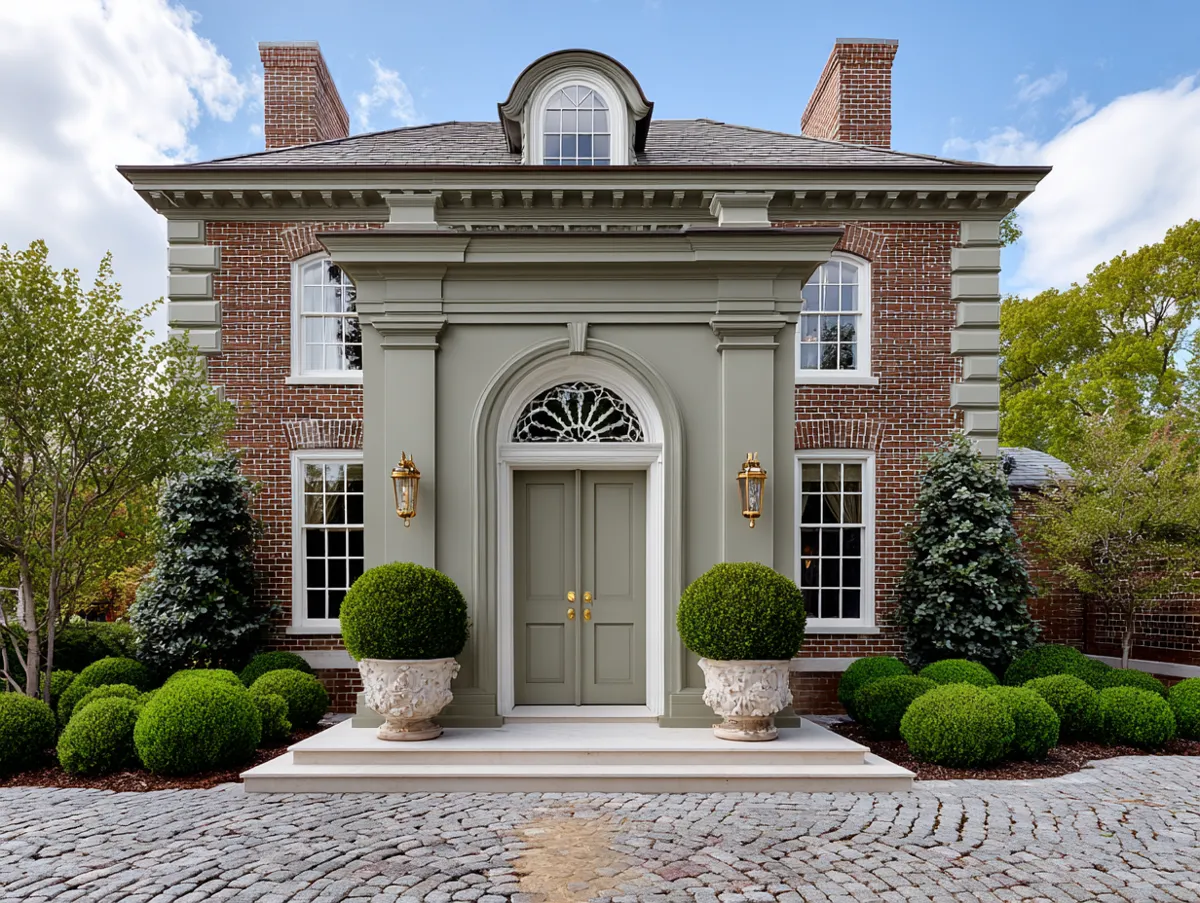
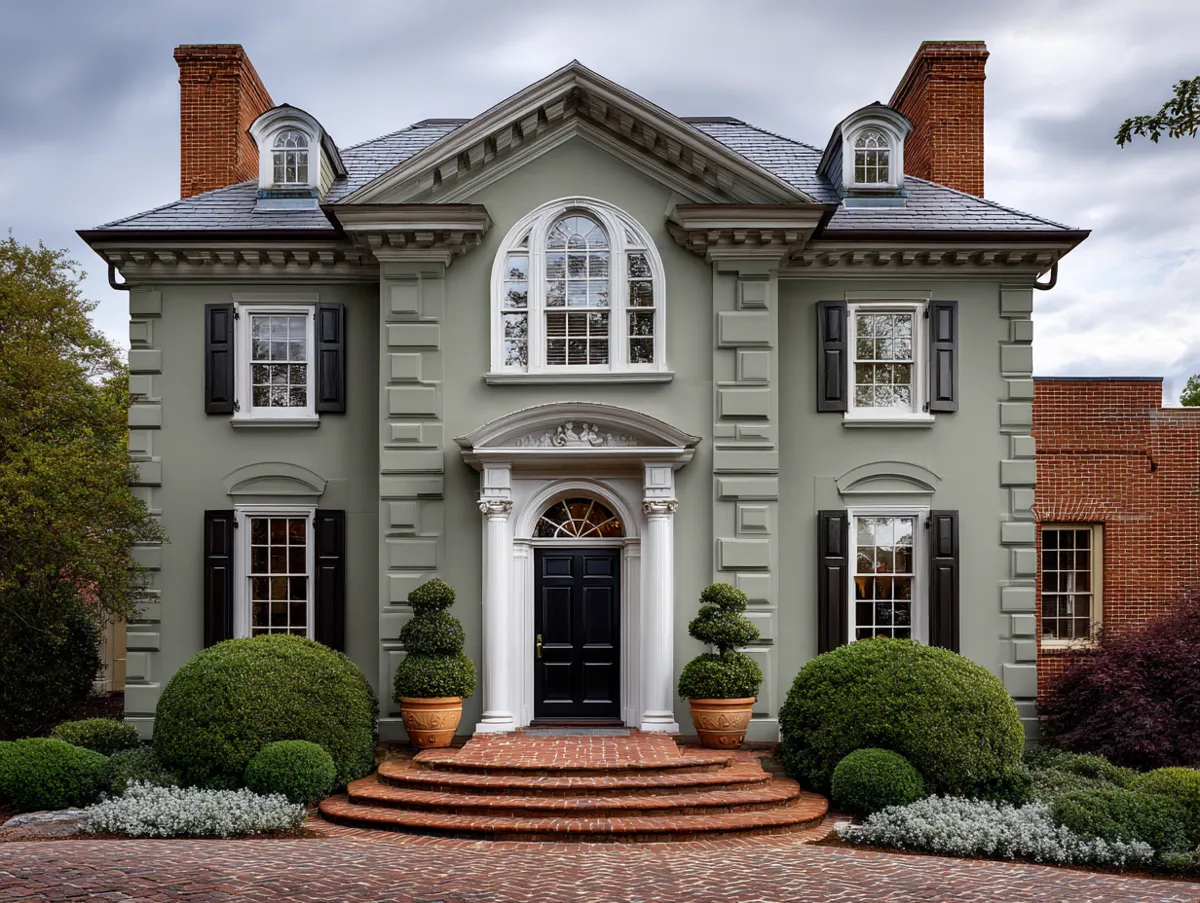
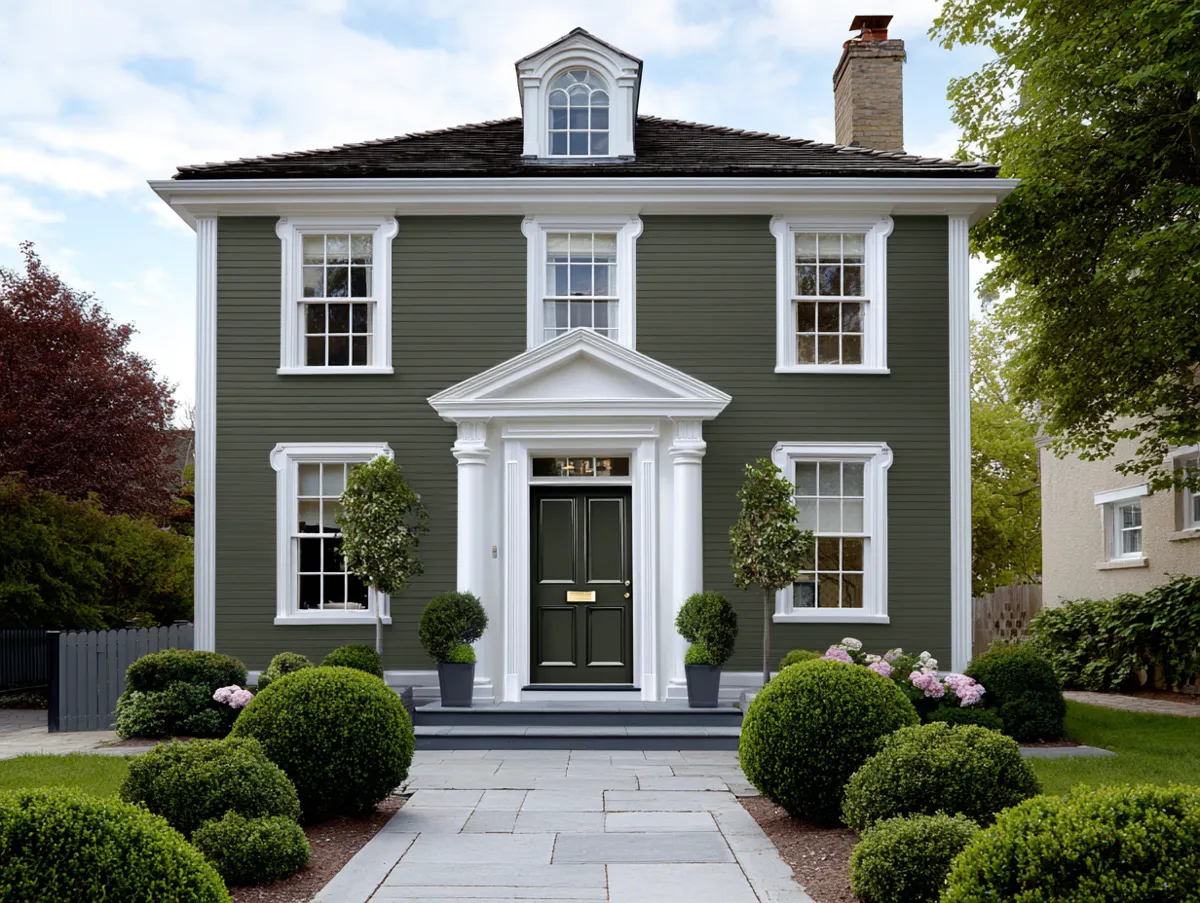
Earthy green exterior paint in the sage range does something counterintuitive on Georgian architecture — instead of fighting the brickwork, it makes the brick look richer. Sherwin-Williams Evergreen Fog SW 9130 has an LRV of 30 and a warm gray-green undertone that stays consistent across light conditions, which is exactly why it became the brand’s 2022 Color of the Year and has remained a top exterior recommendation through 2026. On a red-brick Georgian facade, a sage with gray undertones reads as a sophisticated contrast rather than a clash.
The mistake most people make with sage on a formal exterior is going too light. A sage at LRV 50 or above starts to read as mint, particularly on north-facing facades where cool light dominates. The trick here is to stay in the mid-range — LRV 25 to 35 — where the color holds its character in shadow without going dark. What does sage not do well? It tends to disappear against natural stone and pale limestone, where the low contrast makes the facade look unfinished rather than refined.
Premium exterior paint at the Sherwin-Williams Emerald tier runs approximately $86 per gallon — the price point reflects better color retention, which matters on a sage shade that needs to stay muted rather than fade to a washed-out gray-green within two years. Is the upgrade worth it? On a formal Georgian exterior facing south or west, yes. The color stability difference between mid-range and premium paint is measurable enough to justify the cost on high-exposure elevations.

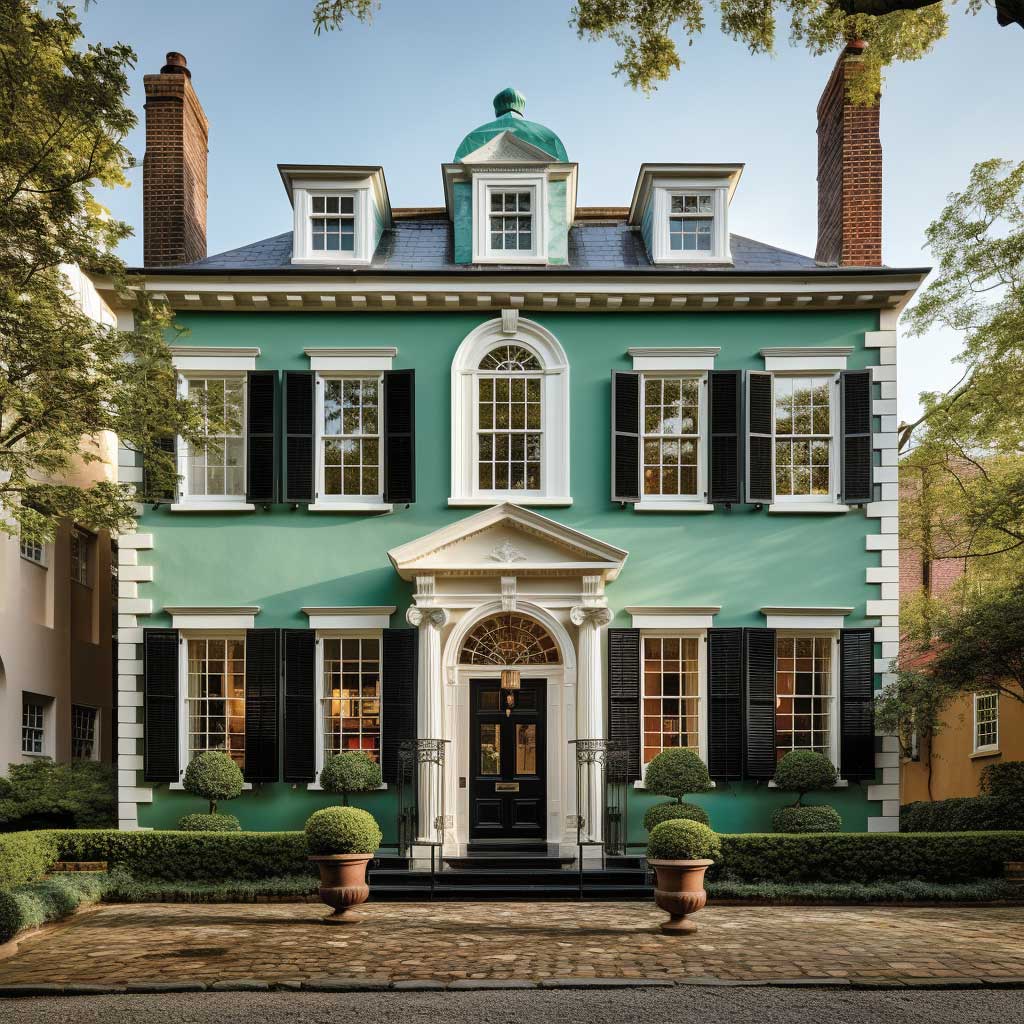
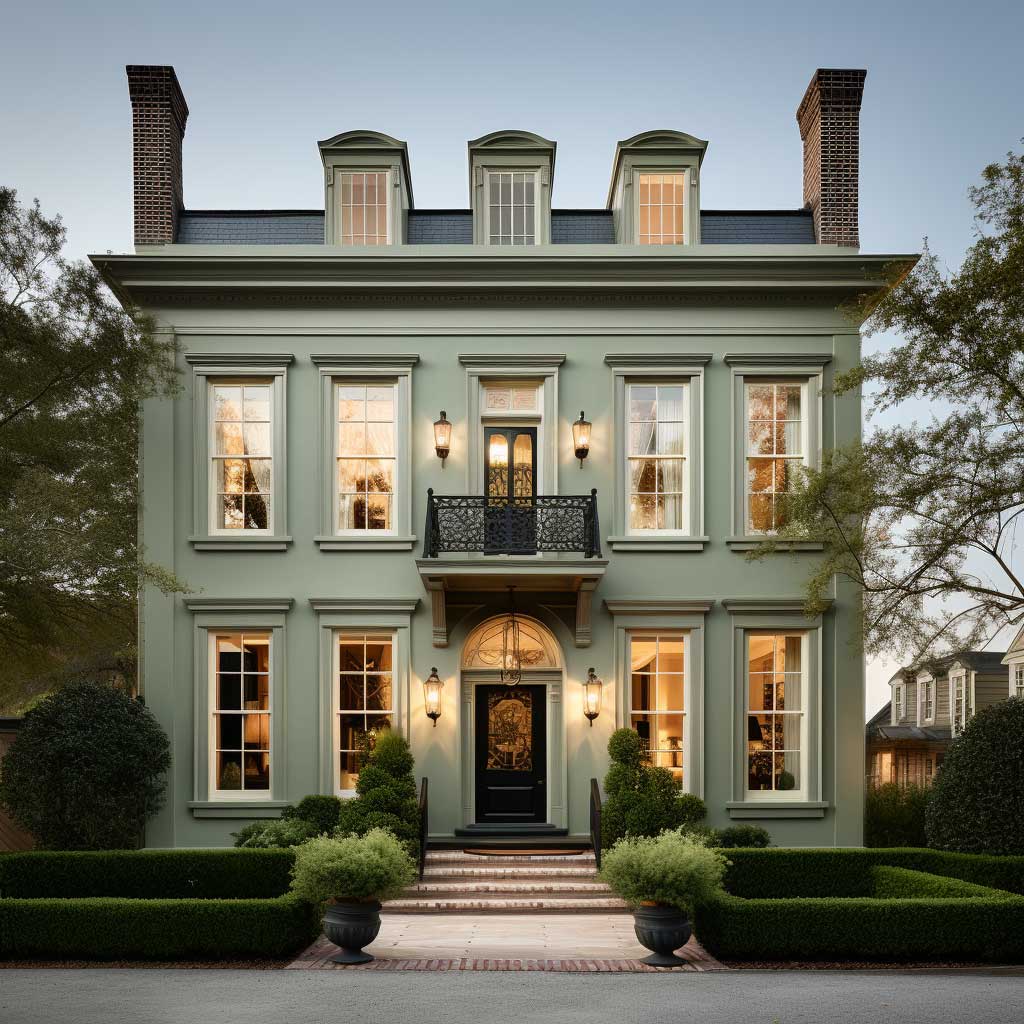
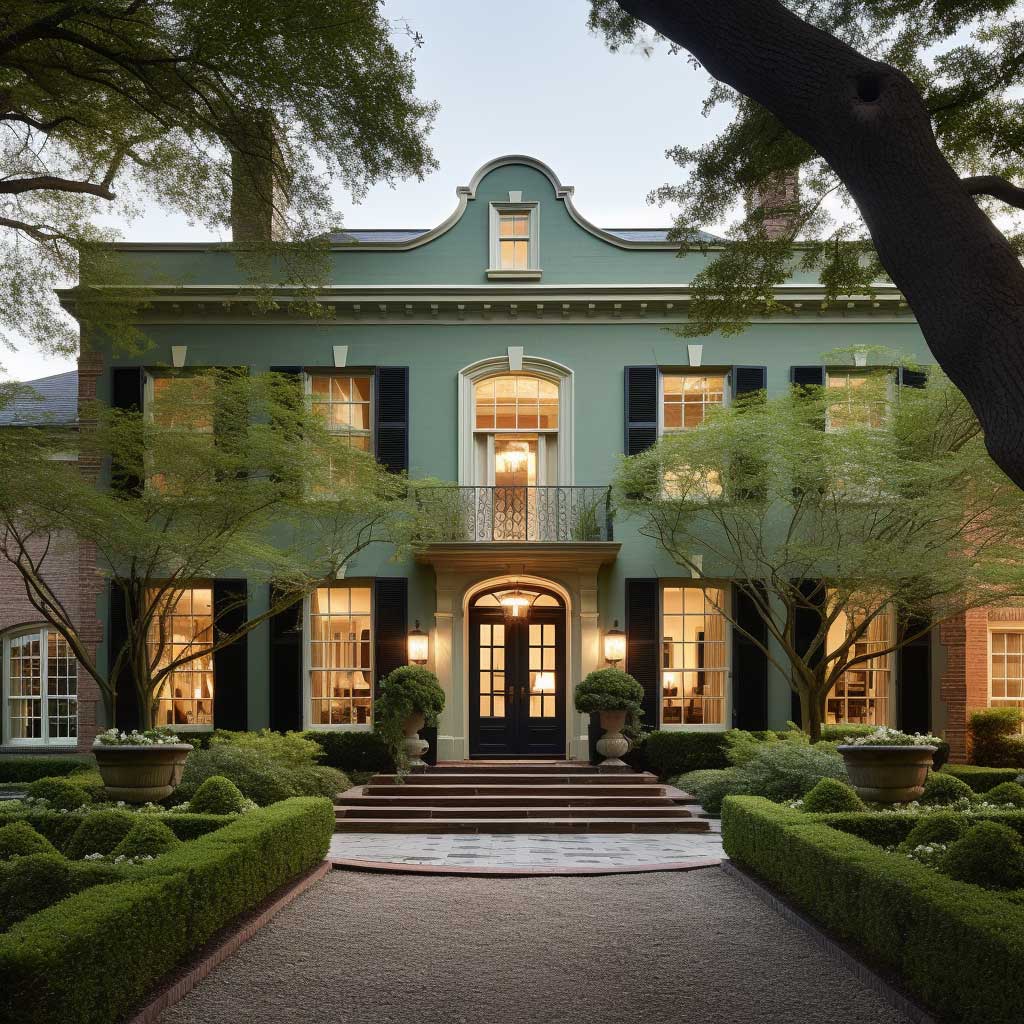
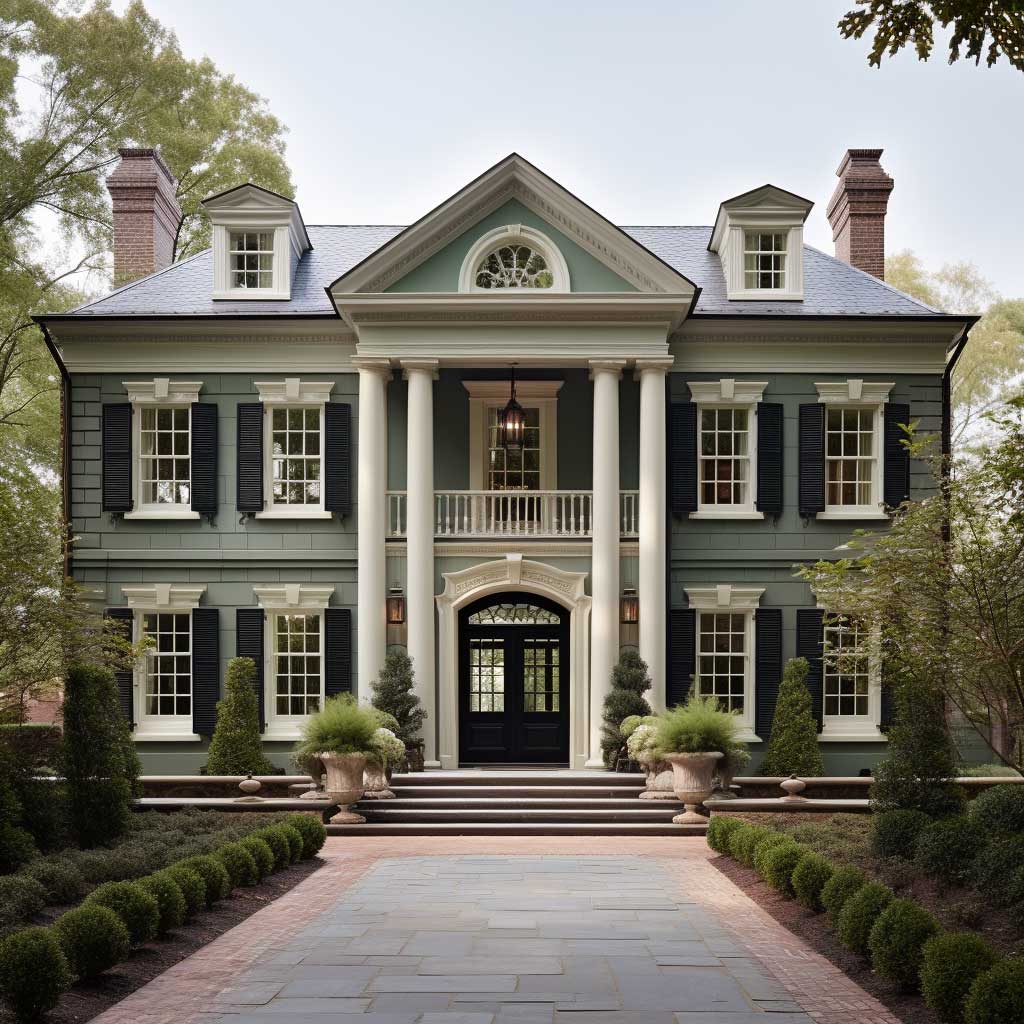
Mossy Green Pulls Victorian Facades Into the Landscape
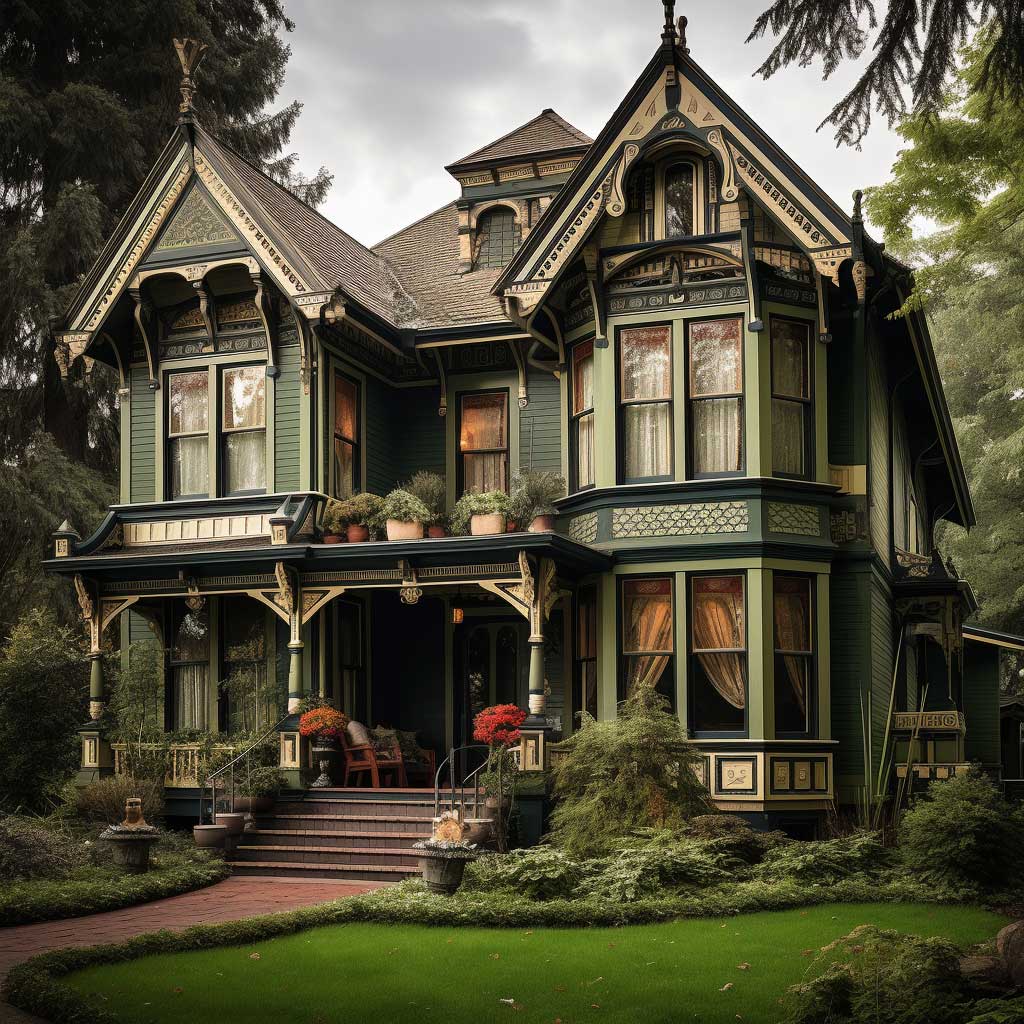
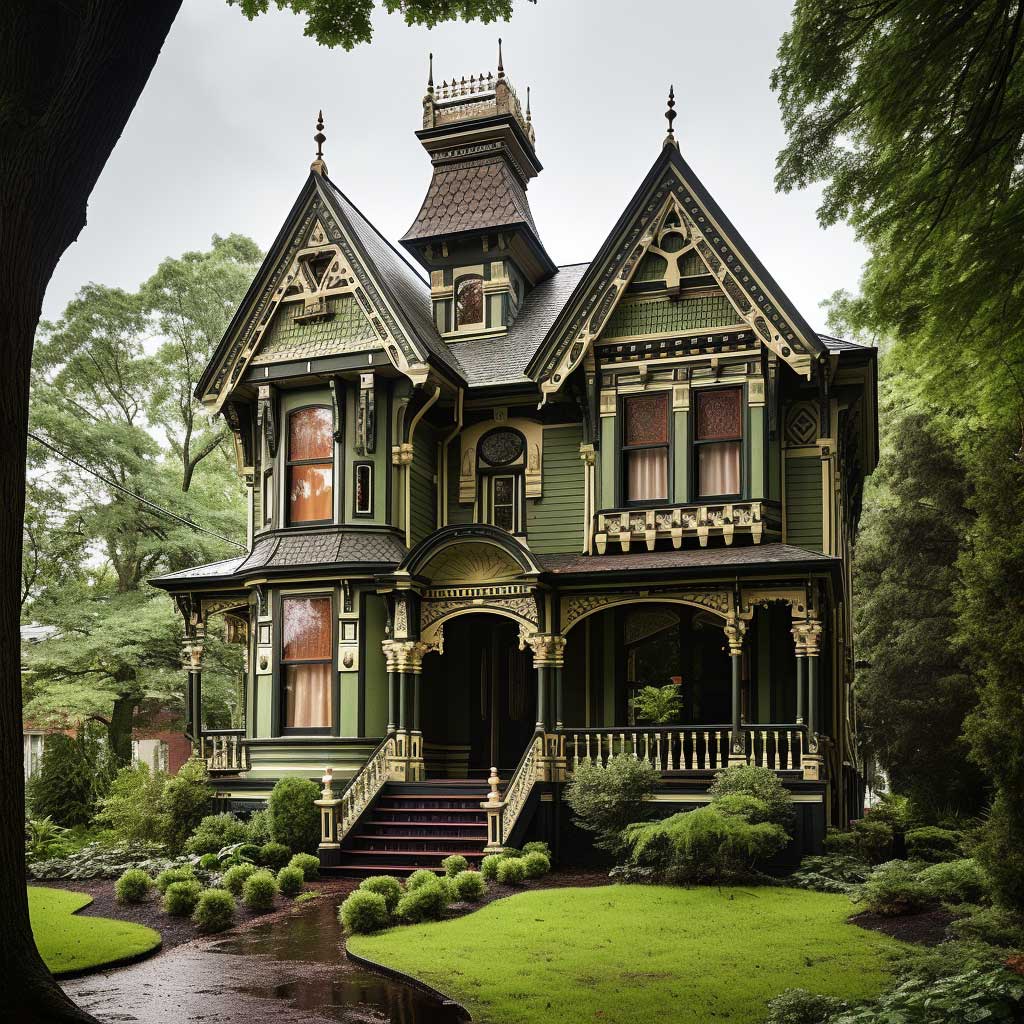
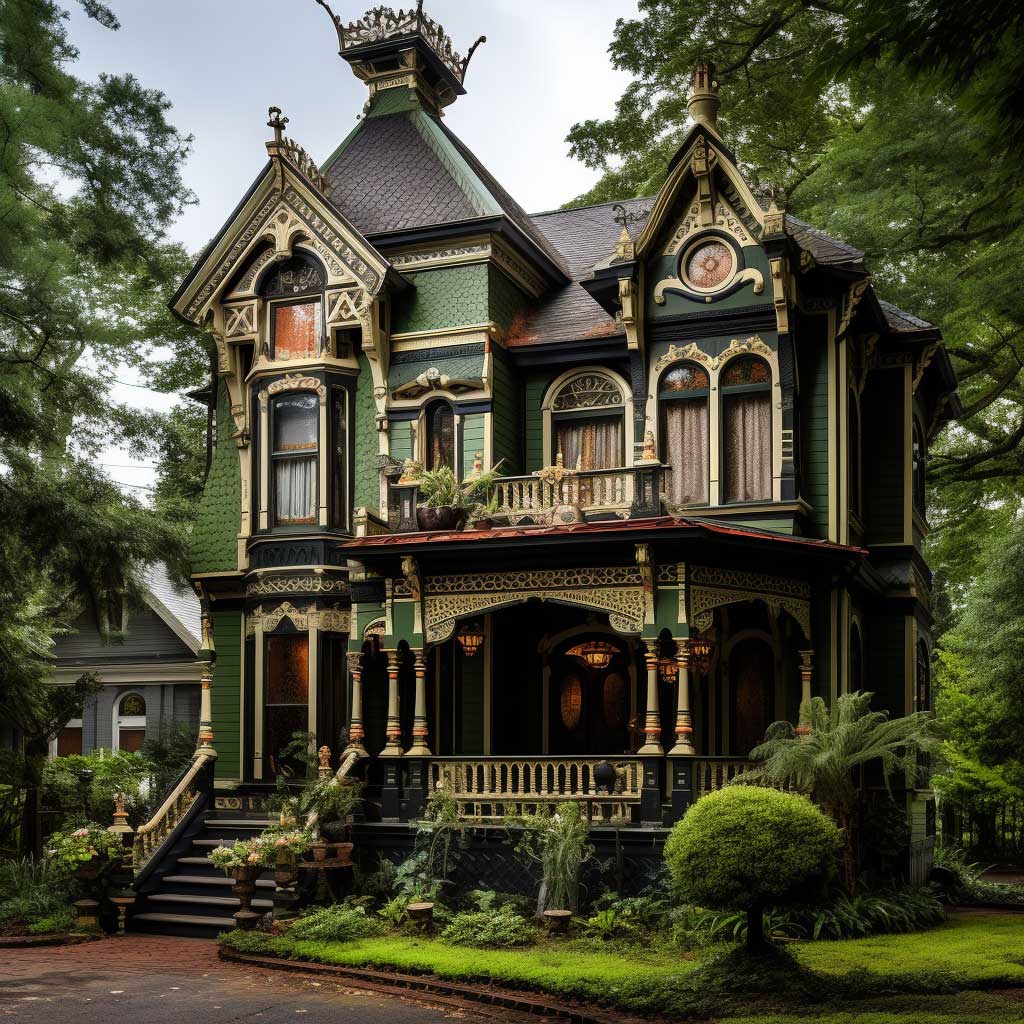
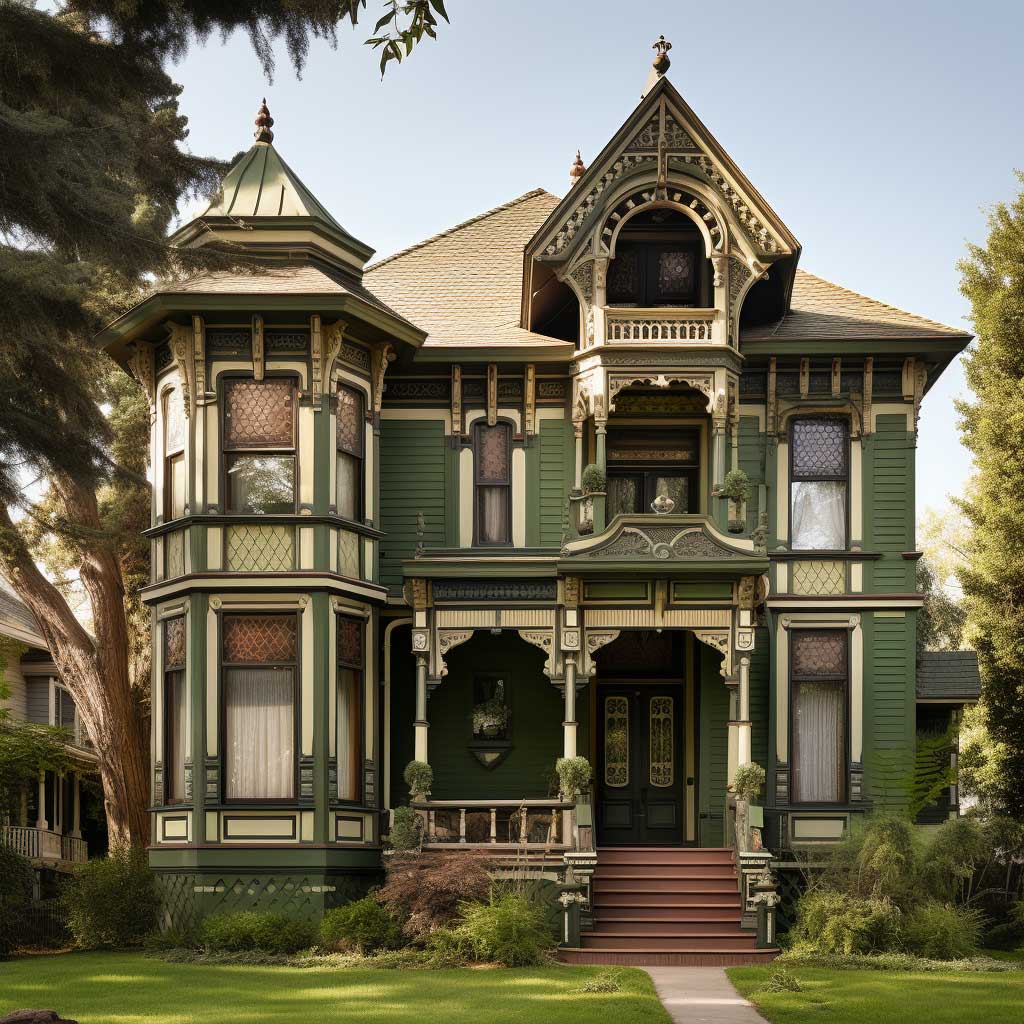
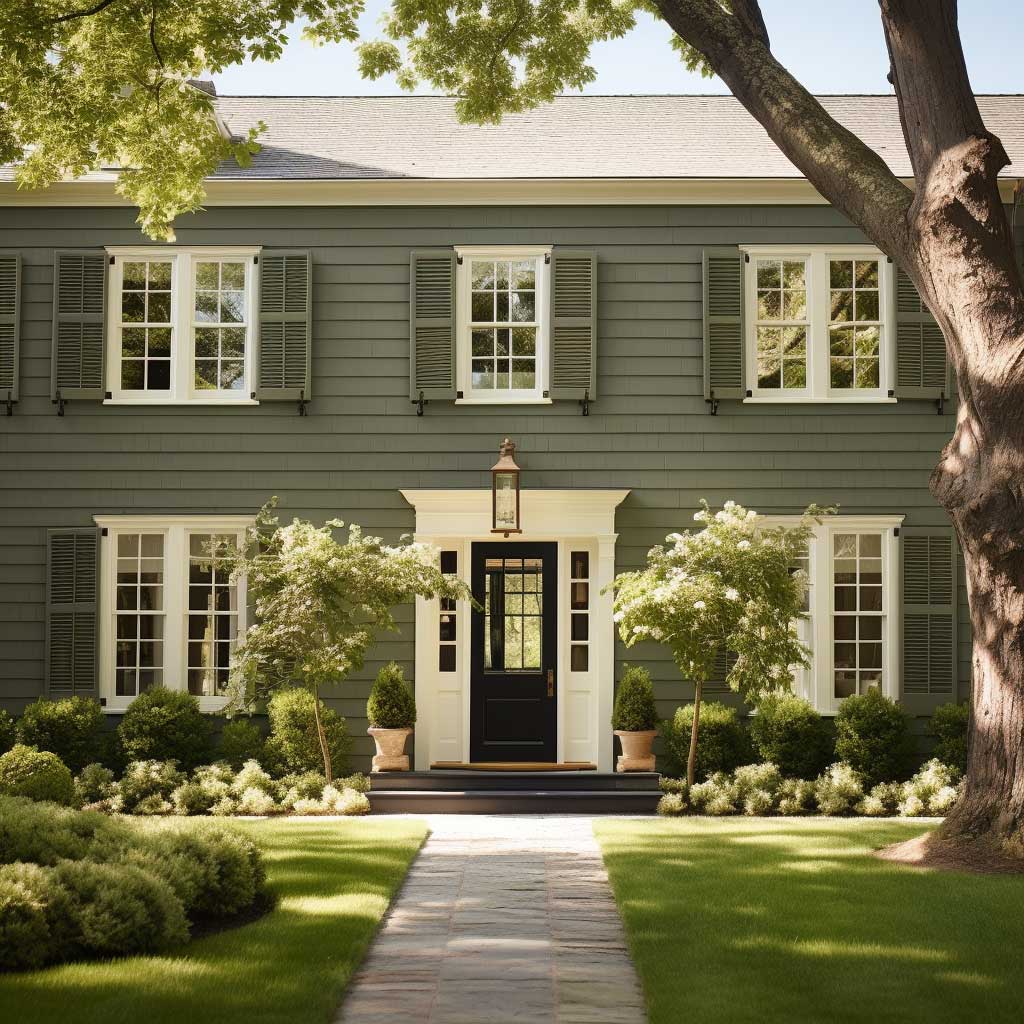
Mossy green works on Victorian facades for the same reason it works in nature — it functions as a mid-tone that grounds surfaces without flattening them. Behr Mossy Green S-H-430 (hex #5A7C46) covers up to 400 square feet per gallon and carries enough yellow in its base to read warm rather than cool against the ornate carved woodwork that defines Victorian exteriors. The detailing — dentil moldings, fish-scale shingles, spindle work — actually gets more legible under a mossy green because the mid-tone creates contrast against lighter trim without the visual noise of a dark forest green.
Think of the facade as a garden wall. Mossy green treats the house surface the way moss treats stone — it does not compete with texture, it emphasizes it. Victorian homes surrounded by mature trees are the ideal candidate because the exterior begins to read as a continuation of the landscape rather than a house placed in front of it. What breaks this effect? Using mossy green on a facade with minimal architectural detail. On a plain, flat Victorian elevation with no trim work, the shade looks heavy and unearned — the depth of color needs the contrast of lighter accents to justify it.
Dark earthy greens in the mossy range absorb more UV than sage, which accelerates fading on south and west elevations. Stylists recommend focusing the darkest application on north and east faces, using a slightly lighter variant of the same mossy tone on sun-exposed walls to keep the whole exterior reading as one consistent color even after several seasons. For reference, you can explore how two-tone exterior house paint strategies address exactly this kind of elevation-specific color management.


Applying mossy or deep earthy green over unpainted raw brick. The brick’s natural variation makes the tinted surface read as uneven and patchy — two years later the result looks like the paint is failing even when it’s not. Earthy green on brick requires a quality bonding primer rated for masonry, applied in two coats, before any topcoat goes on. Skipping this step is the single most common reason earthy green exterior projects look bad within three seasons.
Olive Undertones Warm Up the Colonial Exterior Paint Formula
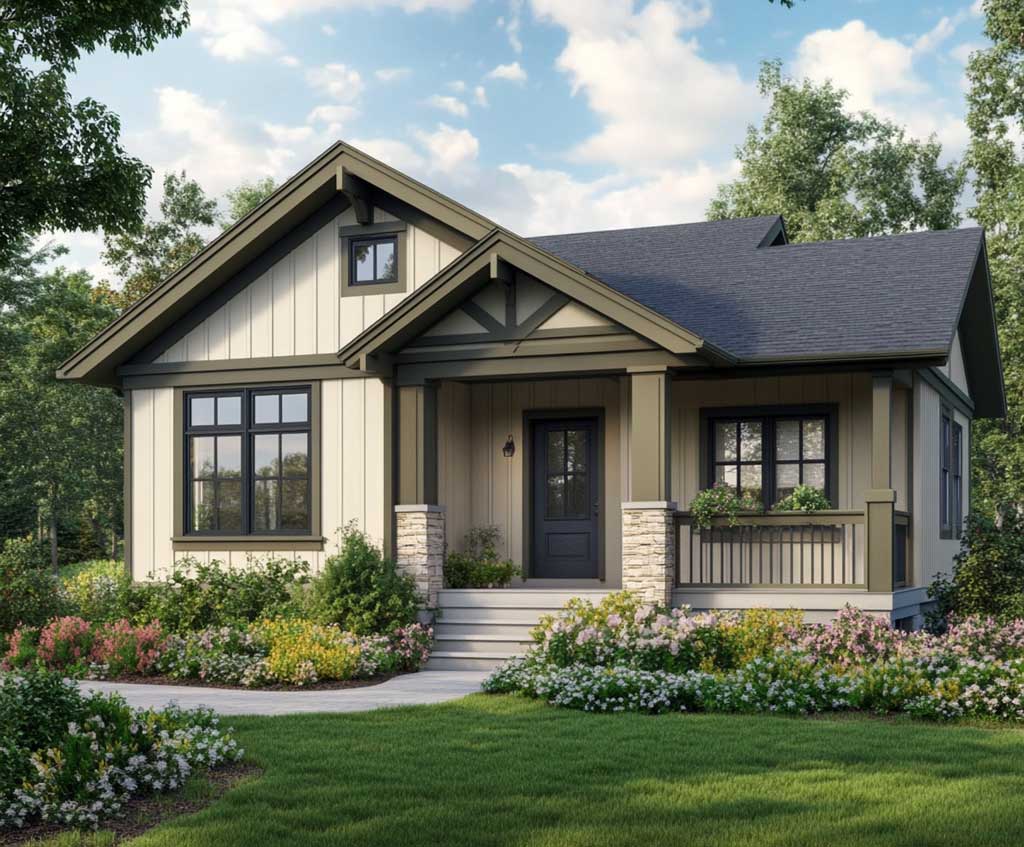
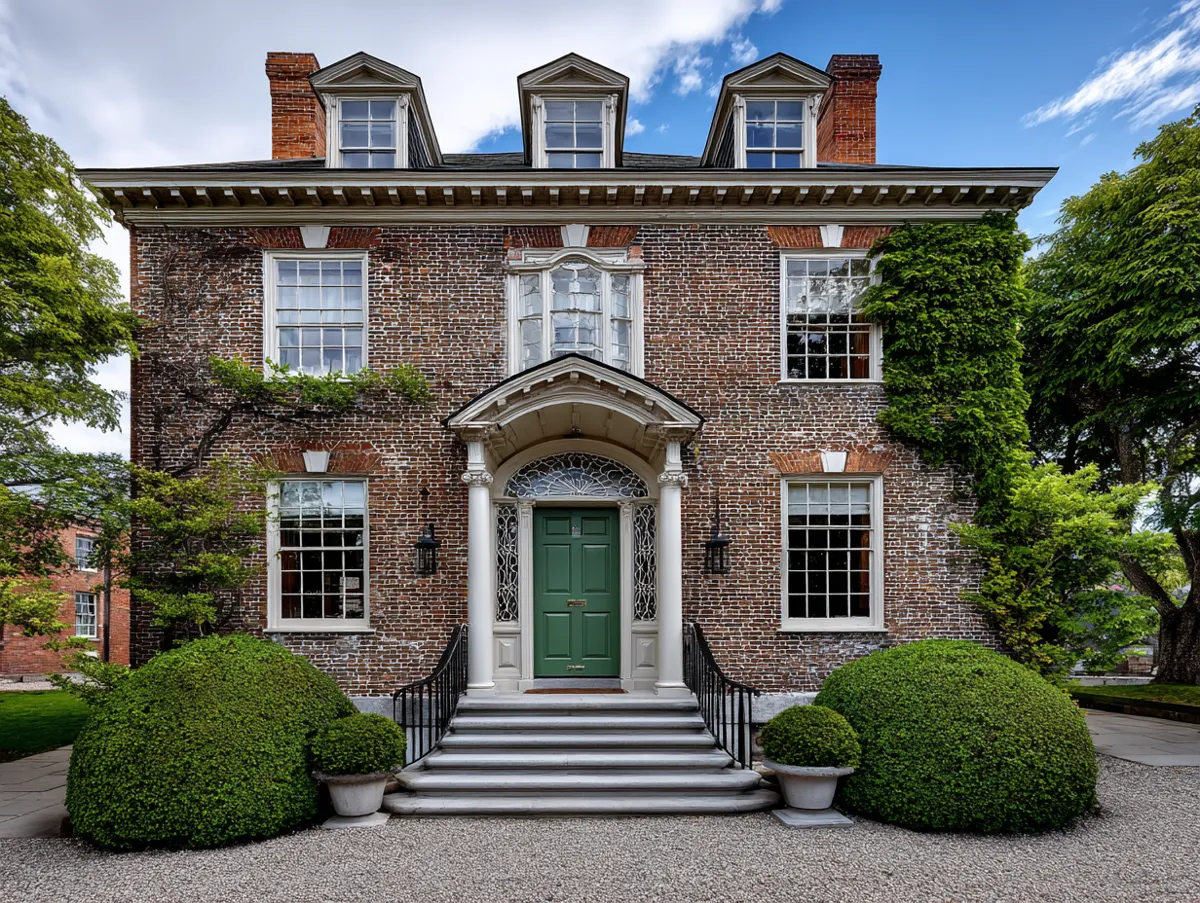
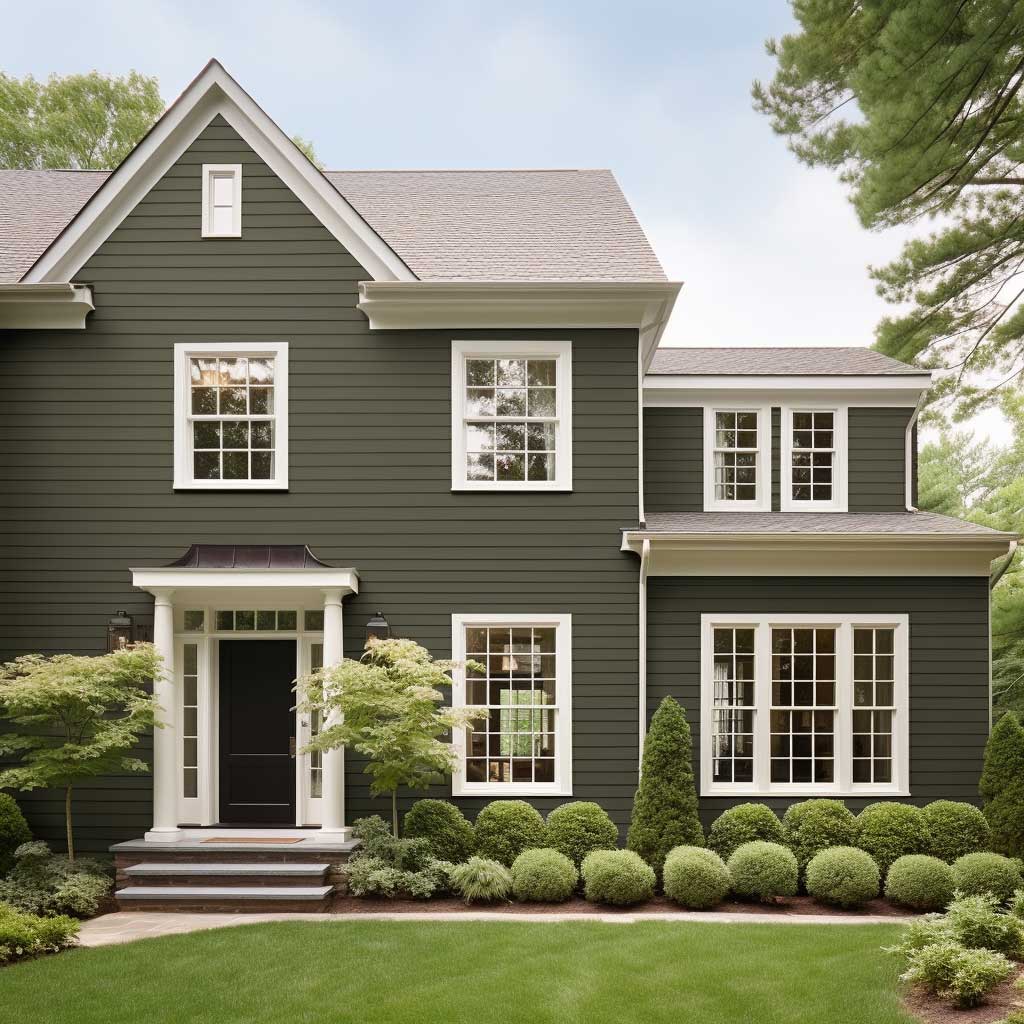
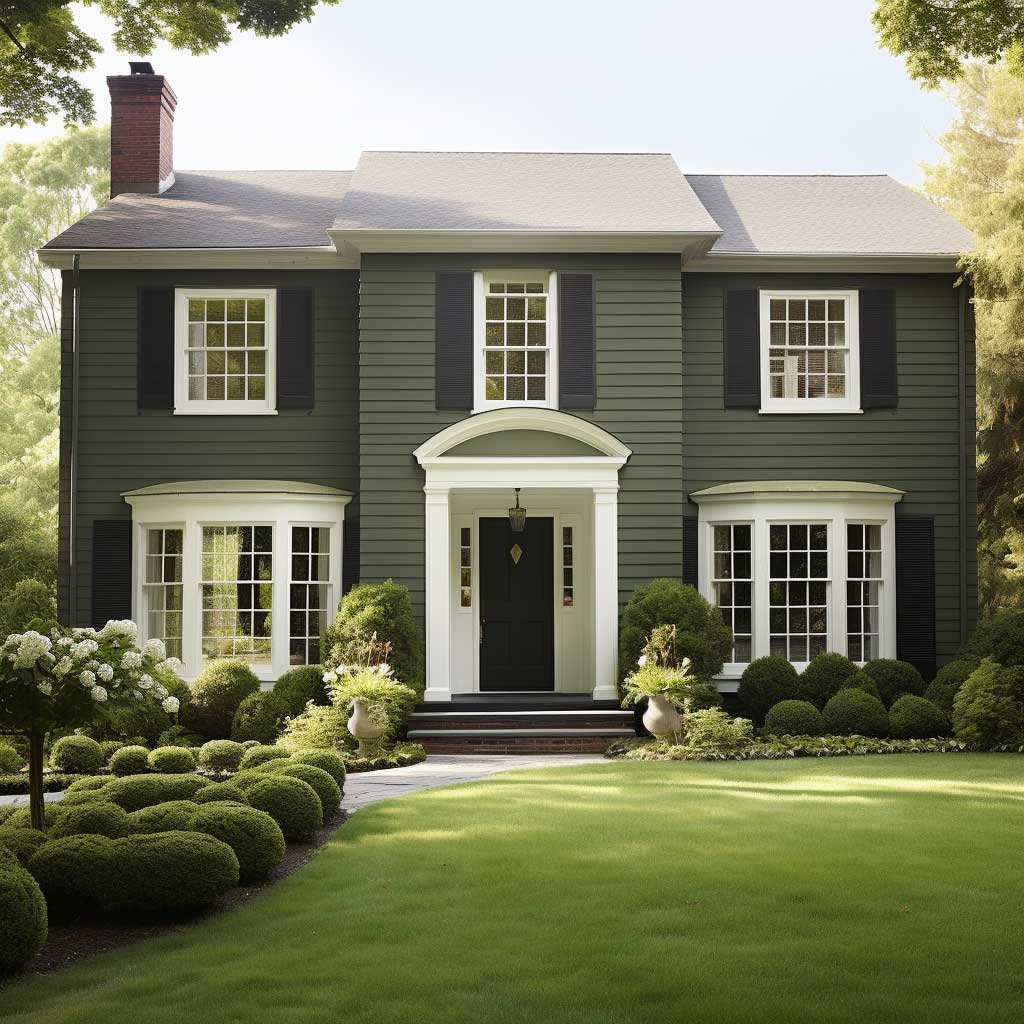
Earthy olive green on a colonial exterior solves a problem that beige and gray never quite manage — it adds warmth without adding visual weight. Sherwin-Williams Renwick Olive SW 2815 is described as a muted, earthy olive with a noticeable khaki cast and a warm brown-yellow base, which means it responds well to the red tones already present in colonial brick. Where a cooler gray-green reads as detached against brick, an olive tone reads as complementary. The facade stops looking like a color placed on top of the structure and starts looking like a color the structure was always going to be.
The question worth asking is whether the olive tone has enough green to register from the street, or whether it tips fully into khaki. A sample on white foam board tested outdoors at midday is the standard check — if it reads as beige in direct sun, it’s too warm for the exterior. A true earthy olive holds its green in bright light and shifts toward warm brown only in shade, which is the correct behavior. Glidden’s earthy olive exterior paint runs approximately $62 per gallon and covers up to 400 square feet, making it one of the more accessible entry points for testing an olive tone on a colonial facade before committing to a premium product. For a broader picture of how earthy tones layer across an exterior, see these earthy neutrals for exterior house painting.
The trim decision on an olive colonial is where most people get it wrong. Bright white reads too stark against an olive body and makes the facade look like a corrected mistake. A warm off-white — cream, antique white, or linen — keeps the warmth consistent across the whole exterior. The same logic applies to the front door: a dark walnut, deep teal, or muted terracotta reads correctly against olive; a bold fire-engine red reads like an afterthought.


| Shade | Best Architecture | Maintenance Interval | Key Risk |
|---|---|---|---|
| Sage (e.g. SW Evergreen Fog) | Georgian, Craftsman | 5–7 years (light-facing) | Fades to gray-green if LRV too high |
| Mossy Green (e.g. Behr S-H-430) | Victorian, Cottage | 3–5 years (south/west-facing) | Reads heavy without light trim contrast |
| Earthy Olive (e.g. SW Renwick Olive) | Colonial, Farmhouse | 5–7 years (moderate exposure) | Tips to khaki if undertone too warm |
Sherwin-Williams rates Evergreen Fog SW 9130 for both interior and exterior use — it’s one of the few earthy greens with confirmed performance data across multiple climate zones, making it a reliable reference point when evaluating similar shades from other brands. See the full Evergreen Fog color profile on the Sherwin-Williams site for LRV, coordinating trim options, and sample ordering.
Earthy Green Exterior Paint
Pick the shade that reads your architecture, not just your mood board.
Sage holds its character through seasonal light shifts and pairs with brick without competing. Mossy green deepens a Victorian facade into the landscape — but it demands contrast from trim to earn its weight. Olive solves the warmth problem on colonial symmetry that beige never fully resolved.
Test any earthy green at two times of day on a foam board before buying a full gallon. The shade that looks correct at 9 a.m. often reads completely differently at 3 p.m. on a sun-exposed wall.
Save this post before your next exterior paint consultation.