
A pink living room works when the shade, the share of the room it covers and the light all line up. Pale blush walls with beige and wood read calm and adult, while hot pink belongs on cushions and art that cover about 10% of what you see. The safest split is the classic 60-30-10 rule: one dominant color, one supporting tone, one accent. Decide which of the three roles pink will play before you buy a single sample pot.
Does pink suit a main room shared by the whole household? Yes, as long as the walls stay light and the brighter tones stay small. Light blush paints such as Benjamin Moore Pink Bliss sit at an LRV of about 82 on the 0–100 scale, so they bounce daylight almost like an off-white. A gallon covers roughly 350–400 sq ft per coat, which means one room usually needs two to three gallons for two coats. Start with the walls, then layer accents on top.
Below are three proven directions: soft pink with neutral accents, vibrant pink against white furniture, and a modern pink and grey scheme. Each one comes with real paint values, prices and the mistakes that most often flatten the color. Pick the direction that matches how much daylight your room gets.
- Split the room 60-30-10: pink takes either the 60% wall role or the 10% accent role, rarely both.
- Pale blush paints at LRV 80–85 act almost like white; dusty pinks near LRV 56 feel warmer and moodier.
- One gallon covers about 350–400 sq ft per coat, so most living rooms need 2–3 gallons for two coats.
- Pink velvet sofas run from about $279 for a loveseat to $1,249 for a full curved model.
- Warm 2700K bulbs keep pink rosy, while 4000K cool white can push it toward grey.
- Beige and wood soften pink, white sharpens it, grey makes it modern.
Soft Pink Living Room Walls Anchored by Beige and Wood
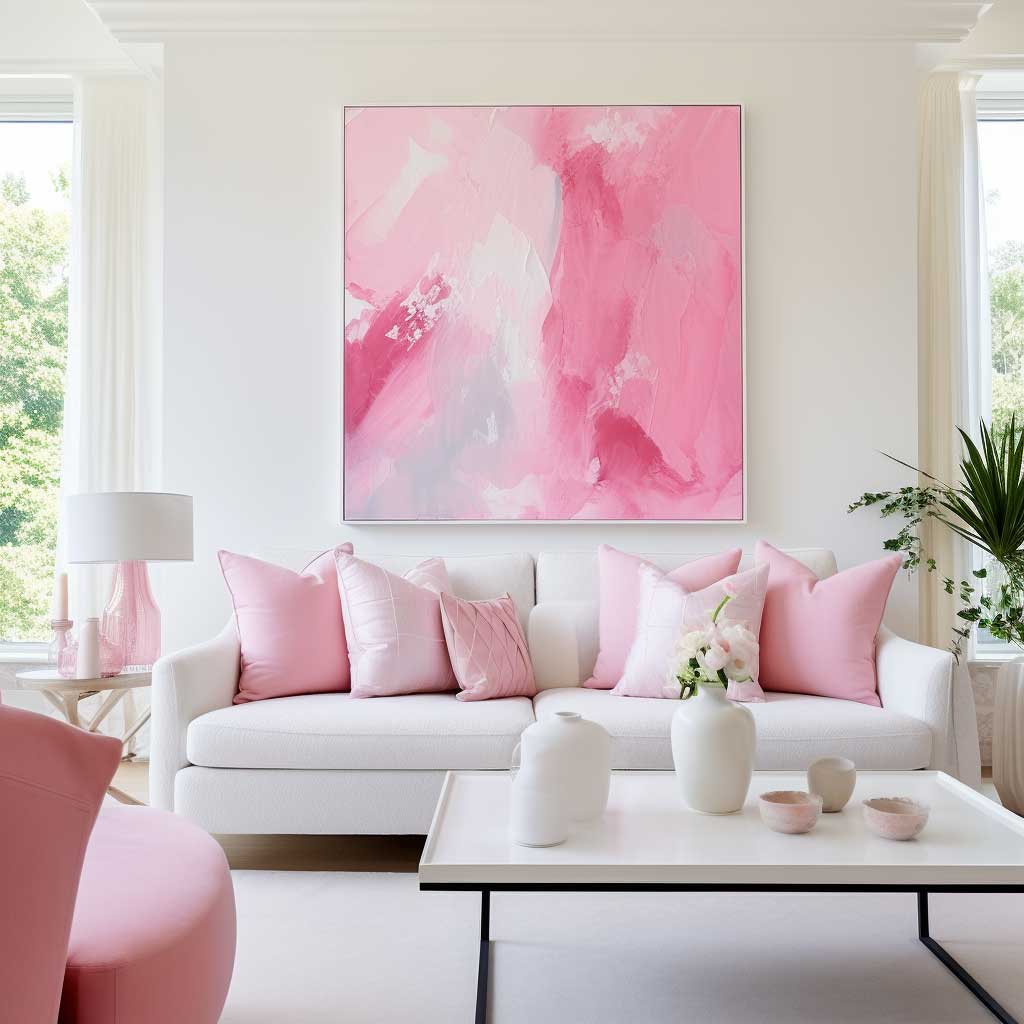
Light pink living room walls give the space a warm glow without the sugary feel of a nursery, especially when beige, taupe and natural wood carry the furniture. Pale blush works like a lampshade over the whole room, filtering light into a soft, flattering tone. Benjamin Moore Pink Bliss has an LRV of about 81.6 and Bridal Pink about 85, so both stay nearly as bright as a warm white. Choose one of these pale shades if your room faces north or gets fewer than six hours of direct sun.
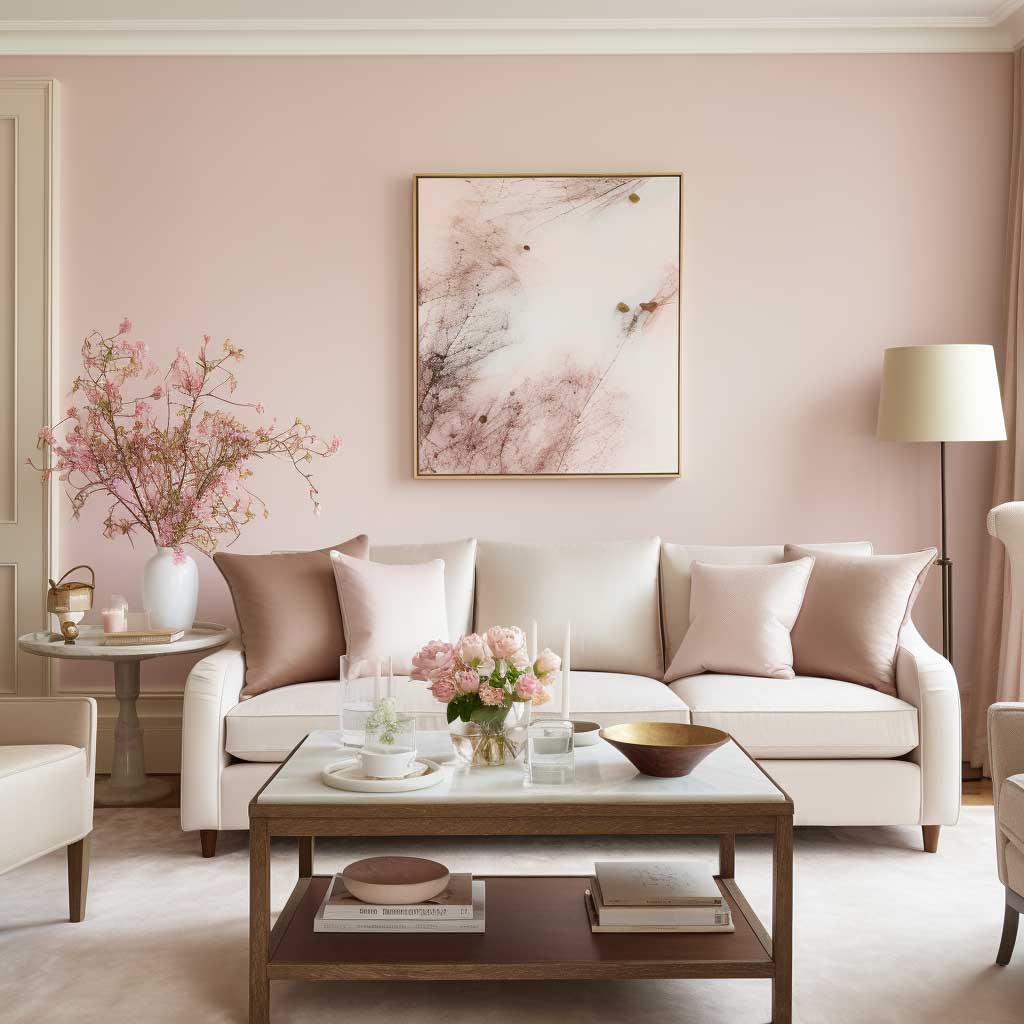
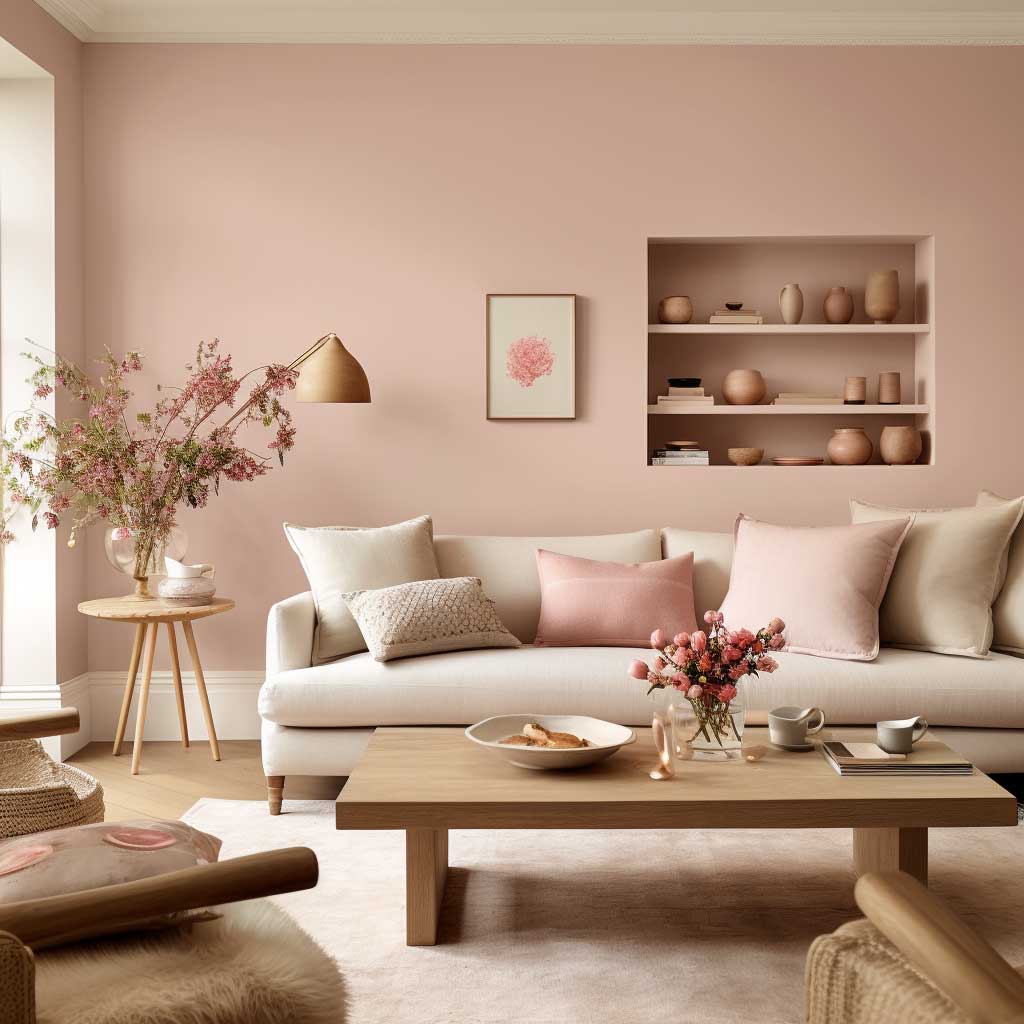
Pink and beige pair well because both share a warm undertone, so neither color fights the other. A beige sofa, a cream rug and an oak coffee table cover the 30% supporting role and keep the blush walls from tipping too sweet. Compare that with a cool white sofa in the same room: the pink suddenly looks brighter and more saturated. Pick beige when you want the room to feel relaxed rather than graphic.
Want a dustier, more grown-up pale pink? Farrow & Ball Setting Plaster sits around LRV 56 by third-party estimates, roughly 25 points darker than Pink Bliss, and reads closer to blush-beige in warm light. That depth suits a sunny south-facing lounge but can look muddy in a dim one. Don’t pair it with grey-beige upholstery, which turns the whole room flat. If navy is on your shortlist instead of beige, these pink and navy color schemes for living rooms and bedrooms show which pink shades survive a deep backdrop.
White Furniture Lets a Pink Accent Living Room Pop
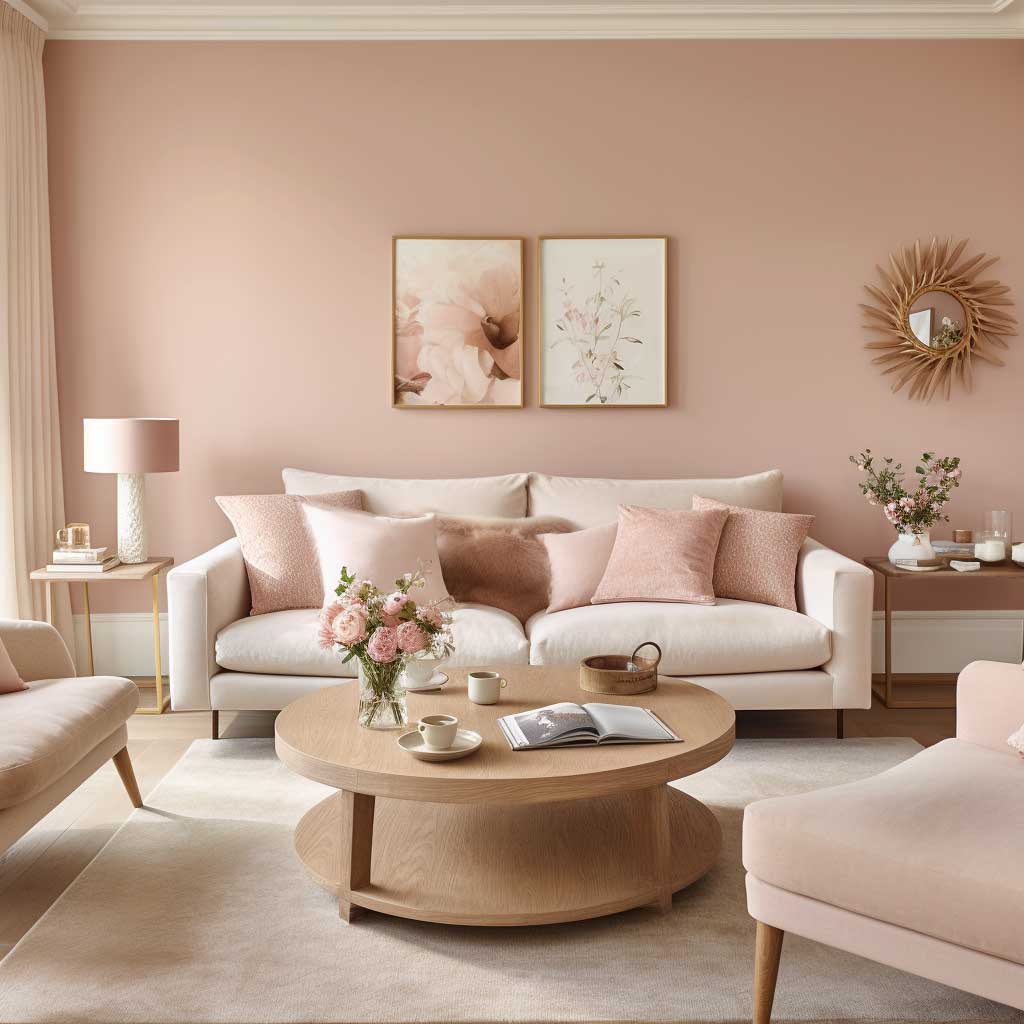
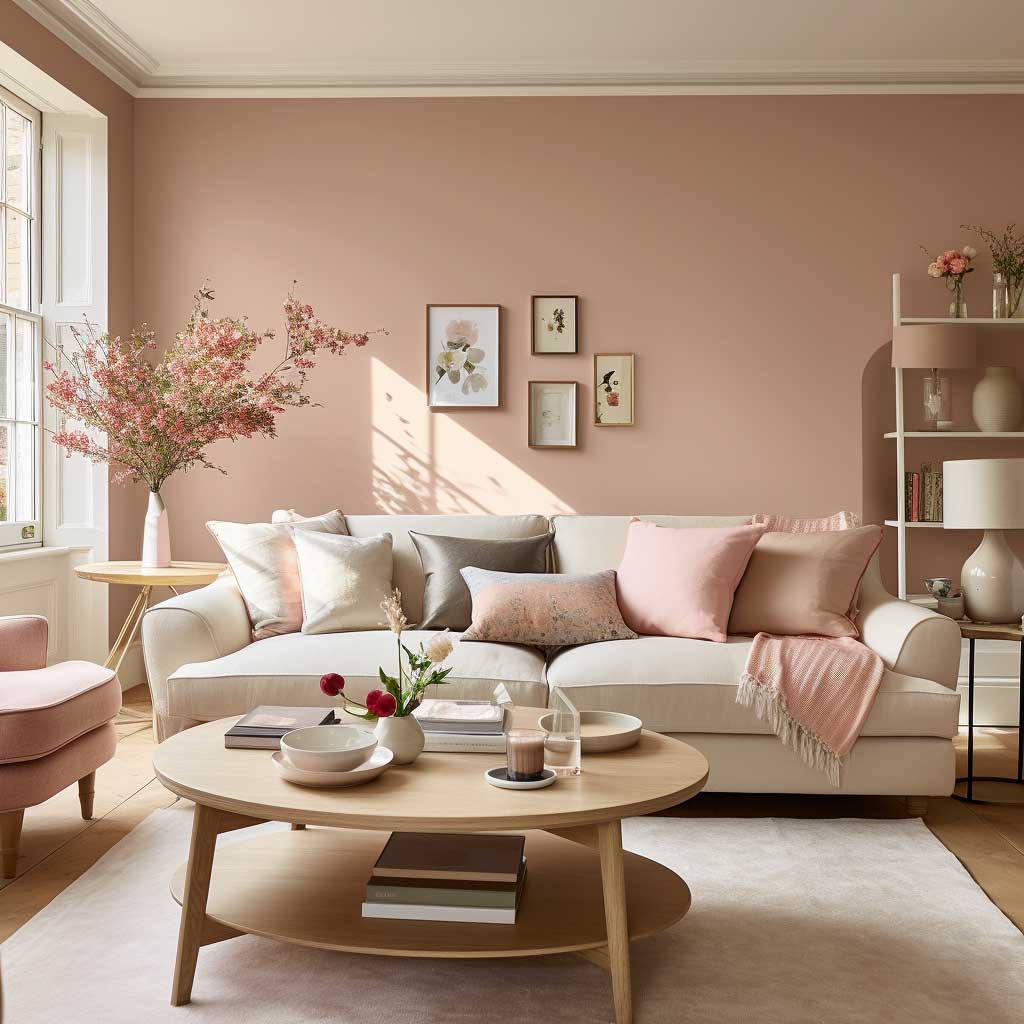
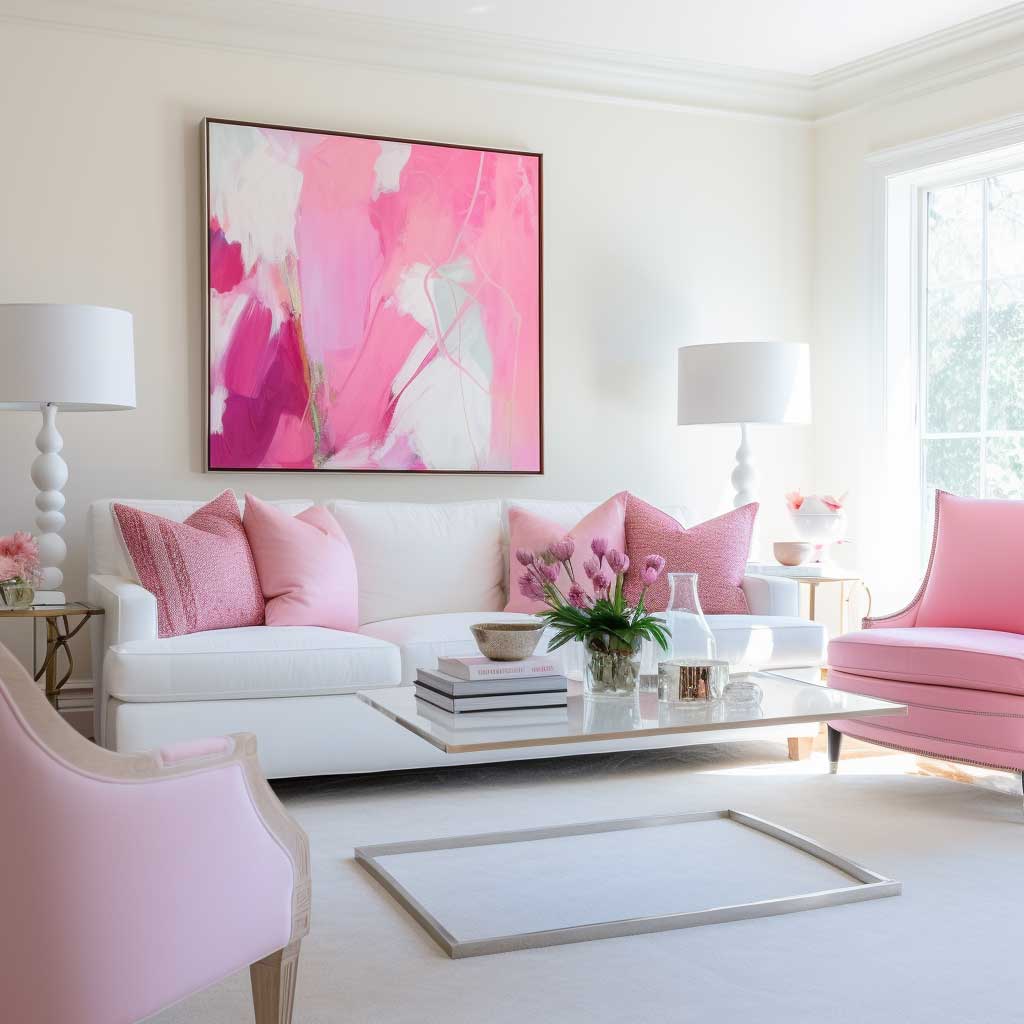
A living room with pink accents and white furniture flips the formula: white takes the 60% share and vibrant pink stays near 10%. Think of the pink as lipstick on a plain outfit, where a small amount does all the talking. Three to five pink pieces, such as cushions, a throw, one print and a vase, are usually enough for a 12×15 ft room. Spread them across the room so the eye travels instead of stopping in one corner.

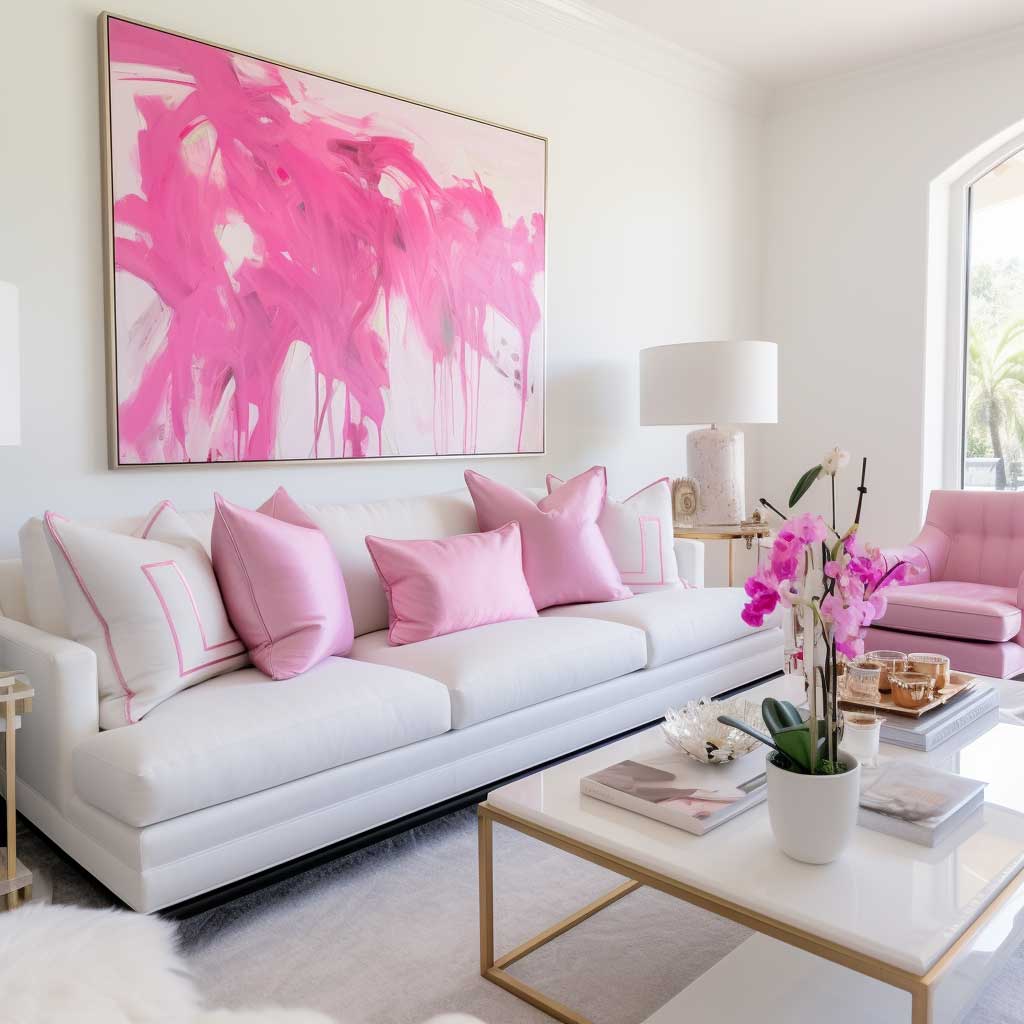
Should the bold pink go on a sofa or on small decor? A pink velvet sofa makes a single strong statement, with prices running from about $279 for a compact loveseat to $1,249 for a curved model. Cushions and art cost a fraction of that and can be swapped by season. Don’t buy a hot pink sofa and pink walls together, since two large pink planes erase the contrast that makes the accent work. Start with textiles if you rent or doubt the saturation.
Lighting decides whether bright pink looks juicy or chalky. Warm 2700K bulbs keep magenta and coral rich, while 4000K cool white makes the same cushions look slightly grey and flat. Interior designers often explain the balance through the 60-30-10 rule for room color proportions, where the accent shade covers roughly a tenth of visible surfaces. Use one bulb temperature in every lamp so the pink reads the same from every seat.
Grey Turns a Modern Pink Living Room Grown-Up
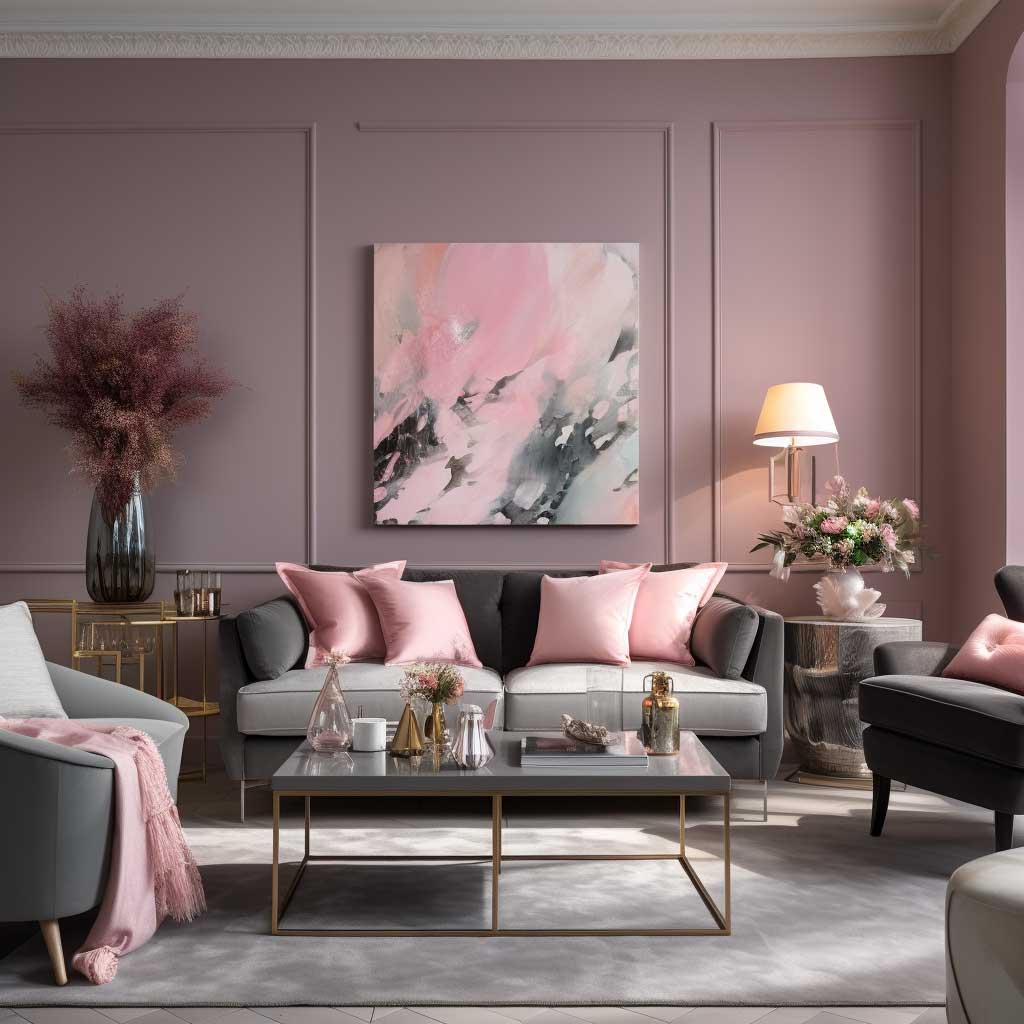
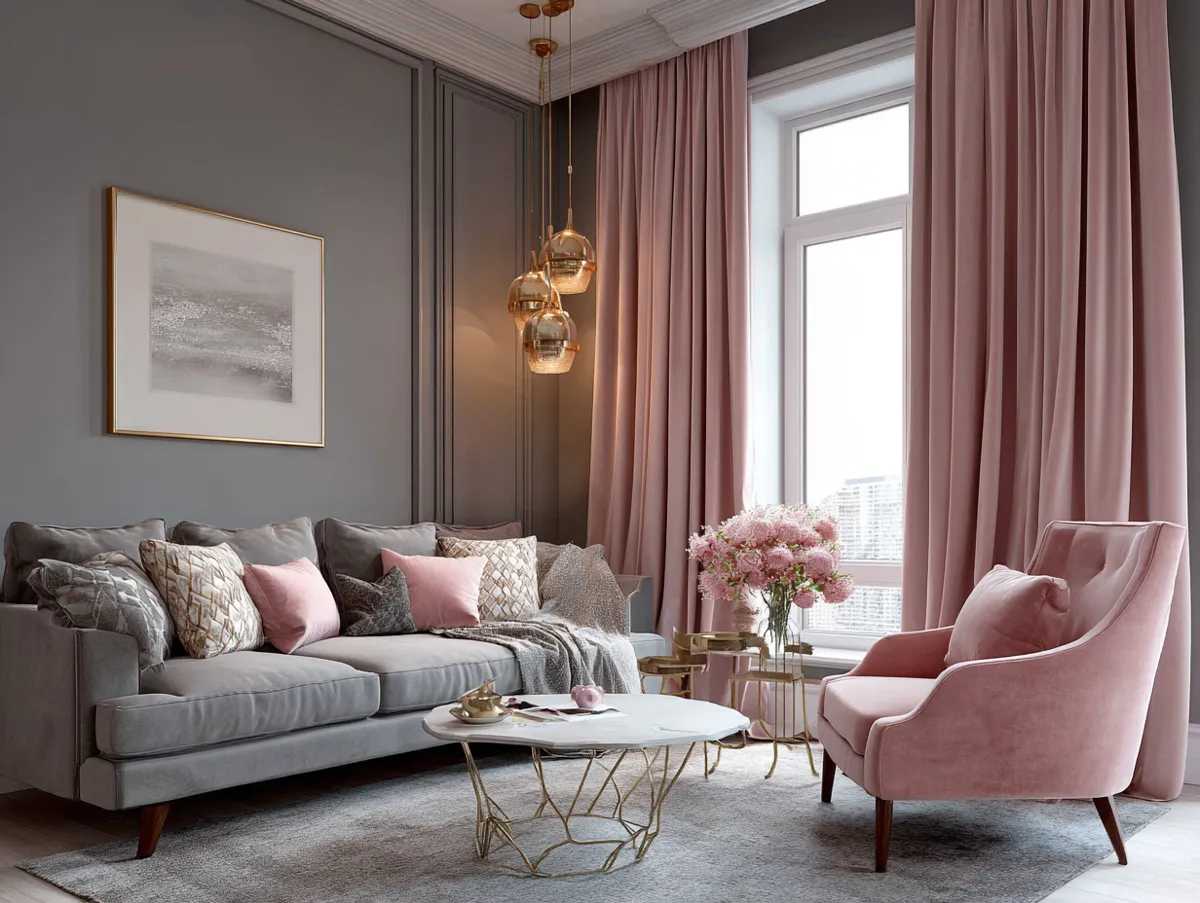
A modern pink living room built on grey trades sweetness for structure, because grey cools pink the way a splash of milk calms strong coffee. The usual split puts grey on about 60% of the room, mainly the sofa, rug and one or two walls, with pink taking the 30% role through an armchair, curtains or a painted wall. Deep pink with charcoal suits a bright room, while pale pink with light grey suits a darker one. Match warm grey to dusty pink and cool grey to clearer pinks.

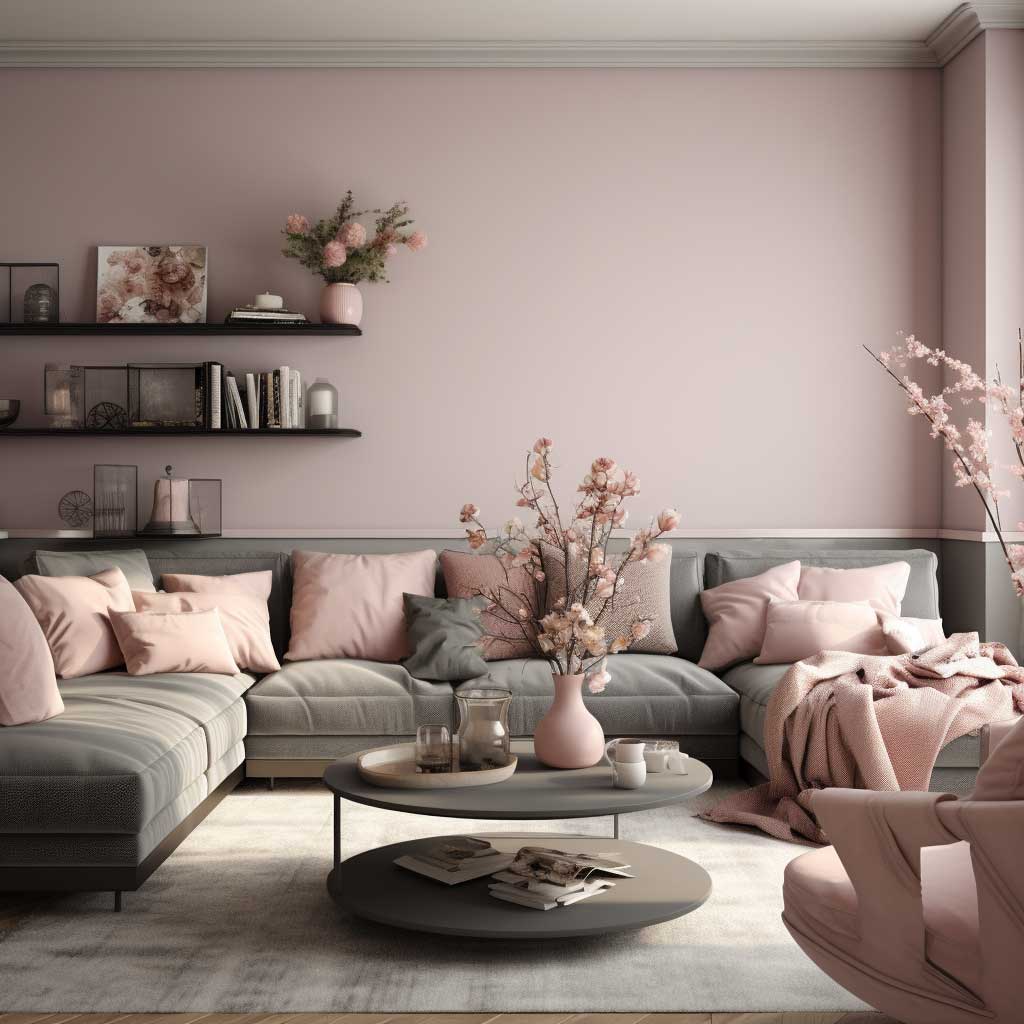
Is it better to paint the walls pink or grey? Pink walls with grey upholstery feel softer and more lived-in, while grey walls with a pink sofa read sharper and more editorial. Repainting a strong pink over grey often needs primer first, which typically costs $20–60 per gallon and covers only 200–300 sq ft. Don’t skip that coat on a dark grey wall, or you may end up rolling three coats of pink instead of two. Budget for primer before you compare finish paints.
Texture keeps a two-color room from looking like a paint chart. A nubby grey wool sofa, a smooth pink velvet cushion and a brushed steel lamp all reflect light differently, so the scheme feels layered. If you want the calmer, almost colorless version of this look, these gray and white living room combinations with plush textures show how much a neutral base can carry before pink arrives. Add one green plant as a fresh third note rather than a second loud color.

Picking the Right Pink Colour for Living Room Walls
The right pink colour for a living room depends more on light reflectance than on the name on the chip. A shade around LRV 80–85 behaves like a tinted white, while one near 55–60 behaves like a true color and darkens the room noticeably. Paint chips work like a perfume tester: a tiny swatch never tells you how the full wall will feel. Paint two-foot squares on at least two walls and check them at noon and after dark.
How much paint will a pink makeover actually take? Most interior paint covers about 350–400 sq ft per gallon per coat on a smooth, primed wall, and one gallon is often enough for a single coat in a 10×12 room. Standard paint runs roughly $15–60 per gallon, versus $2–6 per sq ft if you hire a professional painter. Don’t stretch a gallon past its rated coverage, since thin pink paint dries patchy. Buy every can from one batch so the shade matches wall to wall.
- Pale blush, LRV 80–85: north-facing or small rooms, beige and wood partners.
- Dusty pink, LRV around 56: sunny rooms, warm grey and brass partners.
- Hot pink or coral: accents only, about 10% of the room, against white.
- Don’t paint all four walls hot pink: keep saturated shades near 10% of the room, not 60%.
- Don’t mix 2700K and 4000K bulbs, or one pink wall will look like two different colors.
- Don’t skip primer over dark grey: expect three coats of pink instead of two.
- Don’t judge a shade from a 2-inch chip; test a 2×2 ft patch first.
Blush, Bright and Grey Schemes Side by Side
Each pink scheme asks for a different share of color, a different light level and a different budget. The table puts the three directions next to each other so you can compare them before buying samples. Use it as a checklist when you shop for paint and fabric.
| Scheme | Pink share | Typical shade (LRV) | Best partners | Best light | Main cost |
|---|---|---|---|---|---|
| Soft pink walls | About 60% (walls) | Pale blush, LRV 80–85 | Beige, cream, oak | North-facing or dim rooms | 2–3 gallons at $15–60 each |
| Vibrant pink accents | About 10% (decor) | Hot pink, coral, magenta | White furniture, 2700K bulbs | Any, best in bright rooms | Textiles, or a sofa from $279 |
| Pink and grey | About 30% (supporting) | Dusty pink, LRV around 56 | Warm or charcoal grey | South- or west-facing rooms | Primer $20–60 plus paint |
Where Pink Lands Best
Pink succeeds in a living room when it takes one clear role: about 60% as pale walls, about 30% as a supporting tone with grey, or about 10% as bright accents. Ask it to play two roles at once and the room tips from charming to sugary.
Pale blush at LRV 80–85 suits darker rooms and pairs naturally with beige and wood. Dusty pink near LRV 56 needs strong daylight and a warm grey partner.
Bright pink belongs on cushions, art and throws against white furniture, under warm 2700K bulbs. A velvet sofa from about $279 can carry the color alone if the walls stay neutral.
Plan for 350–400 sq ft per gallon per coat and two coats in most rooms. Test large swatches first, and the shade you pick will look the same on the wall as it did in your head.
Complete guide
The Living Room Design Ideas Vault Every Home Needs Right Now
Color, walls, furniture, layouts, styles, smart tech — 300+ ideas in one place
Complete guide
Pink Home Color Ideas for Every Room and Every Shade
Blush, coral, dusty rose, fuchsia — interiors, exteriors, kitchens, bedrooms — all in one place
You Might Also Like
Related Topics