A partition design between living and dining spaces does something most interior decisions can’t — it either opens the room up or quietly suffocates it. I’ve watched friends drop $4,000 on open-plan renovations only to feel like both zones lost their identity. You don’t need a wall or a gut renovation; you need a divider that pulls its weight visually. Wooden slats, glass panels with black steel frames, and plant columns are the three formats that keep showing up in well-resolved homes — and each one plays by completely different rules.
The mistake I see constantly is treating a partition like an afterthought. It goes in last, after the sofa and the dining table, and ends up apologizing for its existence. Partitions placed with intention become the architectural anchor the whole room was missing. Pick the wrong material and you shorten the space visually by two metres.
Quick scan — what you’ll find here:
- Vertical wooden slat partitions: warmth, shadow play, and the one finish mistake to avoid
- Glass partitions with steel frames: transparency tricks that make open plans look bigger
- Plant-column partitions: the biophilic divider that actually requires maintenance planning
- Which partition format works for small rooms vs. large open plans
- Cost anchors: what each format realistically costs to install in 2025
Vertical Wooden Slats Create Shadow Lines No Painted Wall Can Replicate
Walnut slat partitions run about $800–$1,800 installed depending on height, and every dollar of that shows. The vertical orientation of the slats does two things simultaneously: it draws the eye upward, adding perceived ceiling height, and the gaps cast moving shadows across the floor as light shifts through the day. I’ve been in rooms where this partition was the only reason the living zone felt resolved. Oak finishes in the $900–$1,200 range are my go-to for neutral interiors; darker walnut from brands like Woodcraft or Plyboo works better against pale concrete or white plaster.
What doesn’t work is finishing the slats in high-gloss lacquer. I tried it once — the reflection bounces light erratically and the whole thing reads as a hotel corridor feature, not a home. Matte or satin oil finishes let the grain breathe. You’ll notice that the spaces between slats also determine the acoustic privacy of each zone; 20–30mm gaps allow conversation to carry between rooms, which is usually what you want for living-dining layouts.
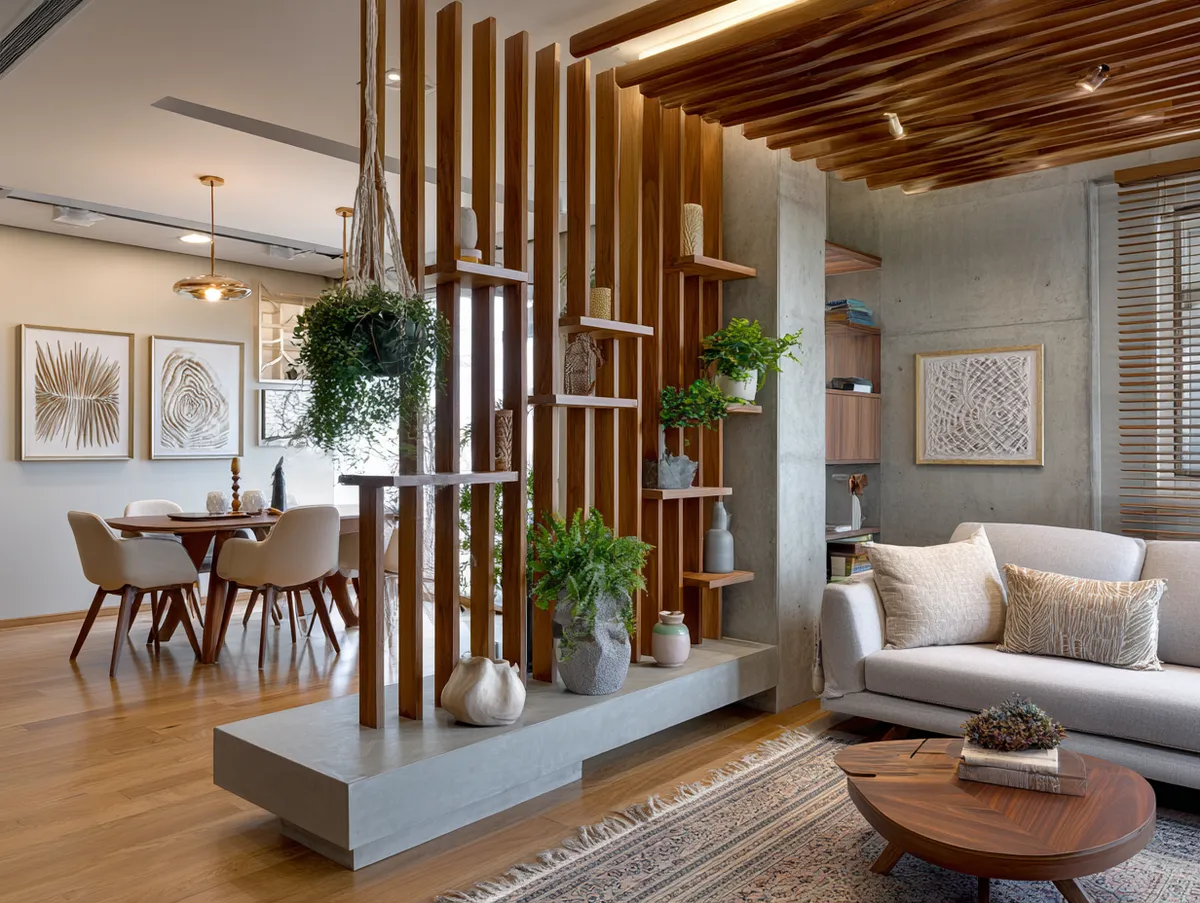
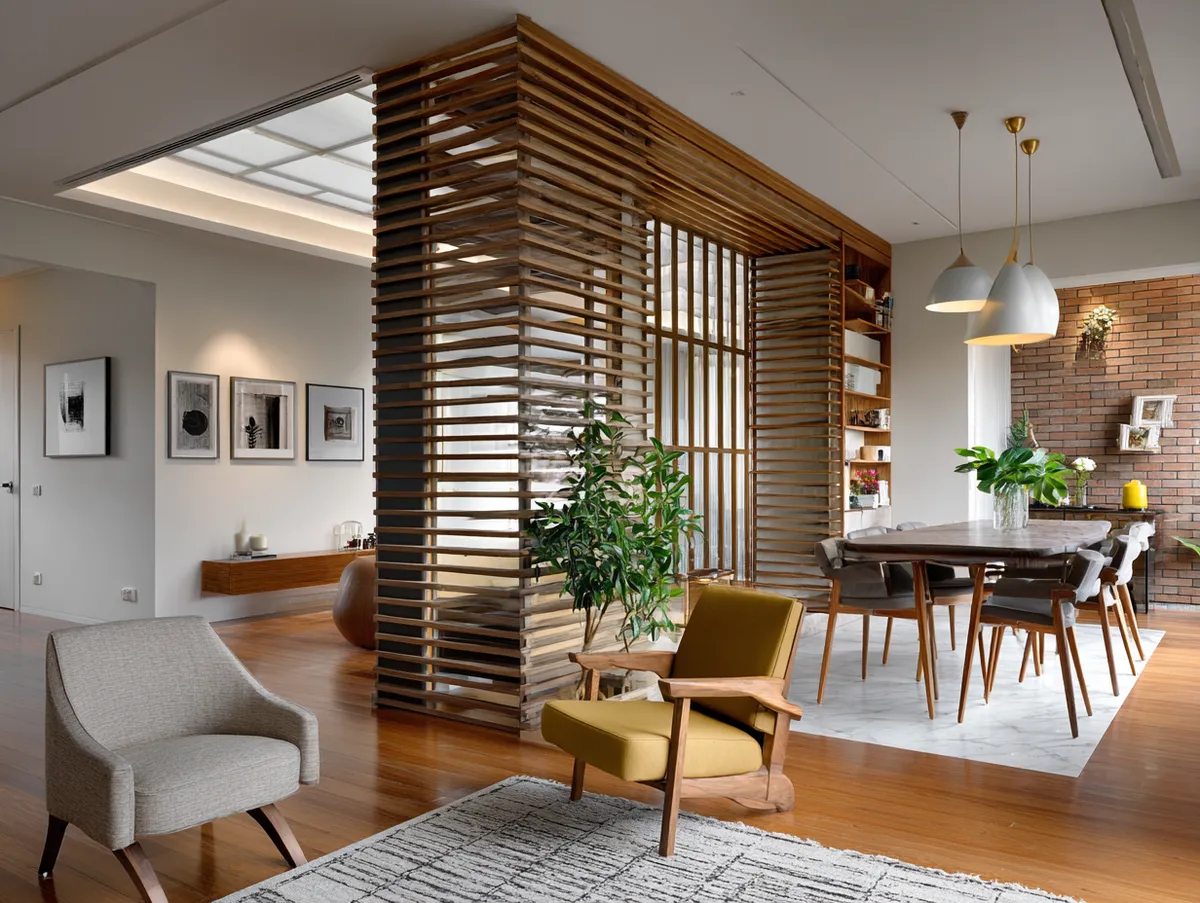
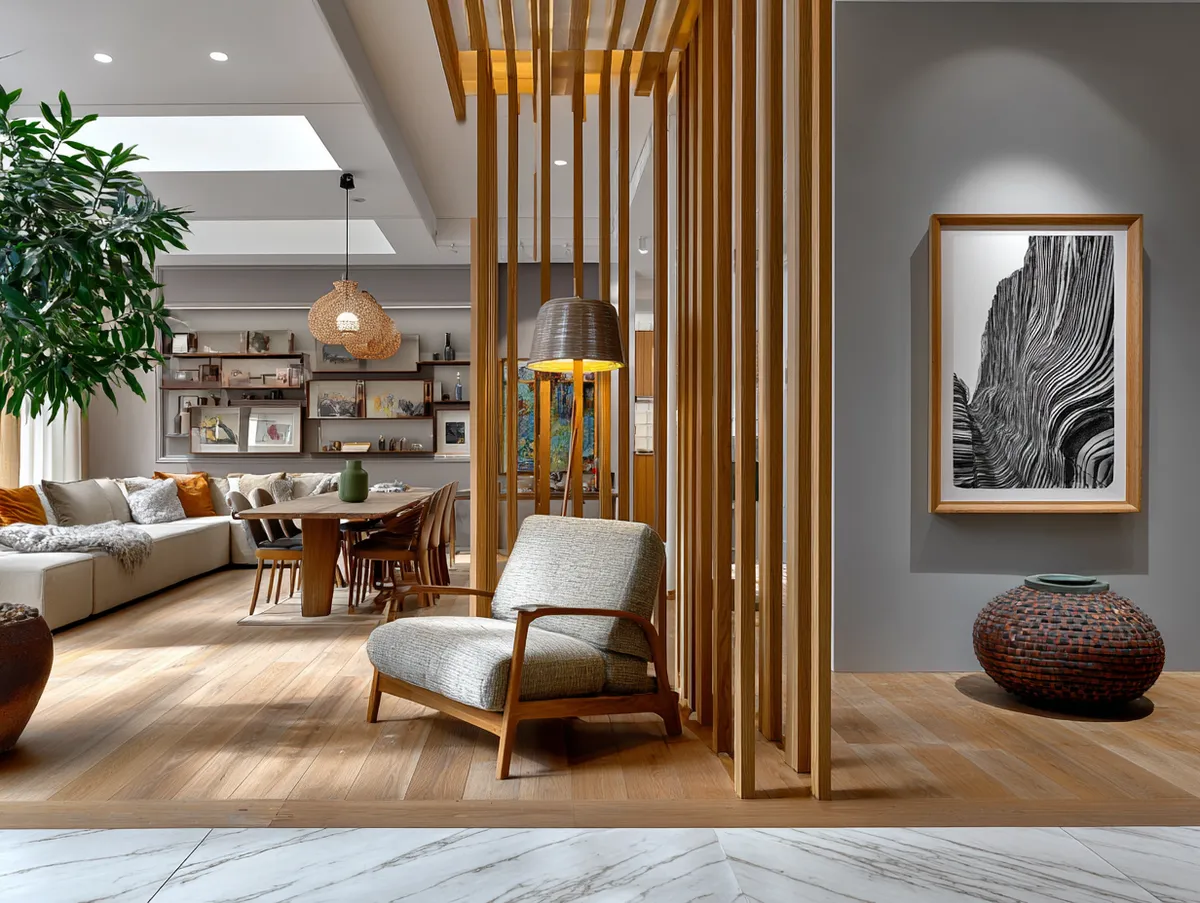
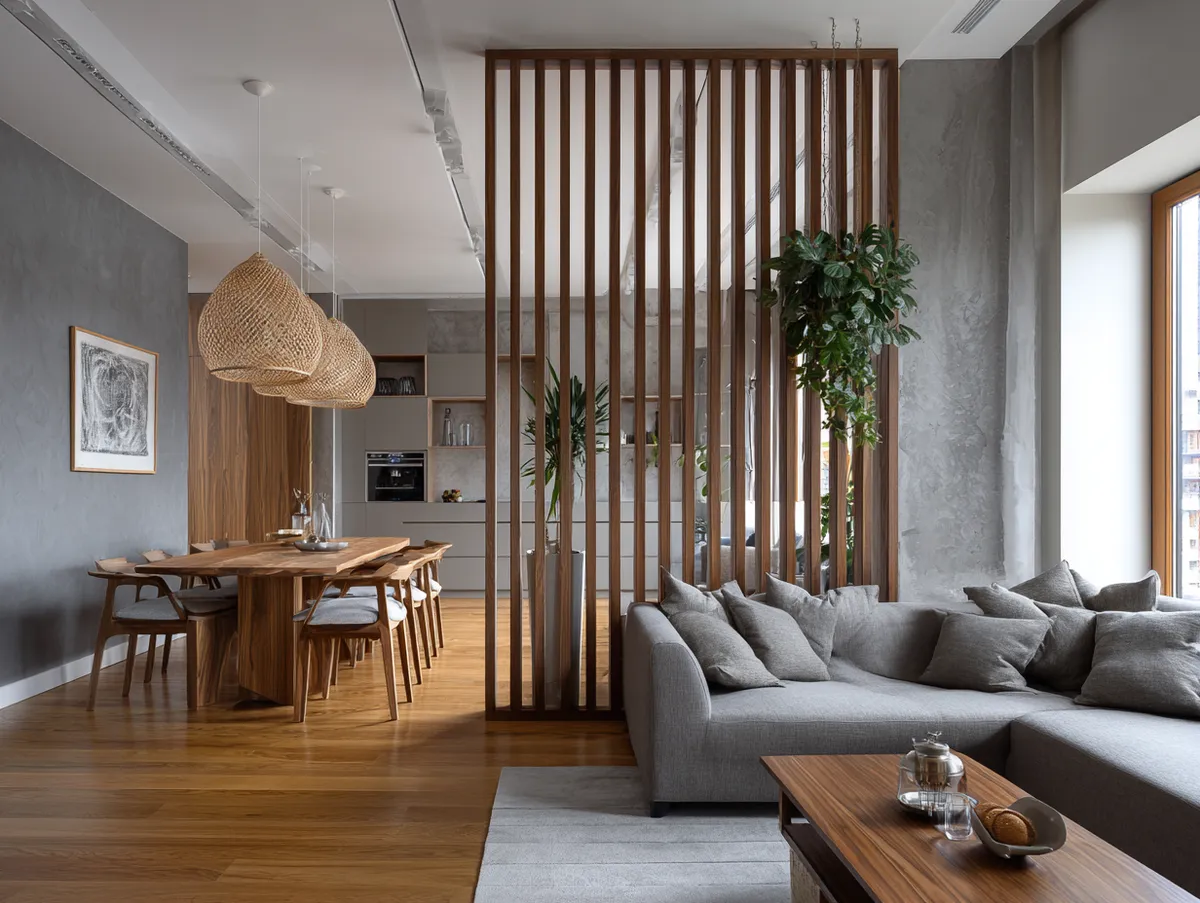
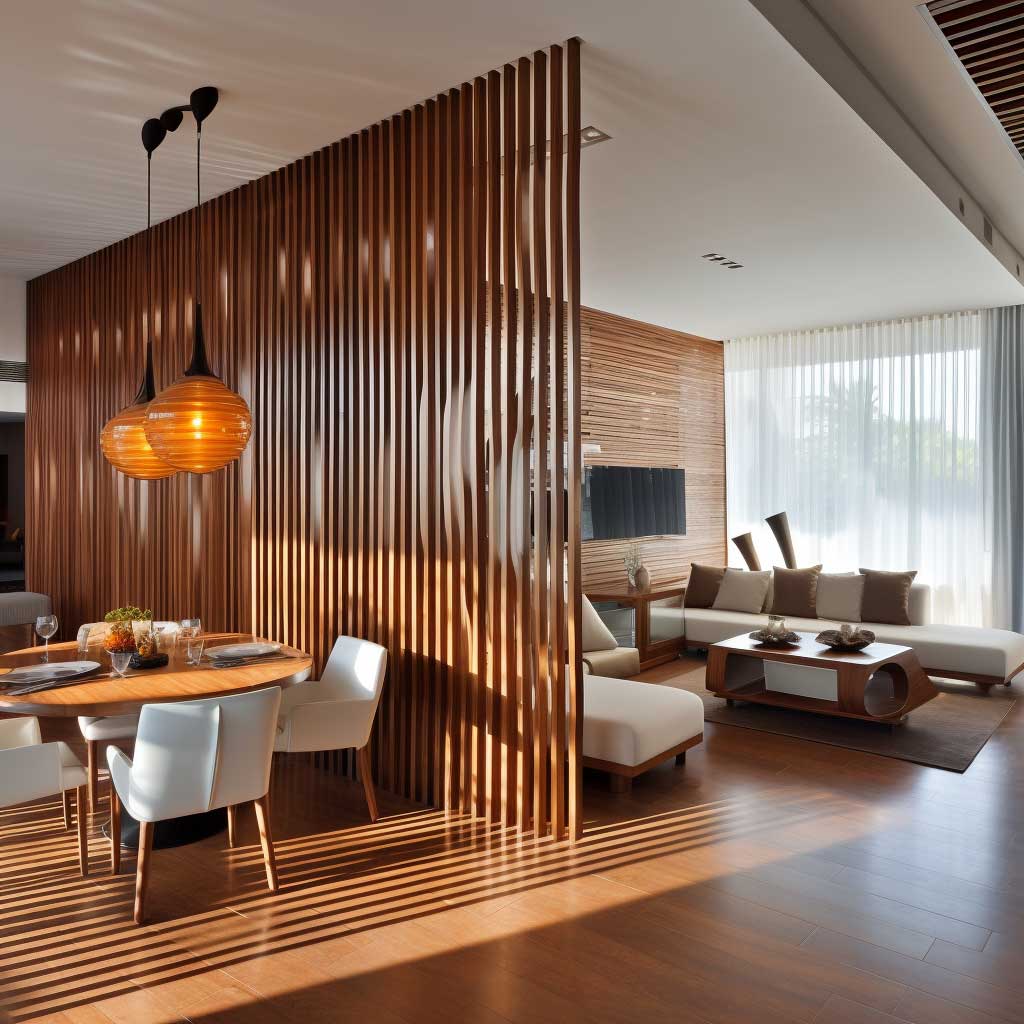
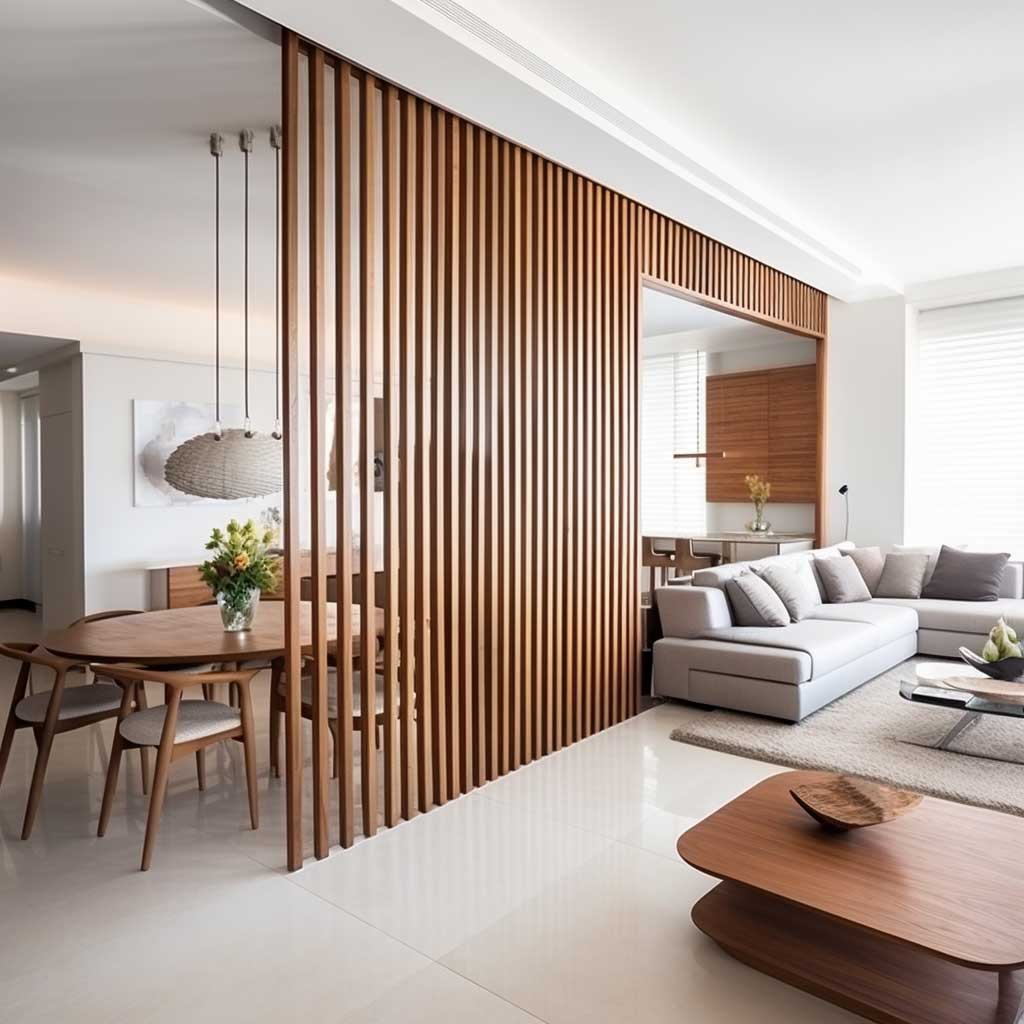
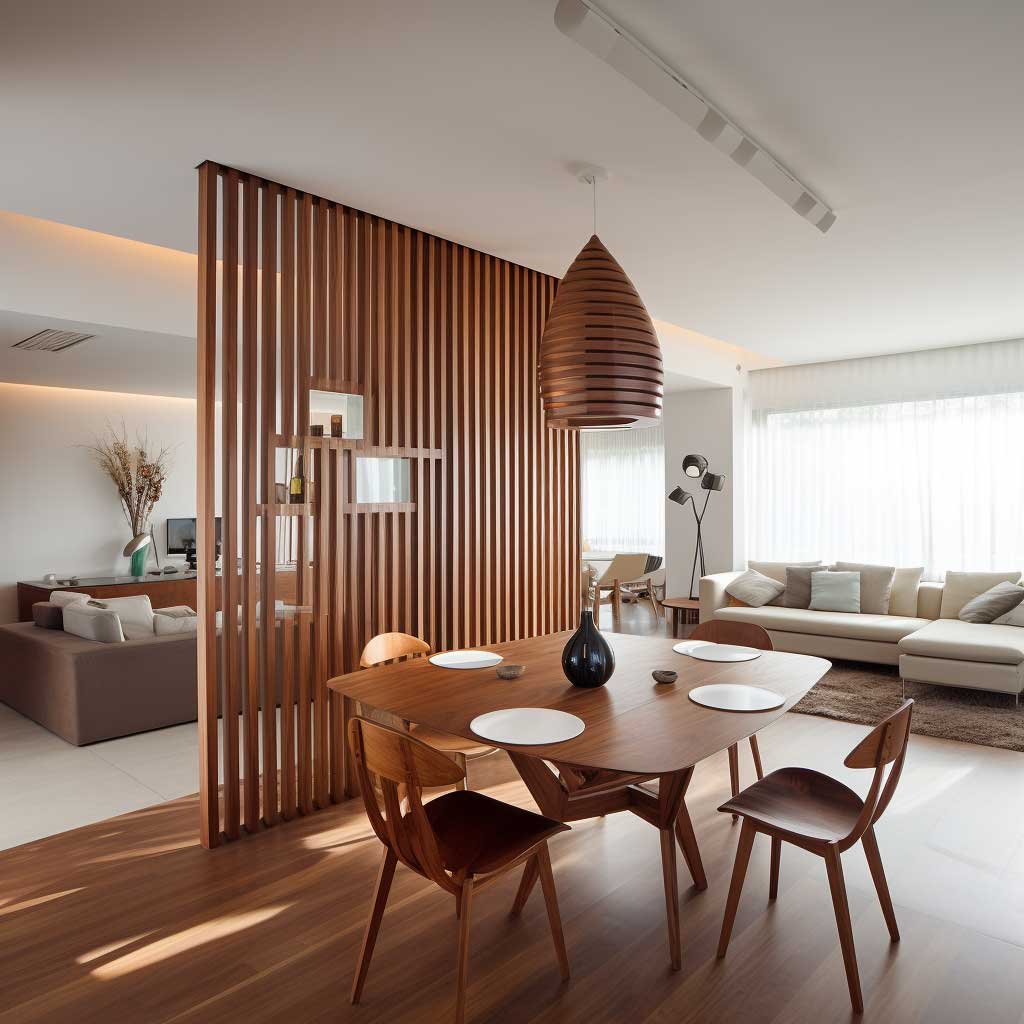
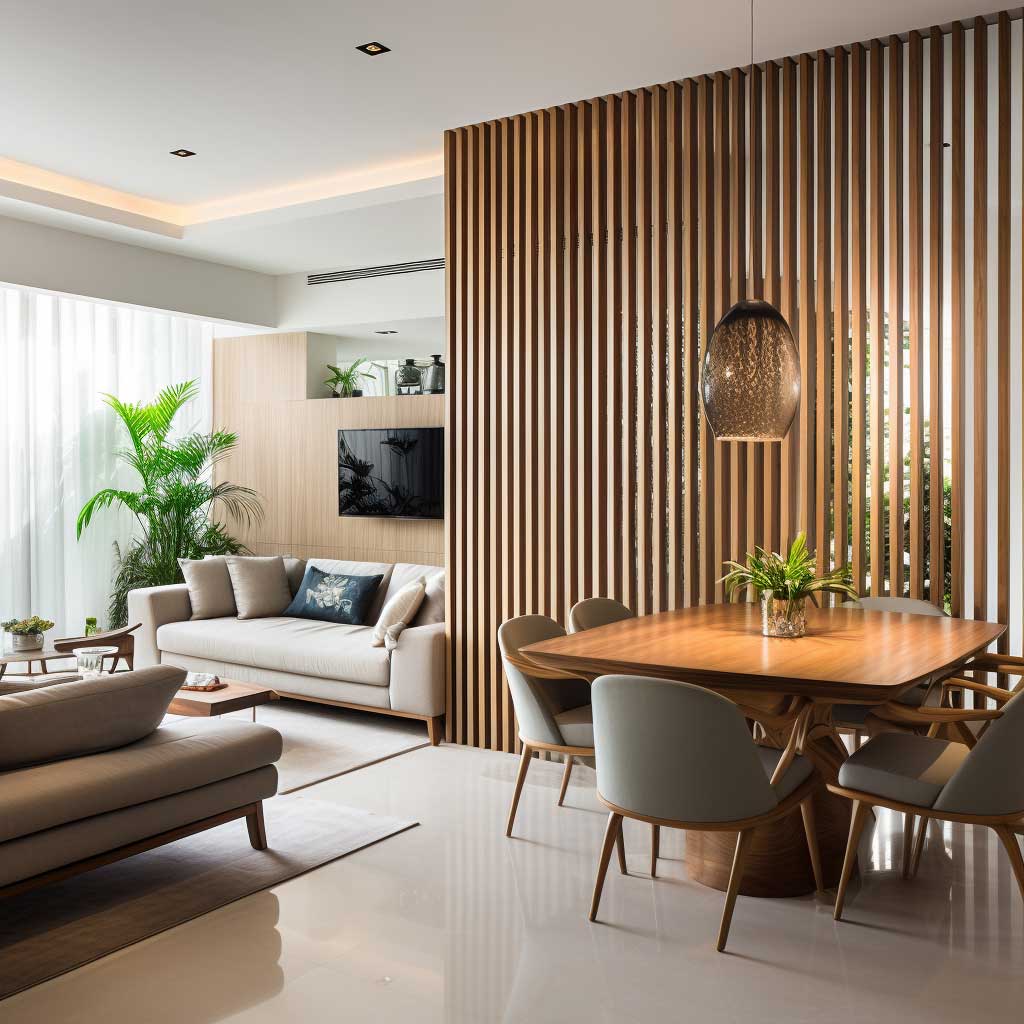
Placement is the variable most people underestimate. The partition needs to land at the natural transition point between the two activity zones — not at the midpoint of the room. My rule: align the back edge of the sofa with the partition, and the dining table starts immediately on the other side. Shifting it even 40cm in the wrong direction makes one zone feel cramped and the other feel stranded. Think of it like a sentence break — the comma goes where the pause actually happens, not at the geometric centre of the line.
For integrated shelving in the slat structure, IKEA’s Kallax inserts at around $60 per unit can be recessed into the partition frame at the dining-side face. It gives you somewhere to put wine glasses without adding a separate sideboard. Just don’t add too many shelves — I’ve seen this tip taken too far and the partition becomes a storage wall that blocks both light and sightlines.
For more partition formats that work in open-plan homes, this roundup of living room partition designs covers ten executed examples with detailed notes on material choice and positioning.
Glass Partition with Black Steel Frame Borrows Space from Both Sides of the Room
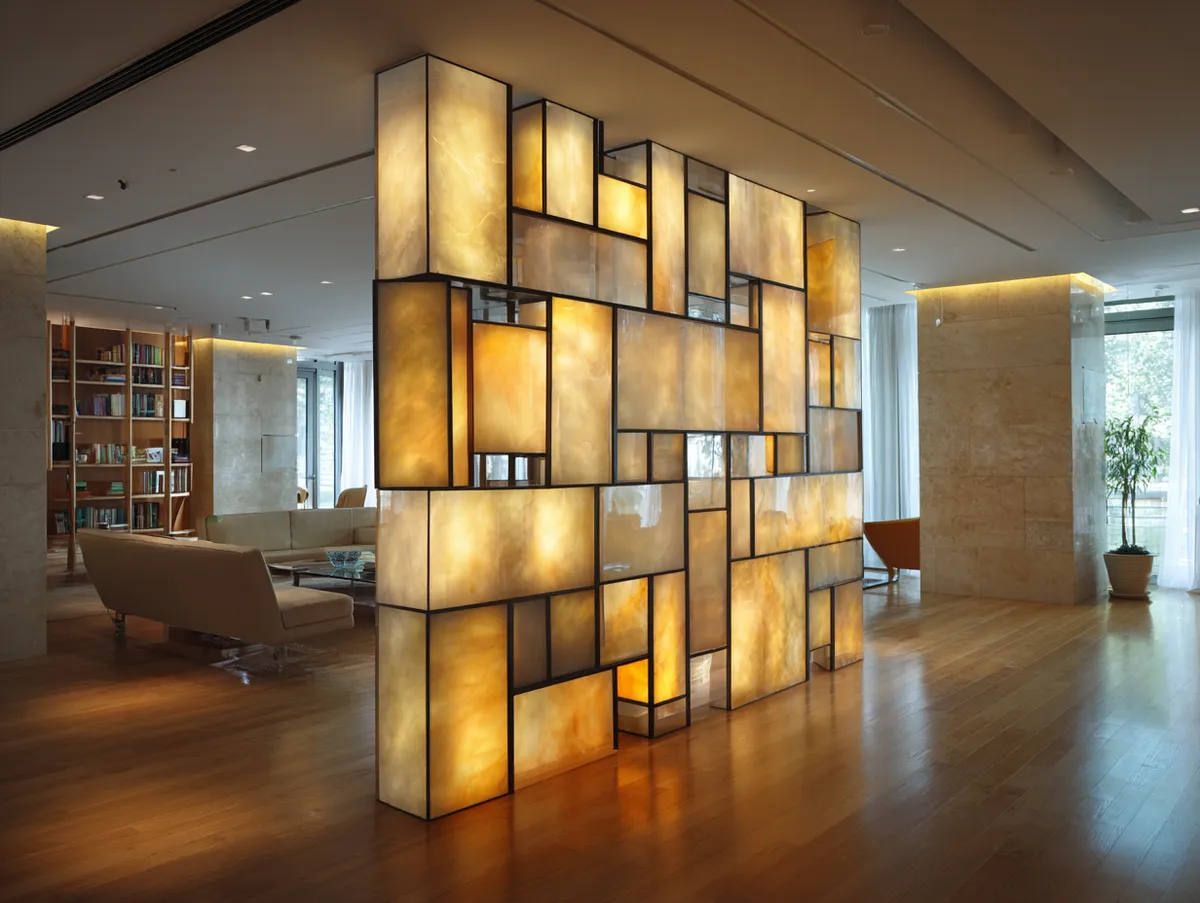
Glass partition designs between living and dining spaces do something structurally clever: they divide without subtracting. Both zones keep their full floor area visually, and natural light travels through the whole open plan uninterrupted. The black metal frame version — think Crittall-style steel — runs $1,500–$3,500 for a custom panel depending on glass type and frame density. Tempered clear glass is the baseline; laminated safety glass adds about 20% to cost but is worth it for households with kids or dogs who run into things.
The industrial edge of a black frame does real design work. It anchors the partition as an intentional element rather than something invisible. I stole this trick from a London flat renovation I photographed: the frame’s horizontal mullions were aligned precisely with the top of the dining chair backs, which made the whole wall feel composed rather than installed. Don’t let the fabricator decide mullion height — specify it yourself based on your furniture.
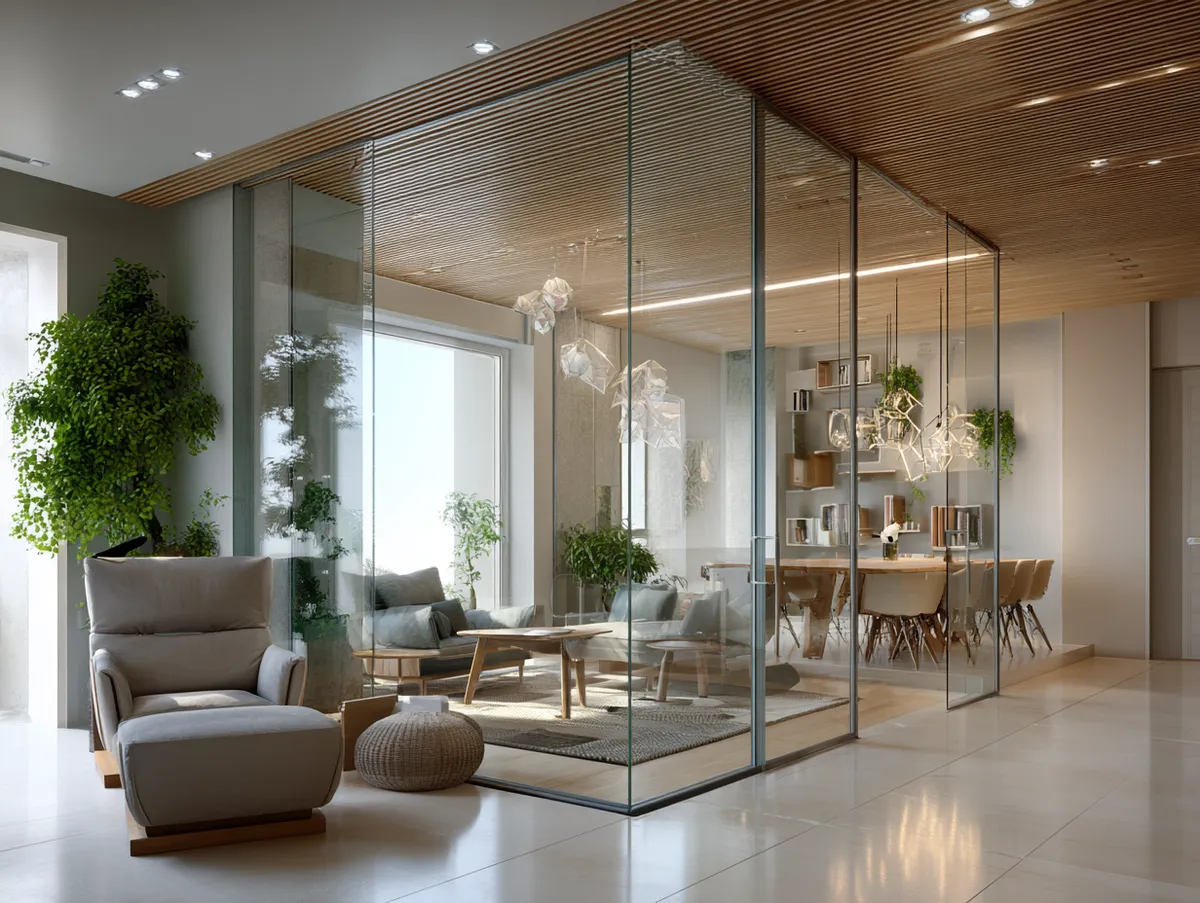
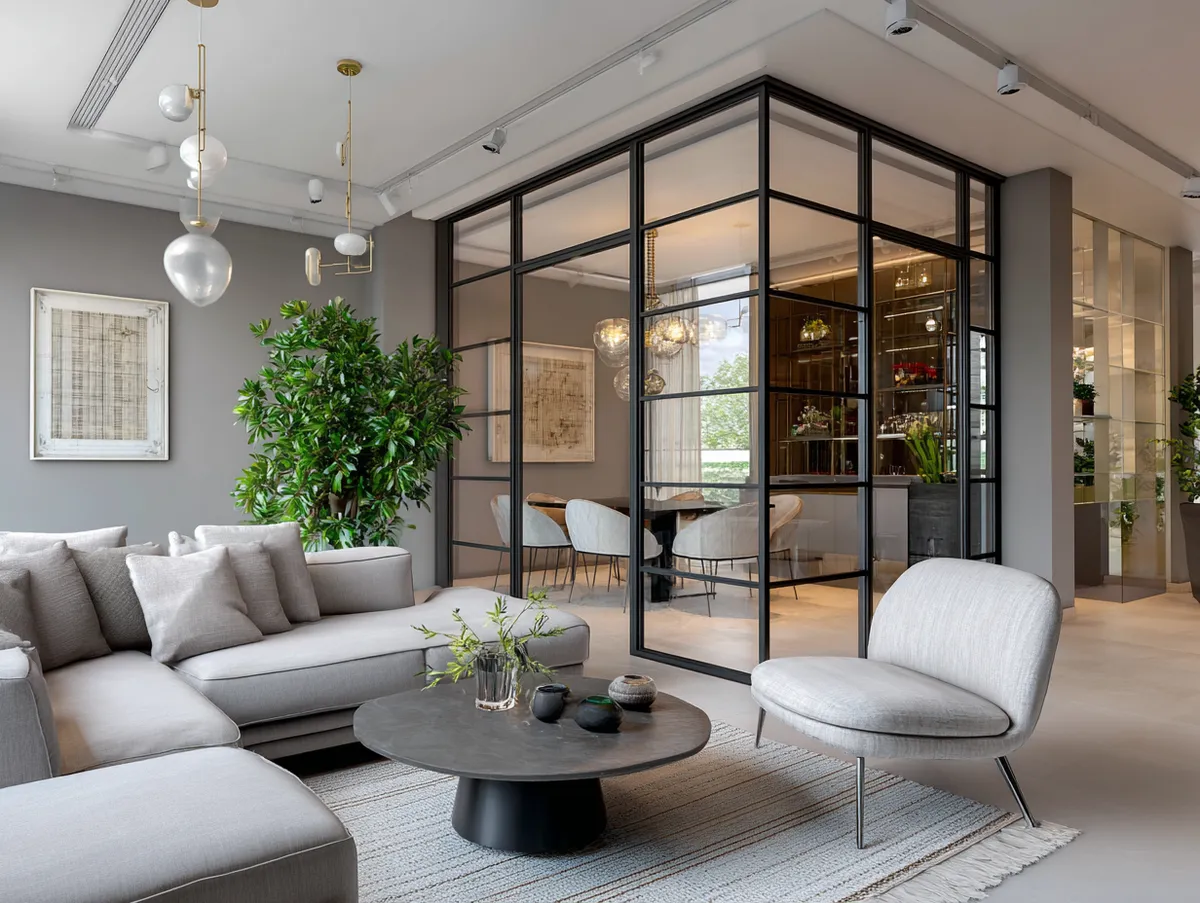
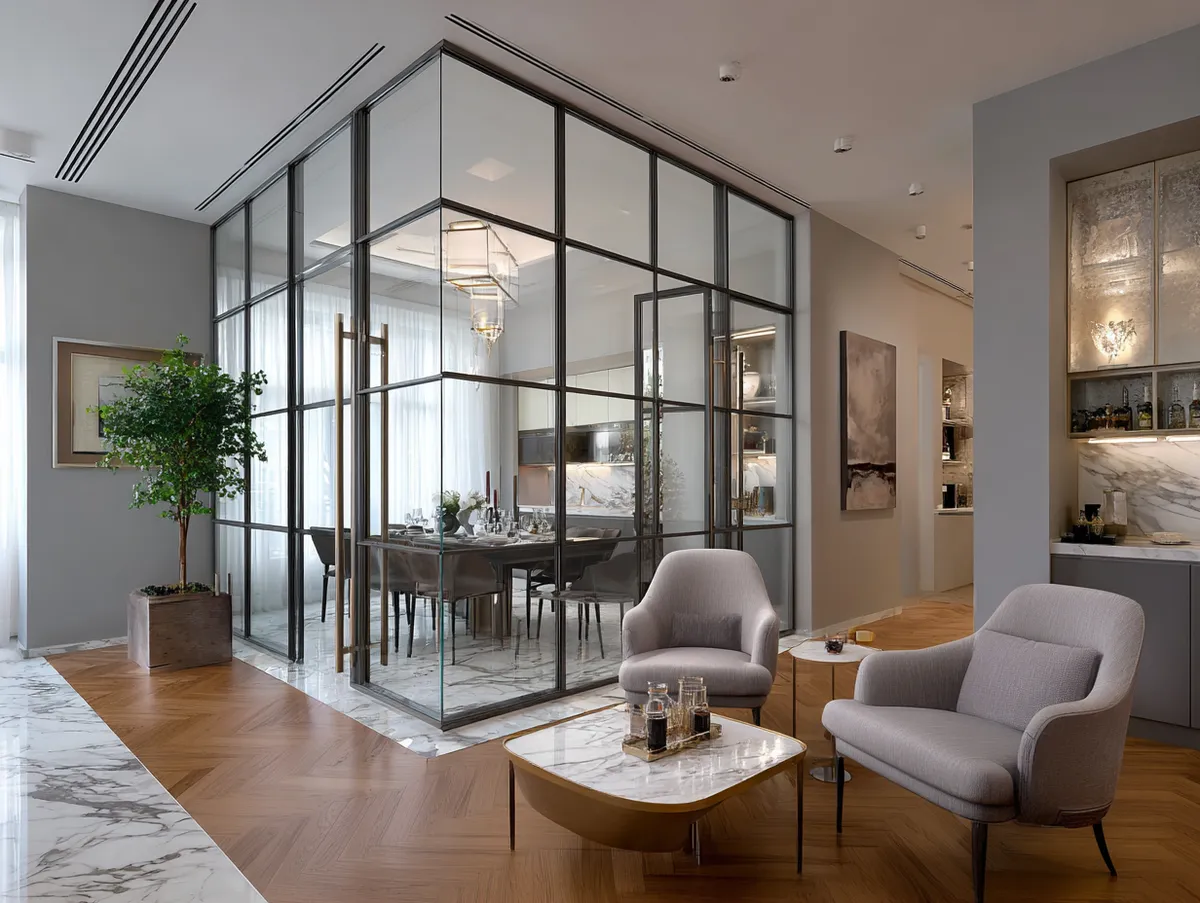
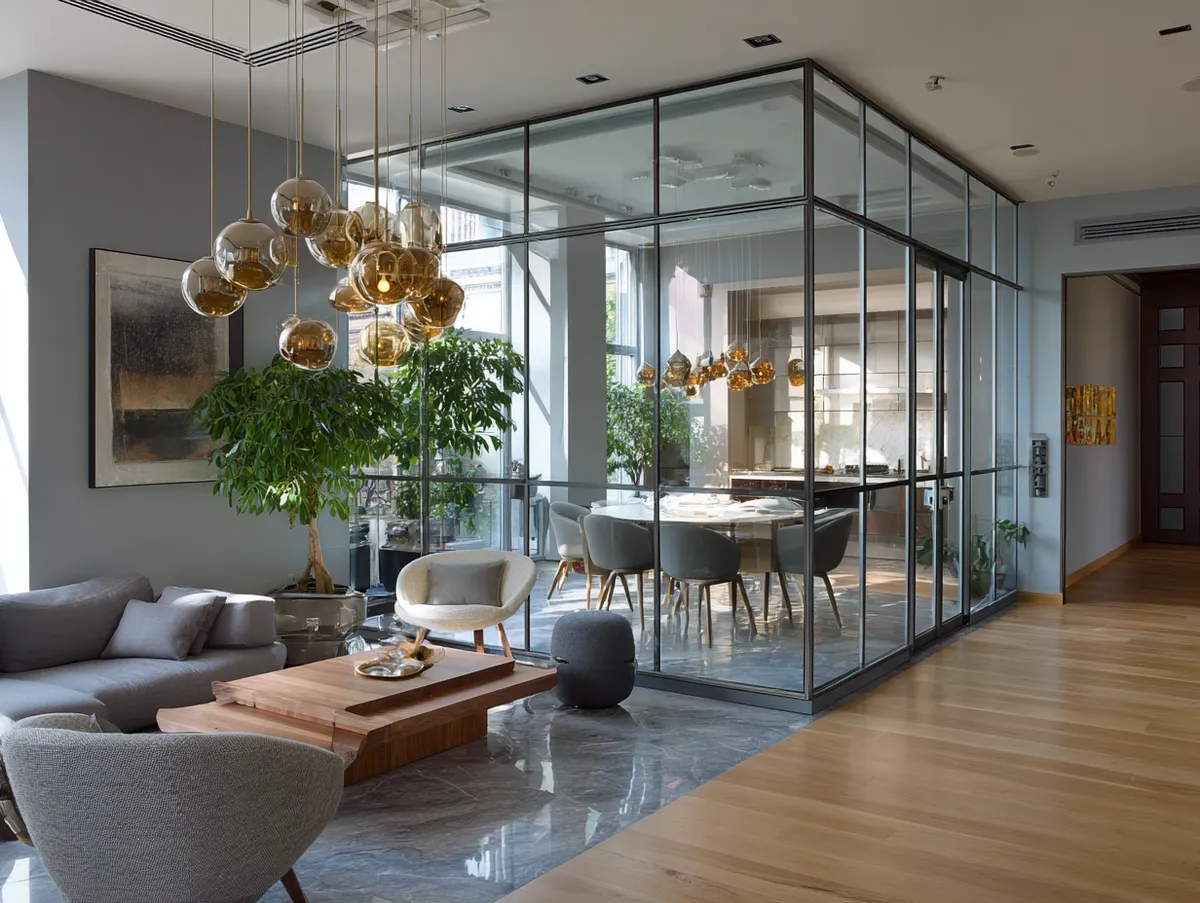


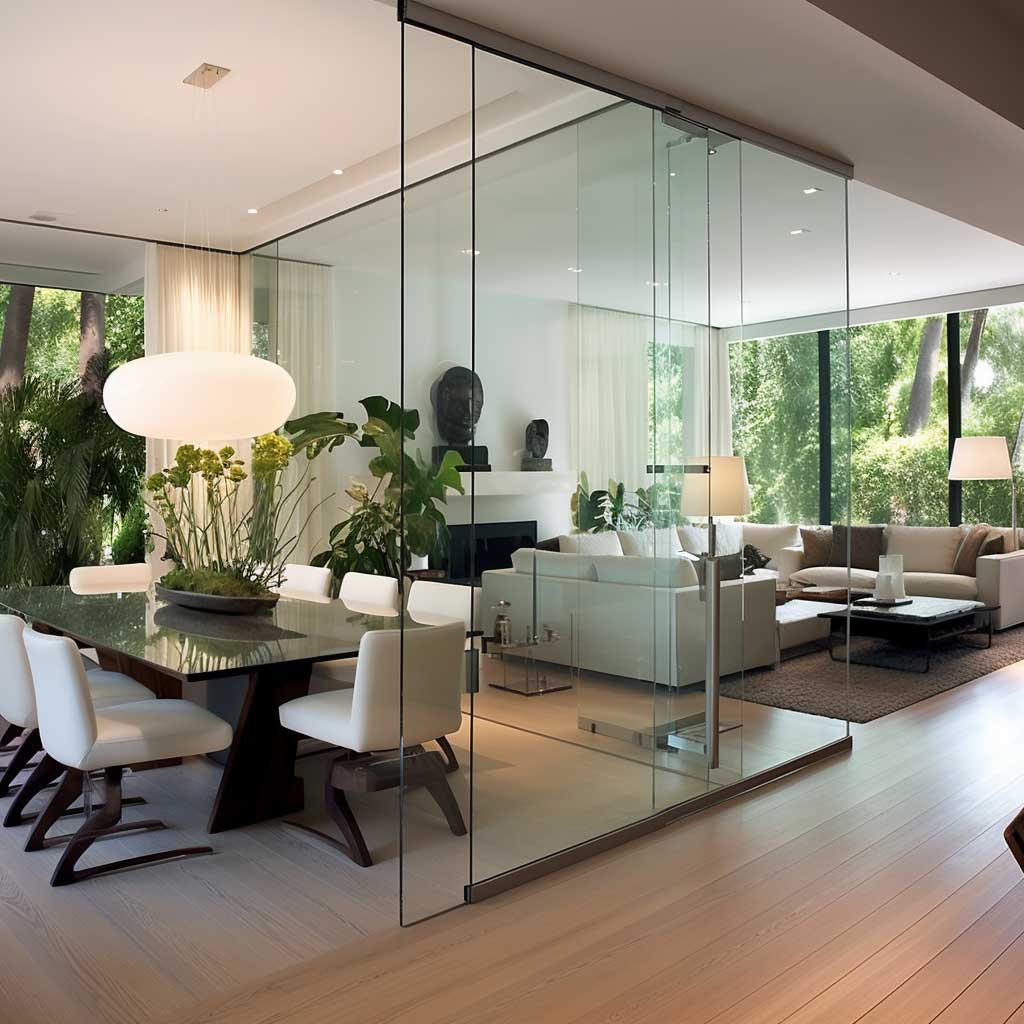
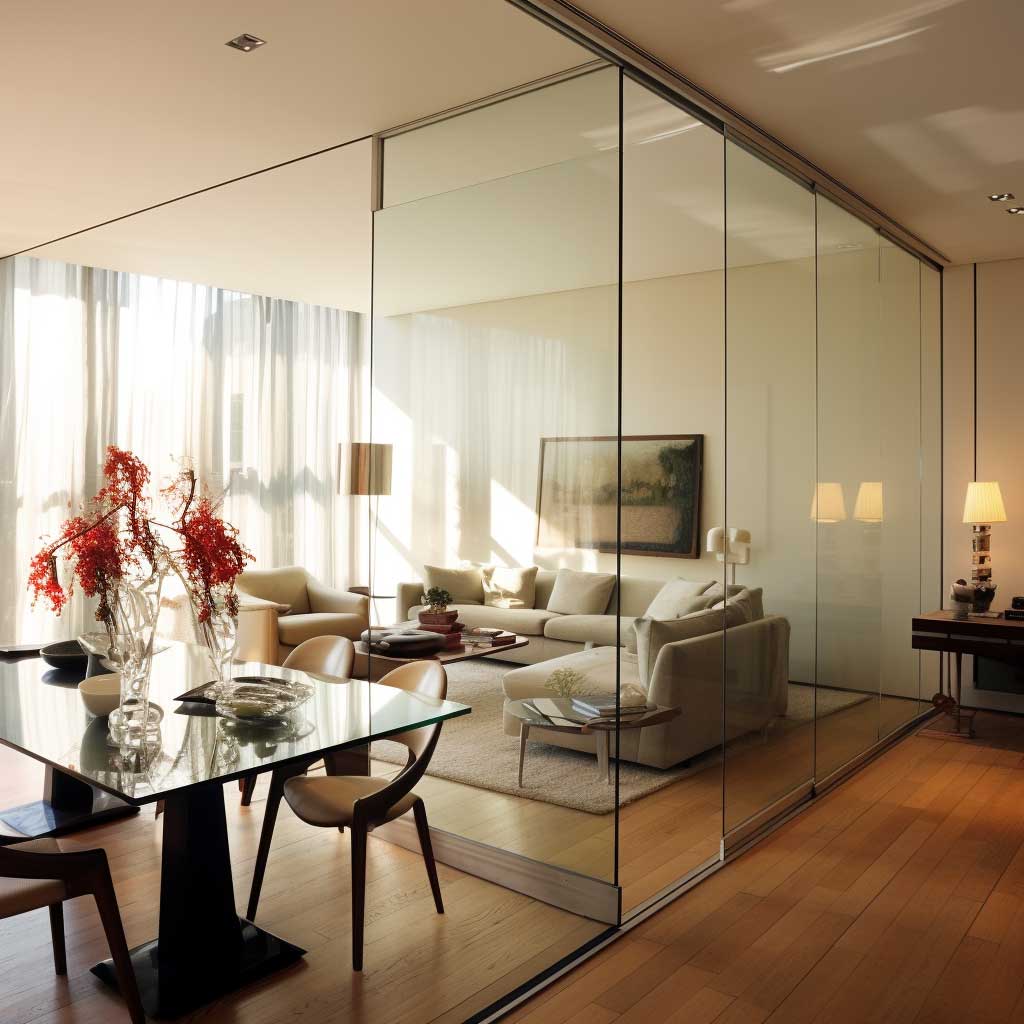
What fails is frosted-only glass across the full partition height. It reads as a frosted bathroom door and kills the spatial advantage you paid for. If privacy matters — say, when guests are dining and others are watching TV — use frosted glass from waist height down only, clear glass above. That way you get acoustic and visual separation where it counts, without walling off the upper half of the room.
A glass divider also solves the “separate yet connected” problem for families. You can see who’s at the dining table from the sofa, you can talk across the partition, but you’re not sitting inside each other’s evening. It’s the architectural version of a half-open kitchen door — presence without obligation.
Don’t do this with glass partitions:
Don’t install clear glass floor-to-ceiling in a room with a dining table positioned right behind it. Every dinner guest can see the sofa, the TV, and whatever is happening in the living zone — there’s no sense of occasion in the dining area. Glass partitions work when the dining side has its own lighting circuit and a pendant above the table that defines the zone independently. Without that pendant, the glass partition just makes your dining room look like a waiting room annexe.
Also: never choose standard float glass. It doesn’t meet safety glazing requirements for floor-to-ceiling applications in most countries. Tempered or laminated glass only.
Plant Column Partitions Look Free but Cost You in Maintenance Time
A living plant wall partition between living and dining spaces photographs like nothing else — lush, layered, alive. Pothos, philodendrons, and ZZ plants are the reliable trio for interior partition structures; they tolerate low light and irregular watering, which is the reality of any partition that’s not sitting in front of a window. Expect $400–$1,200 for a modular planter column system from brands like Tournesol or Woolly Pocket, plus monthly maintenance if you’re not genuinely into plant care. I own two of these in my studio and the upkeep is roughly 20 minutes per week — doable, but not nothing.
The structural frame matters more than the plants. A freestanding powder-coated steel frame with integrated drip trays keeps water off the floor and holds the weight of mature root balls without tipping. Bamboo frames look great in photos but warp at soil contact over about 18 months — skip them for anything permanent. The plants themselves are arranged to allow glimpses through the partition, so the room reads as open even when the greenery is full. Dense planting top-to-bottom reads as a hedge. Space is the point.
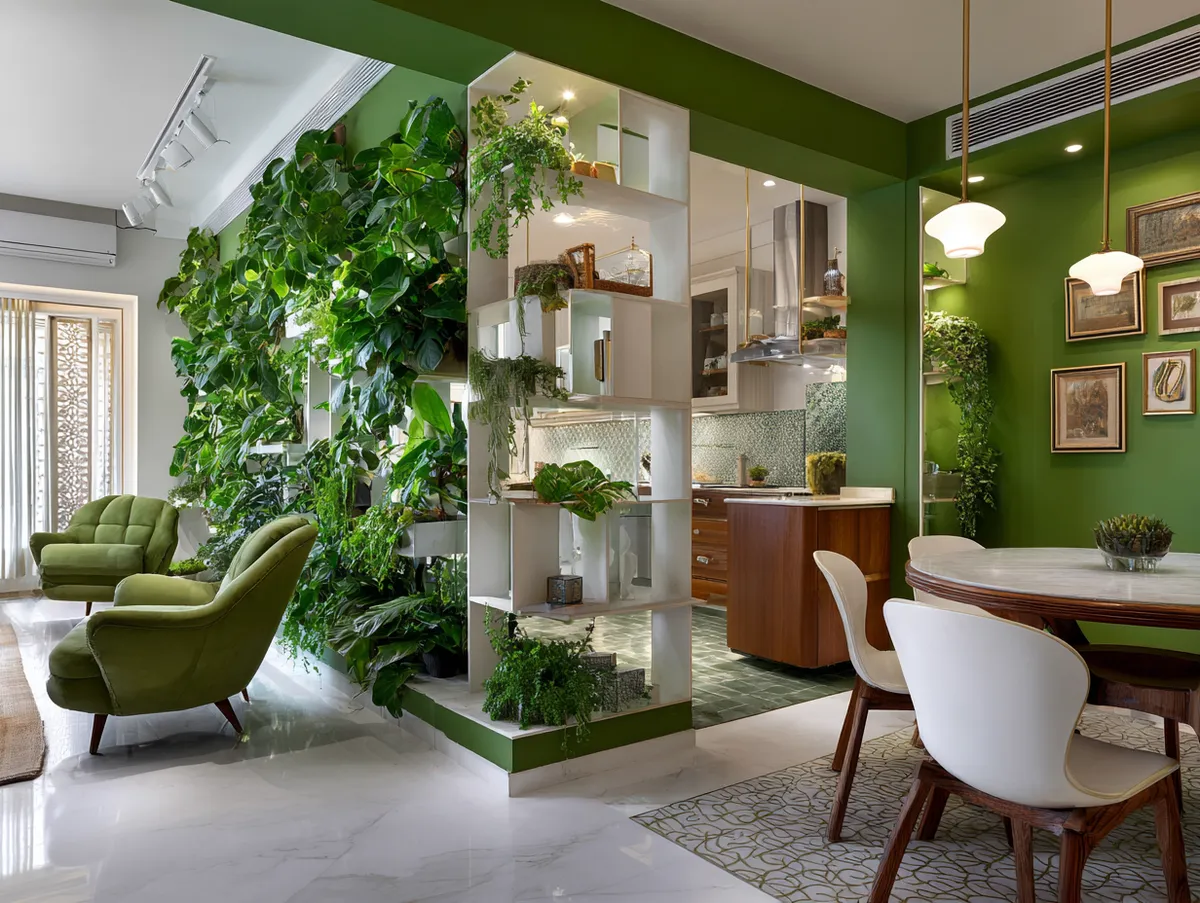
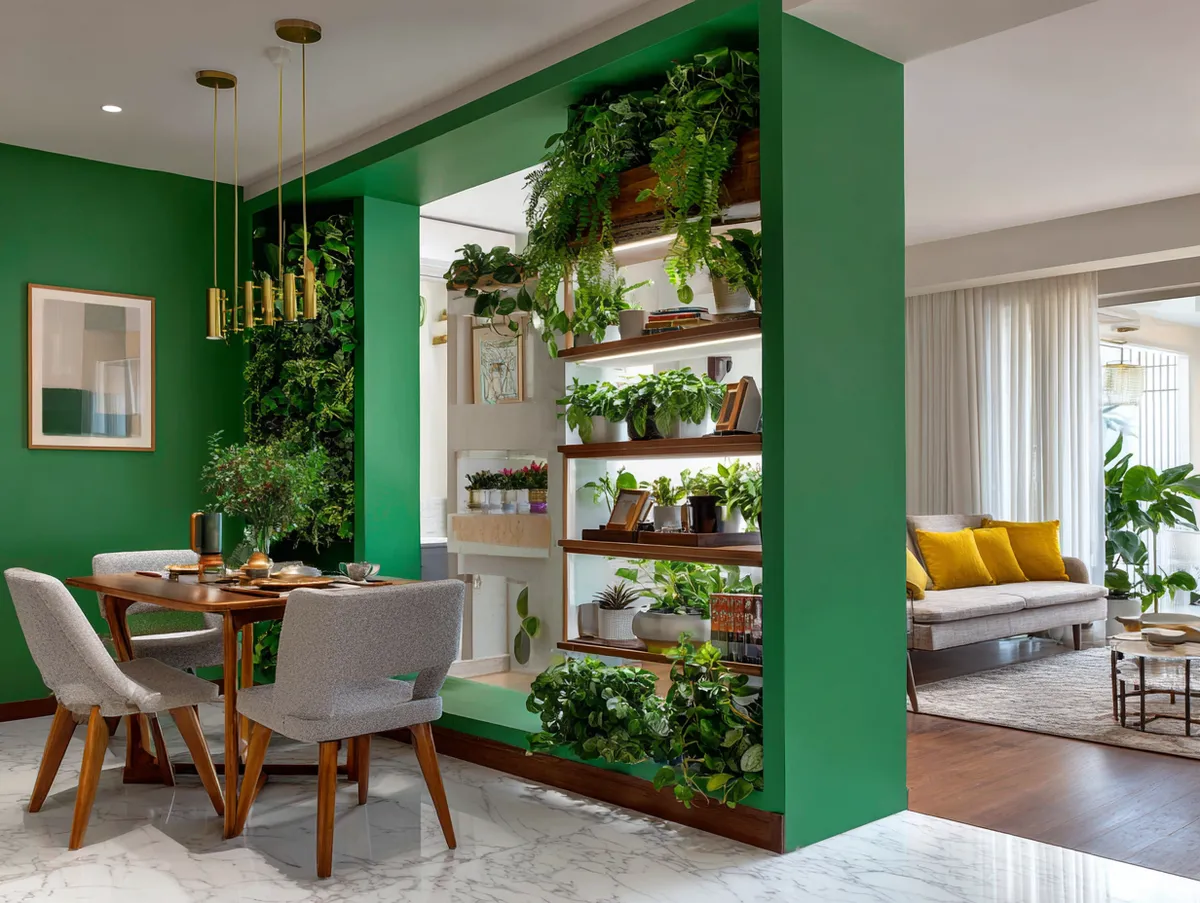
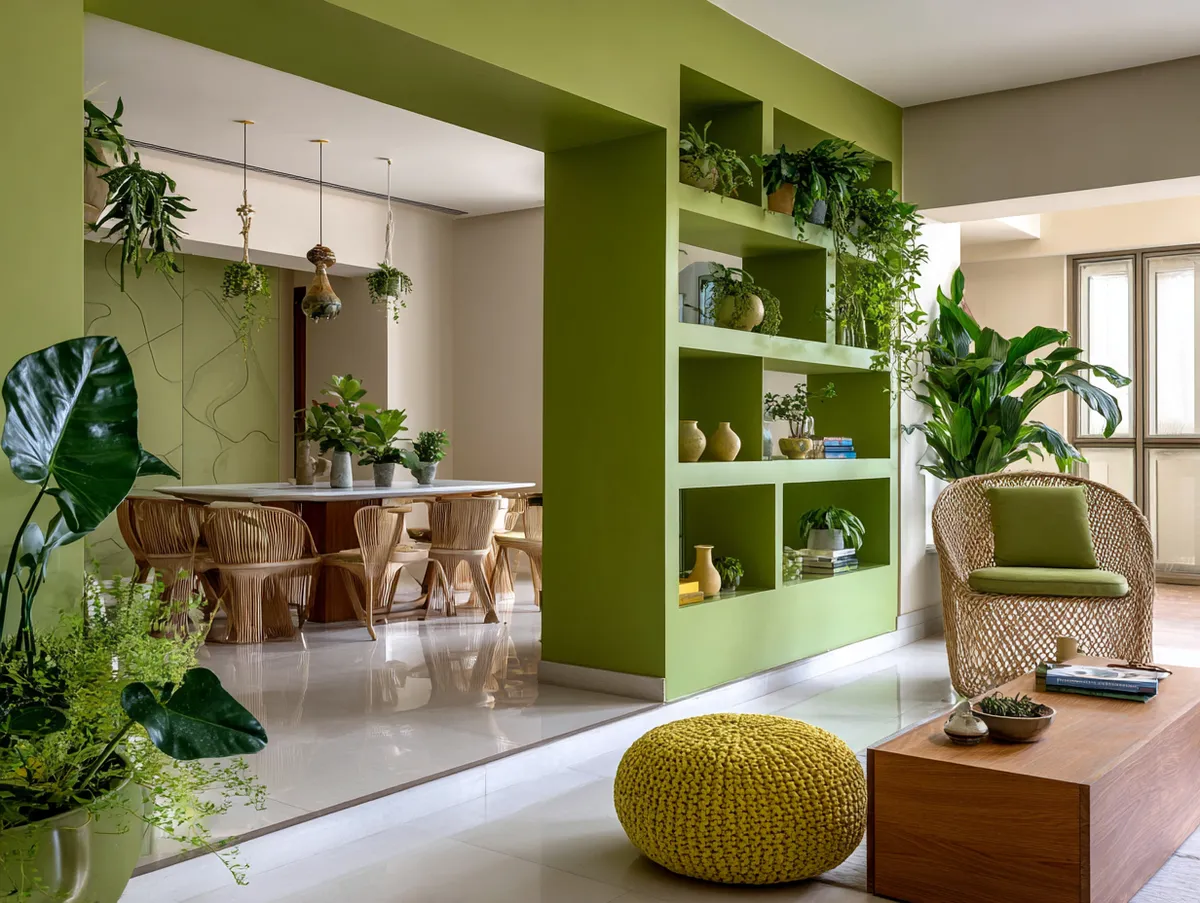
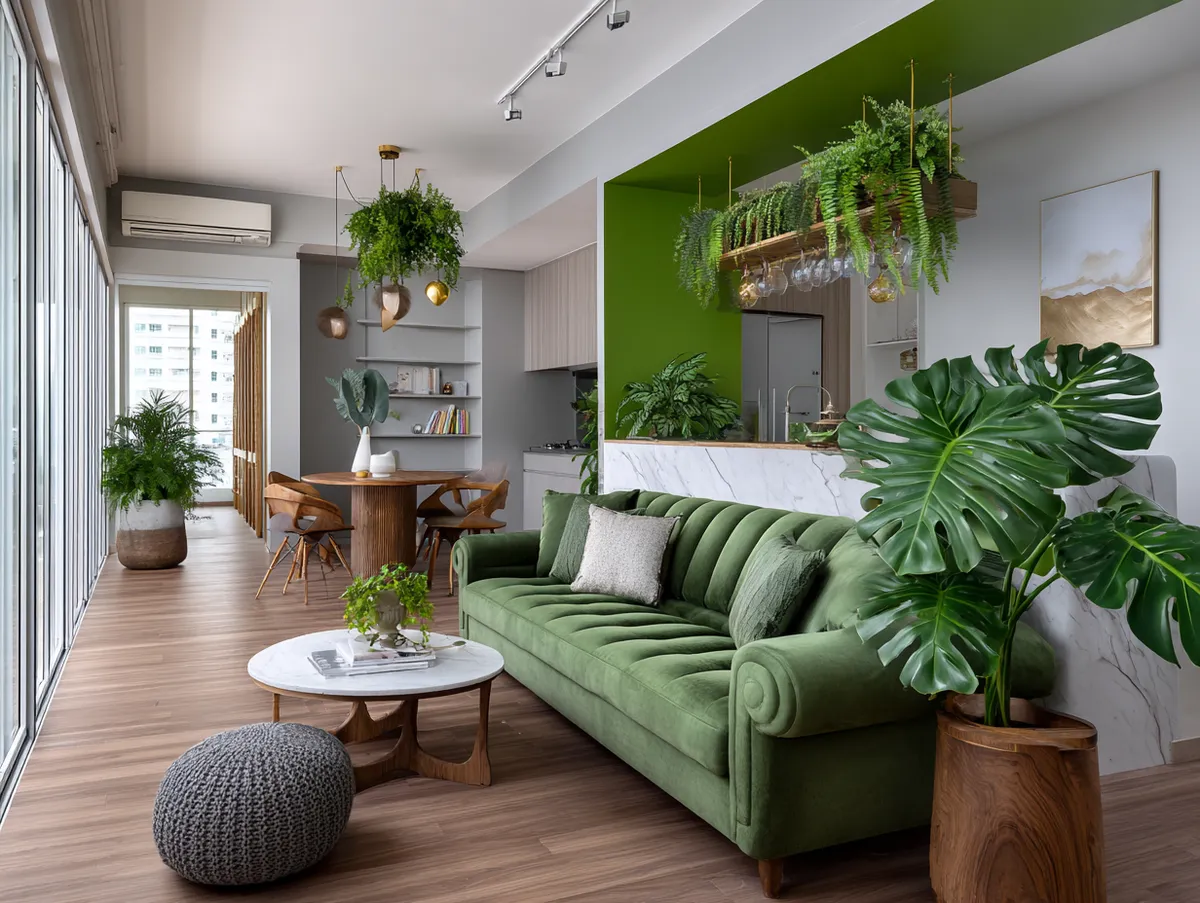
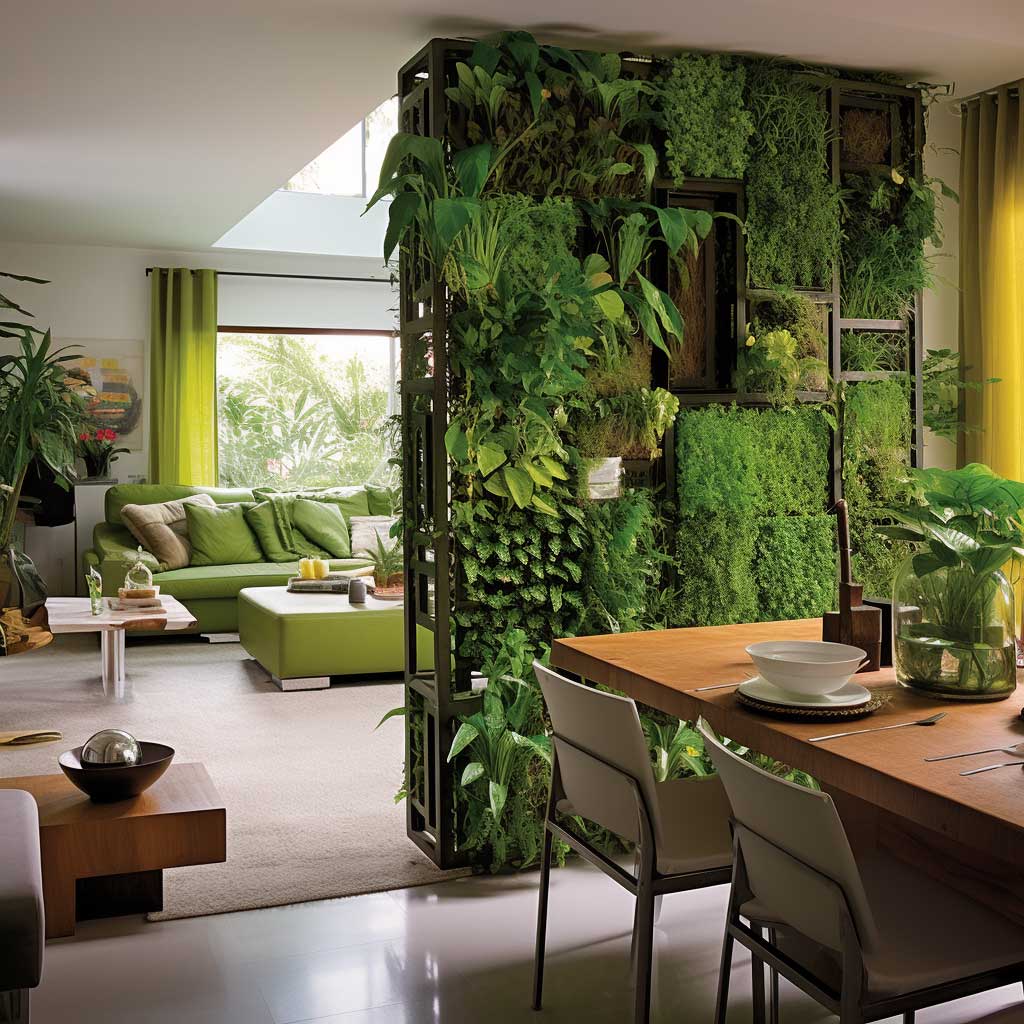
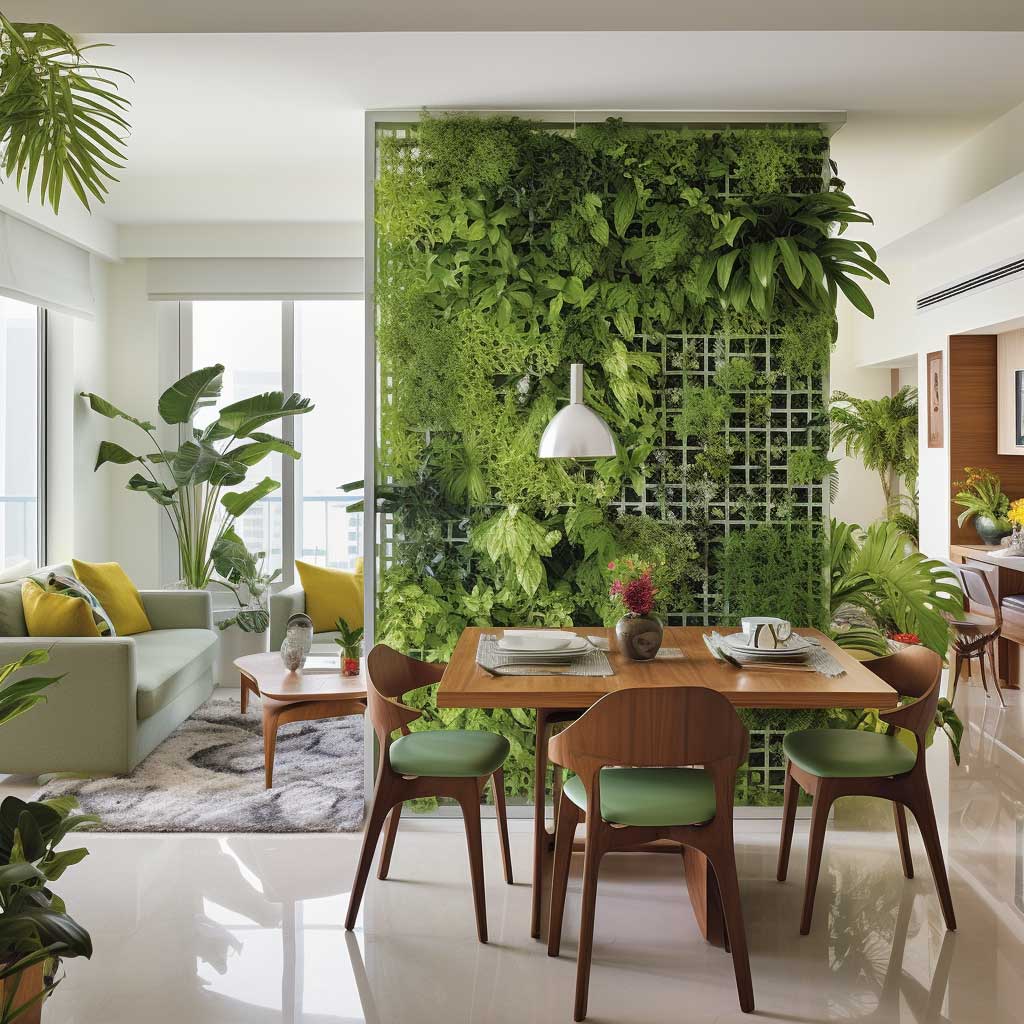
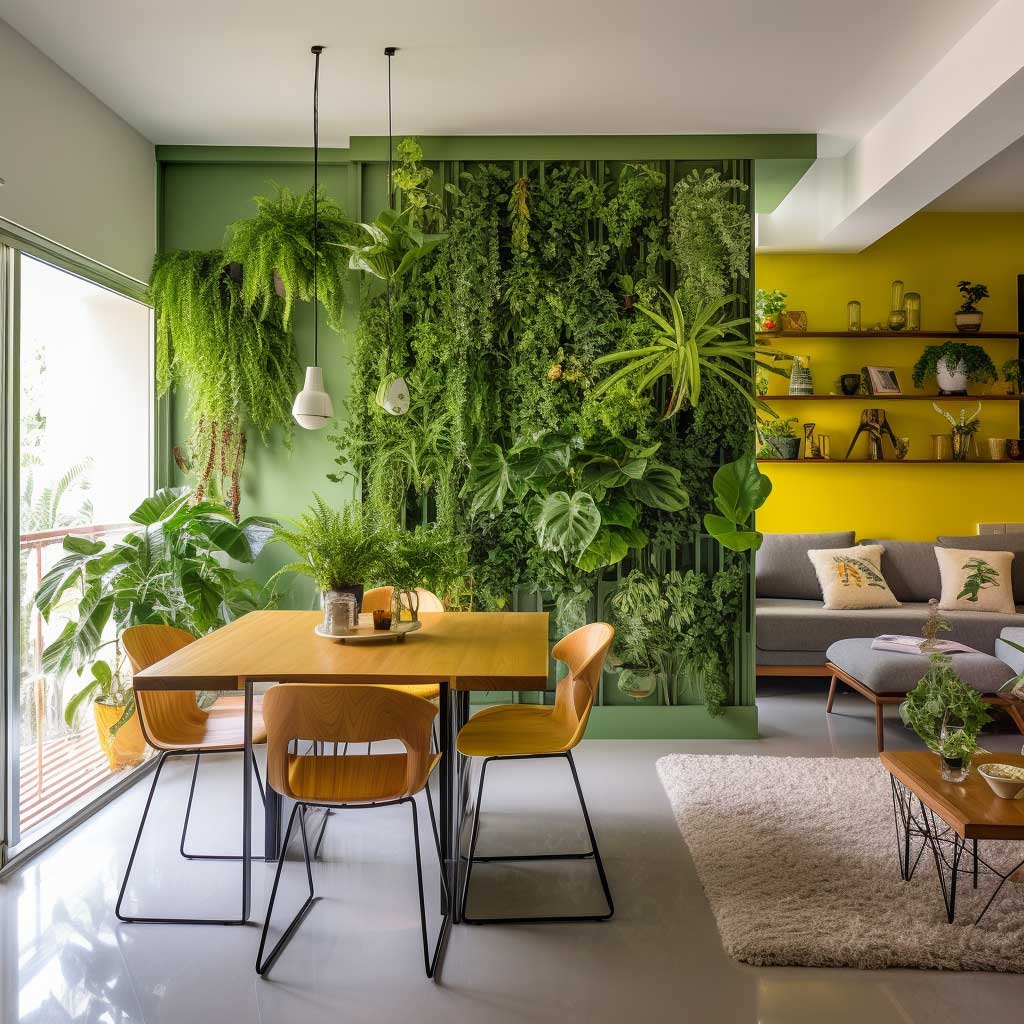
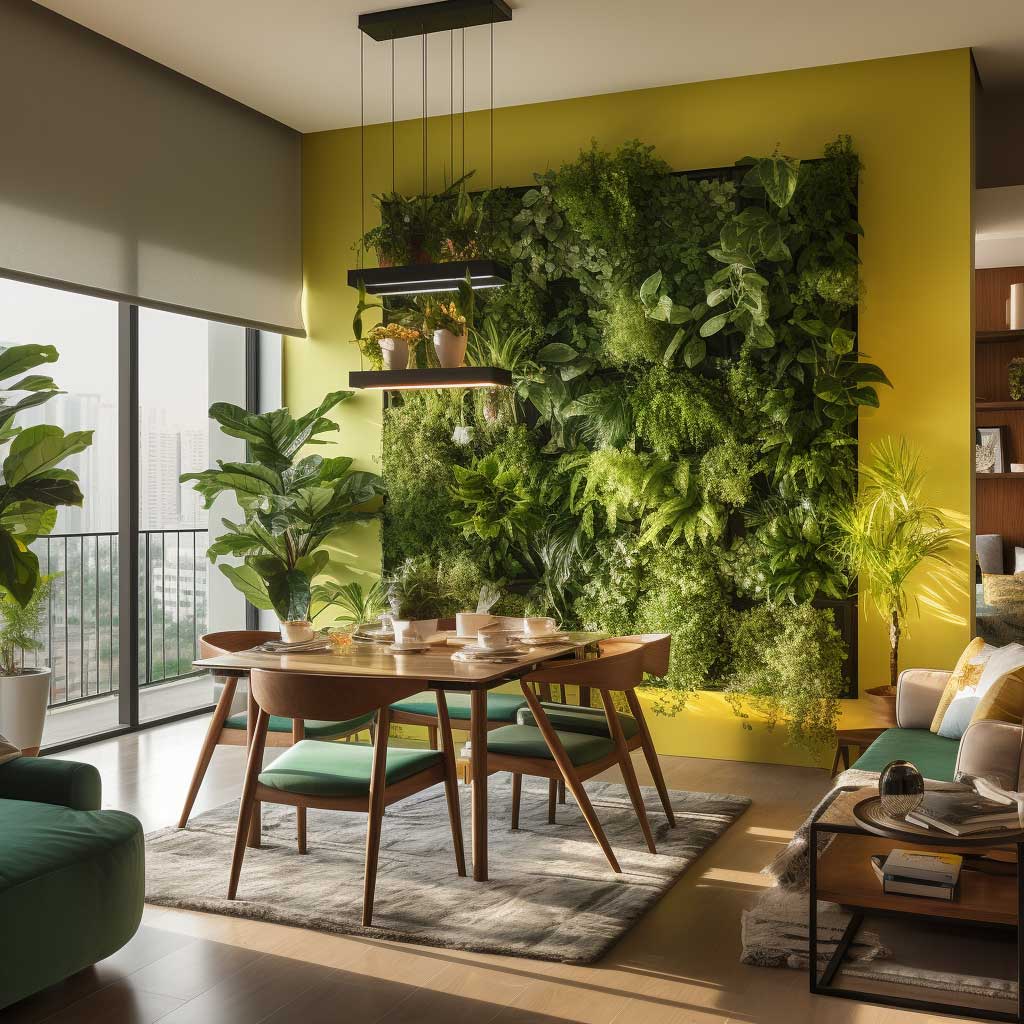
The scent question is real. Fresh soil and live plants do change the olfactory environment of a room — which most people find pleasant, but it’s worth knowing before you install a planter column next to your dining table. Some guests find it earthy in a way that competes with food. My answer: fragrant plants near the living side of the partition, neutral-scented foliage facing the dining zone. Maidenhair fern on the dining side is textural and essentially odourless.
For a deeper look at how natural materials work across different room divider formats, the wood hall partition collection on ArtFasad shows how organic textures translate from entrance zones to open-plan interiors — the same principles apply.
Partition Design for Small Rooms Follows Different Logic Than Open-Plan Lofts
A kitchen partition design between living and dining in a room under 30sqm needs to be non-load-bearing, visually light, and low-depth — under 15cm from face to back. Solid partitions in compact rooms do the same damage as a bad haircut: they take something that was passable and make it actively worse. For small rooms, the wooden slat format wins on every count: it reads as transparent from an angle, its natural tones don’t advance visually, and you can install a freestanding version for around $600 that requires no structural work at all.
Glass works in small rooms only if the frame is slim — 20–25mm steel sections maximum. A chunky aluminium frame in a small space turns a glass partition into a visual barrier even though the glass itself is clear. I’ve tested this. You step into the room and the frame is the first thing you read, not the space beyond it. Thin frames disappear. Thick frames stay.
For large open-plan rooms over 50sqm, the calculus reverses. A single lightweight partition in a big room looks stranded — a sofa cushion dropped in a field. Floor-to-ceiling formats with architectural weight, including full-height glass walls or structural wooden panels, are what anchor a large open plan and stop it feeling like a conference room between meals. According to interior design research published on Livspace, multi-functional partitions that double as shelving or entertainment units are the dominant trend in larger open-plan homes heading into 2026.
The partition’s height relative to the ceiling also determines how formal or casual the zones feel. A partition that stops 30–40cm below the ceiling keeps the space unified and casual — good for everyday family use. A floor-to-ceiling partition with no gap signals a distinct room boundary, which suits dining rooms where you want occasion and focus at the table. Ceiling gap or no gap is a decision you need to make before installation, not after.
PARTITION COMPARISON
| Format | Cost (installed) | Best room size | Light impact | Maintenance |
|---|---|---|---|---|
| Wooden slats | $800–$1,800 | Any | Filters, warm shadow | Low — annual oil |
| Glass + steel frame | $1,500–$3,500 | Medium to large | Full pass-through | Low — fingerprints |
| Plant column | $400–$1,200 | Any, best in bright rooms | Partial, dappled | Medium — weekly watering |
FINAL WORD
The Partition That Reads Best in Photos Is Rarely the One That Lives Best in the Room
Wooden slats are the safe call for most homes — warm, adjustable, and forgiving if placement isn’t perfect. Glass is the right call when you’ve already got a well-lit room and want to keep every square metre visible. Plant columns are for people who genuinely enjoy the upkeep and have a room with reliable indirect light.
Choose by what the room already does well, not by what looks good in a mood board. If your open plan already gets strong south-facing light, more transparency won’t help — textural warmth from wood will do more.
Save this post before you head to any showroom — the cost anchors and material notes above will stop you from being upsold on the wrong format.
Related Topics
FAQ
What is the cheapest partition design between living and dining spaces?
Does a glass partition between living and dining make a room look bigger?
What plants work best in a partition between living and dining areas?
How tall should a partition between living and dining be?
Can a wooden partition with plants work as a dining room divider?
What is a modern partition design for living room and dining hall in a small flat?
Complete guide
The Living Room Design Ideas Vault Every Home Needs Right Now
Color, walls, furniture, layouts, styles, smart tech — 300+ ideas in one place