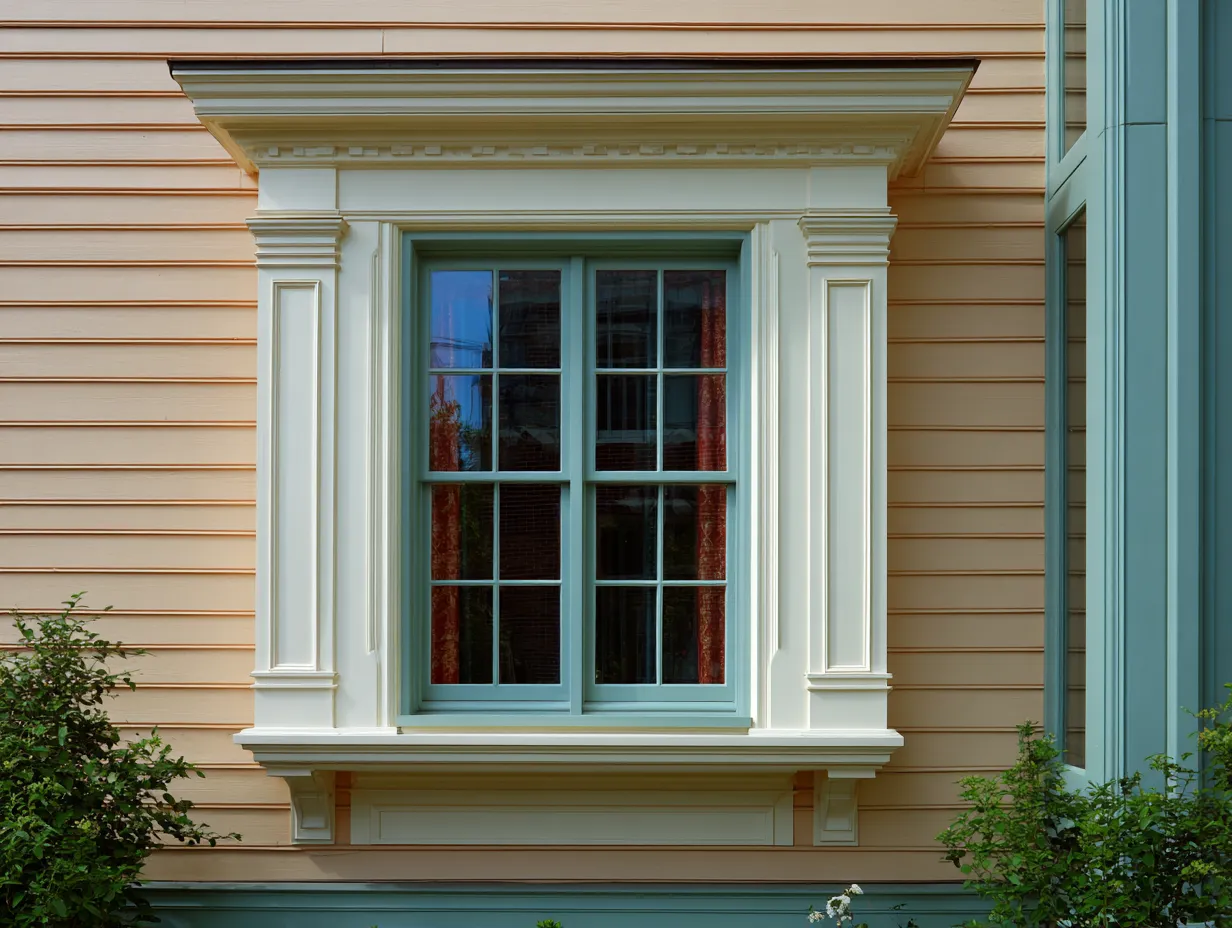
Your window trim is doing more work than your siding. Sounds wrong, but stand across the street and squint at your house. The trim is what draws the eye first. Pick the wrong profile or color and the whole facade reads “builder grade.” Pick the right one and a $250,000 house looks like it cost $400,000.
I’ve swapped trim on two of my own homes. The first time I used cheap primed finger-joint pine and watched it crack within eighteen months. Lesson learned the expensive way. The second time I went with Boral TruExterior and the difference was night and day — four years in and the paint still looks fresh.
Below are eight exterior window trim styles broken into four categories: classic wood, modern minimalist, bold color, and brick. Each section covers what the trim actually costs per linear foot, what fails first, and which house styles it fits. No fluff, just the stuff I wish someone told me before my first Home Depot run.
Quick Summary
Wood trim — $1.50–$12/ft depending on species. Looks the best, rots the fastest. Repaint every 3–5 years.
PVC/aluminum trim — $2–$8/ft. Zero rot risk, expands in heat. Best for modern and low-maintenance homes.
Bold color trim — Cost of paint only ($55–$75/gal). Biggest visual impact per dollar. Blues and greens last longest.
Brick trim — $10–$20/ft installed. Permanent, heavy, needs proper lintels. Thin veneer is the budget hack.
Wood Window Trim: The Classic Pick That Needs Real Upkeep
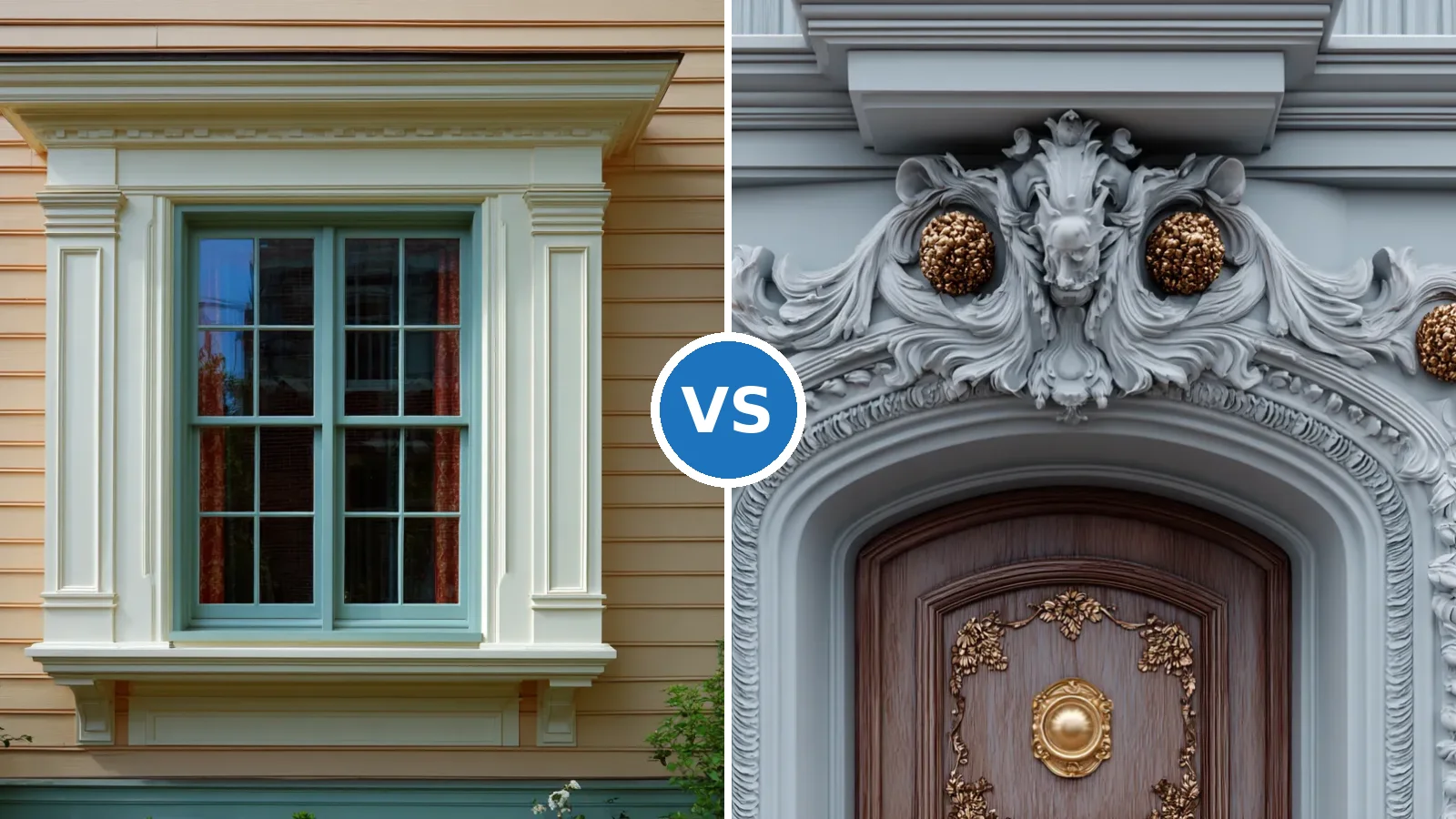
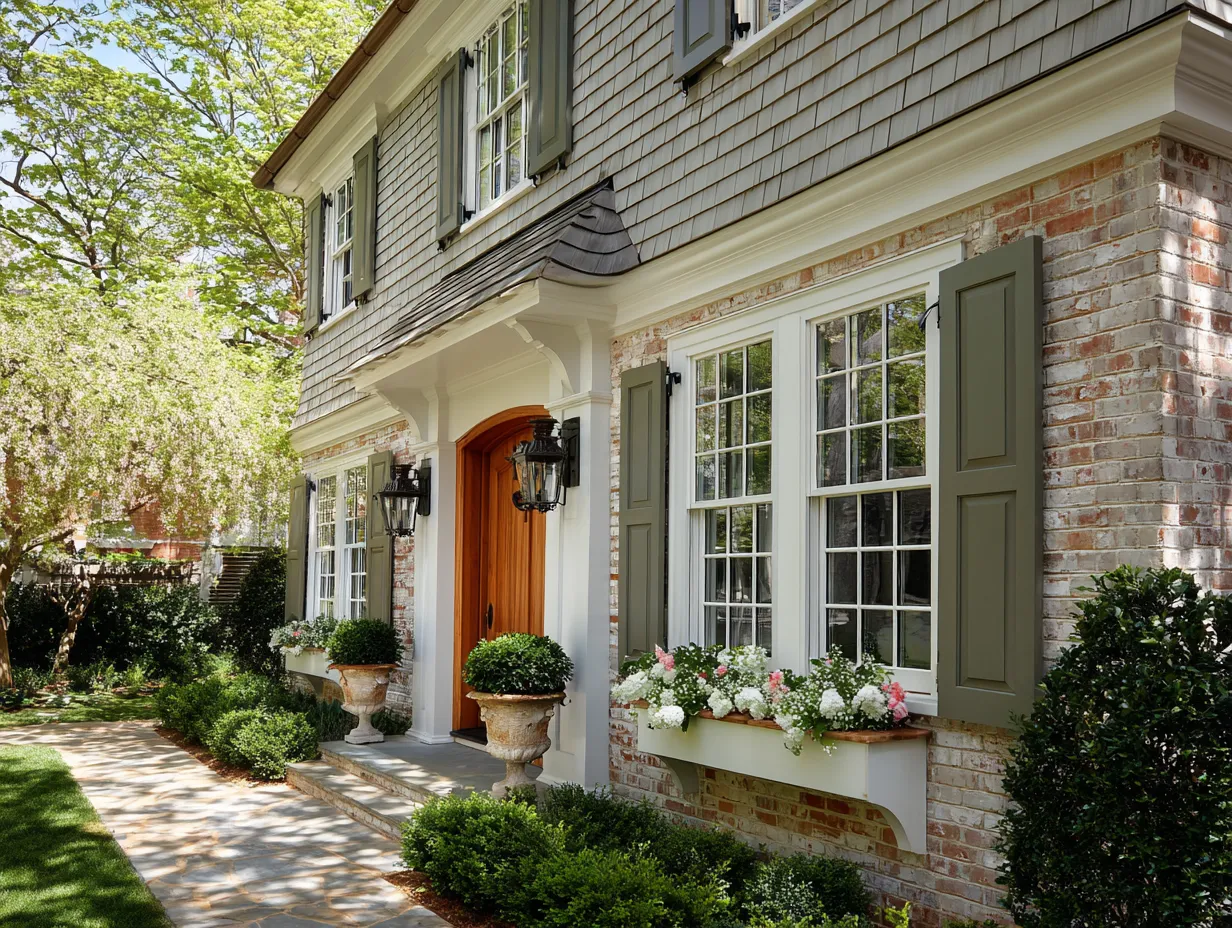
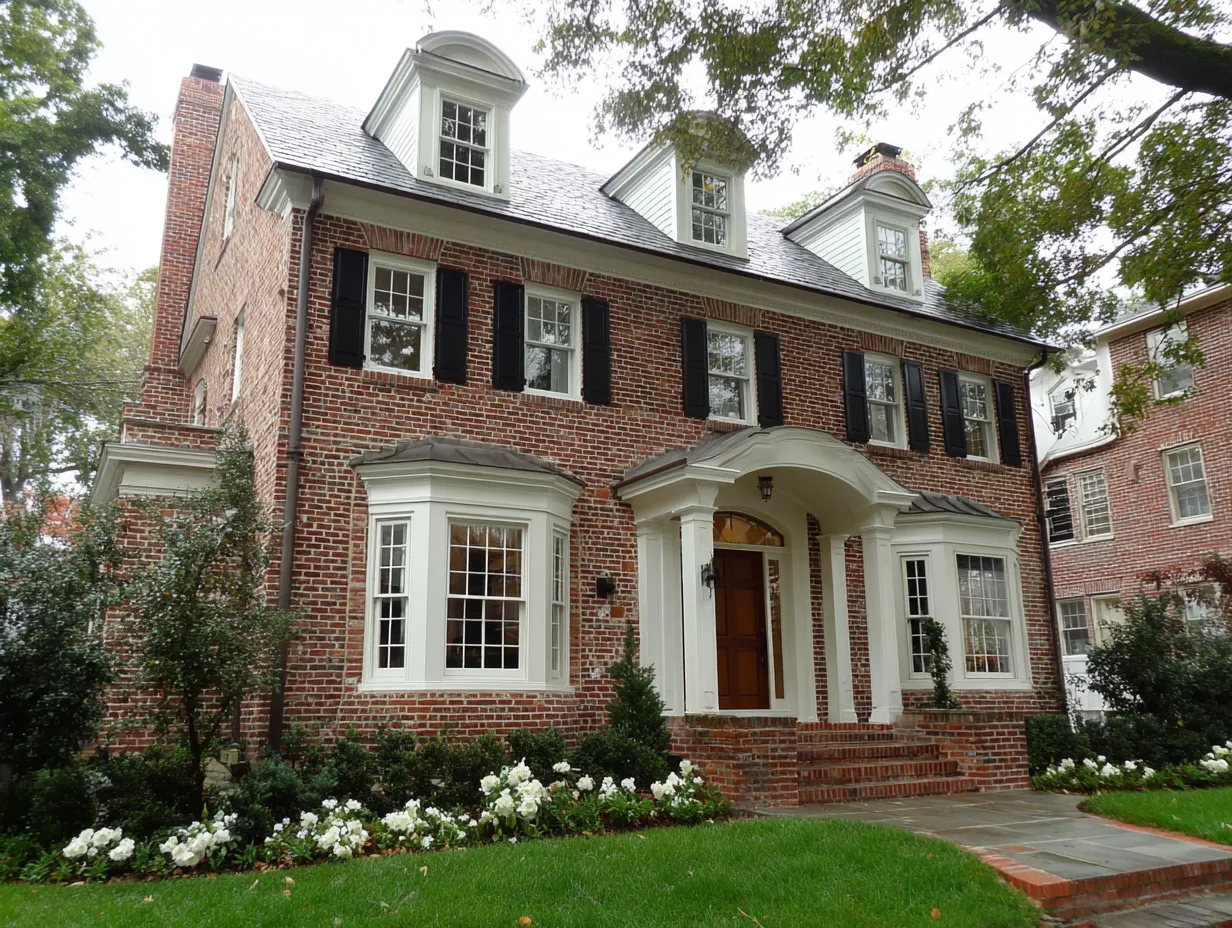
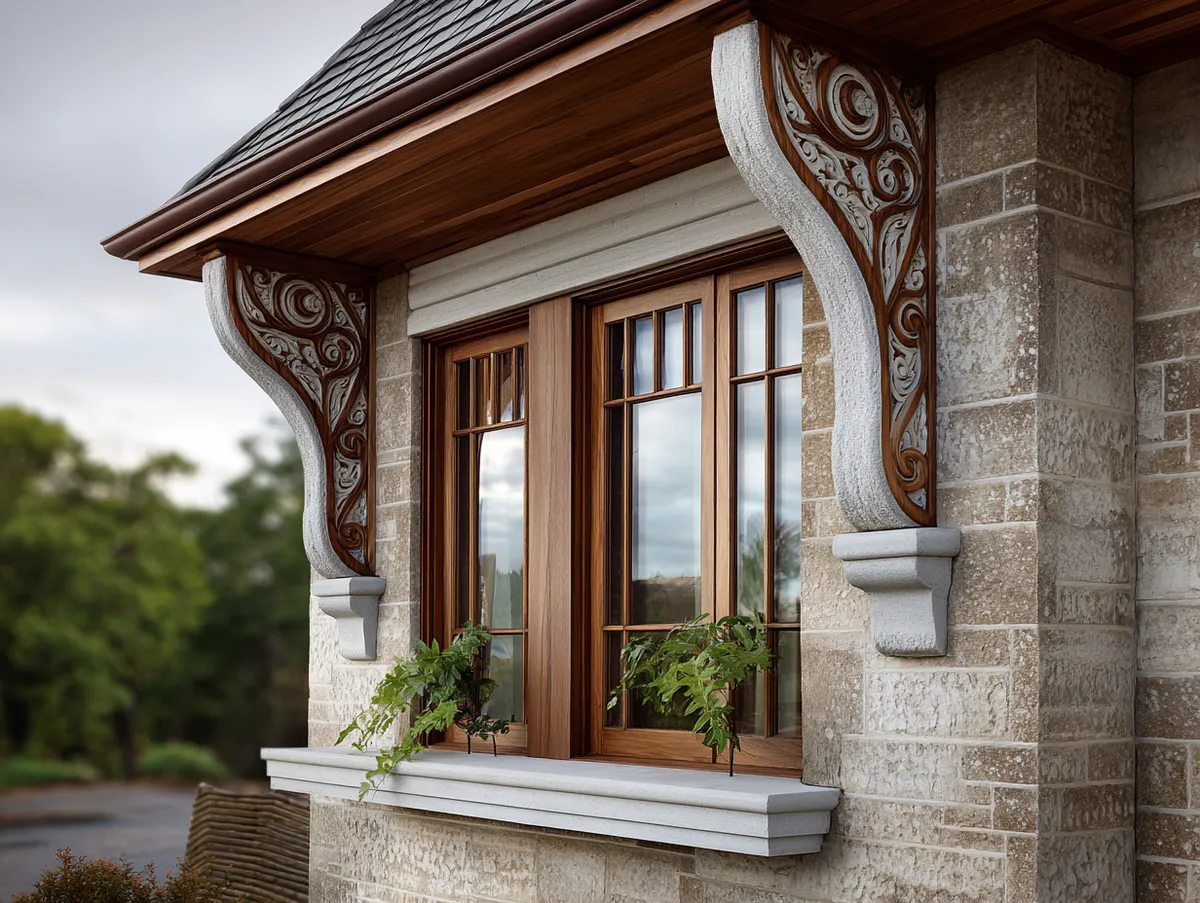
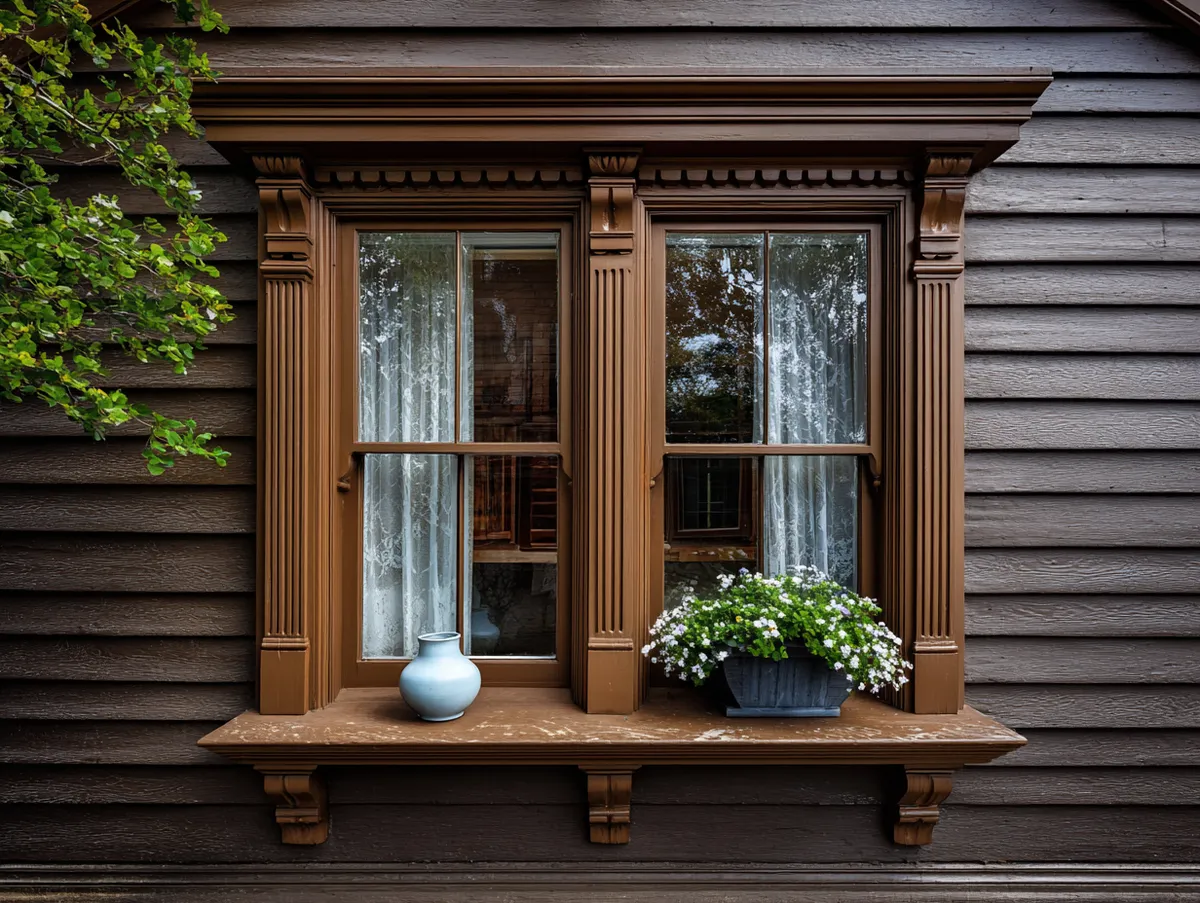
The photo presents a charming traditional home boasting a classic wooden exterior window trim. The trim, intricately carved and finished in a rich, warm stain, breathes life into the home’s façade, enhancing its timeless elegance and architectural integrity.
At first glance, the window trim’s aesthetic appeal is undeniable. It adds depth and dimension to the windows, transforming them from mere architectural features to focal points that captivate the eye. The wooden trim, with its warm undertones, contrasts beautifully against the cream-coloured exterior, creating a harmonious balance of colours that is both welcoming and visually pleasing.
Cedar runs about $3 to $7 per linear foot unfinished. Pine is cheaper — sometimes $1.50 per foot — but it rots faster than a banana on a dashboard if you skip the primer. I used untreated pine on a garage window in 2021 and by 2023 the bottom rail was soft enough to push a screwdriver through. Don’t repeat that mistake.
Your best bet for a traditional look without the headache is pressure-treated pine with a factory-applied primer. This Old House’s crew swears by it, and at roughly $2 to $4 per foot it won’t wreck your budget. You’ll still need to repaint every three to five years. That’s the trade-off with wood — it looks incredible but it asks for attention like a Labrador puppy.
Mahogany and redwood sit at the top of the price ladder. We’re talking $8 to $12 per linear foot before any finishing. Beautiful grain. Excellent rot resistance. But here’s the thing most blogs skip: mahogany darkens unevenly if you use a clear sealant. You get blotchy patches within one summer. Stain it fully or paint it — never go halfway.
One common blunder is mixing wood species on the same facade. I’ve seen houses with cedar casings and pine sills, and within two years the paint peels at different rates because the woods expand differently. Stick to one species per elevation. It’s boring advice but it saves you a full scrape-and-repaint job down the road.
How to Install Exterior Window Trim
A basic exterior window trim installation using pre-primed wood or PVC flat stock. Works for most single-hung and double-hung windows on wood-frame houses.
Tools & Materials:
- Miter saw
- Tape measure
- Level
- Caulk gun
- Pre-primed trim boards (3.5″ or 5.5″)
- Exterior wood glue
- Stainless steel ring-shank nails
- Paintable exterior caulk
- Drip cap (aluminum)
Measure and cut the sill
Measure the window width and add 2 inches total (1 inch overhang per side). Cut the sill board and use a level to confirm it slopes slightly outward for water drainage. Apply exterior wood glue to the bottom and nail it in with stainless ring-shank nails.
Install the side casings
Measure from the top of the sill to the top of the window frame. Cut two side casings to length. Apply wood glue to the back, position each casing with a ¼-inch reveal on the window jamb, and nail into the wall framing. Check plumb with a level before driving all nails home.
Attach the head casing
Cut the head casing so it extends 1 inch beyond each side casing. Glue the back, set it level across the top, and nail it in place. The overhang creates a small shadow line that makes the window look more finished.
Add drip cap and caulk
Slide an aluminum drip cap under the siding and over the head casing. Caulk every joint where trim meets trim and where trim meets the wall using paintable exterior caulk. Don’t caulk the bottom of the sill — that’s the weep path for any moisture that gets behind the trim.
Prime, fill, and paint
Fill all nail holes with exterior wood filler. Sand smooth once dry. Apply one coat of acrylic exterior primer to any unprimed surfaces (especially cut ends), then two coats of acrylic exterior paint. Let each coat dry fully before applying the next — rushing this step is how you get peeling within a year.
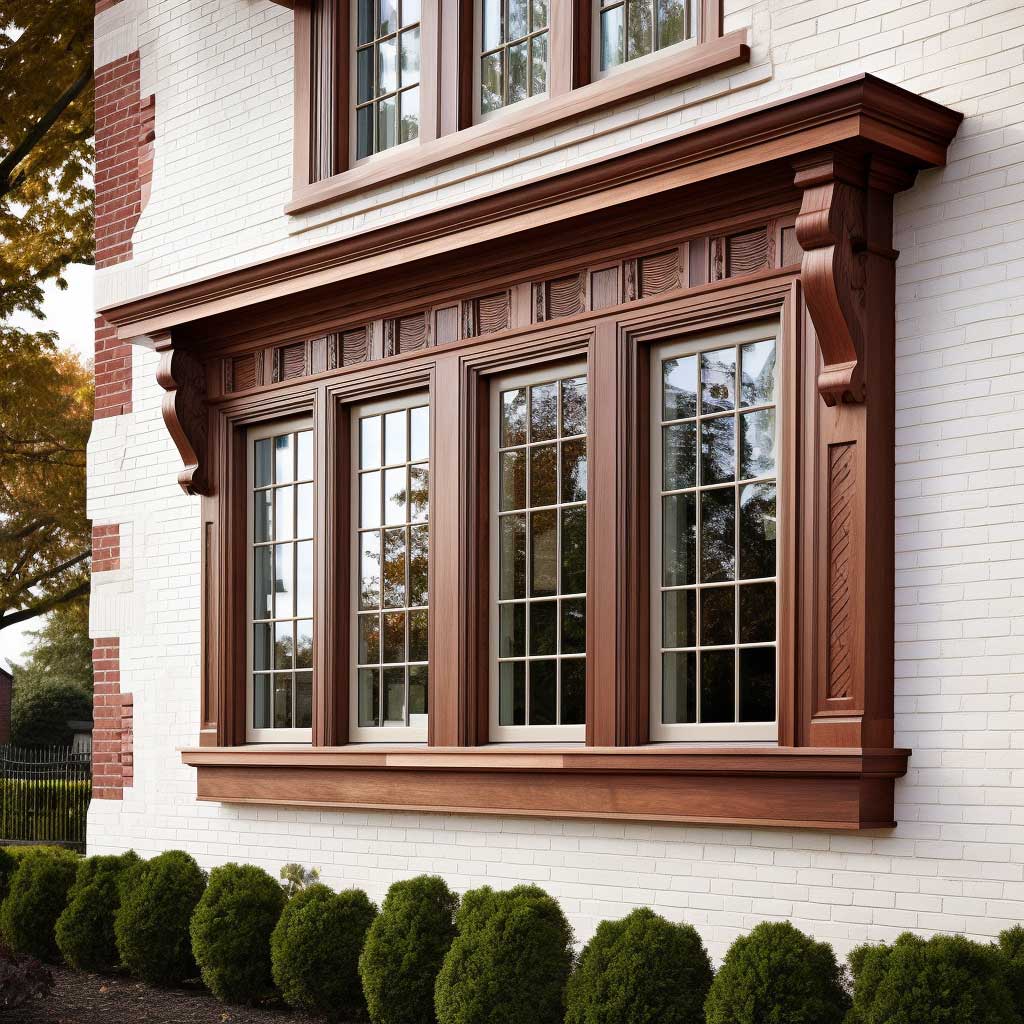
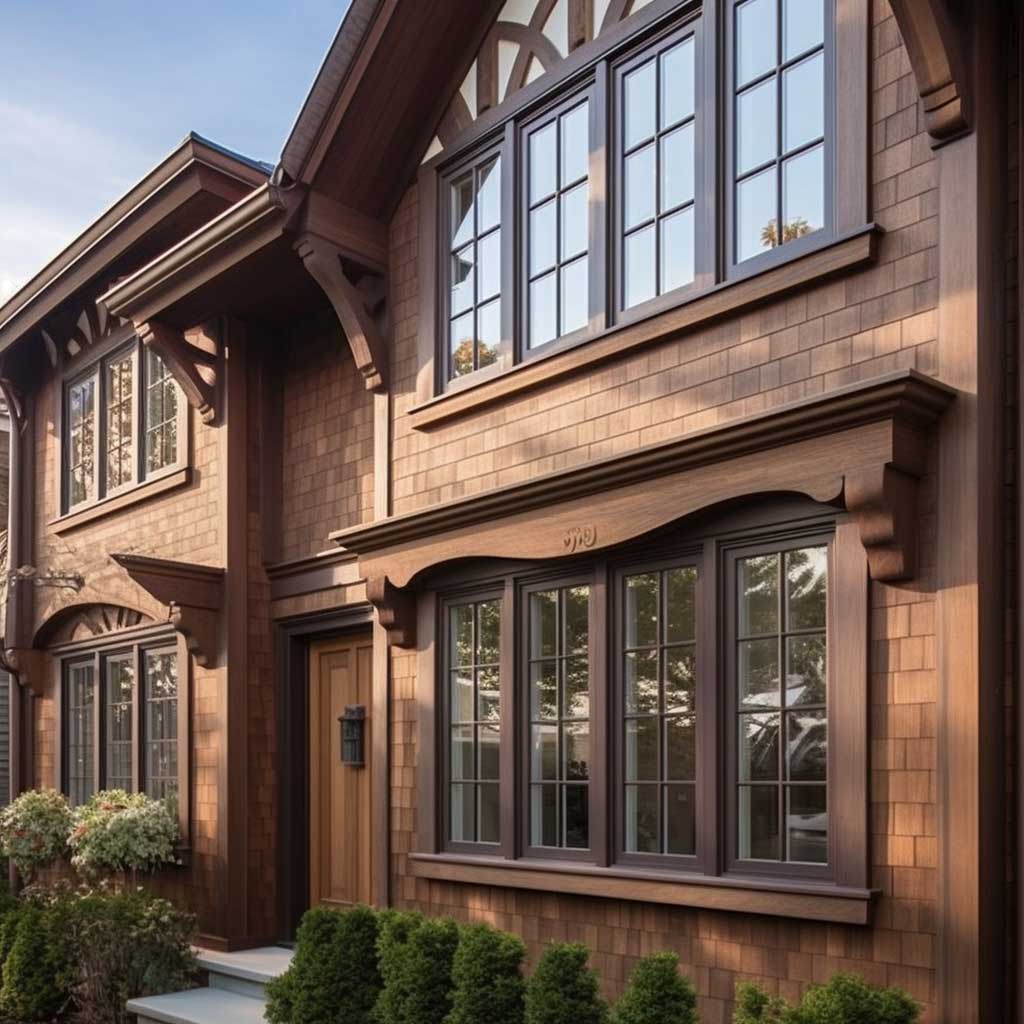

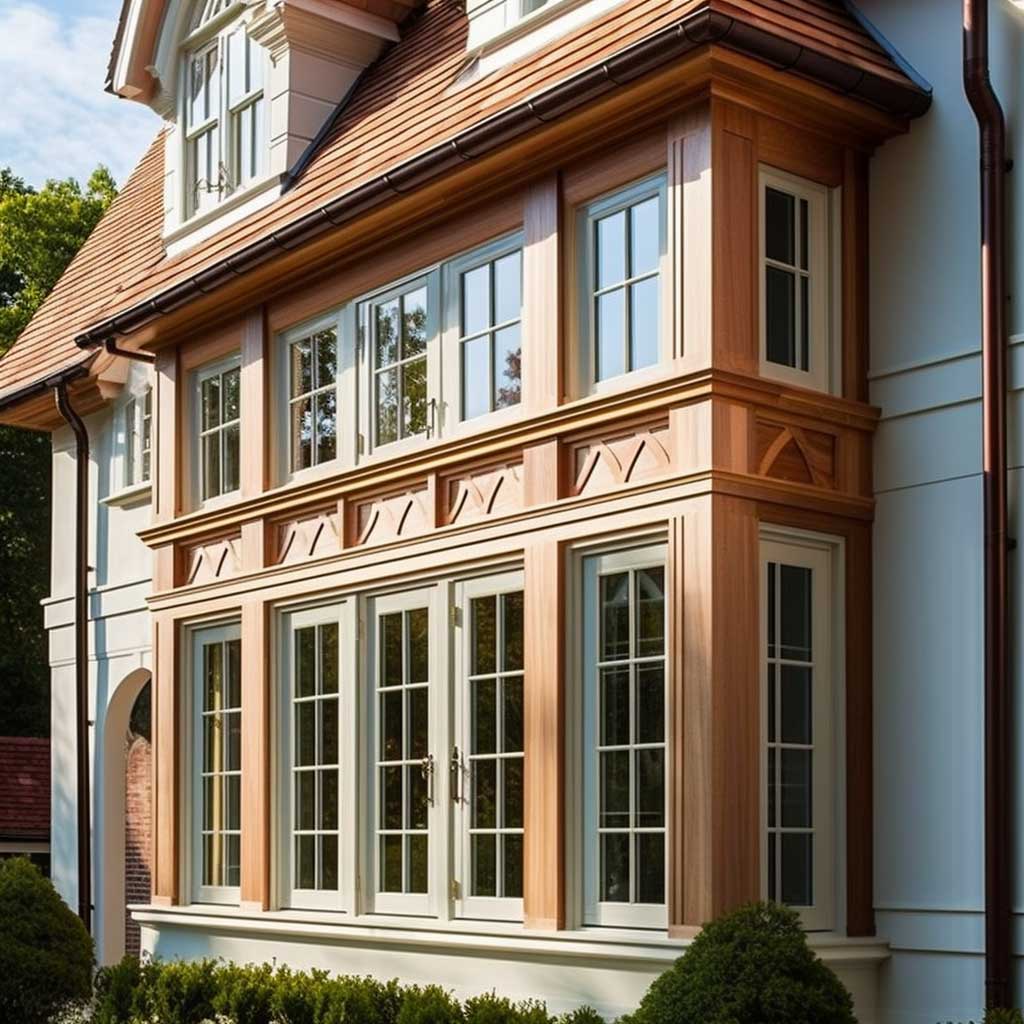
The choice of wood for the window trim has a practical aspect too. Wood is a versatile material that can be easily crafted into any design, allowing for customization and personal expression. In this photo, the window trim sports a traditional design, with intricate carvings that pay homage to the home’s architectural history. For homes leaning into that heritage feel, colonial window trim on the exterior pushes the same idea with wider casings and symmetrical proportions.
It’s worth noting that the exterior window trim does more than just enhance the home’s aesthetics; it also serves a functional purpose. It protects the window’s structure from external elements, thus helping prolong its lifespan.
But, selecting a wooden window trim requires consideration of certain factors. Wood, while beautiful and versatile, requires regular maintenance to keep it in good condition. It needs to be periodically stained or painted to preserve its aesthetic appeal and protect it from the elements. This Old House’s window trim breakdown covers the full range of materials and average costs per linear foot if you want a deeper comparison before committing to wood.
In conclusion, this photo highlights the aesthetic and functional benefits of choosing wooden exterior window trim options. It showcases how wood, with its versatility and natural beauty, can enhance a home’s architectural charm, making it a popular choice for homeowners seeking a classic, timeless look.
Modern Minimalist Window Trim: Clean Lines, Less Maintenance
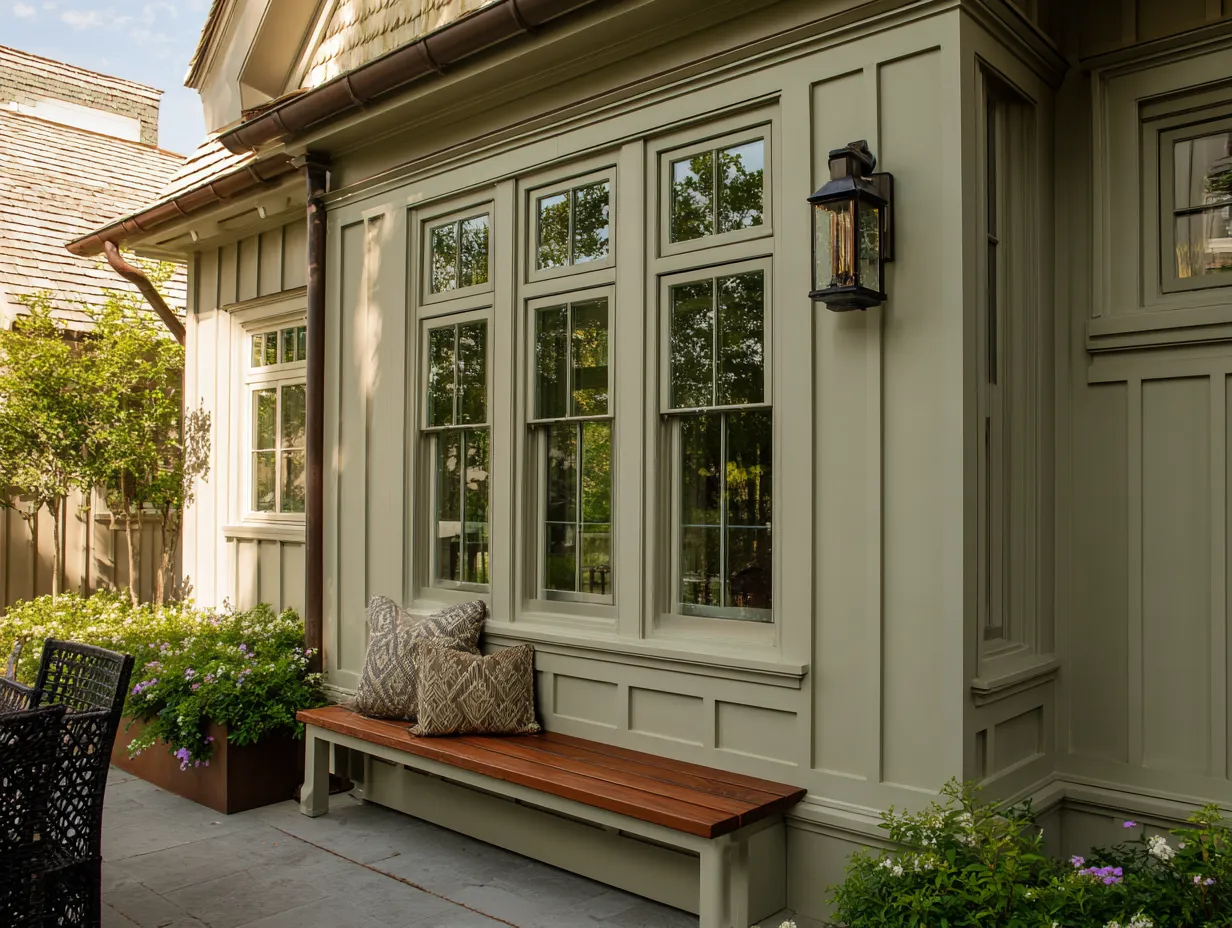
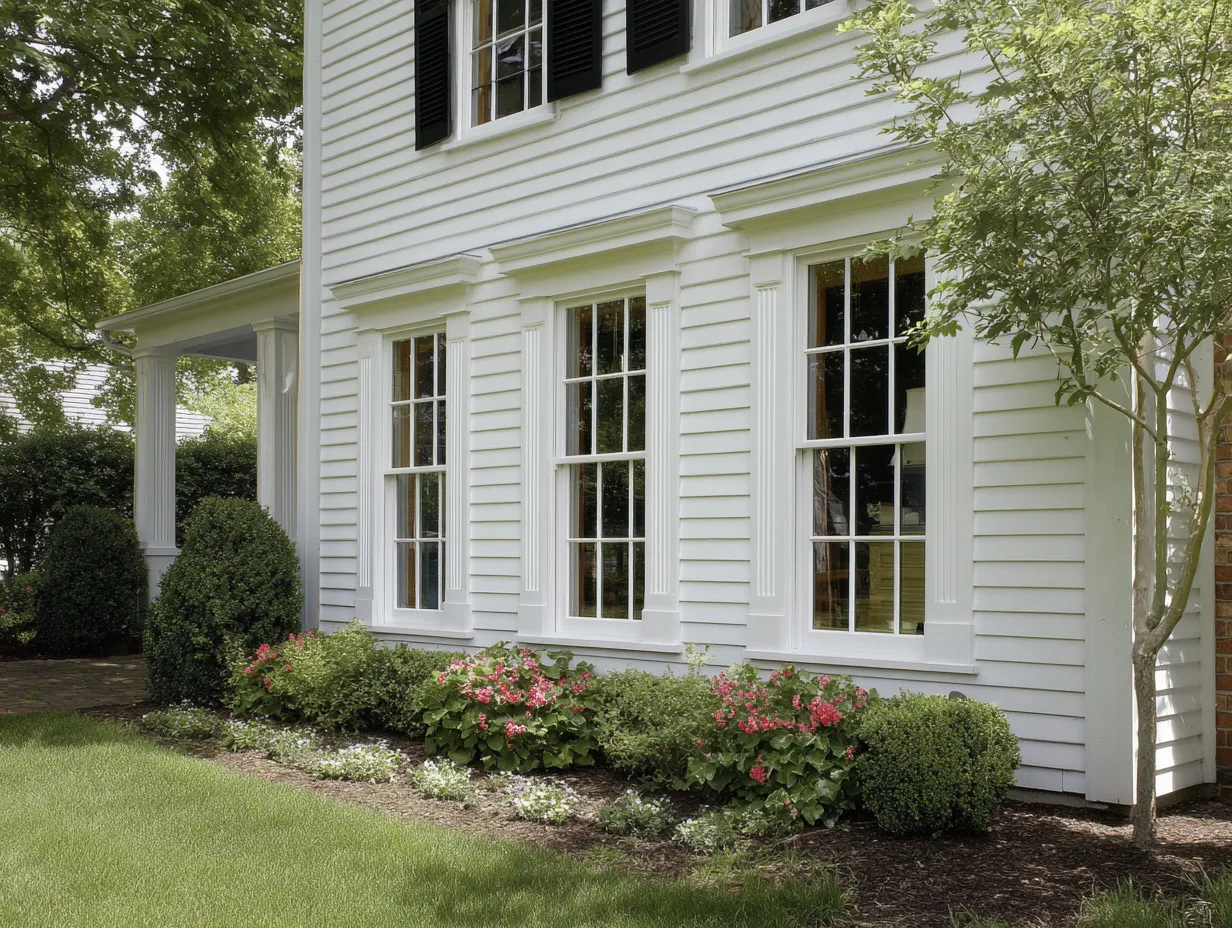
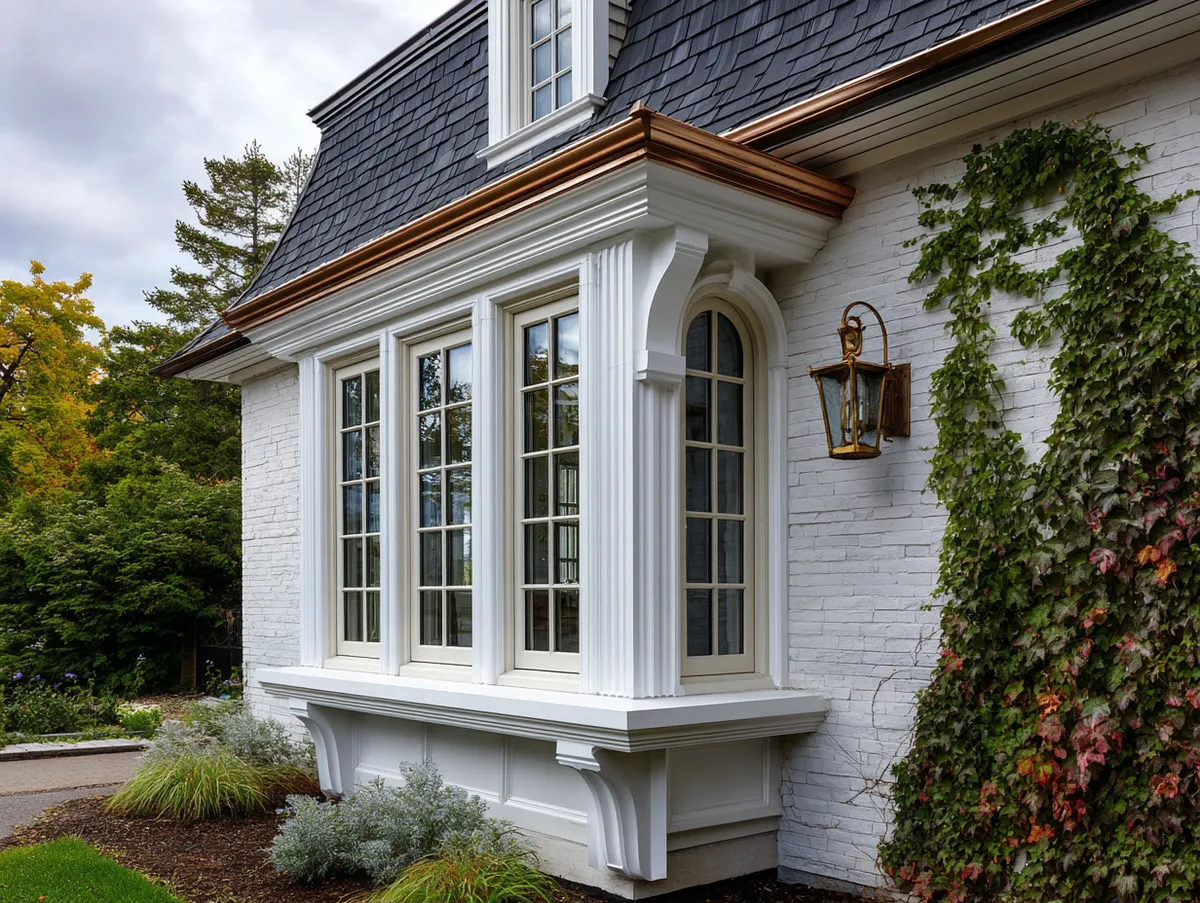
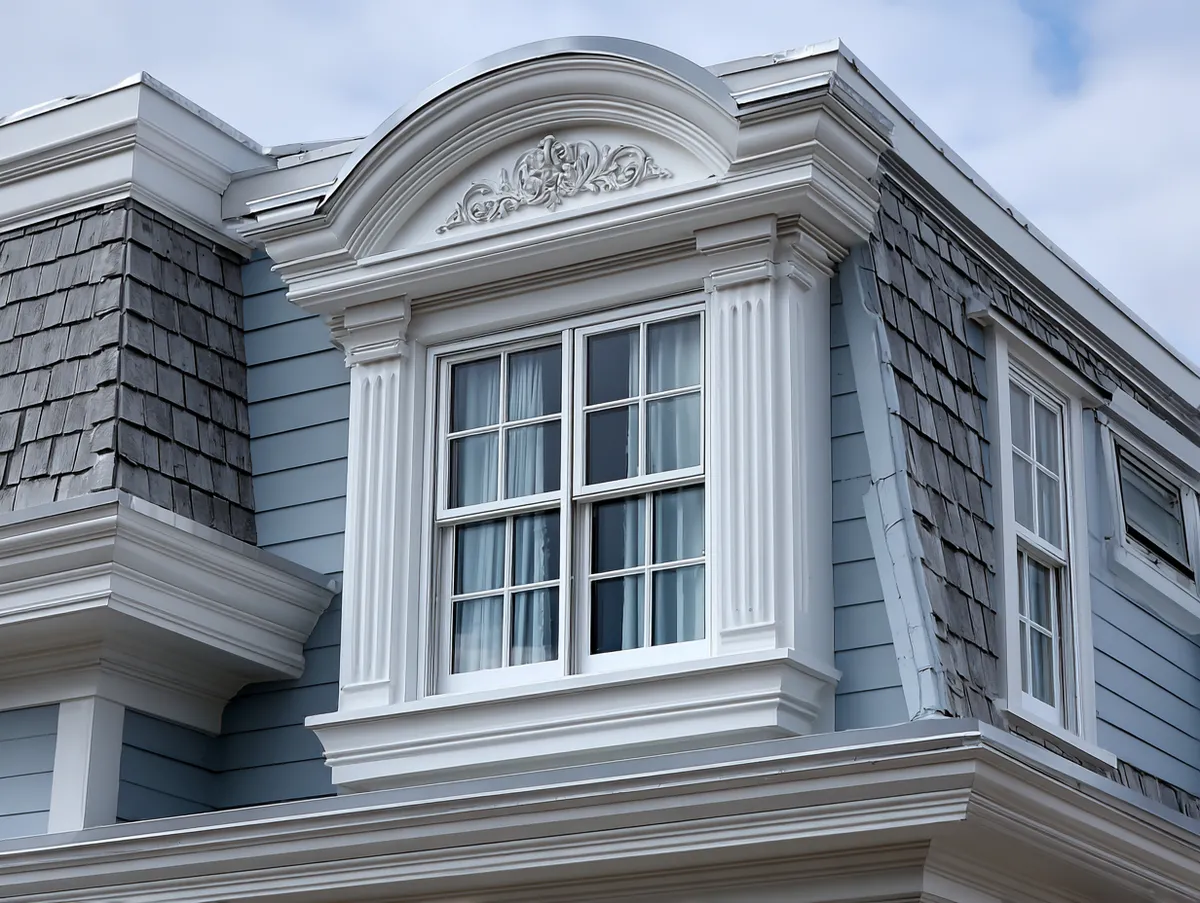
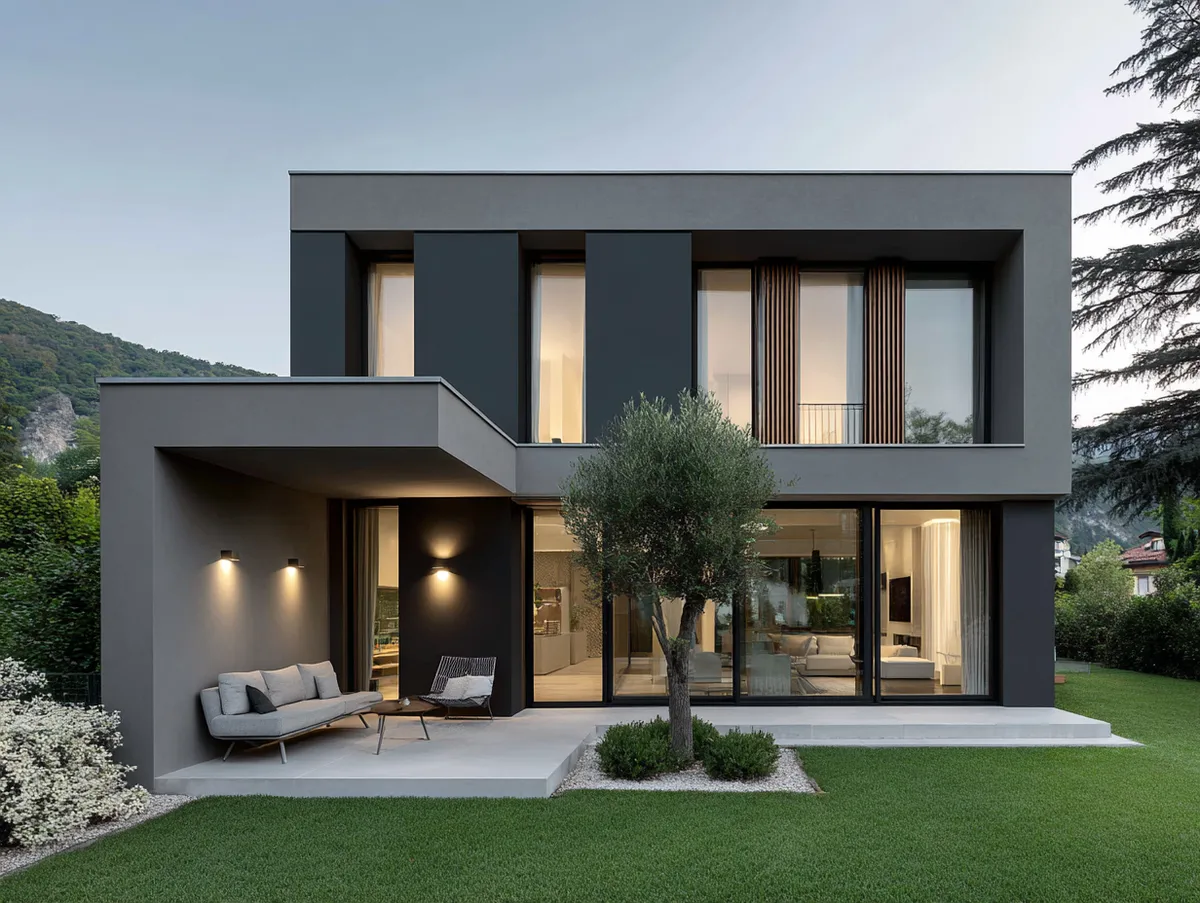
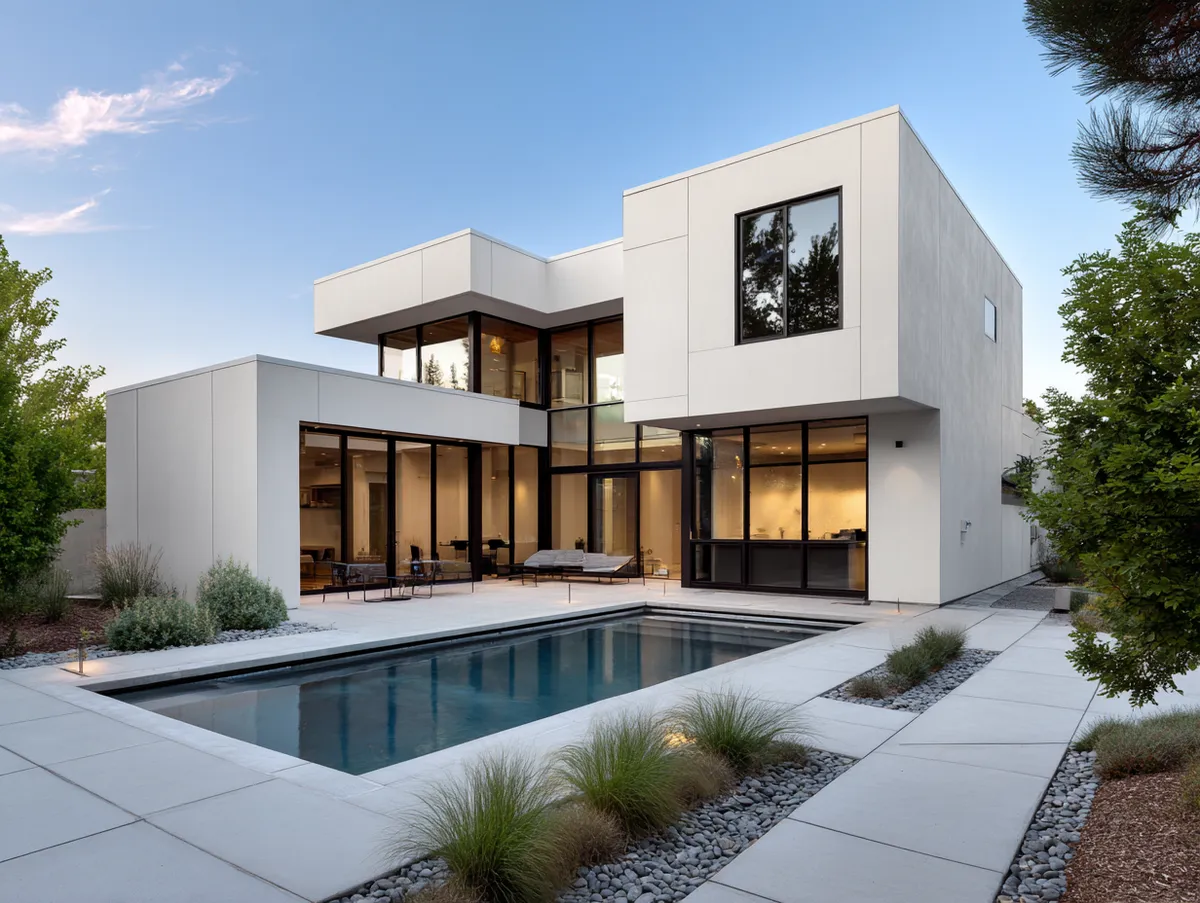
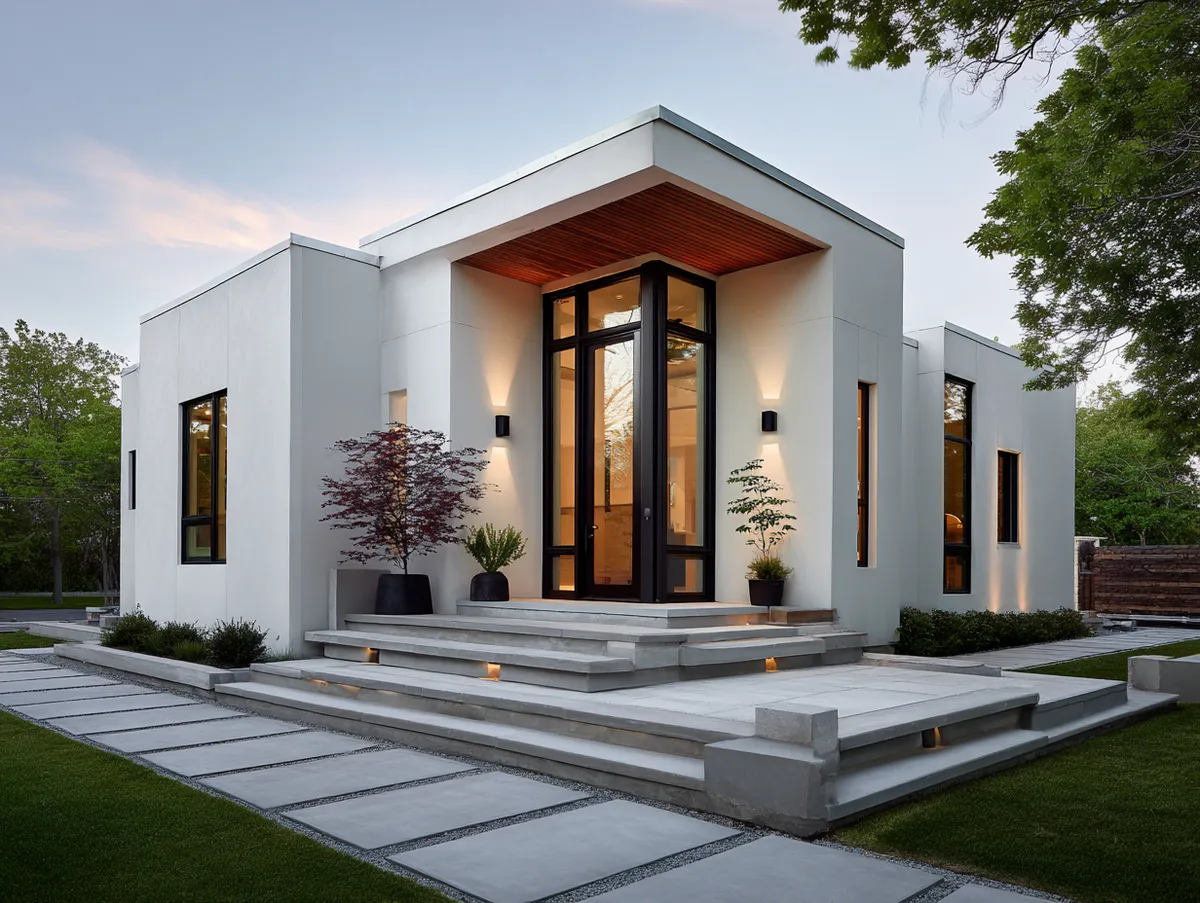
The photo captures a sleek, modern home featuring minimalistic exterior window trims. The trims, painted in a crisp white, perfectly complement the home’s clean lines and understated elegance, embodying the principle of “less is more” that is central to modern design.
The exterior window trim, despite its simplicity, significantly enhances the home’s architectural appeal. The trim’s crisp lines create a striking contrast against the dark grey exterior, highlighting the windows and bringing balance to the overall design. The white trim also helps to reflect light, brightening the façade and adding a sense of airiness to the structure.
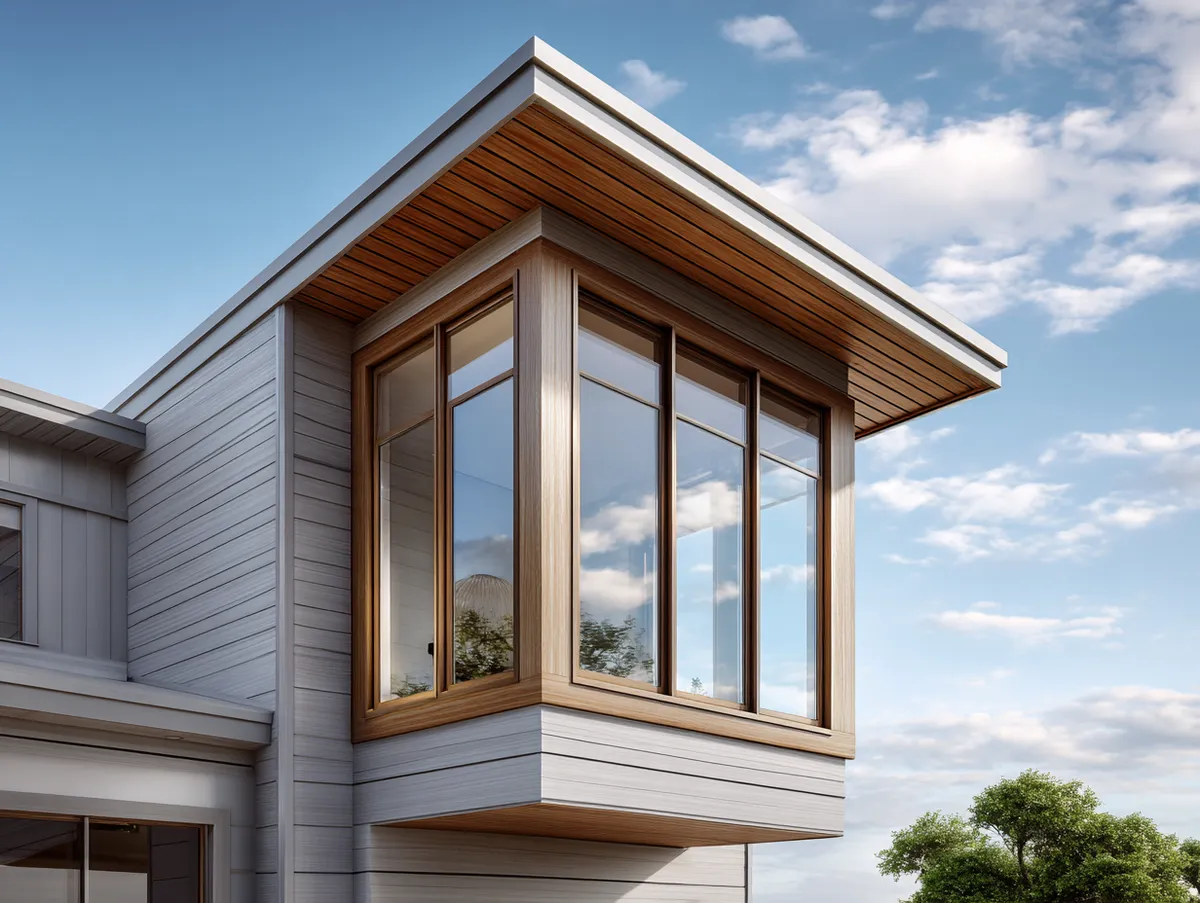
PVC cellular trim like Azek or Kleer costs about $4 to $8 per linear foot. Sounds pricey next to pine but you will never scrape, prime, or replace it. I installed Azek on a south-facing wall in 2020 and the paint hasn’t bubbled once. Vinyl and aluminum do the same job for even less money, usually $2 to $5 per foot.
The catch with PVC? It expands. A lot. A twelve-foot length can grow almost a quarter inch on a hot July day. Nail it tight without expansion gaps and you’ll see buckling by August. Most contractors know this. Most DIYers don’t. Leave a sixteenth-inch gap at butt joints and use stainless ring-shank nails — problem solved.
Flat stock is the go-to profile for modern houses. No routed edges, no crown caps, no rosettes. Just a clean 3.5-inch or 5.5-inch board butted tight to the window frame. The lack of detail is the detail. It reads “architect-designed” even on a tract home, and you can pull it off for under $600 on an average three-bedroom house.
Skip fiber cement for window trim unless you own a diamond-grit blade. I tried cutting HardieTrim with a standard carbide blade and burned through it in half a day. The dust is nasty too — full respirator territory. Fiber cement looks great on siding but for trim profiles it’s a pain that most homeowners underestimate.
| Material | Cost per Linear Ft | Lifespan | Maintenance | Best For |
|---|---|---|---|---|
| Pine (treated) | $1.50 – $4 | 10–20 yrs | Repaint every 3–5 yrs | Budget traditional homes |
| Cedar | $3 – $7 | 20–30 yrs | Stain/seal every 3 yrs | Craftsman & colonial styles |
| Mahogany | $8 – $12 | 30+ yrs | Stain every 2–3 yrs | High-end traditional homes |
| PVC (Azek, Kleer) | $4 – $8 | 50+ yrs | Nearly zero | Modern, coastal, low-maintenance |
| Aluminum | $2 – $5 | 30–40 yrs | Minimal, check for dents | Contemporary, commercial-style |
| Fiber Cement | $3 – $6 | 30–50 yrs | Repaint every 10–15 yrs | Mixed-material facades |
| Brick / Thin Veneer | $10 – $20 | 100+ yrs | Repoint mortar every 25 yrs | Colonial, farmhouse, permanent builds |
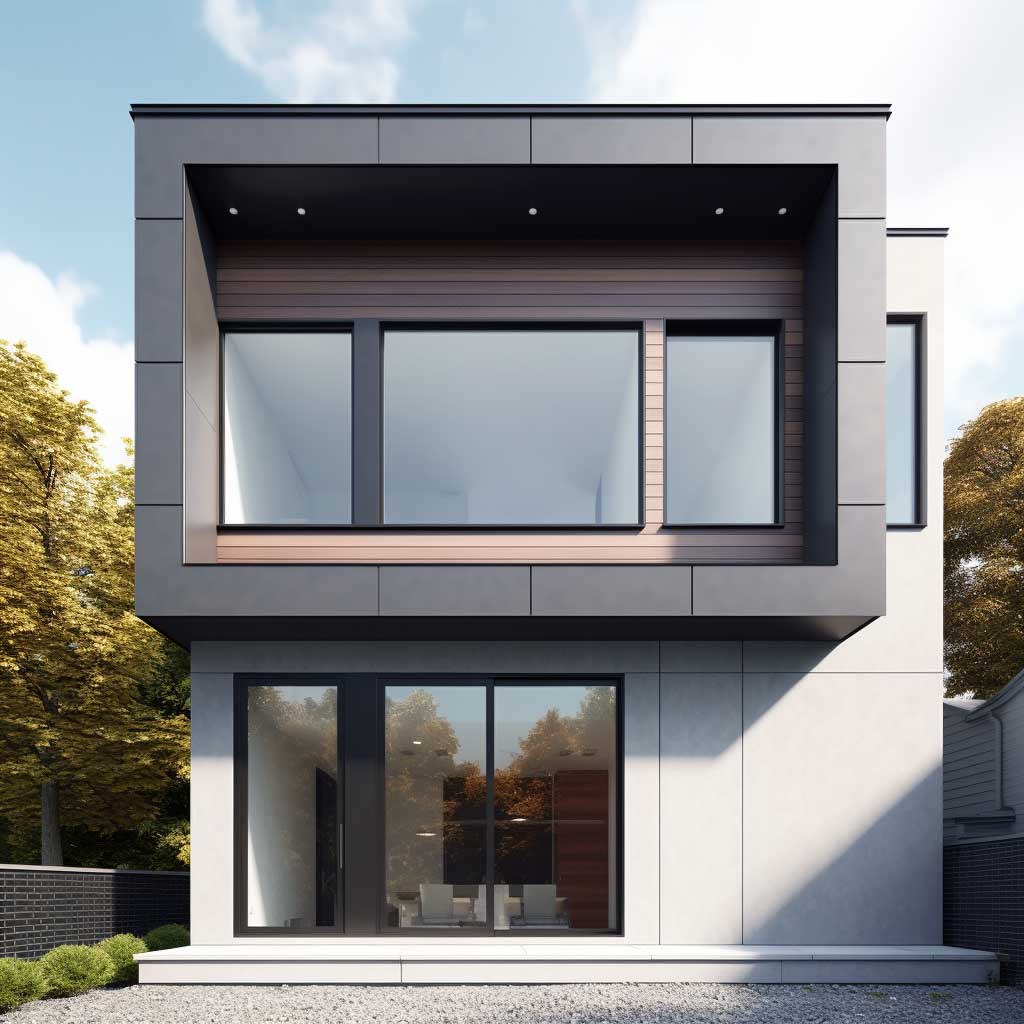
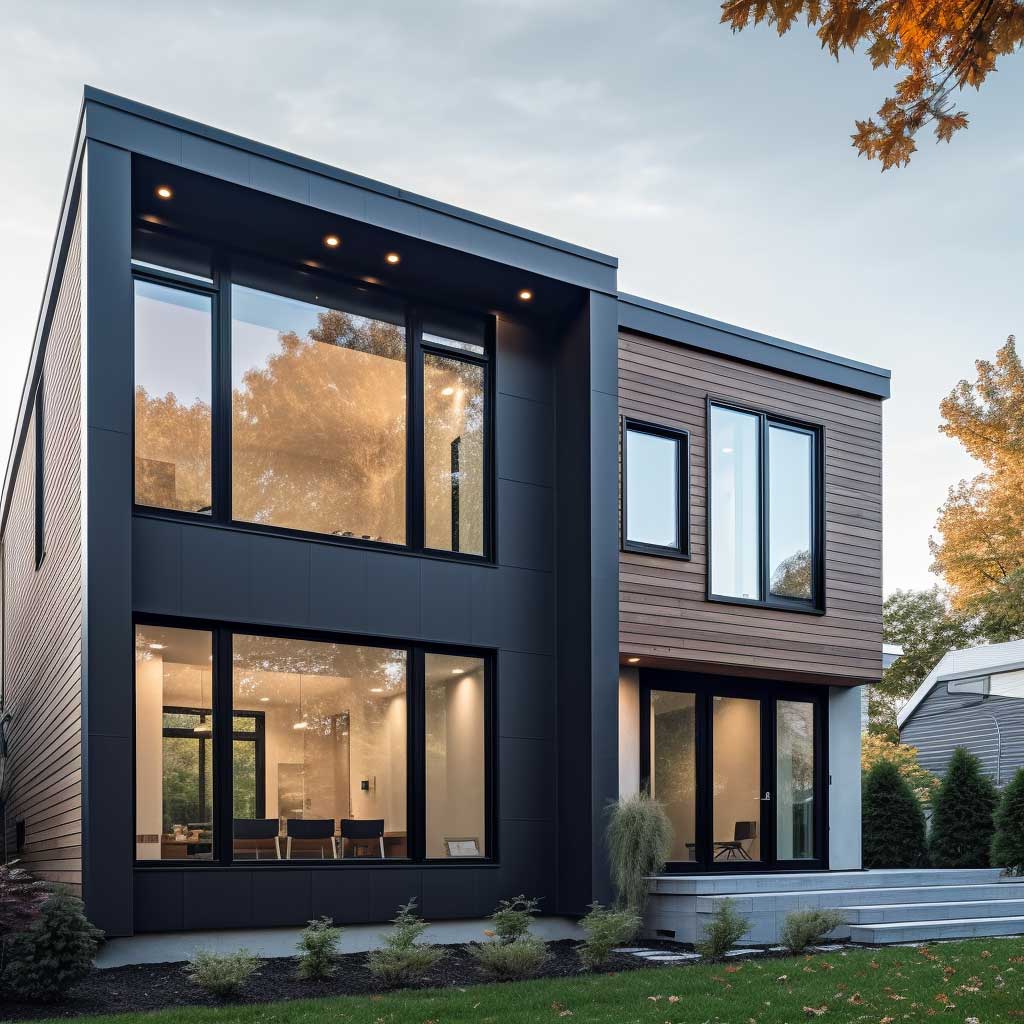
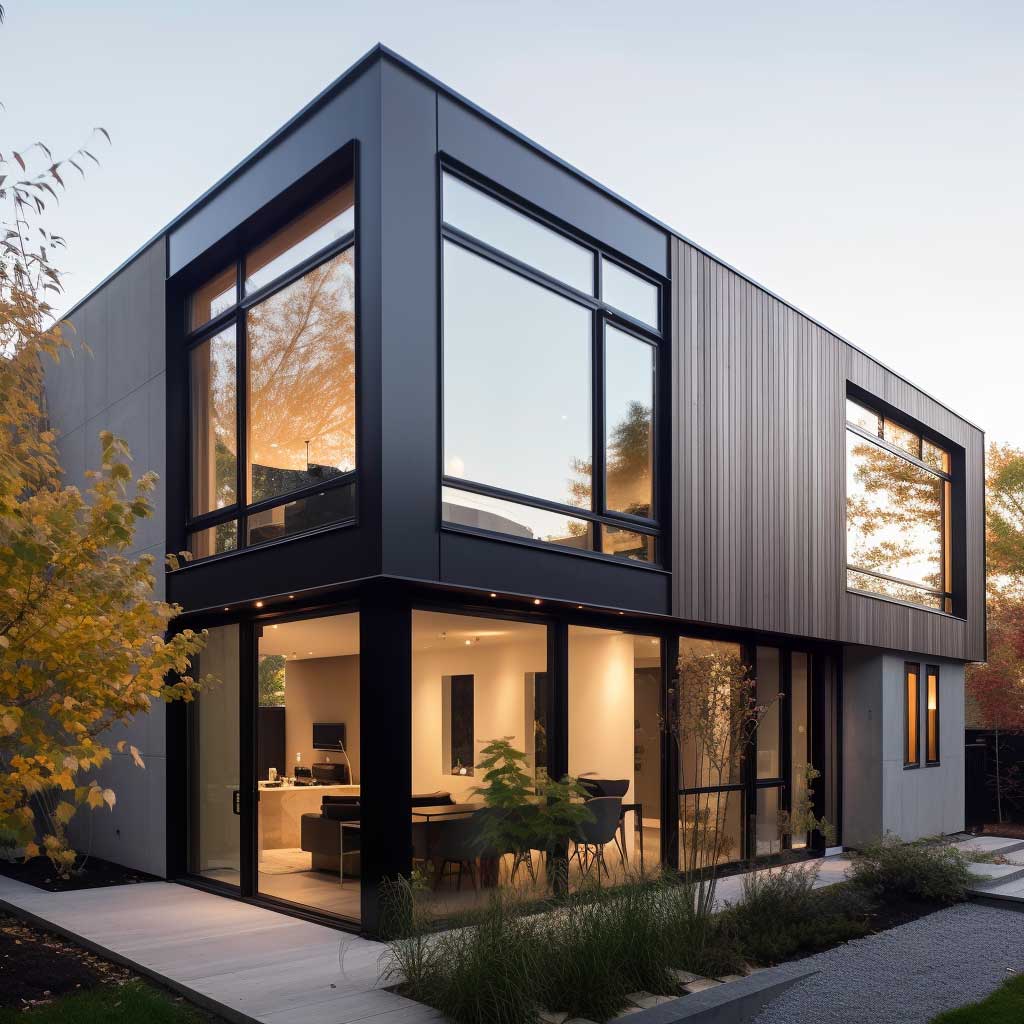
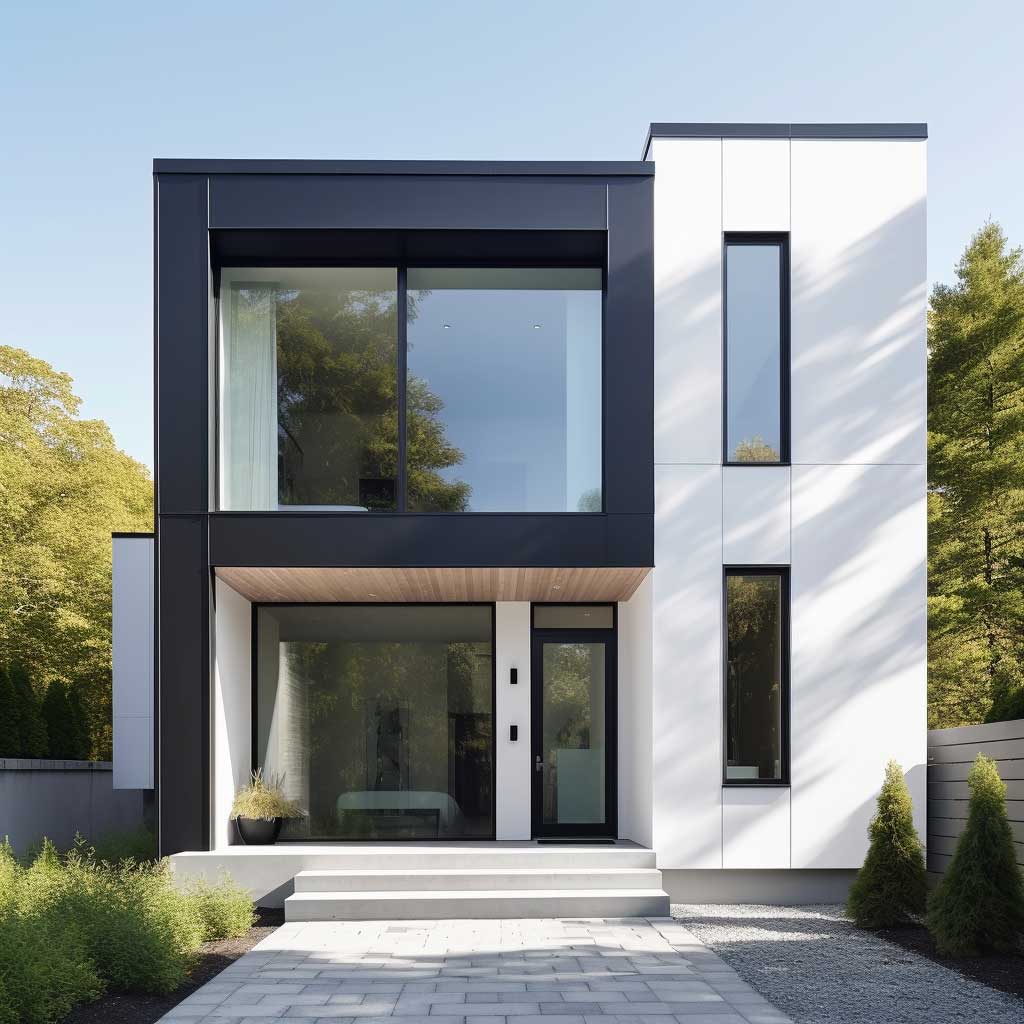
Notably, the choice of a simple, minimalist window trim aligns with the home’s modern architectural style. The lack of ornate details allows the architecture itself – the geometric forms, clean lines, and contrast of colours – to take centre stage. If you prefer a high-contrast look, a white house with black window trim takes this principle even further and delivers a striking result with almost no effort.
Functionality, too, is integral to the design of this exterior window trim. The trim seals the gaps between the window frame and the exterior wall, helping to enhance the home’s energy efficiency by reducing drafts and heat loss.
The choice of material for this modern window trim is likely a low-maintenance option such as vinyl or aluminium, aligning with the practical considerations of modern design. These materials, while not as traditional as wood, offer durability and require less upkeep, making them a suitable choice for homeowners seeking a balance of form and function.
In conclusion, this photo exemplifies the modern approach to exterior window trim options. By opting for a simple, minimalistic trim, the home achieves a sleek and contemporary aesthetic, proving that sometimes, simplicity can be the most powerful design statement.
Bold Color Window Trim: One Accent That Changes Everything
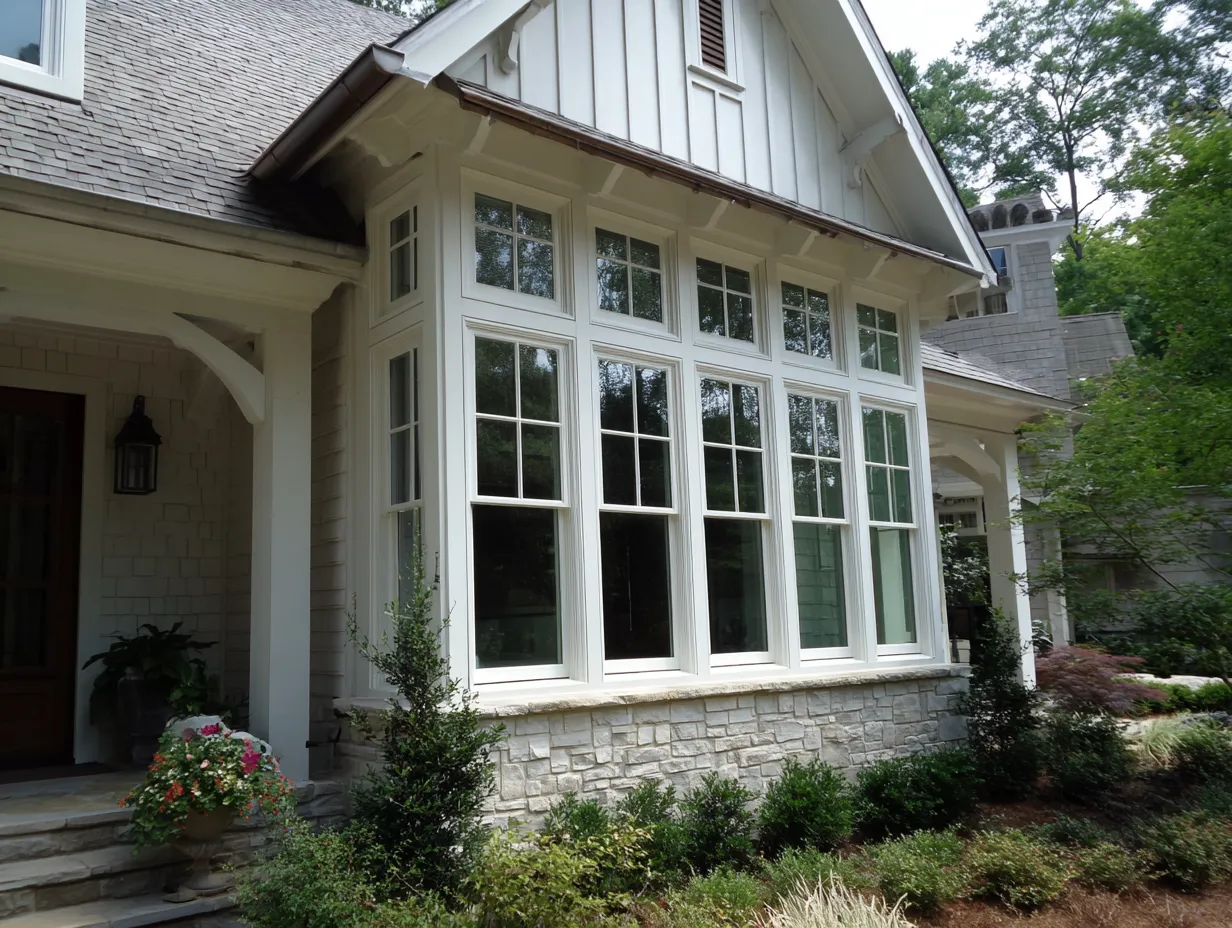
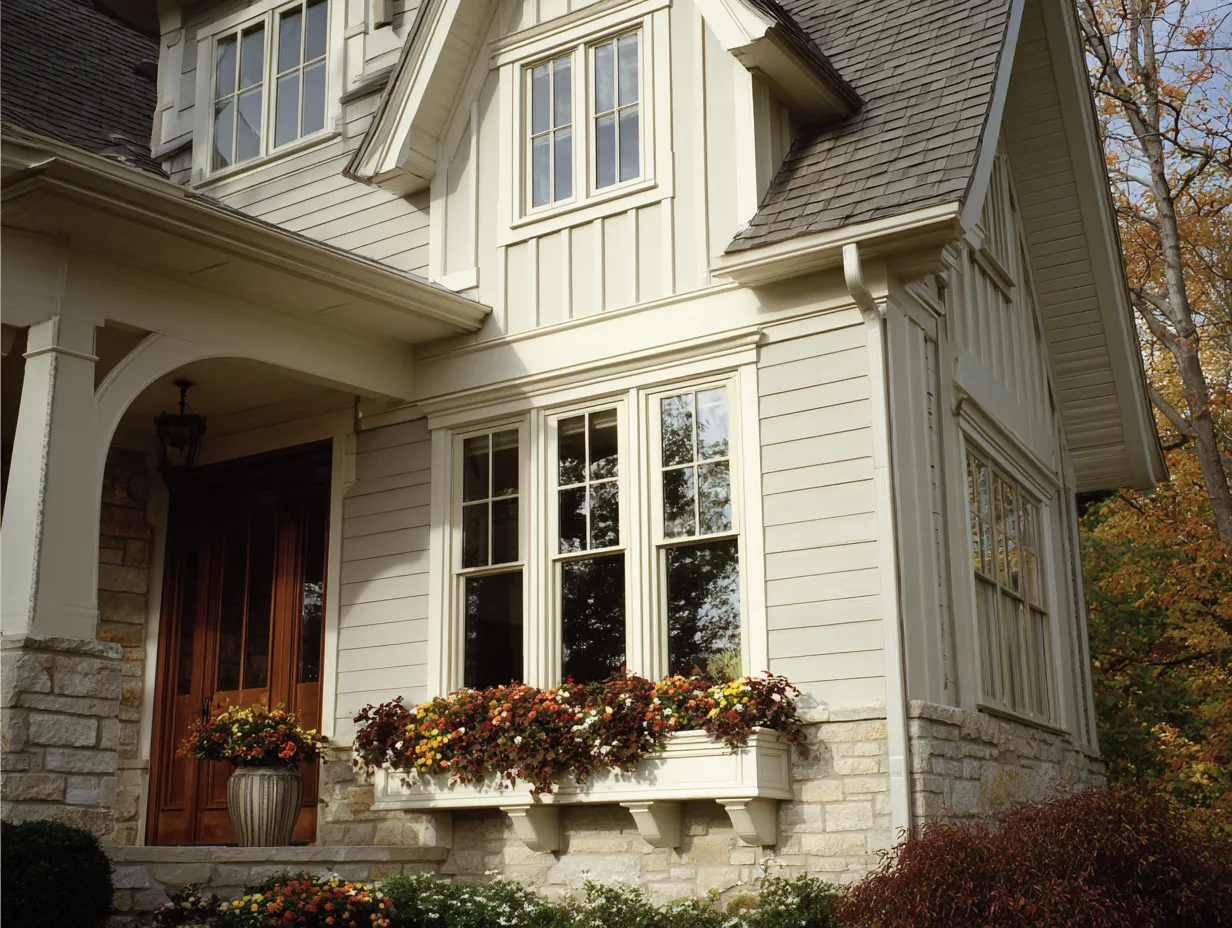
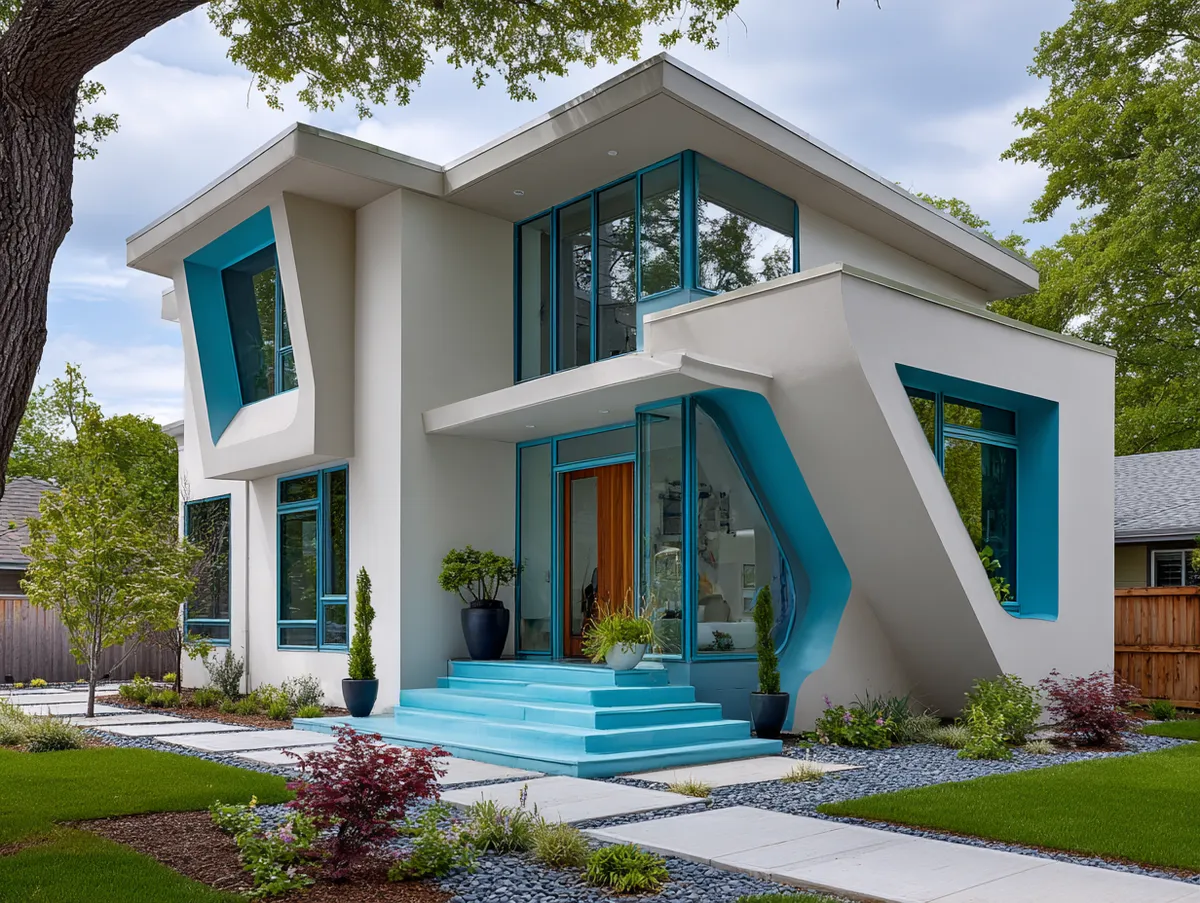
The photo depicts a contemporary home that breaks away from the norm with its vibrant blue exterior window trims. The bold use of colour brings a fun, playful element to the home’s façade, demonstrating that window trims can be more than just functional features; they can also be a canvas for personal expression.
The bright blue window trims immediately catch the eye, creating a strong visual impact. They serve as a bold contrast to the home’s neutral exterior, which in turn makes the windows pop and adds depth to the overall design. It’s a daring, yet successful, design choice that showcases the homeowner’s unique style and personality.
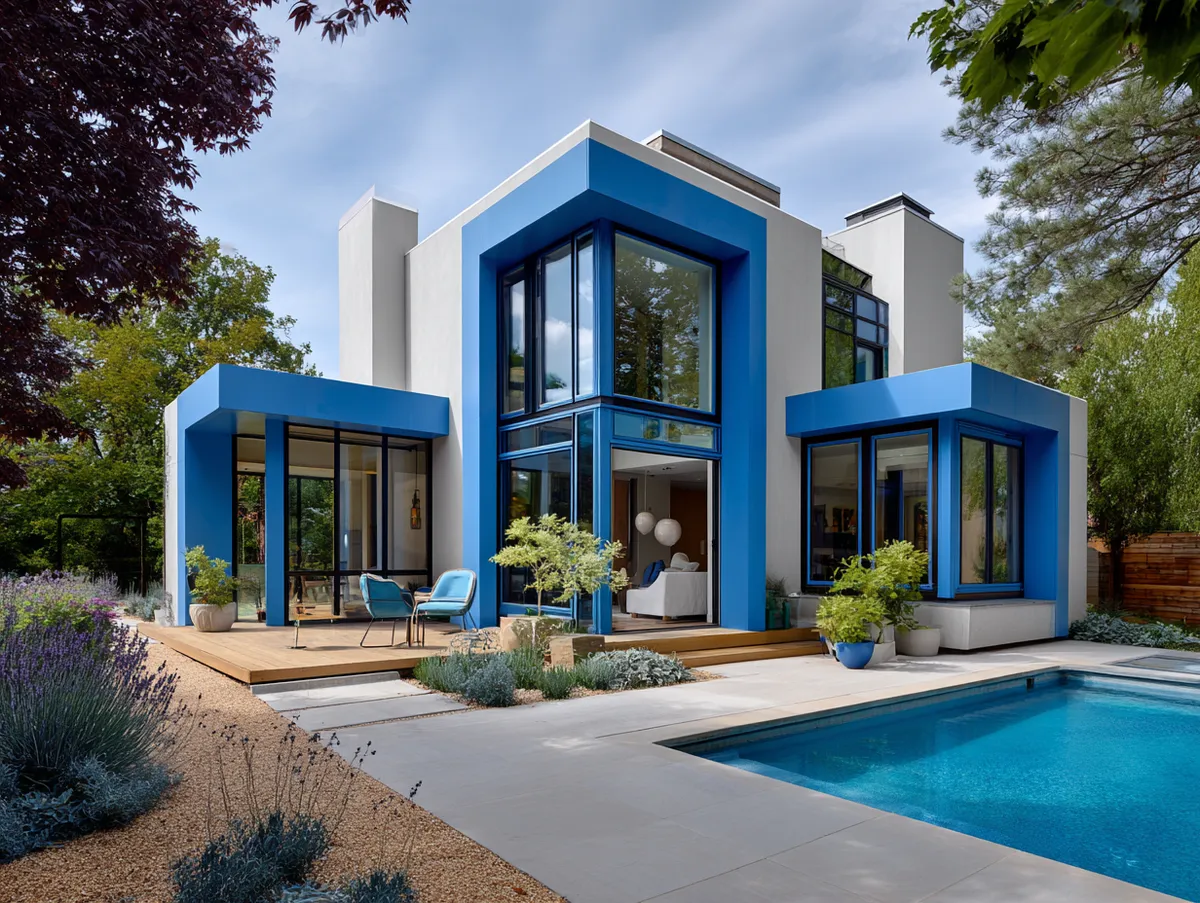
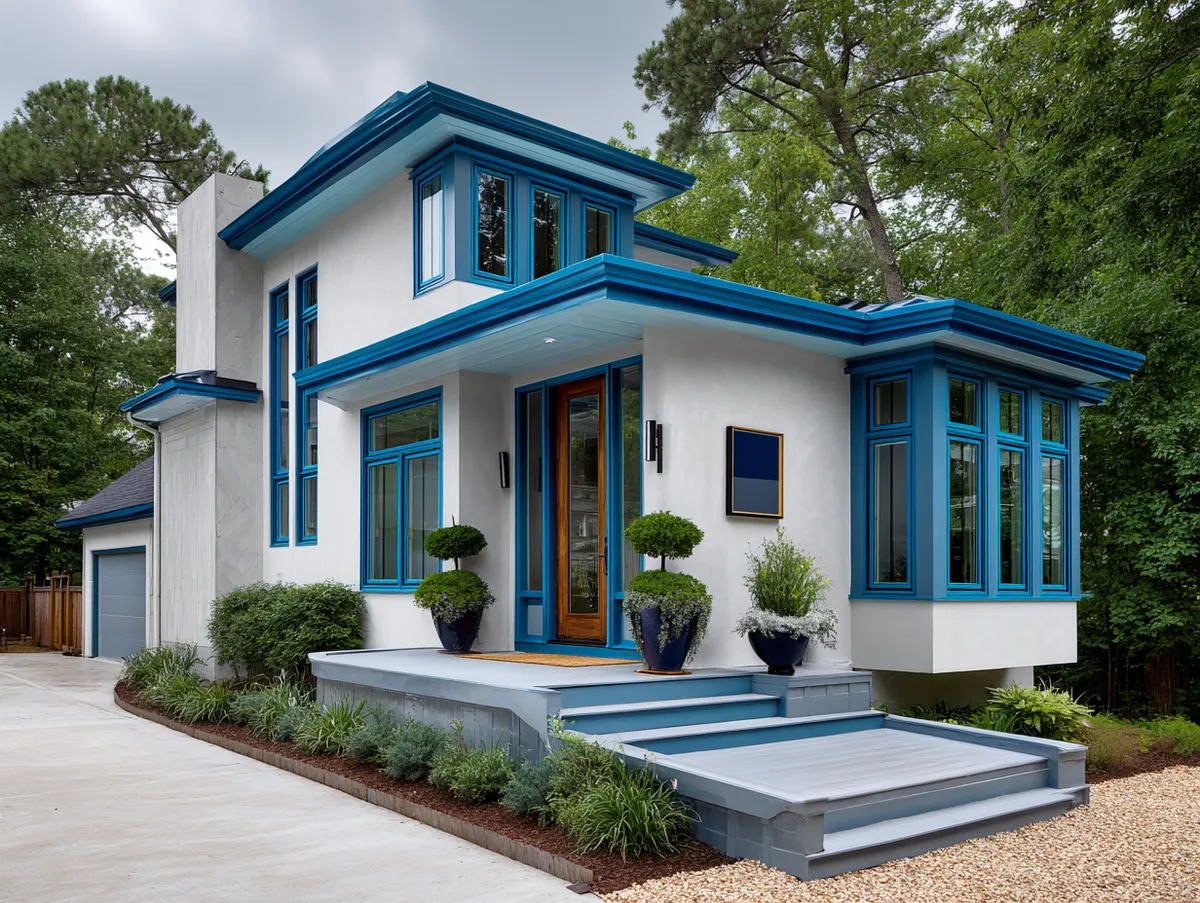
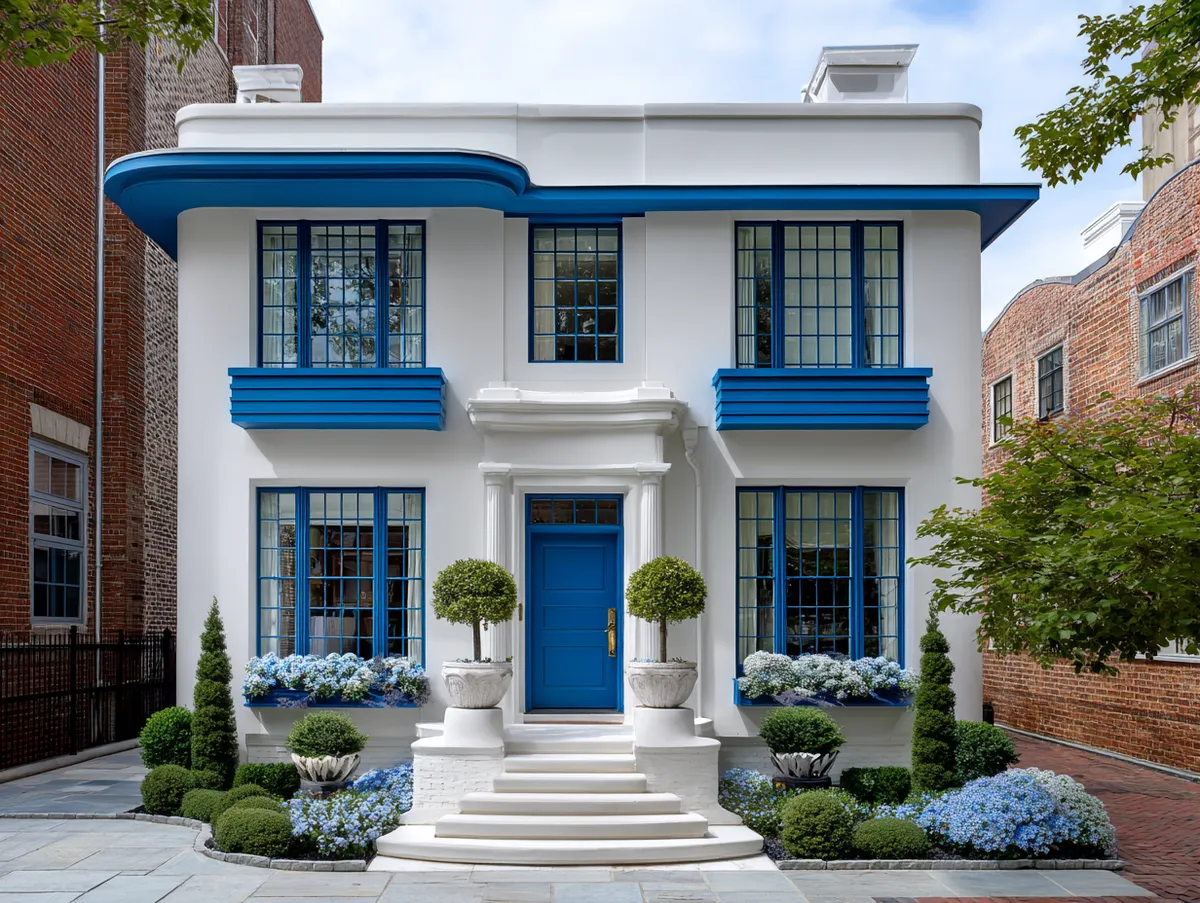
Sherwin-Williams Naval (SW 6244) is the blue you see on every designer’s Pinterest board right now. Costs about $55 a gallon in their Emerald exterior line. Benjamin Moore’s Hale Navy is the close cousin. Both hold up well in direct sun but you need two full coats minimum over a bonding primer — skip the primer and the color looks washed out within one season.
A word on paint sheen: semi-gloss is the standard for exterior trim, but for a bold color like cobalt blue or fire-engine red, I’d go full gloss. The reflectivity makes the color pop harder against matte siding. It also sheds dirt better, which matters because bright trim shows grime like a white car shows mud.
Red and yellow trims fade fastest. That’s just UV chemistry. If you want a color that stays punchy for five-plus years without a touch-up, stick to blues, greens, and charcoals. I painted a set of shutters and trim in Behr Marquee “Red Pepper” in 2019, and by 2022 it looked like sun-dried tomato. Never again.
Don’t pick your trim color from a paint chip in a hardware store aisle. Buy two sample pots — your top pick and one shade darker — and paint a two-foot strip on the actual wall. Look at it in morning light and afternoon light. Colors shift dramatically between east-facing and west-facing walls, and a blue that reads “sophisticated” at 9 a.m. can look “dental office” by 4 p.m.
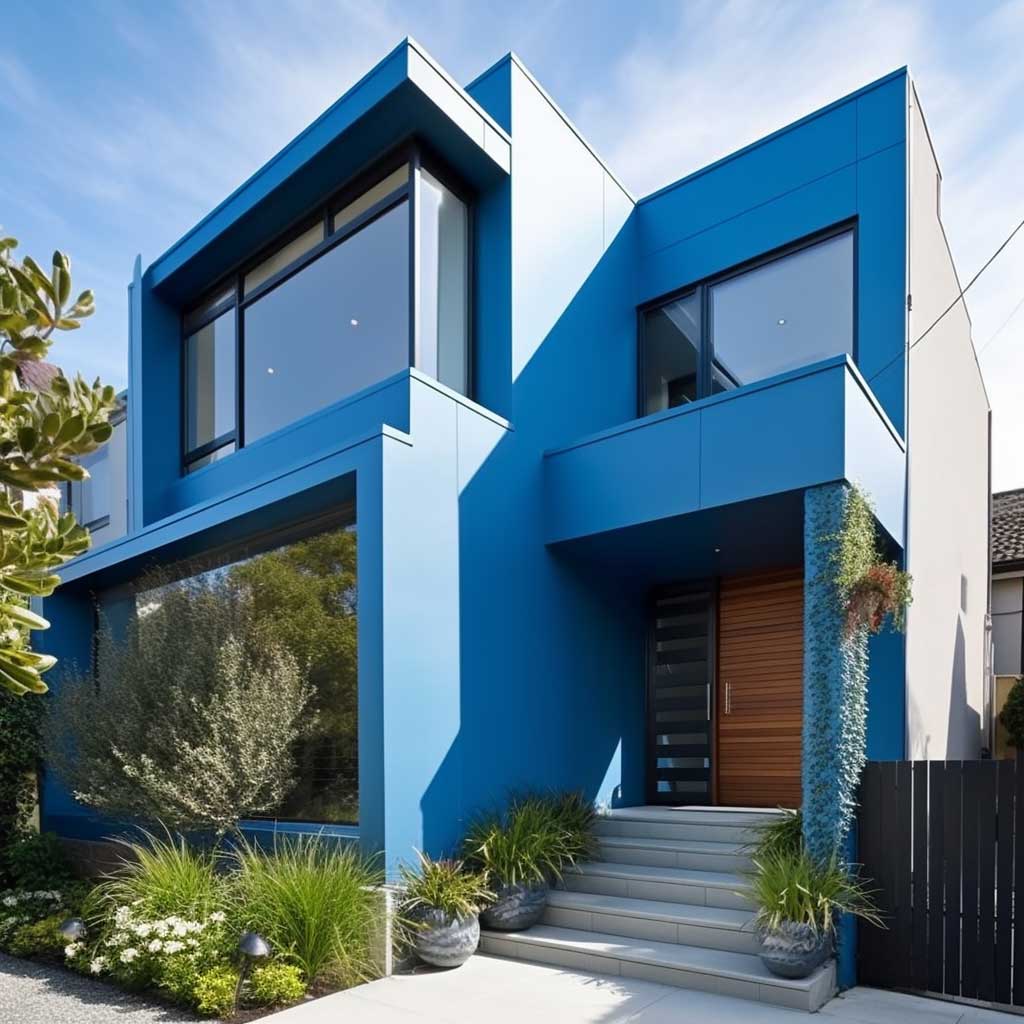
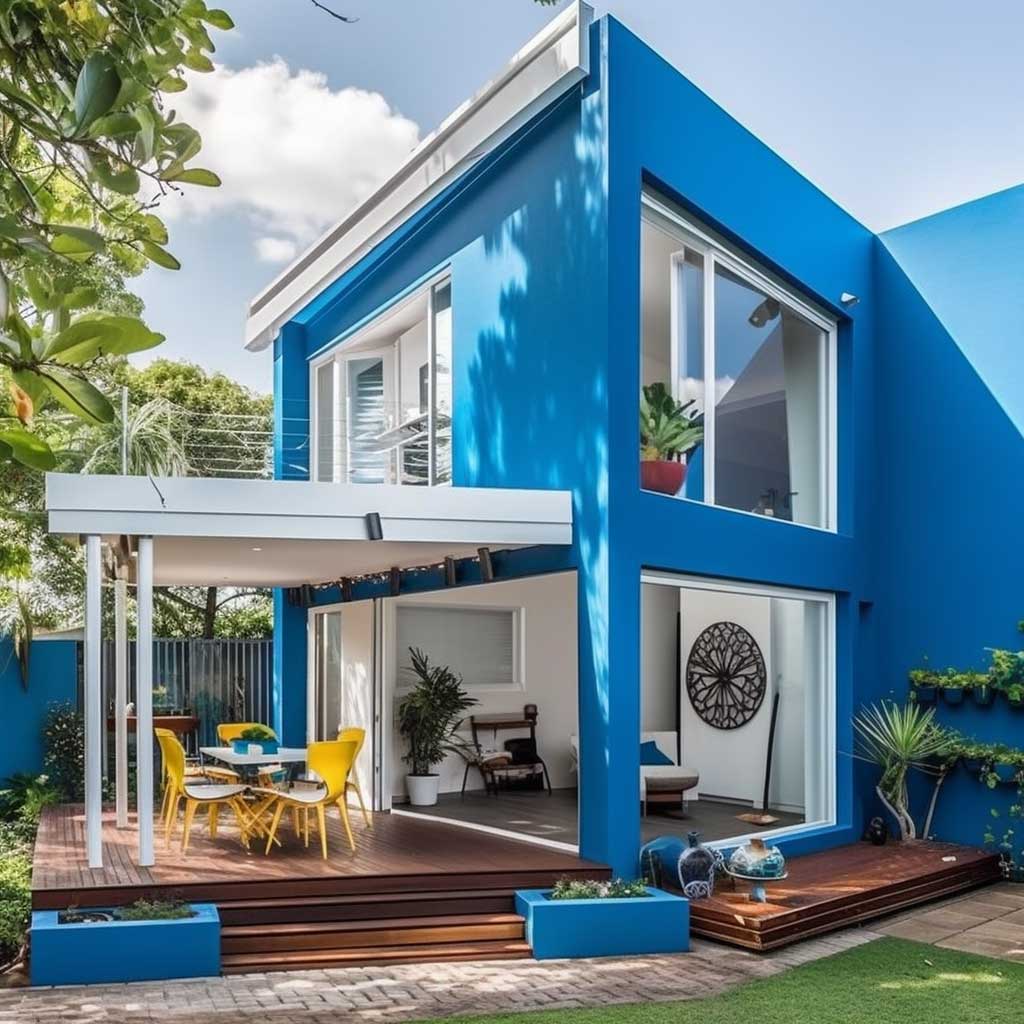
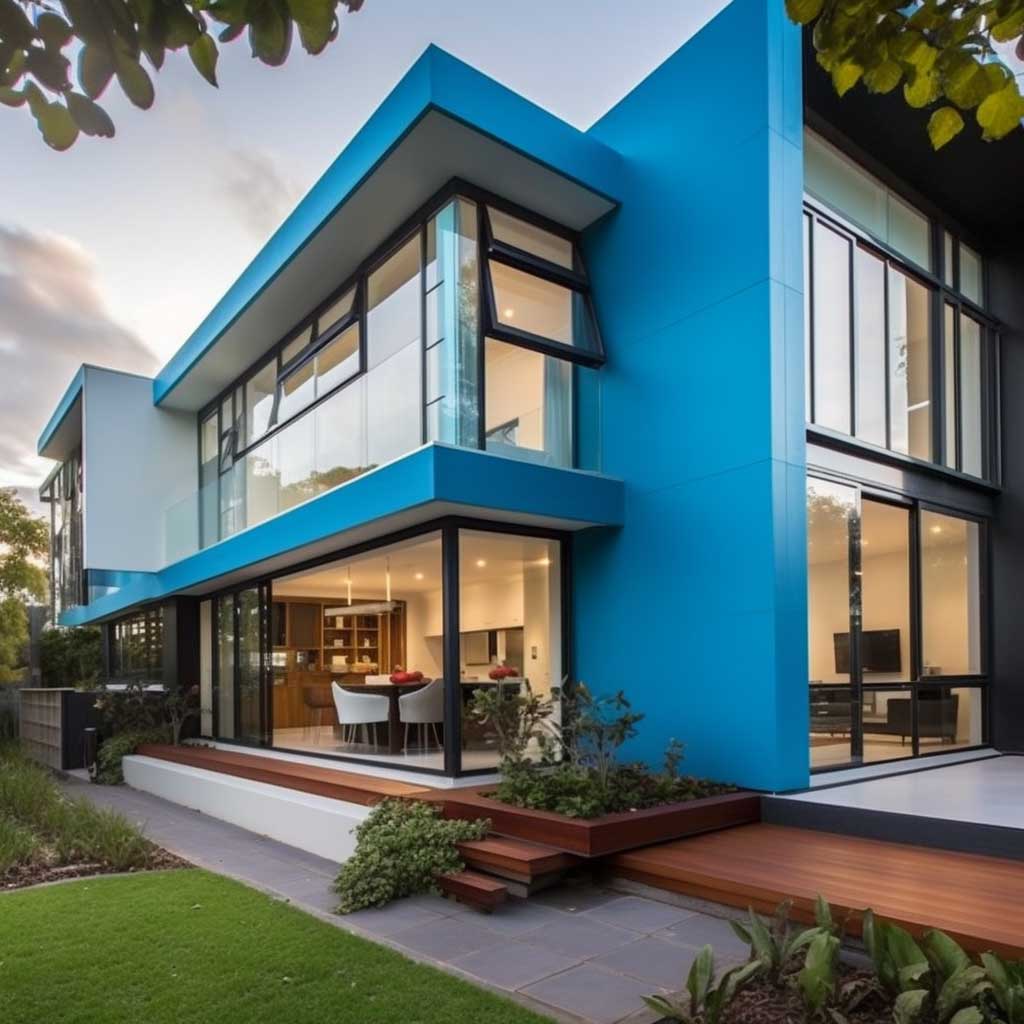
Interestingly, the use of a vibrant colour for the window trim also complements the home’s contemporary architectural style. Contemporary design is often characterised by its embrace of bold colours and unique details, and this home, with its blue window trims, certainly fits the bill.
Functionality is not compromised for the sake of aesthetics in this design. Just like any window trim, these colourful trims help seal the window frames, protecting them from the elements and contributing to the home’s overall energy efficiency.
Material-wise, a durable and weather-resistant option like vinyl or aluminium would be an ideal choice for such colourful trims. These materials can hold up well to bright, vibrant paint, ensuring that the colour stays true over time, even when exposed to sunlight and varying weather conditions.
In conclusion, this photo highlights the creative possibilities of exterior window trim options. By choosing a vibrant colour for the window trims, the home becomes a statement of individuality, proving that exterior design can be a fun and creative process.
Brick Window Trim: Heavy, Permanent, and Worth the Cost
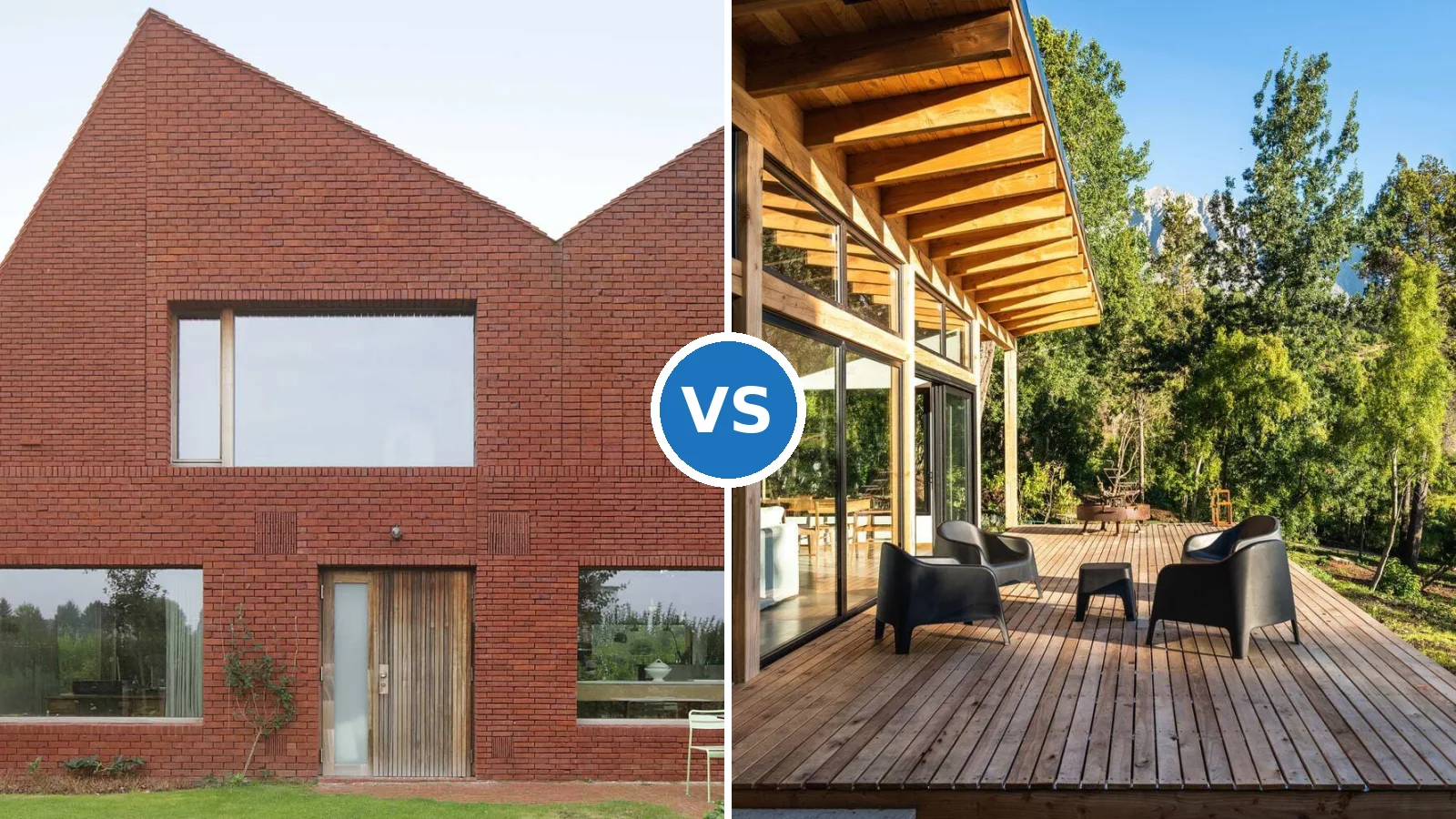
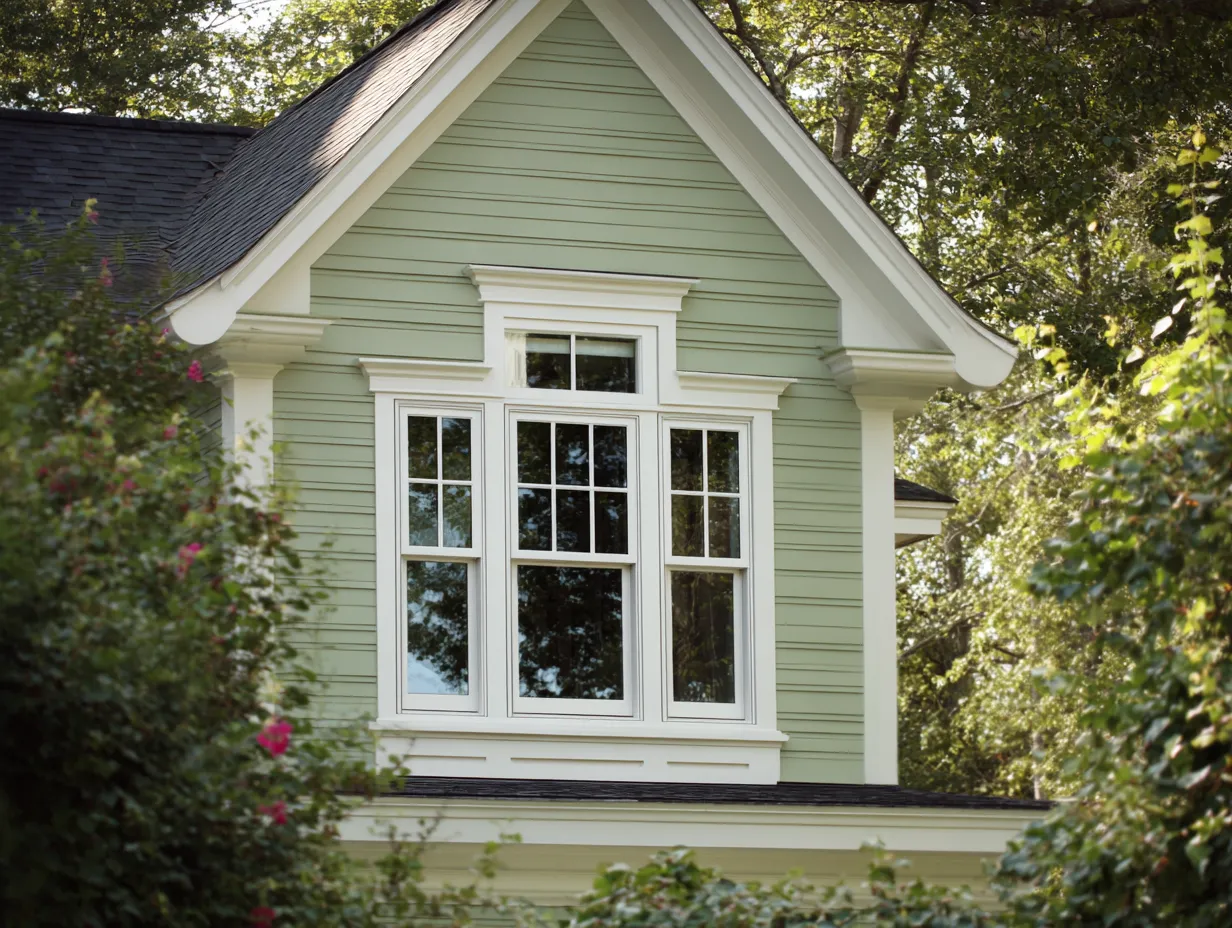
The photo shows a rustic home featuring exterior window trims made of brick, a design choice that exudes a sense of timeless charm and durability. The natural red brick trim pairs beautifully with the home’s cream exterior, creating a rich and inviting palette.
One of the key attractions of this brick window trim is its ability to blend seamlessly with the home’s overall architectural style. Its colour and texture resonate with the rustic design, bringing a sense of harmony and cohesion to the façade. The brick trim, with its rugged texture and earthy tones, adds a layer of depth and interest to the exterior design.
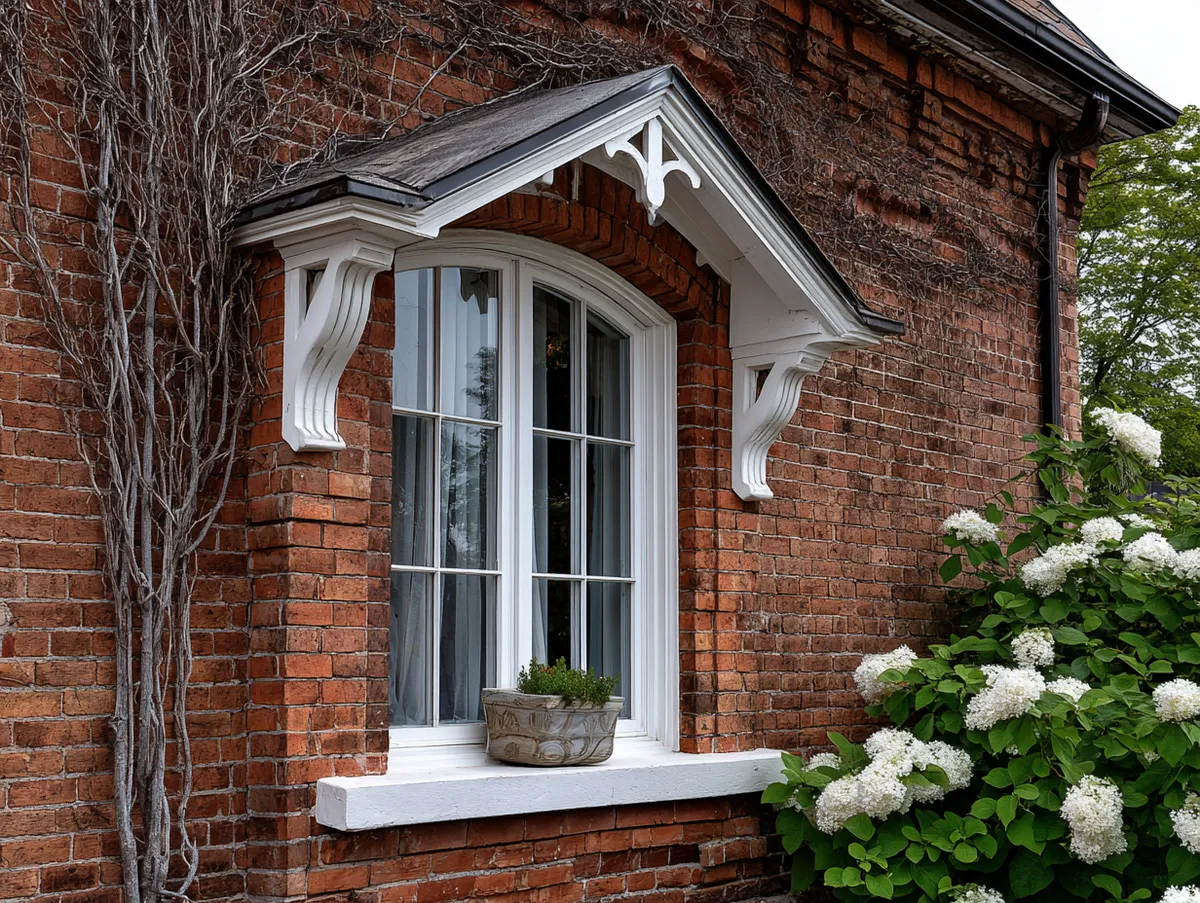
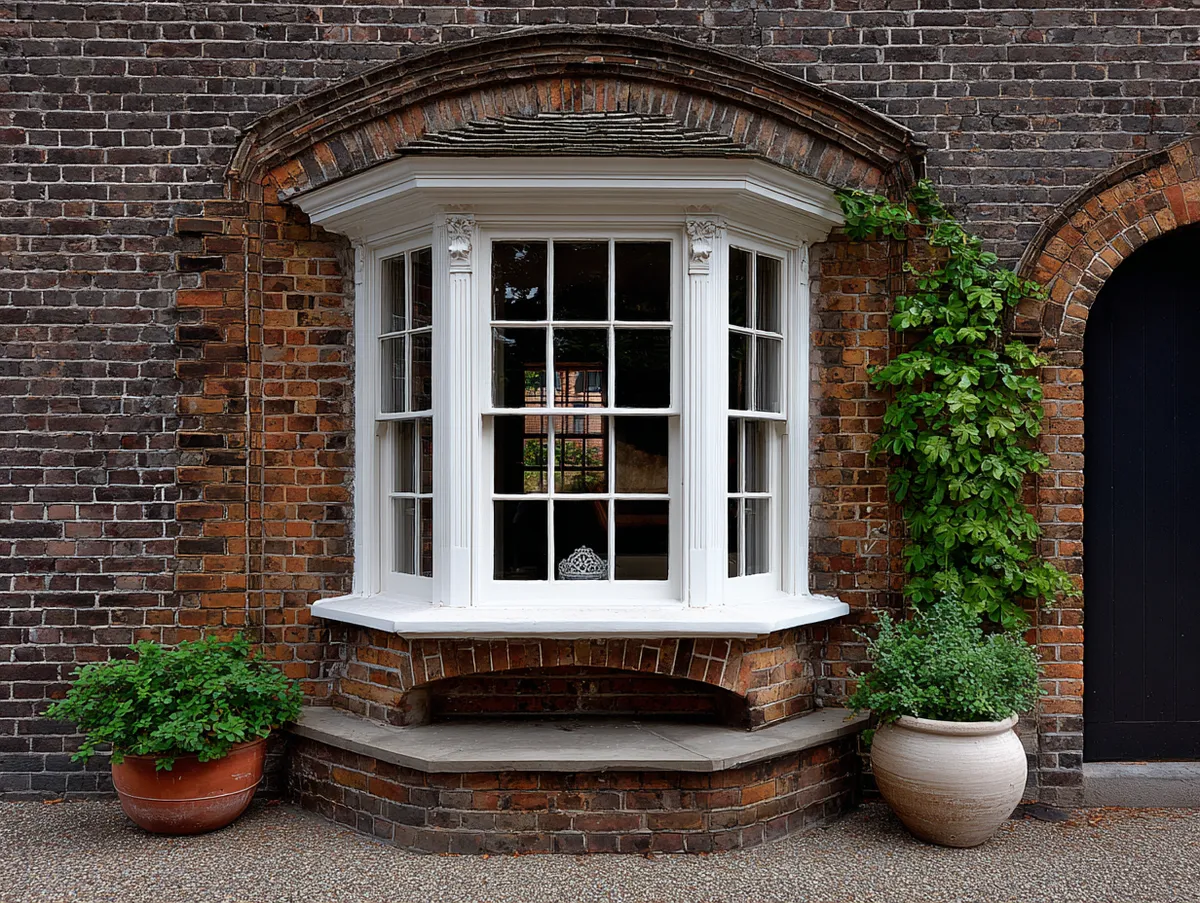
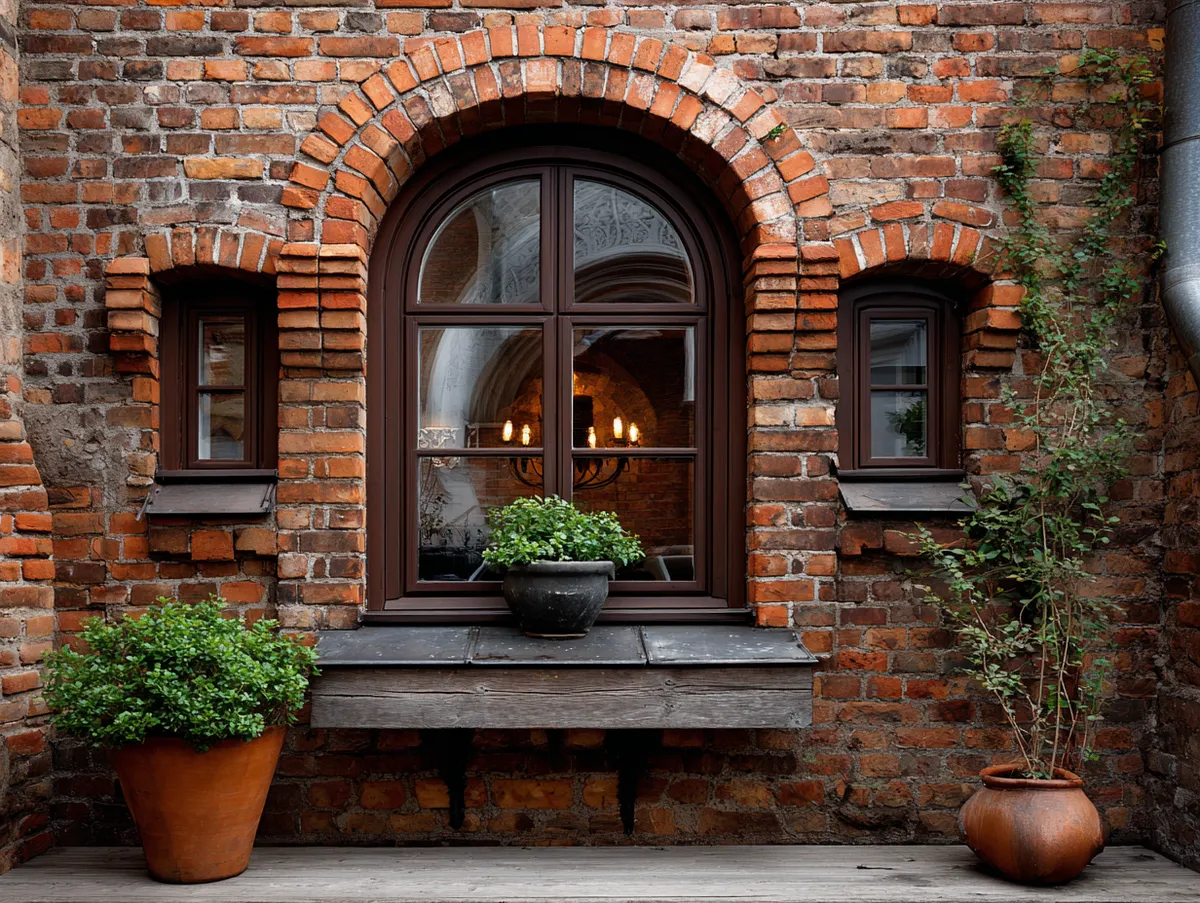
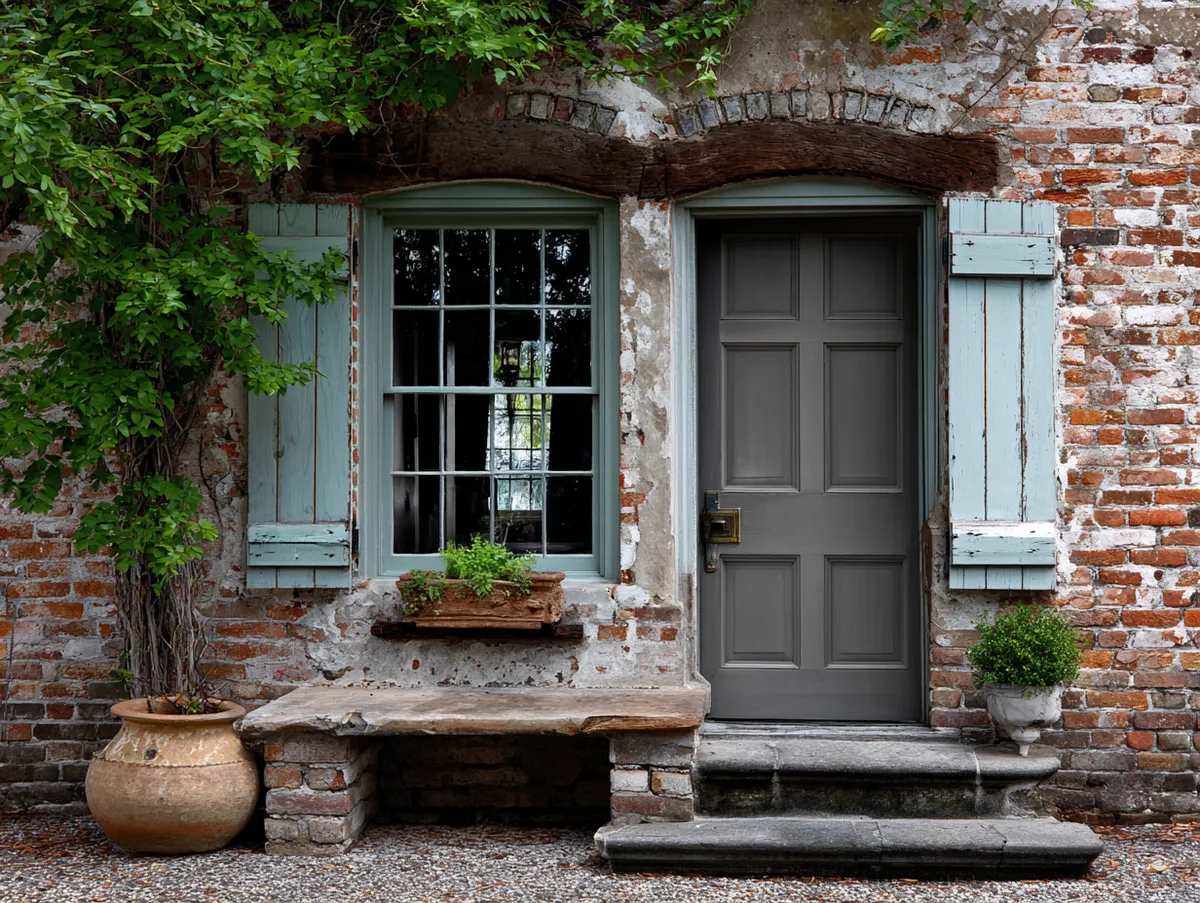
Brick trim — sometimes called a brick mould or soldier course — costs between $10 and $20 per linear foot installed, depending on your region and the mason’s schedule. That’s two to three times what wood or PVC runs. But brick doesn’t rot, doesn’t peel, and doesn’t care about your climate. It just sits there looking good for a hundred years.
The downside nobody mentions? Brick trim adds real weight to the wall assembly. On a wood-frame house with vinyl siding, you can’t just slap brick around the windows without a steel lintel above each opening and proper flashing behind it. Skip the lintel and you get a crack running from the window corner to the roofline within five years. I’ve seen it happen on a neighbor’s 2018 build.
Mortar color matters more than most people think. A cream-colored mortar with red brick reads traditional farmhouse. A dark grey mortar with the same red brick reads industrial loft. Same brick, totally different personality. Ask your mason for a mortar sample board before committing. It’s a $0 upgrade that prevents a $5,000 regret.
Real brick isn’t your only option. Thin brick veneer panels from companies like General Shale or Boral run about $6 to $12 per square foot and weigh a fraction of full-depth brick. You glue them to a cement board substrate, grout the joints, and from the street nobody can tell the difference. I recommended these to a friend on a budget last year and her contractor had the whole front elevation done in two days.
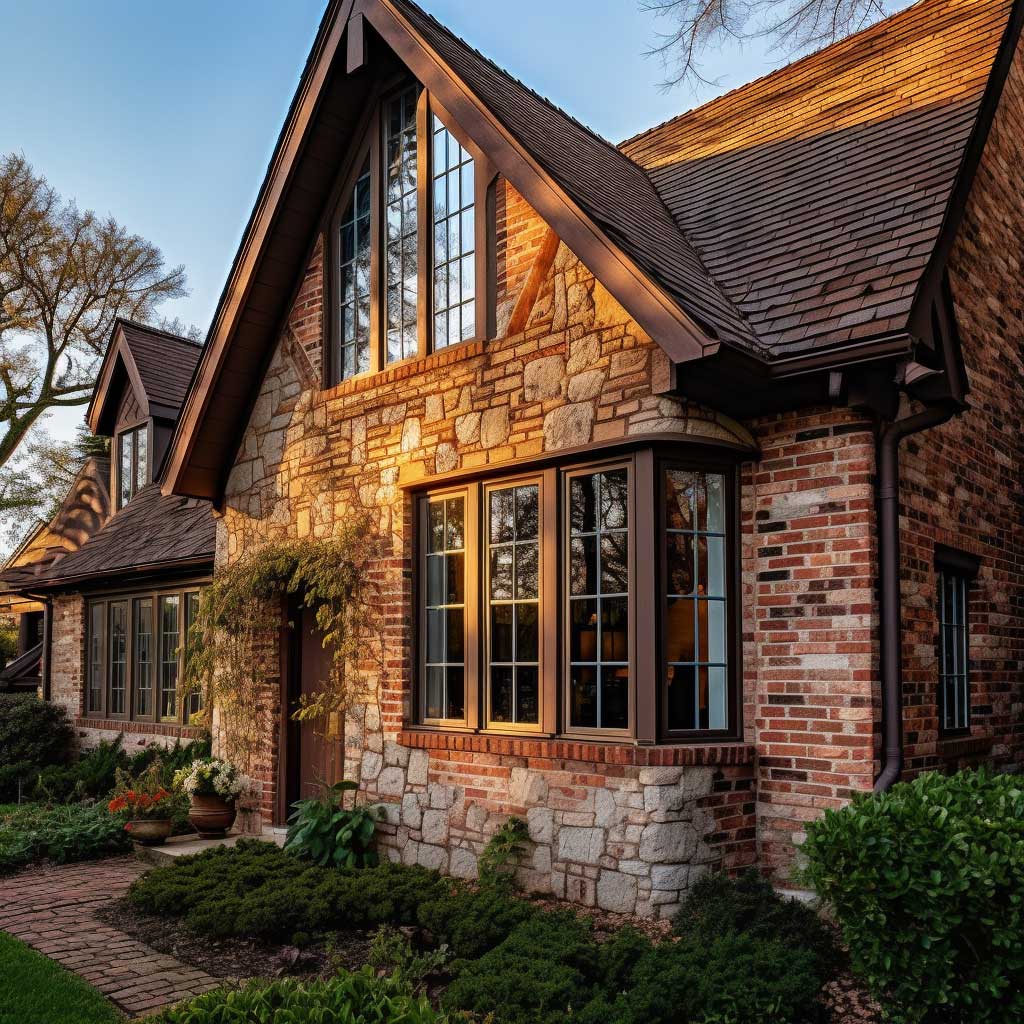

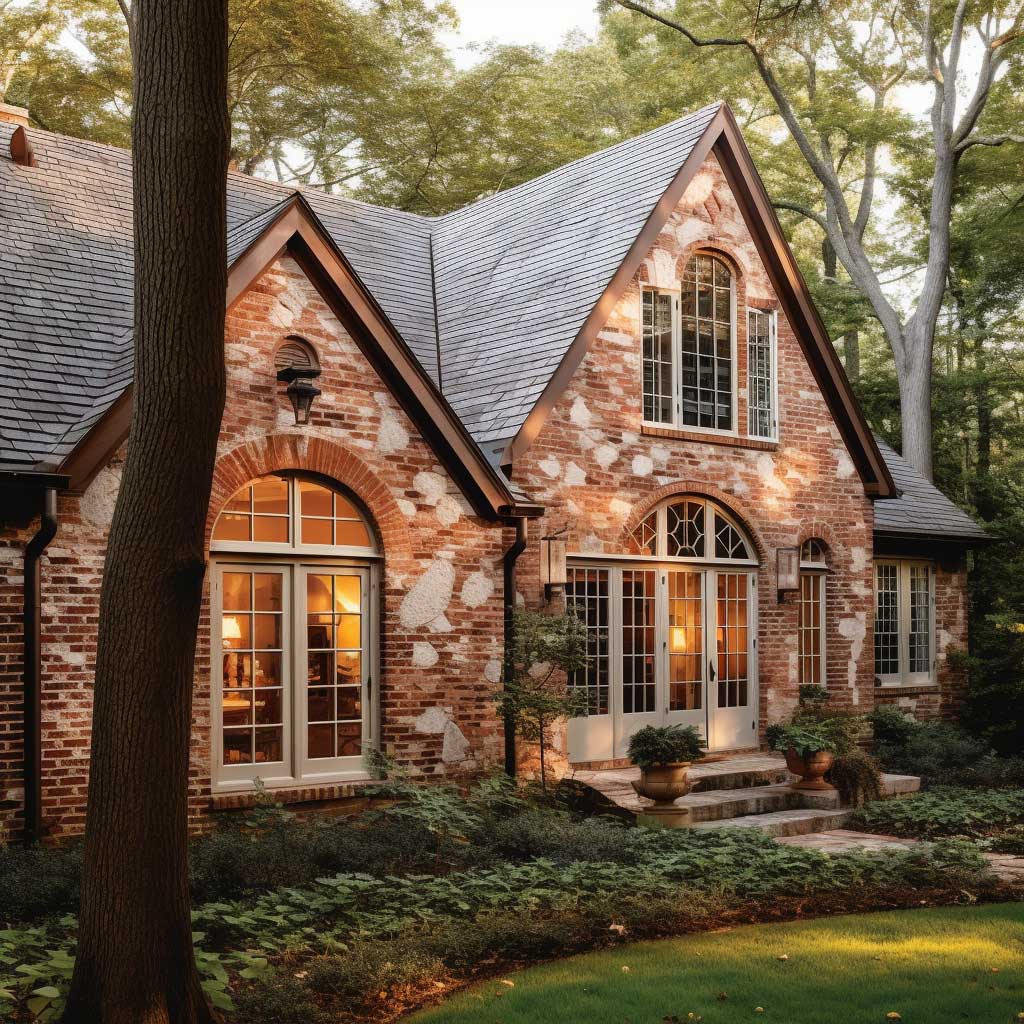
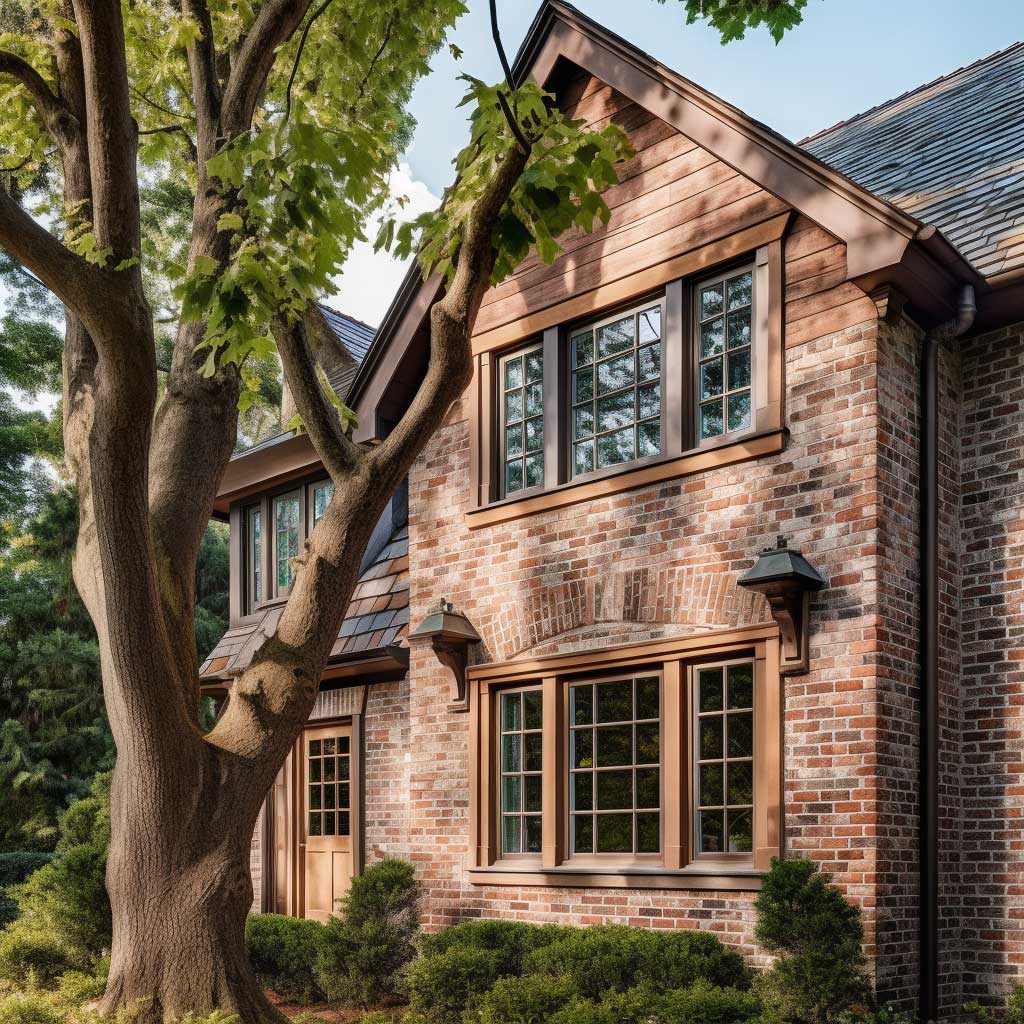
Aside from aesthetics, brick as a material for window trim has numerous practical benefits. Brick is highly durable and weather-resistant, capable of withstanding extreme weather conditions. It also requires minimal maintenance, making it a cost-effective long-term option for homeowners.
Functionality is inherent in this design too. The brick window trim provides excellent insulation, enhancing the home’s energy efficiency by preventing drafts and heat loss. It also protects the window frame from external elements, helping to prolong the window’s lifespan.
The choice of brick for the window trim also pays a nod to the traditional construction methods, grounding the home in a sense of history and permanence. It’s a design decision that not only enhances the home’s aesthetics but also its value.
In conclusion, this photo illustrates the enduring appeal of brick exterior window trim options. It showcases how brick, with its natural beauty, durability, and practical benefits, can bring a touch of timeless charm to any home.
Bottom Line on Exterior Window Trim
Trim picks come down to three things: your budget per linear foot, how often you want to repaint, and whether your house style can handle the weight or profile you’re choosing. Wood looks the richest but demands the most babysitting. PVC and aluminum sit in the sweet spot of cost and zero maintenance. Bold paint is the cheapest way to make a facade look custom. Brick is the buy-it-once option that outlasts every other material on this list.
Don’t overthink it. Pick one material, test one color on the actual wall, and commit. The biggest mistake I see homeowners make is analysis paralysis — they spend six months comparing samples and meanwhile the bare wood around their windows is soaking up rain every week. Get the trim up, get it sealed, and enjoy the curb appeal bump. Your house will look like it got a $30,000 facelift for under $2,000.