Exterior window trim ideas separate houses that photograph well from houses that just sit there. Stand across the street from your own home and squint — the trim is what registers first, before the siding color, before the landscaping, before anything else. Choosing the wrong profile or skipping trim entirely doesn’t read as “clean”; it reads as unfinished. Choosing the right one can make a $300,000 house look like it cost considerably more.
The five approaches below cover every major outdoor window trim style — Colonial white, modern black, stone accent, vibrant color, and reclaimed wood — with verified costs, maintenance intervals, and the one decision in each style that most homeowners get wrong. Installers currently price window and door casing at $5 to $15 per linear foot depending on material and complexity, according to Angi’s 2026 data, so understanding what you’re specifying before you call a contractor is worth your time.
The order here follows the original photography, not a ranking. Every style works — in the right context with the right execution. The section on what not to do matters as much as the section on what to do; a mistimed material choice or a mismatched profile scale is how houses end up looking assembled rather than designed.
– White Colonial trim in Sherwin-Williams Extra White SW 7006: the most forgiving choice on a muted or brick facade, but needs repainting every 4–5 years on wood substrates.
– Black trim on a white or light exterior: hides wear better than white, absorbs more UV heat — avoid on south-facing vinyl frames without checking the manufacturer’s warranty.
– Stone surrounds: manufactured veneer runs $15–$35 per linear foot installed; natural stone runs $30–$100+. Both last 50+ years with minimal maintenance.
– Vibrant color trim: one accent color outperforms multi-color schemes in resale contexts — pick one, commit to it, repaint on the same 4–5 year cycle as any wood trim.
– Reclaimed wood: visually rich, but the material range is $3–$12 per linear foot and quality varies dramatically — always see samples before ordering.
White Colonial Outdoor Window Trim Reads Timeless — Until You Pick the Wrong Sheen
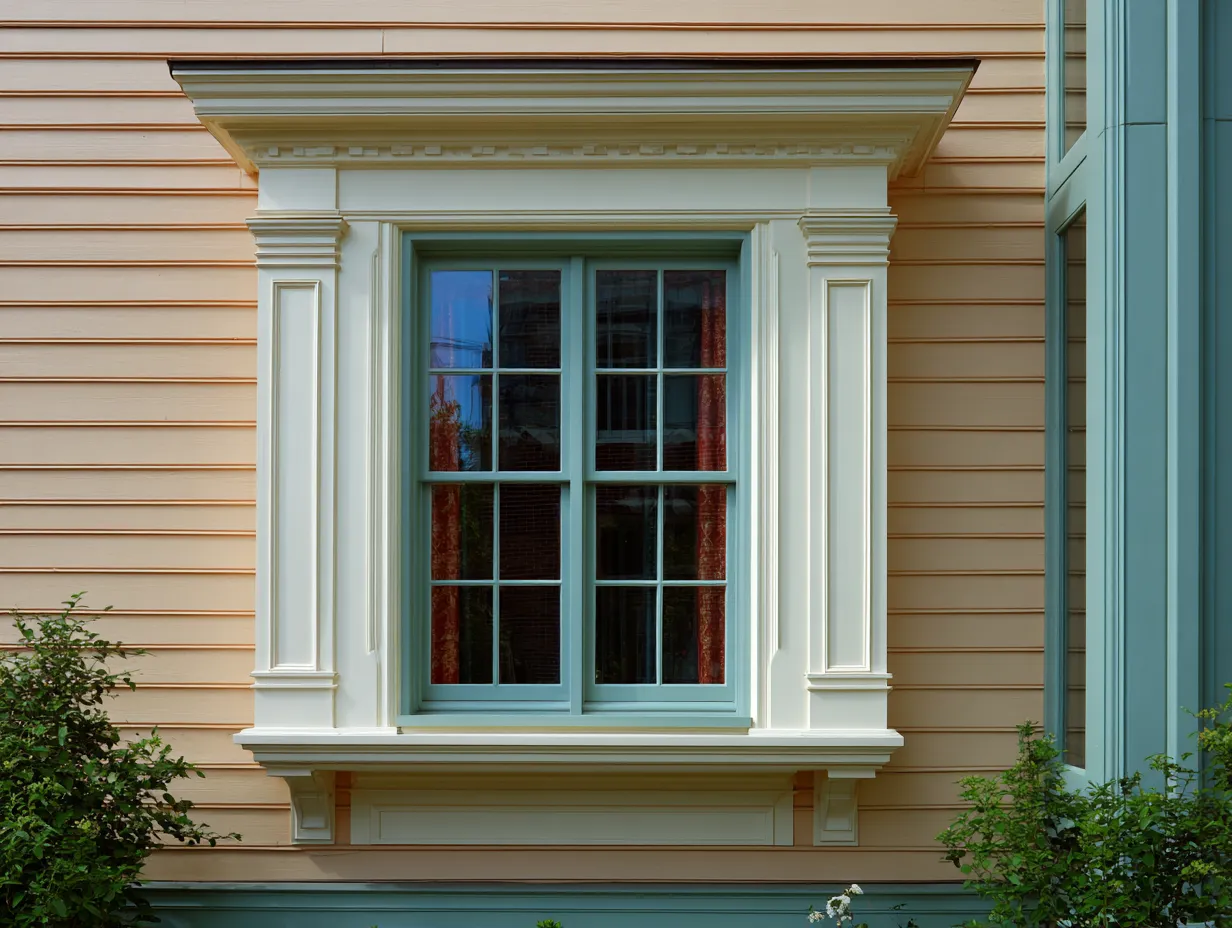
Colonial-style white outdoor window trim works because the contrast does the heavy lifting: crisp white casings against muted siding draw the eye directly to the window line, creating a rhythm across the facade that reads as intentional rather than accidental. Sherwin-Williams SW 7006 Extra White is the professional’s default for this application — it sits at a true optical white that doesn’t shift warm under natural light the way off-whites do. The key variable isn’t color; it’s sheen. Semi-gloss on the entire casing is a common mistake. Stylists recommend satin on the main casing body and semi-gloss only on the sash — mixing sheens creates shadow definition that flat-and-semi-gloss-everywhere cannot.
What’s the maintenance reality with white wood trim? Exterior wood trim requires repainting every 4 to 5 years — on south- and west-facing windows in humid climates, that interval can shrink to 3 to 4 years. The cost to repaint trim runs $1 to $3 per linear foot in materials. Budget that cycle into your planning from the start; it’s the reason many homeowners switch to cellular PVC trim boards, which hold paint longer and don’t rot. The trade-off is that PVC should never be stained — only painted — because penetrating stains won’t absorb and will peel by year two.
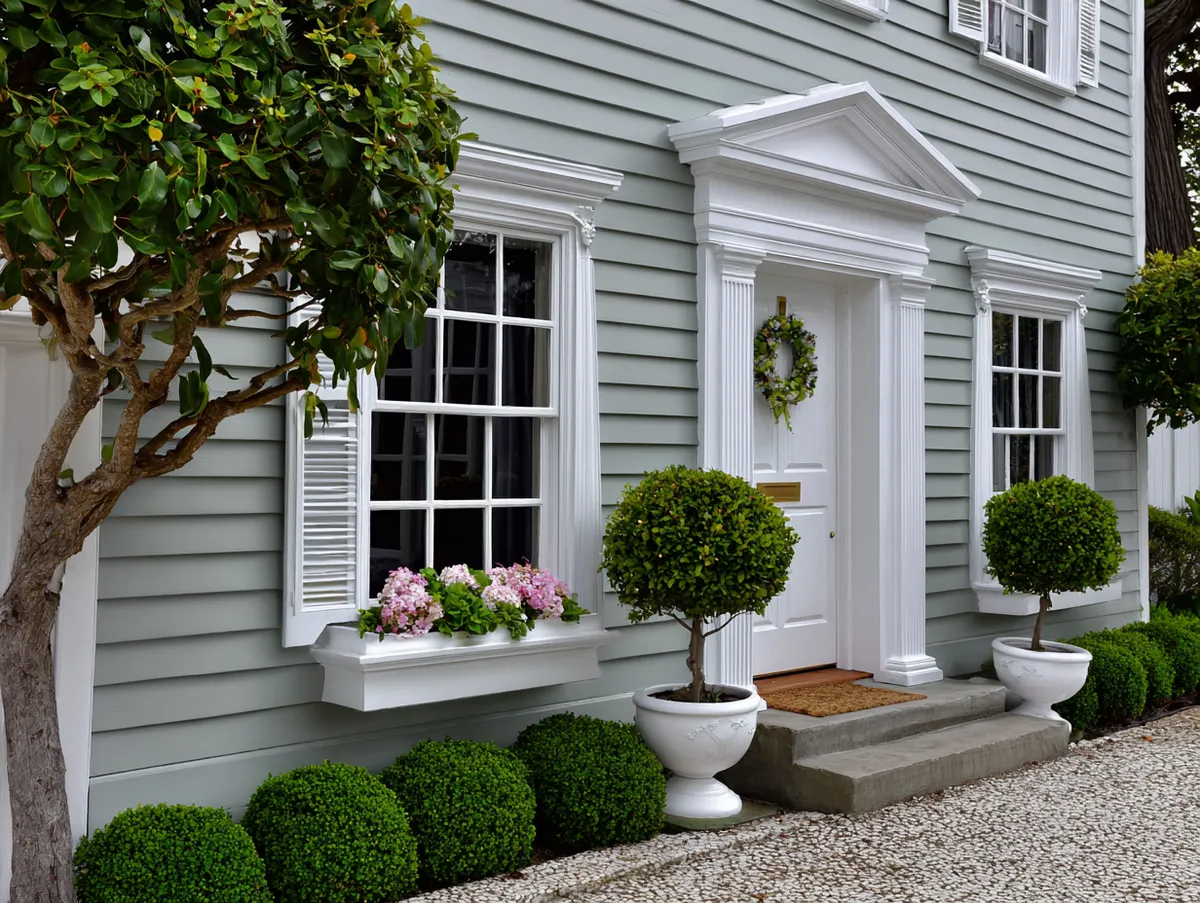
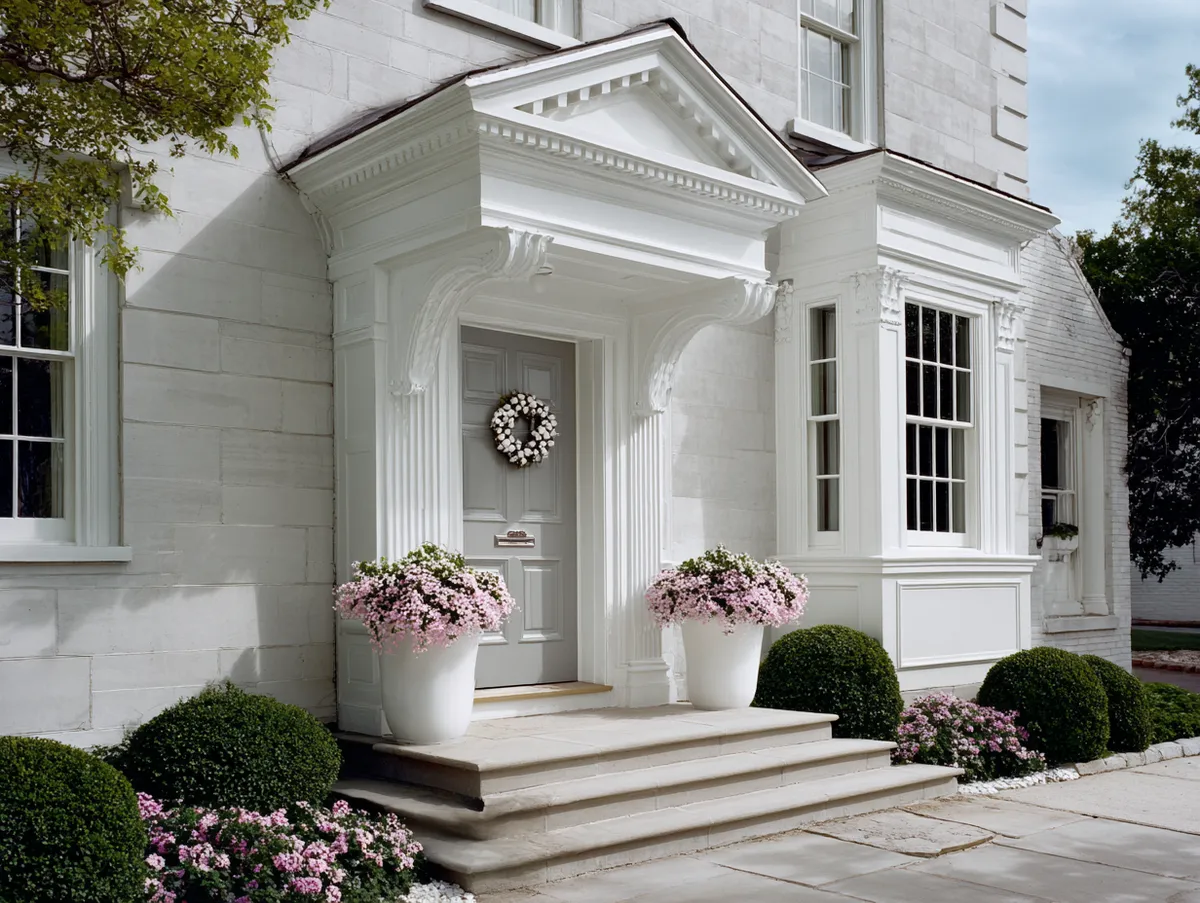
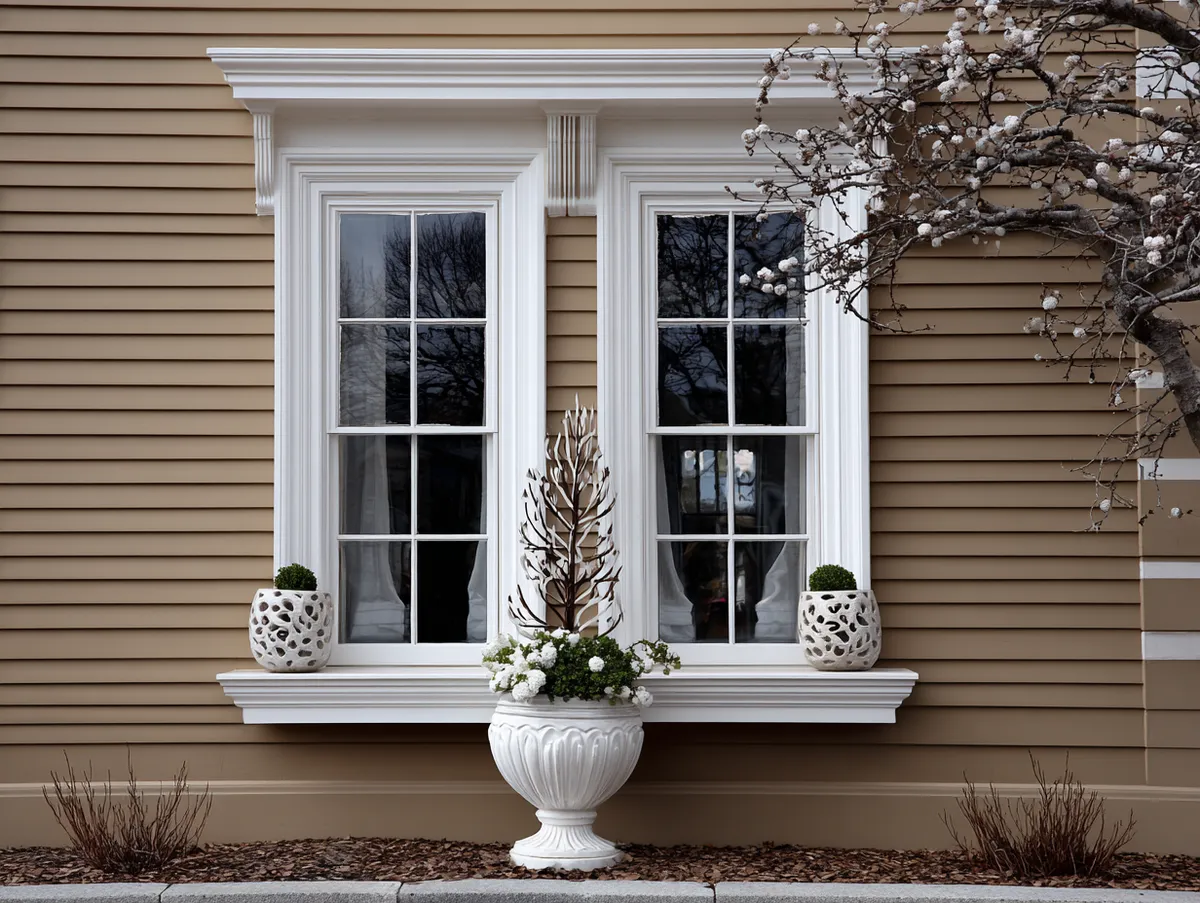
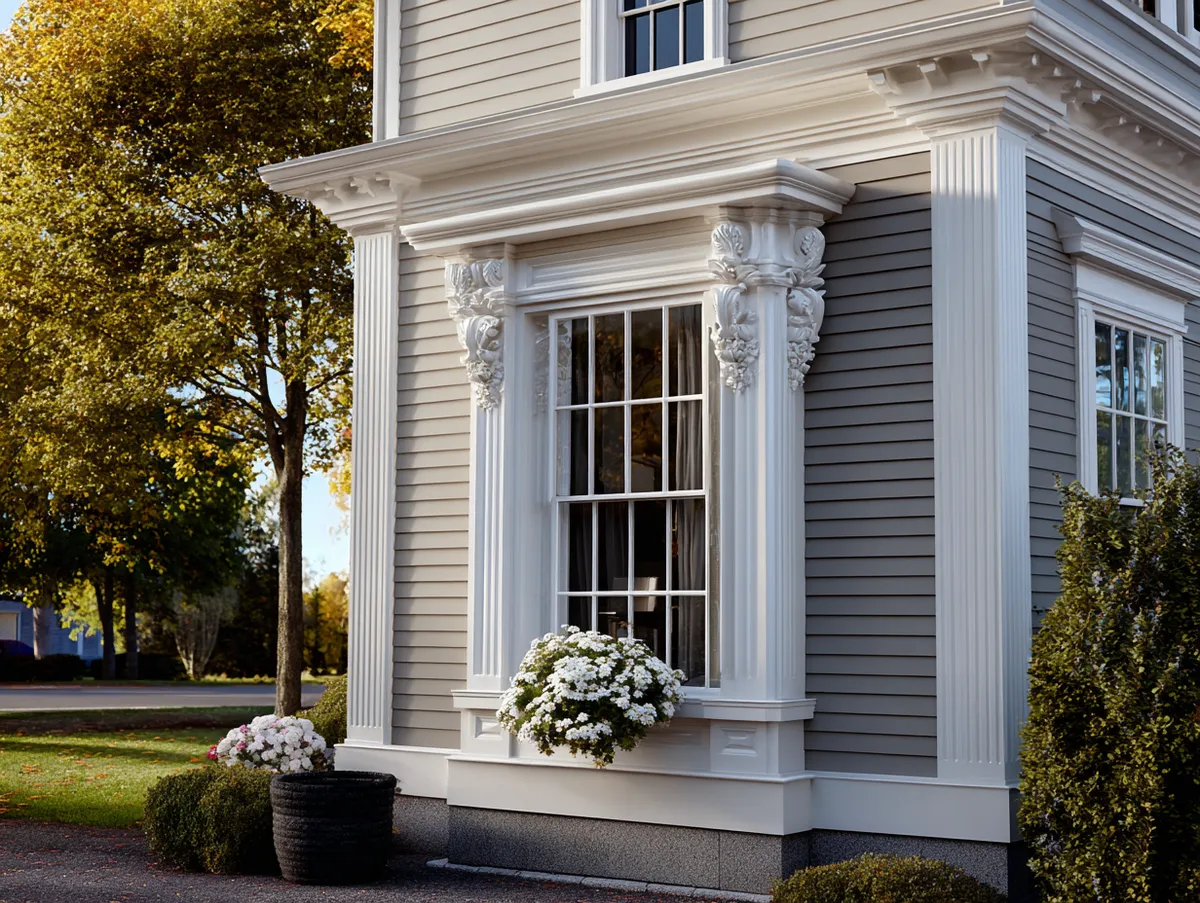
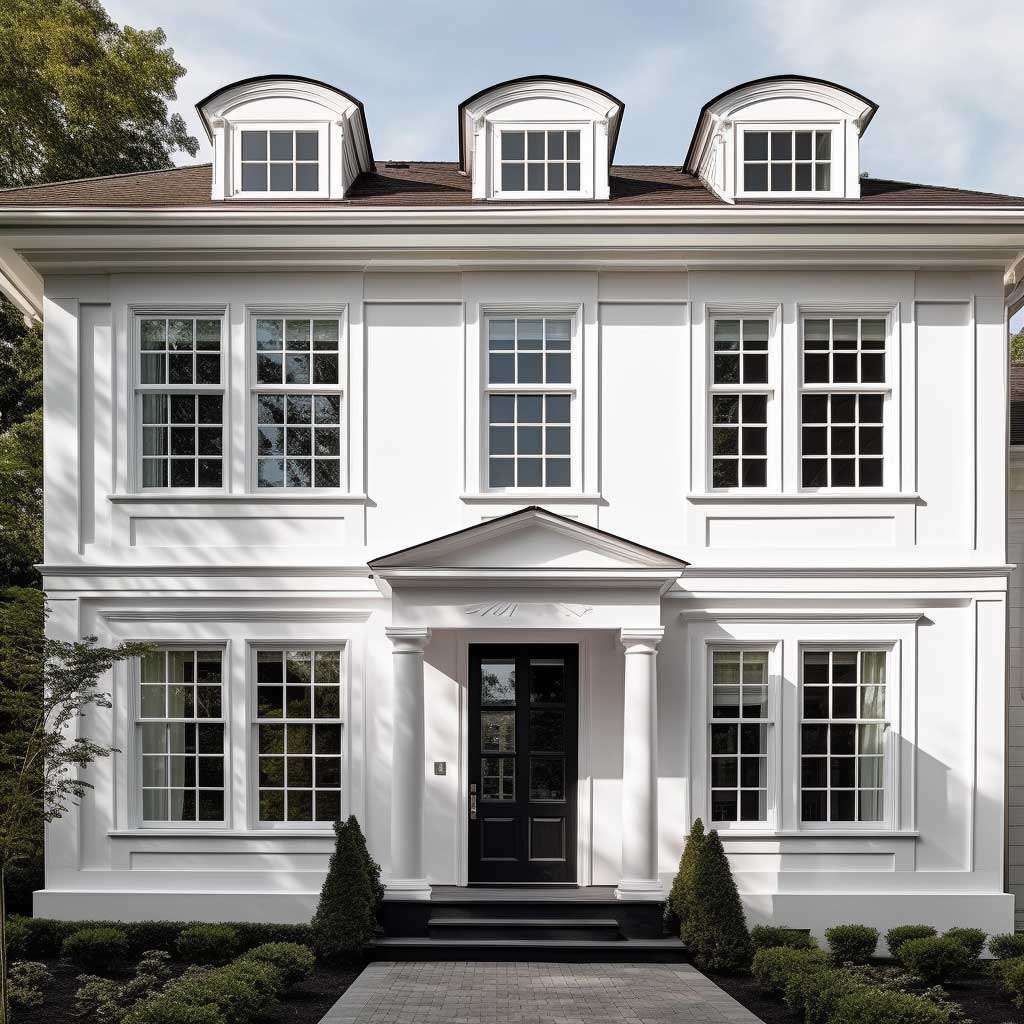


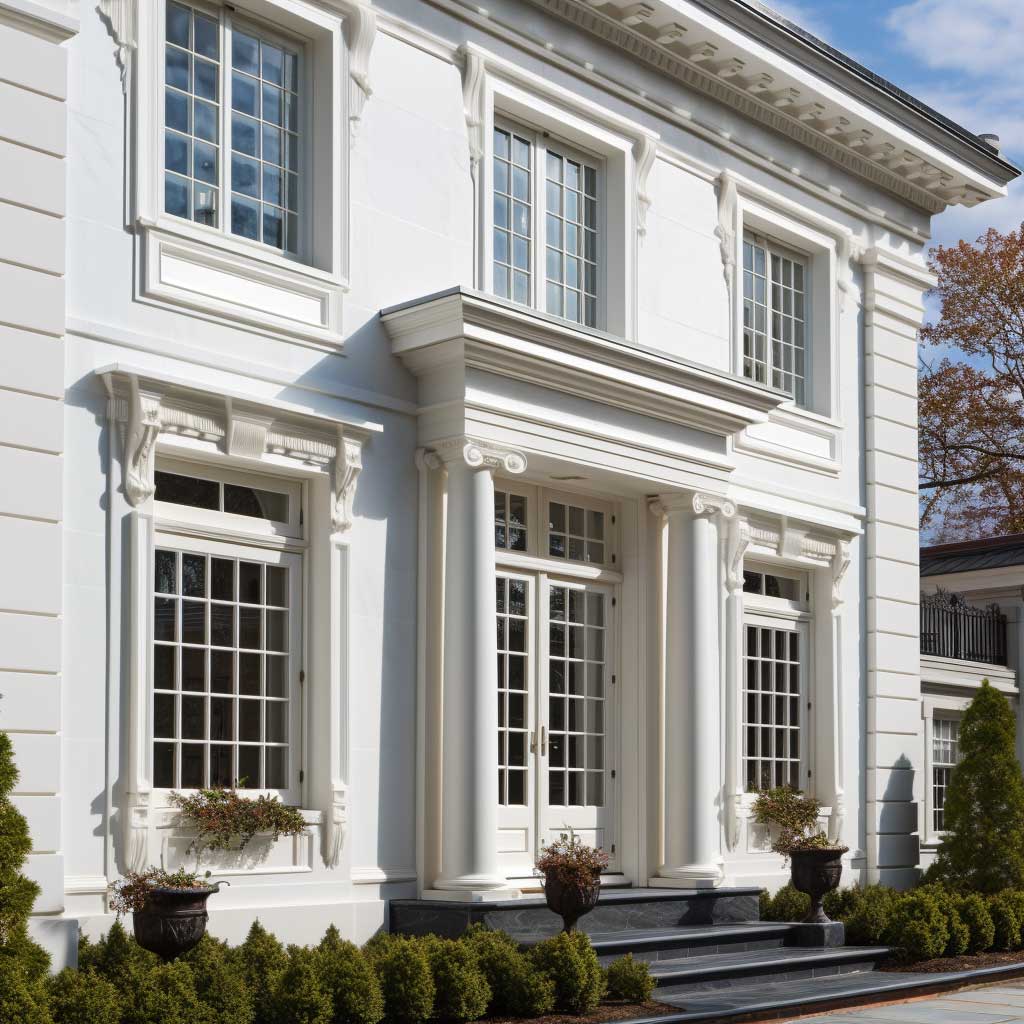
The sill is where Colonial trim earns or loses its credibility. A proper Colonial window sill overhangs the casing by at least an inch on each side and slopes at 10 degrees toward the exterior. Skip the overhang and water wicks back under the frame — that’s a rotting jack stud within three winters on a wood-frame house, regardless of how good the paint looks from the curb. This is the detail that photographs never show and that contractors frequently skip when no one specifies it.
One anti-rule worth stating plainly: white Colonial trim does not belong on every house. Against warm-toned stucco or tan vinyl siding, white casings can read as harsh rather than clean — try Benjamin Moore Chantilly Lace OC-65 or a warm cloud white before committing to a pure optical white. The trim should contrast the wall, not fight it. Installing Colonial-style trim around a picture window with snap-in grilles instead of real divided lights is another fast route to a result that reads as “builder grade” from across the street, regardless of how well the trim itself is installed.
Sleek Black Exterior Window Trim Hides What White Makes Visible
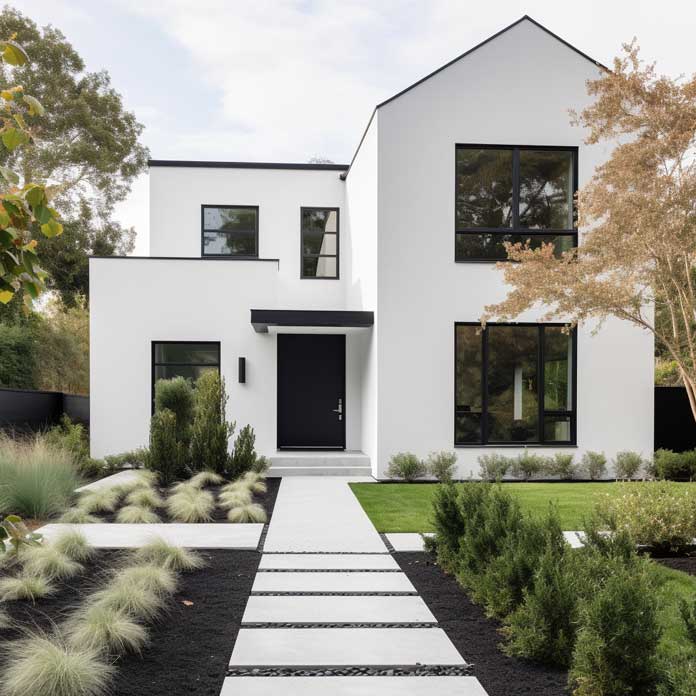
Modern exterior window trim in black works through contrast logic that is almost the inverse of the Colonial white approach — instead of white making windows pop against a dark wall, black frames make windows recede into the facade while giving the glass itself more visual weight. On a white or pale gray exterior, black casings function like a picture frame: they stop the eye exactly at the window edge and force attention inward. The effect reads as architectural intention rather than decoration, which is why this approach dominates new construction in the Scandinavian-influenced and Pacific Northwest modern styles.
The practical case for black trim is underappreciated. Dark colors hide surface wear — minor dings, scuffs from window washing, the chalking that develops on any painted exterior after year three — in a way that white cannot. Repainting black trim on a 4 to 5 year cycle is the same maintenance interval as white, but the window between “looks fresh” and “looks tired” is longer because degradation is less visible. The one caution: dark trim absorbs significantly more UV heat than white, which can warp or bubble vinyl frames. This is a documented issue that many vinyl window manufacturers address with color-restriction clauses in their warranties — check before painting dark.
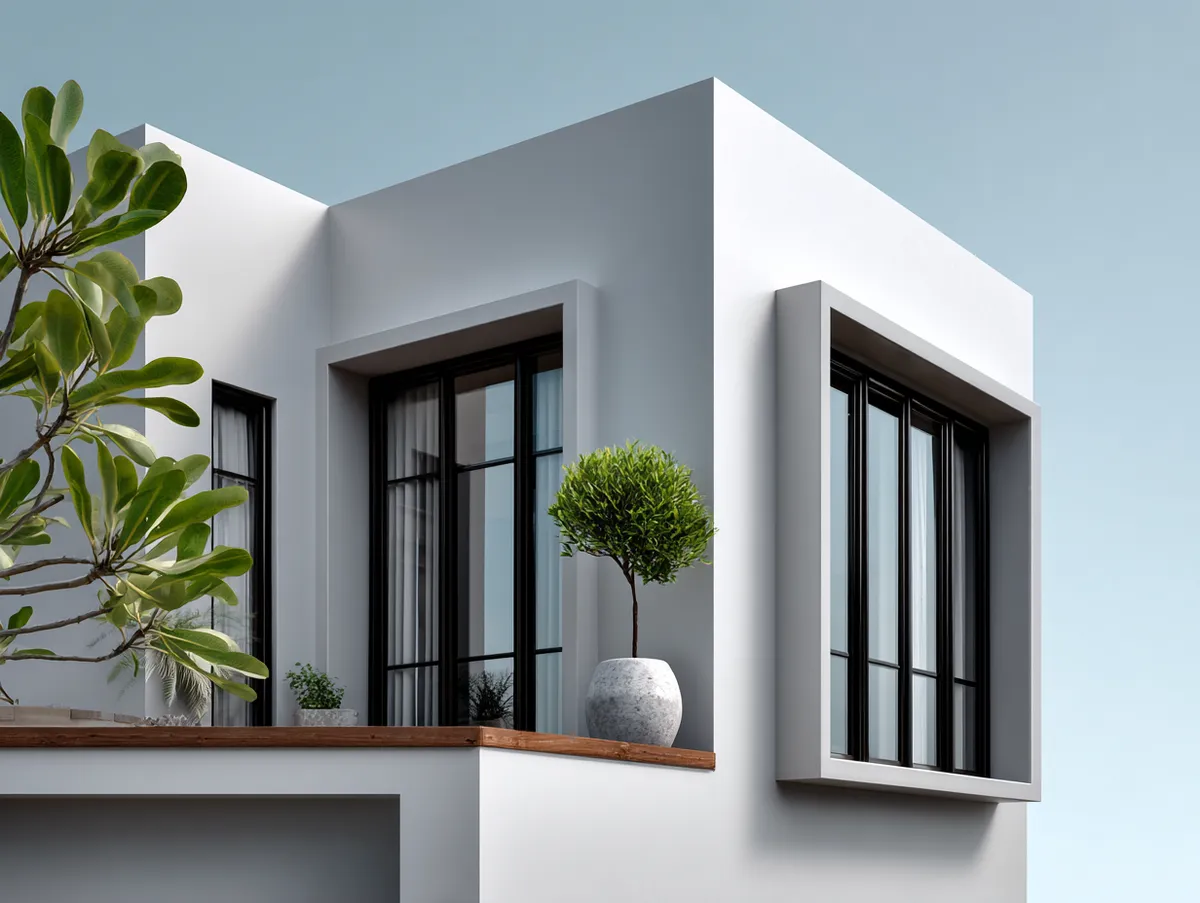
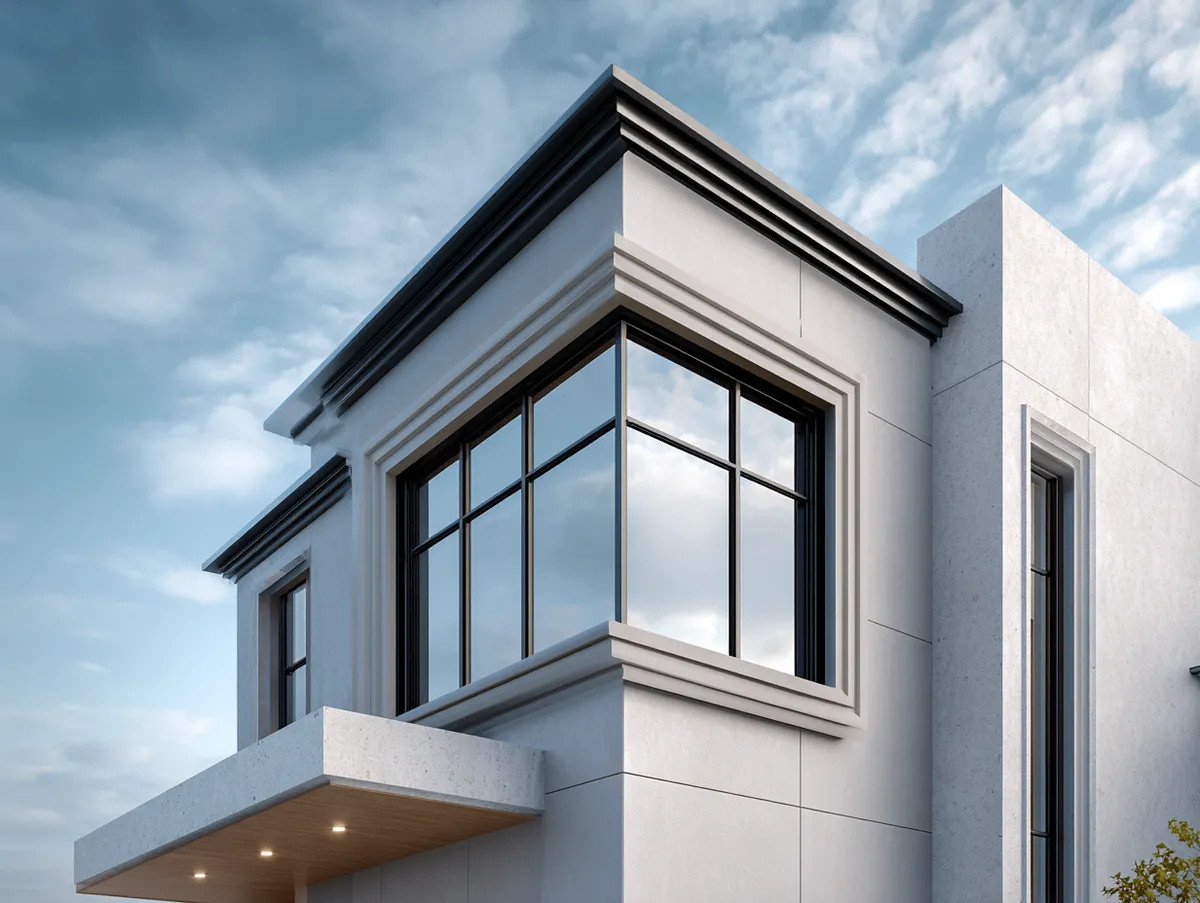
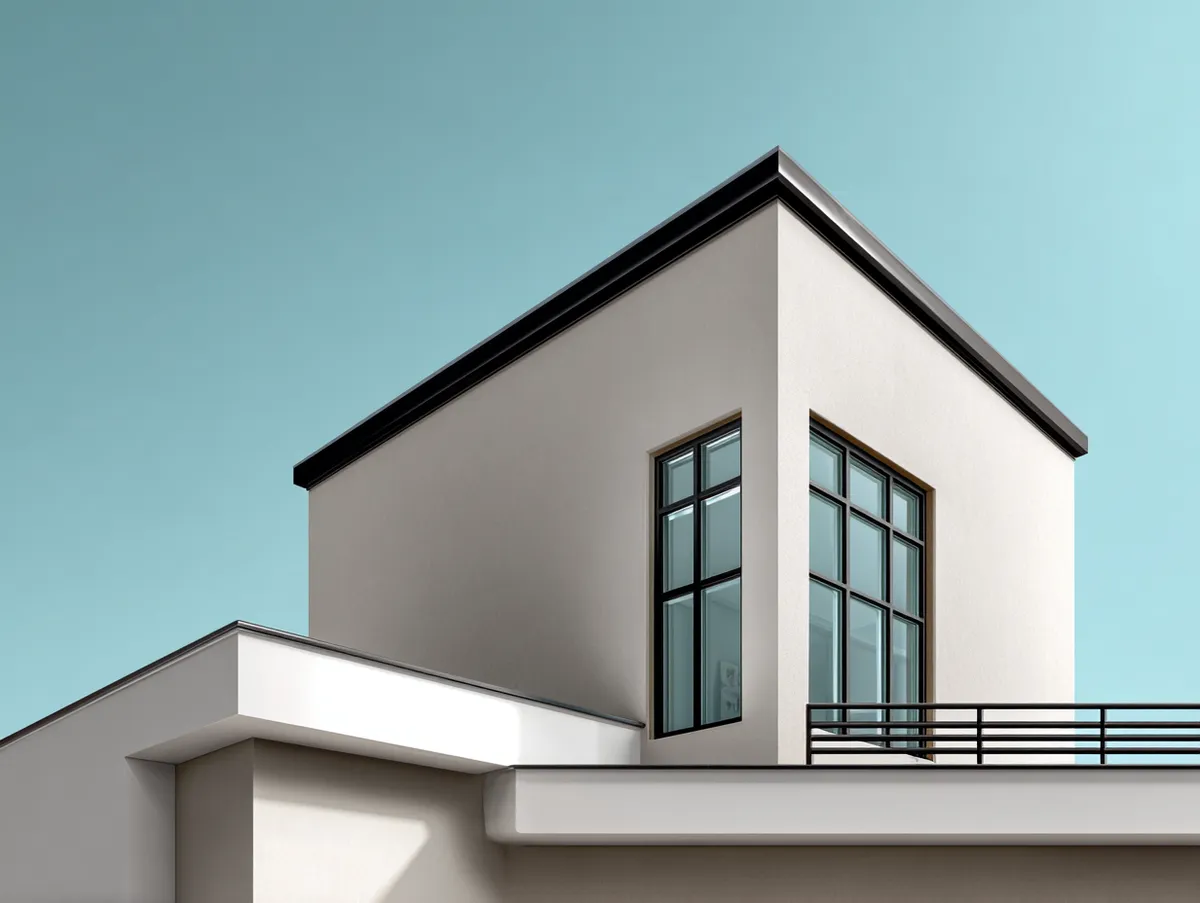
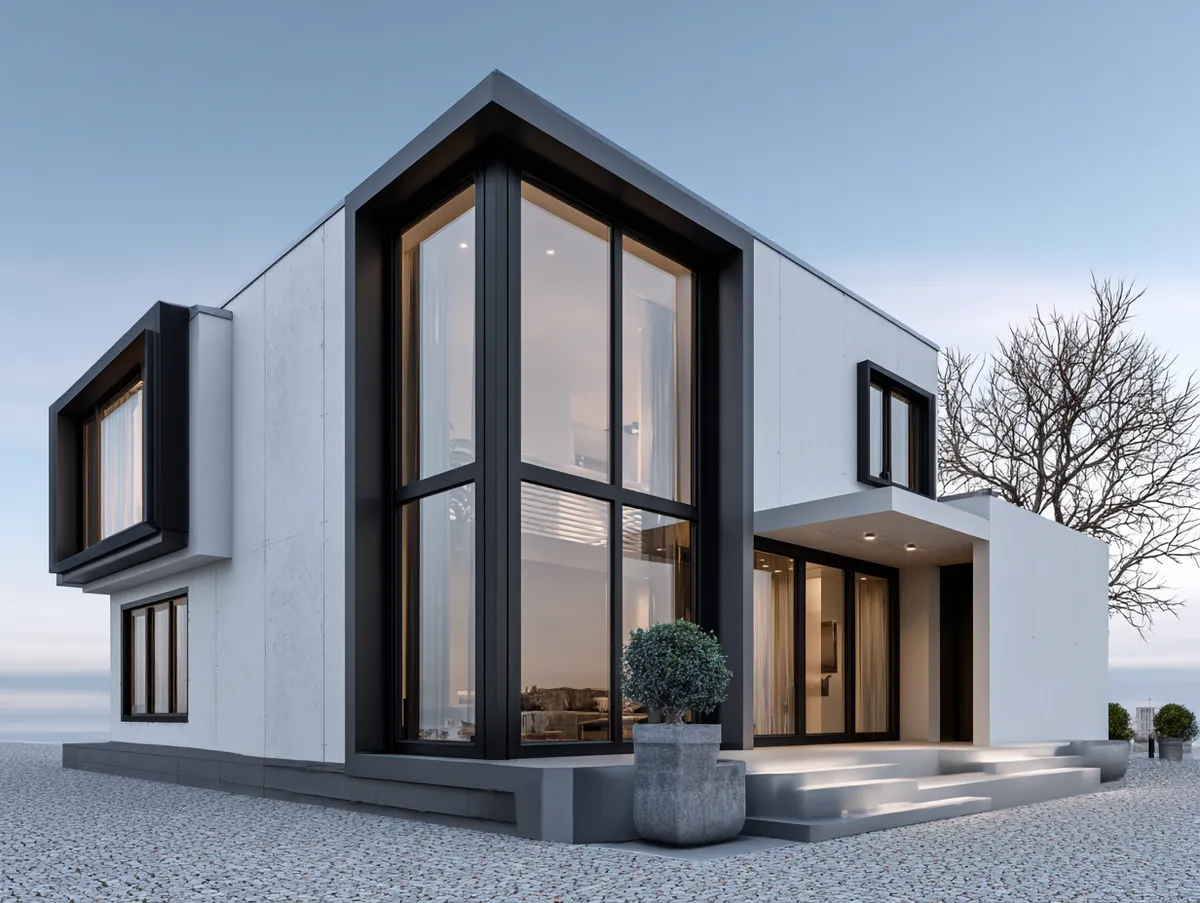


Profile choice is where minimalist black trim most often fails. The instinct is to go as thin as possible — a 2-inch flat casing flush with the siding. Try this: on any house with more than three windows on a single elevation, a flat 2-inch black casing disappears into the facade and reads as window hardware rather than trim. The trick here is a 3.5-inch flat board with a ½-inch back-band applied at the outer edge — it reads slim from a distance but throws a shadow line that registers as architectural detail in any light condition.
Don’t apply dark window trim paint directly to vinyl frames without confirming the window manufacturer’s color warranty. Most major vinyl window manufacturers — Andersen, Pella, Marvin — restrict dark exterior colors on vinyl components to prevent heat-related warping and seal failure. A trim board painted black is separate from the frame and fine; painting the vinyl frame itself dark on south- or west-facing windows is a different decision that can void the warranty and cause real structural damage within a few summers.
Stone Accented Window Trim Outlasts Every Paint-Based Option by Decades
Stone accented outdoor window trim — whether natural limestone, manufactured veneer, or cast stone — operates on a completely different maintenance logic than painted wood or PVC. You install it once and it performs for 50 to 100 years with minimal intervention, compared to wood trim’s 4 to 5 year repaint cycle. Manufactured stone veneer runs $15 to $35 per linear foot installed, while natural stone surrounds range from $30 to $100 or more per linear foot depending on stone type and regional quarry availability. The upfront cost is higher than any painted trim option, but the lifecycle math shifts dramatically over a 20-year horizon.
The visual effect of stone trim against concrete or smooth stucco is a contrast of textures rather than colors — rough against smooth, organic against geometric — and this is where the material earns its place in modern architectural design. Brands like Eldorado Stone and Coronado Stone Products offer manufactured veneer in profiles specifically designed for window surrounds, with pre-cut corners and header pieces that significantly reduce the skill required for installation versus cutting natural stone. What’s the practical difference between manufactured veneer and natural stone at normal viewing distance? At 20 feet, very little — the texture and shadow read the same. The difference shows up in material consistency and, over decades, in how the surface weathers.
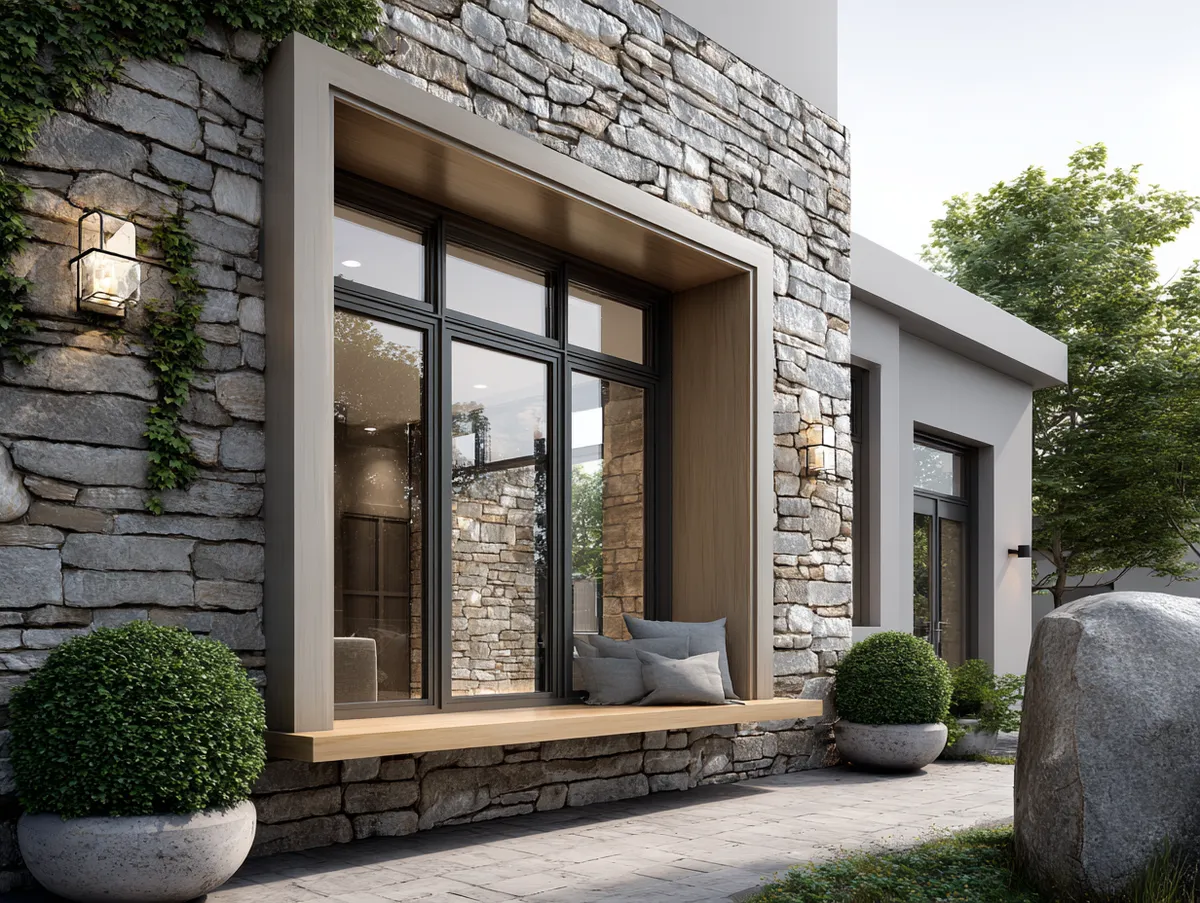
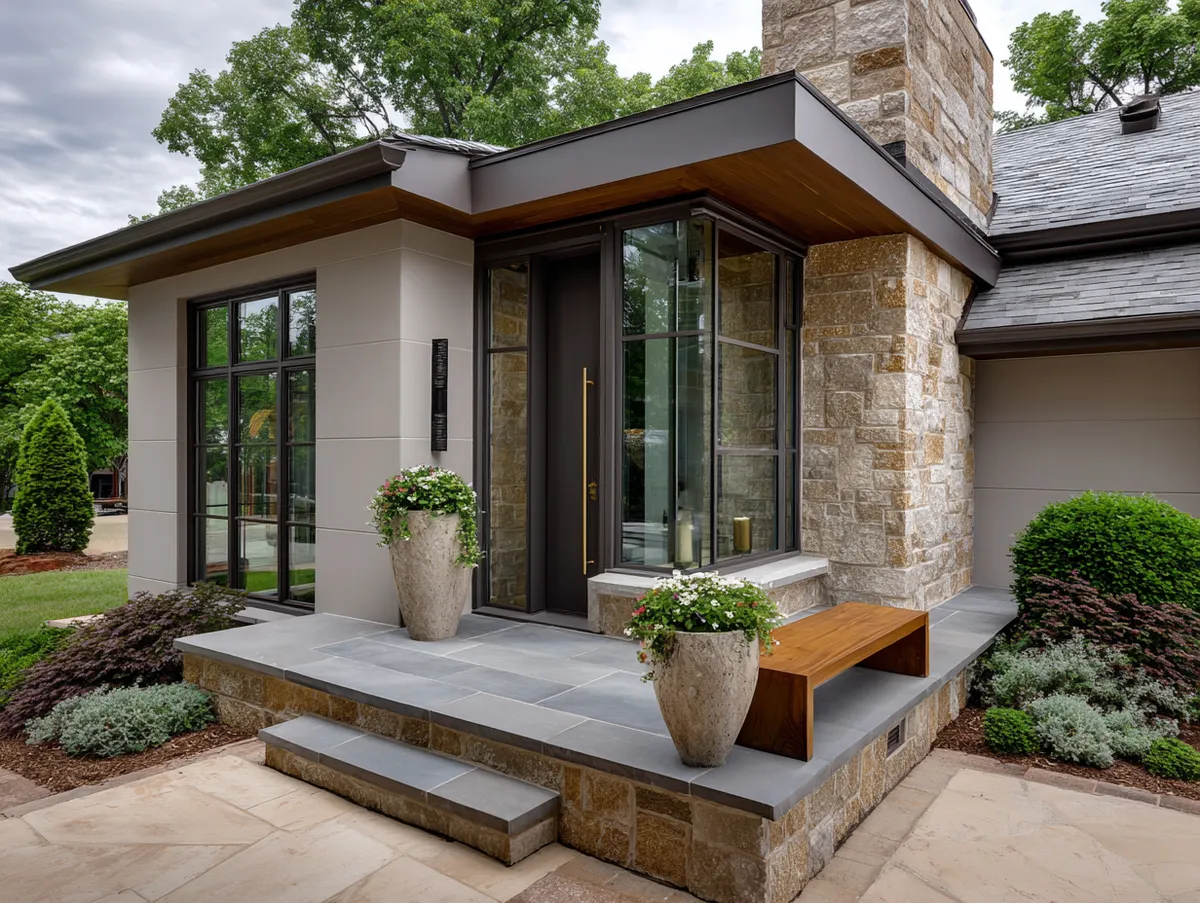
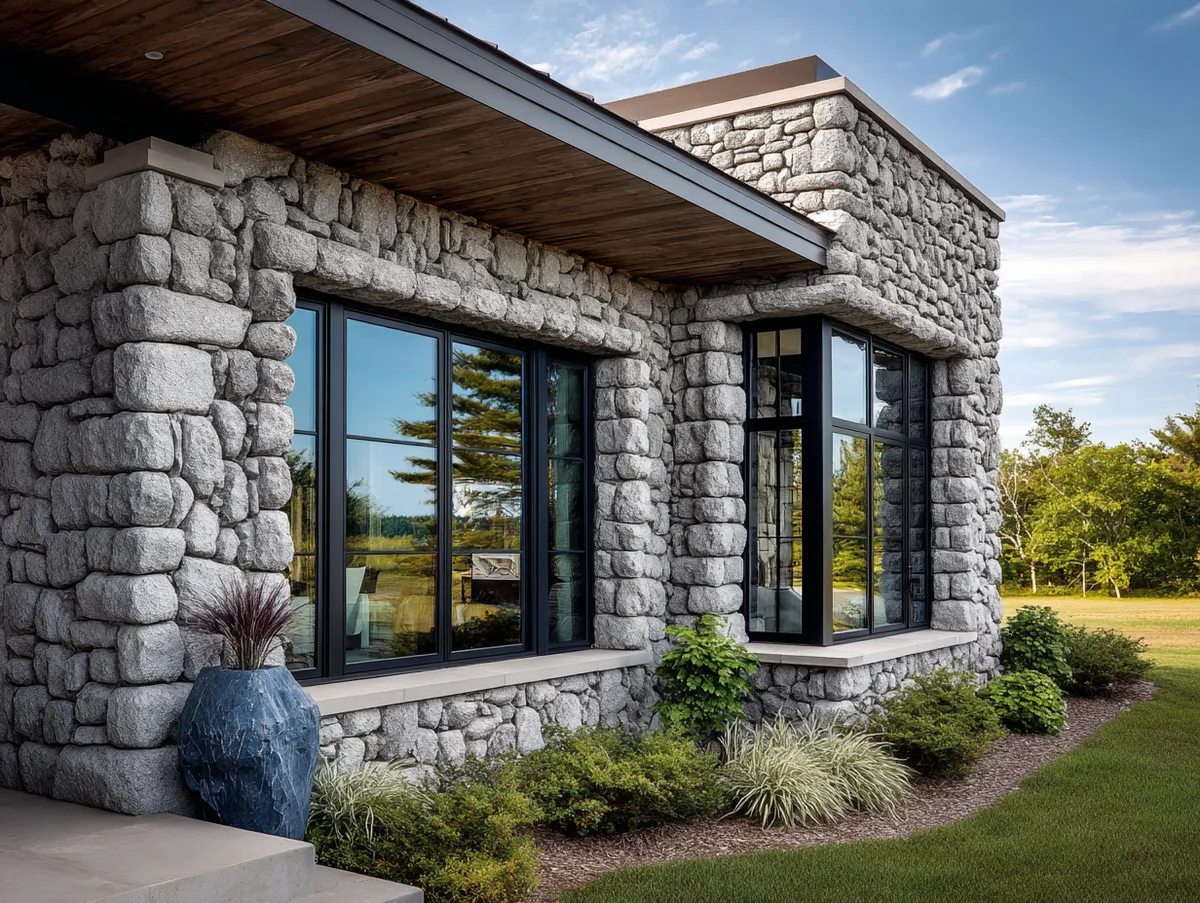
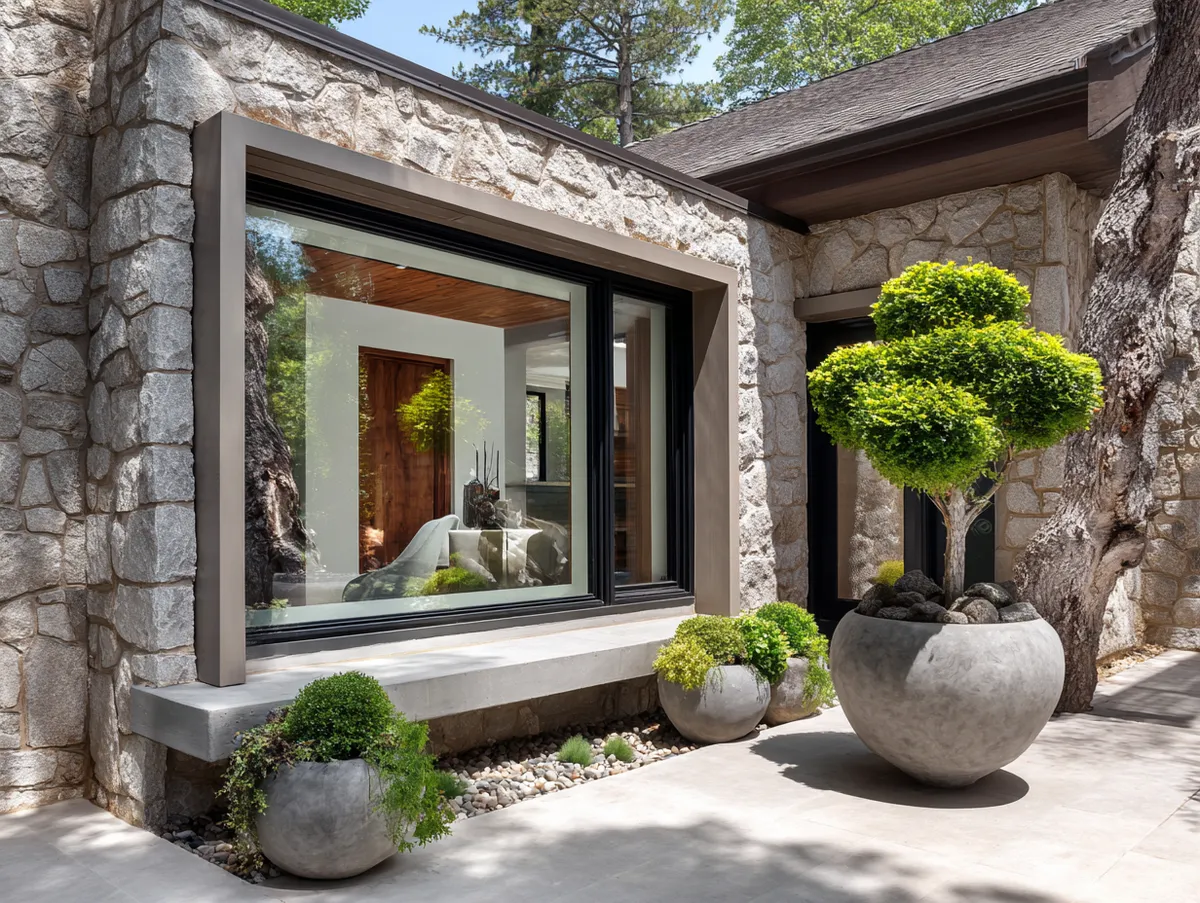


A common installation failure with stone window trim: running the surround all the way to the window frame without a flashing gap. Stone veneer must have continuous head flashing above the window opening and a weep edge at the bottom — without it, water that enters behind the veneer has nowhere to exit and will migrate into the wall assembly. This is an installation detail that no amount of beautiful stone can fix after the fact. Check the exterior window trim ideas for brick houses on this site for how the same flashing logic applies to brick surround installations, which share identical drainage requirements.
Stone trim scales with window size in a way that paint-based trim does not. A 4-inch casing profile in wood reads fine on a standard double-hung window. That same visual proportion in stone requires a surround that’s at minimum 6 to 8 inches wide — narrower stone surrounds look like a thin border rather than a structural element, and the eye reads the window as untrimmed. Think of it like a picture frame: a small frame on a large canvas looks accidental; the frame must match the weight of the work it contains.
Color Pop Exterior Window Trim Ideas Work — One Hue at a Time
Vibrant exterior window trim ideas — trim painted in a bold single color rather than white or black — operate on the principle that color at a window frame draws the eye before siding, before doors, before landscaping. A terracotta, cobalt, or forest green trim on a neutral stucco or cedar exterior can shift the entire reading of a facade from “nice house” to “considered house” in a way that any amount of new plantings cannot. The key word in that sentence is “single”: one accent color across all window trim reads as a design decision; two or three different colors on different windows reads as indecision or a painting accident.
Stylists recommend choosing a trim color that appears somewhere else in the landscape or hardscape — a planting bed color, a stone walkway tone, the color of an adjacent fence — so the trim reads as part of a palette rather than a decorative add-on. The most durable choice for bold-color exterior trim is a 100% acrylic exterior paint in a satin or semi-gloss finish; Benjamin Moore Aura Exterior or Sherwin-Williams Duration hold bold colors through UV exposure considerably better than mid-grade paints, and on deep colors the difference between quality tiers shows up in year two rather than year seven. Both product lines are available in custom deep-base tints for non-standard colors.

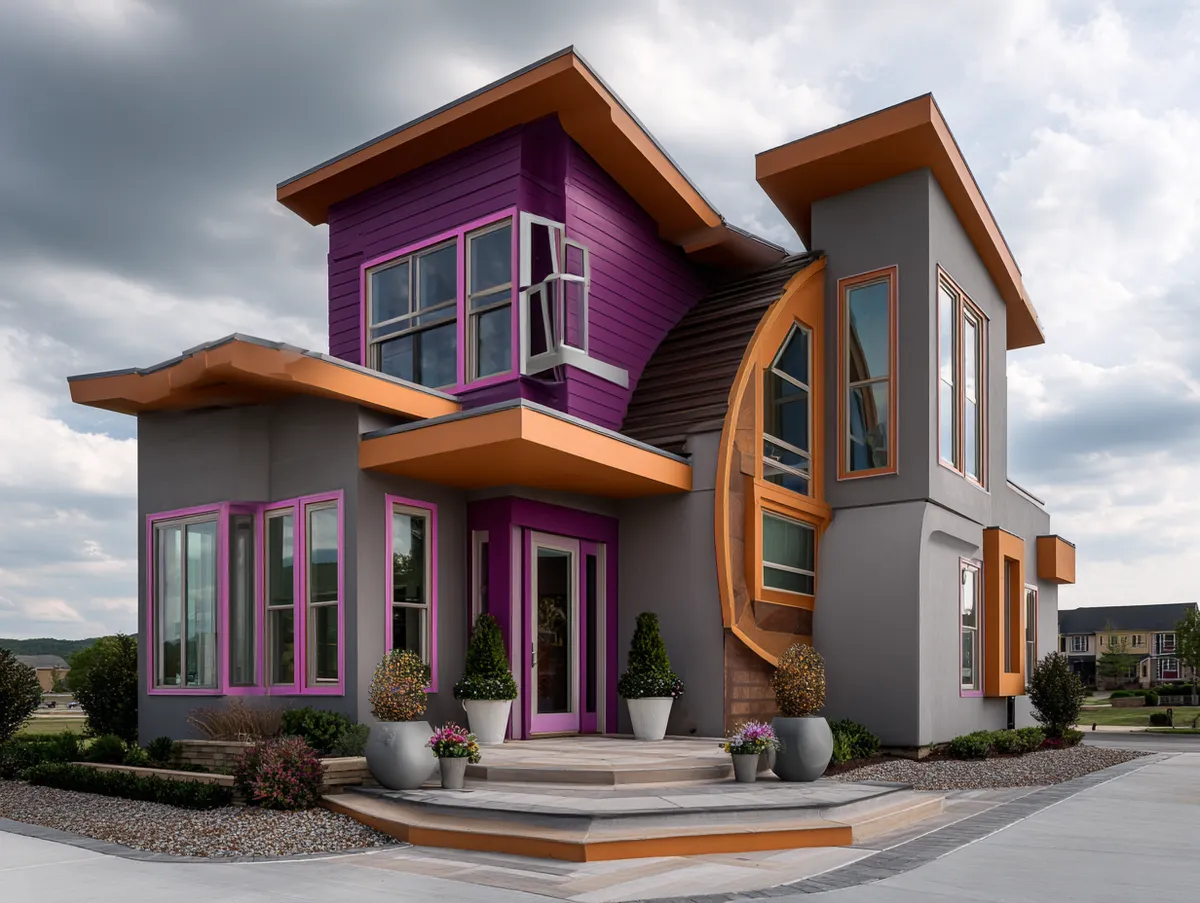
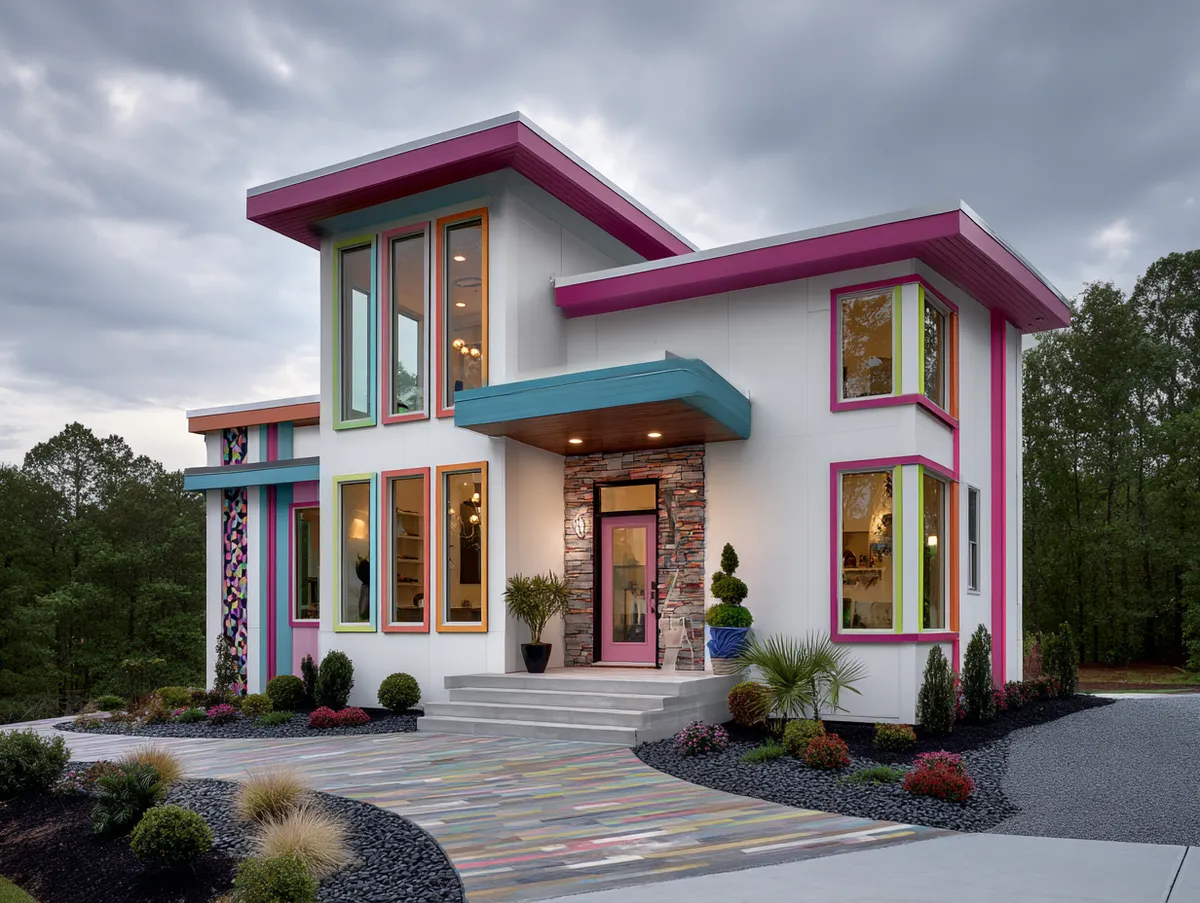



Color trim is also the fastest way to update a facade without touching the siding or roof — a weekend project with a brush and a quart of exterior paint can shift a house’s entire curb personality. According to Angi’s 2026 cost data, painting exterior trim runs $1 to $3 per linear foot in materials for most standard homes. The anti-case for vibrant color trim is equally important: this approach requires more frequent recoating on south-facing elevations because pigment-heavy paints fade faster than whites and blacks under direct UV exposure. Plan to repaint on a 3 to 4 year cycle on those exposures rather than the 4 to 5 year standard interval.
One unexpected consideration with bold trim: it changes how the adjacent wall color reads. A terracotta trim will pull warm undertones out of a beige siding that previously read neutral. A cobalt trim against the same beige will push it toward yellow. Test a trim color sample on the wall near an actual window before painting all of them — the interaction at the joint, not the trim in isolation, is what determines whether the result looks designed or accidental.
Reclaimed Wood Rustic Exterior Window Trim Has a Material Range Problem Worth Knowing
Rustic exterior window trim ideas built around reclaimed wood — barn oak, Douglas fir, old-growth pine salvaged from demolitions — deliver a texture and warmth that no new material can replicate, because the surface variation, grain tightness, and natural patina come from decades of prior service. The material range runs $3 to $12 per linear foot depending on species, board width, and source — reclaimed Douglas fir with tight vertical grain at the high end, mixed barnwood with wide variation at the low end. Quality differences within that range are enormous, which is why seeing physical samples before ordering is non-negotiable rather than optional.
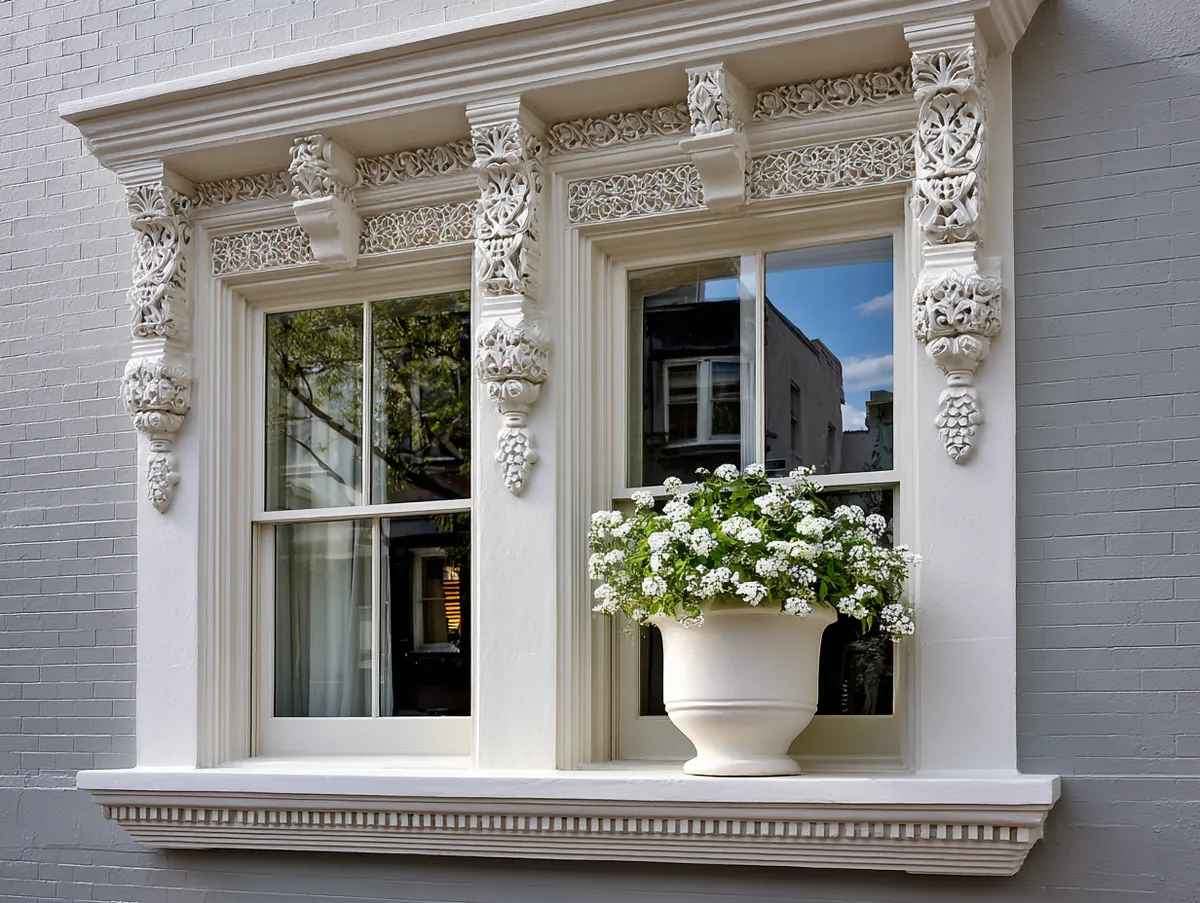
The finish question matters more with reclaimed wood than with any other exterior trim material. A penetrating oil finish — not a film finish — lets the surface develop a silver-gray patina over time while protecting the wood from moisture penetration. Reclaimed Douglas fir and barn oak finished with a penetrating oil behave predictably on exterior applications; pine finished with a film coat like polyurethane will peel within two to three seasons because the existing surface variation prevents the film from bonding uniformly. The wood’s history is an asset visually but a complication for finishes that require an even substrate. Check out the Victorian exterior window trim styles article for how the same reclaimed wood material logic applies to corbels and ornamental historic trim.
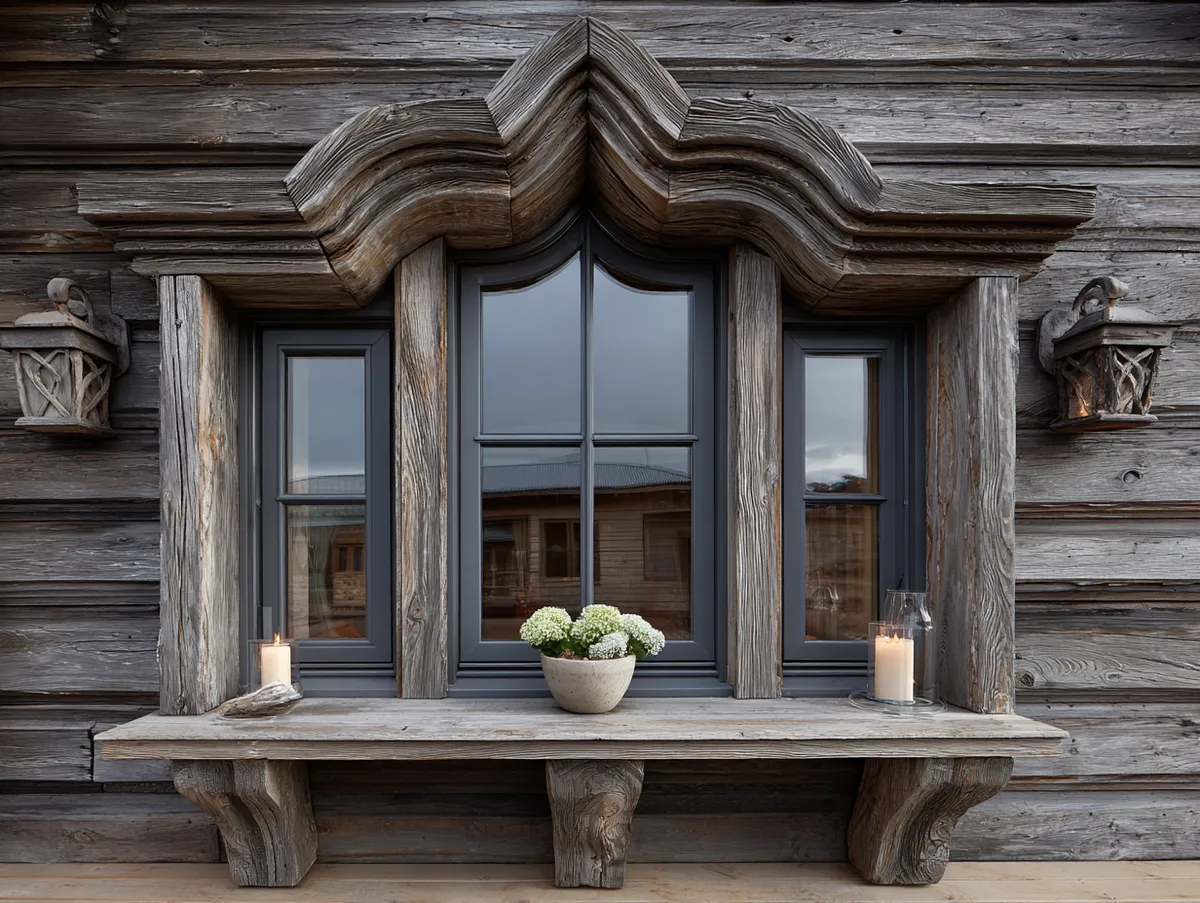
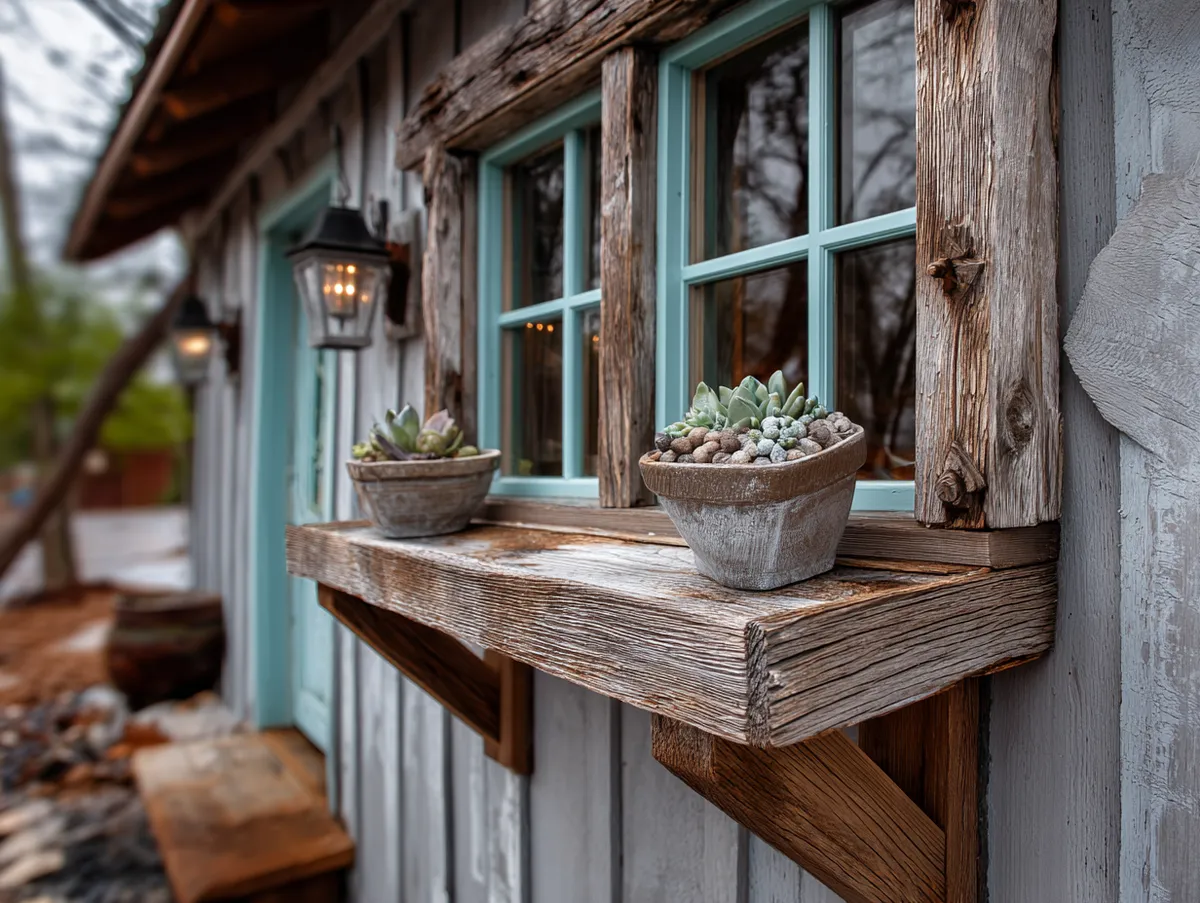
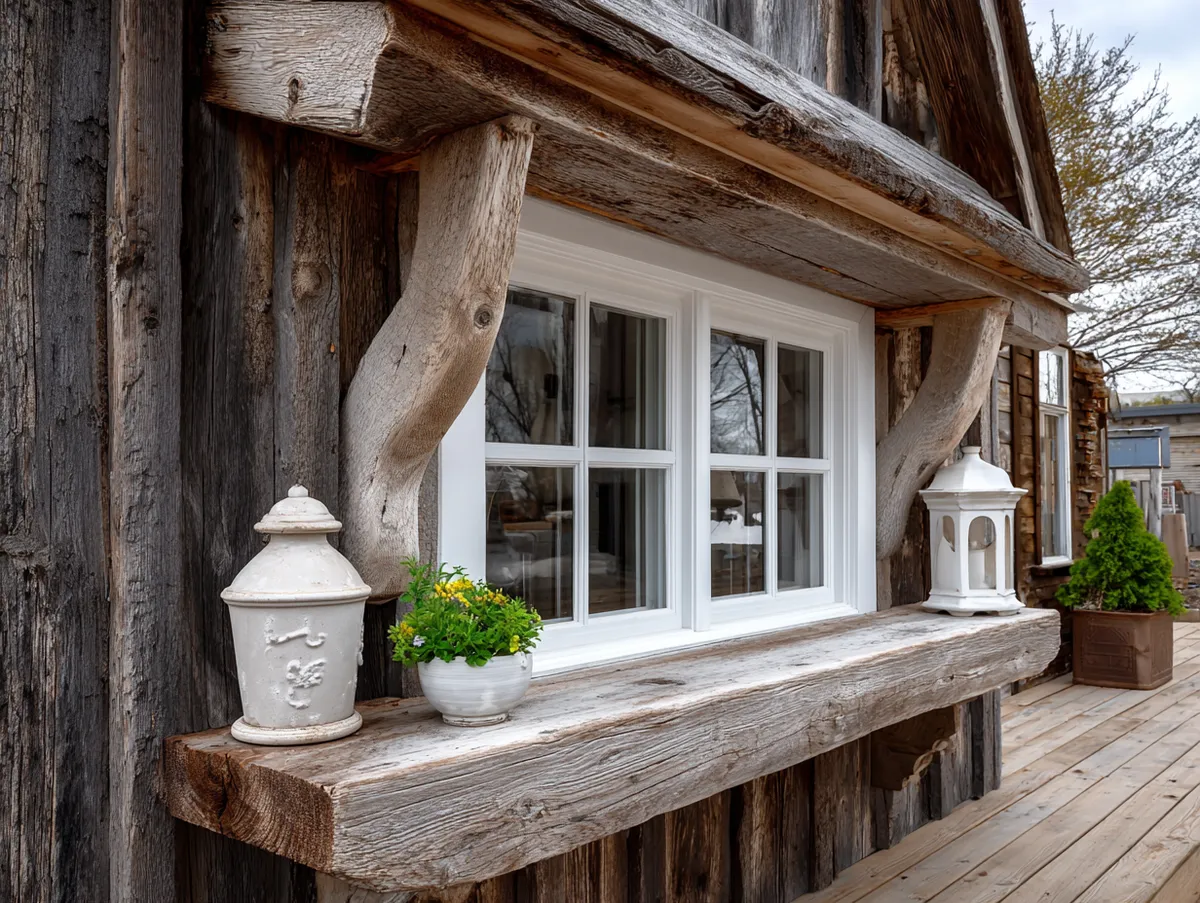
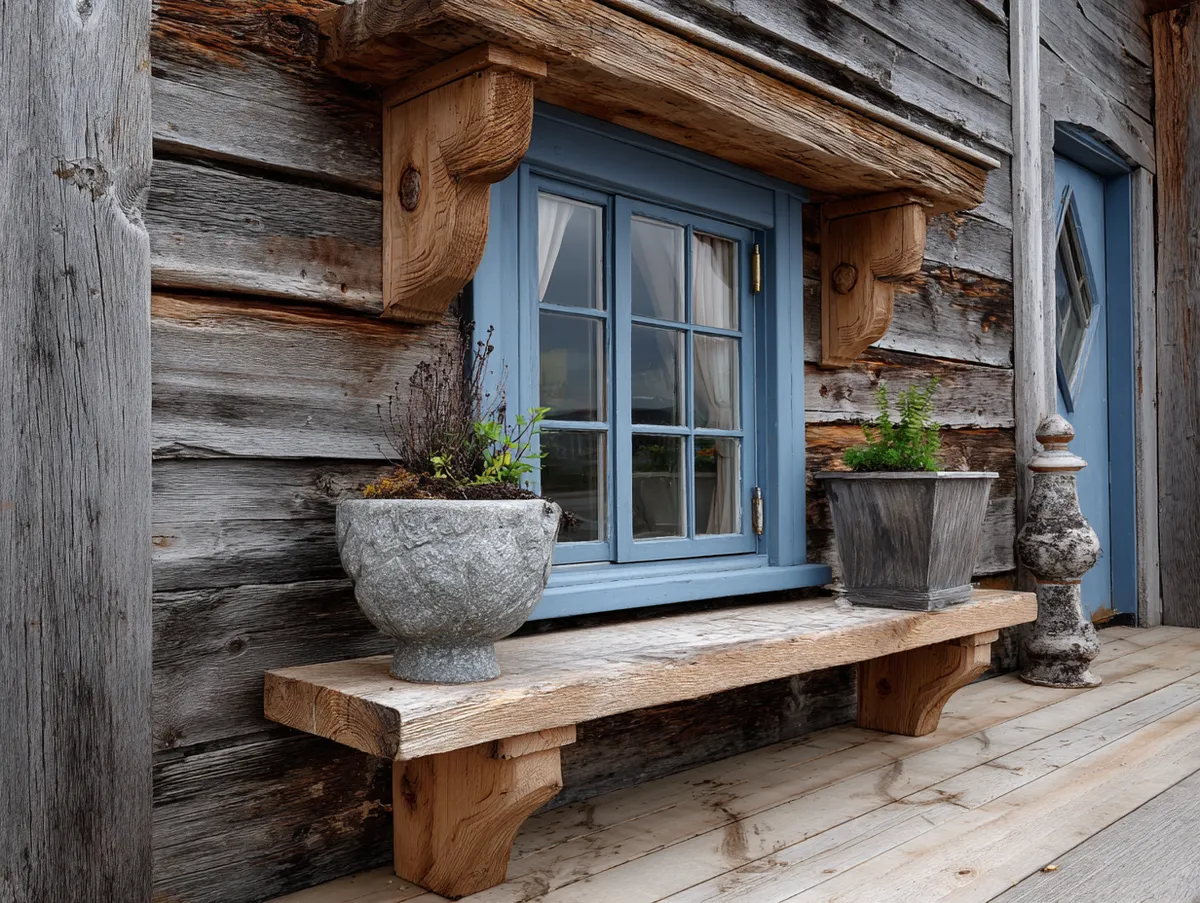


The sustainability argument for reclaimed wood is real, not just marketing language: material that has already been harvested, seasoned, and milled requires no new forestry and arrives already dimensionally stable in a way that fresh-cut lumber takes years to achieve. That stability is a practical advantage — reclaimed boards are less likely to cup, twist, or shrink after installation, which means fewer gaps at the casing joints over time. The anti-argument is context: reclaimed wood reads correctly on a home with stone elements on the facade, mature trees, or a genuinely rural setting. Drop it on a vinyl-sided suburban house without those contextual anchors and it reads as a craft-store aesthetic rather than an architectural decision.
A common approach for homeowners who want the reclaimed wood look without the sourcing uncertainty is to use new rough-sawn cedar or Douglas fir treated with an iron acetate solution — it accelerates the gray-silver weathering process and produces a result that is visually indistinguishable from genuine reclaimed wood within a season. Cedar runs $3 to $7 per linear foot unfinished, well below the reclaimed premium, and the aging process can be controlled more precisely than waiting for the wood to weather naturally.
| Style | Material Cost (per lin. ft.) | Repaint Interval | Key Risk |
|---|---|---|---|
| White Colonial | $0.60–$10 wood; PVC similar | 4–5 years | Wrong sheen kills depth |
| Black Modern | $0.60–$10 wood; PVC similar | 4–5 years | UV heat on vinyl frames |
| Stone Accent | $15–$35 veneer; $30–$100+ natural | None (seal every 5–10 yrs) | Missing head flashing |
| Vibrant Color | $0.60–$10 + premium paint | 3–4 years south-facing | Fading on direct UV |
| Reclaimed Wood | $3–$12 depending on species | Annual oil treatment | Film finish failure |
According to Angi’s exterior trim cost data, new exterior trim installation recoup 60 to 80 percent of its cost at resale — making it one of the higher-ROI exterior projects relative to its cost versus full siding replacement or window upgrades.
The Takeaway
Trim is the detail that closes the gap between a house and a home.
Material choice matters less than installation precision — a $3-per-foot cedar casing installed with correct sill slope, back-band profile, and proper caulking outperforms a $12-per-foot reclaimed board that’s flat-mounted with no drip edge.
Stone surrounds are the only low-maintenance option in this group; everything else needs attention on a 3 to 5 year cycle. Plan that cycle into your budget before you decide on material.
Save this post before your next exterior trim project.