Arched window treatment ideas look obvious until you’re standing in the store holding a curtain rod that won’t work for your window. The arch throws off every standard measurement, and most off-the-shelf solutions either hide the curve entirely or leave the top third uncovered and drafty. I’ve made both mistakes, and neither one is fun to look at every morning.
What you actually need depends on whether the arch is functional or purely decorative — that one question changes every decision you make from fabric to mounting hardware. Below are the three main directions worth considering, with honest notes on where each one fails.
Quick Scan
Sheer panels hung above the arch — keeps the curve visible, minimal light control, works in living rooms and bedrooms with good natural light.
Custom plantation shutters — the only option that covers the full arch with precision, highest cost ($400–$900 per window installed), best for light and privacy control.
Bold drapery floor-to-ceiling — makes the arch a secondary detail, creates drama, works when the room needs weight and color rather than architectural showcase.
What most articles won’t tell you — standard rectangular blinds leave the arch top open. That gap lets in glare and heat even when the blind is closed.
Sheer Panels Do One Thing Extremely Well for Arched Windows


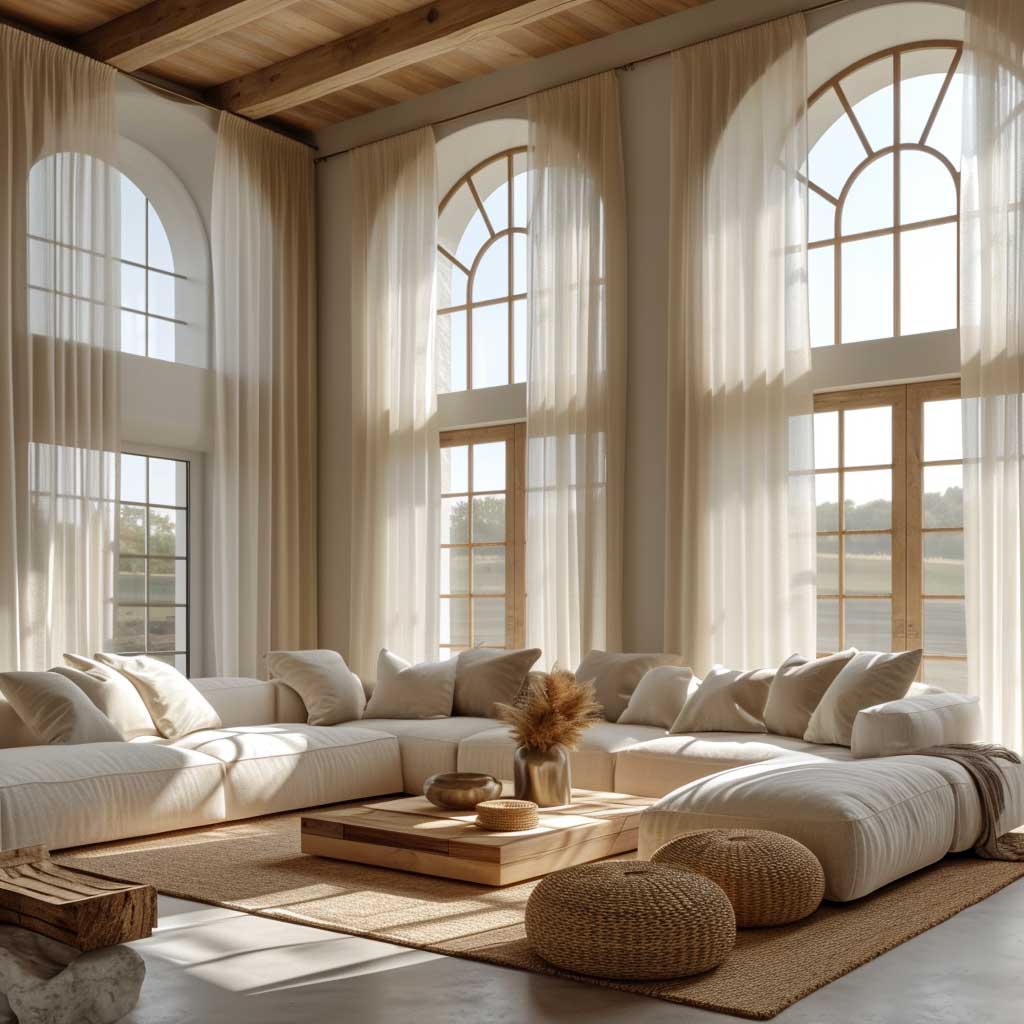
Sheers are the only arched window treatment that keeps the full arch shape on display while still softening the light. Mount the rod six to eight inches above the arch — not at the arch itself — and the panels pool onto the floor, making the window look taller than it actually is. I tried mounting at the arch once. Looked chopped off and weird.
For fabric, my go-to is linen voile from Pottery Barn (around $79–$119 per panel), which has enough body to hang straight without looking limp. Cheap polyester sheers — the kind you see at under $20 a panel — bunch at the bottom and yellow within two years. You’ll notice the difference in person immediately. The fabric should skim the floor, not pool excessively, or the arch gets visually swallowed.
What doesn’t work here is color. I’ve seen deep charcoal and navy sheers used on arched windows in an attempt to make a “statement.” The result is a dark blob where a beautiful curve used to be. Stick to warm whites, oatmeal, and very light sage. Those tones bounce light back into the room instead of absorbing it.
UV-rated sheer fabrics — look for the label “UPF 50” — protect flooring and furniture from fading without any visible difference in appearance. Worth the $15–$20 premium per panel if you have hardwood floors or a wool rug near the window. Your furniture will thank you in three years.
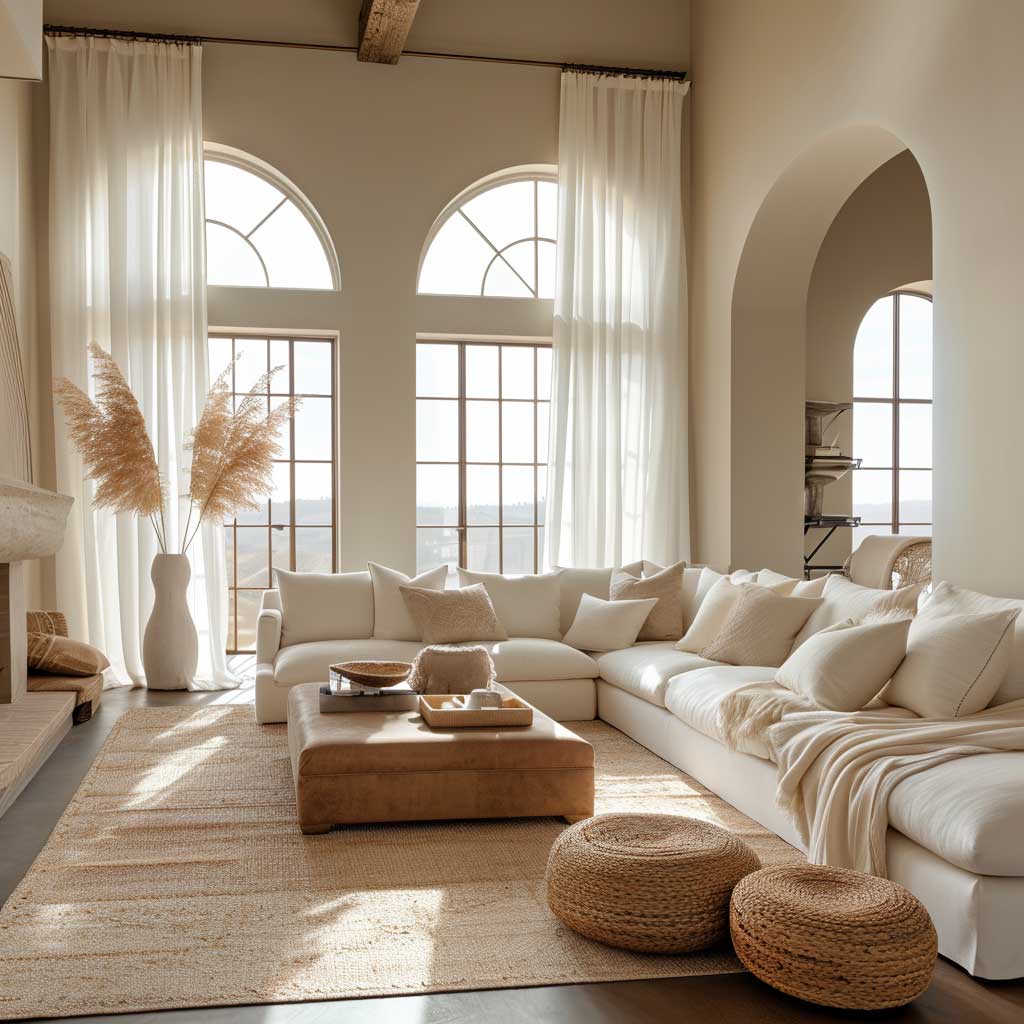
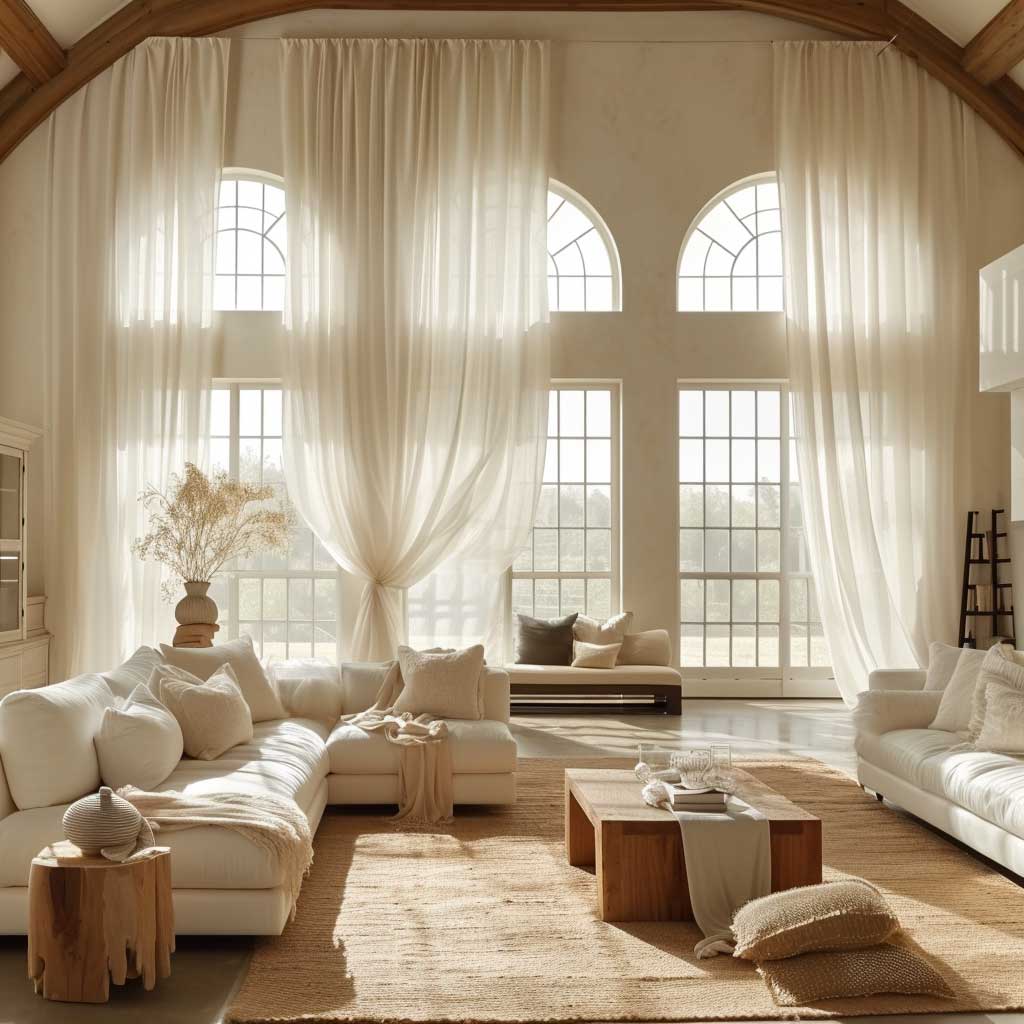
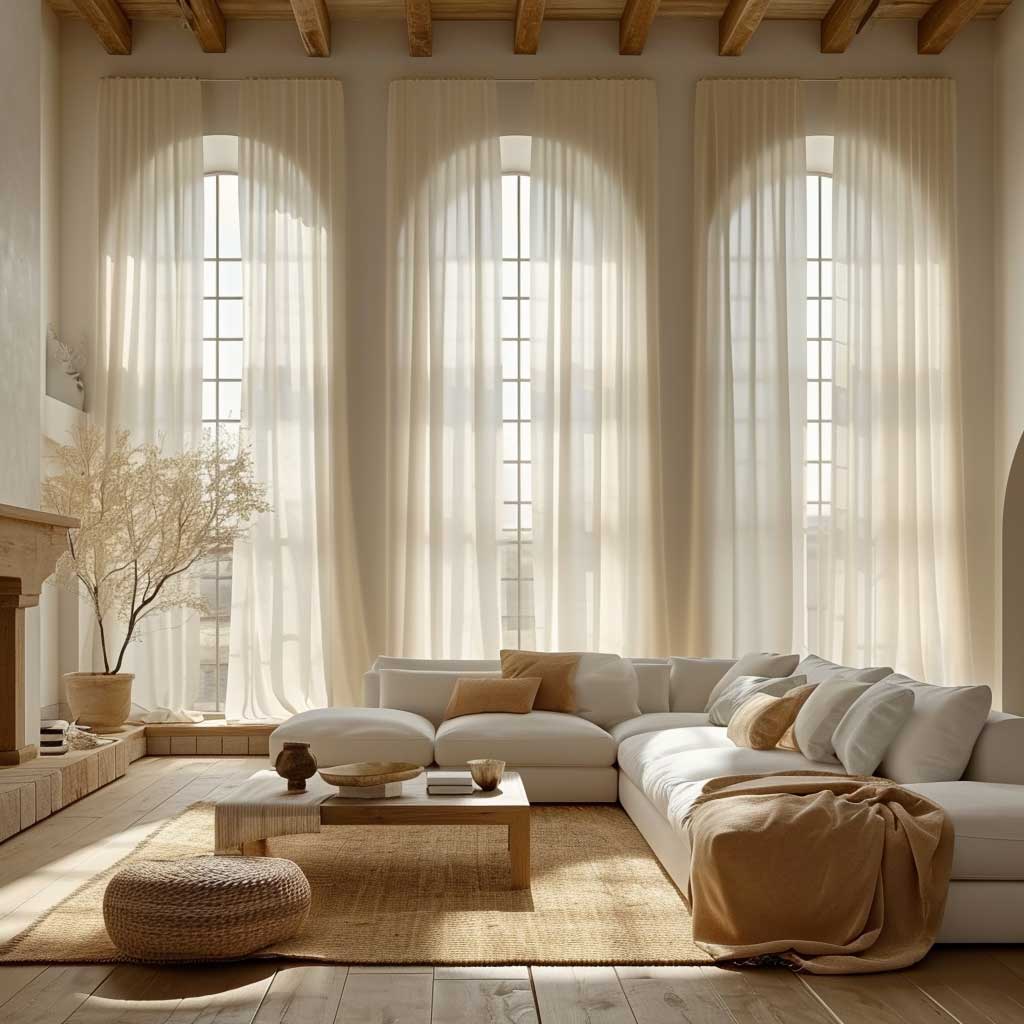
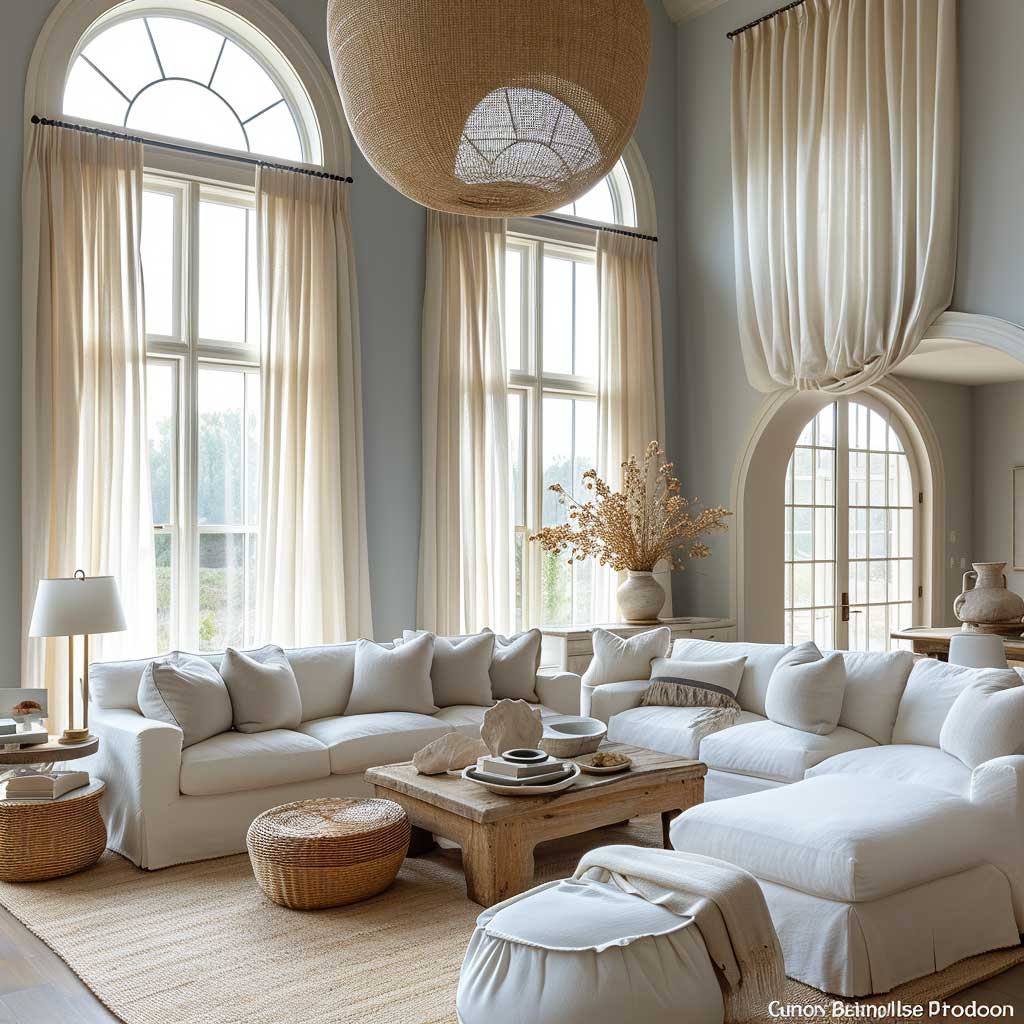
Layering sheers with heavier linen drapes gives you a second level of light control — close the sheers for daytime privacy, add the drapes at night. IKEA’s LILL sheers ($8 per pair) work fine as a base layer under thicker panels. Think of sheers as the architectural undergarment of a window: invisible when everything else is right, glaringly obvious when missing.
Custom-made panels that follow the actual curve of the arch are a niche upgrade — some workrooms like Calico charge $200–$400 extra per window for the curved header. Honest assessment: most rooms don’t need it. The hung-above method reads just as elegant at a fraction of the cost. Save the custom curved option for windows in formal entryways where people stop and look.
Plantation Shutters on Arched Windows Cost More for a Real Reason
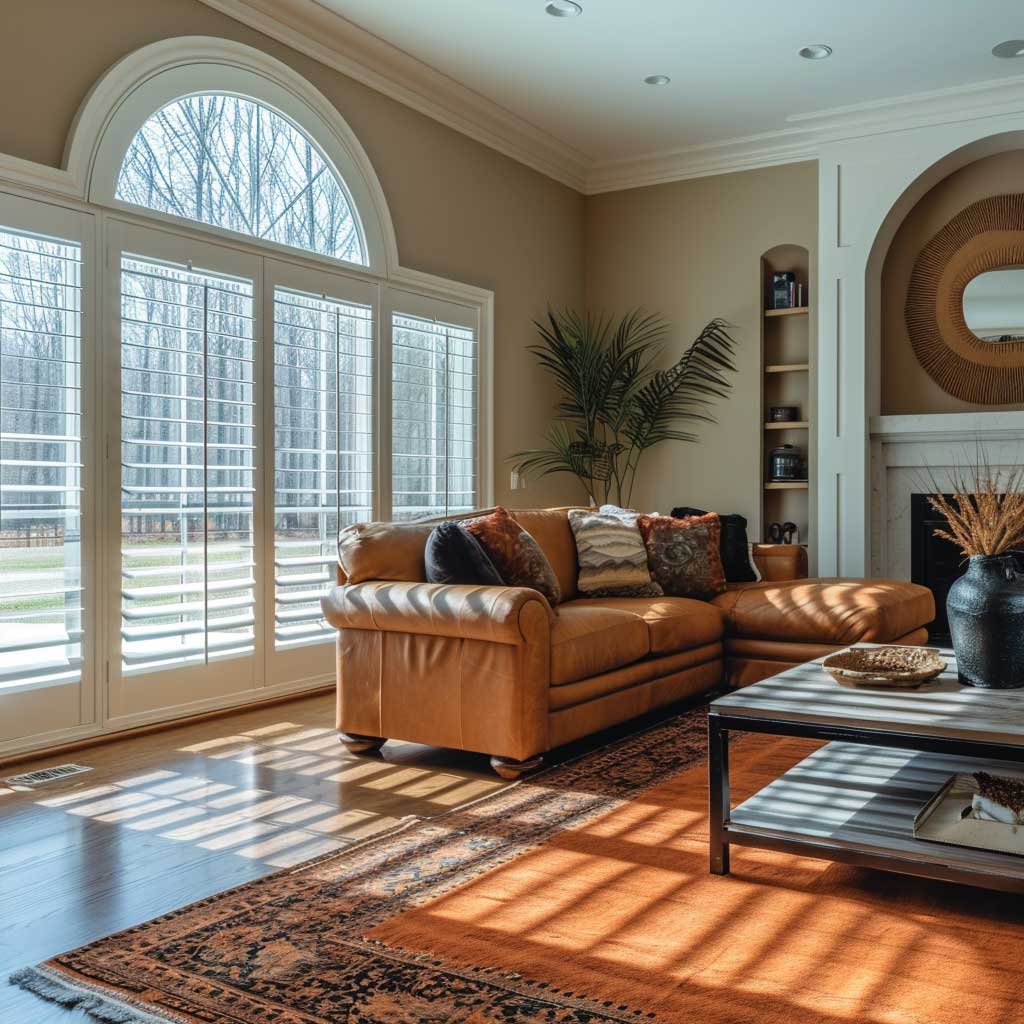
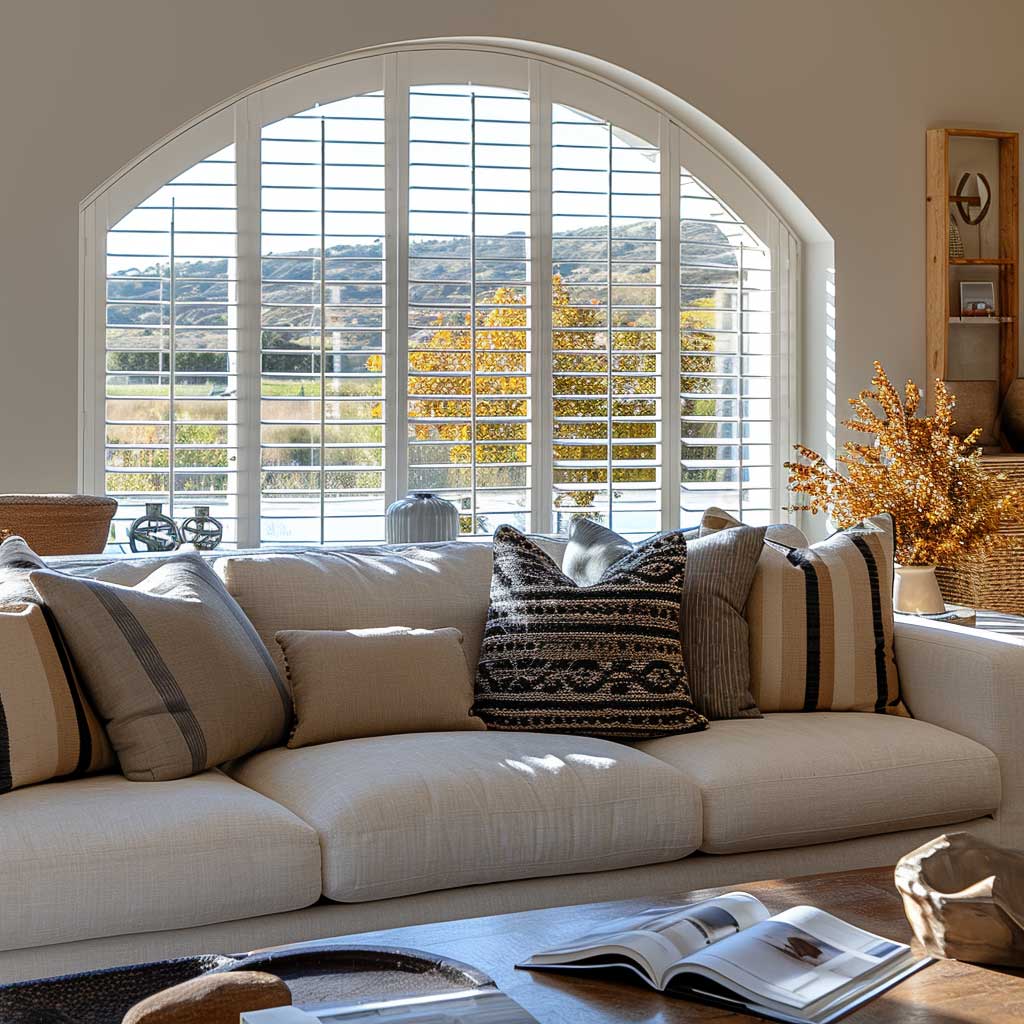
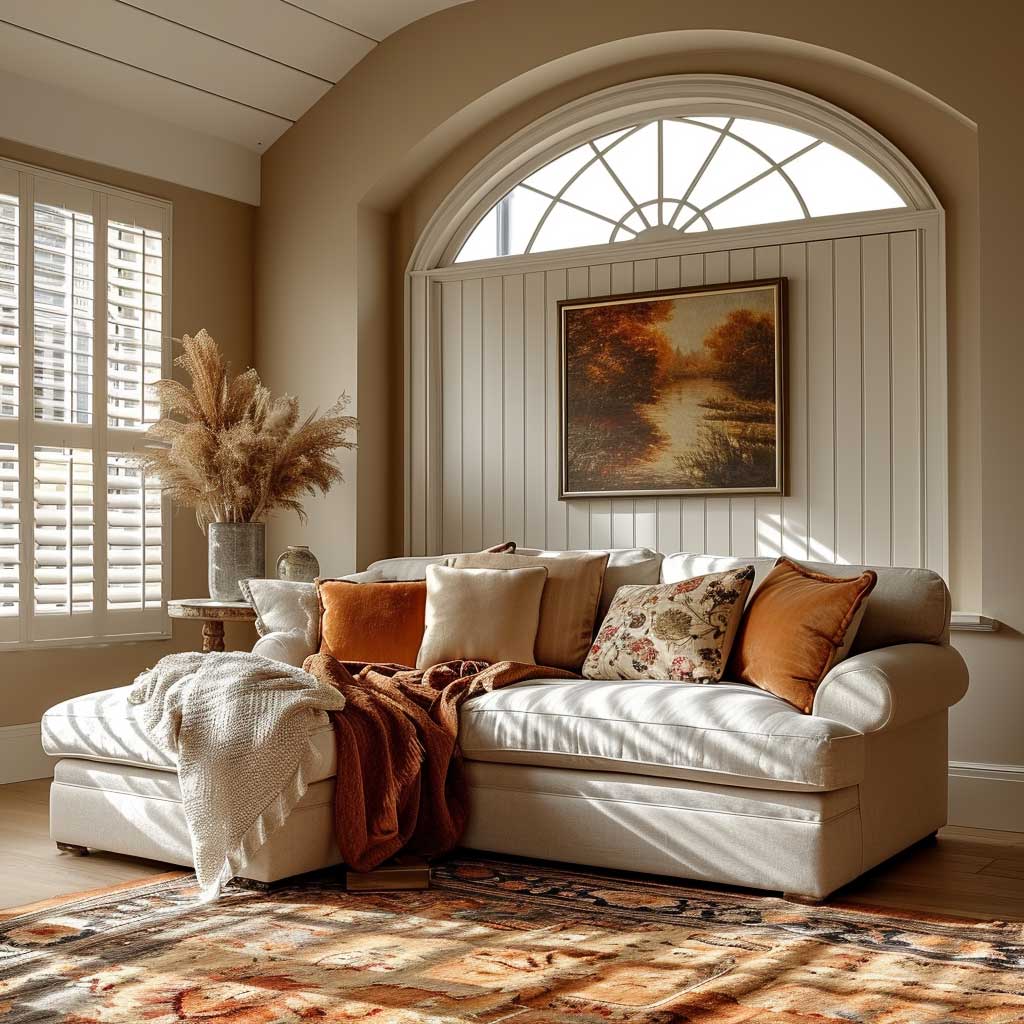
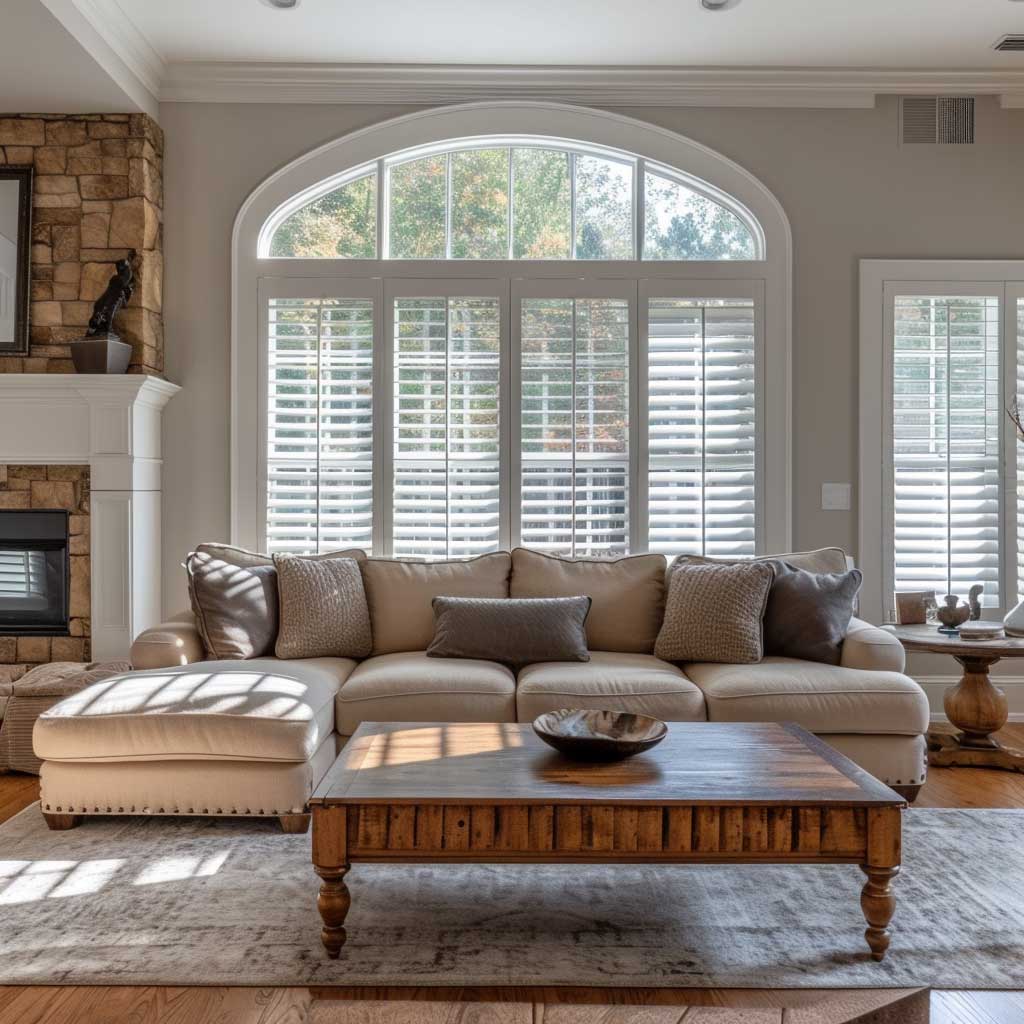
Plantation shutters are the only arched window treatment that actually follows the curve rather than ignoring it. Every other option — blinds, standard curtains, roller shades — covers a rectangle and leaves the arch top open or hidden. Sunburst Shutters and Budget Blinds both manufacture fully custom arch shutters, with pricing typically running $400–$900 per window including installation. That’s real money. It’s also the only solution that handles light, privacy, and temperature in one unit.
The louver width matters more than most people realize. Two-and-a-half-inch louvers are the standard and read cleanly in most rooms. Three-and-a-half-inch louvers suit larger windows above 48 inches wide and make the shutters look more substantial. I’d steer you away from the 1.5-inch “café” louver on arched windows — the scale looks fussy and makes the arch look smaller, not larger.
Material choice splits into three camps. Real basswood shutters (the Premium Hardwood line from Sunburst runs about $600–$850 per window) look richer and sand to a finer finish, but they warp in high-humidity rooms like bathrooms and laundry rooms. Composite poly-resin shutters — Norman Shutters’ Woodlore line at roughly $450–$700 — handle humidity with no issues and are honestly indistinguishable from wood at normal viewing distance. Vinyl is the budget pick, but it flexes noticeably in larger panels and can look plasticky.
Don’t Do This with Arched Window Treatments
Don’t install standard rectangular blinds and assume they’ll cover the arch. The curved top stays fully exposed, letting light and heat pour in even when the blind is down — you’ve bought a treatment that solves half the problem. Don’t hang curtain rods through the arch’s keystone — drilling into decorative plasterwork or brick trim is extremely hard to reverse. And don’t choose patterned fabric for the arch section of a shutter: the louvers already create visual pattern, layering a print on top creates visual noise that reads as clutter from across the room.
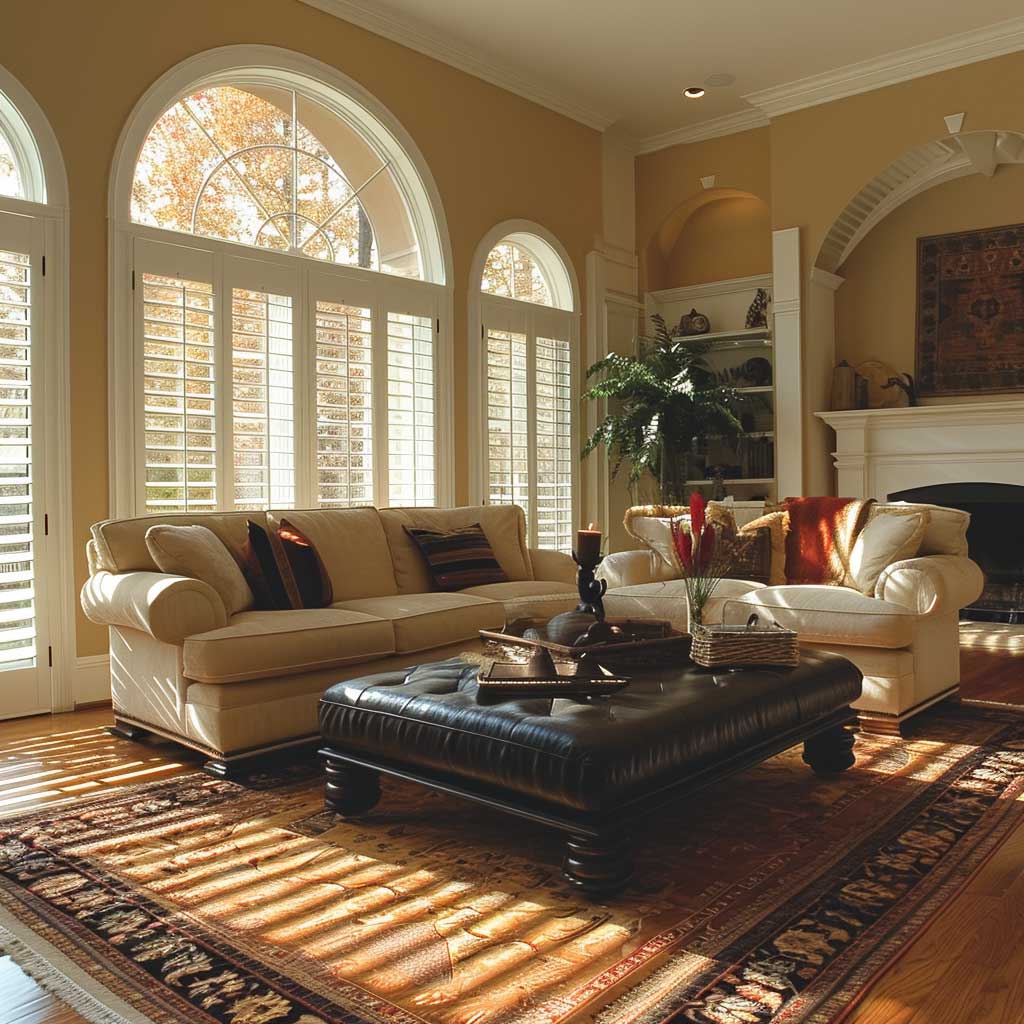
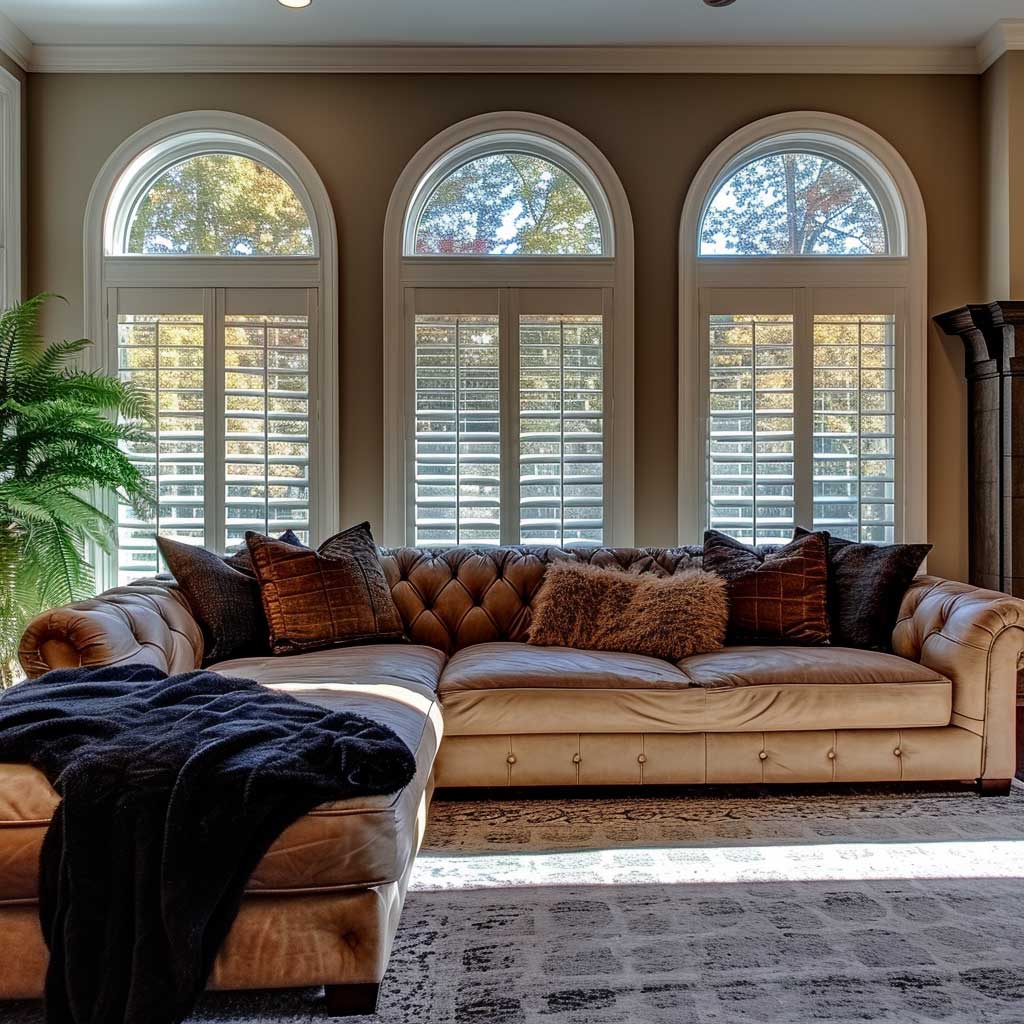
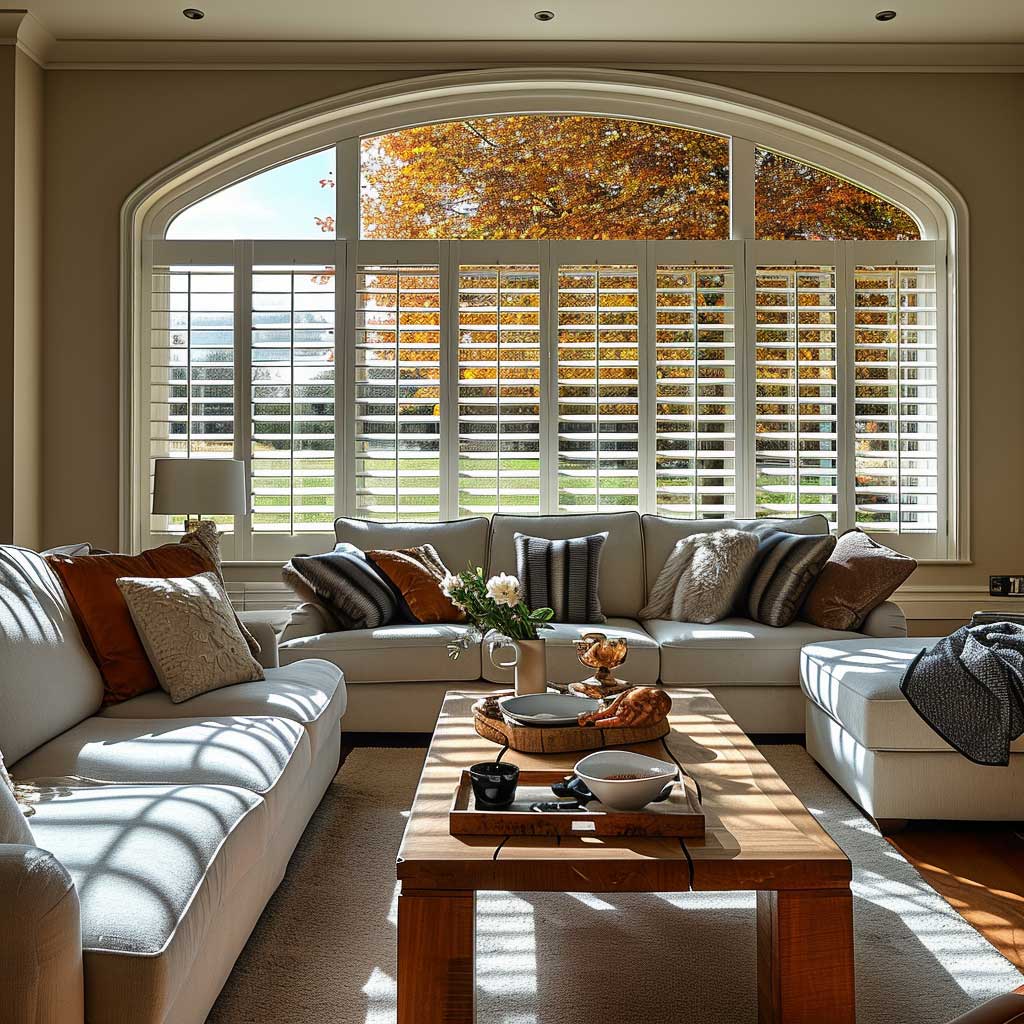
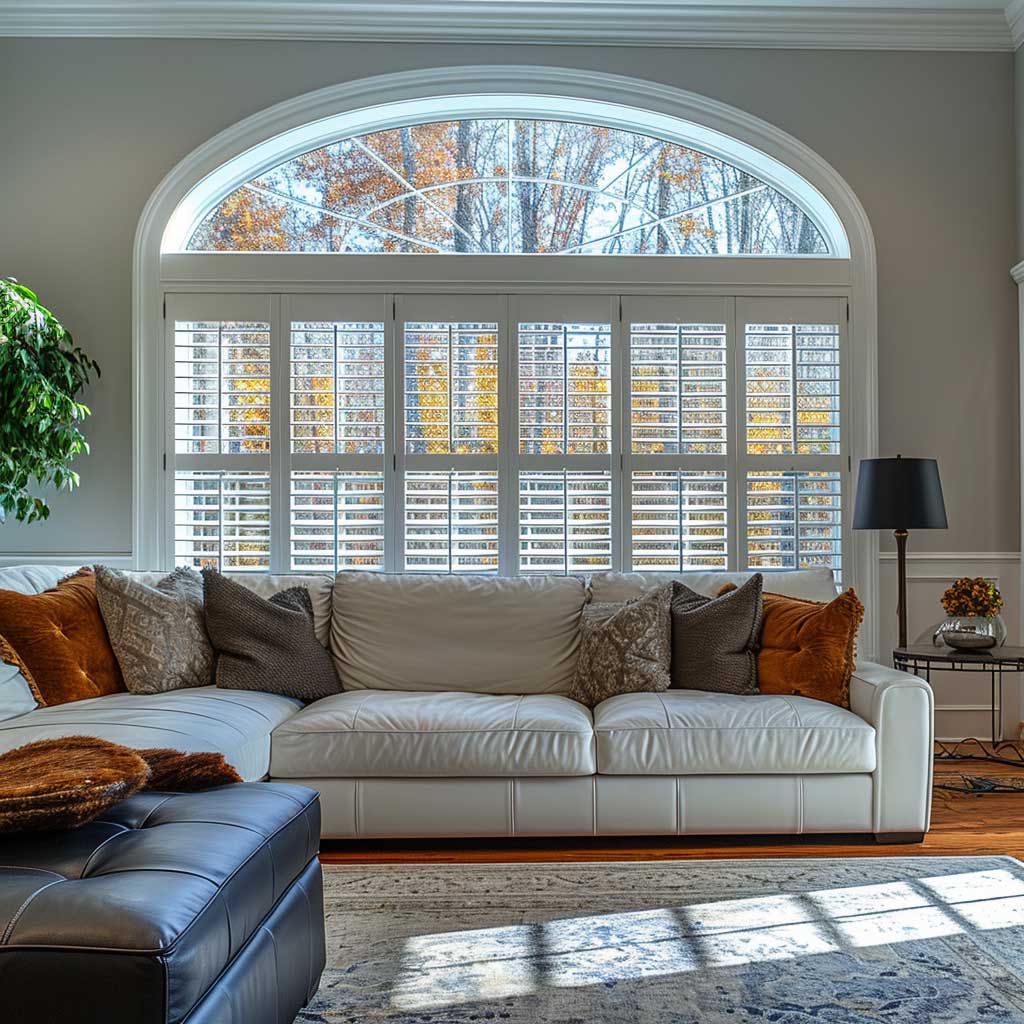
Color on shutters is a long-term commitment in a way that fabric isn’t. White and off-white are repainted easily, which is why 80% of installed arch shutters are white or Bright White (Benjamin Moore OC-17 is the closest paint match if you ever need to touch up trim). Going dark — slate gray, deep navy — looks sharp in photos but shows every fingerprint and dust line, and repainting shutters is a major project. My honest recommendation is off-white unless your entire window surround is already a deep color.
Professional installation isn’t optional here. Arch shutters are built to exact measurements taken at three points across the curve. A frame that’s off by a quarter inch gaps at the top and ruins the whole effect. Budget around $150–$250 for installation labor on top of the shutter price, and ask the installer to check the window’s plumb before measuring — old houses shift, and an out-of-plumb arch will make a precision-built shutter look crooked. For more inspiration on window trim styles that complement shutters, arched window trim ideas on ArtFasad show how the two elements work together from the outside.
Floor-to-Ceiling Drapery Makes the Arch a Supporting Character
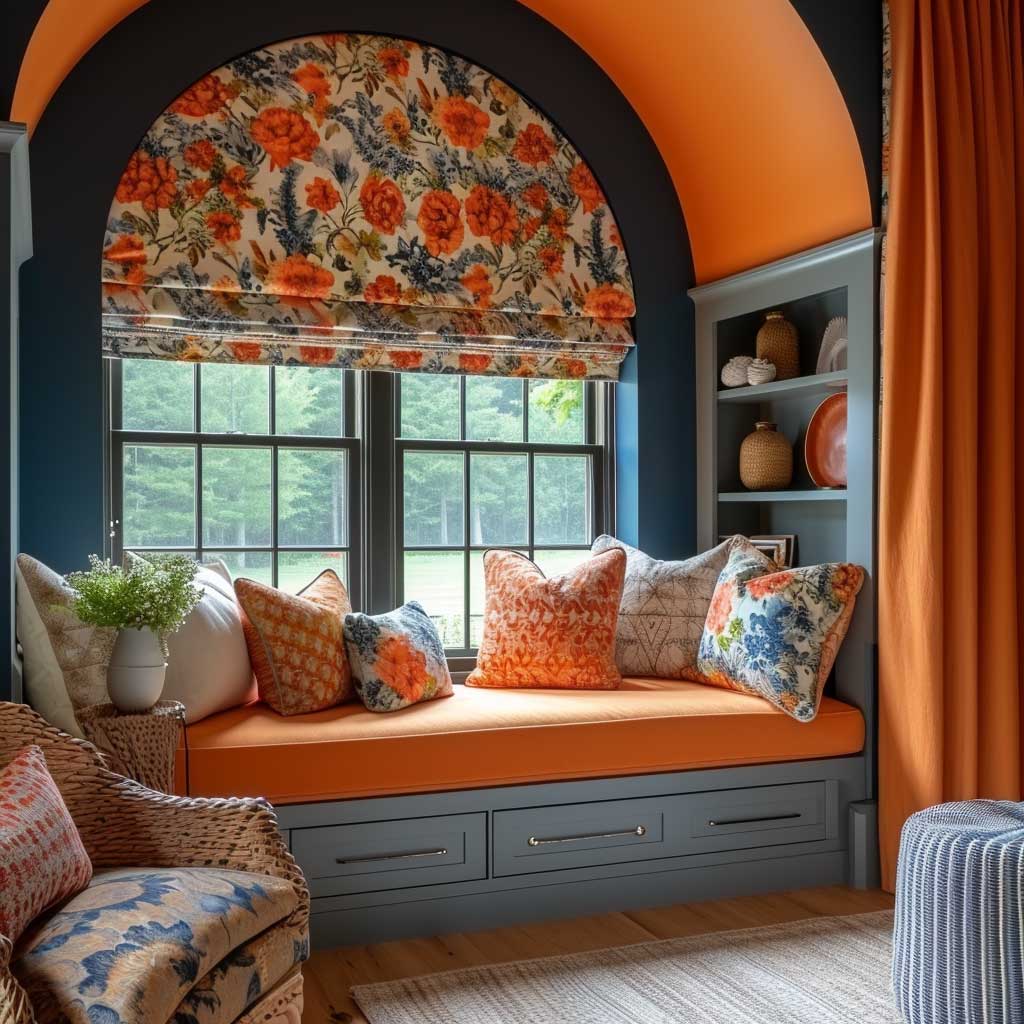
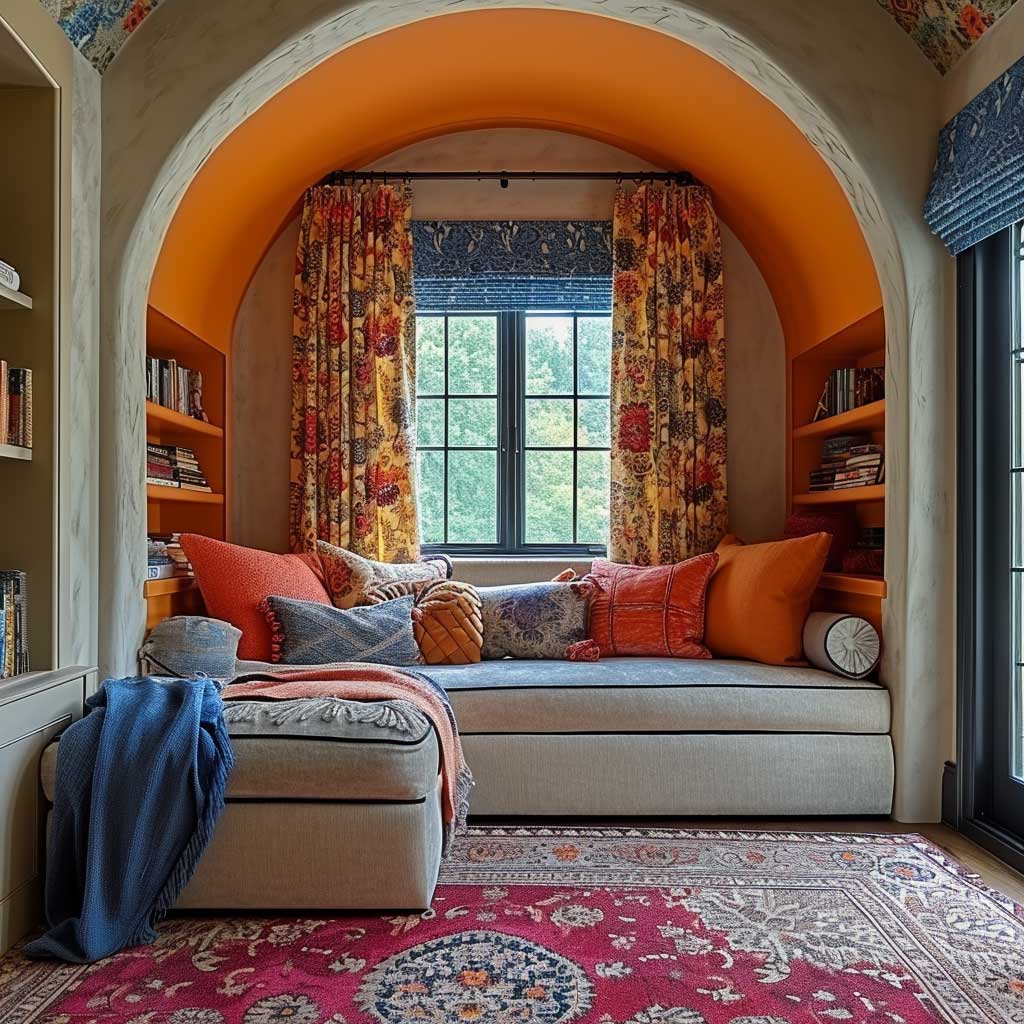
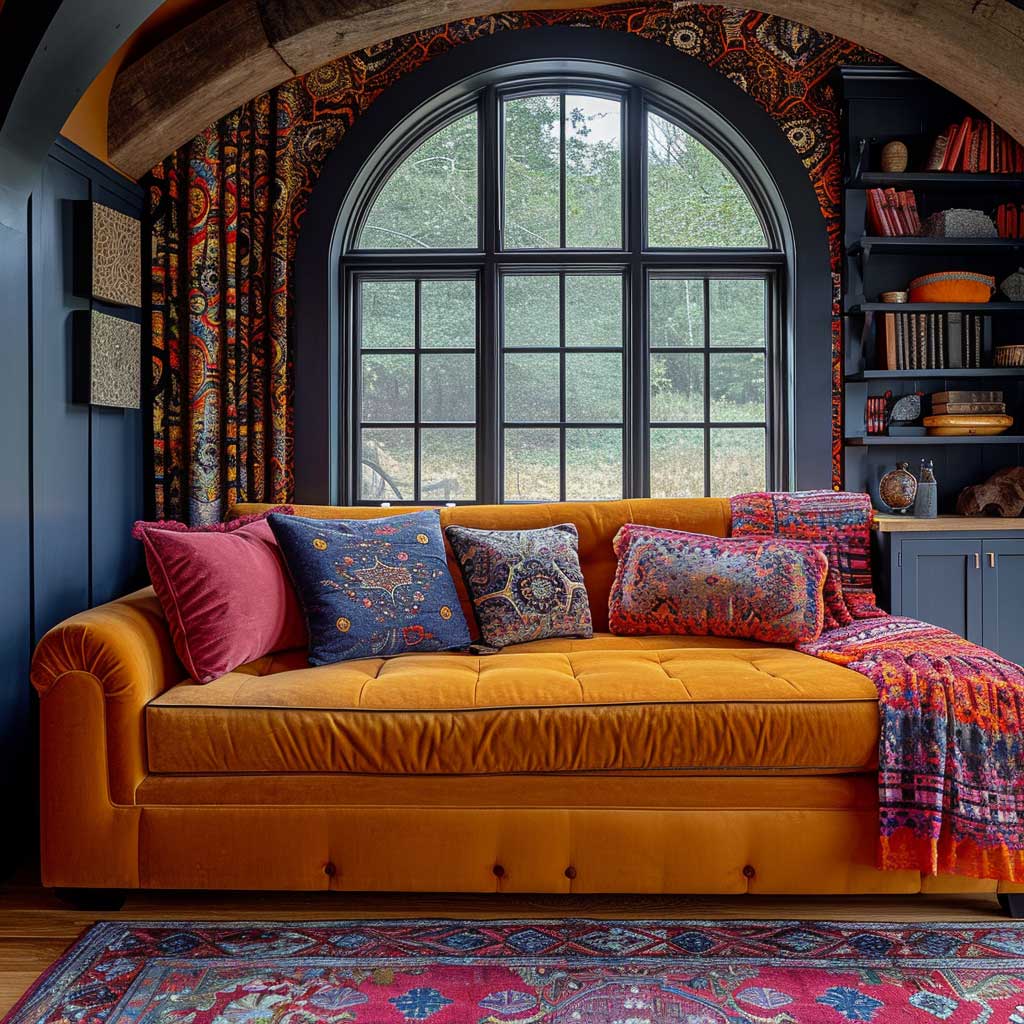

Floor-to-ceiling drapery treats the arch as a detail within a larger wall moment rather than the main attraction. This is the right move when the arch is architecturally average — a standard builder-grade opening in a 1990s house — and the room needs the curtains to carry more visual weight. I’ve seen this approach transform a forgettable room into something that reads expensive without spending expensive money.
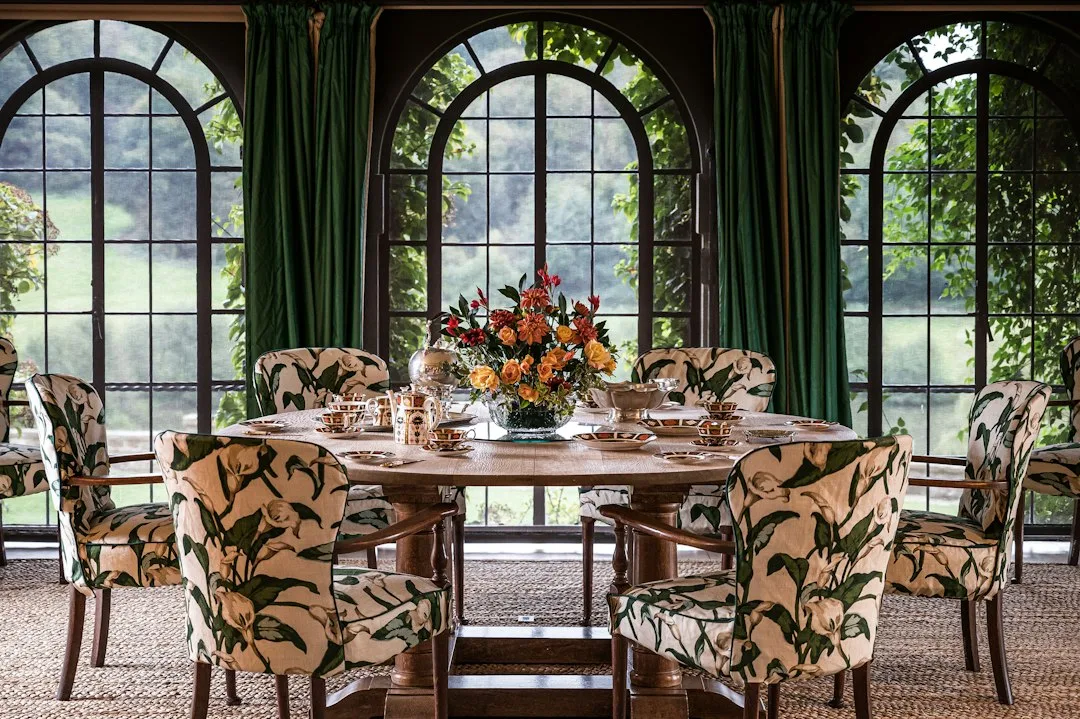
Pattern scale is the variable nobody adjusts correctly. A bold 12-inch botanical repeat on a window with a 24-inch arch span looks fine — the curtains draw back wide enough that the pattern reads clearly. The same fabric on a narrow 18-inch arch window in a small bedroom becomes wallpaper-level chaos. You need at least one full pattern repeat visible in the parted curtain stack. If you can’t get that, go solid or use a small-scale texture instead.
Velvet and heavyweight linen are my two go-to fabrics for drapery on arched windows. Velvet — Anthropologie carries a room-darkening velvet panel at $148–$198 each — has enough weight to hang perfectly straight without pinch-pleating, and the pile absorbs sound in a way that changes how a room feels. Lightweight cotton-poly blends look fine in catalogue photos and look terrible in person: too thin, not enough drape, wrinkle on contact.
What’s the right rod placement here? Higher than you think. Mount the rod as close to the ceiling as structurally possible — ideally within two inches — regardless of where the arch ends. This turns an 8-foot ceiling into something that reads like 9.5 feet. Rooms with low ceilings need this trick more than any other, and the arch gives you the visual permission to pull it off without the rod looking lost.
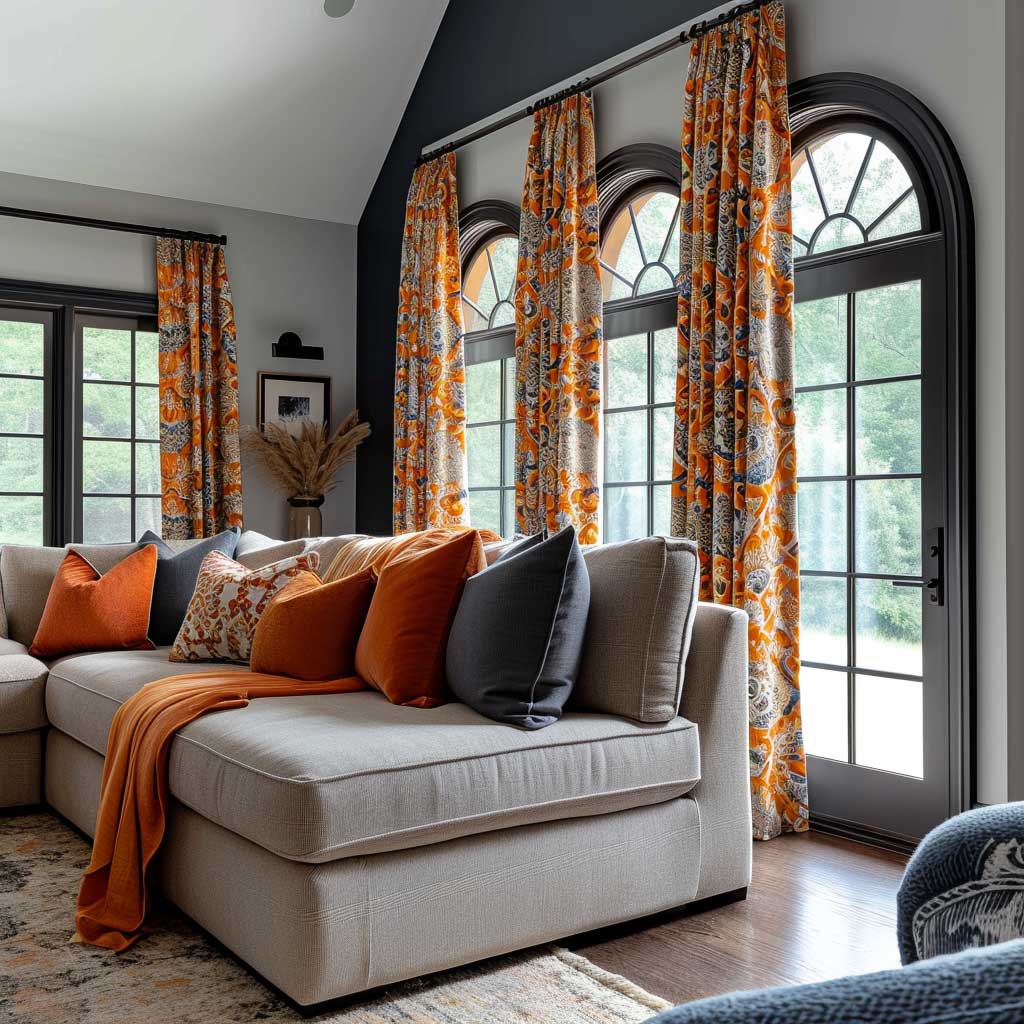
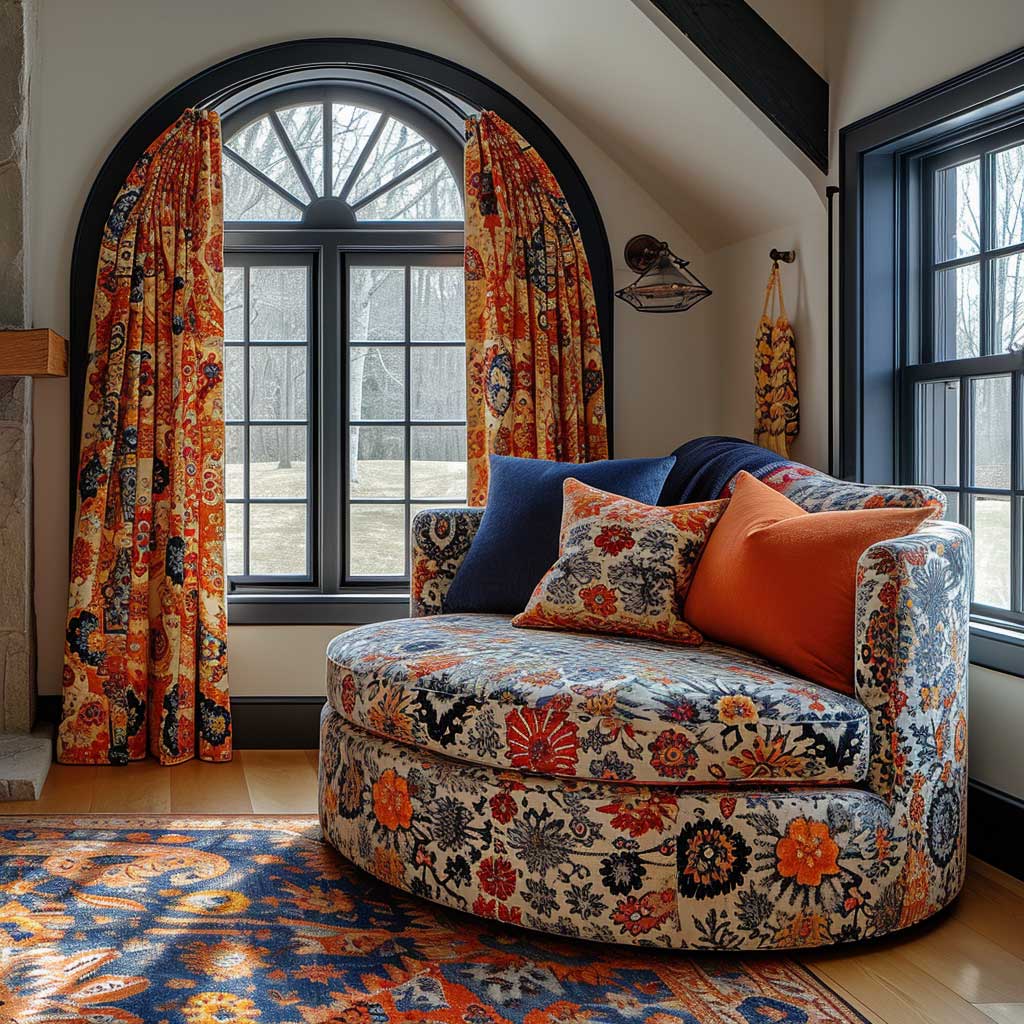
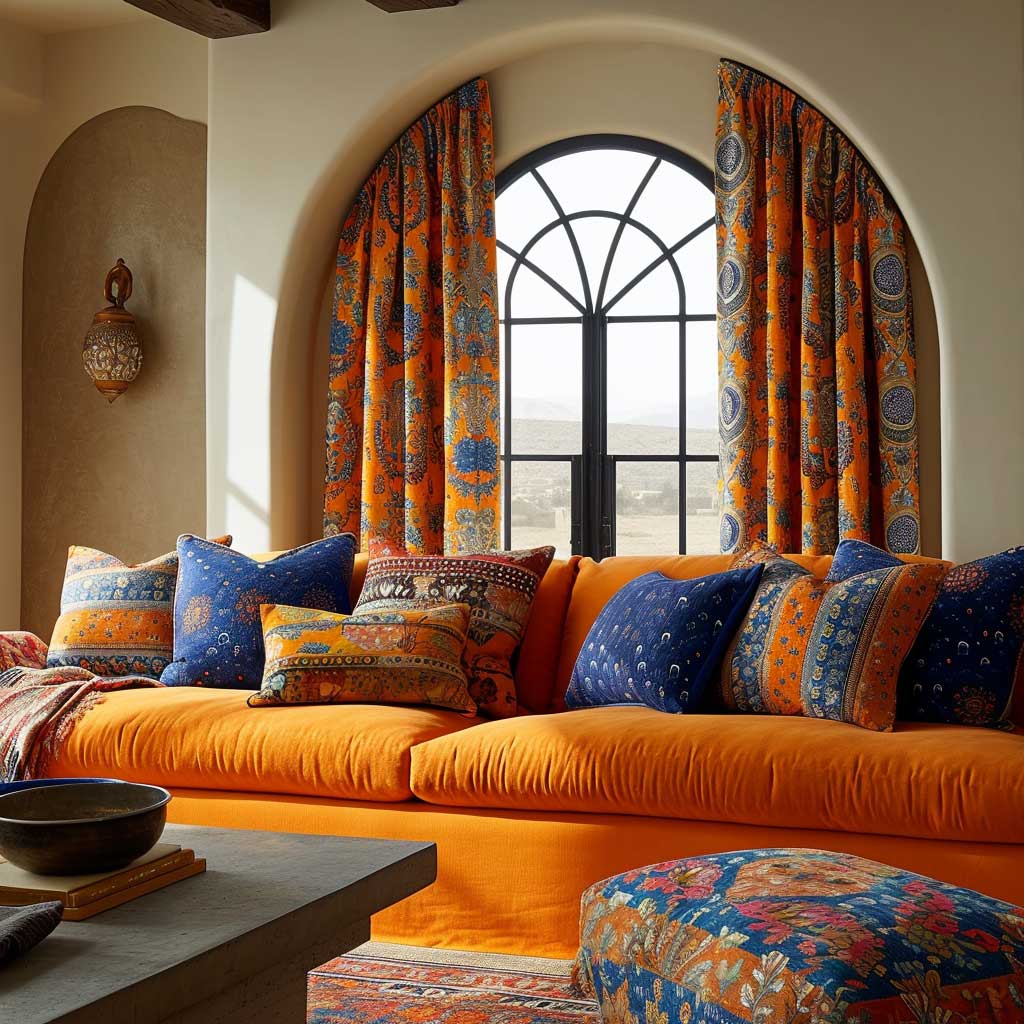
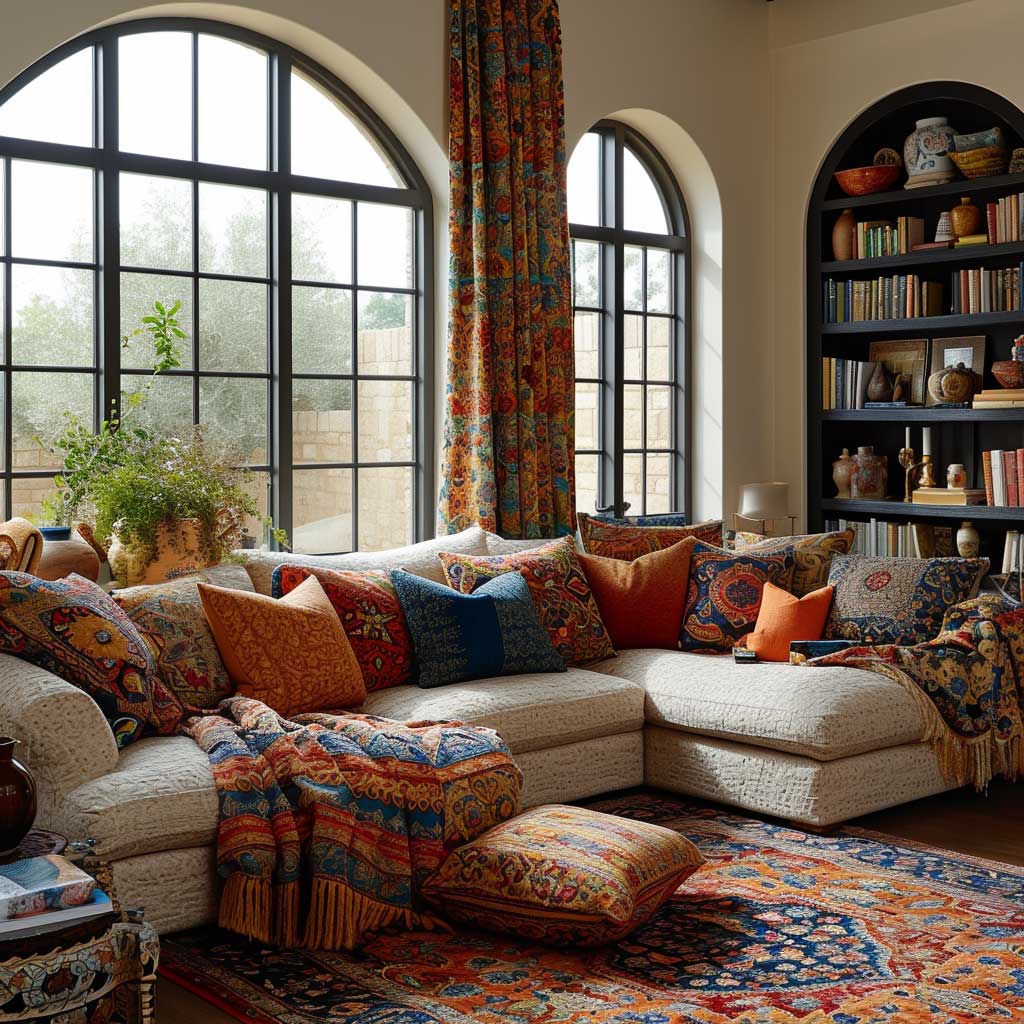
Custom-made drapery is worth the cost when you’re committing to a bold pattern. West Elm’s made-to-order drapes start at $189 per panel; local workrooms in most cities charge $180–$350 per panel depending on fabric and lining. The advantage of local: you can bring a fabric sample to the window and see it in your actual light before committing to 12 yards of fabric. Ordering blind from a website for a patterned treatment on an arched window is a gamble I wouldn’t take twice.
Lining is non-negotiable for arched window drapery. Blackout lining ($12–$18 extra per panel) improves how any fabric hangs, protects it from UV degradation, and adds real insulation value — a lined velvet panel on a north-facing arched window in winter is the textile equivalent of weatherstripping. Unlined drapes on arched windows look fine in spring and look sad and thin by January. If you want more ideas on modernizing arch window dressing, see Italianate arch window designs on ArtFasad for historical context that still reads fresh. For technical specs on covering arched windows with various treatment types, Sunburst Shutters’ arch treatment overview goes deep on measurement and mounting details.
The Bottom Line
Arched window treatments fail when you buy a rectangle for a curve.
Sheers hung above the arch keep the shape visible. Plantation shutters follow the curve precisely and handle light and privacy properly. Bold drapery makes the arch secondary but adds the room weight you might actually need.
Measure at three points across the curve before buying anything. Most arches aren’t perfectly symmetrical, and a treatment built to the wrong measurement is expensive to return.
Save this post before your next window shopping trip.