
Dining room window treatments control privacy, glare, and the overall atmosphere of the space where meals and gatherings happen. The right choice turns ordinary glass into a deliberate design feature that works with your table, chairs, and lighting.
Plantation shutters, dramatic drapery, and Roman shades cover the main needs for classic, formal, or contemporary rooms. Each option delivers different levels of light filtering, insulation, and visual weight so you can match the treatment to how the room is actually used.
Most dining rooms benefit from treatments that sit between full blackout and sheer diffusion. The goal is soft daylight for daytime meals and reliable privacy after dark without making the space feel closed in.
- Plantation shutters give structured light control and long-term durability at $150–$800 per window installed.
- Floor-length drapery adds height and acoustic softness while blocking or filtering light according to fabric weight.
- Roman shades deliver clean contemporary lines and fold neatly when raised.
- Thermal linings or solid materials can cut heat gain or loss through glass by roughly 25–50 %.
- Outside mounts and proper rod extension make windows appear larger and hide hardware gaps.
- Match the treatment scale to table size and ceiling height for balanced proportions.
Plantation Shutters Bring Order to Dining Room Windows
Plantation shutters suit dining room windows that need precise light control and a permanent architectural look. Wide louvers tilt to let in soft bands of daylight or close fully for privacy during evening meals. The symmetrical grid balances a formal table setting the way a picture frame balances artwork.
Materials range from solid wood to vinyl composites. Installed cost typically falls between $150 and $800 per window according to size and finish. Wood versions add natural grain; vinyl resists humidity near kitchens that open into dining areas. Why choose shutters over loose fabric? They stay fixed in place and never need rehanging after cleaning.


When closed, the overlapping louvers create a solid barrier that reduces heat transfer. Studies on interior shutters show heat-gain reductions in the 25–50 % range depending on color and fit. Think of them as a rigid screen door for the window: air still moves a little, but the bulk of solar energy stays outside.


Cleaning stays simple: a microfiber cloth or vacuum brush removes dust from the louvers in minutes. Avoid painting over natural wood grain if the material itself is the design feature. For related ideas that work in adjacent open-plan spaces, explore kitchen window covering options that handle steam and light.
Dramatic Drapery Transforms Dining Room Windows into Focal Points
Dramatic drapery turns dining room windows into soft vertical elements that stretch the perceived height of the room. Floor-to-ceiling panels in velvet, linen, or silk introduce color and texture while giving full control over daylight and privacy. The fabric hangs like a stage curtain: closed for intimacy, open for airy meals.
Installed cost for curtains and drapes generally runs $50–$500 per window, climbing higher for custom fabrics and professional hardware. Heavy lined versions dampen sound as well, useful when the dining space shares walls with a busy kitchen or living area. What happens if the rod sits too low? The panels look truncated and the window appears shorter.


Sheer inner layers filter harsh midday sun while outer opaque panels deliver evening privacy. The combination works like layered clothing: light base for day, heavier shell for night. Mount the rod 4–6 inches above the frame and extend it 8–12 inches past each side so the fabric stacks clear of the glass when open.


Machine-washable fabrics simplify upkeep; heavier custom pieces usually need professional cleaning. Skip synthetic sheers that yellow near cooking areas if the dining room opens to the kitchen. For more formal dining setups that pair well with layered textiles, see creative dining room window treatment approaches.
Roman Shades Deliver Clean Lines for Modern Dining Rooms
Roman shades give dining room windows a tailored, contemporary profile that folds into neat horizontal pleats when raised. The flat or gently relaxed surface holds color and pattern without the visual bulk of full drapery. They suit rooms where furniture already carries strong lines and the windows need to stay quiet.
Average installed cost sits in the $100–$600 range per shade, higher for motorized or custom fabrics. Thermal or blackout linings raise the effective insulation so the fabric layer slows heat movement through the glass. How much difference does lining make? Lined Romans can cut window heat loss by roughly 40 % in well-fitted installations.
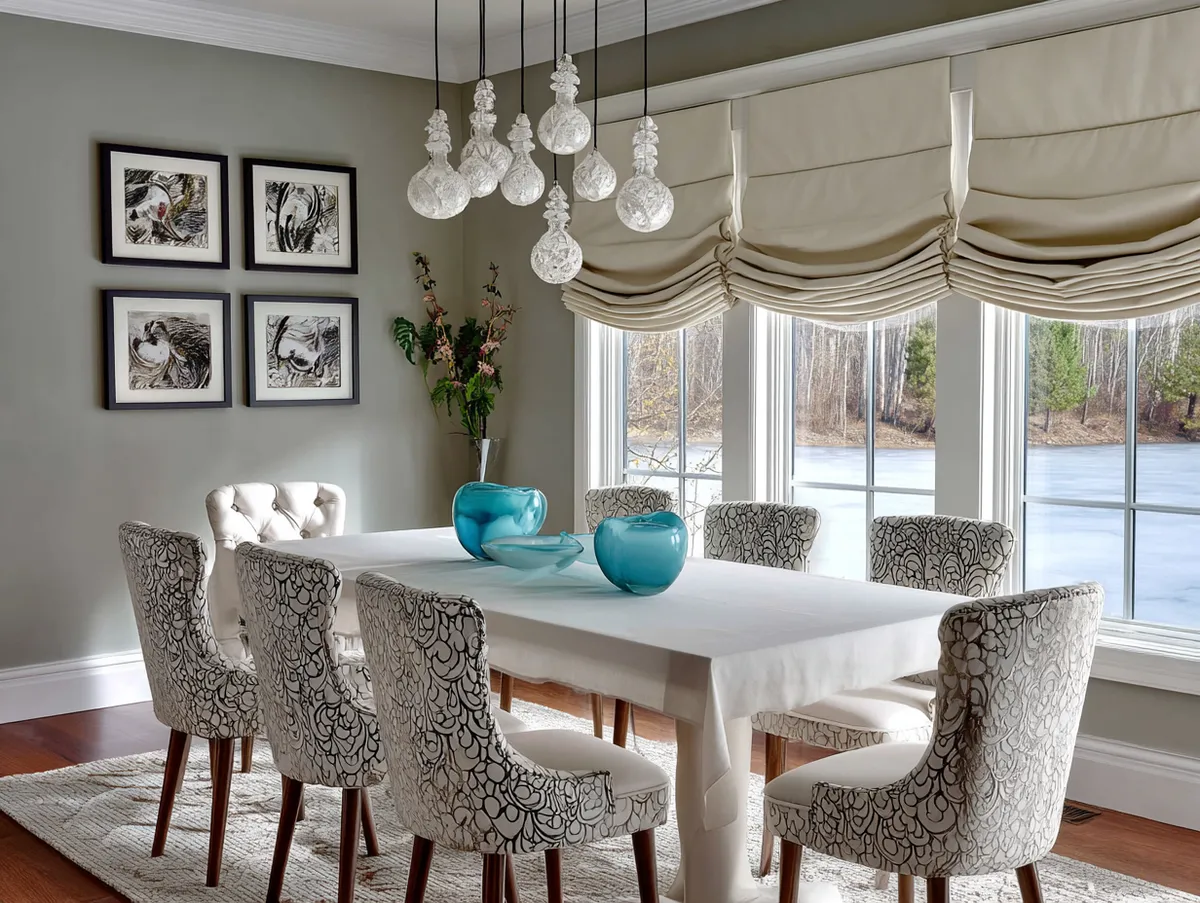


Operation is straightforward: cord, continuous loop, or cordless lift. Motorized versions suit high or hard-to-reach windows. Outside mounts cover the entire frame and eliminate side-light gaps that inside mounts leave. Spot cleaning or vacuuming keeps most fabrics looking fresh; avoid placing unlined Romans over a sink or range if the dining area shares an open plan with the kitchen.


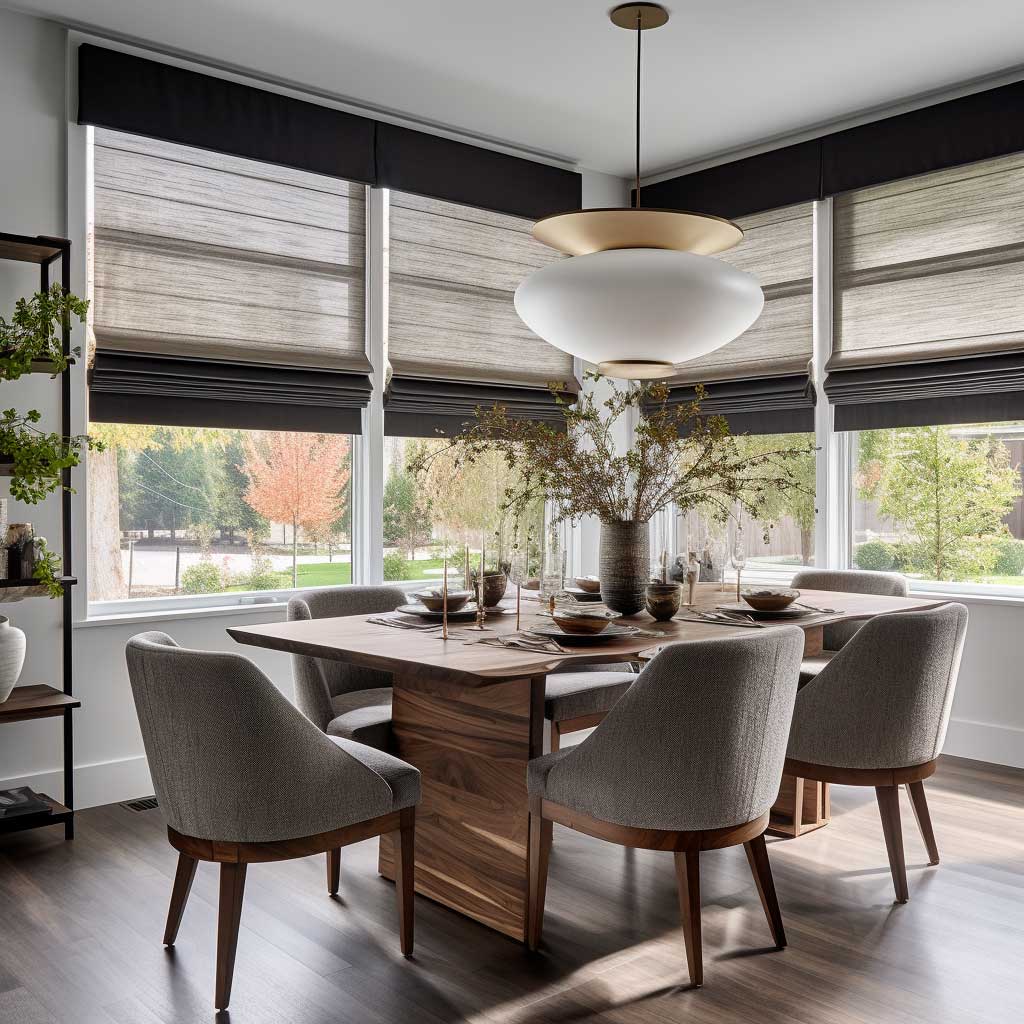
Choose fabric weight that matches the room’s formality. Linen or cotton blends read casual; heavier weaves feel more polished. The shade should stack high enough that the view remains open during daytime meals. For texture pairings that work across farmhouse and transitional dining spaces, review modern farmhouse window treatments built around natural materials.
Comparing Core Dining Room Window Treatment Options
Three treatments dominate most dining rooms because each solves a different priority. Use the table below to match needs to budget and style before measuring.
| Treatment | Best For | Installed Cost Range | Light Control | Key Limitation |
|---|---|---|---|---|
| Plantation Shutters | Classic, coastal, traditional rooms | $150–$800 per window | Precise louver tilt | Higher upfront cost, permanent look |
| Dramatic Drapery | Formal or layered interiors | $50–$500 per window | Full range with lining choice | Requires proper rod height and width |
| Roman Shades | Contemporary, minimalist spaces | $100–$600 per shade | Full coverage when lowered | Folds need regular dusting |
Cost figures reflect typical mid-size windows and standard materials from current market ranges. Custom sizes, motorization, and premium fabrics push totals higher. Always measure twice and confirm mount type before ordering.
Skip inside-frame mounts on windows that need full privacy. Gaps at the sides let in light and allow views from outside after dark. Outside mounts or properly extended rods close those gaps and make the treatment look intentional rather than temporary.
Practical Choices for Everyday Dining Spaces
Start with how the room is used. Daily family meals favor easy-to-clean surfaces and moderate light filtering. Formal dinner parties benefit from richer fabrics and fuller coverage. South- or west-facing glass often needs stronger solar control than north-facing openings.
Layering remains useful: a Roman shade or shutter for base control plus side panels for softness. Keep hardware finishes consistent with other metal in the room so the window treatment feels integrated. External data on average window-treatment pricing and energy performance is available from established home-cost resources such as Homeguide’s window treatment cost overview.
Solid Results from the Right Window Choice
The strongest dining room window treatments combine reliable light control with a look that supports the table and chairs rather than competing with them.
Plantation shutters deliver structure and longevity. Dramatic drapery supplies height and softness. Roman shades keep the silhouette clean and modern.
Measure for outside mounts when privacy matters. Add thermal linings where energy performance is a priority. Choose materials that match the cleaning habits of the household.
Once the treatment fits the window correctly and the fabric or louvers move smoothly, the dining room gains both function and a finished appearance that lasts through daily use and special occasions.
Complete guide
Window Treatments That Actually Transform a Room
Curtains, blinds, shades, valances, bay windows, doors — all in one place
You Might Also Like
Related Topics