Minimalist window curtains are the one place most people underspend, then regret it. I’ve walked into otherwise perfect modern rooms where the wrong shade — too short, too sheer, too patterned — pulled the whole thing apart like a loose thread. The right minimalist window treatment doesn’t ask for attention. It just holds the room together. Below are three approaches that actually work, with specific materials, brands, and the mistakes I keep seeing people make.
Before you pick anything, measure floor to ceiling, not window to sill. Every interior stylist I’ve spoken with agrees: hanging curtains from the ceiling is the single fastest way to make a room read as deliberate rather than default. Seventy-five percent of the rooms on my saved Pinterest board do this. The other twenty-five percent look like rentals.
Quick Scan
🔲 Roller blinds — clean profiles, $30–$120, best for light control without visual noise
🔲 Sheer curtains — diffuse light softly, work floor-to-ceiling, pair with a blackout layer in bedrooms
🔲 Solid neutral drapes — linen or cotton-poly, hang 6–12 inches above window frame, pool slightly or break at floor
🔲 Hardware — matte black or brushed brass only; avoid chrome and decorative finials
🔲 One rule — never mix patterns with a minimalist room; texture is your only variable
Roller Blinds Cost Less Than a Lamp and Do More Work


Roller blinds are the workhorse of minimalist window coverings, and I’ll defend that opinion loudly. A basic cordless roller shade from Chicology runs about $30 at Target; a custom-width version from The Shade Store starts around $95. Both look expensive when installed correctly. The secret is the mounting depth: inside-mount, flush with the frame, no gap. A gap kills the whole effect.
Material choice matters more than color here. A light-filtering fabric in warm white reads completely different from a blackout in the same color — the first glows at noon, the second goes flat. My go-to for living rooms is a solar mesh in 3% openness: enough privacy, enough view, and the texture reads as intentional rather than cheap. You’ll notice it catches light differently at 8am vs 4pm. That movement is the whole point.
What doesn’t work: fabric with visible weave pattern, patterned prints, or anything with a decorative valance attached. I’ve seen people add a scalloped valance to a roller blind “for softness.” It looks like a 1994 kitchen. Skip it. The cleaner the top edge, the sharper the room.
For bedrooms, blackout roller blinds are non-negotiable — especially in east-facing rooms. The Bali Essentials Blackout (around $55 from Home Depot) is my most-recommended option at that price point. Motorized versions from Lutron start at $250 per window and are worth every dollar if you have more than three windows in a room. One remote. Zero cords. Zero visual noise at the wall.
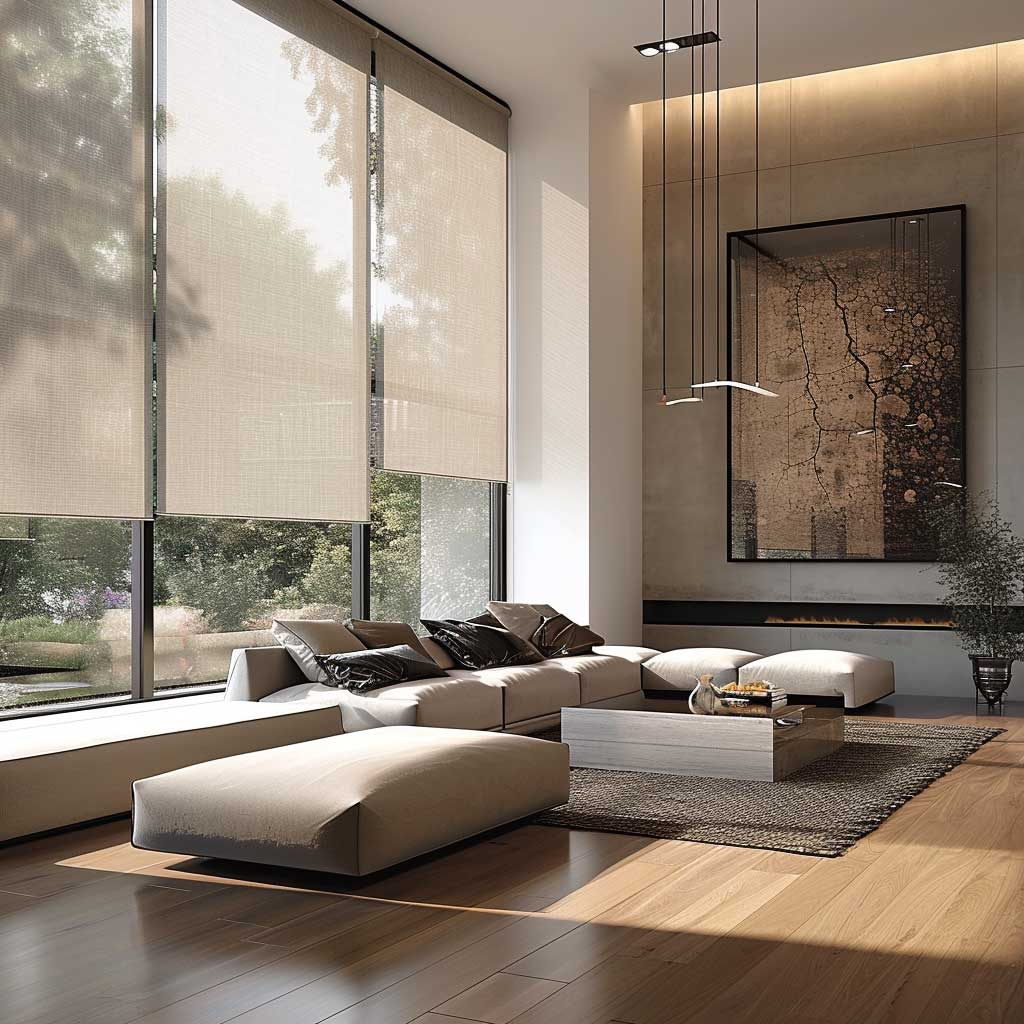
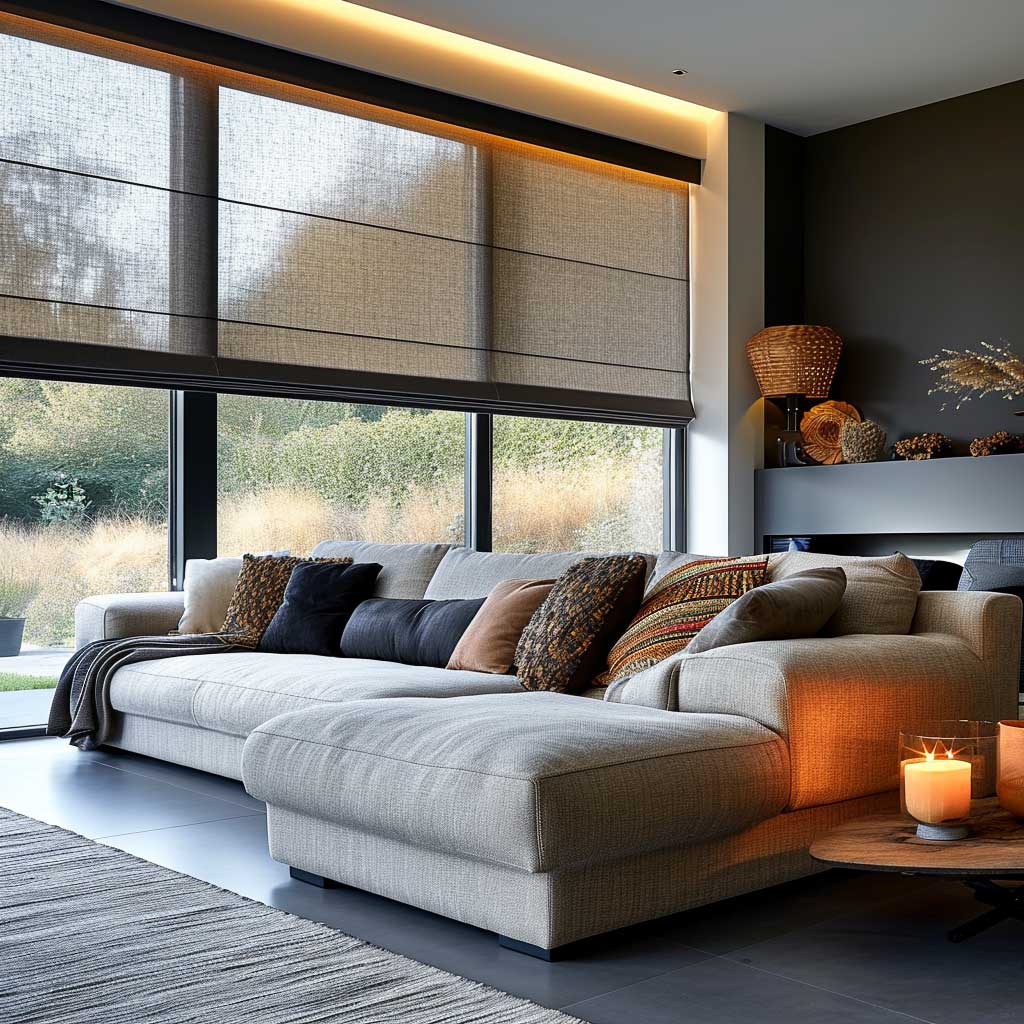

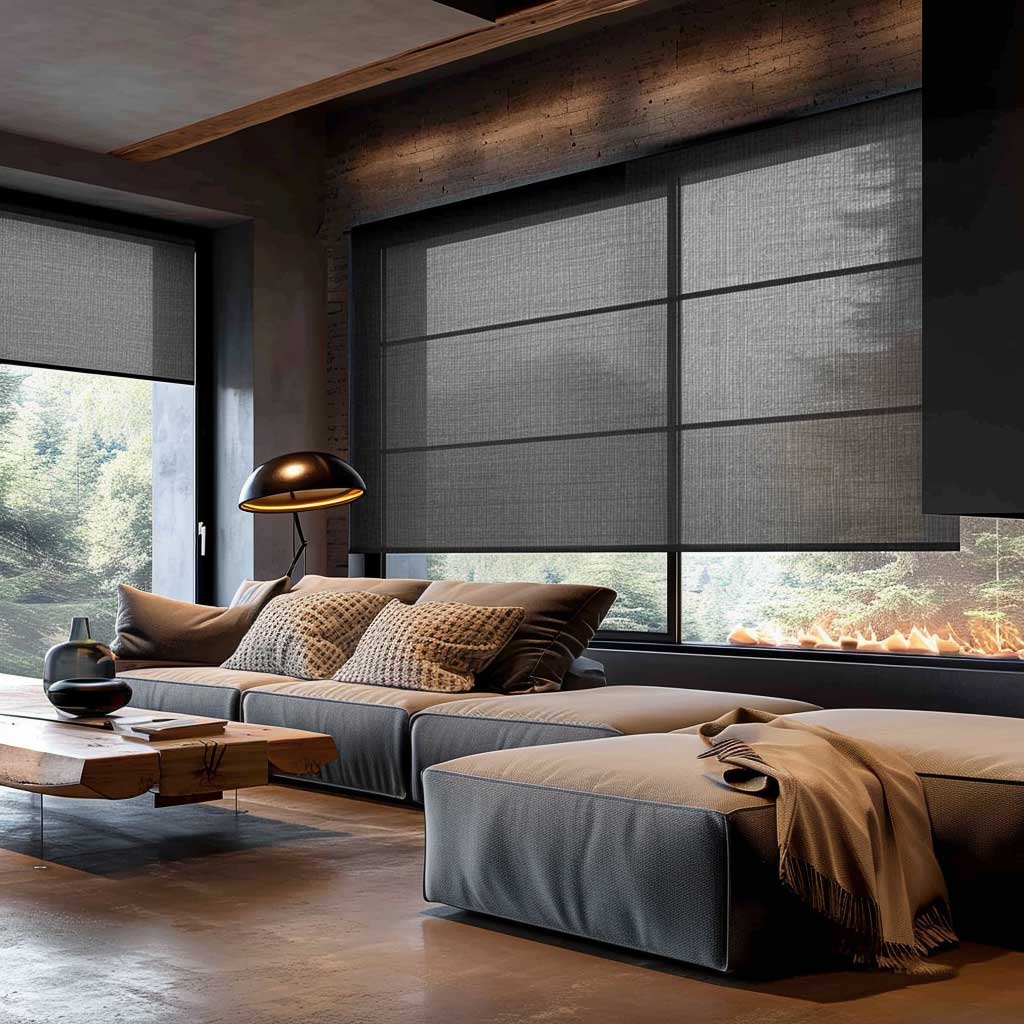
Roller shades also play well in kitchens where curtains collect grease and steam. Wipe-clean PVC or polyester fabric ($40–$80 from Ikea’s RINGBLOMMA or TUPPLUR lines) holds up over a sink far better than any curtain panel. Cleaning is a damp cloth situation. I own two of these and haven’t thought about them since the day I installed them — which is exactly what a minimalist window treatment should do.
If you’re curious how roller blinds fit within a broader modern window treatment approach, the rundown at modern window treatment ideas for minimalist interiors covers motorized options and linen alternatives worth considering alongside shades.
Sheer Curtains Pull Natural Light Without Flattening a Room



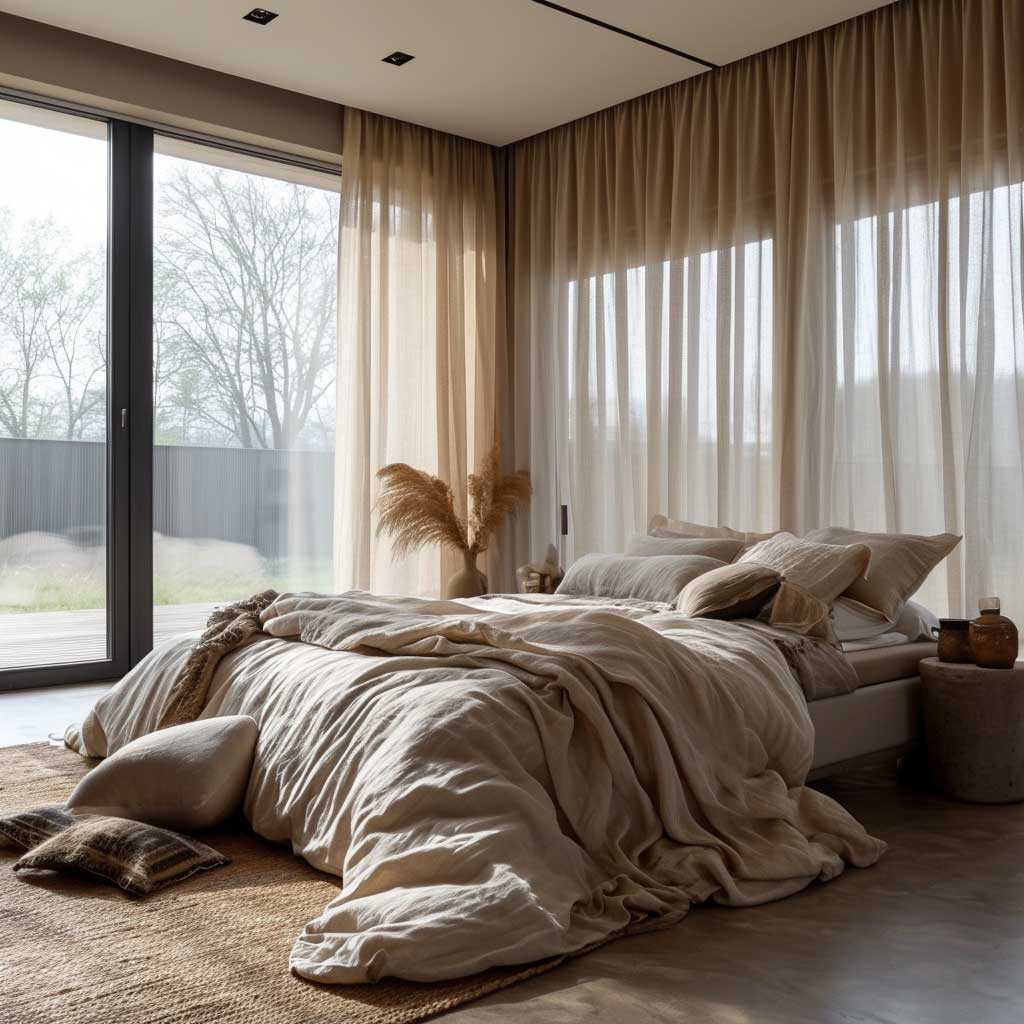
Sheer curtains are the only window treatment that adds atmosphere without adding weight. I’ve used IKEA’s HANNALILL (around $25 per panel, polyester voile) in three different apartments, and they photograph beautifully every single time. The fabric catches the light and moves — even from a cracked window — and that movement makes a still room feel alive. Nothing else in the $25–$60 range does this.
Fabric selection is everything with sheers. Linen-cotton blends like those from West Elm’s Sheer Belgian Flax line ($79–$109 per panel) hold shape and drape without going limp. Cheap polyester sheers turn yellow in sunlight within two years. I’ve bought the budget version. Learn from my mistake. Spend the extra $30 per panel upfront or replace them in 24 months.
Hang them right or don’t hang them. That’s the rule. You need a curtain rod mounted at ceiling height or within 2–3 inches of it, and the panels should just barely kiss the floor — no pooling, no gap, no floating half an inch up. A floating panel looks unintentional. Pooling looks deliberate. Between the two, pooling wins in a bedroom, floating wins nowhere. I stole this trick from a Swedish interiors account and haven’t looked back.
Minimalist sheer curtains also work as a layering base. Add a blackout roller behind them in a bedroom and you get softness in daylight and darkness at night. This two-layer approach is what most hotel rooms use. You can replicate it for under $120 per window: sheers on a ceiling-mounted rod, Bali blackout roller on an inside mount. The combination reads far more expensive than either piece alone.

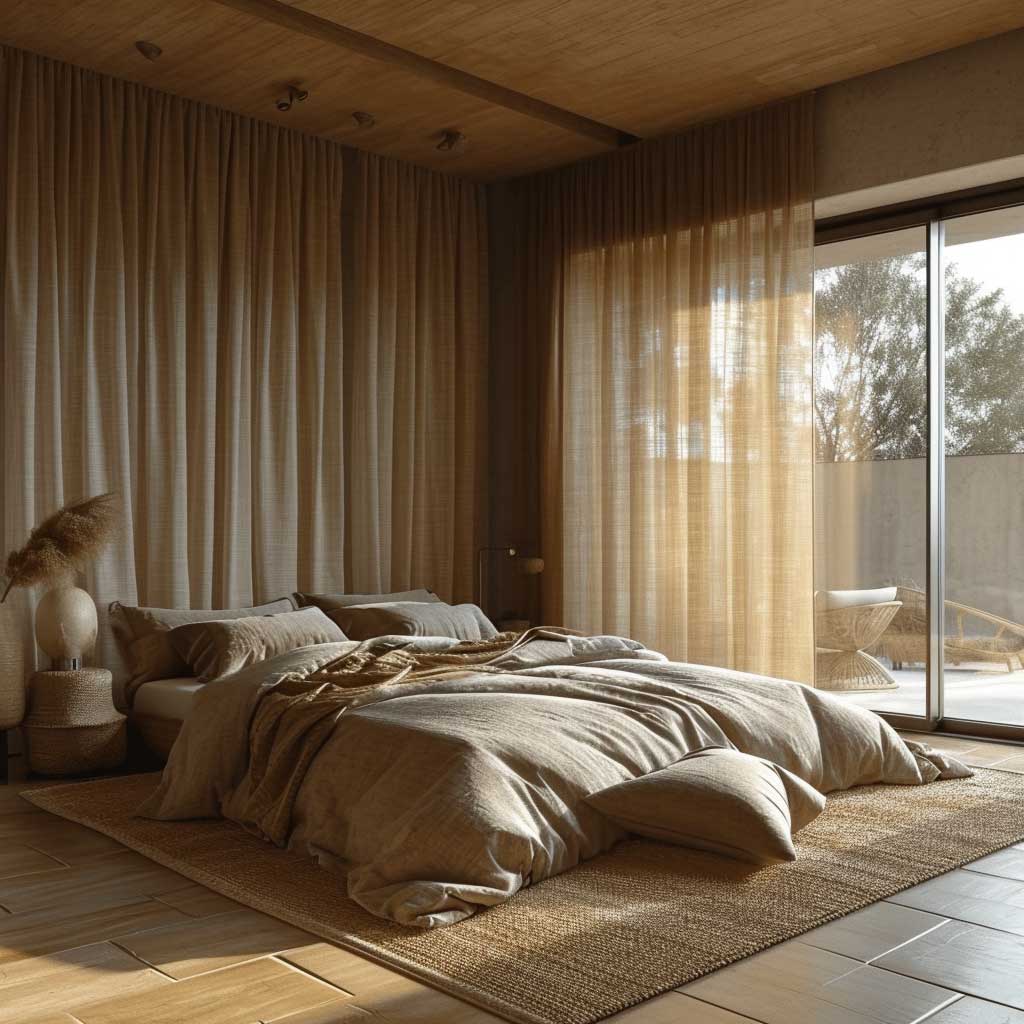
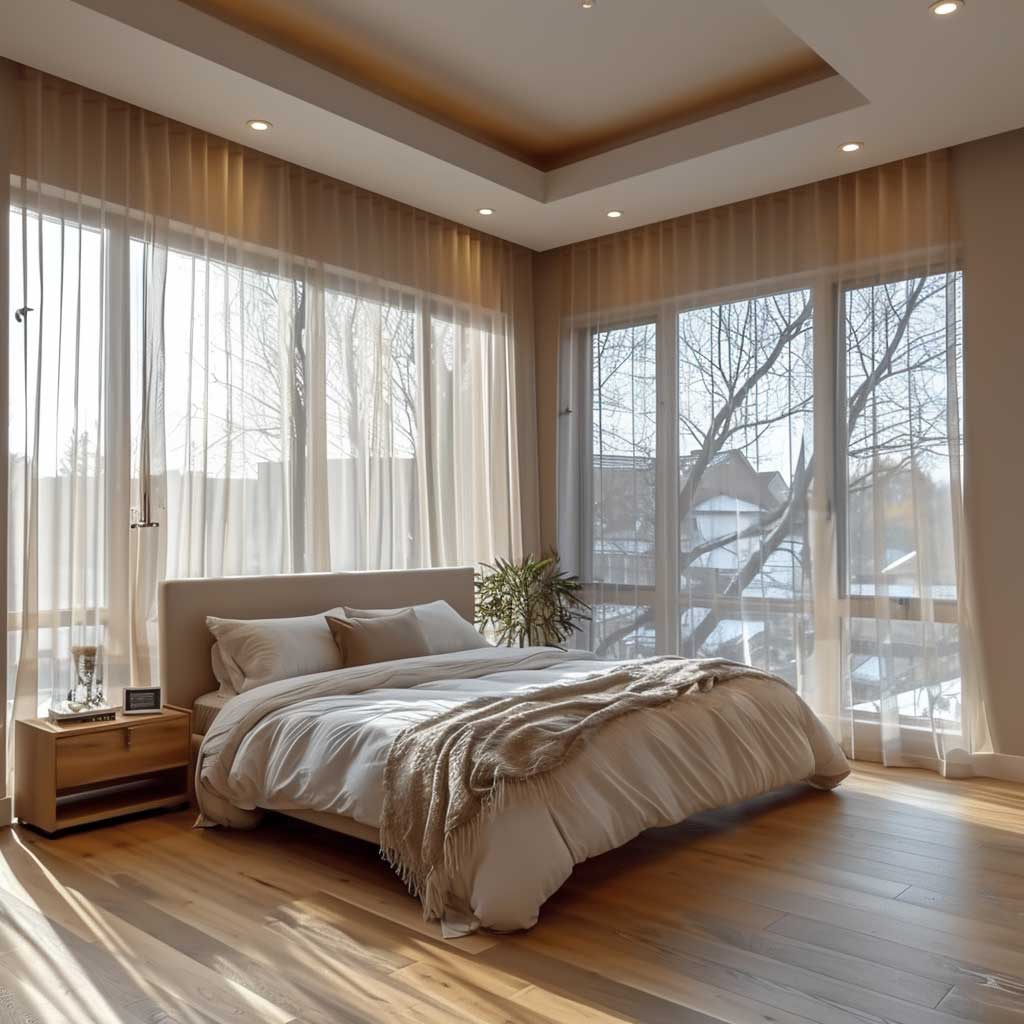
Hardware is where people make the dumbest mistakes with sheers. A decorative finial on either end of the rod immediately dates the look — it tells your eye “2009 Pottery Barn” instead of “now.” Use a simple matte black or brushed brass rod with a plain squared end. Umbra’s Twilight rod ($35–$55 from Amazon) has a clean geometric return that sits flush to the wall. Nearly invisible. The curtain gets the attention, not the rod.
Don’t Do This
❌ Hanging curtains at window frame height. It caps the room visually. Always mount the rod at ceiling height or within 3 inches of it — this is non-negotiable in a minimalist space.
❌ Buying sheers shorter than floor-length. Sill-length sheers look unfinished in any room that isn’t a kitchen or bathroom. Floor-to-ceiling is the move.
❌ Using white sheers in a south-facing room without UV protection. They yellow within 18 months. Go off-white, ivory, or pale linen instead — the color holds and photographs warmer.
❌ Pairing sheers with a decorative valance or tieback. A tieback turns a minimalist curtain into a country cottage curtain. Let them hang straight.
For a living room where light quality matters as much as privacy, sheers are the right call. For more ideas on pairing drapery styles with minimal interiors, the minimalist chic drapery designs for living rooms post has a good breakdown of fabric weights and rod placements worth bookmarking.
Solid Neutral Drapes Change a Room the Way Paint Does — Quietly
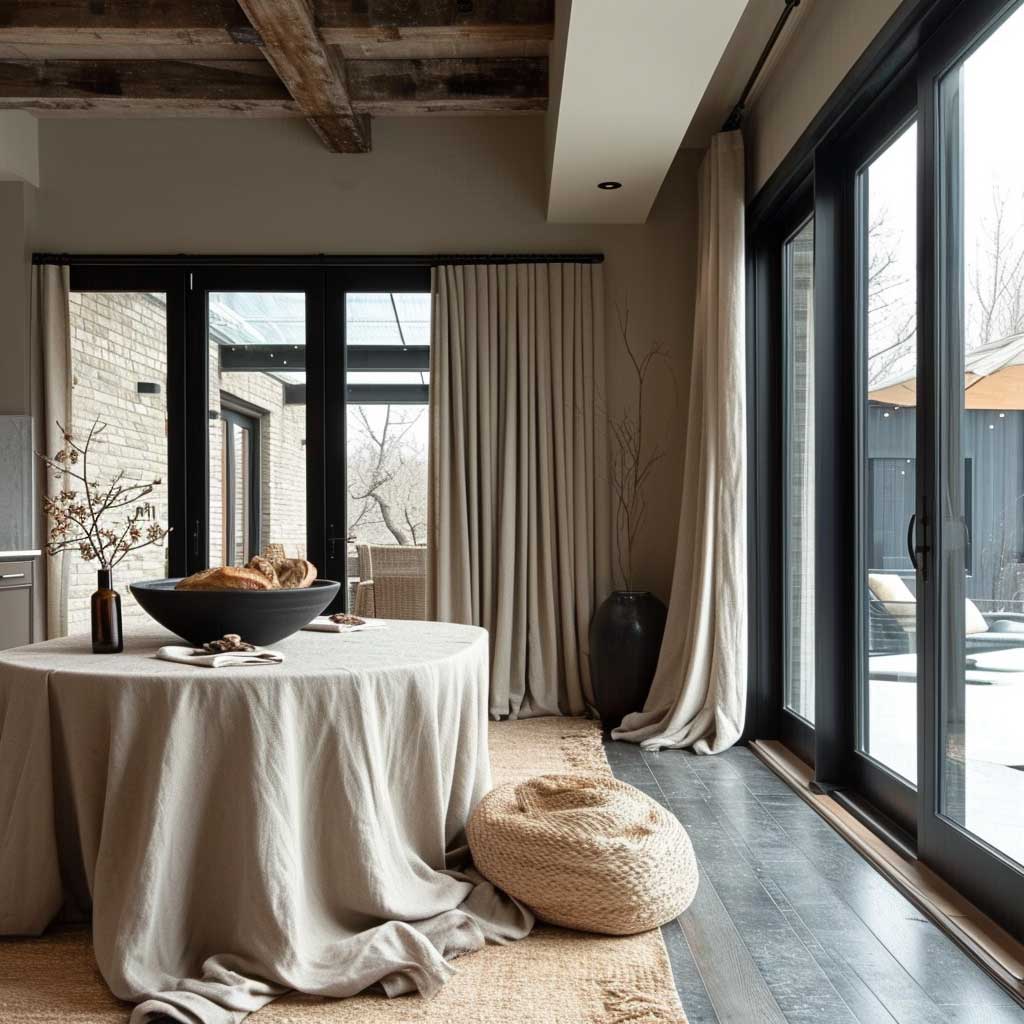
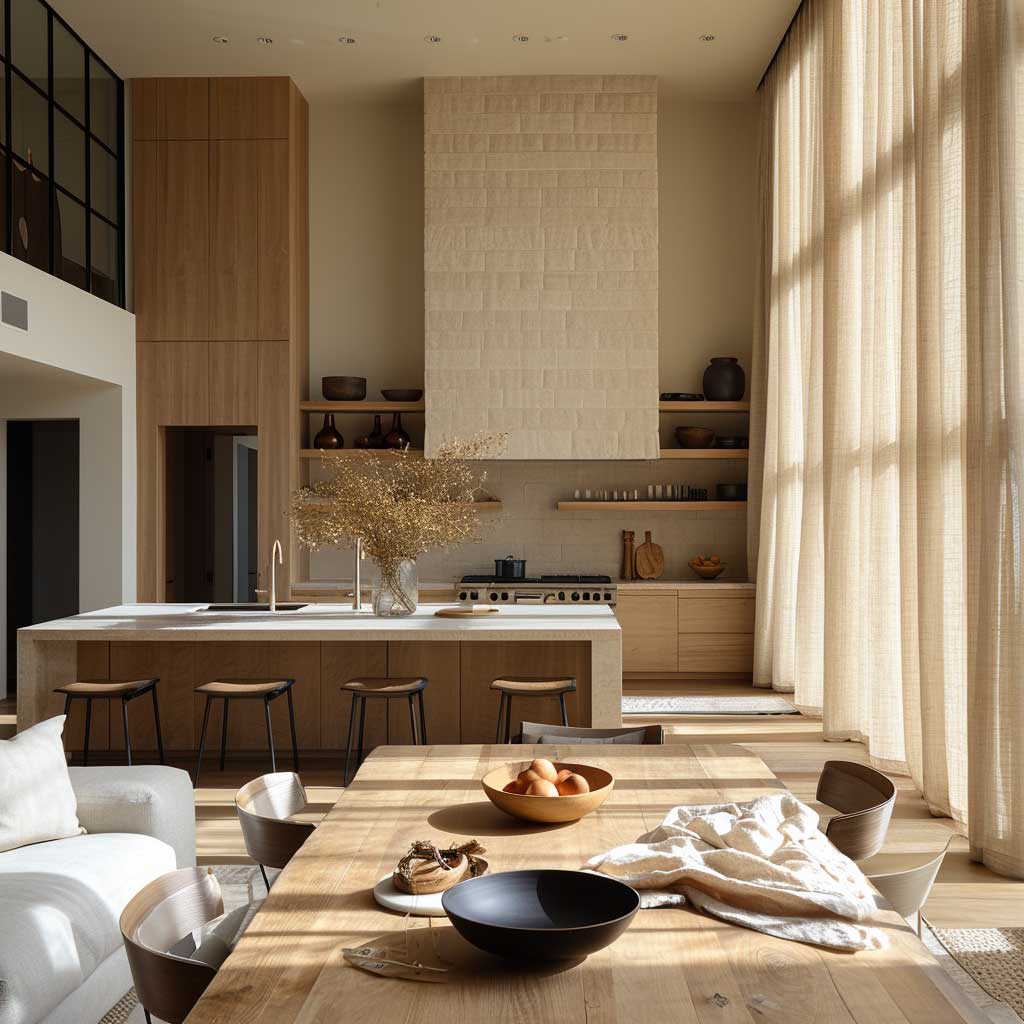
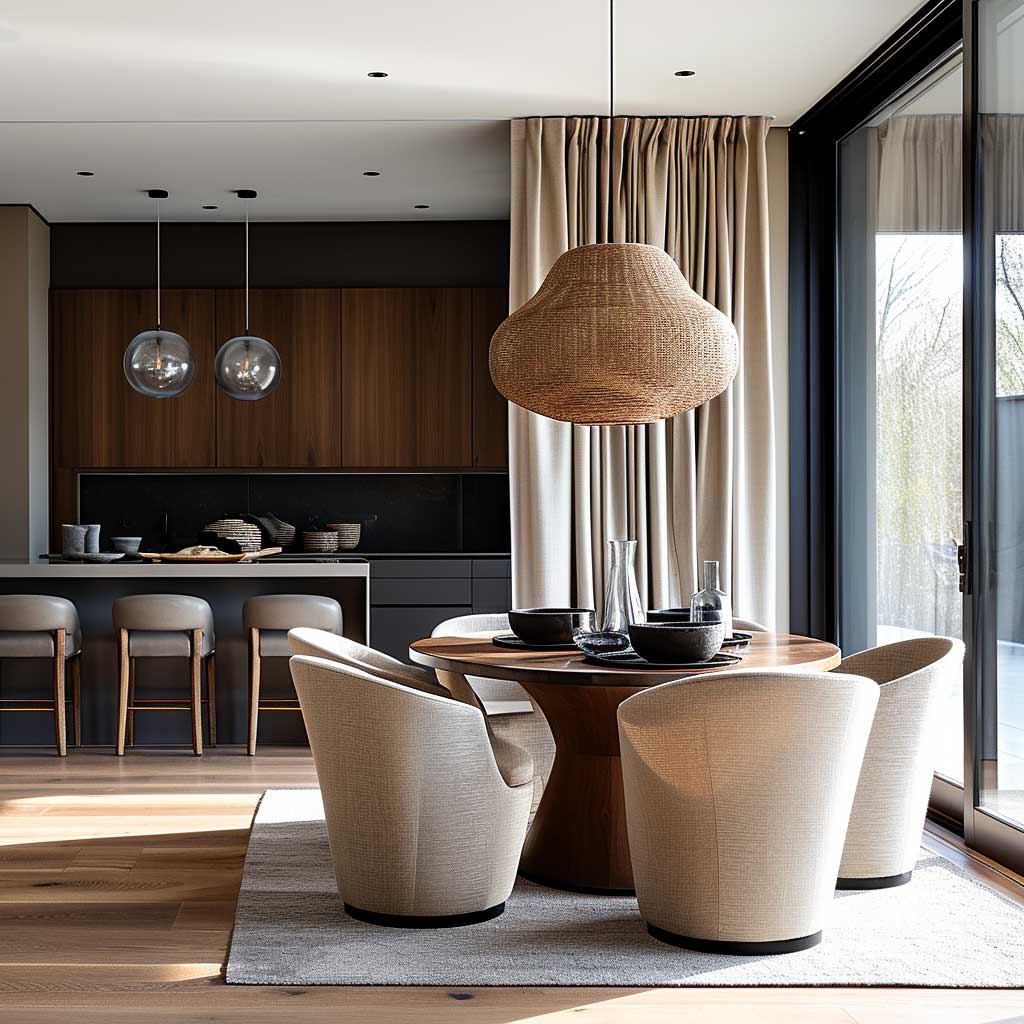
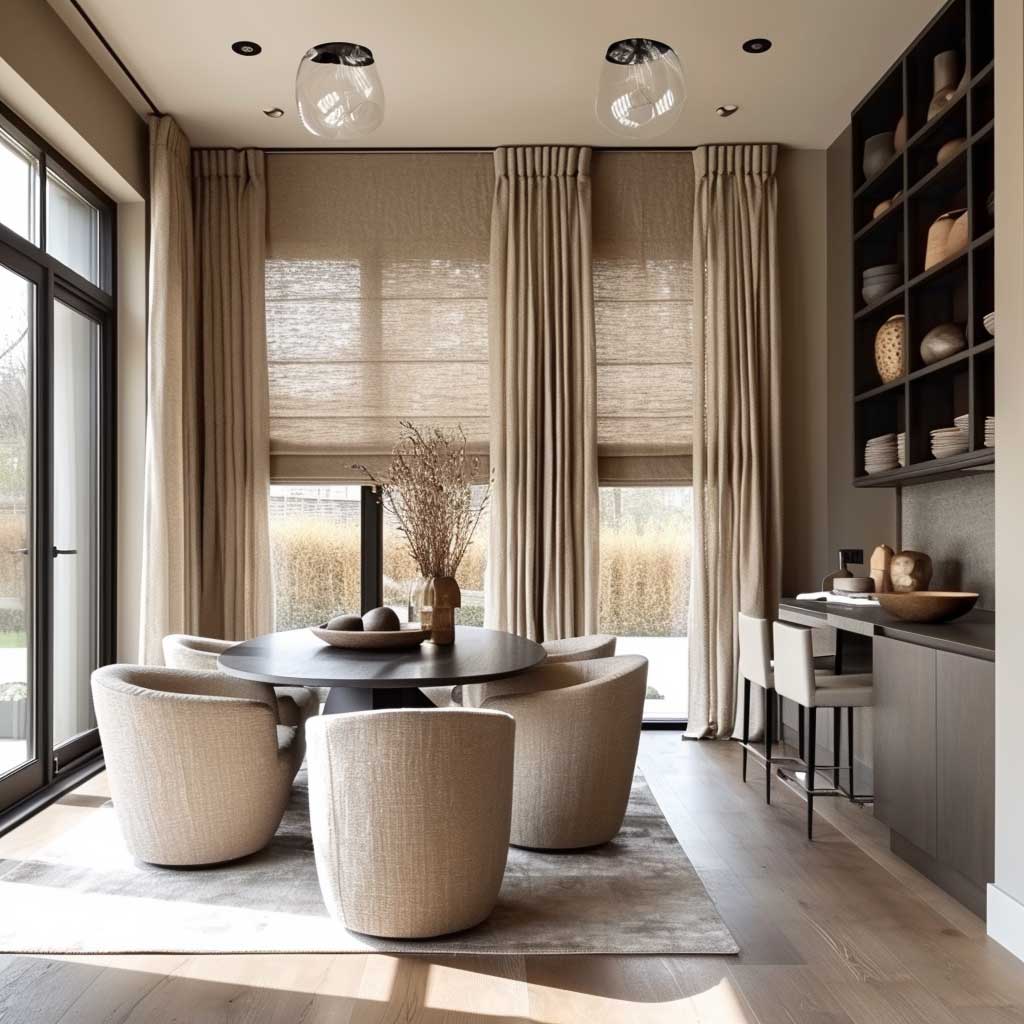
Solid neutral drapes are what paint is to a wall: you don’t notice them when they’re right, but you immediately notice when they’re wrong. My current living room has H&M Home’s linen-blend drapes in greige ($49 per panel). Not the cheapest option, not the most expensive. They break at the floor by about an inch, and every person who visits asks what designer I used. The answer is H&M Home and a ceiling-height rod from IKEA. Total cost per window: $120.
What shade of neutral? Warmer than you think. Cool whites and stark greys read clinical next to natural wood tones. Greige (beige with grey undertones), warm ivory, or pale sand all photograph better and age better. West Elm’s Linen Cotton Curtain in “Natural” ($79–$149 per panel depending on size) has the right weight and tone. Pottery Barn’s Belgian Flax Linen in “Oatmeal” ($99–$169) is the premium version. Both drape without crinkling.
Fabric weight is the variable nobody talks about. A lightweight cotton-voile drape in a neutral color looks fine from across the room but reads thin and cheap up close — like a theater flat rather than a real wall treatment. You want a medium-weight linen or linen-poly blend: something with enough body to fall in clean columns rather than flutter sideways. Think of it like a good coat. Weight is what makes it hang right.
Lining matters too. Unlined drapes in any neutral will backlight badly when the sun hits them — you’ll see the rod, the window frame, even the rings, all silhouetted through the fabric. Add a privacy lining (not full blackout unless it’s a bedroom) and the panel reads as a solid plane of color. That solid plane is what makes the room feel finished. Room darkening liners from Rowley Company run about $8 per yard and are worth every cent.
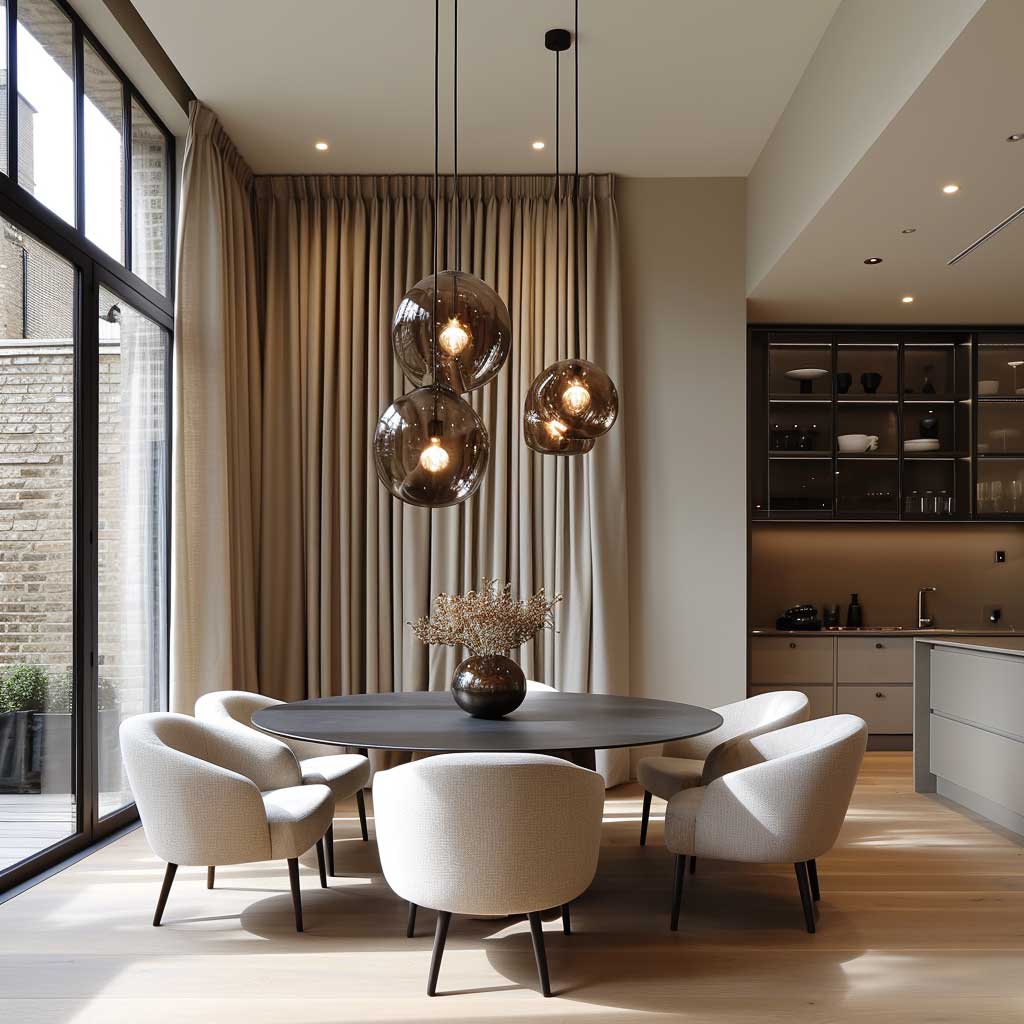

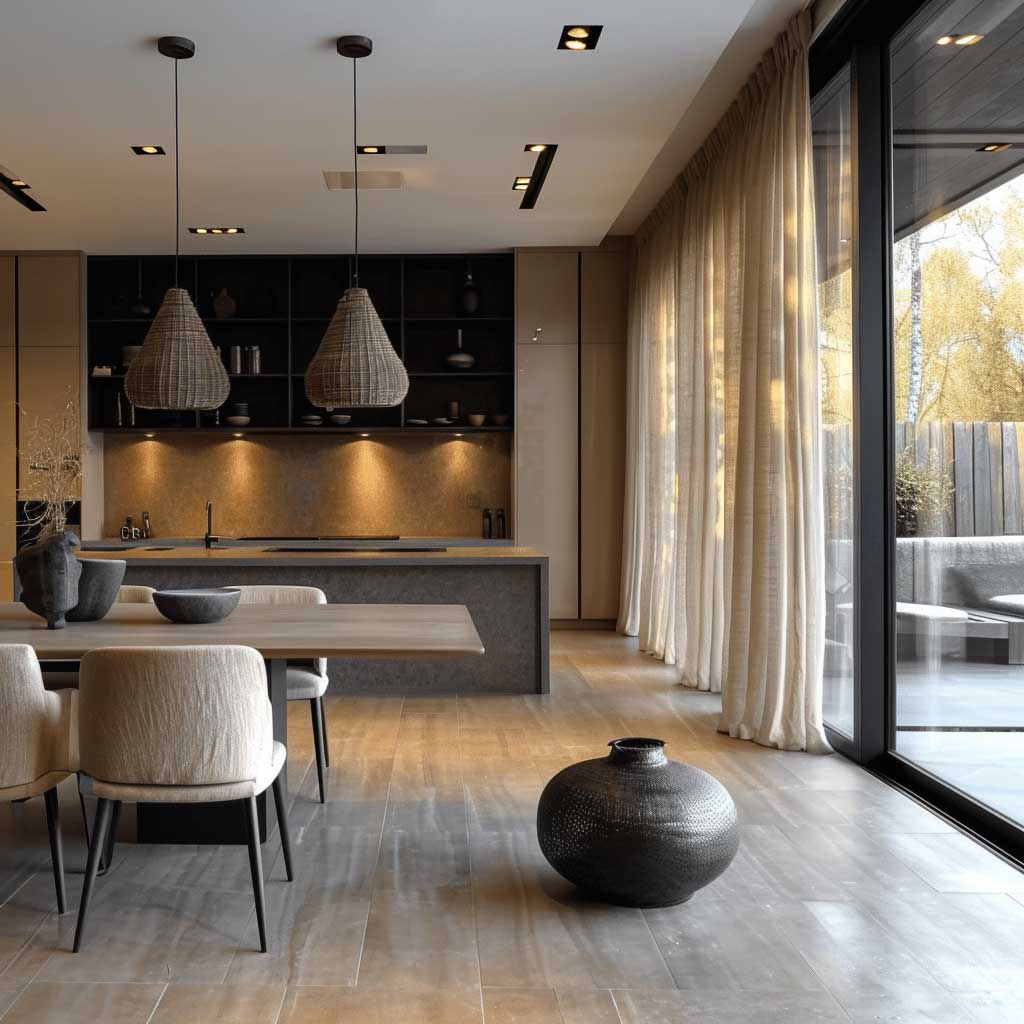

Hardware for solid drapes should be minimal and proportional. A 1-inch diameter matte black metal rod — not brushed nickel, not polished chrome — disappears into the ceiling plane and lets the fabric do the work. Everhem, a drapery brand I’ve bought from twice, makes a French return rod starting at $85 that sits flush to the wall without any visible bracket gap. It’s the detail that reads as architectural rather than decorative, which is exactly the distinction that separates a minimalist room from an undecorated one.
For an authoritative overview of how to approach window treatment choices across different room types and light conditions, Houzz’s window treatments resource covers hardware, hanging heights, and layering options in detail worth reading before you buy anything.
Final Word
The Right Window Treatment Is the One Nobody Notices
Minimalist window curtains work because they disappear. The roller shade that holds at exactly half mast. The sheer panel that moves like a breath. The solid drape that makes the ceiling look 6 inches taller than it is.
Spend where it shows — fabric quality, ceiling-height rod placement — and skip the decorative hardware. The room will thank you by looking like someone who knows exactly what they’re doing.
Save this post before your next curtain run — the difference between a finished minimalist room and an unfinished one is often just a rod position and a fabric choice.