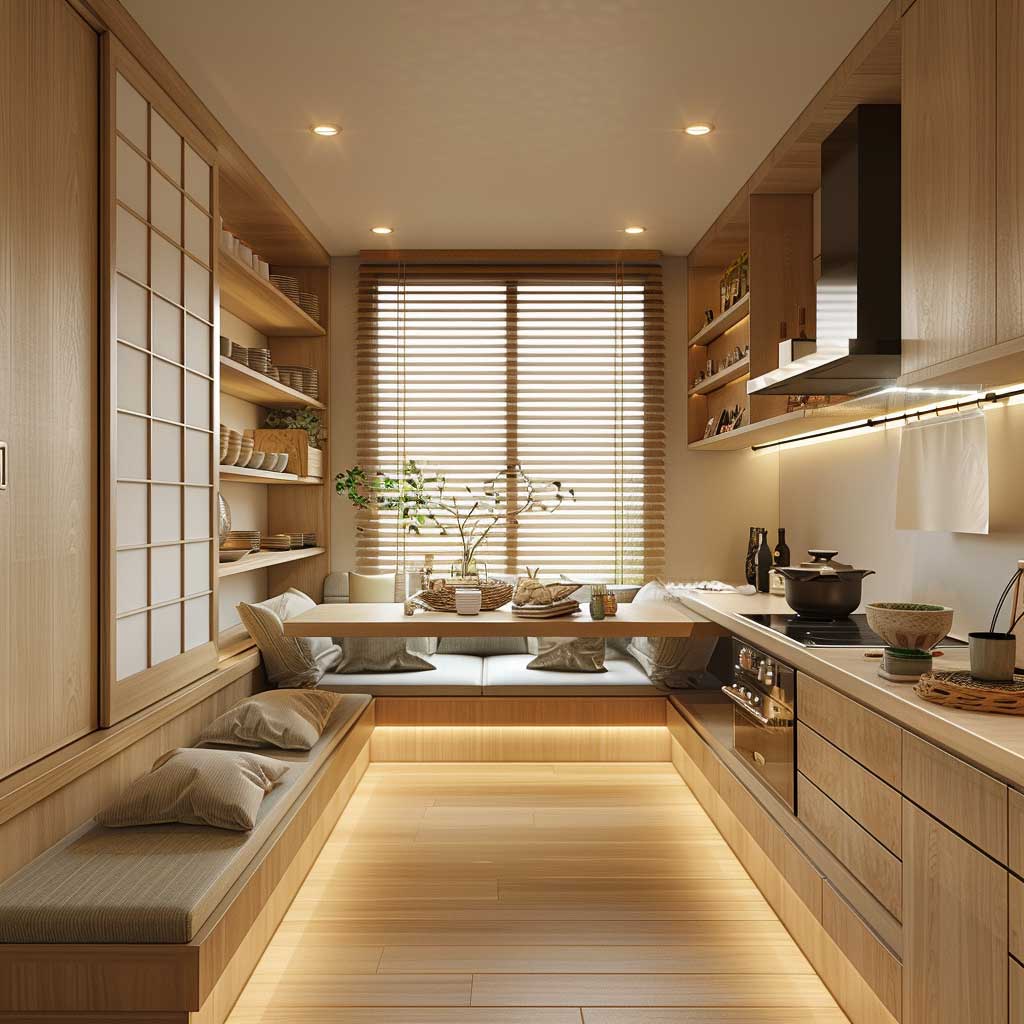
A Japanese minimalist kitchen design isn’t just a neutral palette and some handleless cabinets — it’s a commitment to every surface earning its place. I’ve walked through dozens of these spaces, and the ones that land hardest are the ones where the cook barely has to move. Pull out a knife, rinse a pepper, set it on a hinoki board. Done. The kitchen functions like a choreographed sequence, not a scavenger hunt. That discipline is the real ask, and it costs more thought than money.
You’ll notice most attempts fall apart at the same spot: the countertop. People commit to minimalism on the cabinets, then leave a toaster, a knife block, a fruit bowl, and a paper towel holder out in the open. The illusion collapses. Japanese minimalist kitchen design works precisely because nothing lives on the surface that doesn’t belong to the meal being made right now.
Quick Scan
- Core principle: ma (negative space) — empty surfaces are the design, not a failure to fill them
- Best wood choices: hinoki cypress, white oak, ash — avoid tropical hardwoods that age orange
- Handleless cabinets run $180–$420 per linear foot installed (Leicht, Bulthaup, Reform)
- Renovation reality: Japanese minimalist kitchen renovations average $28,000–$55,000 depending on appliance integration
- Biggest mistake: keeping a visible spice rack — it reads as clutter every single time
The Wood Gets All the Credit — Light Changes It Hourly
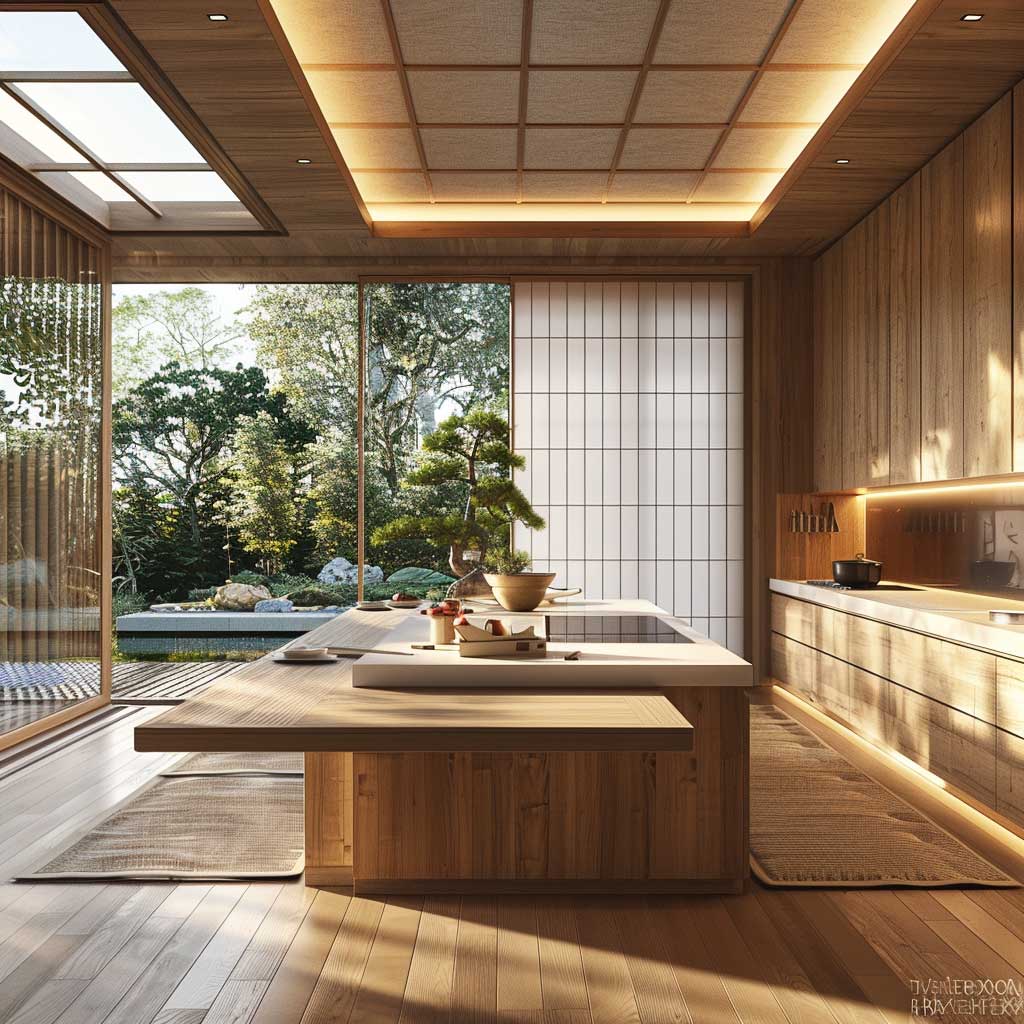
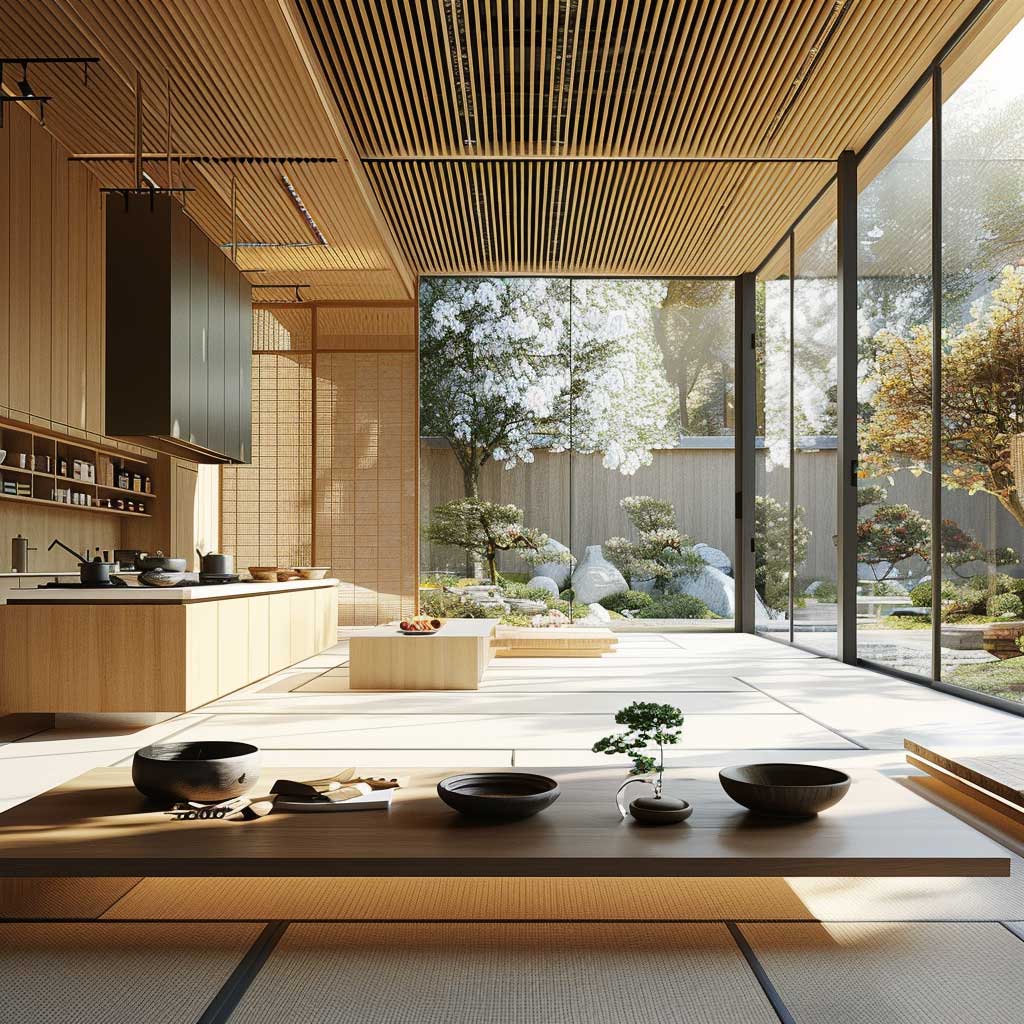
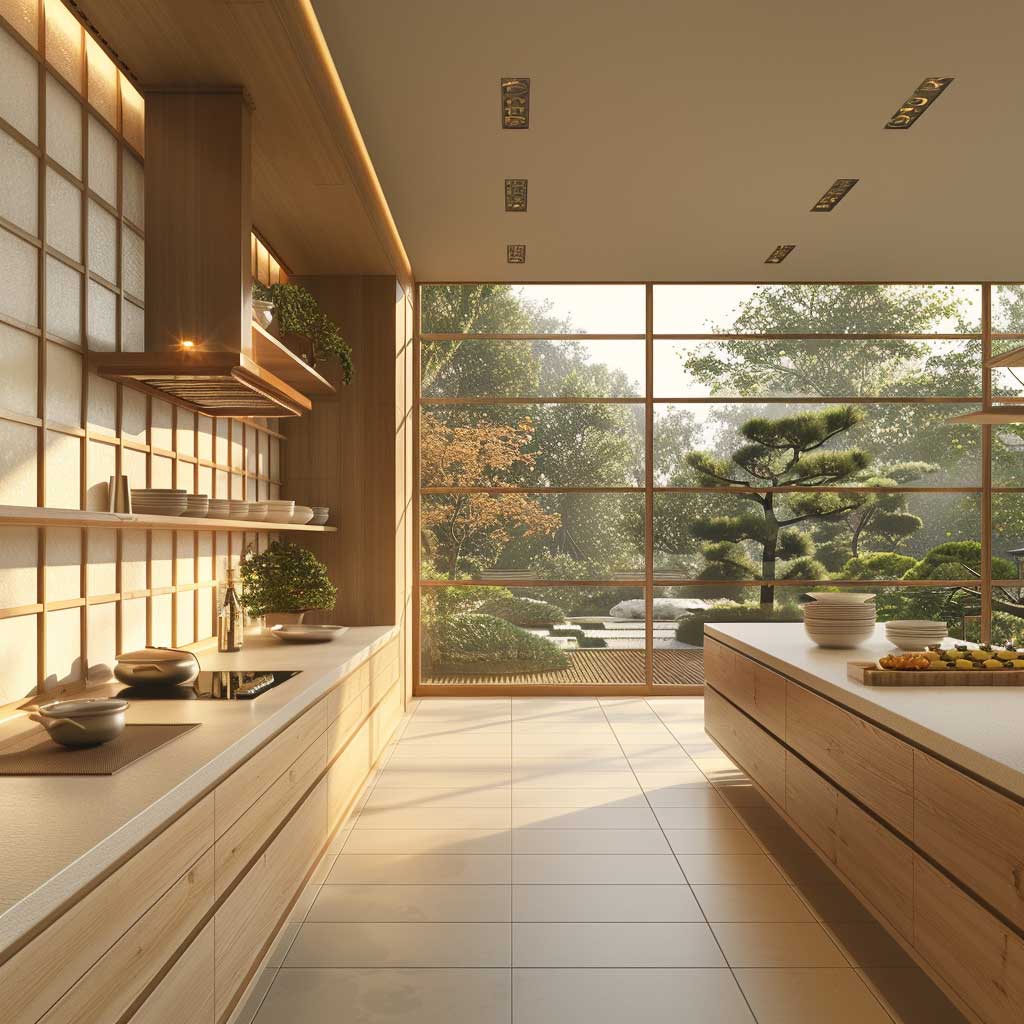
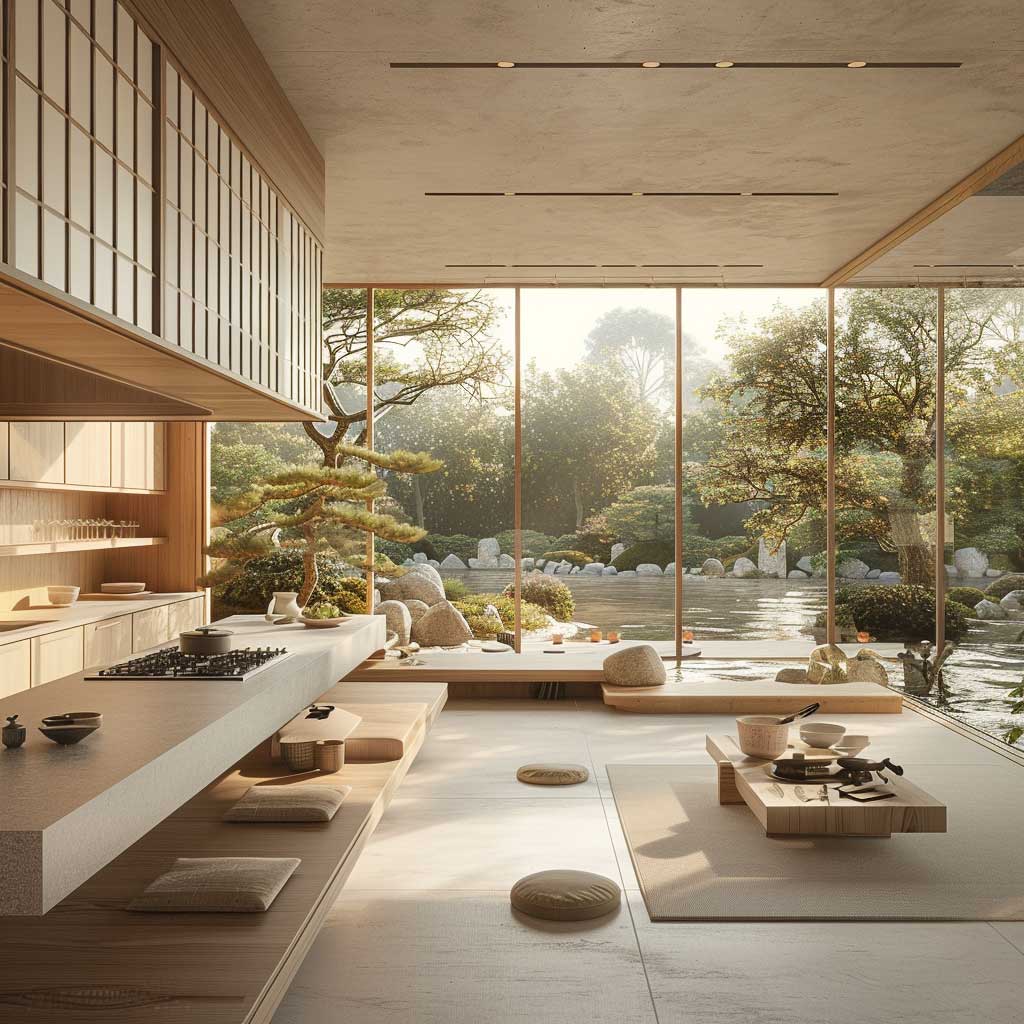
White oak is my go-to for Japanese minimalist kitchens — not because it’s fashionable, but because it photographs the same at 8am and 6pm. Ash runs warmer and cheaper (roughly $90 per cabinet door from Reform), but it shifts yellow under tungsten light, which fights the whole point. The wood isn’t decoration here. It’s the wall. You live inside the grain pattern for years, so pick one that ages toward silver-grey, not toward brass.
I stole this trick from a kitchen I photographed in Kyoto: lower cabinets in white oak, upper wall left completely bare. No upper cabinets at all. Storage moved to a single full-height pantry column at the room’s end. The psychological effect is immediate — the kitchen reads as twice its footprint. It’s not for everyone; you need discipline about what you actually own. But I haven’t seen a more honest version of this style executed any other way.
Avoid cherry wood no matter how pretty the sample looks at the showroom. Cherry darkens dramatically over two years, shifting toward orange-red that reads rustic farmhouse rather than Japanese. The whole room’s tone pivots with it. Go with rift-cut white oak or quarter-sawn ash and accept you’re spending $200–$350 per door panel from Bulthaup or Leicht — both have Japanese-facing collections that hold up.
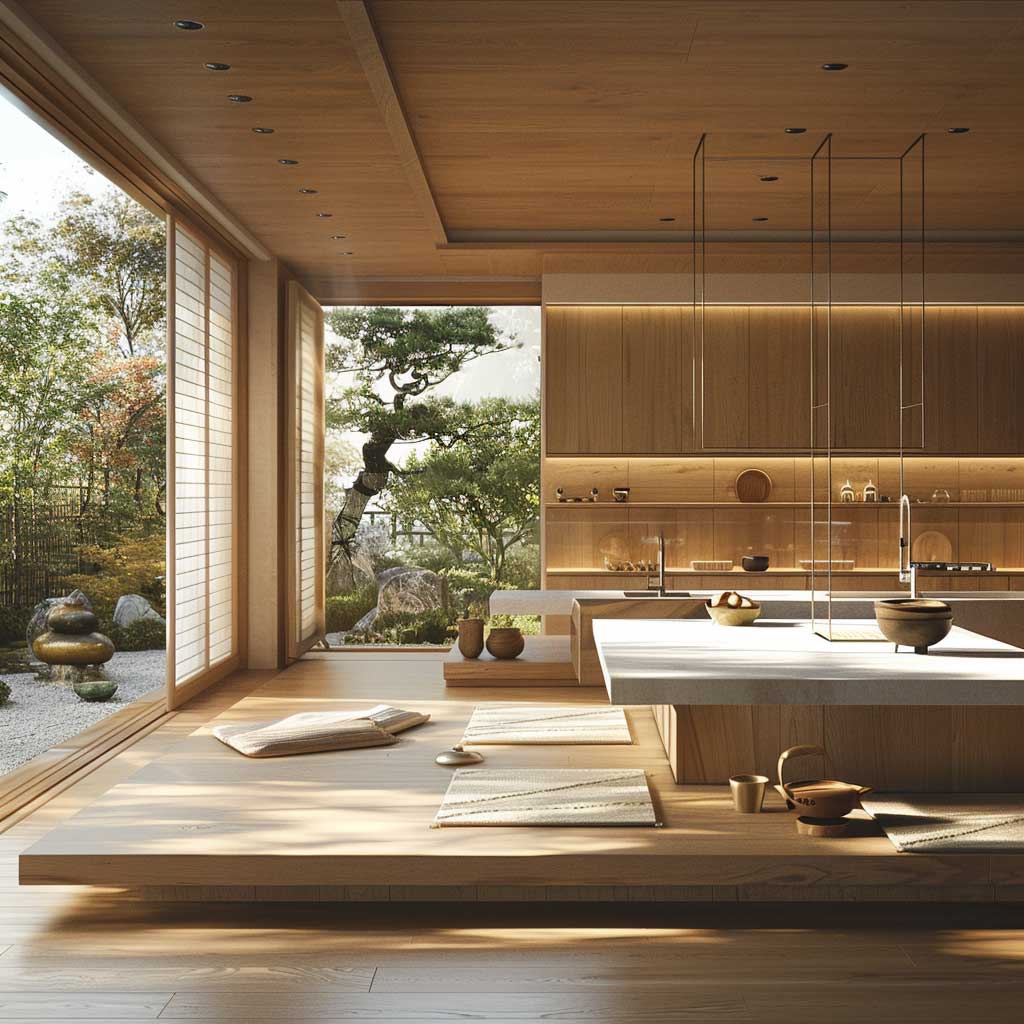
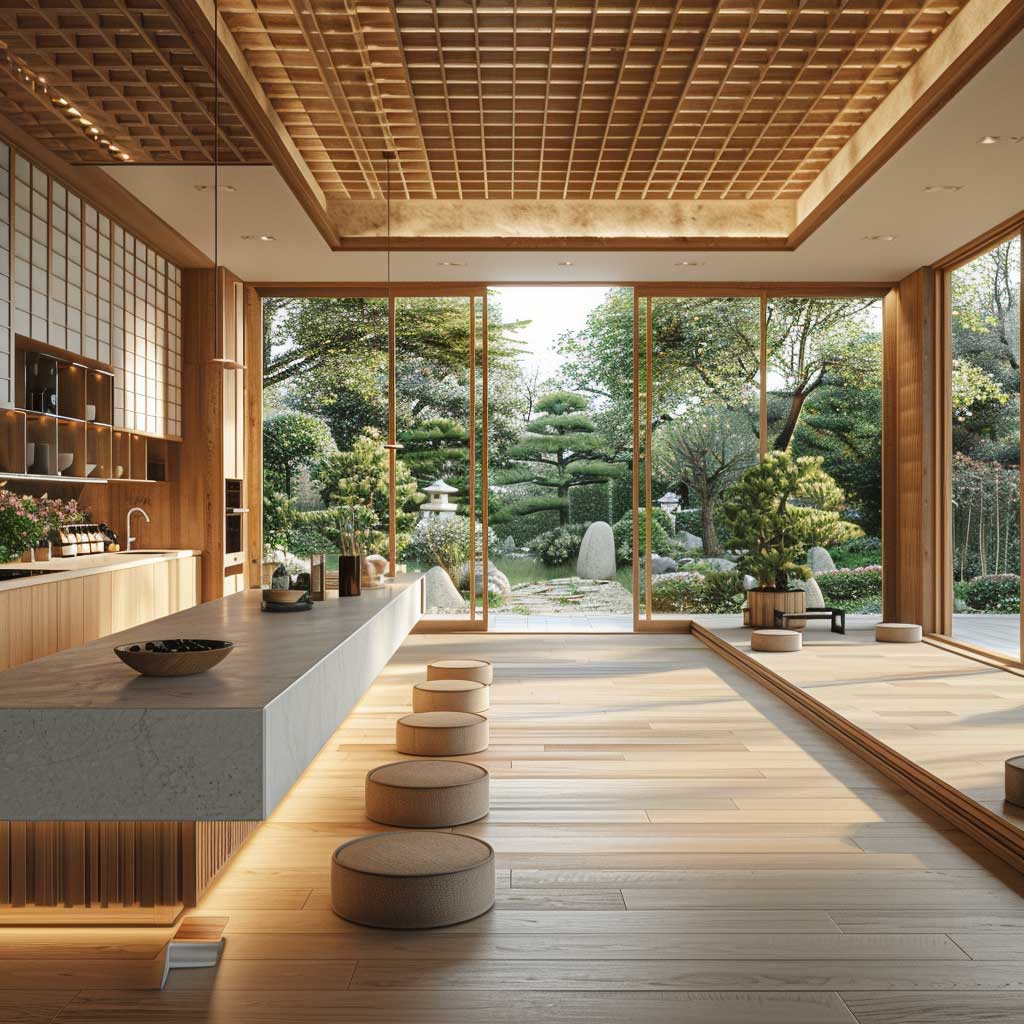
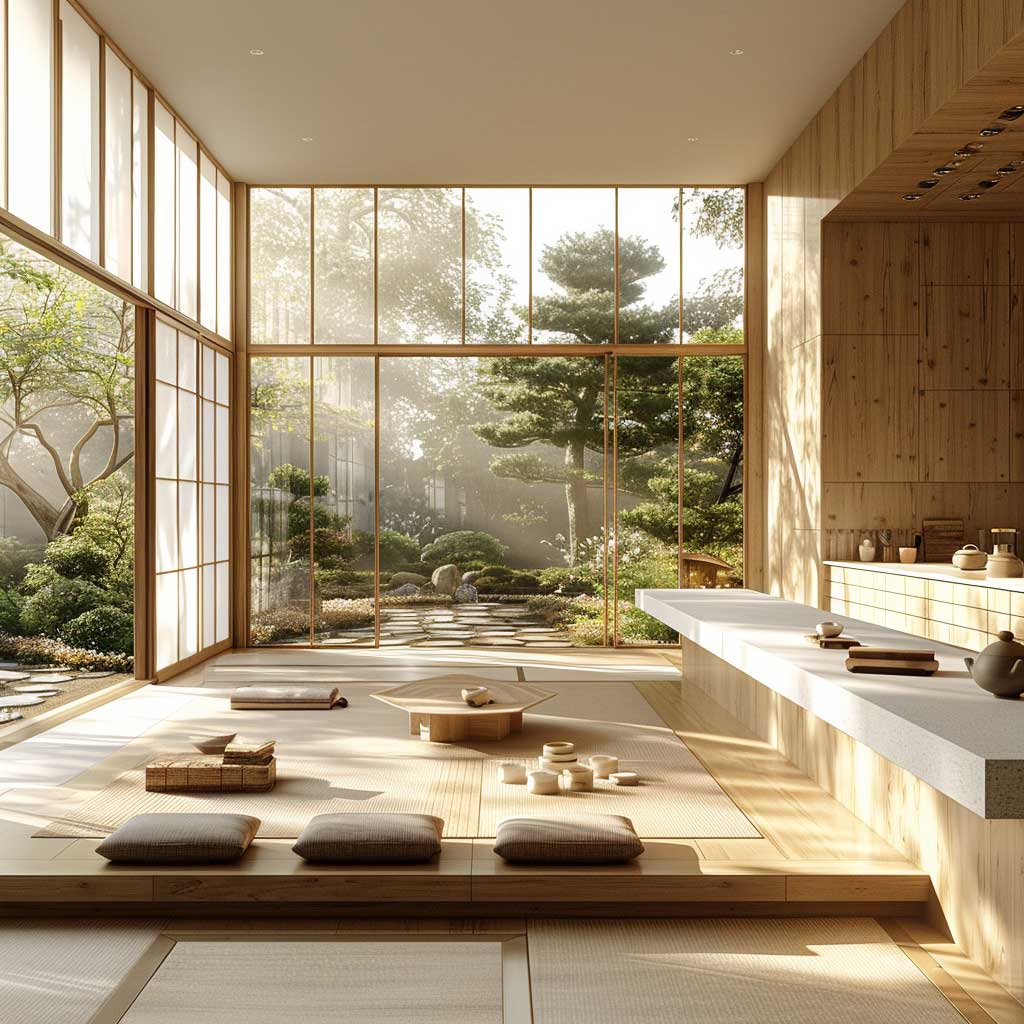
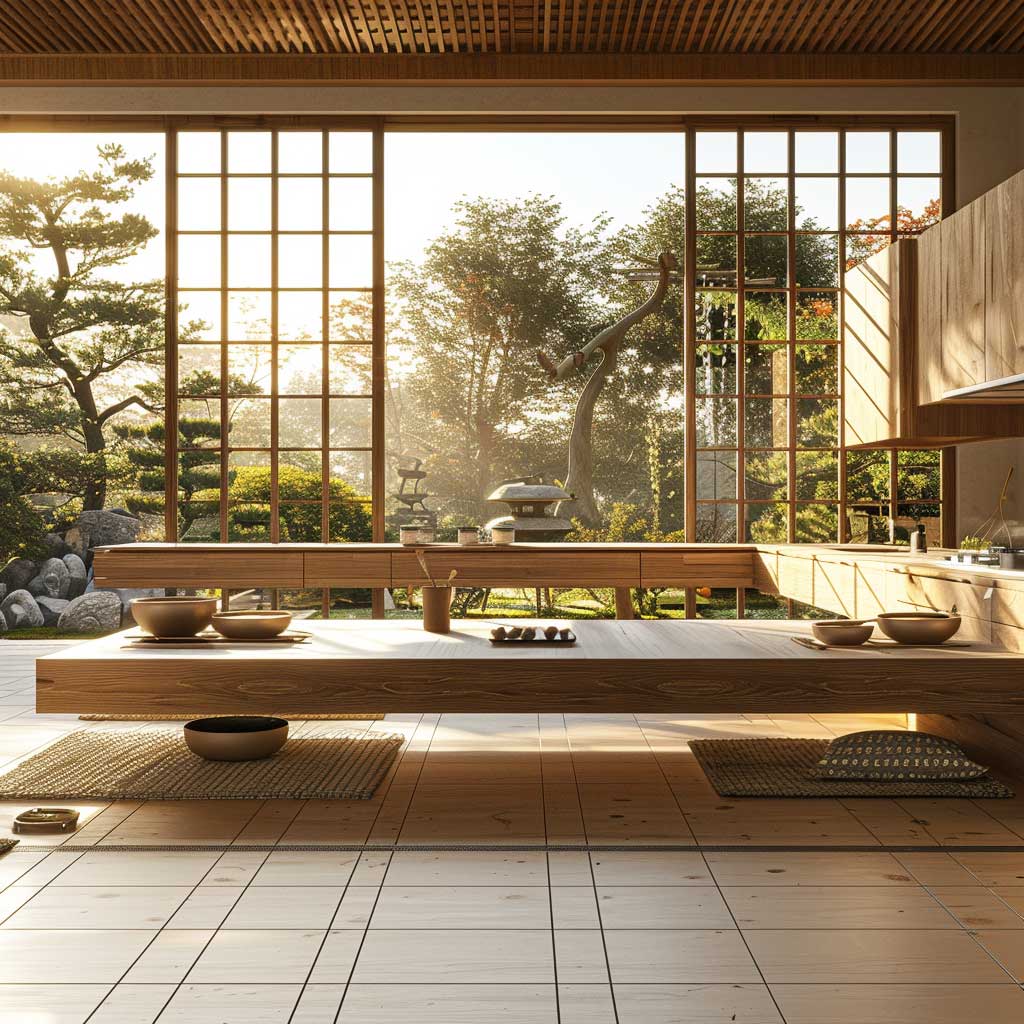
The Leicht Kyoto 2025 collection uses oil-treated oak veneers that you can re-oil yourself every two to three years for about $40 in materials. That’s the wabi-sabi move: the kitchen is alive, it ages with you, the grain tells time. Sealed lacquer finishes look flawless on day one and dead by year five. Matte oil finishes look lived-in from day one and better by year ten.
Hidden Appliances Change the Room’s Personality, Not Just Its Look
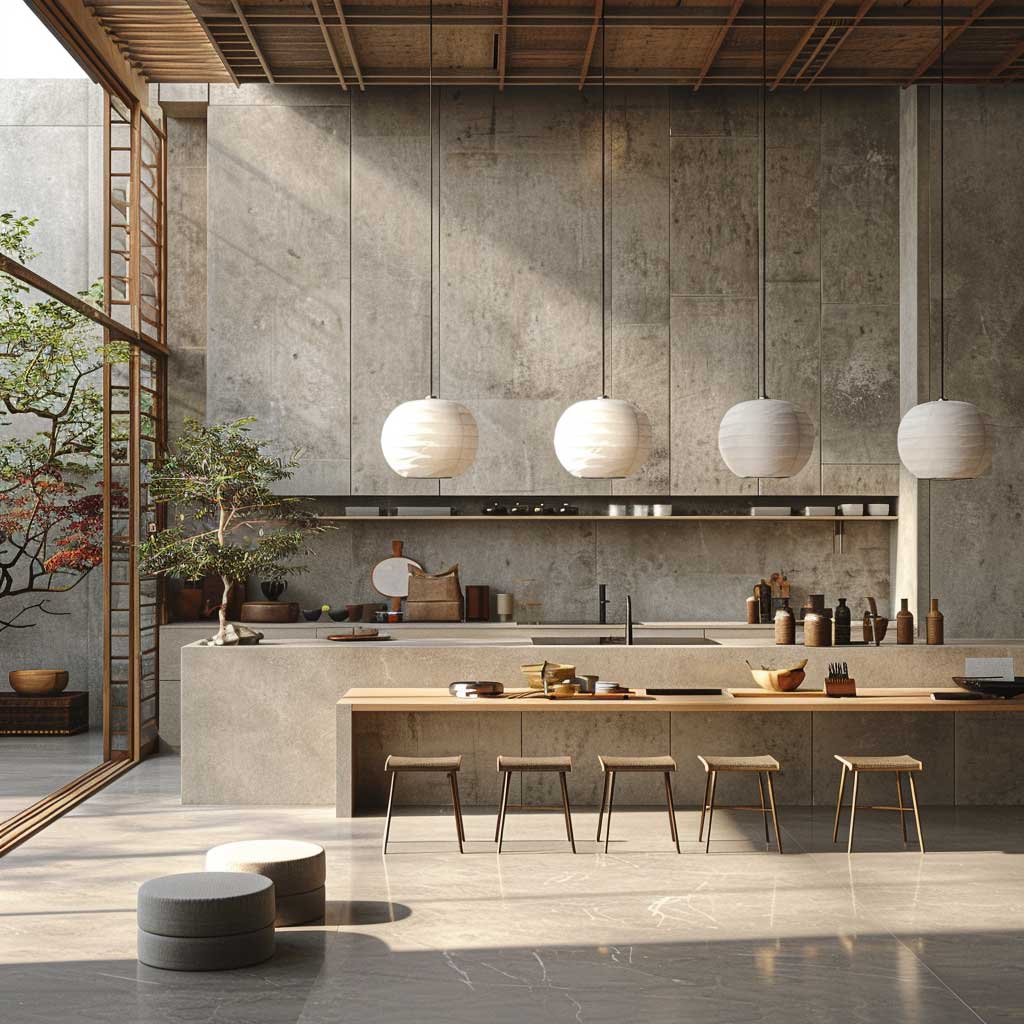
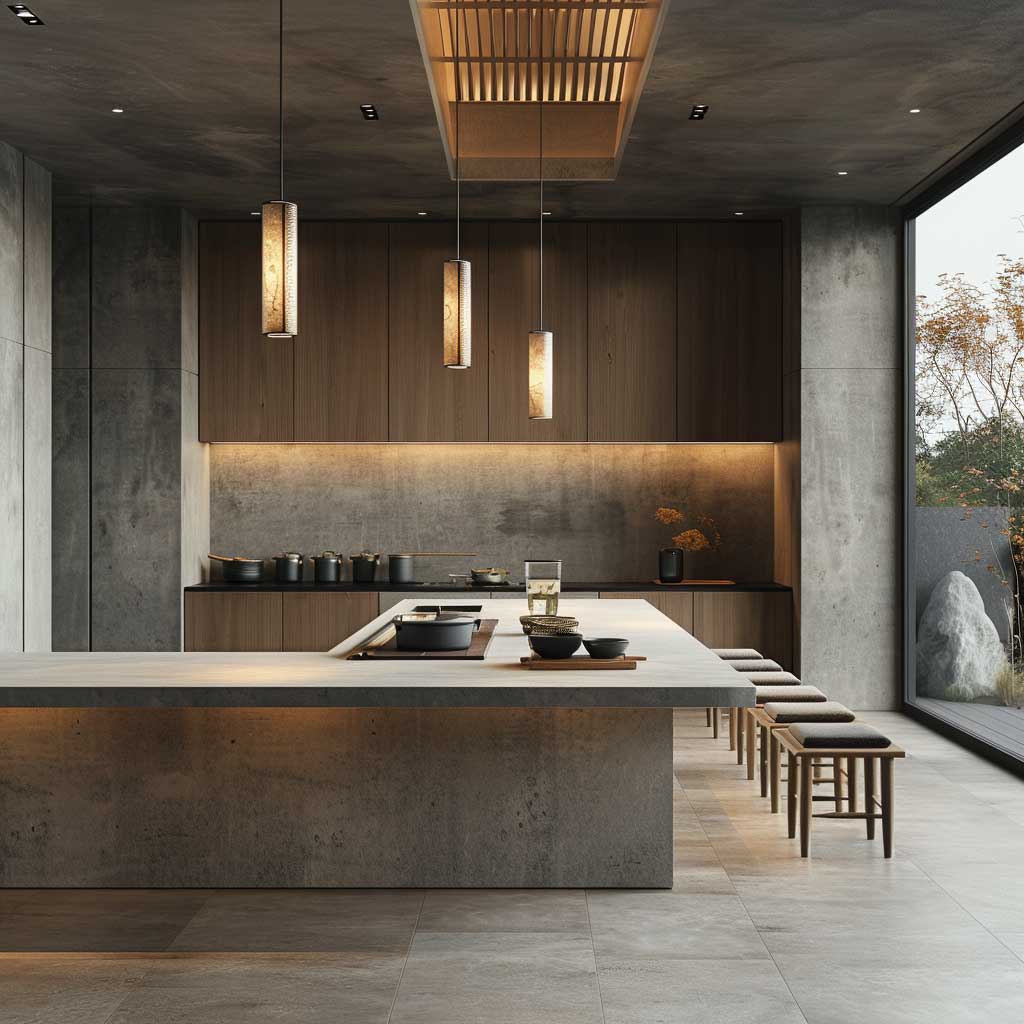
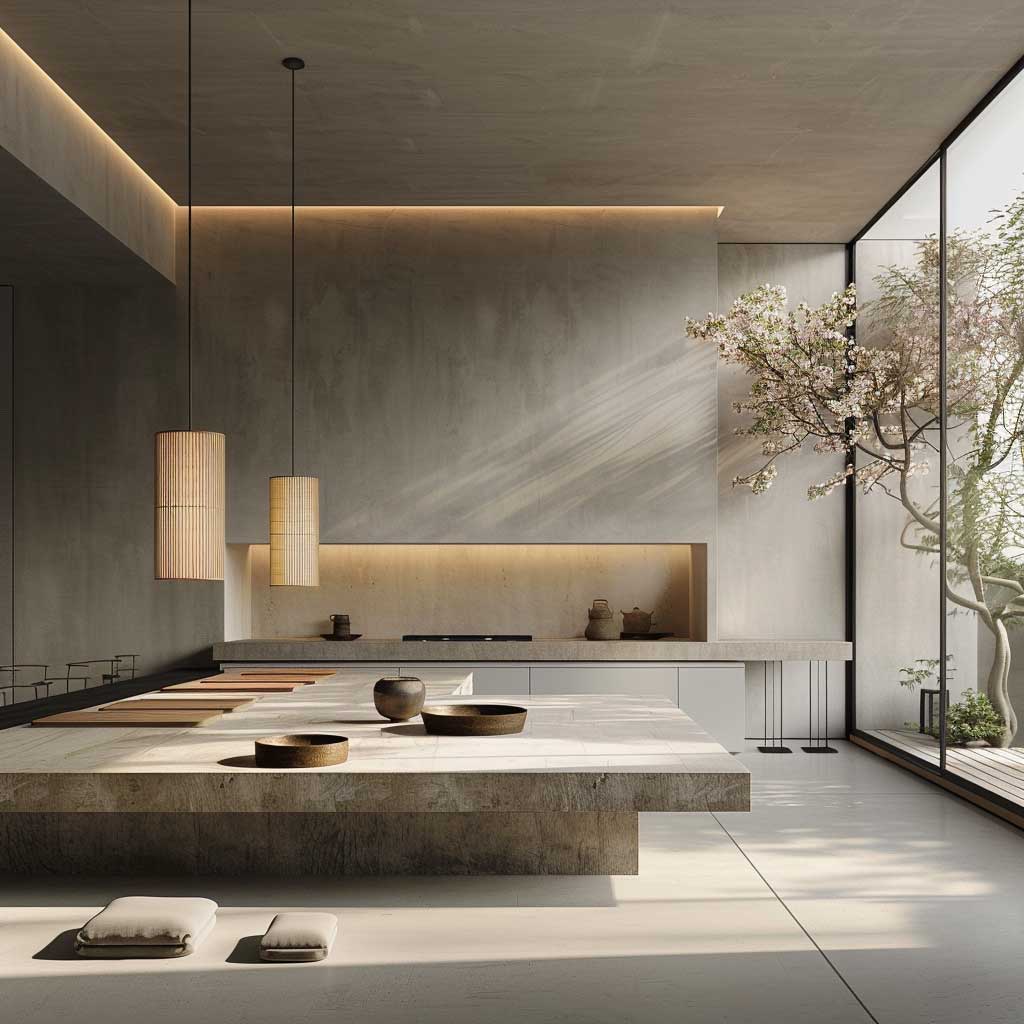
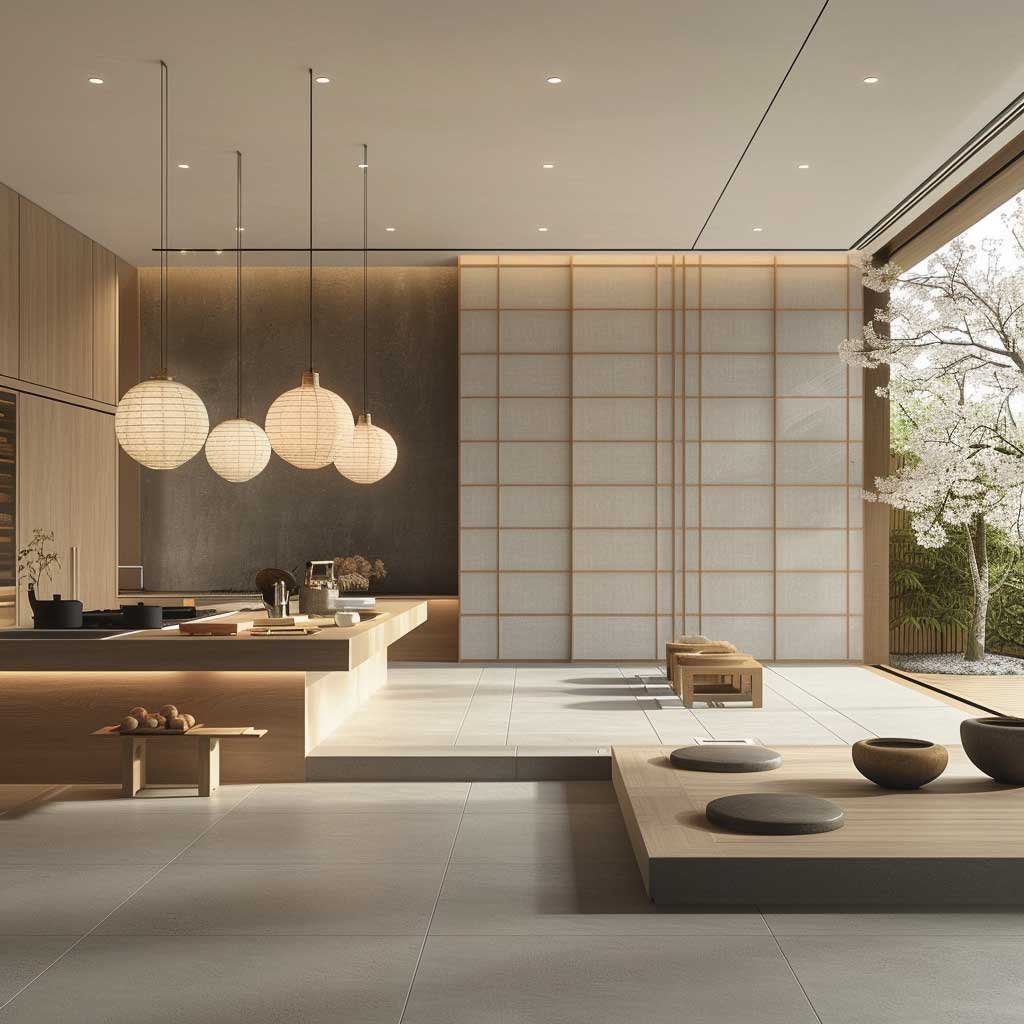
Integration isn’t a luxury upgrade — in a Japanese minimalist kitchen design, it’s structural. A freestanding refrigerator with visible hinges and a plastic door seal looks like a mistake in this context, the same way a billboard looks like a mistake in a Zen garden. The fridge belongs behind a full-height cabinet panel matched to your cabinetry. Gaggenau’s fully integrated fridge-freezer columns run $7,000–$11,000 per unit; the Bosch Serie 8 flush-hinge version hits $3,200 and passes visual inspection from across the room.
Does push-to-open hardware actually hold up? In my experience, yes — Blum Tip-On mechanisms survive about 80,000 open cycles before needing adjustment, which translates to roughly 11 years of daily cooking. The mechanism costs $18–$26 per drawer. That’s less than one dinner out. You need every drawer to feel the same: uniform resistance, no rattle, same soft-close speed. Mismatched hardware is the equivalent of wearing one dress shoe and one sneaker.
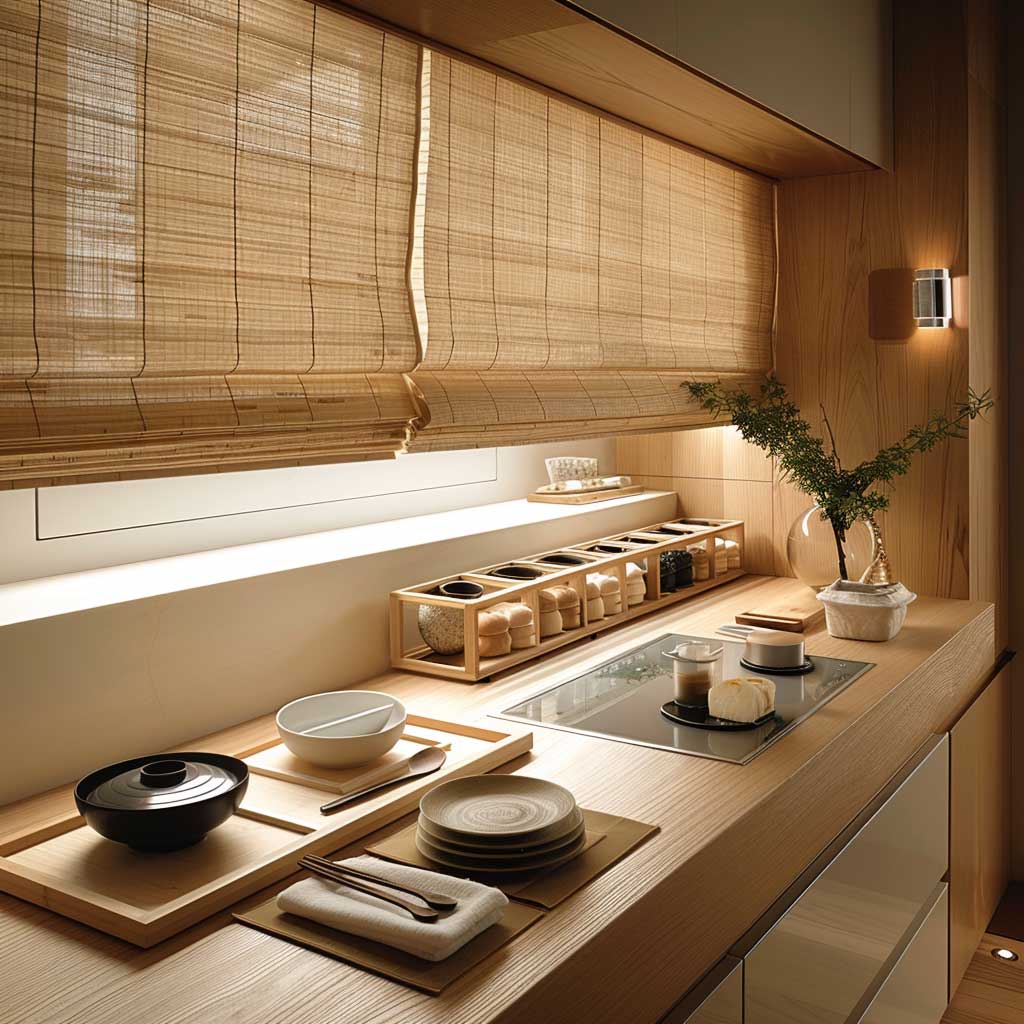
Induction cooktops flush-set into Dekton or Silestone countertops are the other transformation that’s hard to explain until you see it. The surface reads as one continuous plane of material. Bora Basic flush-induction runs about $1,400; the Bora X BO with integrated downdraft extraction hits $4,200 and eliminates the overhead hood entirely. No hood means no visual interruption above the cooking line. That’s a significant design win for this style.
Don’t Do This
Mixing a handleless cabinet system with one or two cabinets that have visible hardware “just for the pantry section” — this breaks the grammar of the entire room. Either commit to push-to-open throughout, or use a single recessed finger-pull profile consistently. Half measures read as budget cuts, not design choices. Also: don’t install open shelving in a Japanese minimalist kitchen unless you own fewer than eight items to put on them. Open shelves in this context work like Instagram — everything looks curated for about three weeks, then it’s just where the mail lives.
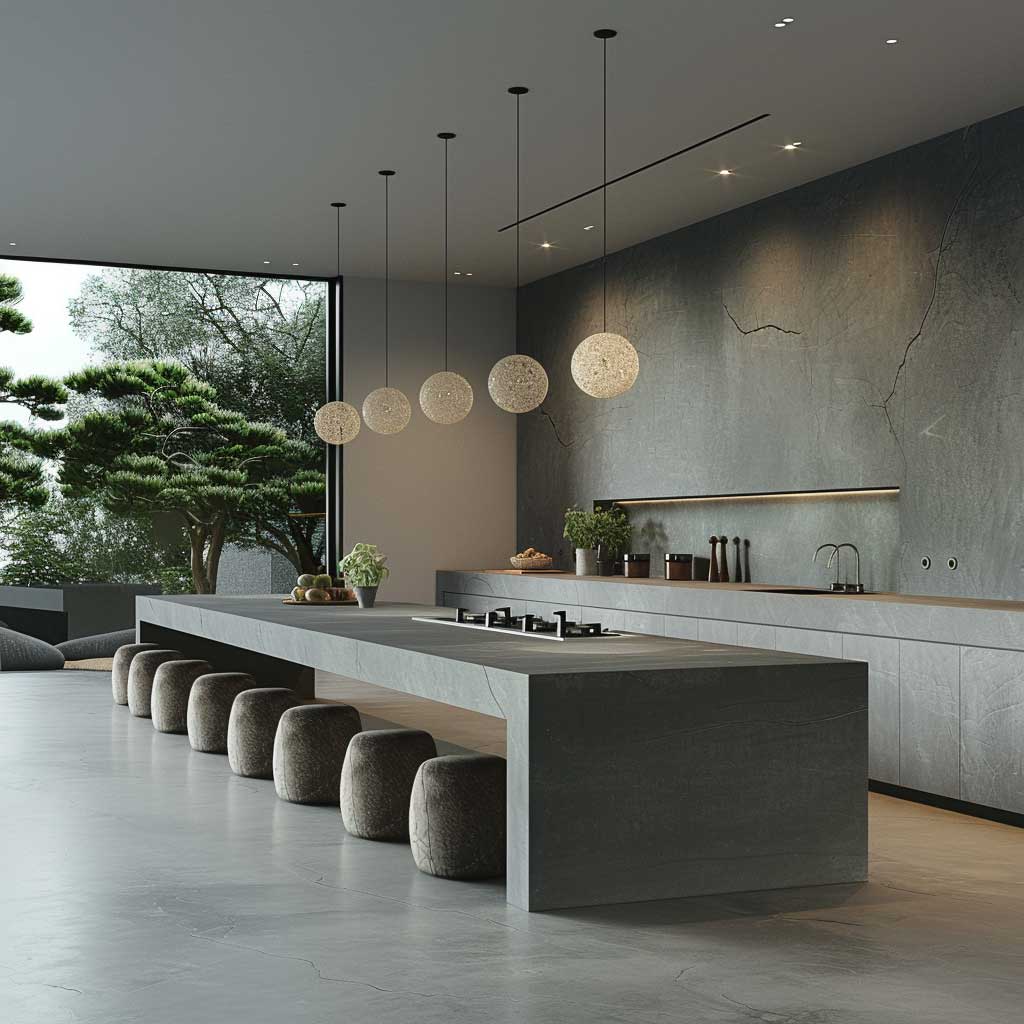
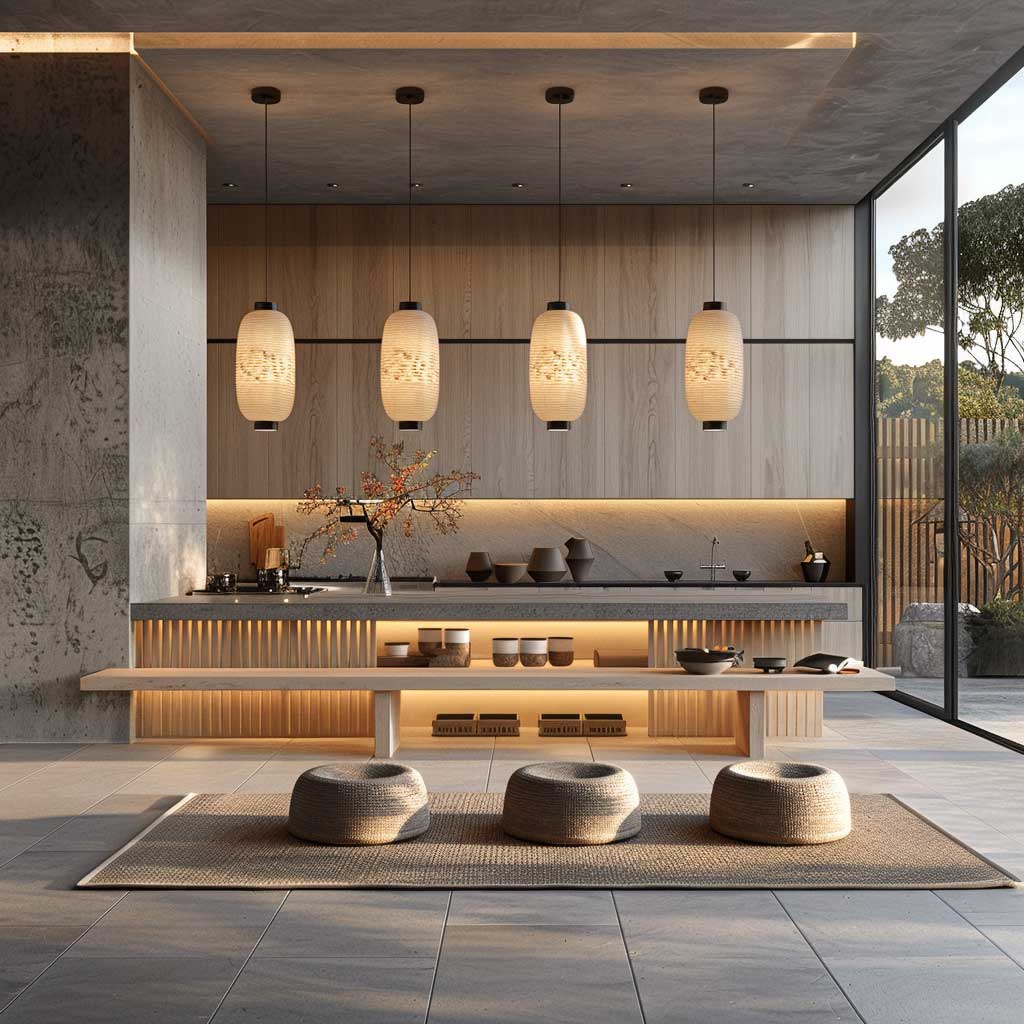
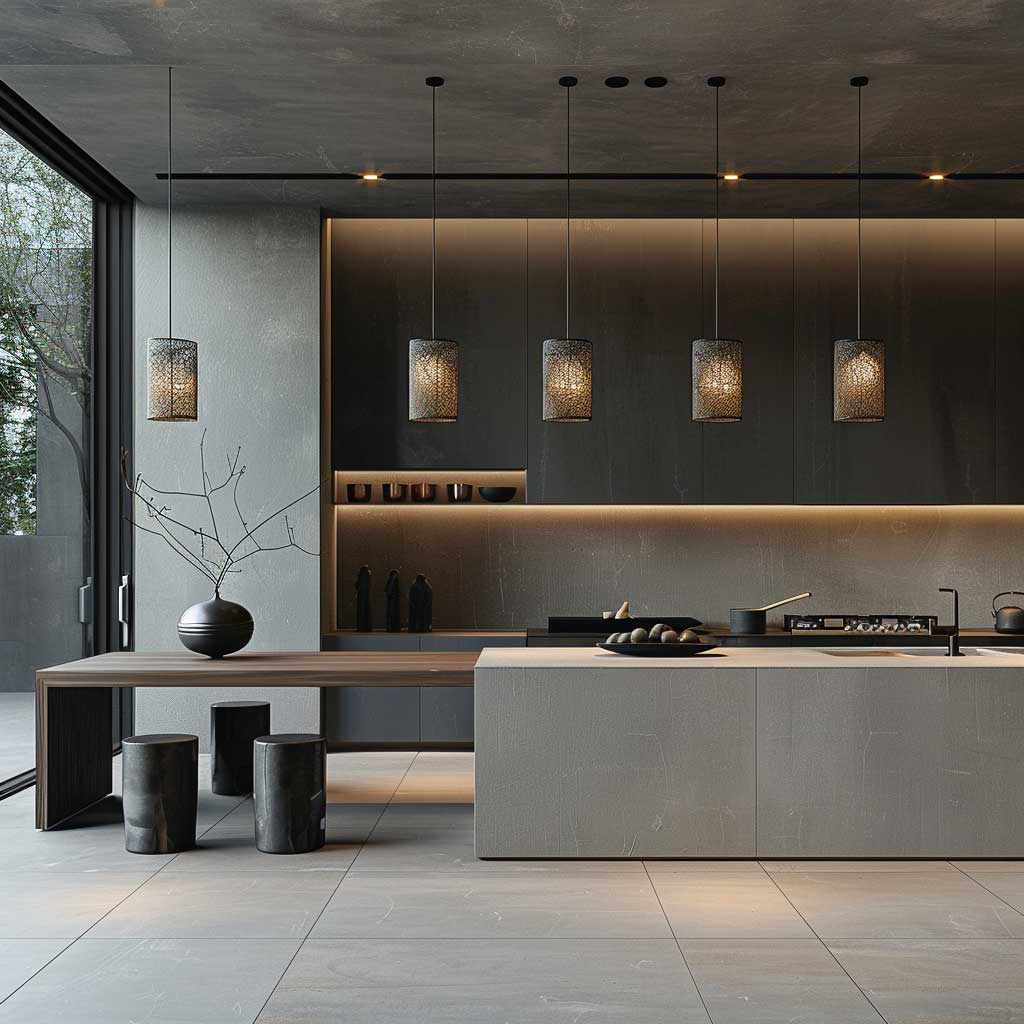
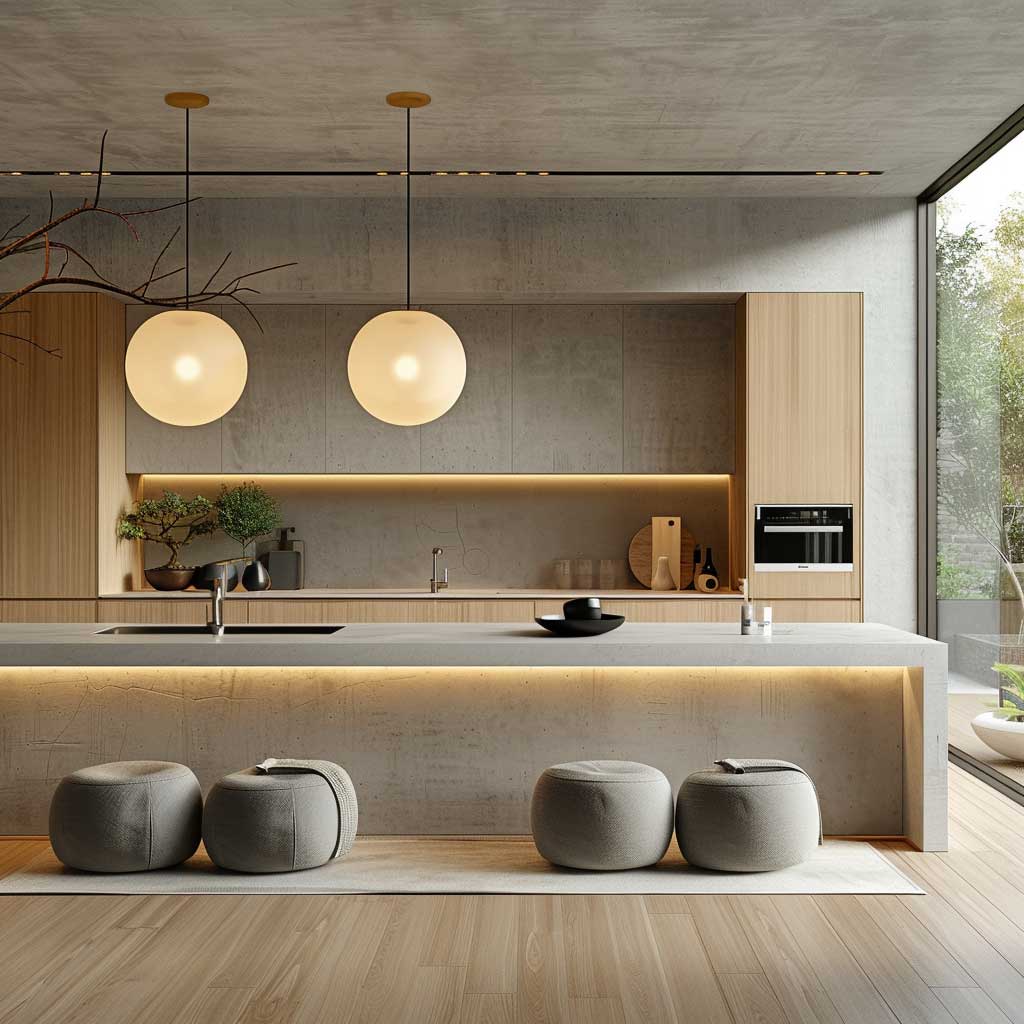
The island is where most of this style’s visual weight lands. A 90×200 cm island in Dekton Kelya (a grey stone composite, ~$120 per sq ft installed) reads like a single drawn line in the room. No seating overhang on the cooking side; a 30 cm overhang on the opposite side with Muuto Fiber bar stools in natural oak ($395 each) keeps the integration tight. Pendant lights above — one single run of Flos Arrangements ($890) rather than three separate pendants — keep the ceiling line from getting noisy. If you want more on how compact kitchen layouts handle this kind of island proportion, this breakdown of small minimalist kitchen design is worth reading before you spec your island depth.
Bamboo on the Floor, Stone on the Counter — the Material Combination Nobody Regrets
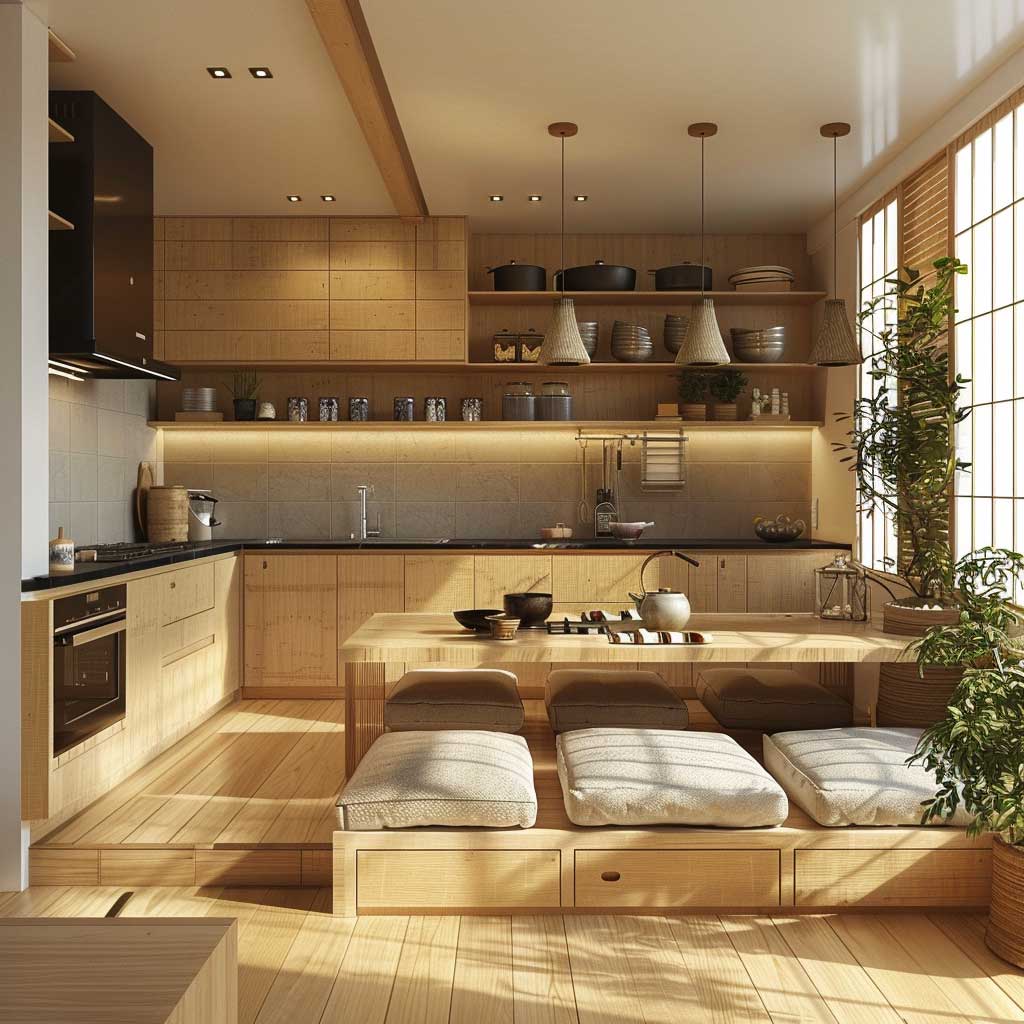
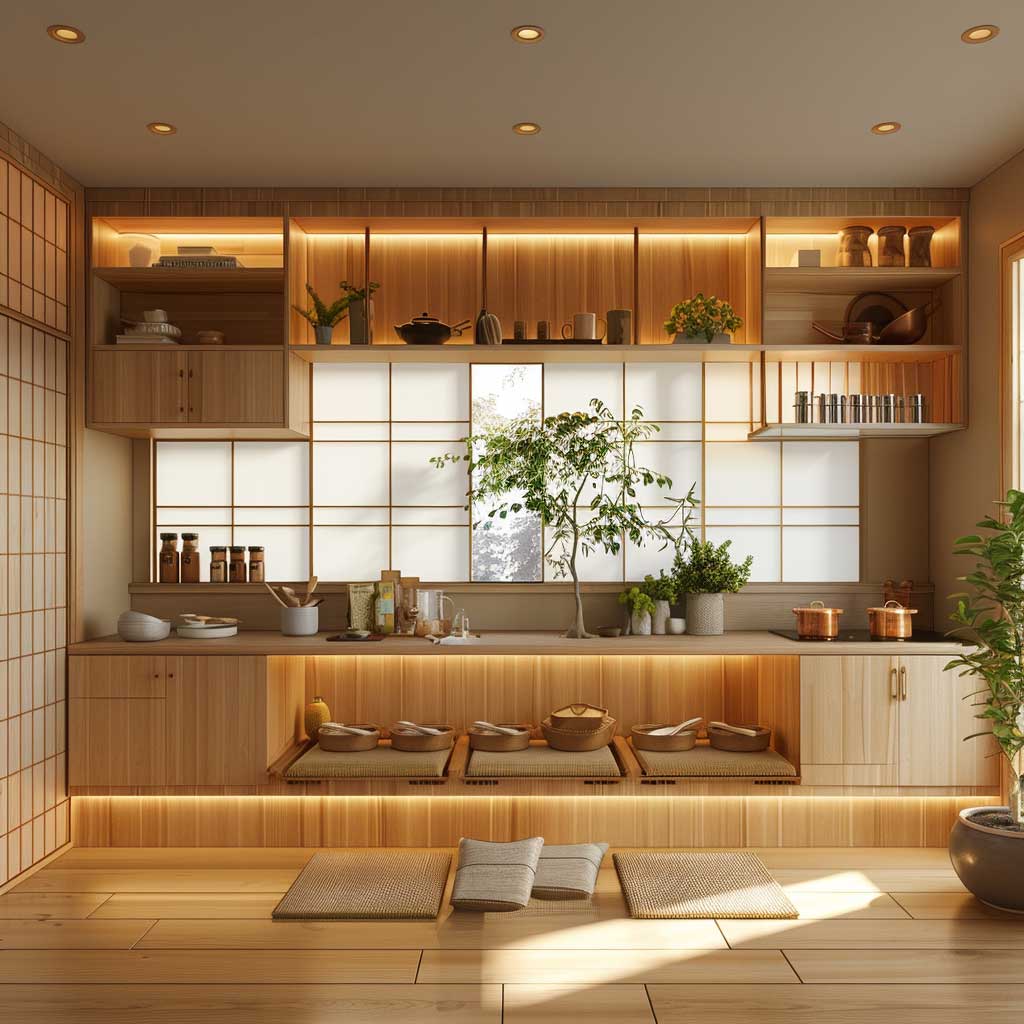
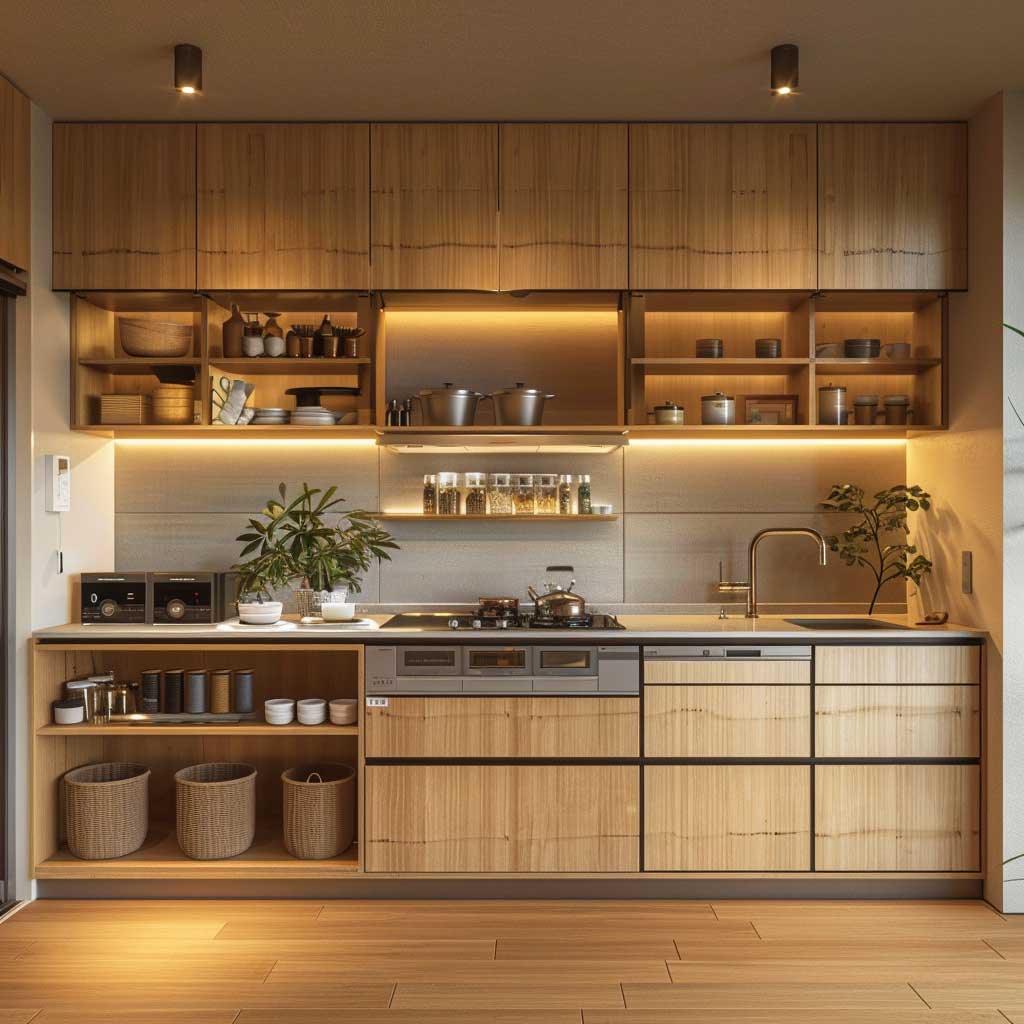
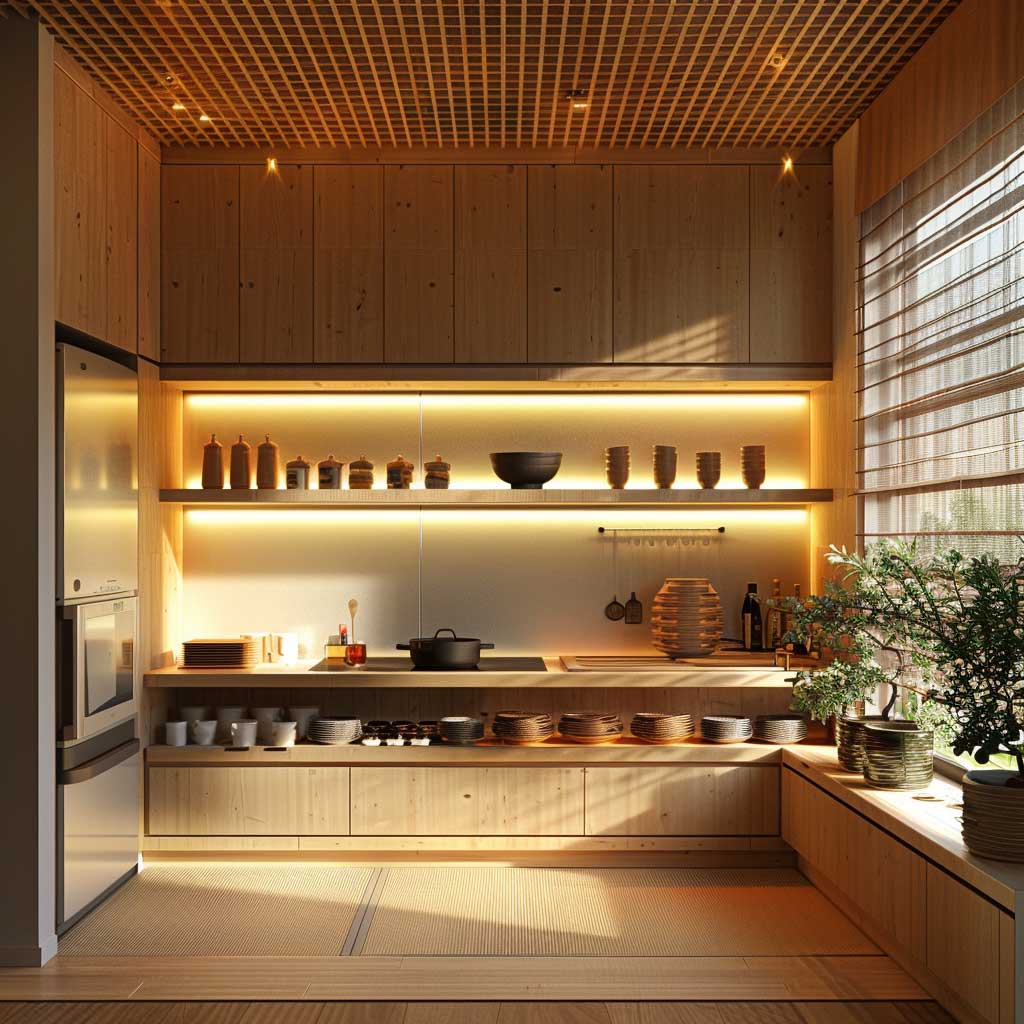
Bamboo flooring in a kitchen sounds risky — and it is if you buy the cheap strand-woven version at $3.50 per sq ft. The right product is carbonized horizontal bamboo from Teragren, roughly $7.20 per sq ft, and it handles kitchen moisture without buckling if you seal the expansion gaps properly. It reads warmer than concrete and quieter underfoot than porcelain tile. Cooking for two hours on bamboo feels different than on stone. Your feet know.
The stone countertop pairing is where the room’s two temperatures meet: cool mineral surface over warm organic floor. Honed Calacatta marble ($95–$140 per sq ft installed) is beautiful and maintenance-intensive — red wine stains it permanently if you don’t seal it twice a year. My practical recommendation is Dekton Rem in light grey: $85–$110 per sq ft, zero sealing required, and from three feet away it reads as stone. In a Japanese kitchen where the countertop surface is essentially the room’s focal point, the difference matters.
What doesn’t work is porcelain tile flooring in a large format (60×120 cm or bigger). You’d think the scale would reinforce the minimalism. It doesn’t. Large-format porcelain makes the floor look like it belongs in a hotel lobby, not a kitchen designed around stillness and daily ritual. The grout lines disappear, yes — but so does any warmth. The room turns clinical. Bamboo or wide-plank white oak flooring keeps the connection to living material that’s central to Japanese aesthetic principles. The material logic in these Japanese minimalist kitchen examples shows exactly how that temperature contrast plays out at a room scale.
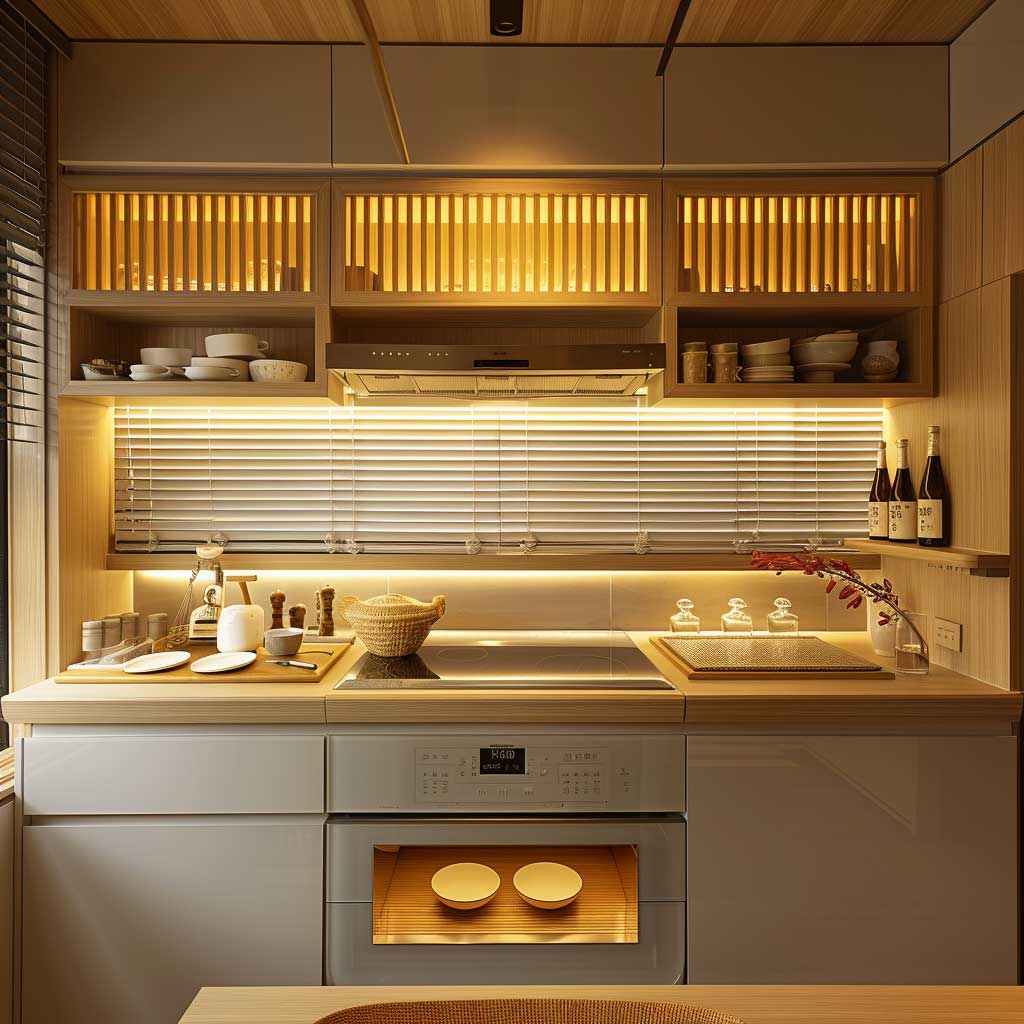
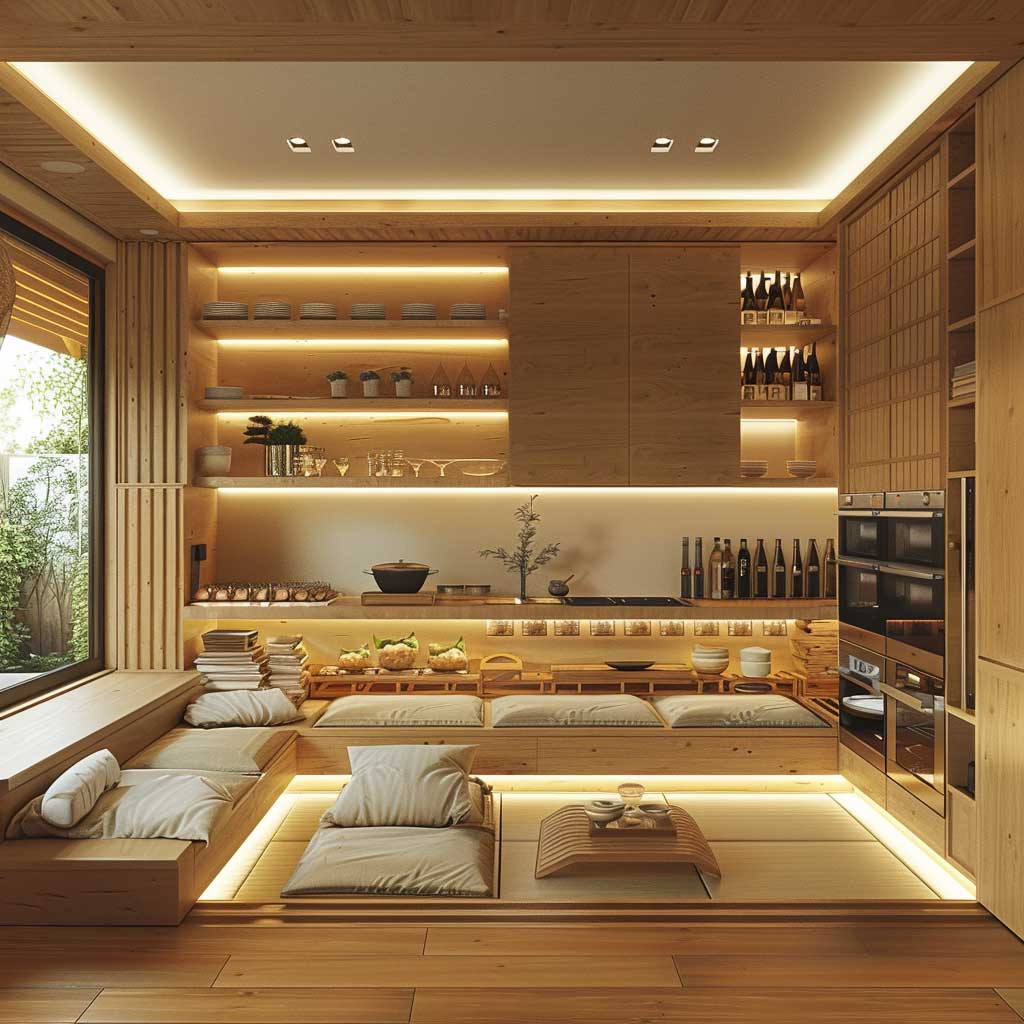
Stone backsplashes are where budgets expand fast. Full-slab backsplash in matching Calacatta adds $2,400–$4,000 to a standard kitchen install. The smarter move I’ve seen executed well is a honed White Carrara tile in a 10×30 cm brick format, installed with hairline grout joints in matching white. Cost: $18–$28 per sq ft versus $95+ for full slab. From across the room, the reading is identical. Up close, the tile joints add a quiet human scale that actually suits the wabi-sabi spirit more honestly than the showroom-perfect slab version. The philosophy here isn’t about perfection — it’s about intention. Every material should feel chosen, not defaulted to. For a deeper look at how Japanese design principles apply beyond the kitchen to the whole home atmosphere, this overview of Japanese minimalism, ma, and wabi-sabi explains the spatial philosophy behind the aesthetic.
Final Word
A Japanese Minimalist Kitchen Isn’t Decorated — It’s Edited Until Nothing Wrong Remains
The material choices above aren’t a shopping list — they’re a filter. Each decision removes something unnecessary: the hood, the handles, the upper cabinets, the sealing ritual, the grout lines. What’s left is a kitchen that functions like a sentence with no wasted words.
Budget realistically: $28,000–$55,000 for a full renovation at this level. That range isn’t aspirational — it’s what integration, quality wood, and real stone actually cost installed in North America or Western Europe in 2025.
Save this post before your next kitchen planning session — the material pairing logic is the part most contractors won’t mention unprompted.
FAQ
What makes a kitchen count as Japanese minimalist design?
How much does a Japanese minimalist kitchen renovation realistically cost?
Which wood species works best for Japanese minimalist kitchen cabinets?
Is bamboo flooring practical in a kitchen?
What countertop material suits a Japanese minimalist kitchen if marble is too high-maintenance?
Can a Japanese minimalist kitchen work in a small apartment with a renovation budget under $15,000?
Complete guide
Every Modern Kitchen Design Idea Worth Stealing Right Now
Layout, cabinets, islands, materials, color, lighting — all in one place
Complete guide
The Minimalist Style Guide That Covers Every Room, Surface and Outfit
Interiors, exteriors, kitchens, bedrooms, fashion, hair — all in one place
Complete guide
Stone in Architecture and Design — From Floors to Facades
Cladding, flooring, interiors, kitchens, bathrooms, outdoor — all in one place